 Скачать презентацию Election of 1824 A Corrupt Bargain v v
3f9a663fa45483d0d5fe27bd156edd38.ppt
- Количество слайдов: 28



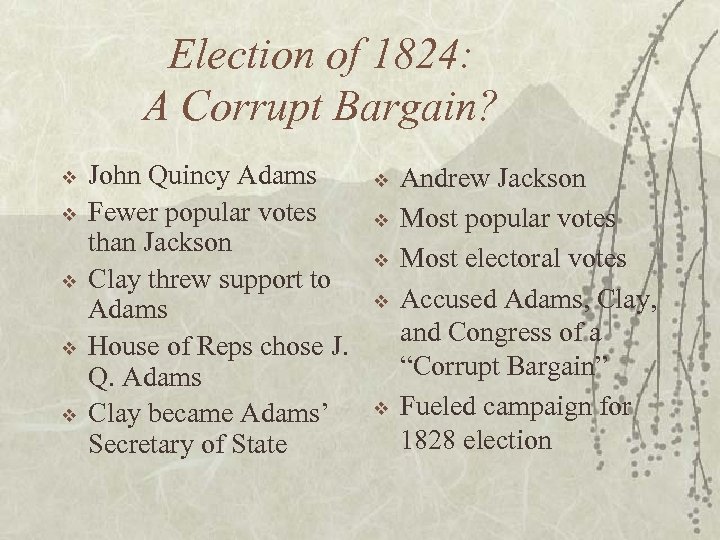
Election of 1824: A Corrupt Bargain? v v v John Quincy Adams Fewer popular votes than Jackson Clay threw support to Adams House of Reps chose J. Q. Adams Clay became Adams’ Secretary of State v v v Andrew Jackson Most popular votes Most electoral votes Accused Adams, Clay, and Congress of a “Corrupt Bargain” Fueled campaign for 1828 election
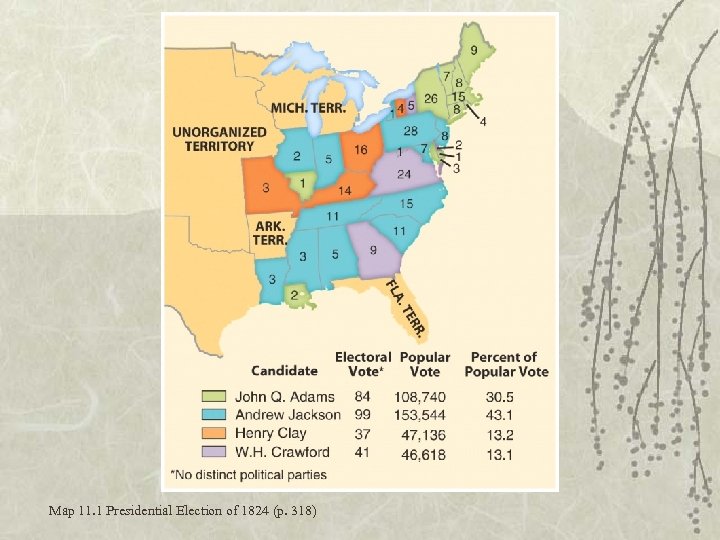
Map 11. 1 Presidential Election of 1824 (p. 318)
Jackson enters National Politics: Election of 1824
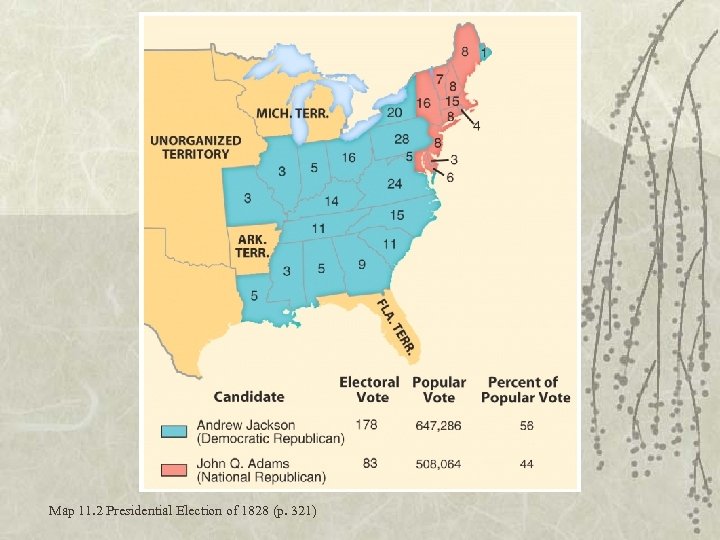
Map 11. 2 Presidential Election of 1828 (p. 321)
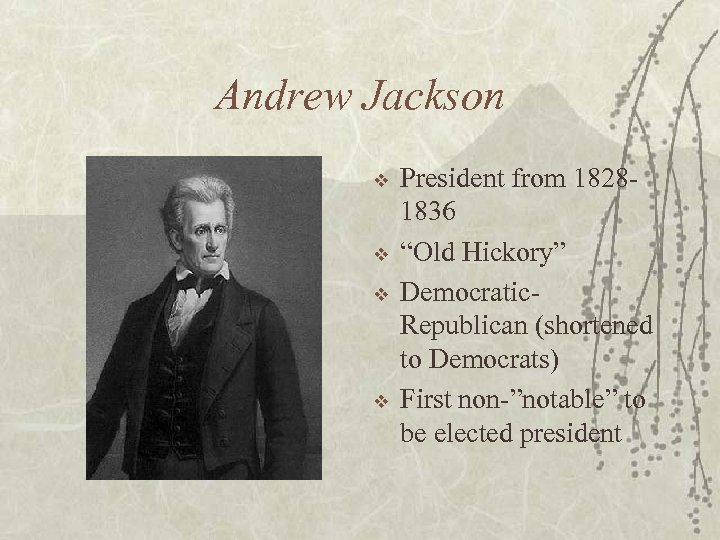
Andrew Jackson v v President from 18281836 “Old Hickory” Democratic. Republican (shortened to Democrats) First non-”notable” to be elected president
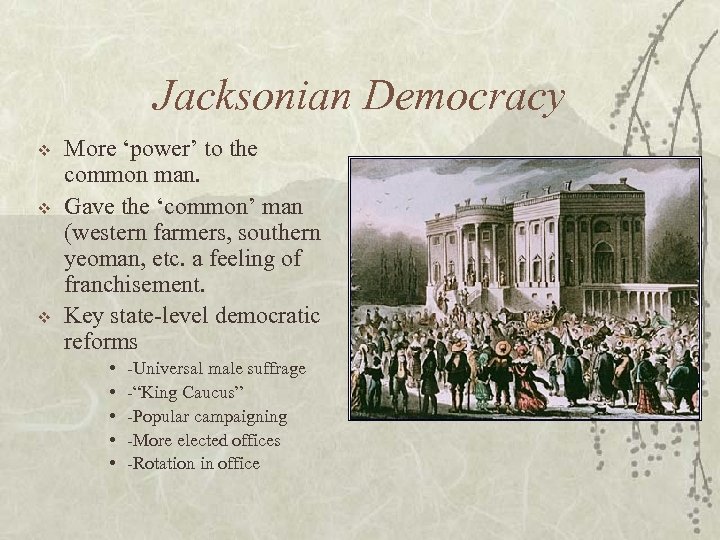
Jacksonian Democracy v v v More ‘power’ to the common man. Gave the ‘common’ man (western farmers, southern yeoman, etc. a feeling of franchisement. Key state-level democratic reforms • • • -Universal male suffrage -“King Caucus” -Popular campaigning -More elected offices -Rotation in office
Revolution of 1828: Jacksonian Democracy v v v A more democratic society - small “d” democratic Common people felt they had a representative in the White House “Spoils System”
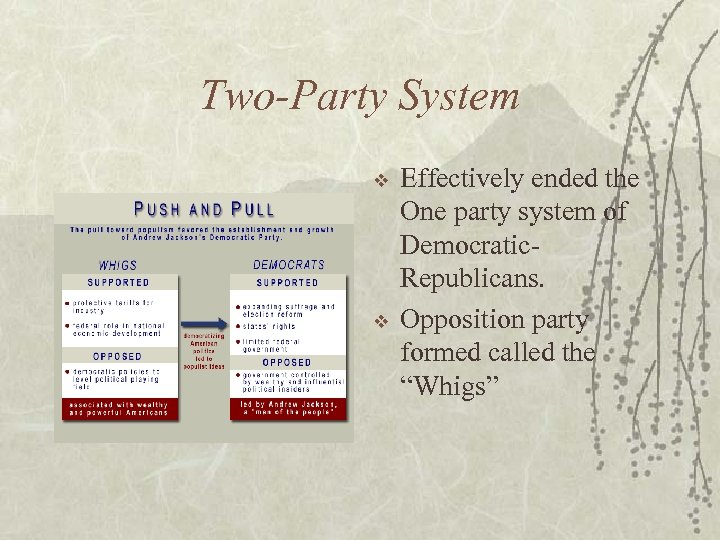
Two-Party System v v Effectively ended the One party system of Democratic. Republicans. Opposition party formed called the “Whigs”
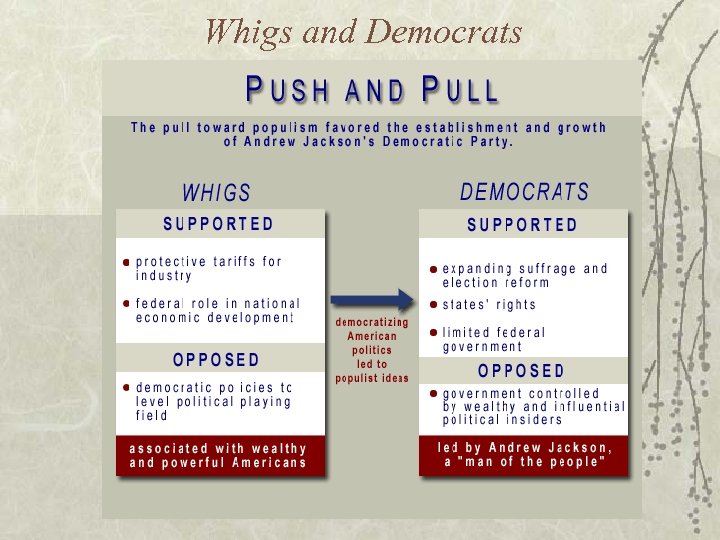
Whigs and Democrats
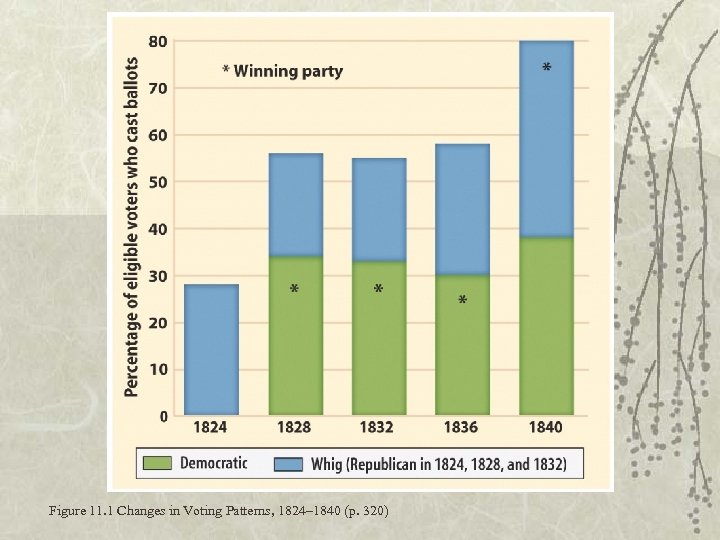
Figure 11. 1 Changes in Voting Patterns, 1824– 1840 (p. 320)
Andrew Jackson: Issues v v Nationalism vs. States’ Rights Nullification and Federal Authority Bank of the United States Indian Removal
The Nullification Crisis v v v Tariff of 1828 (Tariff of Abominations) - hurt southern cotton producers Perceived as a sectional law favoring manufacturing interests in the NE. John C. Calhoun - South Carolina Exposition and Protest
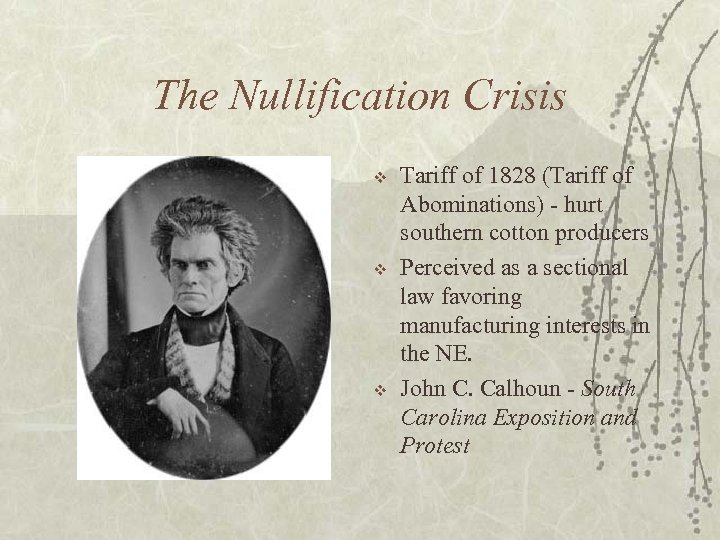
The Nullification Crisis v v v Tariff of 1828 (Tariff of Abominations) - hurt southern cotton producers Perceived as a sectional law favoring manufacturing interests in the NE. John C. Calhoun - South Carolina Exposition and Protest
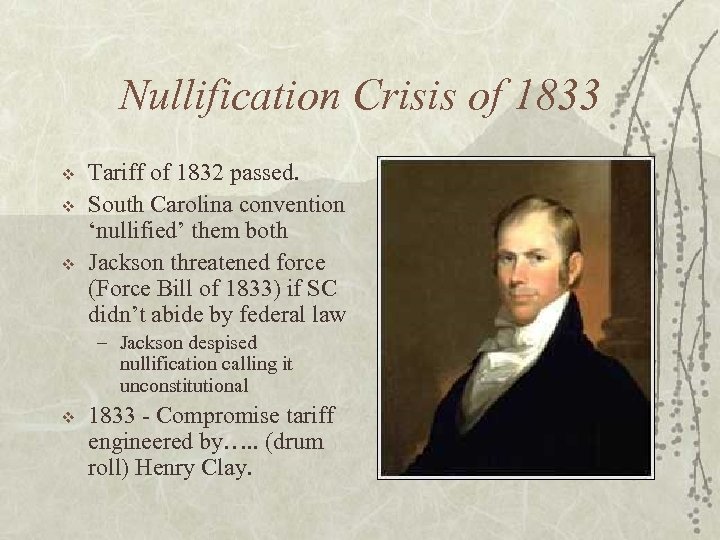
Nullification Crisis of 1833 v v v Tariff of 1832 passed. South Carolina convention ‘nullified’ them both Jackson threatened force (Force Bill of 1833) if SC didn’t abide by federal law – Jackson despised nullification calling it unconstitutional v 1833 - Compromise tariff engineered by…. . (drum roll) Henry Clay.
Sectionalism vs. Nationalism Tariff of 1832 (Abominations) v v Maysville Road Veto Webster. Hayne Debate Nullification States’ Rights?
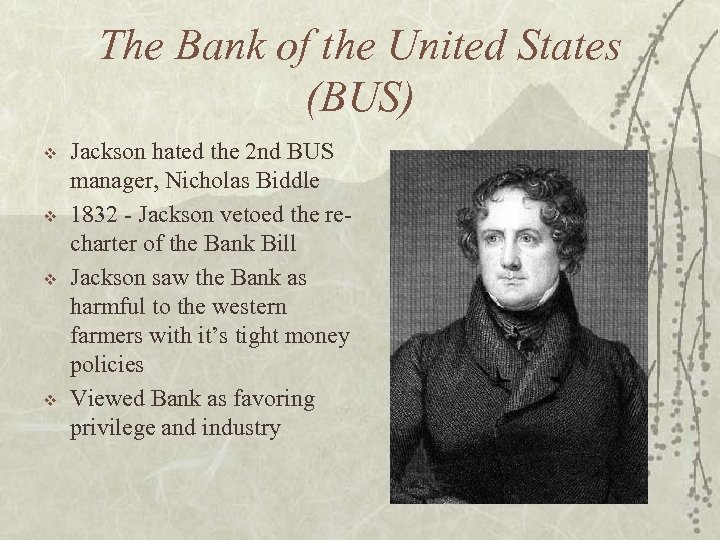
The Bank of the United States (BUS) v v Jackson hated the 2 nd BUS manager, Nicholas Biddle 1832 - Jackson vetoed the recharter of the Bank Bill Jackson saw the Bank as harmful to the western farmers with it’s tight money policies Viewed Bank as favoring privilege and industry
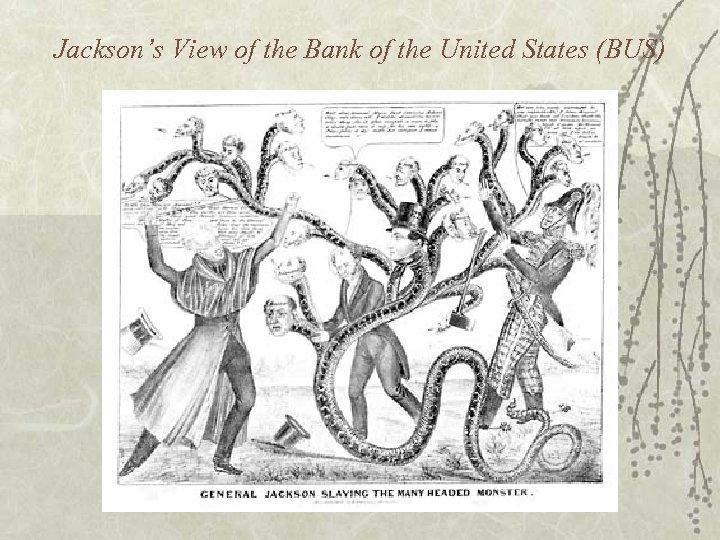
Jackson’s View of the Bank of the United States (BUS)
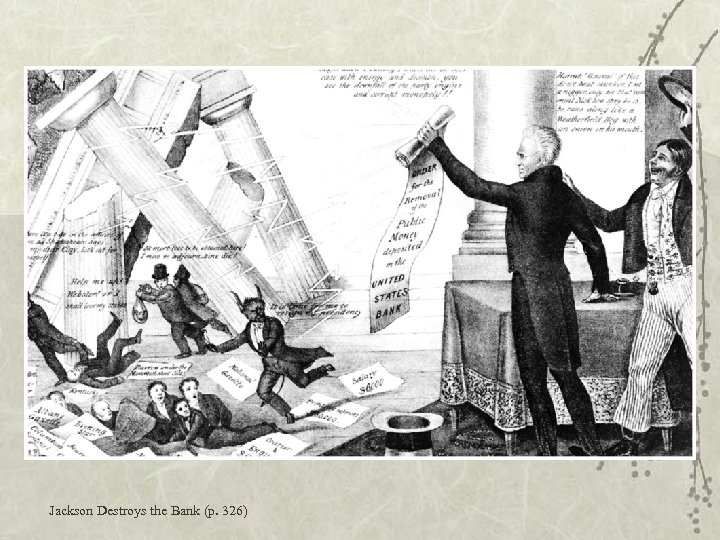
Jackson Destroys the Bank (p. 326)
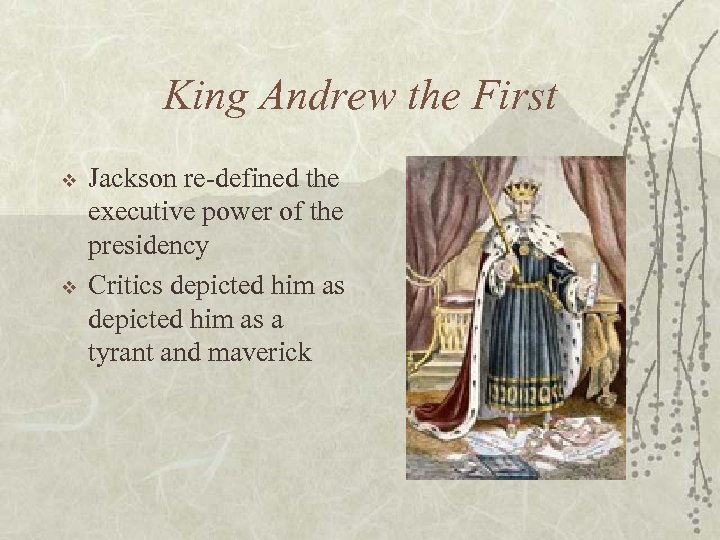
King Andrew the First v v Jackson re-defined the executive power of the presidency Critics depicted him as a tyrant and maverick
Jackson and the Bank of the United States
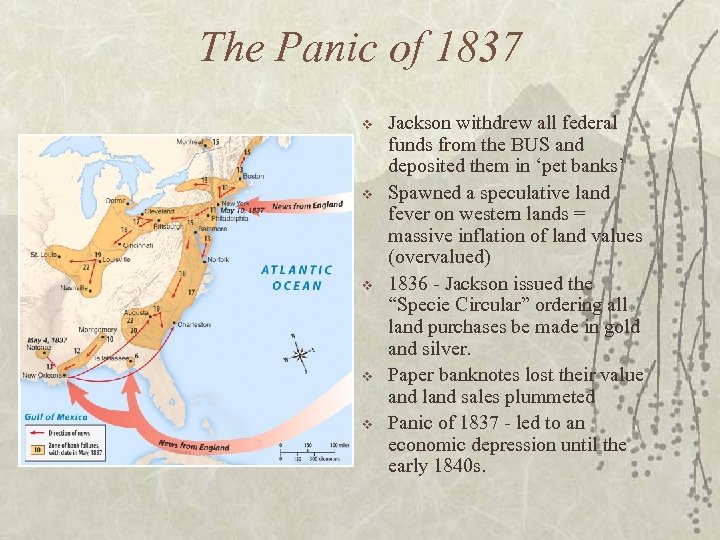
The Panic of 1837 v v v Jackson withdrew all federal funds from the BUS and deposited them in ‘pet banks’ Spawned a speculative land fever on western lands = massive inflation of land values (overvalued) 1836 - Jackson issued the “Specie Circular” ordering all land purchases be made in gold and silver. Paper banknotes lost their value and land sales plummeted Panic of 1837 - led to an economic depression until the early 1840 s.
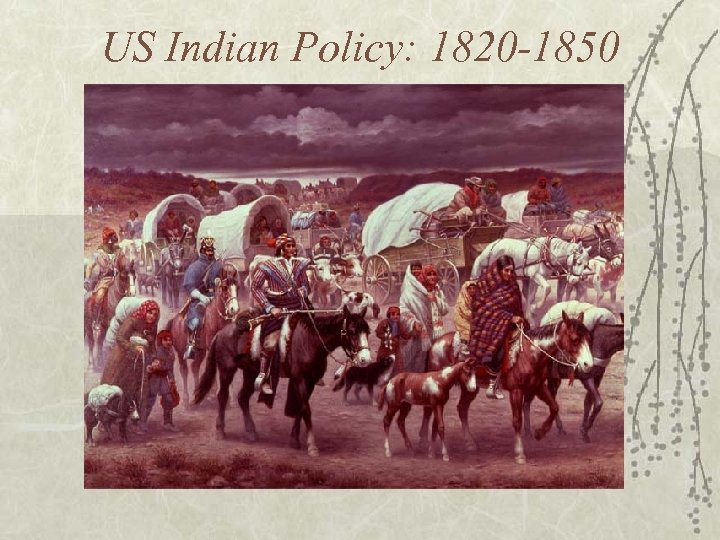
US Indian Policy: 1820 -1850
U. S. Federal Indian Policy 1810 -20 - War of 1812, death of Tecumseh and pan-Indian alliance, Creek Wars, Indian Springs Treaty of 1825, Seminole Wars v 1830 - Indian Removal Act - Gave President authority to trade SE tribes for their land in east for land in west. Provided money for land transfer and relocation v Black Hawk’s War (1832) v
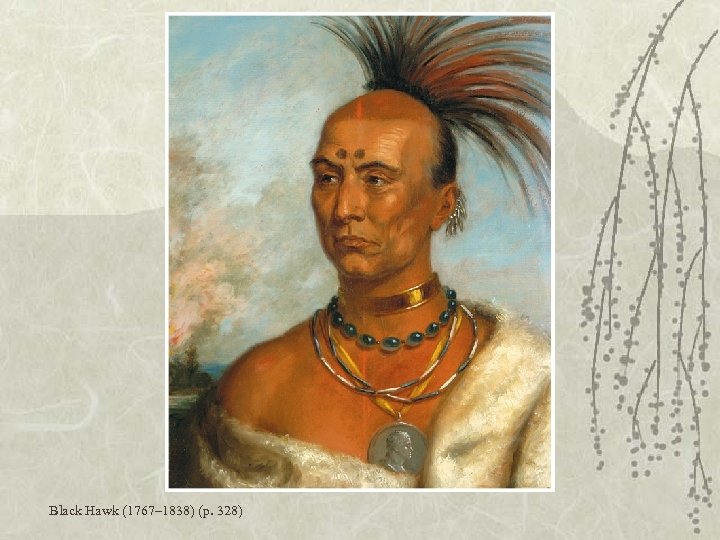
Black Hawk (1767– 1838) (p. 328)
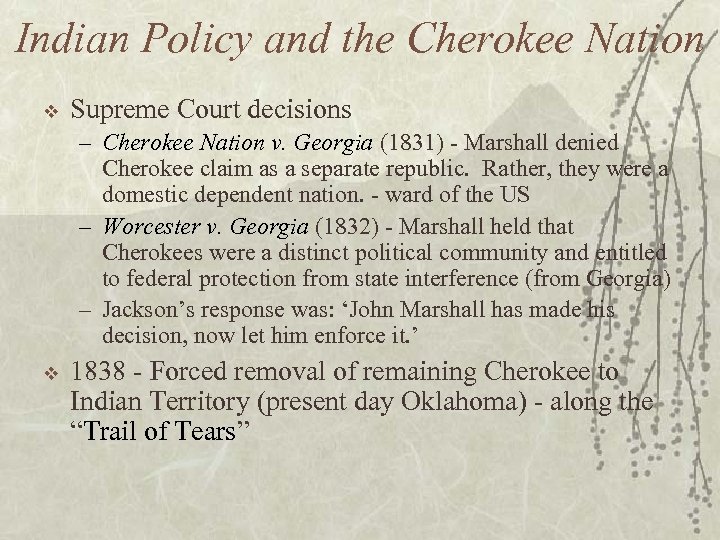
Indian Policy and the Cherokee Nation v Supreme Court decisions – Cherokee Nation v. Georgia (1831) - Marshall denied Cherokee claim as a separate republic. Rather, they were a domestic dependent nation. - ward of the US – Worcester v. Georgia (1832) - Marshall held that Cherokees were a distinct political community and entitled to federal protection from state interference (from Georgia) – Jackson’s response was: ‘John Marshall has made his decision, now let him enforce it. ’ v 1838 - Forced removal of remaining Cherokee to Indian Territory (present day Oklahoma) - along the “Trail of Tears”
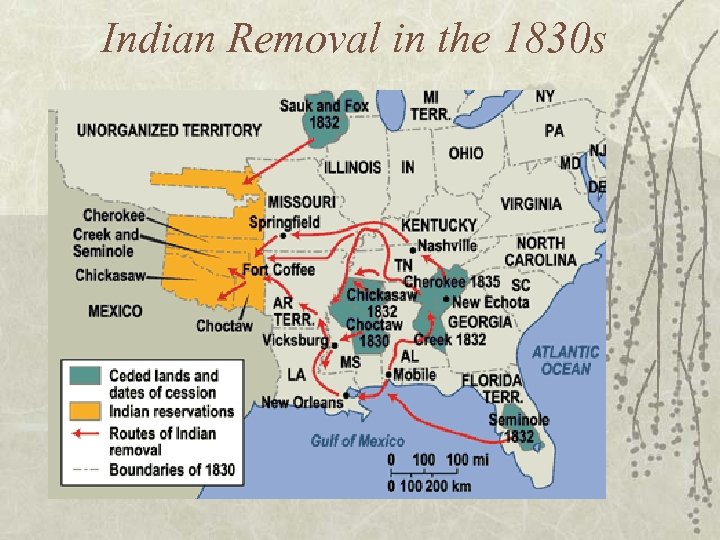
Indian Removal in the 1830 s
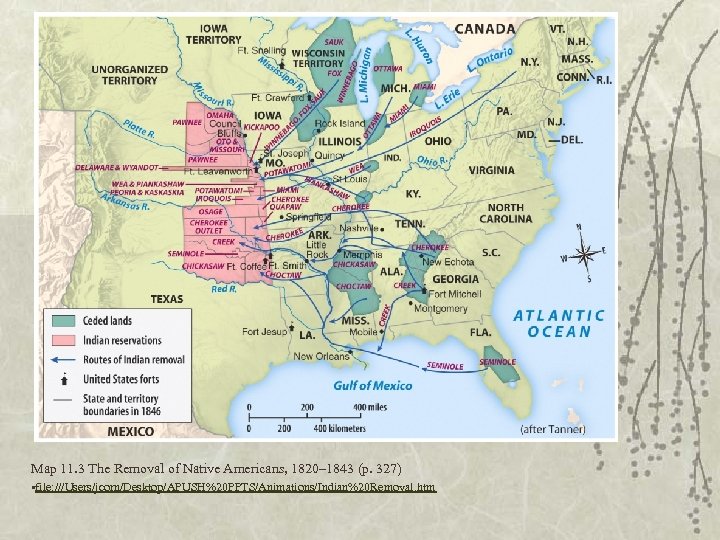
Map 11. 3 The Removal of Native Americans, 1820– 1843 (p. 327) • file: ///Users/jcorn/Desktop/APUSH%20 PPTS/Animations/Indian%20 Removal. htm
Andrew Jackson’s Legacy Still debated. Admired by some, hated by others. v Strong influence on his generation both politically and economically. v Defined an era… v
Скачать презентацию Election of 1824 A Corrupt Bargain v v
3f9a663fa45483d0d5fe27bd156edd38.ppt