


 Скачать презентацию Elastizell of St Louis Solving Engineered Fill Flooring
7dc76f48ee1e2882eff84d560820887d.ppt
- Количество слайдов: 46
 Elastizell of St. Louis Solving Engineered Fill, Flooring & Roofing problems for over 40 years.
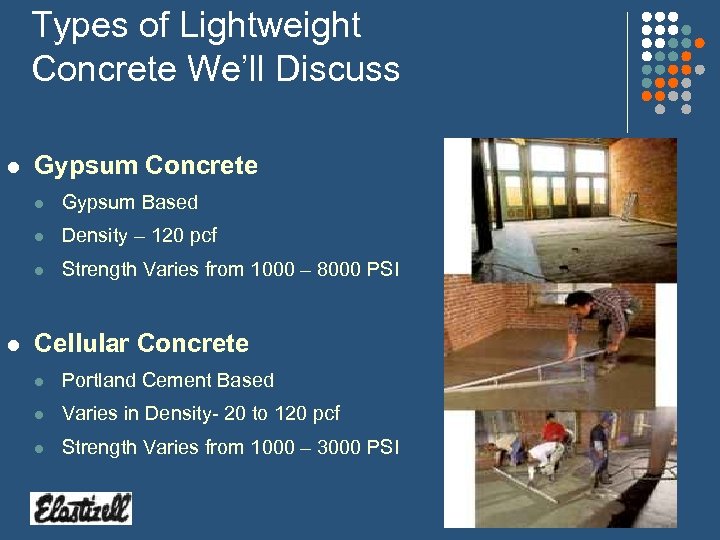 Types of Lightweight Concrete We’ll Discuss l Gypsum Concrete l l Density – 120 pcf l l Gypsum Based Strength Varies from 1000 – 8000 PSI Cellular Concrete l Portland Cement Based l Varies in Density- 20 to 120 pcf l Strength Varies from 1000 – 3000 PSI
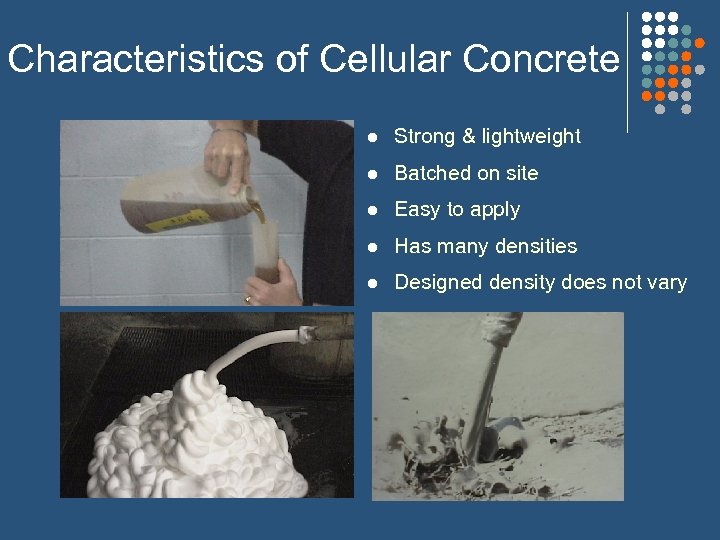 Characteristics of Cellular Concrete l Strong & lightweight l Batched on site l Easy to apply l Has many densities l Designed density does not vary
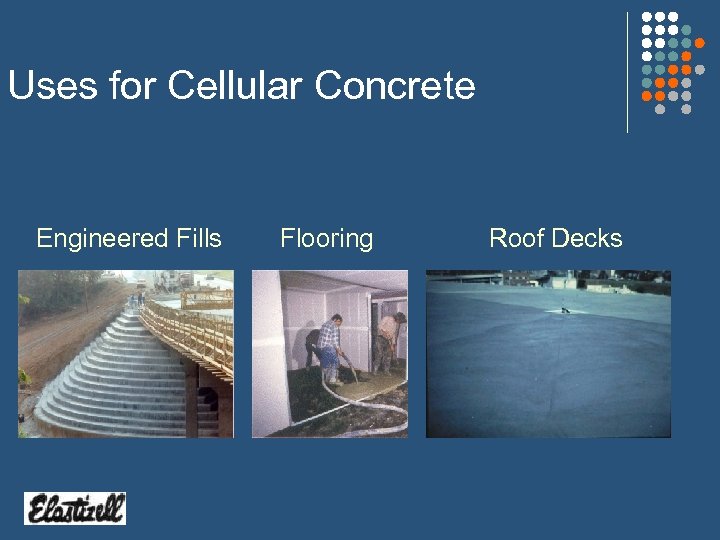 Uses for Cellular Concrete Engineered Fills Flooring Roof Decks
 Differences of Cellular Concrete l Engineered Fills Strength Varies from 40 to 1000 psi l Density Varies from 20 to 70 pcf l l Roof Decks Minimum Strength 160 psi l Density Varies from 36 to 50 pcf l l Flooring l l Strength 1000 to 3000 psi Density is 100 - 125 pcf
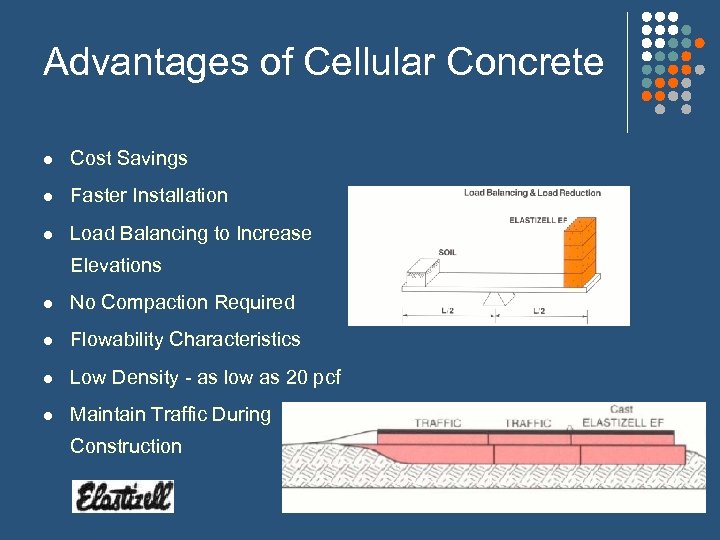 Advantages of Cellular Concrete l Cost Savings l Faster Installation l Load Balancing to Increase Elevations l No Compaction Required l Flowability Characteristics l Low Density - as low as 20 pcf l Maintain Traffic During Construction
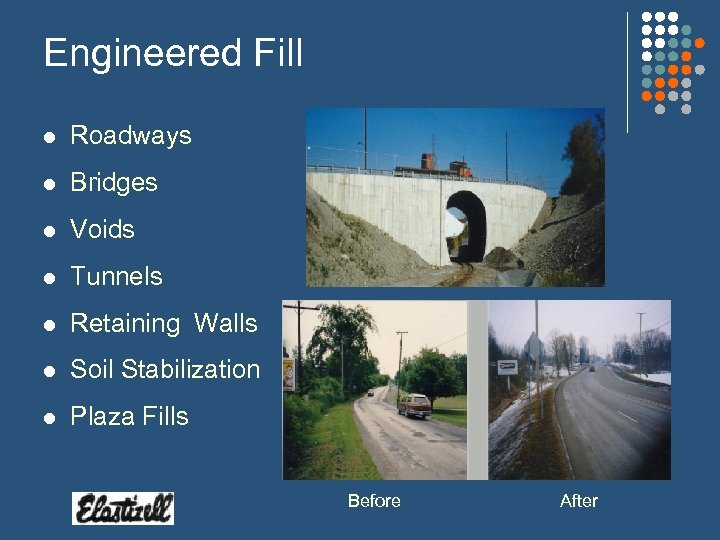 Engineered Fill l Roadways l Bridges l Voids l Tunnels l Retaining Walls l Soil Stabilization l Plaza Fills Before After
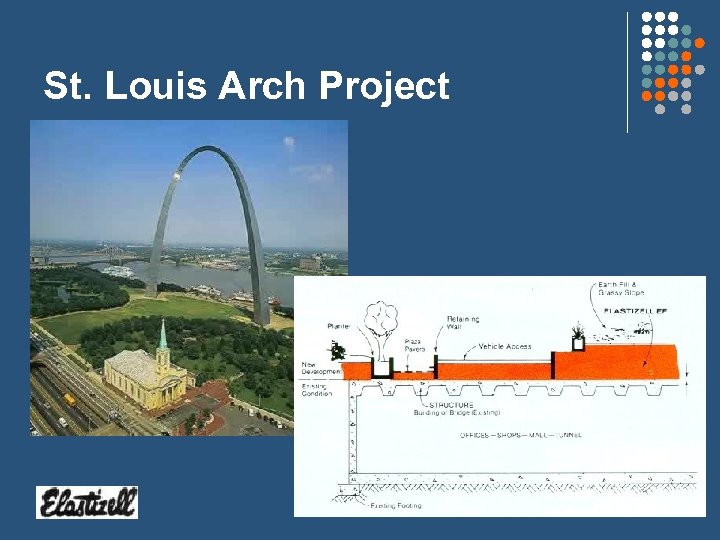 St. Louis Arch Project
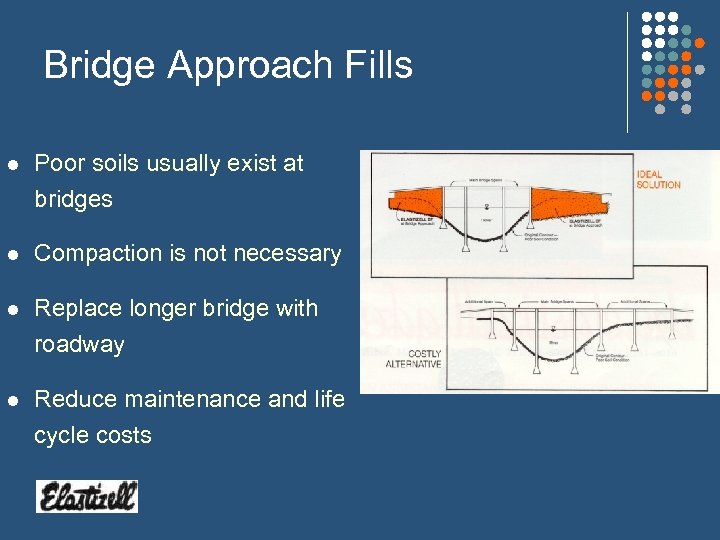 Bridge Approach Fills l Poor soils usually exist at bridges l Compaction is not necessary l Replace longer bridge with roadway l Reduce maintenance and life cycle costs
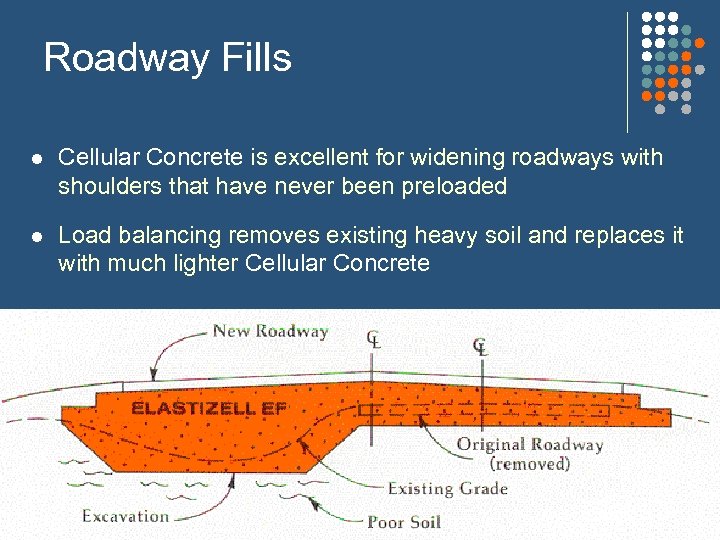 Roadway Fills l Cellular Concrete is excellent for widening roadways with shoulders that have never been preloaded l Load balancing removes existing heavy soil and replaces it with much lighter Cellular Concrete
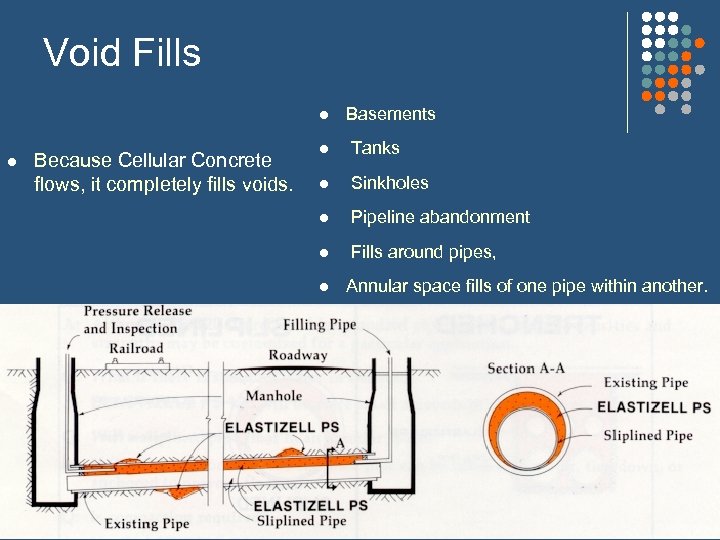 Void Fills l l Because Cellular Concrete flows, it completely fills voids. Basements l Tanks l Sinkholes l Pipeline abandonment l Fills around pipes, l Annular space fills of one pipe within another.
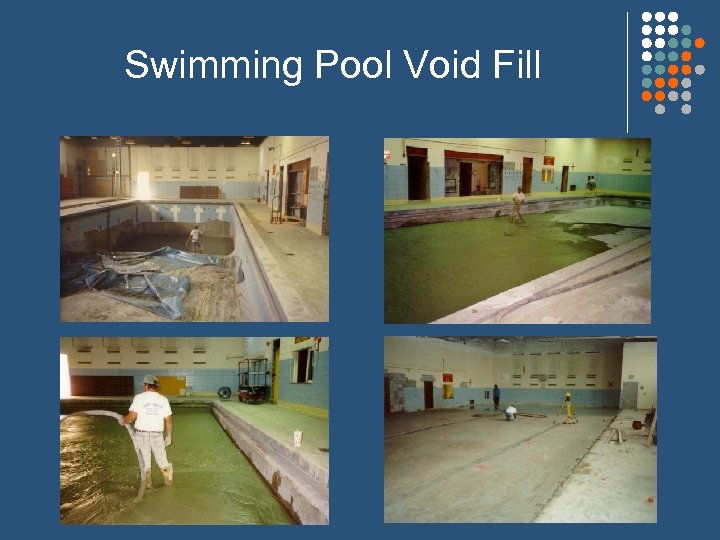 Swimming Pool Void Fill
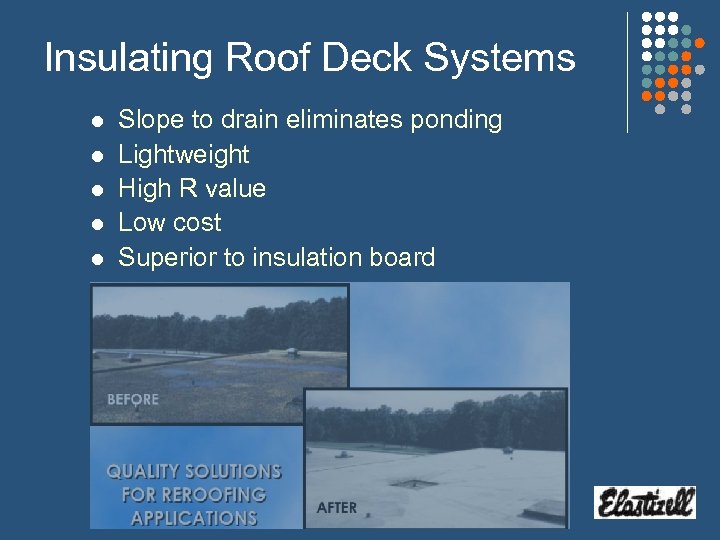 Insulating Roof Deck Systems l l l Slope to drain eliminates ponding Lightweight High R value Low cost Superior to insulation board
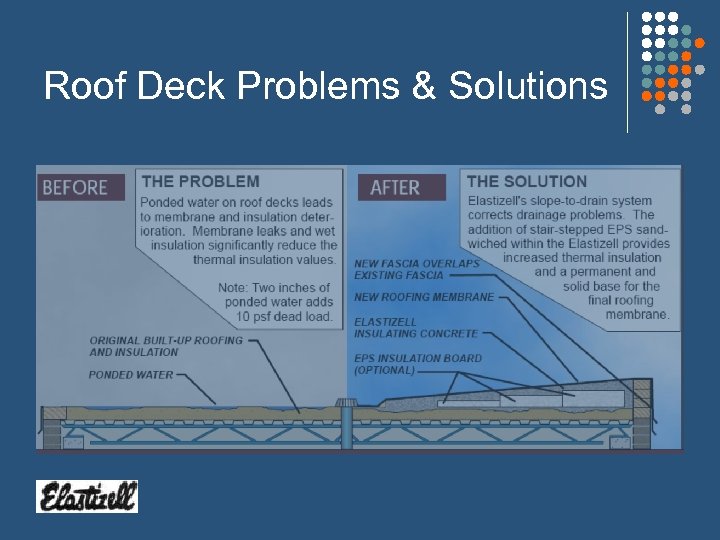 Roof Deck Problems & Solutions
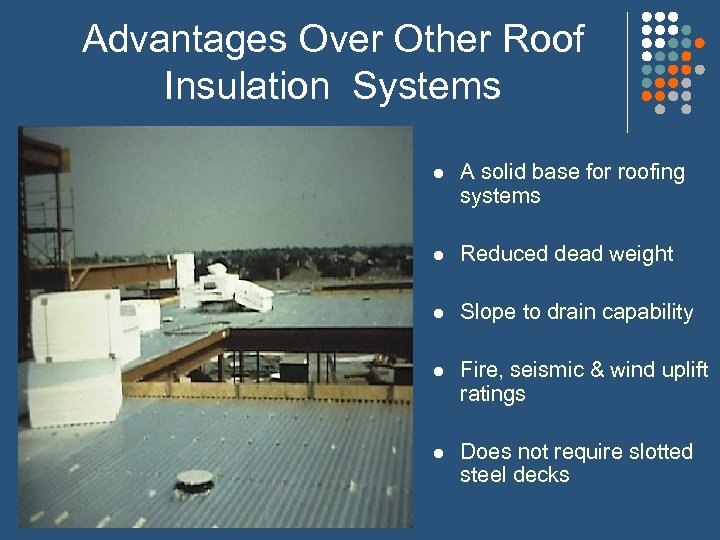 Advantages Over Other Roof Insulation Systems l A solid base for roofing systems l Reduced dead weight l Slope to drain capability l Fire, seismic & wind uplift ratings l Does not require slotted steel decks
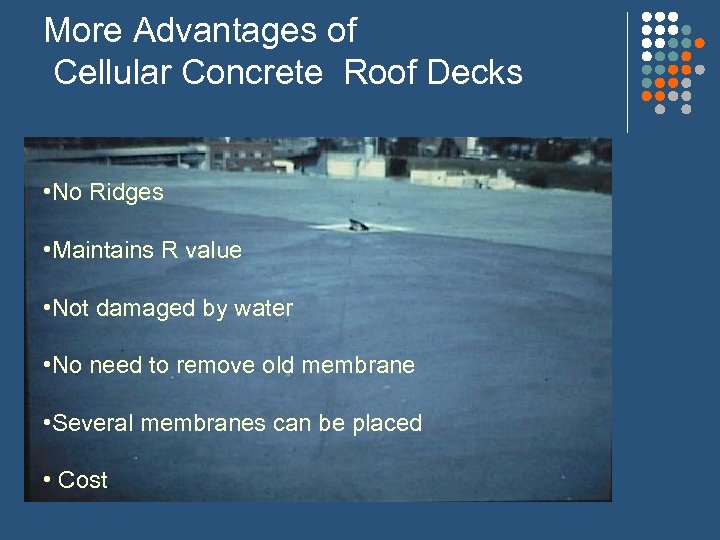 More Advantages of Cellular Concrete Roof Decks • No Ridges • Maintains R value • Not damaged by water • No need to remove old membrane • Several membranes can be placed • Cost
 LIGHT WEIGHT CONCRETE FLOORS
 What are Lightweight Concrete Floor Toppings? l Gypsum Concrete l l Gypsum Based Density – 120 pcf Varies in Strength – 1000 – 8000 PSI Cellular Concrete l l l Portland Cement Based Varies in Density- 100 to 125 pcf Varies in Strength – 1000 – 3000 PSI
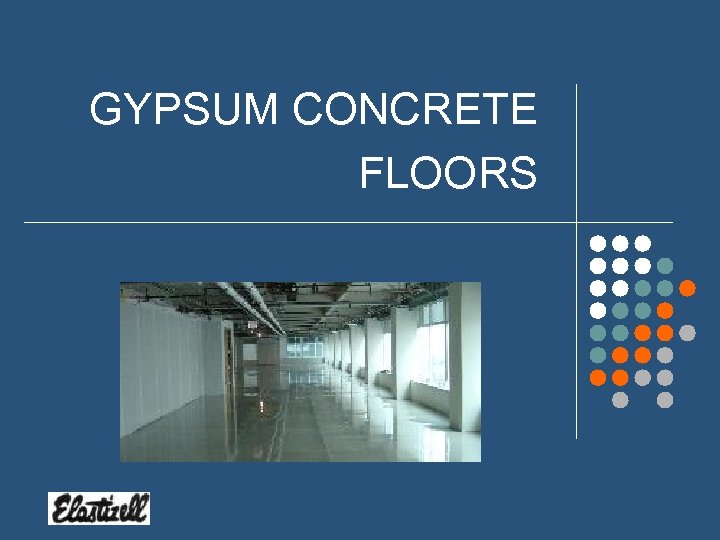 GYPSUM CONCRETE FLOORS
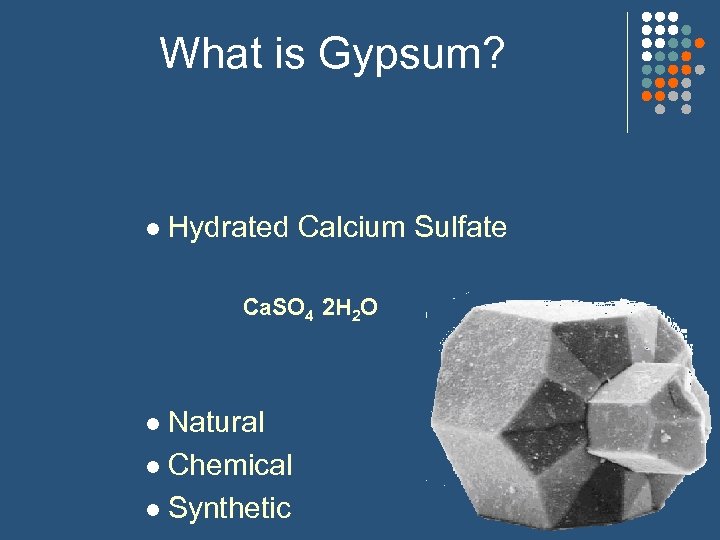 What is Gypsum? l Hydrated Calcium Sulfate Ca. SO 4 2 H 2 O Natural l Chemical l Synthetic l
 Gypsum Concrete Flooring l Specially formulated gypsum concrete plaster l Chemically sets (does not “cure”) l Does not shrink l 1000 -8000 compressive strengths
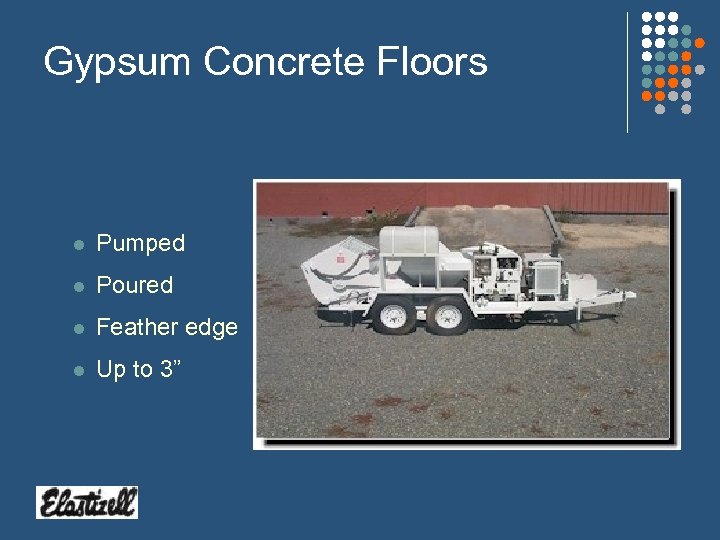 Gypsum Concrete Floors l Pumped l Poured l Feather edge l Up to 3”
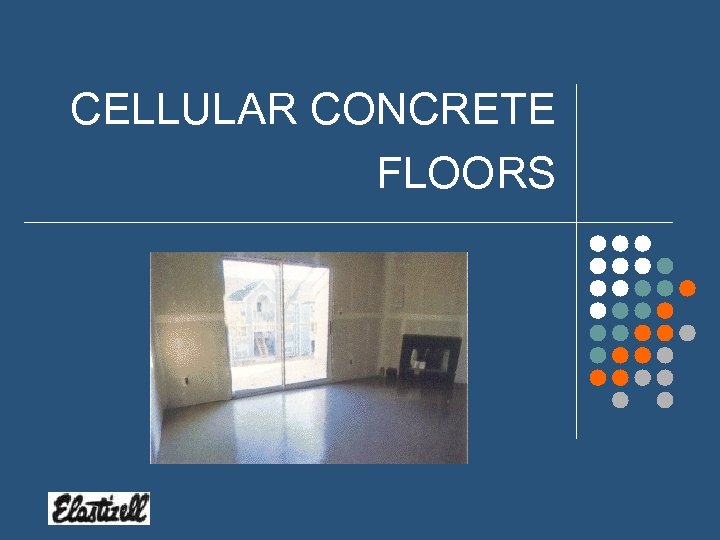 CELLULAR CONCRETE FLOORS
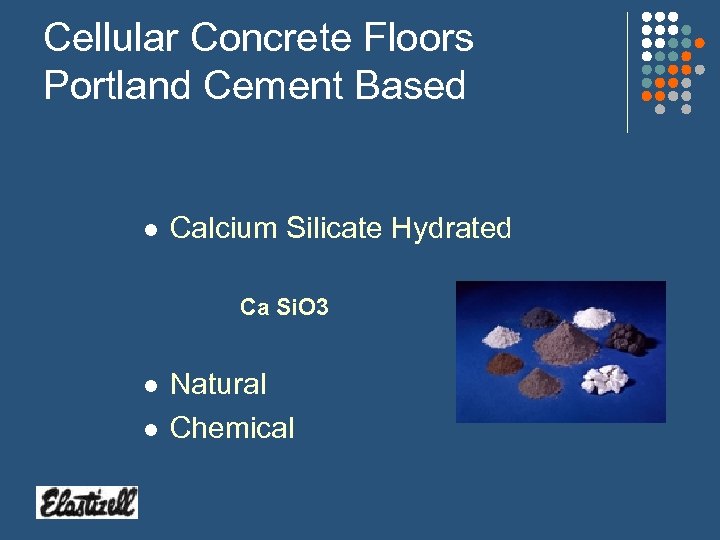 Cellular Concrete Floors Portland Cement Based l Calcium Silicate Hydrated Ca Si. O 3 l l Natural Chemical
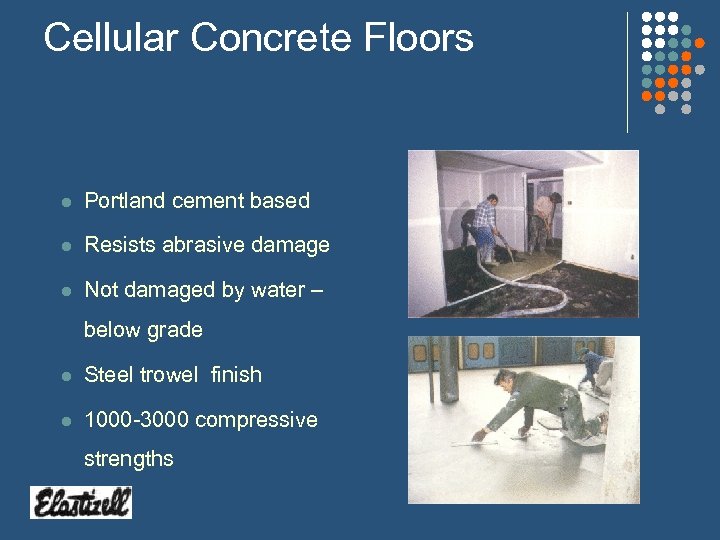 Cellular Concrete Floors l Portland cement based l Resists abrasive damage l Not damaged by water – below grade l Steel trowel finish l 1000 -3000 compressive strengths
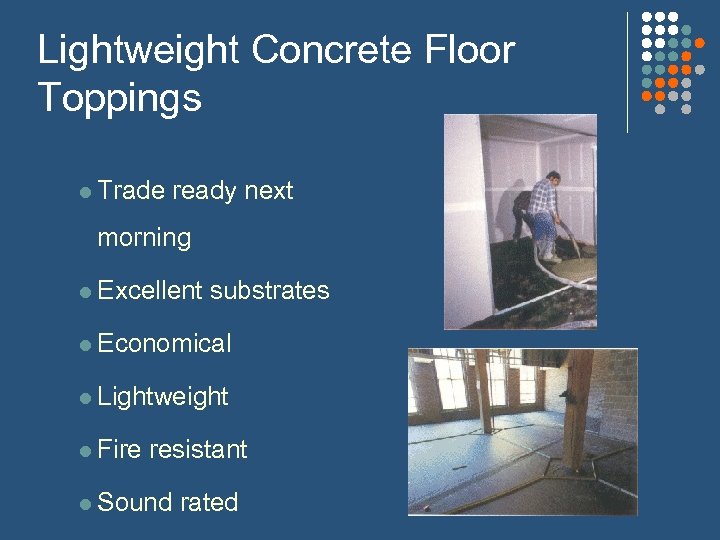 Lightweight Concrete Floor Toppings l Trade ready next morning l Excellent substrates l Economical l Lightweight l Fire resistant l Sound rated
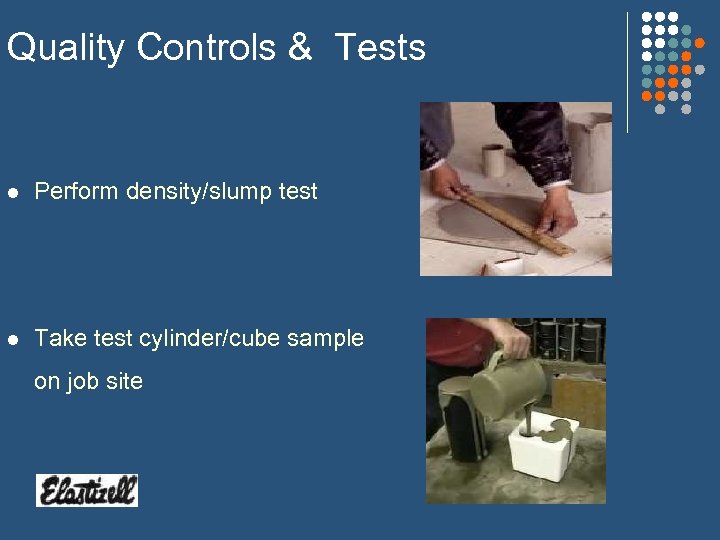 Quality Controls & Tests l Perform density/slump test l Take test cylinder/cube sample on job site
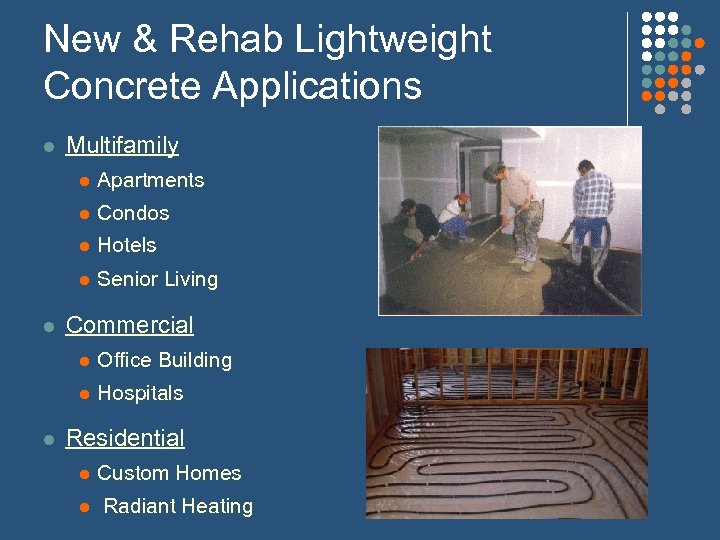 New & Rehab Lightweight Concrete Applications l Multifamily l l Condos l Hotels l l Apartments Senior Living Commercial l Office Building Hospitals Residential l l Custom Homes Radiant Heating
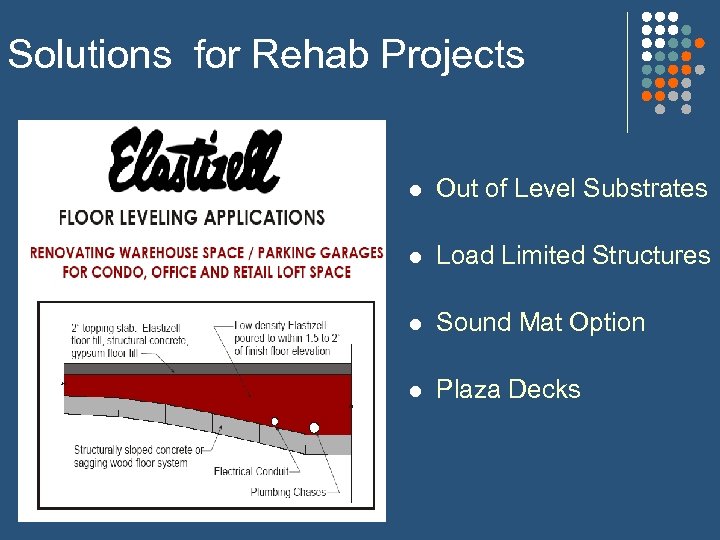 Solutions for Rehab Projects l Out of Level Substrates l Load Limited Structures l Sound Mat Option l Plaza Decks
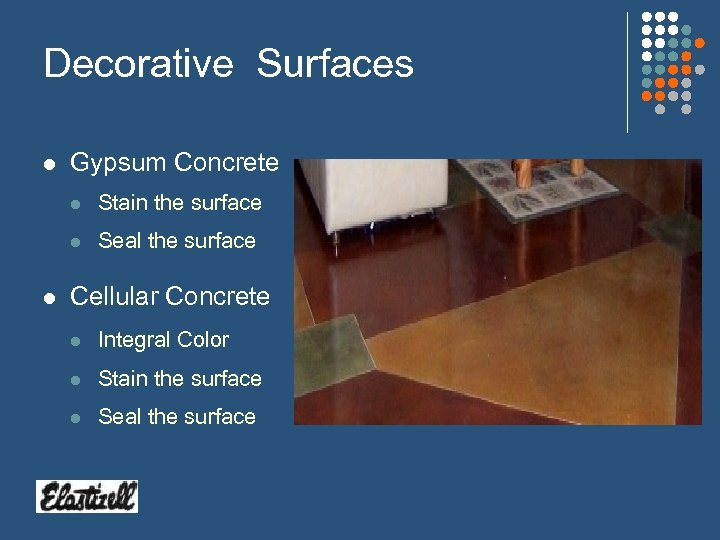 Decorative Surfaces l Gypsum Concrete l l l Stain the surface Seal the surface Cellular Concrete l Integral Color l Stain the surface l Seal the surface
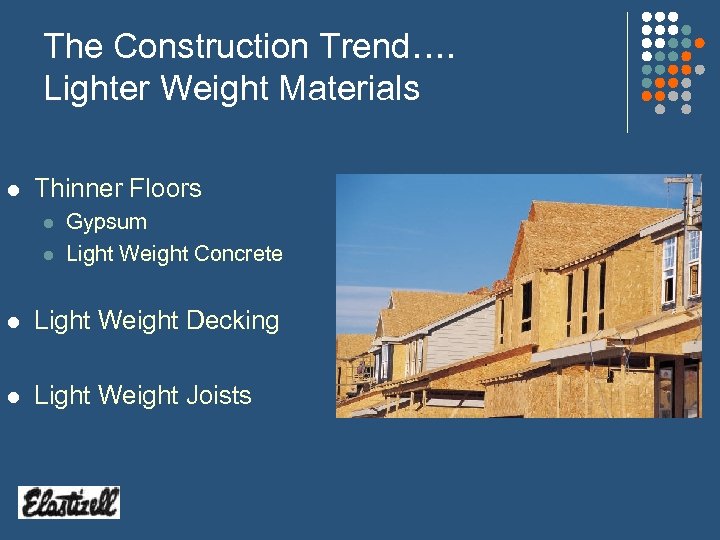 The Construction Trend…. Lighter Weight Materials l Thinner Floors l l Gypsum Light Weight Concrete l Light Weight Decking l Light Weight Joists
 Sound Control Issues
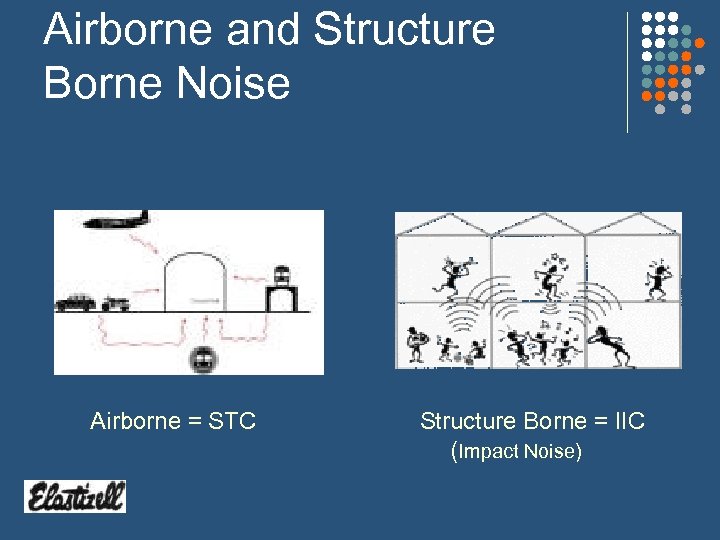 Airborne and Structure Borne Noise Airborne = STC Structure Borne = IIC (Impact Noise)
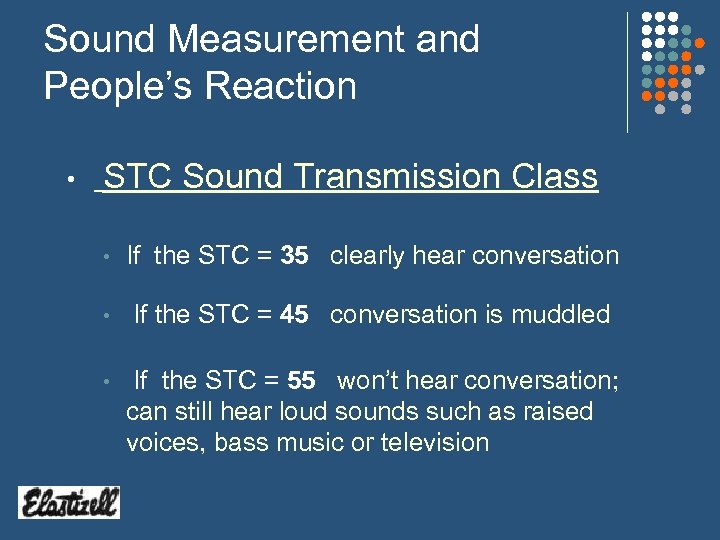 Sound Measurement and People’s Reaction • STC Sound Transmission Class • If the STC = 35 clearly hear conversation • If the STC = 45 conversation is muddled • If the STC = 55 won’t hear conversation; can still hear loud sounds such as raised voices, bass music or television
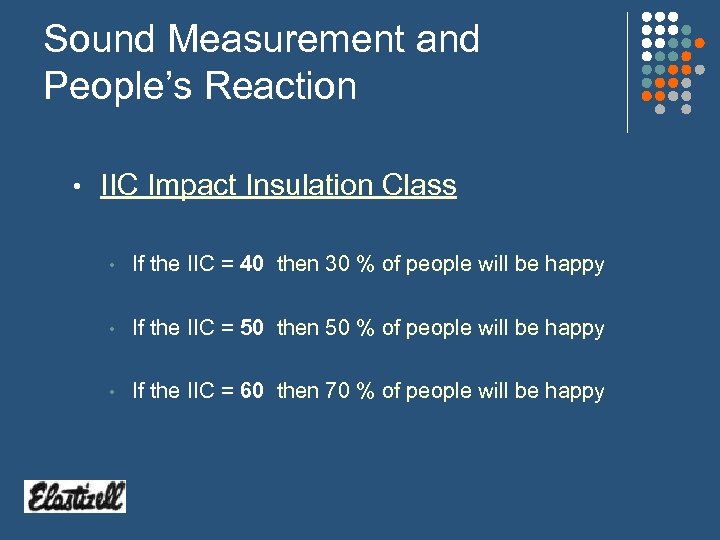 Sound Measurement and People’s Reaction • IIC Impact Insulation Class • If the IIC = 40 then 30 % of people will be happy • If the IIC = 50 then 50 % of people will be happy • If the IIC = 60 then 70 % of people will be happy
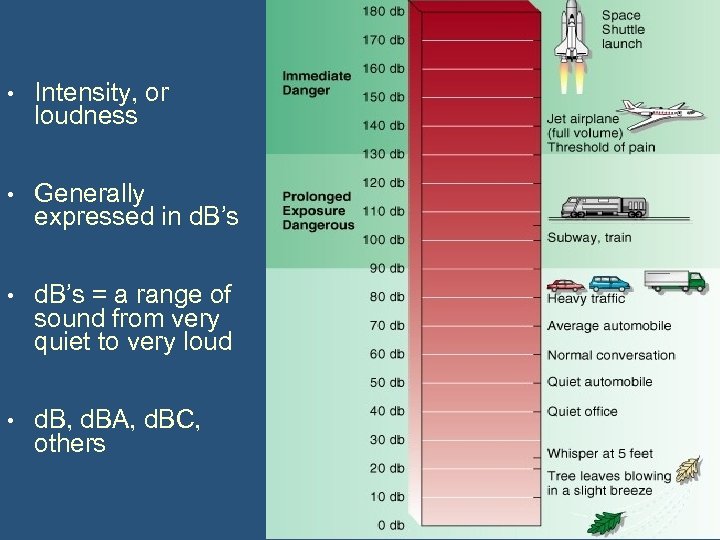 • Intensity, or loudness • Generally expressed in d. B’s • d. B’s = a range of sound from very quiet to very loud • d. B, d. BA, d. BC, others
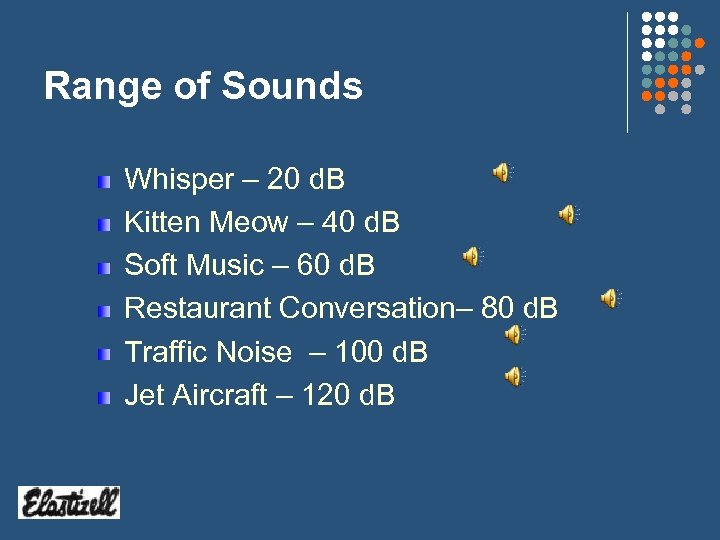 Range of Sounds Whisper – 20 d. B Kitten Meow – 40 d. B Soft Music – 60 d. B Restaurant Conversation– 80 d. B Traffic Noise – 100 d. B Jet Aircraft – 120 d. B
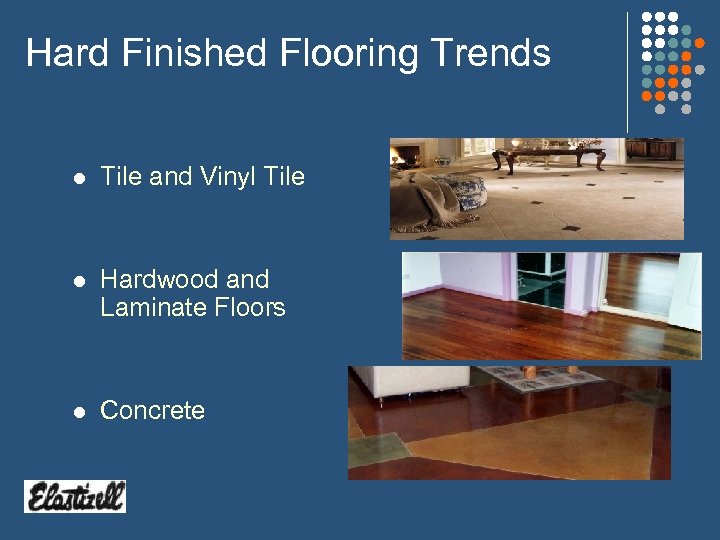 Hard Finished Flooring Trends l Tile and Vinyl Tile l Hardwood and Laminate Floors l Concrete
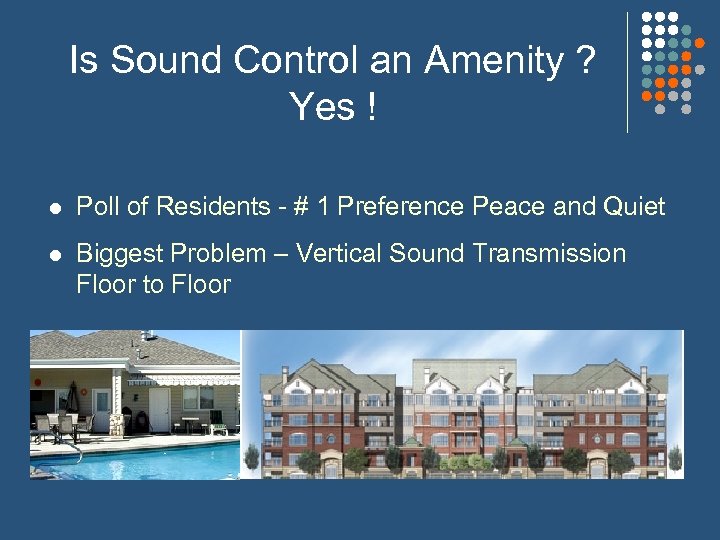 Is Sound Control an Amenity ? Yes ! l Poll of Residents - # 1 Preference Peace and Quiet l Biggest Problem – Vertical Sound Transmission Floor to Floor
 Building Codes • ICBO, BOCA, and SBCCI = IBC Code • St. Louis City and County are moving to IBC Code • Code Requires minimum performance IIC and STC for Floors of 50
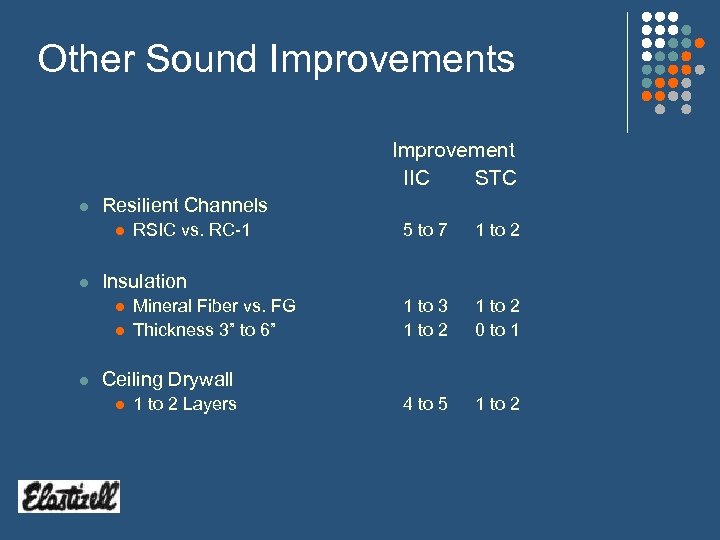 Other Sound Improvements Improvement IIC STC l Resilient Channels l l 5 to 7 1 to 2 1 to 3 1 to 2 0 to 1 4 to 5 1 to 2 Insulation l l l RSIC vs. RC-1 Mineral Fiber vs. FG Thickness 3” to 6” Ceiling Drywall l 1 to 2 Layers
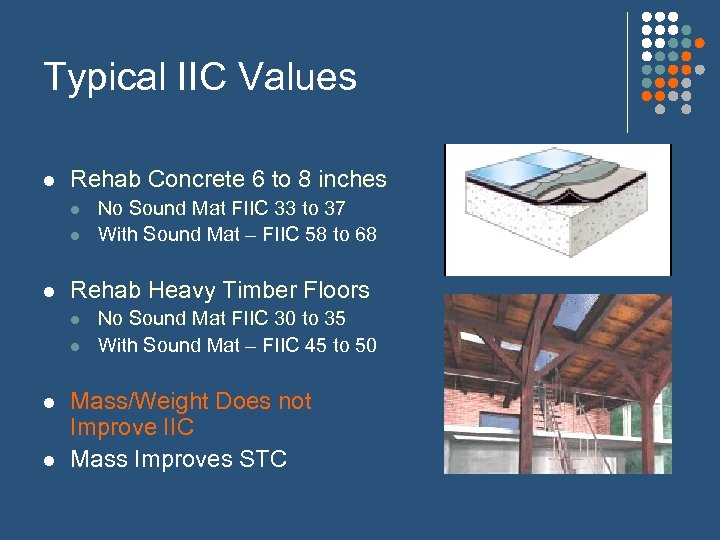 Typical IIC Values l Rehab Concrete 6 to 8 inches l l l Rehab Heavy Timber Floors l l No Sound Mat FIIC 33 to 37 With Sound Mat – FIIC 58 to 68 No Sound Mat FIIC 30 to 35 With Sound Mat – FIIC 45 to 50 Mass/Weight Does not Improve IIC Mass Improves STC
 Sound Control Summary l Impact noise is harder to control l Sound mat controls impact noise l Mass does NOT control Impact noise l Meeting code doesn’t mean meeting client expectations l Sound mats are The Best Choice
 Lightweight Concrete Summary l Floor Fills l l Roof Decks l l l Fire Rating Sound Attenuation Rehab Permanent Slope to Drain Engineered Fills l l l Geotechnical Solutions Low Cost Alternative Design Assistance