 Скачать презентацию EH 2750 Modelling planning problems using PDDL Arshad
4f31799d3cb12a43a29f4d5f8b06ed31.ppt
- Количество слайдов: 27



EH 2750 Modelling planning problems using PDDL Arshad Saleem 06 Oct, 2014 1
Contents • • Forward and Backward chaining PDLL Modeling example in PDDL modeling exercise 2
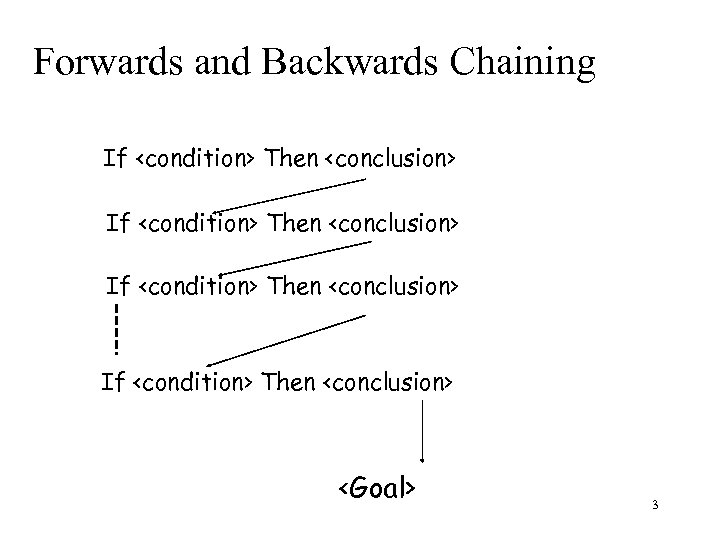
Forwards and Backwards Chaining If <condition> Then <conclusion> <Goal> 3
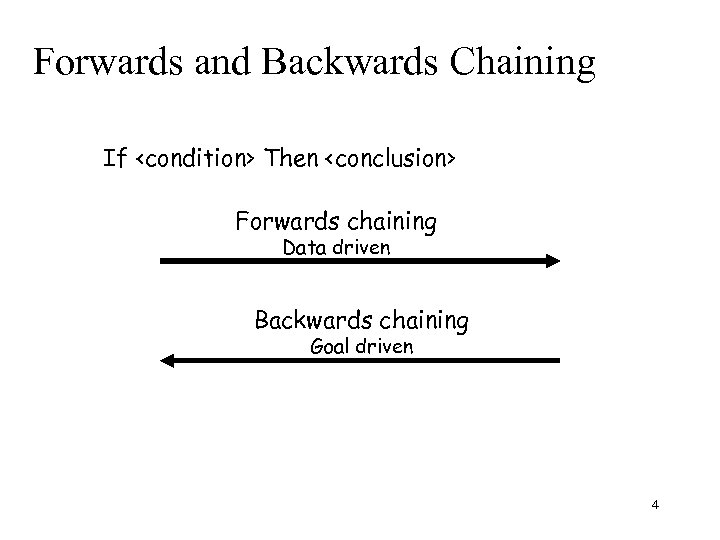
Forwards and Backwards Chaining If <condition> Then <conclusion> Forwards chaining Data driven Backwards chaining Goal driven 4
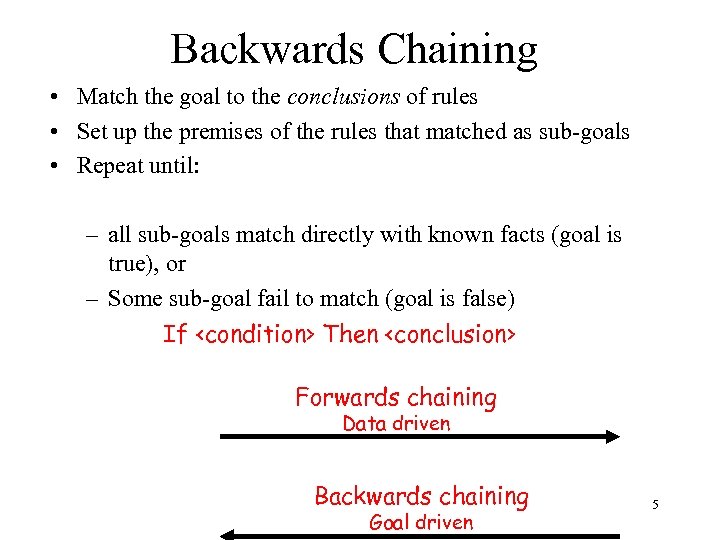
Backwards Chaining • Match the goal to the conclusions of rules • Set up the premises of the rules that matched as sub-goals • Repeat until: – all sub-goals match directly with known facts (goal is true), or – Some sub-goal fail to match (goal is false) If <condition> Then <conclusion> Forwards chaining Data driven Backwards chaining Goal driven 5
Backwards Chaining • There may be more than one rule which conclusion matches the goal (a conflict) • Choose the first rule we find which matches and continue the search by trying to match its premises • If this fails, we backtrack up one or more levels of rule and try again • Backward chaining is usually implemented as depth-first search 6
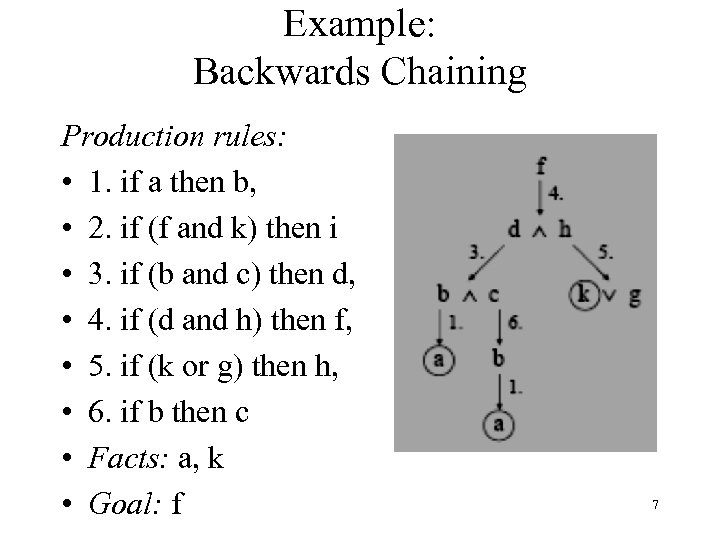
Example: Backwards Chaining Production rules: • 1. if a then b, • 2. if (f and k) then i • 3. if (b and c) then d, • 4. if (d and h) then f, • 5. if (k or g) then h, • 6. if b then c • Facts: a, k • Goal: f 7
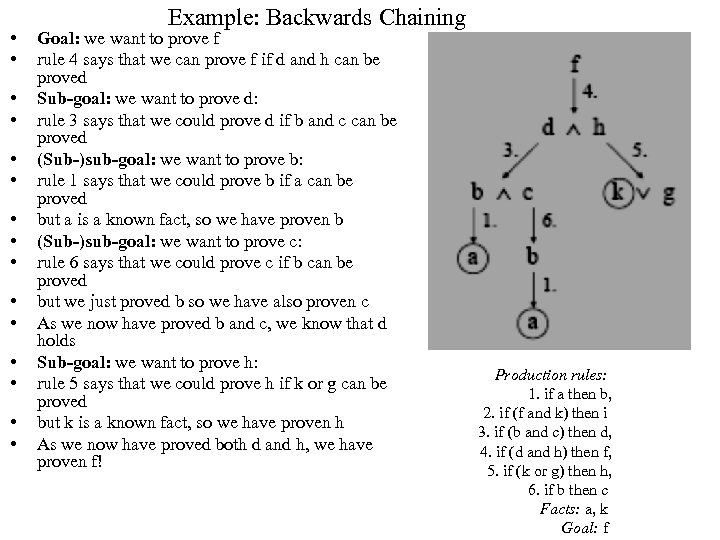
• • • • Example: Backwards Chaining Goal: we want to prove f rule 4 says that we can prove f if d and h can be proved Sub-goal: we want to prove d: rule 3 says that we could prove d if b and c can be proved (Sub-)sub-goal: we want to prove b: rule 1 says that we could prove b if a can be proved but a is a known fact, so we have proven b (Sub-)sub-goal: we want to prove c: rule 6 says that we could prove c if b can be proved but we just proved b so we have also proven c As we now have proved b and c, we know that d holds Sub-goal: we want to prove h: rule 5 says that we could prove h if k or g can be proved but k is a known fact, so we have proven h As we now have proved both d and h, we have proven f! Production rules: 1. if a then b, 2. if (f and k) then i 3. if (b and c) then d, 4. if (d and h) then f, 5. if (k or g) then h, 6. if b then c Facts: a, k Goal: f
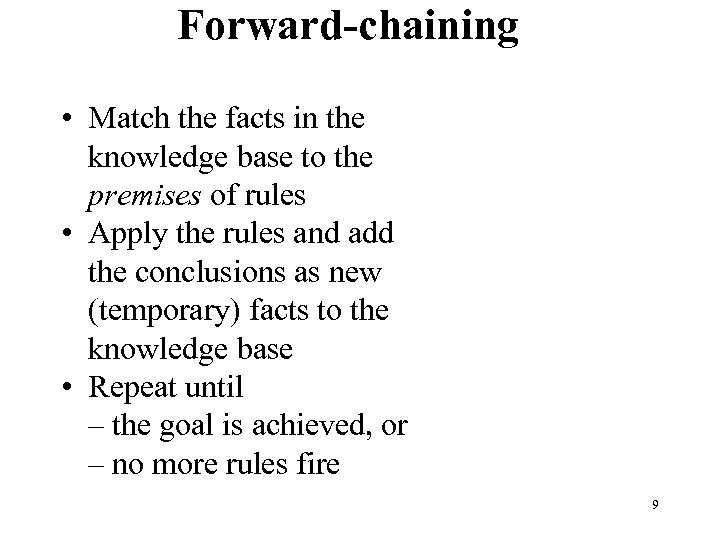
Forward-chaining • Match the facts in the knowledge base to the premises of rules • Apply the rules and add the conclusions as new (temporary) facts to the knowledge base • Repeat until – the goal is achieved, or – no more rules fire 9
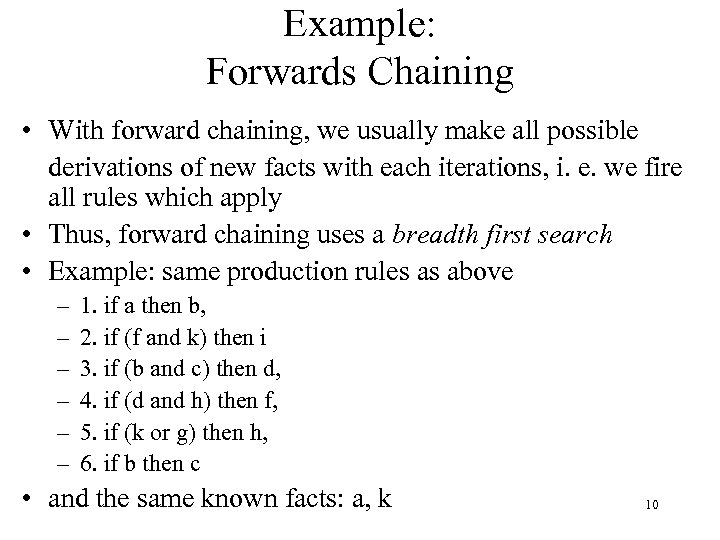
Example: Forwards Chaining • With forward chaining, we usually make all possible derivations of new facts with each iterations, i. e. we fire all rules which apply • Thus, forward chaining uses a breadth first search • Example: same production rules as above – – – 1. if a then b, 2. if (f and k) then i 3. if (b and c) then d, 4. if (d and h) then f, 5. if (k or g) then h, 6. if b then c • and the same known facts: a, k 10
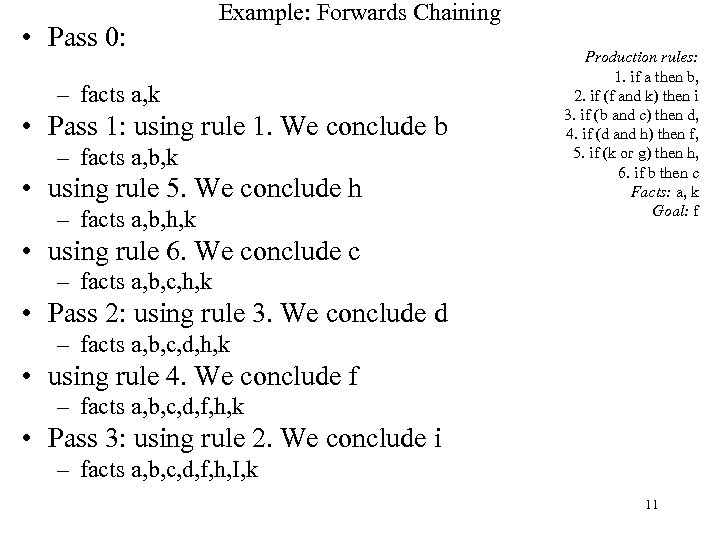
• Pass 0: Example: Forwards Chaining – facts a, k • Pass 1: using rule 1. We conclude b – facts a, b, k • using rule 5. We conclude h – facts a, b, h, k Production rules: 1. if a then b, 2. if (f and k) then i 3. if (b and c) then d, 4. if (d and h) then f, 5. if (k or g) then h, 6. if b then c Facts: a, k Goal: f • using rule 6. We conclude c – facts a, b, c, h, k • Pass 2: using rule 3. We conclude d – facts a, b, c, d, h, k • using rule 4. We conclude f – facts a, b, c, d, f, h, k • Pass 3: using rule 2. We conclude i – facts a, b, c, d, f, h, I, k 11
PDDL • A modeling language for • PDDL = Planning Domain Definition Language • Problems modeled in this language can be executed by a software (Java. FF library in our case) 12
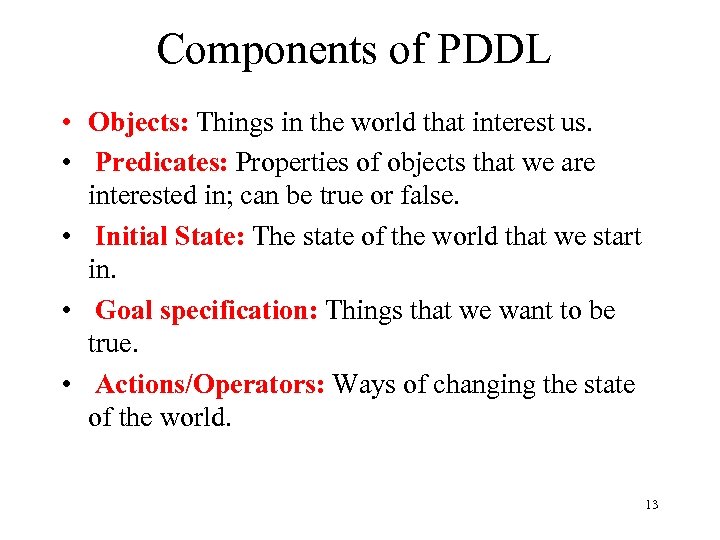
Components of PDDL • Objects: Things in the world that interest us. • Predicates: Properties of objects that we are interested in; can be true or false. • Initial State: The state of the world that we start in. • Goal specification: Things that we want to be true. • Actions/Operators: Ways of changing the state of the world. 13
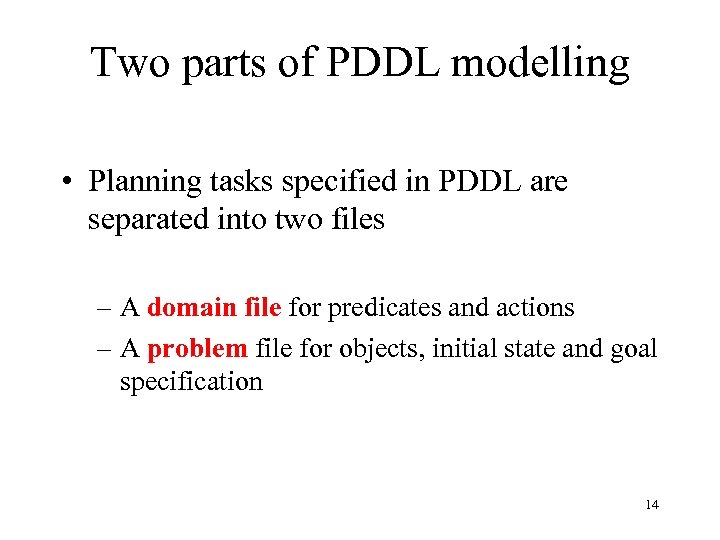
Two parts of PDDL modelling • Planning tasks specified in PDDL are separated into two files – A domain file for predicates and actions – A problem file for objects, initial state and goal specification 14
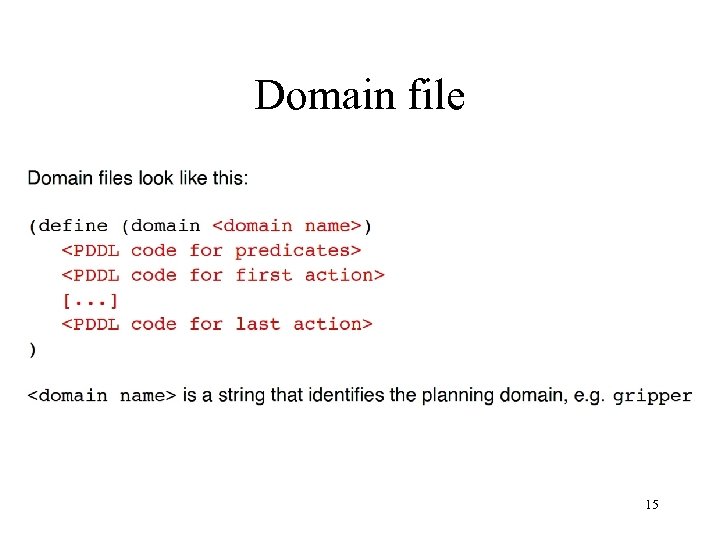
Domain file 15
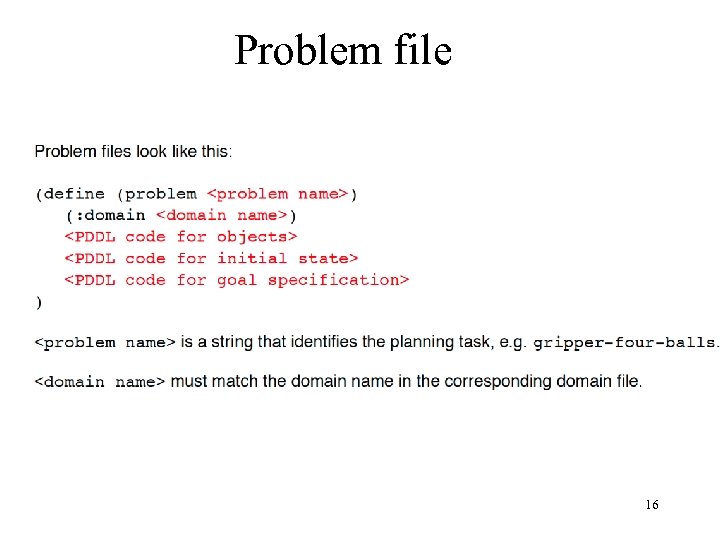
Problem file 16
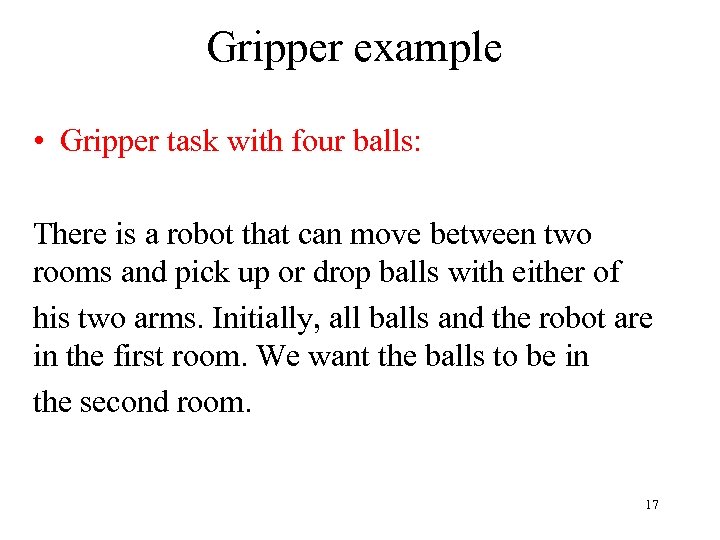
Gripper example • Gripper task with four balls: There is a robot that can move between two rooms and pick up or drop balls with either of his two arms. Initially, all balls and the robot are in the first room. We want the balls to be in the second room. 17
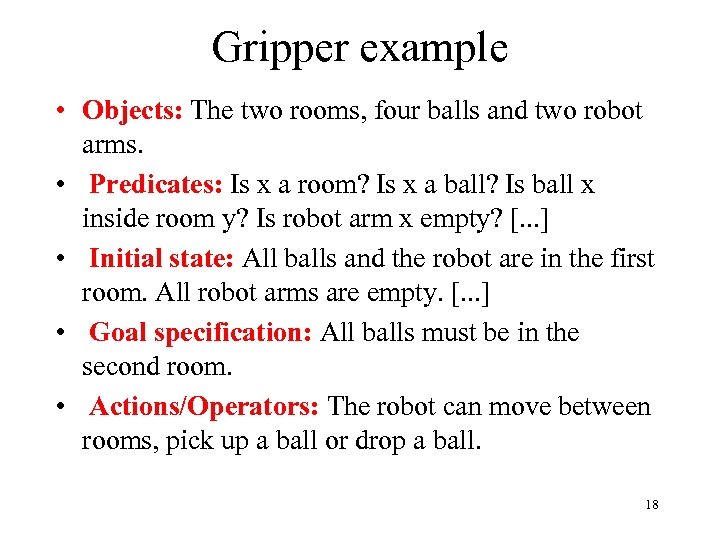
Gripper example • Objects: The two rooms, four balls and two robot arms. • Predicates: Is x a room? Is x a ball? Is ball x inside room y? Is robot arm x empty? [. . . ] • Initial state: All balls and the robot are in the first room. All robot arms are empty. [. . . ] • Goal specification: All balls must be in the second room. • Actions/Operators: The robot can move between rooms, pick up a ball or drop a ball. 18
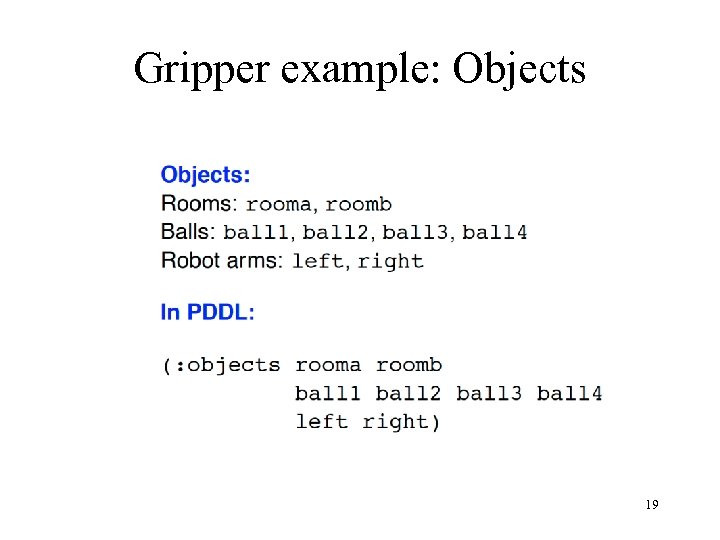
Gripper example: Objects 19
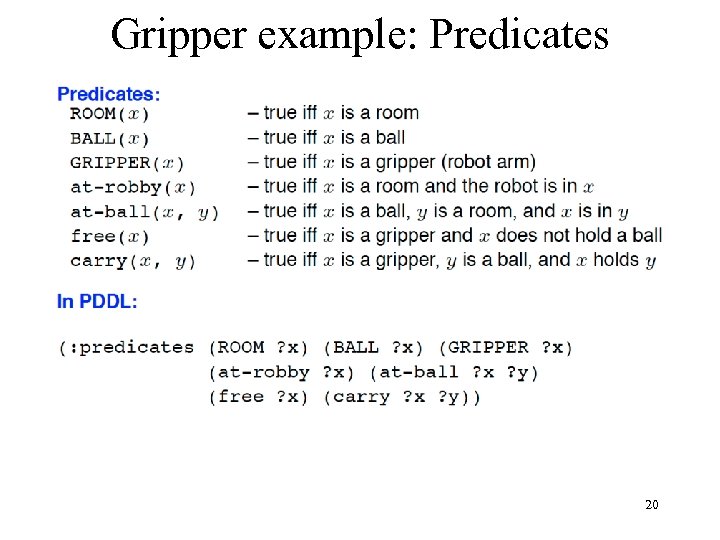
Gripper example: Predicates 20
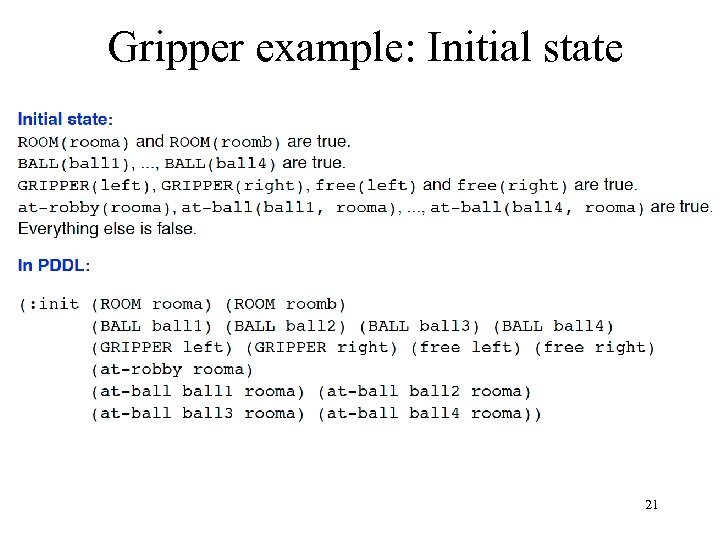
Gripper example: Initial state 21
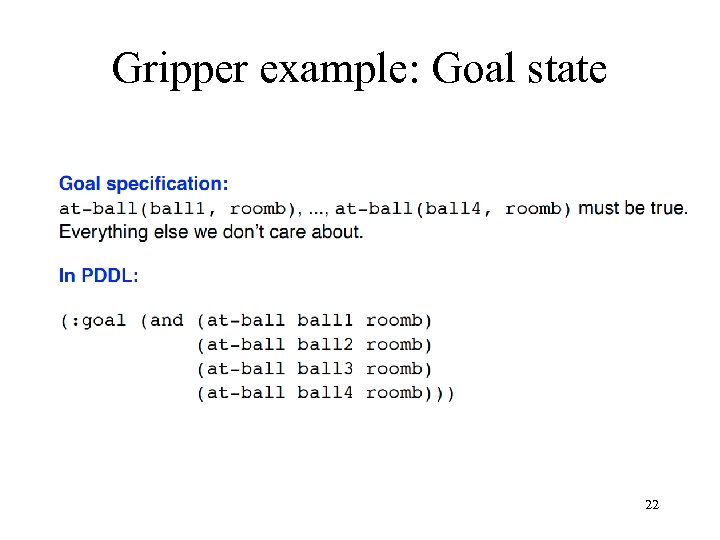
Gripper example: Goal state 22
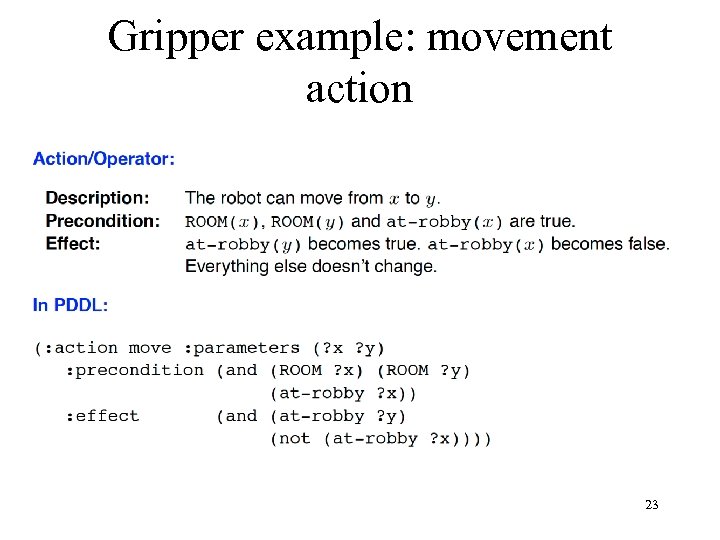
Gripper example: movement action 23
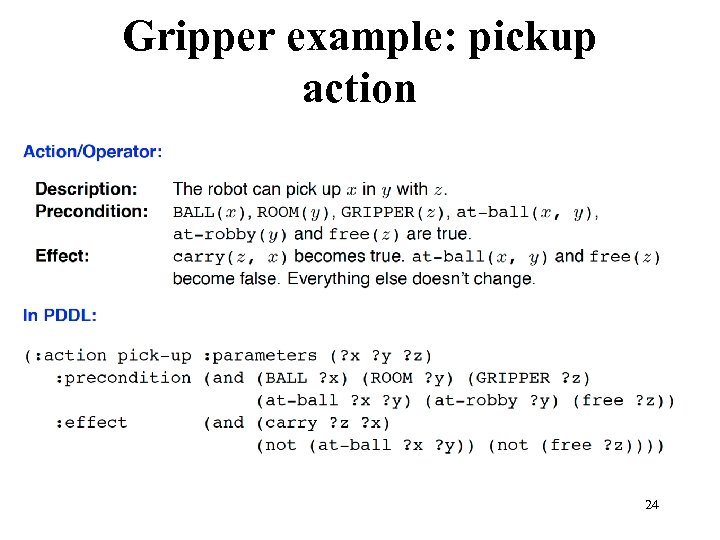
Gripper example: pickup action 24
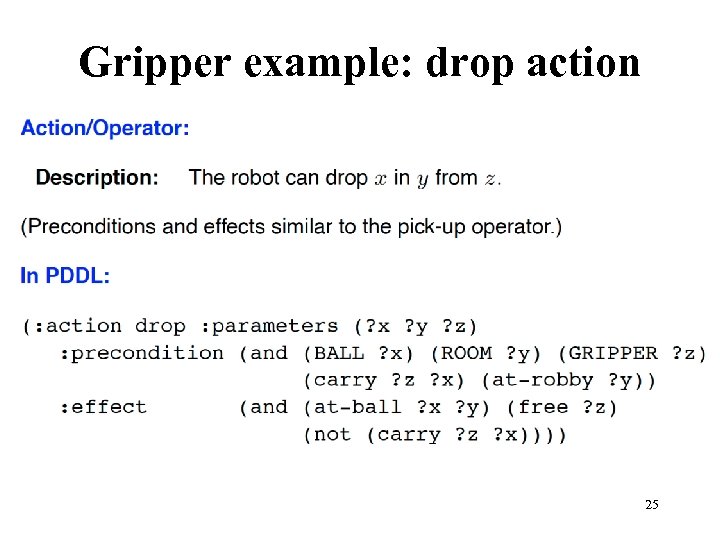
Gripper example: drop action 25
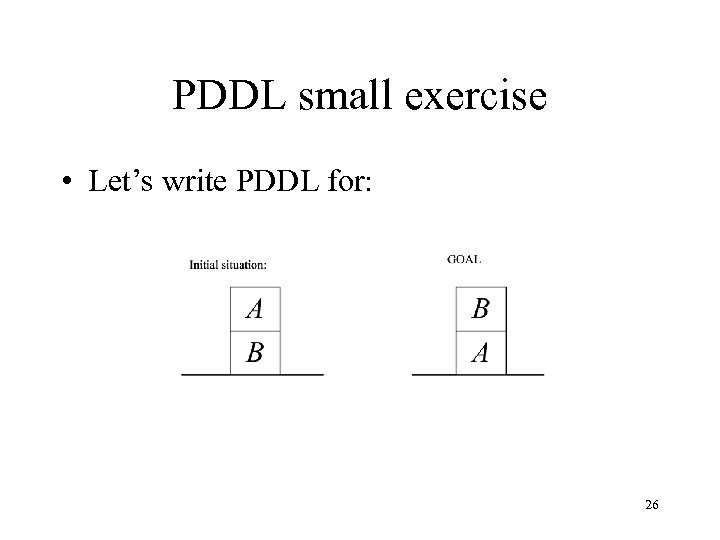
PDDL small exercise • Let’s write PDDL for: 26

Questions 27
Скачать презентацию EH 2750 Modelling planning problems using PDDL Arshad
4f31799d3cb12a43a29f4d5f8b06ed31.ppt