 Скачать презентацию EGO Everyone s Gliding Observatories Pierre Testor LOCEAN CNRS
b1fb8d6c7b93ba7d88e9064abb30345d.ppt
- Количество слайдов: 15



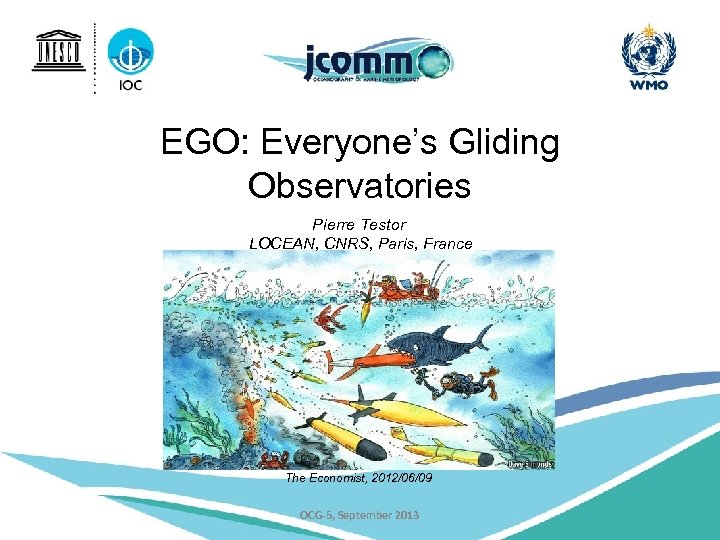
EGO: Everyone’s Gliding Observatories Pierre Testor LOCEAN, CNRS, Paris, France The Economist, 2012/06/09 OCG-5, September 2013
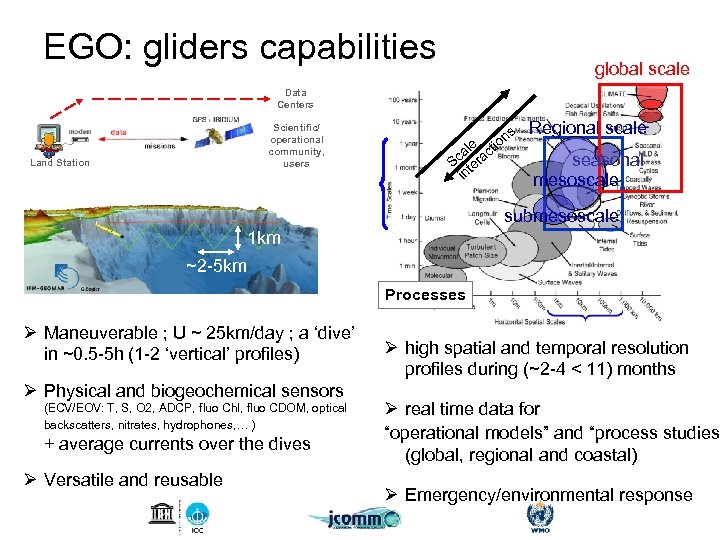
EGO: gliders capabilities global scale Data Centers Scientific/ operational community, users Land Station s n le ctio a Sc tera in Regional scale seasonal mesoscale submesoscale 1 km ~2 -5 km Processes Ø Maneuverable ; U ~ 25 km/day ; a ‘dive’ in ~0. 5 -5 h (1 -2 ‘vertical’ profiles) Ø Physical and biogeochemical sensors (ECV/EOV: T, S, O 2, ADCP, fluo Chl, fluo CDOM, optical backscatters, nitrates, hydrophones, … ) + average currents over the dives Ø Versatile and reusable Ø high spatial and temporal resolution profiles during (~2 -4 < 11) months Ø real time data for “operational models” and “process studies” (global, regional and coastal) Ø Emergency/environmental response
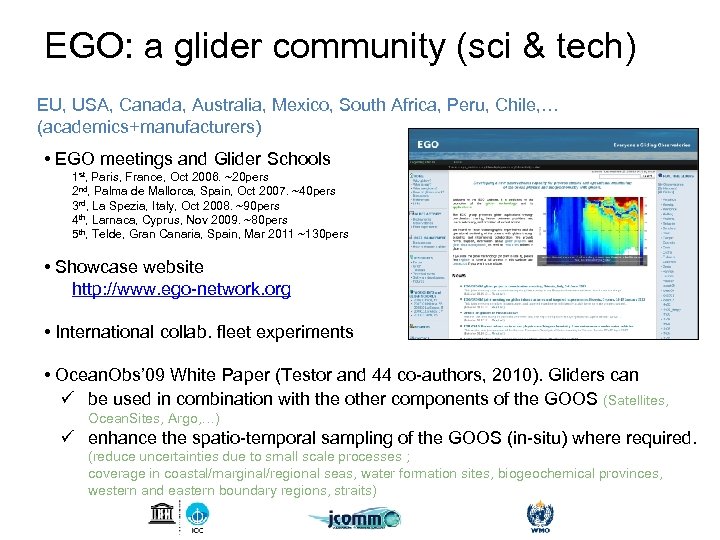
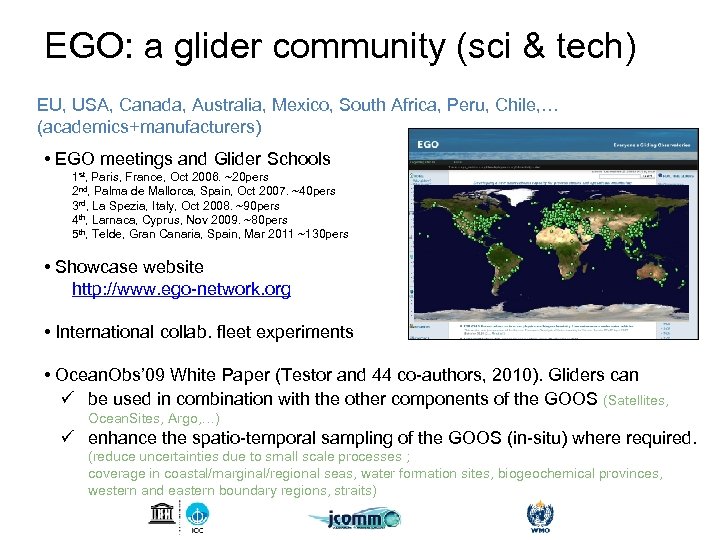
EGO: a glider community (sci & tech) EU, USA, Canada, Australia, Mexico, South Africa, Peru, Chile, … (academics+manufacturers) • EGO meetings and Glider Schools 1 st, Paris, France, Oct 2006. ~20 pers 2 nd, Palma de Mallorca, Spain, Oct 2007. ~40 pers 3 rd, La Spezia, Italy, Oct 2008. ~90 pers 4 th, Larnaca, Cyprus, Nov 2009. ~80 pers 5 th, Telde, Gran Canaria, Spain, Mar 2011 ~130 pers • Showcase website http: //www. ego-network. org • International collab. fleet experiments • Ocean. Obs’ 09 White Paper (Testor and 44 co-authors, 2010). Gliders can ü be used in combination with the other components of the GOOS (Satellites, Ocean. Sites, Argo, …) ü enhance the spatio-temporal sampling of the GOOS (in-situ) where required. (reduce uncertainties due to small scale processes ; coverage in coastal/marginal/regional seas, water formation sites, biogeochemical provinces, western and eastern boundary regions, straits)
EGO: a glider community (sci & tech) EU, USA, Canada, Australia, Mexico, South Africa, Peru, Chile, … (academics+manufacturers) • EGO meetings and Glider Schools 1 st, Paris, France, Oct 2006. ~20 pers 2 nd, Palma de Mallorca, Spain, Oct 2007. ~40 pers 3 rd, La Spezia, Italy, Oct 2008. ~90 pers 4 th, Larnaca, Cyprus, Nov 2009. ~80 pers 5 th, Telde, Gran Canaria, Spain, Mar 2011 ~130 pers • Showcase website http: //www. ego-network. org • International collab. fleet experiments • Ocean. Obs’ 09 White Paper (Testor and 44 co-authors, 2010). Gliders can ü be used in combination with the other components of the GOOS (Satellites, Ocean. Sites, Argo, …) ü enhance the spatio-temporal sampling of the GOOS (in-situ) where required. (reduce uncertainties due to small scale processes ; coverage in coastal/marginal/regional seas, water formation sites, biogeochemical provinces, western and eastern boundary regions, straits)
EGO: requirements-setting process/es Ocean. Obs’ 09 recommendations: ü the formation of the global glider system; ü the adoption of standards and a “Argo” like data system for gliders; ü the target of ~20 standard lines in the next 5 years and then, more; ü the setup of a network of shared resources and expertise; ü to distinguish between climate and process and NWP objectives; ü to establish the adoption of a common and accessible portal for glider data. Development in the framework of 3 main research communities: • USA: IOOS - NGN • Australia: IMOS - ANFOG • EU: – COST Action “ES 0904 - EGO” (coordination/wide-open: include Australia, South Africa, Israel, Mexico, … Canada, Peru, Chile, …) – FP 7 Research Infrastructure design study “GROOM” Gliders for Research, Ocean Observation and Management (WP 2 Integration into the GOOS) http: //www. ego-cost. eu http: //www. groom-fp 7. eu
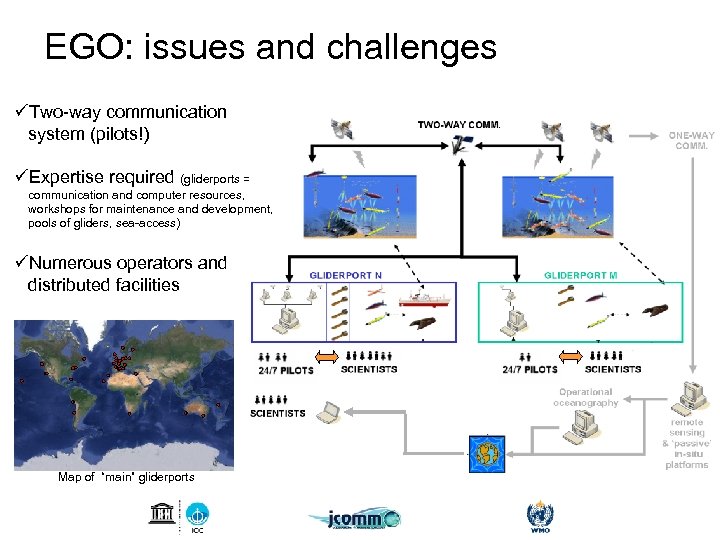
EGO: issues and challenges üTwo-way communication system (pilots!) üExpertise required (gliderports = communication and computer resources, workshops for maintenance and development, pools of gliders, sea-access) üNumerous operators and distributed facilities Map of “main” gliderports
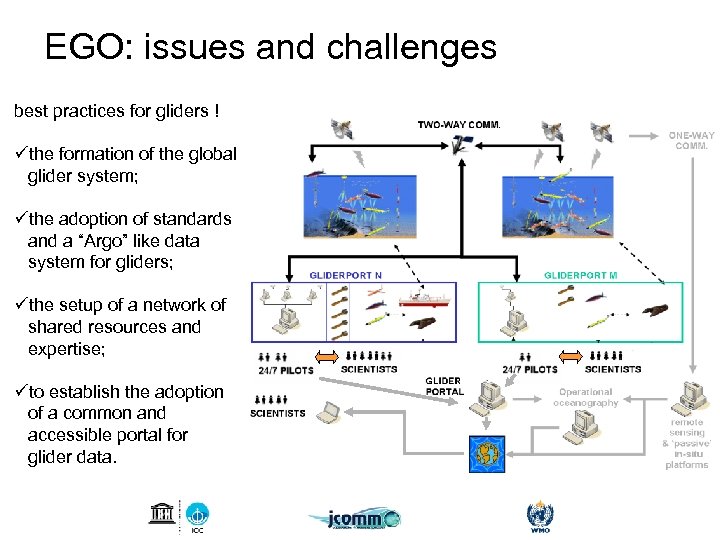
EGO: issues and challenges best practices for gliders ! üthe formation of the global glider system; üthe adoption of standards and a “Argo” like data system for gliders; üthe setup of a network of shared resources and expertise; üto establish the adoption of a common and accessible portal for glider data.
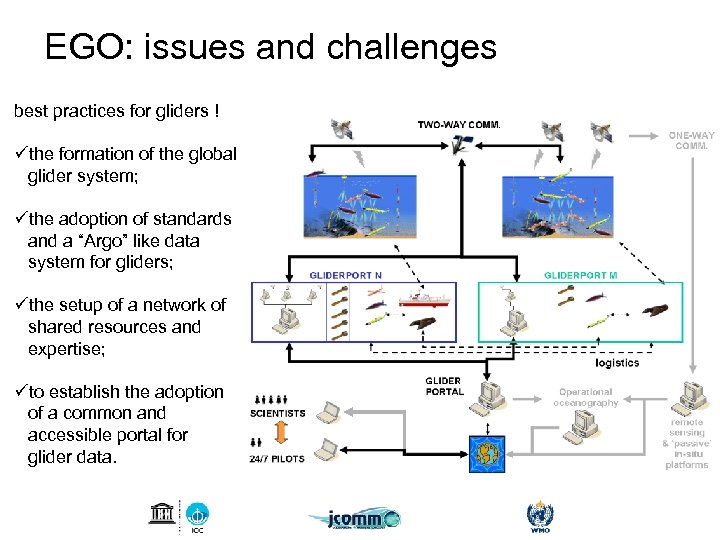
EGO: issues and challenges best practices for gliders ! üthe formation of the global glider system; üthe adoption of standards and a “Argo” like data system for gliders; üthe setup of a network of shared resources and expertise; üto establish the adoption of a common and accessible portal for glider data.
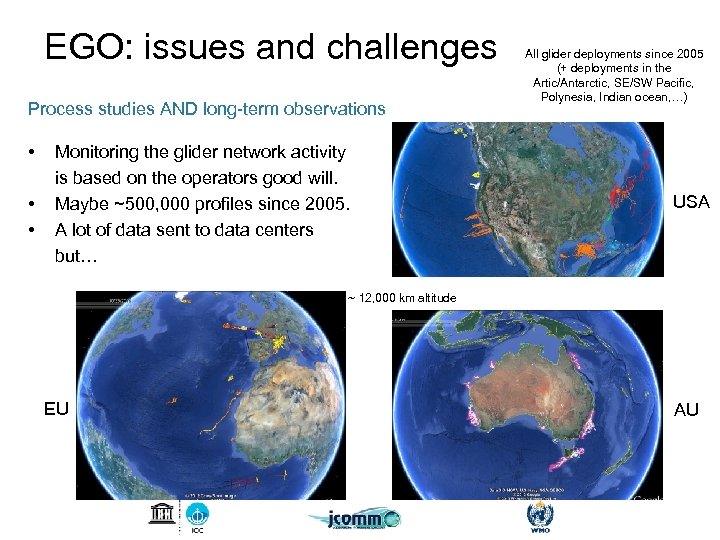
EGO: issues and challenges Process studies AND long-term observations • • • Monitoring the glider network activity is based on the operators good will. Maybe ~500, 000 profiles since 2005. A lot of data sent to data centers but… All glider deployments since 2005 (+ deployments in the Artic/Antarctic, SE/SW Pacific, Polynesia, Indian ocean, …) USA ~ 12, 000 km altitude EU AU
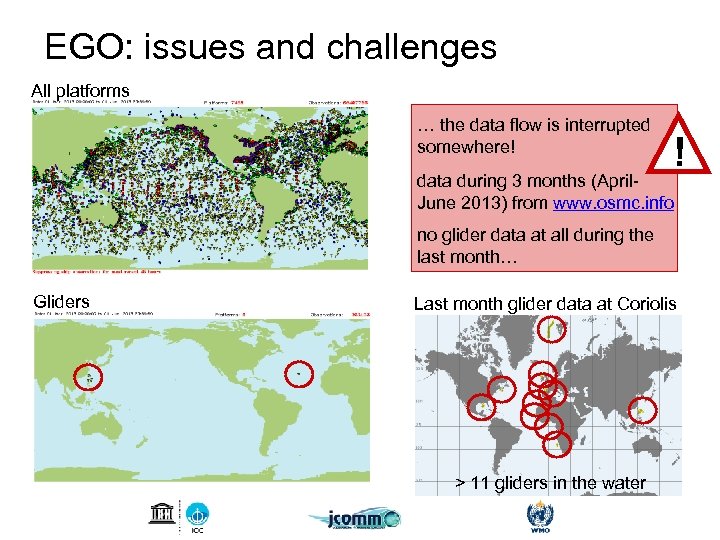
EGO: issues and challenges All platforms … the data flow is interrupted somewhere! ! data during 3 months (April. June 2013) from www. osmc. info no glider data at all during the last month… Gliders Last month glider data at Coriolis > 11 gliders in the water
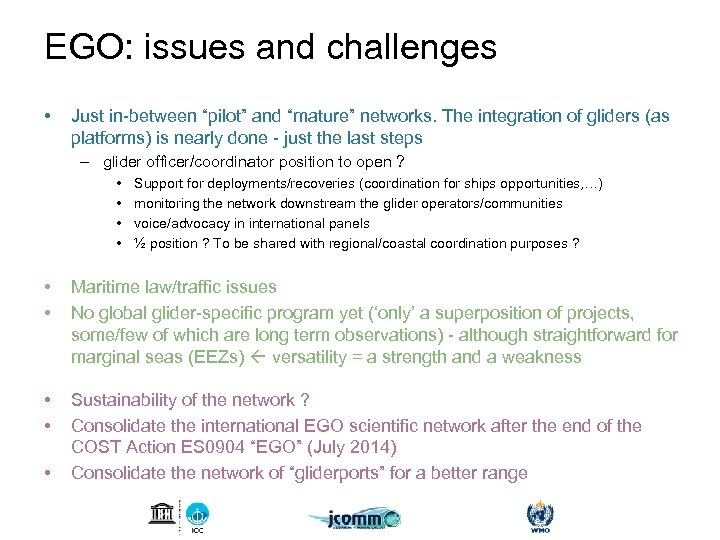
EGO: issues and challenges • Just in-between “pilot” and “mature” networks. The integration of gliders (as platforms) is nearly done - just the last steps – glider officer/coordinator position to open ? • • Support for deployments/recoveries (coordination for ships opportunities, …) monitoring the network downstream the glider operators/communities voice/advocacy in international panels ½ position ? To be shared with regional/coastal coordination purposes ? • • Maritime law/traffic issues No global glider-specific program yet (‘only’ a superposition of projects, some/few of which are long term observations) - although straightforward for marginal seas (EEZs) versatility = a strength and a weakness • • Sustainability of the network ? Consolidate the international EGO scientific network after the end of the COST Action ES 0904 “EGO” (July 2014) Consolidate the network of “gliderports” for a better range •
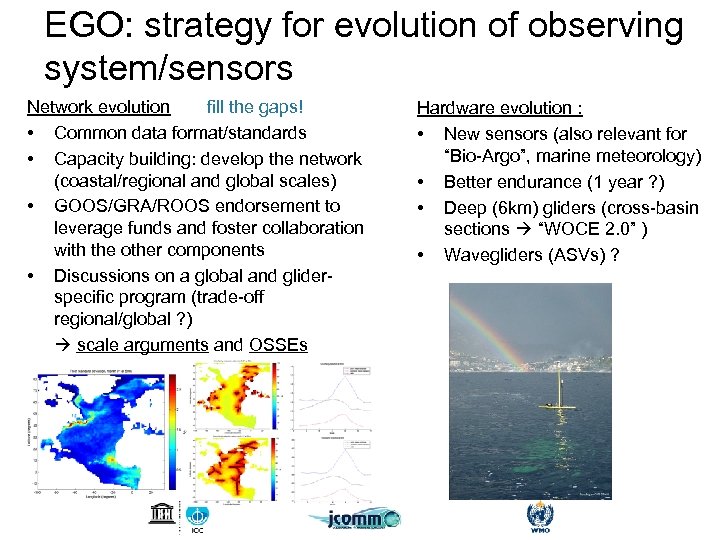
EGO: strategy for evolution of observing system/sensors Network evolution fill the gaps! • Common data format/standards • Capacity building: develop the network (coastal/regional and global scales) • GOOS/GRA/ROOS endorsement to leverage funds and foster collaboration with the other components • Discussions on a global and gliderspecific program (trade-off regional/global ? ) scale arguments and OSSEs Hardware evolution : • New sensors (also relevant for “Bio-Argo”, marine meteorology) • Better endurance (1 year ? ) • Deep (6 km) gliders (cross-basin sections “WOCE 2. 0” ) • Wavegliders (ASVs) ?
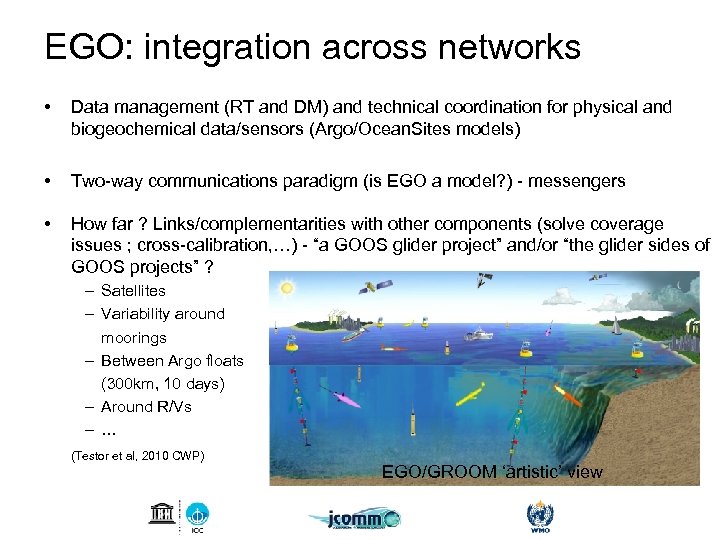
EGO: integration across networks • Data management (RT and DM) and technical coordination for physical and biogeochemical data/sensors (Argo/Ocean. Sites models) • Two-way communications paradigm (is EGO a model? ) - messengers • How far ? Links/complementarities with other components (solve coverage issues ; cross-calibration, …) - “a GOOS glider project” and/or “the glider sides of GOOS projects” ? – Satellites – Variability around moorings – Between Argo floats (300 km, 10 days) – Around R/Vs – … (Testor et al, 2010 CWP) EGO/GROOM ‘artistic’ view
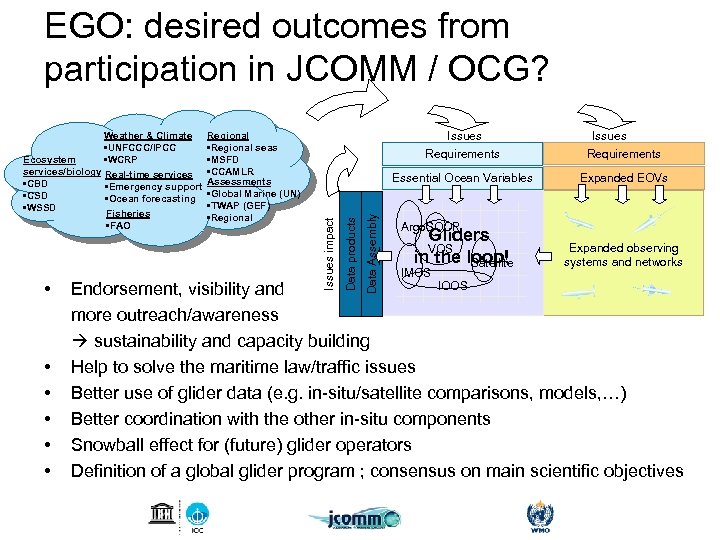
EGO: desired outcomes from participation in JCOMM / OCG? • • • Data Assembly Data products • Issues Requirements Essential Ocean Variables Issues impact Regional • Regional seas • MSFD Ecosystem services/biology Real-time services • CCAMLR • CBD • Emergency support Assessments • CSD • Ocean forecasting • Global Marine (UN) • TWAP (GEF) • WSSD Fisheries • Regional • FAO Issues Requirements Weather & Climate • UNFCCC/IPCC • WCRP Expanded EOVs Argo. SOOP Gliders in the loop! Satellite VOS IMOS Expanded observing systems and networks IOOS Endorsement, visibility and more outreach/awareness sustainability and capacity building Help to solve the maritime law/traffic issues Better use of glider data (e. g. in-situ/satellite comparisons, models, …) Better coordination with the other in-situ components Snowball effect for (future) glider operators Definition of a global glider program ; consensus on main scientific objectives
! Thank you !
Скачать презентацию EGO Everyone s Gliding Observatories Pierre Testor LOCEAN CNRS
b1fb8d6c7b93ba7d88e9064abb30345d.ppt