


 Скачать презентацию EGEE 102 Energy Conservation And Environmental Protection
b683bc76be22f7e6dcb1279af6202552.ppt
- Количество слайдов: 16
 EGEE 102 – Energy Conservation And Environmental Protection Global Warming EGEE 102 - Pisupati
 EGEE 102 - Pisupati 2
 Greenhouse Gases • Carbon dioxide • combustion of solid waste, fossil fuels (oil, natural gas, and coal), and wood products • Methane : • production and transport of coal, natural gas, and oil. Methane emissions also result from the decomposition of organic wastes in municipal solid waste landfills, and the raising of livestock. • Nitrous oxide • agricultural and industrial activities, as well as during combustion of solid waste and fossil fuels. • hydrofluorocarbons (HFCs), perfluorocarbons (PFCs), and sulfur hexafluoride (SF 6), • industrial processes. Source: http: //www. epa. gov/globalwarming/emissions/index. html EGEE 102 - Pisupati 3
 Temperature Changes EGEE 102 - Pisupati 4
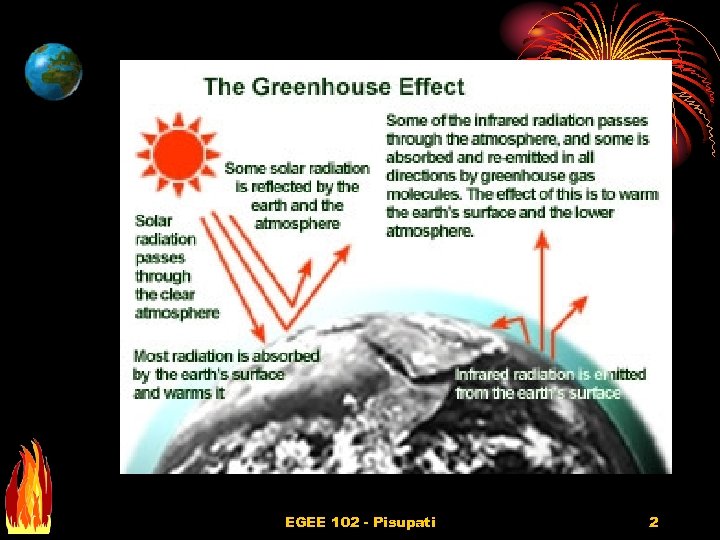
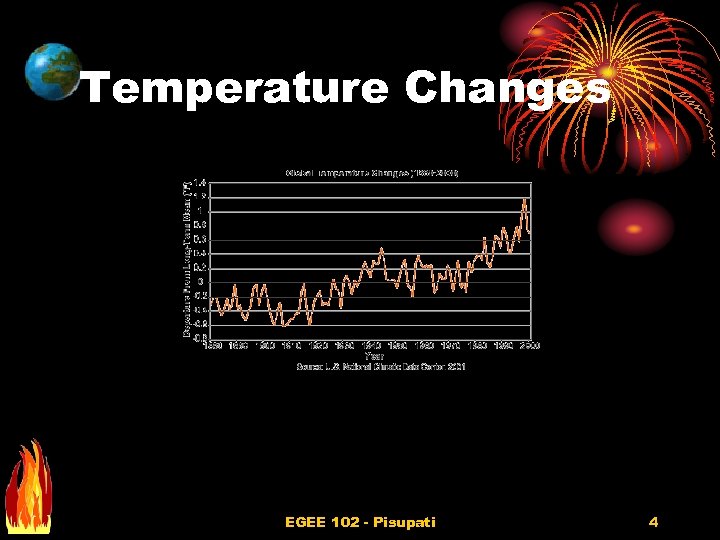
 GHG Emissions Increase • Since pre-industrial times atmospheric concentrations of CO 2, CH 4 and N 2 O have climbed by over 31%, 151% and 17%, respectively. Scientists have confirmed this is primarily due to human activity. Burning coal, oil and gas, and cutting down forests are largely responsible. EGEE 102 - Pisupati 5
 Global Warming • Cut your utility bills by purchasing energy-efficient appliances, fixtures, and other home equipment and products. The average house is responsible for more air pollution and carbon dioxide emissions than is the average car. EGEE 102 - Pisupati 6
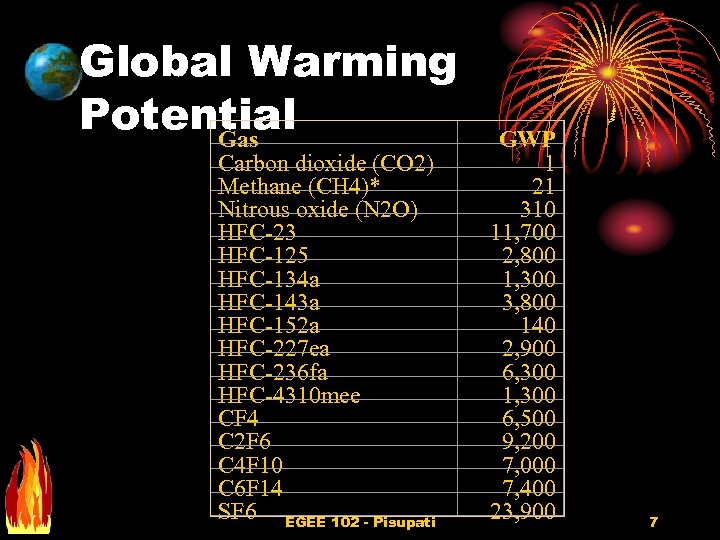 Global Warming Potential Gas Carbon dioxide (CO 2) Methane (CH 4)* Nitrous oxide (N 2 O) HFC-23 HFC-125 HFC-134 a HFC-143 a HFC-152 a HFC-227 ea HFC-236 fa HFC-4310 mee CF 4 C 2 F 6 C 4 F 10 C 6 F 14 SF 6 EGEE 102 - Pisupati GWP 1 21 310 11, 700 2, 800 1, 300 3, 800 140 2, 900 6, 300 1, 300 6, 500 9, 200 7, 000 7, 400 23, 900 7
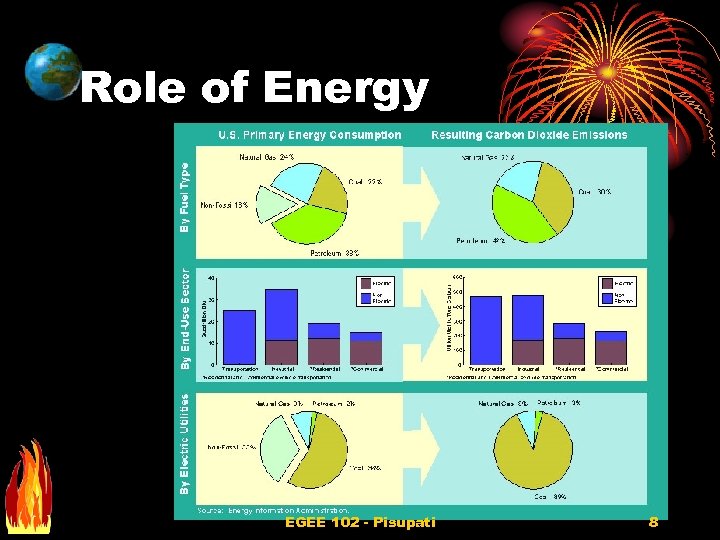 Role of Energy EGEE 102 - Pisupati 8
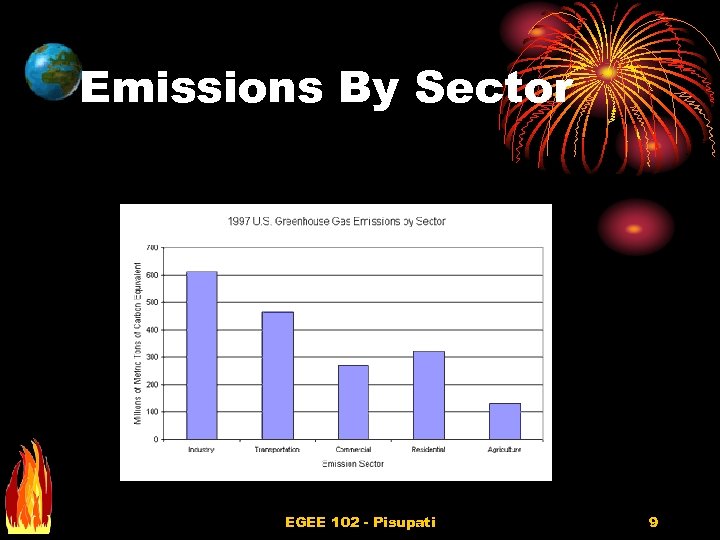 Emissions By Sector EGEE 102 - Pisupati 9
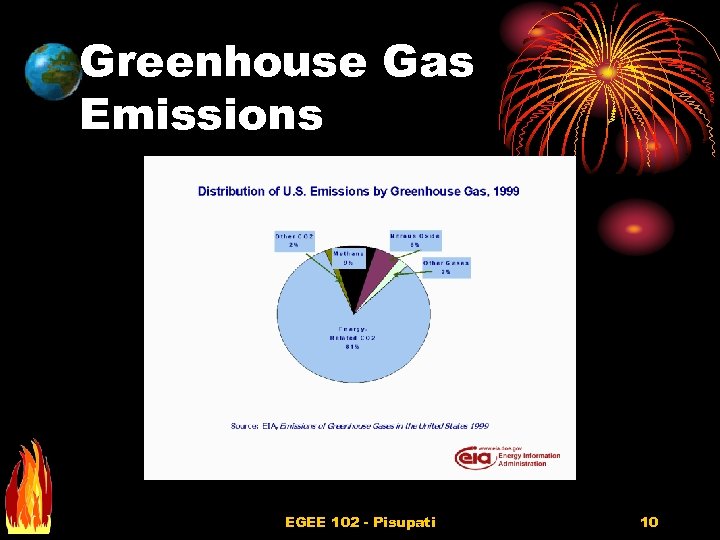 Greenhouse Gas Emissions EGEE 102 - Pisupati 10
 Individual Emissions • In the United States, approximately 6. 6 tons (almost 15, 000 pounds carbon equivalent) of greenhouse gases are emitted person every year. And emissions person have increased about 3. 4% between 1990 and 1997. Most of these emissions, about 82%, are from burning fossil fuels to generate EGEE 102 - Pisupati 11 electricity and power our cars.
 Effects • • • Health Water resources Polar regions Mountains Required Reading: Forests http: //www. epa. gov/globalwarming/ Rangelands impacts/index. html Deserts Coastal Zones Agriculture International EGEE 102 - Pisupati 12
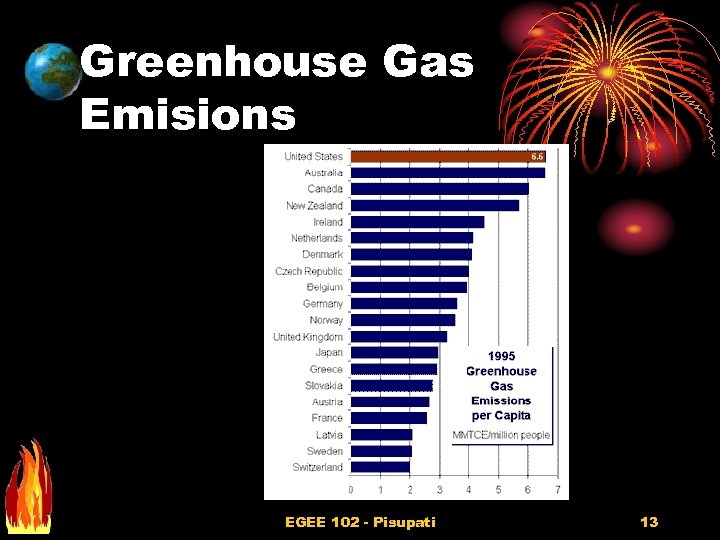 Greenhouse Gas Emisions EGEE 102 - Pisupati 13
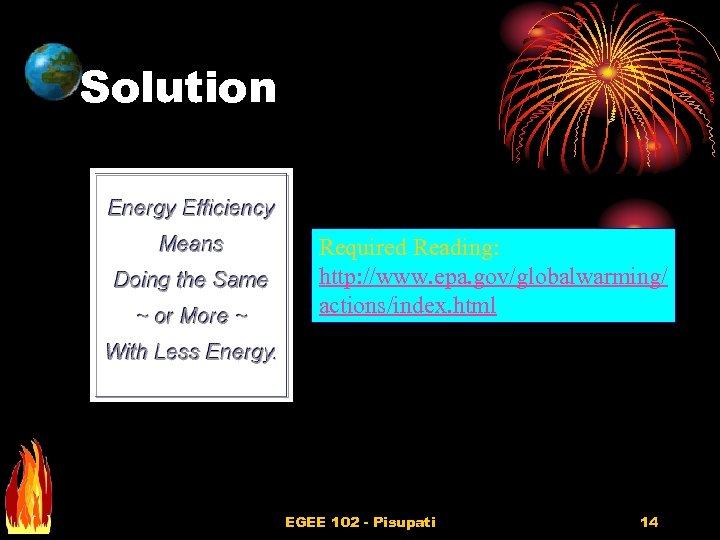 Solution Required Reading: http: //www. epa. gov/globalwarming/ actions/index. html EGEE 102 - Pisupati 14
 Class Videos • Race to Save the Planet • The Greening of the world Continues EGEE 102 - Pisupati 15
 Required Additional Reading • http: //www. epa. gov/globalwarming/c limate/index. html • http: //www. epa. gov/globalwarming/a ctions/individual/difference/index. ht ml • http: //www. giss. nasa. gov/edu/gwde bate/ EGEE 102 - Pisupati 16