 Скачать презентацию Efficiently Distributing Component-Based Applications Across Wide-Area Environments D
1fbc790be13a3fd5ed7a2ae318112445.ppt
- Количество слайдов: 24



Efficiently Distributing Component-Based Applications Across Wide-Area Environments D. Llambiri, A. Totok, V. Karamcheti New York University
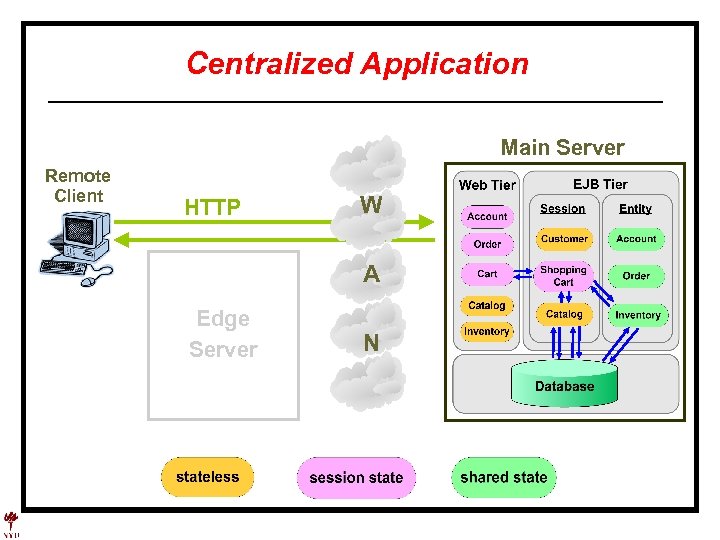
Problem Setting u Two major trends in designing and deploying internetaccessible services · Component middleware (J 2 EE, CORBA CM, . NET) – integrated execution environment for pluggable components – support for transactions, security, persistence, etc. · Bringing application data closer to clients – caching of static content – web content distribution networks (Akamai) – edge data processing (Akamai Edge. Suite, IBM Web. Sphere) u Is it beneficial to combine the two trends? · Component middleware allows distributed deployment
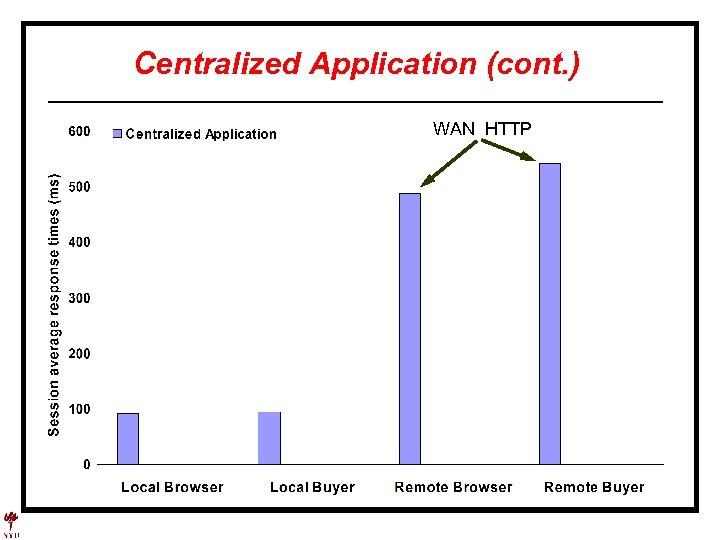
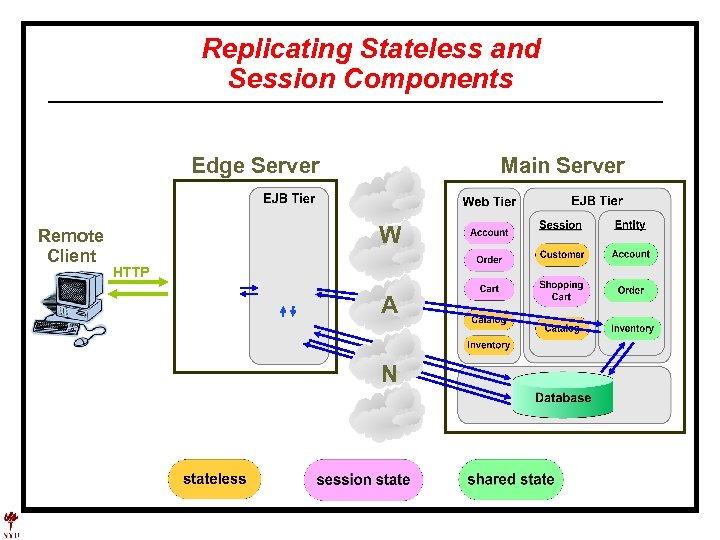
Distributed Deployment of Component-based Applications u Provides several benefits · faster client response times · increased service availability · replication/redeployment of “hot” components on demand u However, need to address two questions/challenges · Can component-based applications benefit from distributed, edge deployment in wide-area environments? · How this distribution should be done to minimize programming effort from the developers? u This study answers these questions · Larger context: Mutable Services project
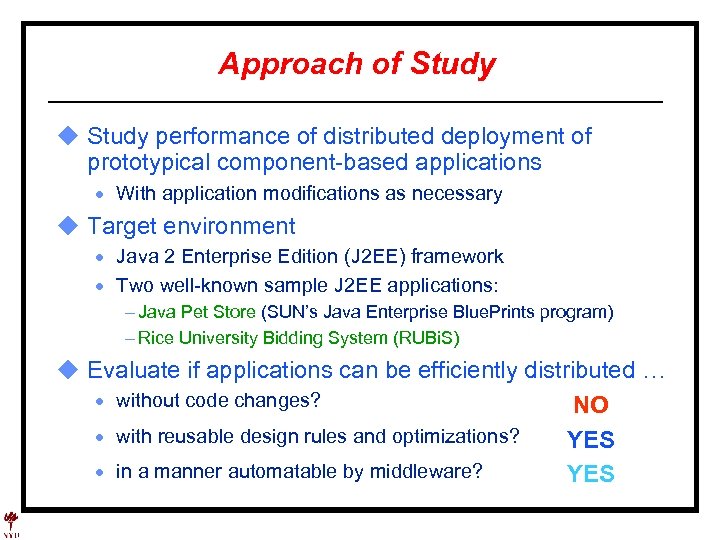
Approach of Study u Study performance of distributed deployment of prototypical component-based applications · With application modifications as necessary u Target environment · Java 2 Enterprise Edition (J 2 EE) framework · Two well-known sample J 2 EE applications: – Java Pet Store (SUN’s Java Enterprise Blue. Prints program) – Rice University Bidding System (RUBi. S) u Evaluate if applications can be efficiently distributed … · without code changes? NO · with reusable design rules and optimizations? YES · in a manner automatable by middleware? YES
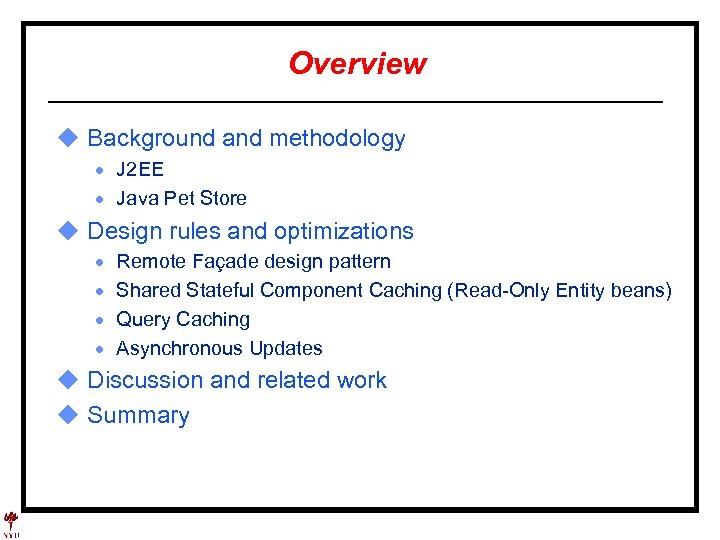
Overview u Background and methodology · J 2 EE · Java Pet Store u Design rules and optimizations · · Remote Façade design pattern Shared Stateful Component Caching (Read-Only Entity beans) Query Caching Asynchronous Updates u Discussion and related work u Summary
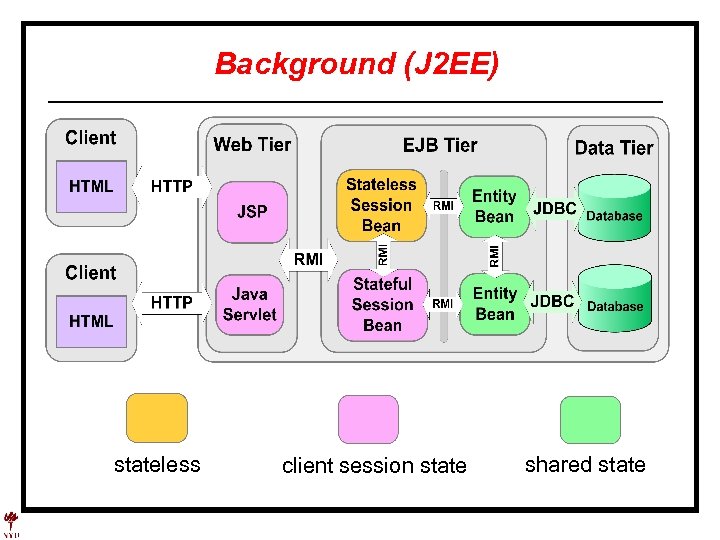
Background (J 2 EE) stateless client session state shared state
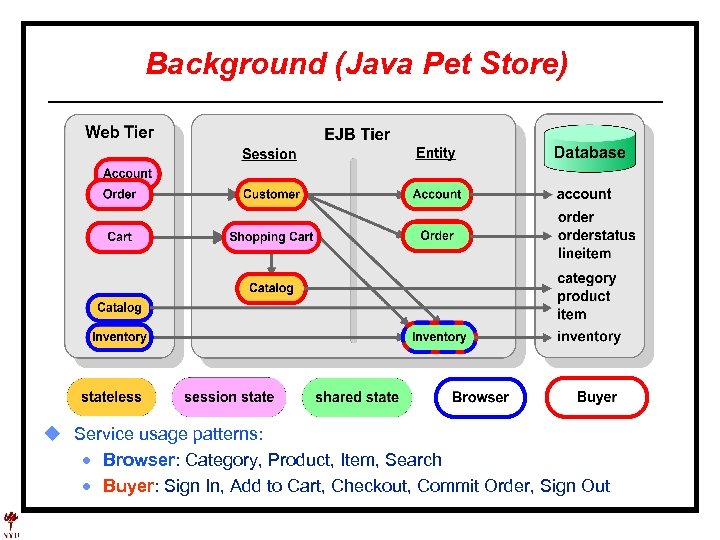
Background (Java Pet Store) u Service usage patterns: · Browser: Category, Product, Item, Search · Buyer: Sign In, Add to Cart, Checkout, Commit Order, Sign Out
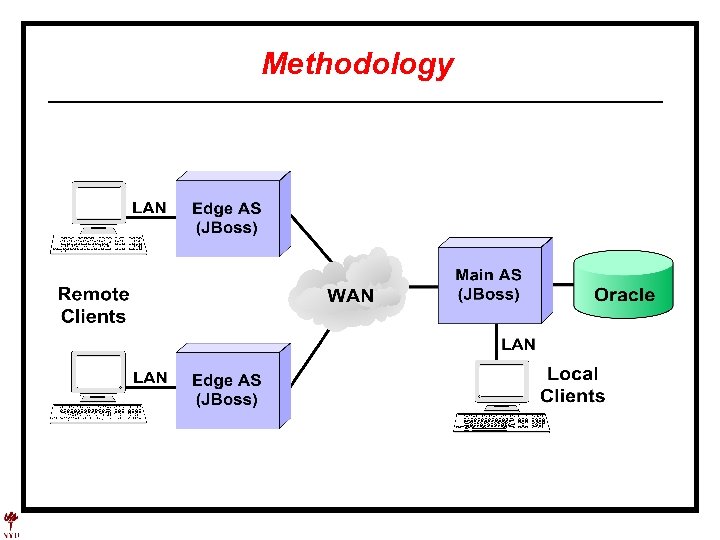
Methodology
Centralized Application Main Server Remote Client HTTP W A Edge Server N
Centralized Application (cont. ) WAN HTTP
Replicating Stateless and Session Components Edge Server Remote Client Main Server W HTTP A N
Remote Façade Edge Server Remote Client Main Server W HTTP A N
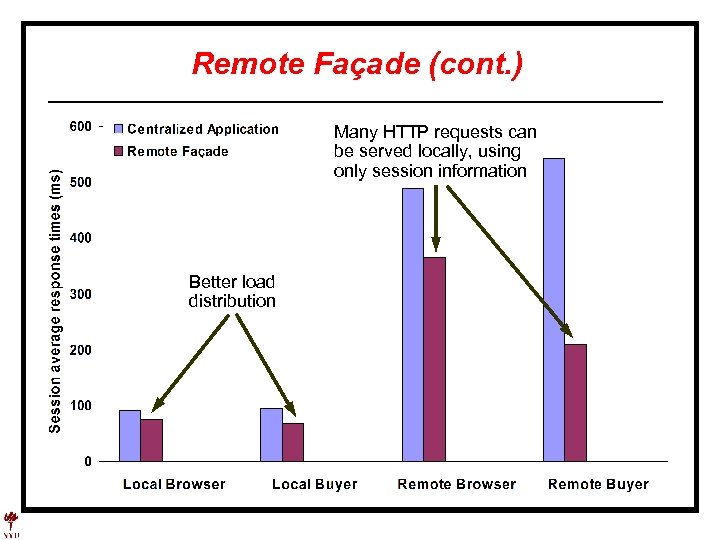
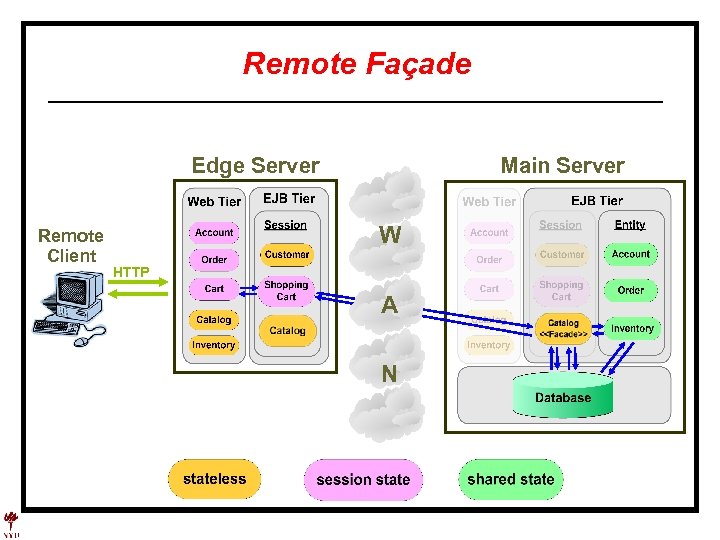
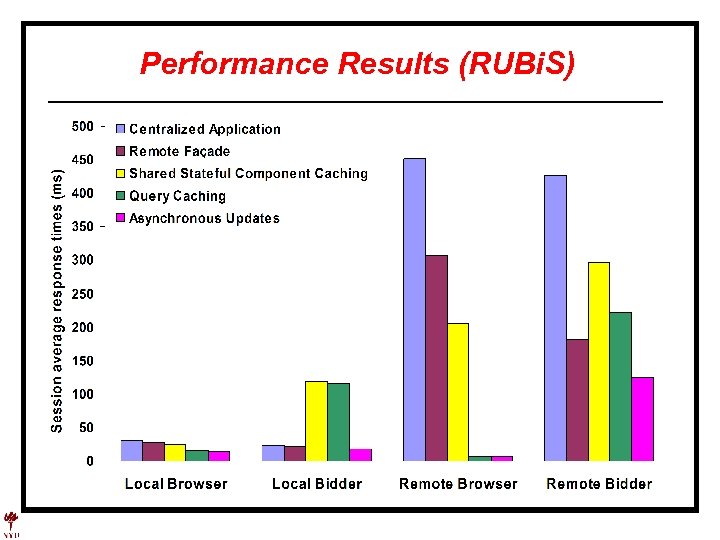
Remote Façade (cont. ) Many HTTP requests can be served locally, using only session information Better load distribution
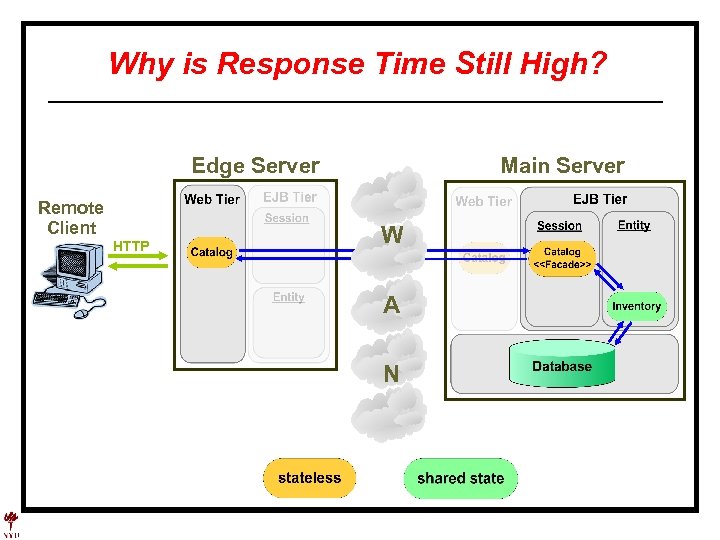
Why is Response Time Still High? Edge Server Remote Client HTTP Main Server W A N
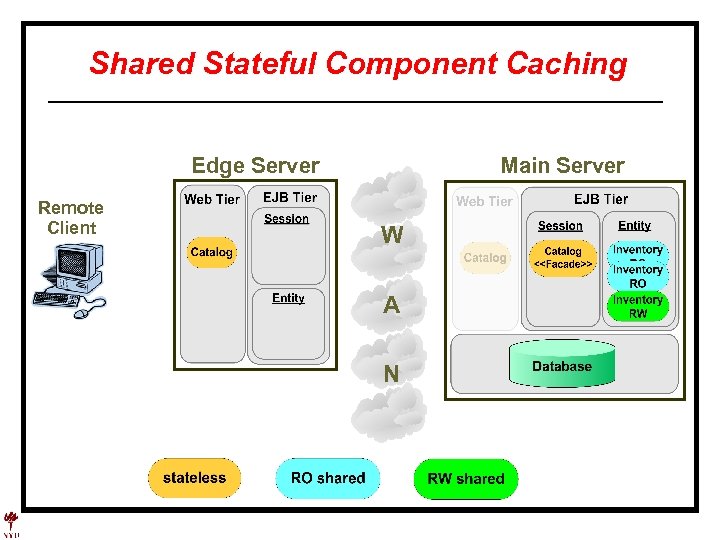
Shared Stateful Component Caching Edge Server Remote Client Main Server W A N
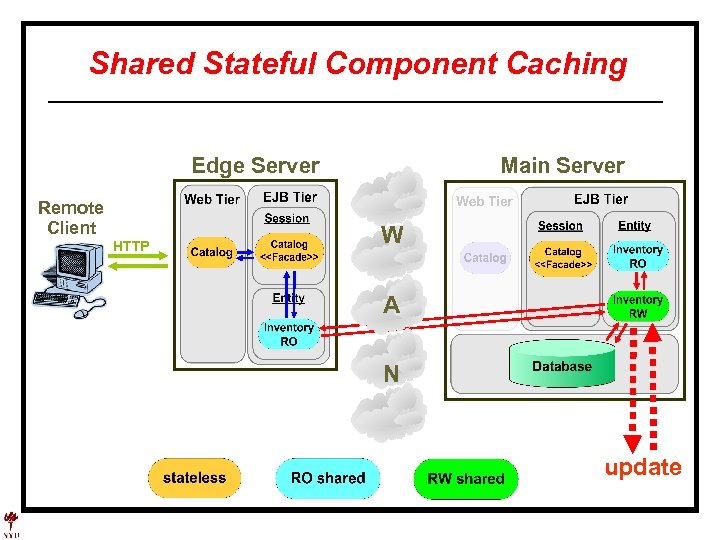
Shared Stateful Component Caching Edge Server Remote Client HTTP Main Server W A N update
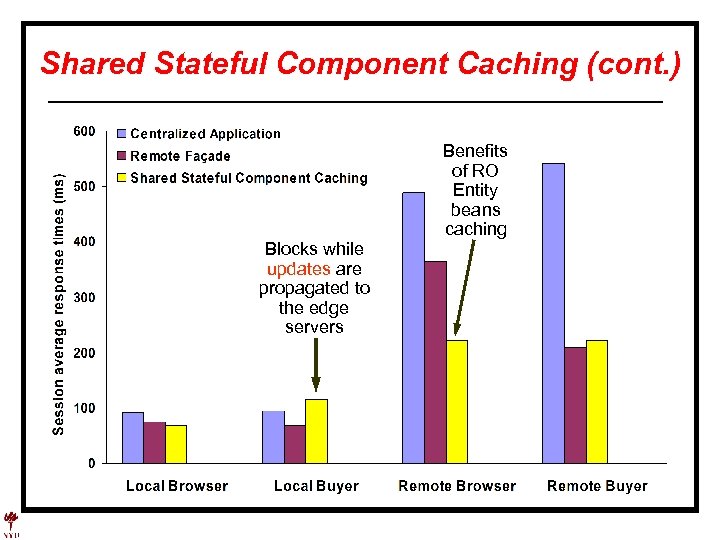
Shared Stateful Component Caching (cont. ) Benefits of RO Entity beans caching Blocks while updates are propagated to the edge servers
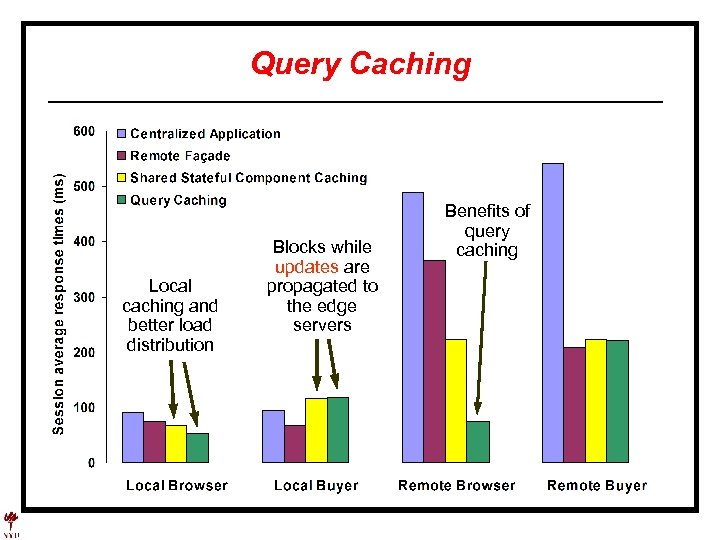
Query Caching Local caching and better load distribution Blocks while updates are propagated to the edge servers Benefits of query caching
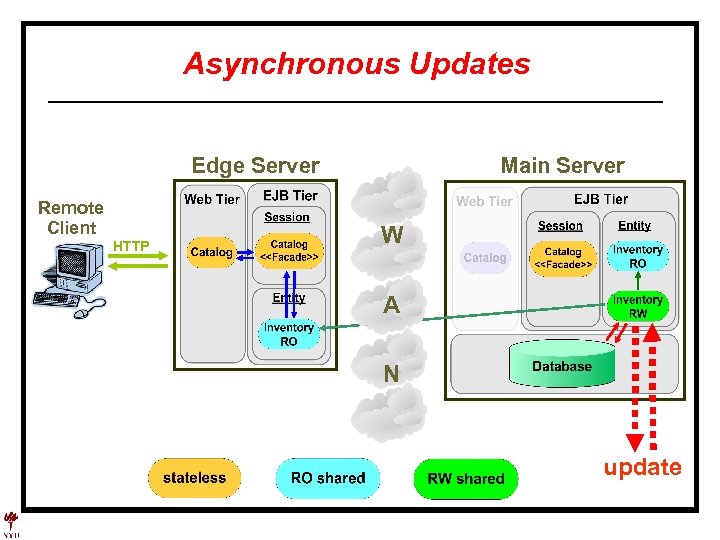
Asynchronous Updates Edge Server Remote Client HTTP Main Server W A N update
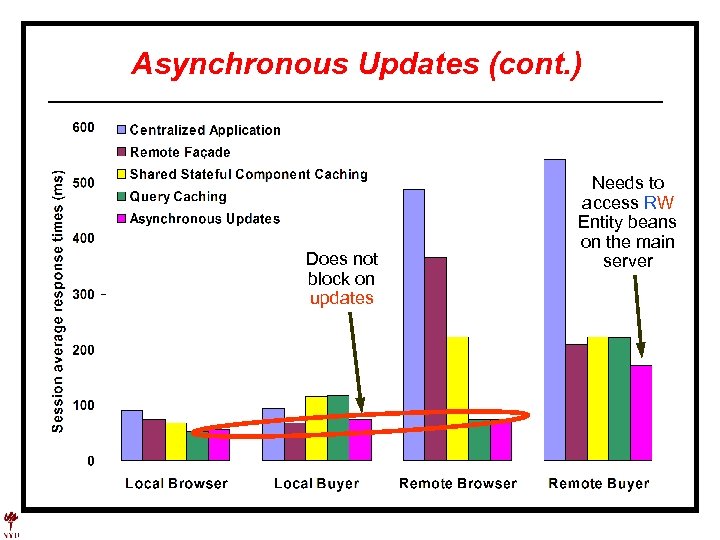
Asynchronous Updates (cont. ) Does not block on updates Needs to access RW Entity beans on the main server
Performance Results (RUBi. S)
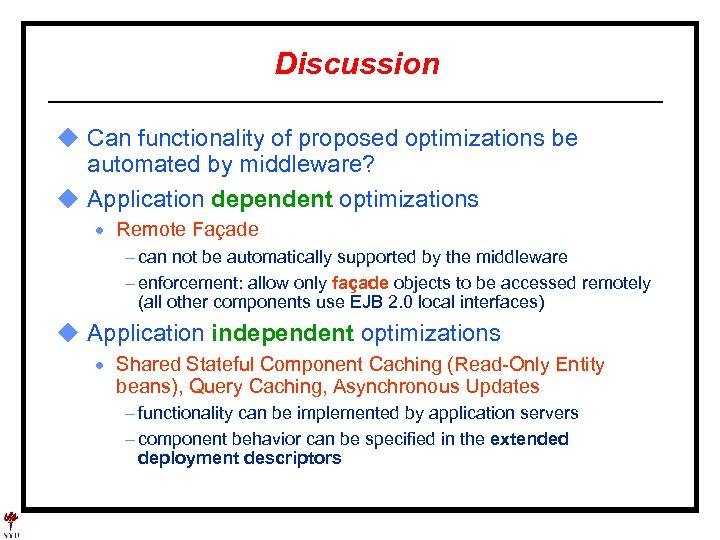
Discussion u Can functionality of proposed optimizations be automated by middleware? u Application dependent optimizations · Remote Façade – can not be automatically supported by the middleware – enforcement: allow only façade objects to be accessed remotely (all other components use EJB 2. 0 local interfaces) u Application independent optimizations · Shared Stateful Component Caching (Read-Only Entity beans), Query Caching, Asynchronous Updates – functionality can be implemented by application servers – component behavior can be specified in the extended deployment descriptors
Related Work u EJB caching and clustering u State replication in wide-area environments (Bayou, TACT, database replication) u Application-level overlay networks (Overcast, RON) u Our approach · application-independent solutions · lightweight techniques · potential for dynamic on-demand distribution and replication
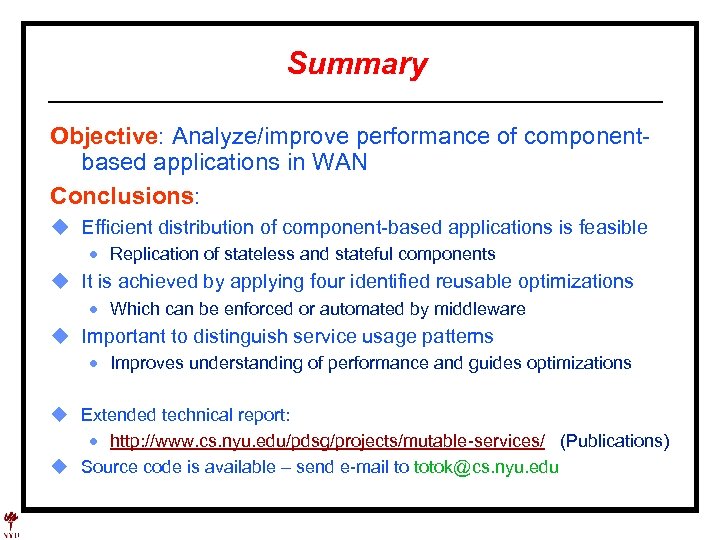
Summary Objective: Analyze/improve performance of componentbased applications in WAN Conclusions: u Efficient distribution of component-based applications is feasible · Replication of stateless and stateful components u It is achieved by applying four identified reusable optimizations · Which can be enforced or automated by middleware u Important to distinguish service usage patterns · Improves understanding of performance and guides optimizations u Extended technical report: · http: //www. cs. nyu. edu/pdsg/projects/mutable-services/ (Publications) u Source code is available – send e-mail to totok@cs. nyu. edu
Скачать презентацию Efficiently Distributing Component-Based Applications Across Wide-Area Environments D
1fbc790be13a3fd5ed7a2ae318112445.ppt