 Скачать презентацию Efficient Use of Energy a Physicist s Perspective September
61bc71ba0787ebb7e955c04562e4ecd0.ppt
- Количество слайдов: 42



Efficient Use of Energy, a Physicist’s Perspective September 25, 2006 Arthur H. Rosenfeld, Commissioner California Energy Commission (916) 654 -4930 ARosenfe@Energy. State. CA. US http: //www. energy. ca. gov/commissioners/rosenfeld. html
1949 2
3
4
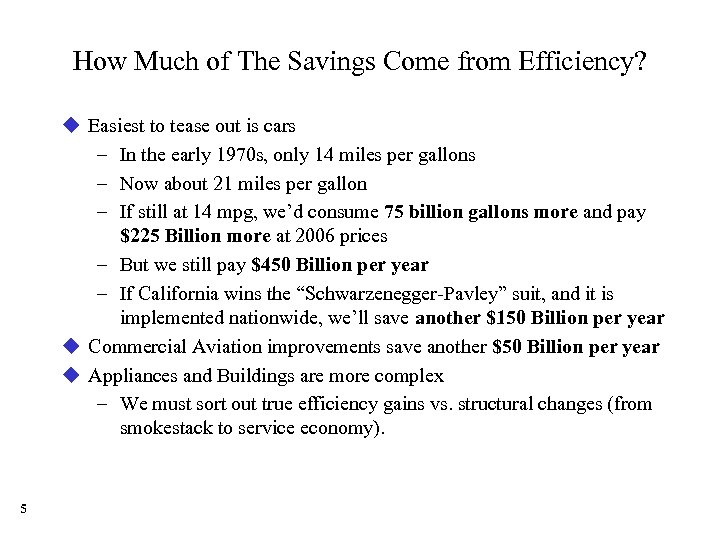
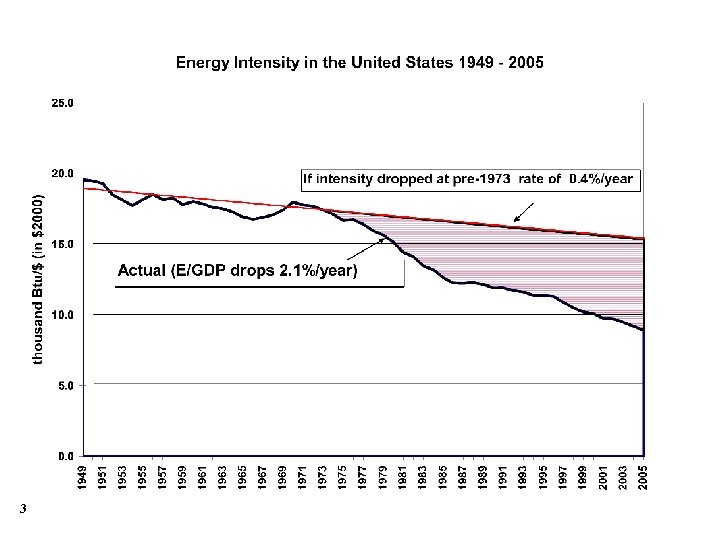
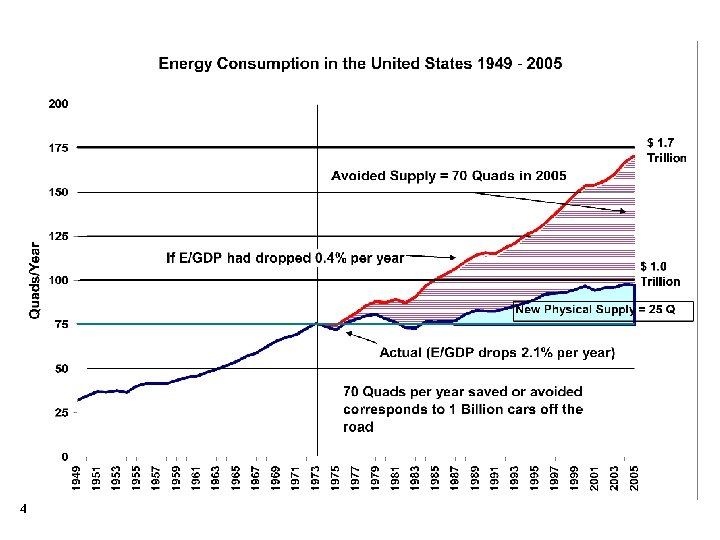
How Much of The Savings Come from Efficiency? u Easiest to tease out is cars – In the early 1970 s, only 14 miles per gallons – Now about 21 miles per gallon – If still at 14 mpg, we’d consume 75 billion gallons more and pay $225 Billion more at 2006 prices – But we still pay $450 Billion per year – If California wins the “Schwarzenegger-Pavley” suit, and it is implemented nationwide, we’ll save another $150 Billion per year u Commercial Aviation improvements save another $50 Billion per year u Appliances and Buildings are more complex – We must sort out true efficiency gains vs. structural changes (from smokestack to service economy). 5
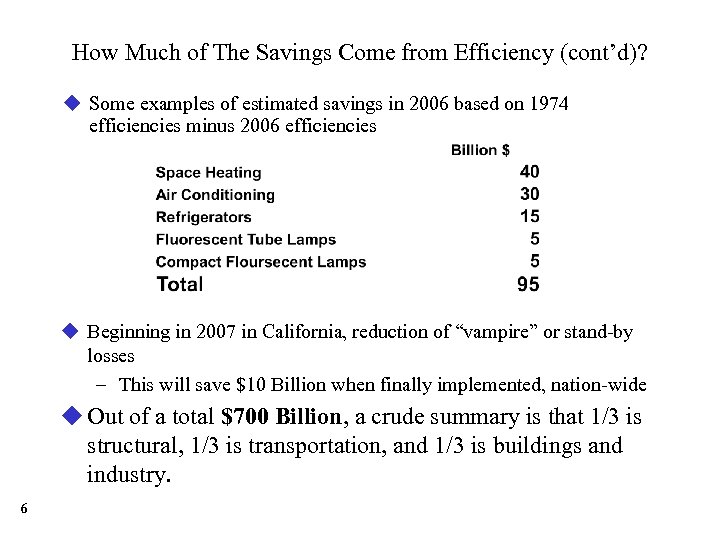
How Much of The Savings Come from Efficiency (cont’d)? u Some examples of estimated savings in 2006 based on 1974 efficiencies minus 2006 efficiencies u Beginning in 2007 in California, reduction of “vampire” or stand-by losses – This will save $10 Billion when finally implemented, nation-wide u Out of a total $700 Billion, a crude summary is that 1/3 is structural, 1/3 is transportation, and 1/3 is buildings and industry. 6
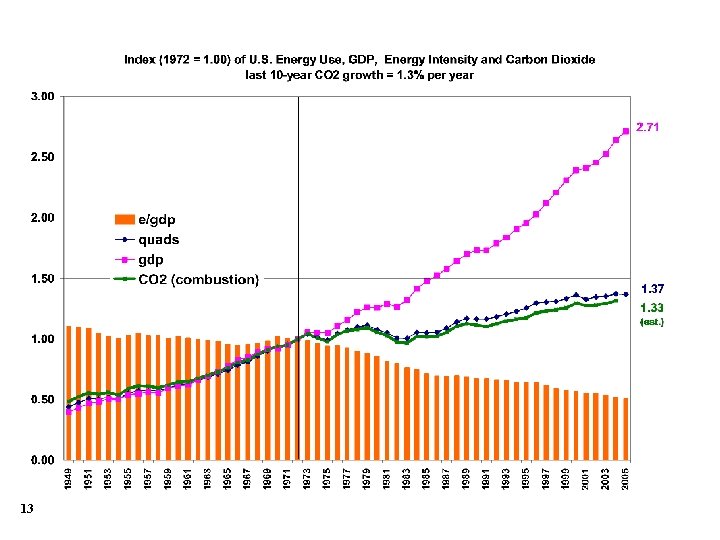
A supporting analysis on the topic of efficiency from Vice-President Dick Cheney u “Had energy use kept pace with economic growth, the nation would have consumed 171 quadrillion British thermal units (Btus) last year instead of 99 quadrillion Btus” u “About a third to a half of these savings resulted from shifts in the economy. The other half to two-thirds resulted from greater energy efficiency” Source: National Energy Policy: Report of the National Energy Policy Development Group, Dick Cheney, et. al. , page 1 -4, May 2001 Cheney could have noted that 72 quads/year saved in the US alone, would fuel one Billion cars, compared to a world car count of only 600 Million 7
8
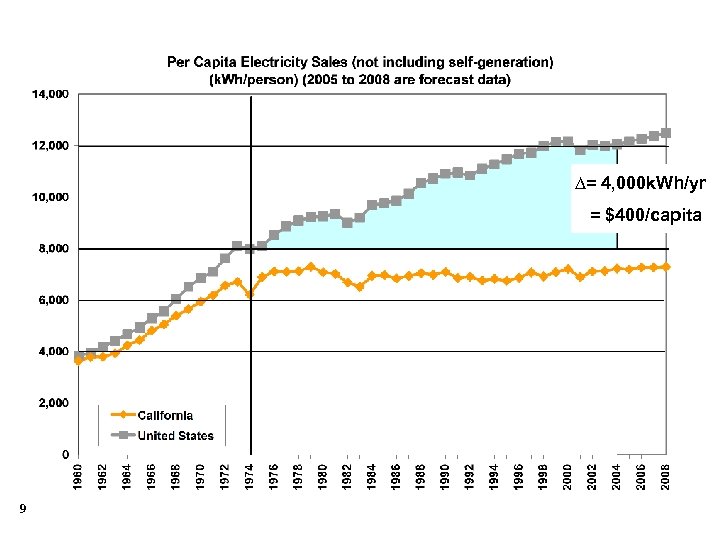
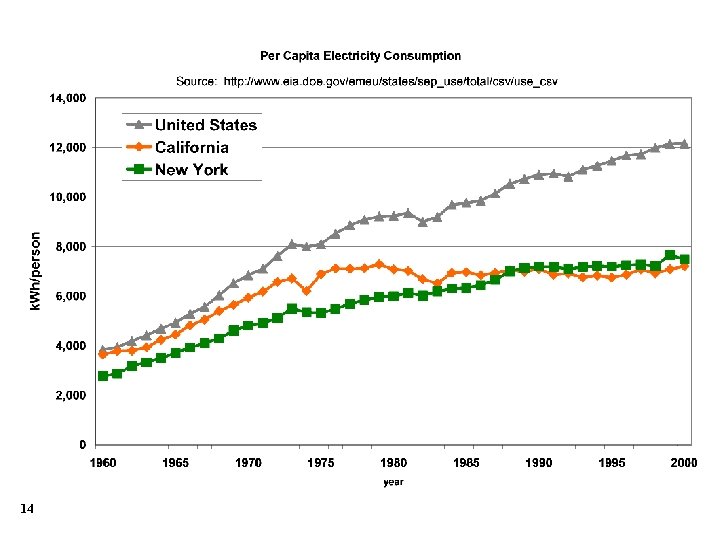
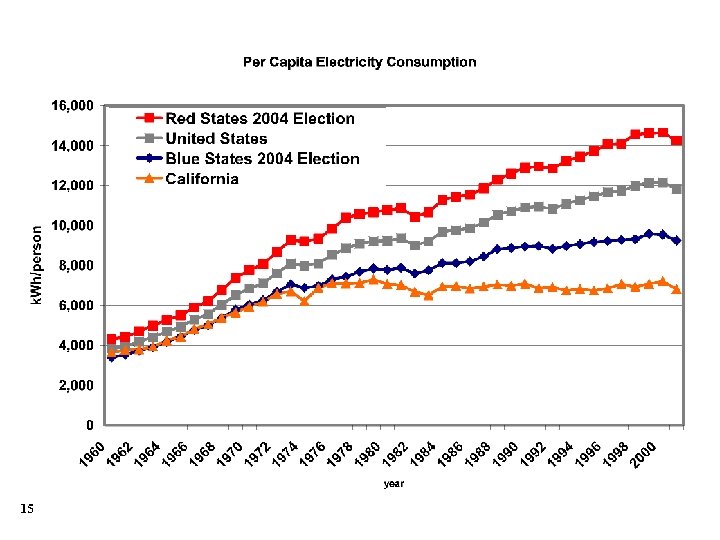
∆= 4, 000 k. Wh/yr = $400/capita 9
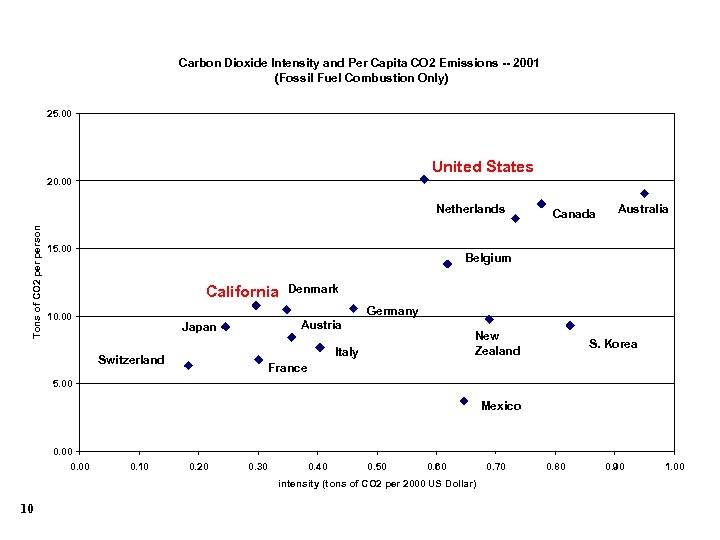
Carbon Dioxide Intensity and Per Capita CO 2 Emissions -- 2001 (Fossil Fuel Combustion Only) 25. 00 United States 20. 00 Tons of CO 2 person Netherlands 15. 00 Canada Australia Belgium California Denmark Germany 10. 00 Austria Japan New Zealand Italy Switzerland S. Korea France 5. 00 Mexico 0. 00 0. 10 0. 20 0. 30 0. 40 0. 50 0. 60 intensity (tons of CO 2 per 2000 US Dollar) 10 0. 70 0. 80 0. 90 1. 00
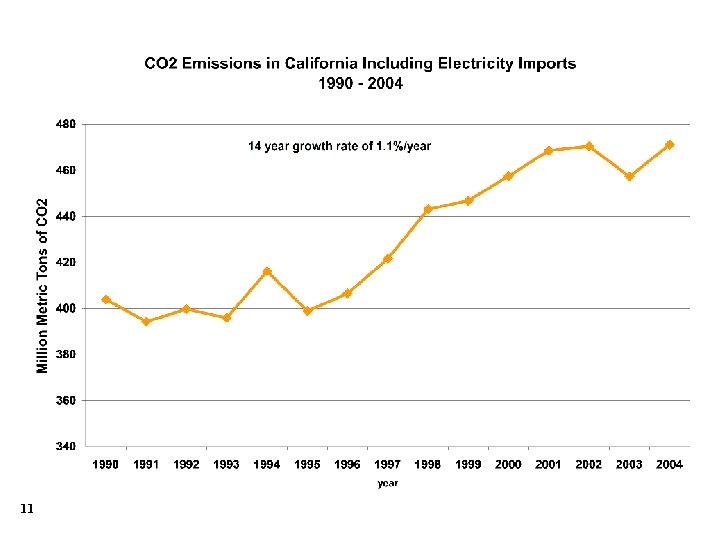
11
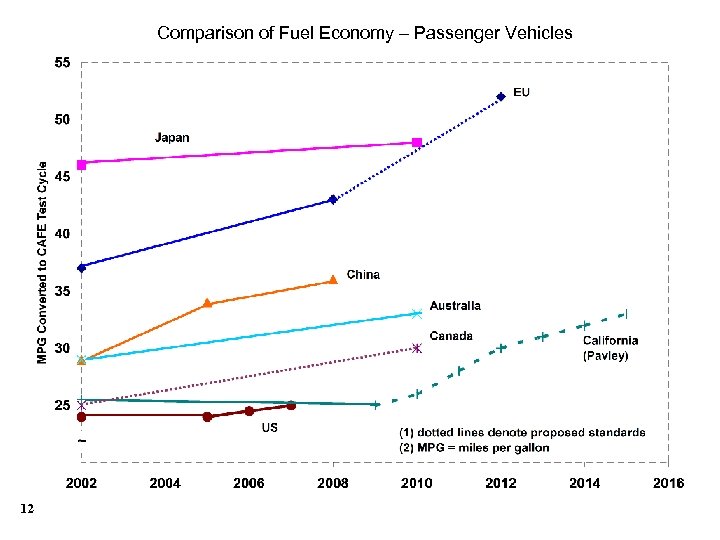
Comparison of Fuel Economy – Passenger Vehicles 12
13
14
15
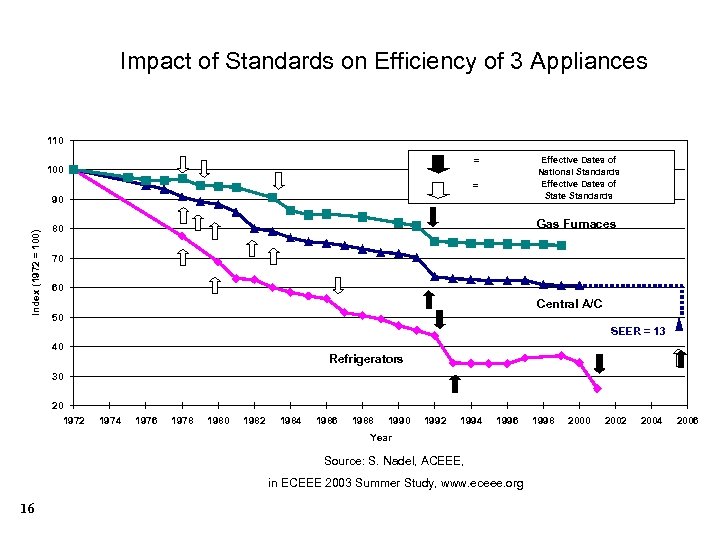
Impact of Standards on Efficiency of 3 Appliances 110 90 Effective Dates of National Standards Effective Dates of State Standards 80 Gas Furnaces = 100 Index (1972 = 100) = 75% 70 60% 60 Central A/C 50 SEER = 13 40 Refrigerators 30 20 1972 25% 1974 1976 1978 1980 1982 1984 1986 1988 1990 1992 1994 1996 Year Source: S. Nadel, ACEEE, in ECEEE 2003 Summer Study, www. eceee. org 16 1998 2000 2002 2004 2006
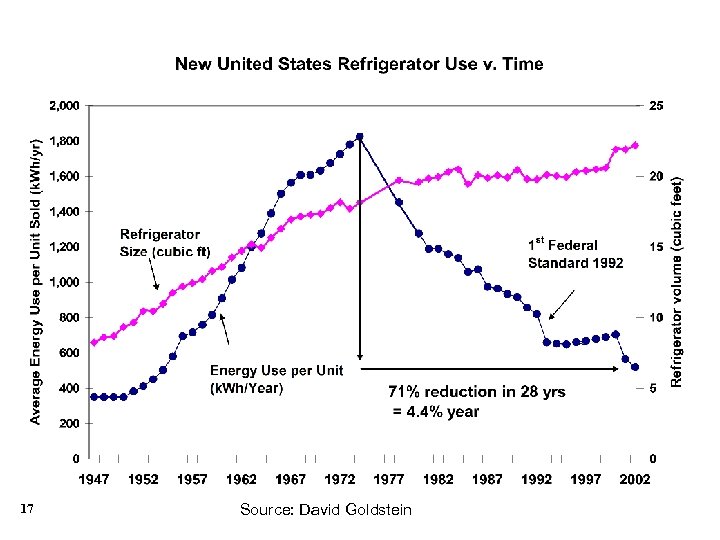
17 Source: David Goldstein
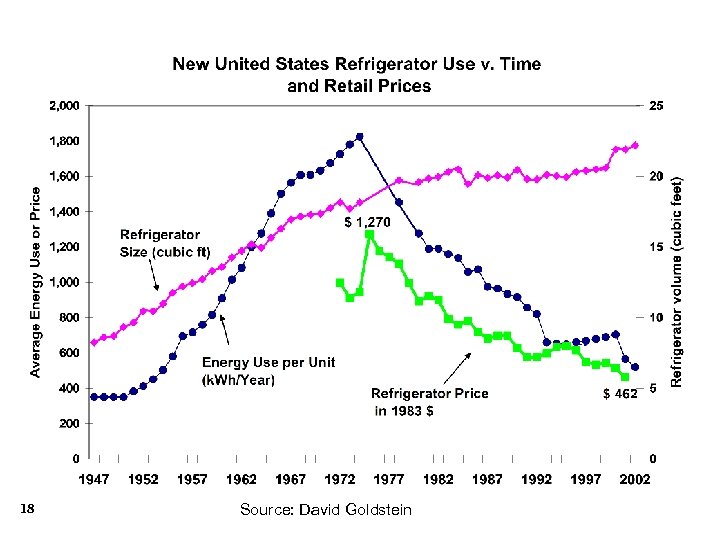
18 Source: David Goldstein
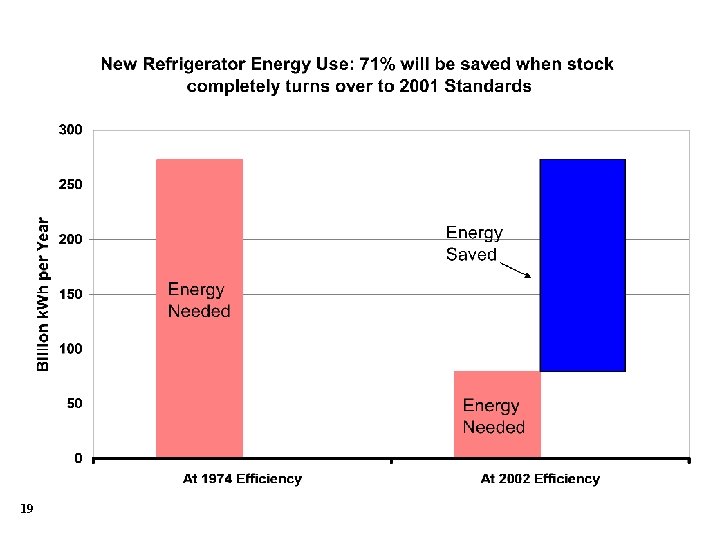
19
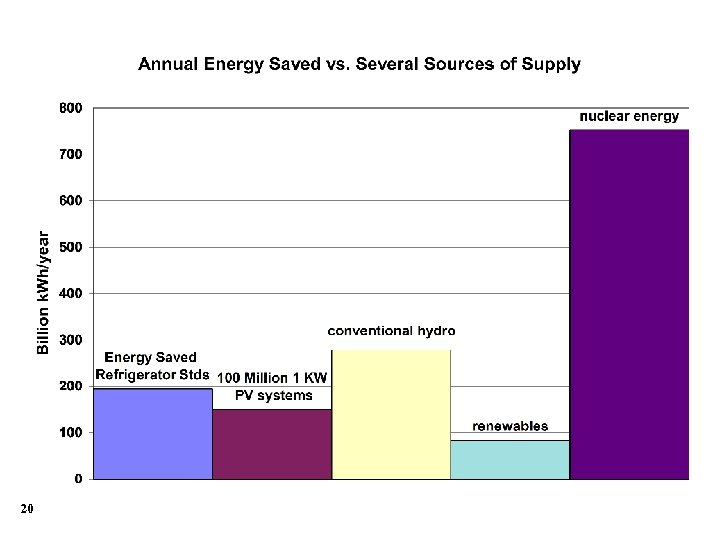
20
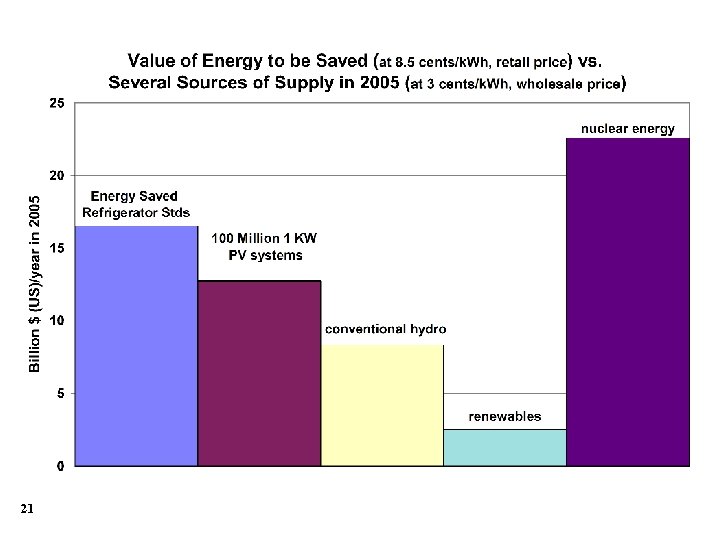
21
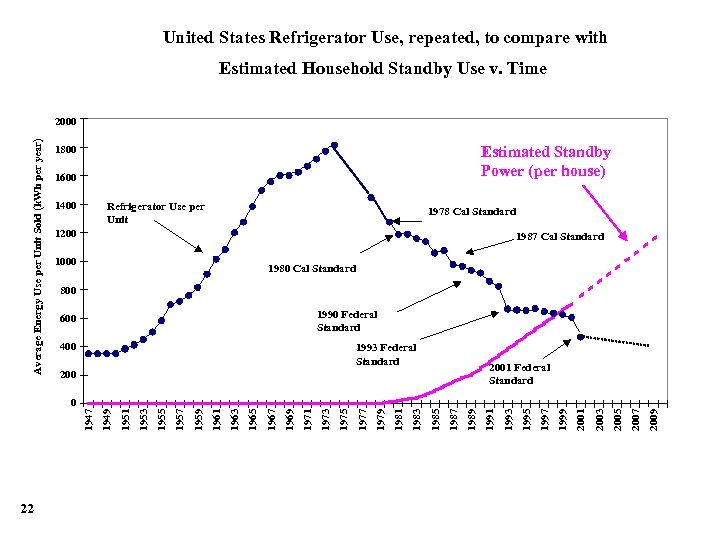
United States Refrigerator Use, repeated, to compare with Estimated Household Standby Use v. Time Average Energy Use per Unit Sold (k. Wh per year) 2000 Estimated Standby Power (per house) 1800 1600 1400 Refrigerator Use per Unit 1978 Cal Standard 1200 1987 Cal Standard 1000 1980 Cal Standard 800 1990 Federal Standard 600 400 1993 Federal Standard 2001 Federal Standard 200 22 2009 2007 2005 2003 2001 1999 1997 1995 1993 1991 1989 1987 1985 1983 1981 1979 1977 1975 1973 1971 1969 1967 1965 1963 1961 1959 1957 1955 1953 1951 1949 1947 0
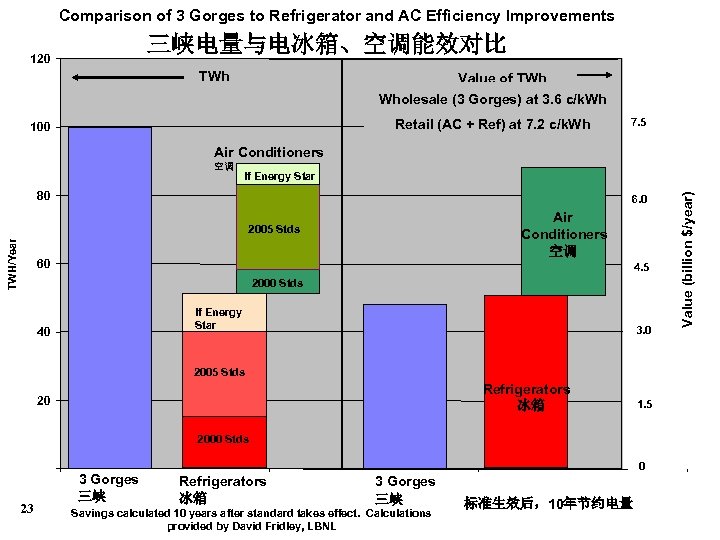
Comparison of 3 Gorges to Refrigerator and AC Efficiency Improvements 三峡电量与电冰箱、空调能效对比 120 TWh Value of TWh Wholesale (3 Gorges) at 3. 6 c/k. Wh Retail (AC + Ref) at 7. 2 c/k. Wh 100 7. 5 Air Conditioners If Energy Star 80 6. 0 Air Conditioners 空调 TWH/Year 2005 Stds 60 4. 5 2000 Stds If Energy Star 40 3. 0 2005 Stds Refrigerators 冰箱 20 1. 5 2000 Stds 23 3 Gorges 三峡 0 Refrigerators 冰箱 3 Gorges 三峡 Savings calculated 10 years after standard takes effect. Calculations provided by David Fridley, LBNL 标准生效后,10年节约电量 Value (billion $/year) 空调
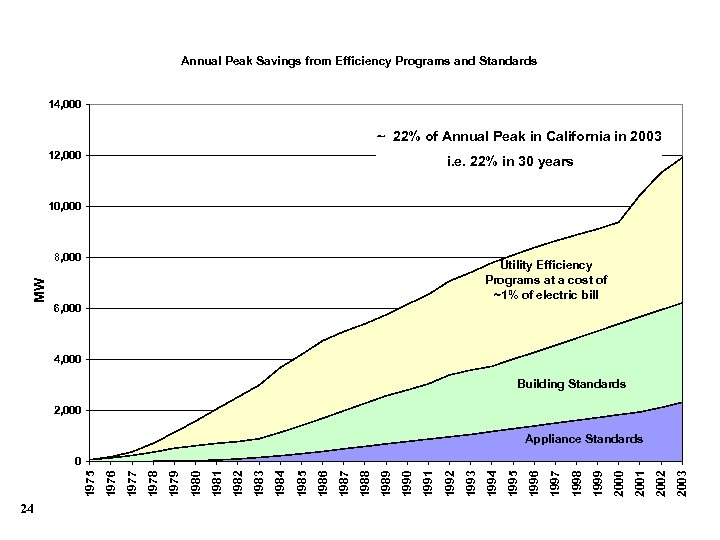
Annual Peak Savings from Efficiency Programs and Standards 14, 000 ~ 22% of Annual Peak in California in 2003 12, 000 i. e. 22% in 30 years 10, 000 MW 8, 000 Utility Efficiency Programs at a cost of ~1% of electric bill 6, 000 4, 000 Building Standards 2, 000 Appliance Standards 24 2003 2002 2001 2000 1999 1998 1997 1996 1995 1994 1993 1992 1991 1990 1989 1988 1987 1986 1985 1984 1983 1982 1981 1980 1979 1978 1977 1976 1975 0
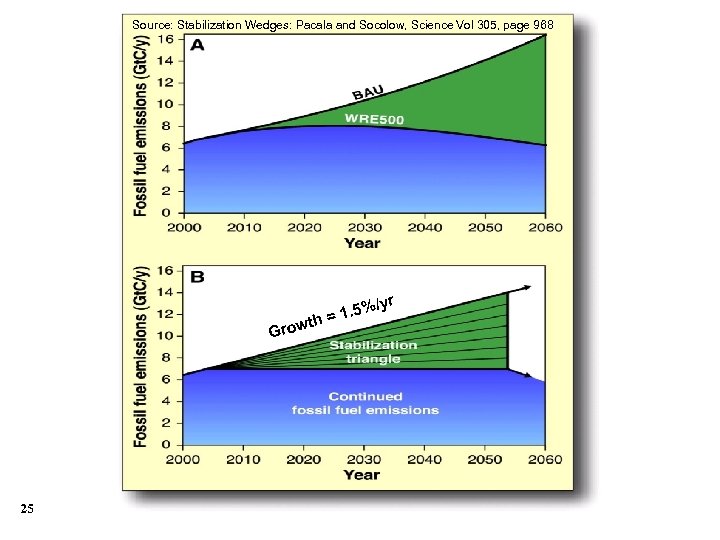
Source: Stabilization Wedges: Pacala and Socolow, Science Vol 305, page 968 /yr t . 5% h=1 Grow 25
26
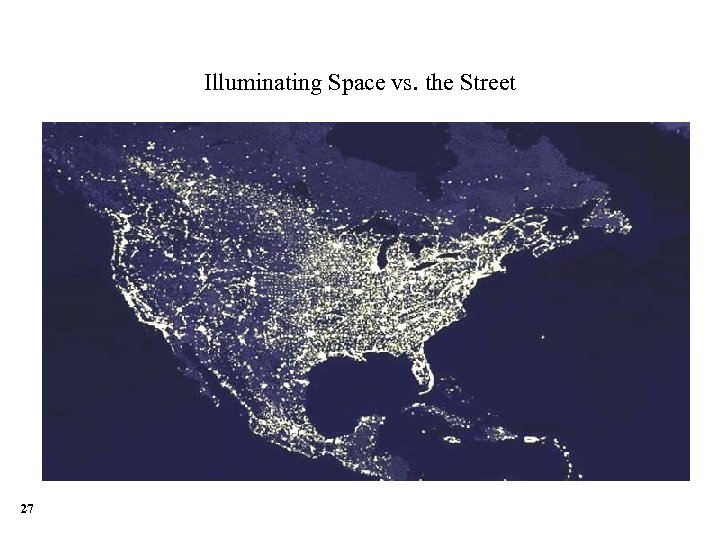
Illuminating Space vs. the Street 27
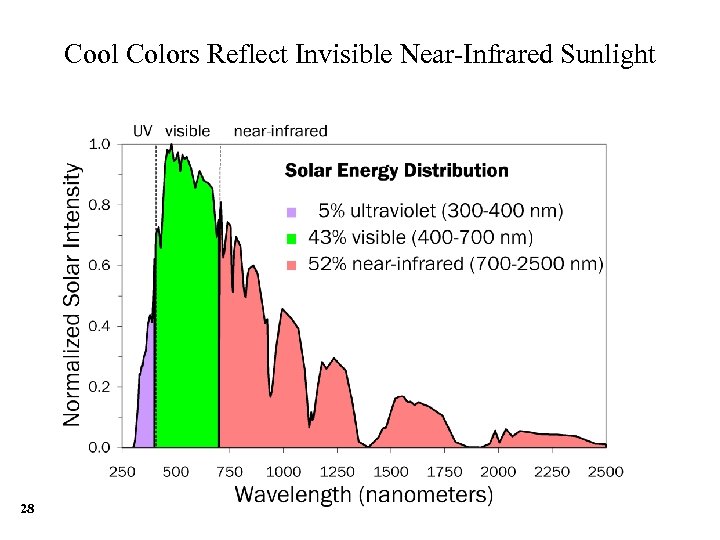
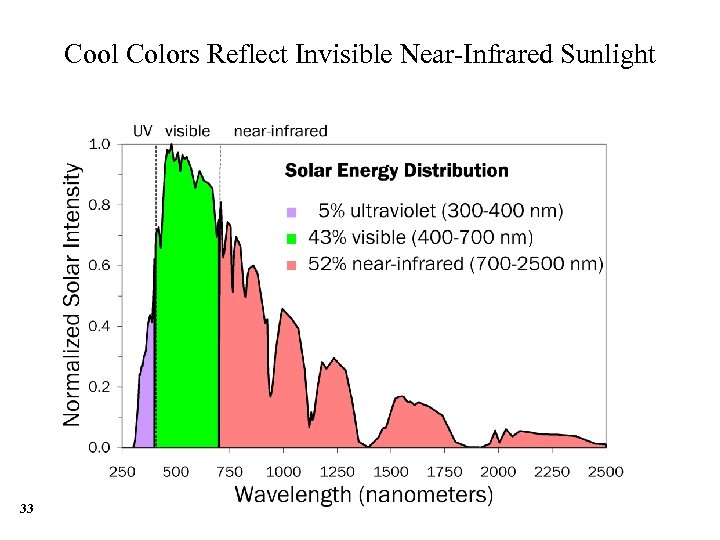
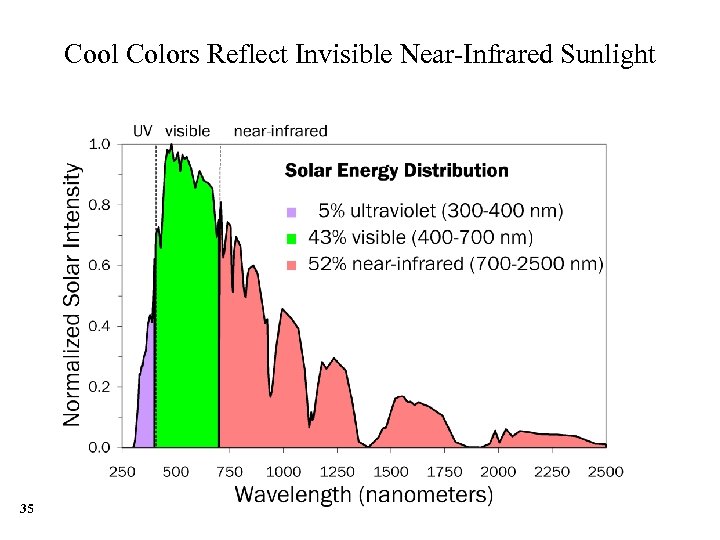
Cool Colors Reflect Invisible Near-Infrared Sunlight 28
Heat Mirror Windows – Steve Selkowitz, LBNL u Low Emissivity films are required by building standards world-wide. They reflect far infrared radiation. Retain indoor heat in winter, reflect outdoor heat in summer. They double the R-value of double glazing, and the inside pane is warm to the touch – more comfortable u Before low-E, windows were 30% of the heat load of a home – now 15%. u During a Montana winter, a north-facing low-E window, facing a snowy sunlit slope, is a net energy gainer. u “Selective film are required for Commercial Buildings in California. They reflect far- and near-infrared radiation, and halve the solar gain though windows; including car windshields in BMW’s etc. u Modern windows save ~1 Mbod of oil equivalent, = Alaskan oil. 29
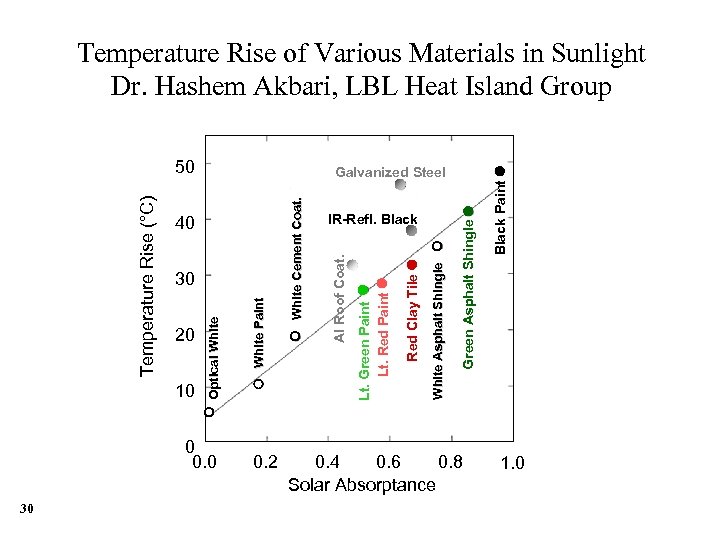
Temperature Rise (°C) 30 20 10 0 0. 0 40 30 0. 2 IR-Refl. Black 0. 4 0. 6 0. 8 Solar Absorptance Black Paint Green Asphalt Shingle White Asphalt Shingle Red Clay Tile Lt. Green Paint Lt. Red Paint 50 Al Roof Coat. White Cement Coat. White Paint Optical White Temperature Rise of Various Materials in Sunlight Dr. Hashem Akbari, LBL Heat Island Group Galvanized Steel 1. 0
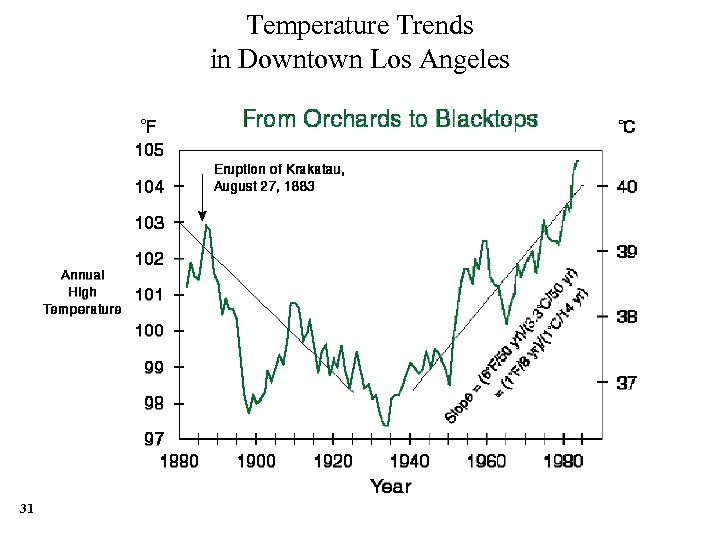
Temperature Trends in Downtown Los Angeles 31
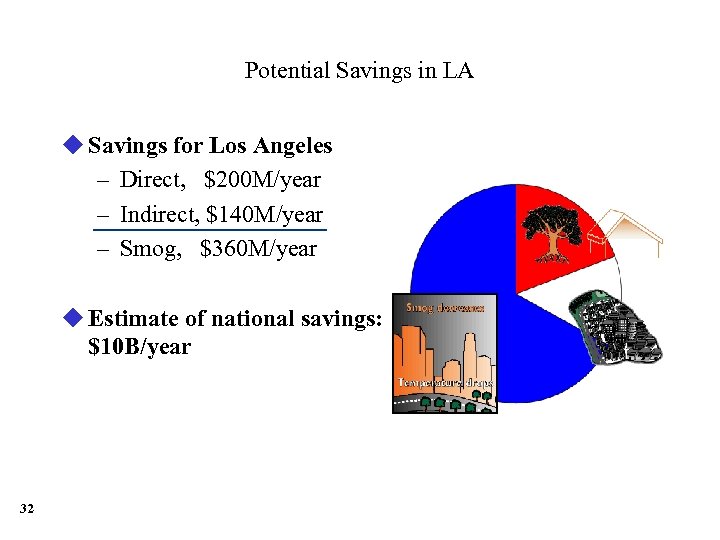
Potential Savings in LA u Savings for Los Angeles – Direct, $200 M/year – Indirect, $140 M/year – Smog, $360 M/year u Estimate of national savings: $10 B/year 32
Cool Colors Reflect Invisible Near-Infrared Sunlight 33
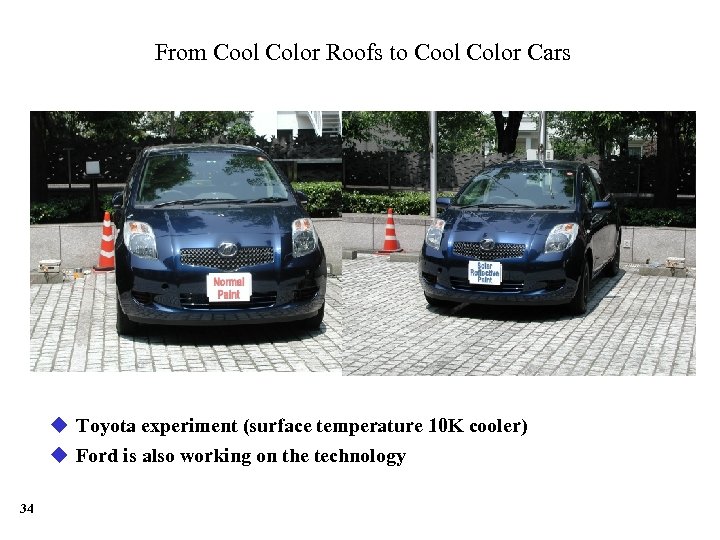
From Cool Color Roofs to Cool Color Cars u Toyota experiment (surface temperature 10 K cooler) u Ford is also working on the technology 34
Cool Colors Reflect Invisible Near-Infrared Sunlight 35
UV Water Purification 36
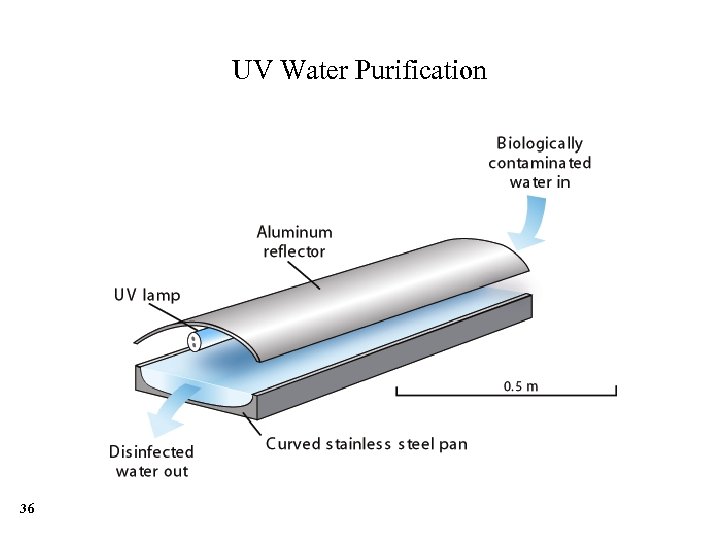
Purif icati on for Villa ges Ashok Gadgil at LBNL points out if UV treatment replaces boiling in 10 tons of water per day, each system avoids 4 tons of CO 2 per day. An American car emits only 4 tons of CO 2 per YEAR. Deve lopin u Meet / exceed WHO and US EPA criteria g u Energy efficient: 60 watts disinfects 1 ton / hour Worl u Low cost: 4 cents disinfects a ton of water d u u u 37 Reliable, Mature components Can treat un-pressurized water Rapid throughput: 12 seconds Low maintenance: once every three months >100 units now operating in India and Phillipines http: //www. waterhealth. com/
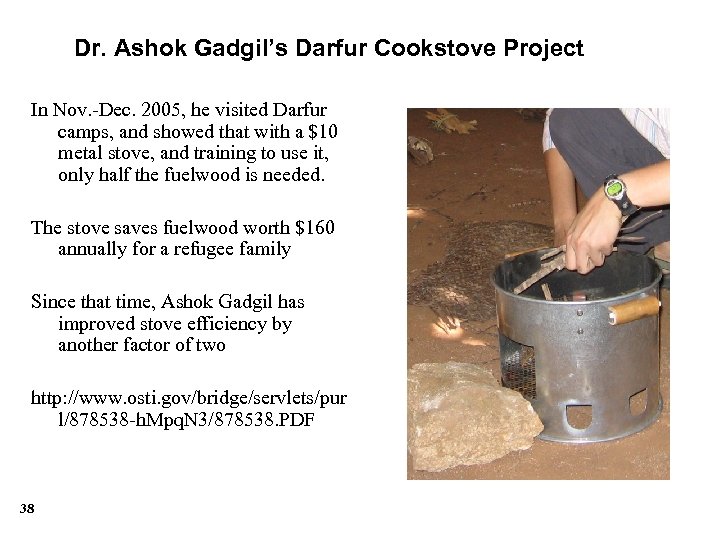
Dr. Ashok Gadgil’s Darfur Cookstove Project In Nov. -Dec. 2005, he visited Darfur camps, and showed that with a $10 metal stove, and training to use it, only half the fuelwood is needed. The stove saves fuelwood worth $160 annually for a refugee family Since that time, Ashok Gadgil has improved stove efficiency by another factor of two http: //www. osti. gov/bridge/servlets/pur l/878538 -h. Mpq. N 3/878538. PDF 38
39
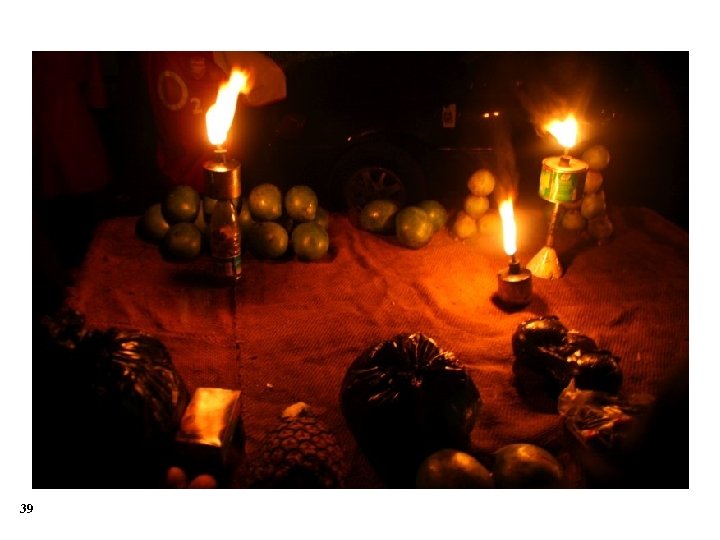
LEDs Powered with Photovoltaics u Evan Mills at LBNL points out the following: If 1 billion people could replace kerosene lamps with LEDs, emissions would drop by the equivalent of 1. 3 million barrels of petroleum per day u http: //eetd. lbl. gov/emills/PUBS/Fuel_Based_Lighting. html 40
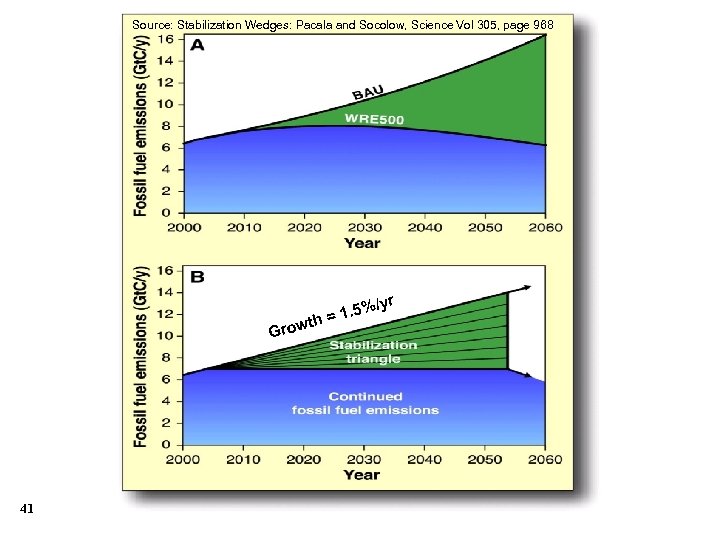
Source: Stabilization Wedges: Pacala and Socolow, Science Vol 305, page 968 /yr t . 5% h=1 Grow 41
. u. This talk available on my web page u. Just Google “Art Rosenfeld” 42
Скачать презентацию Efficient Use of Energy a Physicist s Perspective September
61bc71ba0787ebb7e955c04562e4ecd0.ppt