


 Скачать презентацию Efficiency and Exchange The Domain of Markets
f67d8d182f9adcf554f1b53df3714ae8.ppt
- Количество слайдов: 48
 Efficiency and Exchange
 The Domain of Markets u. Free markets promote efficiency u. But, markets cannot be expected to solve every problem (e. g. , market economies do not guarantee a fair income distribution) u. Realizing that markets cannot solve every problem has led some critics to falsely conclude uthat markets cannot solve any problem 2
 Market Equilibrium and Efficiency u. Pareto efficient (or just efficient) u. Is a situation where there is no change possible that will help some people without harming others u. Exists when an economy has reached a point where reallocating resources must harm one in order to help another u. Occurs at equilibrium of perfectly competitive markets 3
 Market Equilibrium and Efficiency u When a market is not in equilibrium: 1. P > P* = surplus -- QS > QD 2. P < P* = shortage -- QD > QS In either case, the quantity exchanged is always LESS THAN the true equilibrium quantity. Hence, if a market is not in equilibrium, further benefit-enhancing transactions are always possible. 4
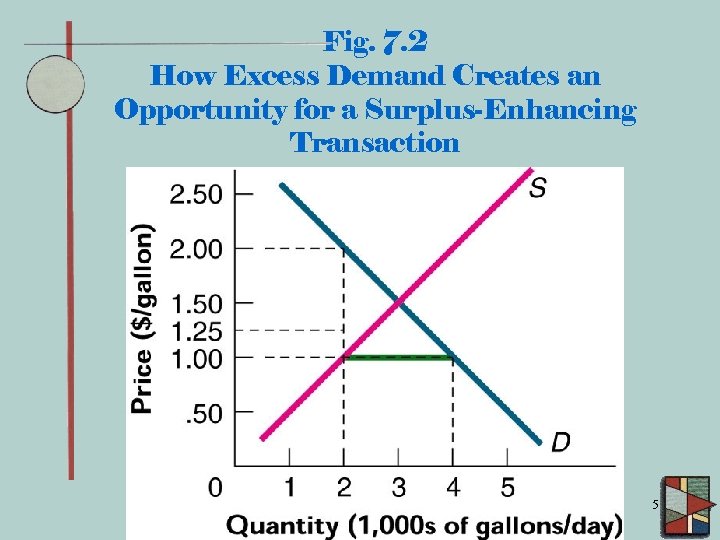 Fig. 7. 2 How Excess Demand Creates an Opportunity for a Surplus-Enhancing Transaction 5
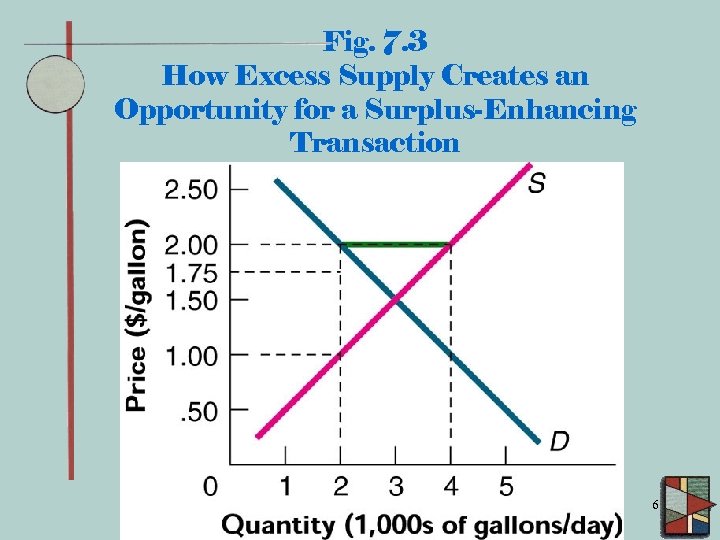 Fig. 7. 3 How Excess Supply Creates an Opportunity for a Surplus-Enhancing Transaction 6
 Economic Surplus u. Total economic surplus u. The sum of all the individual economic surpluses gained by buyers and sellers participating in the market u. Consumer Surplus u. Producer Surplus 7
 Surplus u. Consumer Surplus u. Economic surplus gained by the buyers of a product u. Measured by the difference between their reservation price and the price they pay u. Producer Surplus u. Economic surplus gained by the sellers of a product u. Measured by the difference between the price they receive and their reservation price 8
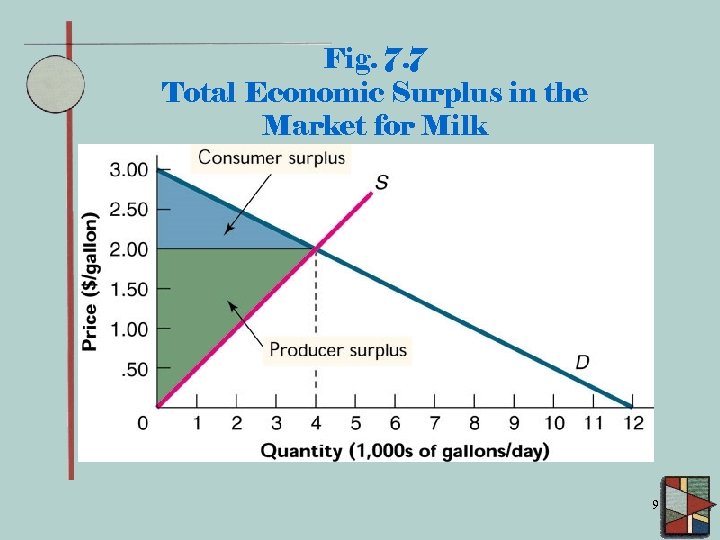 Fig. 7. 7 Total Economic Surplus in the Market for Milk 9
 Surplus and Efficiency u. Equilibrium price and quantity maximize the total economic surplus u. Total economic surplus would be lower at any other price and quantity combination u. I. E. , “waste” or unrealized gain occurs at any other price and quantity combination 10
 Other Goals u. Efficiency is not the only goal u. An equitable income distribution is a desirable goal for many u. Why efficiency should be the first Goal u. Efficiency enables us to achieve all other goals to the fullest possible extent u. Efficiency minimizes waste 11
 The Costs of Price Controls u. Price ceilings and price floors cause markets to be in permanent disequilibrium. u. Price controls are therefore inefficient. 12
 Price Ceilings u. Price Ceiling u. It is a law or regulation that prevents sellers from charging more than a specified amount u. It keeps price low u. It reduces total economic surplus u. It would allow some poor families to buy the good at the reduced price. [However, the same objective could have been accomplished with less waste. ] 13
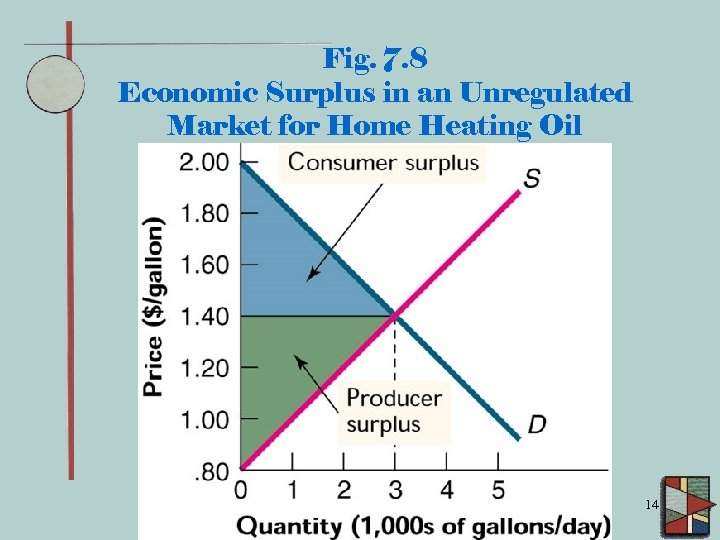 Fig. 7. 8 Economic Surplus in an Unregulated Market for Home Heating Oil 14
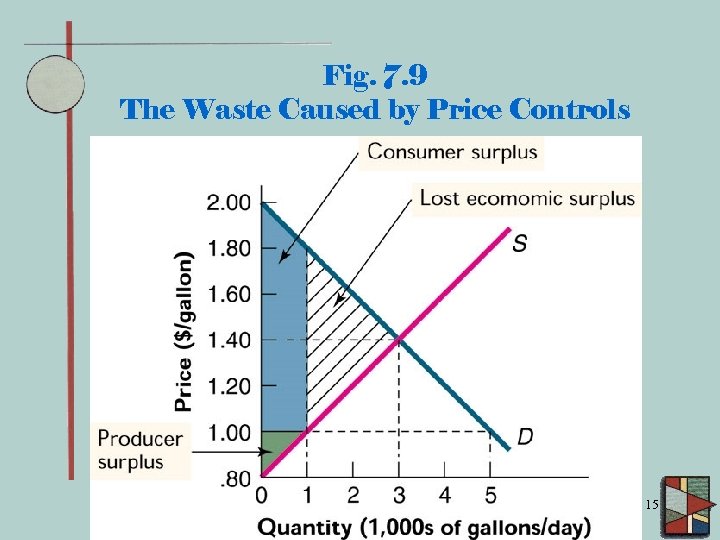 Fig. 7. 9 The Waste Caused by Price Controls 15
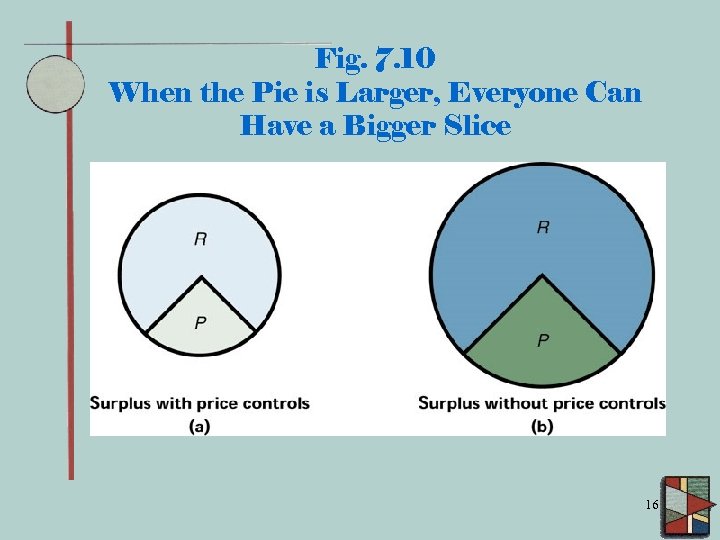 Fig. 7. 10 When the Pie is Larger, Everyone Can Have a Bigger Slice 16
 Price Floors u. Price Floor u. It is a law or regulation that prevents buyers from paying less than a specified amount u. It keeps prices high u. It reduces total economic surplus u. It would allow some poor families to buy the good at the reduced price. [However, the same objective could have been accomplished with less waste. ] 17
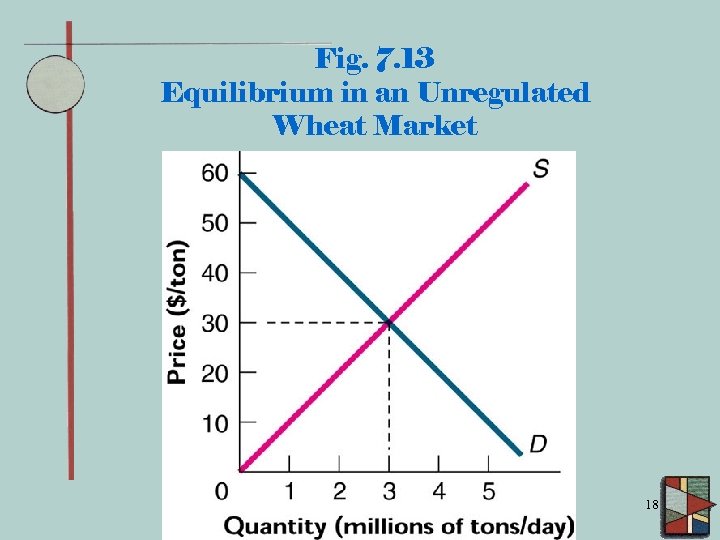 Fig. 7. 13 Equilibrium in an Unregulated Wheat Market 18
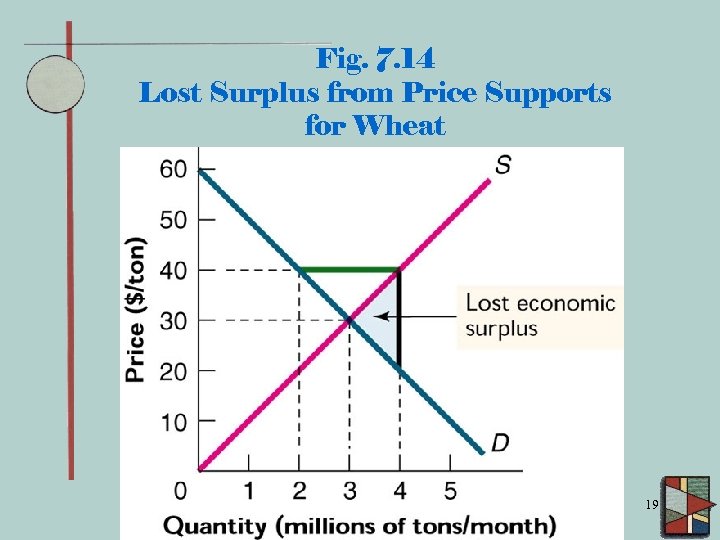 Fig. 7. 14 Lost Surplus from Price Supports for Wheat 19
 Taxes and Efficiency u. What happens to the price of a good when the government imposes a tax on it? u. Most people believe that the price of the item will rise by the amount of the tax u. However, this may not be the case u. Who pays the tax depends upon the elasticities of supply and demand 20
 Taxes and Efficiency u. Who physically pays the tax? u. The supplier of the taxed good is the one who sends the tax money to the gov’t. (Imagine if the consumer had to write a check to the gov’t for the gas tax each time they filled up). u. So, the firm’s marginal cost of providing the good simply increases by the amount of the tax. u How would this affect supply and demand? 21
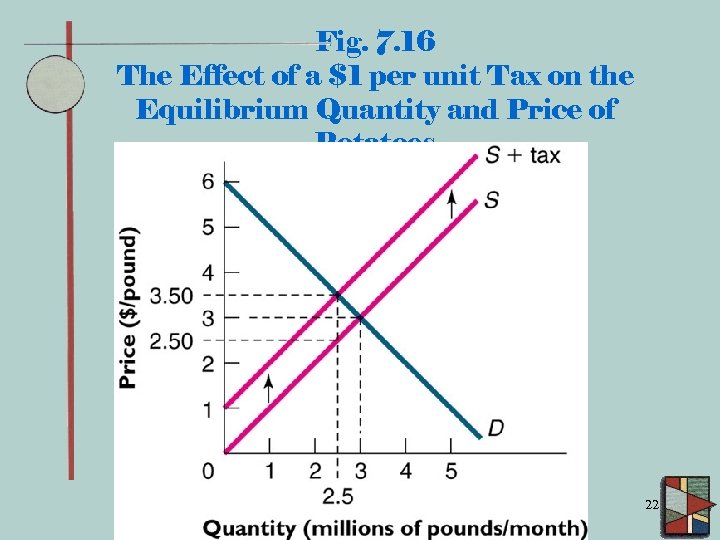 Fig. 7. 16 The Effect of a $1 per unit Tax on the Equilibrium Quantity and Price of Potatoes 22
 Taxes and Efficiency u. Even though the vertical distance between the two supply curves is the amount of the tax, because of the relative slopes of the supply and demand curves, the consumer does not bear all of the tax burden. 23
 Taxes and Efficiency u. Who will pay a larger percentage of the tax? u. Whoever is less flexible with regard to price. u. I. E. whoever is more inelastic u. Consumers will pay 100% if: u. Demand is perfectly inelastic u. Supply is perfectly elastic 24
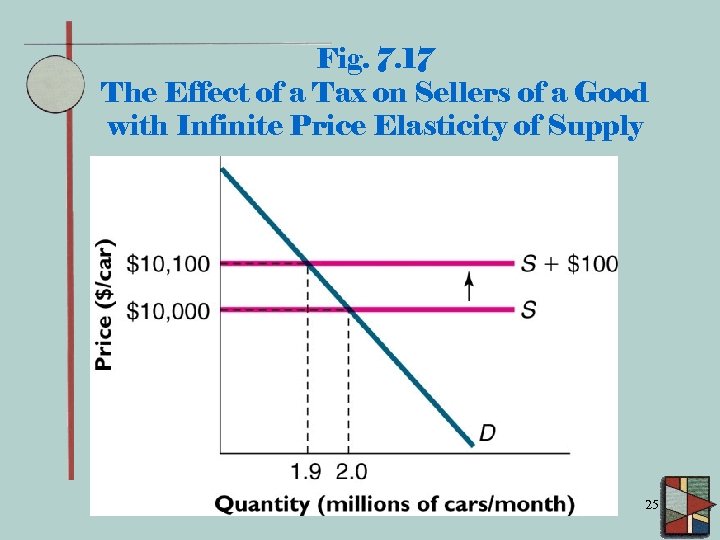 Fig. 7. 17 The Effect of a Tax on Sellers of a Good with Infinite Price Elasticity of Supply 25
 Taxes and Economic Surplus u“Deadweight loss” (DWL) u. The reduction in economic surplus that results from a policy u. A tax distorts the signal that free prices send 26
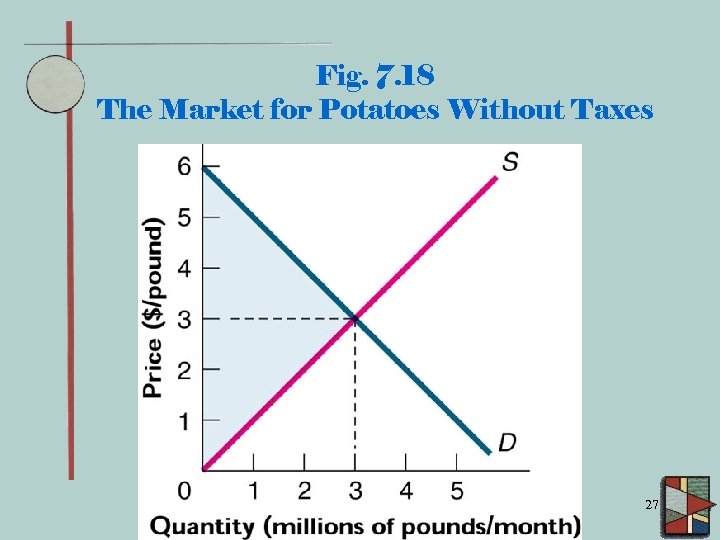 Fig. 7. 18 The Market for Potatoes Without Taxes 27
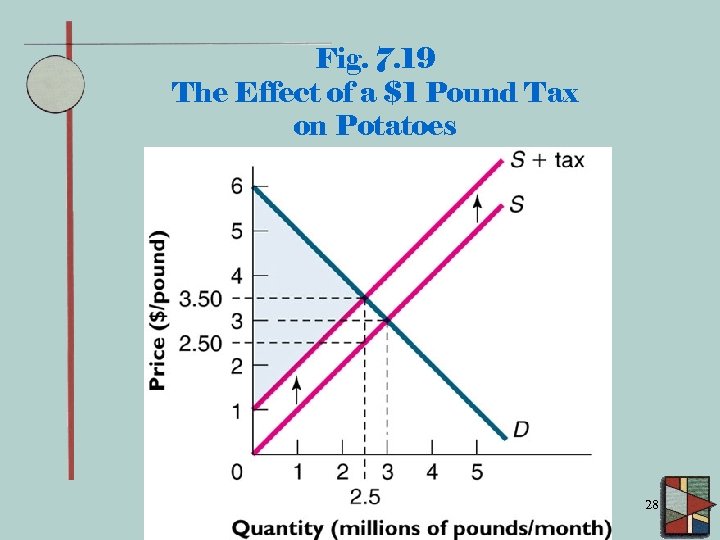 Fig. 7. 19 The Effect of a $1 Pound Tax on Potatoes 28
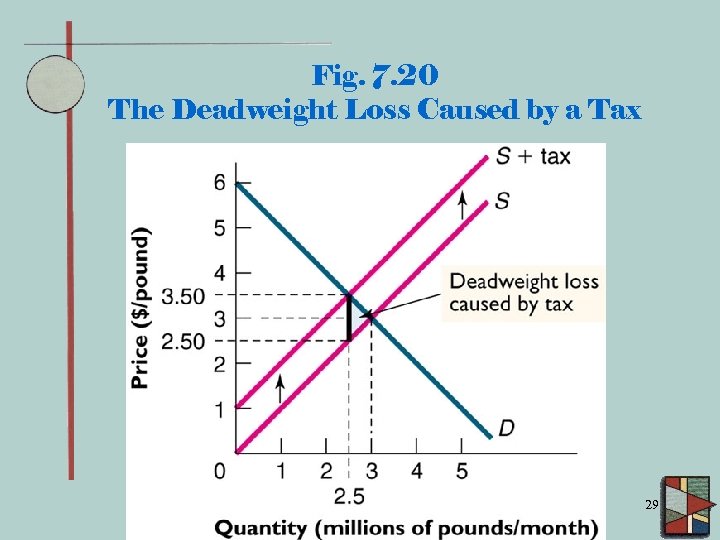 Fig. 7. 20 The Deadweight Loss Caused by a Tax 29
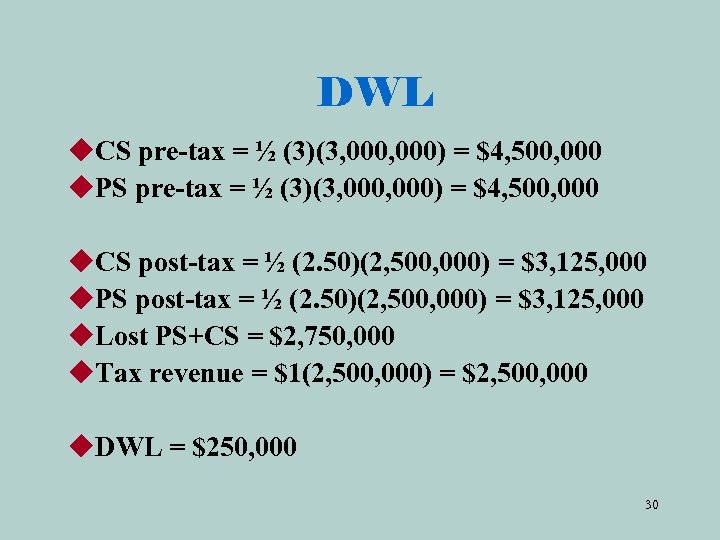 DWL u. CS pre-tax = ½ (3)(3, 000) = $4, 500, 000 u. PS pre-tax = ½ (3)(3, 000) = $4, 500, 000 u. CS post-tax = ½ (2. 50)(2, 500, 000) = $3, 125, 000 u. PS post-tax = ½ (2. 50)(2, 500, 000) = $3, 125, 000 u. Lost PS+CS = $2, 750, 000 u. Tax revenue = $1(2, 500, 000) = $2, 500, 000 u. DWL = $250, 000 30
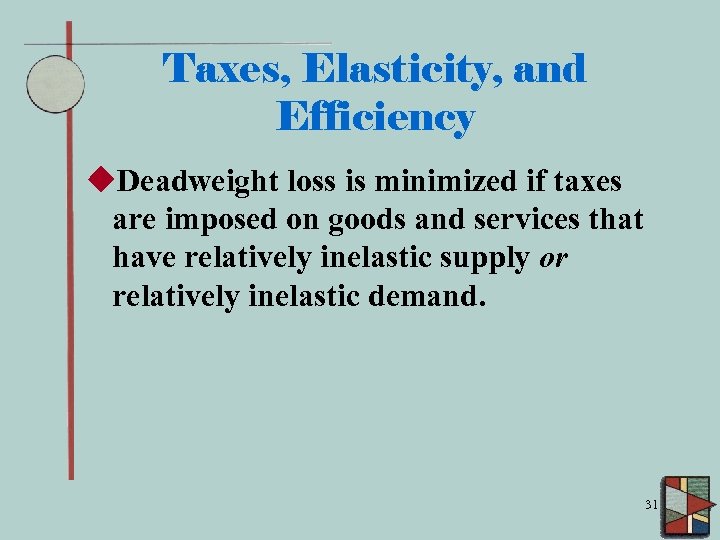 Taxes, Elasticity, and Efficiency u. Deadweight loss is minimized if taxes are imposed on goods and services that have relatively inelastic supply or relatively inelastic demand. 31
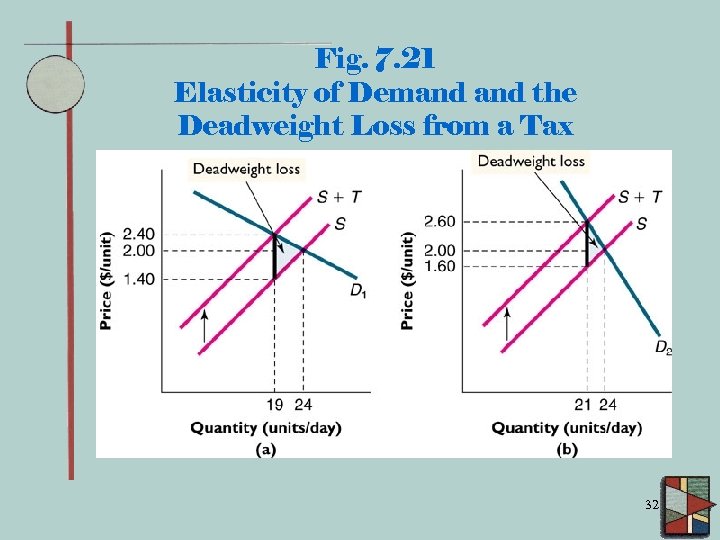 Fig. 7. 21 Elasticity of Demand the Deadweight Loss from a Tax 32
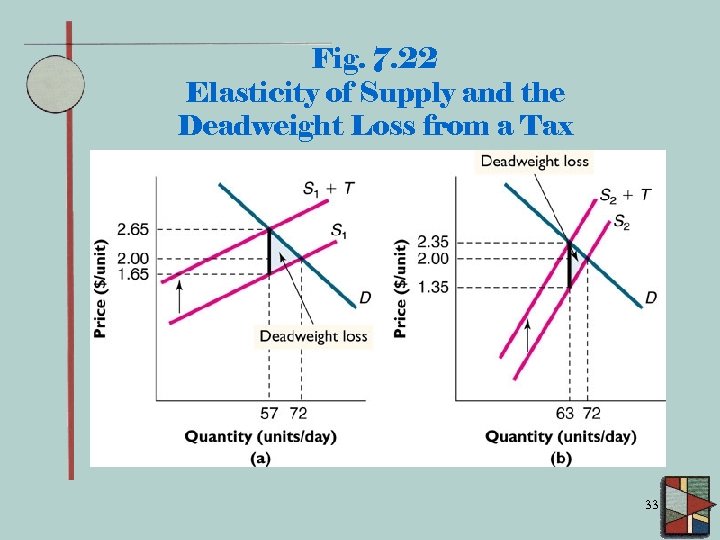 Fig. 7. 22 Elasticity of Supply and the Deadweight Loss from a Tax 33
 Do all taxes decrease economic efficiency? u. Consider a tax on land u. Land supply is perfectly inelastic u. DWL = $0 u. What other goods have high tax rates? u. Booze u. Cigarettes u. Gasoline 34
 Taxes, External Costs, and Efficiency u. Taxing reduces the equilibrium quantity u. Therefore, taxing activities that people tend to pursue to excess can actually increase total economic surplus (e. g. , activities that cause pollution) 35
 External Costs u. Consider a market activity that generates harmful side-effects on a 3 rd party … u. E. g. Pollution from a plant imposes costs on anyone who lives near the plant u. Does that firm’s supply curve accurately reflect the full costs of production? u. No. without regulation, the firm’s supply curve only reflects the marginal costs of production. u. The external costs are not included in these costs. u. What if they were? 36
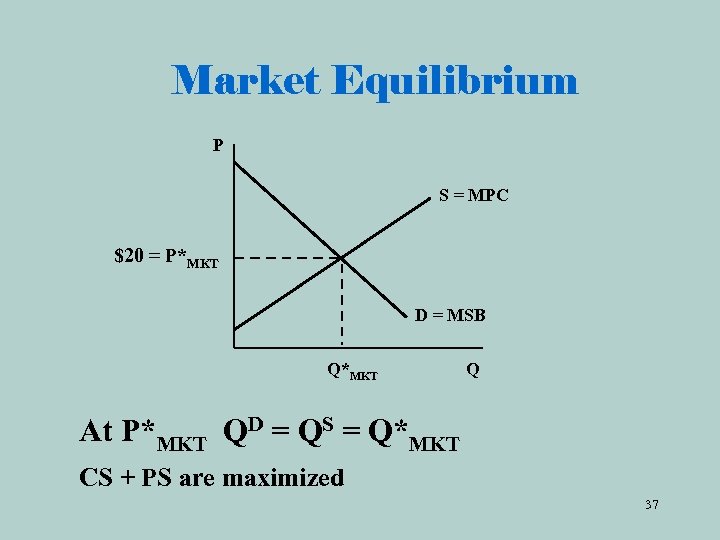 Market Equilibrium P S = MPC $20 = P*MKT D = MSB Q*MKT Q At P*MKT QD = QS = Q*MKT CS + PS are maximized 37
 Market Equilibrium u. The firm’s supply curve represents “private” or “market-level” marginal costs of production (MPC), and is used by the firm to make pricing and output decisions. u. If there are external costs (costs realized outside of the market), the FULL costs of production would be represented by a different curve = MSC u. For example, suppose that each unit of output causes $2 in damage to 3 rd parties. 38
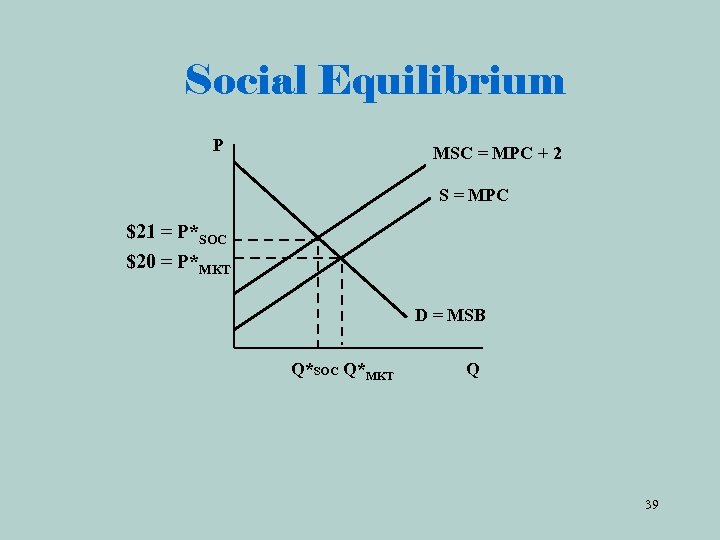 Social Equilibrium P MSC = MPC + 2 S = MPC $21 = P*SOC $20 = P*MKT D = MSB Q*SOC Q*MKT Q 39
 Social Efficiency u. At P*MKT: u. MSC > MSB u. Q*MKT > Q*SOC the market “overproduces” the good u. P*MKT < P*SOC the market “under-prices” the good u. Market solution is therefore not efficient from society’s standpoint u. How can this inefficiency be corrected? 40
 Social Efficiency u. A tax equal to the marginal external cost ($2. 00) would serve to increase the firm’s MPC so that it is coincident with the MSC function. u. In other words, the tax brings the external cost into the market. = “internalizing the externality” 41
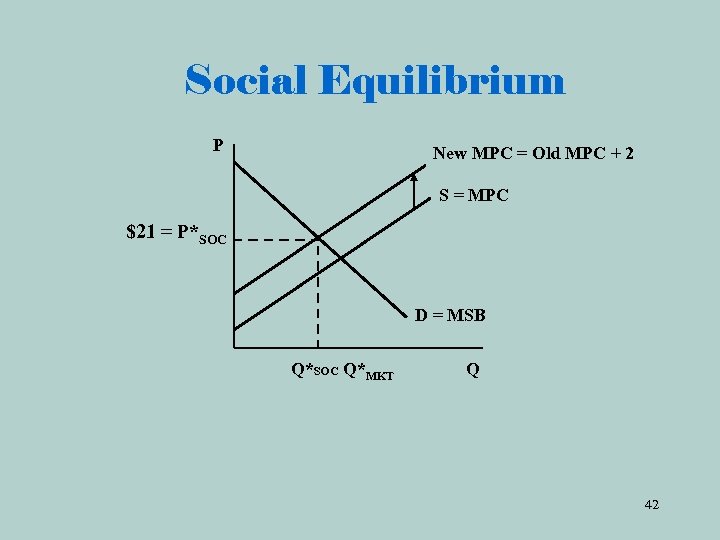 Social Equilibrium P New MPC = Old MPC + 2 S = MPC $21 = P*SOC D = MSB Q*SOC Q*MKT Q 42
 Can markets create external benefits? u. If markets can create costs on 3 rd parties, can they create benefits? u. Sure. u. Education. u. Lawn care u. House maintenance u. Text: beekeeper adjacent to apple orchard u. Will the market solution be efficient? 43
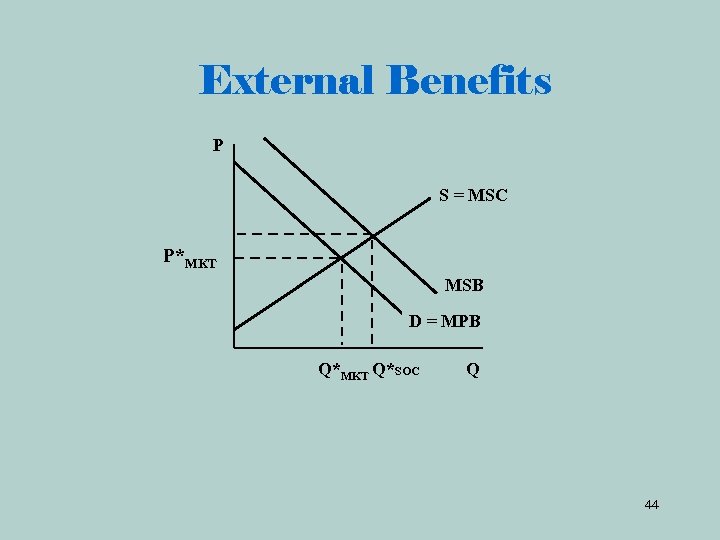 External Benefits P S = MSC P*MKT MSB D = MPB Q*MKT Q*SOC Q 44
 External Benefits u. In the case of external benefits, the market will under-provide the good relative to the socially optimal amount. u. I. E. at Q*MKT MSB > MSC u. How can this inefficiency be corrected? u. Recall the solution to negative externality was a tax… u. We should subsidize the positive externality generating activity. 45
 Naturalist Questions u. Why are gasoline taxes so high (relative to other goods)? u. Why aren’t gasoline taxes higher (as in other nations)? u. Why do communities have zoning laws? 46
 Exercises The more elastic demand is the ______ the burden of the tax borne by ______. A. smaller; consumer and producers B. larger; consumers C. larger; producers D. smaller; producers E. larger; consumers and producers 47
 Exercises Which of the following statements expresses the justification for making efficiency the first goal of economic interaction? A. Efficiency give the poor an incentive to improve their economic status. B. Since consensus on what is a fair distribution of goods is impossible, efficiency is the next best goal. C. People are not really concerned about the problems of the poor. D. It is too difficult to pursue more than one goal at a time. E. Efficiency maximizes total economic surplus and thereby allows other goals to be more fully achieved 48