


 Скачать презентацию Effective Curriculum Talent Development Approaches for Culturally
e06573b542a536761c75e9f77c302b7f.ppt
- Количество слайдов: 57
 Effective Curriculum & Talent Development Approaches for Culturally and Linguistically Diverse Students Tamra Stambaugh, Ph. D Vanderbilt University Executive Director, Programs for Talented Youth Research Assistant Professor, Special Education
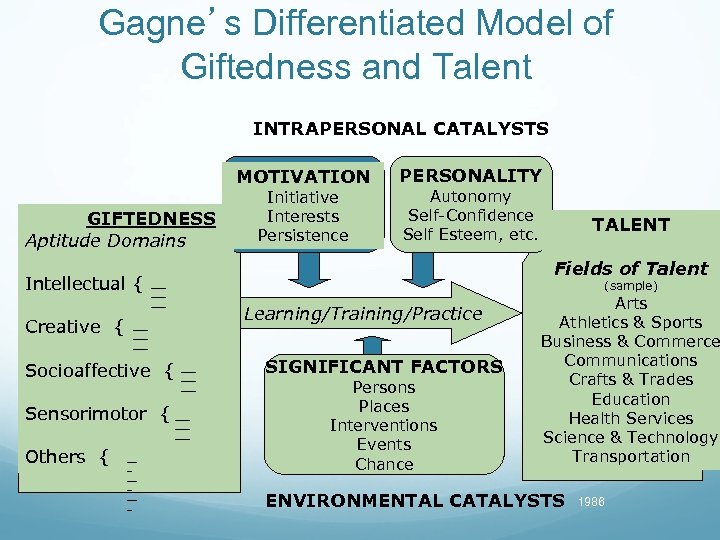 Gagne’s Differentiated Model of Giftedness and Talent INTRAPERSONAL CATALYSTS MOTIVATION GIFTEDNESS Aptitude Domains Intellectual { Creative { TALENT (sample) Learning/Training/Practice ___ ___ ___ Sensorimotor { ___ ___ __ _ Autonomy Self-Confidence Self Esteem, etc. Fields of Talent ___ ___ Socioaffective { Others { Initiative Interests Persistence PERSONALITY SIGNIFICANT FACTORS Persons Places Interventions Events Chance Arts Athletics & Sports Business & Commerce Communications Crafts & Trades Education Health Services Science & Technology Transportation ENVIRONMENTAL CATALYSTS 1986
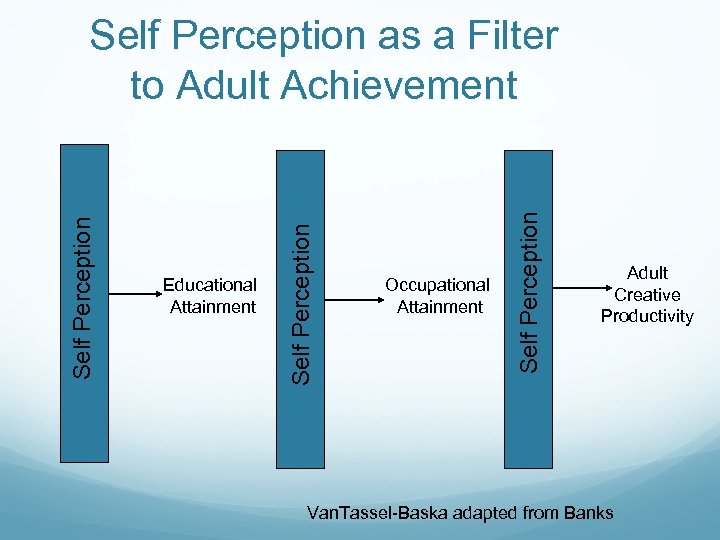 Occupational Attainment Self Perception Educational Attainment Self Perception as a Filter to Adult Achievement Adult Creative Productivity Van. Tassel-Baska adapted from Banks
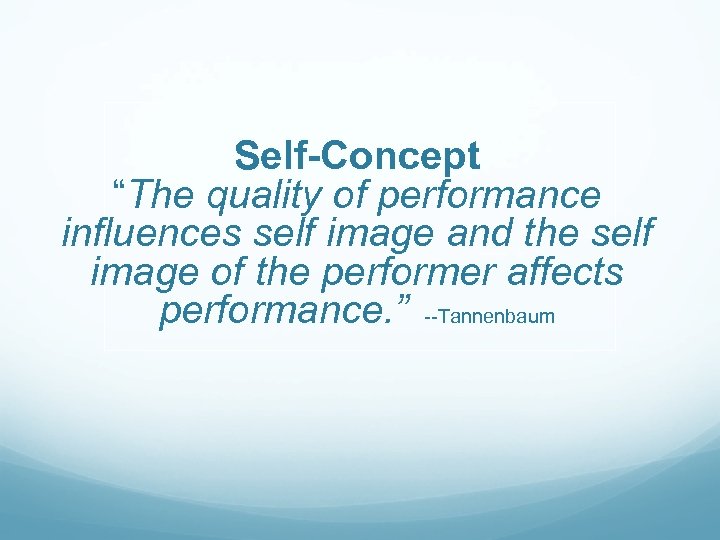 Self-Concept “The quality of performance influences self image and the self image of the performer affects performance. ” --Tannenbaum
 HARD WORK and DELIBERATE PRACTICE 10% Inspiration 90% perspiration Least Enjoyed and Most Effortful TASKS ARE MOST EFFECTIVE FOR SUCCESS
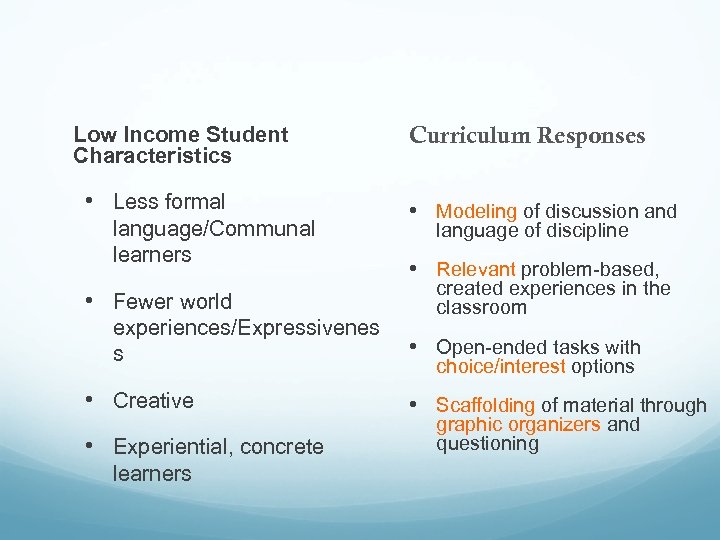 Low Income Student Characteristics • Less formal language/Communal learners • Fewer world experiences/Expressivenes s • Creative • Experiential, concrete learners Curriculum Responses • Modeling of discussion and language of discipline • Relevant problem-based, created experiences in the classroom • Open-ended tasks with choice/interest options • Scaffolding of material through graphic organizers and questioning
 Advanced Curriculum Great equalizer Builds self confidence and achievement motivation
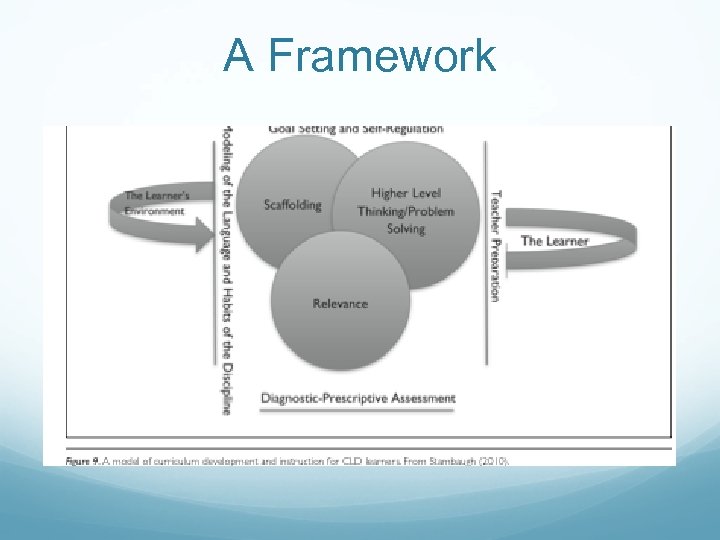 A Framework
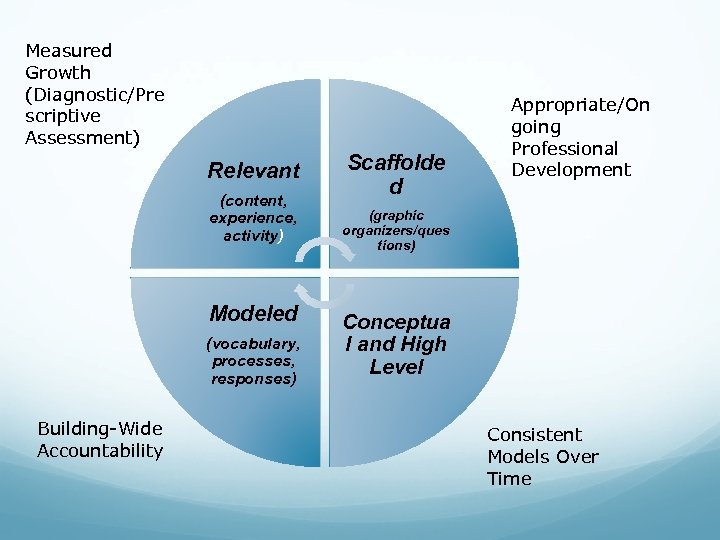 Measured Growth (Diagnostic/Pre scriptive Assessment) Relevant (content, experience, activity) Modeled (vocabulary, processes, responses) Building-Wide Accountability Scaffolde d Appropriate/On going Professional Development (graphic organizers/ques tions) Conceptua l and High Level Consistent Models Over Time
 Pattern 1: Scaffolding (Whole – Part – Whole and Less to More Independence) Disadvantaged students need more scaffolding to use higher order thinking skills. Projects suggest that when scaffolding is embedded within the curriculum students show gains in higher level thinking and are able to accomplish more than previously expected
 Project U-STARS The Very Hungry Caterpillar: Language Arts/Science • Knowledge: List things that the caterpillar ate when hungry. • Comprehension: Describe each state of the butterfly’s life. • Application: Describe what would happen to you if you only ate junk food. • Analysis: Compare and contrast the stages of the butterfly. • Synthesis: Explain the relationship between the caterpillar and the butterfly. • Evaluation: Describe which stage of the butterfly you like the most and why.
 Why Own a House When You Can Own an RV? The nineties are so hectic nobody spends any time in their homes with their families. Leisurely evenings at home have given way to hectic evenings on the road. People are always on the go, so why not take the house with you? That’s where the recreational vehicle (R. V. ) comes in. When you have to run errands, or take your kids to soccer or basketball practice, your time could also be spent cleaning your house, doing your laundry or making a meal. We’ve created a world where the goal is to make things faster and to allow us to do two or three things at once. Traditional mail has been replaced by overnight mail, e-mail and faxes, and home cooked meals have been replaced by fast food or microwave meals. We have so many things to make our lives “easier, ” but we never have time to use any of them. One solution for anyone who says “I spend no time in my house, ” is to trade your expensive mortgage for a house you can take with you. After all, with a good hook-up, an R. V. contains all the necessities of life: a bathroom, running water, kitchens, beds, satellite TV, cellular phones, electric lights, and, of course, a moving vehicle. In the near future, our communities will simply be R. V. lots so families can drive from their home lot to temporary lots that provide home-like settings for busy families on the go. Another solution would be to cut back your busy schedules and stay home more often. Do one thing at a time and live for today. Sit back once in a while, relax, and take the time to enjoy your life. JACOB’S LADDER Robert J. Hidy Second Place: Essays, Grades 4 -5
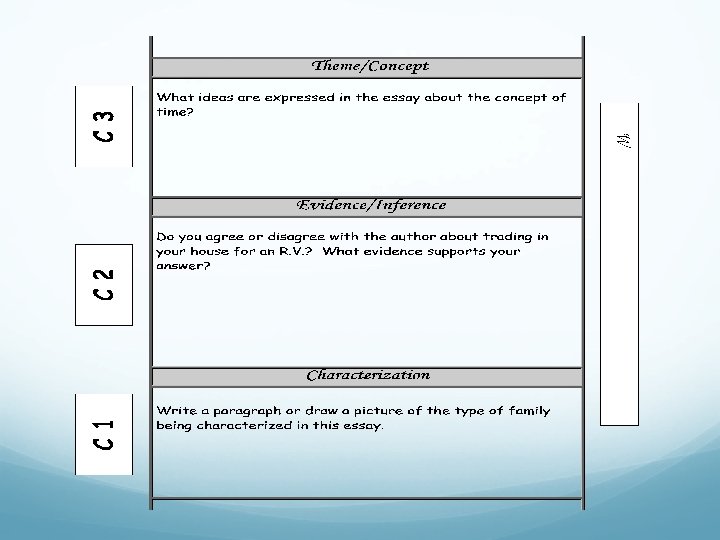
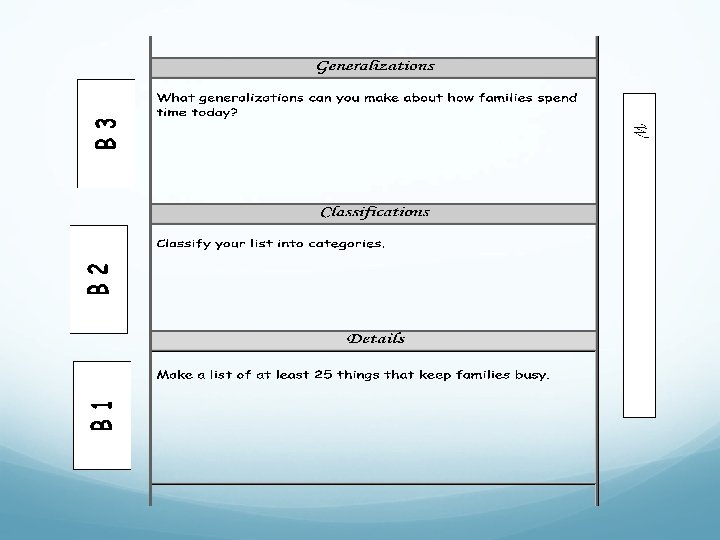
 Scaffolding: Use of High Level Graphic Organizers Graphic organizers were used to guide students toward higher level thinking skills –graphic organizers were consistent over time – not varied – and taught high level thinking skills processes
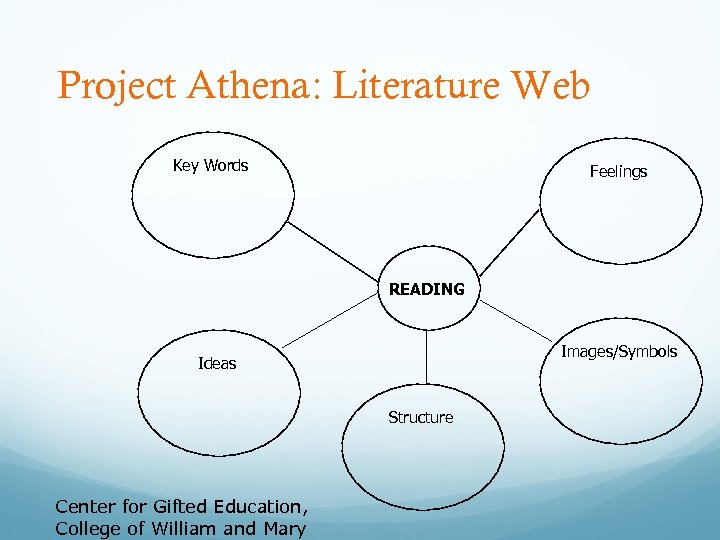 Project Athena: Literature Web Key Words Feelings READING Images/Symbols Ideas Structure Center for Gifted Education, College of William and Mary
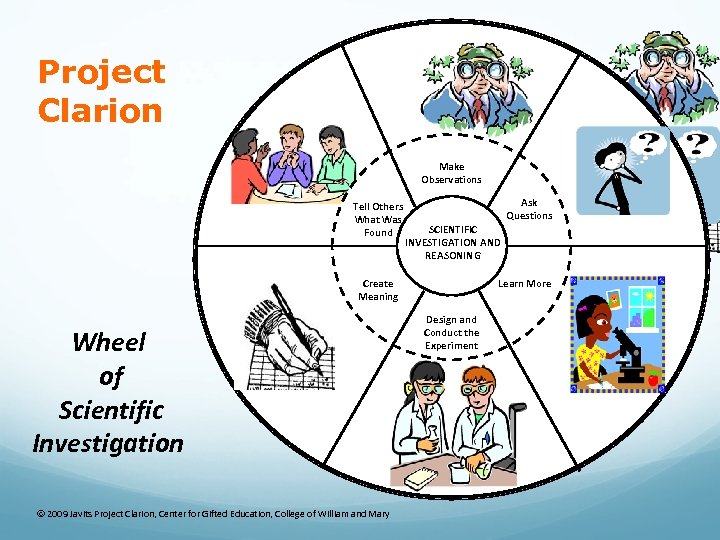 Project Clarion Make Observations Tell Others What Was Found Ask Questions SCIENTIFIC INVESTIGATION AND REASONING Create Meaning Wheel of Scientific Investigation 2009 Javits Project Clarion, Center for Gifted Education, College of William and Mary Learn More Design and Conduct the Experiment
 Pattern 2: Modeling Communication and Language Professional development of all curriculum projects included how teachers should model the language of the discipline, encourage meaningful discussion, and enhanced student feedback
 Mentoring Mathematical Minds What features are important to mention when you describe a data set? (Be sure to use mathematical vocabulary. ) Digging for data, p. 27 What does it mean when we say that events are equally likely? (Make up a situation that involves three or more events in which the possible outcomes are equally likely and explain why. ) What are your chances, p. 7
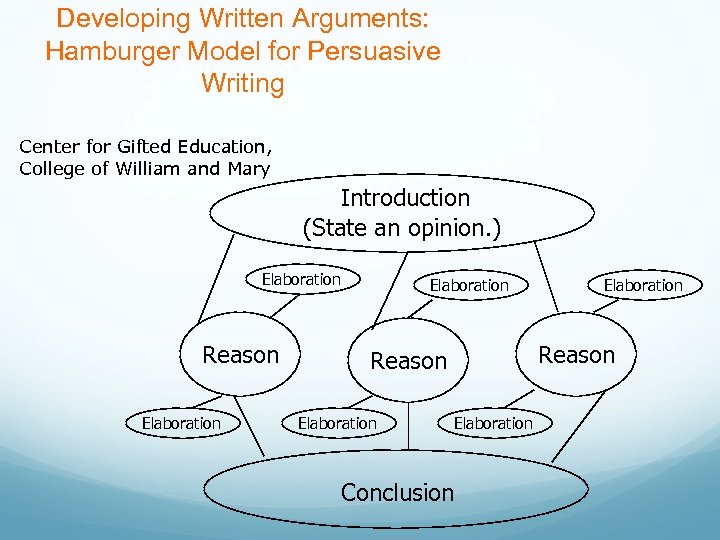 Developing Written Arguments: Hamburger Model for Persuasive Writing Center for Gifted Education, College of William and Mary Introduction (State an opinion. ) Elaboration Reason Elaboration Conclusion
 Pattern 3: Use Interest-Based Problems and Relevance Students from disadvantaged homes need more experiences created for them in order to apply and understand abstract phenomenon Students are also more motivated when selecting or applying an issue of interest within their life experience
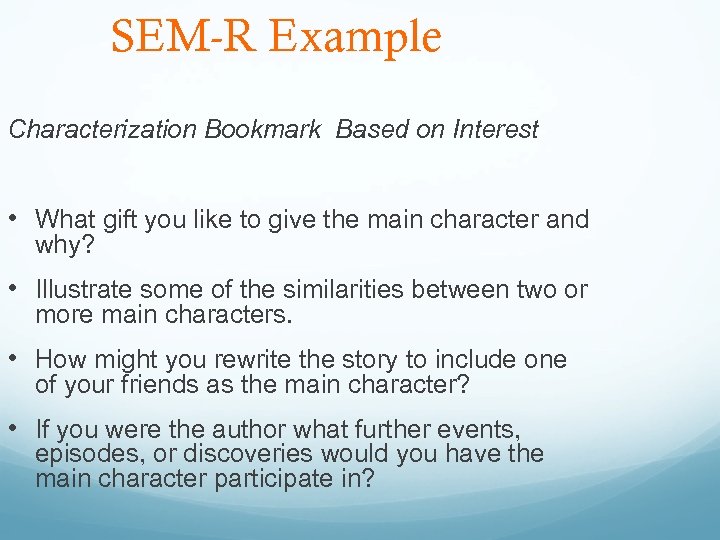 SEM-R Example Characterization Bookmark Based on Interest • What gift you like to give the main character and why? • Illustrate some of the similarities between two or more main characters. • How might you rewrite the story to include one of your friends as the main character? • If you were the author what further events, episodes, or discoveries would you have the main character participate in?
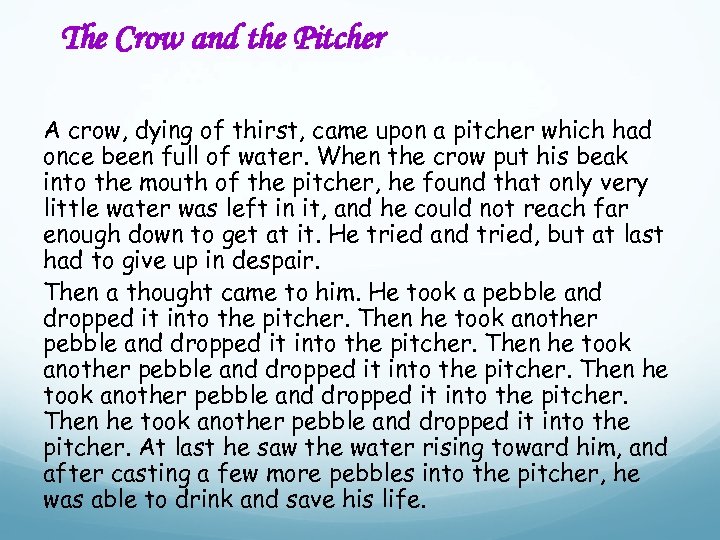 The Crow and the Pitcher A crow, dying of thirst, came upon a pitcher which had once been full of water. When the crow put his beak into the mouth of the pitcher, he found that only very little water was left in it, and he could not reach far enough down to get at it. He tried and tried, but at last had to give up in despair. Then a thought came to him. He took a pebble and dropped it into the pitcher. Then he took another pebble and dropped it into the pitcher. At last he saw the water rising toward him, and after casting a few more pebbles into the pitcher, he was able to drink and save his life.
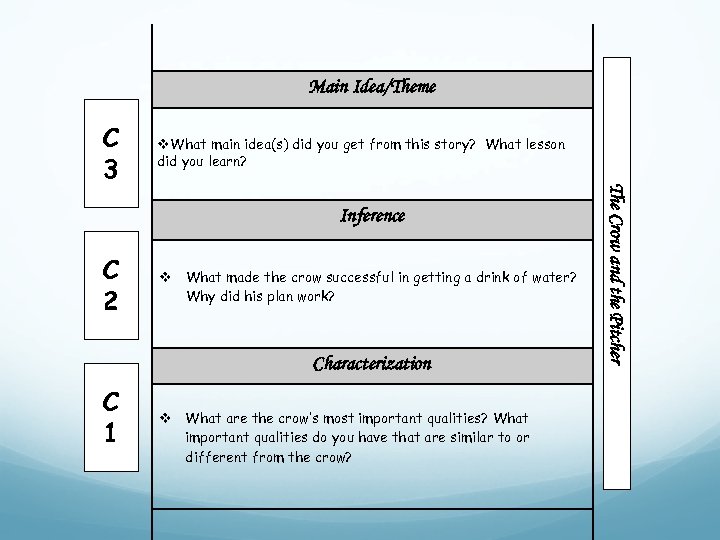 Main Idea/Theme What main idea(s) did you get from this story? What lesson did you learn? Inference C 2 What made the crow successful in getting a drink of water? Why did his plan work? Characterization C 1 What are the crow’s most important qualities? What important qualities do you have that are similar to or different from the crow? The Crow and the Pitcher C 3
 Pattern 4: Open-Ended Problems to Stimulate and Showcase Learning – CONCEPTUAL AND HIGH LEVEL Students were provided real world issues or problems linked to curriculum units Focus on providing an environment to showcase learning from a taught experience CREATE THE EXPERIENCE FOR THEM
 Project Athena: Student Research Should students wear uniforms to school? Literary Analysis Censorship (You are a report to reflect all sides of the issue and make a recommendation to present to the Press Club, after reading and analyzing several perspectives. ) Persuasion
 Mentoring Mathematical Minds Example Moli Stone - Grade 3 Place Value • Students must decipher the numerical markings on a stone. To do this, they explore the essential concepts of place value: mainly patterns, groupings, and symbols. To do this they investigate differences between place values, various bases, and other numeration systems (including the Egyptian and Chinese systems). • Activities: Apply your understanding of all concepts to create your own number system. Examine other bases as part of acceleration. • Think Deeply: What are the similarities and differences between base 3 and base 10 systems? Does having place values in the base 10 system help us add and subtract more quickly than other bases? Why or Why not? • Hints: What do the different numbers in each place indicate? FROM: Gavin, M. K. , Chapin, S. , Dailey, J. & Sheffield, L. (2006). Unraveling the mystery of the Moli • Stone: Place value and numeration. Dubuque, IA: Kendall Hunt Publishing.
 Project Clarion • Team, you are needed right away! Queen Anne’s Island, located off the Virginia shore, is in an environmental crisis. Many of its water sources have become polluted from industry and traffic. Its farmland has eroded and the air has become increasingly dangerous to breathe. We need your help to assist Queen Anne’s Island in conserving its natural resources by designing a park—called Preservation Park—to preserve its natural resources. You have three weeks to learn all you can about natural resources, soil, and conservation. Get busy right away! Dig It, Prufrock Press
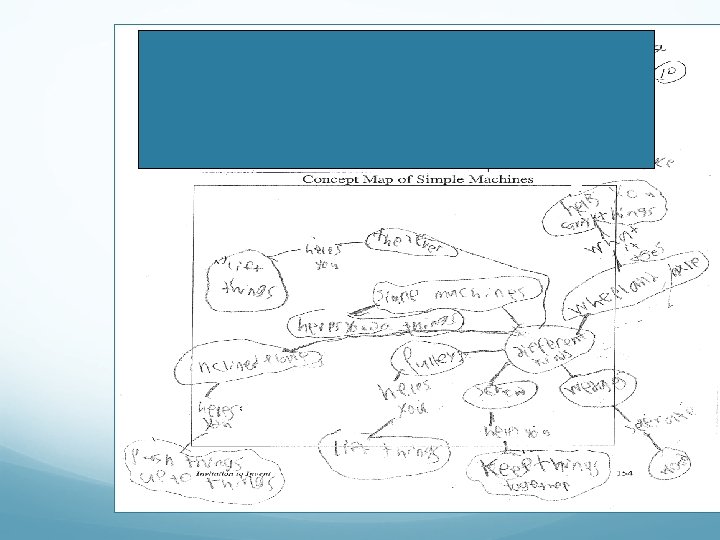
 Measured Pre/Post Though in some projects the significance level was lower for standardized assessments, students in the experimental groups showed significant and very high gains in the content, process, or interest acquisition after being exposed to the curriculum Why? Less like a “test”; narrowly focused; matched to created experiences
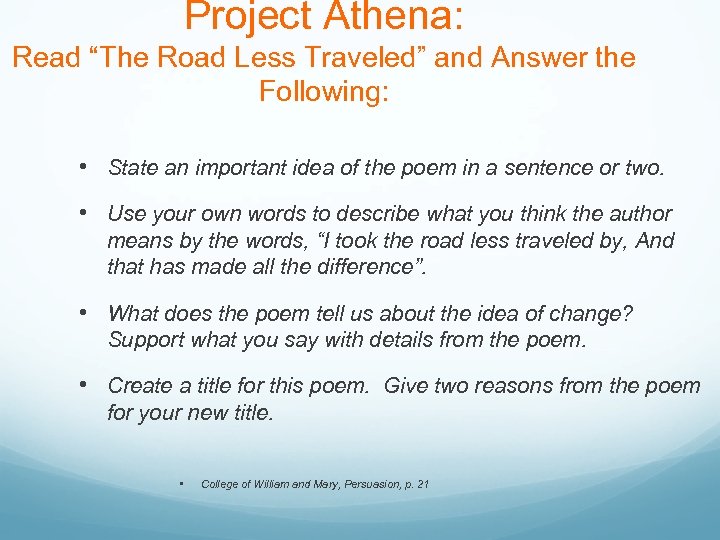 Project Athena: Read “The Road Less Traveled” and Answer the Following: • State an important idea of the poem in a sentence or two. • Use your own words to describe what you think the author means by the words, “I took the road less traveled by, And that has made all the difference”. • What does the poem tell us about the idea of change? Support what you say with details from the poem. • Create a title for this poem. Give two reasons from the poem for your new title. • College of William and Mary, Persuasion, p. 21
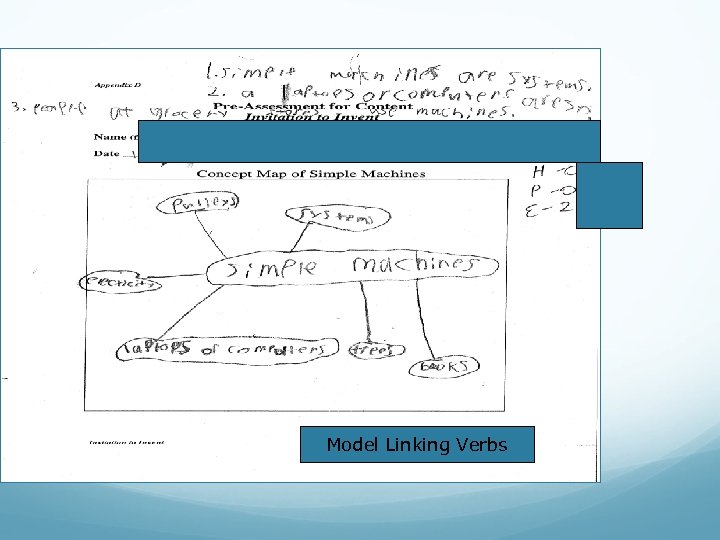 Model Linking Verbs
 What Can Educators Do to Promote Talent? Don’t rescue when things become difficult Promote difficult but doable challenges Aim high and scaffold down; students can do more than we think they can Provide meaningful practice and hard work Challenge thinking and ideas – give them models Ensure follow through of events of interest Delay gratification Set and work toward short and long term goals Promote an “I can” attitude FOCUS – allow time to become good at a few things of interest
 Other Lessons Learned Place good curriculum in the hands of qualified teachers Professional Development, Modeling of Best Practice, and Appropriate Materials Were Met with Strong Results Principals were interested in the curriculum and the ultimate success Growth was measured by student growth over time not just by norm-referenced tests Administration, parents, and teachers said their students were able to do more than previously thought
 Participating and Leading Innovation: Doing it Right The Research in Photos
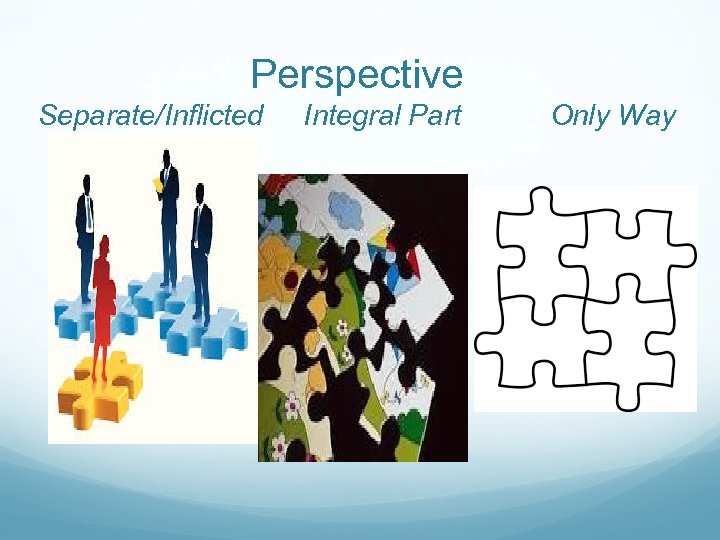 Perspective Separate/Inflicted Integral Part Only Way
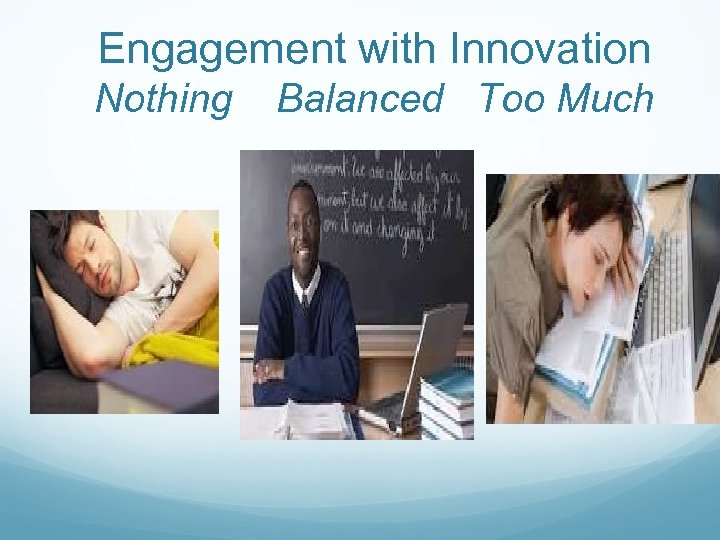 Engagement with Innovation Nothing Balanced Too Much
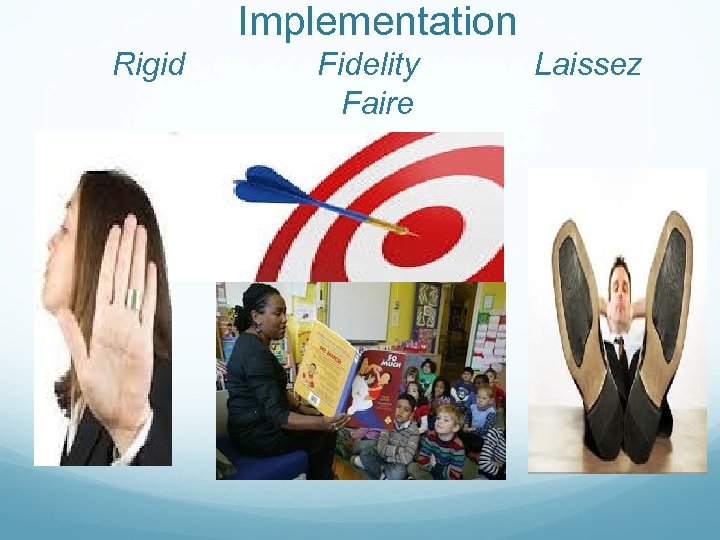 Implementation Rigid Fidelity Faire Laissez
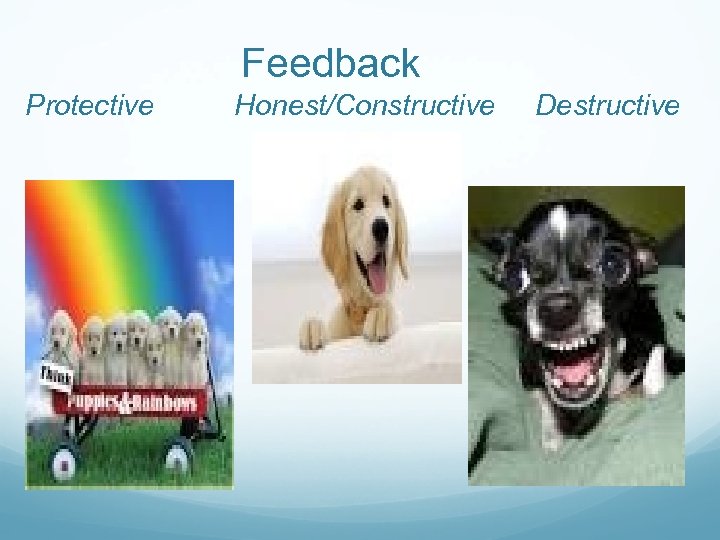 Feedback Protective Honest/Constructive Destructive
 Surviving and Thriving In Innovation Embrace change and innovation; relish in the opportunity Model a growth mindset; be a learner Provide feedback that will make the project better for you and your students Consider the short- and long-term consequences Give yourself a break
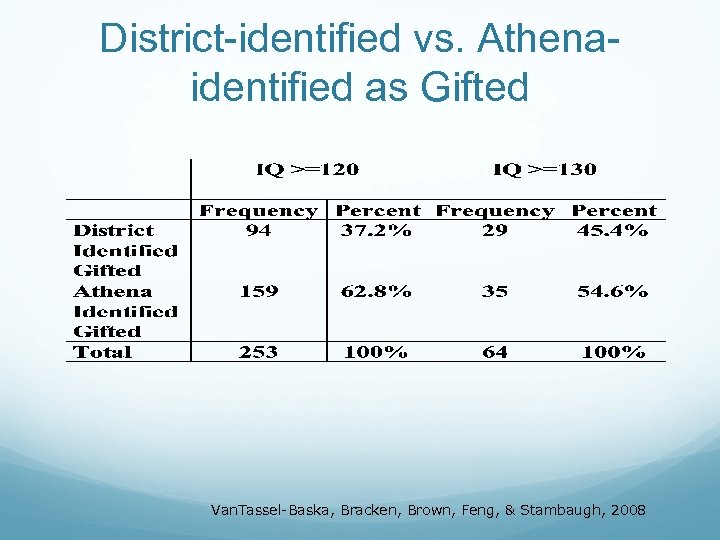 District-identified vs. Athenaidentified as Gifted Van. Tassel-Baska, Bracken, Brown, Feng, & Stambaugh, 2008
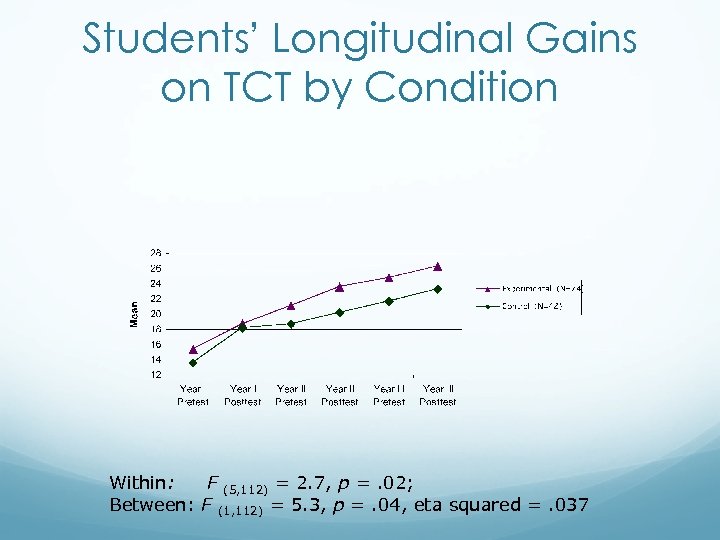 Students’ Longitudinal Gains on TCT by Condition Within: F (5, 112) = 2. 7, p =. 02; Between: F (1, 112) = 5. 3, p =. 04, eta squared =. 037
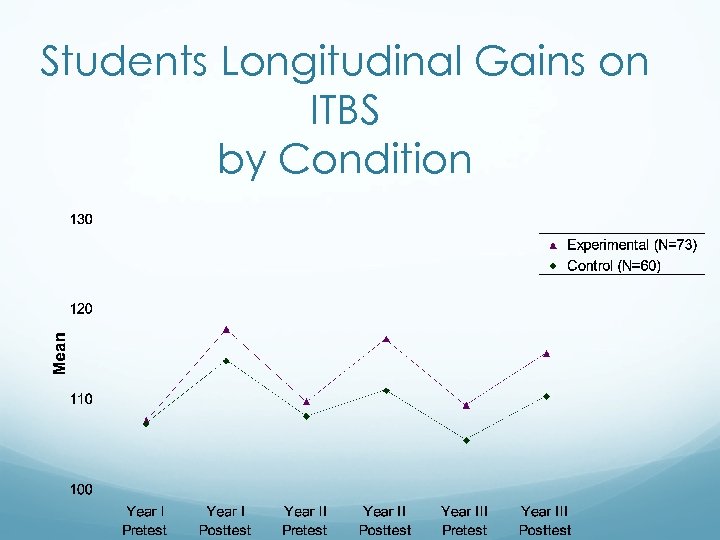 Students Longitudinal Gains on ITBS by Condition
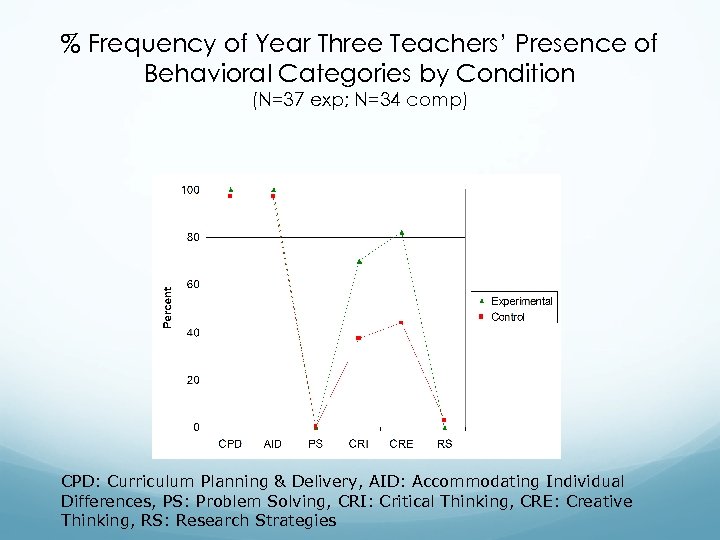 % Frequency of Year Three Teachers’ Presence of Behavioral Categories by Condition (N=37 exp; N=34 comp) CPD: Curriculum Planning & Delivery, AID: Accommodating Individual Differences, PS: Problem Solving, CRI: Critical Thinking, CRE: Creative Thinking, RS: Research Strategies
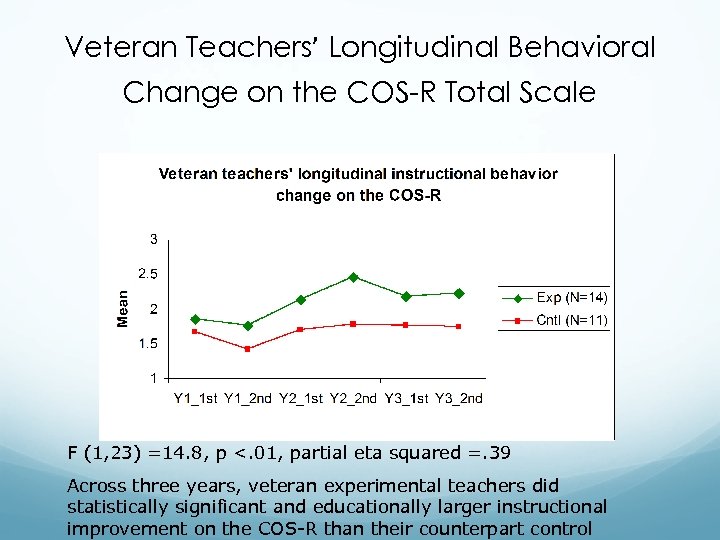 Veteran Teachers’ Longitudinal Behavioral Change on the COS-R Total Scale F (1, 23) =14. 8, p <. 01, partial eta squared =. 39 Across three years, veteran experimental teachers did statistically significant and educationally larger instructional improvement on the COS-R than their counterpart control
 “If the misery of the poor be caused not by the laws of nature, but by our institutions, great is our sin. ” - Darwin
 Evidence-based Recommendations
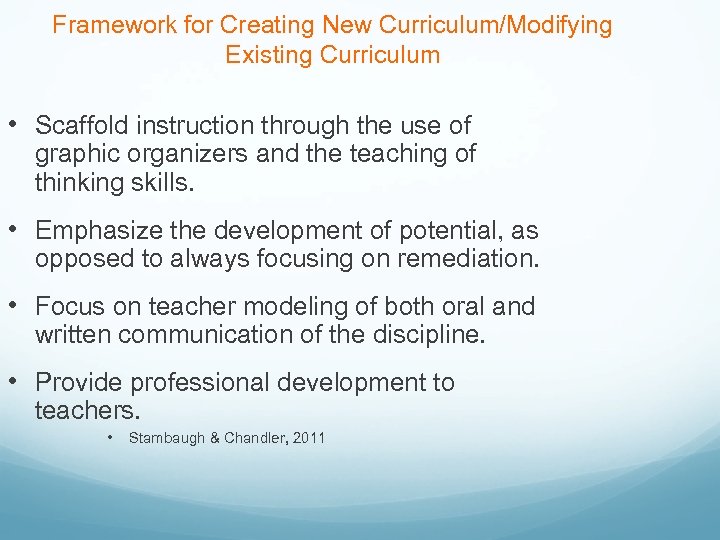 Framework for Creating New Curriculum/Modifying Existing Curriculum • Scaffold instruction through the use of graphic organizers and the teaching of thinking skills. • Emphasize the development of potential, as opposed to always focusing on remediation. • Focus on teacher modeling of both oral and written communication of the discipline. • Provide professional development to teachers. • Stambaugh & Chandler, 2011
 Framework for Creating New Curriculum/Modifying Existing Curriculum Create opportunities for real-world problem solving and student choice. Incorporate student goal setting and monitoring. Use curriculum-based performance measures to modify instruction and measure progress. Place effective curriculum in the hands of trained teachers. Stambaugh & Chandler, 2011
 Recommendations for Educational Leaders • Provide professional development about gifted disadvantaged students’ characteristics and effective curriculum and instructional techniques effective with this population on an ongoing basis to all faculty and paraprofessionals. Set appropriately high expectations and provide support. • Include disadvantaged gifted learners’ achievement as a criterion in teacher evaluation and accountability measures. • Provide targeted course options for disadvantaged students in their areas of strength – identification should match instruction if placed in GT program. • Stambaugh & Chandler, 2011
 Recommendations for Educational Leaders • Be aware of and enlist the help of the community supports that exist for your disadvantaged students. • Select curriculum that is known to be effective with disadvantaged high ability learners. • Incorporate evidence-based strategies known to be effective with this population in teacher accountability measures. • Encourage career counseling and mentorships as part of student development. • Involve families of disadvantaged gifted learners as educational partners. • Stambaugh & Chandler, 2011
 How Will You Use This Information? What are the implications of this information for your classroom? Consider curriculum modifications, instructional strategies, and classroom management.
 For Further Reading Overlooked Gems http: //www. nagc. org/index. aspx? id=1719&terms=overlooke d+gems Patterns and Profiles of Students of Poverty https: //www. nagc. org/nagc 2/ngcshopper/Product. Details. as px? product. ID=NGC 42119&Curr. Index=48 Reports http: //www. jkcf. org/news-knowledge See “No Gifted Child Left Behind” and “The Achievement Trap”
 Curriculum Information • Project Clarion • http: //www. prufrock. com/searchproducts. cfm • Jacob’s Ladder • http: //www. prufrock. com/searchproducts. cfm • Mentoring Mathematical Minds (M 3) • http: //www. kendallhunt. com/Search. aspx? search. Term=M 3 • http: //gcq. sagepub. com/content/53/3/188. full. pdf+html • Project Athena • http: //www. kendallhunt. com/Search. aspx? search. Term=center%20 for%2 0 gifted%20 education%20 language%20 arts • SEM-R • http: //www. gifted. uconn. edu/SEMR/about. html
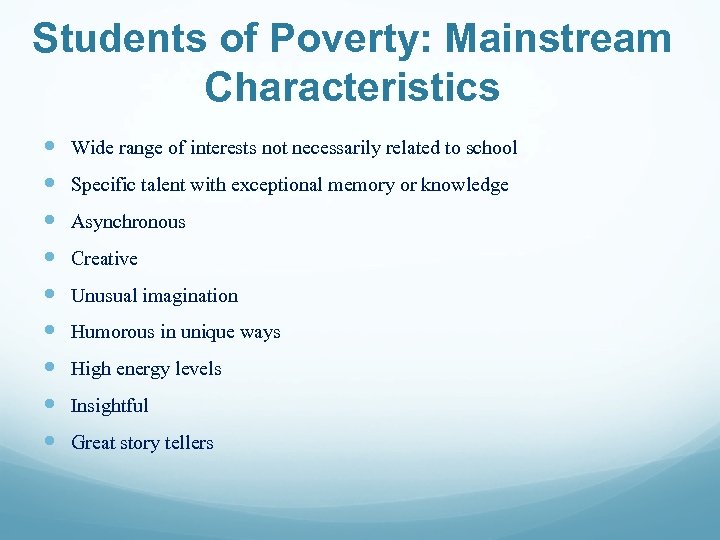 Students of Poverty: Mainstream Characteristics Wide range of interests not necessarily related to school Specific talent with exceptional memory or knowledge Asynchronous Creative Unusual imagination Humorous in unique ways High energy levels Insightful Great story tellers
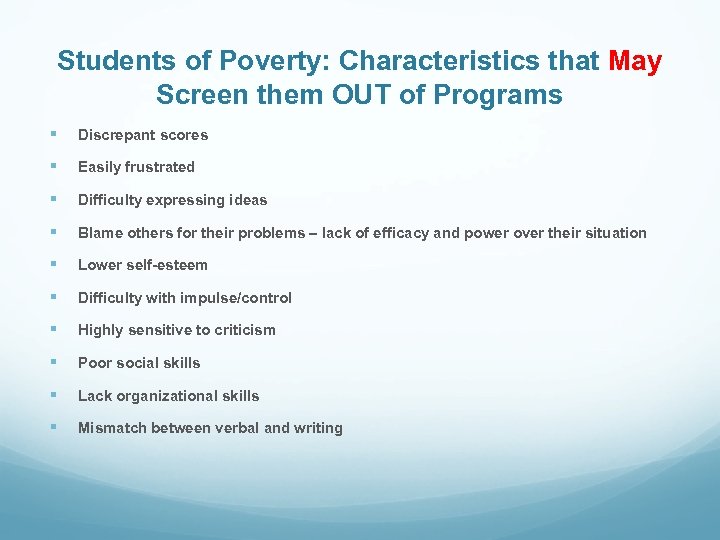 Students of Poverty: Characteristics that May Screen them OUT of Programs § Discrepant scores § Easily frustrated § Difficulty expressing ideas § Blame others for their problems – lack of efficacy and power over their situation § Lower self-esteem § Difficulty with impulse/control § Highly sensitive to criticism § Poor social skills § Lack organizational skills § Mismatch between verbal and writing
 PURSUIT OF A PASSION OR GOAL