


 Скачать презентацию EECP Enhanced External Counterpulsation A Medical Services Presentation
3e4b7b8fd1faecbfa7ec1d2e386d97c4.ppt
- Количество слайдов: 32
 EECP Enhanced External Counterpulsation A Medical Services Presentation from Vasomedical, Inc. EECP is a registered trademark of Vasomedical, Inc. © 1999 Vasomedical Inc.
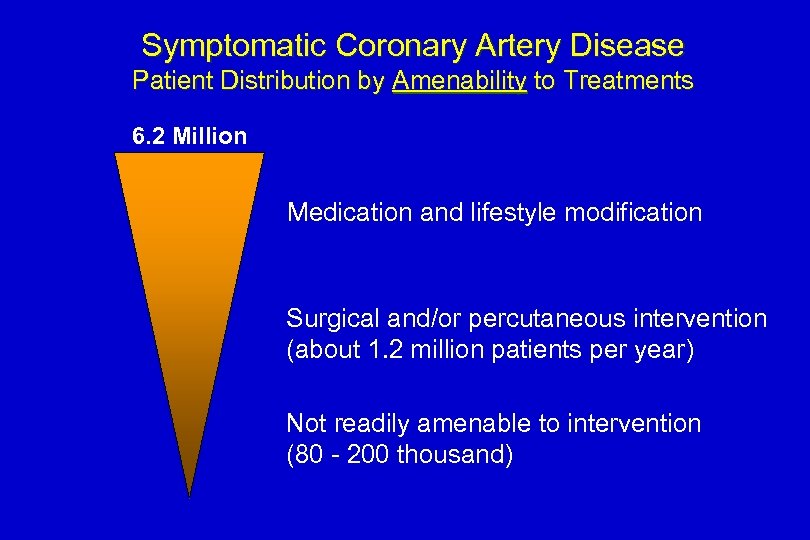 Symptomatic Coronary Artery Disease Patient Distribution by Amenability to Treatments 6. 2 Million Medication and lifestyle modification Surgical and/or percutaneous intervention (about 1. 2 million patients per year) Not readily amenable to intervention (80 - 200 thousand)
 The Weight of Clinical Evidence In most patients, EECP treatment. . . • Reduces anginal pain • Increases functional ability • Improves quality of life … both short-term and long-term
 Target Population for EECP Therapy Coronary artery disease patients with angina pectoris refractory to medical therapy.
 EECP Therapy Covered by Medicare For patients with a diagnosis of disabling angina pectoris who, in the opinion of their cardiologists or cardiac surgeons, are not readily amenable to invasive procedures because… – They are inoperable or at high risk of operative complications or failure – Their coronary anatomy is not readily accessible to such procedures – Co-morbid states create excessive risk
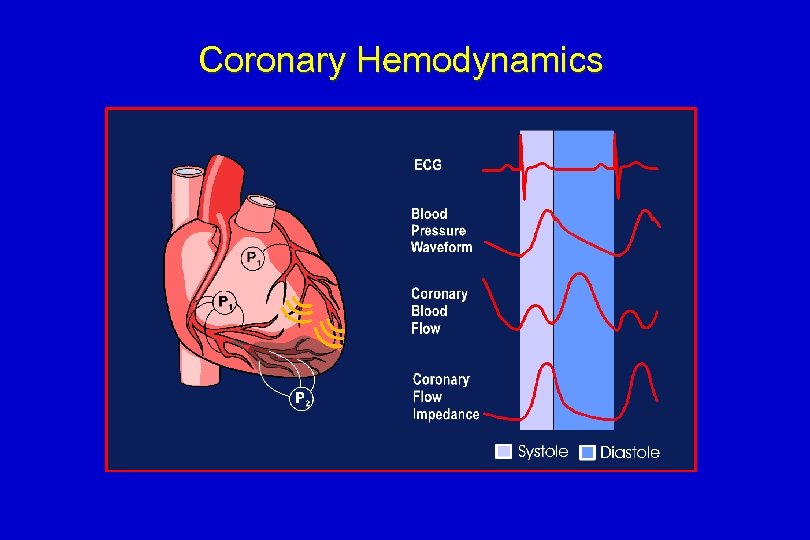 Coronary Hemodynamics
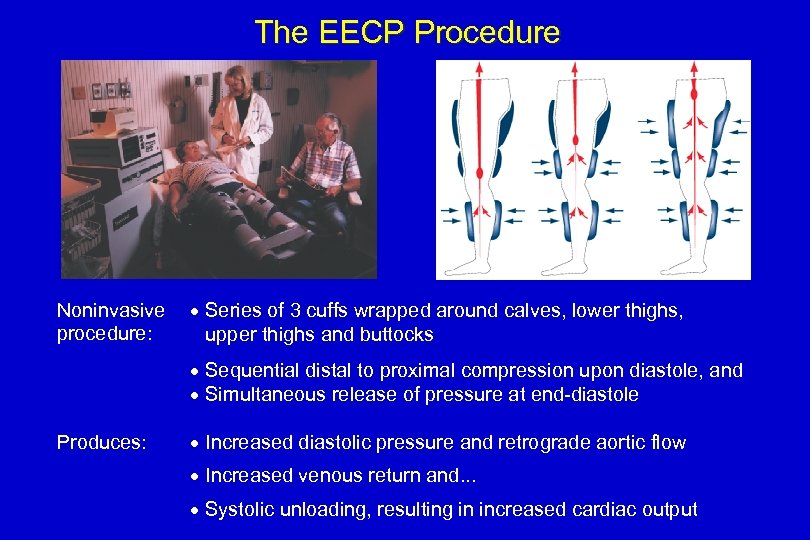 The EECP Procedure Noninvasive procedure: · Series of 3 cuffs wrapped around calves, lower thighs, upper thighs and buttocks · Sequential distal to proximal compression upon diastole, and · Simultaneous release of pressure at end-diastole Produces: · Increased diastolic pressure and retrograde aortic flow · Increased venous return and. . . · Systolic unloading, resulting in increased cardiac output
 Required Treatment Regimens • A total of 35 hours is required • Regimen: 1 or 2 hours daily • At least 5 days per week for 4 to 7 weeks It is recommended that 2 hours daily treatment sessions are separated by a 30 minutes rest interval.
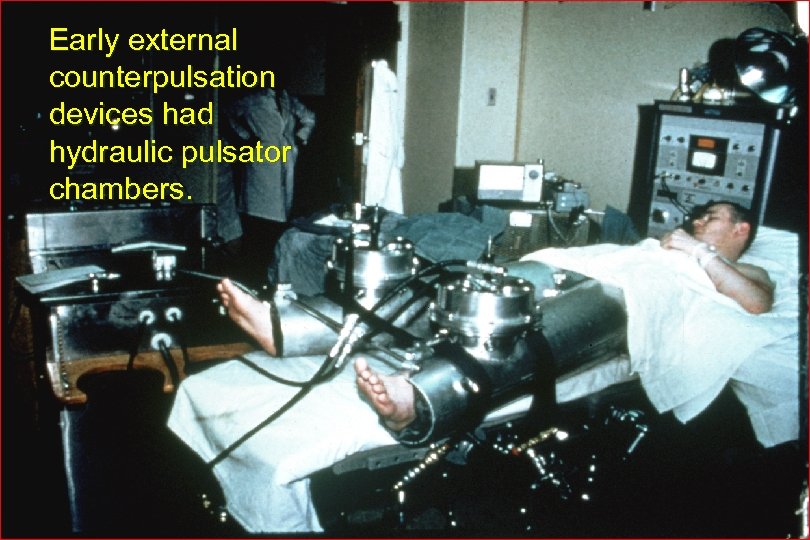 Early external counterpulsation devices had hydraulic pulsator chambers.
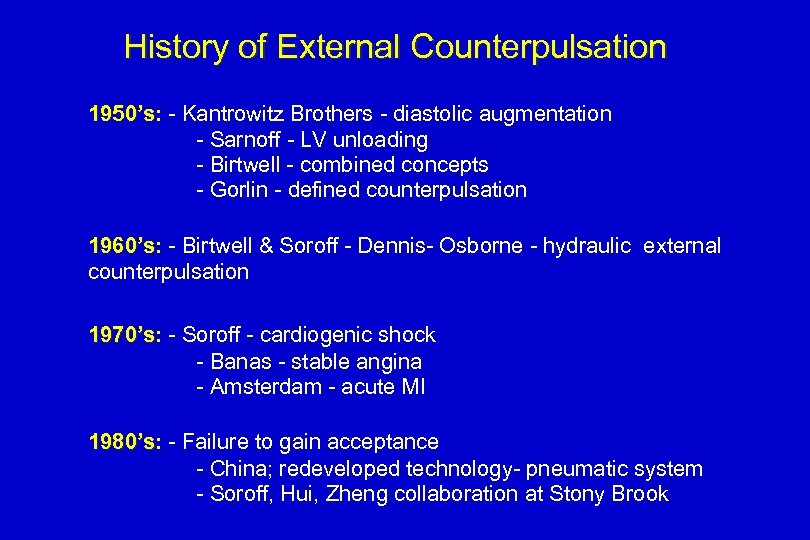 History of External Counterpulsation 1950’s: - Kantrowitz Brothers - diastolic augmentation 1950’s - Sarnoff - LV unloading - Birtwell - combined concepts - Gorlin - defined counterpulsation 1960’s: - Birtwell & Soroff - Dennis- Osborne - hydraulic external 1960’s counterpulsation 1970’s: - Soroff - cardiogenic shock 1970’s - Banas - stable angina - Amsterdam - acute MI 1980’s: - Failure to gain acceptance 1980’s - China; redeveloped technology- pneumatic system - Soroff, Hui, Zheng collaboration at Stony Brook
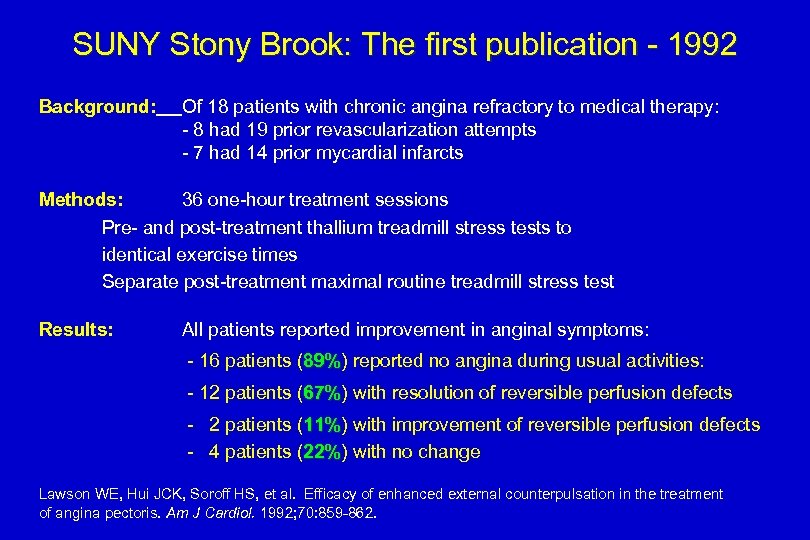 SUNY Stony Brook: The first publication - 1992 Background: Of 18 patients with chronic angina refractory to medical therapy: - 8 had 19 prior revascularization attempts - 7 had 14 prior mycardial infarcts Methods: 36 one-hour treatment sessions Pre- and post-treatment thallium treadmill stress tests to identical exercise times Separate post-treatment maximal routine treadmill stress test Results: All patients reported improvement in anginal symptoms: - 16 patients (89%) reported no angina during usual activities: 89% - 12 patients (67%) with resolution of reversible perfusion defects 67% - 2 patients (11%) with improvement of reversible perfusion defects 11% - 4 patients (22%) with no change 22% Lawson WE, Hui JCK, Soroff HS, et al. Efficacy of enhanced external counterpulsation in the treatment of angina pectoris. Am J Cardiol. 1992; 70: 859 -862.
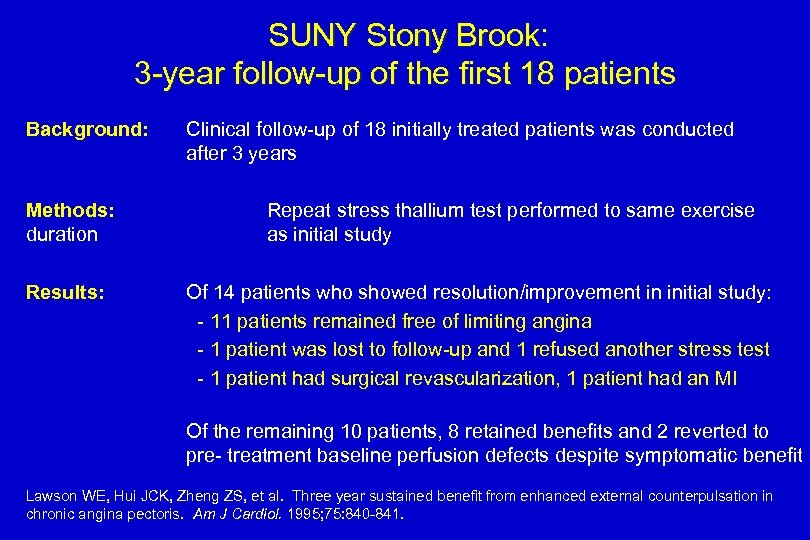 SUNY Stony Brook: 3 -year follow-up of the first 18 patients Background: Methods: duration Results: Clinical follow-up of 18 initially treated patients was conducted after 3 years Repeat stress thallium test performed to same exercise as initial study Of 14 patients who showed resolution/improvement in initial study: - 11 patients remained free of limiting angina - 1 patient was lost to follow-up and 1 refused another stress test - 1 patient had surgical revascularization, 1 patient had an MI Of the remaining 10 patients, 8 retained benefits and 2 reverted to pre- treatment baseline perfusion defects despite symptomatic benefit Lawson WE, Hui JCK, Zheng ZS, et al. Three year sustained benefit from enhanced external counterpulsation in chronic angina pectoris. Am J Cardiol. 1995; 75: 840 -841.
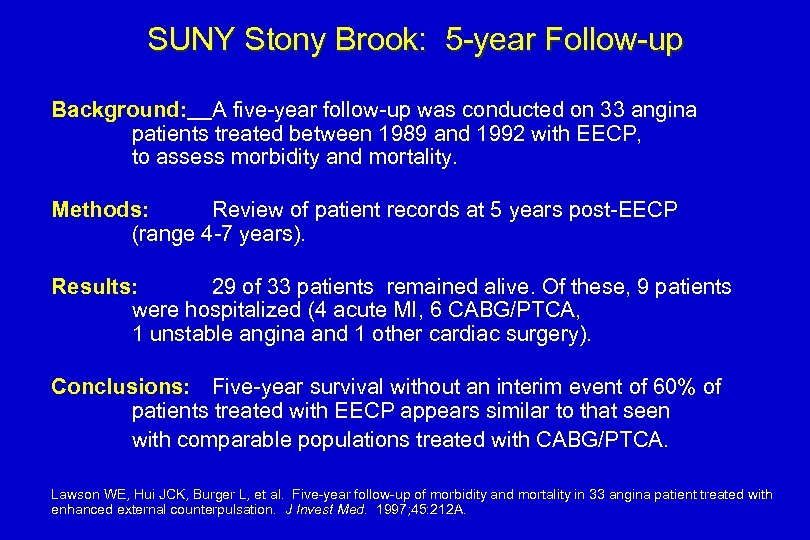 SUNY Stony Brook: 5 -year Follow-up Background: A five-year follow-up was conducted on 33 angina patients treated between 1989 and 1992 with EECP, to assess morbidity and mortality. Methods: Review of patient records at 5 years post-EECP (range 4 -7 years). Results: 29 of 33 patients remained alive. Of these, 9 patients were hospitalized (4 acute MI, 6 CABG/PTCA, 1 unstable angina and 1 other cardiac surgery). Conclusions: Five-year survival without an interim event of 60% of patients treated with EECP appears similar to that seen with comparable populations treated with CABG/PTCA. Lawson WE, Hui JCK, Burger L, et al. Five-year follow-up of morbidity and mortality in 33 angina patient treated with enhanced external counterpulsation. J Invest Med. 1997; 45: 212 A.
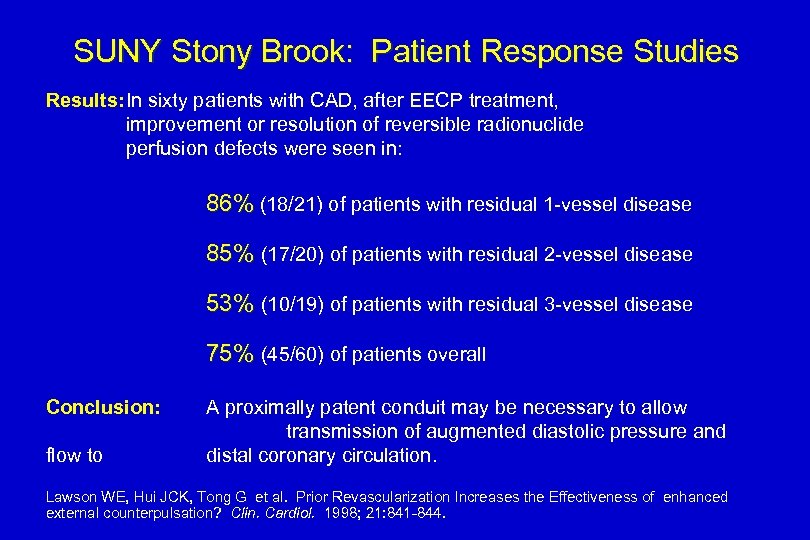 SUNY Stony Brook: Patient Response Studies Results: In sixty patients with CAD, after EECP treatment, improvement or resolution of reversible radionuclide perfusion defects were seen in: 86% (18/21) of patients with residual 1 -vessel disease 85% (17/20) of patients with residual 2 -vessel disease 53% (10/19) of patients with residual 3 -vessel disease 75% (45/60) of patients overall Conclusion: flow to A proximally patent conduit may be necessary to allow transmission of augmented diastolic pressure and distal coronary circulation. Lawson WE, Hui JCK, Tong G et al. Prior Revascularization Increases the Effectiveness of enhanced external counterpulsation? Clin. Cardiol. 1998; 21: 841 -844.
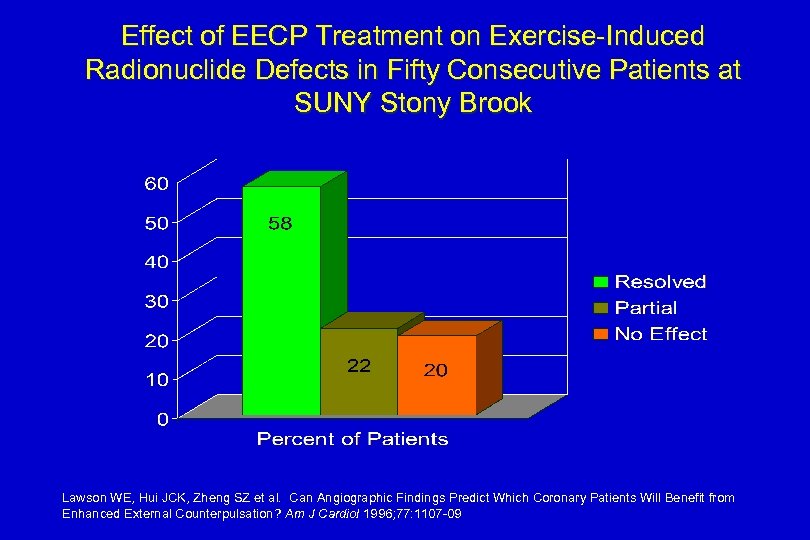 Effect of EECP Treatment on Exercise-Induced Radionuclide Defects in Fifty Consecutive Patients at SUNY Stony Brook Lawson WE, Hui JCK, Zheng SZ et al. Can Angiographic Findings Predict Which Coronary Patients Will Benefit from Enhanced External Counterpulsation? Am J Cardiol 1996; 77: 1107 -09
 Results of The Multicenter Study of Enhanced External Counterpulsation (MUST-EECP): EECP Reduces Time to ST-Segment Depression and Episodes of Angina with Improved Long-term Quality of Life Rohit R. Arora, MD; Tony Chou, MD; Diwakar Jain, MD; Richard Nesto, MD; Bruce Fleishman, MD; Lawrence Crawford, MD and Thomas Mc. Kiernan, MD for the MUST-EECP Investigators
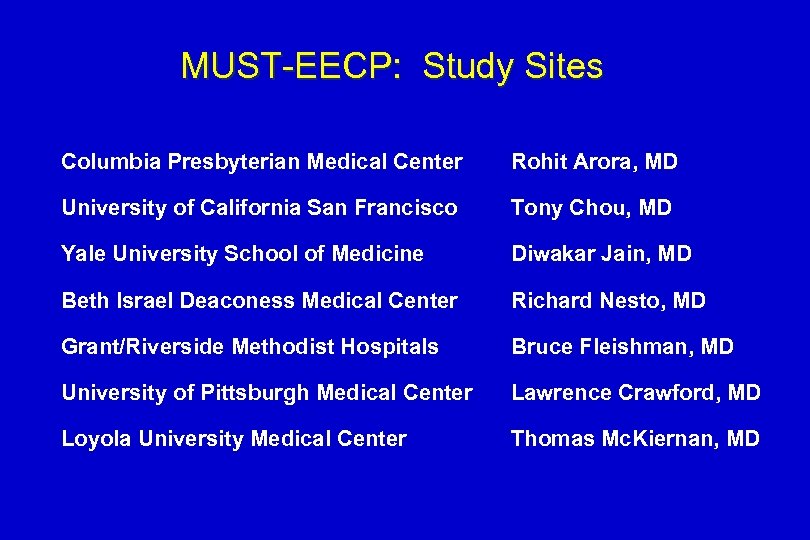 MUST-EECP: Study Sites Columbia Presbyterian Medical Center Rohit Arora, MD University of California San Francisco Tony Chou, MD Yale University School of Medicine Diwakar Jain, MD Beth Israel Deaconess Medical Center Richard Nesto, MD Grant/Riverside Methodist Hospitals Bruce Fleishman, MD University of Pittsburgh Medical Center Lawrence Crawford, MD Loyola University Medical Center Thomas Mc. Kiernan, MD
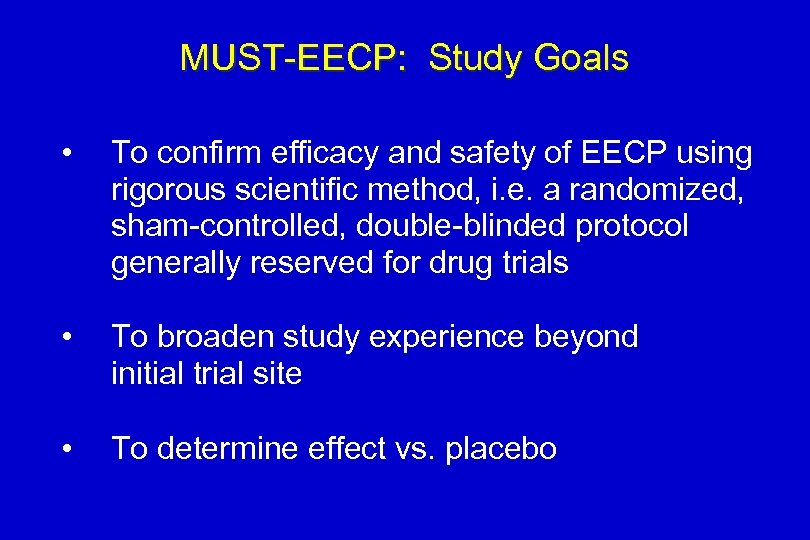 MUST-EECP: Study Goals • To confirm efficacy and safety of EECP using rigorous scientific method, i. e. a randomized, sham-controlled, double-blinded protocol generally reserved for drug trials • To broaden study experience beyond initial trial site • To determine effect vs. placebo
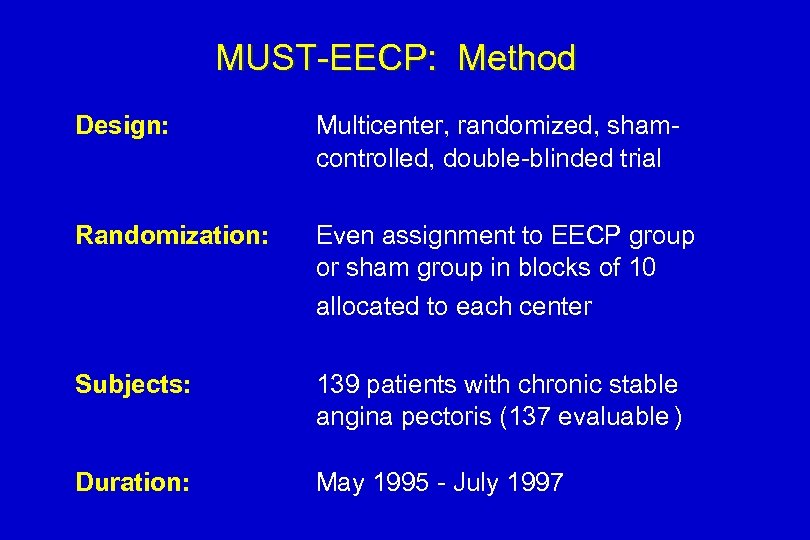 MUST-EECP: Method Design: Multicenter, randomized, shamcontrolled, double-blinded trial Randomization: Even assignment to EECP group or sham group in blocks of 10 allocated to each center Subjects: 139 patients with chronic stable angina pectoris (137 evaluable ) Duration: May 1995 - July 1997
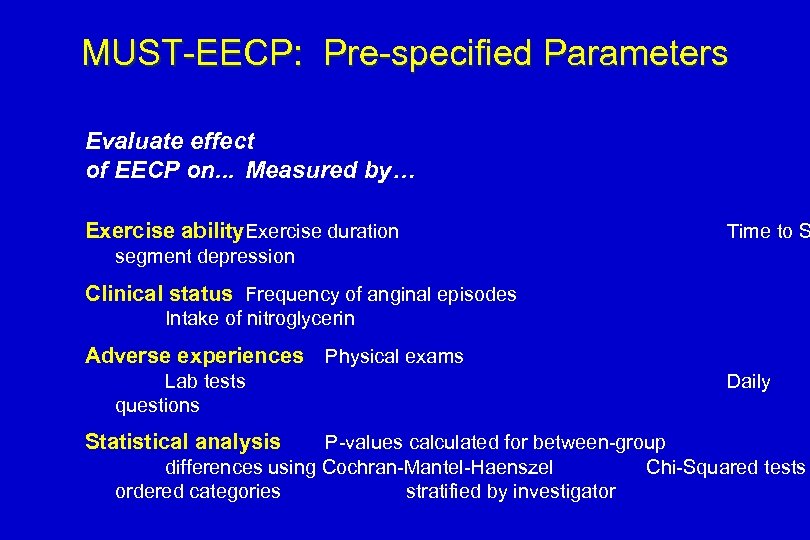 MUST-EECP: Pre-specified Parameters Evaluate effect of EECP on. . . Measured by… Exercise ability. Exercise duration Time to S segment depression Clinical status Frequency of anginal episodes Intake of nitroglycerin Adverse experiences Physical exams Lab tests questions Statistical analysis Daily P-values calculated for between-group differences using Cochran-Mantel-Haenszel Chi-Squared tests ordered categories stratified by investigator
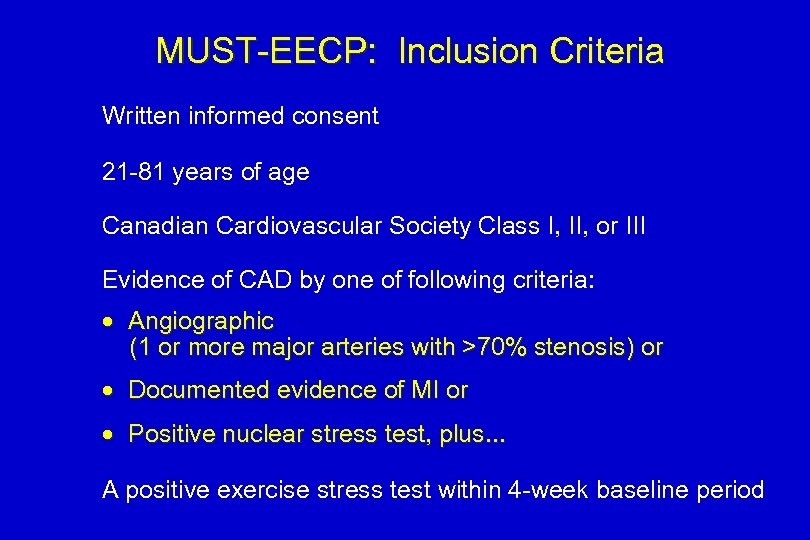 MUST-EECP: Inclusion Criteria Written informed consent 21 -81 years of age Canadian Cardiovascular Society Class I, II, or III Evidence of CAD by one of following criteria: · Angiographic (1 or more major arteries with >70% stenosis) or · Documented evidence of MI or · Positive nuclear stress test, plus. . . A positive exercise stress test within 4 -week baseline period
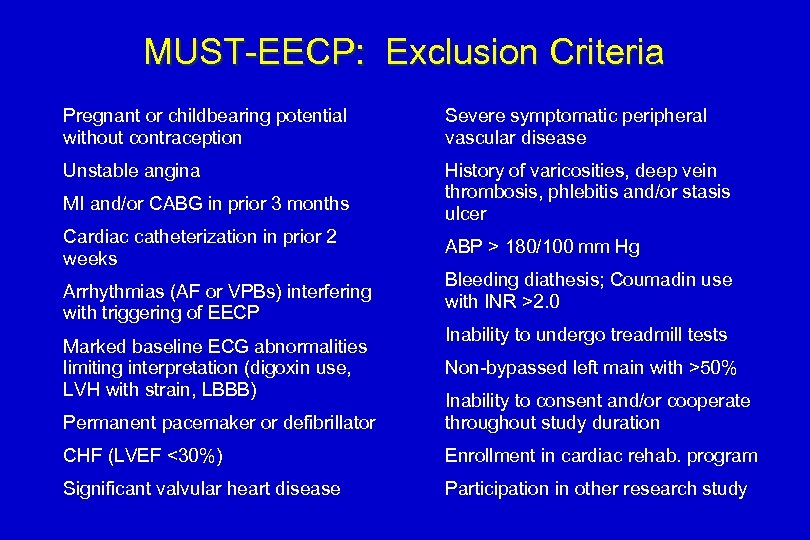 MUST-EECP: Exclusion Criteria Pregnant or childbearing potential without contraception Severe symptomatic peripheral vascular disease Unstable angina History of varicosities, deep vein thrombosis, phlebitis and/or stasis ulcer MI and/or CABG in prior 3 months Cardiac catheterization in prior 2 weeks Arrhythmias (AF or VPBs) interfering with triggering of EECP Marked baseline ECG abnormalities limiting interpretation (digoxin use, LVH with strain, LBBB) ABP > 180/100 mm Hg Bleeding diathesis; Coumadin use with INR >2. 0 Inability to undergo treadmill tests Non-bypassed left main with >50% Permanent pacemaker or defibrillator Inability to consent and/or cooperate throughout study duration CHF (LVEF <30%) Enrollment in cardiac rehab. program Significant valvular heart disease Participation in other research study
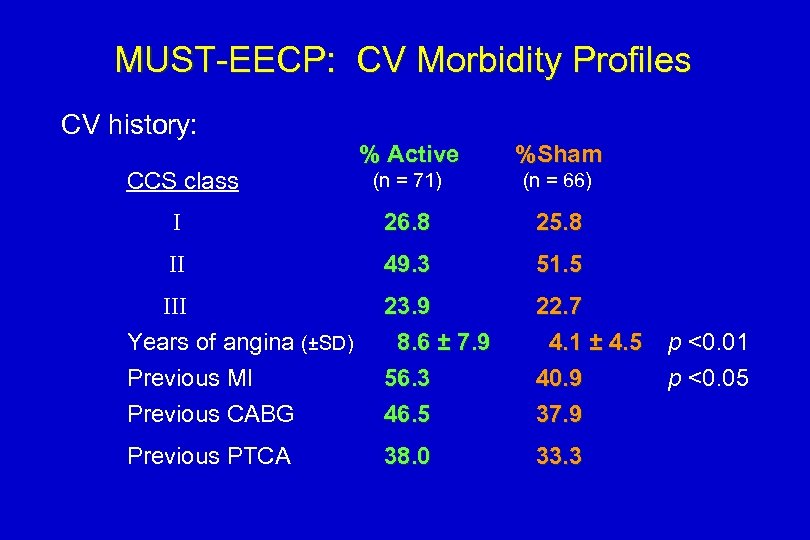 MUST-EECP: CV Morbidity Profiles CV history: % Active %Sham (n = 71) (n = 66) I 26. 8 25. 8 II 49. 3 51. 5 III Years of angina (±SD) Previous MI Previous CABG 23. 9 8. 6 ± 7. 9 56. 3 46. 5 22. 7 4. 1 ± 4. 5 40. 9 37. 9 Previous PTCA 38. 0 33. 3 CCS class p <0. 01 p <0. 05
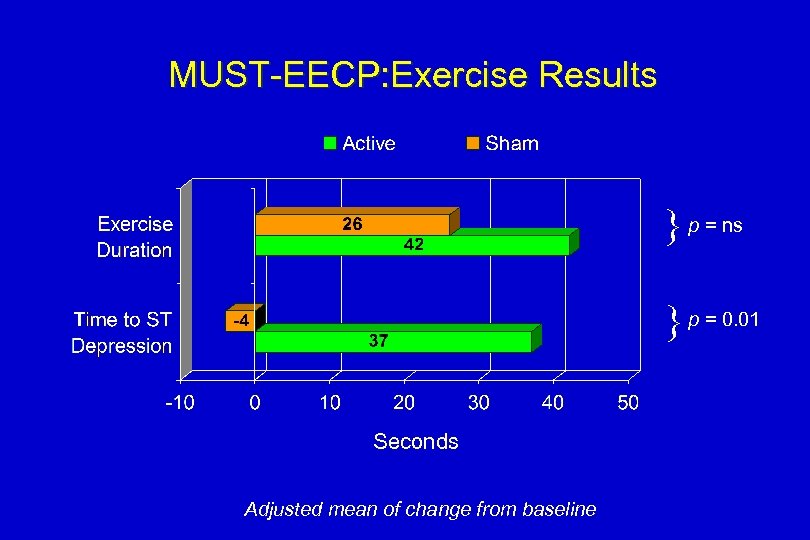 MUST-EECP: Exercise Results } p = ns } p = 0. 01 Seconds Adjusted mean of change from baseline
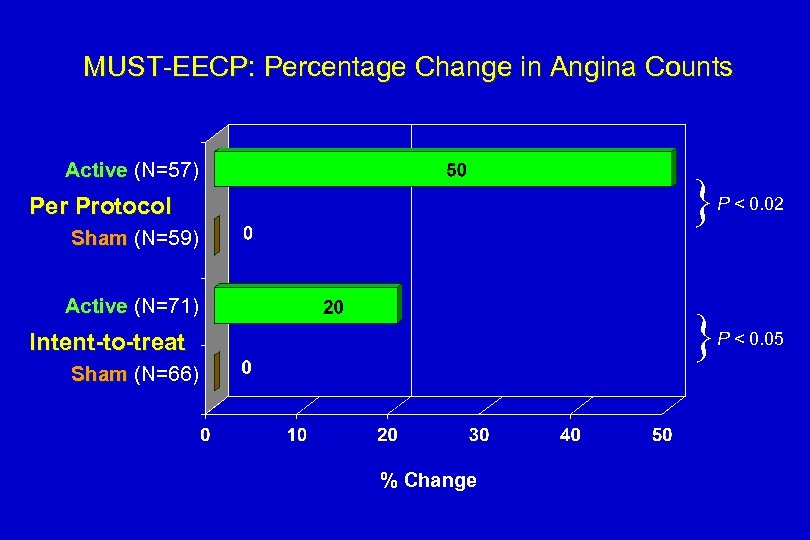 MUST-EECP: Percentage Change in Angina Counts Active (N=57) } Per Protocol Sham (N=59) Active (N=71) P < 0. 02 } Intent-to-treat P < 0. 05 Sham (N=66) % Change
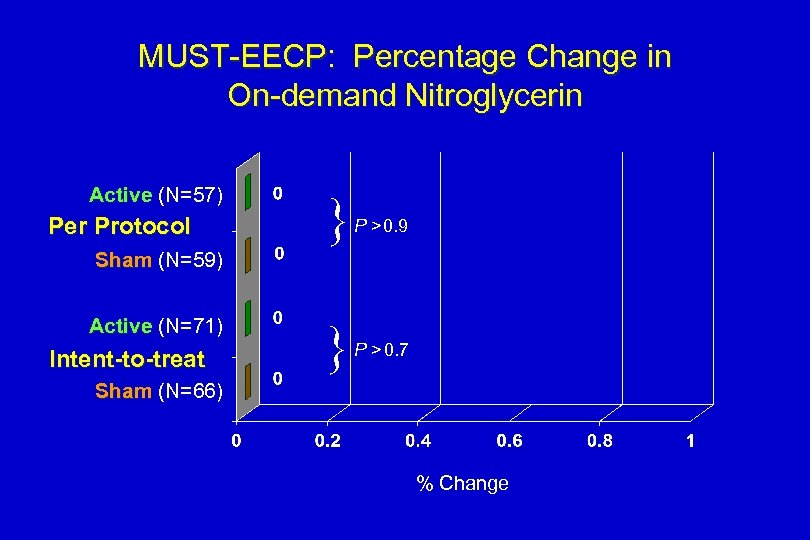 MUST-EECP: Percentage Change in On-demand Nitroglycerin Active (N=57) Per Protocol } P > 0. 9 } P > 0. 7 Sham (N=59) Active (N=71) Intent-to-treat Sham (N=66) % Change
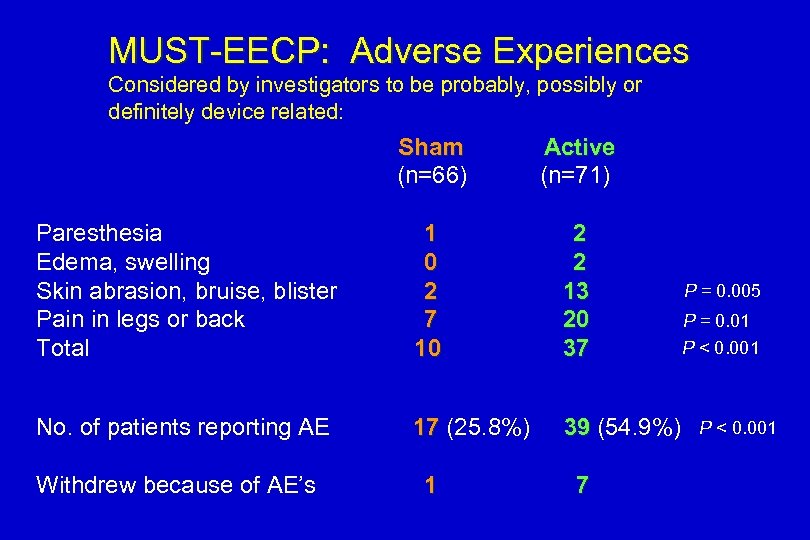 MUST-EECP: Adverse Experiences Considered by investigators to be probably, possibly or definitely device related: Sham (n=66) Active (n=71) Paresthesia Edema, swelling Skin abrasion, bruise, blister Pain in legs or back Total 1 0 2 7 10 2 2 13 20 37 No. of patients reporting AE 17 (25. 8%) 39 (54. 9%) Withdrew because of AE’s 1 7 P = 0. 005 P = 0. 01 P < 0. 001
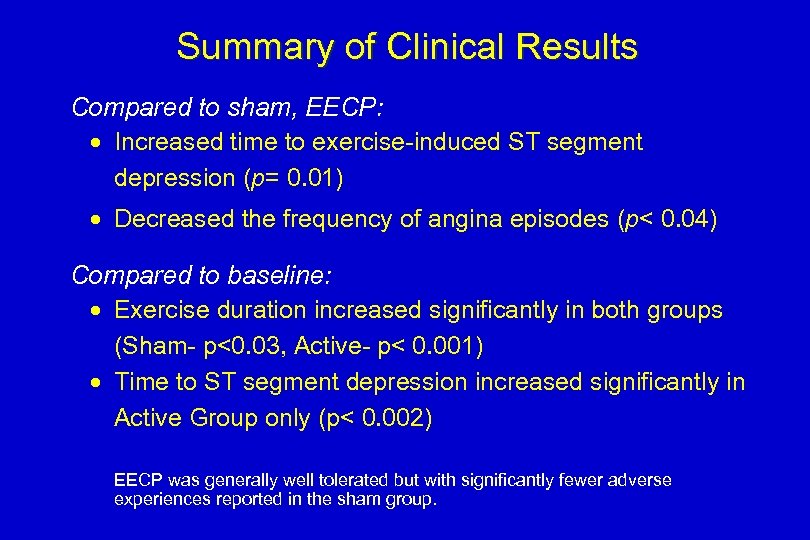 Summary of Clinical Results Compared to sham, EECP: · Increased time to exercise-induced ST segment depression (p= 0. 01) · Decreased the frequency of angina episodes (p< 0. 04) Compared to baseline: · Exercise duration increased significantly in both groups (Sham- p<0. 03, Active- p< 0. 001) · Time to ST segment depression increased significantly in Active Group only (p< 0. 002) EECP was generally well tolerated but with significantly fewer adverse experiences reported in the sham group.
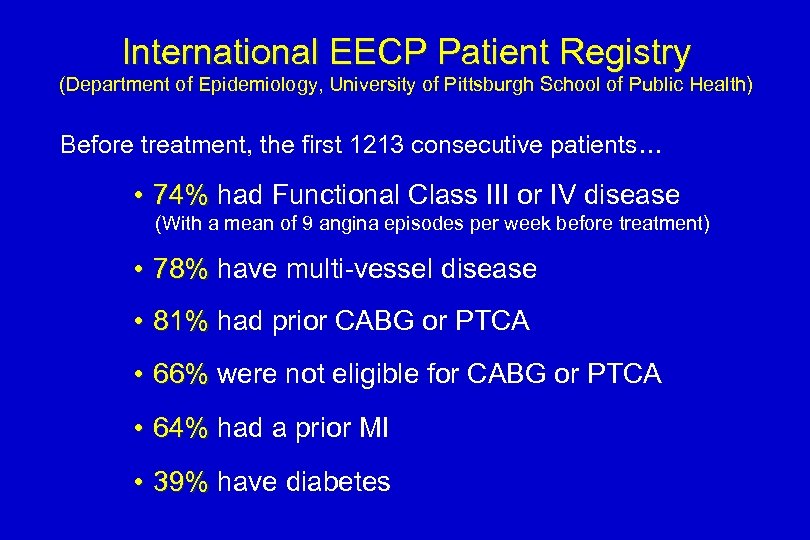 International EECP Patient Registry (Department of Epidemiology, University of Pittsburgh School of Public Health) Before treatment, the first 1213 consecutive patients… • 74% had Functional Class III or IV disease (With a mean of 9 angina episodes per week before treatment) • 78% have multi-vessel disease • 81% had prior CABG or PTCA • 66% were not eligible for CABG or PTCA • 64% had a prior MI • 39% have diabetes
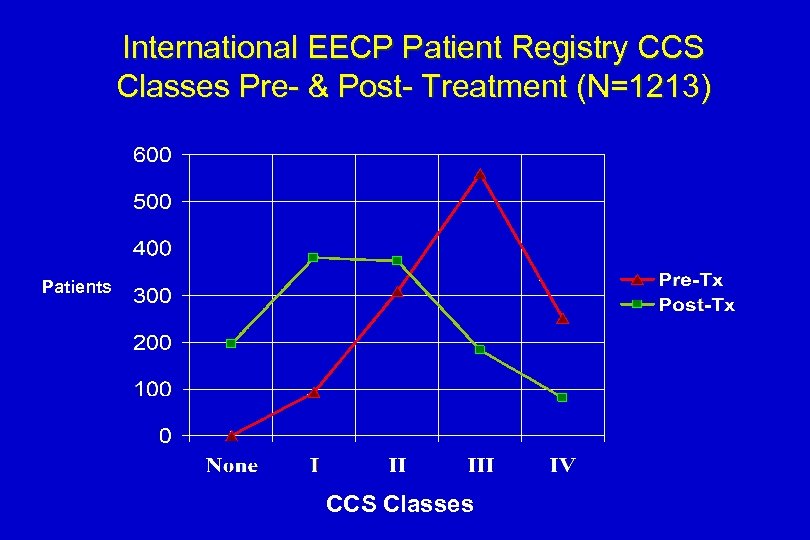 International EECP Patient Registry CCS Classes Pre- & Post- Treatment (N=1213) Patients CCS Classes
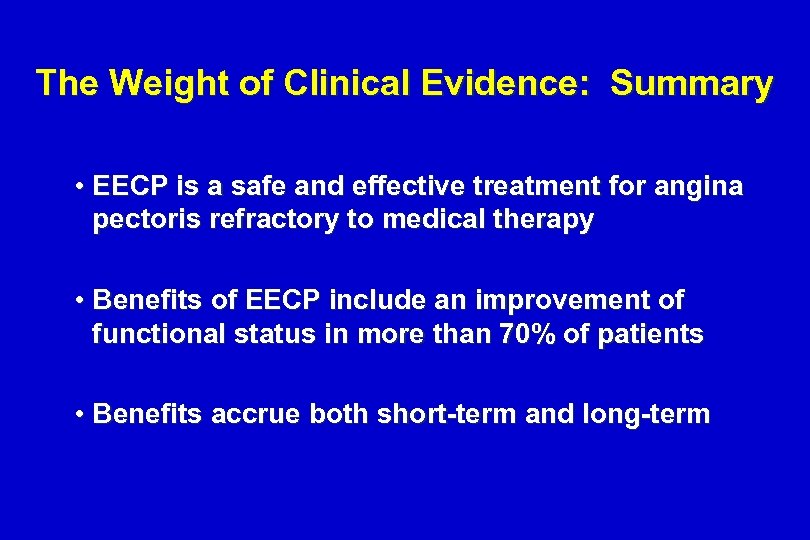 The Weight of Clinical Evidence: Summary • EECP is a safe and effective treatment for angina pectoris refractory to medical therapy • Benefits of EECP include an improvement of functional status in more than 70% of patients • Benefits accrue both short-term and long-term
 EECP Enhanced External Counterpulsation