


 Скачать презентацию EE 682 x autumn 2002 Power Monitor and
ed2d87ff27ac3cc332b35a02e58808e7.ppt
- Количество слайдов: 8
 EE 682 x autumn 2002 Power Monitor and Data Logging System
 The Original RFP for EE 582 • Students in EE 582 are requested to submit a proposal for the design and development of a power monitor and data logging system. The system would include a device that a residential user could plug into any 120 -volt wall outlet and then plug an appliance, etc. into it. This device would measure "power things" and display a selectable quantity, e. g. , volts, amps, watts, etc. In addition, a communication system is to be designed to transmit the information to a PC, within the house, for data logging purposes and some appropriate software developed to manipulate, display and store the data.
 • General specifications include that the device be inexpensive, safe, portable, self-powered, i. e. , powered from the 120 -volt wall outlet, capable of carrying 15 amps rms continuously, and be small enough so as not to be obtrusive when used within a home. The communication system can be either wireless (preferred) or can use some type of hard wire system. To be practical for the ordinary user to implement, the communication system should not require any significant alteration or addition to normal homes. It can be assumed that a personal computer would be available, either a PC or a Macintosh.
 • The overall system incorporates technology from many of the academic areas within the Department of Electrical Engineering: Ø Electronics -- measure/"massage" the voltage and current waveforms so as to apply to a "microprocessor" and display; A/D converters, Ø Digital -- "manipulate" via a microprocessor the data to determine "power things, " such as P, power factor, etc. , Ø Power -- know how to determine the various "power things" desired from sampled instantaneous voltage and current waveforms, Ø Communications -- send the information (hopefully wireless) to the PC; also need a "receiver" in the PC, Ø Control -- consider if one had "smart" switches or controls on appliances, then these devices could be "controlled, " Ø Electromagnetics – included as part of the sensors and communications, Ø Solid-state – included as part of the sensors and communications.
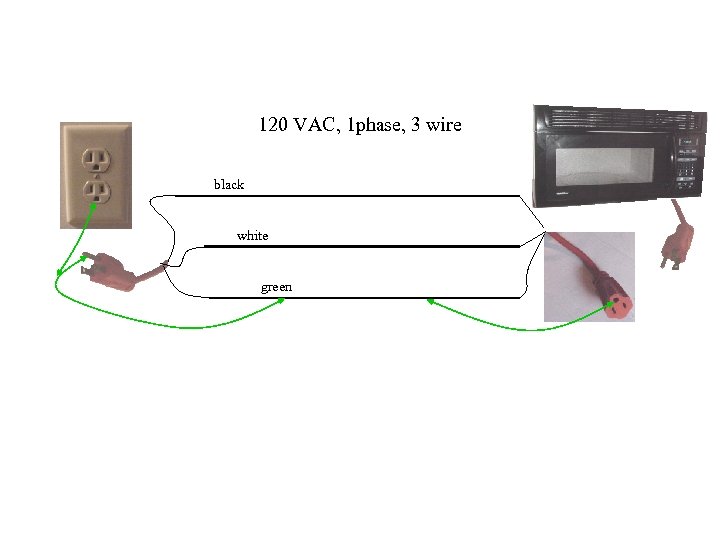 120 VAC, 1 phase, 3 wire black white green
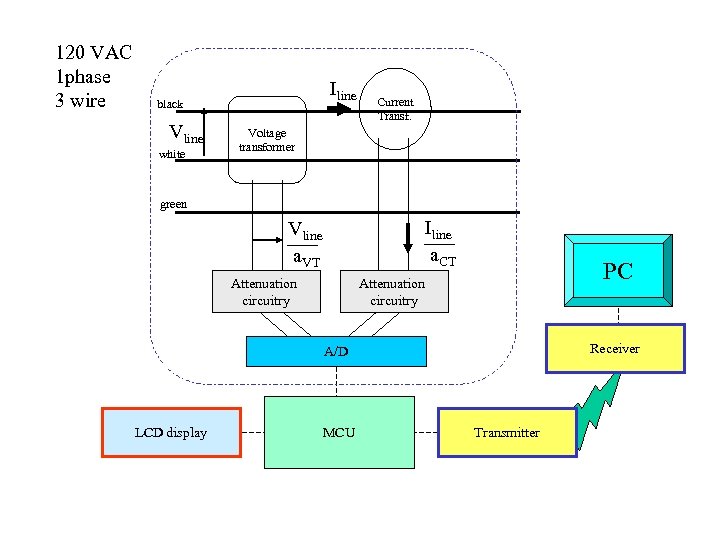 120 VAC 1 phase 3 wire Iline black Vline white Current Transf. Voltage transformer green Iline a. CT Vline a. VT Attenuation circuitry PC Attenuation circuitry Receiver A/D LCD display MCU Transmitter
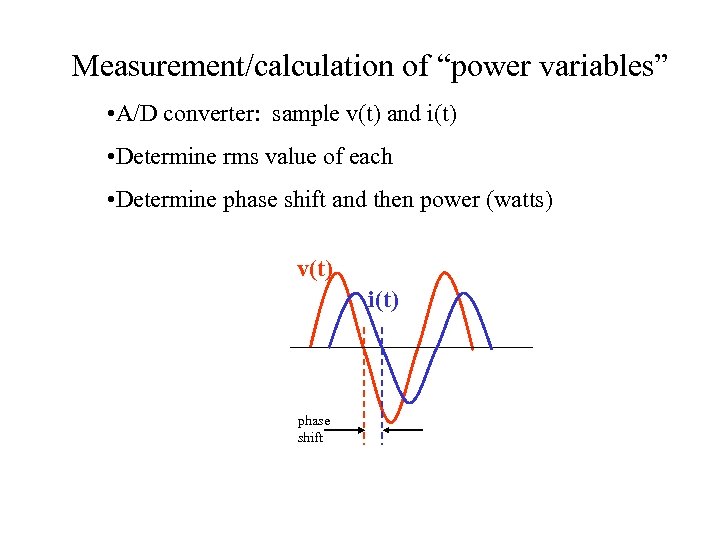 Measurement/calculation of “power variables” • A/D converter: sample v(t) and i(t) • Determine rms value of each • Determine phase shift and then power (watts) v(t) i(t) phase shift
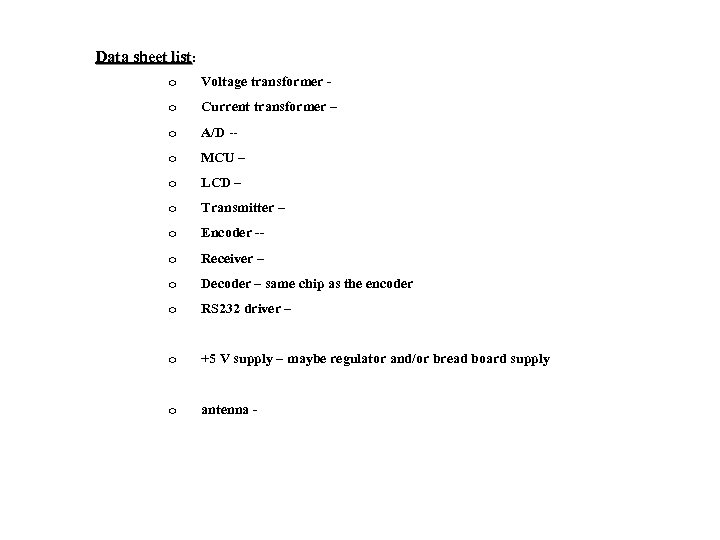 Data sheet list: o Voltage transformer - o Current transformer – o A/D - o MCU – o LCD – o Transmitter – o Encoder -o Receiver – o Decoder – same chip as the encoder o RS 232 driver – o +5 V supply – maybe regulator and/or bread board supply o antenna -