 Скачать презентацию EE 5900 Cyber-Physical Systems Smart Home CPS Professor
d991e1764c3c054162823a0c83f8e30b.ppt
- Количество слайдов: 27



EE 5900 Cyber-Physical Systems Smart Home CPS Professor Shiyan Hu EERC 518 Department of Electrical and Computer Engineering Michigan Technological University 1
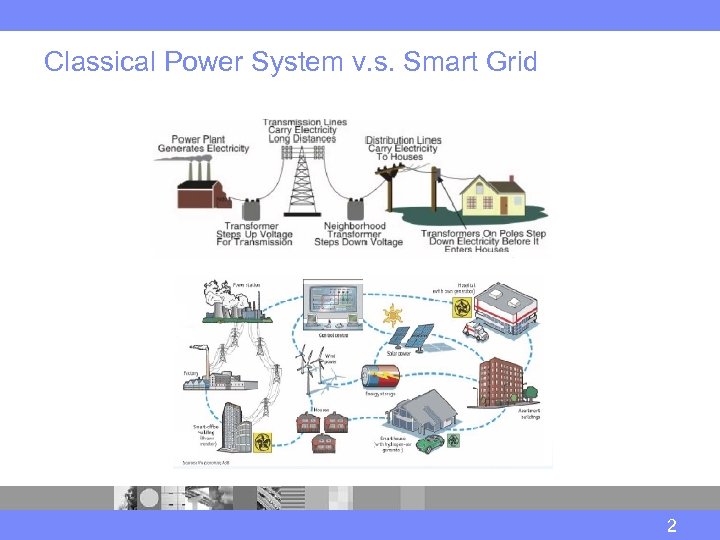
Classical Power System v. s. Smart Grid 2
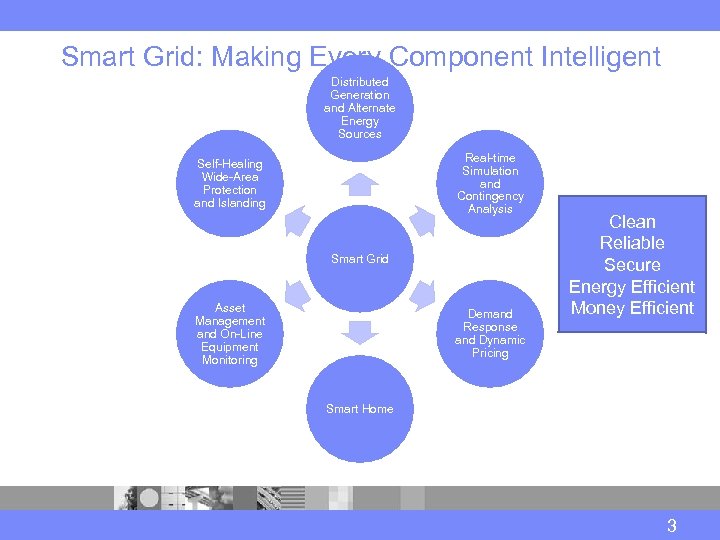
Smart Grid: Making Every Component Intelligent Distributed Generation and Alternate Energy Sources Real-time Simulation and Contingency Analysis Self-Healing Wide-Area Protection and Islanding Smart Grid Asset Management and On-Line Equipment Monitoring Demand Response and Dynamic Pricing Clean Reliable Secure Energy Efficient Money Efficient Smart Home 3
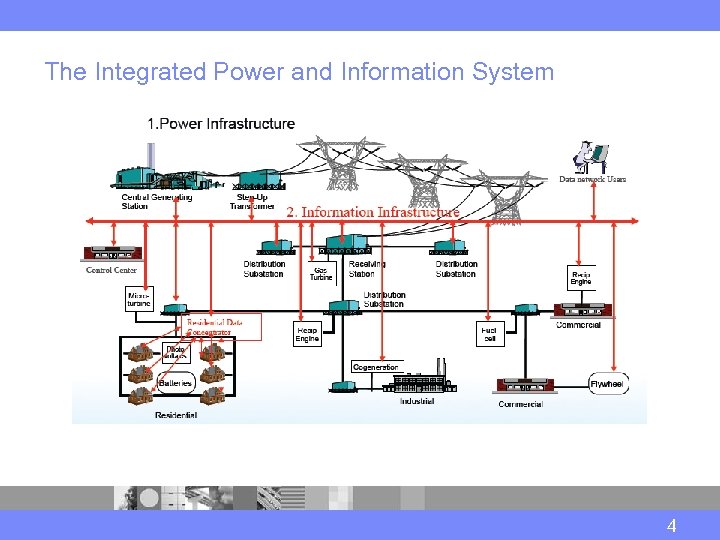
The Integrated Power and Information System 4
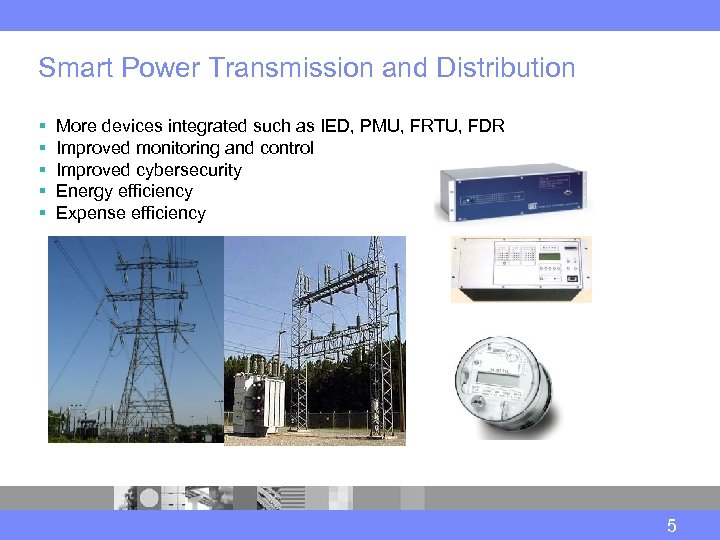
Smart Power Transmission and Distribution § § § More devices integrated such as IED, PMU, FRTU, FDR Improved monitoring and control Improved cybersecurity Energy efficiency Expense efficiency 5
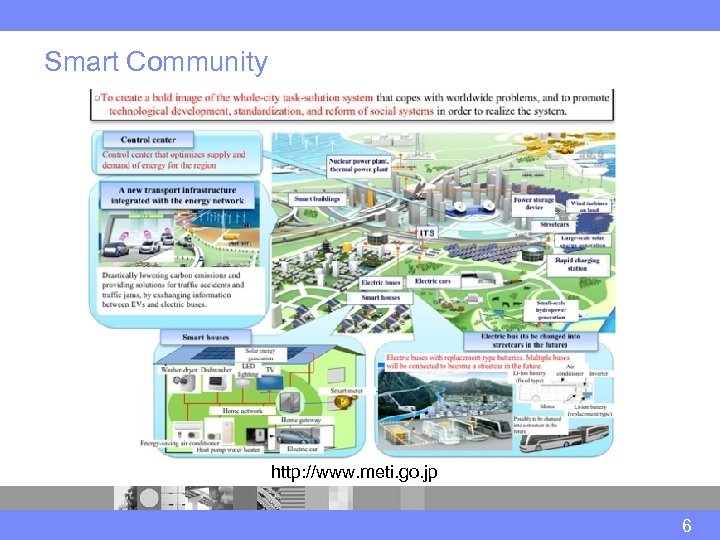
Smart Community http: //www. meti. go. jp 6
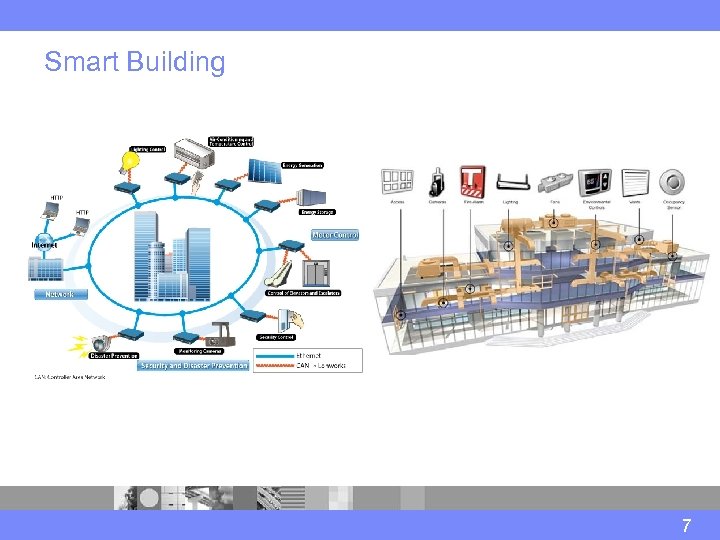
Smart Building 7
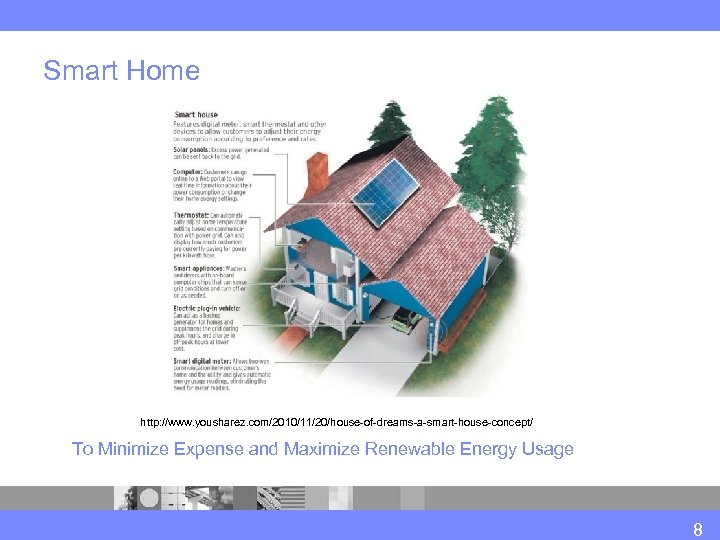
Smart Home http: //www. yousharez. com/2010/11/20/house-of-dreams-a-smart-house-concept/ To Minimize Expense and Maximize Renewable Energy Usage 8
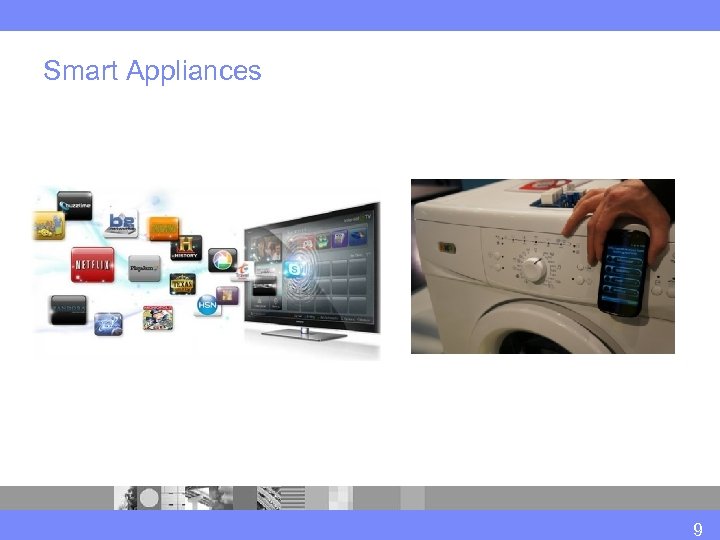
Smart Appliances 9
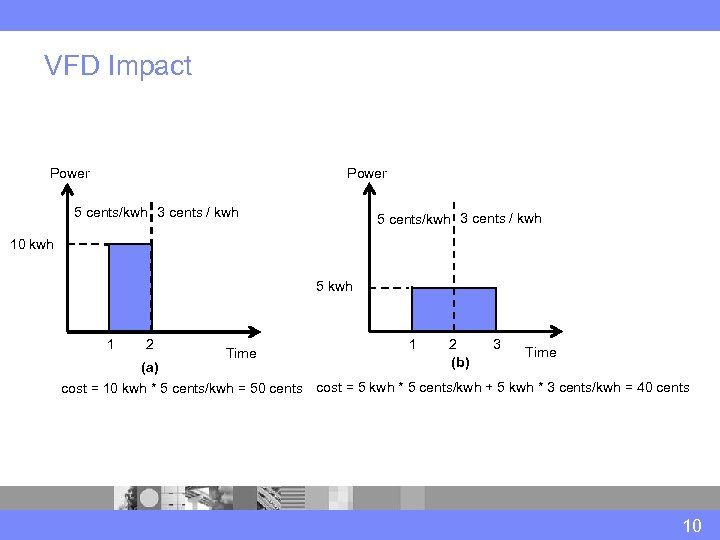
VFD Impact Powerr Power 5 cents/kwh 3 cents / kwh 10 kwh 5 kwh 1 2 (a) Time 1 2 (b) 3 Time cost = 10 kwh * 5 cents/kwh = 50 cents cost = 5 kwh * 5 cents/kwh + 5 kwh * 3 cents/kwh = 40 cents 10
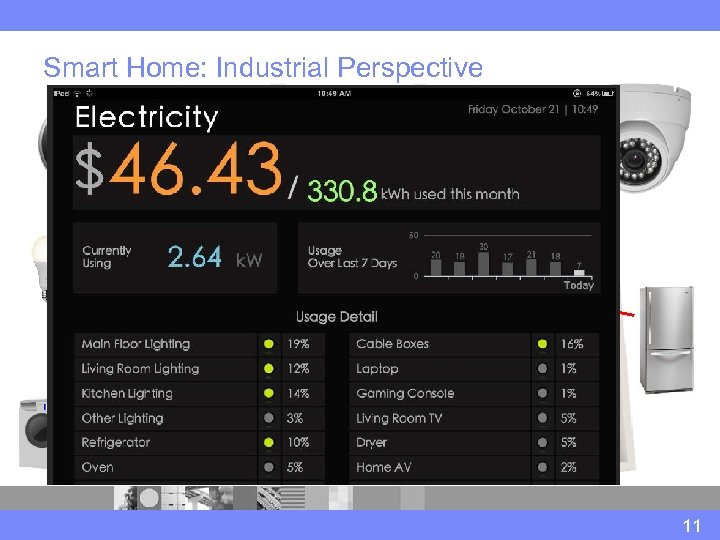
Smart Home: Industrial Perspective 11
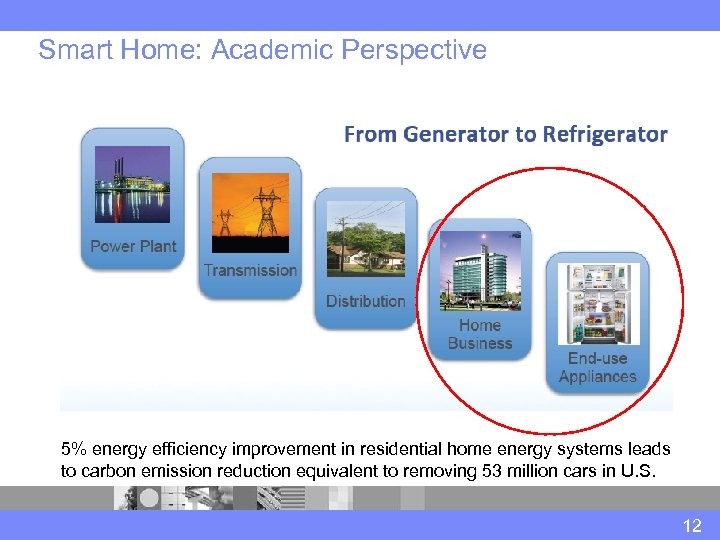
Smart Home: Academic Perspective 5% energy efficiency improvement in residential home energy systems leads to carbon emission reduction equivalent to removing 53 million cars in U. S. 12
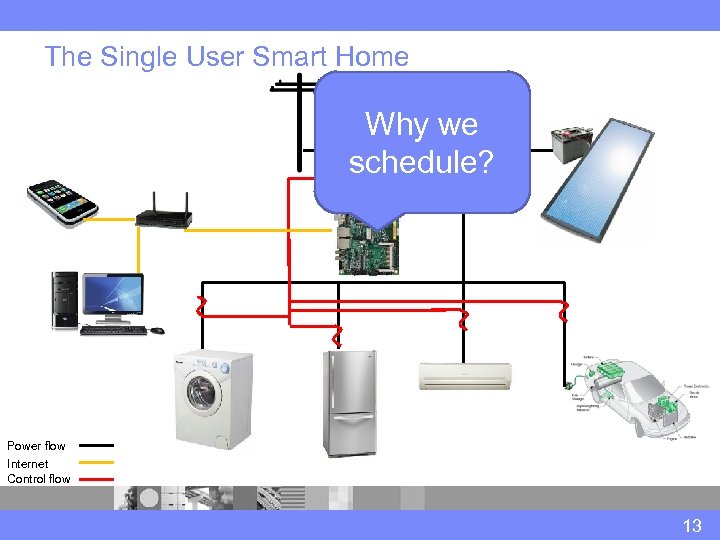
The Single User Smart Home Why we schedule? Power flow Internet Control flow 13
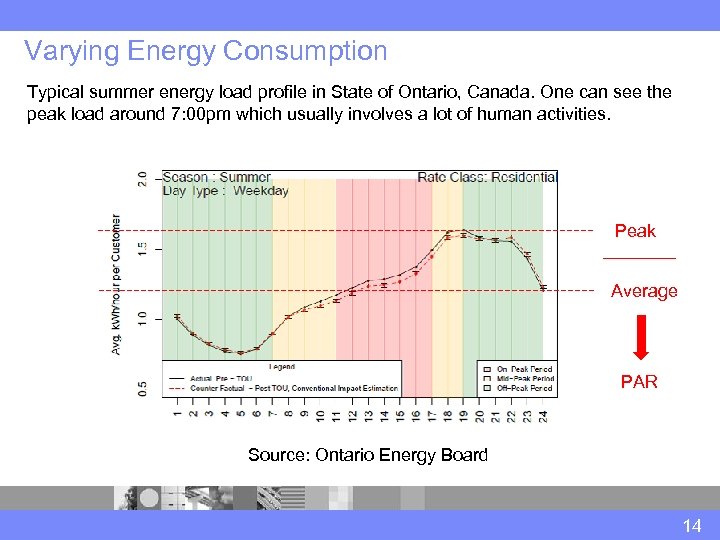
Varying Energy Consumption Typical summer energy load profile in State of Ontario, Canada. One can see the peak load around 7: 00 pm which usually involves a lot of human activities. Peak Average PAR Source: Ontario Energy Board 14
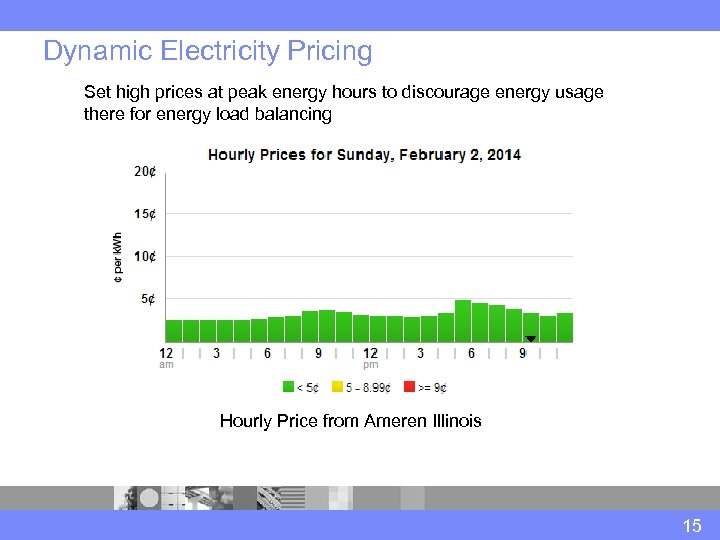
Dynamic Electricity Pricing Set high prices at peak energy hours to discourage energy usage there for energy load balancing Hourly Price from Ameren Illinois 15
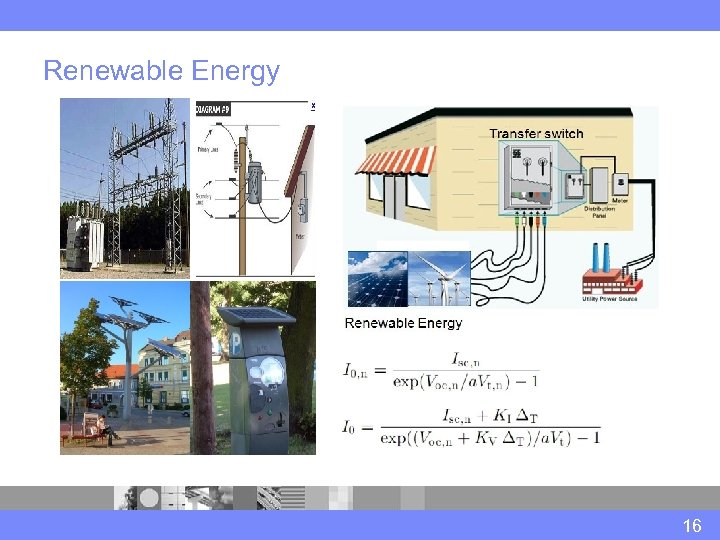
Renewable Energy 16
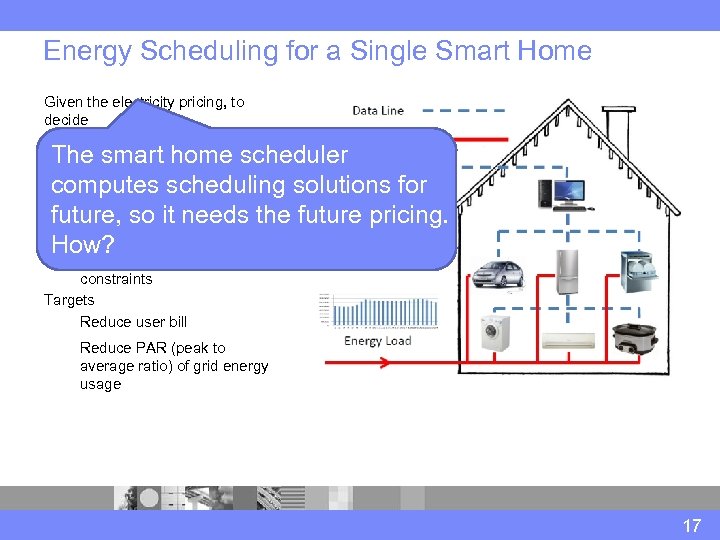
Energy Scheduling for a Single Smart Home Given the electricity pricing, to decide when to launch a home appliance The smart home scheduler at what power level computes scheduling solutions for how long future, so it needs the future pricing. utilize renewable energy How? subject to scheduling constraints Targets Reduce user bill Reduce PAR (peak to average ratio) of grid energy usage 17
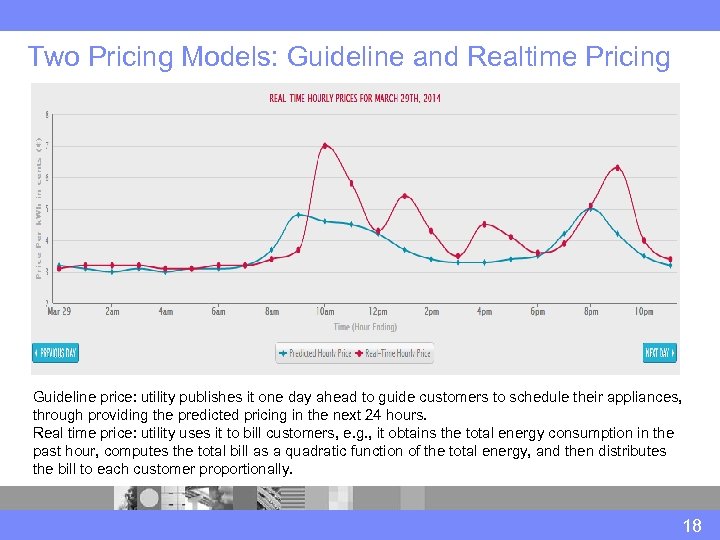
Two Pricing Models: Guideline and Realtime Pricing Guideline price: utility publishes it one day ahead to guide customers to schedule their appliances, through providing the predicted pricing in the next 24 hours. Real time price: utility uses it to bill customers, e. g. , it obtains the total energy consumption in the past hour, computes the total bill as a quadratic function of the total energy, and then distributes the bill to each customer proportionally. 18
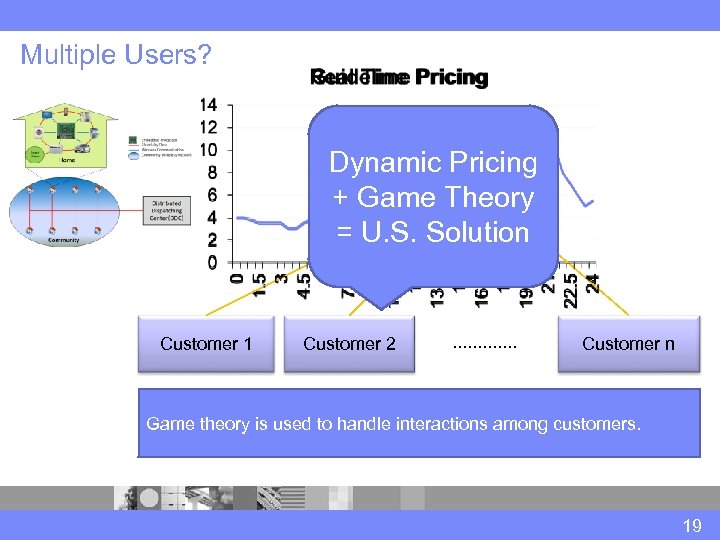
Multiple Users? Dynamic Pricing + Game Theory = U. S. Solution Customer 1 Customer 2 . . . Customer n Game theory is used to handle interactions among customers. 19
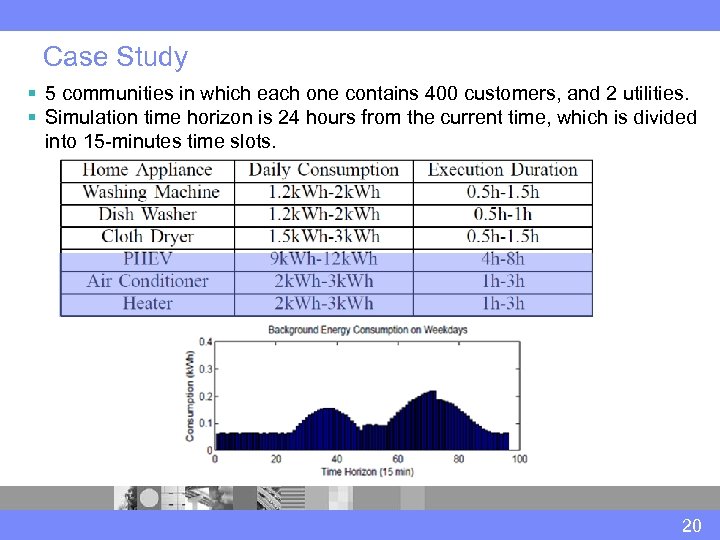
Case Study § 5 communities in which each one contains 400 customers, and 2 utilities. § Simulation time horizon is 24 hours from the current time, which is divided into 15 -minutes time slots. 20
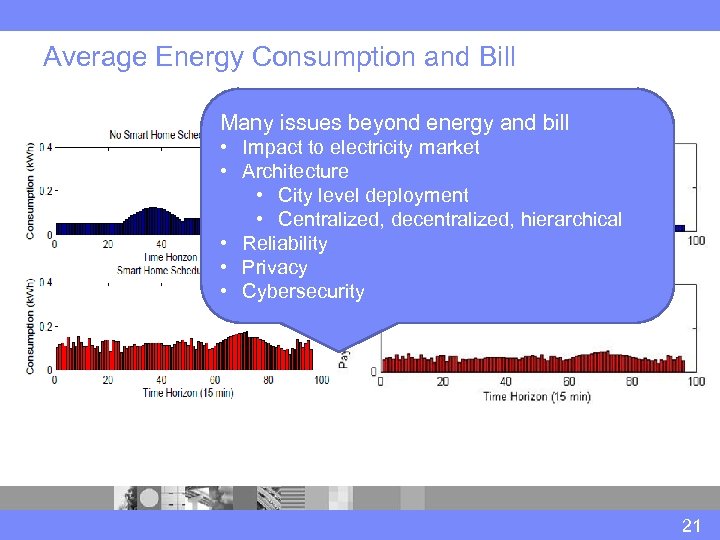
Average Energy Consumption and Bill Many issues beyond energy and bill • Impact to electricity market • Architecture • City level deployment • Centralized, decentralized, hierarchical • Reliability • Privacy • Cybersecurity 21
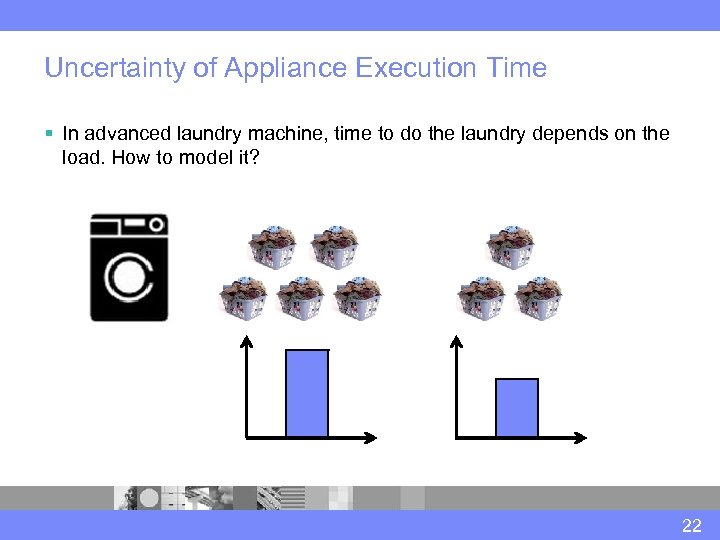
Uncertainty of Appliance Execution Time § In advanced laundry machine, time to do the laundry depends on the load. How to model it? 22
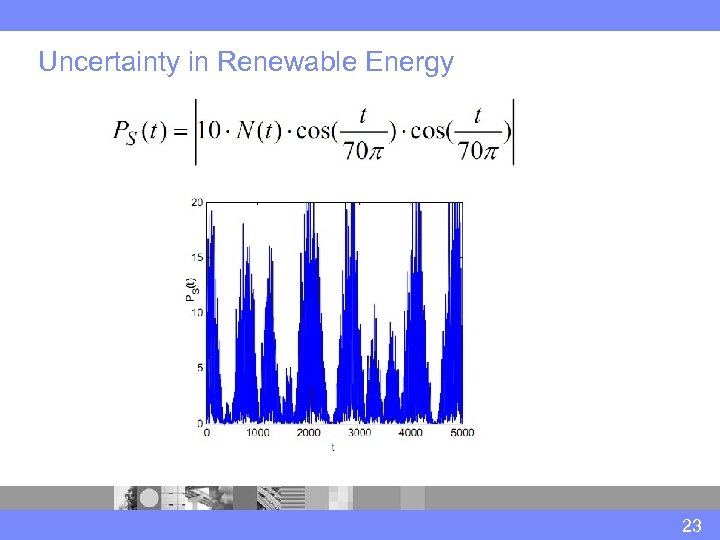
Uncertainty in Renewable Energy 23
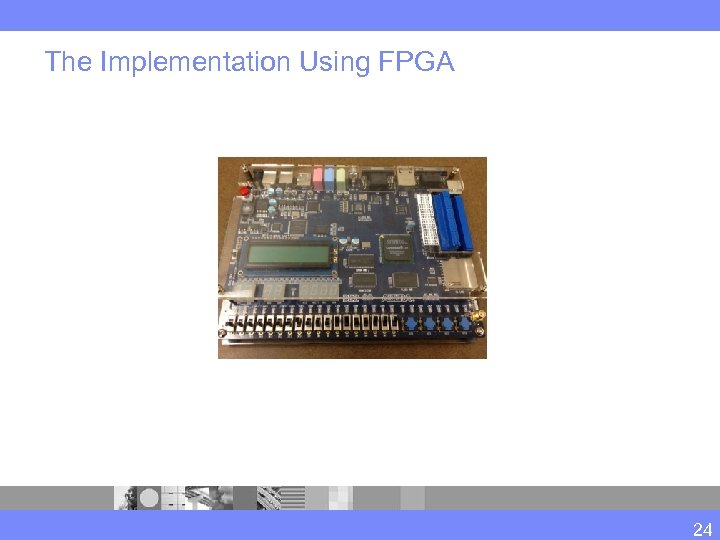
The Implementation Using FPGA 24
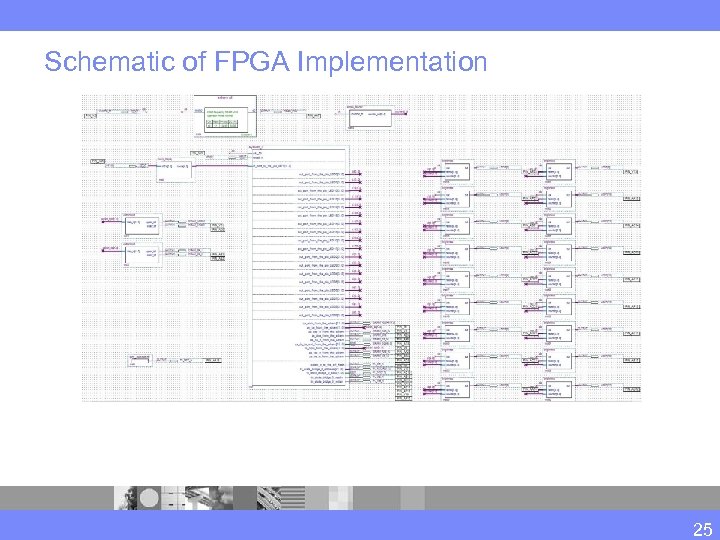
Schematic of FPGA Implementation 25
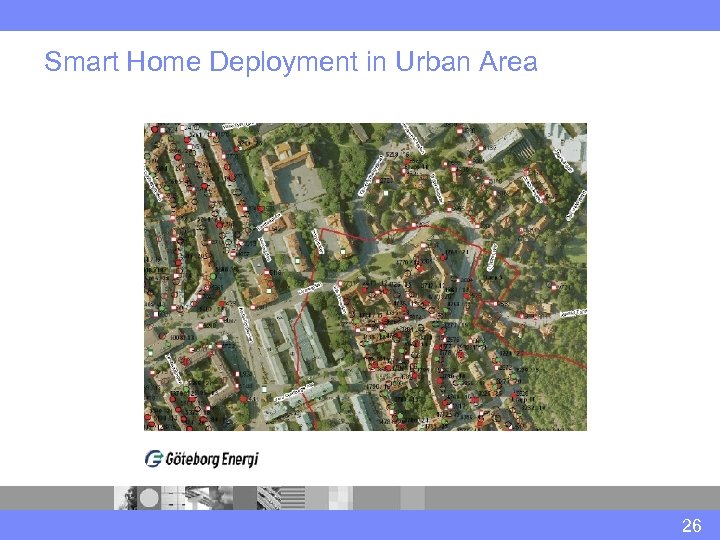
Smart Home Deployment in Urban Area 26
Summary § What is smart home scheduling? § What are dynamic electricity pricing and predictive guideline pricing? 27
Скачать презентацию EE 5900 Cyber-Physical Systems Smart Home CPS Professor
d991e1764c3c054162823a0c83f8e30b.ppt