


 Скачать презентацию EE 360 Multiuser Wireless Systems and Networks Lecture
bd2e7fba8e17465ae0f0435b06887907.ppt
- Количество слайдов: 42
 EE 360: Multiuser Wireless Systems and Networks Lecture 1 Outline Course Details l Course Syllabus l Course Overview l l Future Wireless Networks l Multiuser Channels (Broadcast/MAC Channels) l Spectral Reuse and Interference l Cellular Systems l Ad-Hoc Networks l Cognitive Radio Paradigms l Sensor Networks and Green Networks l Key Applications
 Course Information* People l Instructor: Andrea Goldsmith, andrea@ee, Packard 371, 5 -6932, OHs: MW after class and by appt. l TA: Nima Soltani, Email: nsoltani@stanford. edu, OHs: around HWs. l Class Administrator: Pat Oshiro, poshiro@stanford, Packard 365, 3 -2681. *See web or handout for more details
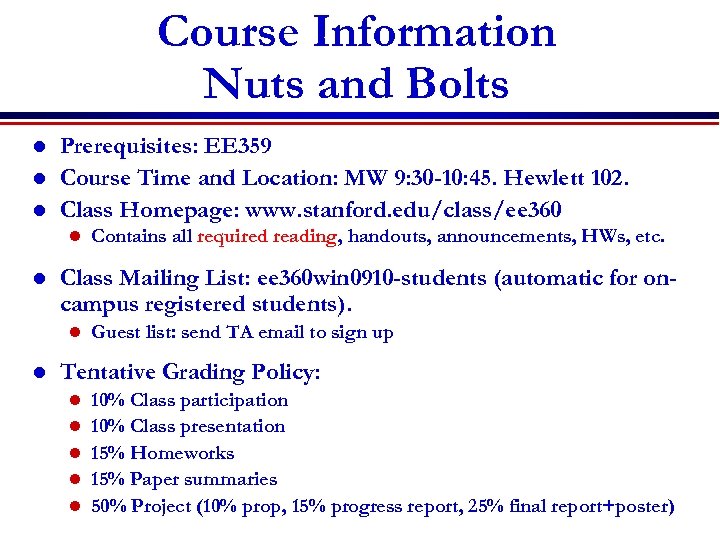 Course Information Nuts and Bolts l l l Prerequisites: EE 359 Course Time and Location: MW 9: 30 -10: 45. Hewlett 102. Class Homepage: www. stanford. edu/class/ee 360 l l Class Mailing List: ee 360 win 0910 -students (automatic for oncampus registered students). l l Contains all required reading, handouts, announcements, HWs, etc. Guest list: send TA email to sign up Tentative Grading Policy: l l l 10% Class participation 10% Class presentation 15% Homeworks 15% Paper summaries 50% Project (10% prop, 15% progress report, 25% final report+poster)
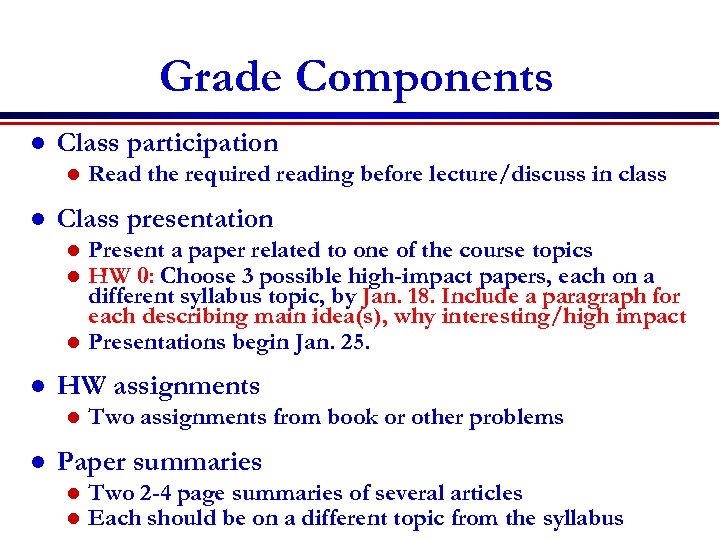 Grade Components l Class participation l l Read the required reading before lecture/discuss in class Class presentation Present a paper related to one of the course topics HW 0: Choose 3 possible high-impact papers, each on a different syllabus topic, by Jan. 18. Include a paragraph for each describing main idea(s), why interesting/high impact l Presentations begin Jan. 25. l l l HW assignments l l Two assignments from book or other problems Paper summaries l l Two 2 -4 page summaries of several articles Each should be on a different topic from the syllabus
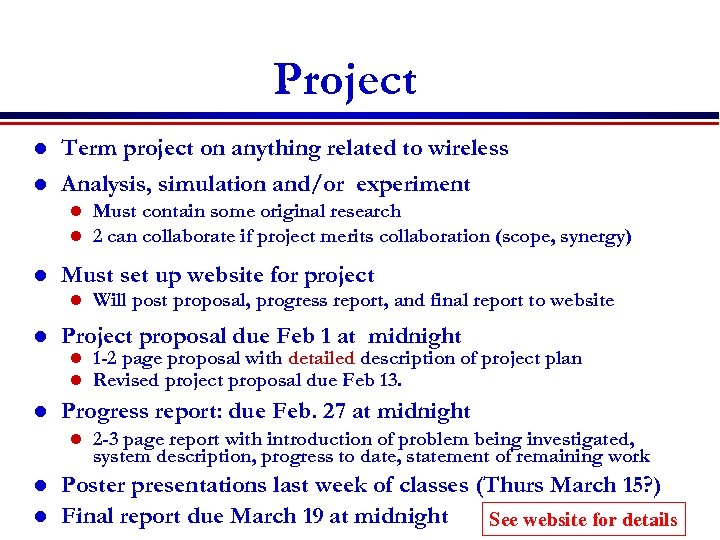 Project l l Term project on anything related to wireless Analysis, simulation and/or experiment Must contain some original research l 2 can collaborate if project merits collaboration (scope, synergy) l l Must set up website for project l l Project proposal due Feb 1 at midnight l l 1 -2 page proposal with detailed description of project plan Revised project proposal due Feb 13. Progress report: due Feb. 27 at midnight l l Will post proposal, progress report, and final report to website 2 -3 page report with introduction of problem being investigated, system description, progress to date, statement of remaining work Poster presentations last week of classes (Thurs March 15? ) Final report due March 19 at midnight See website for details
 Tentative Syllabus l l l l Weeks 1 -2: Multiuser systems (Chapters 13. 4 and 14, additional papers) Weeks 3 -4: Cellular systems (Chapter 15, additional papers) Weeks 5 -6: Ad hoc wireless networks (Chapter 16, additional papers) Week 7: Cognitive radio networks (papers) Week 8: Sensor networks (papers) Week 9: Applications & cross-layer design (papers) Weeks 10: Additional Topics. Course Summary
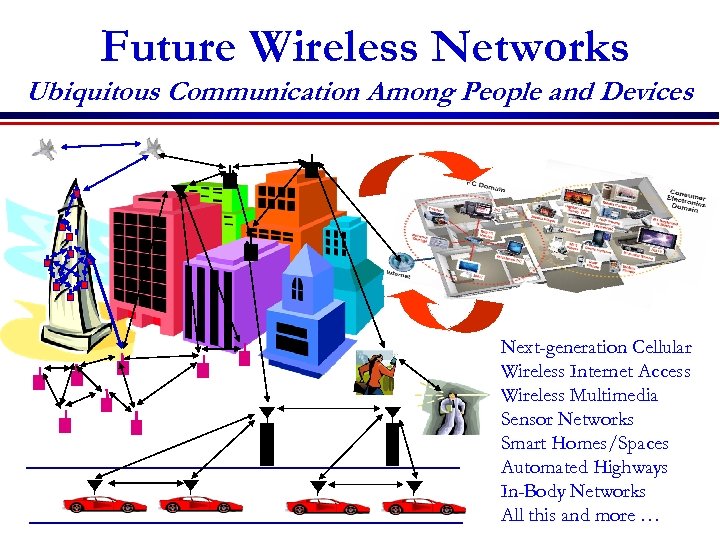 Future Wireless Networks Ubiquitous Communication Among People and Devices Next-generation Cellular Wireless Internet Access Wireless Multimedia Sensor Networks Smart Homes/Spaces Automated Highways In-Body Networks All this and more …
 Design Challenges l Wireless channels are a difficult and capacitylimited broadcast communications medium l Traffic patterns, user locations, and network conditions are constantly changing l Applications are heterogeneous with hard constraints that must be met by the network l Energy and delay constraints change design principles across all layers of the protocol stack
 Wireless Network Design Issues l Multiuser Communications l Multiple and Random Access l Cellular System Design l Ad-Hoc Network Design l Network Layer Issues l Cross-Layer Design l Meeting Application Requirements
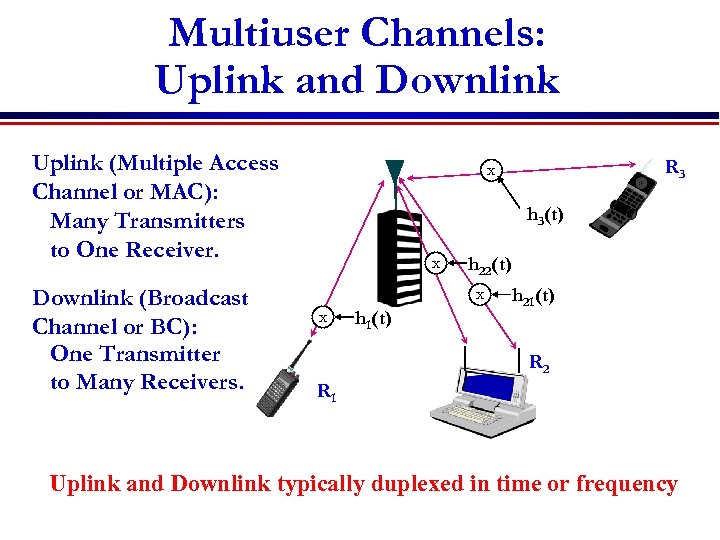 Multiuser Channels: Uplink and Downlink Uplink (Multiple Access Channel or MAC): Many Transmitters to One Receiver. Downlink (Broadcast Channel or BC): One Transmitter to Many Receivers. R 3 x h 3(t) x h 22(t) x x h 1(t) h 21(t) R 2 R 1 Uplink and Downlink typically duplexed in time or frequency
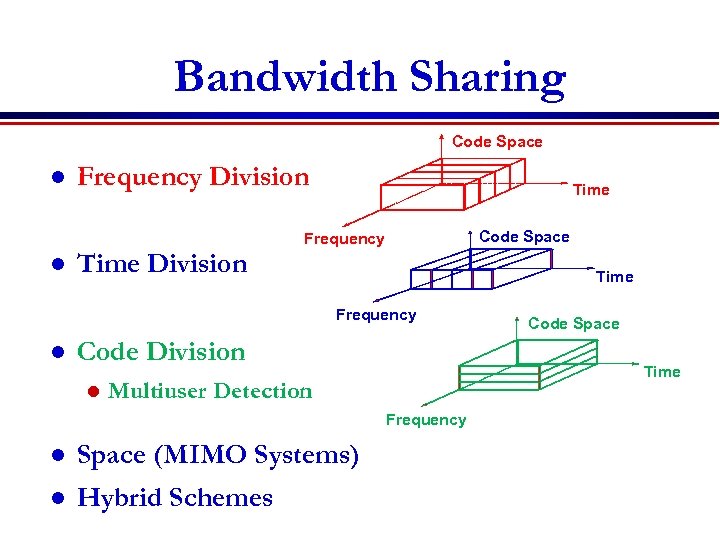 Bandwidth Sharing Code Space l Frequency Division Time Code Space Frequency l Time Division Time Frequency l Code Division l Time Multiuser Detection Frequency l Space (MIMO Systems) l Hybrid Schemes 7 C 29822. 033 -Cimini-9/97 Code Space
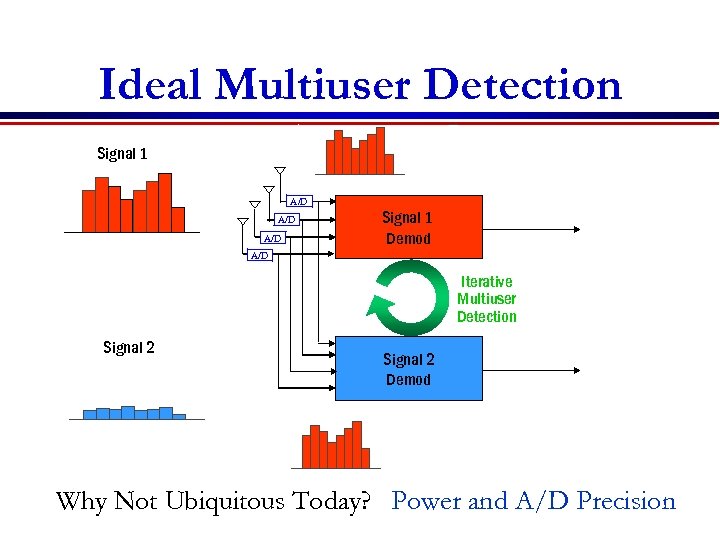 Ideal Multiuser Detection - Signal 1 = A/D A/D Signal 1 Demod A/D Iterative Multiuser Detection Signal 2 Demod - = Why Not Ubiquitous Today? Power and A/D Precision
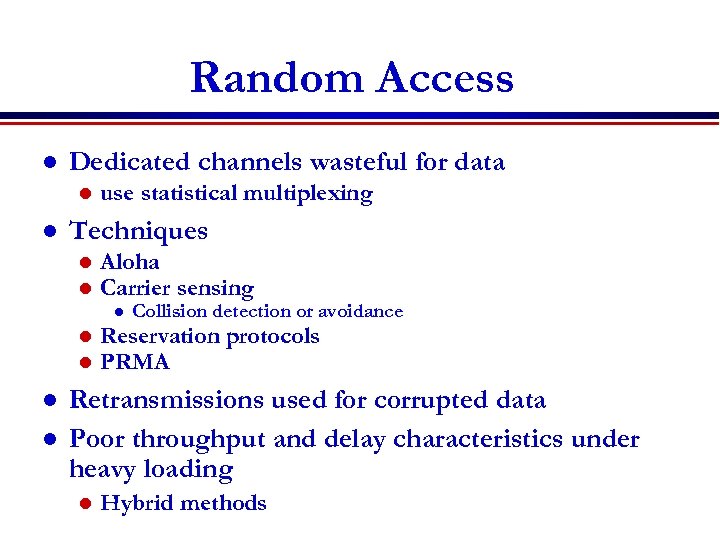 RANDOM ACCESS TECHNIQUES Random Access l Dedicated channels wasteful for data l l use statistical multiplexing Techniques l l Aloha Carrier sensing l l l Reservation protocols PRMA Retransmissions used for corrupted data Poor throughput and delay characteristics under heavy loading l 7 C 29822. 038 -Cimini-9/97 Collision detection or avoidance Hybrid methods
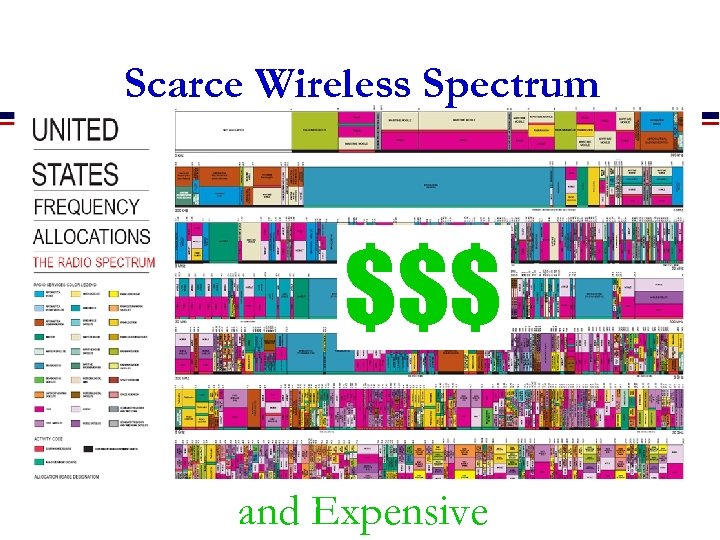 Scarce Wireless Spectrum $$$ and Expensive
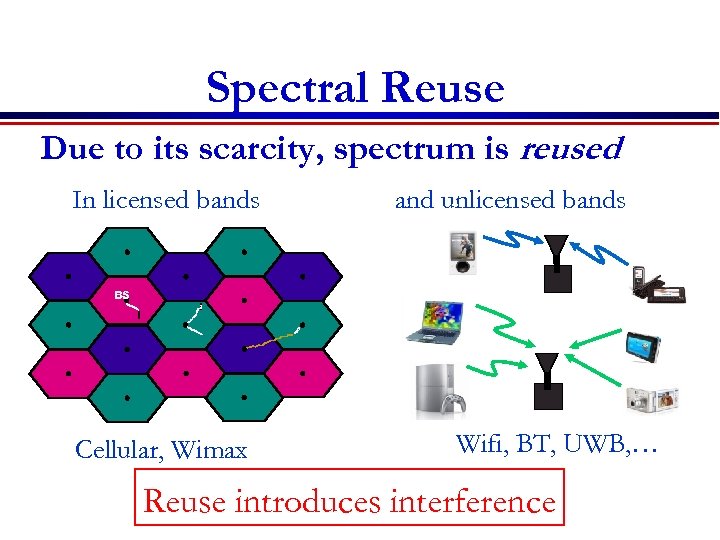 Spectral Reuse Due to its scarcity, spectrum is reused In licensed bands and unlicensed bands BS Cellular, Wimax Wifi, BT, UWB, … Reuse introduces interference
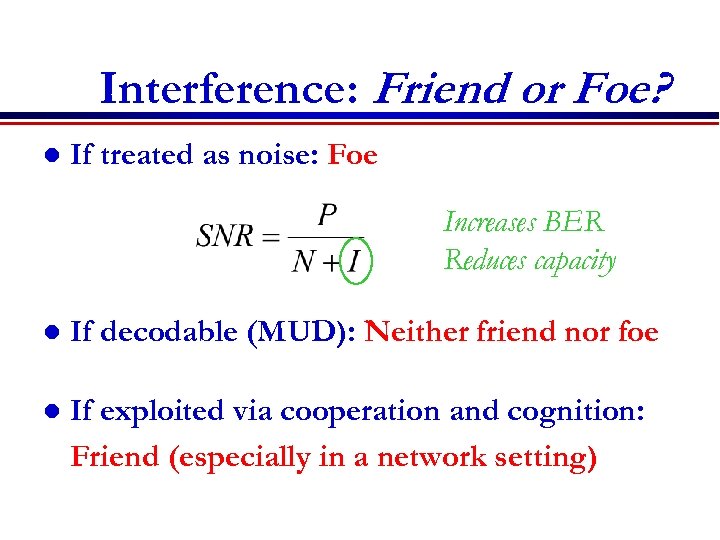 Interference: Friend or Foe? l If treated as noise: Foe Increases BER Reduces capacity l If decodable (MUD): Neither friend nor foe l If exploited via cooperation and cognition: Friend (especially in a network setting)
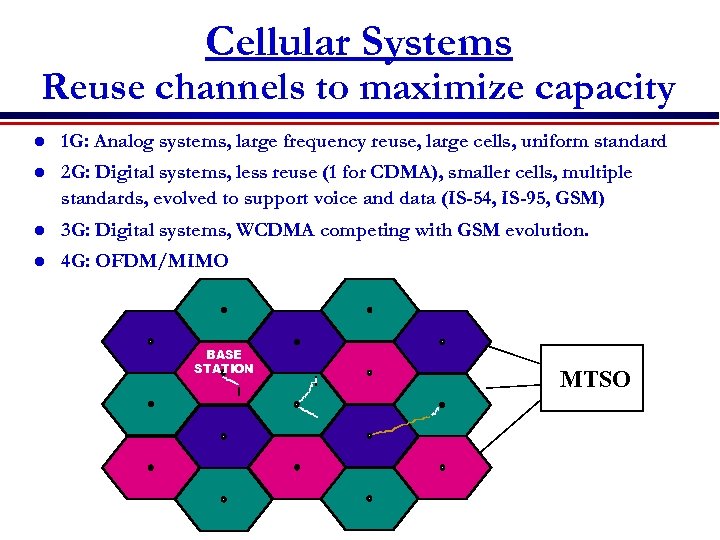 Cellular Systems Reuse channels to maximize capacity l 1 G: Analog systems, large frequency reuse, large cells, uniform standard l 2 G: Digital systems, less reuse (1 for CDMA), smaller cells, multiple standards, evolved to support voice and data (IS-54, IS-95, GSM) l 3 G: Digital systems, WCDMA competing with GSM evolution. l 4 G: OFDM/MIMO BASE STATION MTSO
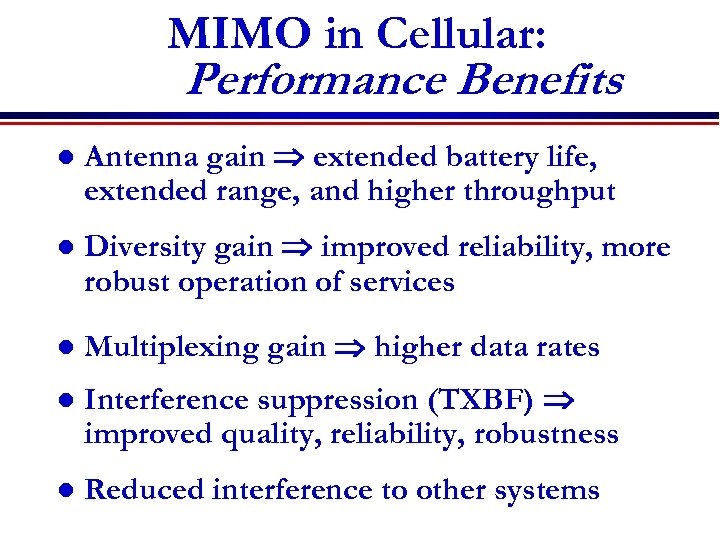 MIMO in Cellular: Performance Benefits l Antenna gain extended battery life, extended range, and higher throughput l Diversity gain improved reliability, more robust operation of services l Multiplexing gain higher data rates l Interference suppression (TXBF) improved quality, reliability, robustness l Reduced interference to other systems
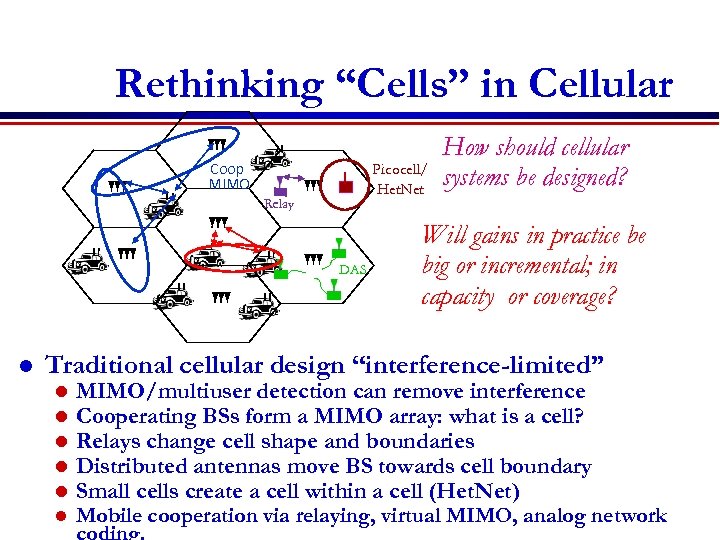 Rethinking “Cells” in Cellular Coop MIMO Picocell/ Het. Net Relay DAS l How should cellular systems be designed? Will gains in practice be big or incremental; in capacity or coverage? Traditional cellular design “interference-limited” l MIMO/multiuser detection can remove interference l Cooperating BSs form a MIMO array: what is a cell? l Relays change cell shape and boundaries l Distributed antennas move BS towards cell boundary l Small cells create a cell within a cell (Het. Net) l Mobile cooperation via relaying, virtual MIMO, analog network
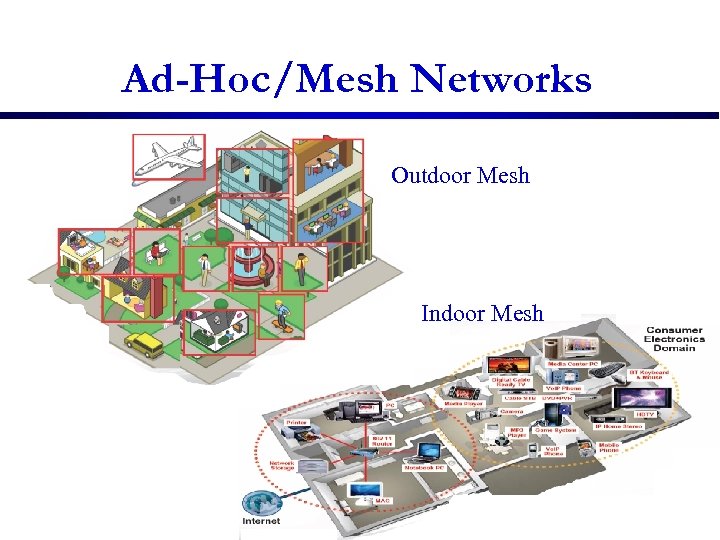 Ad-Hoc/Mesh Networks Outdoor Mesh ce Indoor Mesh
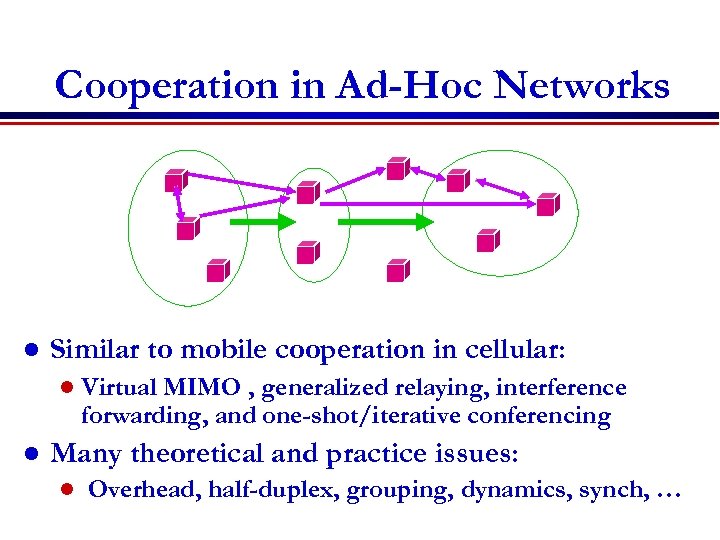 Cooperation in Ad-Hoc Networks l Similar to mobile cooperation in cellular: l l Virtual MIMO , generalized relaying, interference forwarding, and one-shot/iterative conferencing Many theoretical and practice issues: l Overhead, half-duplex, grouping, dynamics, synch, …
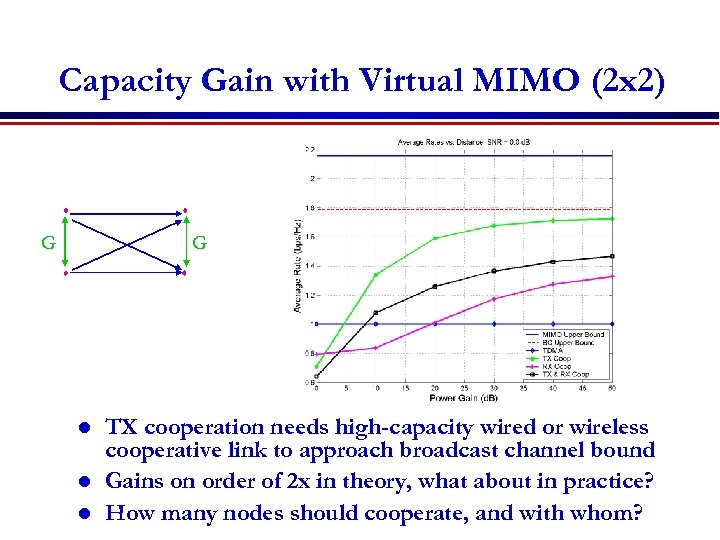 Capacity Gain with Virtual MIMO (2 x 2) x 1 G G x 2 l l l TX cooperation needs high-capacity wired or wireless cooperative link to approach broadcast channel bound Gains on order of 2 x in theory, what about in practice? How many nodes should cooperate, and with whom?
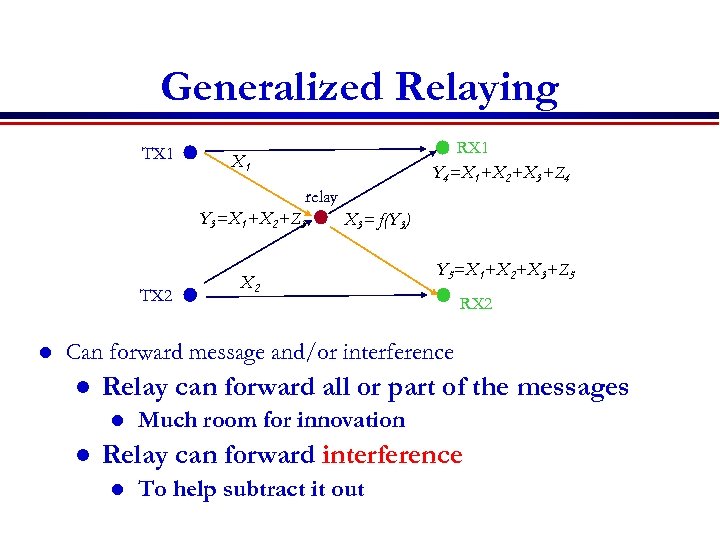 Generalized Relaying TX 1 RX 1 Y 4=X 1+X 2+X 3+Z 4 X 1 relay Y 3=X 1+X 2+Z 3 TX 2 l X 3= f(Y 3) X 2 Analog network coding Y 5=X 1+X 2+X 3+Z 5 RX 2 Can forward message and/or interference l Relay can forward all or part of the messages l l Much room for innovation Relay can forward interference l To help subtract it out
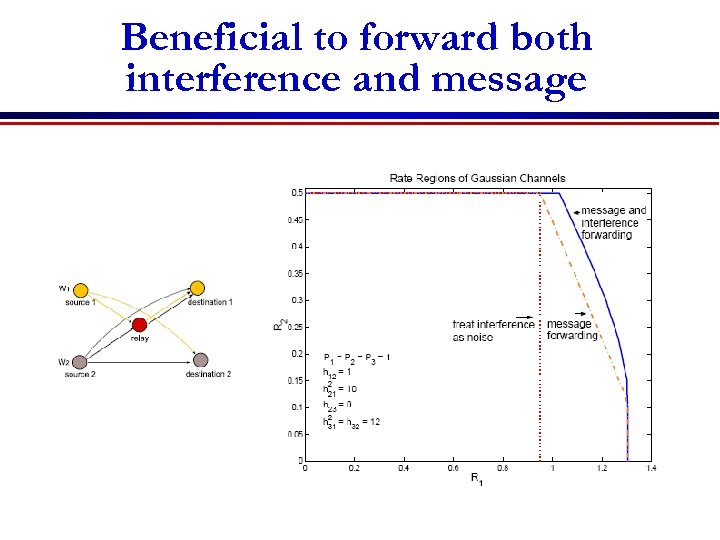 Beneficial to forward both interference and message
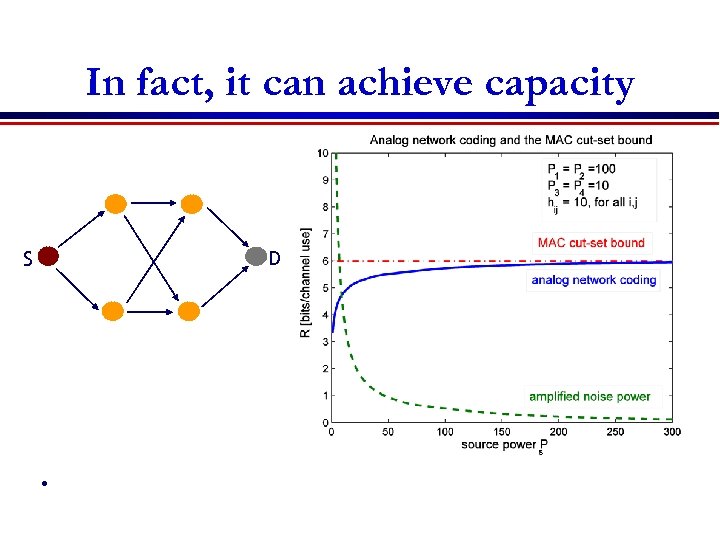 In fact, it can achieve capacity P 1 S P 3 Ps D P 2 • P 4 For large powers Ps, P 1, P 2, analog network coding approaches capacity
 Intelligence beyond Cooperation: Cognition l Cognitive radios can support new wireless users in existing crowded spectrum l l Utilize advanced communication and signal processing techniques l l Without degrading performance of existing users Coupled with novel spectrum allocation policies Technology could l l Revolutionize the way spectrum is allocated worldwide Provide sufficient bandwidth to support higher quality and higher data rate products and services
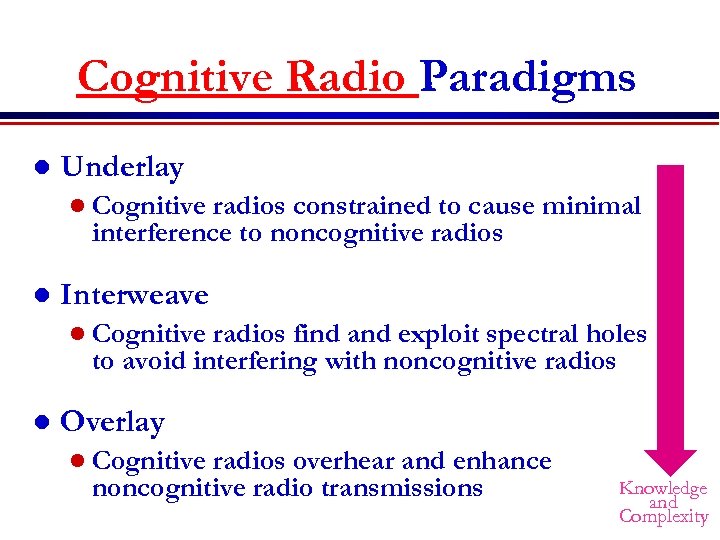 Cognitive Radio Paradigms l Underlay l Cognitive radios constrained to cause minimal interference to noncognitive radios l Interweave l Cognitive radios find and exploit spectral holes to avoid interfering with noncognitive radios l Overlay l Cognitive radios overhear and enhance noncognitive radio transmissions Knowledge and Complexity
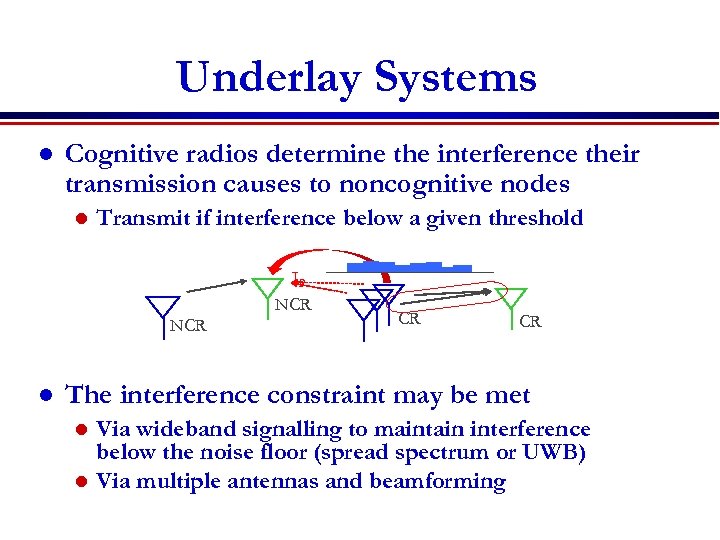 Underlay Systems l Cognitive radios determine the interference their transmission causes to noncognitive nodes l Transmit if interference below a given threshold IP NCR l CR CR The interference constraint may be met Via wideband signalling to maintain interference below the noise floor (spread spectrum or UWB) l Via multiple antennas and beamforming l
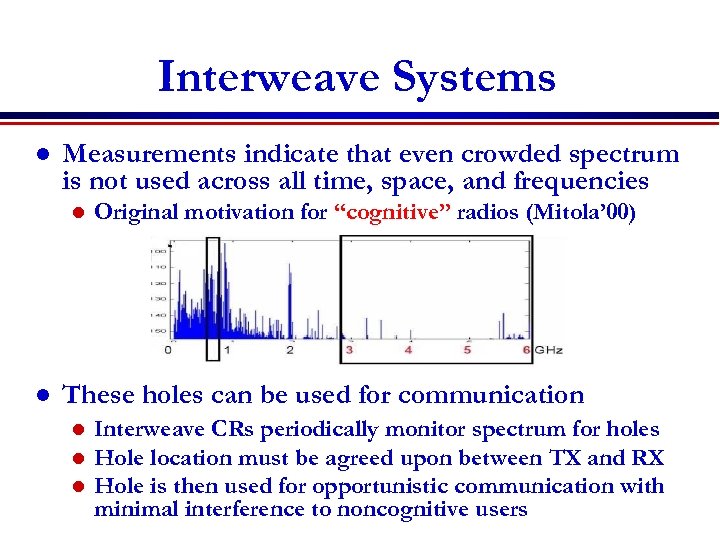 Interweave Systems l Measurements indicate that even crowded spectrum is not used across all time, space, and frequencies l l Original motivation for “cognitive” radios (Mitola’ 00) These holes can be used for communication l l l Interweave CRs periodically monitor spectrum for holes Hole location must be agreed upon between TX and RX Hole is then used for opportunistic communication with minimal interference to noncognitive users
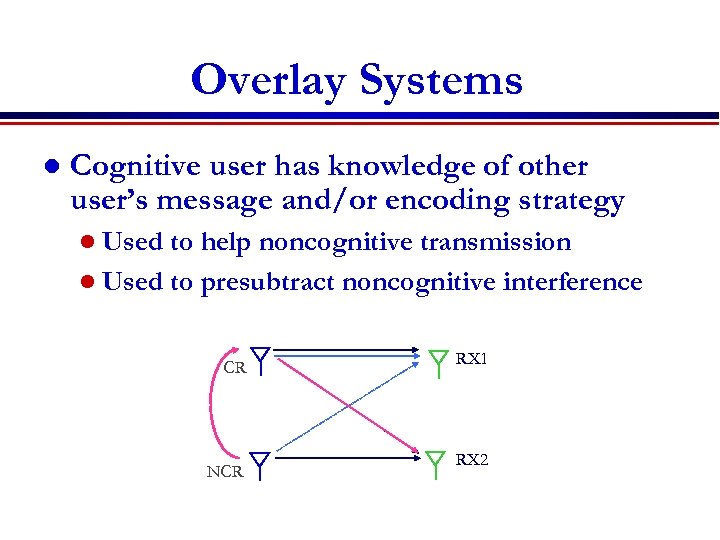 Overlay Systems l Cognitive user has knowledge of other user’s message and/or encoding strategy l Used to help noncognitive transmission l Used to presubtract noncognitive interference CR NCR RX 1 RX 2
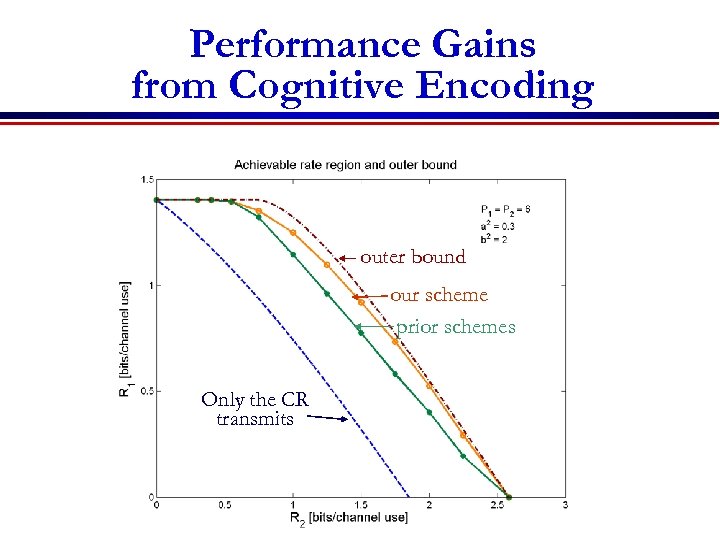 Performance Gains from Cognitive Encoding outer bound our scheme prior schemes Only the CR transmits
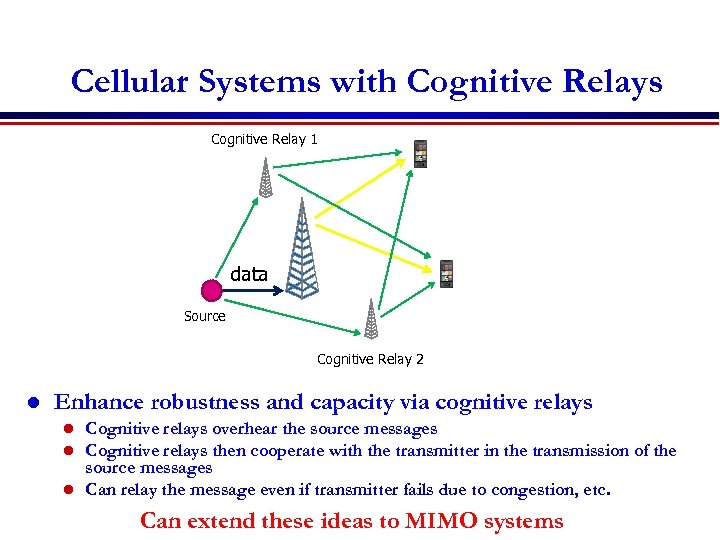 Cellular Systems with Cognitive Relays Cognitive Relay 1 data Source Cognitive Relay 2 l Enhance robustness and capacity via cognitive relays Cognitive relays overhear the source messages Cognitive relays then cooperate with the transmitter in the transmission of the source messages l Can relay the message even if transmitter fails due to congestion, etc. l l Can extend these ideas to MIMO systems
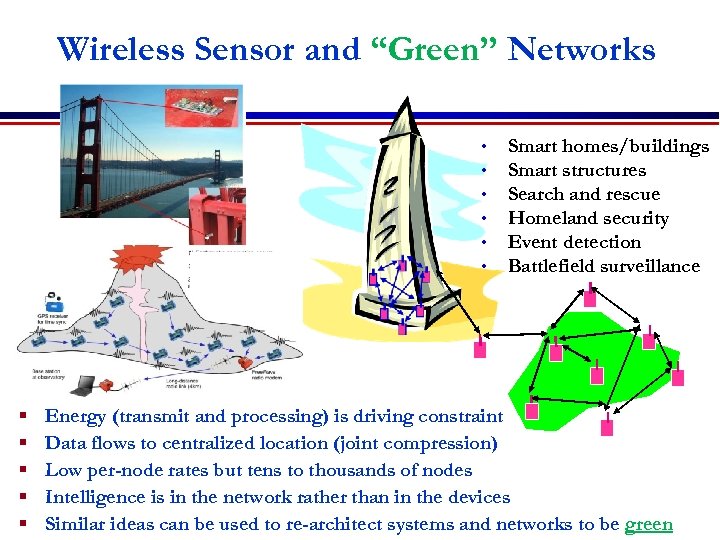 Wireless Sensor and “Green” Networks • • • § § § Smart homes/buildings Smart structures Search and rescue Homeland security Event detection Battlefield surveillance Energy (transmit and processing) is driving constraint Data flows to centralized location (joint compression) Low per-node rates but tens to thousands of nodes Intelligence is in the network rather than in the devices Similar ideas can be used to re-architect systems and networks to be green
 Energy-Constrained Nodes l Each node can only send a finite number of bits. l l Transmit energy minimized by maximizing bit time Circuit energy consumption increases with bit time Introduces a delay versus energy tradeoff for each bit Short-range networks must consider transmit, circuit, and processing energy. Sophisticated techniques not necessarily energy-efficient. l Sleep modes save energy but complicate networking. l l Changes everything about the network design: l l l Bit allocation must be optimized across all protocols. Delay vs. throughput vs. node/network lifetime tradeoffs. Optimization of node cooperation.
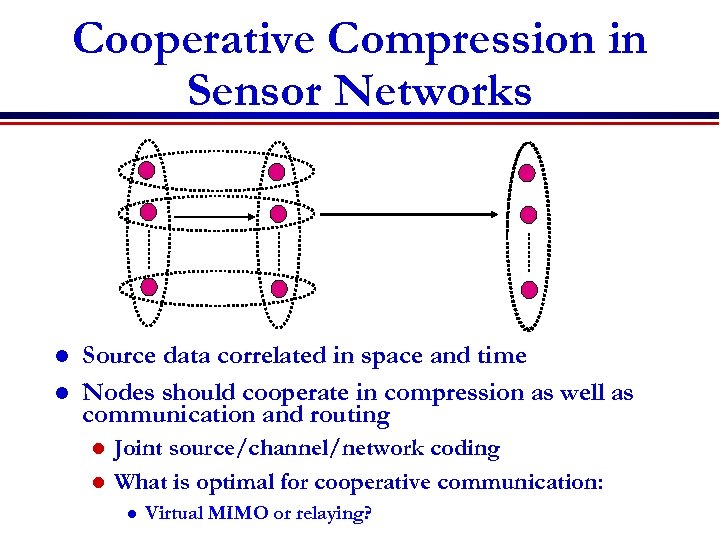 Cooperative Compression in Sensor Networks l l Source data correlated in space and time Nodes should cooperate in compression as well as communication and routing Joint source/channel/network coding l What is optimal for cooperative communication: l l Virtual MIMO or relaying?
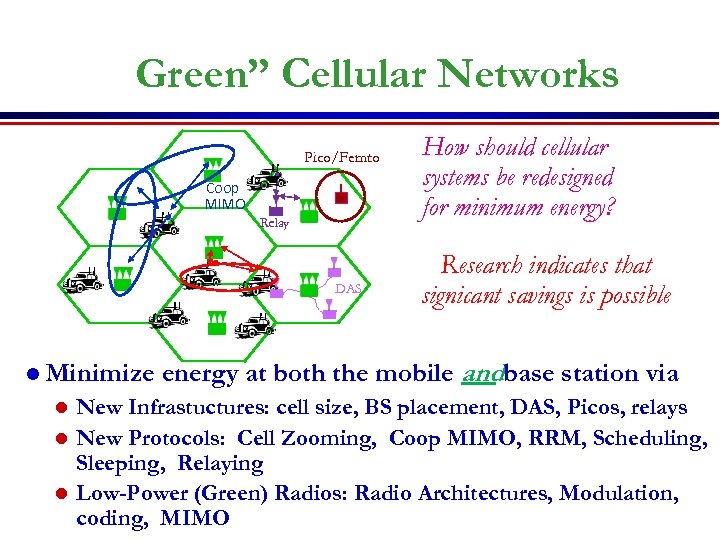 Green” Cellular Networks Pico/Femto Coop MIMO Relay DAS l Minimize How should cellular systems be redesigned for minimum energy? Research indicates that signicant savings is possible energy at both the mobile andbase station via New Infrastuctures: cell size, BS placement, DAS, Picos, relays l New Protocols: Cell Zooming, Coop MIMO, RRM, Scheduling, Sleeping, Relaying l Low-Power (Green) Radios: Radio Architectures, Modulation, coding, MIMO l
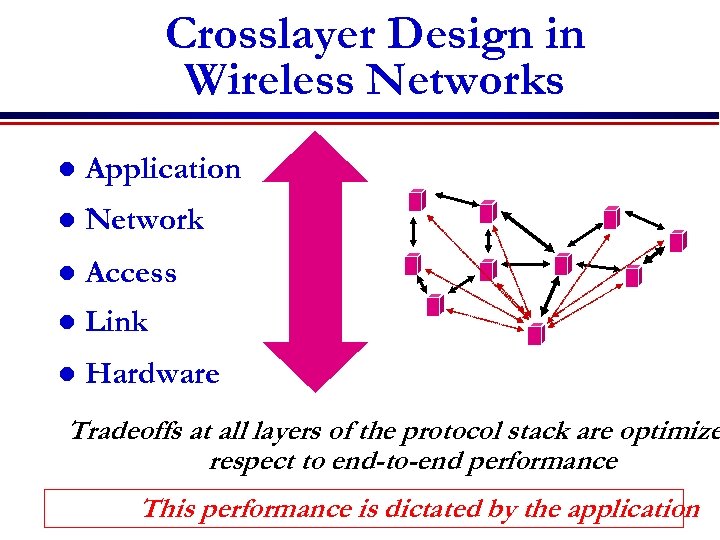 Crosslayer Design in Wireless Networks l Application l Network l Access l Link l Hardware Tradeoffs at all layers of the protocol stack are optimize respect to end-to-end performance This performance is dictated by the application
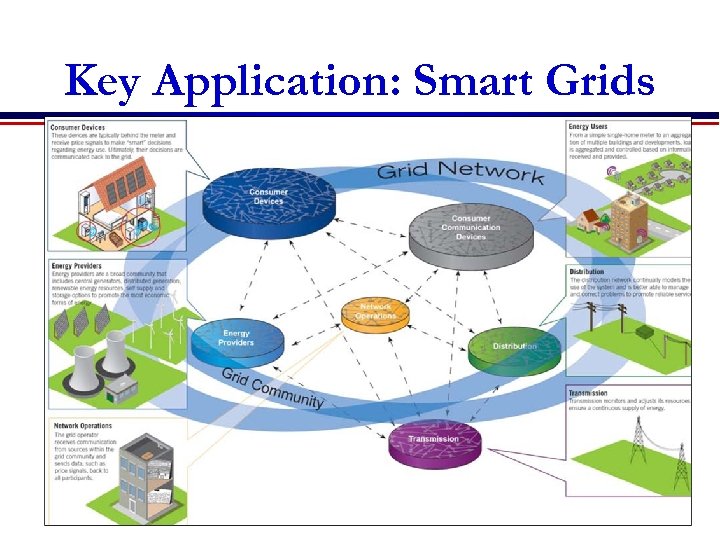 Key Application: Smart Grids carbonmetrics. eu
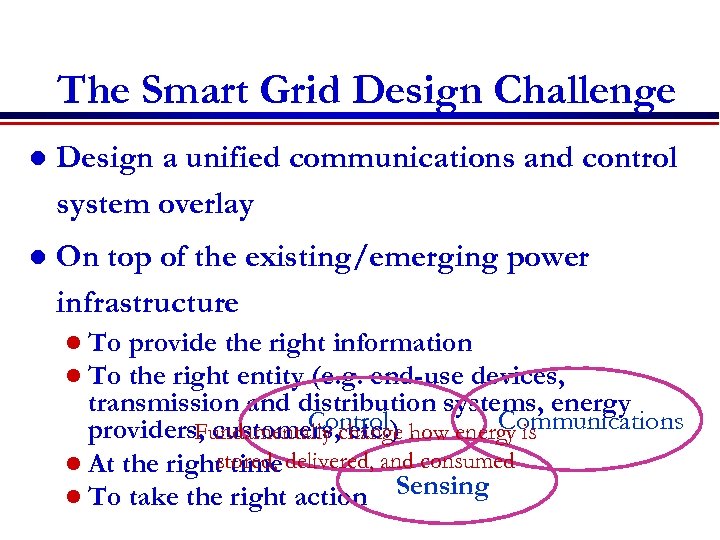 The Smart Grid Design Challenge l Design a unified communications and control system overlay l On top of the existing/emerging power infrastructure l To provide the right information the right entity (e. g. end-use devices, transmission and distribution systems, energy Control Communications providers, customers, change how energy is Fundamentally etc. ) stored, l At the right time delivered, and consumed l To take the right action Sensing
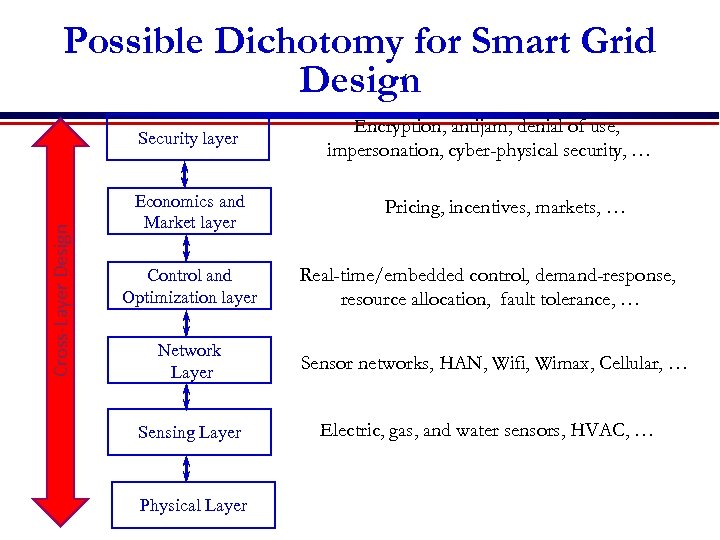 Possible Dichotomy for Smart Grid Design Cross-Layer Design Security layer Economics and Market layer Control and Optimization layer Network Layer Encryption, antijam, denial of use, impersonation, cyber-physical security, … Pricing, incentives, markets, … Real-time/embedded control, demand-response, resource allocation, fault tolerance, … Sensor networks, HAN, Wifi, Wimax, Cellular, … Sensing Layer Electric, gas, and water sensors, HVAC, … Physical Layer Photovoltaics, switches, storage, fuel cells, …
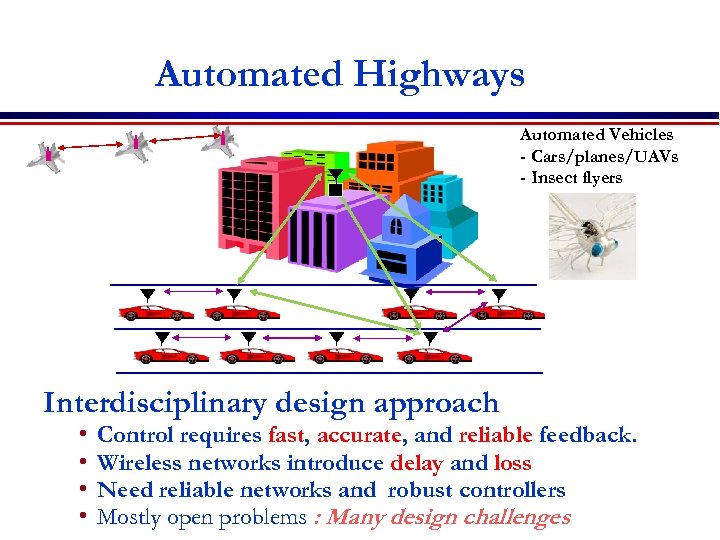 Automated Highways Automated Vehicles - Cars/planes/UAVs - Insect flyers Interdisciplinary design approach • • Control requires fast, accurate, and reliable feedback. Wireless networks introduce delay and loss Need reliable networks and robust controllers Mostly open problems : Many design challenges
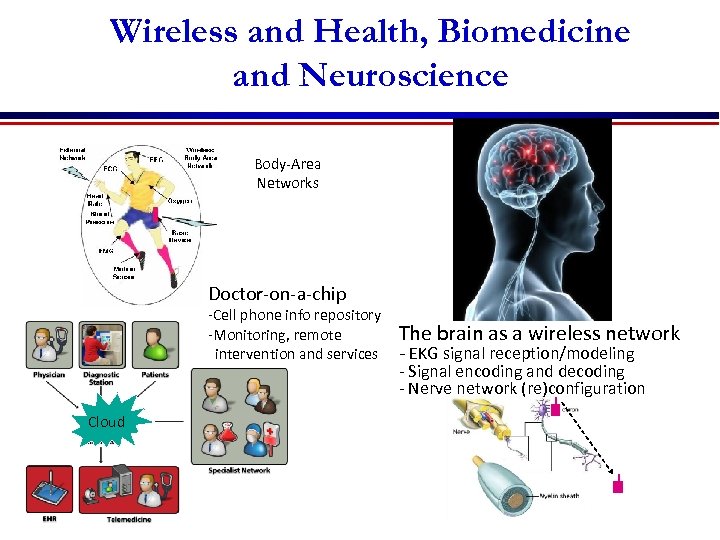 Wireless and Health, Biomedicine and Neuroscience Body-Area Networks Doctor-on-a-chip -Cell phone info repository -Monitoring, remote intervention and services Cloud The brain as a wireless network - EKG signal reception/modeling - Signal encoding and decoding - Nerve network (re)configuration