 Скачать презентацию Edwards Wattenberg and Lineberry Government in America People
369f26322e126e1ca58e3c2bec0c73d5.ppt
- Количество слайдов: 136



Edwards, Wattenberg, and Lineberry Government in America: People, Politics, and Policy Fourteenth Edition Chapter 12 Congress Copyright © 2009 Pearson Education, Inc. Publishing as Longman.
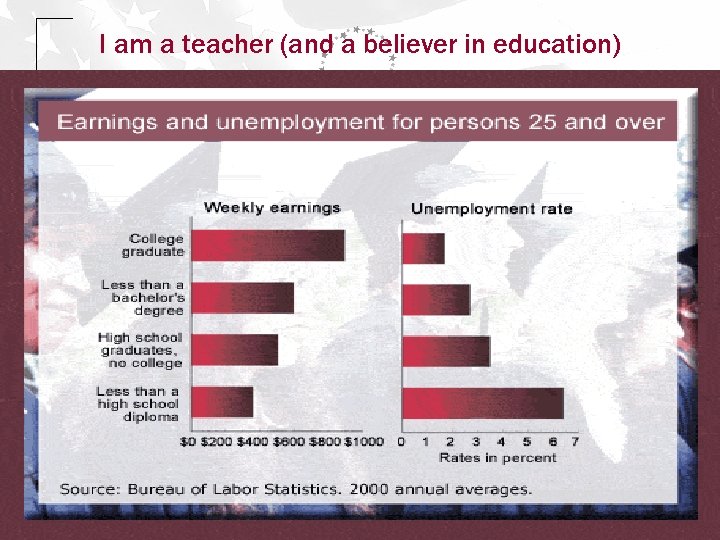
I am a teacher (and a believer in education) Copyright © 2009 Pearson Education, Inc. Publishing as Longman.
Copyright © 2009 Pearson Education, Inc. Publishing as Longman.
CH 13 SUM ARTICLE I OF THE CONSTITUTION DELEGATED POWERS TO CONGRESS EXPRESSED POWERS IMPLIED POWERS (ART I, SEC 8, CLAUSE 18) “NECESSARY & PROPER” CLAUSE Copyright © 2009 Pearson Education, Inc. Publishing as Longman.
CH 13 SUM EXPRESSED POWERS TAX, COMMERCE, CURRENCY, BORROW, BANKRUPTCY, NATURALIZATION, POSTAL CORYRIGHTS & PATENTS WEIGHTS & MEASURES, TERRITORIES, FOREIGN RELATIONS, WAR Copyright © 2009 Pearson Education, Inc. Publishing as Longman.
CH 13 SUM NONLEGISLATIVE POWERS ELECTORAL POWERS (NO MAJORITY IN THE ELECTORAL COLLEGE) AMENDMENT IMPEACHMENT (JUDICIAL) EXECUTIVE INVESTIGATIVE Copyright © 2009 Pearson Education, Inc. Publishing as Longman.
Copyright © 2009 Pearson Education, Inc. Publishing as Longman.
THE MAIN JOB OF CONGRESS TO MAKE PUBLIC POLICY TO LEGISLATE TO PASS LAWS Copyright © 2009 Pearson Education, Inc. Publishing as Longman.
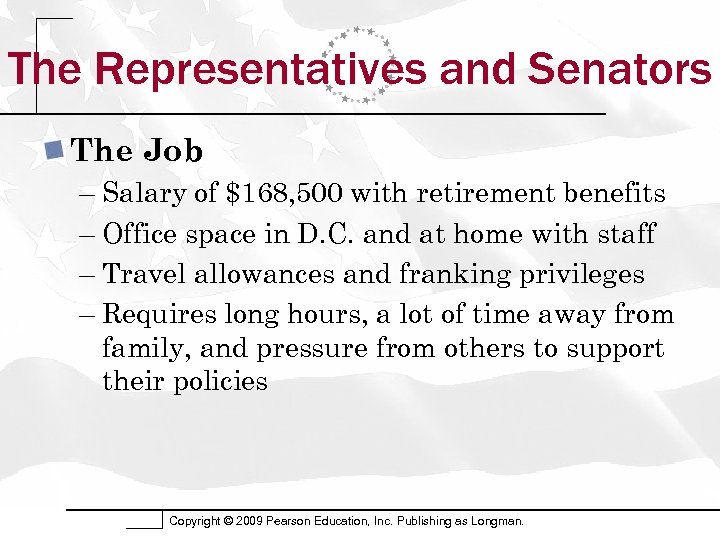
The Representatives and Senators The Job – Salary of $168, 500 with retirement benefits – Office space in D. C. and at home with staff – Travel allowances and franking privileges – Requires long hours, a lot of time away from family, and pressure from others to support their policies Copyright © 2009 Pearson Education, Inc. Publishing as Longman.
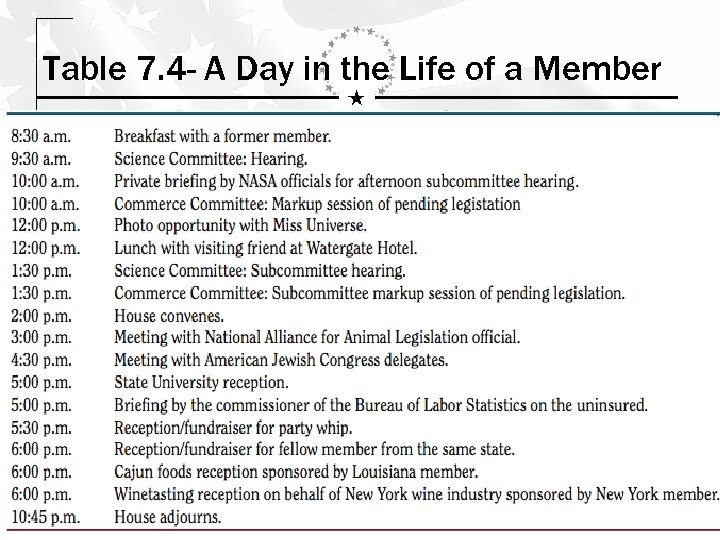
Table 7. 4 - A Day in the Life of a Member Copyright © 2009 Pearson Education, Inc. Publishing as Longman. Back
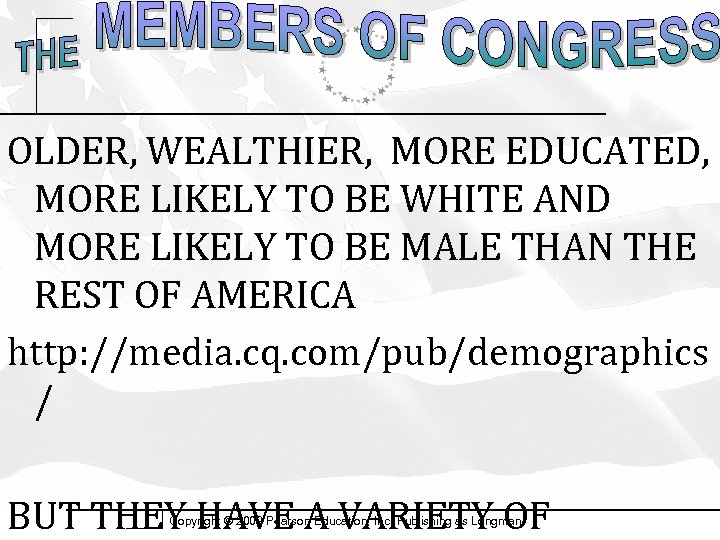
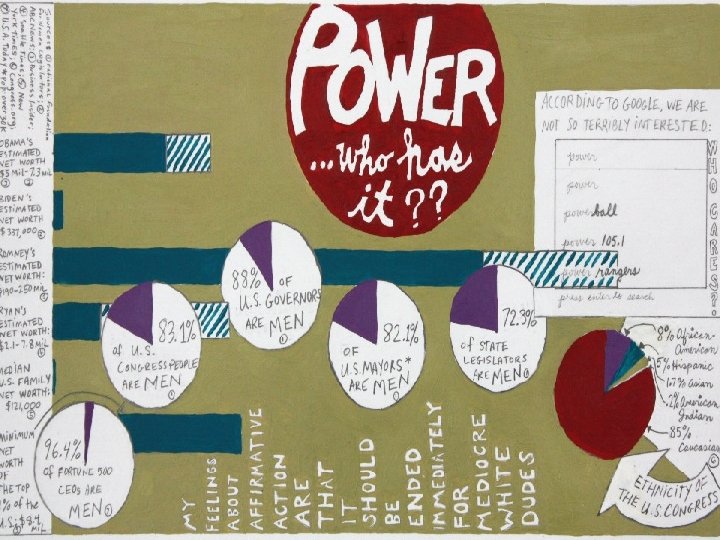
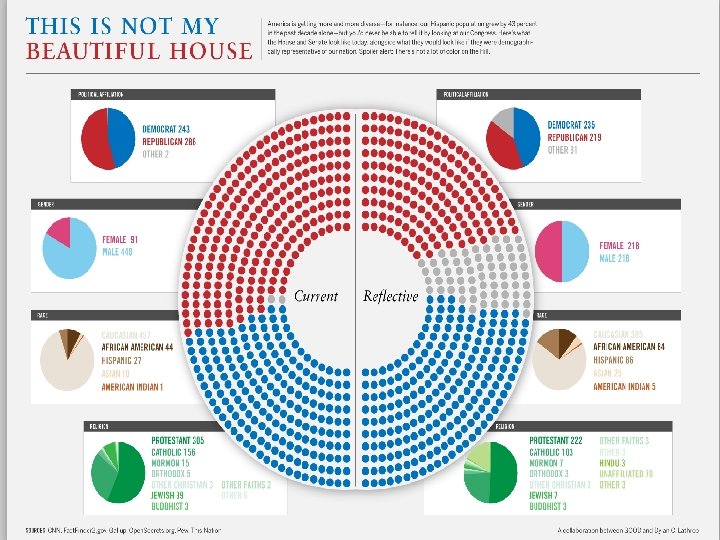
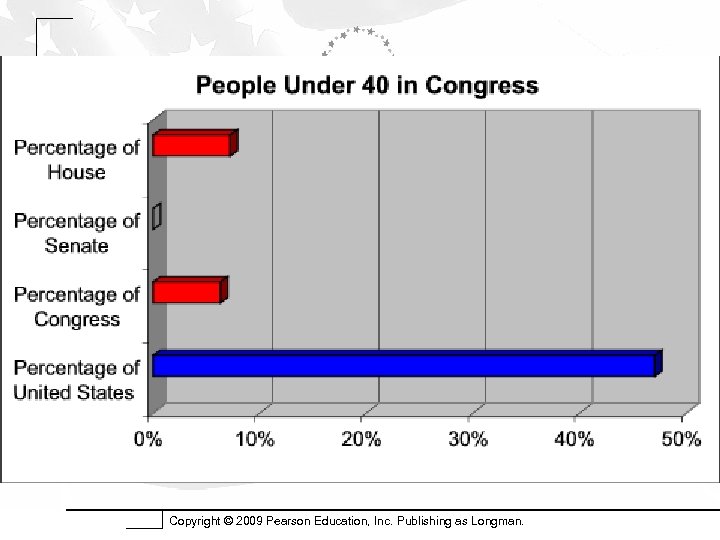
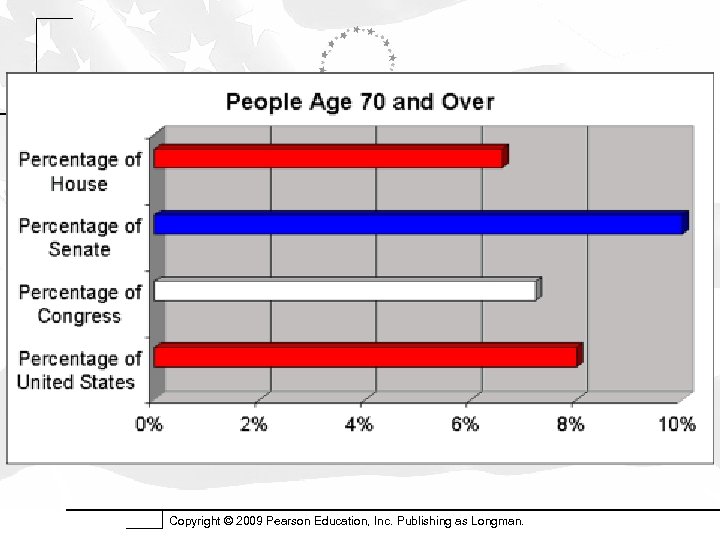
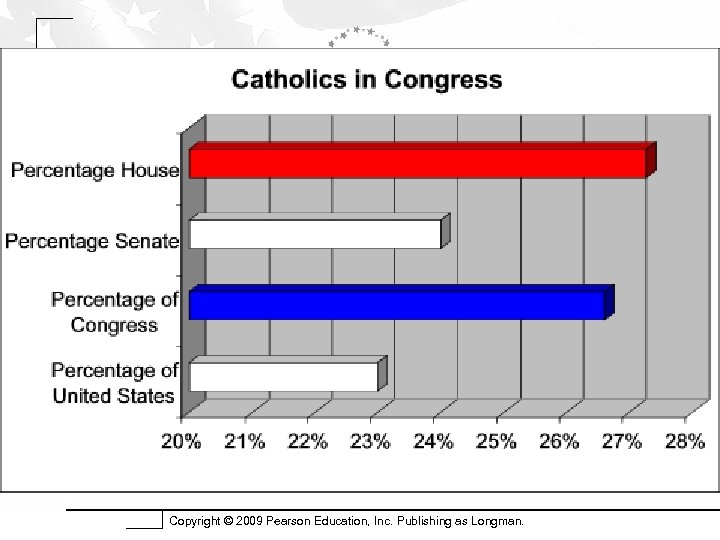
OLDER, WEALTHIER, MORE EDUCATED, MORE LIKELY TO BE WHITE AND MORE LIKELY TO BE MALE THAN THE REST OF AMERICA http: //media. cq. com/pub/demographics / BUT THEY HAVE A VARIETY OF Copyright © 2009 Pearson Education, Inc. Publishing as Longman.
Copyright © 2009 Pearson Education, Inc. Publishing as Longman.
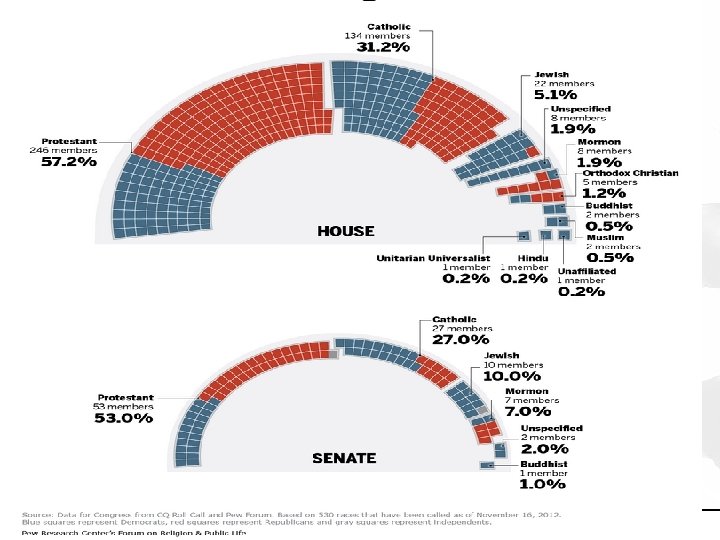
Copyright © 2009 Pearson Education, Inc. Publishing as Longman.
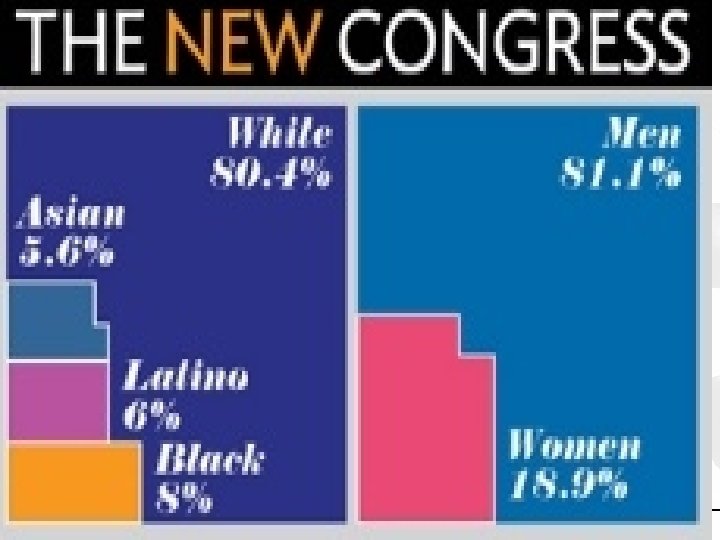
Copyright © 2009 Pearson Education, Inc. Publishing as Longman.
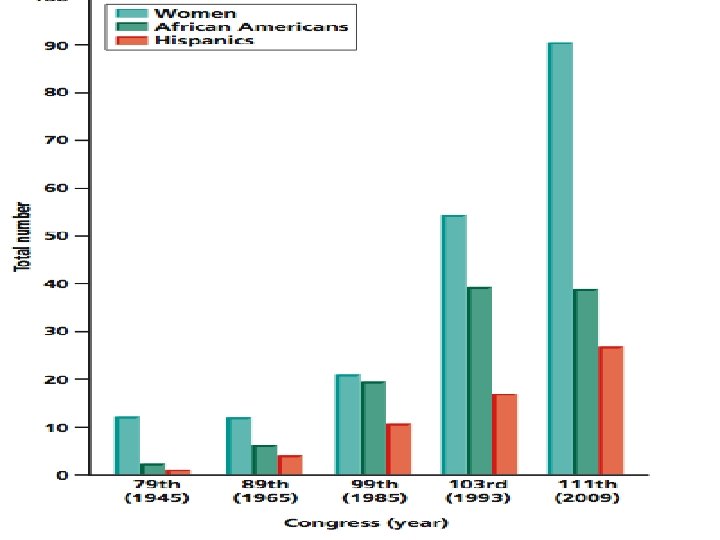
Copyright © 2009 Pearson Education, Inc. Publishing as Longman. Back
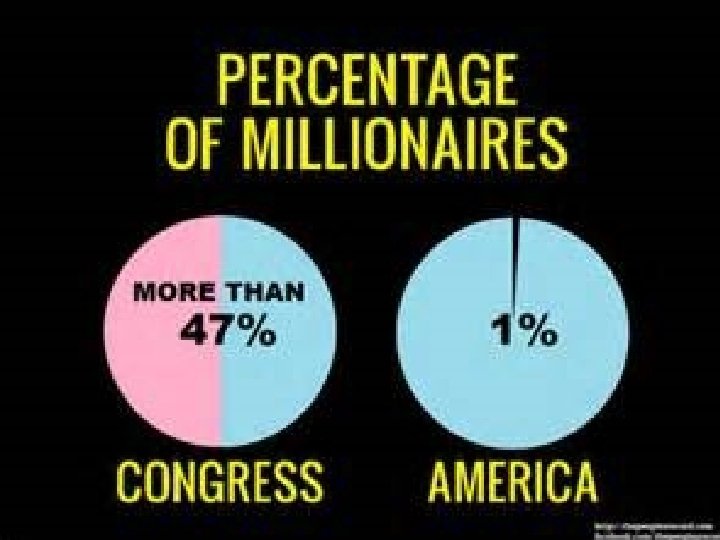
Copyright © 2009 Pearson Education, Inc. Publishing as Longman.
Copyright © 2009 Pearson Education, Inc. Publishing as Longman.
th 113 = 2013 -2015 Copyright © 2009 Pearson Education, Inc. Publishing as Longman.
Copyright © 2009 Pearson Education, Inc. Publishing as Longman.
th 113 = 2013 -2015 Copyright © 2009 Pearson Education, Inc. Publishing as Longman.
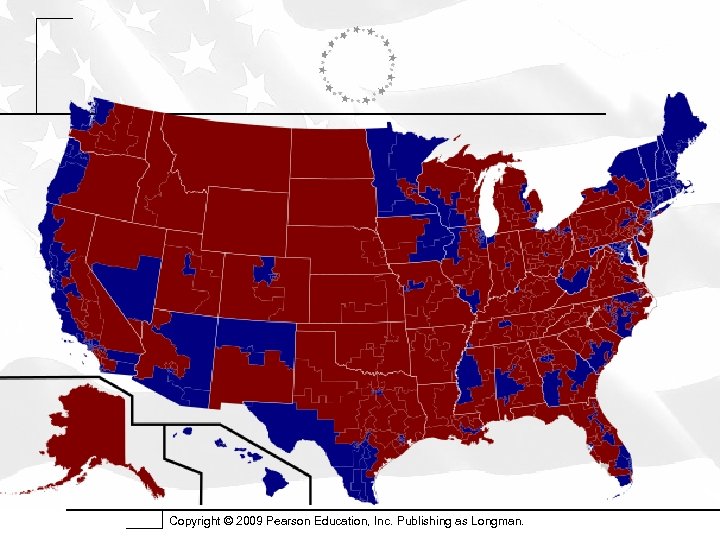
Copyright © 2009 Pearson Education, Inc. Publishing as Longman.
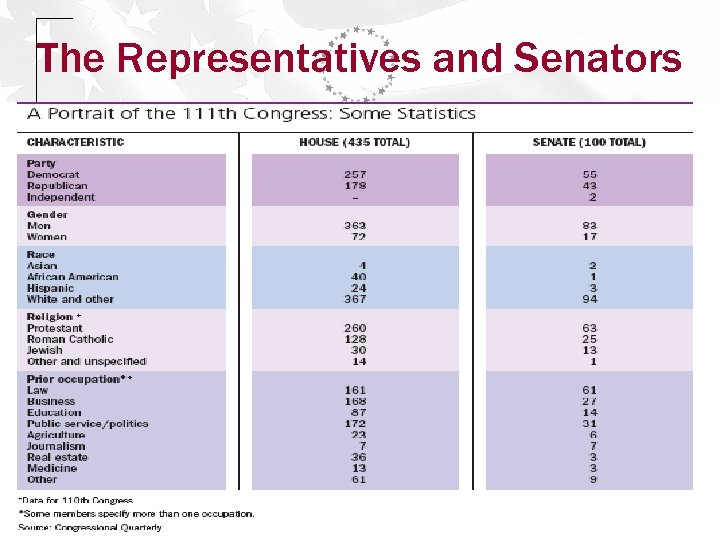
The Representatives and Senators Copyright © 2009 Pearson Education, Inc. Publishing as Longman.
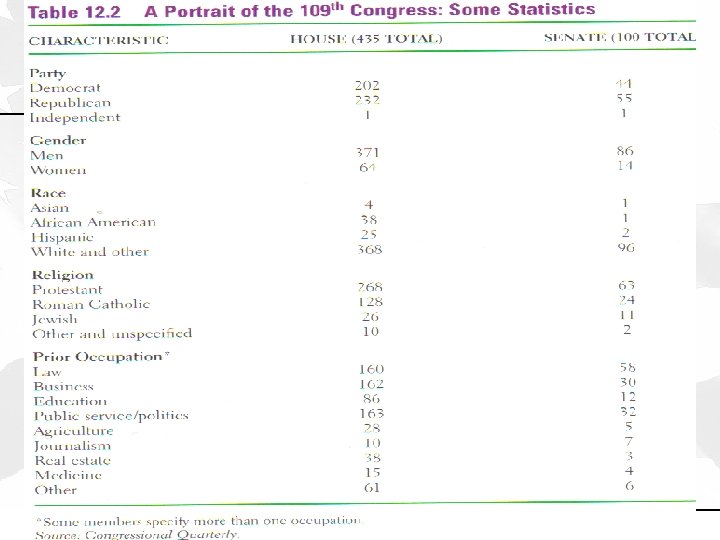
Copyright © 2009 Pearson Education, Inc. Publishing as Longman.
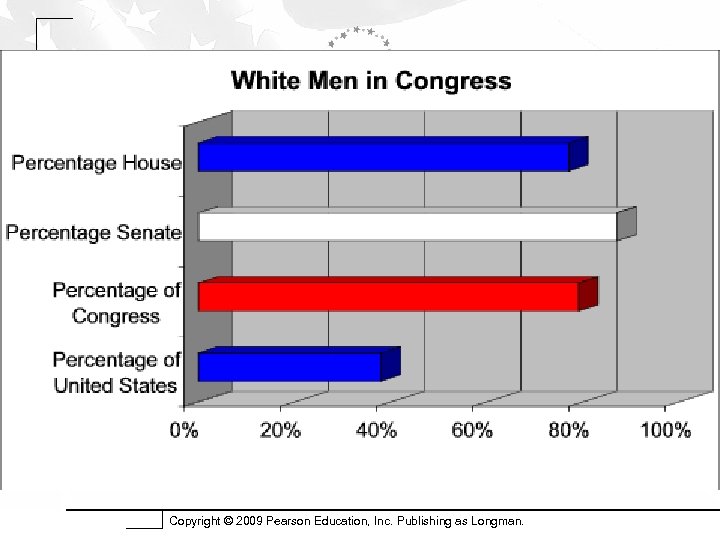
Copyright © 2009 Pearson Education, Inc. Publishing as Longman.
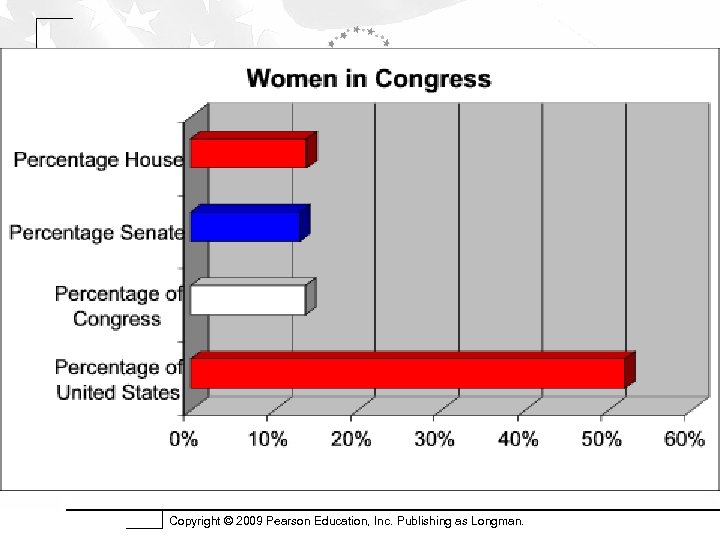
Copyright © 2009 Pearson Education, Inc. Publishing as Longman.
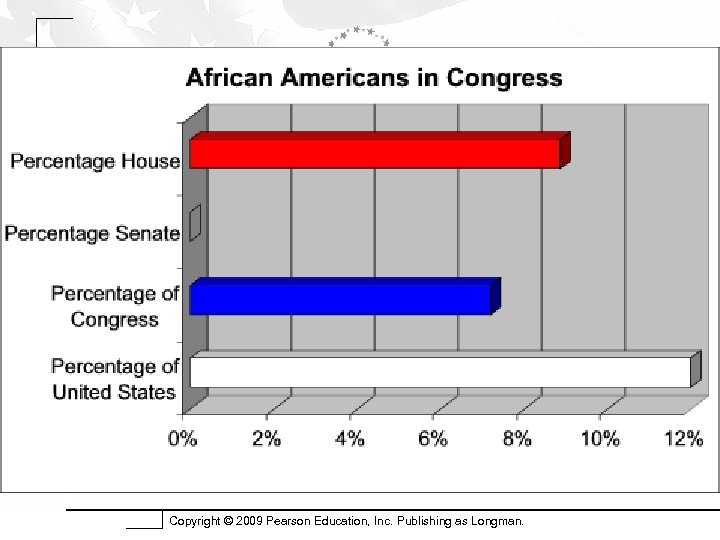
Copyright © 2009 Pearson Education, Inc. Publishing as Longman.
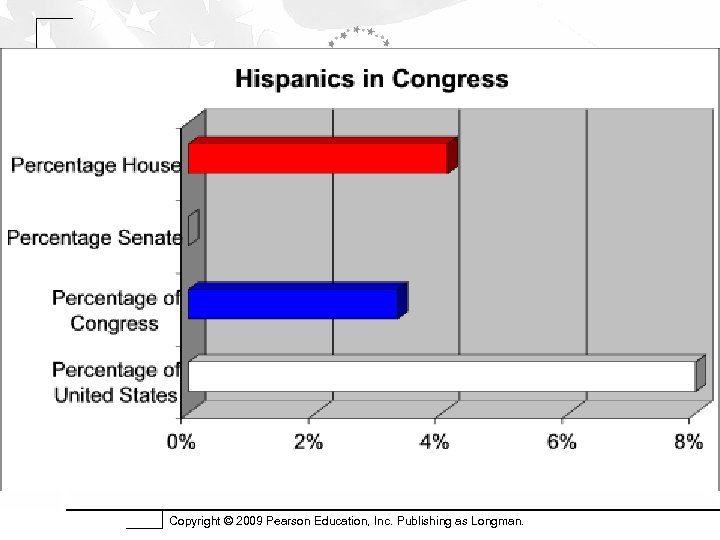
Copyright © 2009 Pearson Education, Inc. Publishing as Longman.
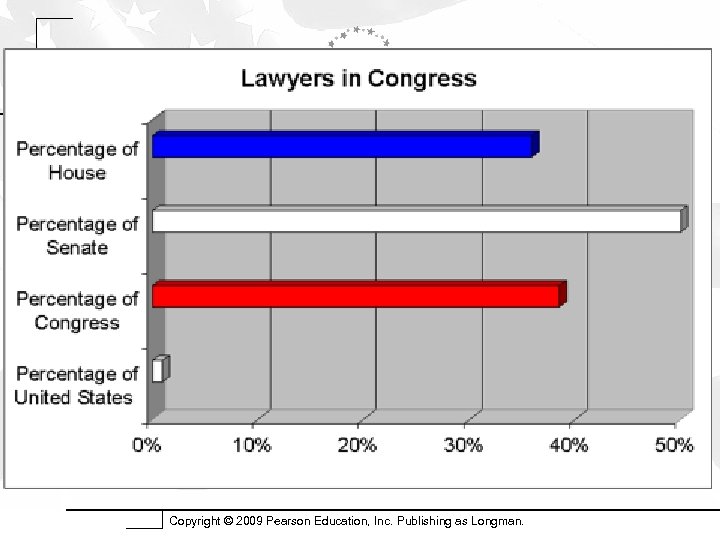
Copyright © 2009 Pearson Education, Inc. Publishing as Longman.
Copyright © 2009 Pearson Education, Inc. Publishing as Longman.
Copyright © 2009 Pearson Education, Inc. Publishing as Longman.
Copyright © 2009 Pearson Education, Inc. Publishing as Longman.

Copyright © 2009 Pearson Education, Inc. Publishing as Longman.
Copyright © 2009 Pearson Education, Inc. Publishing as Longman.
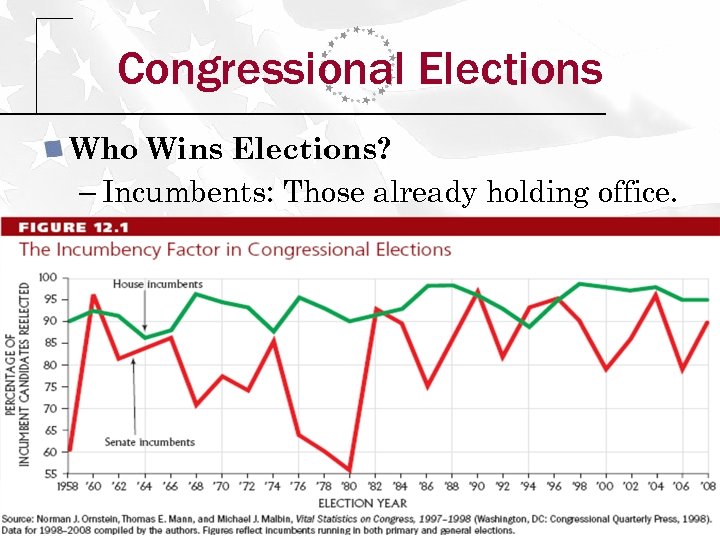
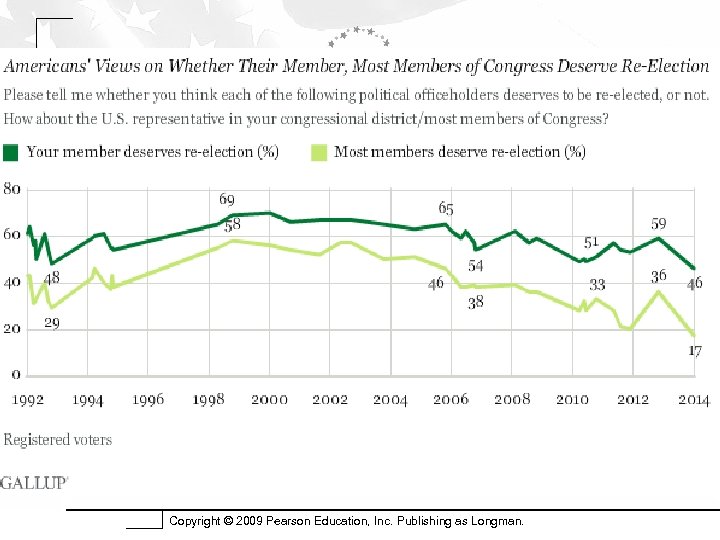
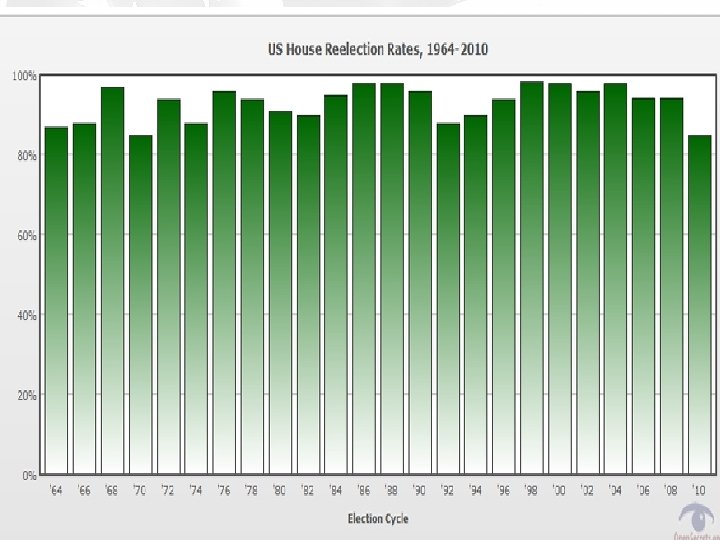
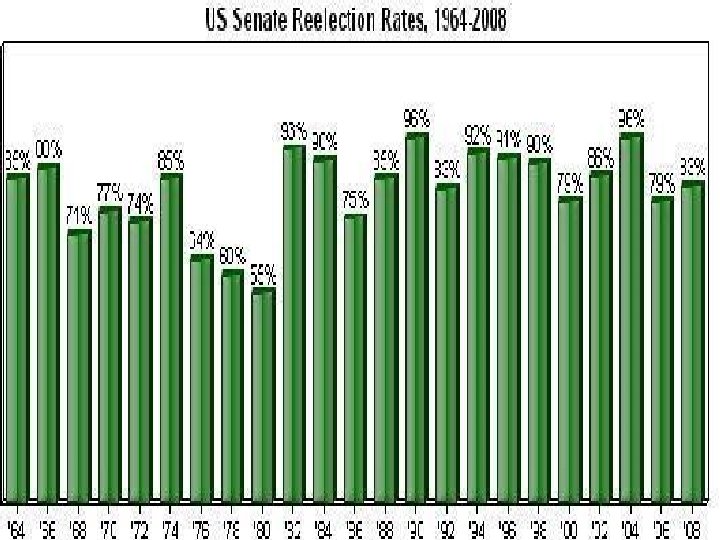
Congressional Elections Who Wins Elections? – Incumbents: Those already holding office. Copyright © 2009 Pearson Education, Inc. Publishing as Longman.
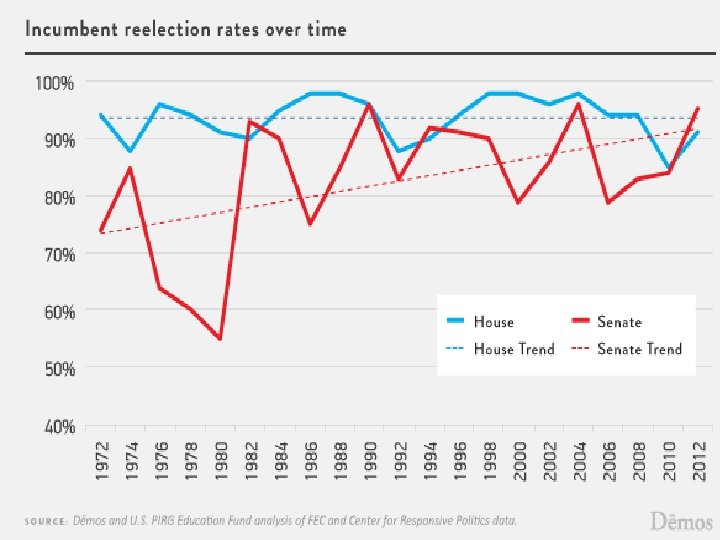
Copyright © 2009 Pearson Education, Inc. Publishing as Longman.
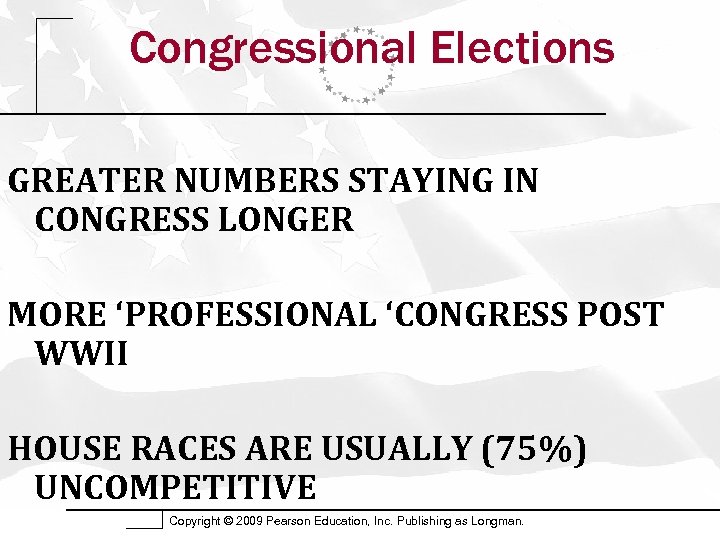
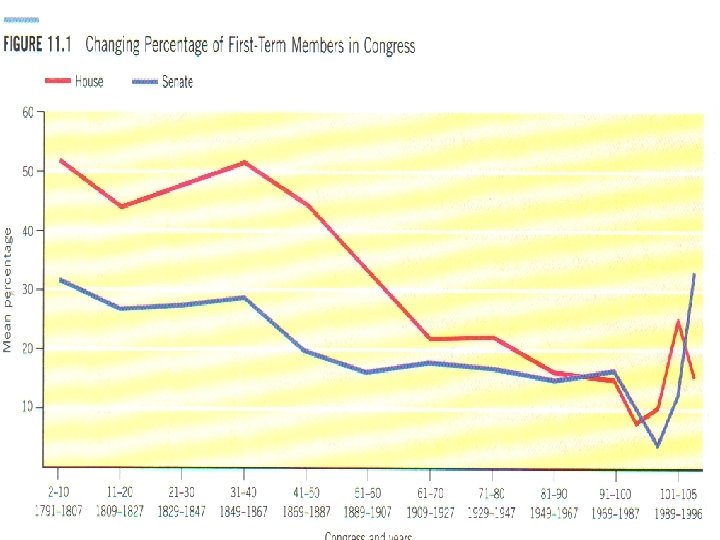
Congressional Elections GREATER NUMBERS STAYING IN CONGRESS LONGER MORE ‘PROFESSIONAL ‘CONGRESS POST WWII HOUSE RACES ARE USUALLY (75%) UNCOMPETITIVE Copyright © 2009 Pearson Education, Inc. Publishing as Longman.
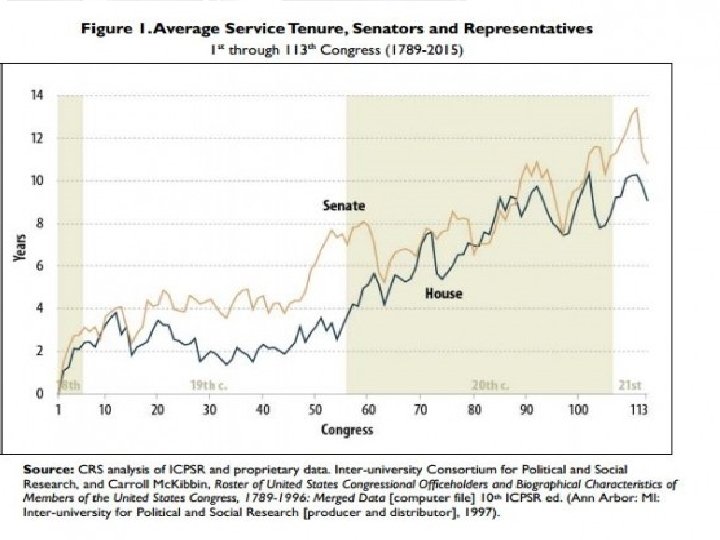
Copyright © 2009 Pearson Education, Inc. Publishing as Longman.
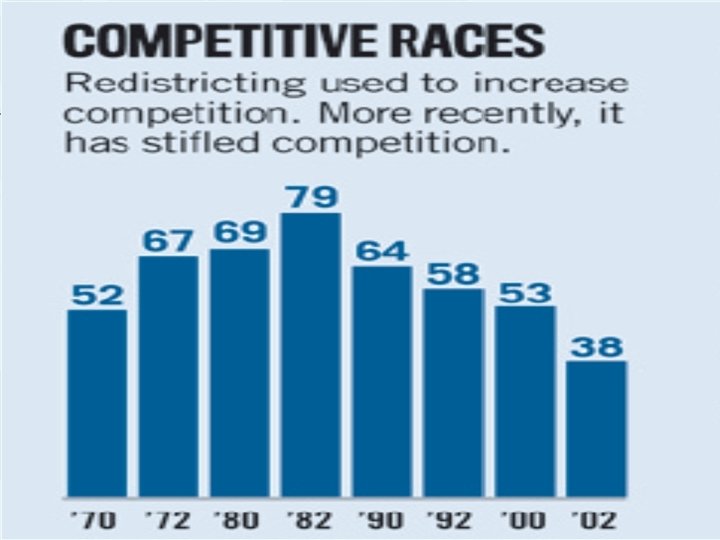
Copyright © 2009 Pearson Education, Inc. Publishing as Longman.
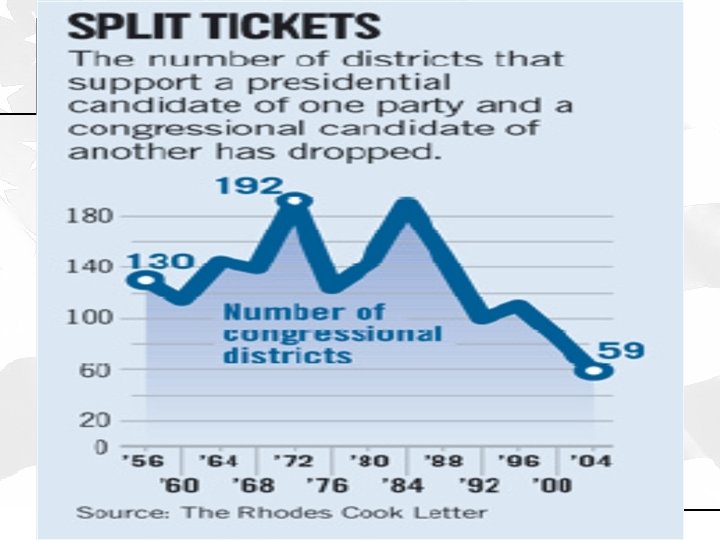
Copyright © 2009 Pearson Education, Inc. Publishing as Longman.
The Advantages of Incumbents – NAME RECOGNITION – MORE RESOURCES –GERRMANDERING – CREDIT CLAIMING – WEAK OPPONENTS Copyright © 2009 Pearson Education, Inc. Publishing as Longman.
“POP” ARE CONGRESSIONA L ELECTIONS ‘FAIR’? ESSAY 50 WORDS IN 5 MINUTES Copyright © 2009 Pearson Education, Inc. Publishing as Longman.
Copyright © 2009 Pearson Education, Inc. Publishing as Longman.
Copyright © 2009 Pearson Education, Inc. Publishing as Longman.
Copyright © 2009 Pearson Education, Inc. Publishing as Longman.
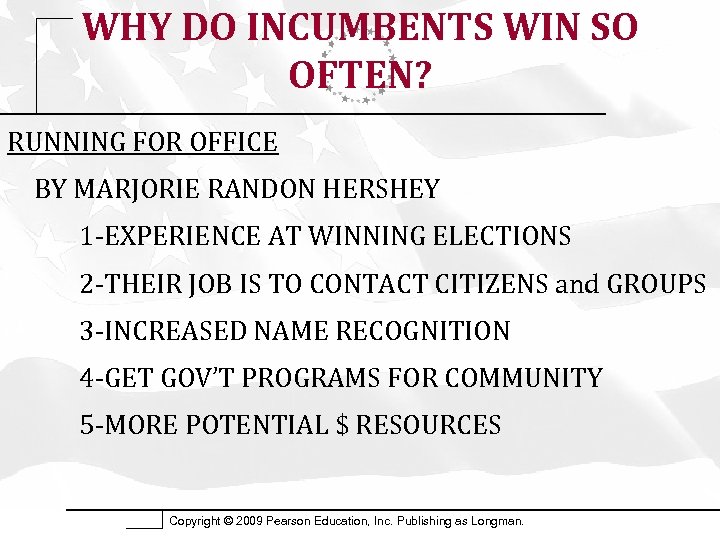
WHY DO INCUMBENTS WIN SO OFTEN? RUNNING FOR OFFICE BY MARJORIE RANDON HERSHEY 1 -EXPERIENCE AT WINNING ELECTIONS 2 -THEIR JOB IS TO CONTACT CITIZENS and GROUPS 3 -INCREASED NAME RECOGNITION 4 -GET GOV’T PROGRAMS FOR COMMUNITY 5 -MORE POTENTIAL $ RESOURCES Copyright © 2009 Pearson Education, Inc. Publishing as Longman.
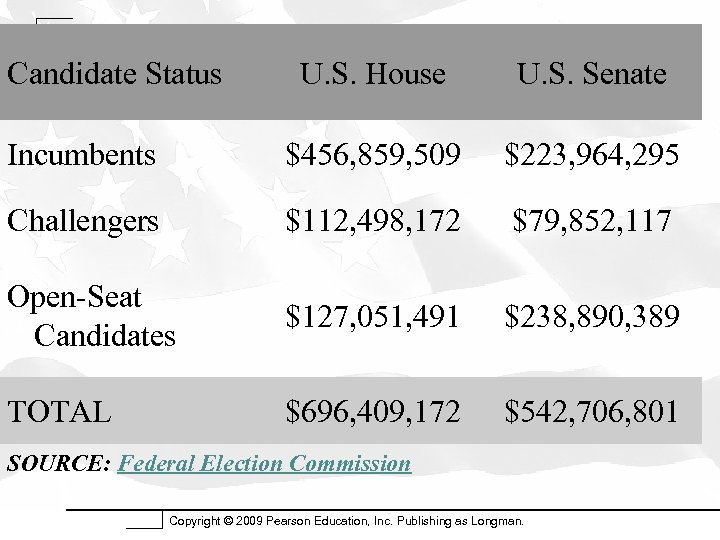
Candidate Status U. S. House U. S. Senate Incumbents $456, 859, 509 $223, 964, 295 Challengers $112, 498, 172 $79, 852, 117 Open-Seat Candidates $127, 051, 491 $238, 890, 389 TOTAL $696, 409, 172 $542, 706, 801 SOURCE: Federal Election Commission Copyright © 2009 Pearson Education, Inc. Publishing as Longman.
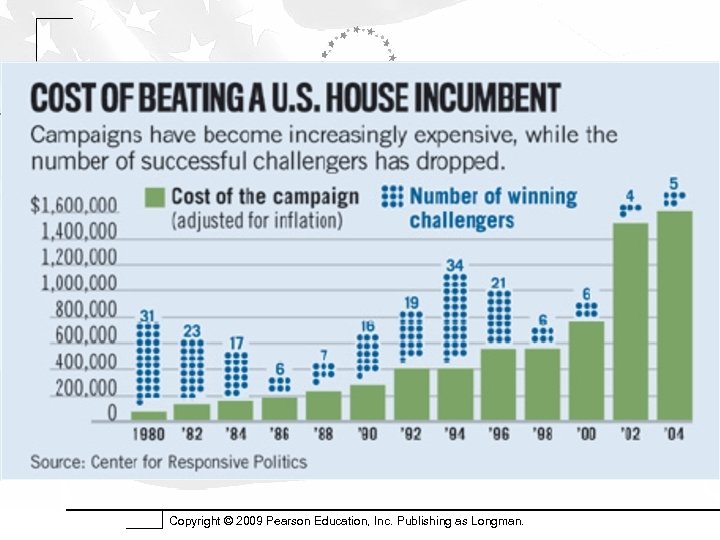
Copyright © 2009 Pearson Education, Inc. Publishing as Longman.
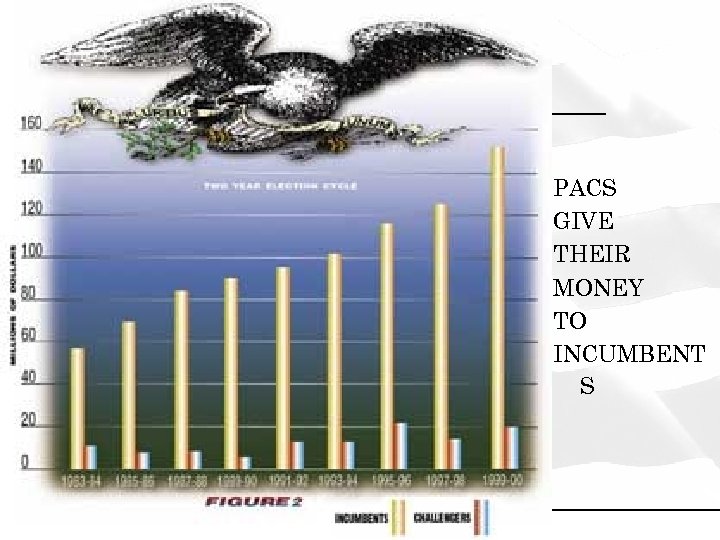
PACS GIVE THEIR MONEY TO INCUMBENT S Copyright © 2009 Pearson Education, Inc. Publishing as Longman.
Congressional Elections Open Seats –THERE IS NO INCUMBENT –Greater likelihood of competition –Most turnover occurs in open seats Copyright © 2009 Pearson Education, Inc. Publishing as Longman.
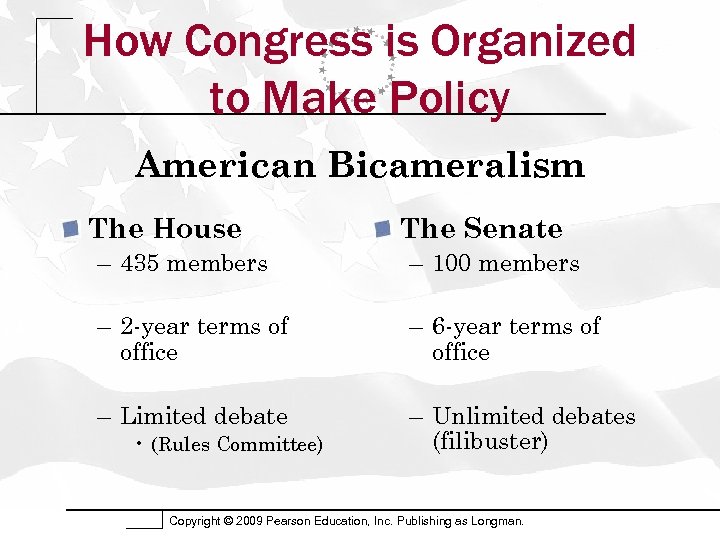
How Congress is Organized to Make Policy American Bicameralism The House The Senate – 435 members – 100 members – 2 -year terms of office – 6 -year terms of office – Limited debate – Unlimited debates (filibuster) • (Rules Committee) Copyright © 2009 Pearson Education, Inc. Publishing as Longman.
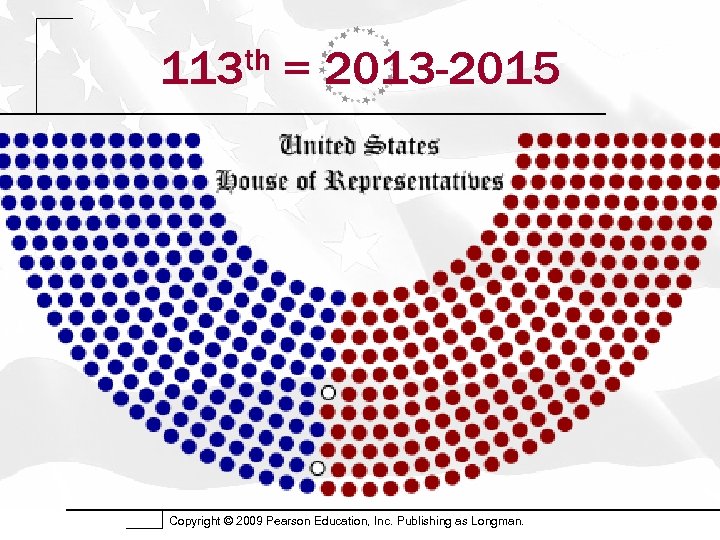
CH 11 SUM CONGRESS - A BICAMERAL LEGISLATURE 1 YEAR SESSION 2 YEAR TERM currently 113 th congress 2013 -2015 Copyright © 2009 Pearson Education, Inc. Publishing as Longman.
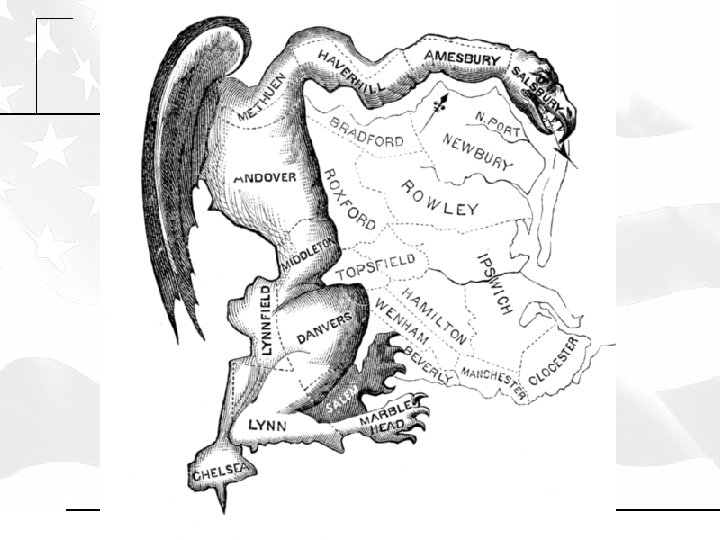
CH 11 SUM 435 MEMBERS STATE REP BASED ON POPULATION REAPPOINTIONMENT EVERY 10 YEARS ? ? ? GERRYMANDERING 2 YEAR TERM QUALIFICATIONS 25, 7 YEAR CIT. , ST. RESIDENT Copyright © 2009 Pearson Education, Inc. Publishing as Longman.
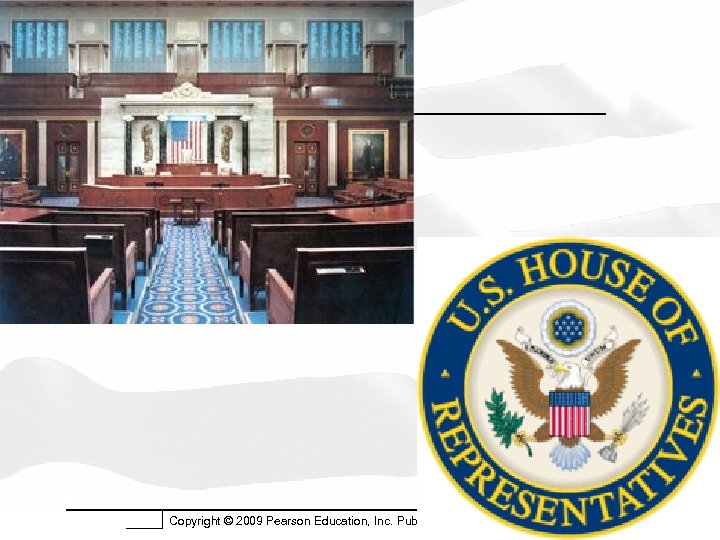
House of Representatives More tightly structured, governed by more rules. Rules Committee very important Party loyalty plays a more important role Copyright © 2009 Pearson Education, Inc. Publishing as Longman.
Copyright © 2009 Pearson Education, Inc. Publishing as Longman.
2012 Reapportionment (Based on 2010 Census) +3: Texas +2: Florida +1: Arizona, California, Georgia, Nevada, Utah -1: Illinois, Iowa, Louisiana, Massachusetts, Missouri, Pennsylvania -2: New York, Ohio Copyright © 2009 Pearson Education, Inc. Publishing as Longman.
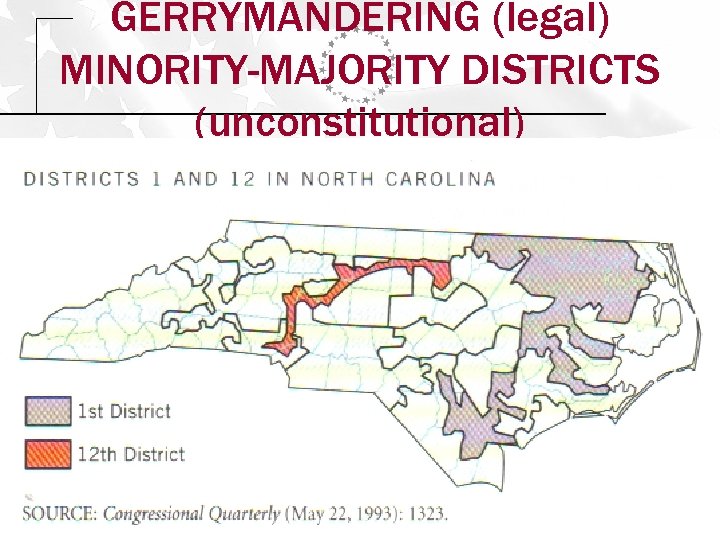
GERRYMANDERING (legal) MINORITY-MAJORITY DISTRICTS (unconstitutional) Copyright © 2009 Pearson Education, Inc. Publishing as Longman.
Copyright © 2009 Pearson Education, Inc. Publishing as Longman.
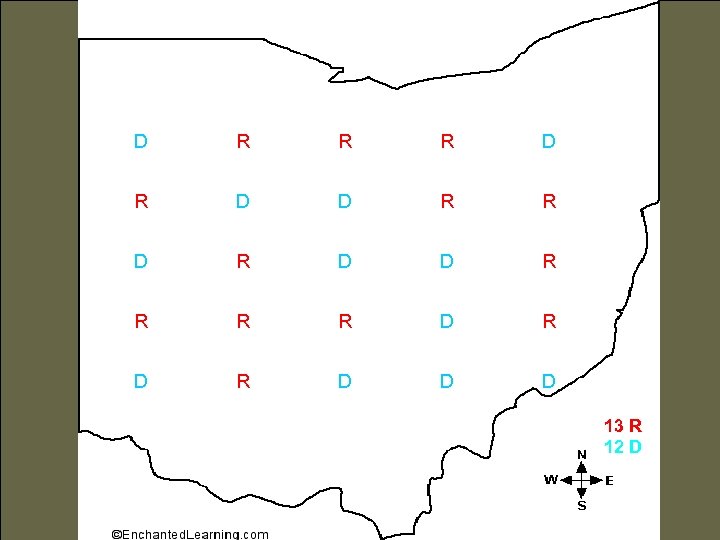
D R R R D R D D D 13 R 12 D Copyright © 2009 Pearson Education, Inc. Publishing as Longman.
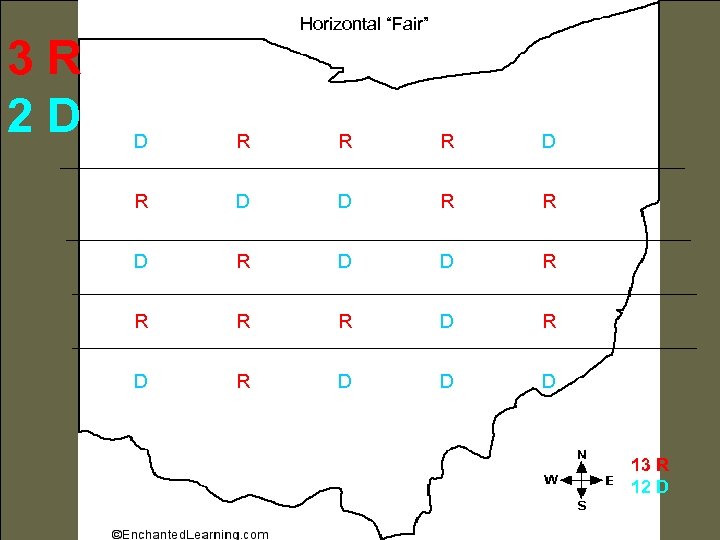
3 R 2 D Horizontal “Fair” D R R R D R D D D 13 R 12 D Copyright © 2009 Pearson Education, Inc. Publishing as Longman.
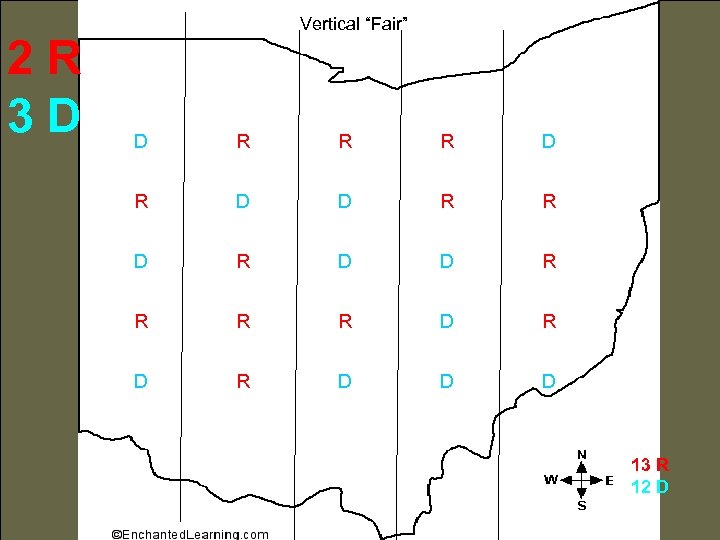
2 R 3 D Vertical “Fair” D R R R D R D D D 13 R 12 D Copyright © 2009 Pearson Education, Inc. Publishing as Longman.
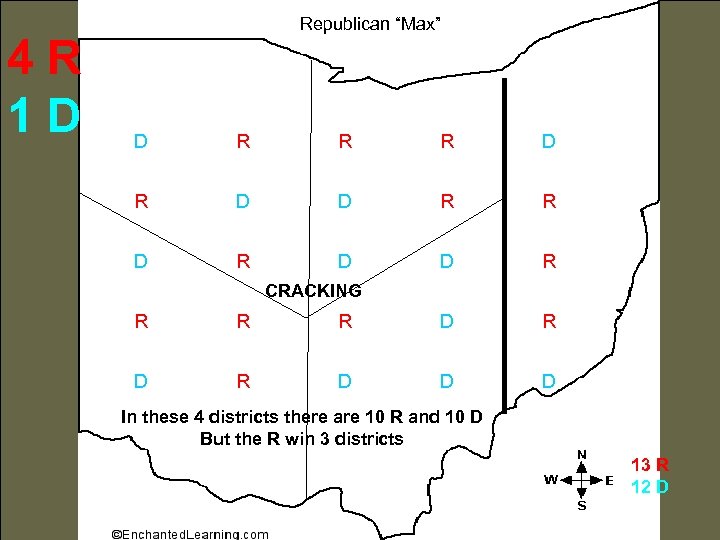
4 R 1 D Republican “Max” D R R R D R D D R CRACKING R R R D R D D D In these 4 districts there are 10 R and 10 D But the R win 3 districts 13 R 12 D Copyright © 2009 Pearson Education, Inc. Publishing as Longman.
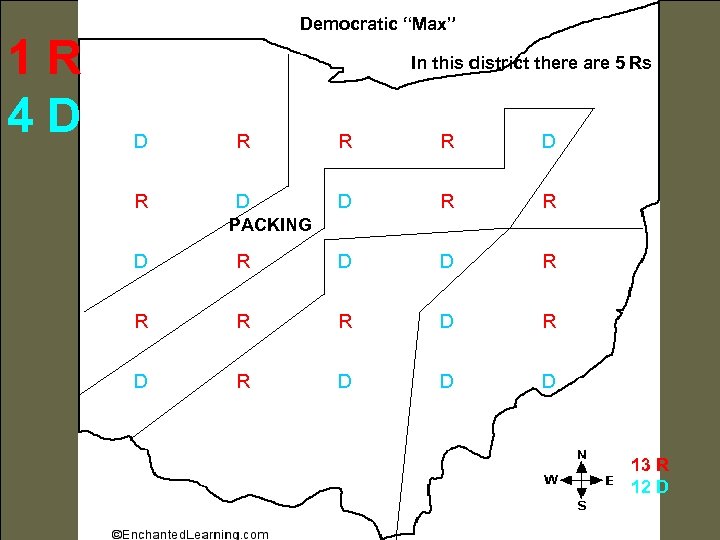
1 R 4 D Democratic “Max” In this district there are 5 Rs D R R R D D R R PACKING D R D D R R D R D D D 13 R 12 D Copyright © 2009 Pearson Education, Inc. Publishing as Longman.
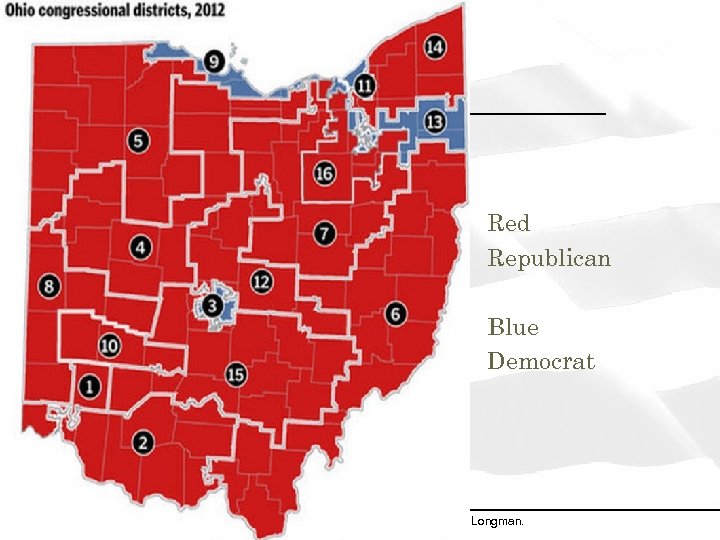
Red Republican Blue Democrat Copyright © 2009 Pearson Education, Inc. Publishing as Longman.
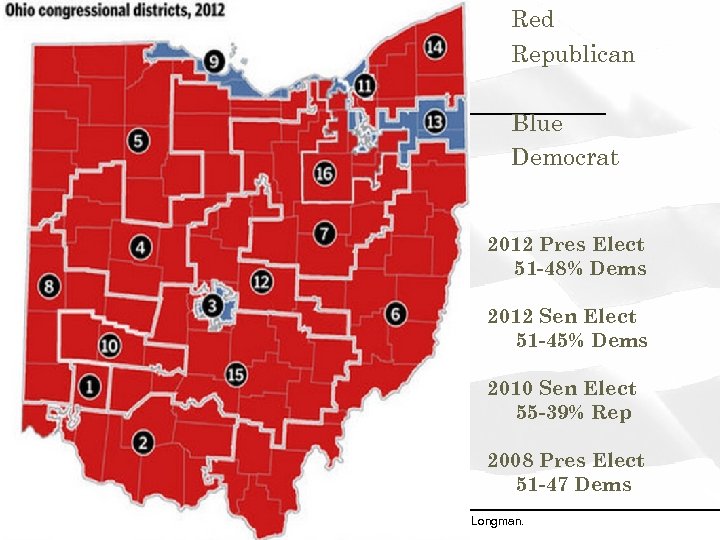
Red Republican Blue Democrat 2012 Pres Elect 51 -48% Dems 2012 Sen Elect 51 -45% Dems 2010 Sen Elect 55 -39% Rep 2008 Pres Elect 51 -47 Dems Copyright © 2009 Pearson Education, Inc. Publishing as Longman.
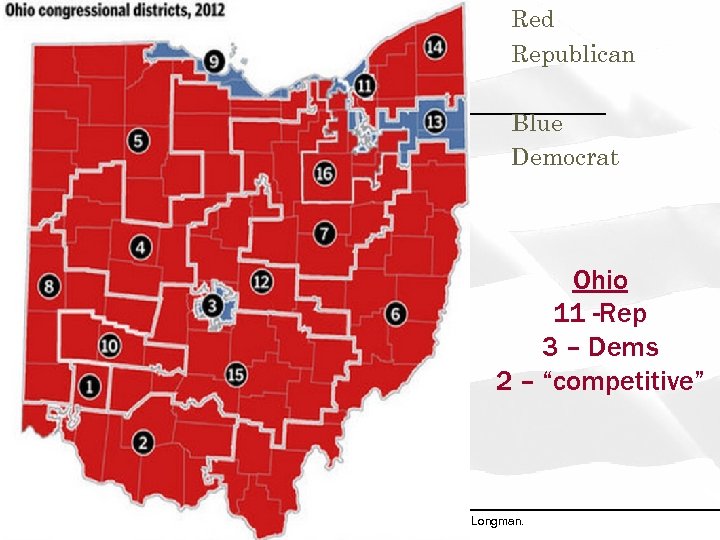
Red Republican Blue Democrat Ohio 11 -Rep 3 – Dems 2 – “competitive” Copyright © 2009 Pearson Education, Inc. Publishing as Longman.
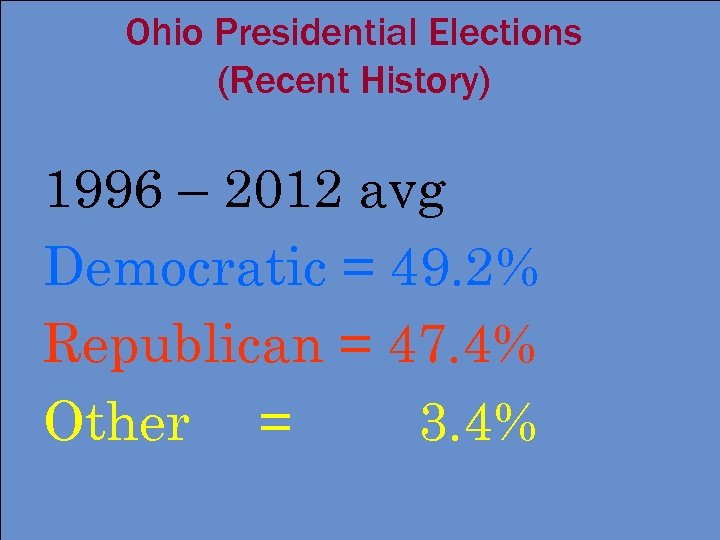
Ohio Presidential Elections (Recent History) 1996 – 2012 avg Democratic = 49. 2% Republican = 47. 4% Other = 3. 4% Copyright © 2009 Pearson Education, Inc. Publishing as Longman.
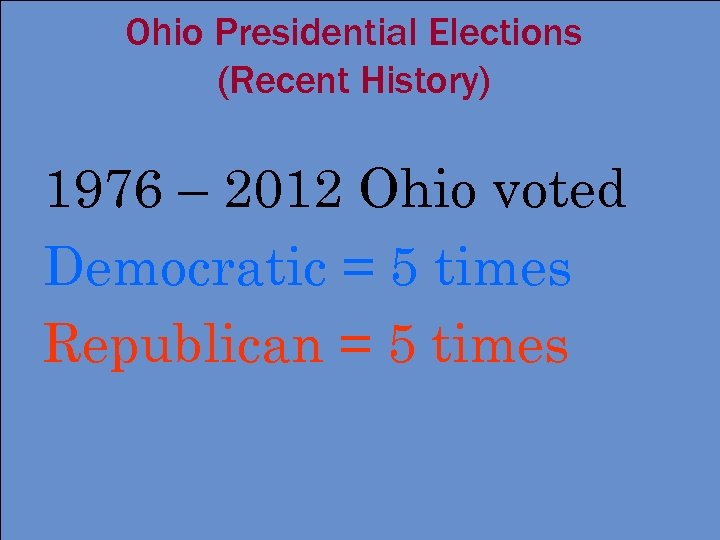
Ohio Presidential Elections (Recent History) 1976 – 2012 Ohio voted Democratic = 5 times Republican = 5 times Copyright © 2009 Pearson Education, Inc. Publishing as Longman.
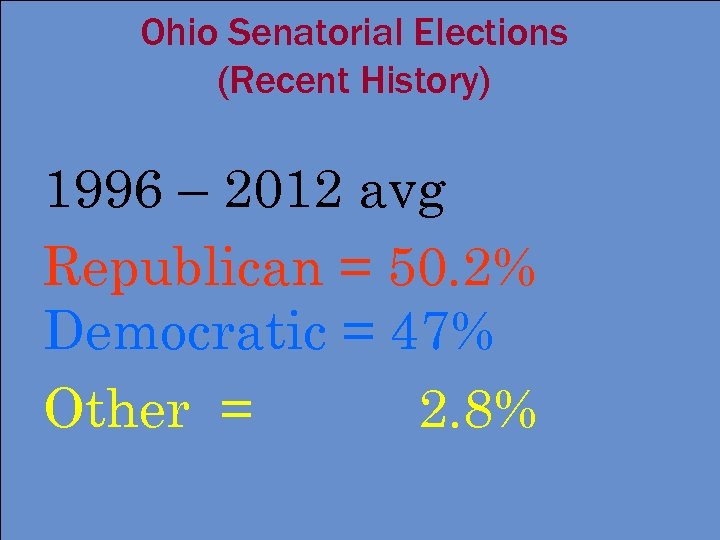
Ohio Senatorial Elections (Recent History) 1996 – 2012 avg Republican = 50. 2% Democratic = 47% Other = 2. 8% Copyright © 2009 Pearson Education, Inc. Publishing as Longman.
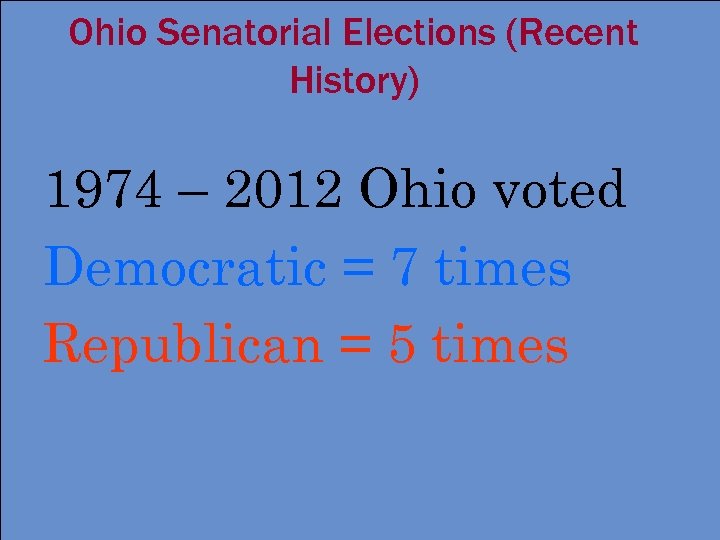
Ohio Senatorial Elections (Recent History) 1974 – 2012 Ohio voted Democratic = 7 times Republican = 5 times Copyright © 2009 Pearson Education, Inc. Publishing as Longman.
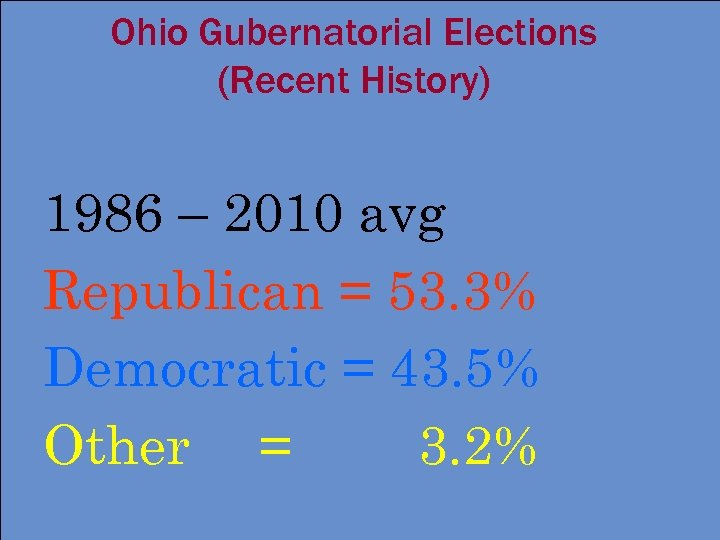
Ohio Gubernatorial Elections (Recent History) 1986 – 2010 avg Republican = 53. 3% Democratic = 43. 5% Other = 3. 2% Copyright © 2009 Pearson Education, Inc. Publishing as Longman.
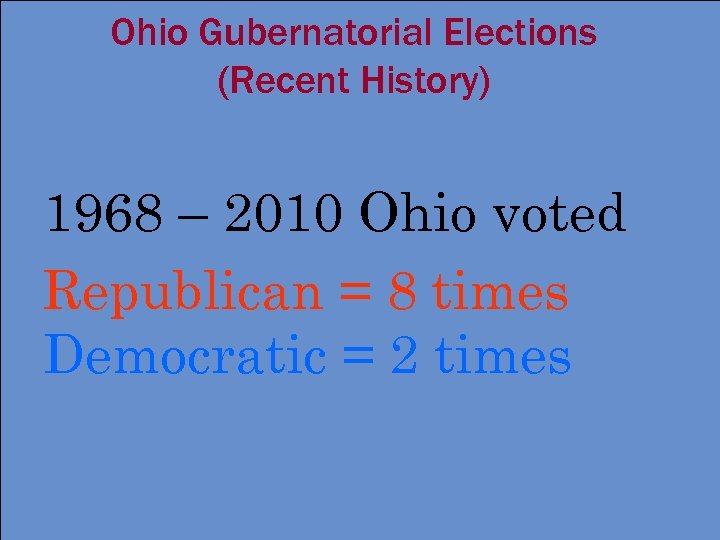
Ohio Gubernatorial Elections (Recent History) 1968 – 2010 Ohio voted Republican = 8 times Democratic = 2 times Copyright © 2009 Pearson Education, Inc. Publishing as Longman.
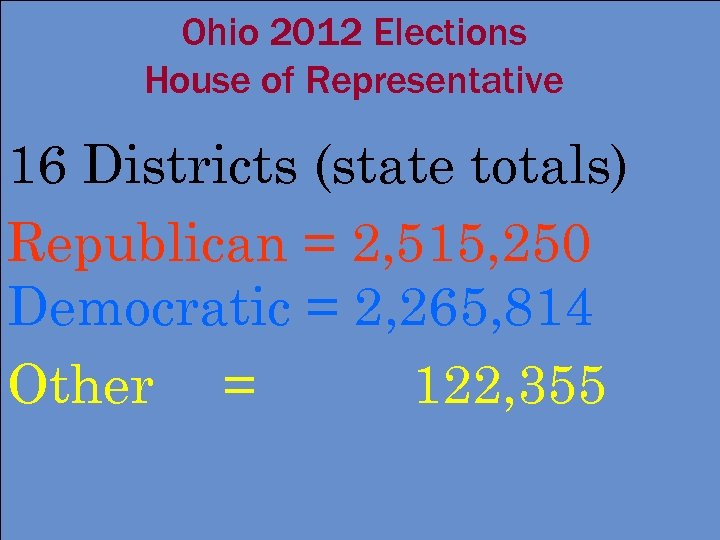
Ohio 2012 Elections House of Representative 16 Districts (state totals) Republican = 2, 515, 250 Democratic = 2, 265, 814 Other = 122, 355 Copyright © 2009 Pearson Education, Inc. Publishing as Longman.
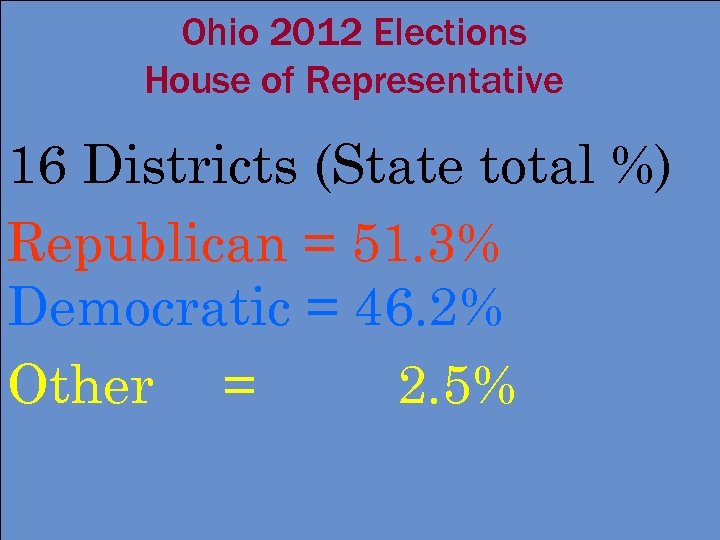
Ohio 2012 Elections House of Representative 16 Districts (State total %) Republican = 51. 3% Democratic = 46. 2% Other = 2. 5% Copyright © 2009 Pearson Education, Inc. Publishing as Longman.
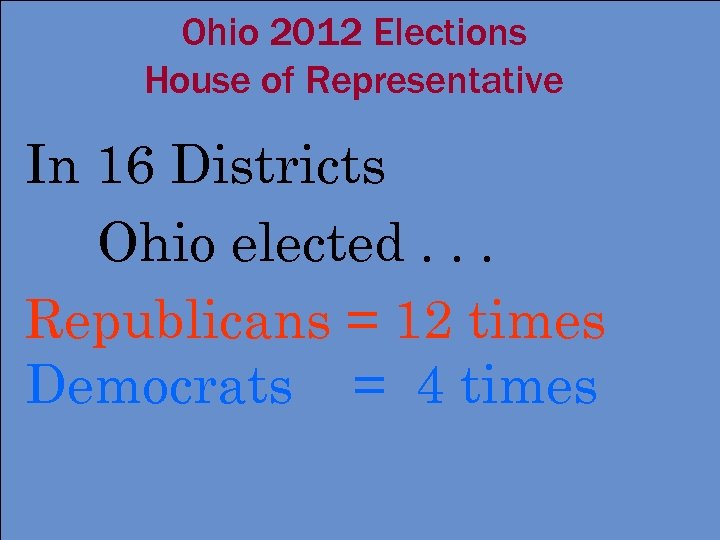
Ohio 2012 Elections House of Representative In 16 Districts Ohio elected. . . Republicans = 12 times Democrats = 4 times Copyright © 2009 Pearson Education, Inc. Publishing as Longman.
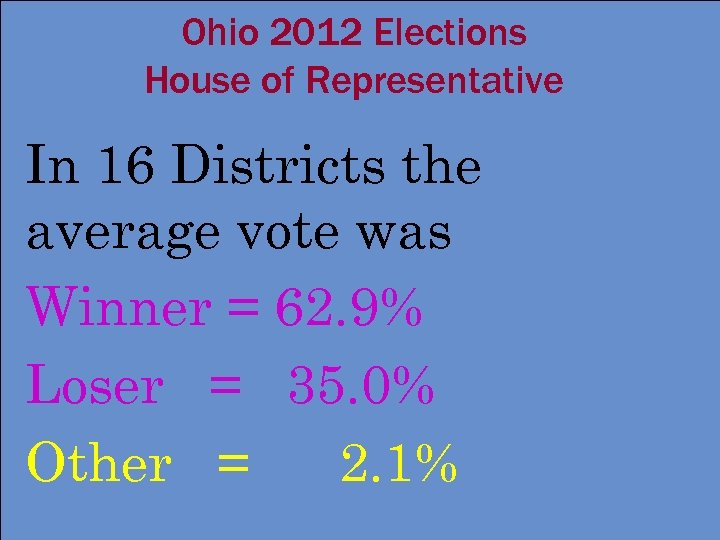
Ohio 2012 Elections House of Representative In 16 Districts the average vote was Winner = 62. 9% Loser = 35. 0% Other = 2. 1% Copyright © 2009 Pearson Education, Inc. Publishing as Longman.
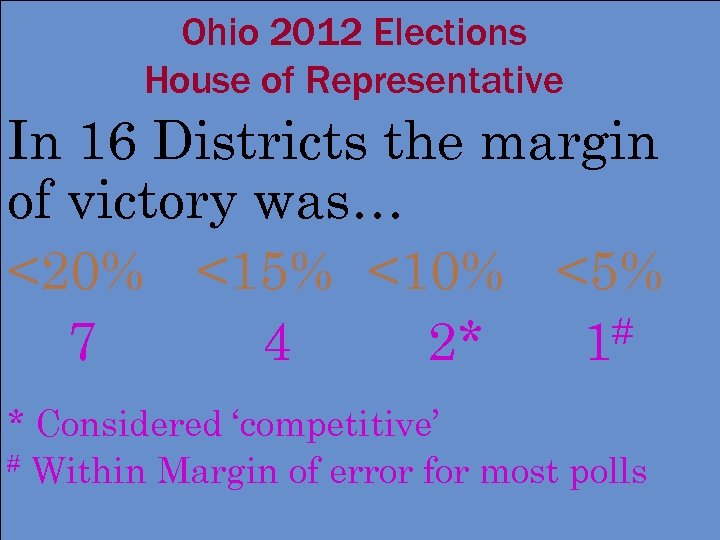
Ohio 2012 Elections House of Representative In 16 Districts the margin of victory was… <20% <15% <10% <5% # 7 4 2* 1 * Considered ‘competitive’ # Within Margin of error for most polls Copyright © 2009 Pearson Education, Inc. Publishing as Longman.
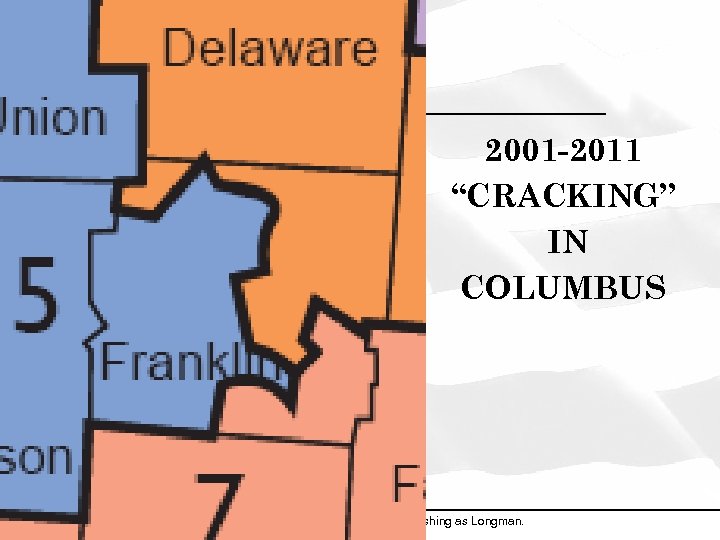
2001 -2011 “CRACKING” IN COLUMBUS Copyright © 2009 Pearson Education, Inc. Publishing as Longman.
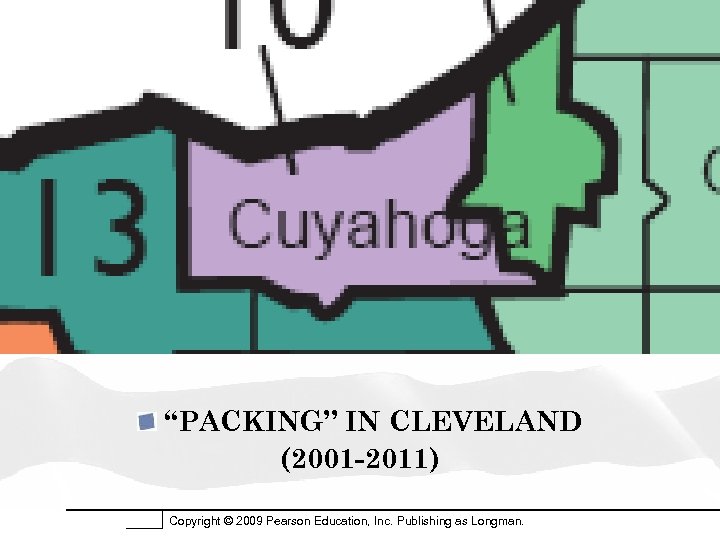
“PACKING” IN CLEVELAND (2001 -2011) Copyright © 2009 Pearson Education, Inc. Publishing as Longman.
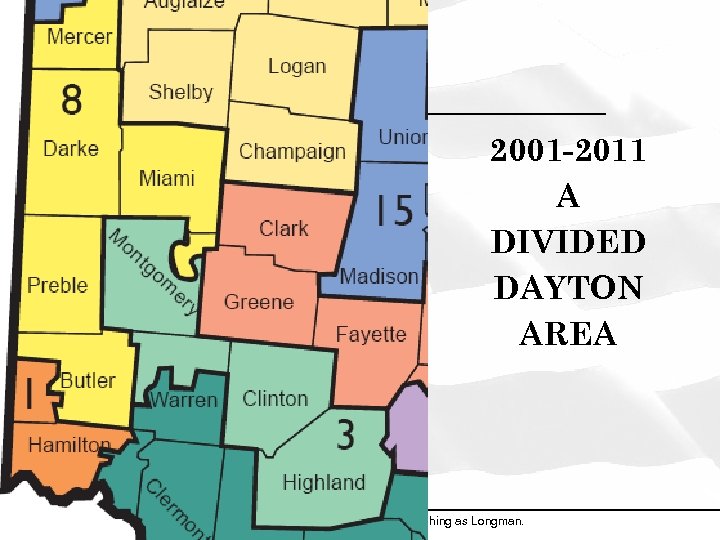
2001 -2011 A DIVIDED DAYTON AREA Copyright © 2009 Pearson Education, Inc. Publishing as Longman.
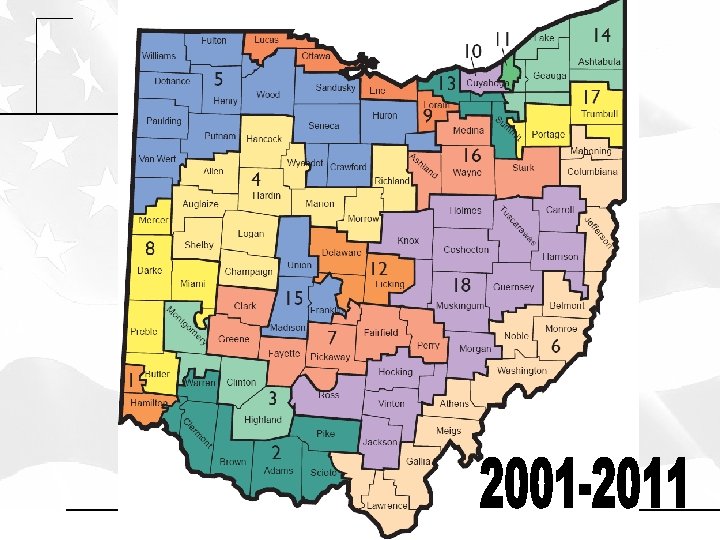
Copyright © 2009 Pearson Education, Inc. Publishing as Longman.
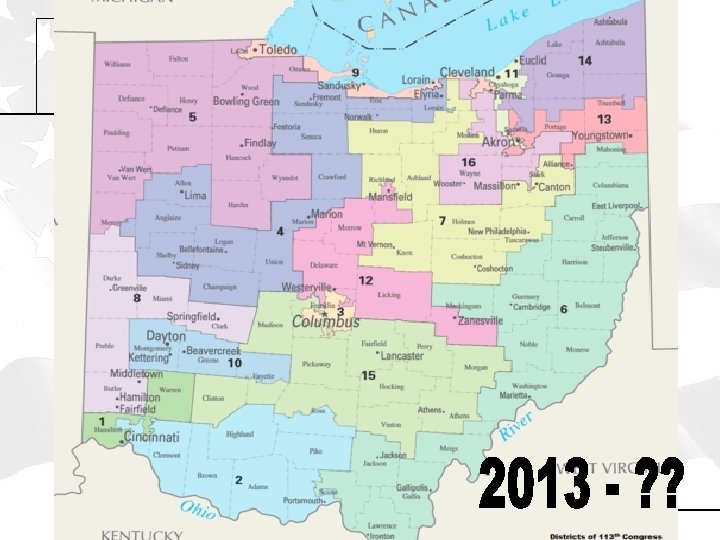
Copyright © 2009 Pearson Education, Inc. Publishing as Longman.
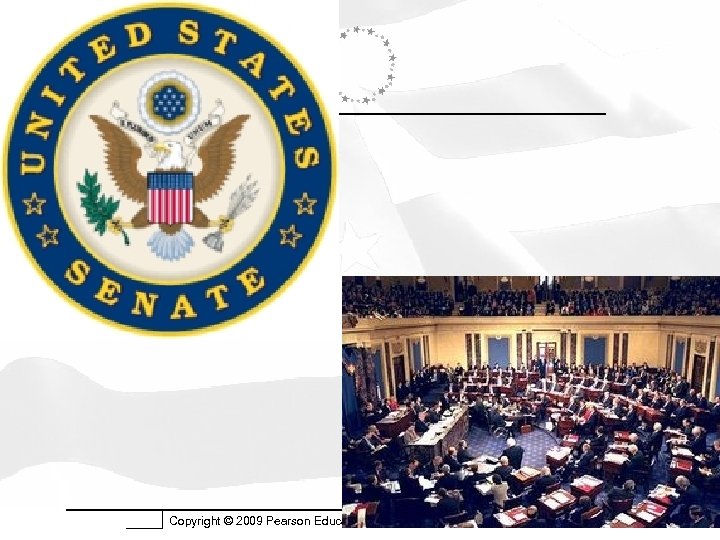
CH 11 SUM 100 MEMBERS 2 PER STATE 6 YEAR TERM DIRECT ELECTION 17 TH AMENDMENT (1913) QUALIFICATIONS 30, 9 YEAR CIT. , ST. RESIDENT Copyright © 2009 Pearson Education, Inc. Publishing as Longman.
Senate More informal than House More powerful than House Fewer rules than House Tradition and folkways are important Importance of rules such as filibuster and cloture Copyright © 2009 Pearson Education, Inc. Publishing as Longman.
Copyright © 2009 Pearson Education, Inc. Publishing as Longman.
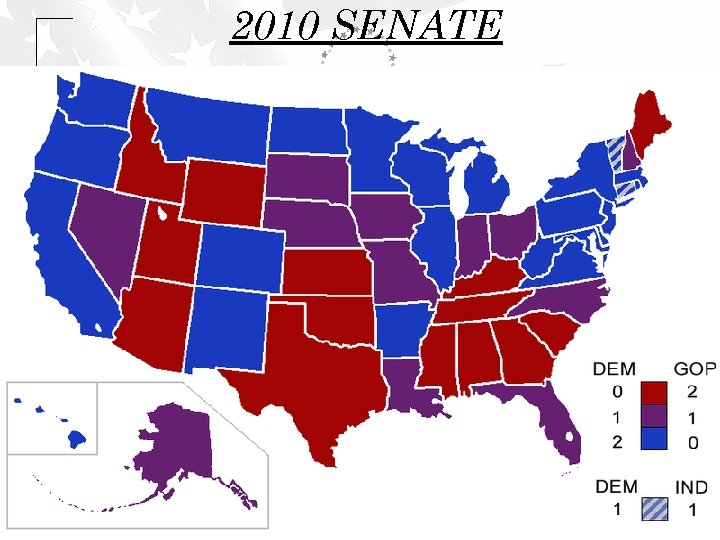
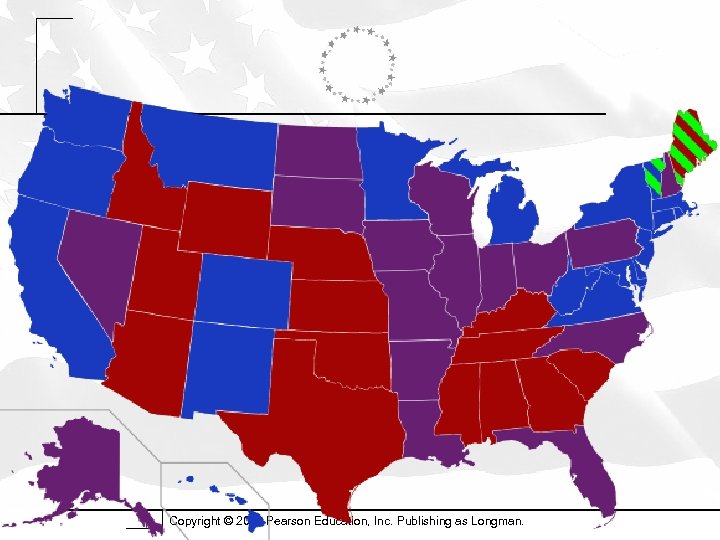
2010 SENATE Copyright © 2009 Pearson Education, Inc. Publishing as Longman.
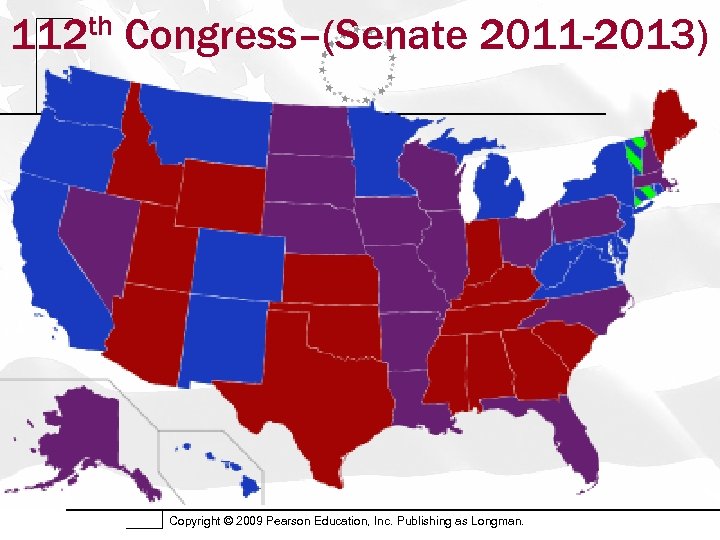
th 112 Congress–(Senate 2011 -2013) Copyright © 2009 Pearson Education, Inc. Publishing as Longman.
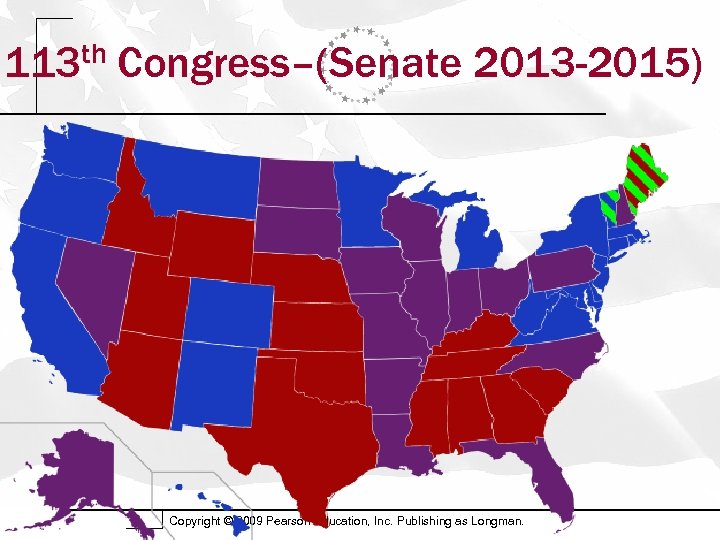
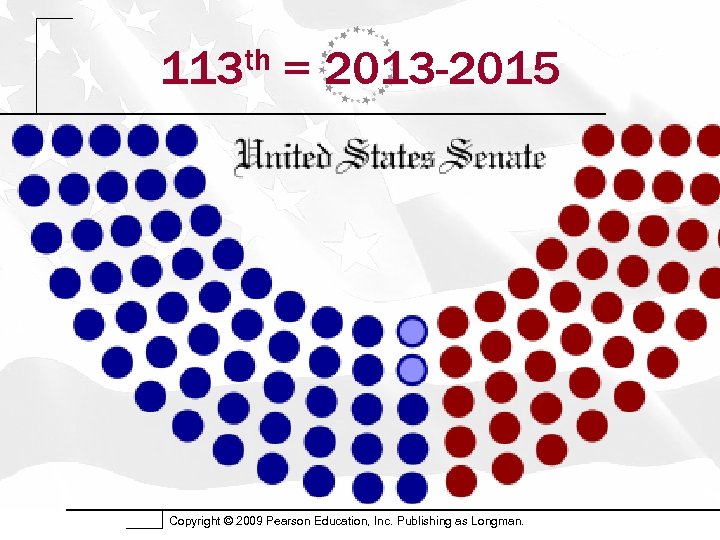
th 113 Congress–(Senate 2013 -2015) Copyright © 2009 Pearson Education, Inc. Publishing as Longman.
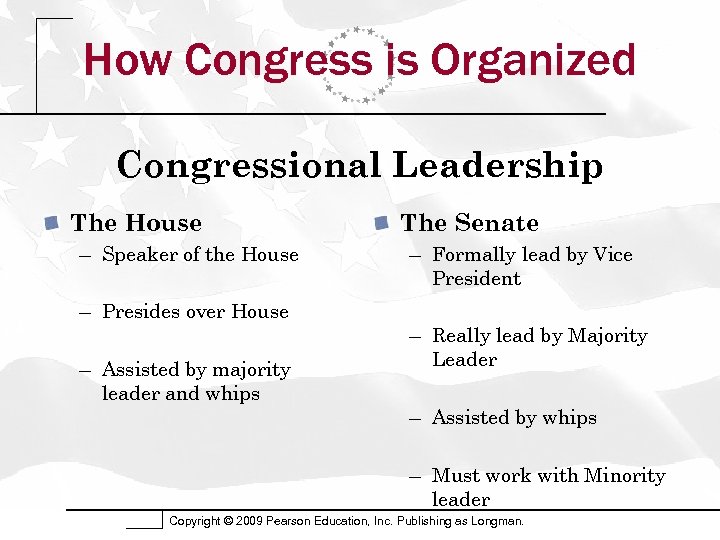
How Congress is Organized Congressional Leadership The House – Speaker of the House – Presides over House – Assisted by majority leader and whips The Senate – Formally lead by Vice President – Really lead by Majority Leader – Assisted by whips – Must work with Minority leader Copyright © 2009 Pearson Education, Inc. Publishing as Longman.
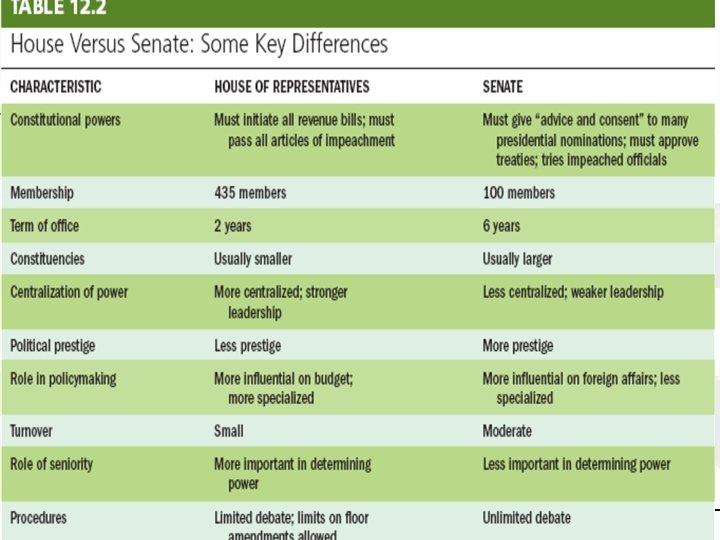
How Congress is Organized to Make Policy Copyright © 2009 Pearson Education, Inc. Publishing as Longman.
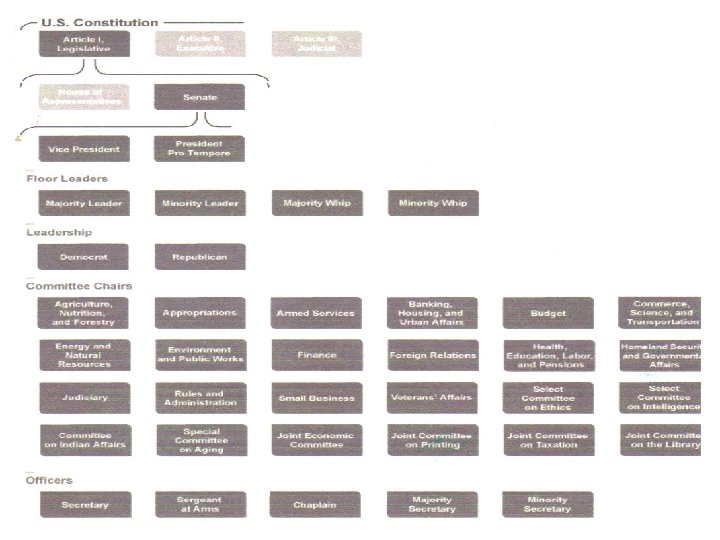
Copyright © 2009 Pearson Education, Inc. Publishing as Longman.
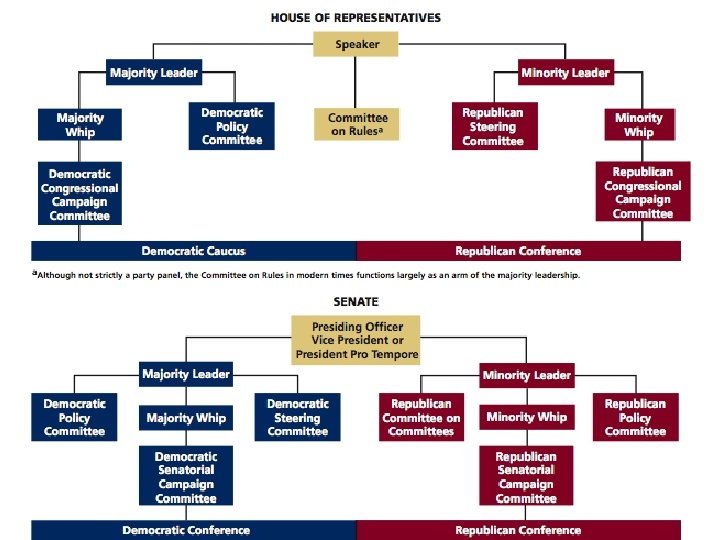
Figure 7. 1 - Organization of Congress Copyright © 2009 Pearson Education, Inc. Publishing as Longman. Back
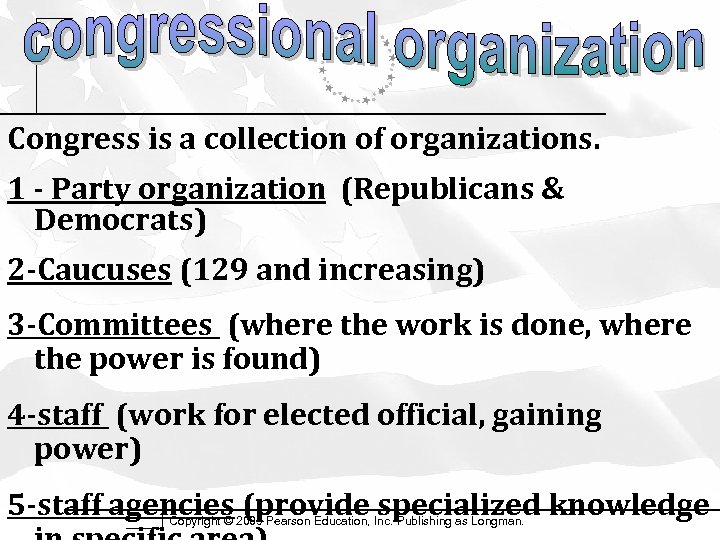
Congress is a collection of organizations. 1 - Party organization (Republicans & Democrats) 2 -Caucuses (129 and increasing) 3 -Committees (where the work is done, where the power is found) 4 -staff (work for elected official, gaining power) 5 -staff agencies (provide specialized knowledge Copyright © 2009 Pearson Education, Inc. Publishing as Longman.
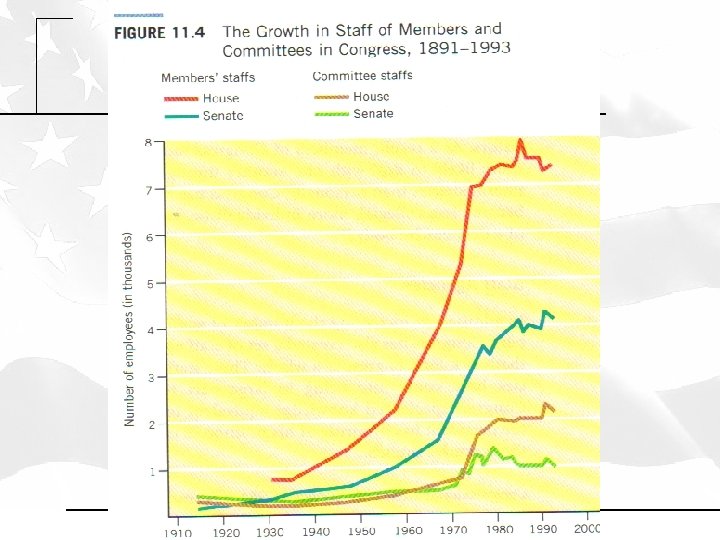
Copyright © 2009 Pearson Education, Inc. Publishing as Longman.
CH 12 SUM COMMITTEE SYSTEM COMMITTEES DO THE MOST WORK CHAIRS HAVE LOTS OF POWER Copyright © 2009 Pearson Education, Inc. Publishing as Longman.
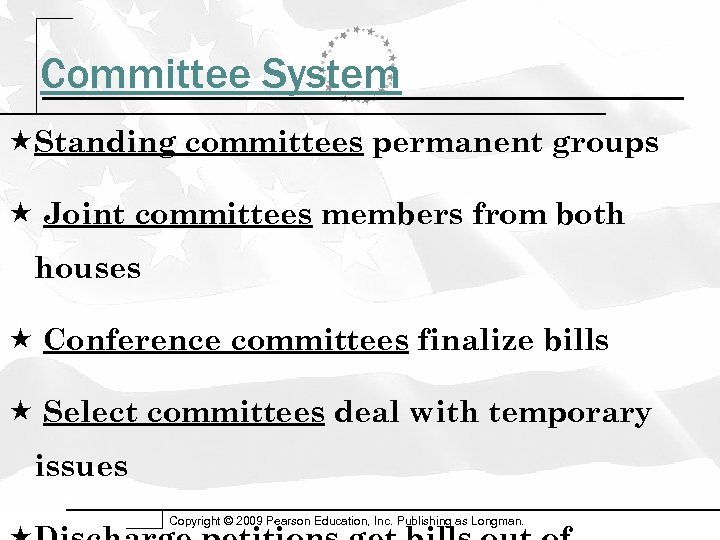
Committee System Standing committees permanent groups Joint committees members from both houses Conference committees finalize bills Select committees deal with temporary issues Copyright © 2009 Pearson Education, Inc. Publishing as Longman.
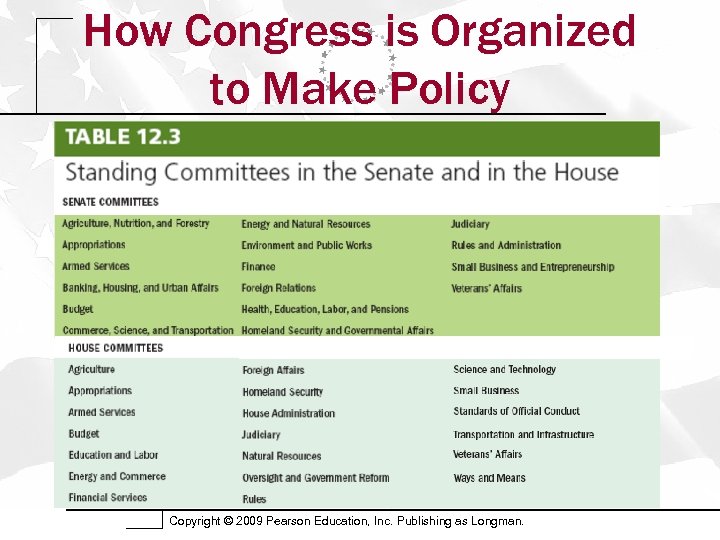
How Congress is Organized to Make Policy Copyright © 2009 Pearson Education, Inc. Publishing as Longman.
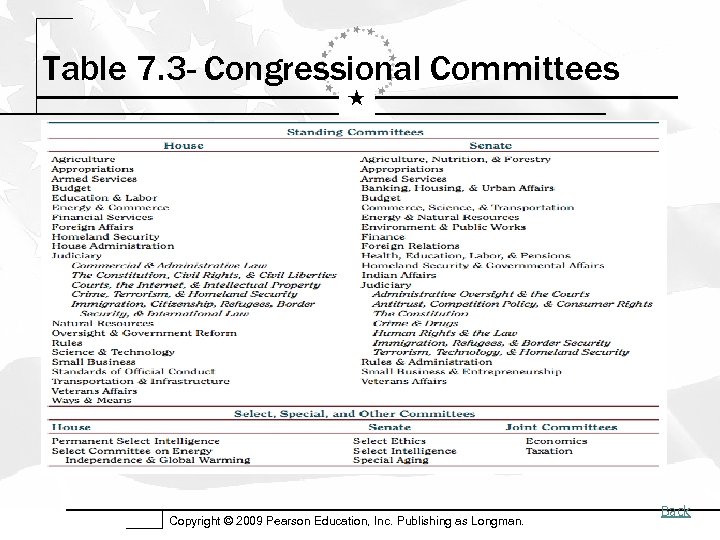
Table 7. 3 - Congressional Committees Copyright © 2009 Pearson Education, Inc. Publishing as Longman. Back
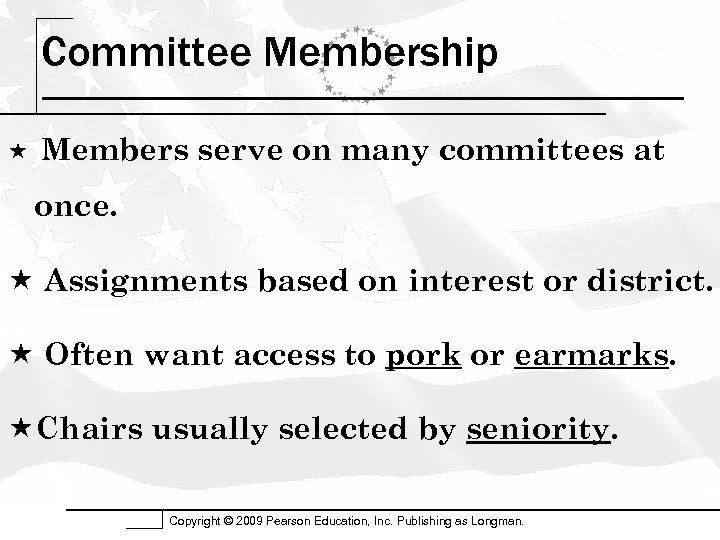
Committee Membership Members serve on many committees at once. Assignments based on interest or district. Often want access to pork or earmarks. Chairs usually selected by seniority. Copyright © 2009 Pearson Education, Inc. Publishing as Longman.
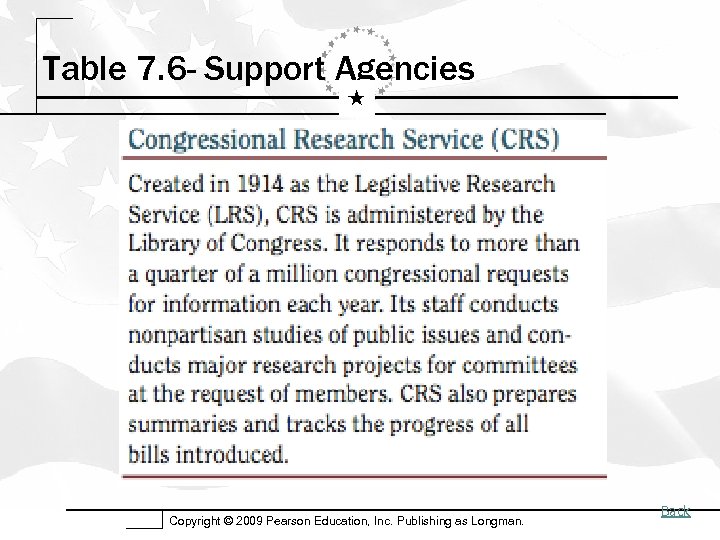
Table 7. 6 - Support Agencies Copyright © 2009 Pearson Education, Inc. Publishing as Longman. Back
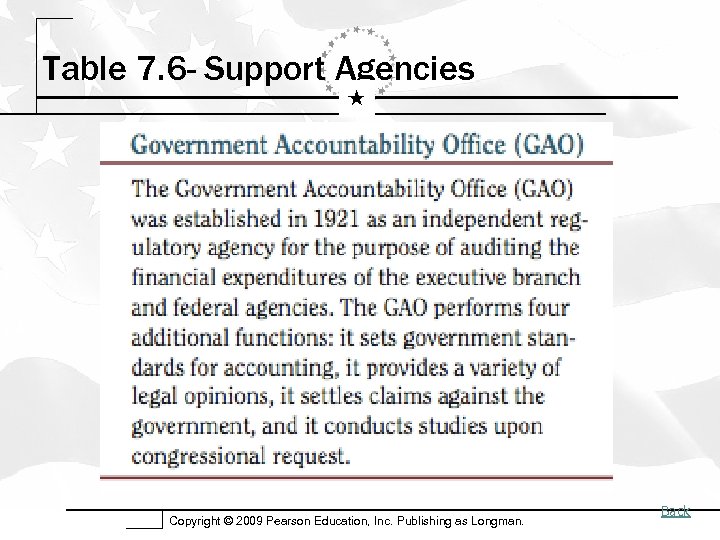
Table 7. 6 - Support Agencies Copyright © 2009 Pearson Education, Inc. Publishing as Longman. Back
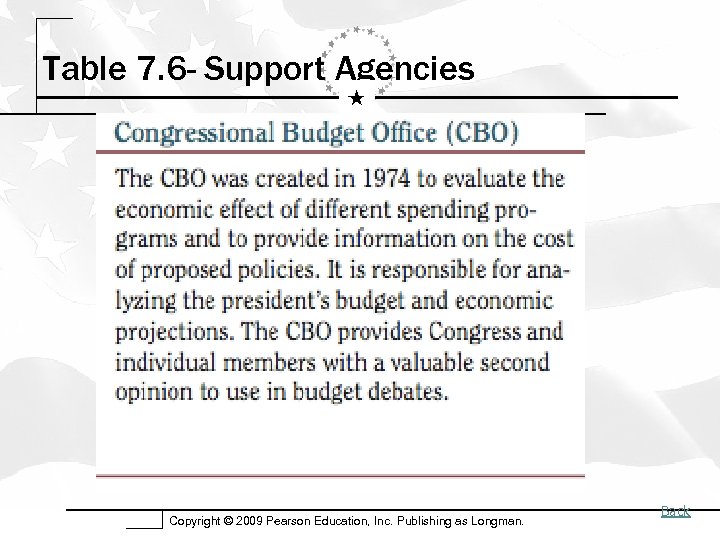
Table 7. 6 - Support Agencies Copyright © 2009 Pearson Education, Inc. Publishing as Longman. Back

Copyright © 2009 Pearson Education, Inc. Publishing as Longman.
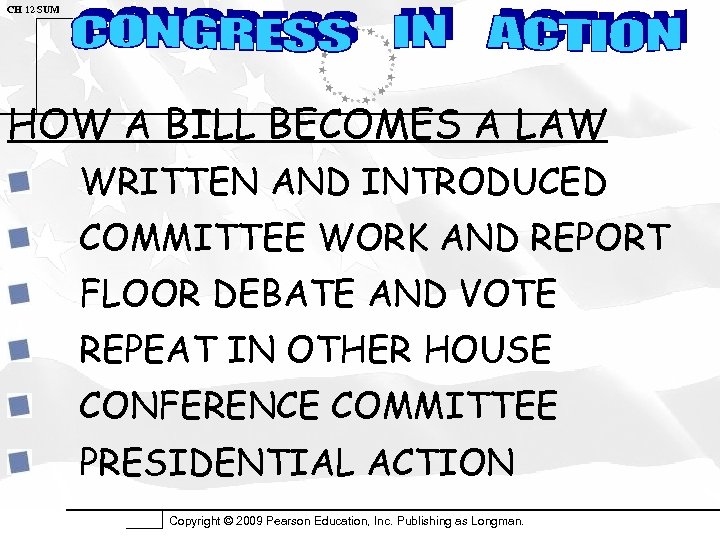
CH 12 SUM HOW A BILL BECOMES A LAW WRITTEN AND INTRODUCED COMMITTEE WORK AND REPORT FLOOR DEBATE AND VOTE REPEAT IN OTHER HOUSE CONFERENCE COMMITTEE PRESIDENTIAL ACTION Copyright © 2009 Pearson Education, Inc. Publishing as Longman.
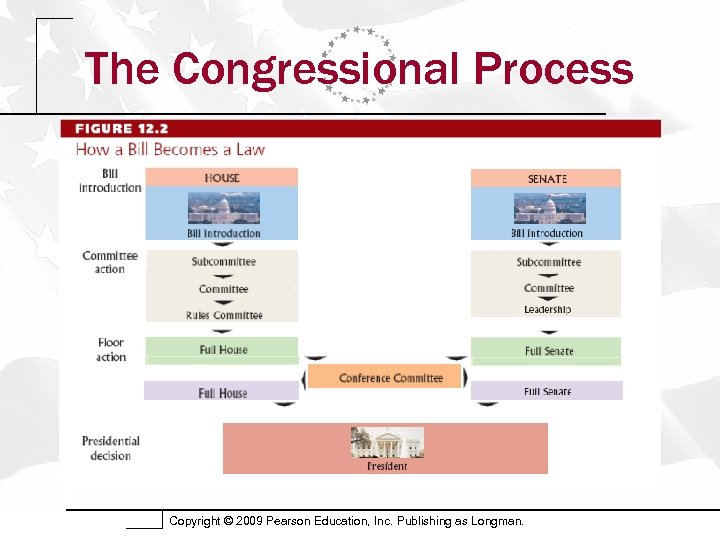
The Congressional Process Copyright © 2009 Pearson Education, Inc. Publishing as Longman.
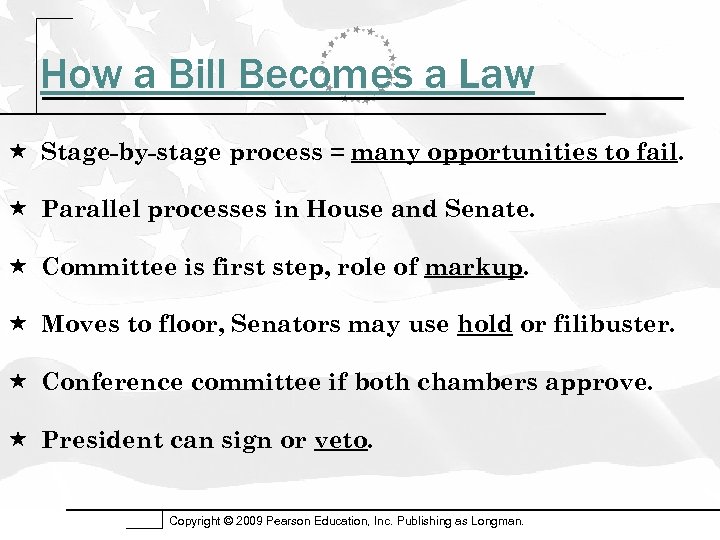
How a Bill Becomes a Law Stage-by-stage process = many opportunities to fail. Parallel processes in House and Senate. Committee is first step, role of markup. Moves to floor, Senators may use hold or filibuster. Conference committee if both chambers approve. President can sign or veto. Copyright © 2009 Pearson Education, Inc. Publishing as Longman.
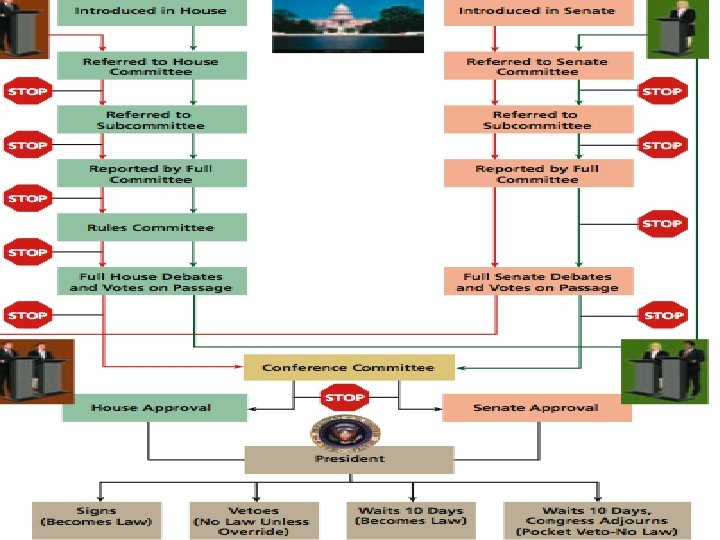
Figure 7. 4 - How a Bill Becomes a Law Copyright © 2009 Pearson Education, Inc. Publishing as Longman. Back
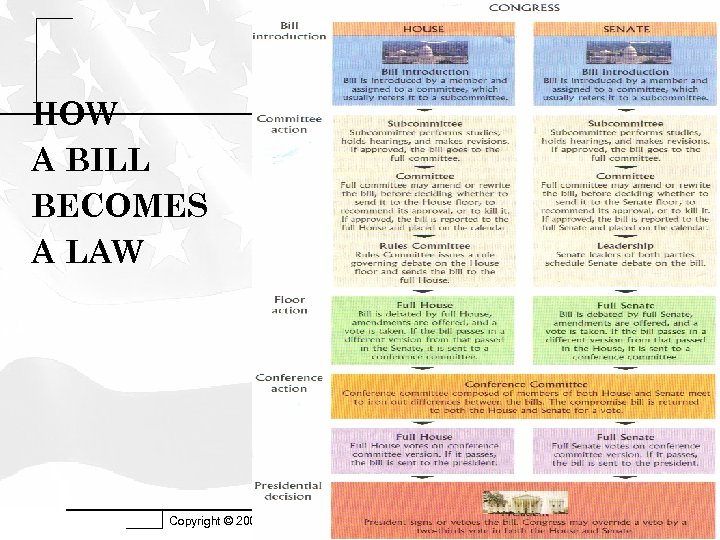
HOW A BILL BECOMES A LAW Copyright © 2009 Pearson Education, Inc. Publishing as Longman.
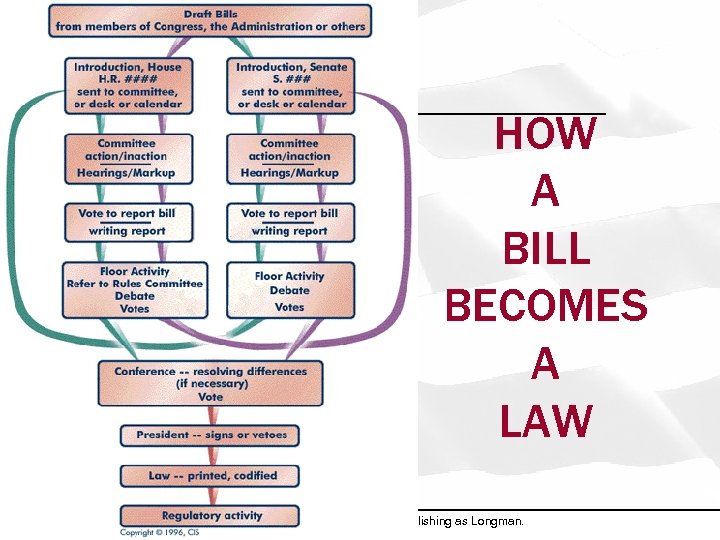
HOW A BILL BECOMES A LAW Copyright © 2009 Pearson Education, Inc. Publishing as Longman.
Copyright © 2009 Pearson Education, Inc. Publishing as Longman.
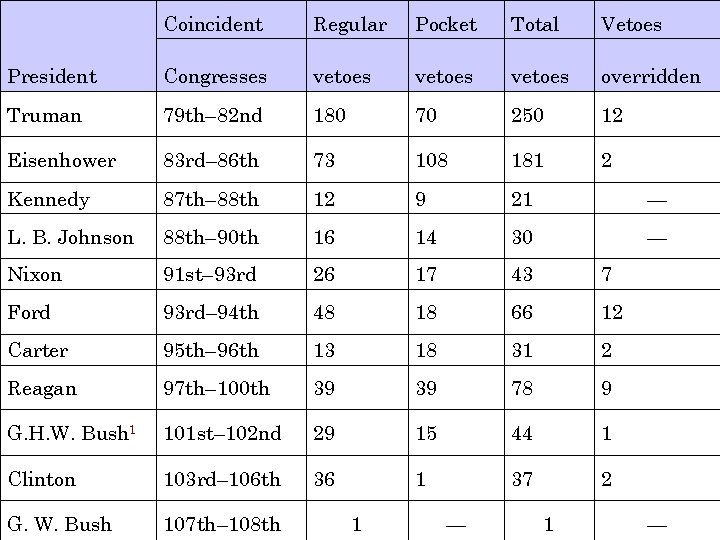
Coincident Regular Pocket Total Vetoes President Congresses vetoes overridden Truman 79 th– 82 nd 180 70 250 12 Eisenhower 83 rd– 86 th 73 108 181 2 Kennedy 87 th– 88 th 12 9 21 — L. B. Johnson 88 th– 90 th 16 14 30 — Nixon 91 st– 93 rd 26 17 43 7 Ford 93 rd– 94 th 48 18 66 12 Carter 95 th– 96 th 13 18 31 2 Reagan 97 th– 100 th 39 39 78 9 G. H. W. Bush 1 101 st– 102 nd 29 15 44 1 Clinton 103 rd– 106 th 36 1 37 2 G. W. Bush Copyright © 2009 Pearson Education, Inc. Publishing as Longman. 107 th– 108 th 1 —
![Regular vetoes President Pocket vetoes Total Vetoes % overridden[2] vetoes overridden % vetoes overridden](https://present5.com/presentation/369f26322e126e1ca58e3c2bec0c73d5/image-111.jpg "Regular vetoes President Pocket vetoes Total Vetoes % overridden[2] vetoes overridden % vetoes overridden")
Regular vetoes President Pocket vetoes Total Vetoes % overridden[2] vetoes overridden % vetoes overridden Carter 13 18 31 2 6% 15% Reagan 39 39 78 9 12% 23% H. W. Bush[3][4] 29 15 44 1 2% 2% Clinton 36 1 37 2 5% 6% W. Bush 11 1 12 4 33% 36% Obama Copyright © 2009 Pearson Education, Inc. Publishing as Longman. 2 0 0% 0%
The Congressional Process Presidents and Congress: Partners & Protagonists Congress & POTUS don’t always agree – Congress passes laws – Congress appropriates money Presidents attempt to persuade Congress Copyright © 2009 Pearson Education, Inc. Publishing as Longman.
Congress and the Executive President has become increasingly powerful. Powers of Congress over POTUS Oversight hearings Congress confirms presidential appointments. Congress can impeach the president. War Powers Act should give Congress role in war Copyright © 2009 Pearson Education, Inc. Publishing as Longman.
Congress and the Judiciary Courts can overturn laws if unconstitutional. Congress reviews judicial nominees. Role of senatorial courtesy. Copyright © 2009 Pearson Education, Inc. Publishing as Longman.
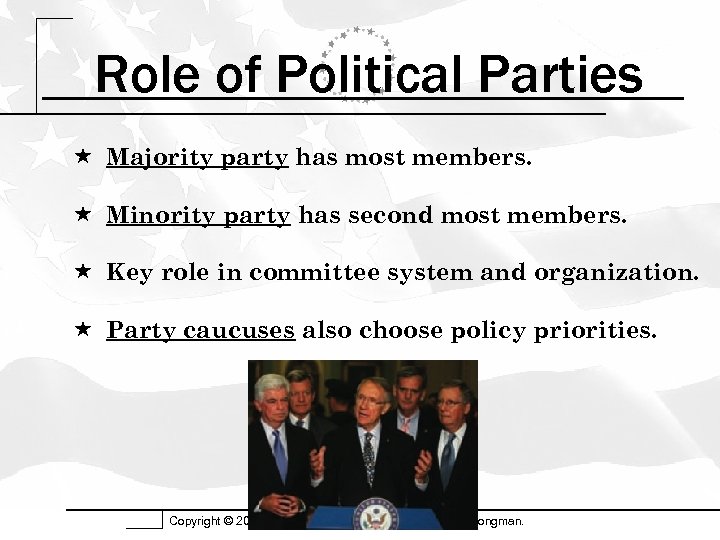
Role of Political Parties Majority party has most members. Minority party has second most members. Key role in committee system and organization. Party caucuses also choose policy priorities. Copyright © 2009 Pearson Education, Inc. Publishing as Longman.
Copyright © 2009 Pearson Education, Inc. Publishing as Longman.
Copyright © 2009 Pearson Education, Inc. Publishing as Longman.
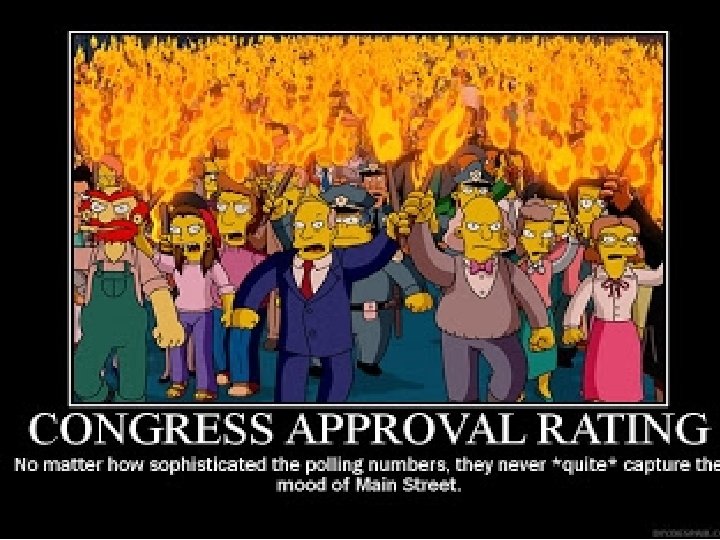
Congressional Approval Copyright © 2009 Pearson Education, Inc. Publishing as Longman. Back
Copyright © 2009 Pearson Education, Inc. Publishing as Longman.
Copyright © 2009 Pearson Education, Inc. Publishing as Longman.
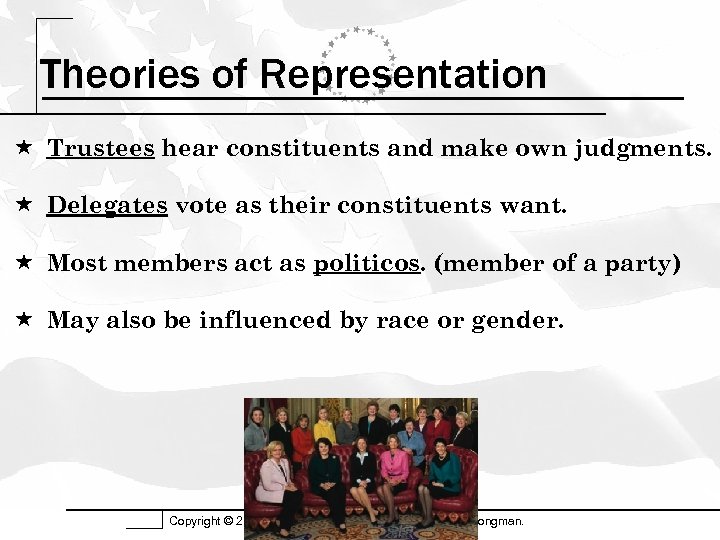
Theories of Representation Trustees hear constituents and make own judgments. Delegates vote as their constituents want. Most members act as politicos. (member of a party) May also be influenced by race or gender. Copyright © 2009 Pearson Education, Inc. Publishing as Longman.
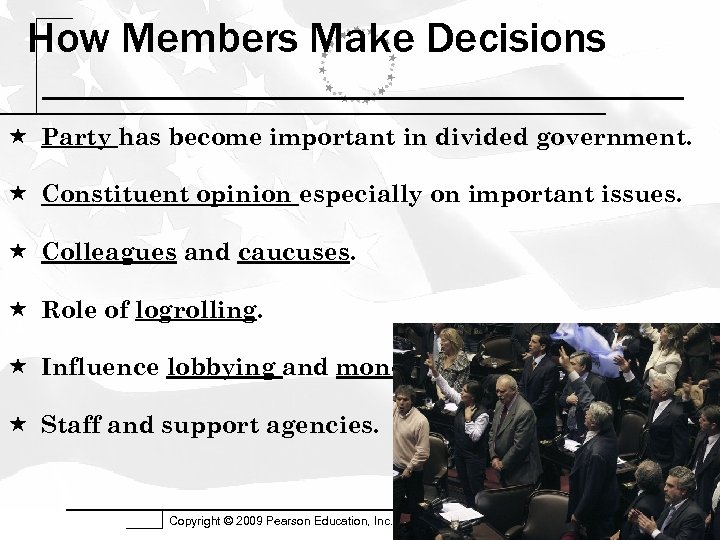
How Members Make Decisions Party has become important in divided government. Constituent opinion especially on important issues. Colleagues and caucuses. Role of logrolling. Influence lobbying and money. Staff and support agencies. Copyright © 2009 Pearson Education, Inc. Publishing as Longman.
Copyright © 2009 Pearson Education, Inc. Publishing as Longman.
Understanding Congress and the Scope of Government – The more policies Congress works on, the more ways it can serve their constituencies. – The more programs that get created, the bigger the government gets. – Contradiction in public opinion: everybody wants government programs cut, just not their programs Copyright © 2009 Pearson Education, Inc. Publishing as Longman.
Summary Members of Congress make policy. Congress is unlike America but getting more diverse. Incumbency is a sizeable advantage. Congress is structurally complex. Presidents, parties, constituencies, and lobbyists all affect legislators’ choices. Copyright © 2009 Pearson Education, Inc. Publishing as Longman.

CH 23 - AN ERA OF SOCIAL CHANGE 126 3/19/2018 Copyright © 2009 Pearson Education, Inc. Publishing as Longman.
Copyright © 2009 Pearson Education, Inc. Publishing as Longman.
CONGRESS OBJECTIVES 1 -WHAT ROLE DID THE FRAMERS EXPECT CONGRESS TO PLAY 2 -EXPLAIN THE DIFFERENCES BETWEEN CONGRESS AND PARLIAMENT. 3 -PINPOINT THE SIGNIFICANT ERAS IN THE EVOLUTION OF CONGRESS. 4 -DESCRIBE THE CHARACTERISTICS OF MEMBERS OF CONGRESS AND OUTLINE THE PROCESS FOR ELECTING MEMBERS OF CONGRESS. Copyright © 2009 Pearson Education, Inc. Publishing as Longman.
CONGRESS OBJECTIVES 4 -DESCRIBE THE CHARACTERISTICS OF MEMBERS OF CONGRESS AND OUTLINE THE PROCESS FOR ELECTING MEMBERS OF CONGRESS. 5 -IDENTIFY THE FUNCTIONS THAT PARTY AFFILIATION PLAYS IN THE ORGANIZATION OF CONGRESS. 6 - IDENTIFY FACTORS THAT HELP EXPLAIN WHY A MEMBER OF CONGRESS VOTES AS HE OR SHE DOES. Copyright © 2009 Pearson Education, Inc. Publishing as Longman.
CONGRESS IMPORTANT TERMS-SET 1 BICAMERAL LEGISLATURE CLOSED RULE CLOTURE RULE CONGRESSIONAL CAUCUS CONSERVATIVE COALITION DISCHARGE PETITION FILIBUSTER GERRYMANDERING HOUSE RULES COMMITTEE Copyright © 2009 Pearson Education, Inc. Publishing as Longman.
CONGRESS IMPORTANT TERMS-SET 1 MARGINAL DISTRICTS MARKUP MULTIPLE REFERRAL PARLIAMENT PARTY CAUCUS PARTY VOTE PARTY WHIP RIDERS SENIORITY SEQUENTIAL REFERRAL SOPHOMORE SURGE Copyright © 2009 Pearson Education, Inc. Publishing as Longman.
CONGRESS IMPORTANT TERMS-SET 2 CAUCUS (CONGRESSIONAL) CHRISTMAS TREE BILL CONCURRENT RESOLUTION CONFERENCE COMMITTEES DOUBLE TRACKING FRANKING PRIVILEGE HONORARIA JOINT COMMITTEE JOINT RESOLUTION Copyright © 2009 Pearson Education, Inc. Publishing as Longman.
CONGRESS IMPORTANT TERMS-SET 2 MAJORITY LEADER MAJORITY-MINORITY DISTRICTS MINORITY LEADER OPEN RULE PORK-BARREL LEGISLATION PRIVATE BILL PUBLIC BILL QUORUM CALL SELECT COMMITTEES STANDING COMMITTEES TELLER VOTE VOICE VOTE Copyright © 2009 Pearson Education, Inc. Publishing as Longman.
CONGRESS IMPORTANT TERMS-SET 2 RESTRICTIVE RULE RIDER ROLL-CALL VOTE RULES COMMITTEE SELECT COMMITTEE SENATORIAL COURTESY SEVENTEENTH AMENDMENT SIMPLE RESOLUTION SOPHOMORE SURGE SPEAKER OF THE HOUSE STANDING COMMITTEES SUBSTANTIVE REPRESENTATION TELLER VOTE VOICE VOTE WHIP Copyright © 2009 Pearson Education, Inc. Publishing as Longman.
CONGRESS QUESTIONS 1 -DOES THE PREPONDERANCE OF A PARTICULAR DEMOGRAPHIC AND PROFESSIONAL GROUP COMPROMISE THE QUALITY OF REPRESENTATION PROVIDED BY THE U. S. CONGRESS? 2 -WHY HAVE SENATE RACES BEEN MORE COMPETITIVE HISTORICALLY THAN HOUSE RACES? 3 -SHOULD THE NUMBER OF TERMS SERVED BY MEMBERS OF CONGRESS BE LIMITED? WHY, WHY NOT? Copyright © 2009 Pearson Education, Inc. Publishing as Longman.
CONGRESS QUESTIONS 4 -HOW DOES A BILL BECOME A LAW? 5 -WHAT FEATURES OF CONGRESS CAUSE LESS LOGICAL AND COHERENT POLICIES? 6 -CONGRESSIONAL SCANDALS ARE CLASSIFIED AS FINANCIAL, SEXUAL, AND POLITICAL. WHICH OF THESE ARE MORE OR LESS SERIOUS? 7 -DEFINE LEADERSHIP PAC AND DECIDE IF THEY SHOULD BE DISCOURAGED? Copyright © 2009 Pearson Education, Inc. Publishing as Longman.
Скачать презентацию Edwards Wattenberg and Lineberry Government in America People
369f26322e126e1ca58e3c2bec0c73d5.ppt