


 Скачать презентацию Edvard Munch Ann Shevchenko Edvard Munch was
Edvard Munch.pptx
- Количество слайдов: 12
 Edvard Munch Ann Shevchenko
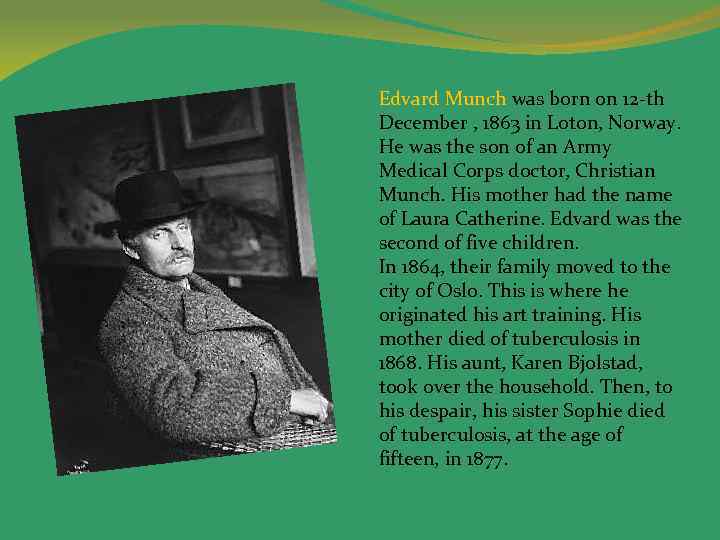 Edvard Munch was born on 12 -th December , 1863 in Loton, Norway. He was the son of an Army Medical Corps doctor, Christian Munch. His mother had the name of Laura Catherine. Edvard was the second of five children. In 1864, their family moved to the city of Oslo. This is where he originated his art training. His mother died of tuberculosis in 1868. His aunt, Karen Bjolstad, took over the household. Then, to his despair, his sister Sophie died of tuberculosis, at the age of fifteen, in 1877.
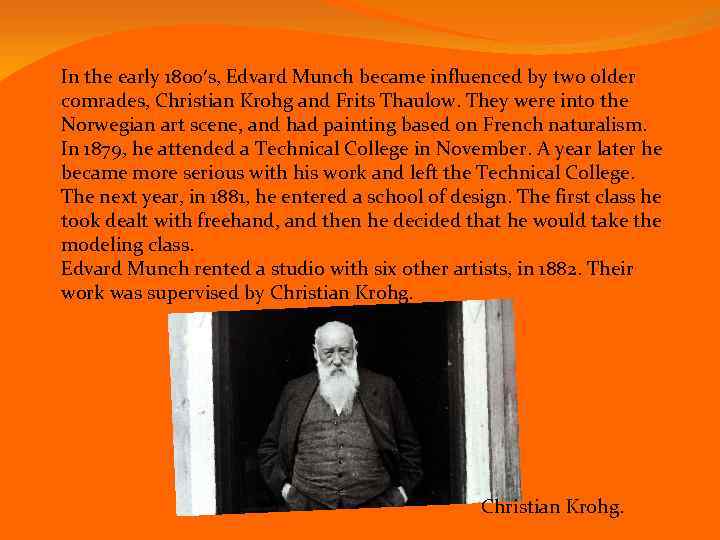 In the early 1800′s, Edvard Munch became influenced by two older comrades, Christian Krohg and Frits Thaulow. They were into the Norwegian art scene, and had painting based on French naturalism. In 1879, he attended a Technical College in November. A year later he became more serious with his work and left the Technical College. The next year, in 1881, he entered a school of design. The first class he took dealt with freehand, and then he decided that he would take the modeling class. Edvard Munch rented a studio with six other artists, in 1882. Their work was supervised by Christian Krohg.
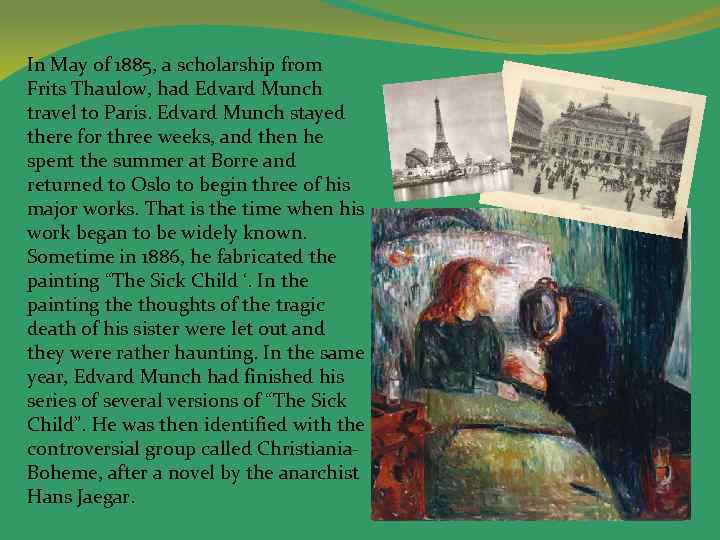 In May of 1885, a scholarship from Frits Thaulow, had Edvard Munch travel to Paris. Edvard Munch stayed there for three weeks, and then he spent the summer at Borre and returned to Oslo to begin three of his major works. That is the time when his work began to be widely known. Sometime in 1886, he fabricated the painting “The Sick Child ‘. In the painting the thoughts of the tragic death of his sister were let out and they were rather haunting. In the same year, Edvard Munch had finished his series of several versions of “The Sick Child”. He was then identified with the controversial group called Christiania. Boheme, after a novel by the anarchist Hans Jaegar.
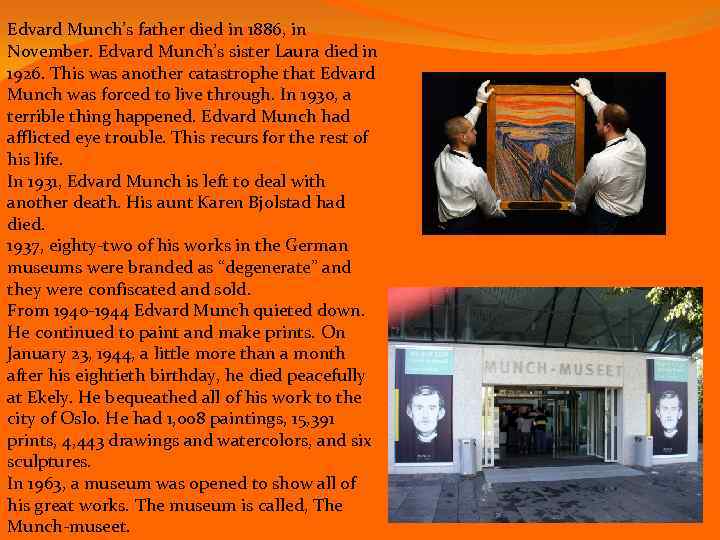 Edvard Munch’s father died in 1886, in November. Edvard Munch’s sister Laura died in 1926. This was another catastrophe that Edvard Munch was forced to live through. In 1930, a terrible thing happened. Edvard Munch had afflicted eye trouble. This recurs for the rest of his life. In 1931, Edvard Munch is left to deal with another death. His aunt Karen Bjolstad had died. 1937, eighty-two of his works in the German museums were branded as “degenerate” and they were confiscated and sold. From 1940 -1944 Edvard Munch quieted down. He continued to paint and make prints. On January 23, 1944, a little more than a month after his eightieth birthday, he died peacefully at Ekely. He bequeathed all of his work to the city of Oslo. He had 1, 008 paintings, 15, 391 prints, 4, 443 drawings and watercolors, and six sculptures. In 1963, a museum was opened to show all of his great works. The museum is called, The Munch-museet.
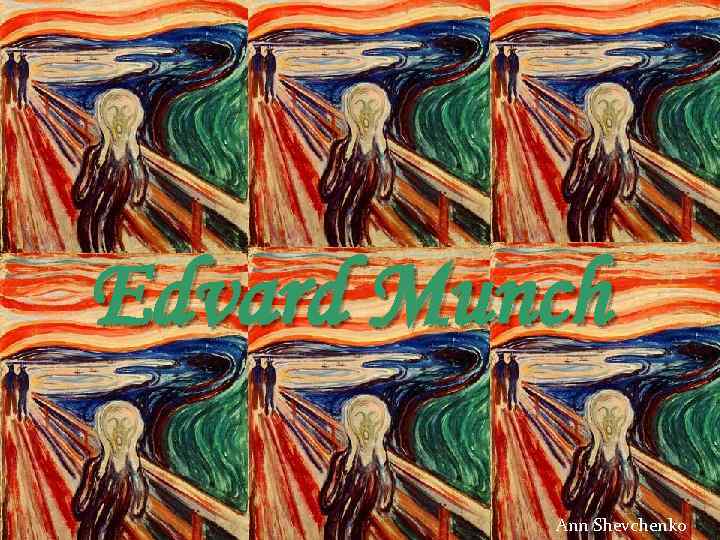
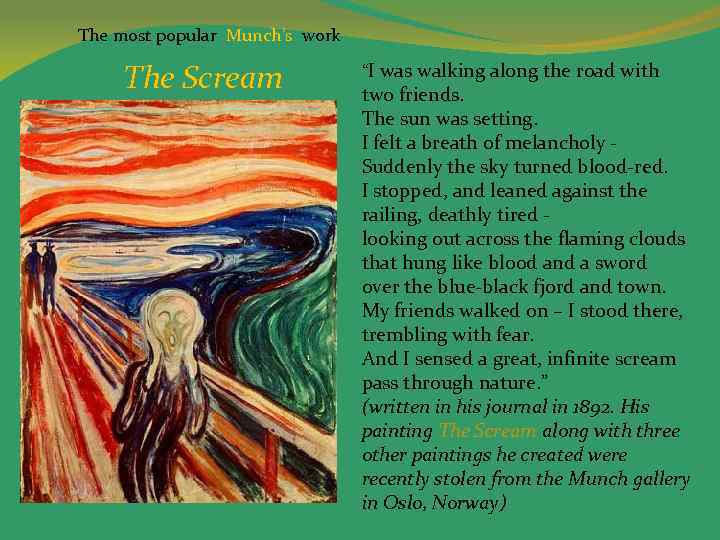 The most popular Munch’s work The Scream “I was walking along the road with two friends. The sun was setting. I felt a breath of melancholy Suddenly the sky turned blood-red. I stopped, and leaned against the railing, deathly tired looking out across the flaming clouds that hung like blood and a sword over the blue-black fjord and town. My friends walked on – I stood there, trembling with fear. And I sensed a great, infinite scream pass through nature. ” (written in his journal in 1892. His painting The Scream along with three other paintings he created were recently stolen from the Munch gallery in Oslo, Norway)
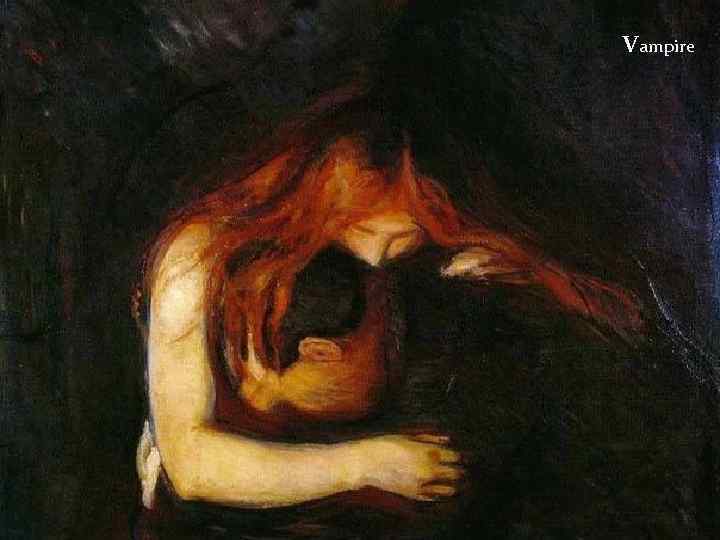 vampire
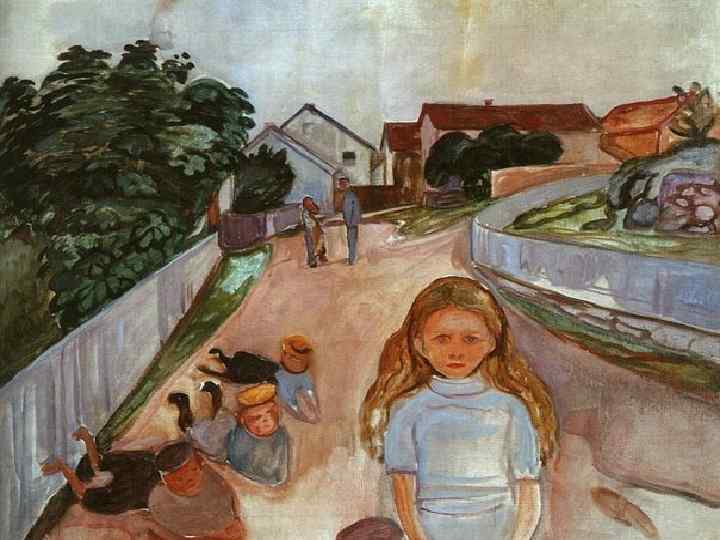
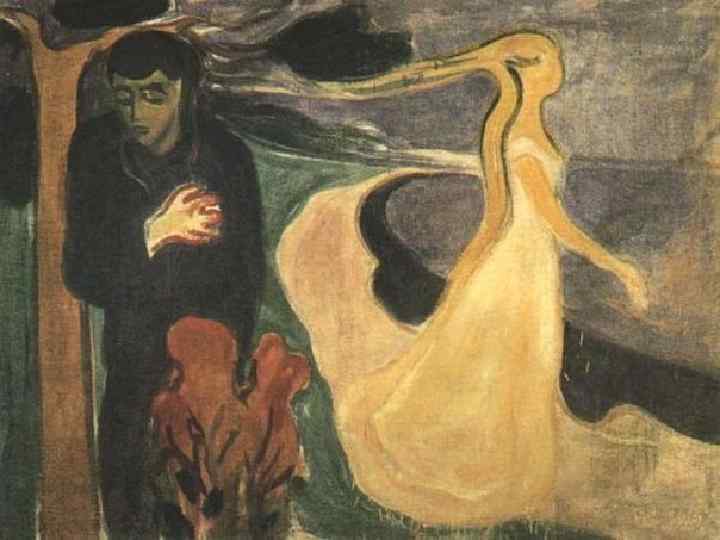
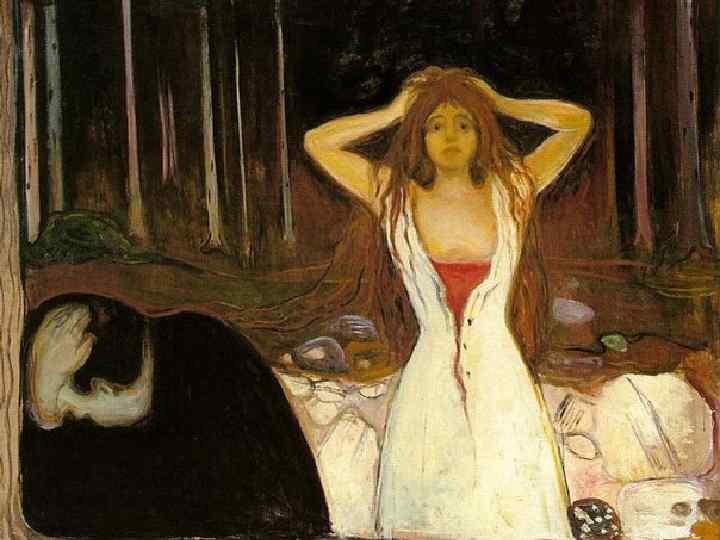
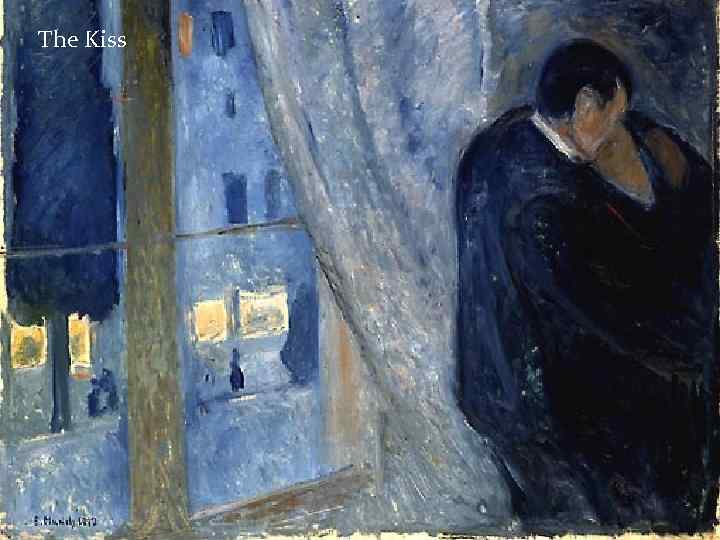 The Kiss
 Edvard Munch had extremely powerful paintings. The way that he expressed himself through his artwork is simply amazing. The pain that he had to deal with was terrible, but he put it to good use. I find him fascinating in so many ways. My personal favorite painting he has ever done would be, The Scream. When I read about him, he severely made a difference in my life.