 Скачать презентацию EDUCATION IN GREAT BRITAIN In Great Britain
Education in GB.pptx
- Количество слайдов: 9



EDUCATION IN GREAT BRITAIN
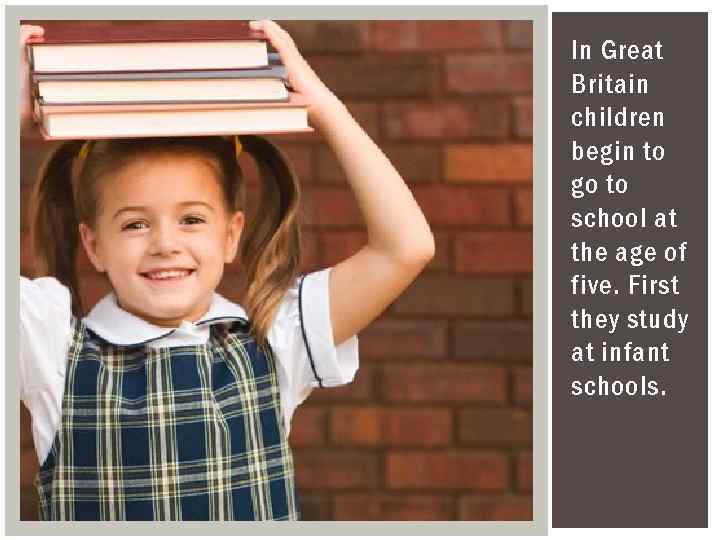
In Great Britain children begin to go to school at the age of five. First they study at infant schools.
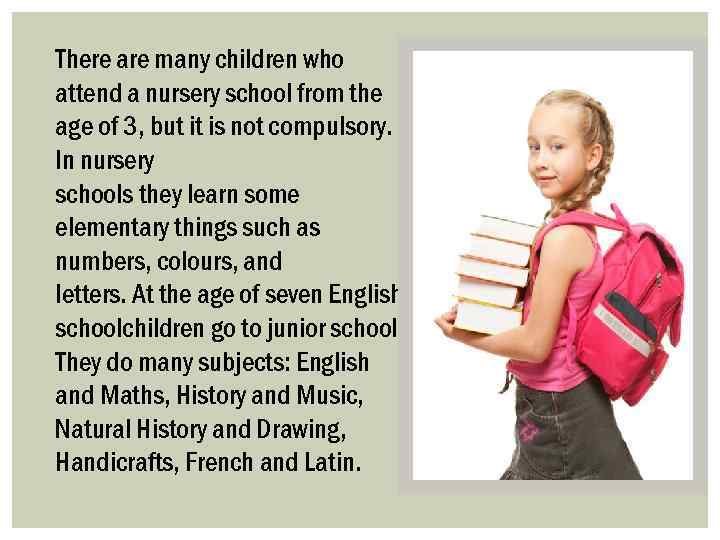
There are many children who attend a nursery school from the age of 3, but it is not compulsory. In nursery schools they learn some elementary things such as numbers, colours, and letters. At the age of seven English schoolchildren go to junior schools. They do many subjects: English and Maths, History and Music, Natural History and Drawing, Handicrafts, French and Latin.
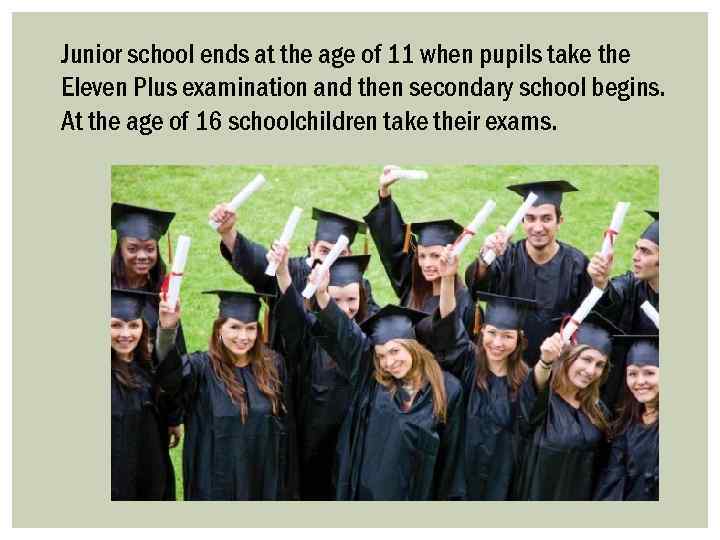
Junior school ends at the age of 11 when pupils take the Eleven Plus examination and then secondary school begins. At the age of 16 schoolchildren take their exams.
There are 3 types of state secondary schools in Great Britain. They are: 1)comprehensive schools, which take pupils of all abilities without exams. 2) grammar schools, which give secondary education of a very high standard. 3) modern schools, which don't prepare pupils for universities. Education in such schools gives good prospects for practical jobs.
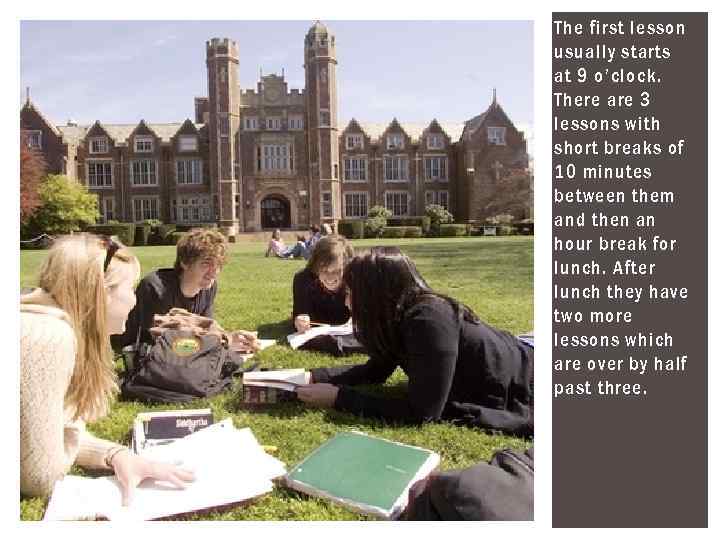
The first lesson usually starts at 9 o’clock. There are 3 lessons with short breaks of 10 minutes between them and then an hour break for lunch. After lunch they have two more lessons which are over by half past three.
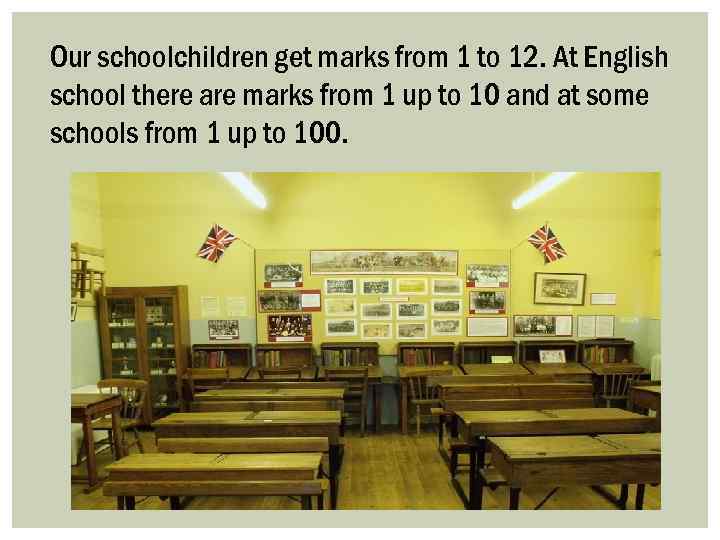
Our schoolchildren get marks from 1 to 12. At English school there are marks from 1 up to 10 and at some schools from 1 up to 100.
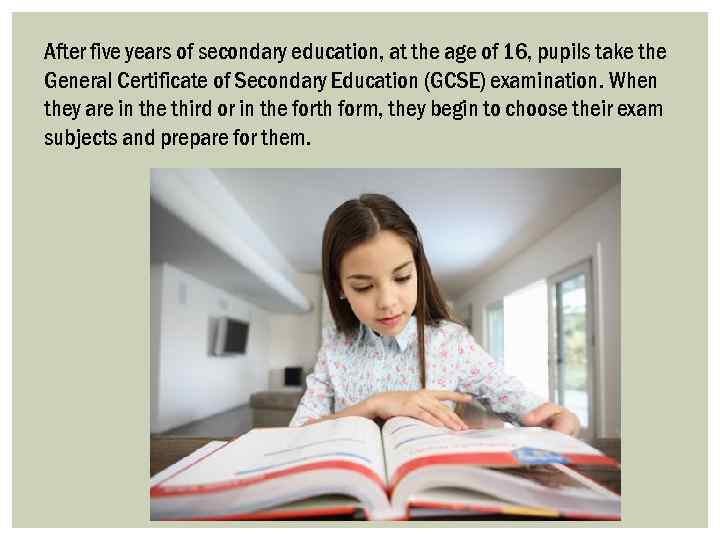
After five years of secondary education, at the age of 16, pupils take the General Certificate of Secondary Education (GCSE) examination. When they are in the third or in the forth form, they begin to choose their exam subjects and prepare for them.
Thanks for your attention!
Скачать презентацию EDUCATION IN GREAT BRITAIN In Great Britain
Education in GB.pptx