


 Скачать презентацию Education and counseling make a difference to infant
99279d8ffbc70e88232ee68336ab1b75.ppt
- Количество слайдов: 34
 Education and counseling make a difference to infant feeding practices and those feeding practices make a difference to infant mortality Naume Tavengwa Ellen Piwoz Lorrie Gavin Clare Zunguza Edmore Marinda Peter Iliff Jean Humphrey and the ZVITAMBO Study Group
 Acknowledgements • Canadian International Development Agency • United States Agency for International Development • Academy for Educational Development (USAID) – Linkages Project – SARA Project • Rockefeller Foundation • BASF • • • University of Zimbabwe Harare City Health Department Harare Central Hospital Chitungwiza Hospital Epworth Clinic, Mashonaland East Province • Johns Hopkins University • Mc. Gill University
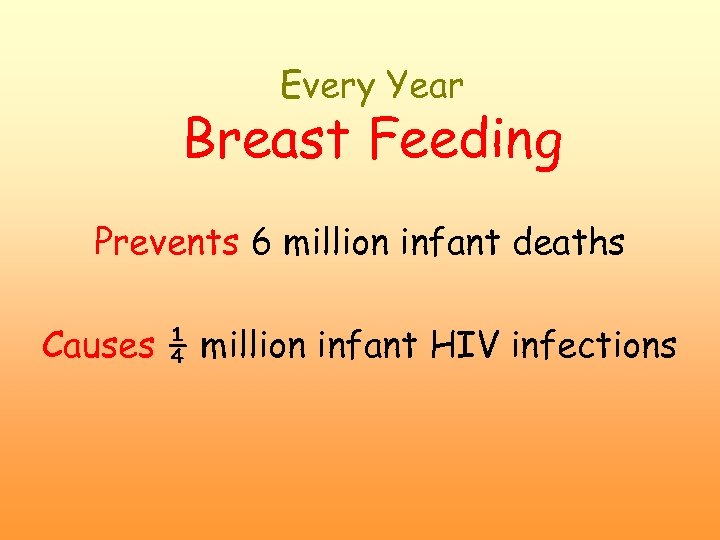 Every Year Breast Feeding Prevents 6 million infant deaths Causes ¼ million infant HIV infections
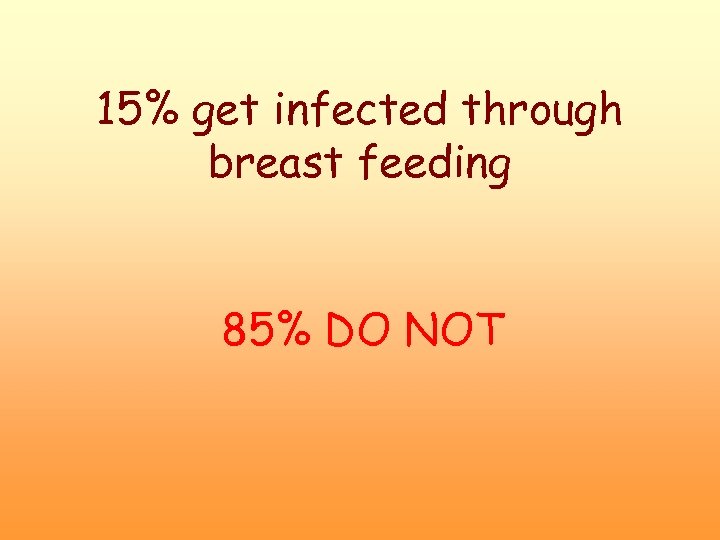 15% get infected through breast feeding 85% DO NOT
 ZVITAMBO Methods Placebo-controlled clinical trial • 14, 110 mother/baby pairs • efficacy of immediate post partum maternal and/or neonatal vitamin A supplementation on • infant mortality, • breast feeding-associated infant HIV infection • incident sexually-acquired HIV infections among post partum women.
 Pairs recruited within 96 hours of delivery at maternity clinics and hospitals in Harare, Chitungwiza and Epworth Eligibility • neither mother nor baby seriously ill • singleton, • birth weight >1500 g • Written informed consent
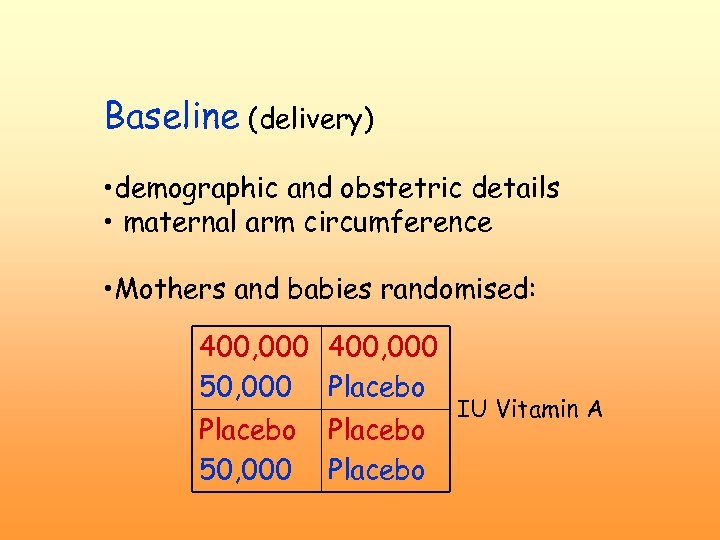 Baseline (delivery) • demographic and obstetric details • maternal arm circumference • Mothers and babies randomised: 400, 000 50, 000 Placebo IU Vitamin A
 Maternal samples run in parallel - two ELISAs. Persistently discordant samples run by Western blot. HIV positivity confirmed by repeated ELISA at next visit. Mother-baby pairs followed up in study clinic 6 weeks 3 months, 3 -monthly until 12 -24 months.
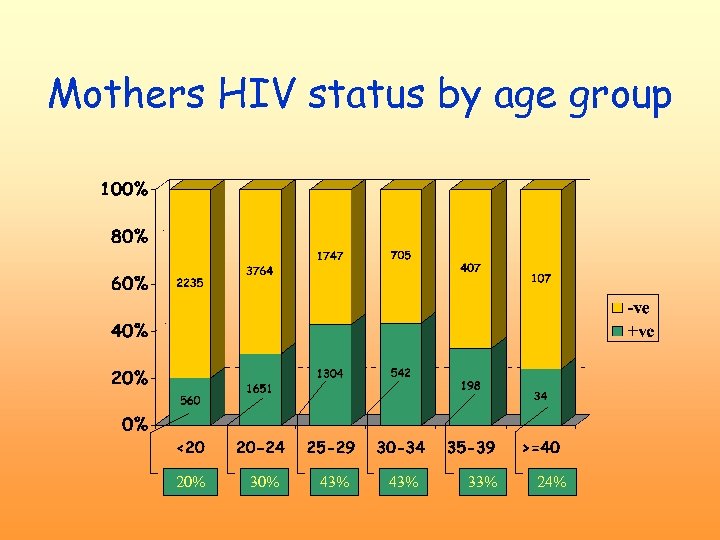 Mothers HIV status by age group 20% 30% 43% 33% 24%
 Seroconversion rates At one year: 4 -5% Straight line
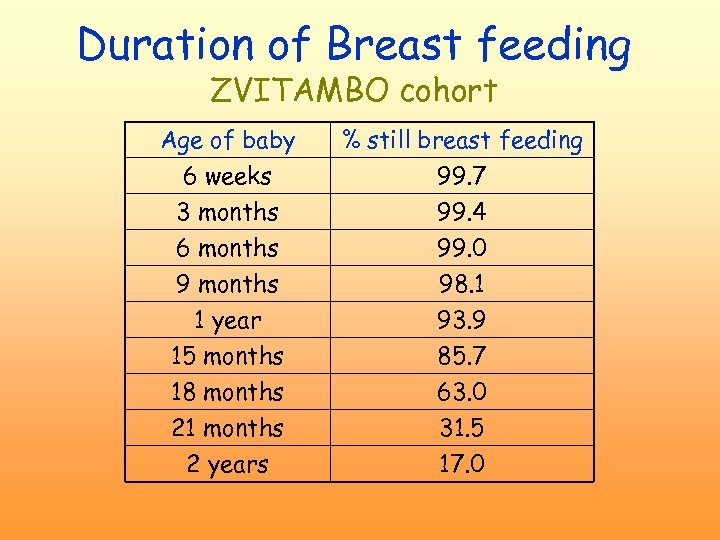 Duration of Breast feeding ZVITAMBO cohort Age of baby 6 weeks 3 months 6 months % still breast feeding 99. 7 99. 4 99. 0 9 months 1 year 15 months 18 months 21 months 2 years 98. 1 93. 9 85. 7 63. 0 31. 5 17. 0
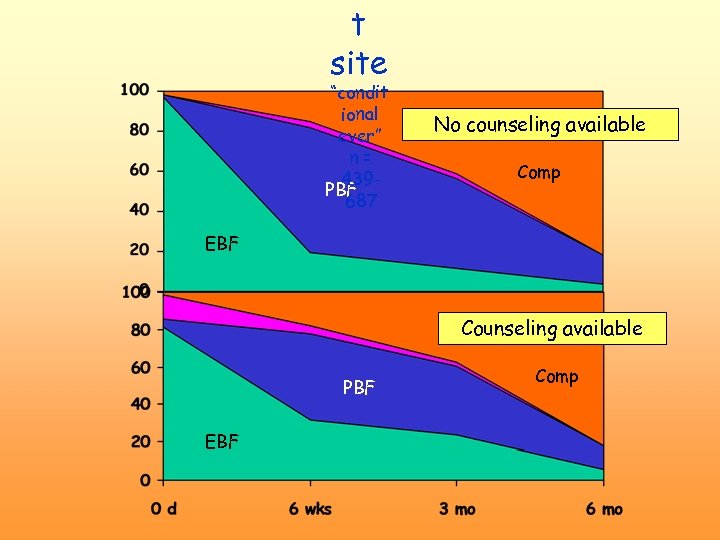
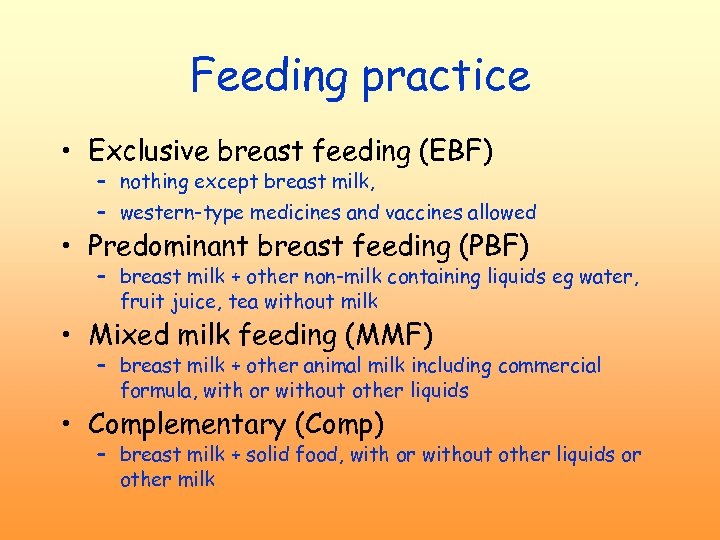 Feeding practice • Exclusive breast feeding (EBF) – nothing except breast milk, – western-type medicines and vaccines allowed • Predominant breast feeding (PBF) – breast milk + other non-milk containing liquids eg water, fruit juice, tea without milk • Mixed milk feeding (MMF) – breast milk + other animal milk including commercial formula, with or without other liquids • Complementary (Comp) – breast milk + solid food, with or without other liquids or other milk
 Definitions • • 24 hour history 7 day history Ever “Conditional ever” – All previous data present and consistent
 ZVITAMBO TRIAL • 3 clinical trial questions 4 th Question – How can these mothers (and fathers) be counselled about HIV and infant feeding?
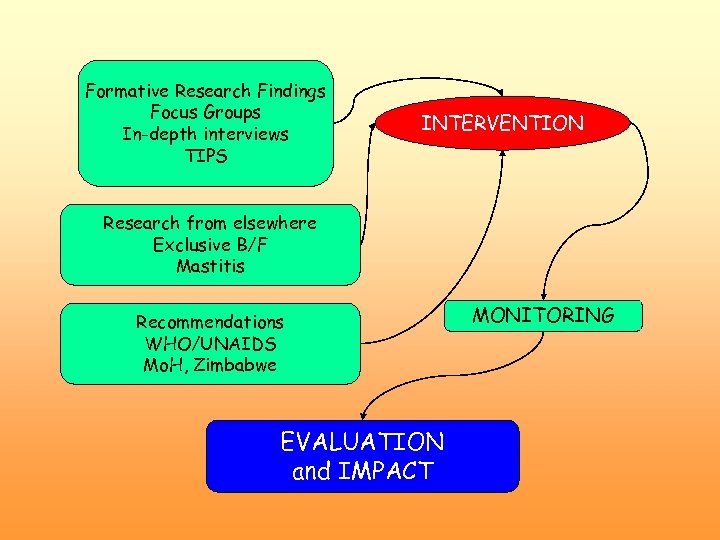 Formative Research Findings Focus Groups In-depth interviews TIPS INTERVENTION Research from elsewhere Exclusive B/F Mastitis Recommendations WHO/UNAIDS Mo. H, Zimbabwe EVALUATION and IMPACT MONITORING
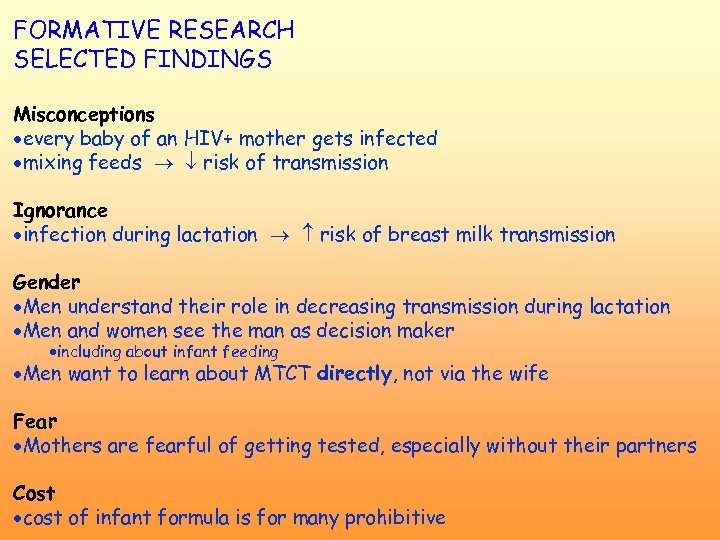 FORMATIVE RESEARCH SELECTED FINDINGS Misconceptions ·every baby of an HIV+ mother gets infected ·mixing feeds risk of transmission Ignorance ·infection during lactation risk of breast milk transmission Gender ·Men understand their role in decreasing transmission during lactation ·Men and women see the man as decision maker ·including about infant feeding ·Men want to learn about MTCT directly, not via the wife Fear ·Mothers are fearful of getting tested, especially without their partners Cost ·cost of infant formula is for many prohibitive
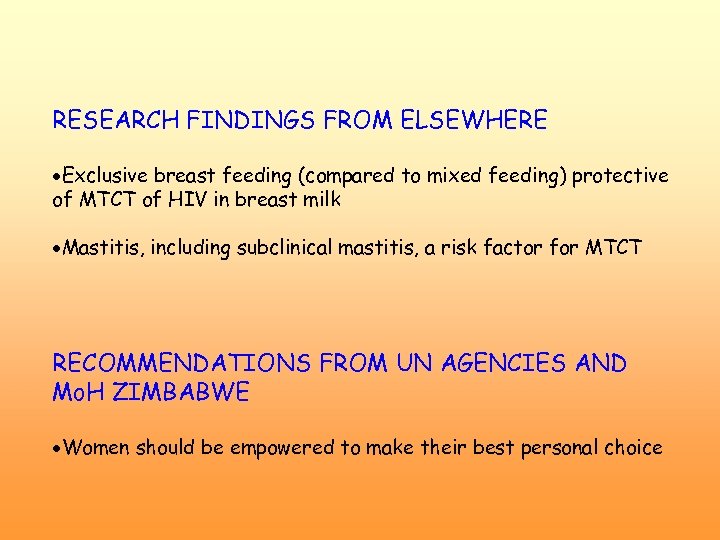 RESEARCH FINDINGS FROM ELSEWHERE ·Exclusive breast feeding (compared to mixed feeding) protective of MTCT of HIV in breast milk ·Mastitis, including subclinical mastitis, a risk factor for MTCT RECOMMENDATIONS FROM UN AGENCIES AND Mo. H ZIMBABWE ·Women should be empowered to make their best personal choice
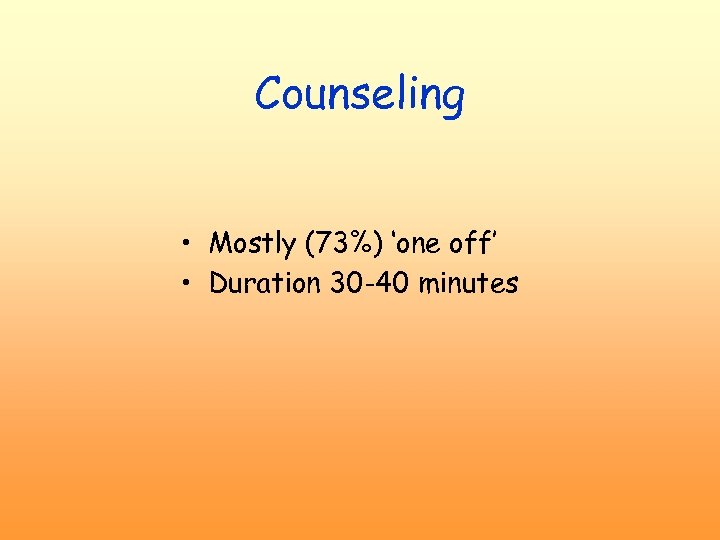
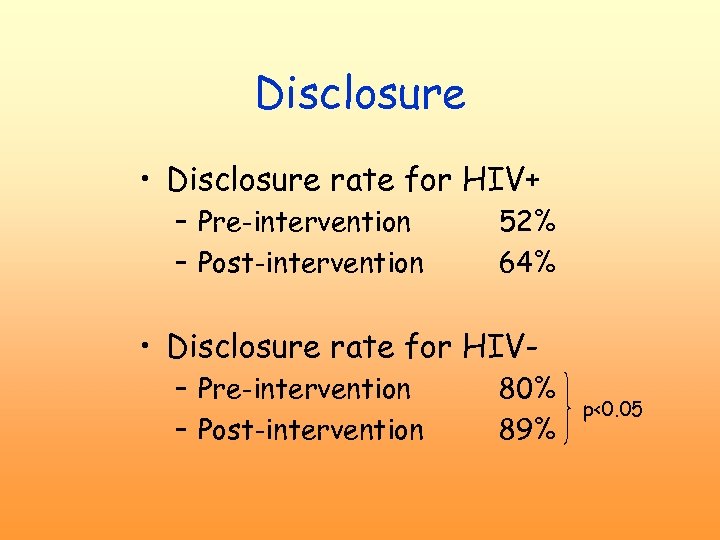
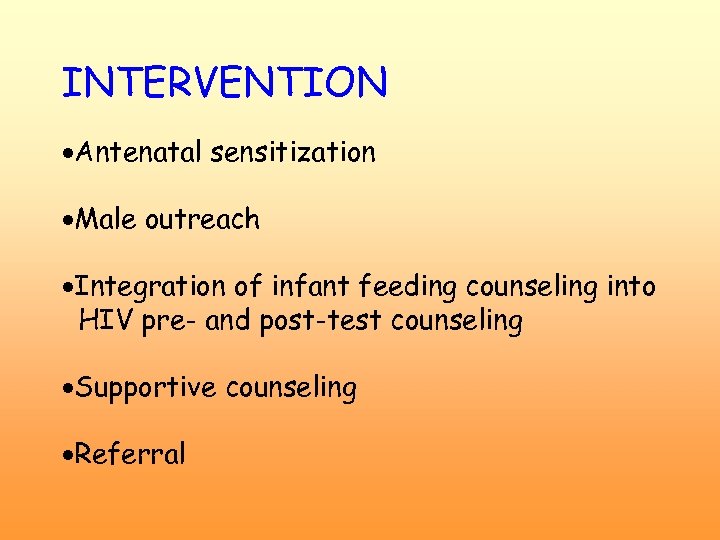 INTERVENTION ·Antenatal sensitization ·Male outreach ·Integration of infant feeding counseling into HIV pre- and post-test counseling ·Supportive counseling ·Referral
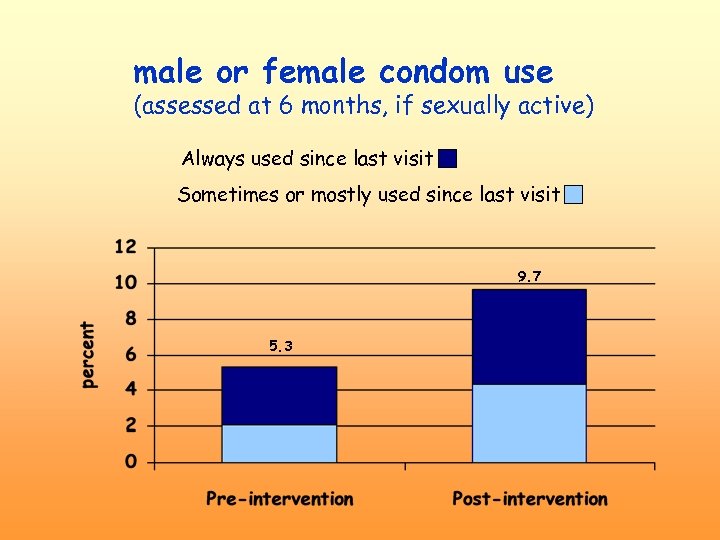 male or female condom use (assessed at 6 months, if sexually active) Always used since last visit Sometimes or mostly used since last visit 9. 7 5. 3
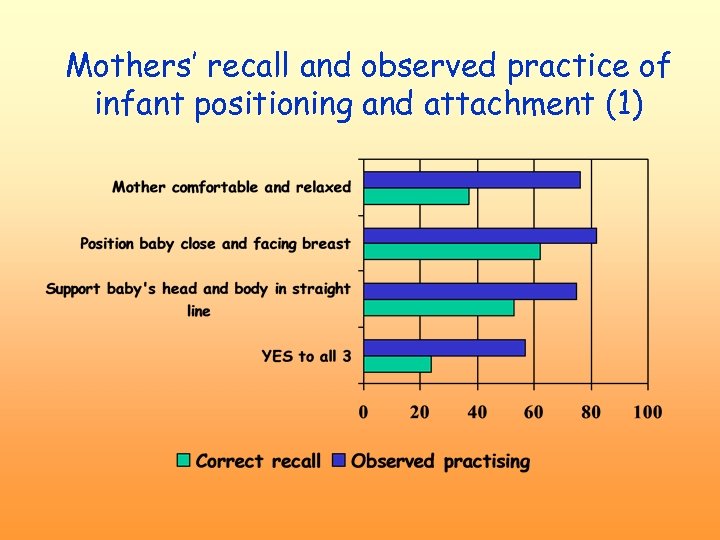 Mothers’ recall and observed practice of infant positioning and attachment (1)
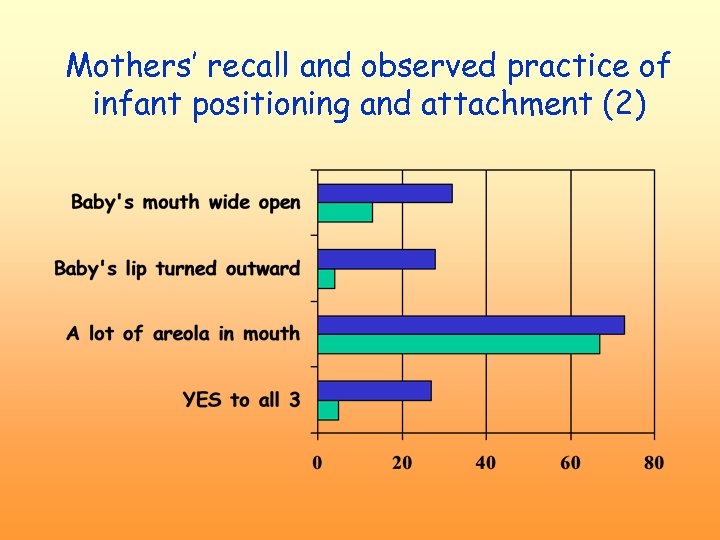 Mothers’ recall and observed practice of infant positioning and attachment (2)
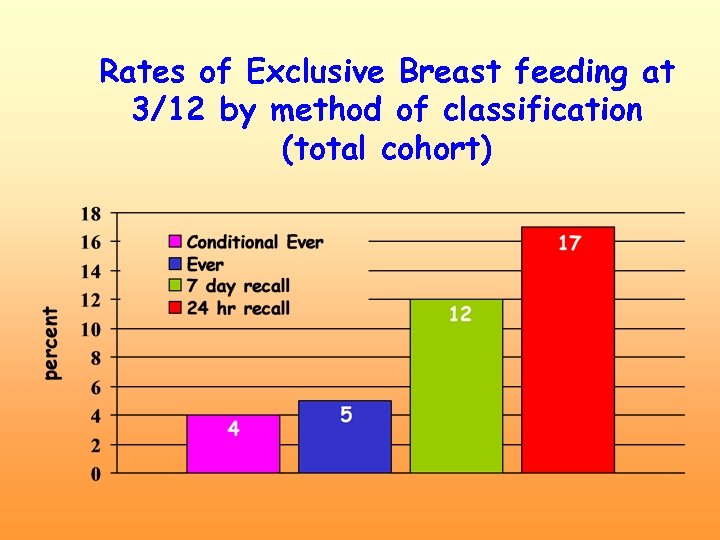 Rates of Exclusive Breast feeding at 3/12 by method of classification (total cohort)
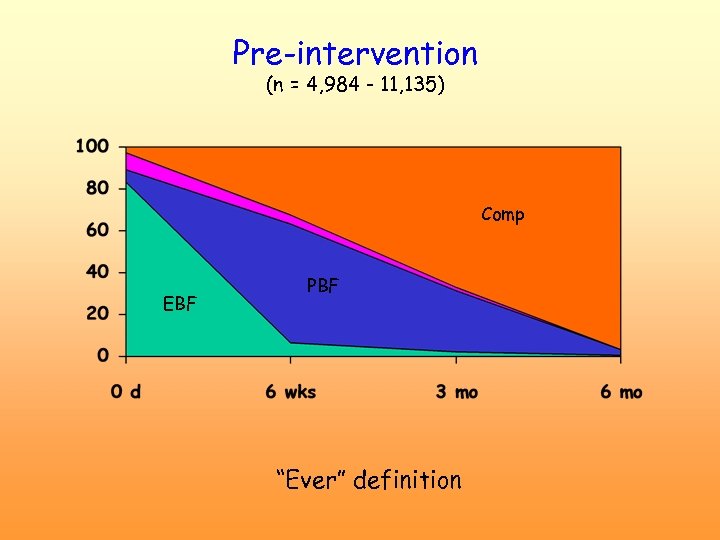 Pre-intervention (n = 4, 984 - 11, 135) Comp EBF PBF “Ever” definition
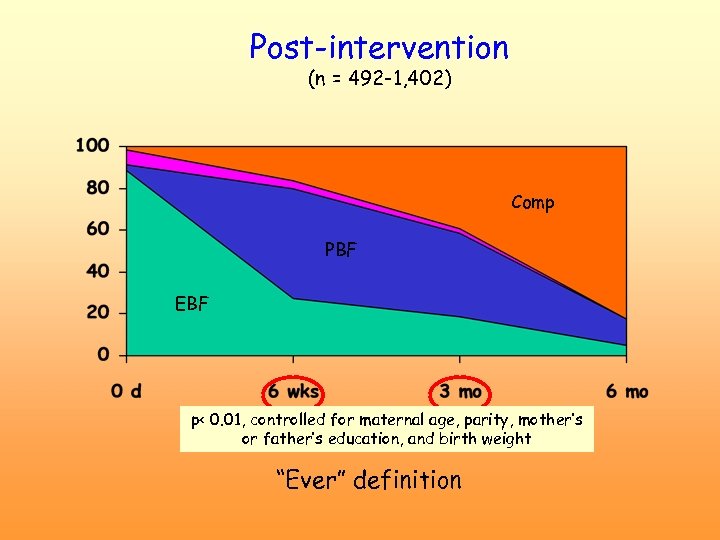 Post-intervention (n = 492 -1, 402) Comp PBF EBF p< 0. 01, controlled for maternal age, parity, mother’s or father’s education, and birth weight “Ever” definition
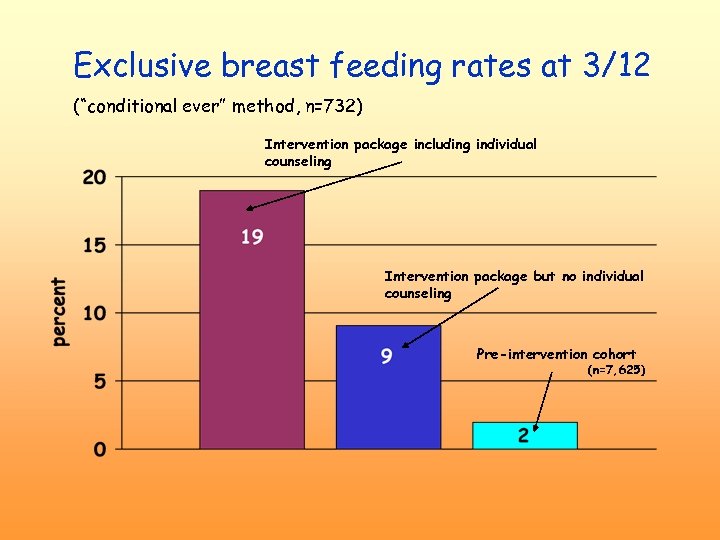 Exclusive breast feeding rates at 3/12 (“conditional ever” method, n=732) Intervention package including individual counseling Intervention package but no individual counseling Pre-intervention cohort (n=7, 625)
 t site “condit ional ever” n= 439 PBF 687 No counseling available Comp EBF Counseling available PBF EBF Comp
 Counseling • Mostly (73%) ‘one off’ • Duration 30 -40 minutes
 Disclosure • Disclosure rate for HIV+ – Pre-intervention – Post-intervention 52% 64% • Disclosure rate for HIV– Pre-intervention – Post-intervention 80% 89% p<0. 05
 Feeding and disclosure “Conditional ever” n=160
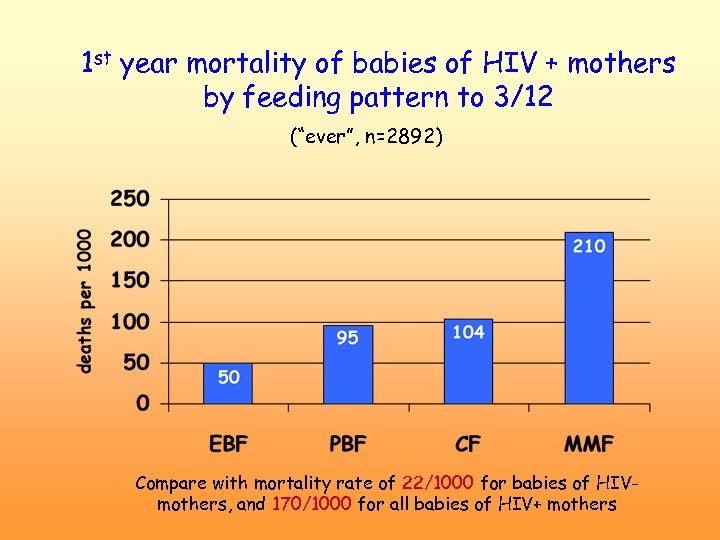 1 st year mortality of babies of HIV + mothers by feeding pattern to 3/12 (“ever”, n=2892) Compare with mortality rate of 22/1000 for babies of HIVmothers, and 170/1000 for all babies of HIV+ mothers
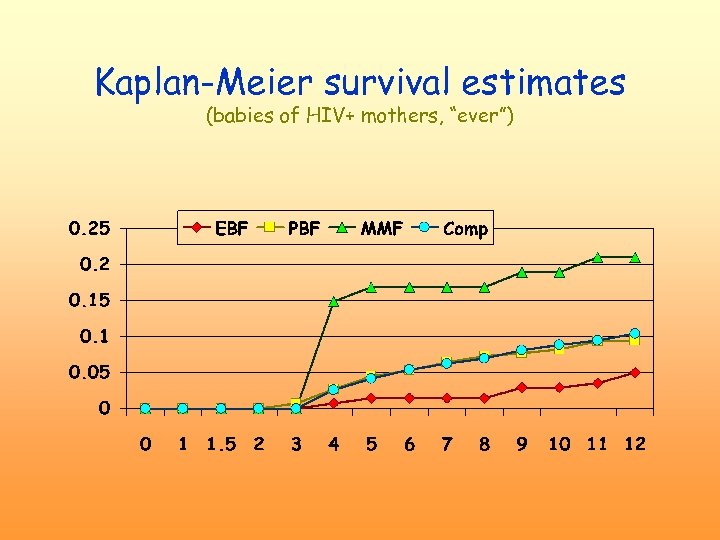 Kaplan-Meier survival estimates (babies of HIV+ mothers, “ever”)
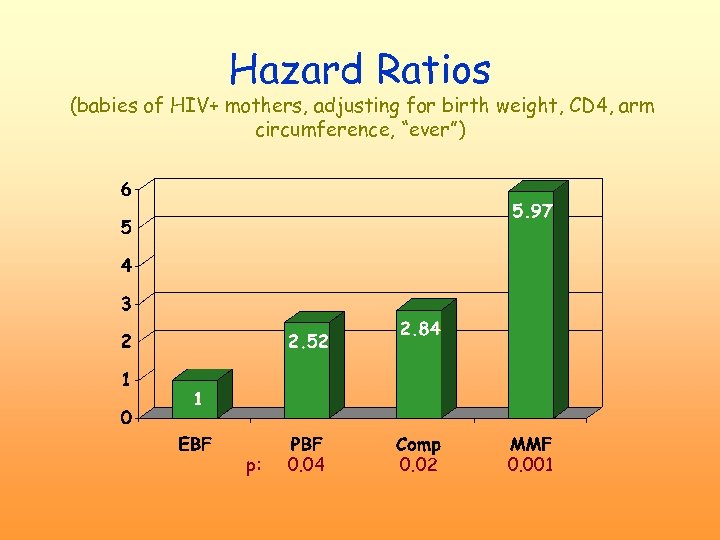 Hazard Ratios (babies of HIV+ mothers, adjusting for birth weight, CD 4, arm circumference, “ever”) p: 0. 04 0. 02 0. 001
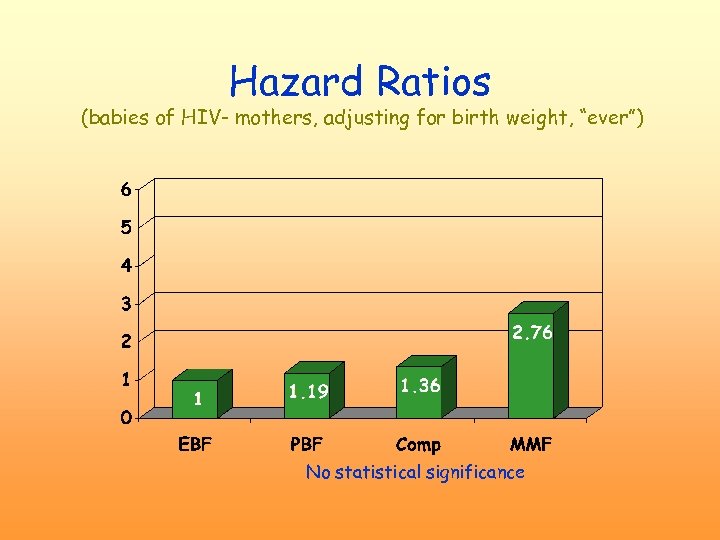 Hazard Ratios (babies of HIV- mothers, adjusting for birth weight, “ever”) No statistical significance
 Conclusions • The dilemma over breast or formula is difficult • There is scope and possibility to substantially increase exclusive breast feeding rates • Exclusive breast feeding is associated with lower mortality than mixed feeding