 Скачать презентацию Economics usanovpv ru usanovpv mail ru Textbook
1. Introduction.ppt
- Количество слайдов: 72



Economics

usanovpv. ru usanovpv@mail. ru
Textbook

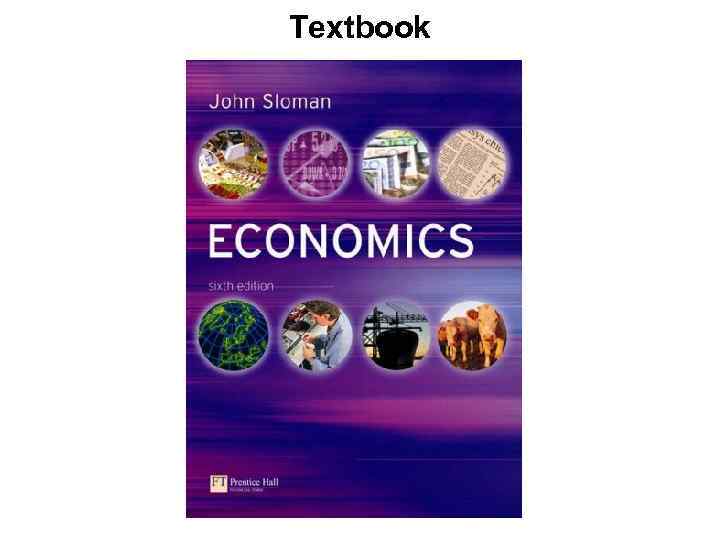
Джон Сломан http: //bookfi. org/book/549282 Пол Хейне http: //bookfi. org/book/481303
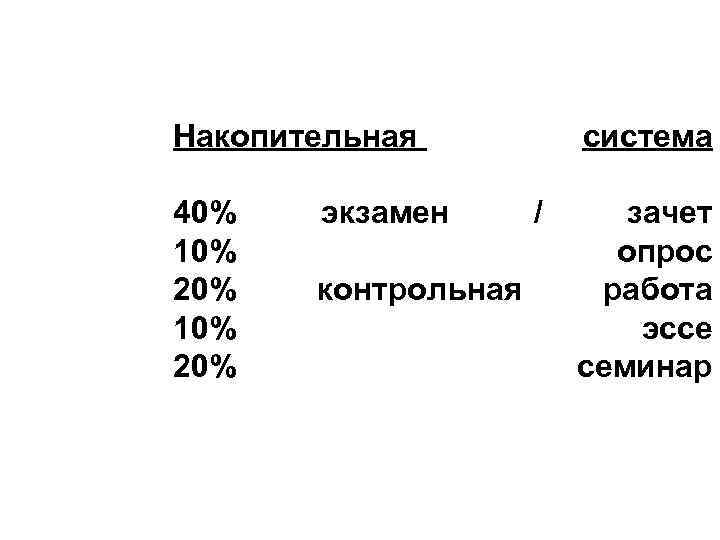
Накопительная 40% 10% 20% экзамен контрольная система / зачет опрос работа эссе семинар
Spontaneous Order
Economic Way of Thinking
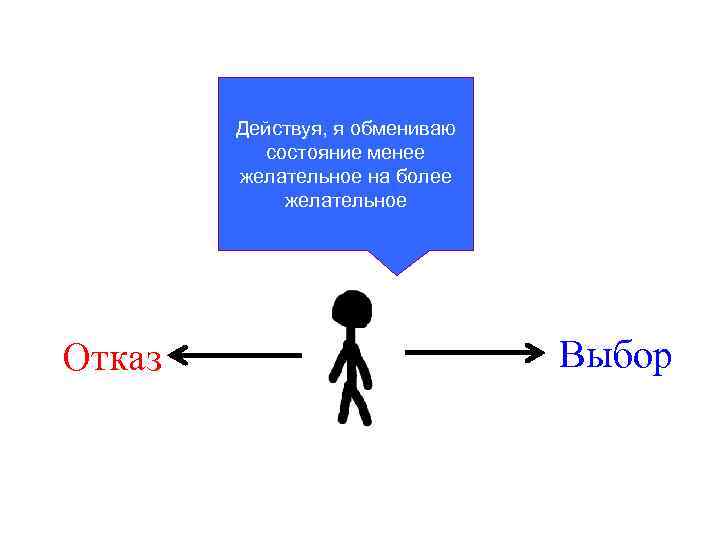
Действуя, я обмениваю состояние менее желательное на более желательное Отказ Выбор
Структура курса: 1. Экономический образ мышления (основания науки о рыночной экономике) 2. Теория рыночного равновесия (теория спроса и предложения) 3. Теория потребительского поведения 4. Виды рыночных структур (виды рынков) 4. 1. Рынок совершенной конкуренции 4. 2. Рынок монополистической конкуренции 4. 3. Олигополия 4. 4. Монополия 5. Теория общественного выбора
Introducing Economics
Introducing Economics What do Economists Study?
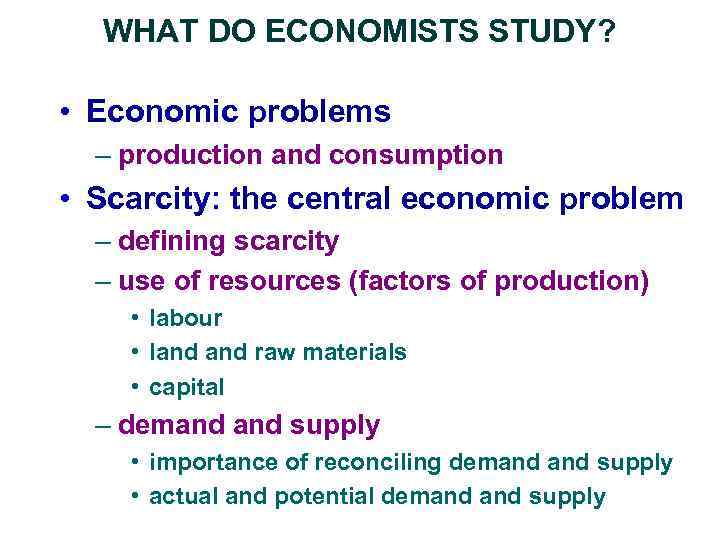
WHAT DO ECONOMISTS STUDY? • Economic problems – production and consumption • Scarcity: the central economic problem – defining scarcity – use of resources (factors of production) • labour • land raw materials • capital – demand supply • importance of reconciling demand supply • actual and potential demand supply
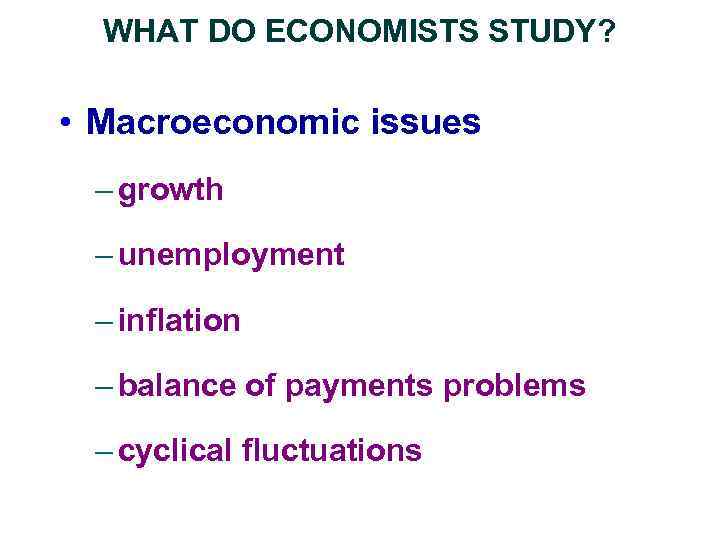
WHAT DO ECONOMISTS STUDY? • Macroeconomic issues – growth – unemployment – inflation – balance of payments problems – cyclical fluctuations
WHAT DO ECONOMISTS STUDY? • Microeconomic issues – choices: what, how and for whom – the concept of opportunity cost – rational economic decision making • marginal costs and marginal benefits • MC < MB do more • MC > MB do less – microeconomic objectives • efficiency • equity
WHAT DO ECONOMISTS STUDY? • The production possibility curve – what the curve shows
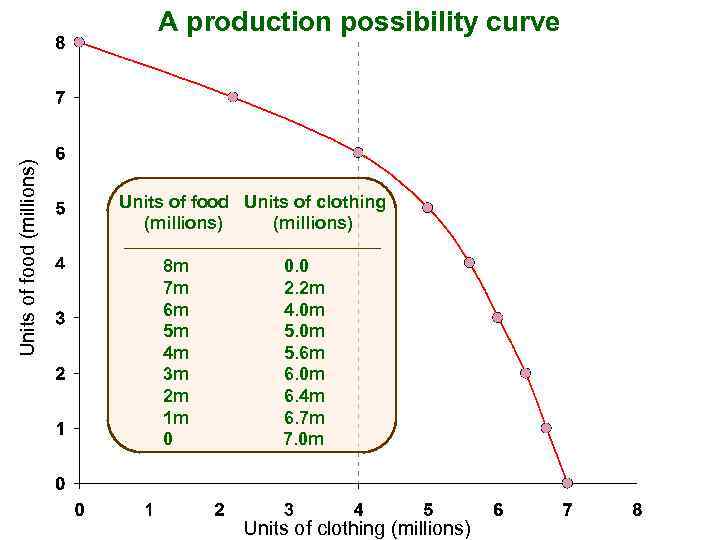
Units of food (millions) A production possibility curve Units of food Units of clothing (millions) 8 m 7 m 6 m 5 m 4 m 3 m 2 m 1 m 0 0. 0 2. 2 m 4. 0 m 5. 6 m 6. 0 m 6. 4 m 6. 7 m 7. 0 m Units of clothing (millions)
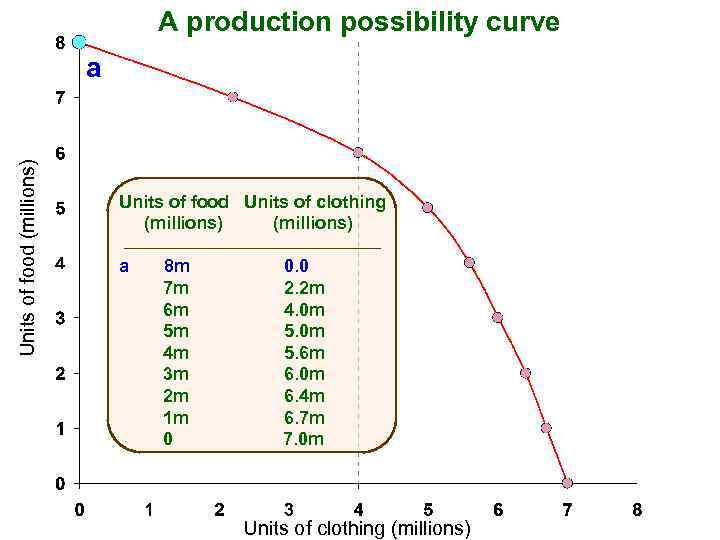
A production possibility curve Units of food (millions) a Units of food Units of clothing (millions) a 8 m 7 m 6 m 5 m 4 m 3 m 2 m 1 m 0 0. 0 2. 2 m 4. 0 m 5. 6 m 6. 0 m 6. 4 m 6. 7 m 7. 0 m Units of clothing (millions)
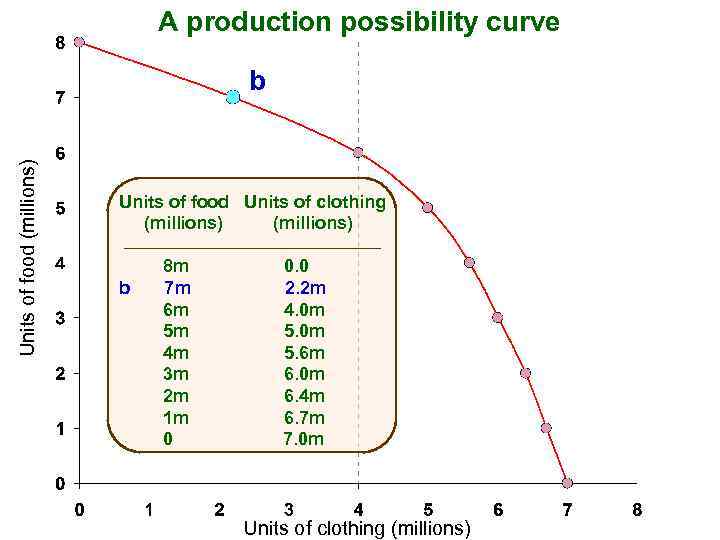
A production possibility curve Units of food (millions) b Units of food Units of clothing (millions) b 8 m 7 m 6 m 5 m 4 m 3 m 2 m 1 m 0 0. 0 2. 2 m 4. 0 m 5. 6 m 6. 0 m 6. 4 m 6. 7 m 7. 0 m Units of clothing (millions)
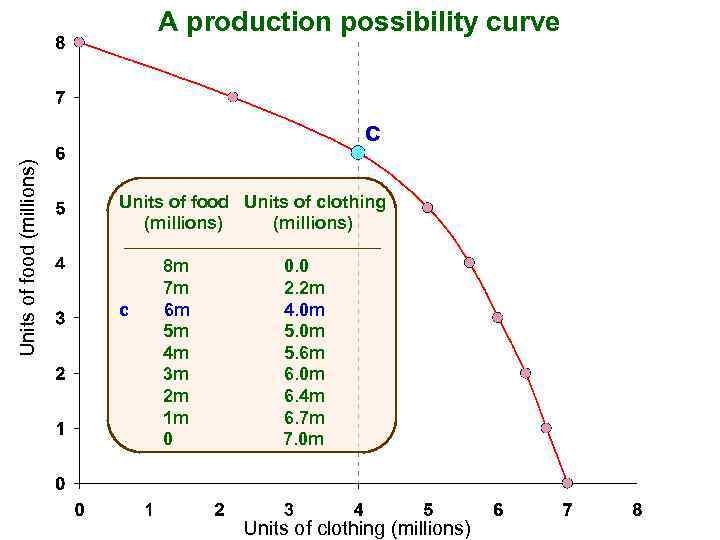
A production possibility curve Units of food (millions) c Units of food Units of clothing (millions) c 8 m 7 m 6 m 5 m 4 m 3 m 2 m 1 m 0 0. 0 2. 2 m 4. 0 m 5. 6 m 6. 0 m 6. 4 m 6. 7 m 7. 0 m Units of clothing (millions)
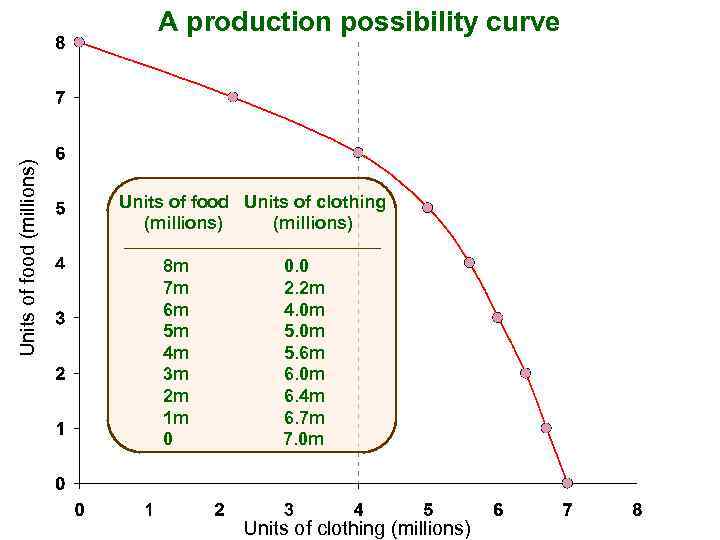
Units of food (millions) A production possibility curve Units of food Units of clothing (millions) 8 m 7 m 6 m 5 m 4 m 3 m 2 m 1 m 0 0. 0 2. 2 m 4. 0 m 5. 6 m 6. 0 m 6. 4 m 6. 7 m 7. 0 m Units of clothing (millions)
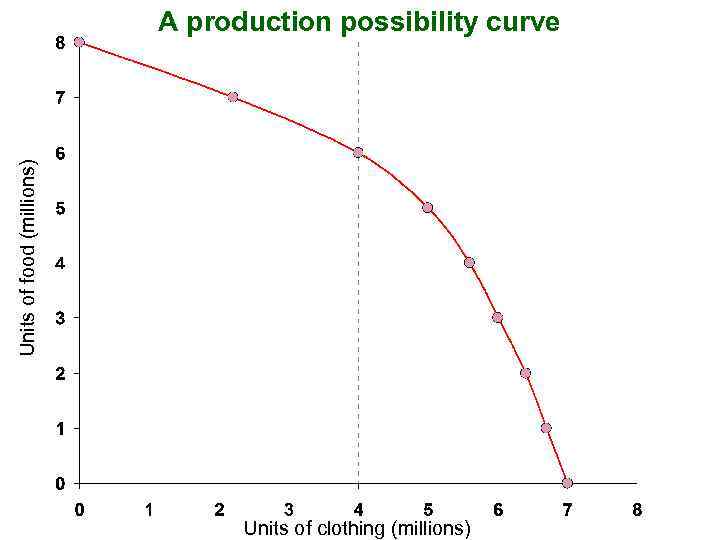
Units of food (millions) A production possibility curve Units of clothing (millions)
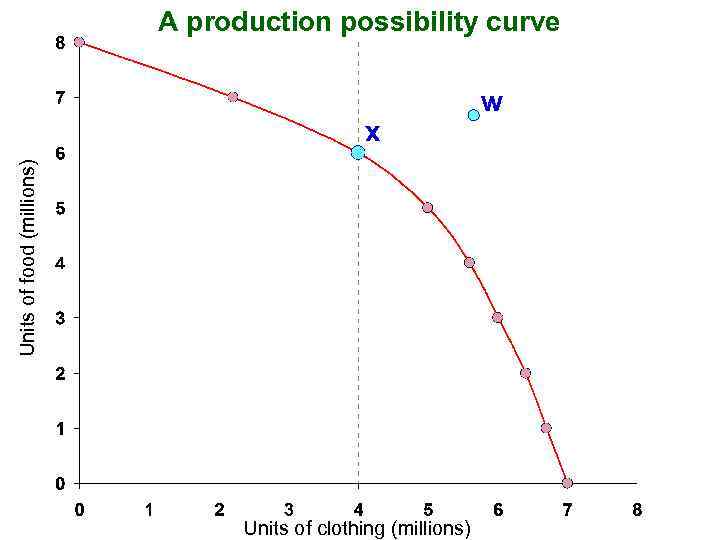
A production possibility curve Units of food (millions) x Units of clothing (millions) w
WHAT DO ECONOMISTS STUDY? • The production possibility curve – what the curve shows – microeconomics and the production possibility curve:
WHAT DO ECONOMISTS STUDY? • The production possibility curve – what the curve shows – microeconomics and the production possibility curve: • choices and opportunity cost
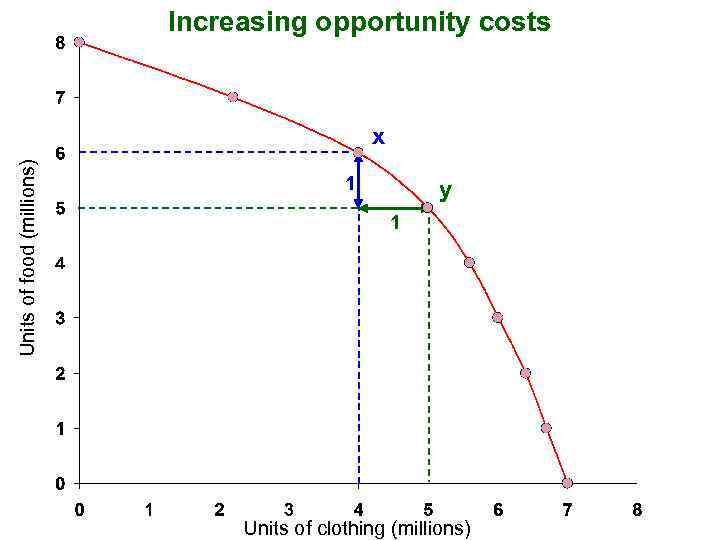
Increasing opportunity costs Units of food (millions) x 1 y 1 Units of clothing (millions)
WHAT DO ECONOMISTS STUDY? • The production possibility curve – what the curve shows – microeconomics and the production possibility curve: • choices and opportunity cost • increasing opportunity cost
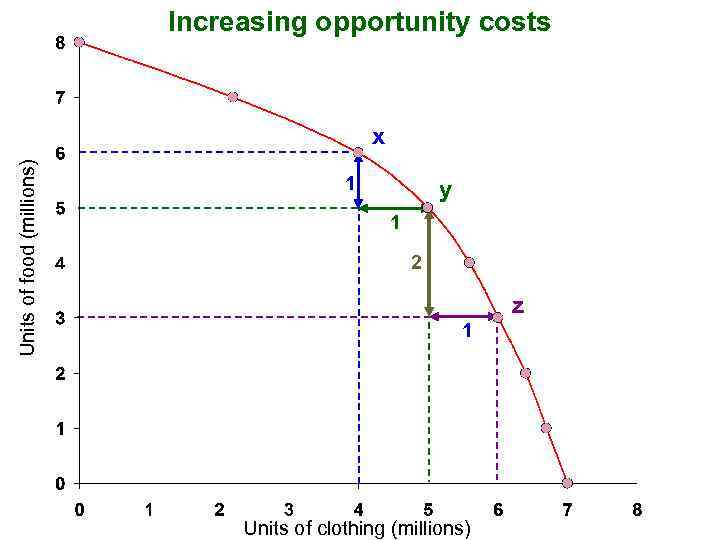
Increasing opportunity costs Units of food (millions) x 1 y 1 2 z 1 Units of clothing (millions)
WHAT DO ECONOMISTS STUDY? • The production possibility curve – what the curve shows – microeconomics and the production possibility curve: • choices and opportunity cost • increasing opportunity cost – macroeconomics and the production possibility curve:
WHAT DO ECONOMISTS STUDY? • The production possibility curve – what the curve shows – microeconomics and the production possibility curve: • choices and opportunity cost • increasing opportunity cost – macroeconomics and the production possibility curve: • production within the curve
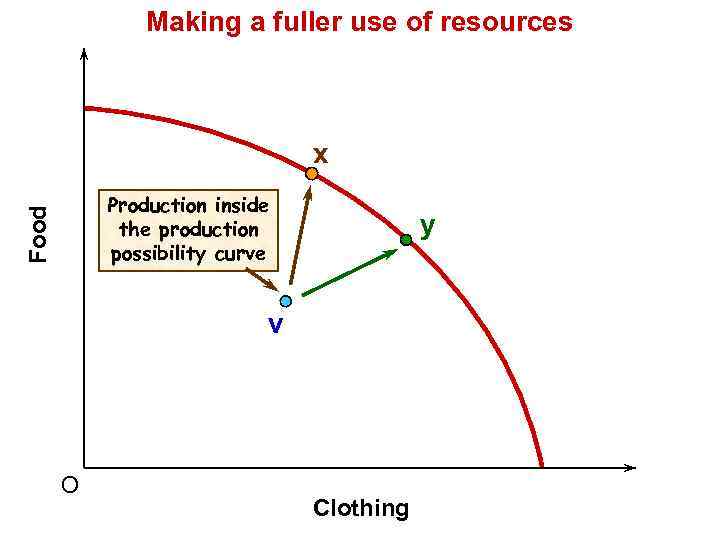
Making a fuller use of resources x Food Production inside the production possibility curve y v O Clothing
WHAT DO ECONOMISTS STUDY? • The production possibility curve – what the curve shows – microeconomics and the production possibility curve: • choices and opportunity cost • increasing opportunity cost – macroeconomics and the production possibility curve: • production within the curve • shifts in the curve
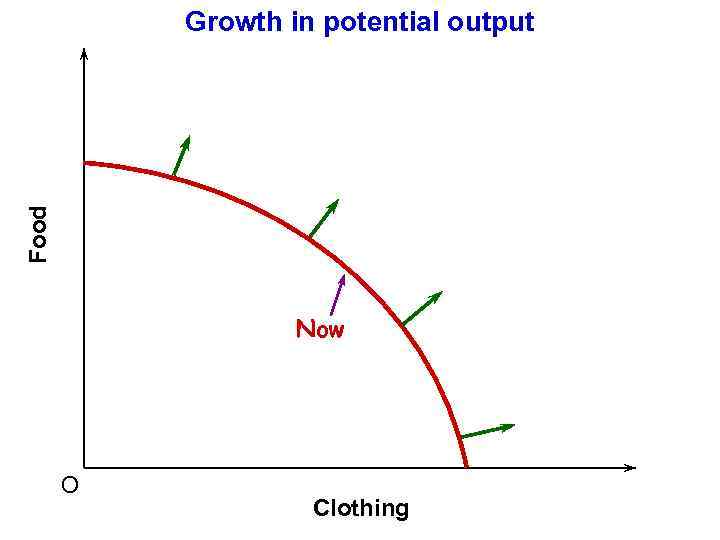
Food Growth in potential output Now O Clothing
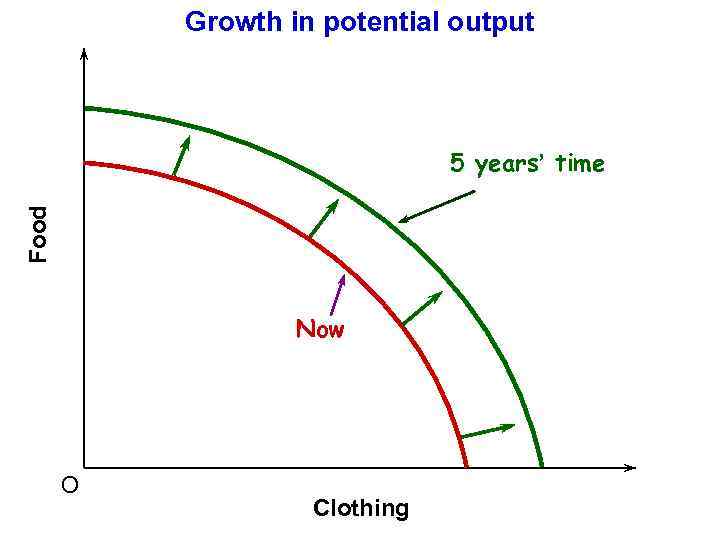
Growth in potential output Food 5 years’ time Now O Clothing
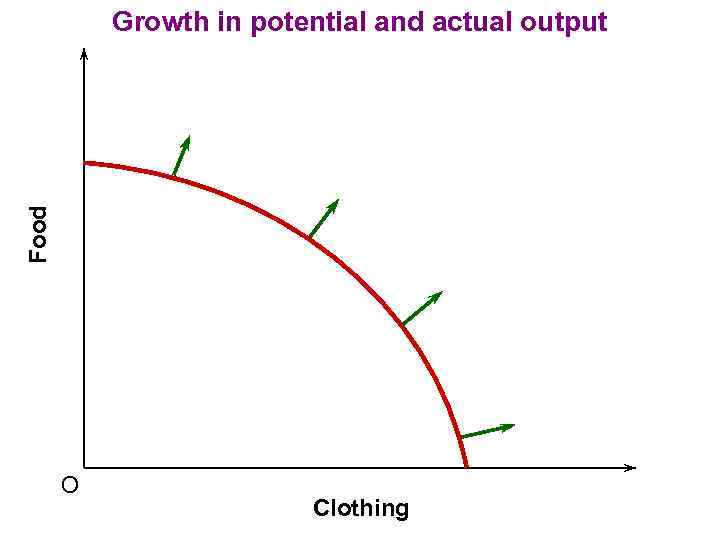
Food Growth in potential and actual output O Clothing
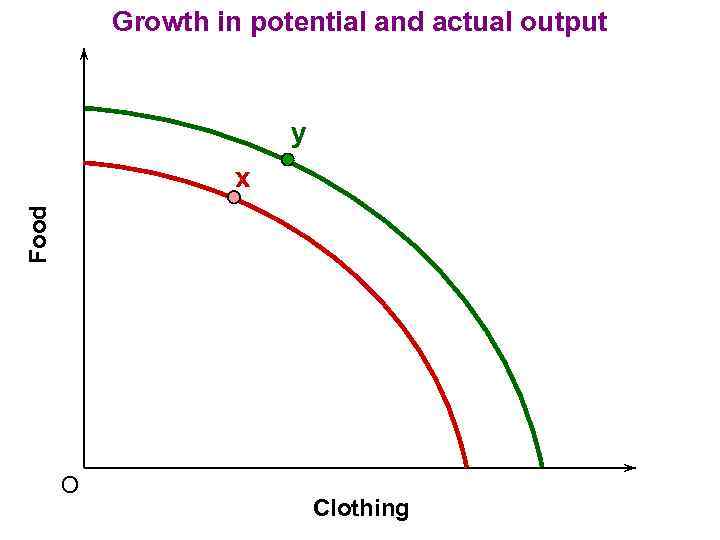
Growth in potential and actual output y Food x O Clothing
WHAT DO ECONOMISTS STUDY? • The circular flow of income – firms and households
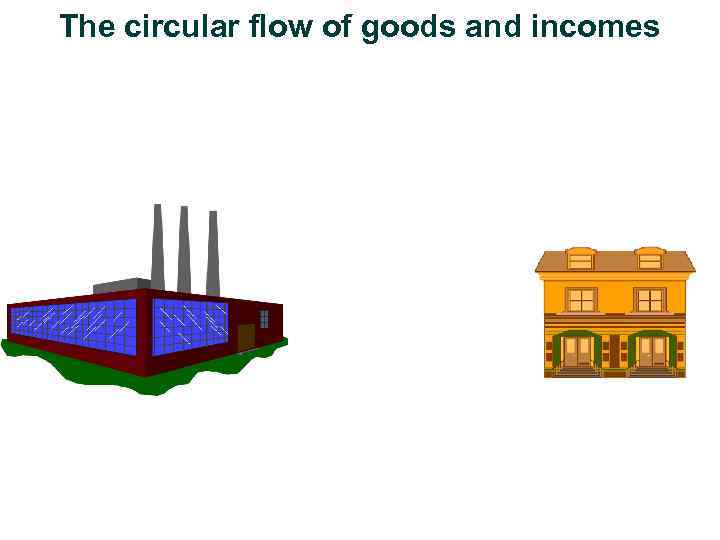
The circular flow of goods and incomes
WHAT DO ECONOMISTS STUDY? • The circular flow of income – firms and households – real and money flows
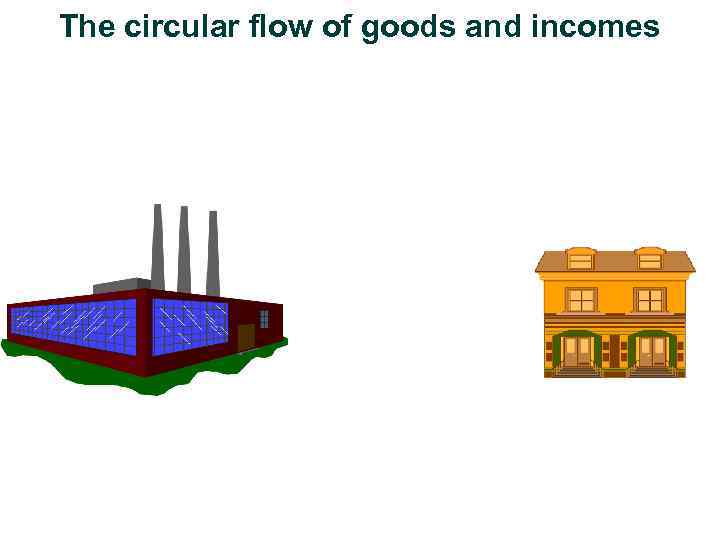
The circular flow of goods and incomes
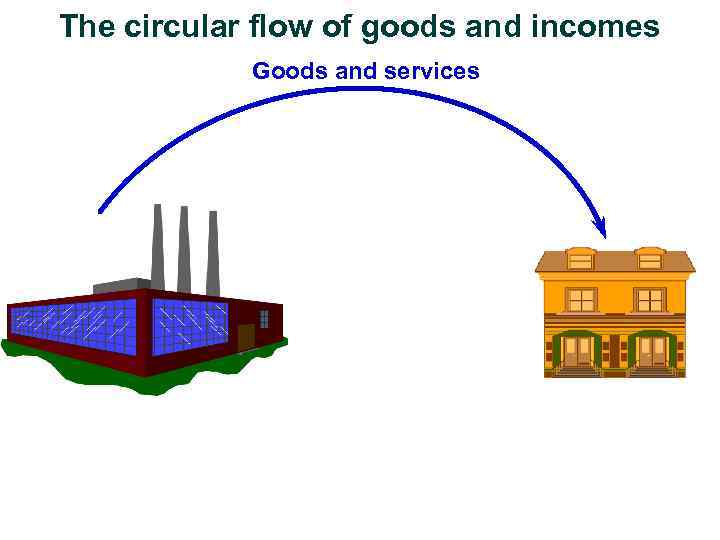
The circular flow of goods and incomes Goods and services
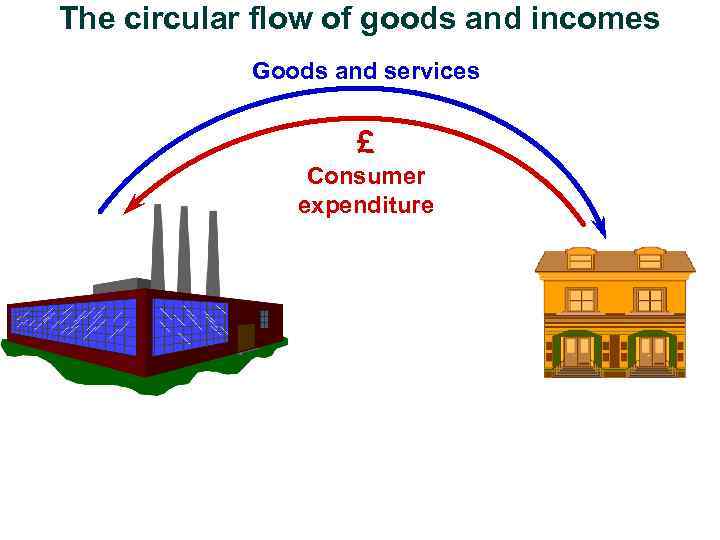
The circular flow of goods and incomes Goods and services £ Consumer expenditure
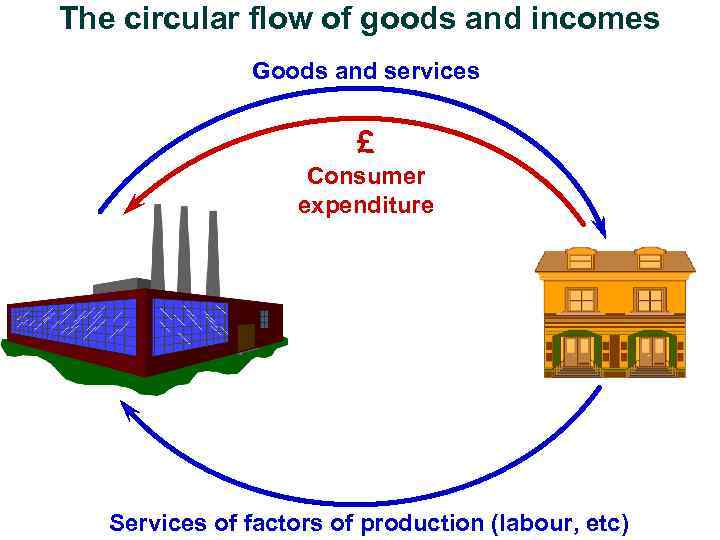
The circular flow of goods and incomes Goods and services £ Consumer expenditure Services of factors of production (labour, etc)
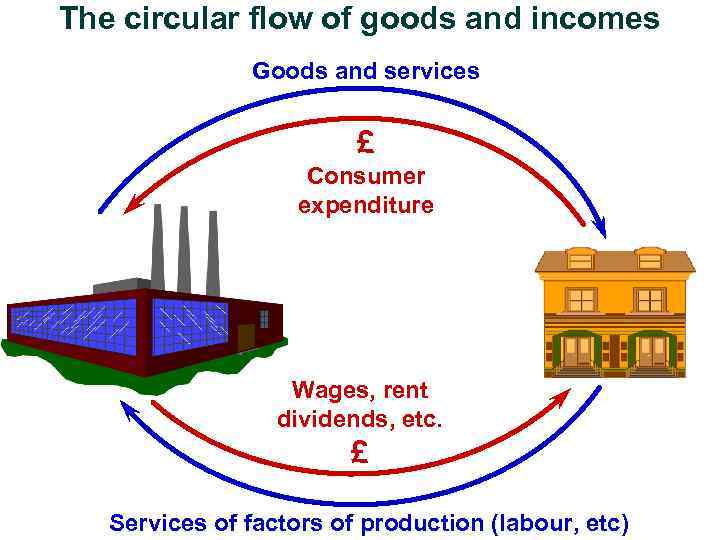
The circular flow of goods and incomes Goods and services £ Consumer expenditure Wages, rent dividends, etc. £ Services of factors of production (labour, etc)
WHAT DO ECONOMISTS STUDY? • The circular flow of income – firms and households – real and money flows – goods and factor markets
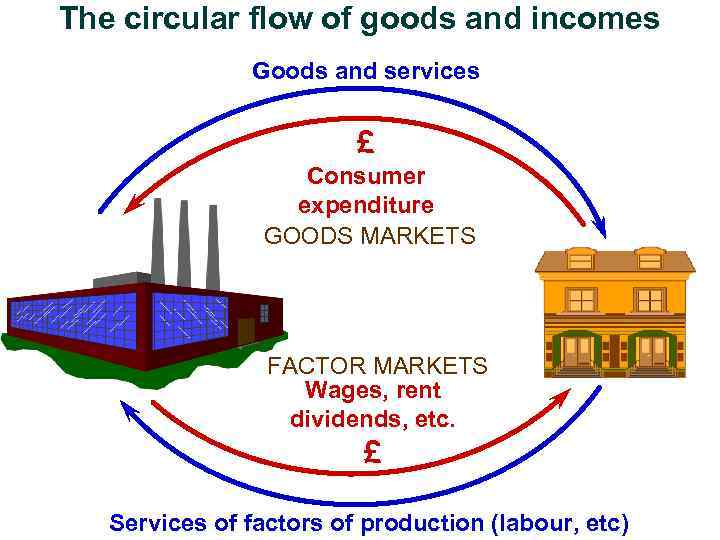
The circular flow of goods and incomes Goods and services £ Consumer expenditure GOODS MARKETS FACTOR MARKETS Wages, rent dividends, etc. £ Services of factors of production (labour, etc)
WHAT DO ECONOMISTS STUDY? • The circular flow of income – firms and households – real and money flows – goods and factor markets – macroeconomics: the total flows
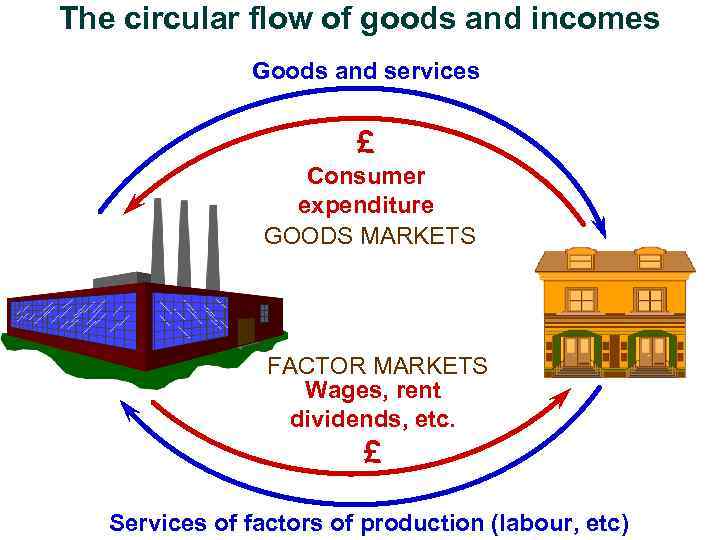
The circular flow of goods and incomes Goods and services £ Consumer expenditure GOODS MARKETS FACTOR MARKETS Wages, rent dividends, etc. £ Services of factors of production (labour, etc)
WHAT DO ECONOMISTS STUDY? • The circular flow of income – firms and households – real and money flows – goods and factor markets – macroeconomics: the total flows – microeconomics: individual markets
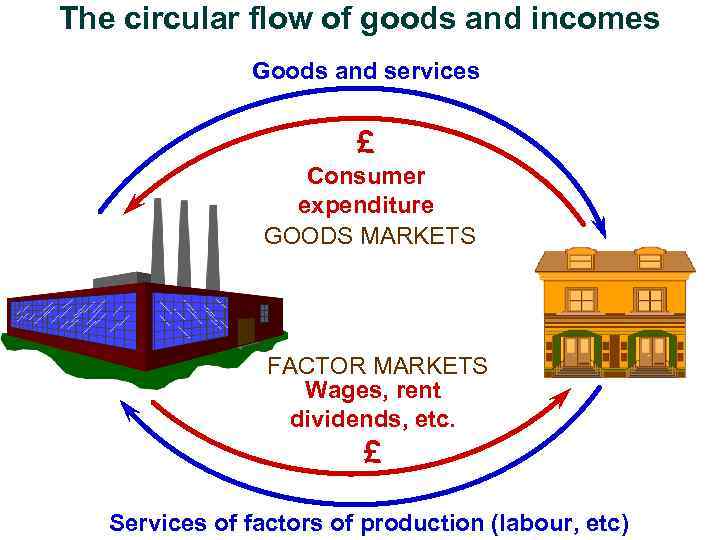
The circular flow of goods and incomes Goods and services £ Consumer expenditure GOODS MARKETS FACTOR MARKETS Wages, rent dividends, etc. £ Services of factors of production (labour, etc)
Introducing Economics Economic Systems
ECONOMIC SYSTEMS • Classifying economic systems – methods of classification – classification by degree of government control
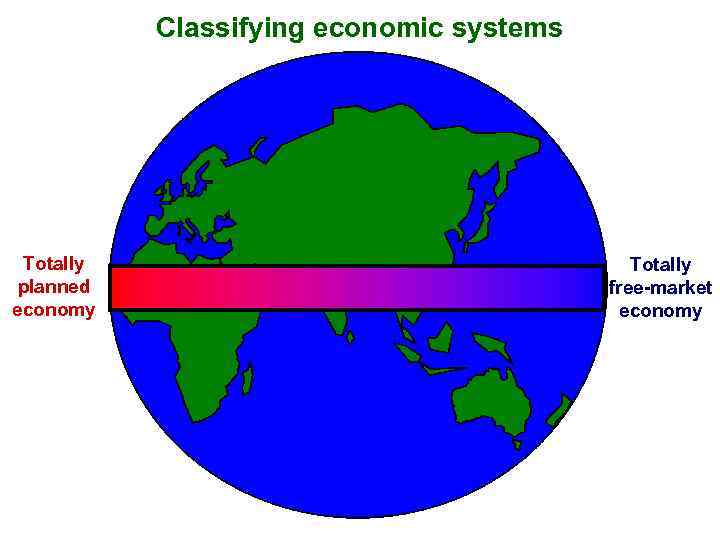
Classifying economic systems Totally planned economy Totally free-market economy
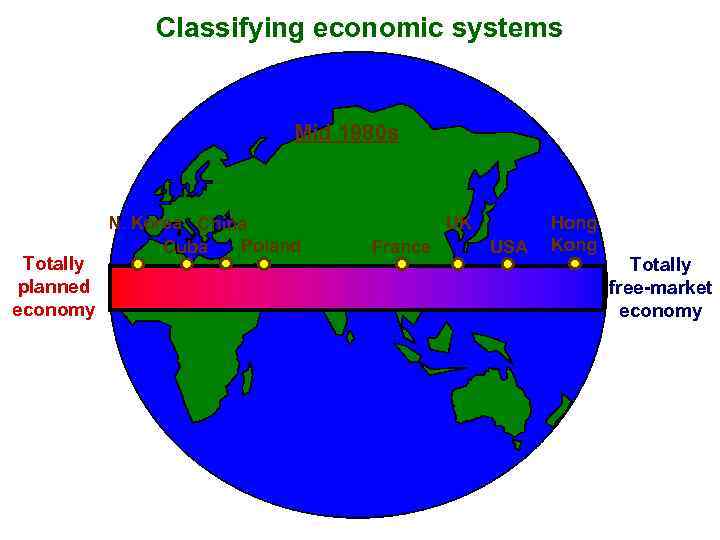
Classifying economic systems Mid 1980 s Totally planned economy N. Korea China Poland Cuba UK France USA Hong Kong Totally free-market economy
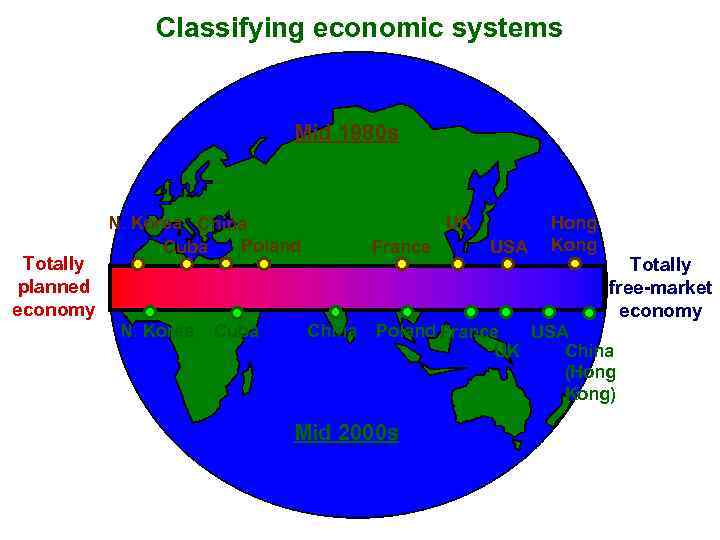
Classifying economic systems Mid 1980 s Totally planned economy N. Korea China Poland Cuba N. Korea Cuba UK France China USA Hong Kong Totally free-market economy Poland France USA UK China (Hong Kong) Mid 2000 s
ECONOMIC SYSTEMS • Classifying economic systems – methods of classification – classification by degree of government control – other methods of classification
ECONOMIC SYSTEMS • Classifying economic systems – methods of classification – classification by degree of government control – other methods of classification • The command economy
ECONOMIC SYSTEMS • Classifying economic systems – methods of classification – classification by degree of government control – other methods of classification • The command economy – features of a command economy
ECONOMIC SYSTEMS • Classifying economic systems – methods of classification – classification by degree of government control – other methods of classification • The command economy – features of a command economy – planning:
ECONOMIC SYSTEMS • Classifying economic systems – methods of classification – classification by degree of government control – other methods of classification • The command economy – features of a command economy – planning: • consumption and investment
ECONOMIC SYSTEMS • Classifying economic systems – methods of classification – classification by degree of government control – other methods of classification • The command economy – features of a command economy – planning: • consumption and investment • matching of inputs and outputs
ECONOMIC SYSTEMS • Classifying economic systems – methods of classification – classification by degree of government control – other methods of classification • The command economy – features of a command economy – planning: • consumption and investment • matching of inputs and outputs • distribution of output
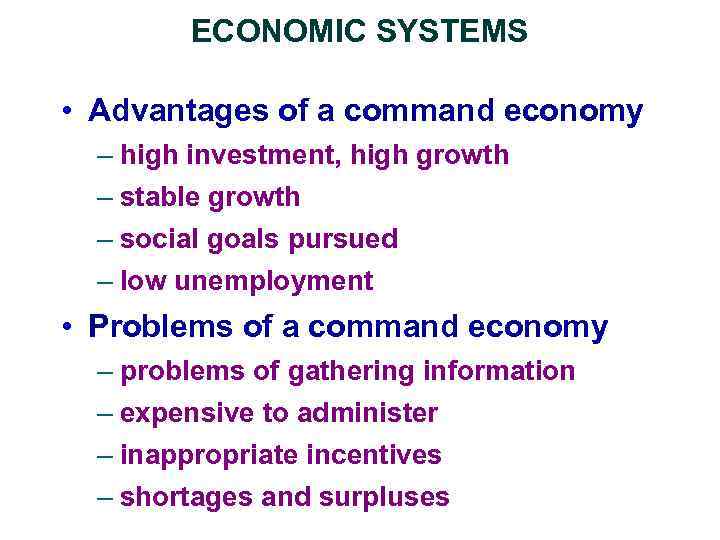
ECONOMIC SYSTEMS • Advantages of a command economy – high investment, high growth – stable growth – social goals pursued – low unemployment • Problems of a command economy – problems of gathering information – expensive to administer – inappropriate incentives – shortages and surpluses
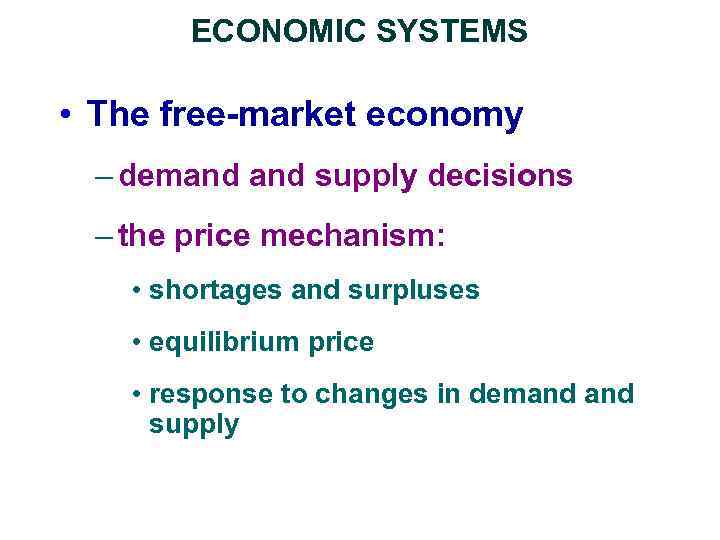
ECONOMIC SYSTEMS • The free-market economy – demand supply decisions – the price mechanism: • shortages and surpluses • equilibrium price • response to changes in demand supply
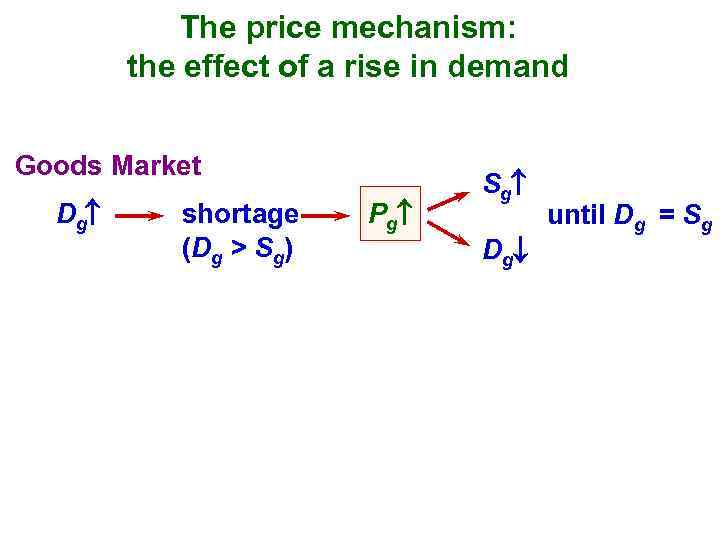
The price mechanism: the effect of a rise in demand Goods Market Dg shortage (Dg > Sg) Pg Sg Dg¯ until Dg = Sg
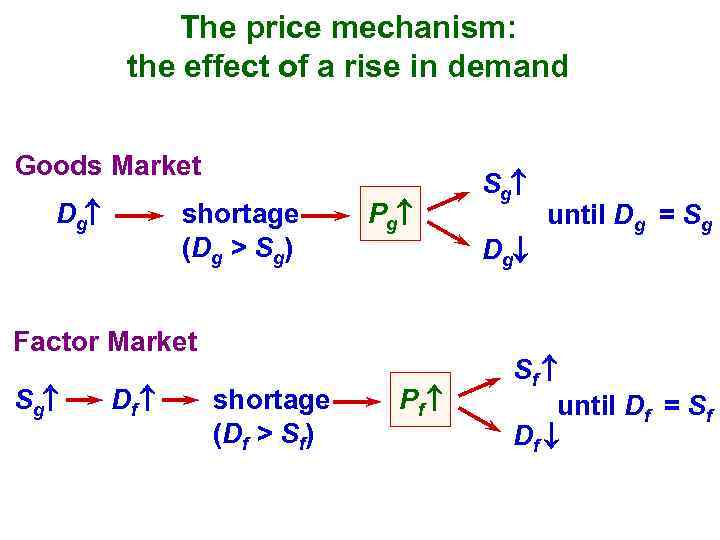
The price mechanism: the effect of a rise in demand Goods Market Dg shortage (Dg > Sg) Pg Factor Market Sg Df shortage (Df > Sf) Pf Sg Dg¯ until Dg = Sg Sf until Df = Sf Df ¯
ECONOMIC SYSTEMS • The free-market economy – demand supply decisions – the price mechanism: • shortages and surpluses • equilibrium price • response to changes in demand supply – the interdependence of markets
ECONOMIC SYSTEMS • Advantages of a free-market economy – transmits information between buyers and sellers – no need for costly bureaucracy – incentives to be efficient – competitive markets responsive to consumers
ECONOMIC SYSTEMS • Problems of a free-market economy – competition may be limited: problem of market power – inequality – the environment and other social goals may be ignored • The mixed economy
Introducing Economics The Nature of Economic Reasoning
THE NATURE OF ECONOMIC REASONING • Economics as a science – models in economics – building models – using models – assessing models • Economics as a social science – difficulties in conducting controlled experiments in many parts of the subject – problems of predicting human behaviour
THE NATURE OF ECONOMIC REASONING • Economics and policy – positive and normative economics – the role of the economist in policy making – the use and abuse of economics
Скачать презентацию Economics usanovpv ru usanovpv mail ru Textbook
1. Introduction.ppt