 Скачать презентацию ECONOMICS Principles and Applications by Robert E HALL
models in economics.ppt
- Количество слайдов: 36



ECONOMICS Principles and Applications by Robert E. HALL ECONOMICS: Principles and Applications, 4 e HALL & LIEBERMAN © 2008 Thomson South-Western Marc LIEBERMAN Power. Point Slides prepared by: Andreea CHIRITESCU Eastern Illinois University
Chapter 1 What is Economics ?
Overview • What is economics? ü Definition, scarcity, and choice ü The world of economics o Micro vs. Macro o Positive vs. Normative ü Why and how to study economics ü The methods of economics • Math review 3
Economics, Scarcity, and Choice • Economics – Study of choice under conditions of scarcity • Scarcity – Situation in which the amount of something available is insufficient to satisfy the desire for it 4
Scarcity and Individual Choice • Unlimited variety of scarcities, based on two basic limitations: 1. Scarce time – Limited number of hours in each day to satisfy our desires 2. Scarce – spending power Cannot afford to buy more of the things we want 5
Scarcity and Individual Choice • Limitations force each of us to make choices • Economists study – Choices – Consequences of those choices – Indirect effects of individual choice on our society 6
Scarcity and Social Choice • Society faces a scarcity of resources • Categories of resources: – Labor – Capital • Human capital • Capital stock – Land/natural resources – Entrepreneurship 7
Scarcity and Economics • Problems studied in economics: the scarcity of resources—and the choices it forces us to make – Households – have limited income to allocate among goods and services – Firms – production is limited by costs of production – Government agencies – the budget is limited, so goals must be carefully chosen 8
Scarcity and Economics • Economists study the decisions made by households, firms, and governments to – Explain how our economic system operates – Forecast the future of our economy, – Suggest ways to make that future even better 9

Microeconomics • Micro comes from the Greek word mikros, meaning “small” • Studies the behavior of individual households, firms, and governments – Choices they make – Interaction in specific markets • Focuses on individual parts of an economy 10

Macroeconomics • Macro comes from the Greek word makros, meaning “large” • Studies the behavior of the overall economy • Focuses on big picture and ignores fine details 11
Positive and Normative Economics • Positive economics: how the economy works – Can be true or false – Can be tested by looking at the facts • Normative economics: what should be – Value judgments, identify problems, and prescribe solutions – Cannot be proved or disproved by the facts alone 12
Why Economists Disagree • The difference of opinion may be positive in nature – Facts are being disputed • The disagreement can be normative – Facts are not being disputed • When economists have different values, they may arrive to different conclusions • Disagreement - over goals and values 13

Why Study Economics • To understand the world better – Global events and personal phenomena • To achieve social change – Understand the origins of social problems – Design more effective solutions 14
Why Study Economics • To help prepare for other careers – A wide range of careers deal with economic issues on many levels • To become an economist – Develop a body of knowledge that could lead you to become an economist in the future 15
The Methods of Economics • Use economic models to develop economic theories • Economic models are built with words, diagrams, and mathematical statements • Economic models – Abstract representation of reality – Should be as simple as possible to accomplish its purpose 16
Economic Models: Assumptions and Conclusions • Two types of assumptions: – Simplifying assumptions • Essential features can stand out more clearly – Critical assumptions • Affect the conclusions of a model in important ways • If critical assumptions are wrong, the model will be wrong 17
The Three Step Process • Economists follow the same three-step process to analyze almost any economic problem: – The first two steps explain how economists build an economic model – The last step explains how they use the model. 18

Math, Jargon, and Other Concerns… • Economic jargon – Special words that allow economists to more precisely express themselves • Math – High school level algebra and geometry • We will covers some of the basic math concepts that you will need tomorrow 19
How to Study Economics • Economics must be studied actively, not passively • Active study – Reproduce what you have learned – List the steps in each logical argument – Retrace the cause-and-effect steps – Draw the graphs – Basic principles • relate to what you are learning 20
Math Review • Tables and graphs – Tables – Straight-line graphs – Curved lines • Linear equations • Lines and curves shift • Shifts vs. movements along a line 21
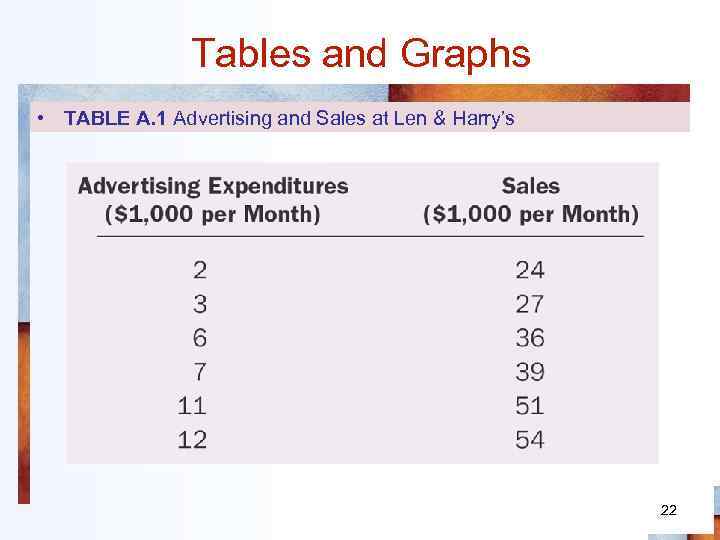
Tables and Graphs • TABLE A. 1 Advertising and Sales at Len & Harry’s 22
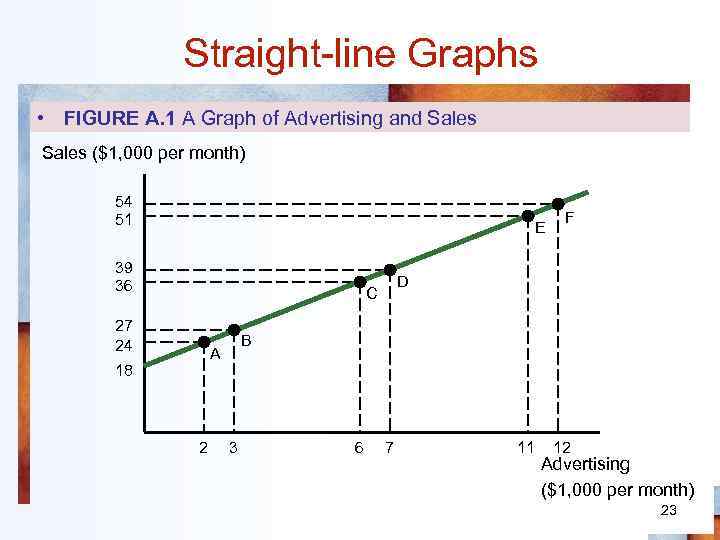
Straight-line Graphs • FIGURE A. 1 A Graph of Advertising and Sales ($1, 000 per month) 54 51 E 39 36 D C 27 24 B A 18 2 F 3 6 7 11 12 Advertising ($1, 000 per month) 23
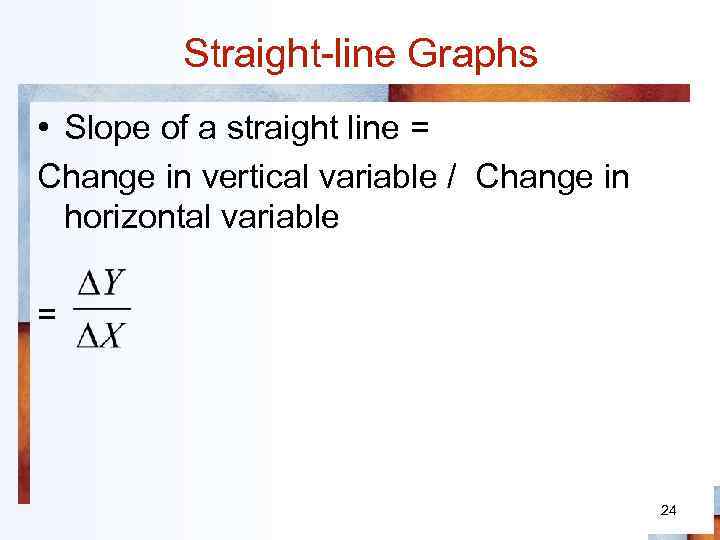
Straight-line Graphs • Slope of a straight line = Change in vertical variable / Change in horizontal variable = 24
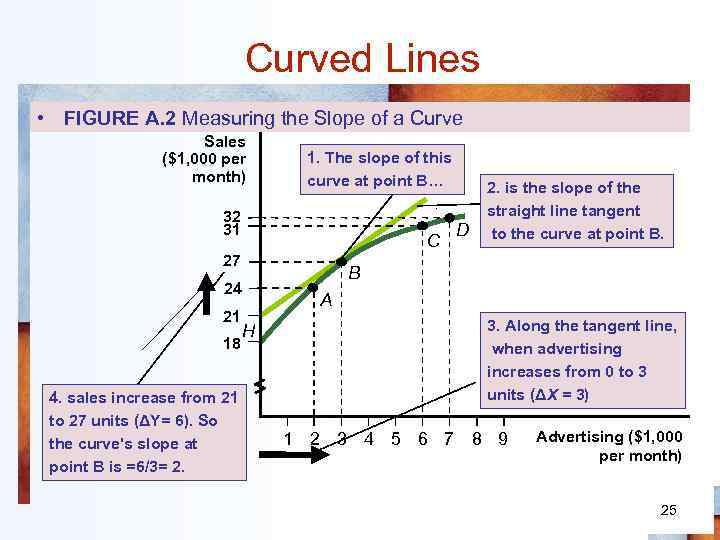
Curved Lines • FIGURE A. 2 Measuring the Slope of a Curve Sales ($1, 000 per month) 1. The slope of this curve at point B… 32 31 C 27 24 21 18 4. sales increase from 21 to 27 units (ΔY= 6). So the curve's slope at point B is =6/3= 2. H D 2. is the slope of the straight line tangent to the curve at point B. B A 3. Along the tangent line, when advertising increases from 0 to 3 units (ΔX = 3) 1 2 3 4 5 6 7 8 9 Advertising ($1, 000 per month) 25
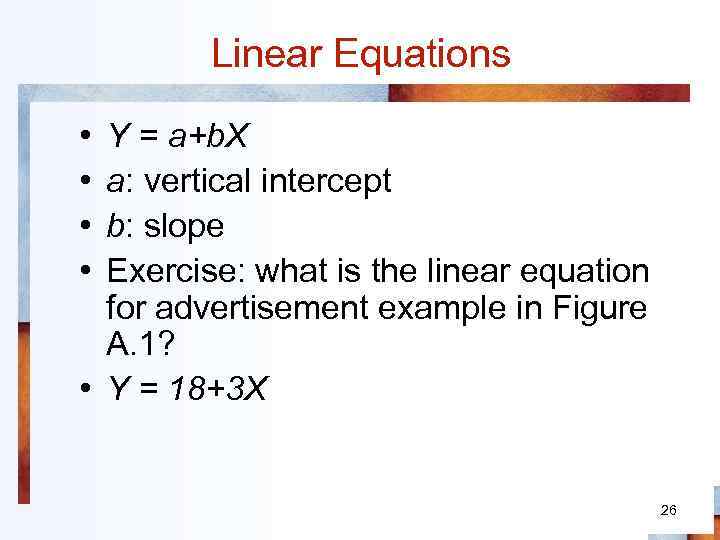
Linear Equations • • Y = a+b. X a: vertical intercept b: slope Exercise: what is the linear equation for advertisement example in Figure A. 1? • Y = 18+3 X 26
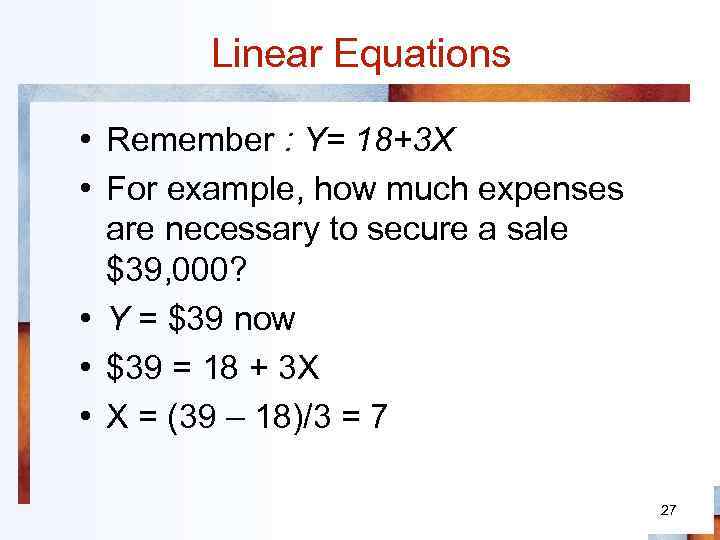
Linear Equations • Remember : Y= 18+3 X • For example, how much expenses are necessary to secure a sale $39, 000? • Y = $39 now • $39 = 18 + 3 X • X = (39 – 18)/3 = 7 27
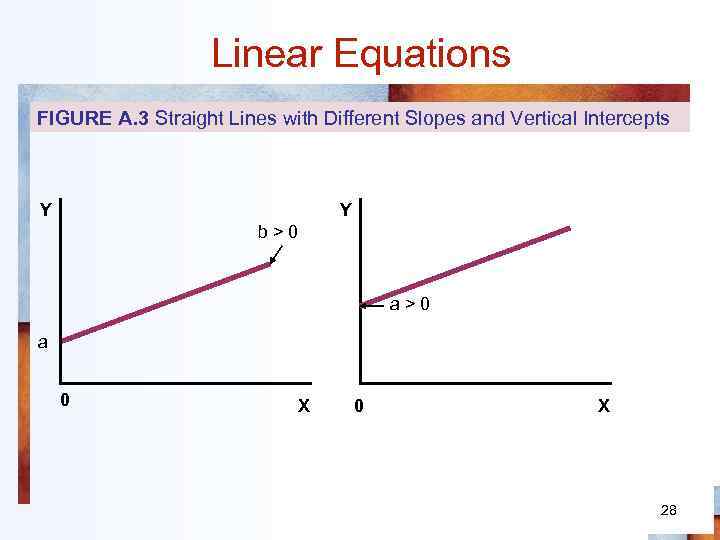
Linear Equations FIGURE A. 3 Straight Lines with Different Slopes and Vertical Intercepts Y Y b>0 a 0 X 28
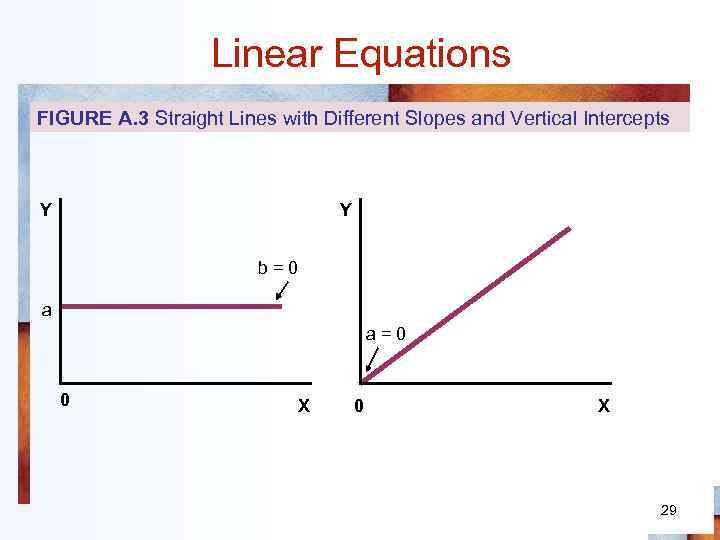
Linear Equations FIGURE A. 3 Straight Lines with Different Slopes and Vertical Intercepts Y Y b=0 a a=0 0 X 29
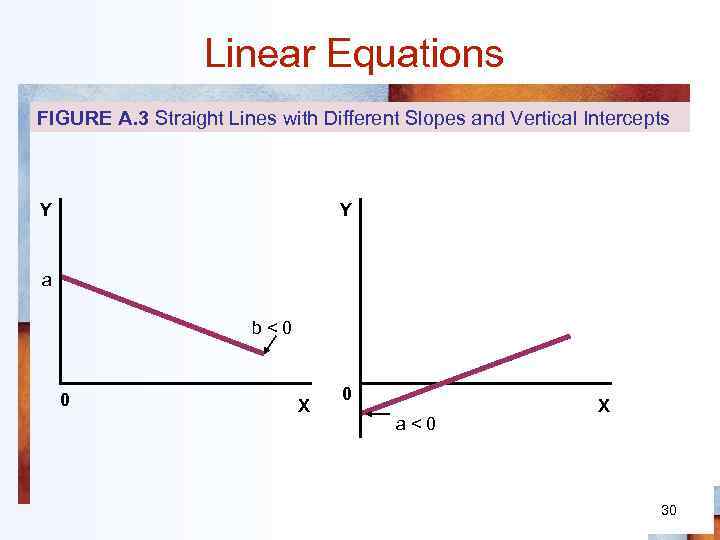
Linear Equations FIGURE A. 3 Straight Lines with Different Slopes and Vertical Intercepts Y Y a b<0 0 X 0 a<0 X 30
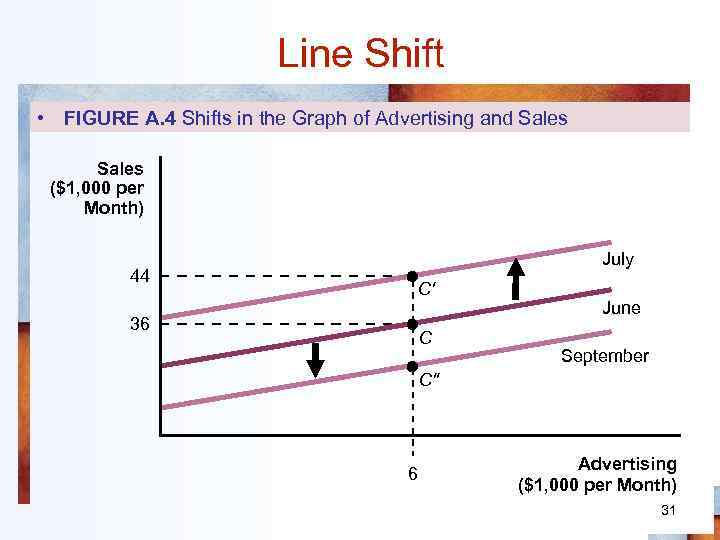
Line Shift • FIGURE A. 4 Shifts in the Graph of Advertising and Sales ($1, 000 per Month) July 44 C' 36 C June September C'' 6 Advertising ($1, 000 per Month) 31
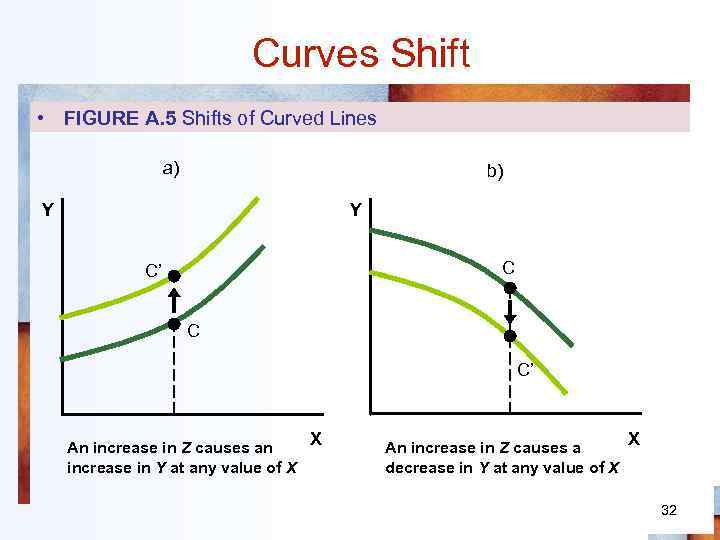
Curves Shift • FIGURE A. 5 Shifts of Curved Lines a) b) Y Y C C’ An increase in Z causes an increase in Y at any value of X X An increase in Z causes a decrease in Y at any value of X X 32
Shifts vs. Movements Along a Line • Suppose Y is the dependent variable, which is measured on one of the axis. If the independent variable measured on the other axis changes, we move along the line. • But if any other independent variable changes, the entire line shirts.
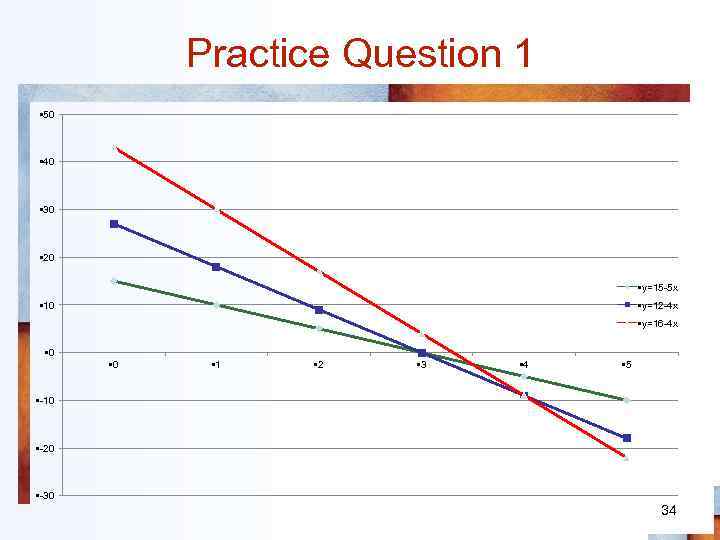
Practice Question 1 • 50 • 40 • 30 • 20 • y=15 -5 x • 10 • y=12 -4 x • y=16 -4 x • 0 • 1 • 2 • 3 • 4 • 5 • -10 • -20 • -30 34

Practice Question 2 • 1600 • SAT on Hours • 1400 • 1200 • 1000 • 800 • 600 • 400 • 200 • 20 • 40 • 60 • 80 • 100 • 120 35
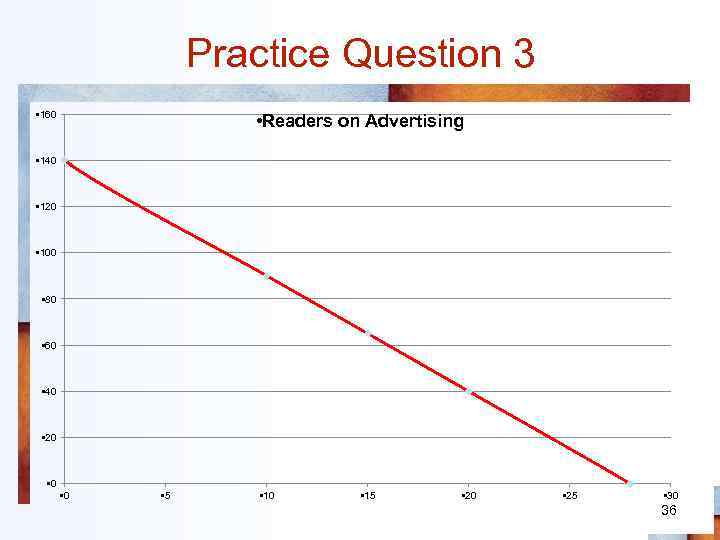
Practice Question 3 • 160 • Readers on Advertising • 140 • 120 • 100 • 80 • 60 • 40 • 20 • 5 • 10 • 15 • 20 • 25 • 30 36
Скачать презентацию ECONOMICS Principles and Applications by Robert E HALL
models in economics.ppt