


 Скачать презентацию Economics in DRC Overview SADC Leadership Issues
82a94a085817e0d5b4ed89758fff199e.ppt
- Количество слайдов: 48
 Economics in DRC
 Overview SADC Leadership Issues Logistics and Infrastructure Ethnic Diversity Mineral Resources Hydroelectric Telecommunications 2
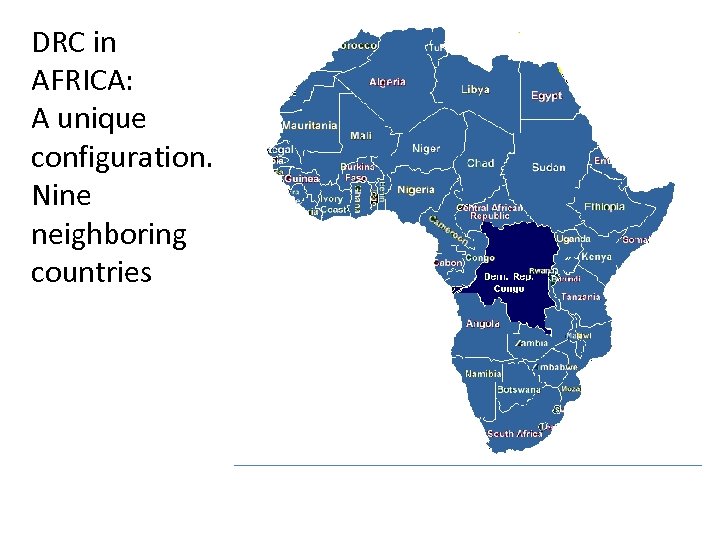 DRC in AFRICA: A unique configuration. Nine neighboring countries
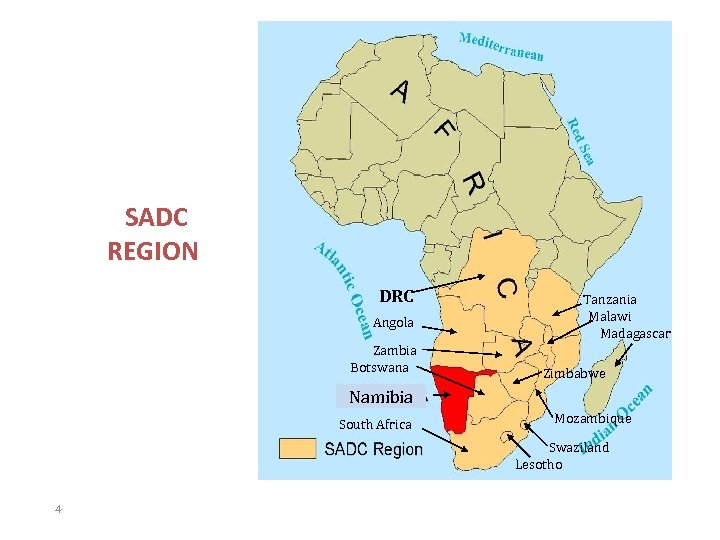 SADC REGION DRC Angola Zambia Botswana Tanzania Malawi Madagascar Zimbabwe Namibia South Africa Mozambique Swaziland Lesotho 4
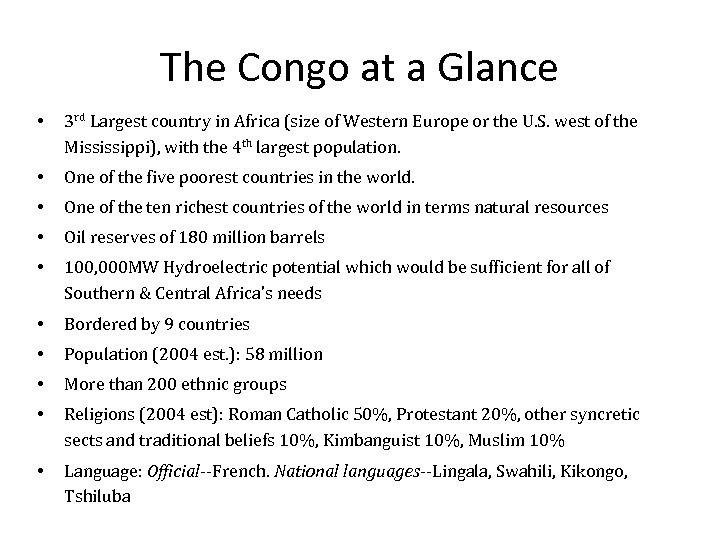 The Congo at a Glance • 3 rd Largest country in Africa (size of Western Europe or the U. S. west of the Mississippi), with the 4 th largest population. • One of the five poorest countries in the world. • One of the ten richest countries of the world in terms natural resources • Oil reserves of 180 million barrels • 100, 000 MW Hydroelectric potential which would be sufficient for all of Southern & Central Africa’s needs • Bordered by 9 countries • Population (2004 est. ): 58 million • More than 200 ethnic groups • Religions (2004 est): Roman Catholic 50%, Protestant 20%, other syncretic sects and traditional beliefs 10%, Kimbanguist 10%, Muslim 10% • Language: Official--French. National languages--Lingala, Swahili, Kikongo, Tshiluba
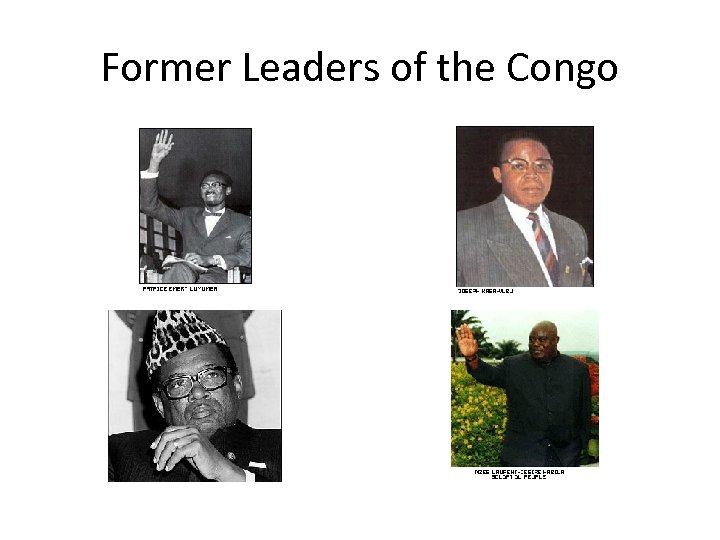 Former Leaders of the Congo
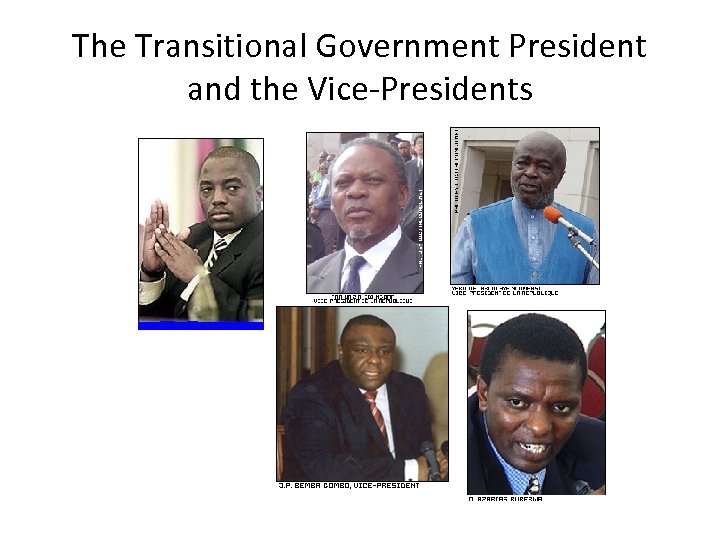 The Transitional Government President and the Vice-Presidents
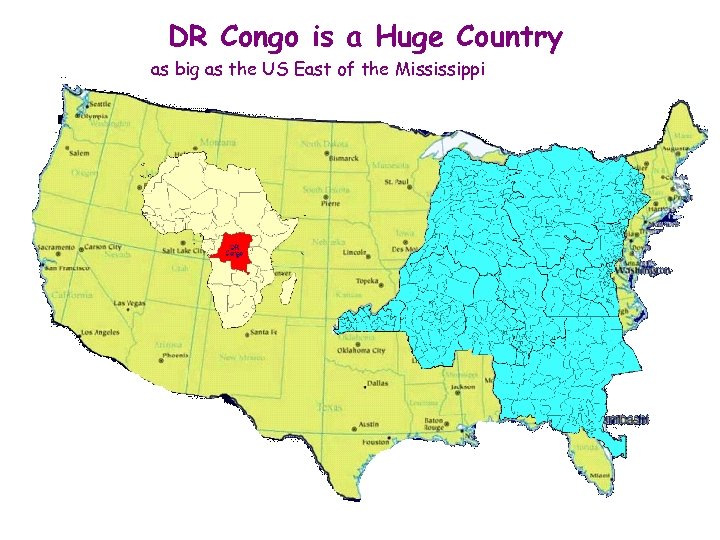 DR Congo is a Huge Country as big as the US East of the Mississippi
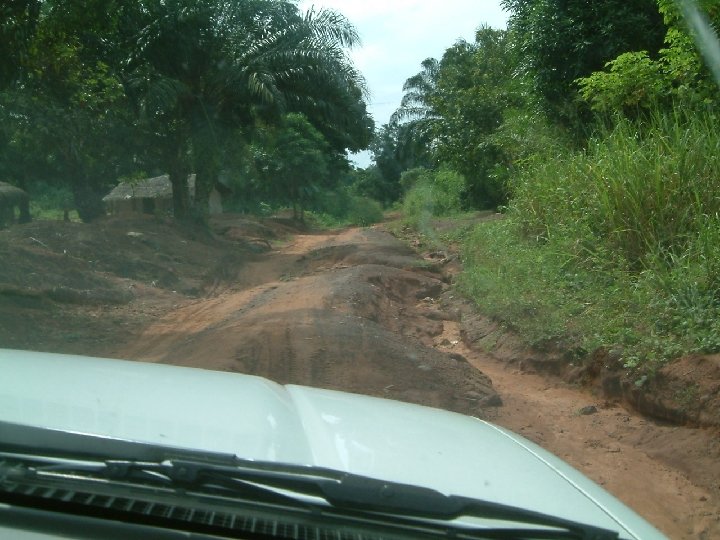
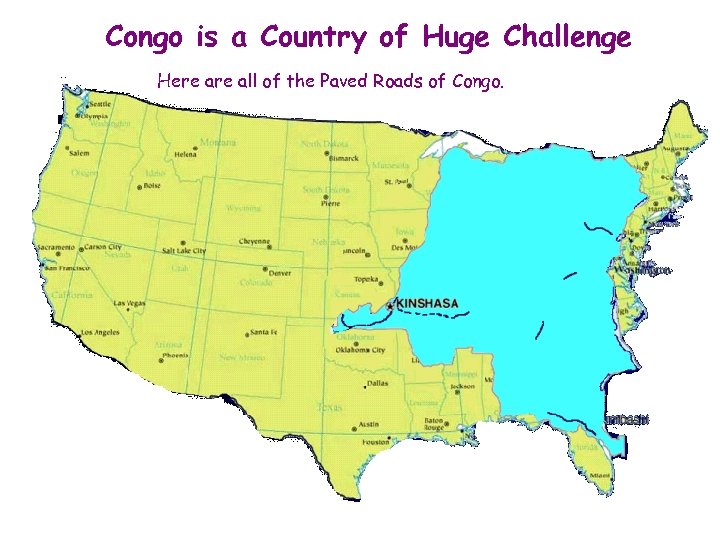 Congo is a Country of Huge Challenge Here all of the Paved Roads of Congo.
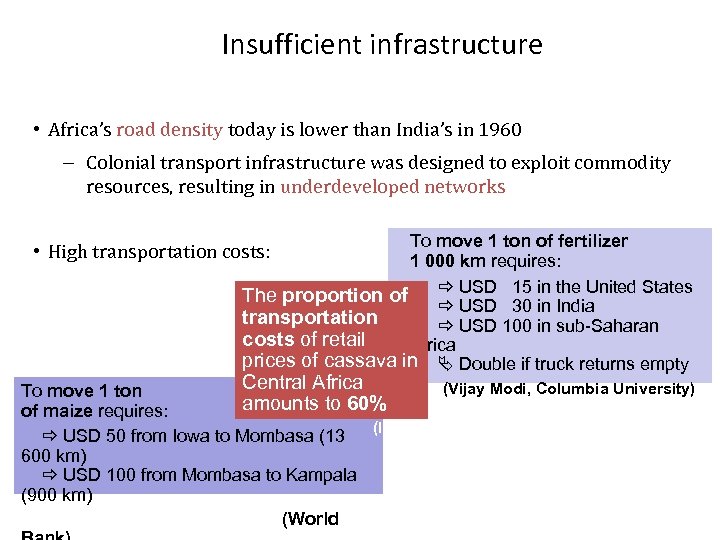 Insufficient infrastructure • Africa’s road density today is lower than India’s in 1960 – Colonial transport infrastructure was designed to exploit commodity resources, resulting in underdeveloped networks To move 1 ton of fertilizer 1 000 km requires: The proportion of USD 15 in the United States USD 30 in India transportation USD 100 in sub-Saharan costs of retail Africa prices of cassava in Double if truck returns empty • High transportation costs: Central Africa To move 1 ton amounts to 60% of maize requires: (IFAD) USD 50 from Iowa to Mombasa (13 600 km) USD 100 from Mombasa to Kampala (900 km) (World (Vijay Modi, Columbia University)
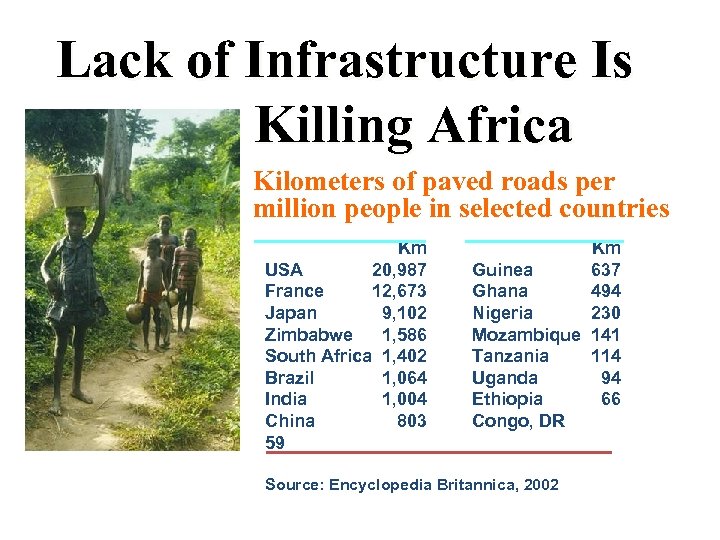 Lack of Infrastructure Is Killing Africa Kilometers of paved roads per million people in selected countries Km USA 20, 987 France 12, 673 Japan 9, 102 Zimbabwe 1, 586 South Africa 1, 402 Brazil 1, 064 India 1, 004 China 803 59 Km Guinea 637 Ghana 494 Nigeria 230 Mozambique 141 Tanzania 114 Uganda 94 Ethiopia 66 Congo, DR Source: Encyclopedia Britannica, 2002
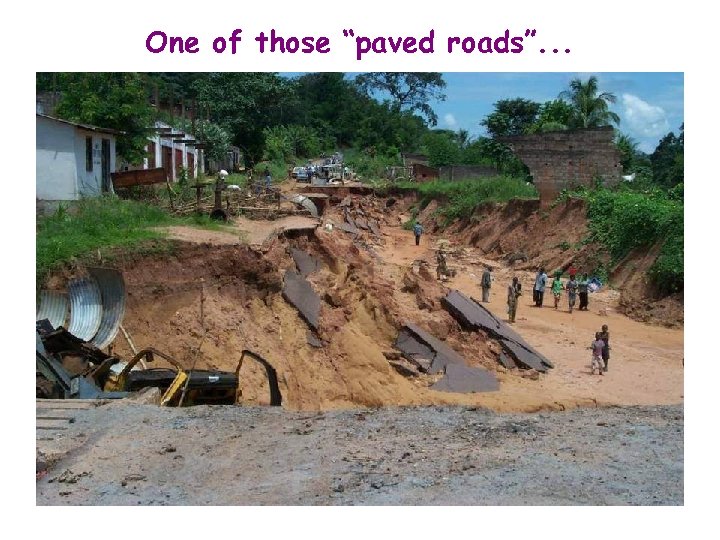 One of those “paved roads”. . .
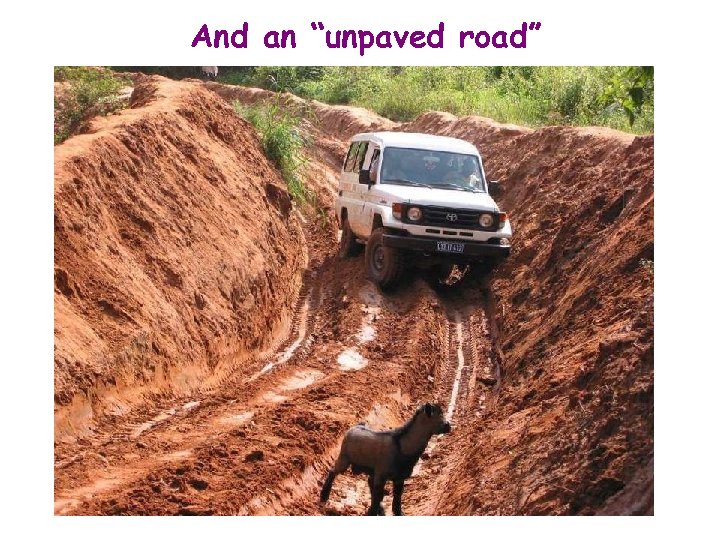 And an “unpaved road”
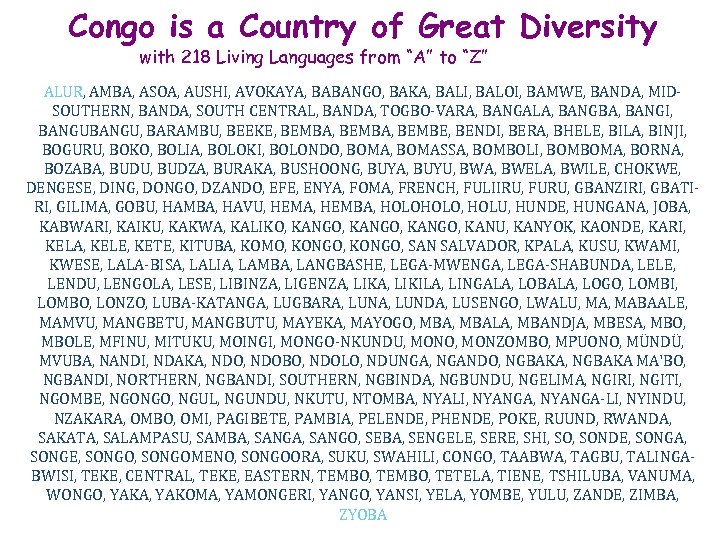 Congo is a Country of Great Diversity with 218 Living Languages from “A” to “Z” ALUR, AMBA, ASOA, AUSHI, AVOKAYA, BABANGO, BAKA, BALI, BALOI, BAMWE, BANDA, MIDSOUTHERN, BANDA, SOUTH CENTRAL, BANDA, TOGBO-VARA, BANGALA, BANGBA, BANGI, BANGU, BARAMBU, BEEKE, BEMBA, BEMBE, BENDI, BERA, BHELE, BILA, BINJI, BOGURU, BOKO, BOLIA, BOLOKI, BOLONDO, BOMASSA, BOMBOLI, BOMBOMA, BORNA, BOZABA, BUDU, BUDZA, BURAKA, BUSHOONG, BUYA, BUYU, BWA, BWELA, BWILE, CHOKWE, DENGESE, DING, DONGO, DZANDO, EFE, ENYA, FOMA, FRENCH, FULIIRU, FURU, GBANZIRI, GBATIRI, GILIMA, GOBU, HAMBA, HAVU, HEMA, HEMBA, HOLO, HOLU, HUNDE, HUNGANA, JOBA, KABWARI, KAIKU, KAKWA, KALIKO, KANGO, KANU, KANYOK, KAONDE, KARI, KELA, KELE, KETE, KITUBA, KOMO, KONGO, SAN SALVADOR, KPALA, KUSU, KWAMI, KWESE, LALA-BISA, LALIA, LAMBA, LANGBASHE, LEGA-MWENGA, LEGA-SHABUNDA, LELE, LENDU, LENGOLA, LESE, LIBINZA, LIGENZA, LIKILA, LINGALA, LOBALA, LOGO, LOMBI, LOMBO, LONZO, LUBA-KATANGA, LUGBARA, LUNDA, LUSENGO, LWALU, MABAALE, MAMVU, MANGBETU, MANGBUTU, MAYEKA, MAYOGO, MBALA, MBANDJA, MBESA, MBOLE, MFINU, MITUKU, MOINGI, MONGO-NKUNDU, MONO, MONZOMBO, MPUONO, MÜNDÜ, MVUBA, NANDI, NDAKA, NDOBO, NDOLO, NDUNGA, NGANDO, NGBAKA MA'BO, NGBANDI, NORTHERN, NGBANDI, SOUTHERN, NGBINDA, NGBUNDU, NGELIMA, NGIRI, NGITI, NGOMBE, NGONGO, NGUL, NGUNDU, NKUTU, NTOMBA, NYALI, NYANGA-LI, NYINDU, NZAKARA, OMBO, OMI, PAGIBETE, PAMBIA, PELENDE, PHENDE, POKE, RUUND, RWANDA, SAKATA, SALAMPASU, SAMBA, SANGO, SEBA, SENGELE, SERE, SHI, SONDE, SONGA, SONGE, SONGOMENO, SONGOORA, SUKU, SWAHILI, CONGO, TAABWA, TAGBU, TALINGABWISI, TEKE, CENTRAL, TEKE, EASTERN, TEMBO, TETELA, TIENE, TSHILUBA, VANUMA, WONGO, YAKA, YAKOMA, YAMONGERI, YANGO, YANSI, YELA, YOMBE, YULU, ZANDE, ZIMBA, ZYOBA
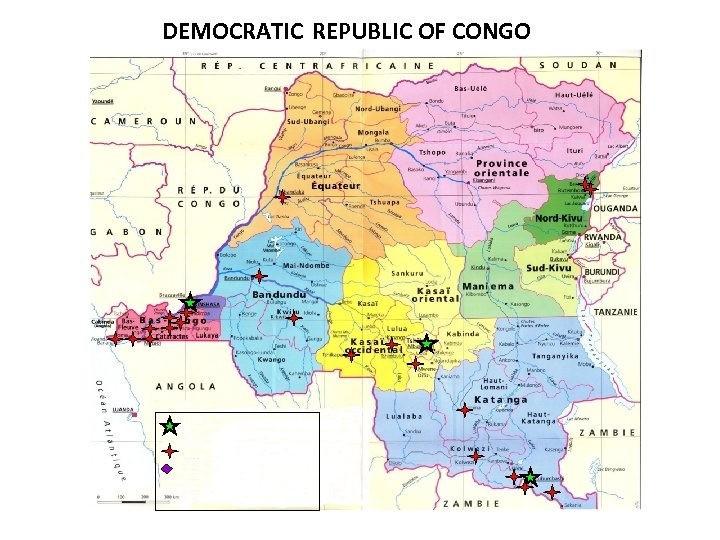 DEMOCRATIC REPUBLIC OF CONGO
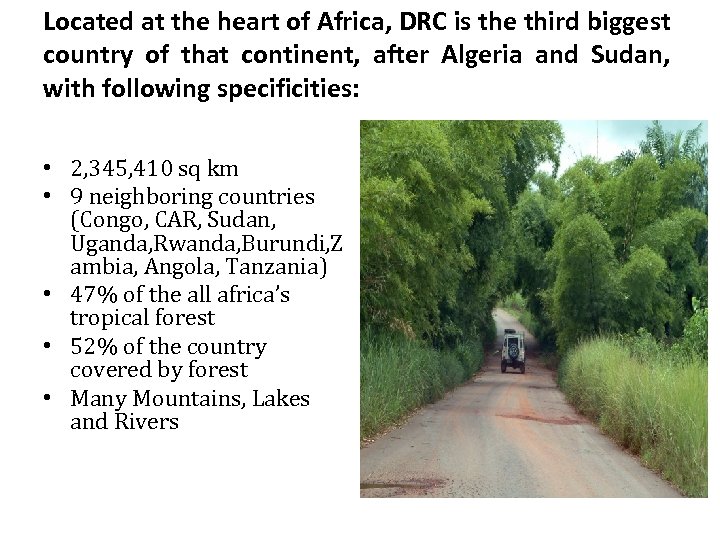 Located at the heart of Africa, DRC is the third biggest country of that continent, after Algeria and Sudan, with following specificities: • 2, 345, 410 sq km • 9 neighboring countries (Congo, CAR, Sudan, Uganda, Rwanda, Burundi, Z ambia, Angola, Tanzania) • 47% of the all africa’s tropical forest • 52% of the country covered by forest • Many Mountains, Lakes and Rivers
 DRC is a country blessed by Nature, considering its unlimited natural resources, spread in all over the country; among that: • • • Copper Cobalt Coltan Diamond Petroleum Gold Uranium Manganese Tin Iron • • • Radium Bauxite Germanium Silver Zinc Cadmium coal Timber Coffee Methane gaz
 Among all DRC’s Natural Resources, the most important is definitely Congo River, 3, 100 kilometers, the second river in the world after Amazon by its rate of flow, evaluated to 40, 000 cubic meters per second. Congo River is crossing twice the Equator. This configuration results to a very stable level of water during the year, which generates at the site of Inga, close to the embouchure, the most powerful potential hydroelectricity site of the world. 44, 000 Megawatts of electricity will be produced at that site, at the final stage.
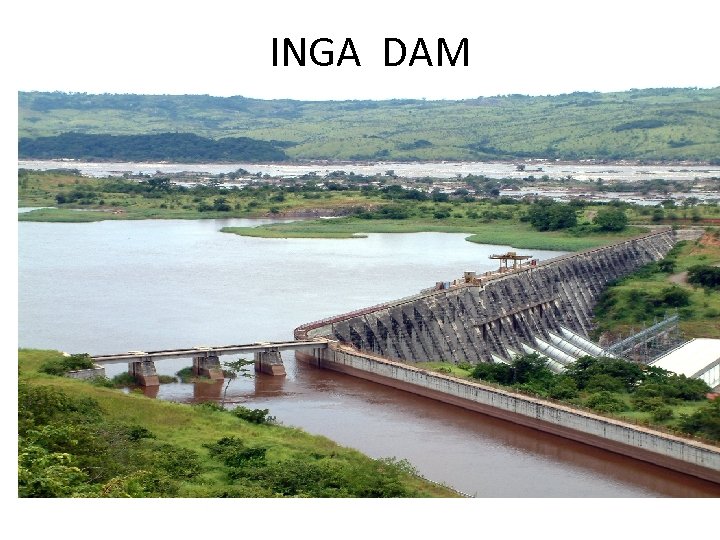 INGA DAM
 Although blessed by Nature, DRC’s economy hasn’t been able to take off and drive a sustainable development. This is mainly due to political instability the country faced since Independence. Economic key parameters are as follow: • • • Nominal GDP: 7. 328 billions USD ( 2005) GDP/ capita : 700 USD (2005) Inflation rate : 13. 20 % ( 2005) Growth rate : 6. 5 % (2005) currency : FC ( Congolese franc) 1$ US= 490 FC
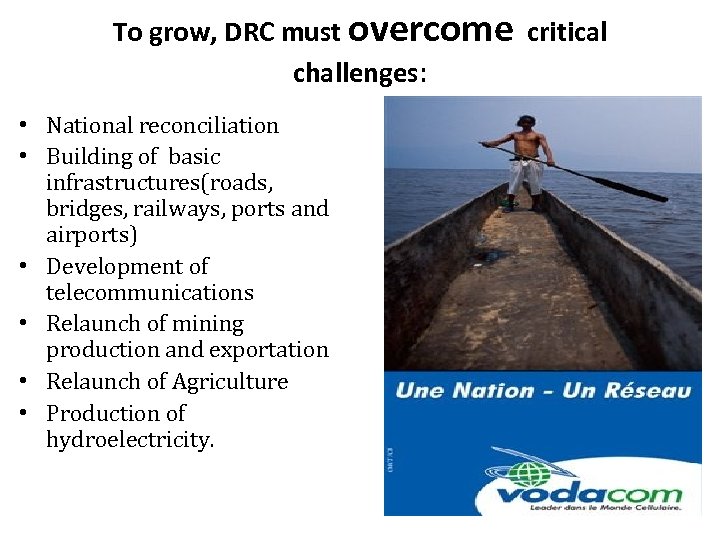 To grow, DRC must overcome critical challenges: • National reconciliation • Building of basic infrastructures(roads, bridges, railways, ports and airports) • Development of telecommunications • Relaunch of mining production and exportation • Relaunch of Agriculture • Production of hydroelectricity.
 Among priorities, telecommunications stand as a key factor to drive the entire economy. Telecommunications will overcome the lack of basic infrastructures like roads, railways, airports, and allow people to exchange useful information, idea, image, data and values for their development. DRC’s telecommunication infrastructure, was totally obsolete and neglected. This justified the option taken by the Government in 1988, to open this sector to Private Investors.
 TELECOMMUNICATION OF DRC IN JANUARY 2000 • • 2 GSM Operators: CWN, CELTEL 2 AMPS Operators: TELECEL, COMCELL 1 CDMA Operator: AFRITEL 1 Land line Operator: OCPT 1 Wireless Operator : SOGETEL Total Subscribers base: 145, 000 Total cities covered : 10 Penetration rate : 0, 07% (1: 1, 300), (the lowest of all Africa)
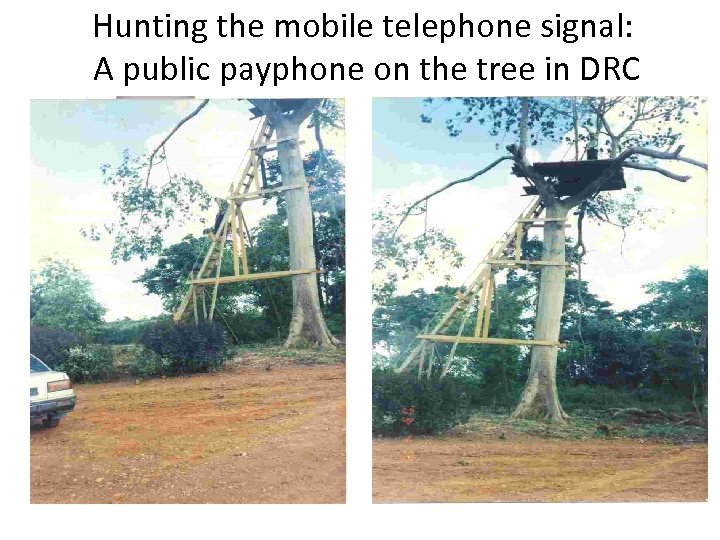 Hunting the mobile telephone signal: A public payphone on the tree in DRC
 VODACOM CONGO(RDC)SPRL SUCCESS STORY 2 • • • 31/12/2003: 58 cities covered, 622, 478 subs 01/05/2004: 93 cities covered, 741, 100 subs 31/12/2004: 120 cities covered, 969, 326 subs 21/01/2005: 1, 000 Active subscribers 01/05/2005: 143 cities covered, 1, 056, 000 subs 31/12/2005: 183 cities covered 1, 391, 000 subs 01/03/2006: 1, 500, 000 Active subscribers 01/05/2006: 187 cities covered, 1, 650, 000 subs 30/08/2006: 200 cities covered, 1, 950, 000 subs
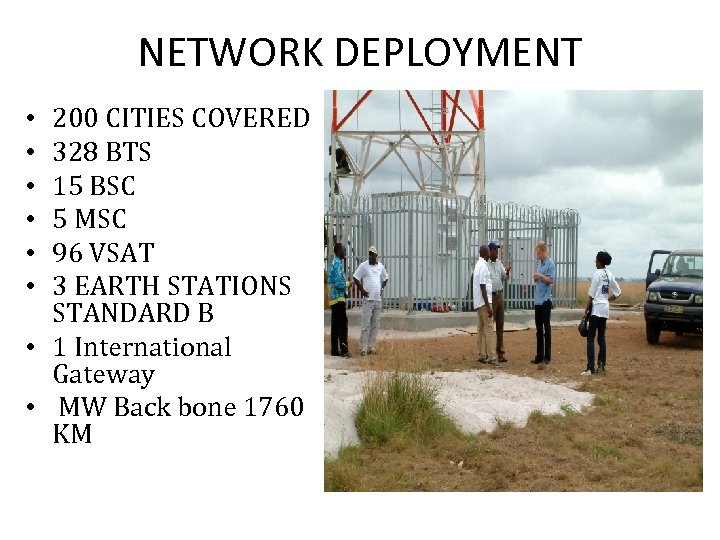 NETWORK DEPLOYMENT 200 CITIES COVERED 328 BTS 15 BSC 5 MSC 96 VSAT 3 EARTH STATIONS STANDARD B • 1 International Gateway • MW Back bone 1760 KM • • •
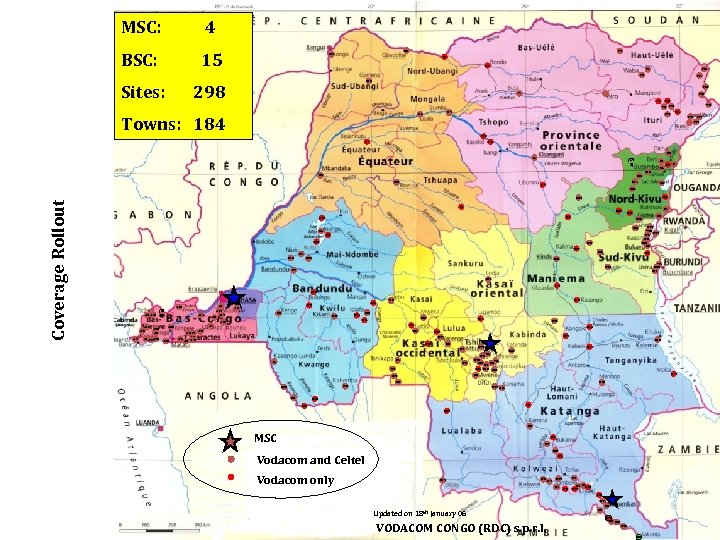 MSC: 4 BSC: 15 B 11 F 2 B 1 F 11 F 18 F 1 F 9 Sites: F 17 B 13 298 F 19 F 7 F 20 F 13 F 4 Towns: 184 F 21 F 16 F 3 B 14 B 15 F 14 F 15 F 23 F 24 F 10 B 17 F 25 E 6 F 5 (C 4 5) E 4 E 2 E 1 E 5 E 19 B 9 E 16 B 18 E 17 F 12 E 3 E 18 E 15 Coverage Rollout E 34 B 4 E 32 E 27 B 24 E 7 E 21 E 36 B 8 B 32 E 28 E 12 E 33 B 21 B 10 B 34 E 9 E 20 B 5 E 22 E 23 E 25 E 24 E 26 E 38 E 31 E 10 E 37 E 30 E 11 E 29 B 2 C 12 E 14 B 16 A 9 A 10 A 16 (10 A 15 0) A 17 A 12 A 14 A 11 B 25 B 28 A 11 B 6 B 27 B 22 A 4 A 29 A 6 A 5 A 24 A 26 E 13 C 13 B 23 C 10 B 26 A 13 A 18 A 23 A 28 A 3 C 28 D 13 C 11 A 8 A 21 A 20 A 27 C 1 A 7 A 30 F 22 C 26 D 32 C 27 A 22 D 10 C 29 C 8 C 24 C 4 D 17 C 16 C 5 C 7 B 7 C 21 C 23 C 20 C 25 C 30 C 9 C 21 C 15 C 18 C 19 D 14 C 6 C 14 C 3 D 16 B 20 B 33 B 31 C 22 D 15 B 29 D 1 B 30 D 32 D 8 MSC D 11 D 2 D 18 Vodacom and Celtel D 25 Vodacom only D 12 D 23 D 4 D 21 D 24 D 7 D 20 D 25 D 5 D 19 D 22 D 26 D 27 D 3 Updated on 18 th January 06 VODACOM CONGO (RDC) s. p. r. l. D 6 D 28 D 31 D 30 D 29 D 9
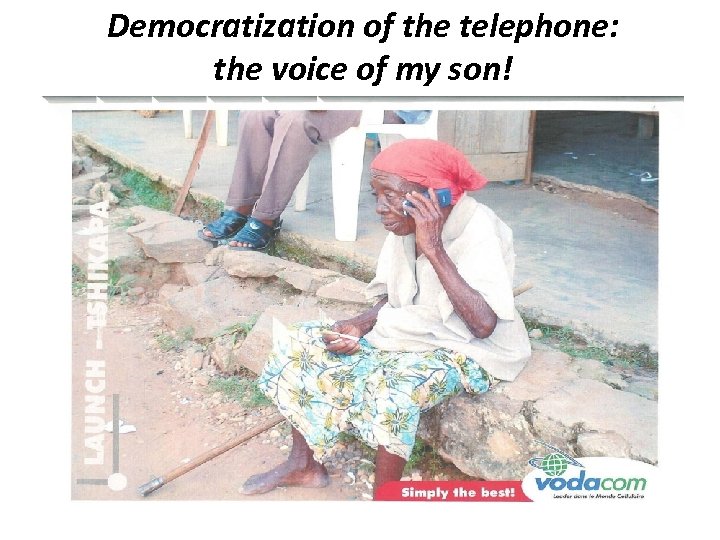 Democratization of the telephone: the voice of my son!
 The Way Forward • Good Governance - including; the quality of the rule of law; the absence of armed conflict or of a high risk of such conflict; respect for labor standards and human rights; recognition of and willingness to protect the rights of indigenous peoples; and government capacity to promote sustainable development through economic diversification. – Such a framework must be developed with public participation, opportunities for public input, comment, and feedback – not drafted by consultants or hurried through as a condition of Bank procedure. • Transparency - Companies and governments must be required to publish what they pay governments for the right to access and exploit natural resources. – including taxes, fees, royalties, production power agreements, host government agreements, and other payments, including signature bonuses.
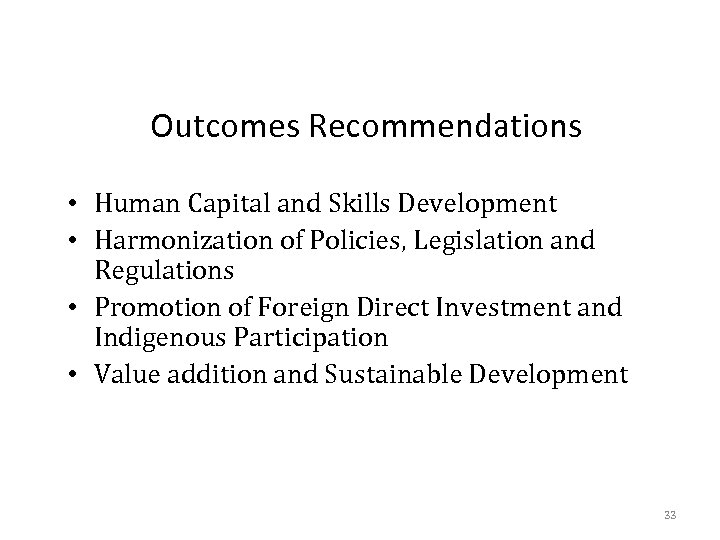 Outcomes Recommendations • Human Capital and Skills Development • Harmonization of Policies, Legislation and Regulations • Promotion of Foreign Direct Investment and Indigenous Participation • Value addition and Sustainable Development 33
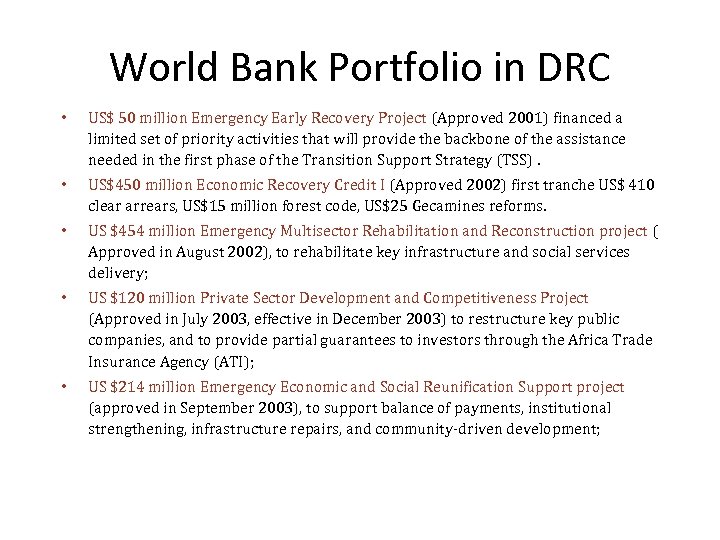 World Bank Portfolio in DRC • US$ 50 million Emergency Early Recovery Project (Approved 2001) financed a limited set of priority activities that will provide the backbone of the assistance needed in the first phase of the Transition Support Strategy (TSS). • US$450 million Economic Recovery Credit I (Approved 2002) first tranche US$ 410 clear arrears, US$15 million forest code, US$25 Gecamines reforms. • US $454 million Emergency Multisector Rehabilitation and Reconstruction project ( Approved in August 2002), to rehabilitate key infrastructure and social services delivery; • US $120 million Private Sector Development and Competitiveness Project (Approved in July 2003, effective in December 2003) to restructure key public companies, and to provide partial guarantees to investors through the Africa Trade Insurance Agency (ATI); • US $214 million Emergency Economic and Social Reunification Support project (approved in September 2003), to support balance of payments, institutional strengthening, infrastructure repairs, and community-driven development;
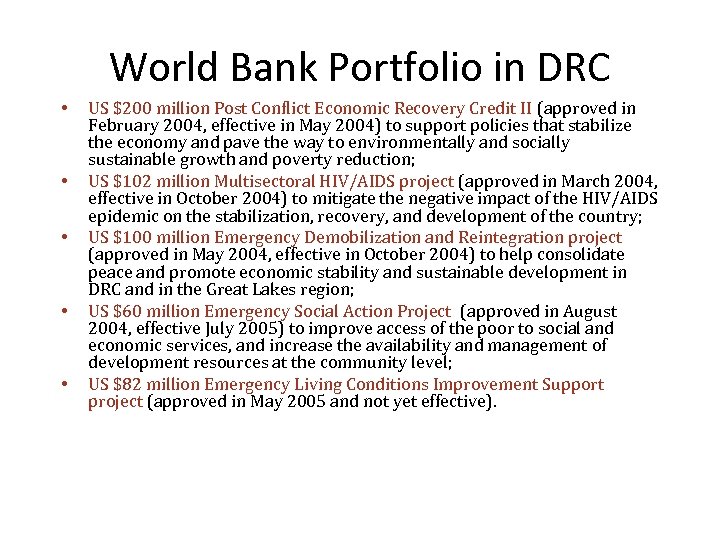 World Bank Portfolio in DRC • • • US $200 million Post Conflict Economic Recovery Credit II (approved in February 2004, effective in May 2004) to support policies that stabilize the economy and pave the way to environmentally and socially sustainable growth and poverty reduction; US $102 million Multisectoral HIV/AIDS project (approved in March 2004, effective in October 2004) to mitigate the negative impact of the HIV/AIDS epidemic on the stabilization, recovery, and development of the country; US $100 million Emergency Demobilization and Reintegration project (approved in May 2004, effective in October 2004) to help consolidate peace and promote economic stability and sustainable development in DRC and in the Great Lakes region; US $60 million Emergency Social Action Project (approved in August 2004, effective July 2005) to improve access of the poor to social and economic services, and increase the availability and management of development resources at the community level; US $82 million Emergency Living Conditions Improvement Support project (approved in May 2005 and not yet effective).
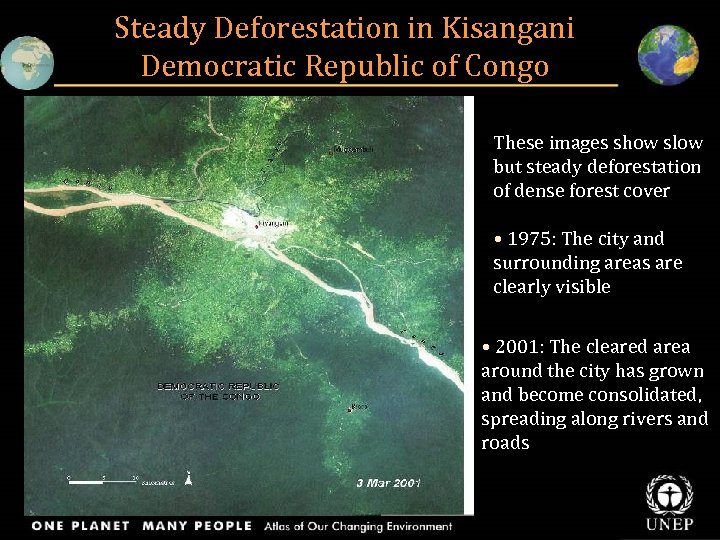 Steady Deforestation in Kisangani Democratic Republic of Congo These images show slow but steady deforestation of dense forest cover • 1975: The city and surrounding areas are clearly visible • 2001: The cleared area around the city has grown and become consolidated, spreading along rivers and roads
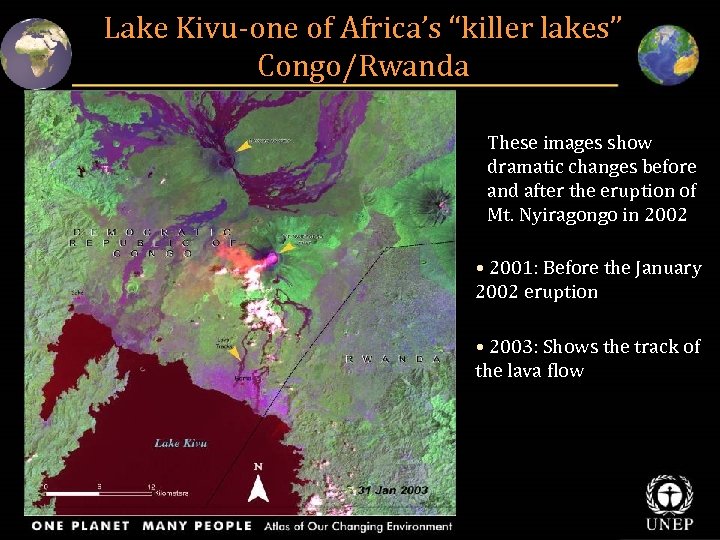 Lake Kivu-one of Africa’s “killer lakes” Congo/Rwanda These images show dramatic changes before and after the eruption of Mt. Nyiragongo in 2002 • 2001: Before the January 2002 eruption • 2003: Shows the track of the lava flow
 Current Mining Projects • Anvil Mining, a Canadian company, and has been in production since 2002. – In April 2005 MIGA provides $13. 3 million of political risk insurance after Congolese and international civil society groups raised a number of concerns regarding labor problems, governance, development benefits, and security issues by letter to the Board. – Board report states “illegal extraction of natural resources remains a main source of funding for groups bent on perpetuating the conflict in the eastern and northeastern parts of the country”. – October 2004 Kilwa Incident - Allegedly Anvil Mining provided logistical assistance to bring in government troops to halt a rebel uprising. The government troops’ intervention turned very quickly to the massacre of “more 100 deaths”. • Currently a CAO investigation into the due diligence process by MIGA instigated by Kilwa Incident of October 2004.
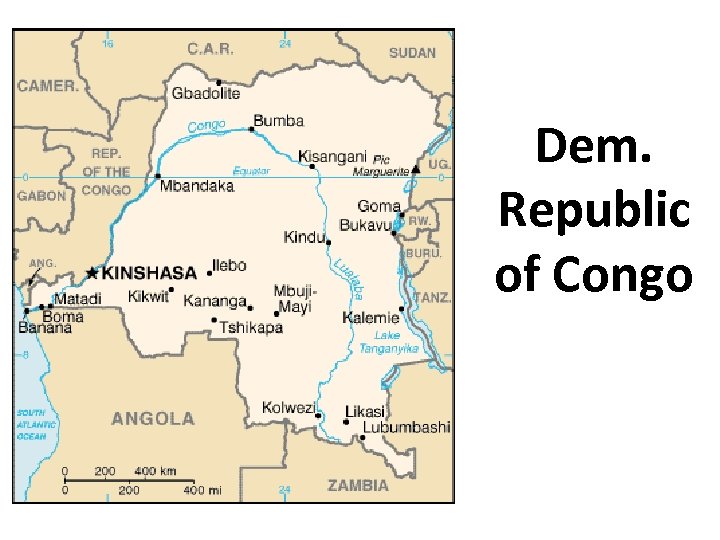 Dem. Republic of Congo
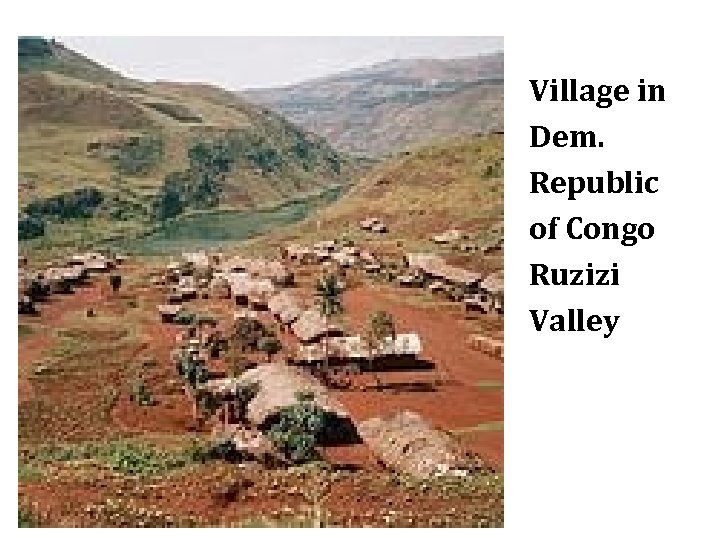 Village in Dem. Republic of Congo Ruzizi Valley
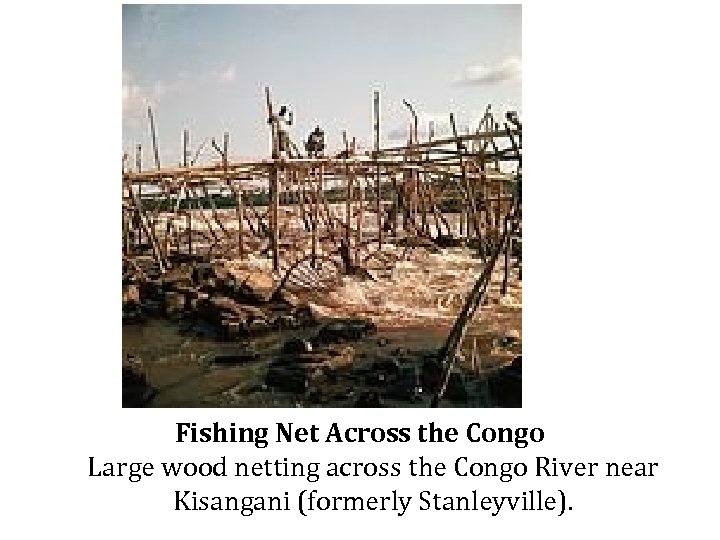 Fishing Net Across the Congo Large wood netting across the Congo River near Kisangani (formerly Stanleyville).
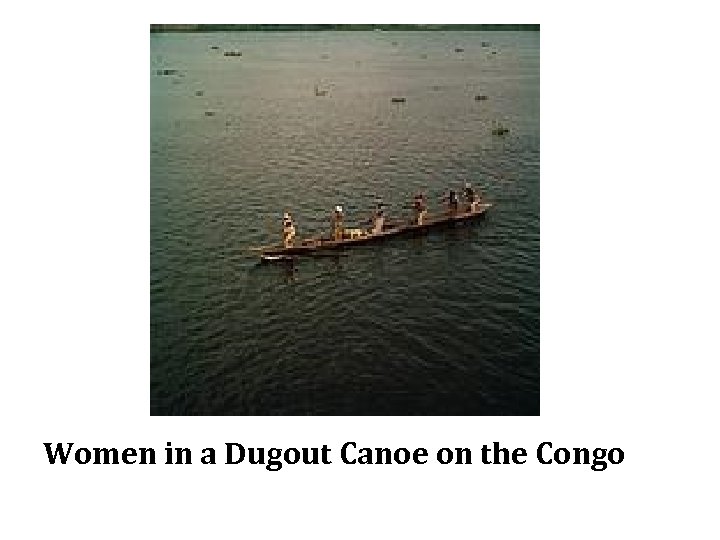 Women in a Dugout Canoe on the Congo
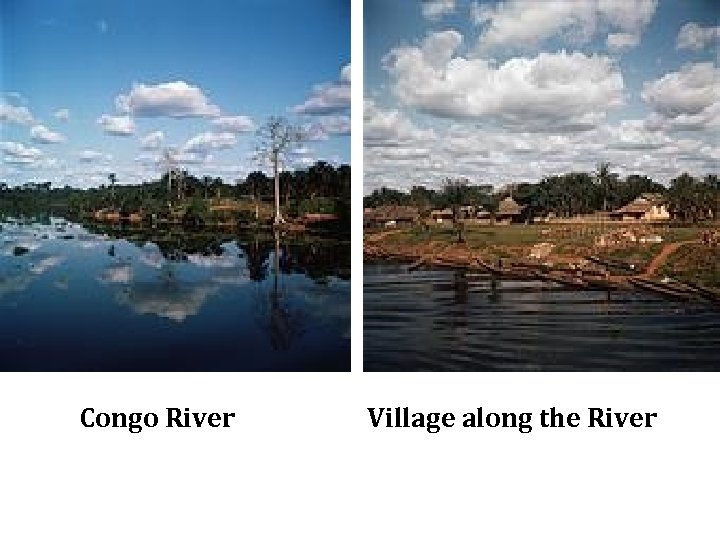 Congo River Village along the River
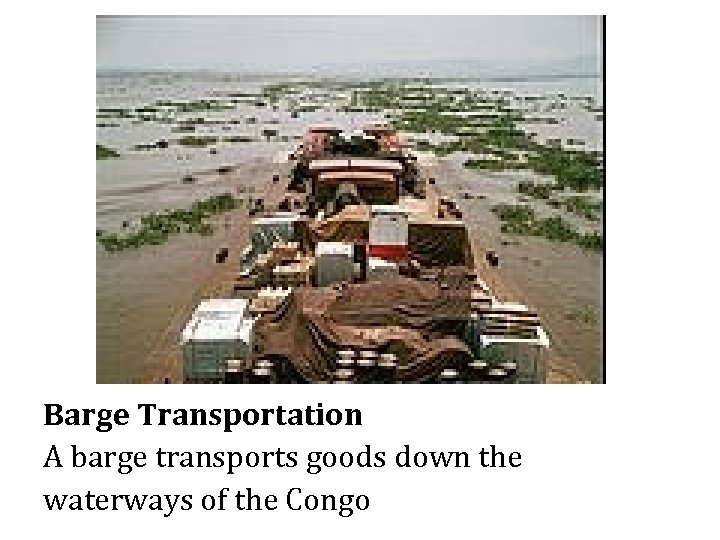 Barge Transportation A barge transports goods down the waterways of the Congo
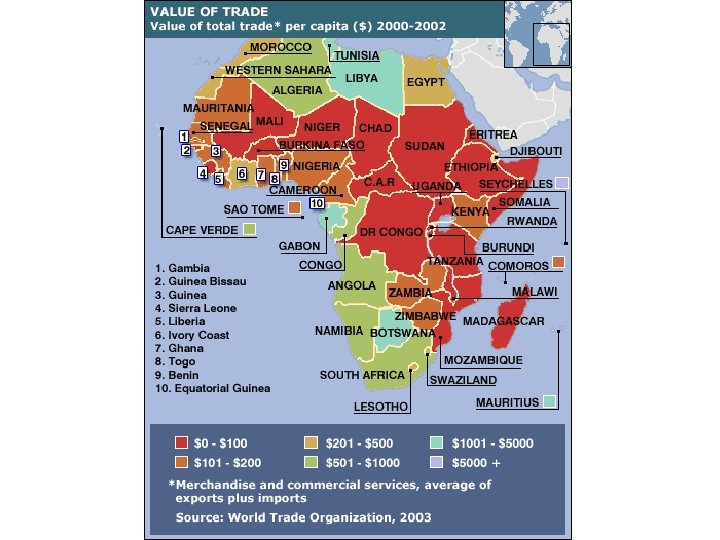
 Trade • Africa is rich in natural resources such as minerals, timber and oil, but trade with the rest of the world is often difficult. • Factors include poor infrastructure, government instability, corruption and the impact of Aids on the population of working age. • Poorer countries and agencies such as Oxfam also argue that international trade rules are unfair and favour the developed world. • They say rich countries "dump" subsidised products on developing nations by undercutting local producers. • And they accuse the World Trade Organisation (WTO) of forcing developing nations to open their markets to the rest of the World but failing to lower rich countries' tariff barriers in return. • But the WTO says that low income countries receive special treatment, including exemption from some regulations that apply to richer nations.
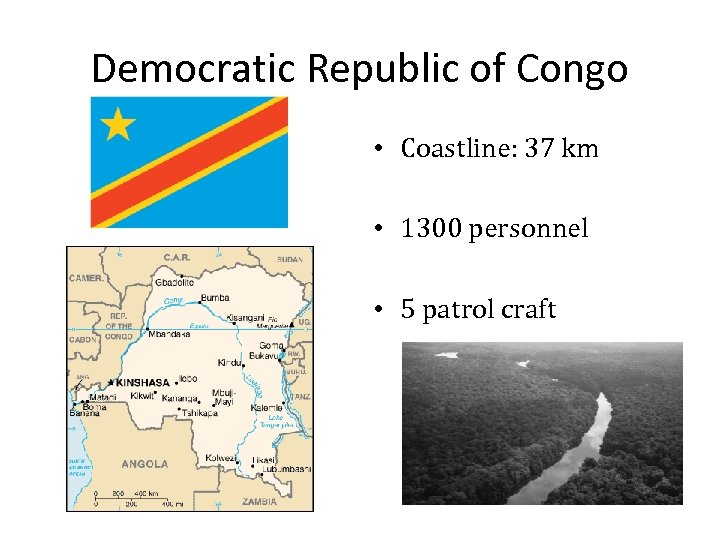 Democratic Republic of Congo • Coastline: 37 km • 1300 personnel • 5 patrol craft
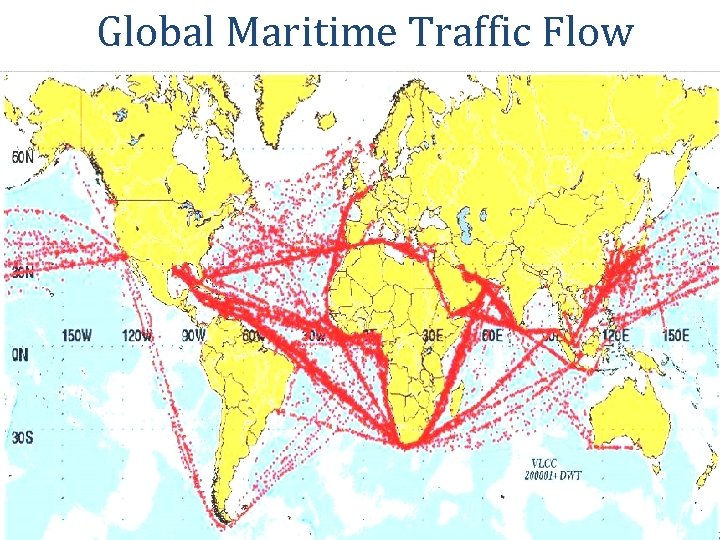 Global Maritime Traffic Flow