


 Скачать презентацию Economics Honors UNIT II Microeconomics Demand Supply Price
e8461f2fda321e19df96eab415176731.ppt
- Количество слайдов: 27
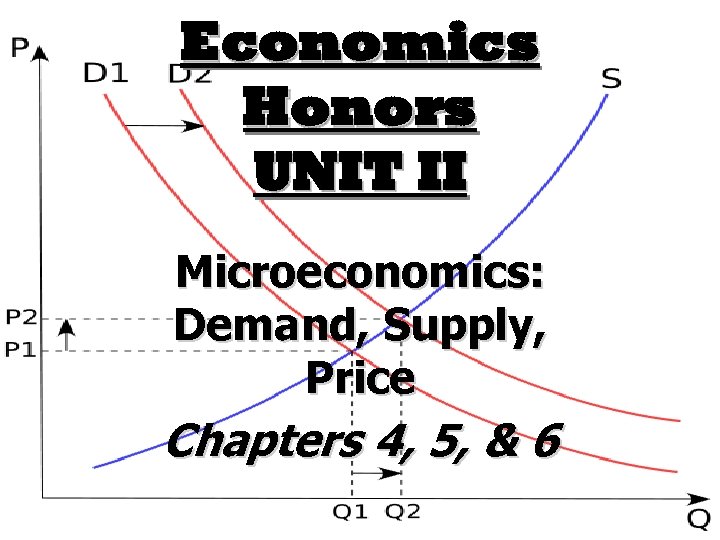 Economics Honors UNIT II Microeconomics: Demand, Supply, Price Chapters 4, 5, & 6
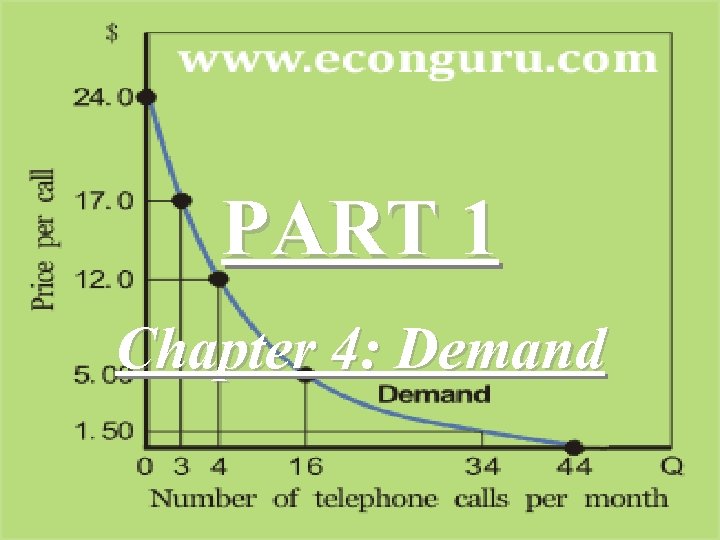 PART 1 Chapter 4: Demand
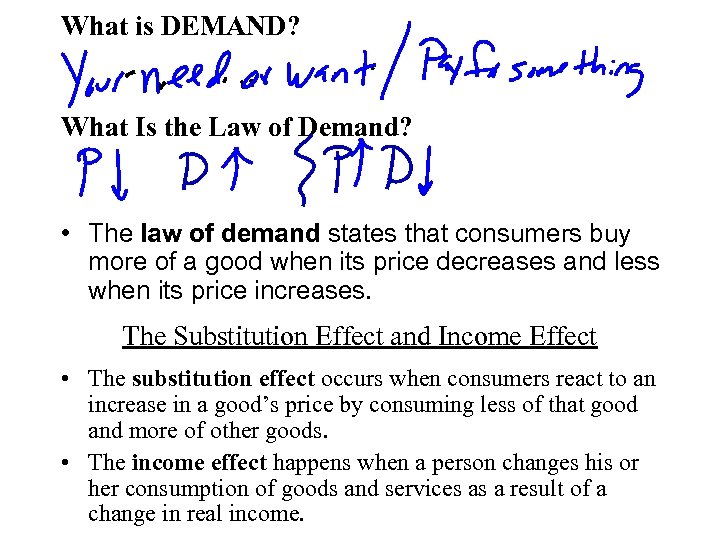 What is DEMAND? What Is the Law of Demand? • The law of demand states that consumers buy more of a good when its price decreases and less when its price increases. The Substitution Effect and Income Effect • The substitution effect occurs when consumers react to an increase in a good’s price by consuming less of that good and more of other goods. • The income effect happens when a person changes his or her consumption of goods and services as a result of a change in real income.
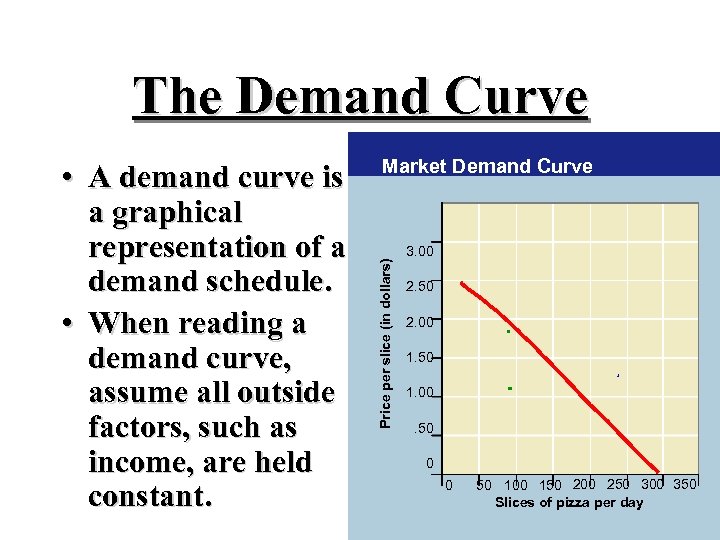 The Demand Curve Market Demand Curve Price per slice (in dollars) • A demand curve is a graphical representation of a demand schedule. • When reading a demand curve, assume all outside factors, such as income, are held constant. 3. 00 2. 50 2. 00 1. 50 1. 00. 50 0 0 50 100 150 200 250 300 350 Slices of pizza per day
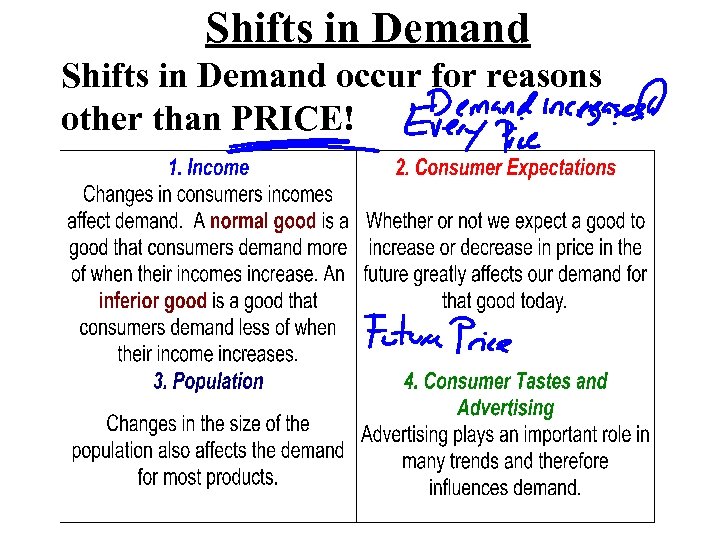 Shifts in Demand occur for reasons other than PRICE!
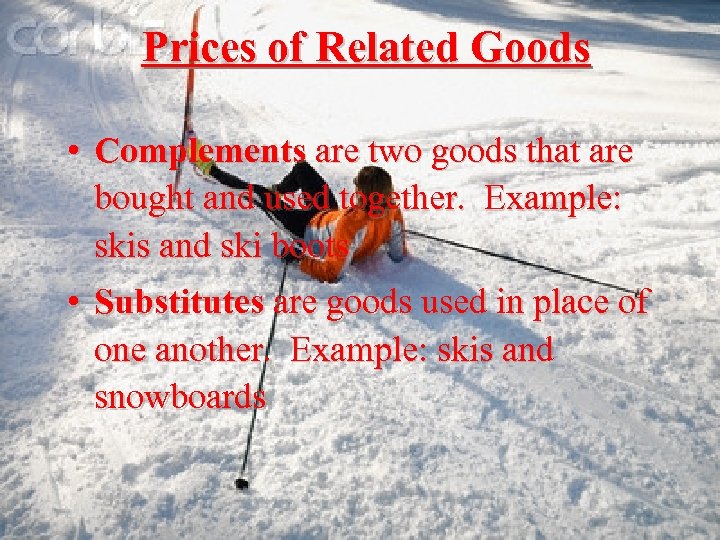 Prices of Related Goods • Complements are two goods that are bought and used together. Example: skis and ski boots • Substitutes are goods used in place of one another. Example: skis and snowboards
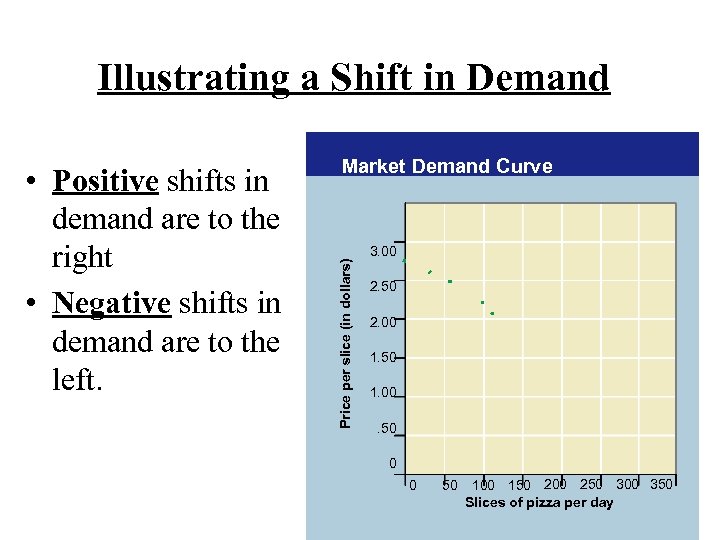 Illustrating a Shift in Demand Price per slice (in dollars) • Positive shifts in demand are to the right • Negative shifts in demand are to the left. Market Demand Curve 3. 00 2. 50 2. 00 1. 50 1. 00. 50 0 0 50 100 150 200 250 300 350 Slices of pizza per day
 Name a product you really, need:
 What Is Elasticity of Demand? Elasticity of demand is a measure of how consumers react to a change in price. • Demand for a good that is very sensitive to changes in price is elastic. • Demand for a good that consumers will continue to buy despite a price increase is inelastic.
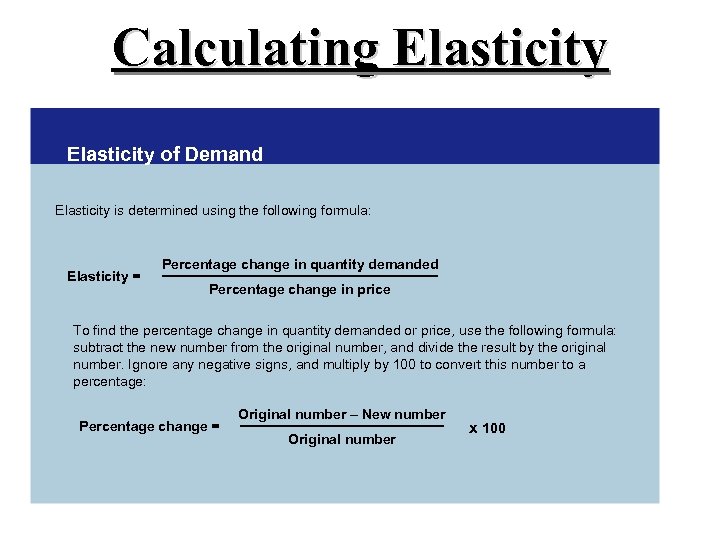 Calculating Elasticity of Demand Elasticity is determined using the following formula: Elasticity = Percentage change in quantity demanded Percentage change in price To find the percentage change in quantity demanded or price, use the following formula: subtract the new number from the original number, and divide the result by the original number. Ignore any negative signs, and multiply by 100 to convert this number to a percentage: Percentage change = Original number – New number Original number x 100
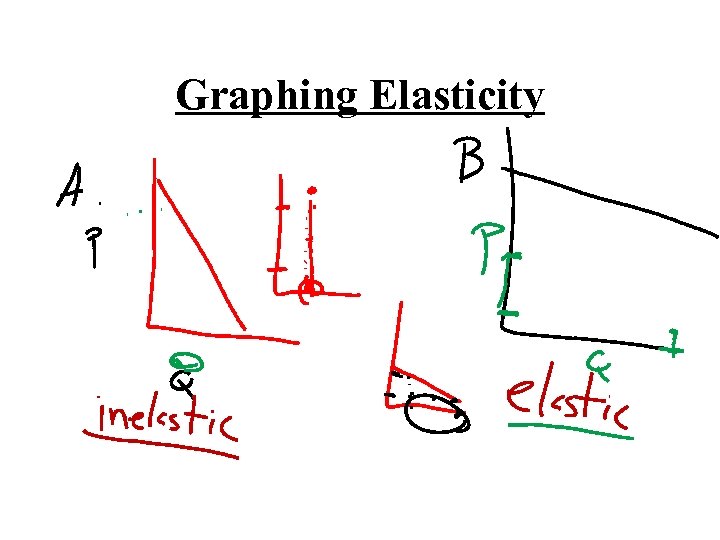 Graphing Elasticity
 Factors Affecting Elasticity
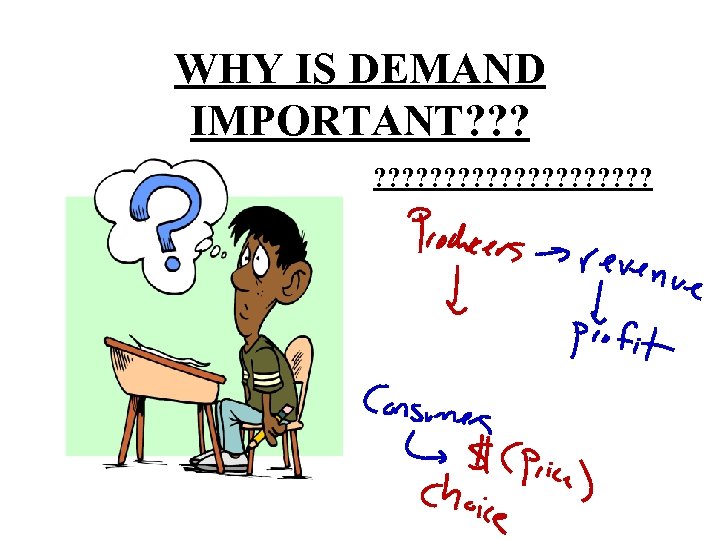 WHY IS DEMAND IMPORTANT? ? ? ? ? ?
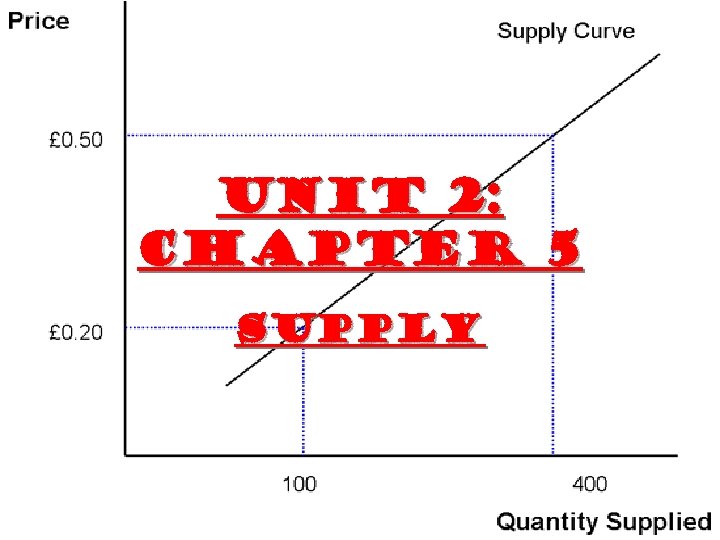 UNIT 2: Chapter 5 SUPPLY
 To understand supply you must think like a _____________
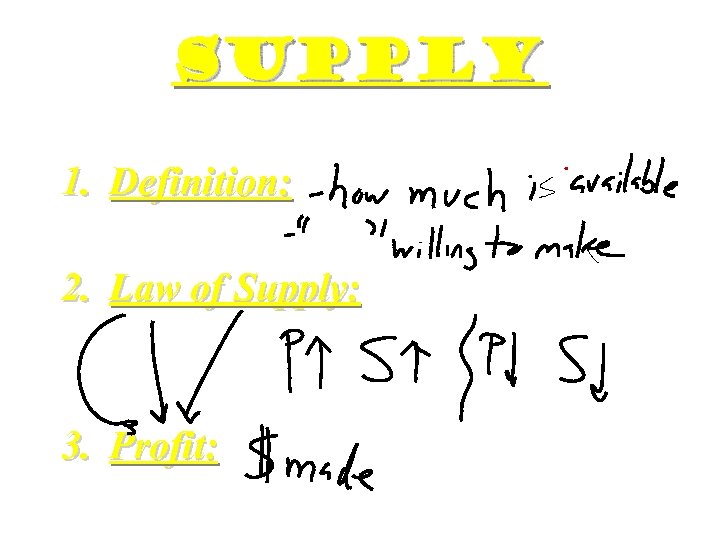 Supply 1. Definition: 2. Law of Supply: 3. Profit:
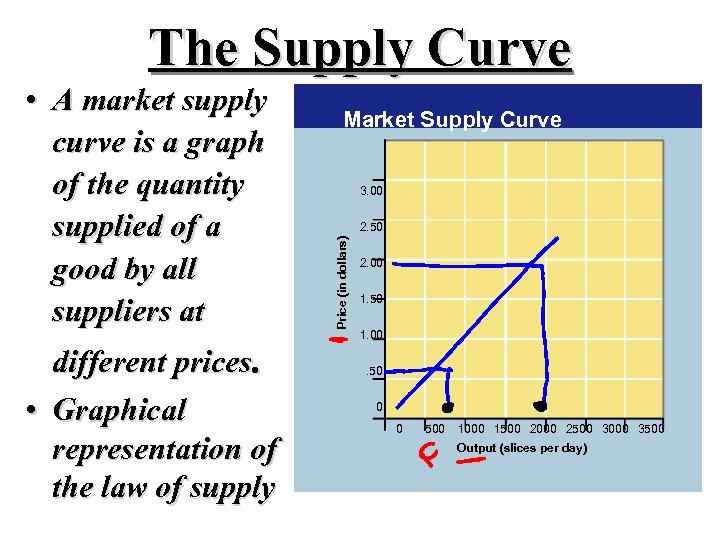 The Supply Curve different prices. • Graphical representation of the law of supply Market Supply Curve 3. 00 2. 50 Price (in dollars) • A market supply curve is a graph of the quantity supplied of a good by all suppliers at 2. 00 1. 50 1. 00. 50 0 0 500 1000 1500 2000 2500 3000 3500 Output (slices per day)
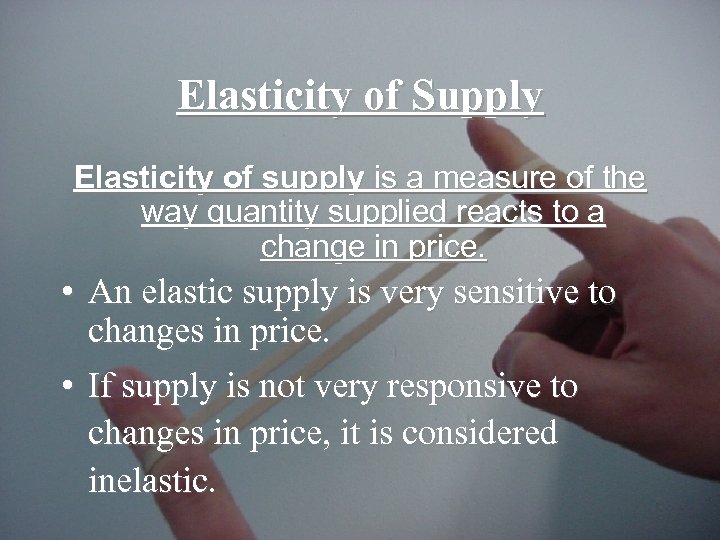 Elasticity of Supply Elasticity of supply is a measure of the way quantity supplied reacts to a change in price. • An elastic supply is very sensitive to changes in price. • If supply is not very responsive to changes in price, it is considered inelastic.
 ? ? ? What is the only reasons you (as a producer)would not make more of a product if you knew the price was going up? ? ? • TIME • COST
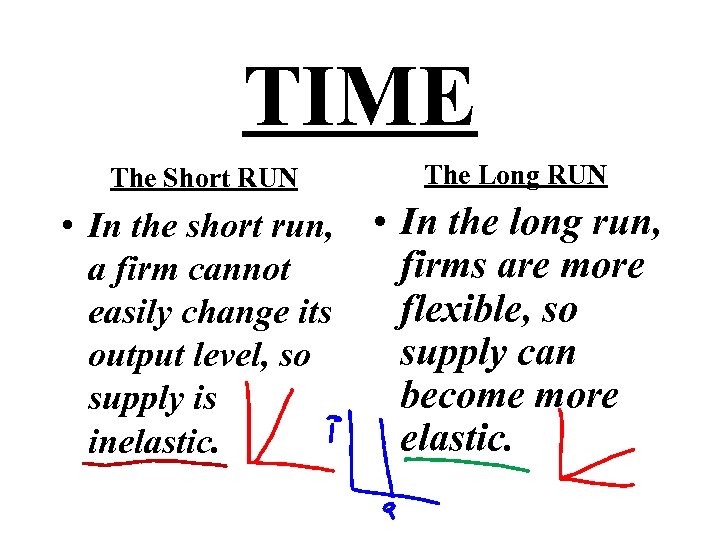 TIME The Short RUN The Long RUN • In the short run, a firm cannot easily change its output level, so supply is inelastic. • In the long run, firms are more flexible, so supply can become more elastic.
 COSTS! !!!! AH!!
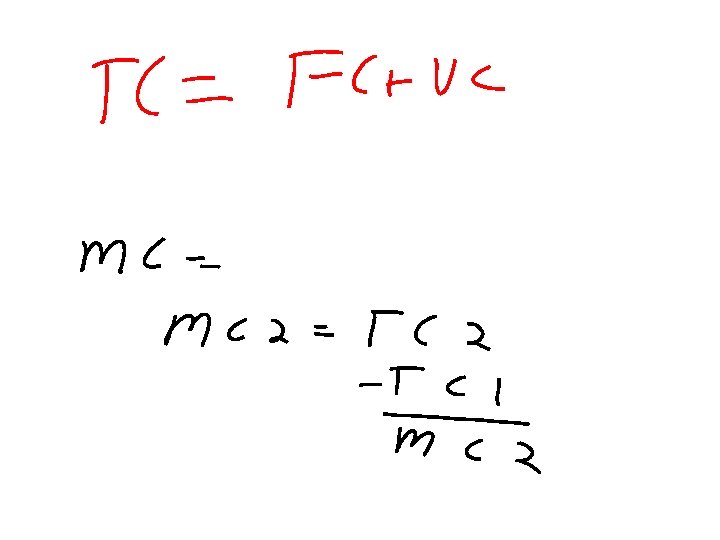
 The Costs of Production • A fixed cost is a cost that does not change, regardless of how much of a good is produced. Examples: rent and salaries • Variable costs are costs that rise or fall depending on how much is produced. Examples: costs of raw materials, some labor costs. • The total cost equals fixed costs plus variable costs. • The marginal cost is the cost of producing one more unit of a good.
 COST QUESTIONS 1. Using 5. 6 and 5. 7: How many workers should you hire in your beanbag factory. 2. Using figure 5. 9: How many bean bags per hour should you make? Why? 3. All of #7 on page 114 4. #15 on page 123
 Hey Kyle Cunningham! What would happen to your supply curve if the costs for your CAR WASH business suddenly decreased? ? ? ?
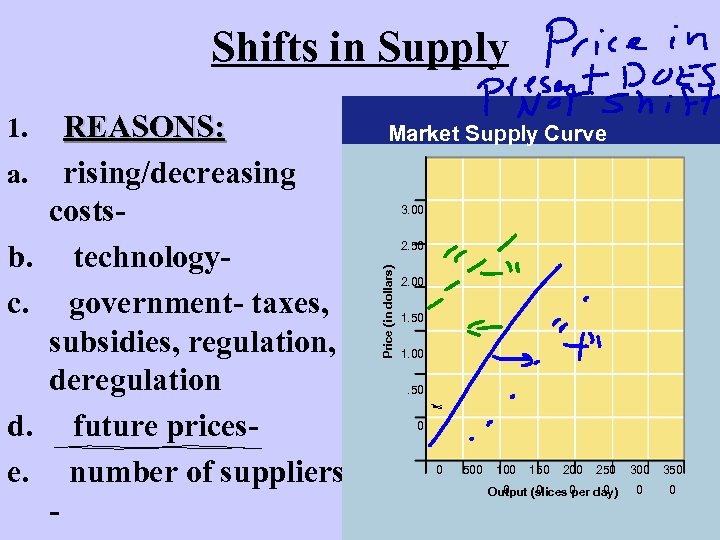 Shifts in Supply 1. REASONS: Market Supply Curve a. rising/decreasing 3. 00 2. 50 Price (in dollars) costsb. technologyc. government- taxes, subsidies, regulation, deregulation d. future pricese. number of suppliers - 2. 00 1. 50 1. 00. 50 0 0 500 150 200 250 0 0 Output (slices 0 day) per 0 300 350 0 0
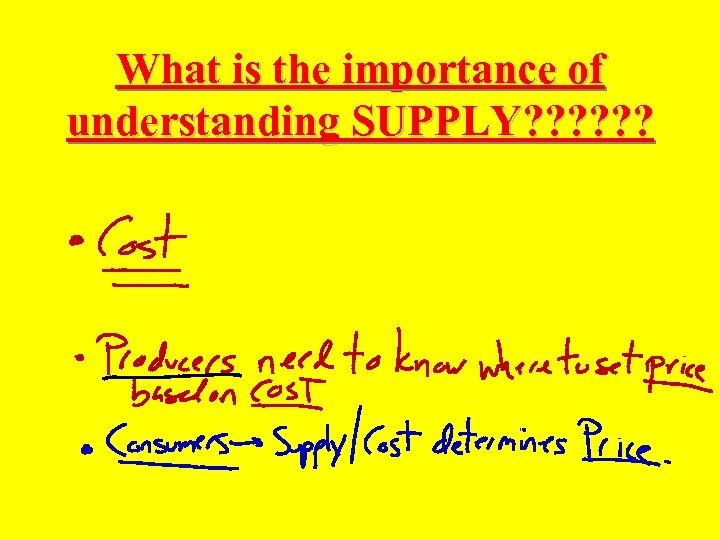 What is the importance of understanding SUPPLY? ? ?