 Скачать презентацию Economics and Business Management Unit 5 — Loi
b79e9ff3e0a158a7a09fc3634716fd65.ppt
- Количество слайдов: 31



Economics and Business Management Unit 5 - Loi A. 2017 -2018
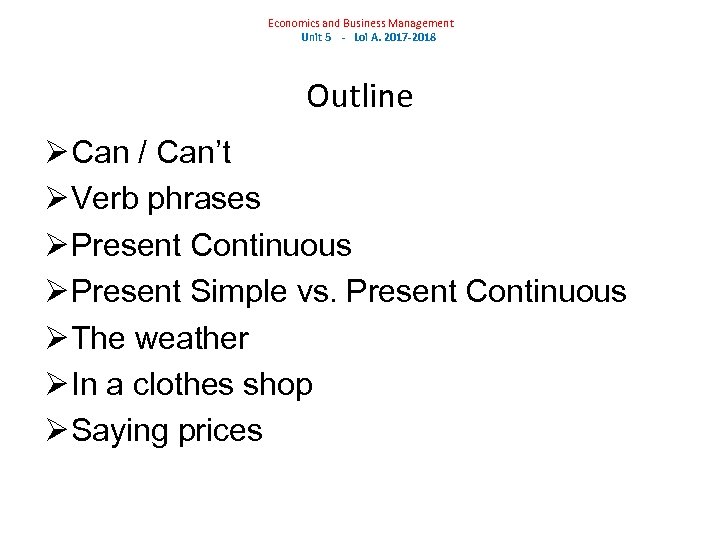
Economics and Business Management Unit 5 - Loi A. 2017 -2018 Outline Can / Can’t Verb phrases Present Continuous Present Simple vs. Present Continuous The weather In a clothes shop Saying prices
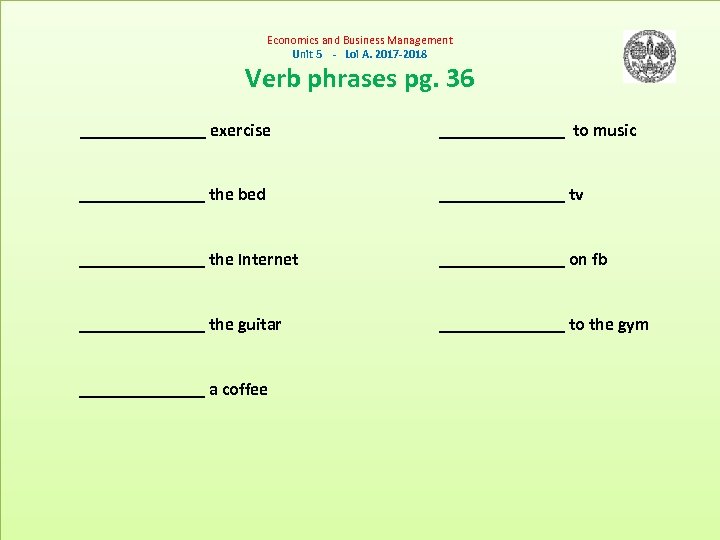
Economics and Business Management Unit 5 - Loi A. 2017 -2018 Verb phrases pg. 36 _______ exercise _______ to music _______ the bed _______ tv _______ the Internet _______ on fb _______ the guitar _______ to the gym _______ a coffee
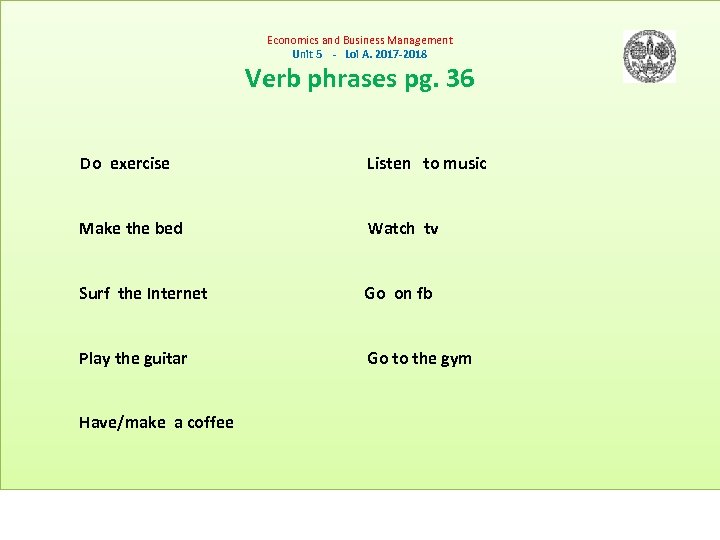
Economics and Business Management Unit 5 - Loi A. 2017 -2018 Verb phrases pg. 36 Do exercise Listen to music Make the bed Watch tv Surf the Internet Go on fb Play the guitar Go to the gym Have/make a coffee
Economics and Business Management Unit 5 - Loi A. 2017 -2018 Verb phrases More verb phrases on p. 158
Economics and Business Management Unit 5 - GRAMMAR The verb can Excuse, can you help me? What’s the meaning of the verb Can here? - Write down examples of can with different meanings - Do the ex. 2 e on p. 36.
Economics and Business Management Unit 5 - GRAMMAR The verb can Can is a modal auxiliary verb and has two main meanings: ability and possibility. Ability: I can play the piano (I know how to play the piano) Possibility: I can come to the party (I have the possibility to come to the party) Request: Can you help me? (a third meaning found in questions asking for something)
Economics and Business Management Unit 5 - GRAMMAR The verb can Can’t comes from cannot and it’s a contracted form Can never changes, does not add the –s for the third person singular and is followed by the verb in the base form (infinitive without to): I can play soccer NOT I can to play soccer
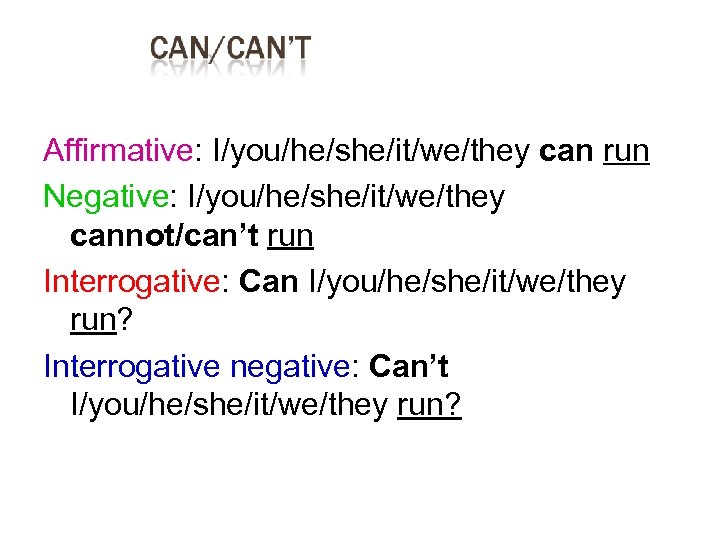
Affirmative: I/you/he/she/it/we/they can run Negative: I/you/he/she/it/we/they cannot/can’t run Interrogative: Can I/you/he/she/it/we/they run? Interrogative negative: Can’t I/you/he/she/it/we/they run?
Economics and Business Management Unit 5 - GRAMMAR The verb can Esercizio a p. 36 Esercizio 5 a p. 133 Grammar Bank
Unit 5 - Loi A. 2017 -2018
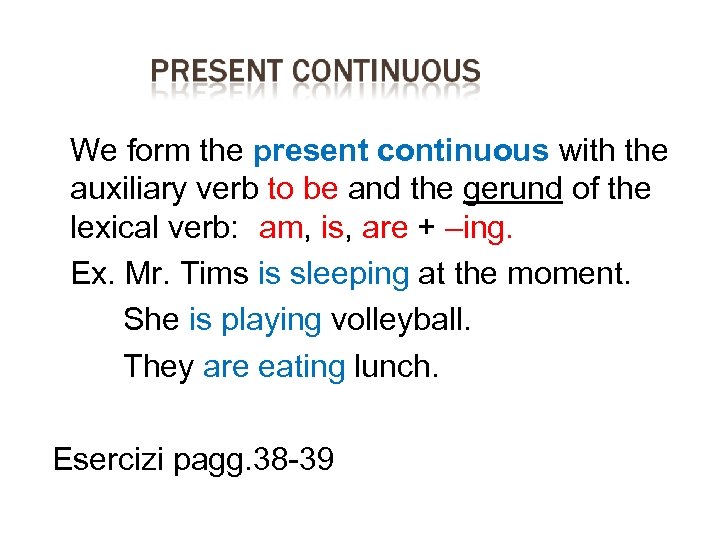
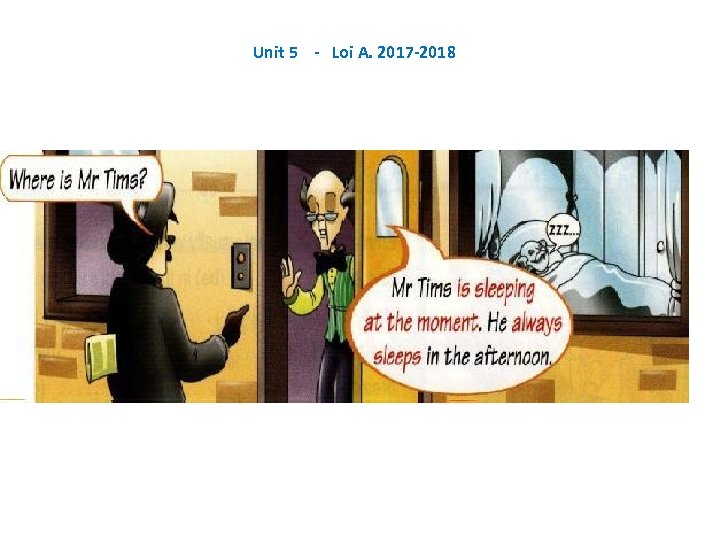
We form the present continuous with the auxiliary verb to be and the gerund of the lexical verb: am, is, are + –ing. Ex. Mr. Tims is sleeping at the moment. She is playing volleyball. They are eating lunch. Esercizi pagg. 38 -39
![FORM [am/is/are + present participle] Examples: You are watching TV. Are you watching TV?](https://present5.com/presentation/b79e9ff3e0a158a7a09fc3634716fd65/image-13.jpg "FORM [am/is/are + present participle] Examples: You are watching TV. Are you watching TV?")
FORM [am/is/are + present participle] Examples: You are watching TV. Are you watching TV? You are not watching TV.
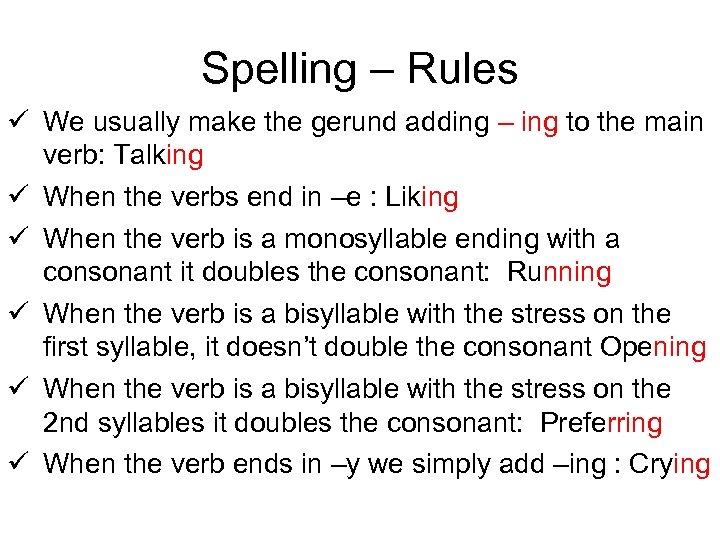
Spelling – Rules ü We usually make the gerund adding – ing to the main verb: Talking ü When the verbs end in –e : Liking ü When the verb is a monosyllable ending with a consonant it doubles the consonant: Running ü When the verb is a bisyllable with the stress on the first syllable, it doesn’t double the consonant Opening ü When the verb is a bisyllable with the stress on the 2 nd syllables it doubles the consonant: Preferring ü When the verb ends in –y we simply add –ing : Crying
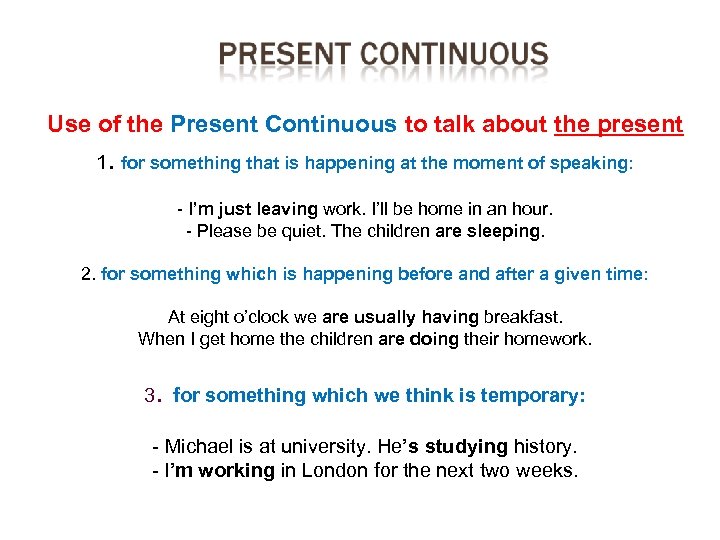
Use of the Present Continuous to talk about the present . 1 for something that is happening at the moment of speaking: - I’m just leaving work. I’ll be home in an hour. - Please be quiet. The children are sleeping. 2. for something which is happening before and after a given time: At eight o’clock we are usually having breakfast. When I get home the children are doing their homework. . 3 for something which we think is temporary: - Michael is at university. He’s studying history. - I’m working in London for the next two weeks.
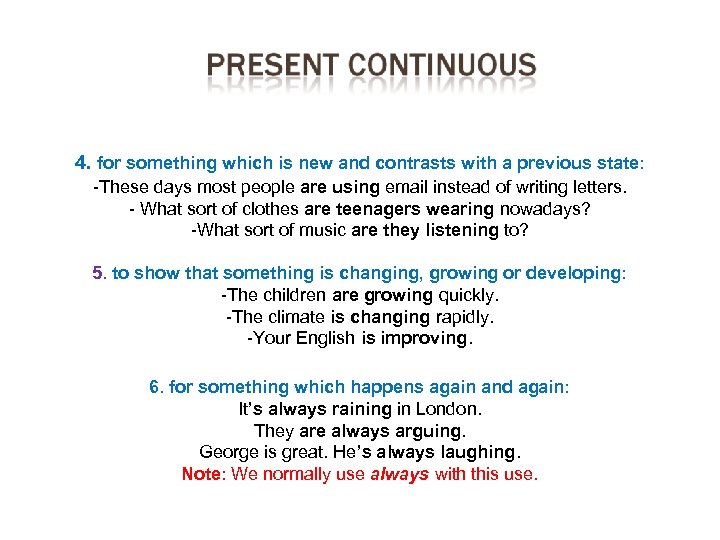
4. for something which is new and contrasts with a previous state: -These days most people are using email instead of writing letters. - What sort of clothes are teenagers wearing nowadays? -What sort of music are they listening to? 5. to show that something is changing, growing or developing: -The children are growing quickly. -The climate is changing rapidly. -Your English is improving. 6. for something which happens again and again: It’s always raining in London. They are always arguing. George is great. He’s always laughing. Note: We normally use always with this use.
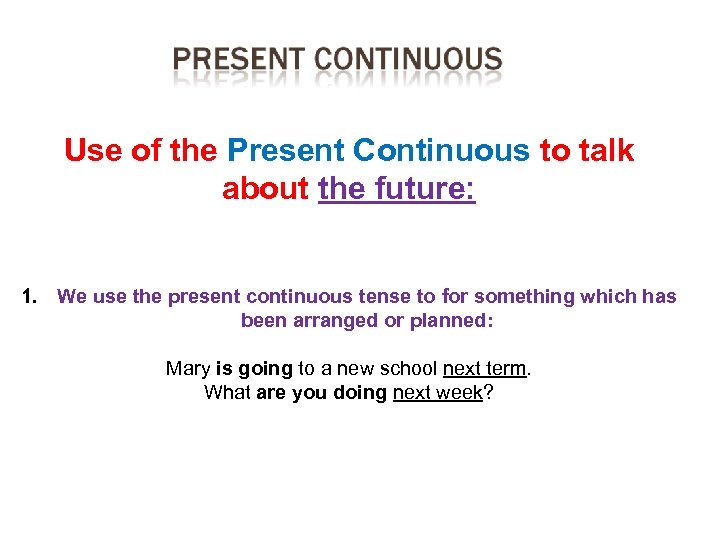
Use of the Present Continuous to talk about the future: 1. We use the present continuous tense to for something which has been arranged or planned: Mary is going to a new school next term. What are you doing next week?
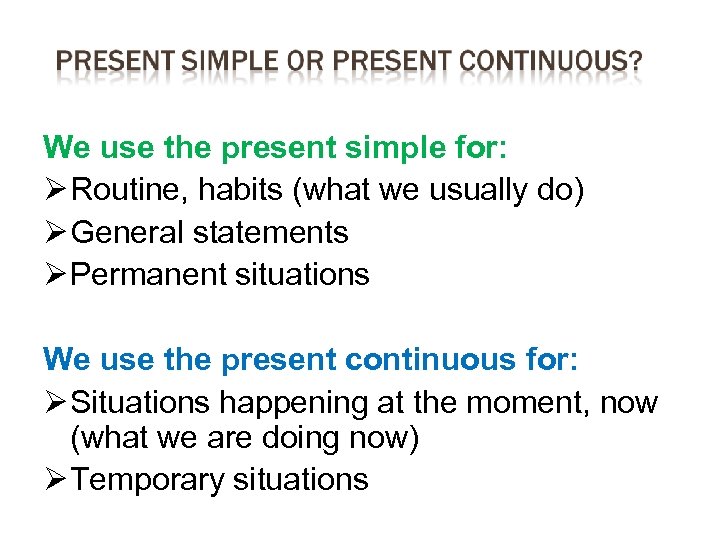
We use the present simple for: Routine, habits (what we usually do) General statements Permanent situations We use the present continuous for: Situations happening at the moment, now (what we are doing now) Temporary situations
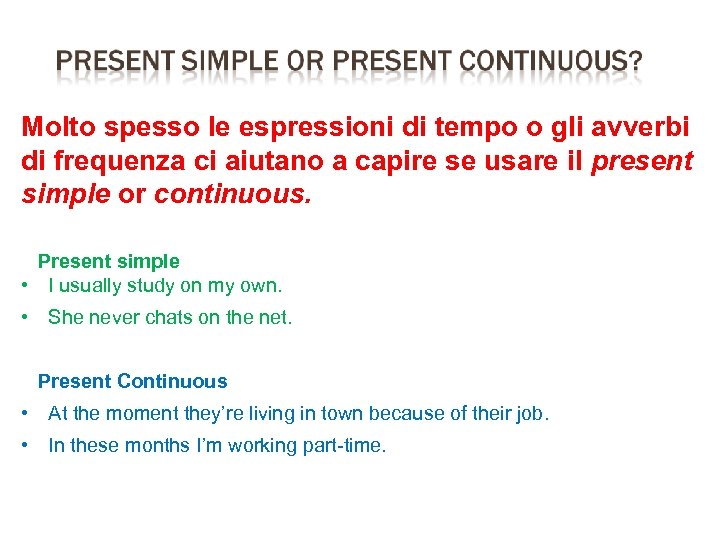
Molto spesso le espressioni di tempo o gli avverbi di frequenza ci aiutano a capire se usare il present simple or continuous. Present simple • I usually study on my own. • She never chats on the net. Present Continuous • At the moment they’re living in town because of their job. • In these months I’m working part-time.
Exercises on p. 133 5 Ba and 5 Bb
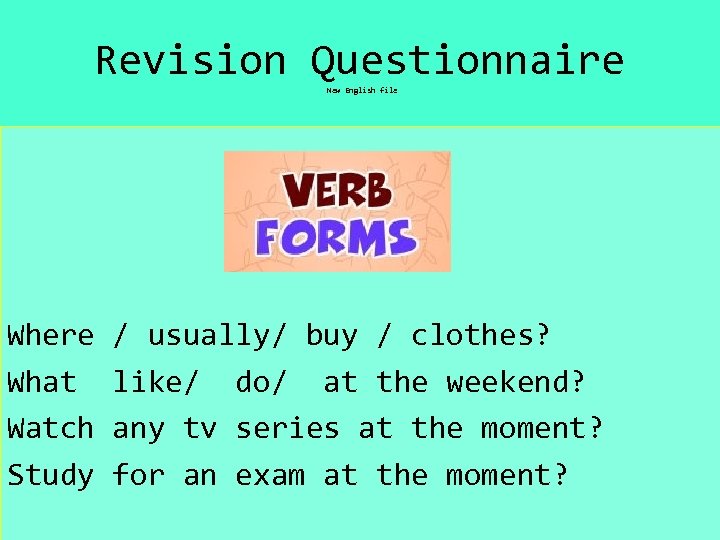
Revision Questionnaire New English file Where What Watch Study / usually/ buy / clothes? like/ do/ at the weekend? any tv series at the moment? for an exam at the moment?
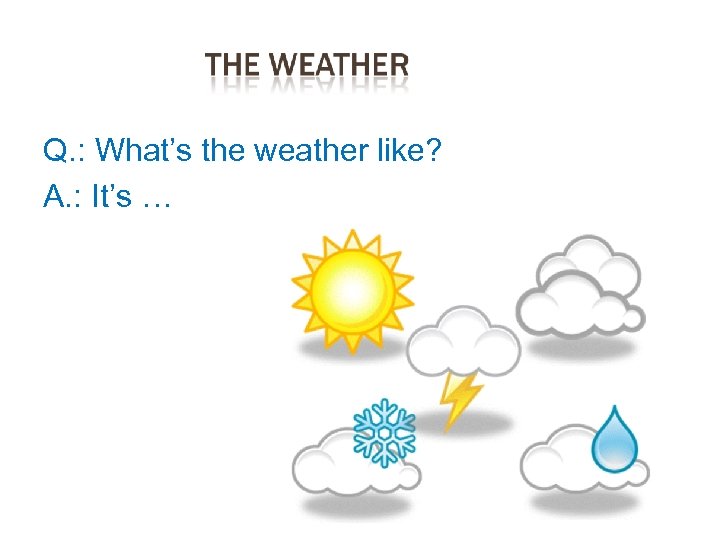
Q. : What’s the weather like? A. : It’s …
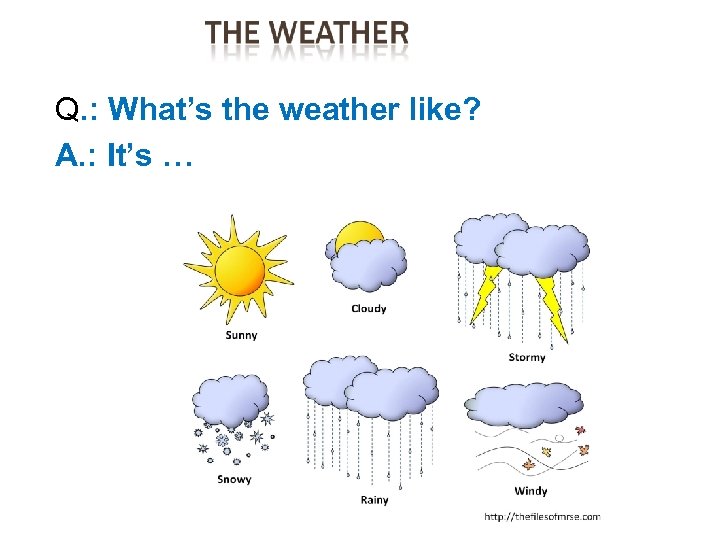
Q. : What’s the weather like? A. : It’s …
Adjectives: cold, hot, cool, warm, good, bad, nice, rainy, sunny, cloudy, windy, snowy, wet, dry, foggy, misty, humid. Exercise p. 40 + p. 159 Vocabulary Bank
Adjectives: cold, hot, cool, warm, good, bad, nice, rainy, sunny, cloudy, windy, snowy, wet, dry, foggy, misty, humid. Exercise p. 40 + p. 159 Vocabulary Bank
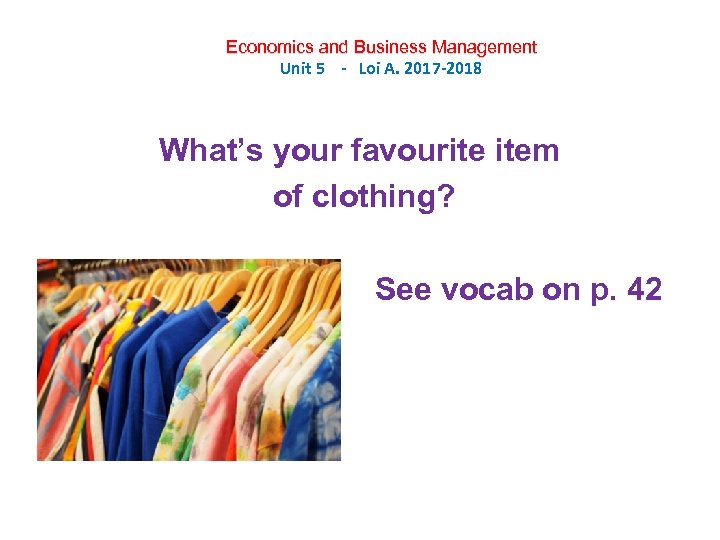
Economics and Business Management Unit 5 - Loi A. 2017 -2018 What’s your favourite item of clothing? See vocab on p. 42
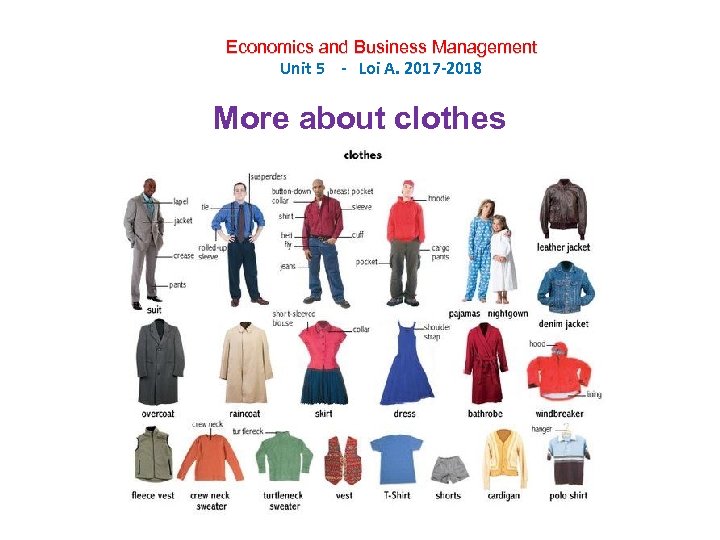
Economics and Business Management Unit 5 - Loi A. 2017 -2018 More about clothes
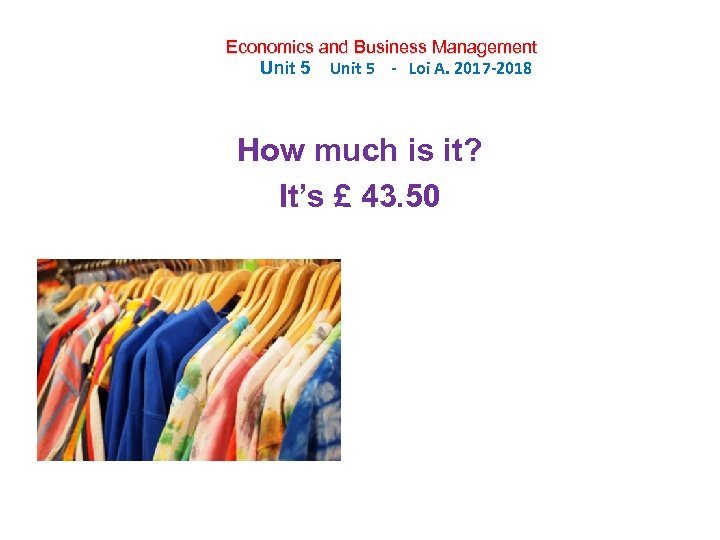
Economics and Business Management Unit 5 - Loi A. 2017 -2018 How much is it? It’s £ 43. 50
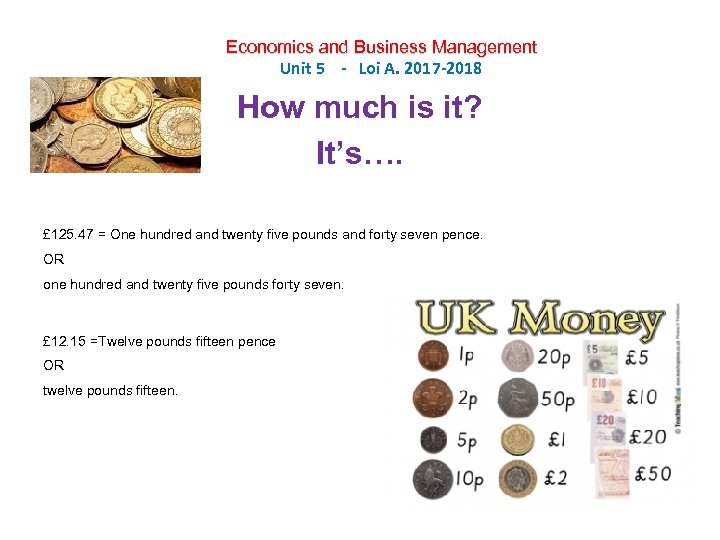
Economics and Business Management Unit 5 - Loi A. 2017 -2018 How much is it? It’s…. £ 125. 47 = One hundred and twenty five pounds and forty seven pence. OR one hundred and twenty five pounds forty seven. £ 12. 15 =Twelve pounds fifteen pence OR twelve pounds fifteen.
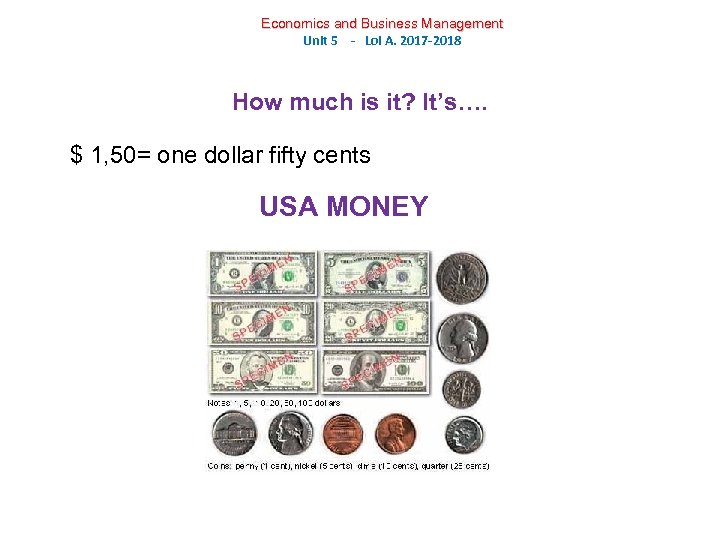
Economics and Business Management Unit 5 - Loi A. 2017 -2018 How much is it? It’s…. $ 1, 50= one dollar fifty cents USA MONEY
Economics and Business Management Unit 5 - Loi A. 2017 -2018 Homework Writing on p. 113 Social networking. Write Facebook posts to say what you are doing in London.
Скачать презентацию Economics and Business Management Unit 5 — Loi
b79e9ff3e0a158a7a09fc3634716fd65.ppt