 Скачать презентацию Economic Importance Of Gymnosperms Submitted By Dr
474b1e68c23fe32ad8a13f61123d3b1d.ppt
- Количество слайдов: 33



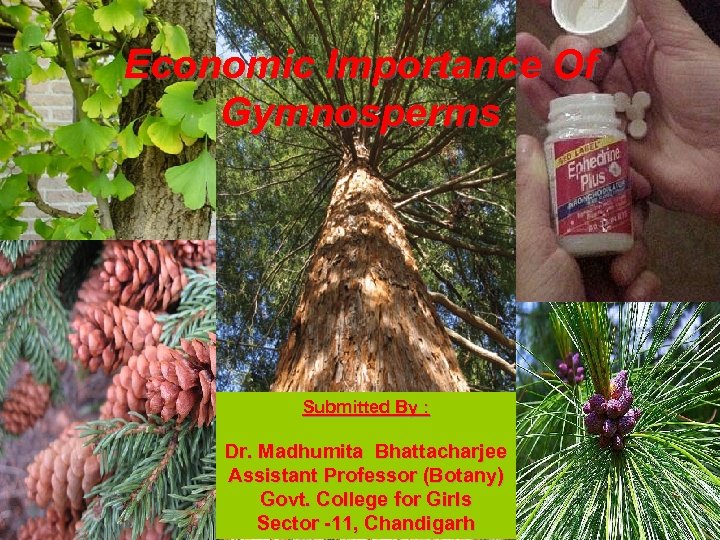
Economic Importance Of Gymnosperms Submitted By : Dr. Madhumita Bhattacharjee Assistant Professor (Botany) Govt. College for Girls Sector -11, Chandigarh
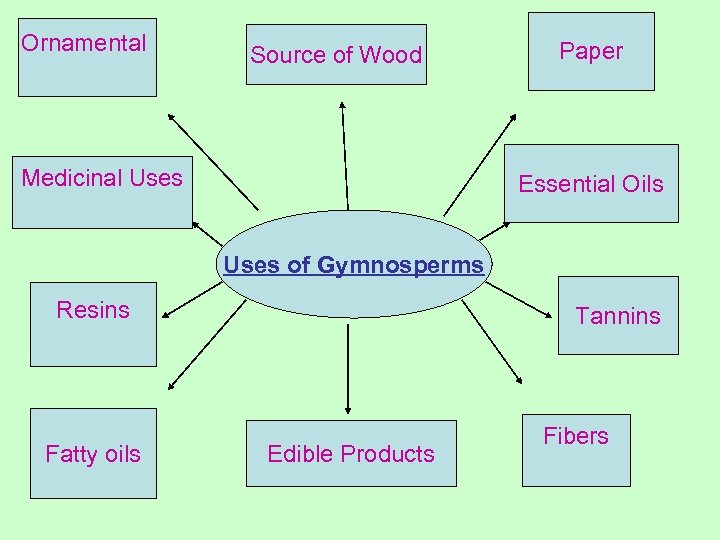
Ornamental Source of Wood Medicinal Uses Paper Essential Oils Uses of Gymnosperms Resins Fatty oils Tannins Edible Products Fibers
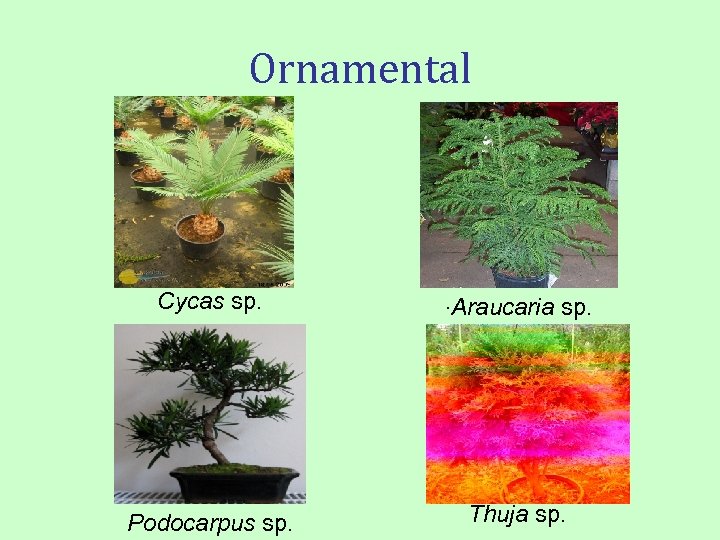
Ornamental Cycas sp. . Araucaria sp. Podocarpus sp. Thuja sp.
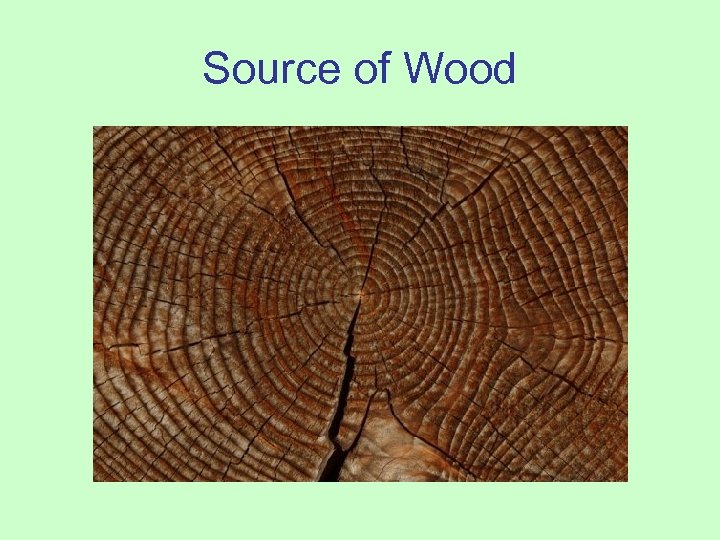
Source of Wood
Properties of Gymnospermic Wood • • • Wood is light coloured Straight grained Light weight Wood gets good paint Bear good nail taking properties It takes good finish
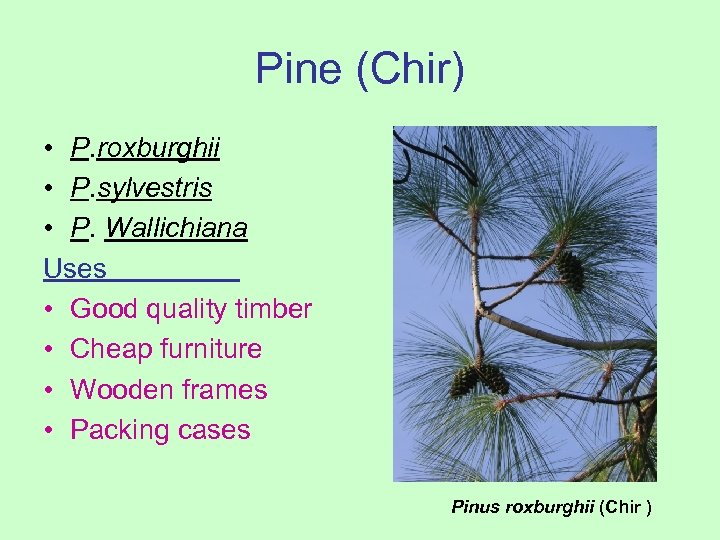
Pine (Chir) • P. roxburghii • P. sylvestris • P. Wallichiana Uses • Good quality timber • Cheap furniture • Wooden frames • Packing cases Pinus roxburghii (Chir )
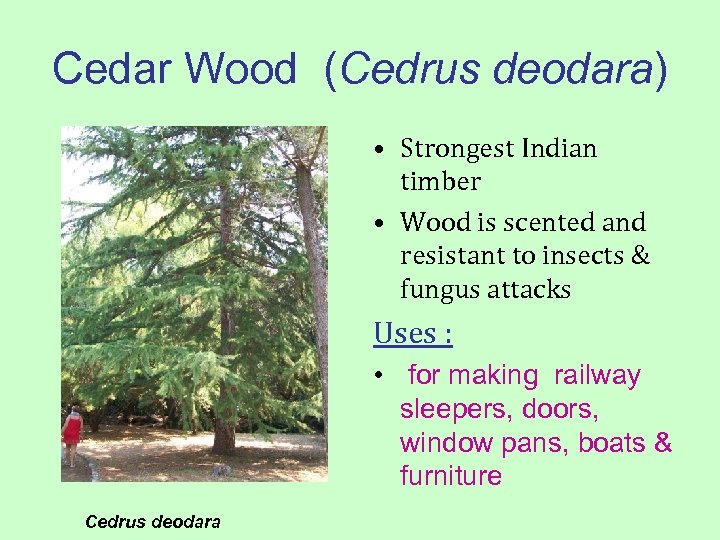
Cedar Wood (Cedrus deodara) • Strongest Indian timber • Wood is scented and resistant to insects & fungus attacks Uses : • for making railway sleepers, doors, window pans, boats & furniture Cedrus deodara
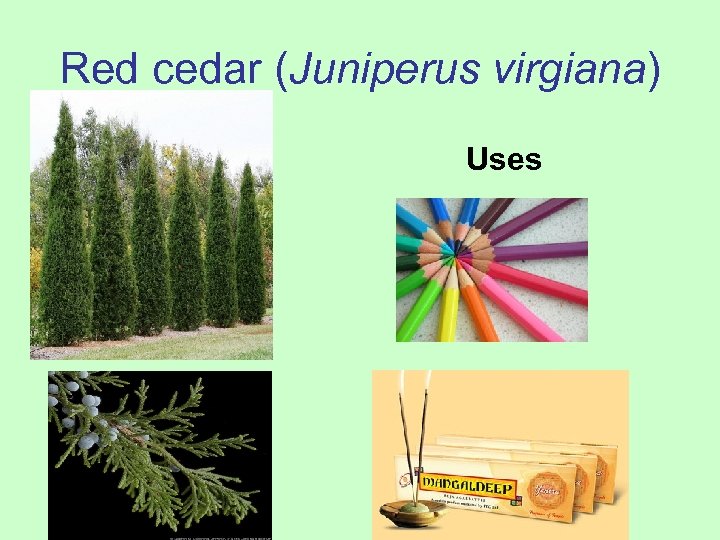
Red cedar (Juniperus virgiana) Uses
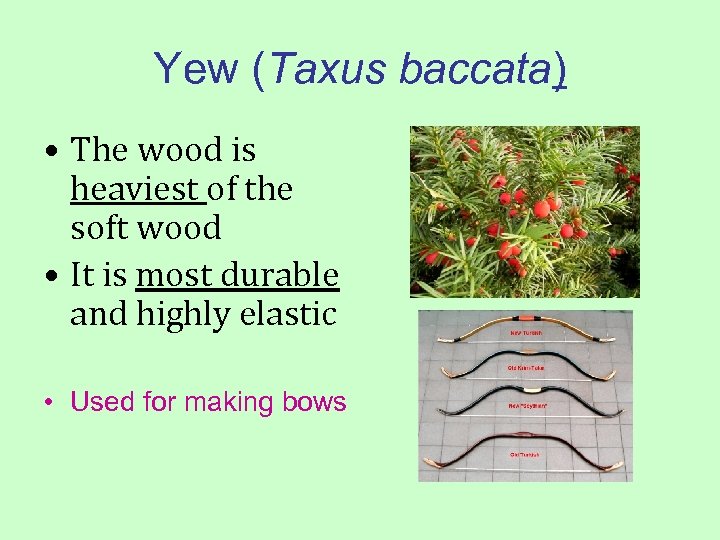
Yew (Taxus baccata) • The wood is heaviest of the soft wood • It is most durable and highly elastic • Used for making bows
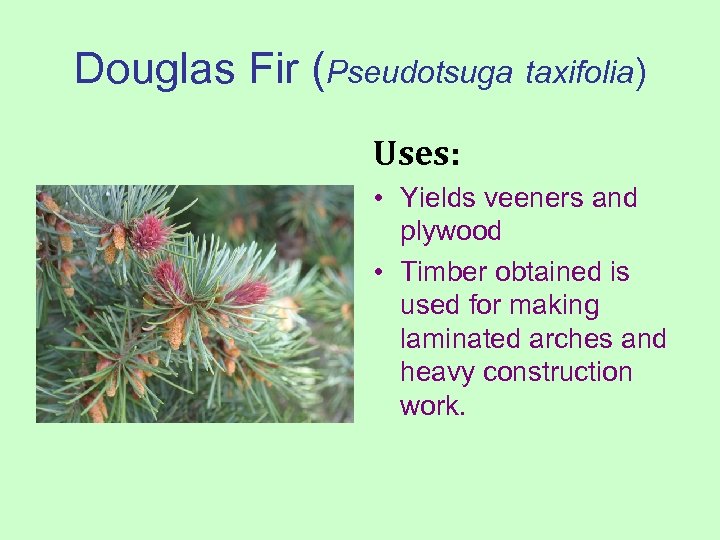
Douglas Fir (Pseudotsuga taxifolia) Uses: • Yields veeners and plywood • Timber obtained is used for making laminated arches and heavy construction work.
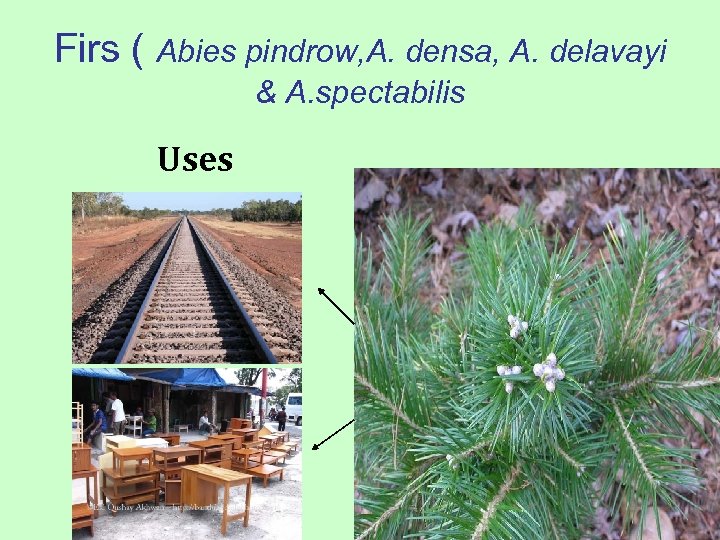
Firs ( Abies pindrow, A. densa, A. delavayi & A. spectabilis Uses
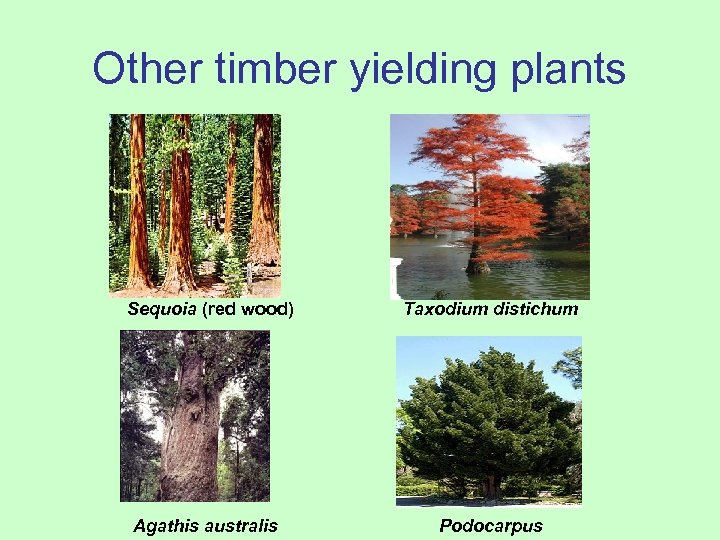
Other timber yielding plants Sequoia (red wood) Taxodium distichum Agathis australis Podocarpus
Edible Products
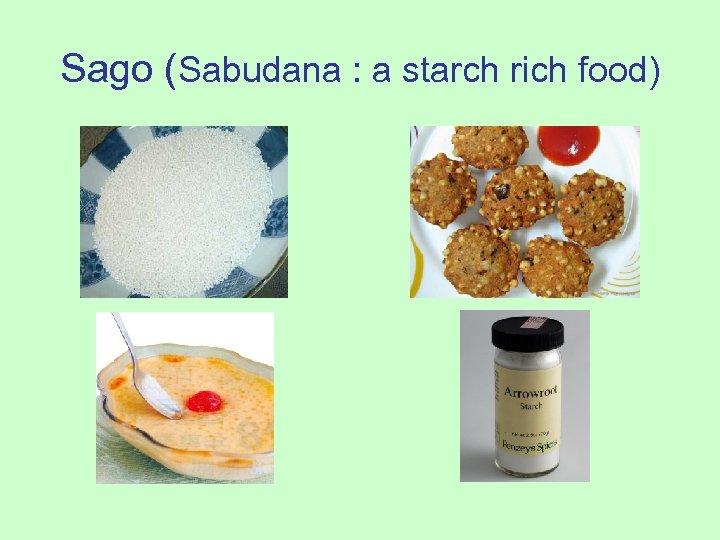
Sago (Sabudana : a starch rich food)
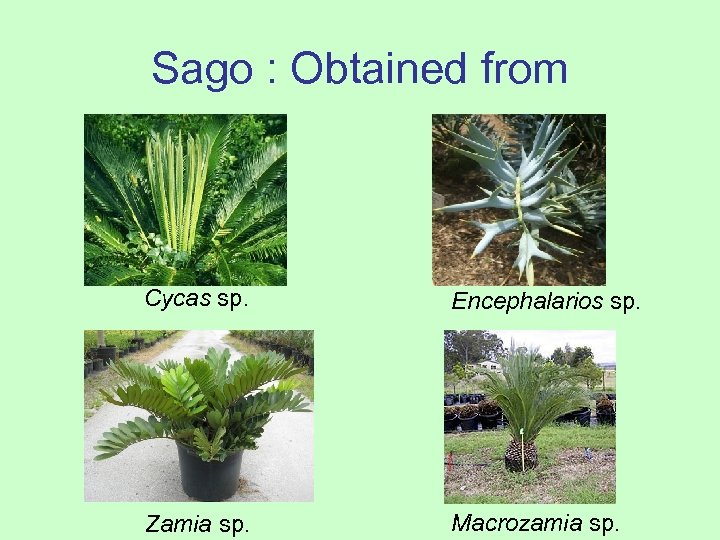
Sago : Obtained from Cycas sp. Encephalarios sp. Zamia sp. Macrozamia sp.
Other edible products • Young shoots: Cycas pectinata & C. revoluta • Leaves & strobili: Gnetum genome • Cooked Fruits : Cycas rumphii • Seeds : Pinus gerardiana (chilgoza) Gnetum genome , G. ula, G. latifolium Ginkgo biloba
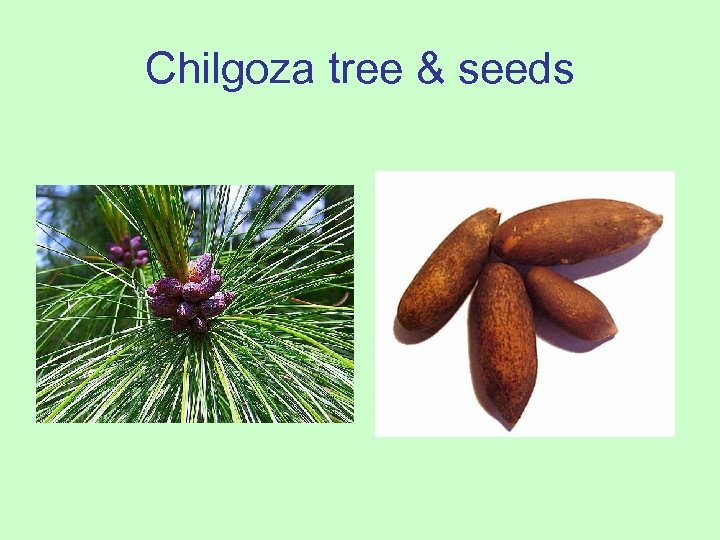
Chilgoza tree & seeds
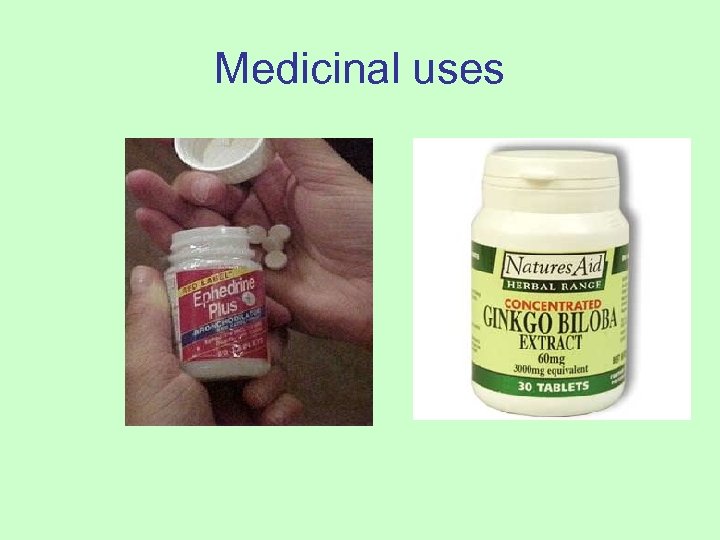
Medicinal uses
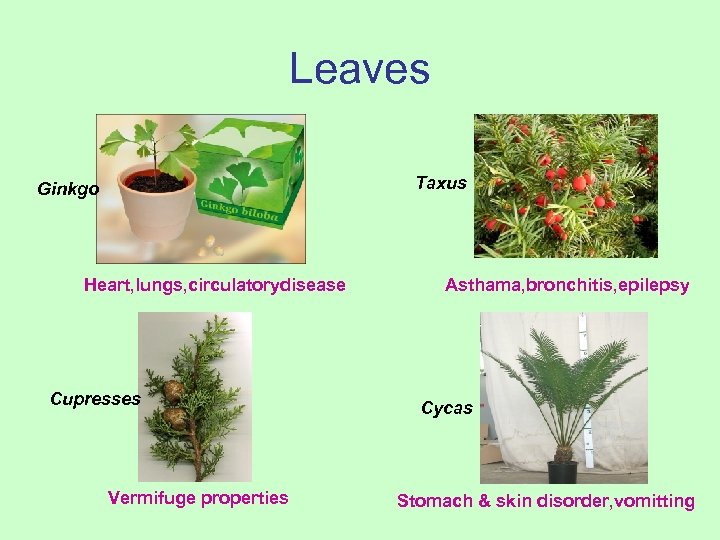
Leaves Taxus Ginkgo Heart, lungs, circulatorydisease Cupresses Vermifuge properties Asthama, bronchitis, epilepsy Cycas Stomach & skin disorder, vomitting
Bark and Seeds • The decoction of seeds of Dioon is used for neuralgia • A paste of bark & seeds of Cycas mixed with coconut oil is used as poultice for sores and swelling. • Oil obtained from seeds of Pinus seeds is used as dressing of wounds & ulcers. • Drug obtained from Ephedra sp. used in treatment of asthma , hay fever and cold.
Resin • The resins are the complex oxidation products of various essential oils • The resins are secreted in ducts and canals of the plants • They are derived from the plant parts in form of fluid, which gradually harden due to evaporation of the oil they contain • They are insoluble in water, but soluble in ether and alcohol
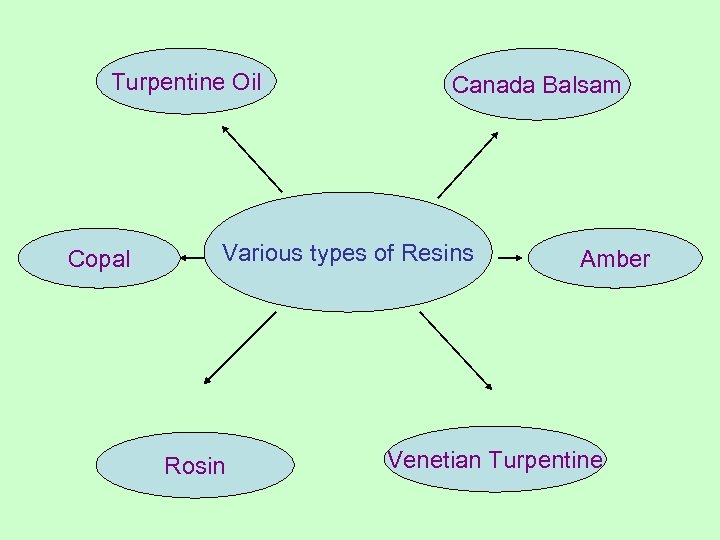
Turpentine Oil Copal Canada Balsam Various types of Resins Rosin Amber Venetian Turpentine
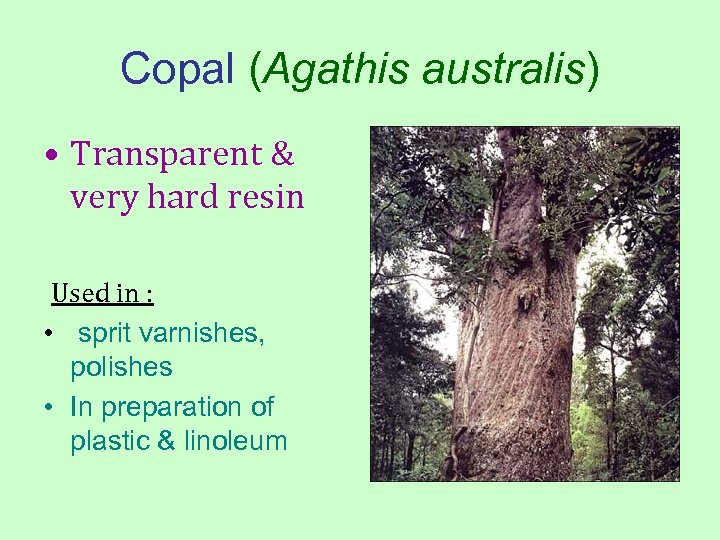
Copal (Agathis australis) • Transparent & very hard resin Used in : • sprit varnishes, polishes • In preparation of plastic & linoleum
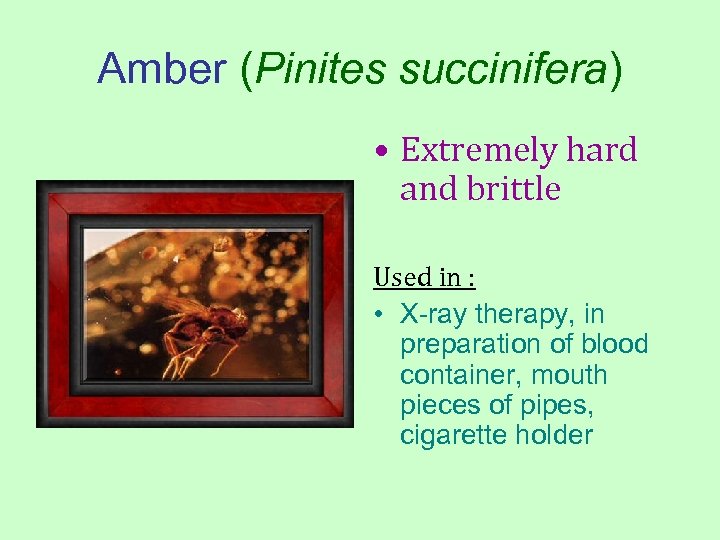
Amber (Pinites succinifera) • Extremely hard and brittle Used in : • X-ray therapy, in preparation of blood container, mouth pieces of pipes, cigarette holder
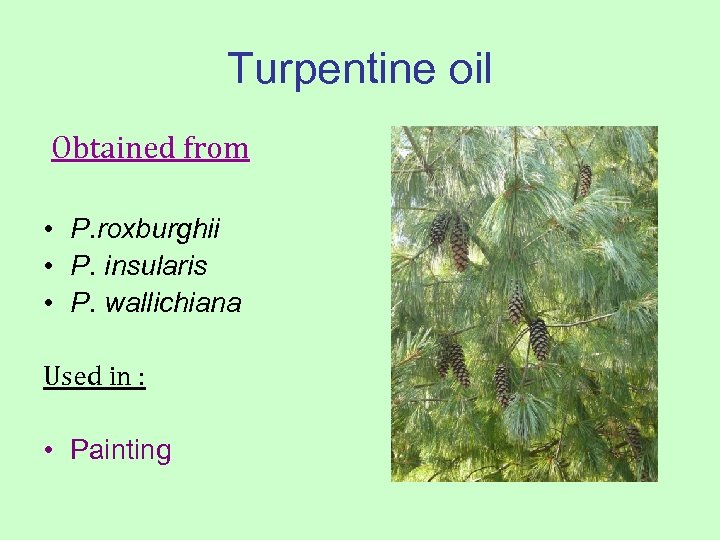
Turpentine oil Obtained from • P. roxburghii • P. insularis • P. wallichiana Used in : • Painting
Rosin (Sps. Of Pinus) • Rosin is a brittle, friable and faintly aromatic solid • Used in : • • Paper sizing, Varnish making Making of soap Sealing wax Printer ink Grease lubricants
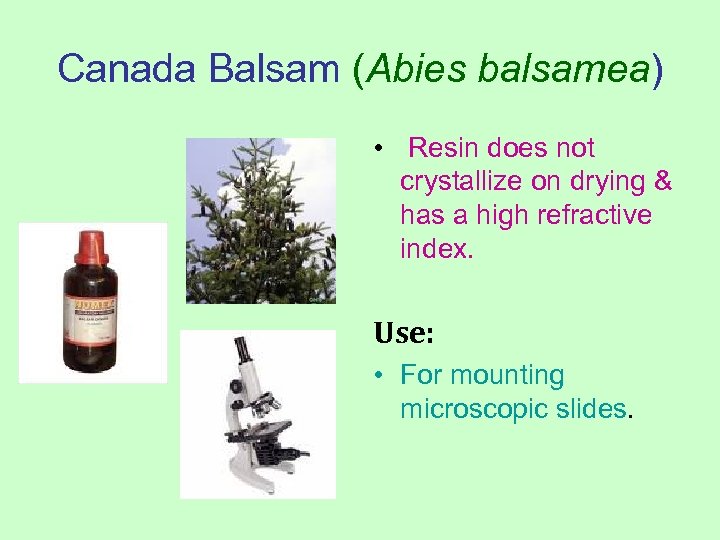
Canada Balsam (Abies balsamea) • Resin does not crystallize on drying & has a high refractive index. Use: • For mounting microscopic slides.
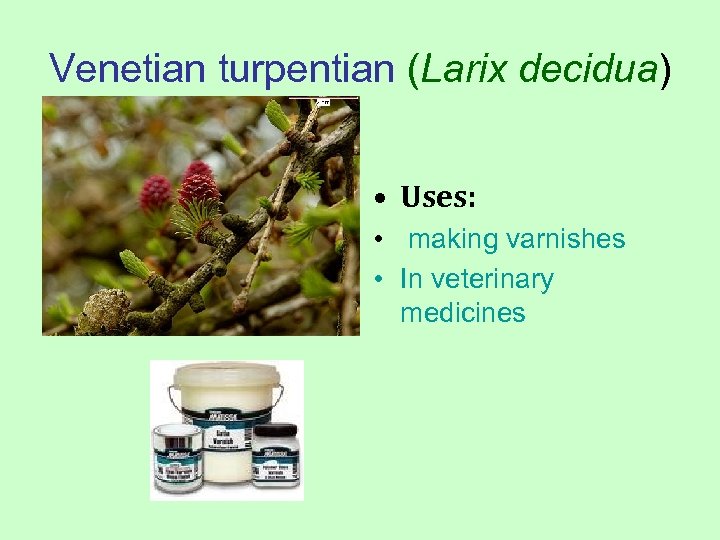
Venetian turpentian (Larix decidua) • Uses: • making varnishes • In veterinary medicines
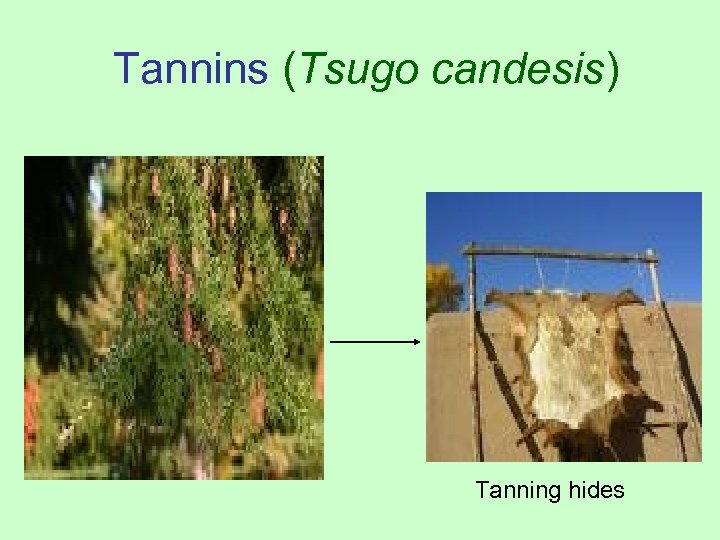
Tannins (Tsugo candesis) Tanning hides
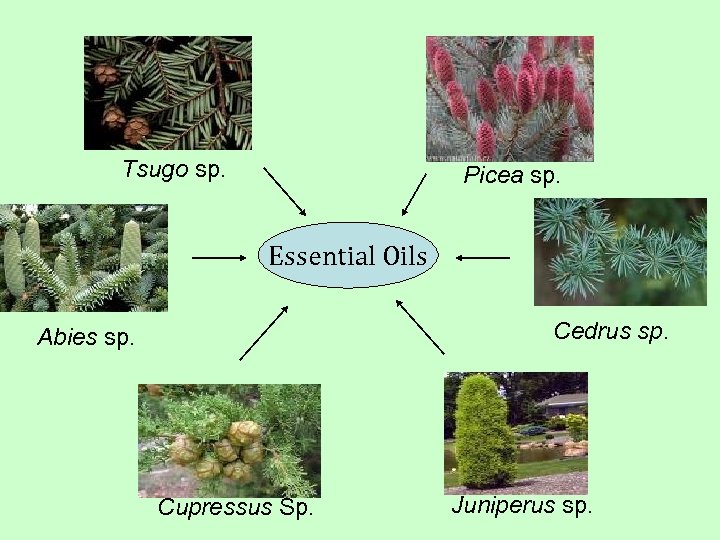
Tsugo sp. Picea sp. Essential Oils Cedrus sp. Abies sp. Cupressus Sp. Juniperus sp.
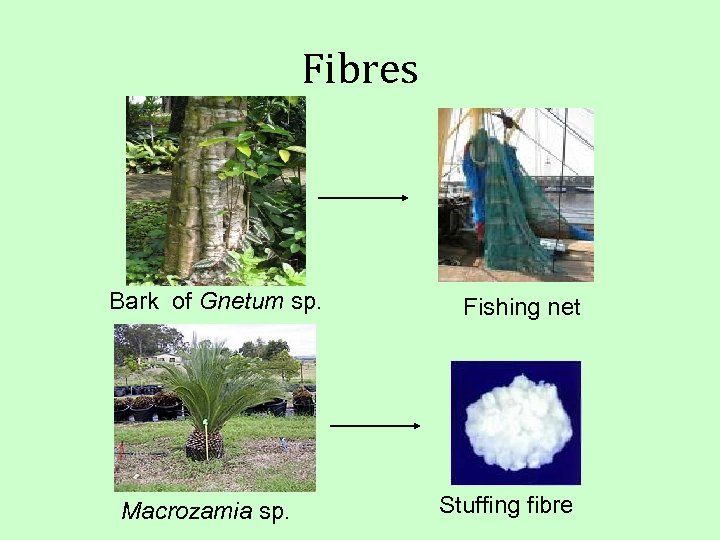
Fibres Bark of Gnetum sp. Macrozamia sp. Fishing net Stuffing fibre
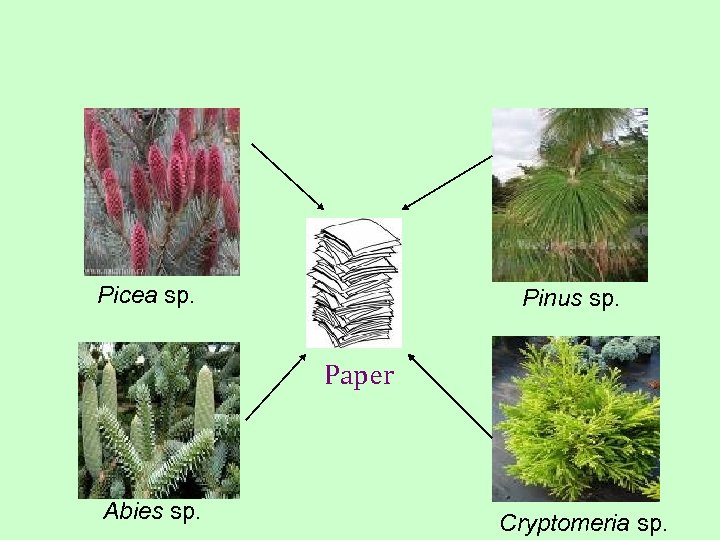
Picea sp. Pinus sp. Paper Abies sp. Cryptomeria sp.
 Скачать презентацию Economic Importance Of Gymnosperms Submitted By Dr
474b1e68c23fe32ad8a13f61123d3b1d.ppt