 Скачать презентацию Economic Development As A Triage Activity Marc Anderberg
fadb9ed3393796dc4c0b83a25c5a6756.ppt
- Количество слайдов: 13



Economic Development As A Triage Activity Marc Anderberg Director, Applied Research Texas Workforce Commission Annual Workforce Conference Phoenix, AZ April 10 -11, 2008
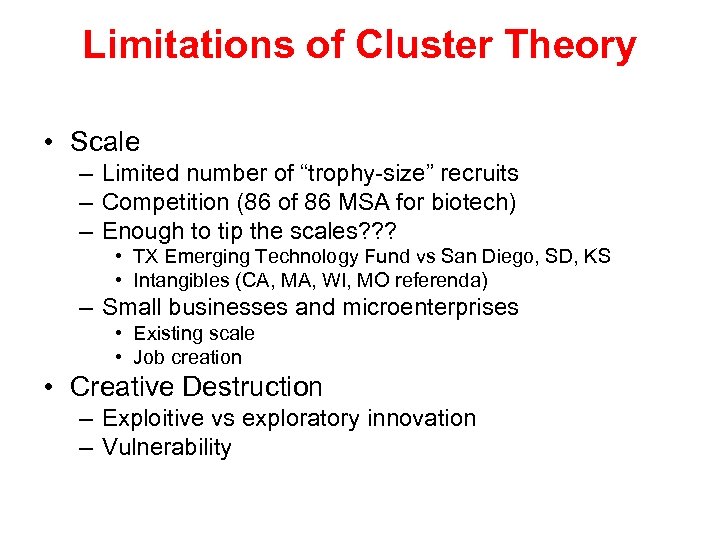
Limitations of Cluster Theory • Scale – Limited number of “trophy-size” recruits – Competition (86 of 86 MSA for biotech) – Enough to tip the scales? ? ? • TX Emerging Technology Fund vs San Diego, SD, KS • Intangibles (CA, MA, WI, MO referenda) – Small businesses and microenterprises • Existing scale • Job creation • Creative Destruction – Exploitive vs exploratory innovation – Vulnerability
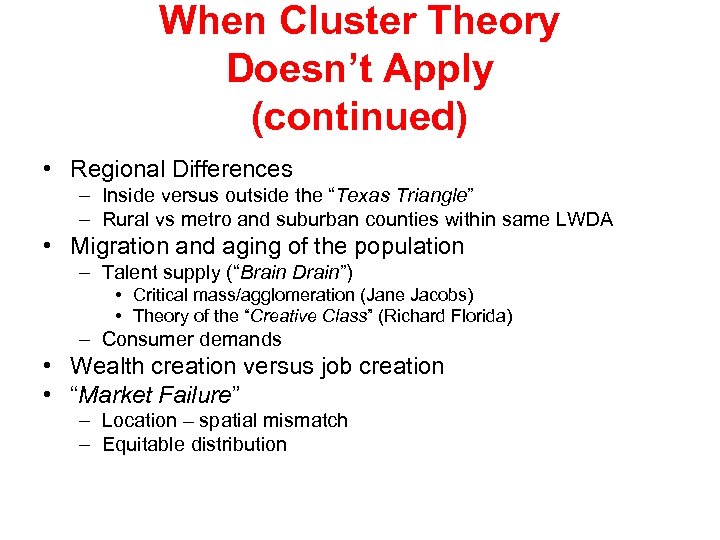
When Cluster Theory Doesn’t Apply (continued) • Regional Differences – Inside versus outside the “Texas Triangle” – Rural vs metro and suburban counties within same LWDA • Migration and aging of the population – Talent supply (“Brain Drain”) • Critical mass/agglomeration (Jane Jacobs) • Theory of the “Creative Class” (Richard Florida) – Consumer demands • Wealth creation versus job creation • “Market Failure” – Location – spatial mismatch – Equitable distribution
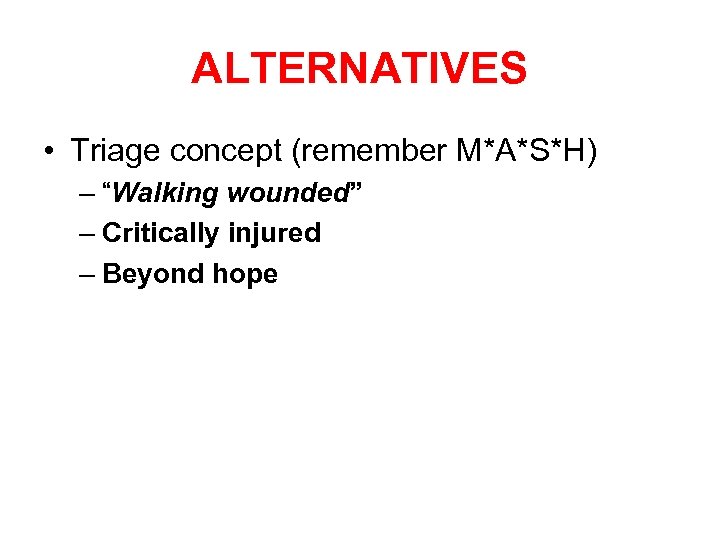
ALTERNATIVES • Triage concept (remember M*A*S*H) – “Walking wounded” – Critically injured – Beyond hope
ALTERNATIVES Strengths and Opportunities Continue to do what you do best – Ag (crops and livestock) and Oil & Gas – Diversify and differentiate – Capture more of the value added • Intermediate vs final demand • New markets (niche, international) • Quality, branding and marketing – Become more efficient – Pooling of resources – cooperative – Be Opportunistic in “appropriating” cluster language
ALTERNATIVE Strengths and Opportunities • Understand your comparative advantage • Differentiate between export industries and population-serving industries – Retail is NOT economic development • Retail and personal services follow population and income growth • Conserve scarce resources for export industry development – Resist notion that bidding wars are “business as usual – Use information resources and indirect incentives – Understand leakage, displacement and import substitution – Stimulate population growth • Quality of place – Enhance natural amenities – Market them through tourism and residential relocation • Quality of life – Cheap land, low crime, low cost of living – Market to equity rich-city weary snowbirds – Upgrade services (e. g. , cure problems like medically-underserved)
ALTERNATIVES Strengths and Opportunities Footloose industries Business as a virtual platform Place still matters • Proximity to final consumer – I have deployed lots of IT – I just don’t have any knowledge worth transmitting across the globe at the speed of light – Knowledge vs Information-based economy • Quality of life and quality of place • Green Economy & Tradability of Skills
ALTERNATIVES Strengths and Opportunities Grow your own • World class education – Foundation – Entrepreneurship – Stewardship • Access to capital (angels, micro-lenders, conventional) – Information broker and networking – Business plan development (see Dot Com Flame-outs) – Tech assistance • SCORE, ag extension, MEP, SBDC • Incubator, industrial park and exit strategy • Scale and expectations – IT as enabling rather than as a cluster (There are no low tech industries, only low tech firms) ― Get the infrastructure right
ALTERNATIVES Addressing Weaknesses • Base closure and abandoned factories – Resources and best practices – Recovery, renovation (speed essential) – Market spade-ready, finish-out ready • Cooperation – Rather than competition (bury the hatchet, ford the river Mr. Rhoden presentation) – Get a piece of the action
ALTERNATIVES When life gives you lemons, make lemonade Reversing cluster logic • Absence of legacy industry as barrier (Twin Cities) – Incremental change rather than breakthroughs – Risk-aversion and protectionism • Too much is disadvantage – Degradation of quality of place & quality of life • San Jose, CA migration to Austin, TX – Dispersion of vulnerable critical infrastructure • Gulf Coast refining vs Arkansas, Oklahoma or inland Texas
ALTERNATIVES Addressing Weaknesses Public good argument • Function of government is to fill gaps where market forces fail • Market forces will “take care of” the metro and suburban areas • With substantial comparative advantage, they can’t make the “but for” argument to justify financial incentives • Rural areas (and inner-city ones) need larger allocations in order to level the playing field • Rural areas and inner-cities have a greater need for wealth creation and jobs • Productive use of human resources in rural areas and inner-cities achievements decrease “drag” on the system.
Measuring Success Efficiency, ROI and net job creation are not the only measure Equitable distribution of cost and benefits Earmarked funds • USDA – and HUD – and EPA • Do. D (dual-use) and Homeland Security • NSF and Department of Education • NIH and HHS Special programs • Enterprise and Empowerment Zones • Community Redevelopment Act Reduced vulnerability • Diversification of the economic base • Dispersion of critical infrastructure • Retention of jobs relative to expected loss • Stemming the brain drain – Expanding the knowledge base – Nimble to respond to changing demands – Innovation and entrepreneurship are the foundations of wealth creation
• Marc Anderberg • Email marc. anderberg@twc. state. tx. us • Phone Getting Down to Business: Applied Cluster Theory • Economic Development As a Triage Activity (in 2007) • Job Chains and Churning • Megatrends: An Environmental Scan of the Forces Sculpting Texas’ Economic Landscape (in 2007) • Becoming and Employer of Choice: Talent Recruitment and Retention During the Coming Skills Shortage • Technology Workers in the New Texas Economy • Infusing Strategic Planning with Local Wisdom • Bridging the Digital Divide: Under-representation of Women and Minorities in Technology-Intensive Occupations • The Emerging Biotechnology Industry • The Study of Emerging Occupations (512) 491 -4803 • Mail Marc Anderberg Director of Applied Research TWC – LMCI 9001 N. IH-35, Suite 103 A Austin, TX 76753 h
Скачать презентацию Economic Development As A Triage Activity Marc Anderberg
fadb9ed3393796dc4c0b83a25c5a6756.ppt