


 Скачать презентацию Economic crisis and the restructuring of wage setting
a285ebf5d46c064d67a76be325a892a5.ppt
- Количество слайдов: 17
 Economic crisis and the restructuring of wage setting mechanisms for vulnerable workers in Ireland Thomas Turner and Michelle O’Sullivan ICTU Women’s Conference 1 st March 2012 michelle. osullivan@ul. ie
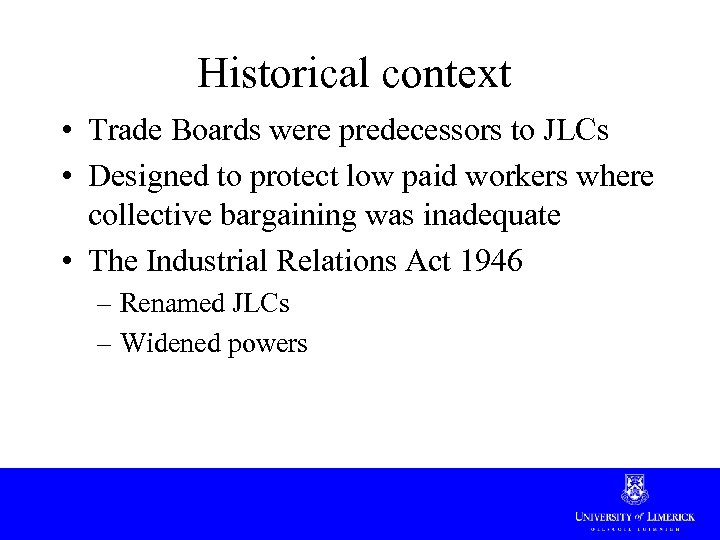 Historical context • Trade Boards were predecessors to JLCs • Designed to protect low paid workers where collective bargaining was inadequate • The Industrial Relations Act 1946 – Renamed JLCs – Widened powers
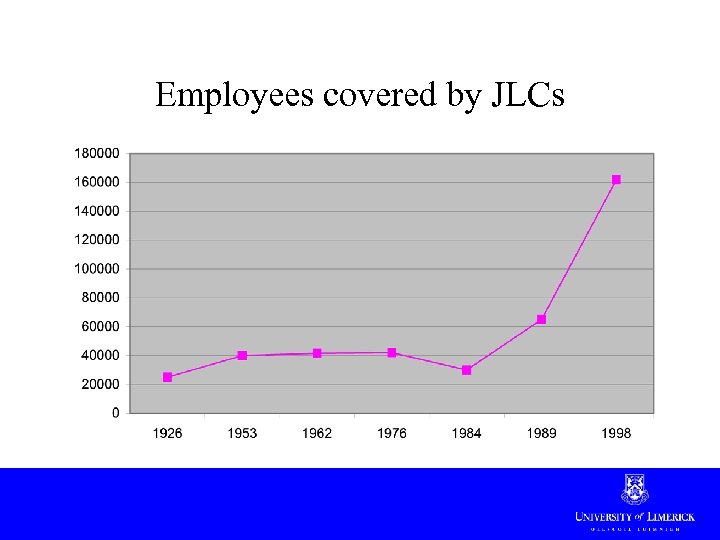 Employees covered by JLCs
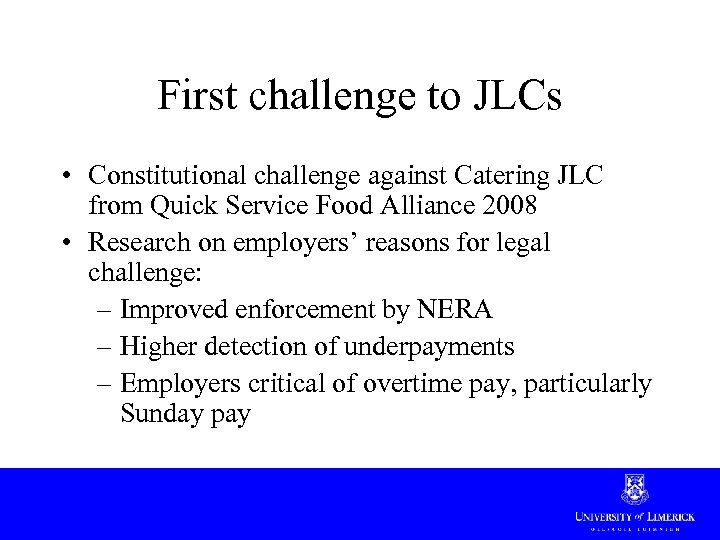 First challenge to JLCs • Constitutional challenge against Catering JLC from Quick Service Food Alliance 2008 • Research on employers’ reasons for legal challenge: – Improved enforcement by NERA – Higher detection of underpayments – Employers critical of overtime pay, particularly Sunday pay
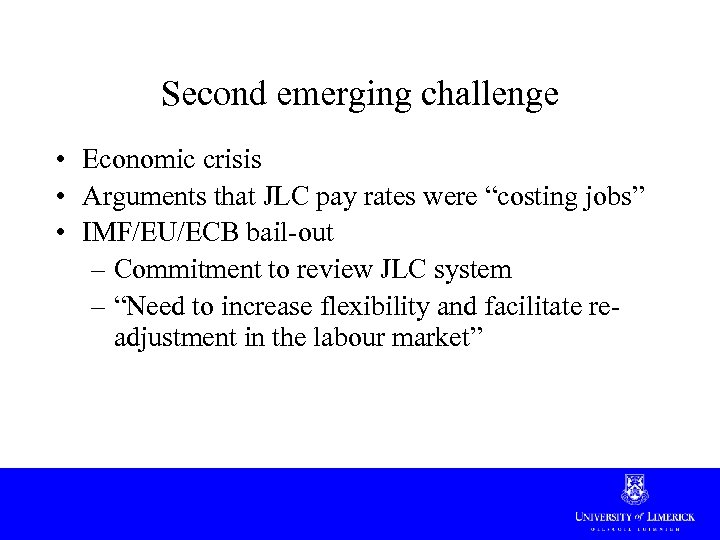 Second emerging challenge • Economic crisis • Arguments that JLC pay rates were “costing jobs” • IMF/EU/ECB bail-out – Commitment to review JLC system – “Need to increase flexibility and facilitate readjustment in the labour market”
 Paper objectives • To examine the structure of earnings & hours of low paid workers – What groups more likely to earn JLC wages? – Examine extent of overtime & shift working – Examine extent of overtime earnings, shift allowances and bonuses to low paid workers – Comparison of low paid and higher paid workers re overtime etc. earnings
 Methodology • 2007 National Employment Survey (NES) in the private sector • Dependent measure is average hourly earnings • Approximately 75 per cent of respondents (44, 861) in the private sector • Grossed up to the employed labour force of approximately 1. 7 million employees.
 How many employees are low paid? • Median hourly earnings € 16. 29 • Low pay work as two thirds of median hourly earnings - € 10. 86 or less – 25% private sector workers (323, 912) are low paid • JLC range - € 8. 23 to € 9. 68
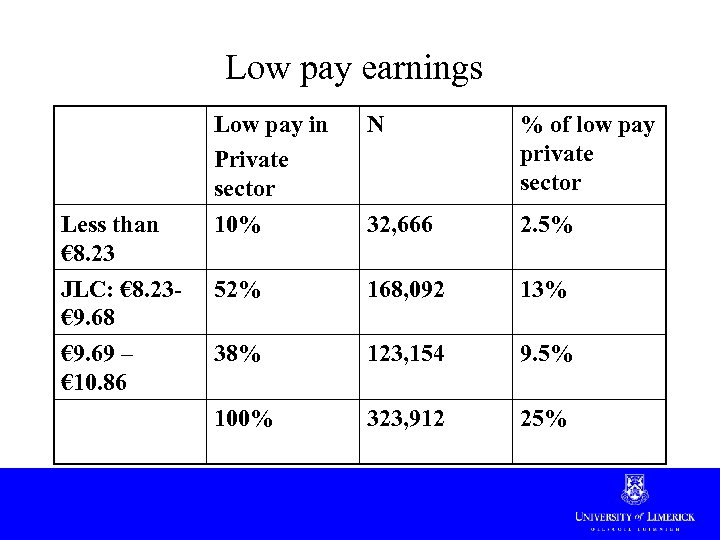 Low pay earnings Less than € 8. 23 JLC: € 8. 23€ 9. 68 € 9. 69 – € 10. 86 Low pay in Private sector 10% N % of low pay private sector 32, 666 2. 5% 52% 168, 092 13% 38% 123, 154 9. 5% 100% 323, 912 25%
 Who are JLC workers? • Female – twice as likely – Account for 63% of JLC workers • Less educated • Part-time – 3 times more likely • Under 25 years of age – 3 times more likely • Non-Irish – Twice as likely
 Who are JLC workers? • Manual or routine service type work – 7 times more likely • Non-union • Low levels of employment service – 72% of workers less than 5 yrs • Work in the hotels/restaurant and whole/retail sectors
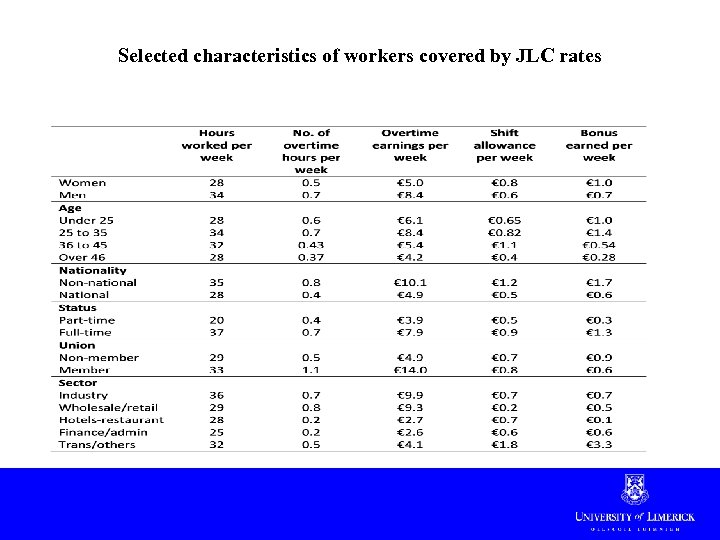 Selected characteristics of workers covered by JLC rates
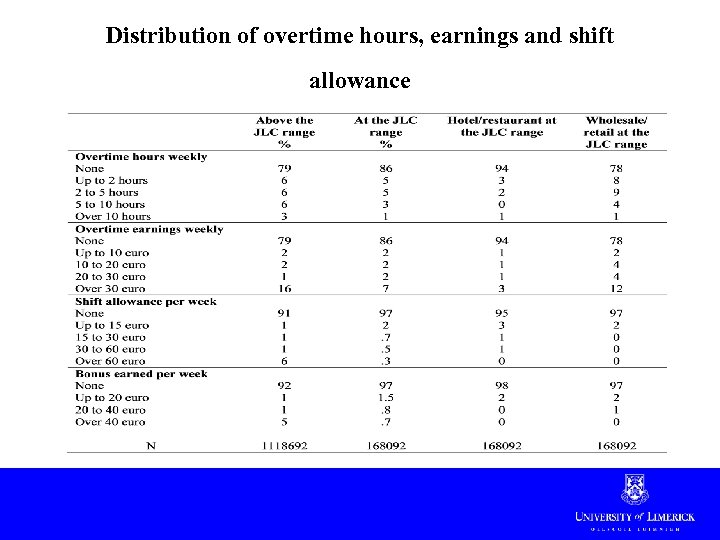 Distribution of overtime hours, earnings and shift allowance
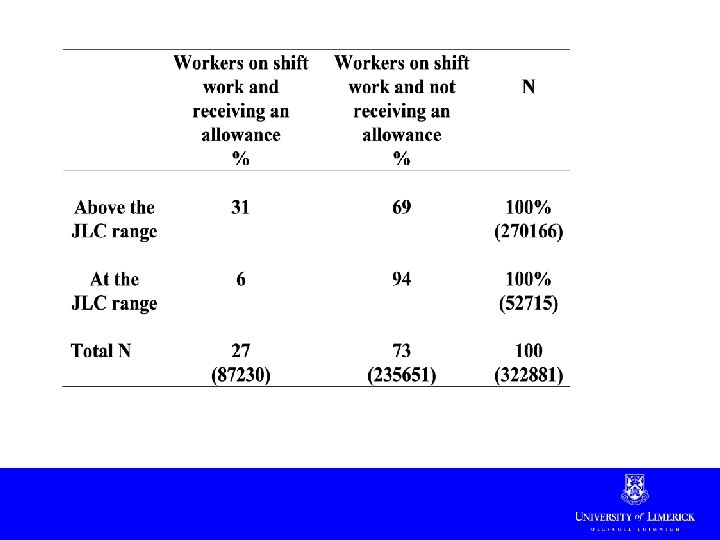
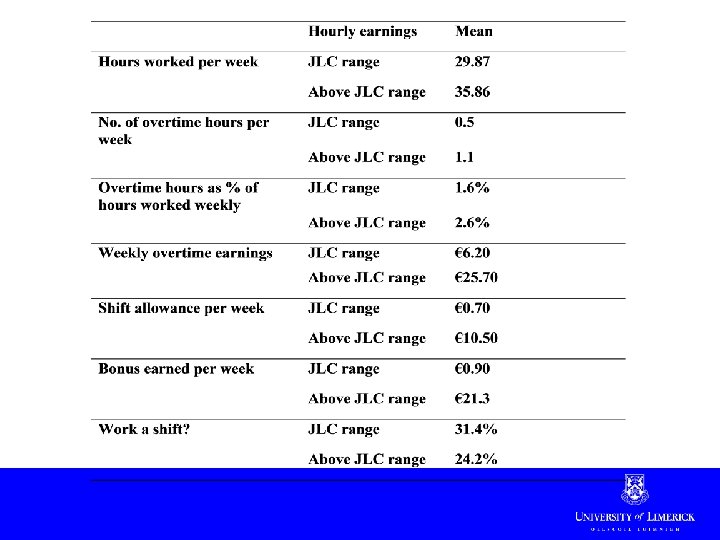
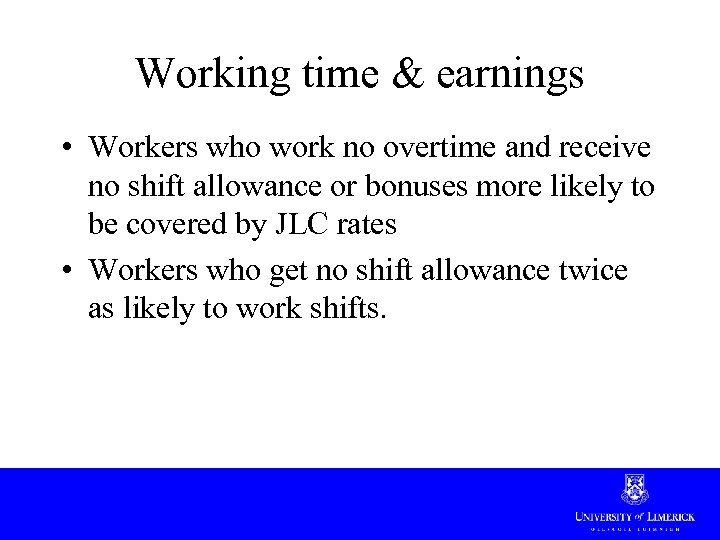 Working time & earnings • Workers who work no overtime and receive no shift allowance or bonuses more likely to be covered by JLC rates • Workers who get no shift allowance twice as likely to work shifts.
 Conclusion • Evidence does not support the argument that extra payments such as Sunday premiums, shift allowance and over-time payments to workers covered by JLCs represent a major cost to employers in general.