


 Скачать презентацию Economic and Political Challenges of Acceding to the
9958dbbad704f606552a3256a370c29c.ppt
- Количество слайдов: 13
 Economic and Political Challenges of Acceding to the Euro Area Is current account the real challenge ? Cinzia Alcidi, CEPS December 7, 2009, Sofia
 Outline of the presentation • Situation before the crisis • Impact of the crisis • Beyond Maastricht criteria – Current account – External debt • Concluding remarks
 The region before the crisis • • High level of growth Wages increase Widespread construction booms Close to meet Maastricht criteria – Good state of government finances • But lack of consolidation – Inflation – LT interest rates
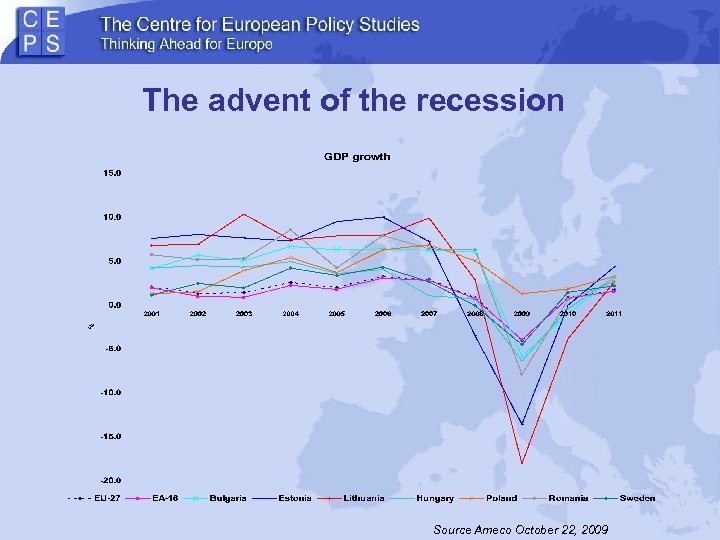 The advent of the recession Source Ameco October 22, 2009
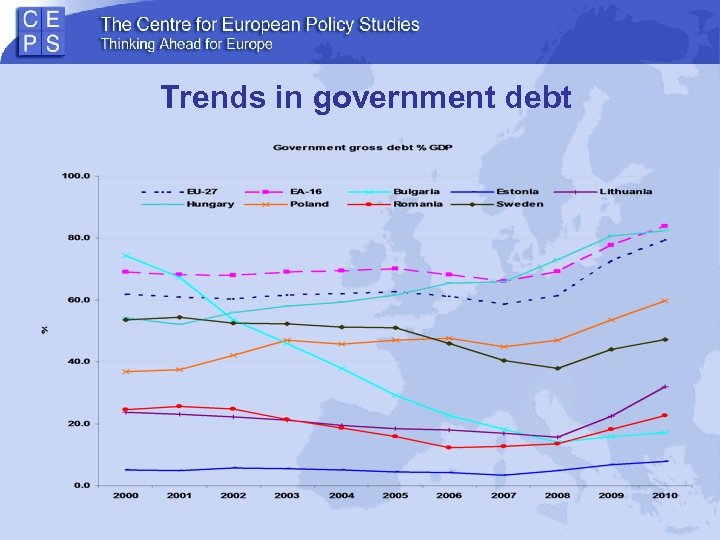 Trends in government debt
 Differences within the region: Forex regimes • Region contains cases of extreme bubbles – Baltics worst in terms of height and duration of bubble. • The fixed forex rigidity • Poland CZ little bubble – Flex forex • Bulgaria – Currency board issue
 How recovery will look like? • Weak. Permanent fall in output cannot be excluded – EU banking sector still in disrepair • EU productive sector relies on banking sector – Low productivity within EU – Effects housing bust long and difficult to absorb – Weak global demand (US) – Large debt: first private now public
 Beyond Maastricht: Current accounts • Maastricht criteria do not include current account balance • Why? • CA deficits are not necessarily a bad thing • CA deficits signal: – Competitiveness problem – Excess (national) saving over (national) investment • Low savings versus large investment
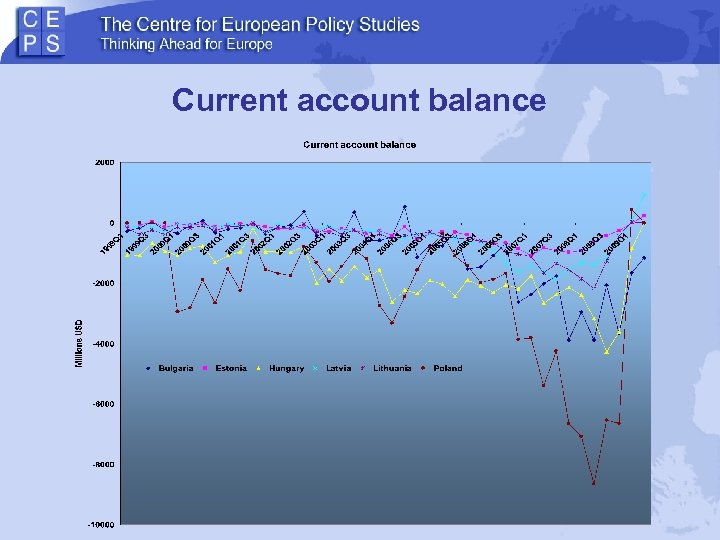 Current account balance
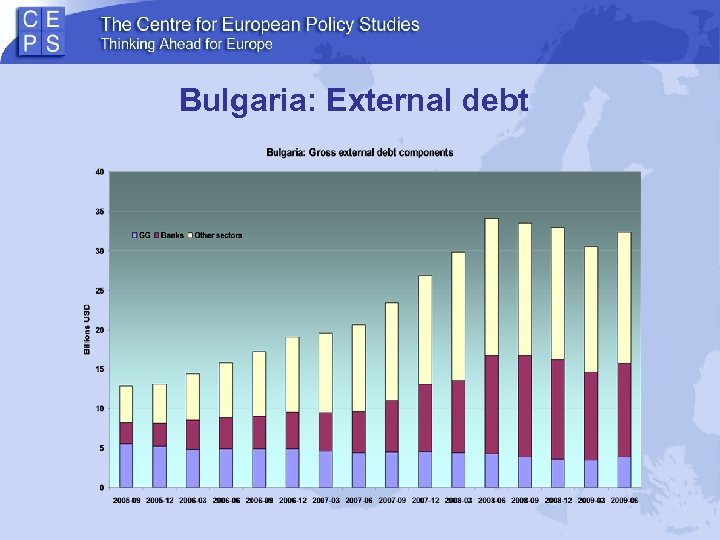 Bulgaria: External debt
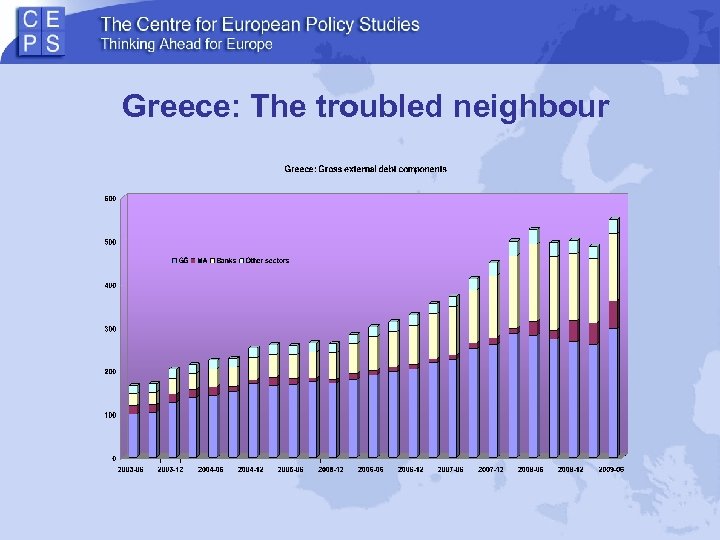 Greece: The troubled neighbour
 Concluding remarks: • Foreign investment good but is a form of debt: – growth model • Borrowed foreign funds for non-productive spending • Domestic savings and the ability to repay – Should we accept lower consumption?
 Thank you