 Скачать презентацию Eco-Congregation Local Networks Seminar 26 September 2015 John
13bb48cd61fbc96623726ed37469ef70.ppt
- Количество слайдов: 39



Eco-Congregation Local Networks Seminar 26 September 2015 John Ferguson Ecoidea. M Ltd
What will we cover? § Some of the fundamental issues: § Climate change § Resources § Air quality § Energy § Water § Food § …… we won’t cover biodiversity and habitats, desertification, soil erosion, soil contamination, marine pollution, nano-technology, genetic engineering and a few other things that also matter!! § 4 Workshops.
Why is it Important…. just a reminder? § From the fringes to the centre of concern in less than 30 years. § Population / Resources / Climate / Energy / Water / Food / Health / Infrastructure / Global Financial. § A changing global economy – the fall of nations – an inexorable process – managing change with the wisdom of understanding history and hindsight. § If ever there was a time to re-think our priorities and re-vision and re-engineer our future this is probably a good time to really get to grips with it. § Is good stewardship of God’s good creation not part of every Christian’s duty?
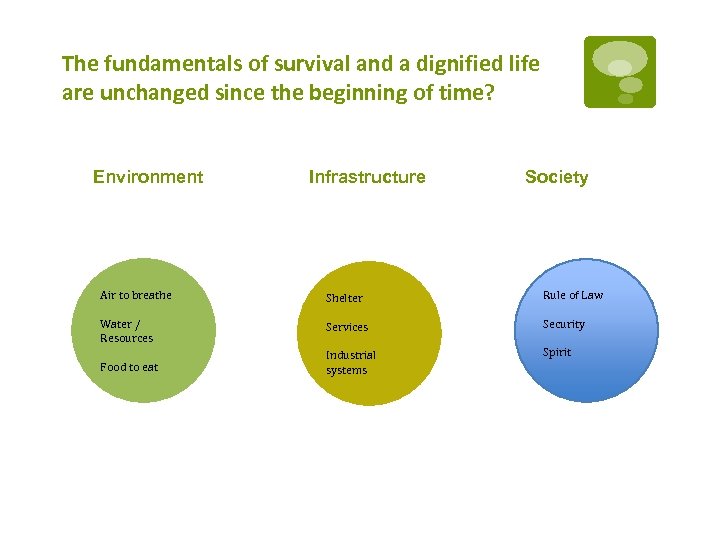
The fundamentals of survival and a dignified life are unchanged since the beginning of time? Environment Infrastructure Society Air to breathe Shelter Rule of Law Water / Resources Services Security Industrial systems Spirit Food to eat
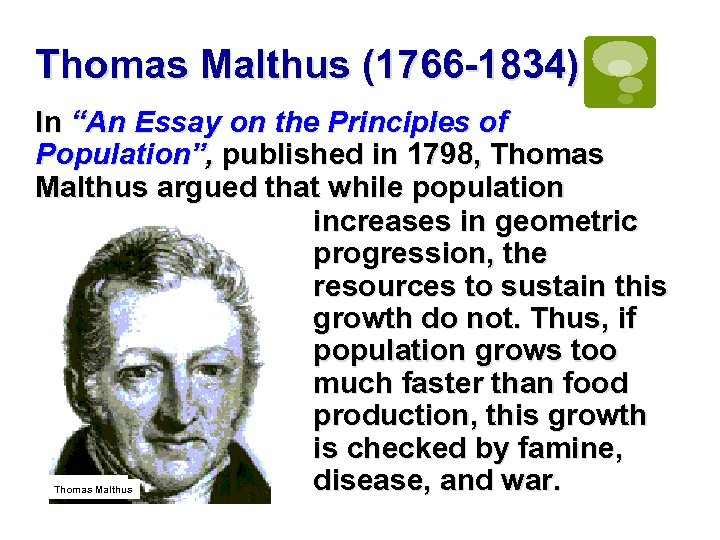
Thomas Malthus (1766 -1834) In “An Essay on the Principles of Population”, published in 1798, Thomas Malthus argued that while population increases in geometric progression, the resources to sustain this growth do not. Thus, if population grows too much faster than food production, this growth is checked by famine, disease, and war. Thomas Malthus
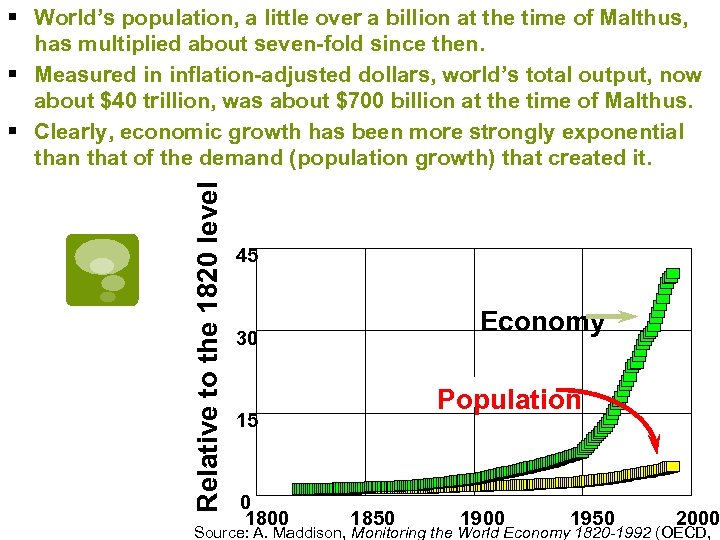
Relative to the 1820 level § World’s population, a little over a billion at the time of Malthus, has multiplied about seven-fold since then. § Measured in inflation-adjusted dollars, world’s total output, now about $40 trillion, was about $700 billion at the time of Malthus. § Clearly, economic growth has been more strongly exponential than that of the demand (population growth) that created it. 45 Economy 30 Population 15 0 1800 1850 1900 1950 2000 Source: A. Maddison, Monitoring the World Economy 1820 -1992 (OECD,
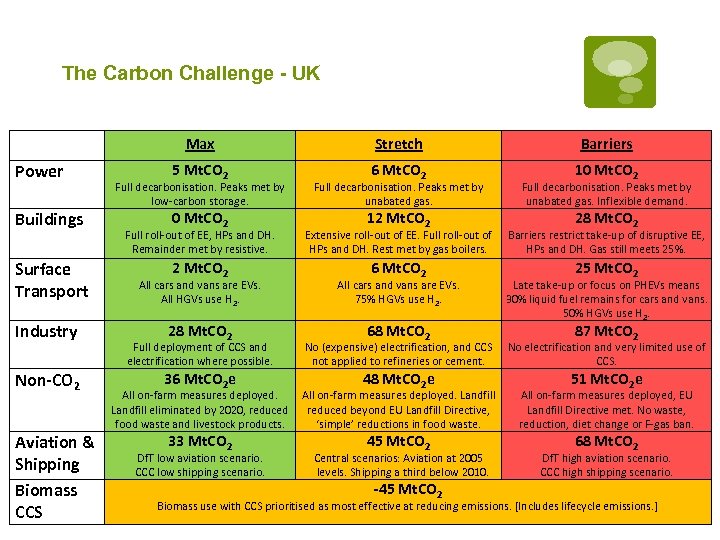
The Carbon Challenge - UK Max Power Buildings Surface Transport Industry Non-CO 2 Aviation & Shipping Biomass CCS Stretch Barriers 5 Mt. CO 2 6 Mt. CO 2 10 Mt. CO 2 Full decarbonisation. Peaks met by low-carbon storage. Full decarbonisation. Peaks met by unabated gas. Inflexible demand. Full roll-out of EE, HPs and DH. Remainder met by resistive. Extensive roll-out of EE. Full roll-out of HPs and DH. Rest met by gas boilers. Barriers restrict take-up of disruptive EE, HPs and DH. Gas still meets 25%. 2 Mt. CO 2 6 Mt. CO 2 25 Mt. CO 2 0 Mt. CO 2 12 Mt. CO 2 All cars and vans are EVs. All HGVs use H 2. All cars and vans are EVs. 75% HGVs use H 2. 28 Mt. CO 2 68 Mt. CO 2 Full deployment of CCS and electrification where possible. 36 Mt. CO 2 e No (expensive) electrification, and CCS not applied to refineries or cement. 48 Mt. CO 2 e All on-farm measures deployed. Landfill eliminated by 2020, reduced beyond EU Landfill Directive, food waste and livestock products. ‘simple’ reductions in food waste. 33 Mt. CO 2 Df. T low aviation scenario. CCC low shipping scenario. 45 Mt. CO 2 Central scenarios: Aviation at 2005 levels. Shipping a third below 2010. -45 Mt. CO 2 28 Mt. CO 2 Late take-up or focus on PHEVs means 30% liquid fuel remains for cars and vans. 50% HGVs use H 2. 87 Mt. CO 2 No electrification and very limited use of CCS. 51 Mt. CO 2 e All on-farm measures deployed, EU Landfill Directive met. No waste, reduction, diet change or F-gas ban. 68 Mt. CO 2 Df. T high aviation scenario. CCC high shipping scenario. Biomass use with CCS prioritised as most effective at reducing emissions. [Includes lifecycle emissions. ]
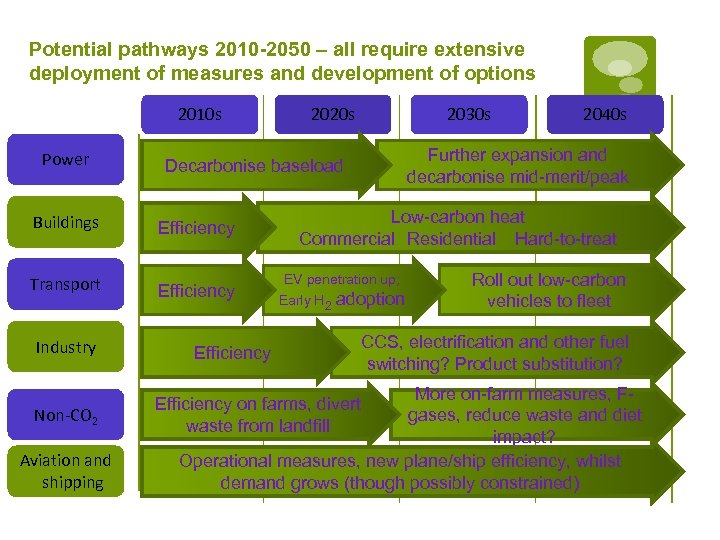
Potential pathways 2010 -2050 – all require extensive deployment of measures and development of options 2010 s Power Efficiency Transport Efficiency Non-CO 2 Aviation and shipping 2030 s Efficiency 2040 s Further expansion and decarbonise mid-merit/peak Decarbonise baseload Buildings Industry 2020 s Low-carbon heat Commercial Residential Hard-to-treat EV penetration up; Early H 2 adoption Roll out low-carbon vehicles to fleet CCS, electrification and other fuel switching? Product substitution? More on-farm measures, Fgases, reduce waste and diet impact? Operational measures, new plane/ship efficiency, whilst demand grows (though possibly constrained) Efficiency on farms, divert waste from landfill
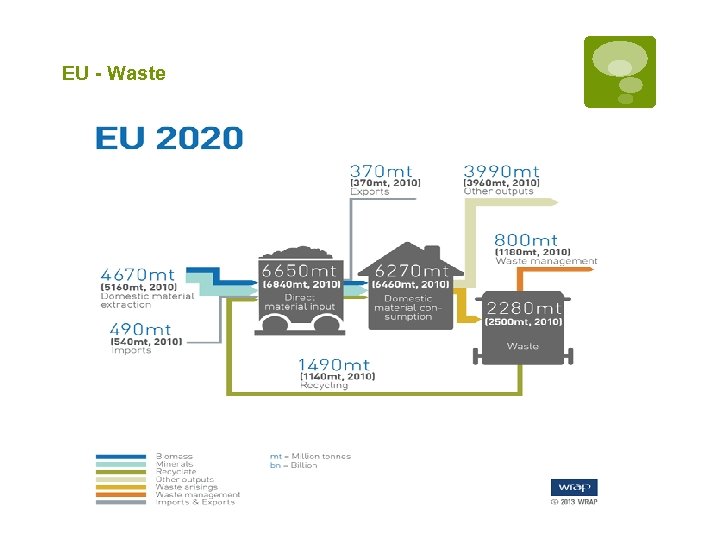
EU - Waste
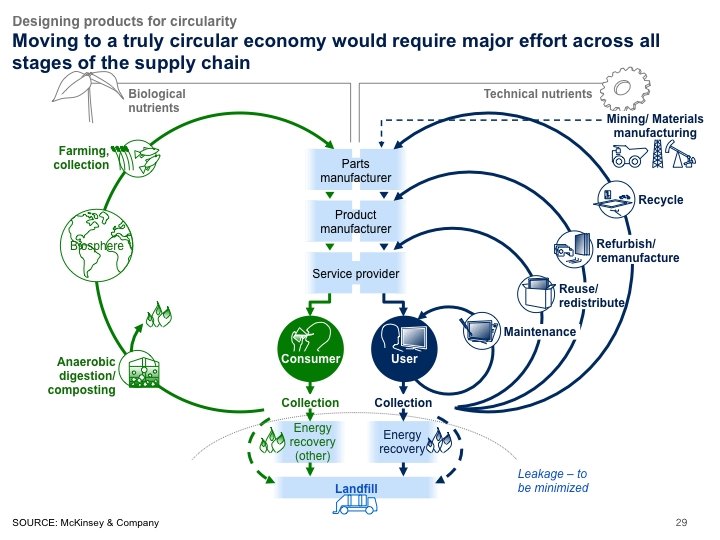
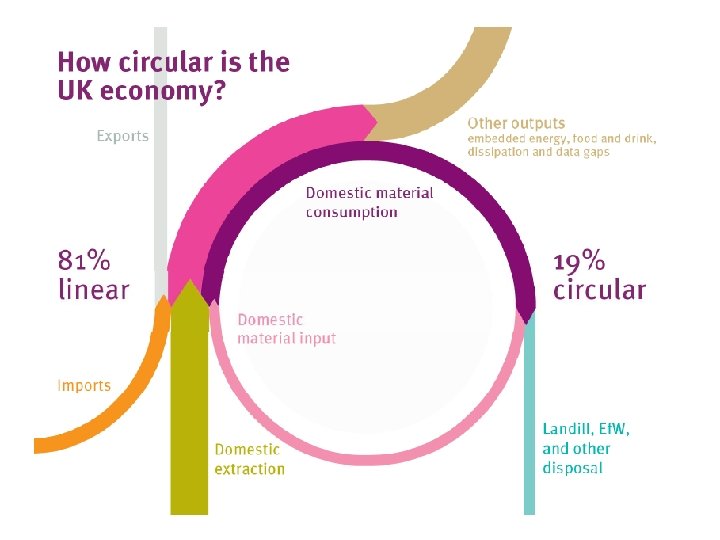
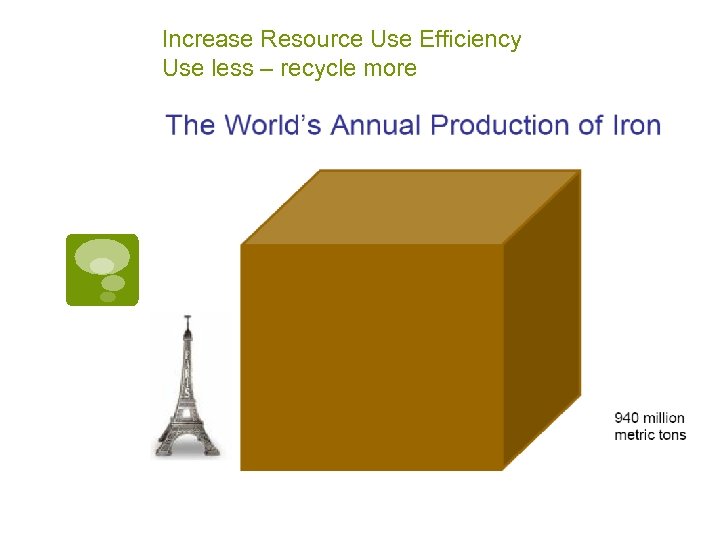
Increase Resource Use Efficiency Use less – recycle more
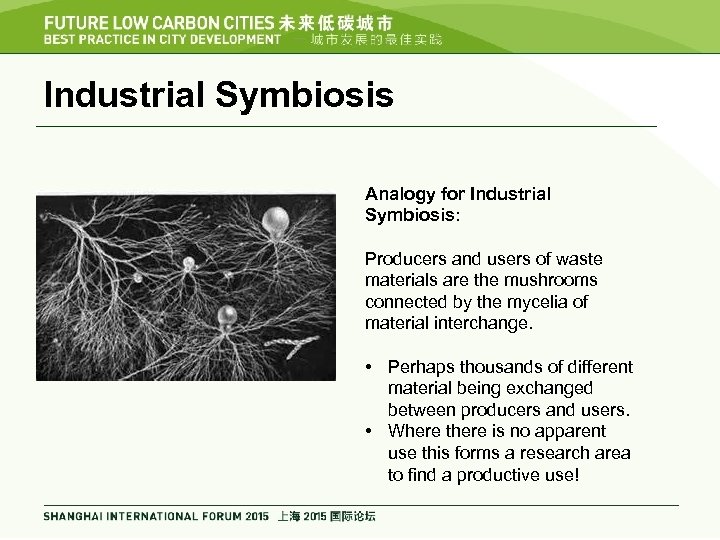
Industrial Symbiosis Analogy for Industrial Symbiosis: Producers and users of waste materials are the mushrooms connected by the mycelia of material interchange. • Perhaps thousands of different material being exchanged between producers and users. • Where there is no apparent use this forms a research area to find a productive use!
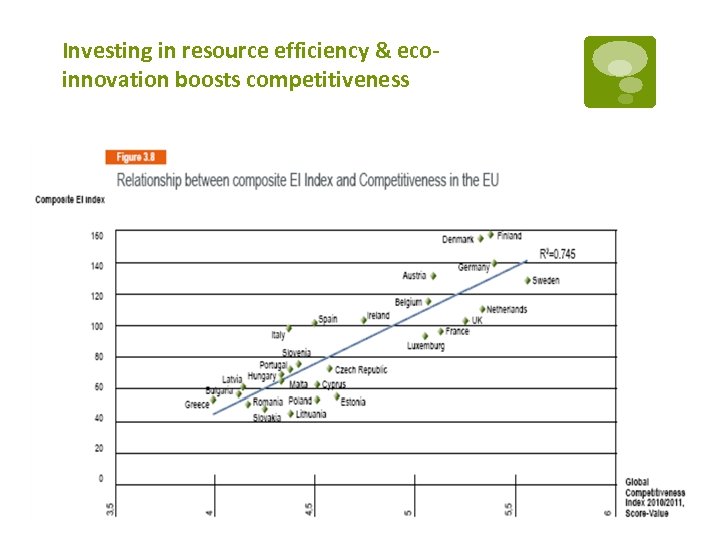
Investing in resource efficiency & ecoinnovation boosts competitiveness
Energy – 10 Key Messages. (Trilema: Security – Equity – Sustainability) 1. 2. 3. 4. 5. Energy system complexity will increase by 2050. Energy efficiency is crucial in dealing with demand outstripping supply. Energy demand expected ot outstrip population growth. The energy mix in 2050 will mainly still be fossil based. Regional priorities differ: there is no ‘one-size-fits- all’ solution to the energy trilemma. 6. The global economy will be challenged to meet the 450 ppm target without unacceptable carbon prices. 7. A low-carbon future is not only linked to renewables: CC(U)S is important and consumer behaviour needs changing. 8. CC(U)S technology, solar energy and energy storage are the key uncertainties up to 2050. 9. Balancing the energy trilemma means making difficult choices. 10. Functioning energy markets require investments and regional integration to deliver benefits to all consumers. 11. Energy policy should ensure that energy and carbon markets deliver.
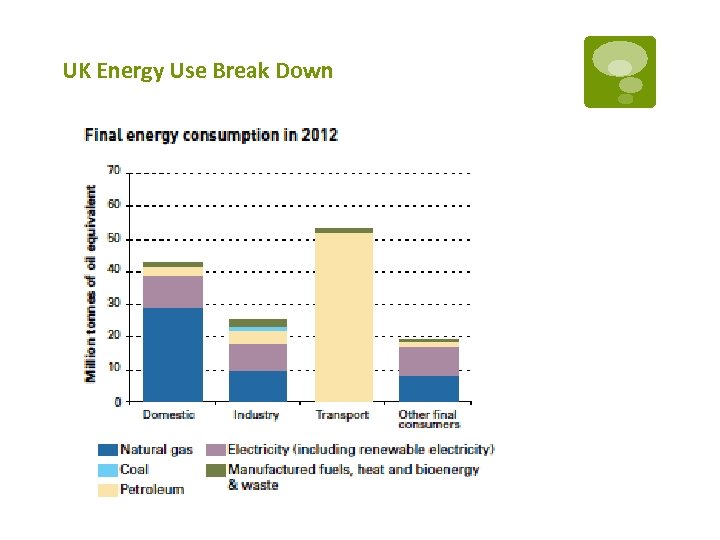
UK Energy Use Break Down
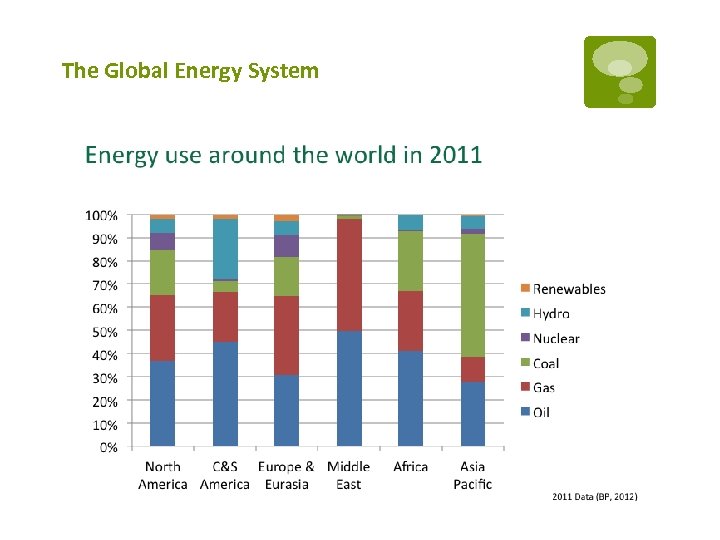
The Global Energy System
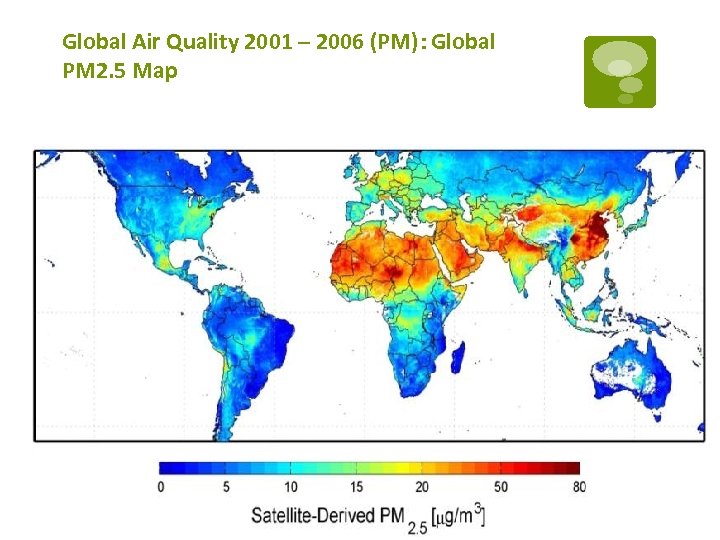
Global Air Quality 2001 – 2006 (PM):Global PM 2. 5 Map
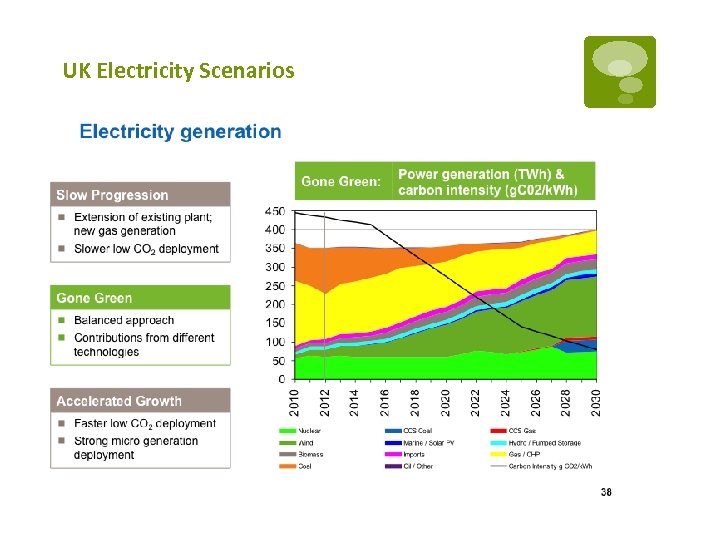
UK Electricity Scenarios
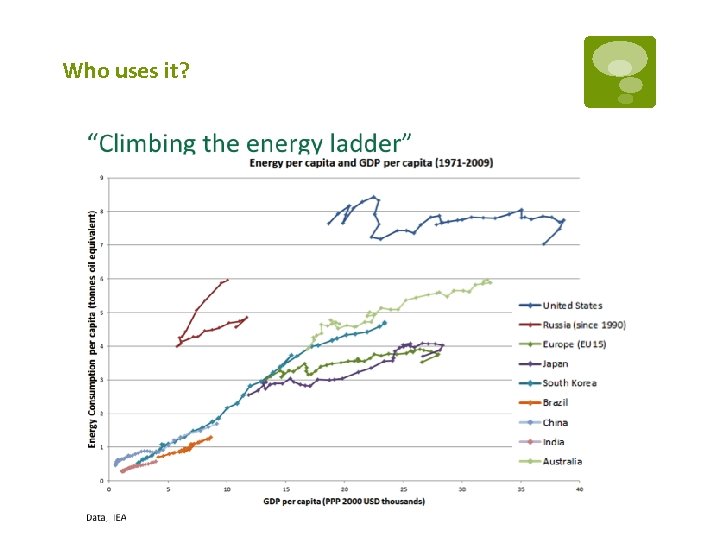
Who uses it?
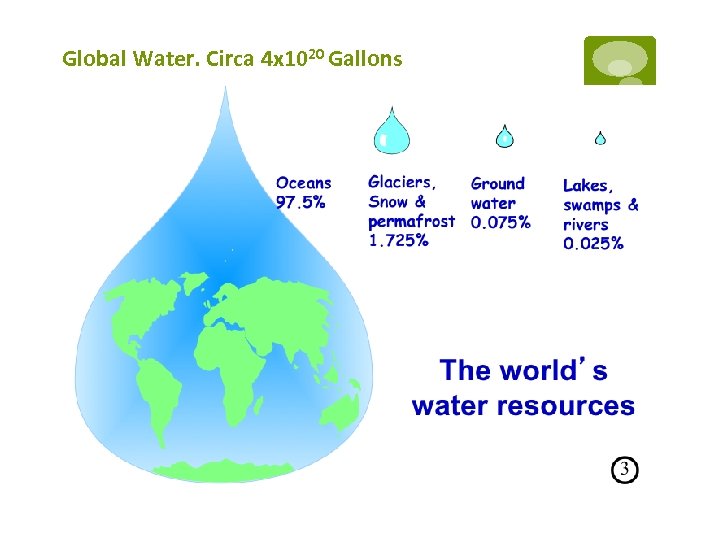
Global Water. Circa 4 x 10²⁰ Gallons
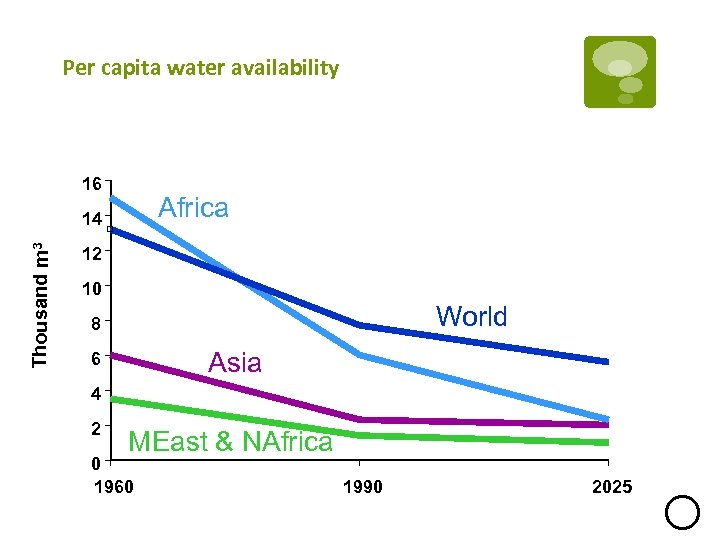
Per capita water availability 16 Africa Thousand m 3 14 12 10 World 8 Asia 6 4 2 MEast & NAfrica 0 1960 1990 2025
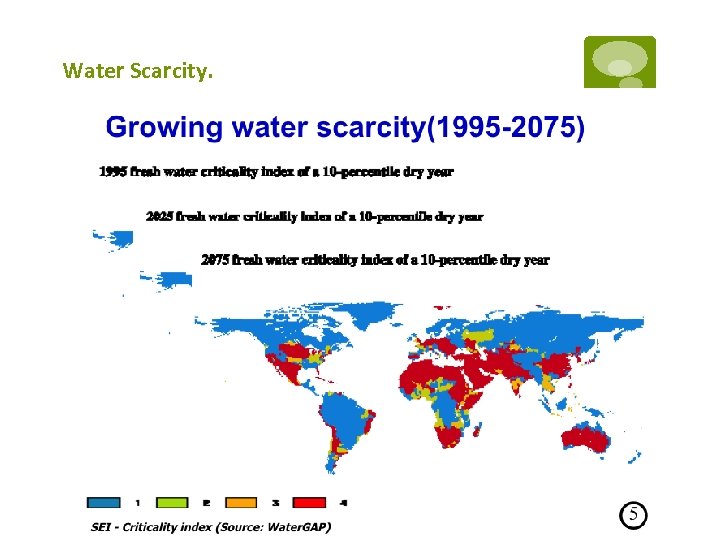
Water Scarcity.
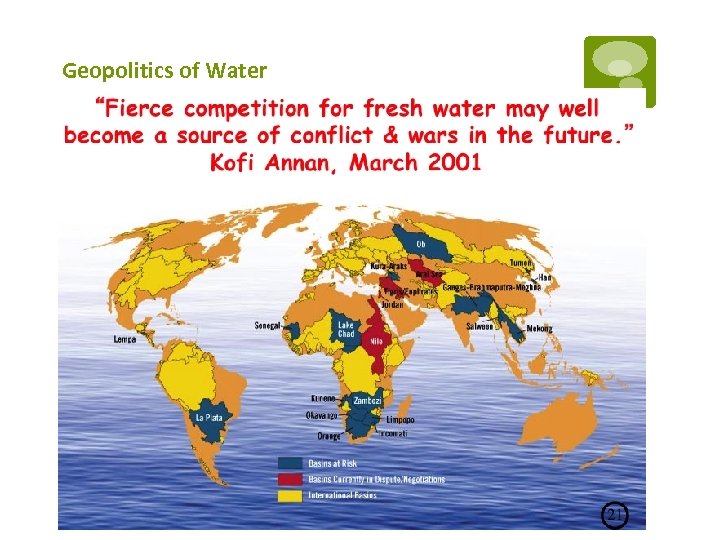
Geopolitics of Water
Driver - Food § Over the next few decades, the global food system will come under renewed pressure from the combined effects of seven fundamental factors: population growth, the nutrition transition, energy, land, water, labour and climate change. The combined effects will create constraints on food supply and if action is not taken, there is a real potential for demand growth to outstrip increases in global food production. Food Futures: Rethinking UK Strategy A Chatham House Report – January 2009
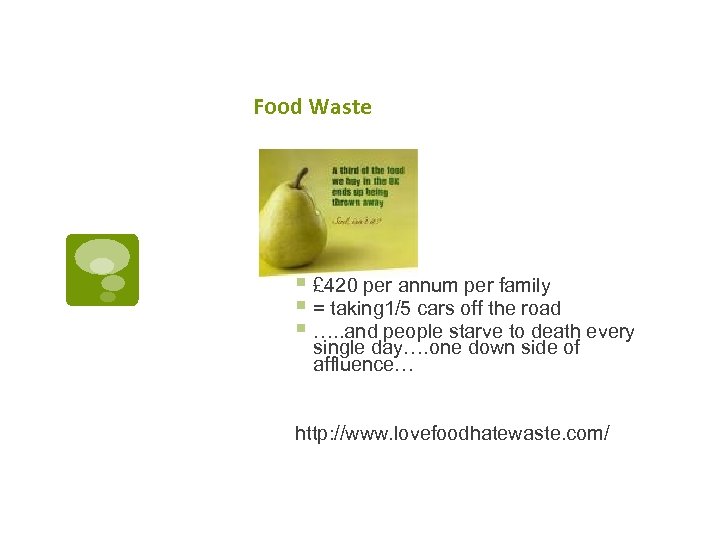
Food Waste § Food: § £ 420 per annum per family § = taking 1/5 cars off the road § …. . and people starve to death every single day…. one down side of affluence… http: //www. lovefoodhatewaste. com/
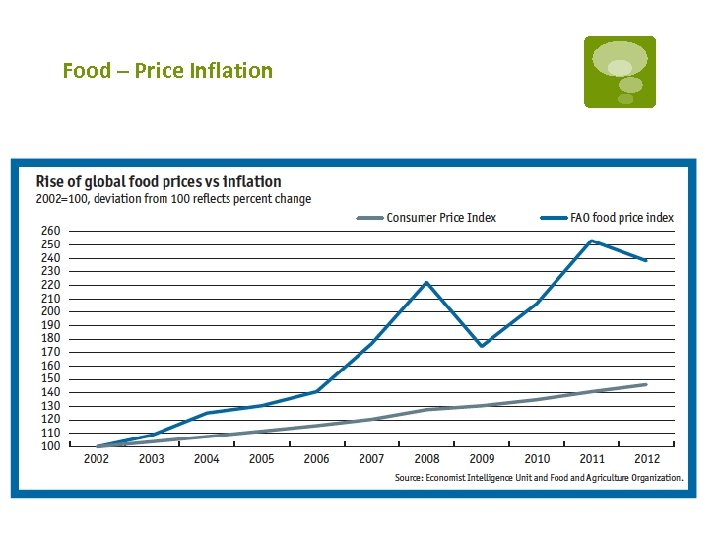
Food – Price Inflation
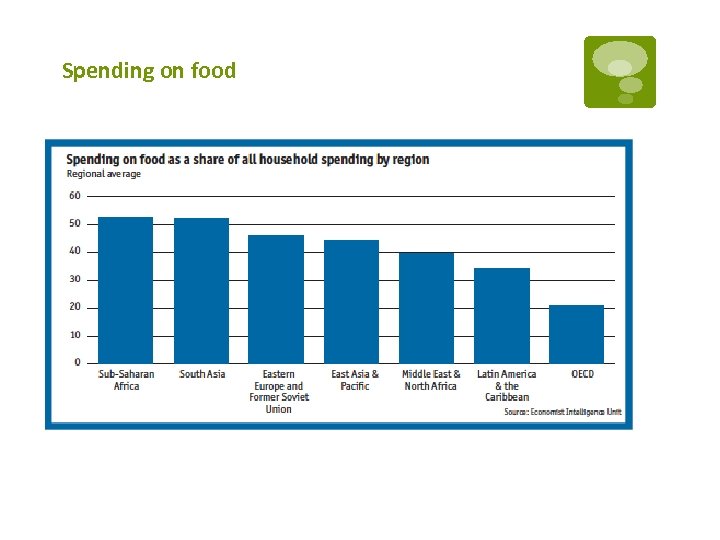
Spending on food
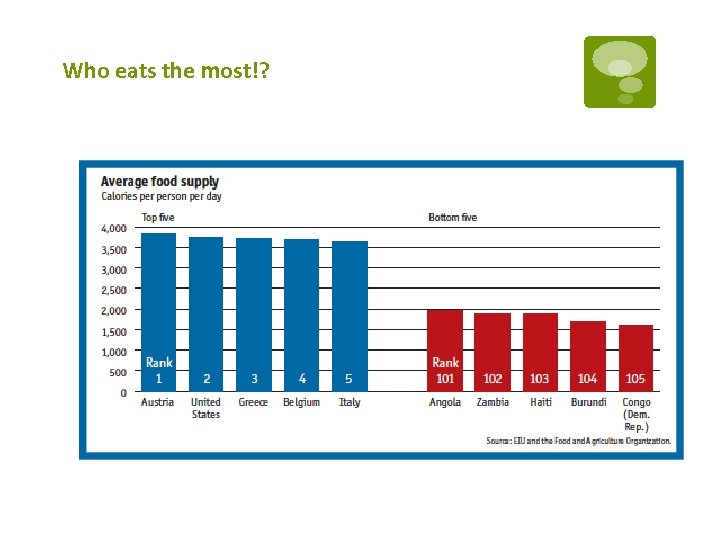
Who eats the most!?
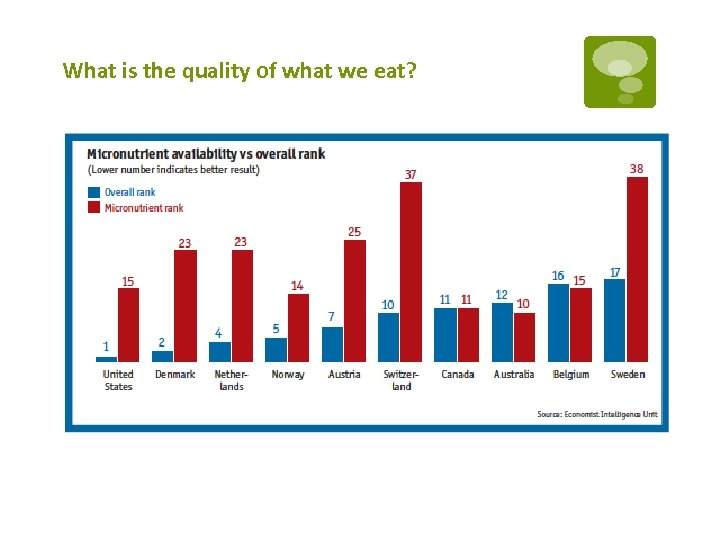
What is the quality of what we eat?
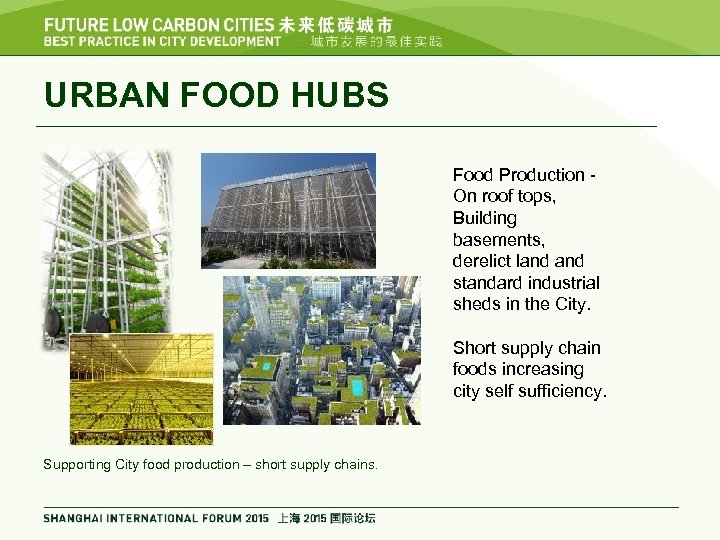
URBAN FOOD HUBS Food Production On roof tops, Building basements, derelict land standard industrial sheds in the City. Short supply chain foods increasing city self sufficiency. Supporting City food production – short supply chains.
A Final Thought! “Nature has enough for our need, but not for our greed”. Mahatma Gandhi Be joyful…not worrisome: We are to be stewards We are to love and care for God’s creation but not to worship it ……. . above all…do not despair……. we take with us a gospel of restoration, peace and hope…. !
Where do we start to make a difference? § In general terms – technology innovation – behaviour change – national – international policy – trade agreements – market drivers etc. § More than 50% of global population lives in cities. . Generating more than 50% of global economic output. More than 70% of global carbon attributed to cities. § Sustainable Cities initiatives – Transition Towns movement etc… § Communities (however define) ultimately are what matter and a good place to start. § Role of the Church: § Support § Encourage § Lead by example § Innovate in the gaps where possible – practical simple things can make a big difference
Workshops • Workshop 1 Topic: Building a Framework for Action on – Community Renewables including Energy Efficiency and Fuel Poverty? • Workshop 2 Topic: Building a Framework for Action on – Waste: reduce, reuse, recycle • Workshop 3 Topic: Building a Framework for Action on – Local Food Production and Food Poverty • Workshop 4 Topic: Building a Framework for Action on – Conserving the Local Environment
Methodology Task 1 for each works-shop: Identify practical activity ideas for each topic that are deliverable (at a community or national level. Small or large). Task 2 for each workshop: List resources – advice – training – other events - guidance etc that would help deliver these ideas. Task 3 for each work-shop: Ranking of ideas – done at end of all workshops. Use of coloured dots. There will also be a separate flip chart called: ‘’Big Ideas – Random Stuff’’
Скачать презентацию Eco-Congregation Local Networks Seminar 26 September 2015 John
13bb48cd61fbc96623726ed37469ef70.ppt