


 Скачать презентацию ECG SIGNAL RECOGNIZATION AND APPLICAITIONS NSF Project
32db881aa6d82ef41a3066694a93905c.ppt
- Количество слайдов: 190
 ECG SIGNAL RECOGNIZATION AND APPLICAITIONS NSF Project
 12 Lead ECG Interpretation
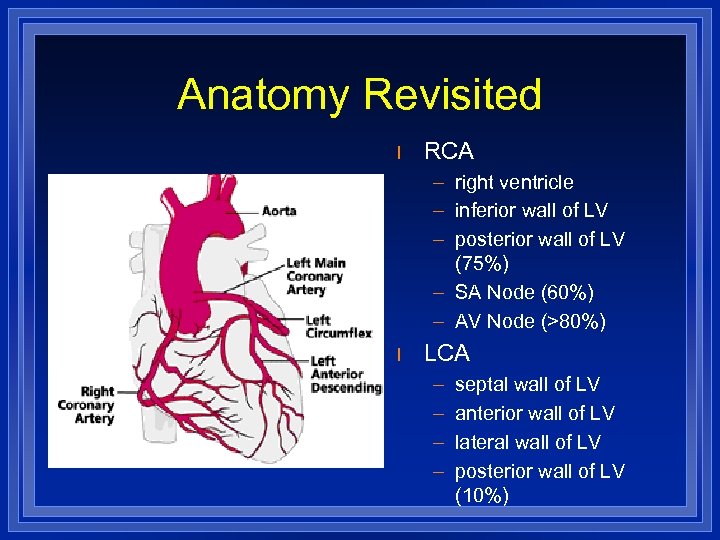 Anatomy Revisited l RCA – right ventricle – inferior wall of LV – posterior wall of LV (75%) – SA Node (60%) – AV Node (>80%) l LCA – – septal wall of LV anterior wall of LV lateral wall of LV posterior wall of LV (10%)
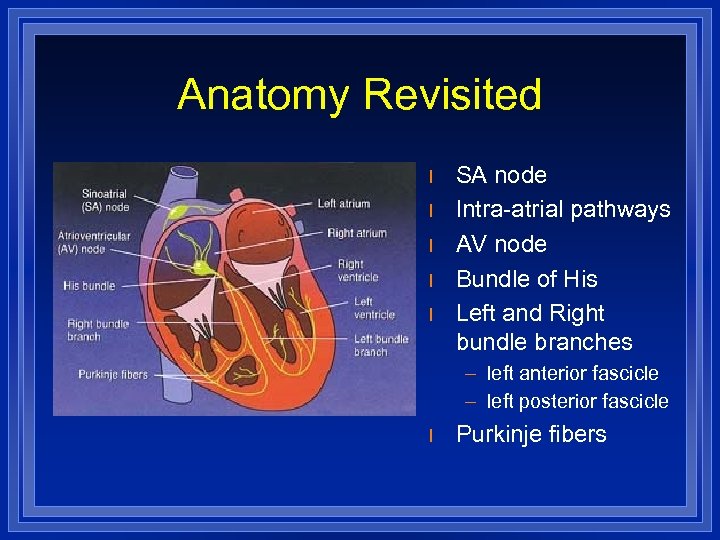 Anatomy Revisited l l l SA node Intra-atrial pathways AV node Bundle of His Left and Right bundle branches – left anterior fascicle – left posterior fascicle l Purkinje fibers
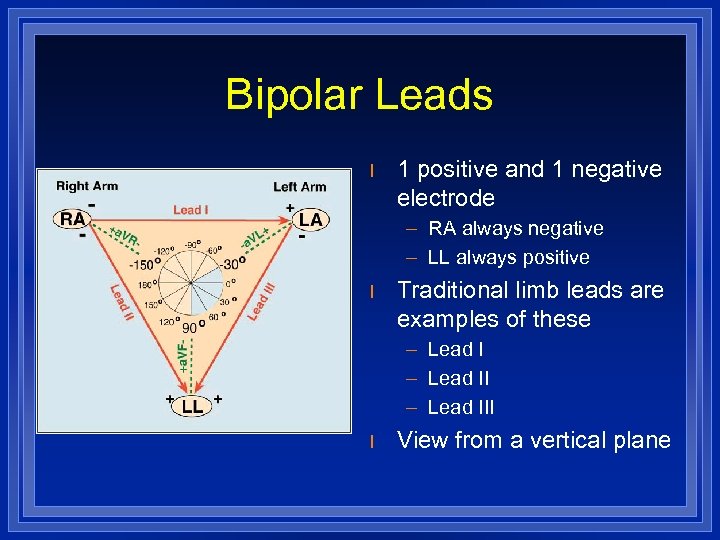 Bipolar Leads l 1 positive and 1 negative electrode – RA always negative – LL always positive l Traditional limb leads are examples of these – Lead III l View from a vertical plane
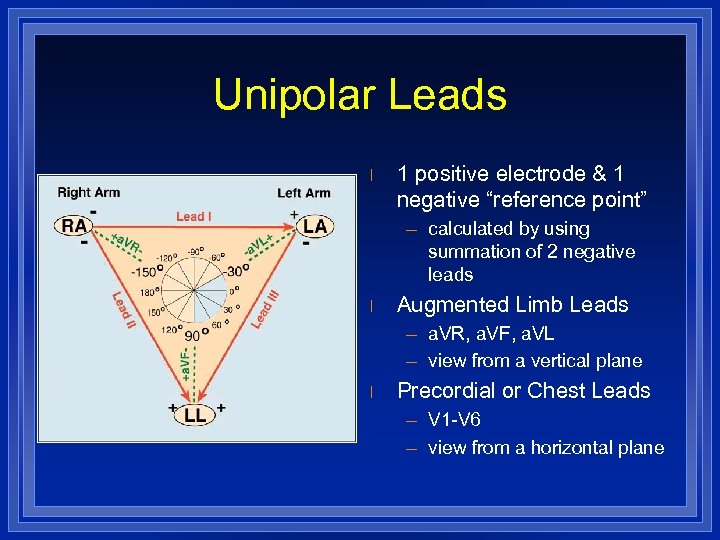 Unipolar Leads l 1 positive electrode & 1 negative “reference point” – calculated by using summation of 2 negative leads l Augmented Limb Leads – a. VR, a. VF, a. VL – view from a vertical plane l Precordial or Chest Leads – V 1 -V 6 – view from a horizontal plane
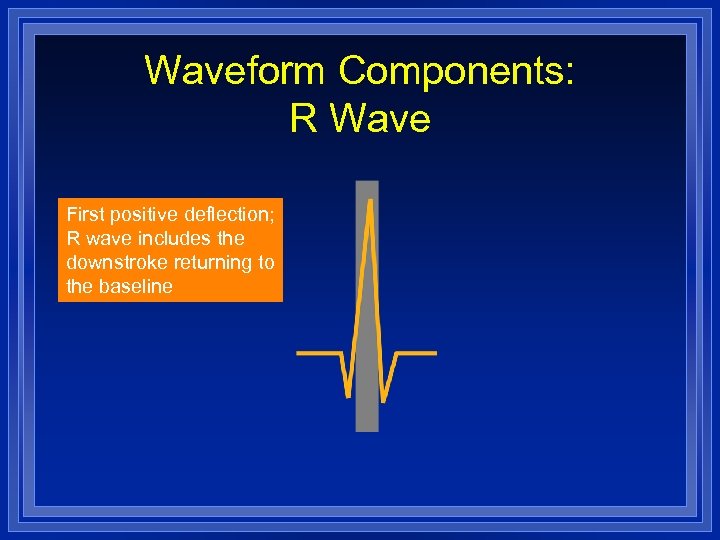 Waveform Components: R Wave First positive deflection; R wave includes the downstroke returning to the baseline
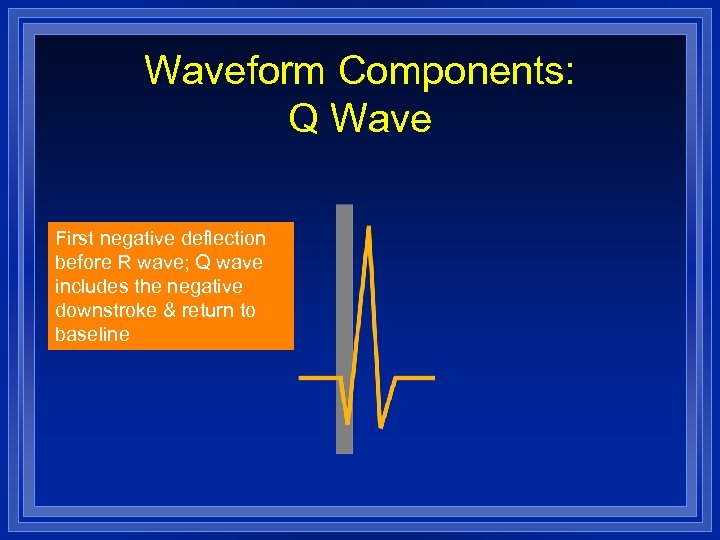 Waveform Components: Q Wave First negative deflection before R wave; Q wave includes the negative downstroke & return to baseline
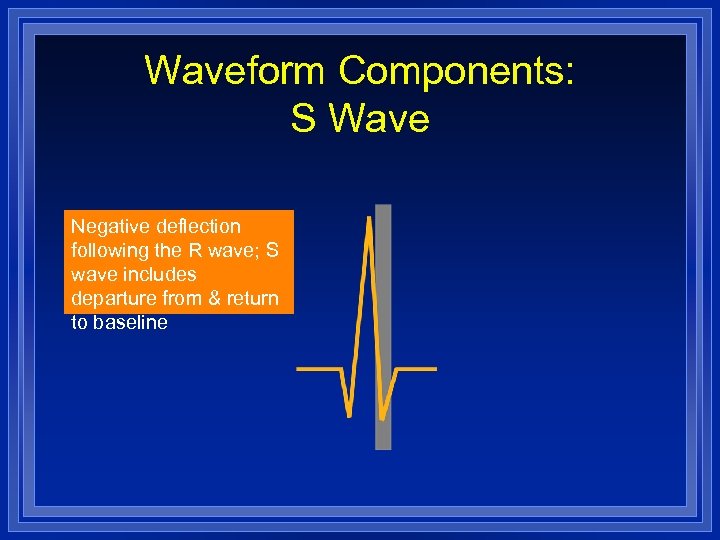 Waveform Components: S Wave Negative deflection following the R wave; S wave includes departure from & return to baseline
 Waveform Components: QRS l Q waves – Can occur normally in several leads • Normal Q waves called physiologic – Physiologic Q waves • <. 04 sec (40 ms) – Pathologic Q • >. 04 sec (40 ms)
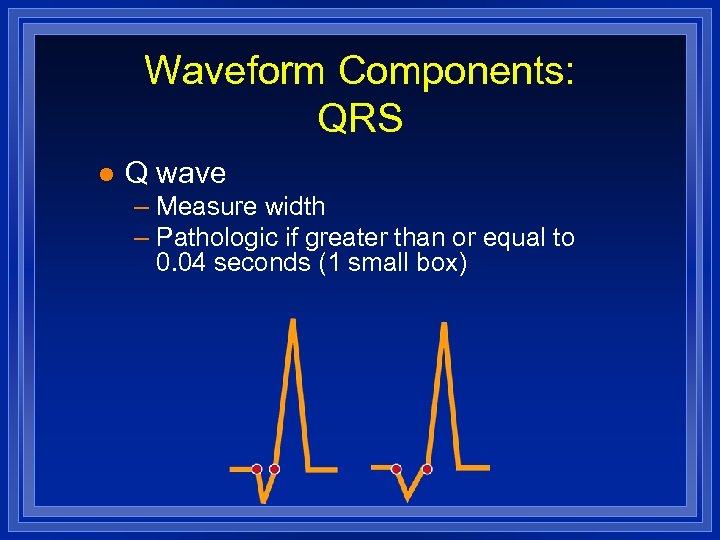 Waveform Components: QRS l Q wave – Measure width – Pathologic if greater than or equal to 0. 04 seconds (1 small box)
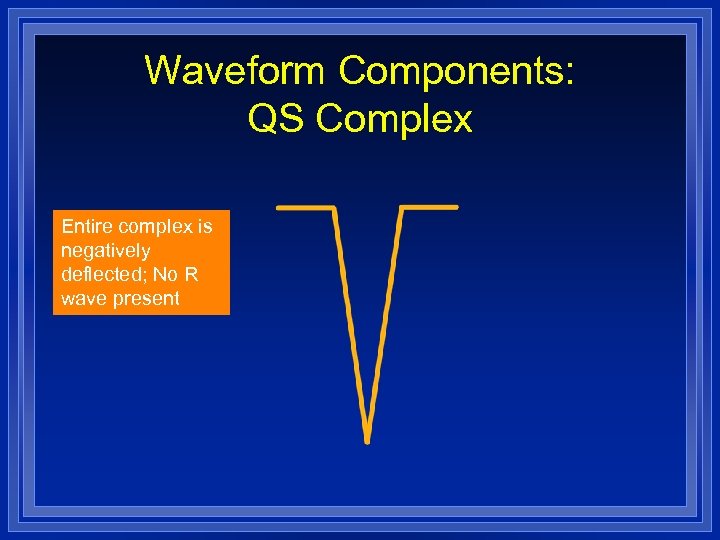 Waveform Components: QS Complex Entire complex is negatively deflected; No R wave present
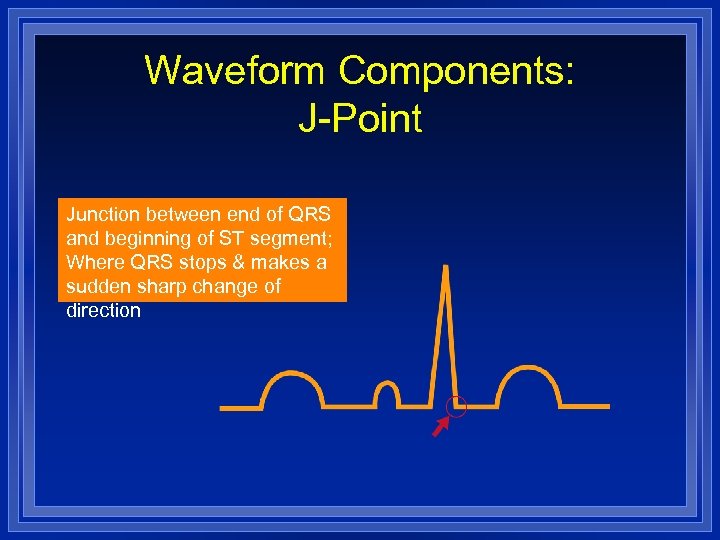 Waveform Components: J-Point Junction between end of QRS and beginning of ST segment; Where QRS stops & makes a sudden sharp change of direction
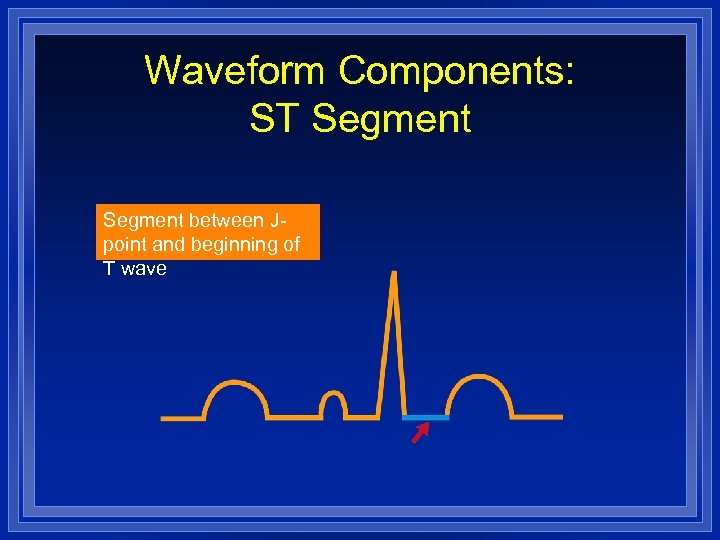 Waveform Components: ST Segment between Jpoint and beginning of T wave
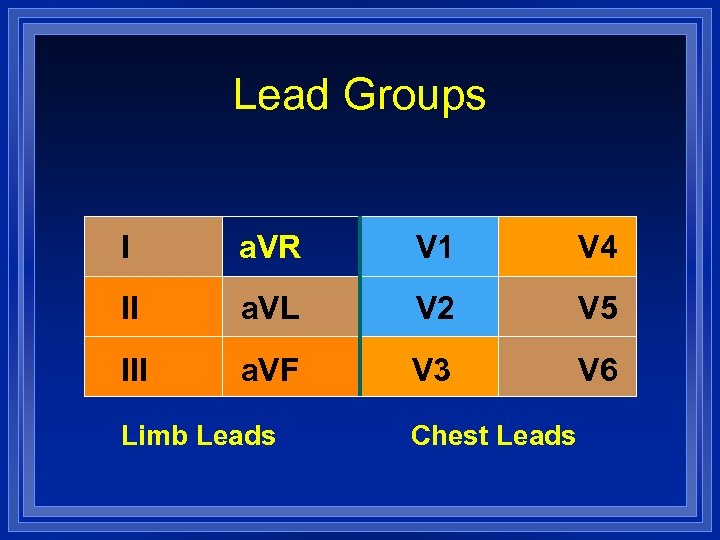 Lead Groups I a. VR V 1 V 4 II a. VL V 2 V 5 III a. VF V 3 V 6 Limb Leads Chest Leads
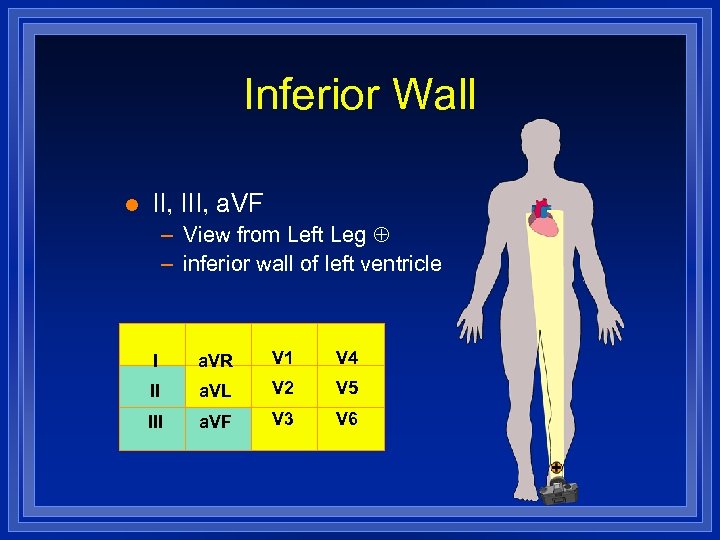 Inferior Wall l II, III, a. VF – View from Left Leg – inferior wall of left ventricle I a. VR V 1 V 4 II a. VL V 2 V 5 III a. VF V 3 V 6
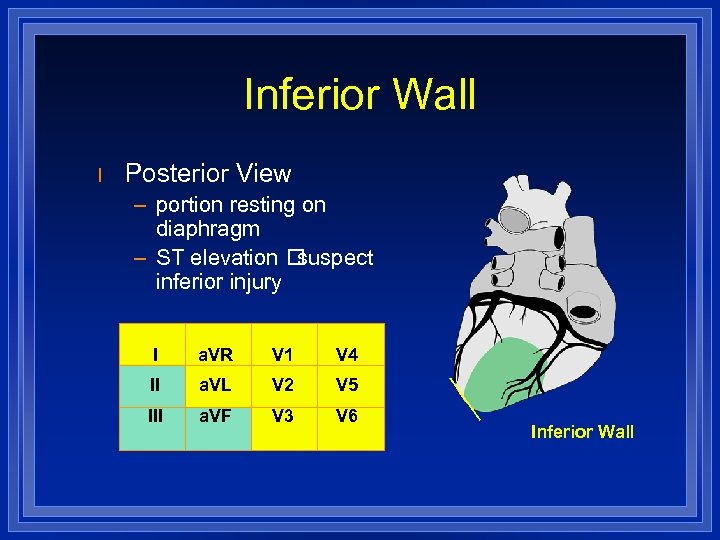 Inferior Wall l Posterior View – portion resting on diaphragm – ST elevation suspect inferior injury I a. VR V 1 V 4 II a. VL V 2 V 5 III a. VF V 3 V 6 Inferior Wall
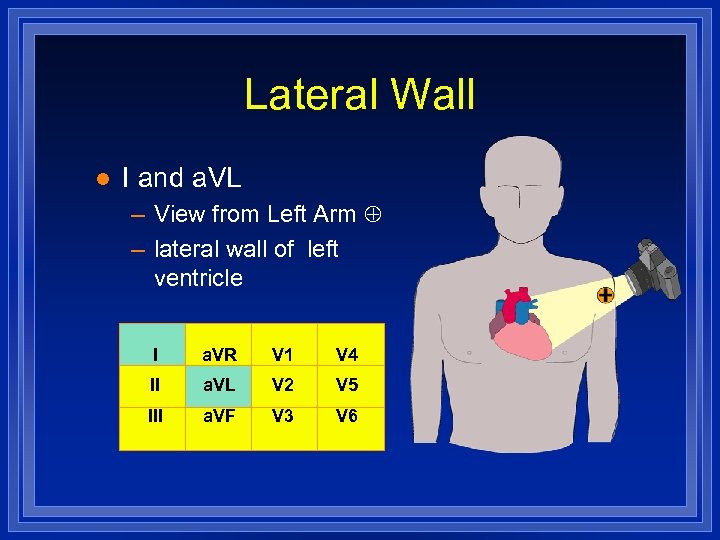 Lateral Wall l I and a. VL – View from Left Arm – lateral wall of left ventricle I a. VR V 1 V 4 II a. VL V 2 V 5 III a. VF V 3 V 6
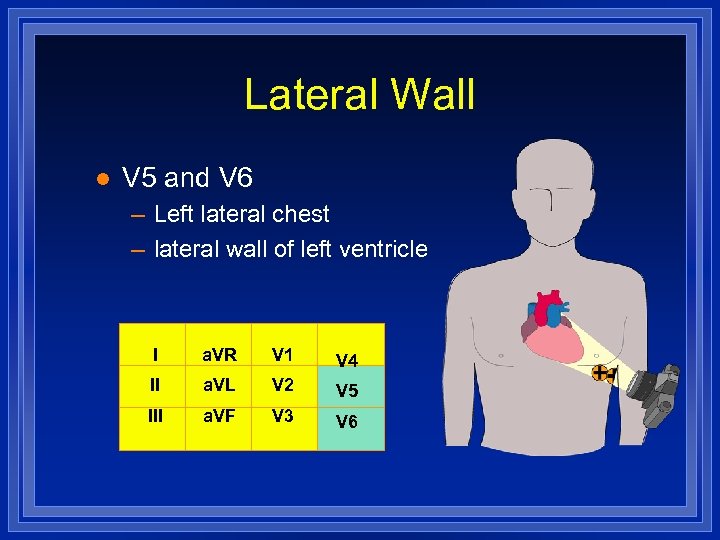 Lateral Wall l V 5 and V 6 – Left lateral chest – lateral wall of left ventricle I a. VR V 1 V 4 II a. VL V 2 V 5 III a. VF V 3 V 6
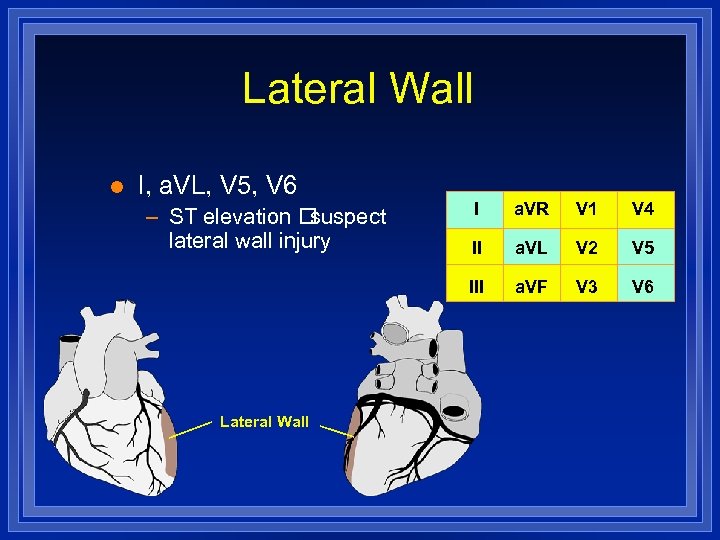 Lateral Wall l I, a. VL, V 5, V 6 Lateral Wall I a. VR V 1 V 4 II a. VL V 2 V 5 III – ST elevation suspect lateral wall injury a. VF V 3 V 6
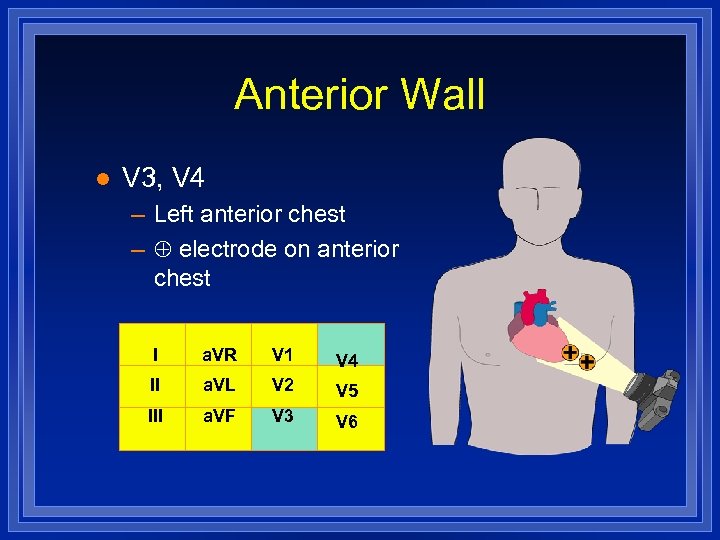 Anterior Wall l V 3, V 4 – Left anterior chest – electrode on anterior chest I a. VR V 1 V 4 II a. VL V 2 V 5 III a. VF V 3 V 6
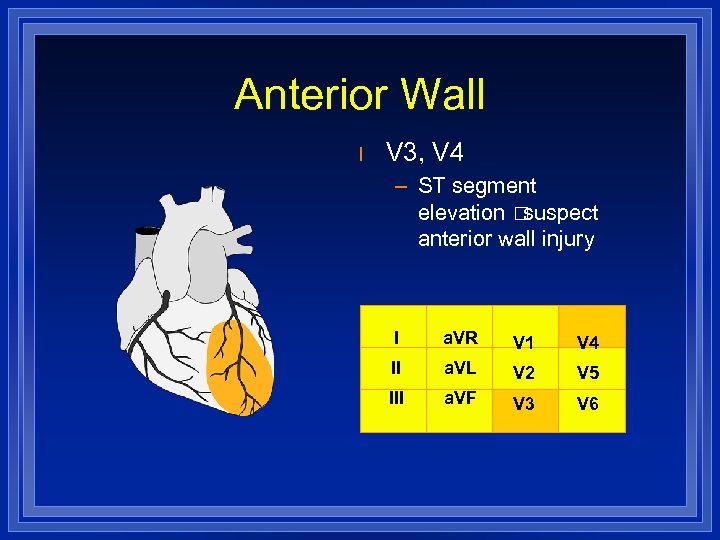 Anterior Wall l V 3, V 4 – ST segment elevation suspect anterior wall injury I a. VR V 1 V 4 II a. VL V 2 V 5 III a. VF V 3 V 6
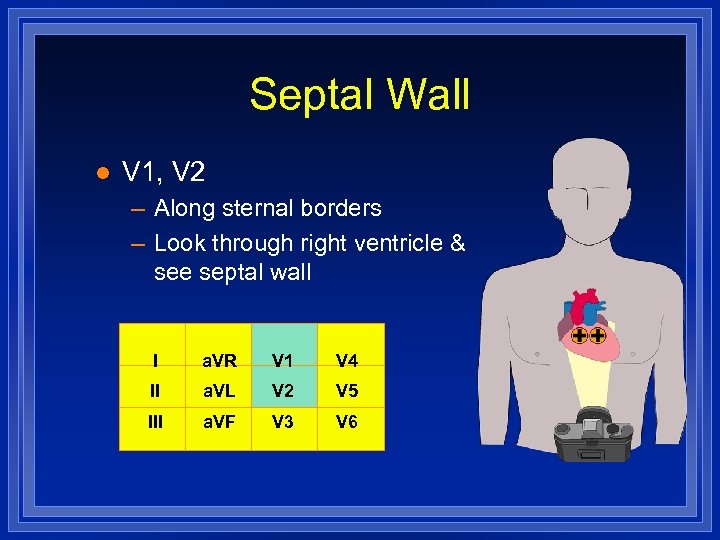 Septal Wall l V 1, V 2 – Along sternal borders – Look through right ventricle & see septal wall I a. VR V 1 V 4 II a. VL V 2 V 5 III a. VF V 3 V 6
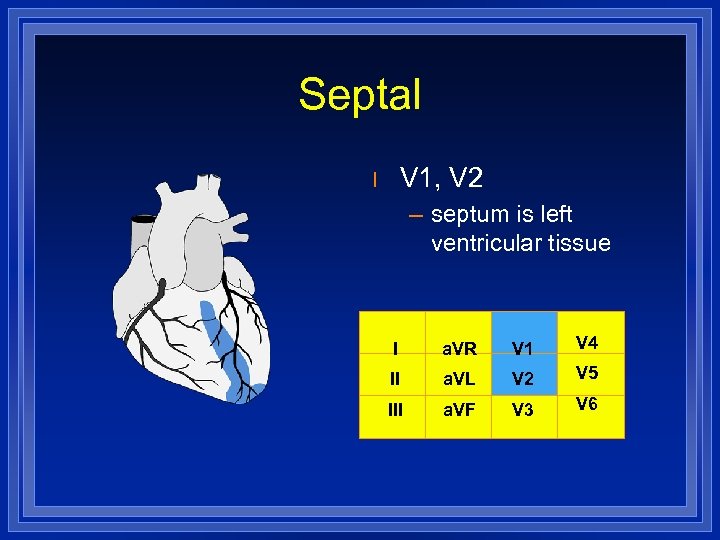 Septal V 1, V 2 l – septum is left ventricular tissue I a. VR V 1 V 4 II a. VL V 2 V 5 III a. VF V 3 V 6
 Axis Deviation&Bundle Branch Blocks Review of Leads EKG Leads EKG machines record the electrical activity Bipolar limb leads and augmented limb leads [I, III, a. VR, a. VL, a. VF] comprise the FRONTAL PLANE LEADS Records the electrical activity of the hearts frontal plane and are measured from the top of the heart to the bottom of the heart [ right to left ] Understanding 12 Lead EKG 25
 Review of Leads EKG Leads, continued EKG machines record the electrical activity. Precordial leads or chest leads [ V 1, V 2, V 3, V 4, V 5, V 6 ] view the hearts horizontal plane The heart acts as a central point of the cross section and the electrical current flows from the central point out to each of the V leads Understanding 12 Lead EKG 26
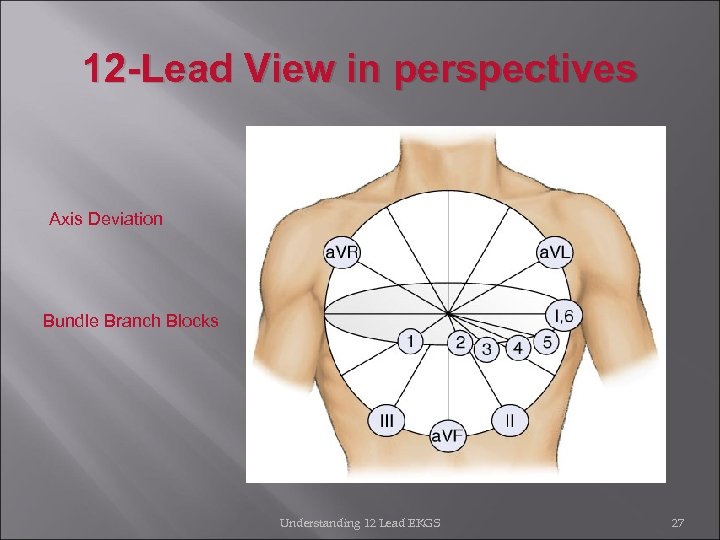 12 -Lead View in perspectives Axis Deviation Bundle Branch Blocks Understanding 12 Lead EKGS 27
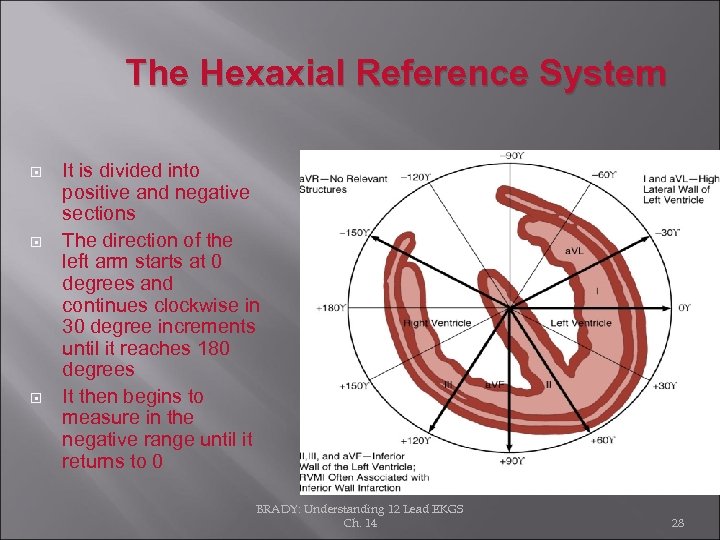 The Hexaxial Reference System It is divided into positive and negative sections The direction of the left arm starts at 0 degrees and continues clockwise in 30 degree increments until it reaches 180 degrees It then begins to measure in the negative range until it returns to 0 BRADY: Understanding 12 Lead EKGS Ch. 14 28
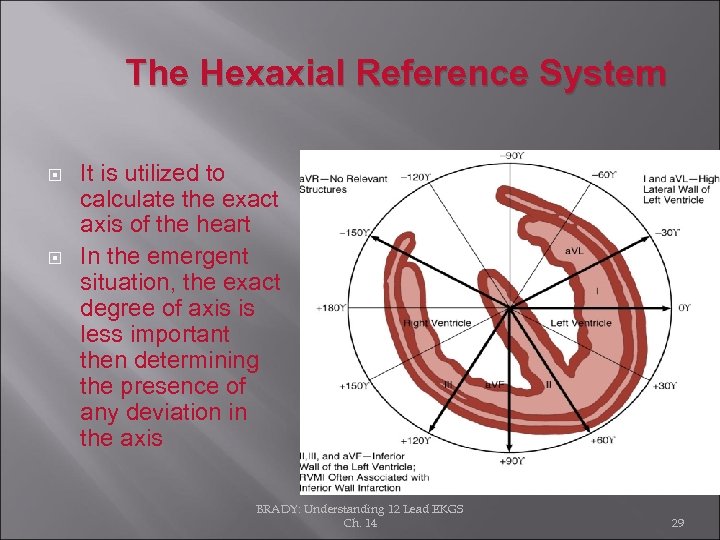 The Hexaxial Reference System It is utilized to calculate the exact axis of the heart In the emergent situation, the exact degree of axis is less important then determining the presence of any deviation in the axis BRADY: Understanding 12 Lead EKGS Ch. 14 29
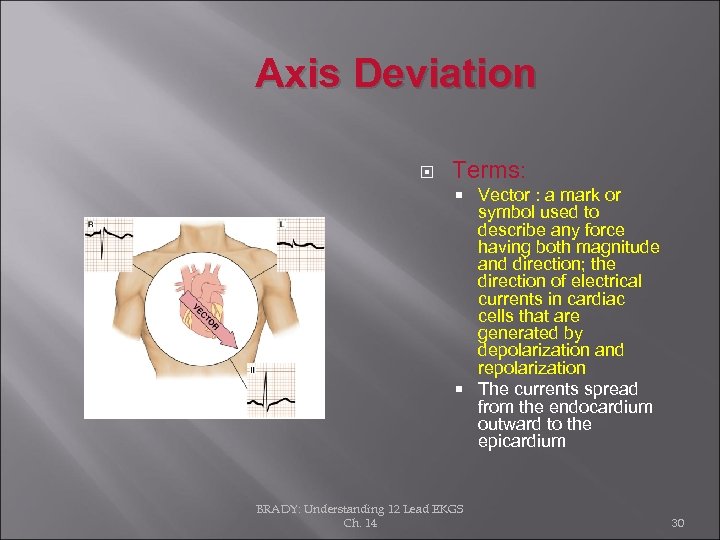 Axis Deviation Terms: Vector : a mark or symbol used to describe any force having both magnitude and direction; the direction of electrical currents in cardiac cells that are generated by depolarization and repolarization The currents spread from the endocardium outward to the epicardium BRADY: Understanding 12 Lead EKGS Ch. 14 30
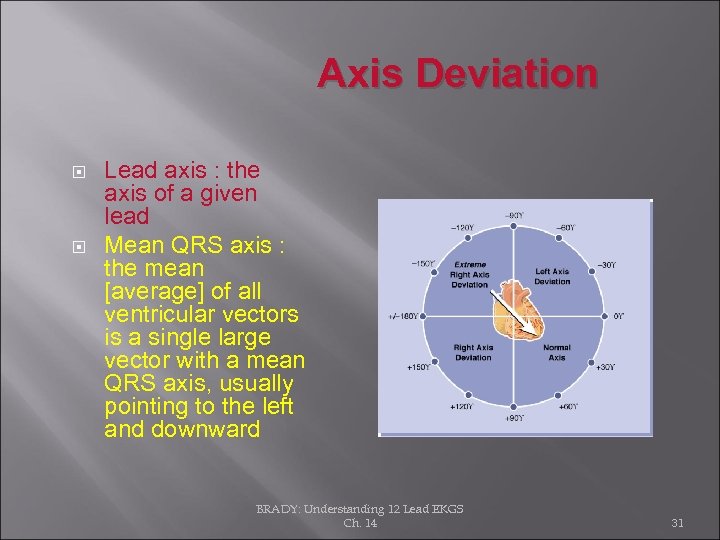 Axis Deviation Lead axis : the axis of a given lead Mean QRS axis : the mean [average] of all ventricular vectors is a single large vector with a mean QRS axis, usually pointing to the left and downward BRADY: Understanding 12 Lead EKGS Ch. 14 31
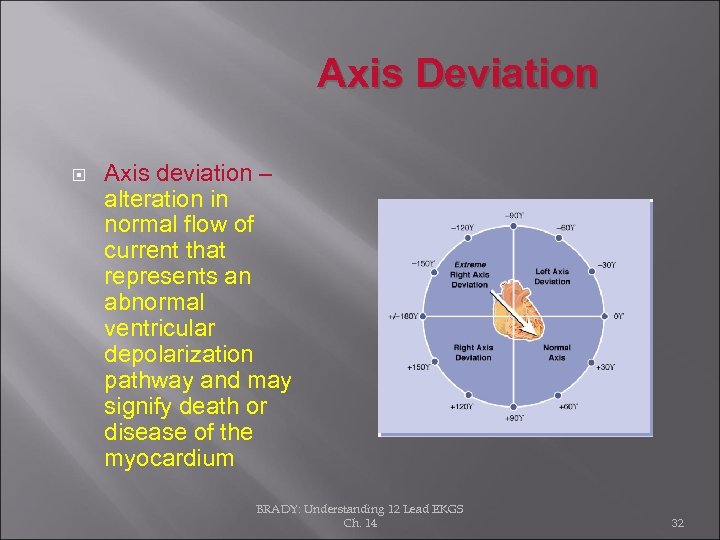 Axis Deviation Axis deviation – alteration in normal flow of current that represents an abnormal ventricular depolarization pathway and may signify death or disease of the myocardium BRADY: Understanding 12 Lead EKGS Ch. 14 32
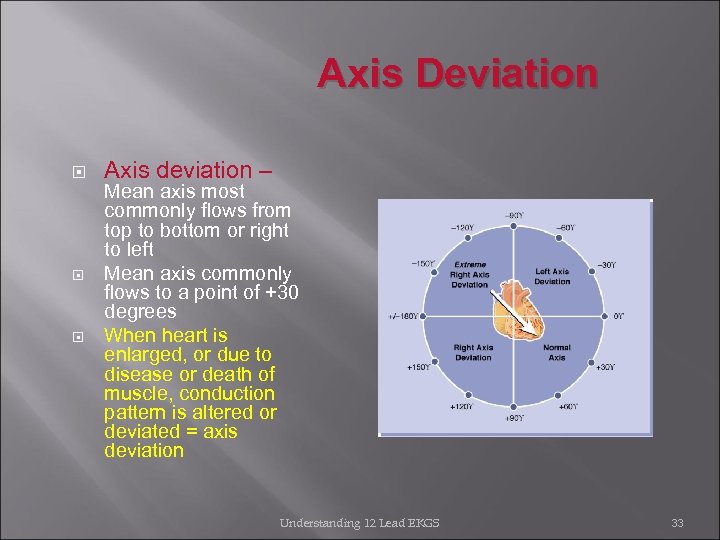 Axis Deviation Axis deviation – Mean axis most commonly flows from top to bottom or right to left Mean axis commonly flows to a point of +30 degrees When heart is enlarged, or due to disease or death of muscle, conduction pattern is altered or deviated = axis deviation Understanding 12 Lead EKGS 33
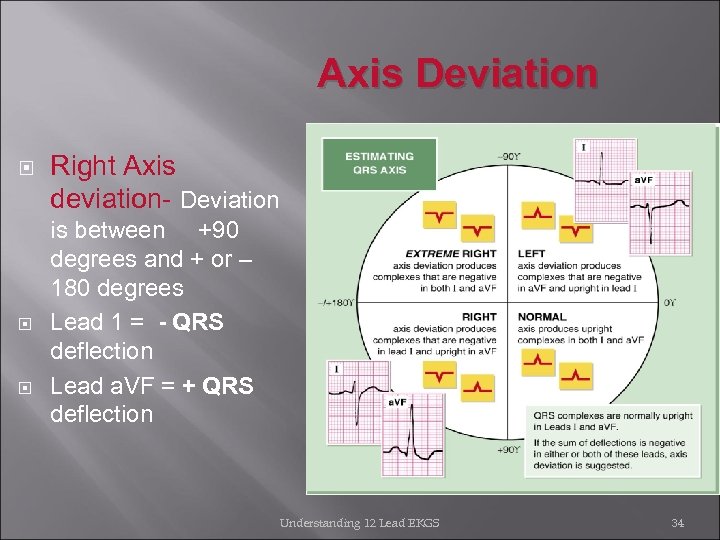 Axis Deviation Right Axis deviation- Deviation is between +90 degrees and + or – 180 degrees Lead 1 = - QRS deflection Lead a. VF = + QRS deflection Understanding 12 Lead EKGS 34
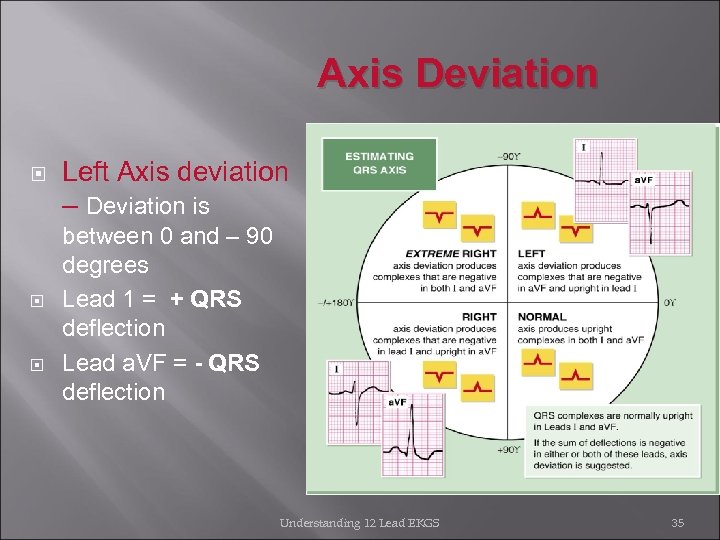 Axis Deviation Left Axis deviation – Deviation is between 0 and – 90 degrees Lead 1 = + QRS deflection Lead a. VF = - QRS deflection Understanding 12 Lead EKGS 35
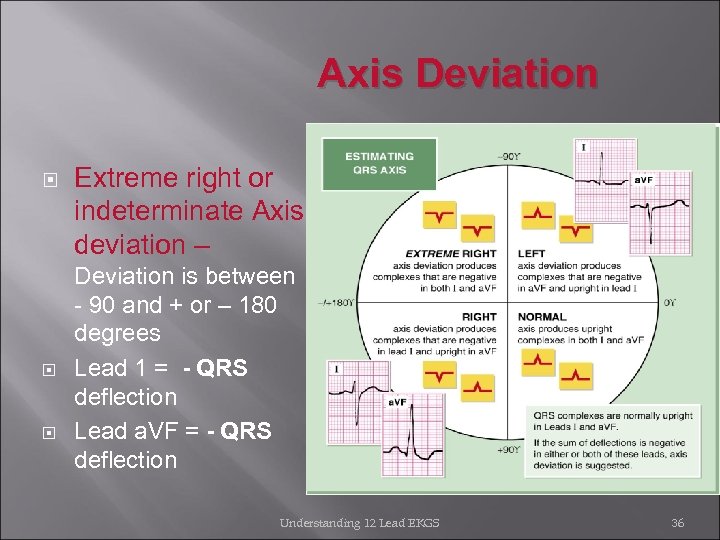 Axis Deviation Extreme right or indeterminate Axis deviation – Deviation is between - 90 and + or – 180 degrees Lead 1 = - QRS deflection Lead a. VF = - QRS deflection Understanding 12 Lead EKGS 36
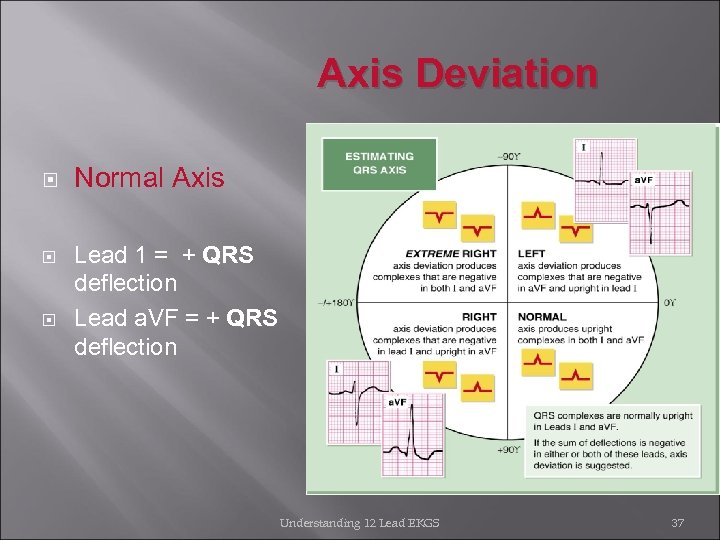 Axis Deviation Normal Axis Lead 1 = + QRS deflection Lead a. VF = + QRS deflection Understanding 12 Lead EKGS 37
 Axis deviation may be caused by: Right Axis Deviation COPD Pulmonary embolism Congenital heart disease Pulmonary hypertension Cor pulmonale Left Axis Deviation Ischemic heart disease Systemic hypertension Aortic stenosis Disorders of left ventricle Aortic valvular disease Wolff-Parkinson-White syndrome Understanding 12 Lead EKGS 38
 Bundle Branch Blocks Right Bundle Branches Runs down right side of interventricular septum and terminates at papillary muscles Functions to carry electrical impulses to the right ventricle Left Bundle Branches Shorter then the right bundle branch Divides into pathways that spread throughout the left side of the interventricular septum and throughout the left ventricle Two main divisions are called fascicles Understanding 12 Lead EKGS 39
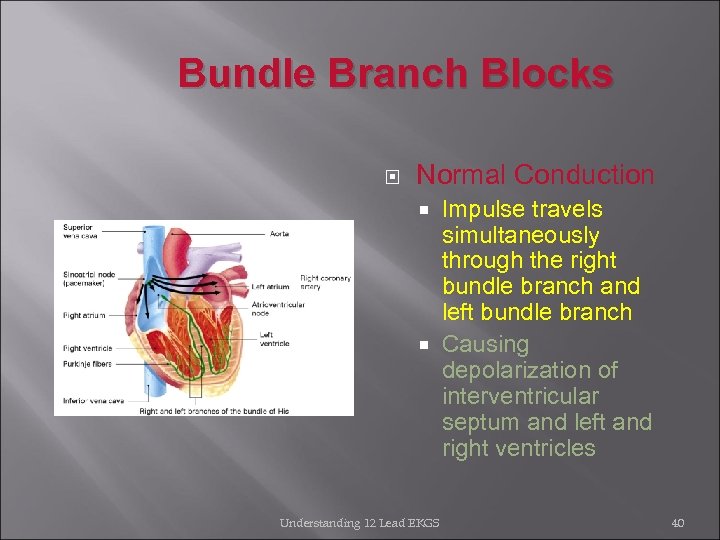 Bundle Branch Blocks Normal Conduction Impulse travels simultaneously through the right bundle branch and left bundle branch Causing depolarization of interventricular septum and left and right ventricles Understanding 12 Lead EKGS 40
 Bundle Branch Blocks When one bundle branch is blocked: Electrical impulse will travel through intact branch and stimulate ventricle supplied by that branch Ventricle effected by blocked or defective bundle branch is activated indirectly There is a delay caused by this alternate route QRS complex will represent widening beyond usual time interval of 0. 12 sec Classified as either complete [ QRS measures 0. 12 sec or greater ] or incomplete blocks [ QRS measures between 0. 10 and 0. 11 second] Understanding 12 Lead 41
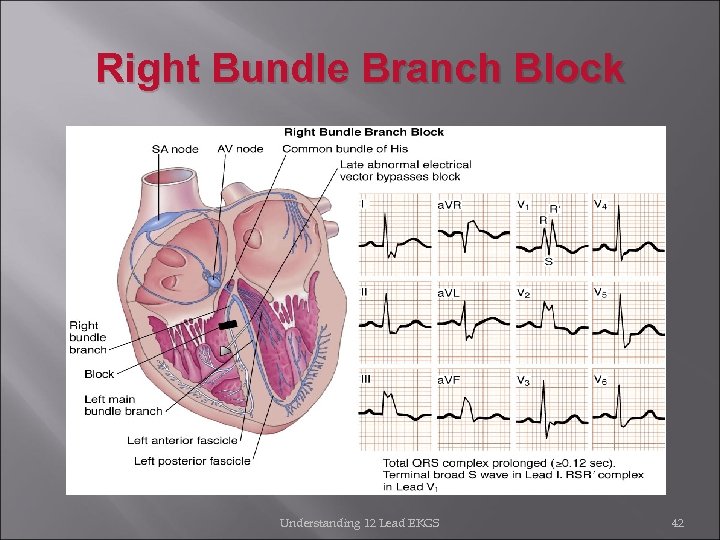 Right Bundle Branch Block Understanding 12 Lead EKGS 42
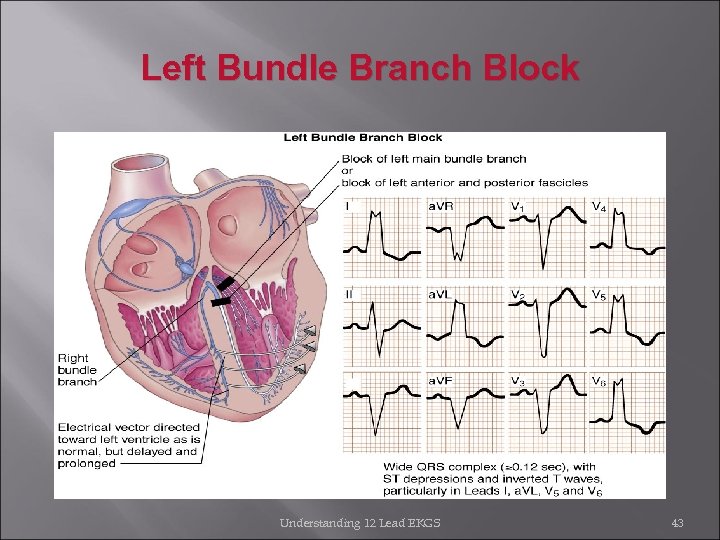 Left Bundle Branch Block Understanding 12 Lead EKGS 43
 Clinical Significance of Bundle Branch Blocks 15% to 30% of patients experiencing MI in conjunction with new-onset bundle branch blocks may develop complete block and estimated 30% to 70% may develop cardiogenic shock Cardiogenic shock carries an 85% mortality rate To determine presence of new-onset block, must have access to past 12 -lead EKGs Understandin 12 Lead EKGS 44
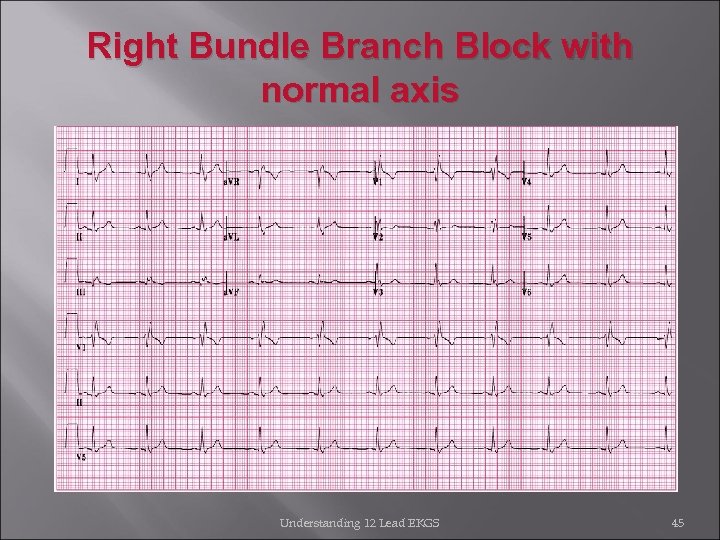 Right Bundle Branch Block with normal axis Understanding 12 Lead EKGS 45
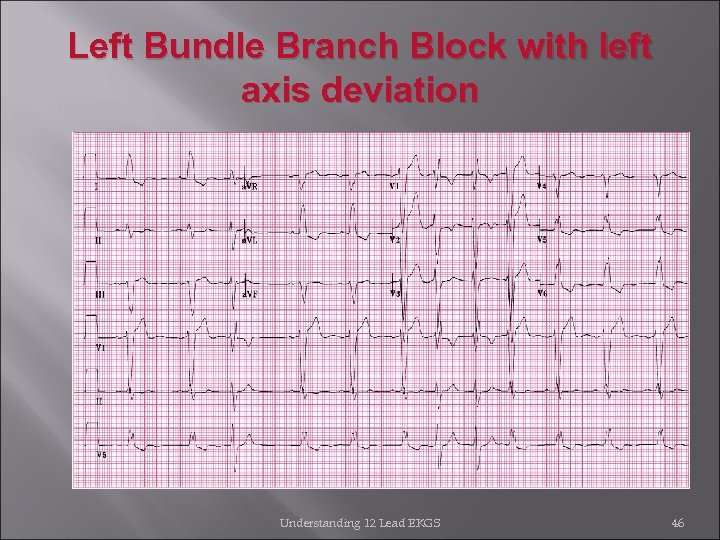 Left Bundle Branch Block with left axis deviation Understanding 12 Lead EKGS 46
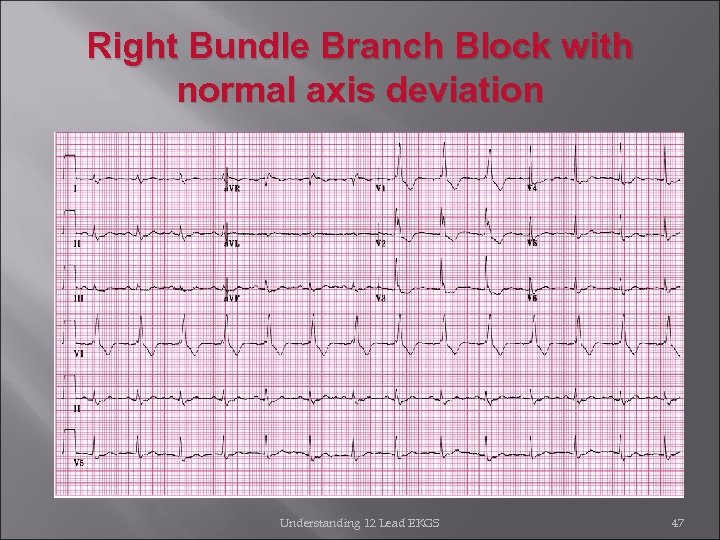 Right Bundle Branch Block with normal axis deviation Understanding 12 Lead EKGS 47
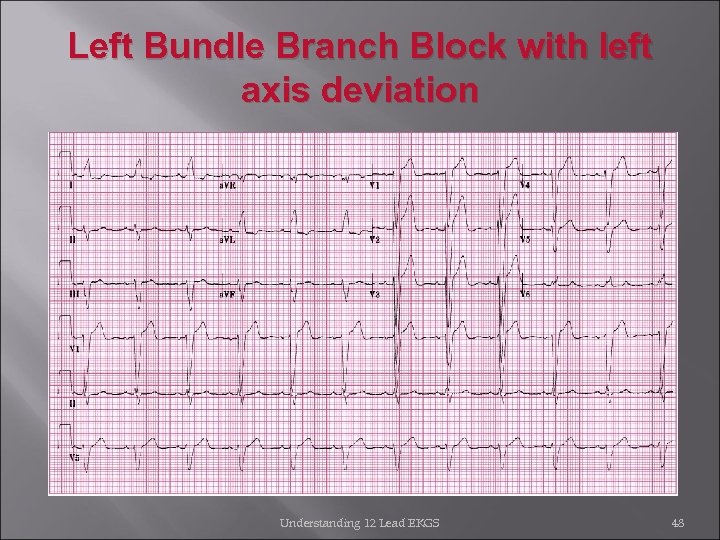 Left Bundle Branch Block with left axis deviation Understanding 12 Lead EKGS 48
 ECG Rhythm Interpretation Sinus Rhythms and Premature Beats
 Arrhythmias • • • Sinus Rhythms Premature Beats Supraventricular Arrhythmias Ventricular Arrhythmias AV Junctional Blocks
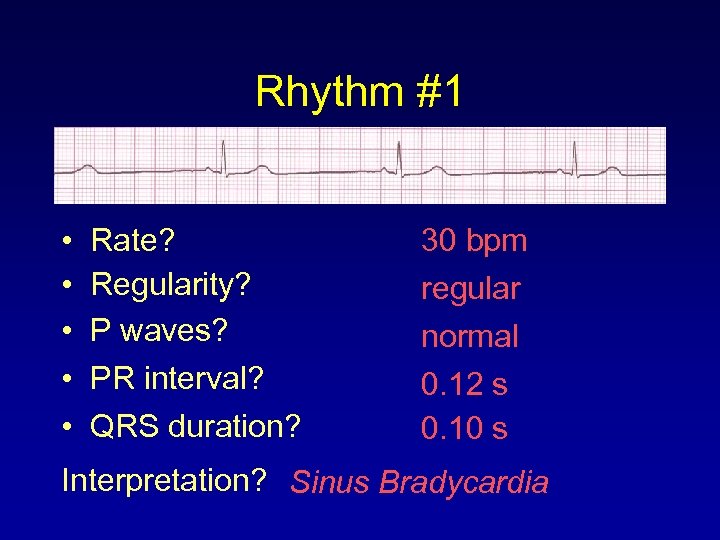 Rhythm #1 • • • Rate? Regularity? P waves? PR interval? QRS duration? 30 bpm regular normal 0. 12 s 0. 10 s Interpretation? Sinus Bradycardia
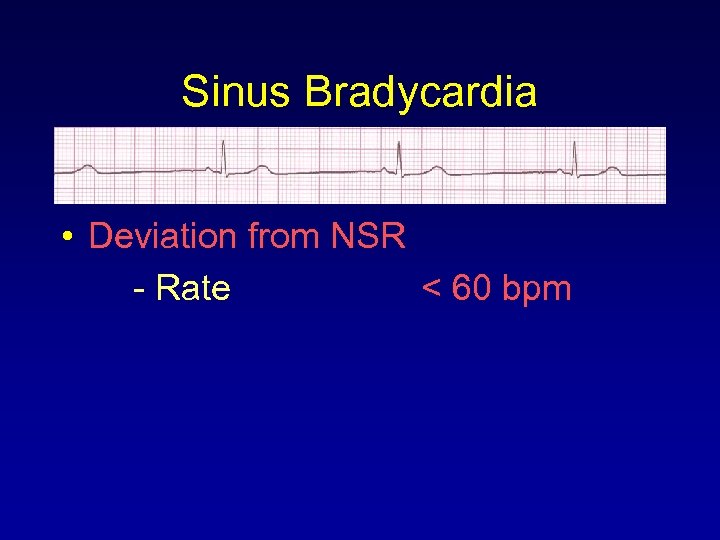 Sinus Bradycardia • Deviation from NSR - Rate < 60 bpm
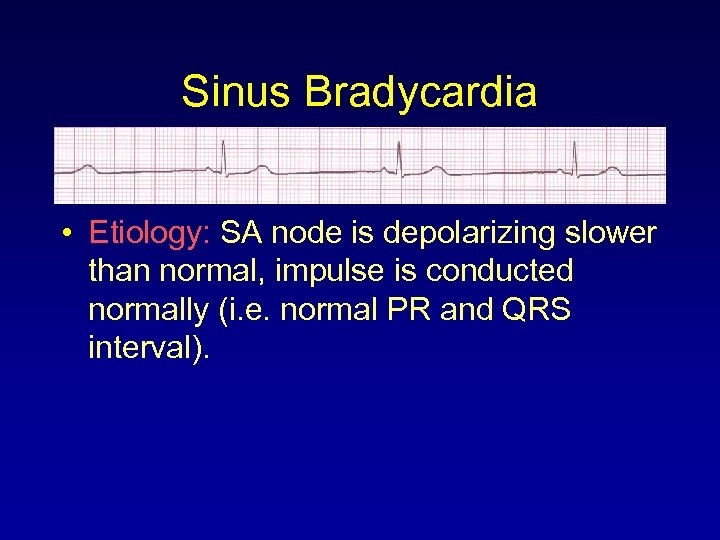 Sinus Bradycardia • Etiology: SA node is depolarizing slower than normal, impulse is conducted normally (i. e. normal PR and QRS interval).
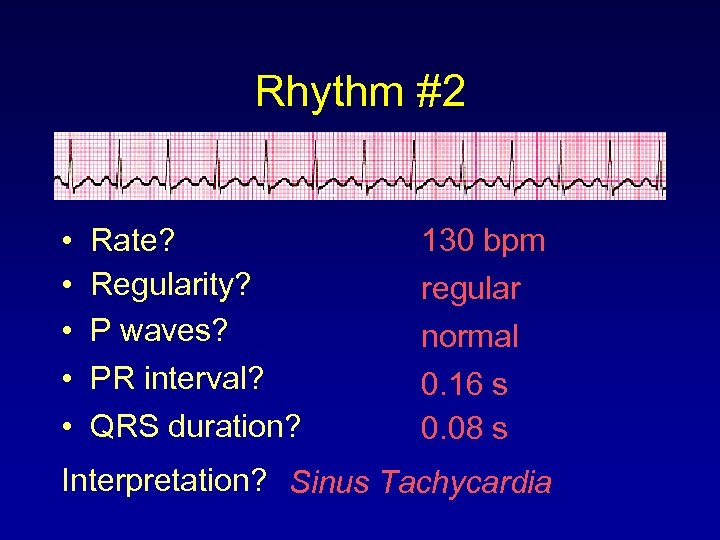 Rhythm #2 • • • Rate? Regularity? P waves? PR interval? QRS duration? 130 bpm regular normal 0. 16 s 0. 08 s Interpretation? Sinus Tachycardia
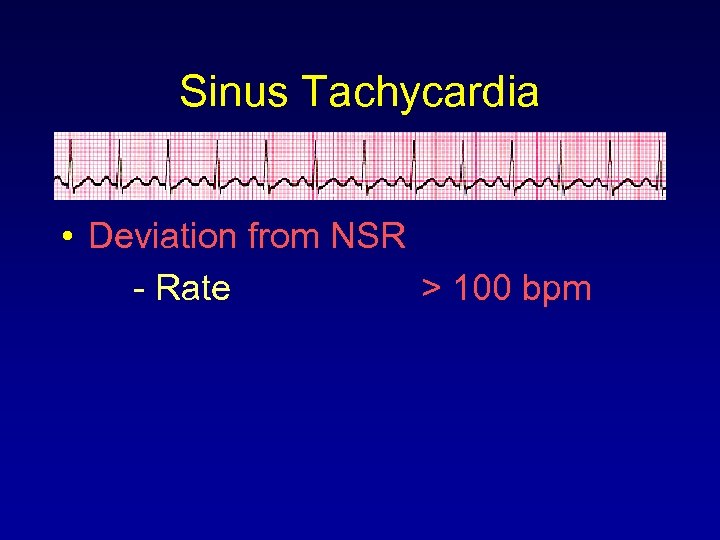 Sinus Tachycardia • Deviation from NSR - Rate > 100 bpm
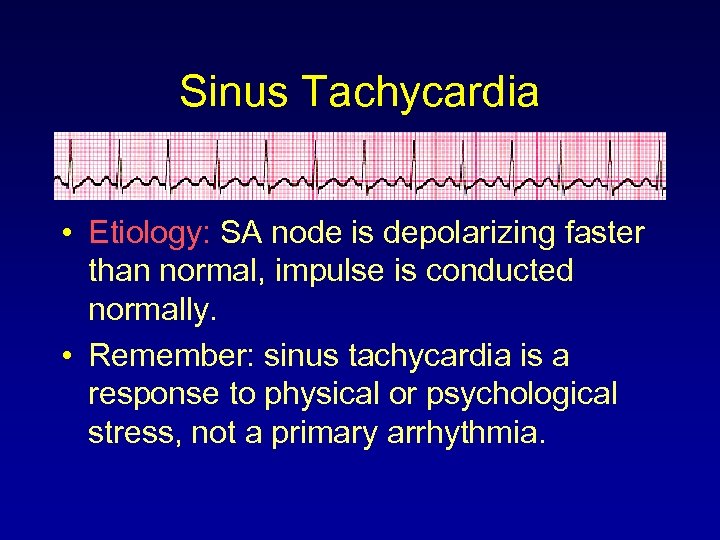 Sinus Tachycardia • Etiology: SA node is depolarizing faster than normal, impulse is conducted normally. • Remember: sinus tachycardia is a response to physical or psychological stress, not a primary arrhythmia.
 Premature Beats • Premature Atrial Contractions (PACs) • Premature Ventricular Contractions (PVCs)
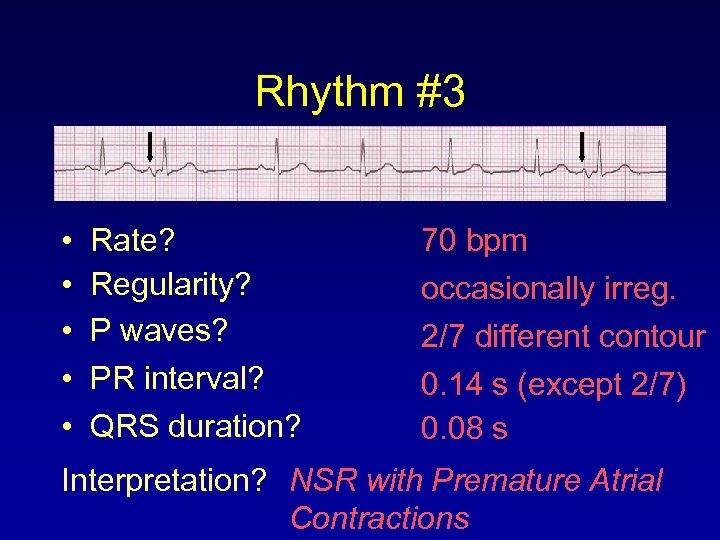 Rhythm #3 • • • Rate? Regularity? P waves? PR interval? QRS duration? 70 bpm occasionally irreg. 2/7 different contour 0. 14 s (except 2/7) 0. 08 s Interpretation? NSR with Premature Atrial Contractions
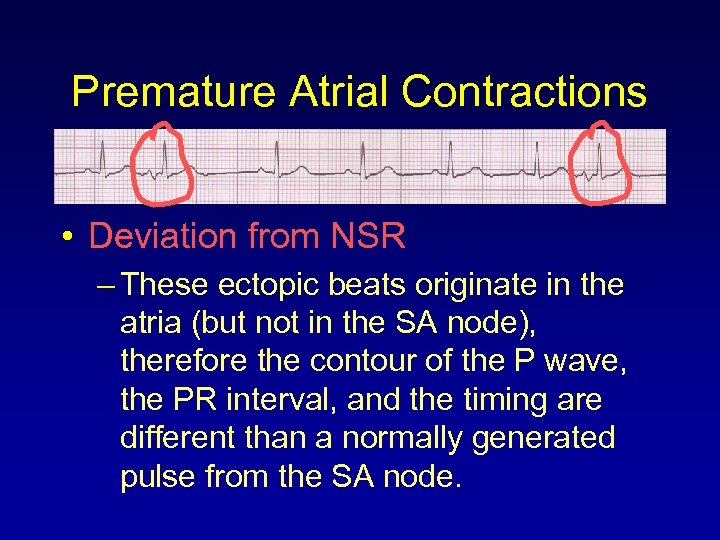 Premature Atrial Contractions • Deviation from NSR – These ectopic beats originate in the atria (but not in the SA node), therefore the contour of the P wave, the PR interval, and the timing are different than a normally generated pulse from the SA node.
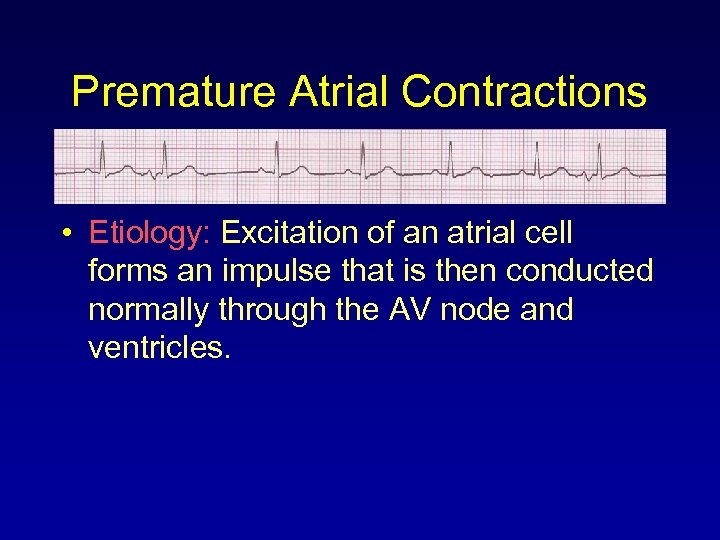 Premature Atrial Contractions • Etiology: Excitation of an atrial cell forms an impulse that is then conducted normally through the AV node and ventricles.
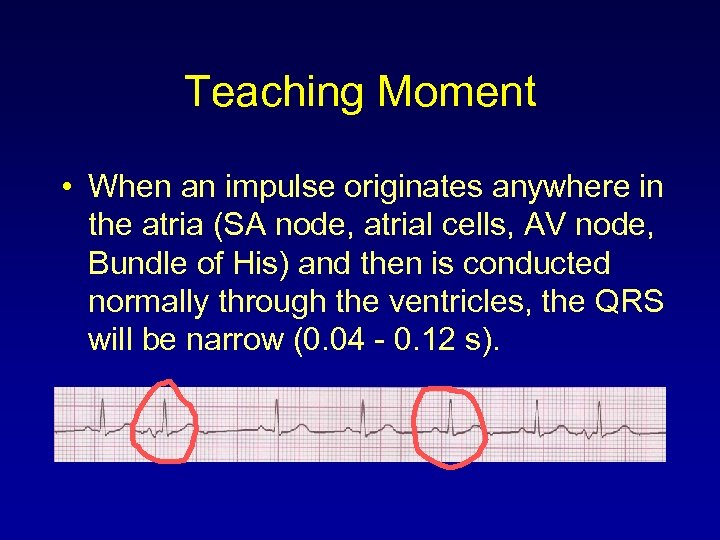 Teaching Moment • When an impulse originates anywhere in the atria (SA node, atrial cells, AV node, Bundle of His) and then is conducted normally through the ventricles, the QRS will be narrow (0. 04 - 0. 12 s).
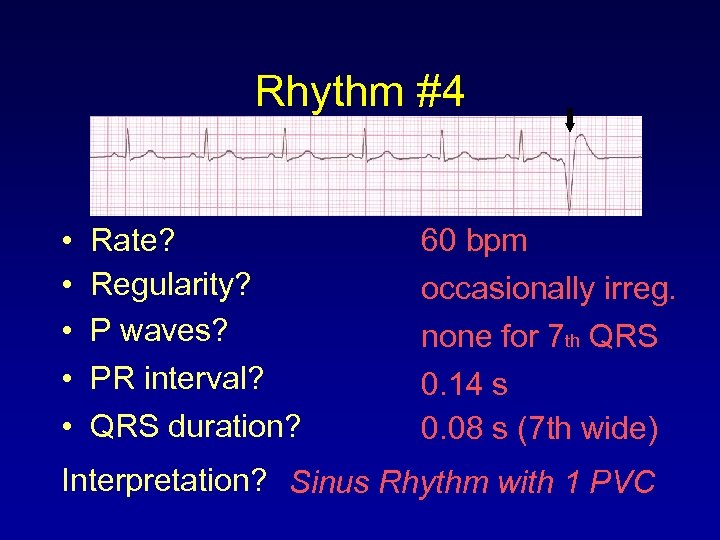 Rhythm #4 • • • Rate? Regularity? P waves? PR interval? QRS duration? 60 bpm occasionally irreg. none for 7 th QRS 0. 14 s 0. 08 s (7 th wide) Interpretation? Sinus Rhythm with 1 PVC
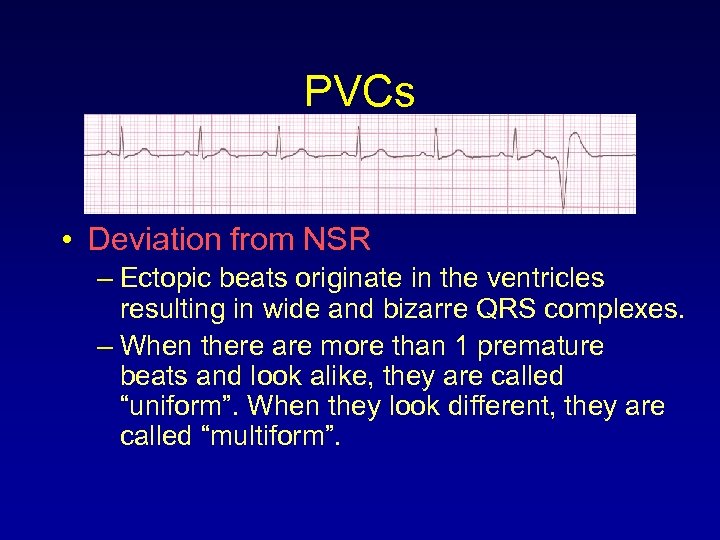 PVCs • Deviation from NSR – Ectopic beats originate in the ventricles resulting in wide and bizarre QRS complexes. – When there are more than 1 premature beats and look alike, they are called “uniform”. When they look different, they are called “multiform”.
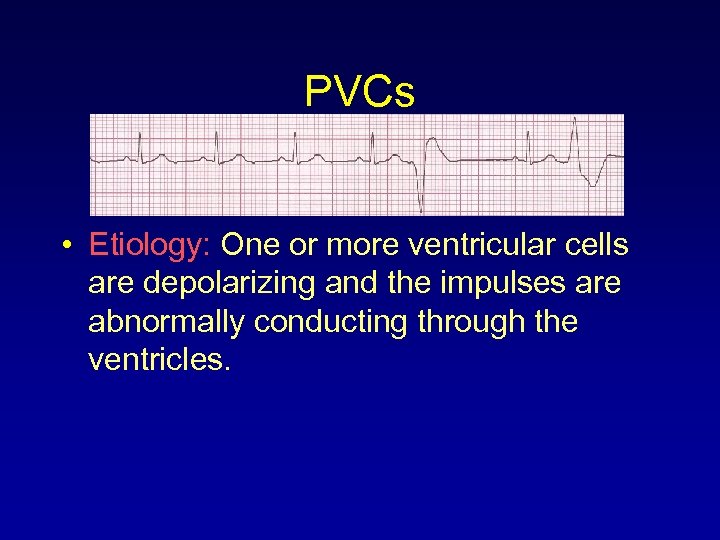 PVCs • Etiology: One or more ventricular cells are depolarizing and the impulses are abnormally conducting through the ventricles.
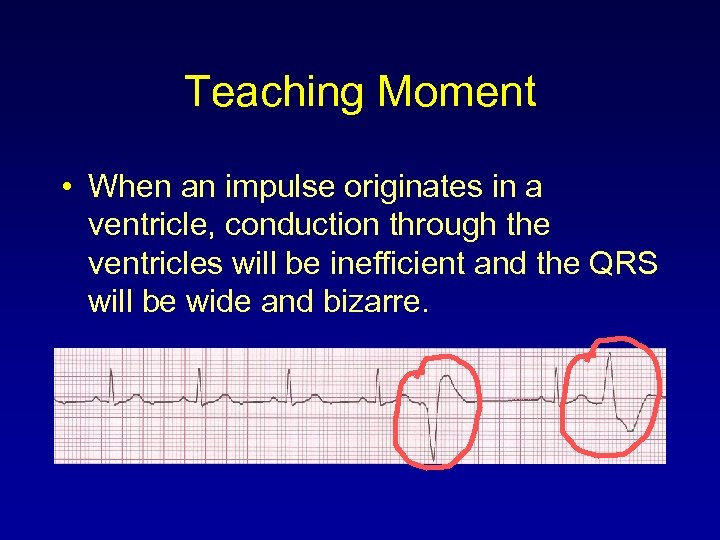 Teaching Moment • When an impulse originates in a ventricle, conduction through the ventricles will be inefficient and the QRS will be wide and bizarre.
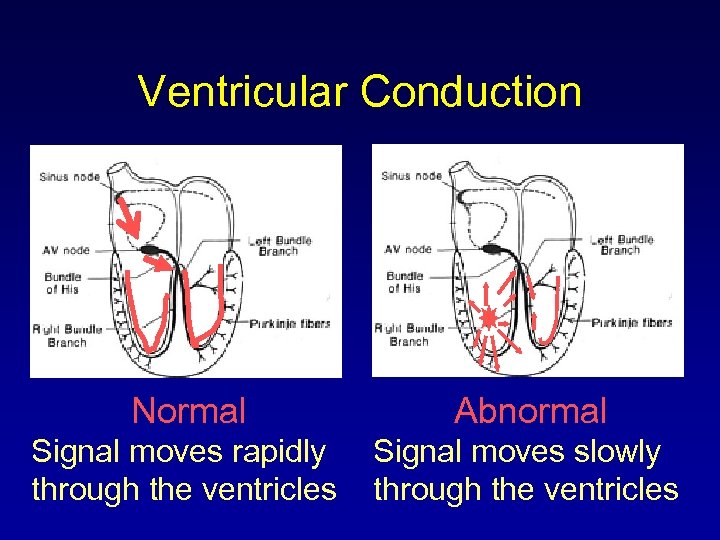 Ventricular Conduction Normal Abnormal Signal moves rapidly through the ventricles Signal moves slowly through the ventricles
 ECG Clues to Identify the Site of Occlusion in Acute Myocardial Ischemia/Infarction
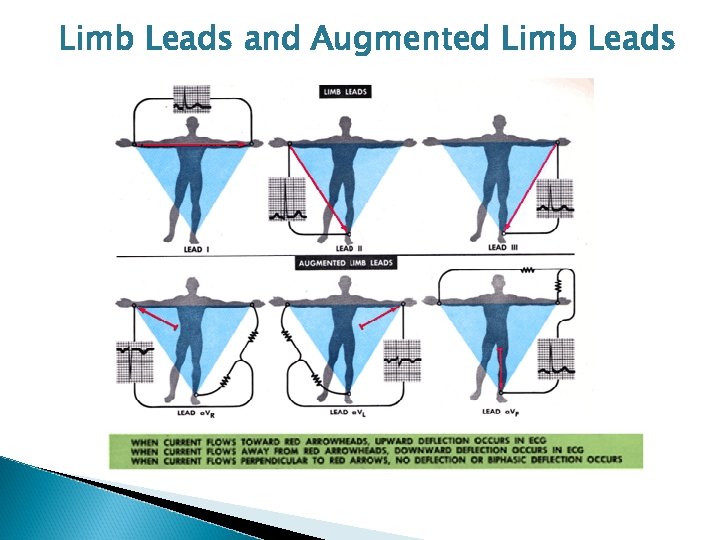 Limb Leads and Augmented Limb Leads
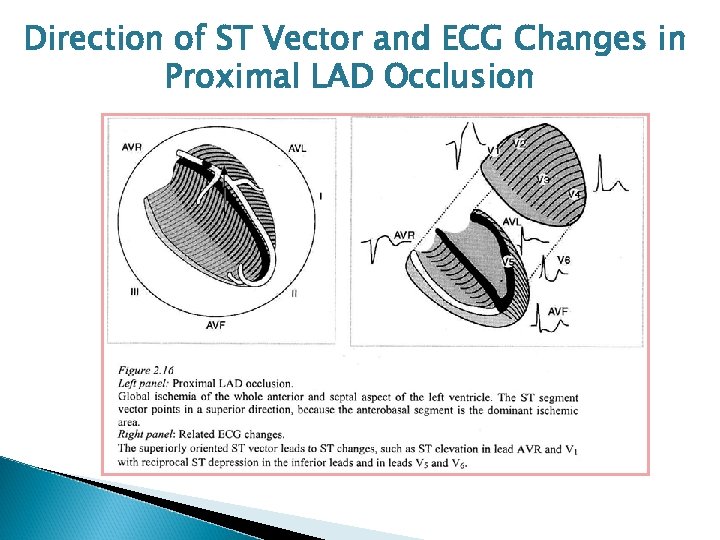 Direction of ST Vector and ECG Changes in Proximal LAD Occlusion
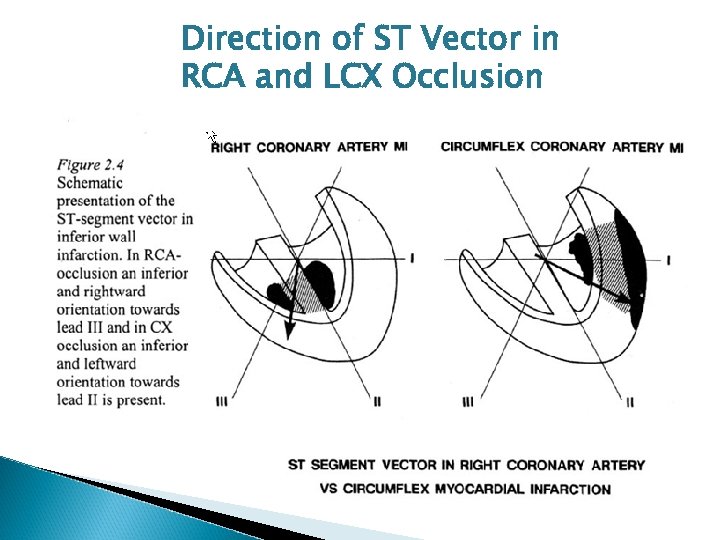 Direction of ST Vector in RCA and LCX Occlusion
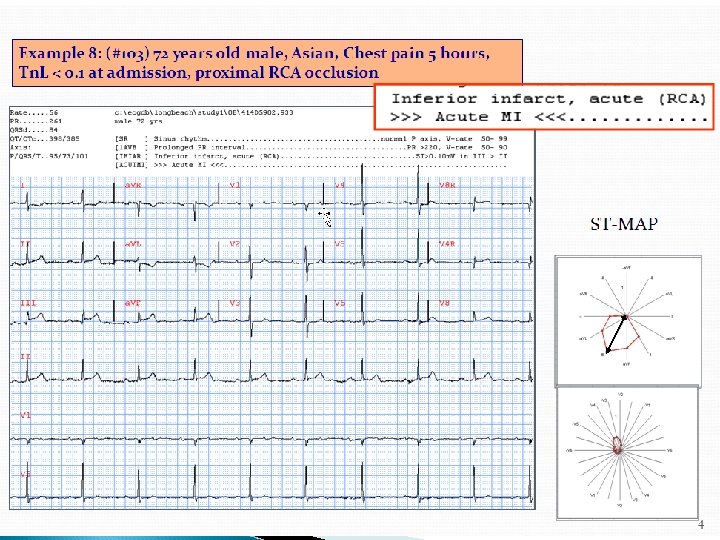
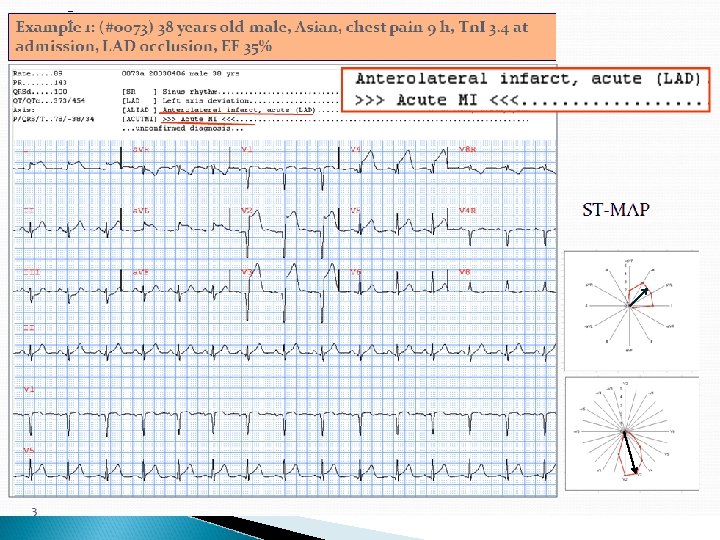
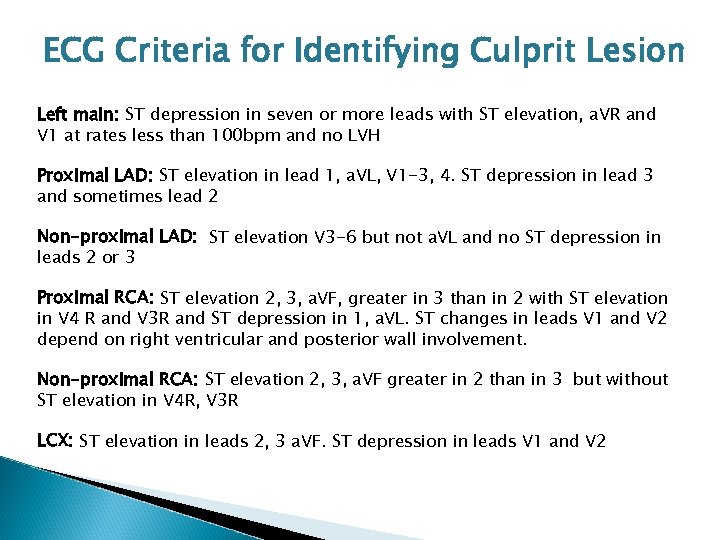 ECG Criteria for Identifying Culprit Lesion Left main: ST depression in seven or more leads with ST elevation, a. VR and V 1 at rates less than 100 bpm and no LVH Proximal LAD: ST elevation in lead 1, a. VL, V 1 -3, 4. ST depression in lead 3 and sometimes lead 2 Non-proximal LAD: ST elevation V 3 -6 but not a. VL and no ST depression in leads 2 or 3 Proximal RCA: ST elevation 2, 3, a. VF, greater in 3 than in 2 with ST elevation in V 4 R and V 3 R and ST depression in 1, a. VL. ST changes in leads V 1 and V 2 depend on right ventricular and posterior wall involvement. Non-proximal RCA: ST elevation 2, 3, a. VF greater in 2 than in 3 but without ST elevation in V 4 R, V 3 R LCX: ST elevation in leads 2, 3 a. VF. ST depression in leads V 1 and V 2
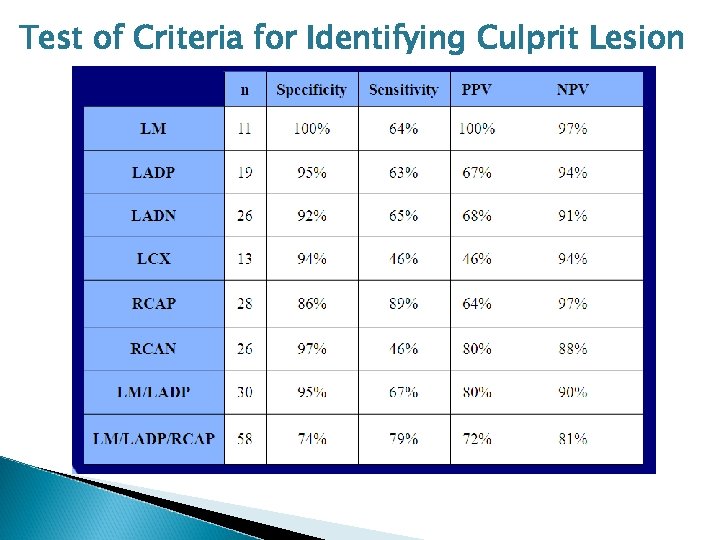 Test of Criteria for Identifying Culprit Lesion
 Conclusions • ST segment depression is always the reciprocal of ST elevation and, conversely, ST elevation will always be accompanied by ST depression somewhere. • By recognizing leads with ST depression as well as elevation, the location of a culprit lesion can be predicted with considerable accuracy.
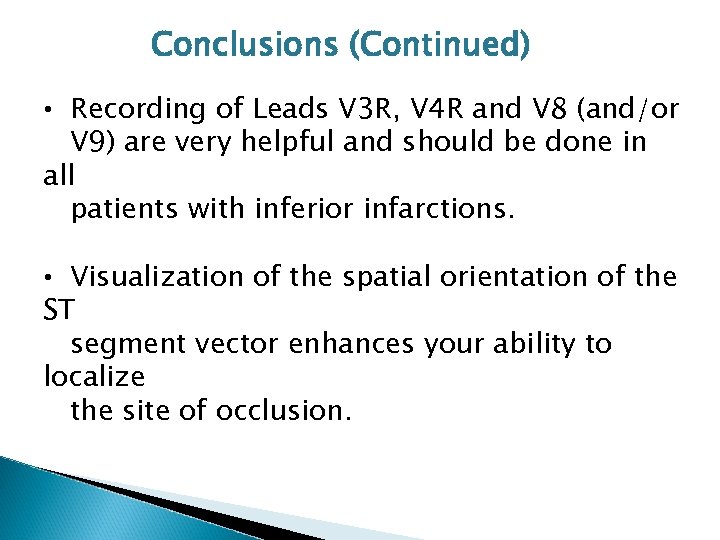 Conclusions (Continued) • Recording of Leads V 3 R, V 4 R and V 8 (and/or V 9) are very helpful and should be done in all patients with inferior infarctions. • Visualization of the spatial orientation of the ST segment vector enhances your ability to localize the site of occlusion.
 Data Mining and Medical Informatics
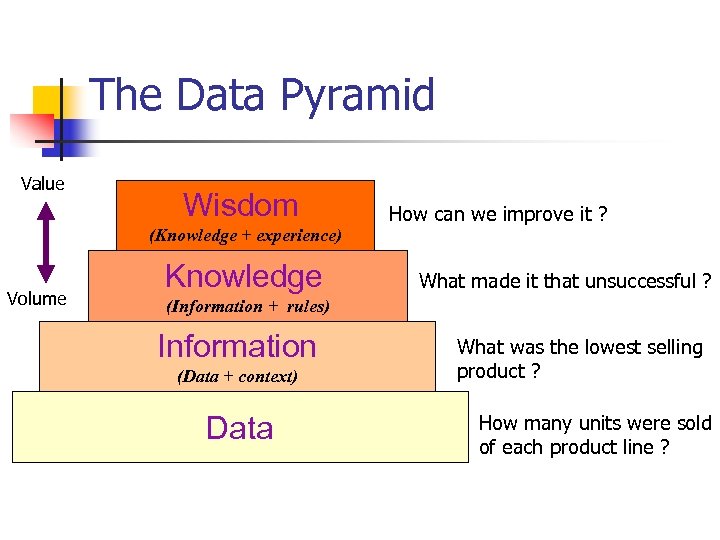 The Data Pyramid Value Wisdom (Knowledge + experience) Volume Knowledge How can we improve it ? What made it that unsuccessful ? (Information + rules) Information (Data + context) Data What was the lowest selling product ? How many units were sold of each product line ?
 Data Mining Functions Clustering into ‘natural’ groups (unsupervised) Classification into known classes; e. g. diagnosis (supervised) Detection of associations; e. g. in basket analysis: ” 70% of customers buying bread also buy milk” Detection of sequential temporal patterns; e. g. disease development Prediction or estimation of an outcome Time series forecasting
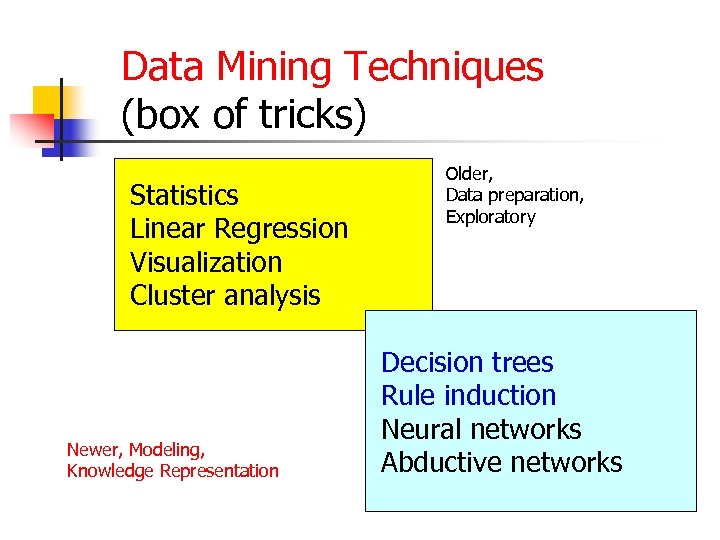 Data Mining Techniques (box of tricks) Statistics Linear Regression Visualization Cluster analysis Newer, Modeling, Knowledge Representation Older, Data preparation, Exploratory Decision trees Rule induction Neural networks Abductive networks
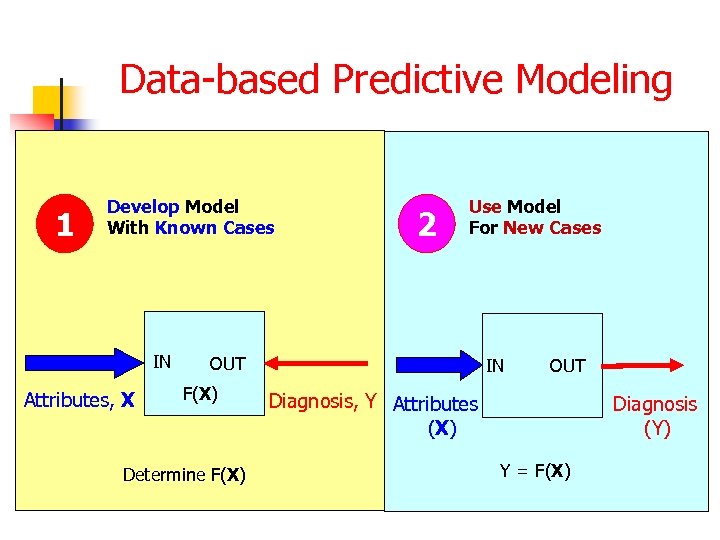 Data-based Predictive Modeling 1 Develop Model With Known Cases IN Attributes, X 2 Use Model For New Cases OUT F(X) Determine F(X) IN OUT Diagnosis, Y Attributes (X) Rock Diagnosis Properties (Y) Y = F(X)
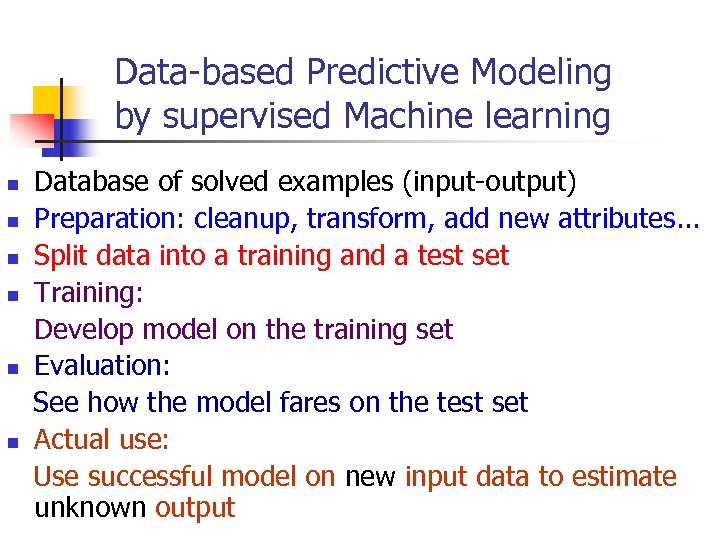 Data-based Predictive Modeling by supervised Machine learning Database of solved examples (input-output) n Preparation: cleanup, transform, add new attributes. . . n Split data into a training and a test set n Training: Develop model on the training set n Evaluation: See how the model fares on the test set n Actual use: Use successful model on new input data to estimate unknown output n
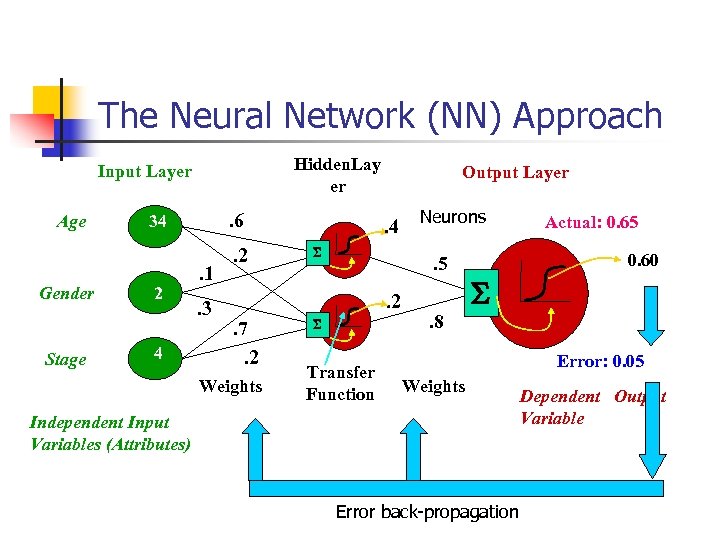 The Neural Network (NN) Approach Hidden. Lay er Input Layer Age Gender Stage . 6 34 2 4 . 1. 3 . 2 Output Layer . 4 S . 5. 2 . 7. 2 Weights Neurons S Transfer Function . 8 Actual: 0. 65 0. 60 S Error: 0. 05 Weights Independent Input Variables (Attributes) Error back-propagation Dependent Output Variable
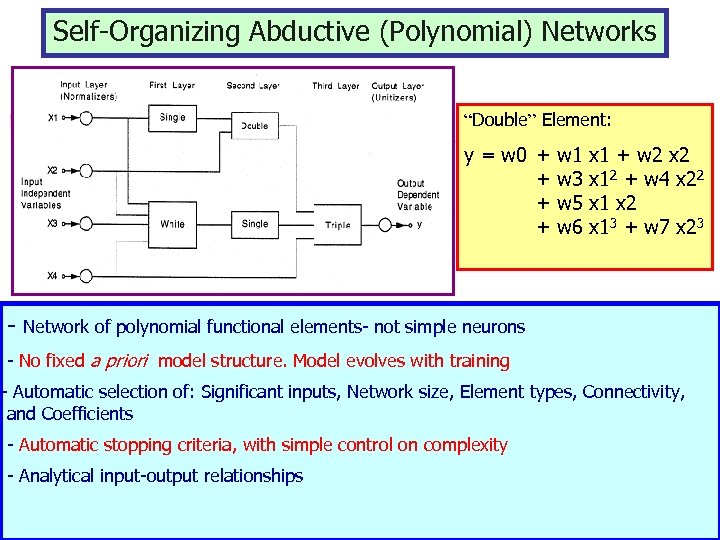 Self-Organizing Abductive (Polynomial) Networks “Double” Element: y = w 0 + w 1 x 1 + w 2 x 2 + w 3 x 12 + w 4 x 22 + w 5 x 1 x 2 + w 6 x 13 + w 7 x 23 - Network of polynomial functional elements- not simple neurons - No fixed a priori model structure. Model evolves with training - Automatic selection of: Significant inputs, Network size, Element types, Connectivity, and Coefficients - Automatic stopping criteria, with simple control on complexity - Analytical input-output relationships
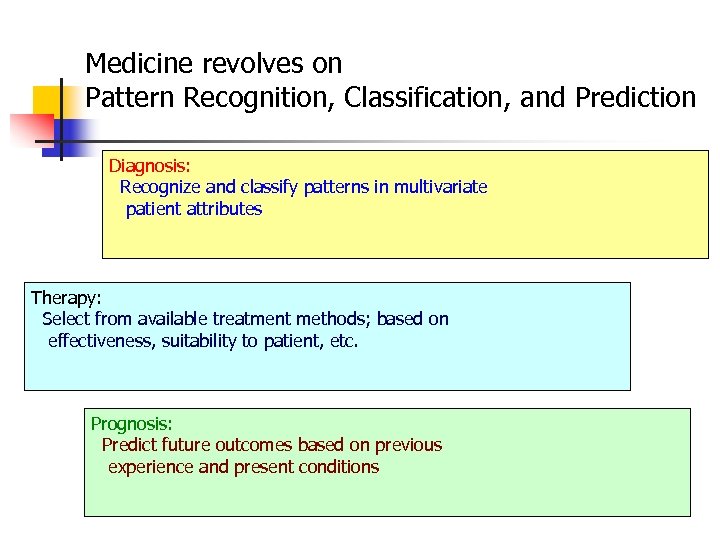 Medicine revolves on Pattern Recognition, Classification, and Prediction Diagnosis: Recognize and classify patterns in multivariate patient attributes Therapy: Select from available treatment methods; based on effectiveness, suitability to patient, etc. Prognosis: Predict future outcomes based on previous experience and present conditions
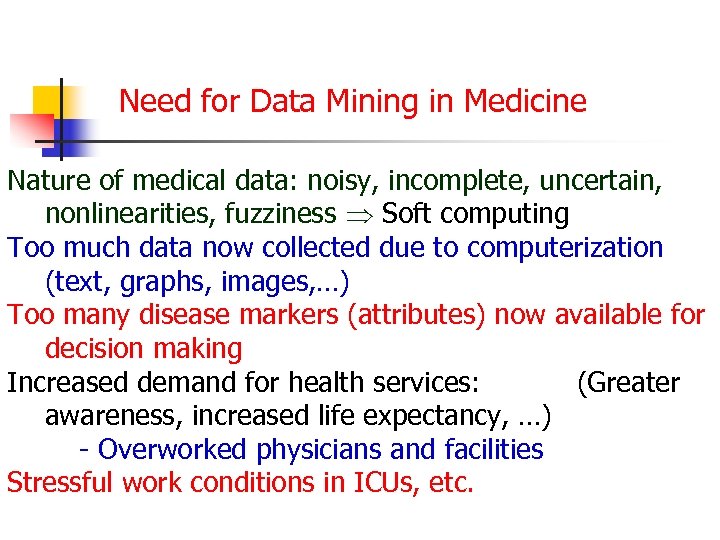 Need for Data Mining in Medicine Nature of medical data: noisy, incomplete, uncertain, nonlinearities, fuzziness Soft computing Too much data now collected due to computerization (text, graphs, images, …) Too many disease markers (attributes) now available for decision making Increased demand for health services: (Greater awareness, increased life expectancy, …) - Overworked physicians and facilities Stressful work conditions in ICUs, etc.
 Medical Applications • Screening • Diagnosis • Therapy • Prognosis • Monitoring • Biomedical/Biological Analysis • Epidemiological Studies • Hospital Management • Medical Instruction and Training
 Medical Screening Effective low-cost screening using disease models that require easily-obtained attributes: (historical, questionnaires, simple measurements) n Reduces demand for costly specialized tests (Good for patients, medical staff, facilities, …) n Examples: - Prostate cancer using blood tests - Hepatitis, Diabetes, Sleep apnea, etc. n
 Diagnosis and Classification n Assist in decision making with a large number of inputs and in stressful situations Can perform automated analysis of: - Pathological signals (ECG, EEG, EMG) - Medical images (mammograms, ultrasound, X-ray, CT, and MRI) Examples: - Heart attacks, Chest pains, Rheumatic disorders - Myocardial ischemia using the ST-T ECG complex - Coronary artery disease using SPECT images
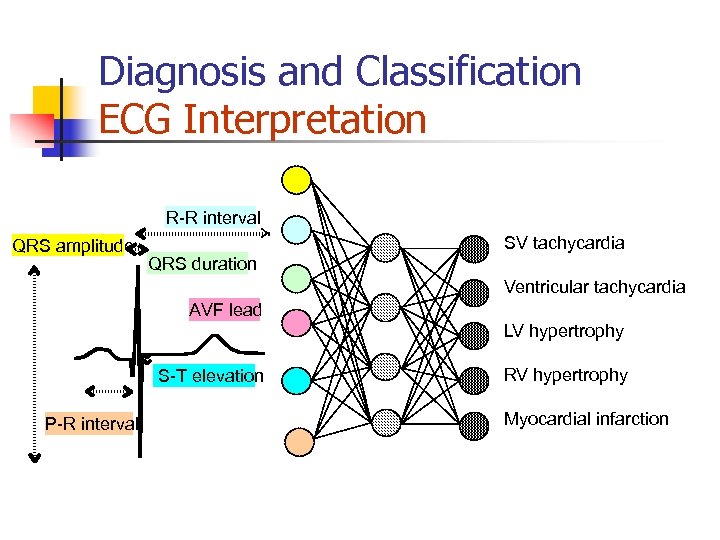 Diagnosis and Classification ECG Interpretation R-R interval QRS amplitude SV tachycardia QRS duration Ventricular tachycardia AVF lead LV hypertrophy S-T elevation P-R interval RV hypertrophy Myocardial infarction
 Therapy n n n Based on modeled historical performance, select best intervention course: e. g. best treatment plans in radiotherapy Using patient model, predict optimum medication dosage: e. g. for diabetics Data fusion from various sensing modalities in ICUs to assist overburdened medical staff
 Prognosis Accurate prognosis and risk assessment are essential for improved disease management and outcome Examples: n Survival analysis for AIDS patients n Predict pre-term birth risk n Determine cardiac surgical risk n Predict ambulation following spinal cord injury n Breast cancer prognosis n
 Biochemical/Biological Analysis n Automate analytical tasks for: - Analyzing blood and urine - Tracking glucose levels - Determining ion levels in body fluids - Detecting pathological conditions
 Epidemiological Studies Study of health, disease, morbidity, injuries and mortality in human communities n n Discover patterns relating outcomes to exposures Study independence or correlation between diseases Analyze public health survey data Example Applications: - Assess asthma strategies in inner-city children - Predict outbreaks in simulated populations
 Hospital Management Optimize allocation of resources and assist in future planning for improved services Examples: - Forecasting patient volume, ambulance run volume, etc. - Predicting length-of-stay for incoming patients n
 Medical Instruction and Training n n Disease models for the instruction and assessment of undergraduate medical and nursing students Intelligent tutoring systems for assisting in teaching the decision making process
 Benefits: n n n Efficient screening tools reduce demand on costly health care resources Data fusion from multiple sensors Help physicians cope with the information overload Optimize allocation of hospital resources Better insight into medical survey data Computer-based training and evaluation
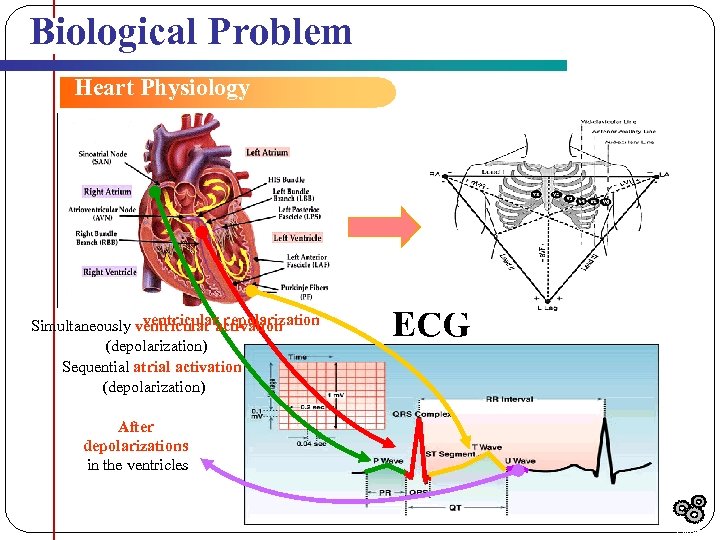 Biological Problem Heart Physiology ventricular repolarization Simultaneously ventricular activation (depolarization) Sequential atrial activation (depolarization) ECG After depolarizations in the ventricles Outline
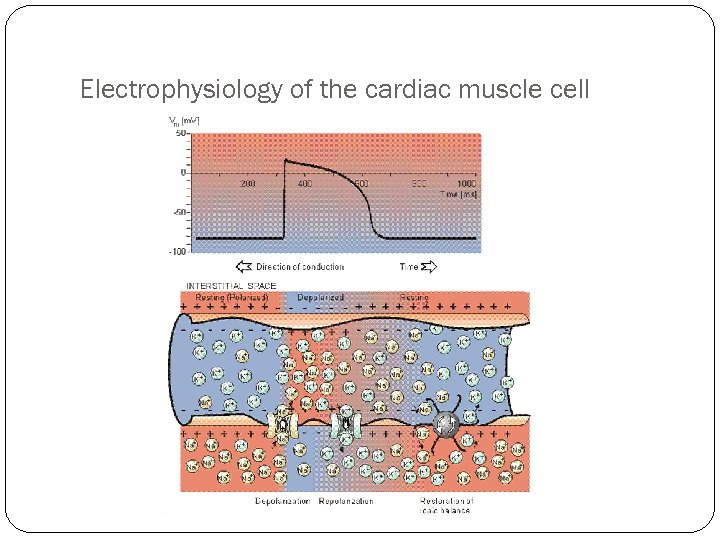 Electrophysiology of the cardiac muscle cell
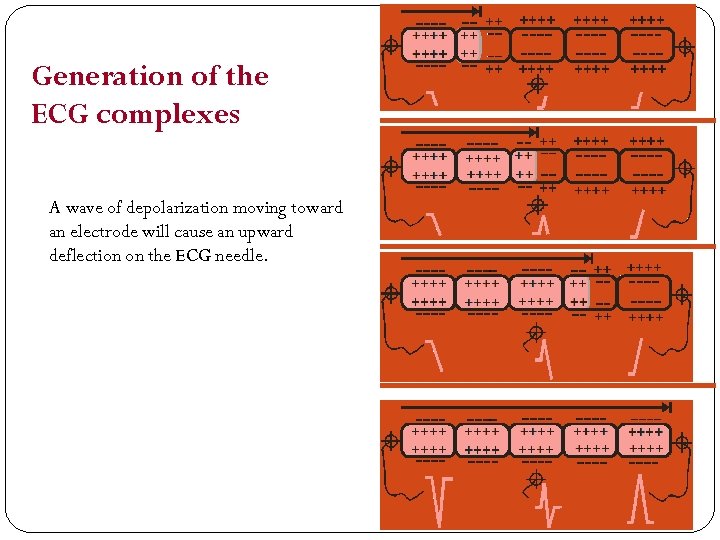 Generation of the ECG complexes A wave of depolarization moving toward an electrode will cause an upward deflection on the ECG needle.
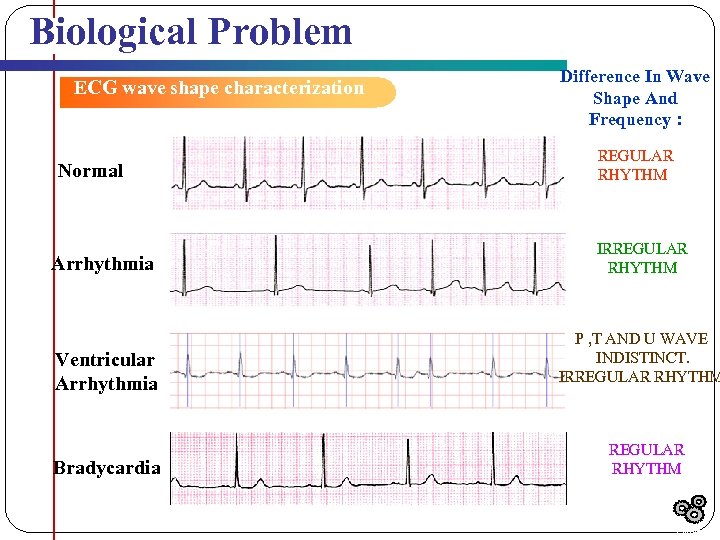 Biological Problem ECG wave shape characterization Normal Arrhythmia Ventricular Arrhythmia Bradycardia Difference In Wave Shape And Frequency : REGULAR RHYTHM IRREGULAR RHYTHM P , T AND U WAVE INDISTINCT. IRREGULAR RHYTHM Outline
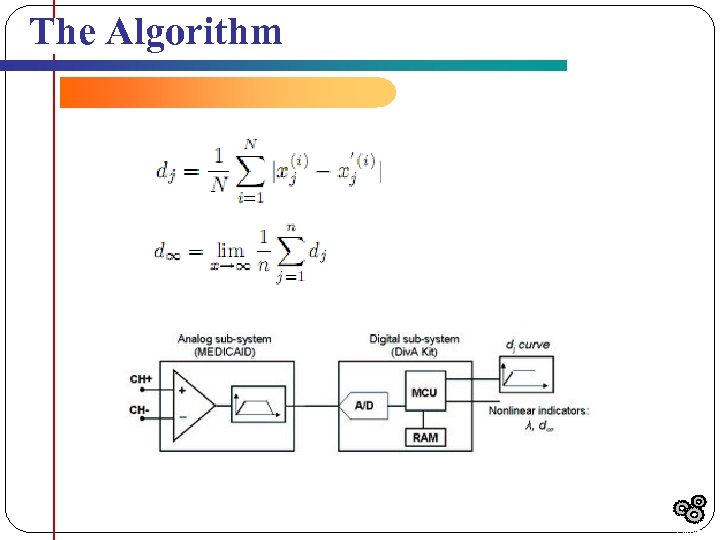 The Algorithm Outline
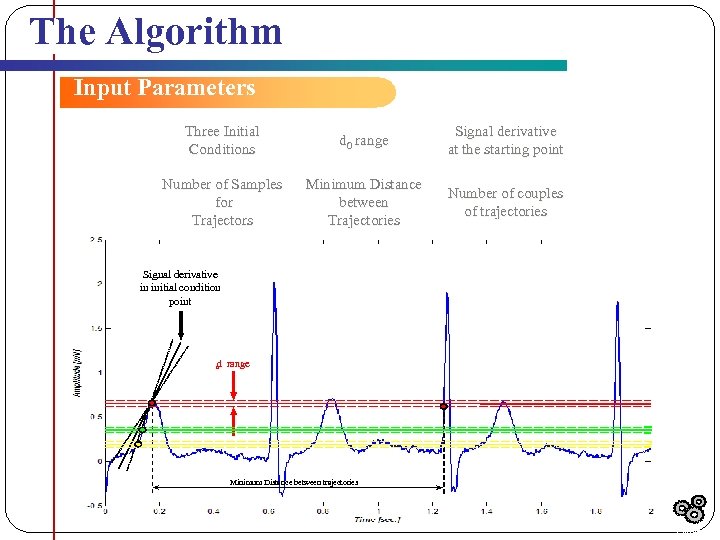 The Algorithm Input Parameters Three Initial Conditions d 0 range Signal derivative at the starting point Number of Samples for Trajectors Minimum Distance between Trajectories Number of couples of trajectories Signal derivative in initial condition point d range 0 Minimum Distance between trajectories Outline
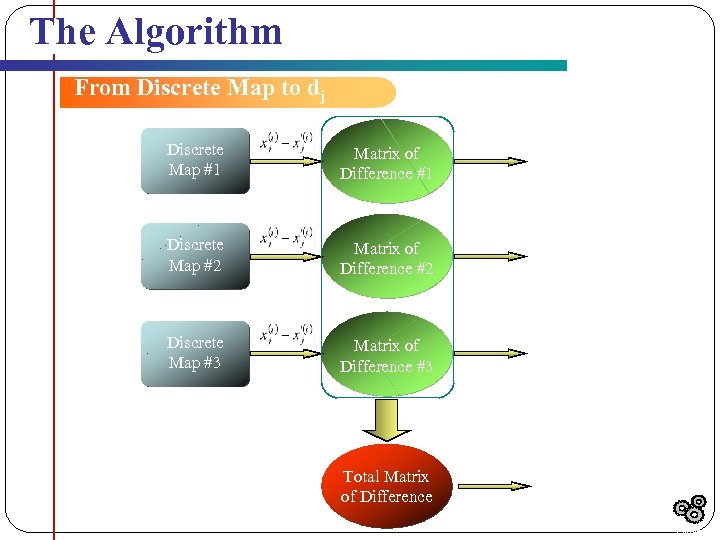 The Algorithm From Discrete Map to dj Discrete Map #1 Matrix of Difference #1 d 1 Discrete Map #2 Matrix of Difference #2 d 2 Discrete Map #3 Matrix of Difference #3 d 3 Total Matrix of Difference dj Totale j j j Outline
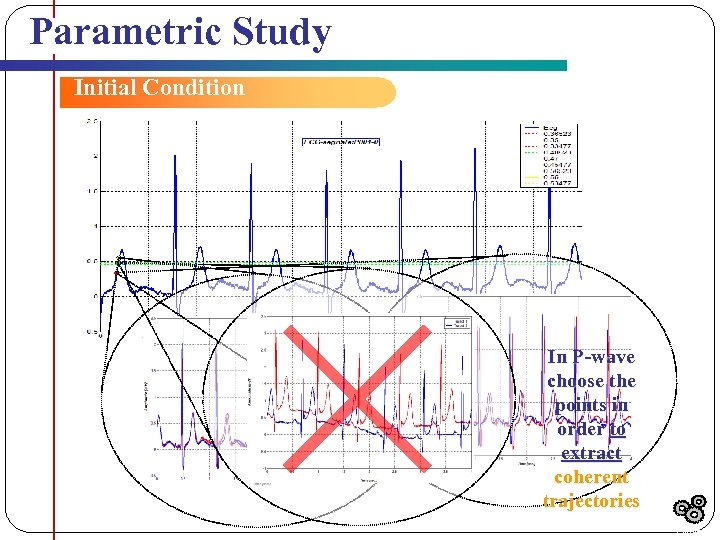 Parametric Study Initial Condition In P-wave choose the points in order to extract coherent trajectories Outline
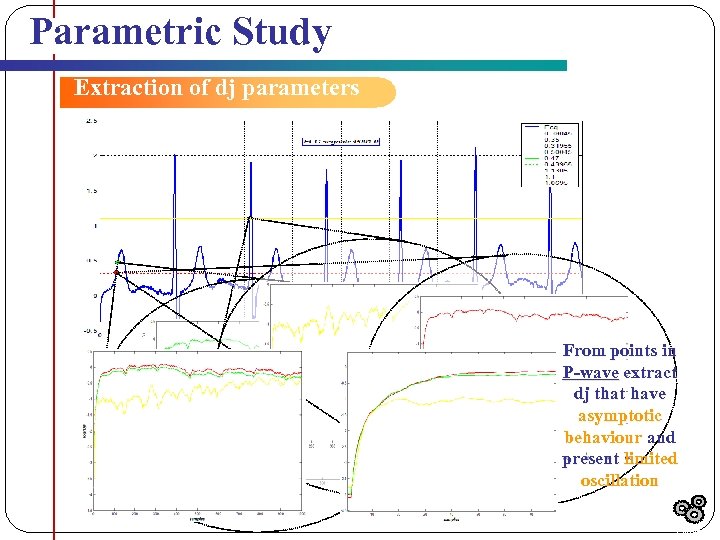 Parametric Study Extraction of dj parameters From points in P-wave extract dj that have asymptotic behaviour and present limited oscillation Outline
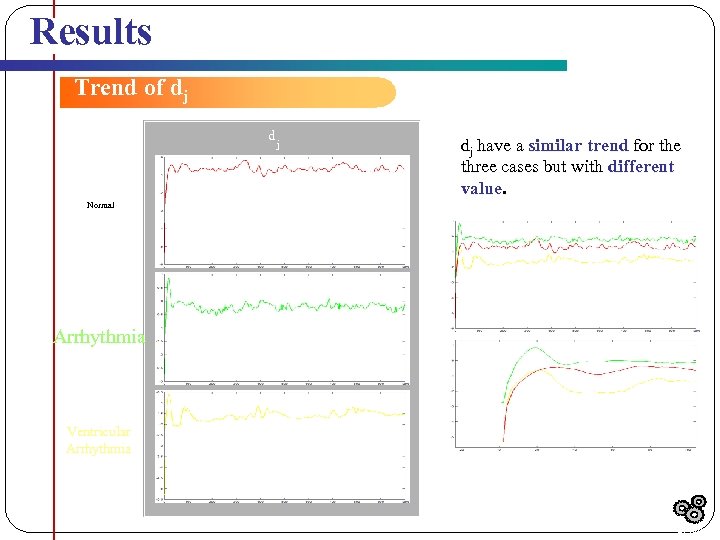 Results Trend of dj d j dj have a similar trend for the three cases but with different value. Normal Arrhythmia Ventricular Arrhythmia Initial Slope Results
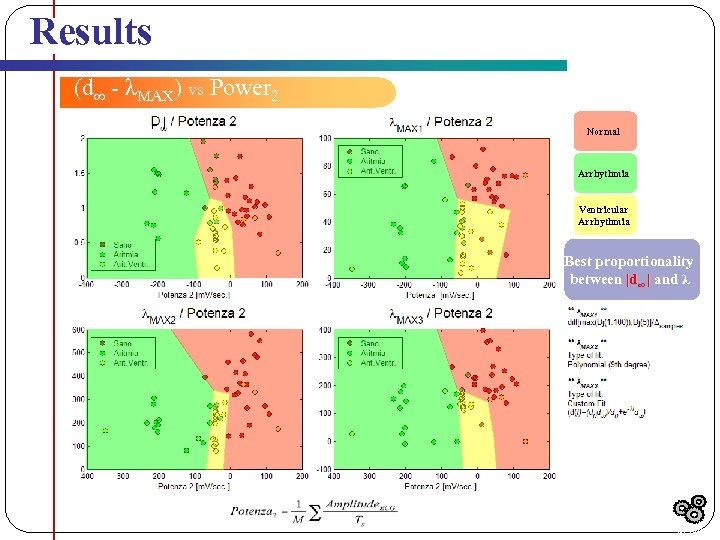 Results (d∞ - λMAX) vs Power 2 | | Normal Arrhythmia Ventricular Arrhythmia Best proportionality between |d∞ | and λ Results
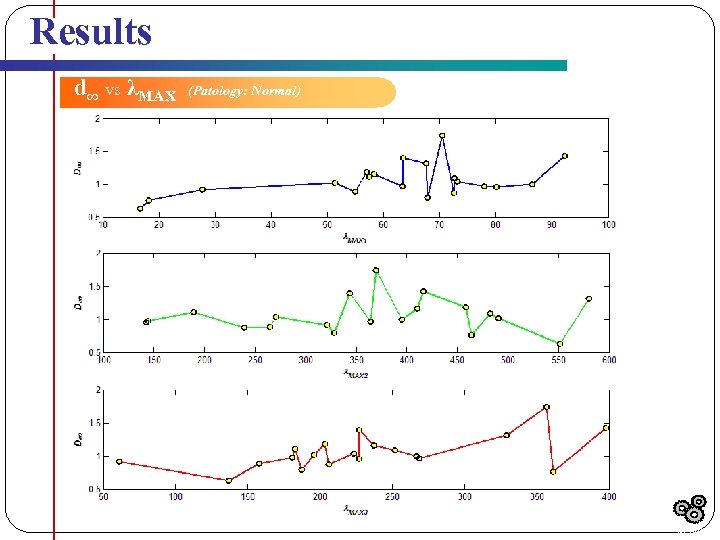 Results d∞ vs λMAX (Patology: Normal) Results
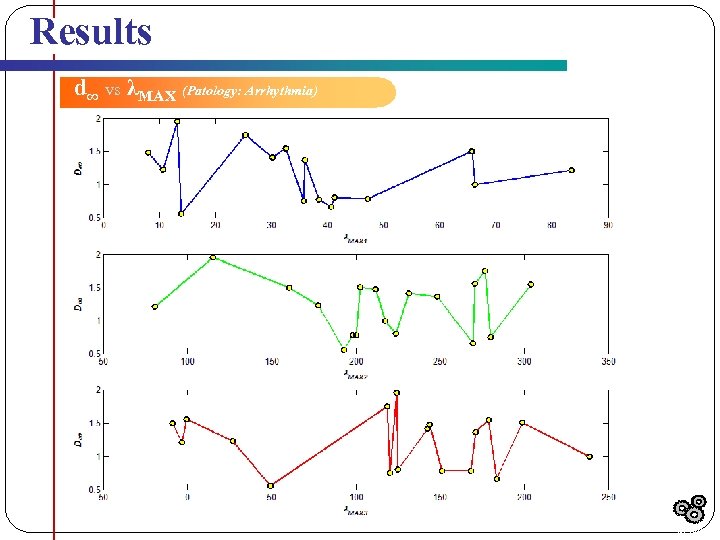 Results d∞ vs λMAX (Patology: Arrhythmia) Results
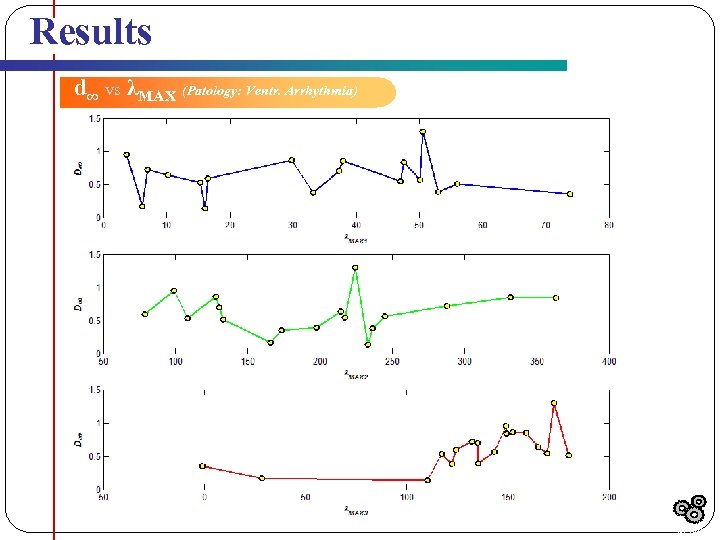 Results d∞ vs λMAX (Patology: Ventr. Arrhythmia) Results
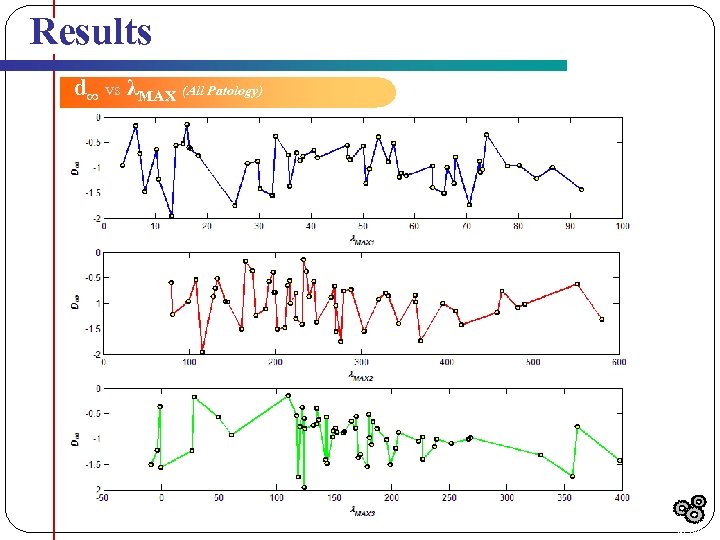 Results d∞ vs λMAX (All Patology) Results
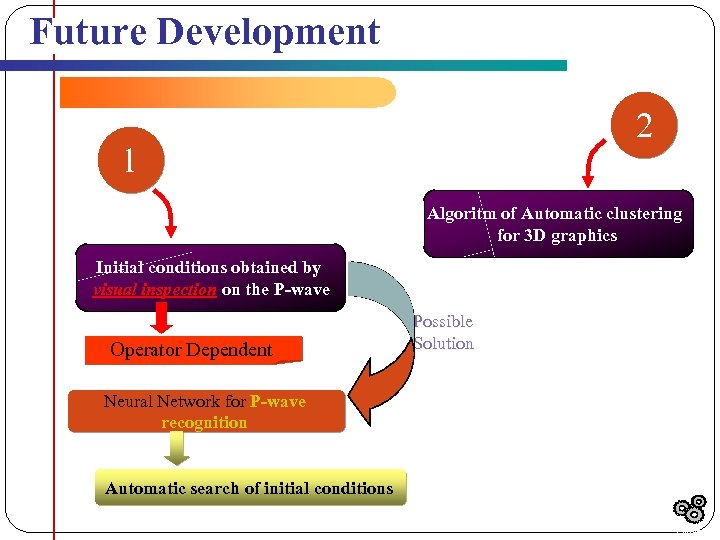 Future Development 2 1 Algoritm of Automatic clustering for 3 D graphics Initial conditions obtained by visual inspection on the P-wave Operator Dependent Possible Solution Neural Network for P-wave recognition Automatic search of initial conditions Outline
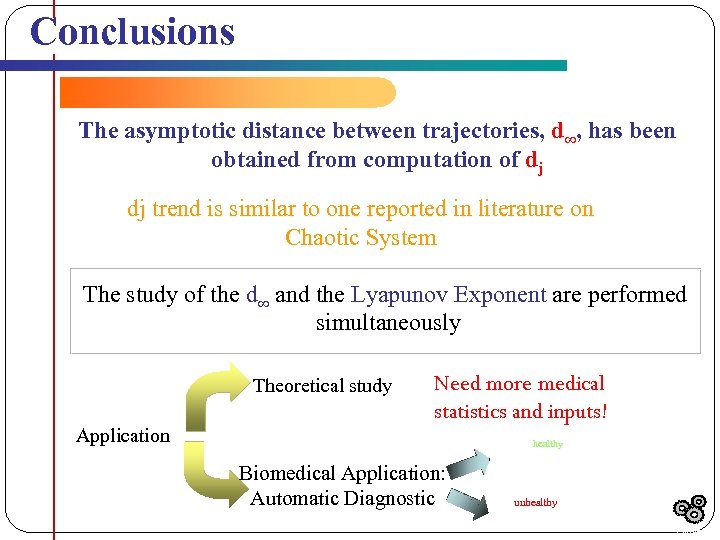 Conclusions The asymptotic distance between trajectories, d∞, has been obtained from computation of dj dj trend is similar to one reported in literature on Chaotic System The study of the d∞ and the Lyapunov Exponent are performed simultaneously Theoretical study Application Need more medical statistics and inputs! healthy Biomedical Application: Automatic Diagnostic unhealthy Outline
 Algorithm for Decision Tree Induction Basic algorithm (a greedy algorithm) Tree is constructed in a top-down recursive divide-and-conquer manner At start, all the training examples are at the root Attributes are categorical (if continuous-valued, they are discretized in advance) Examples are partitioned recursively based on selected attributes Test attributes are selected on the basis of a heuristic or statistical measure (e. g. , information gain) Conditions for stopping partitioning All samples for a given node belong to the same class There are no remaining attributes for further partitioning – majority voting is employed for classifying the leaf There are no samples left 115 Data Mining: Concepts and Techniques 15 March 2018
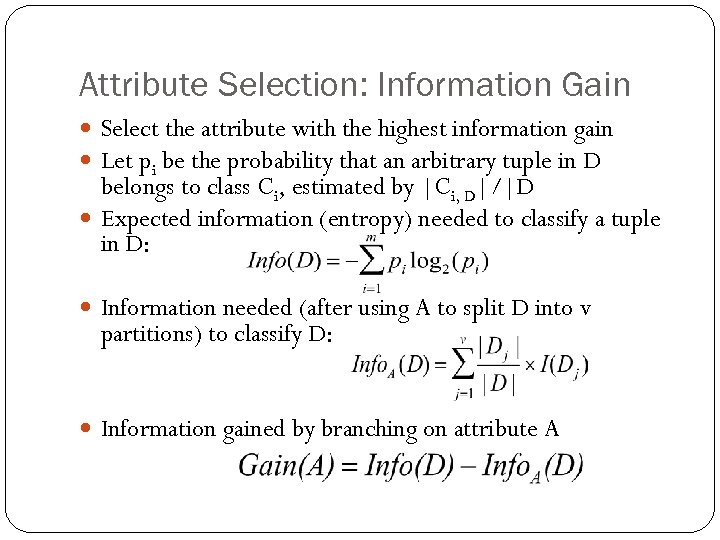 Attribute Selection: Information Gain Select the attribute with the highest information gain Let pi be the probability that an arbitrary tuple in D belongs to class Ci, estimated by |Ci, D|/|D Expected information (entropy) needed to classify a tuple in D: Information needed (after using A to split D into v partitions) to classify D: Information gained by branching on attribute A
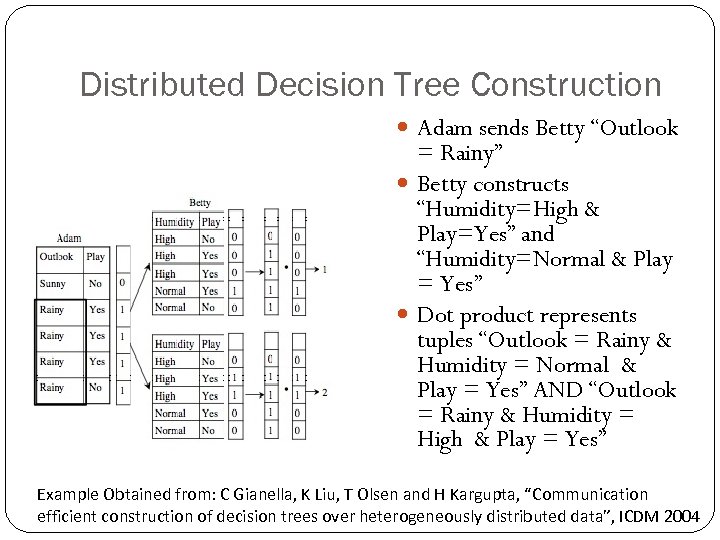 Distributed Decision Tree Construction Adam sends Betty “Outlook = Rainy” Betty constructs “Humidity=High & Play=Yes” and “Humidity=Normal & Play = Yes” Dot product represents tuples “Outlook = Rainy & Humidity = Normal & Play = Yes” AND “Outlook = Rainy & Humidity = High & Play = Yes” Example Obtained from: C Gianella, K Liu, T Olsen and H Kargupta, “Communication efficient construction of decision trees over heterogeneously distributed data”, ICDM 2004
 PLANET: Parallel Learning for Assembling Numerous Ensemble Trees Ref: B Panda, J. S. Herbach, S. Basu, R. J. Bayardo, “PLANET: Massively Parallel Learning of Tree Ensembles with Map Reduce”, VLDB 2009 Components Controller (maintains a Model. File) Map. Reduce. Queue and In. Memory. Queue
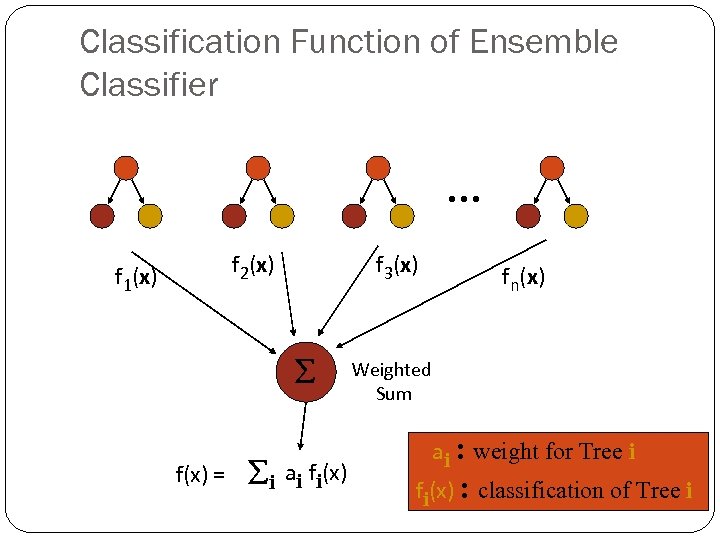 Classification Function of Ensemble Classifier … f 1(x) f 2(x) f 3(x) f(x) = i ai fi(x) fn(x) Weighted Sum ai : weight for Tree i fi(x) : classification of Tree i
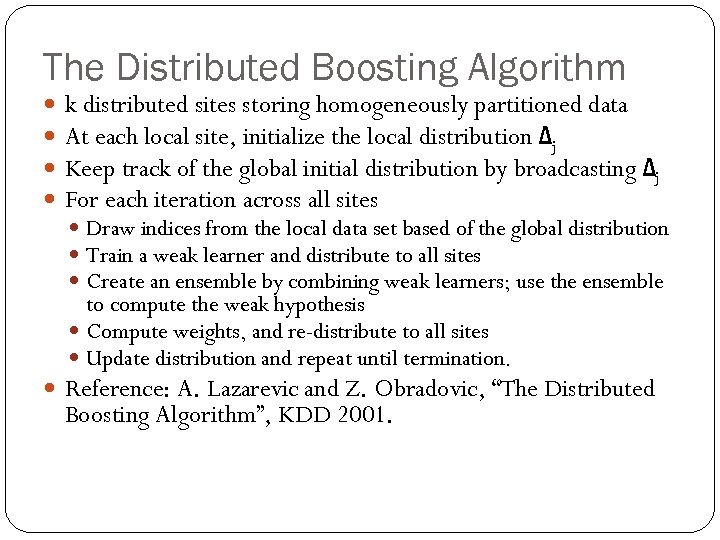 The Distributed Boosting Algorithm k distributed sites storing homogeneously partitioned data At each local site, initialize the local distribution Δj Keep track of the global initial distribution by broadcasting Δj For each iteration across all sites Draw indices from the local data set based of the global distribution Train a weak learner and distribute to all sites Create an ensemble by combining weak learners; use the ensemble to compute the weak hypothesis Compute weights, and re-distribute to all sites Update distribution and repeat until termination. Reference: A. Lazarevic and Z. Obradovic, “The Distributed Boosting Algorithm”, KDD 2001.
 Factor and Component Analysis esp. Principal Component Analysis (PCA&ICA)
 Why Factor or Component Analysis? • We have too many observations and dimensions – – – • To reason about or obtain insights from To visualize Too much noise in the data Need to “reduce” them to a smaller set of factors Better representation of data without losing much information Can build more effective data analyses on the reduced-dimensional space: classification, clustering, pattern recognition Combinations of observed variables may be more effective bases for insights, even if physical meaning is obscure
 Basic Concept What if the dependences and correlations are not so strong or direct? And suppose you have 3 variables, or 4, or 5, or 10000? Look for the phenomena underlying the observed covariance/co- dependence in a set of variables Once again, phenomena that are uncorrelated or independent, and especially those along which the data show high variance These phenomena are called “factors” or “principal components” or “independent components, ” depending on the methods used Factor analysis: based on variance/correlation Independent Component Analysis: based on independence
 Principal Component Analysis Most common form of factor analysis The new variables/dimensions Are linear combinations of the original ones Are uncorrelated with one another Orthogonal in original dimension space Capture as much of the original variance in the data as possible Are called Principal Components
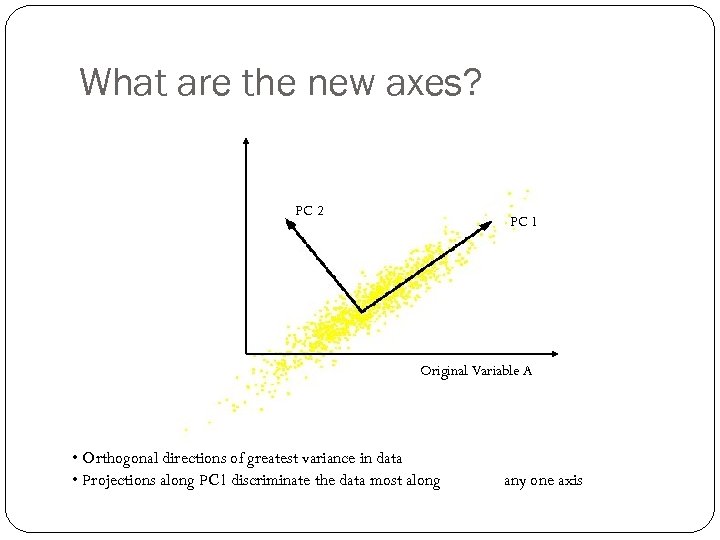 Original Variable B What are the new axes? PC 2 PC 1 Original Variable A • Orthogonal directions of greatest variance in data • Projections along PC 1 discriminate the data most along any one axis
 Principal Components First principal component is the direction of greatest variability (covariance) in the data Second is the next orthogonal (uncorrelated) direction of greatest variability So first remove all the variability along the first component, and then find the next direction of greatest variability And so on …
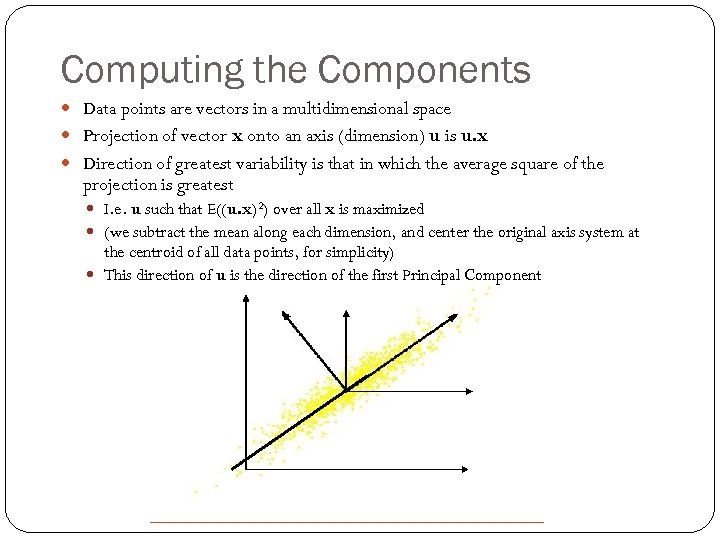 Computing the Components Data points are vectors in a multidimensional space Projection of vector x onto an axis (dimension) u is u. x Direction of greatest variability is that in which the average square of the projection is greatest I. e. u such that E((u. x)2) over all x is maximized (we subtract the mean along each dimension, and center the original axis system at the centroid of all data points, for simplicity) This direction of u is the direction of the first Principal Component
 Computing the Components E((u. x)2) = E ((u. x)T) = E (u. x. x T. u. T) The matrix C = x. x. T contains the correlations (similarities) of the original axes based on how the data values project onto them So we are looking for w that maximizes u. Cu. T, subject to u being unit- length It is maximized when w is the principal eigenvector of the matrix C, in which case u. Cu. T = ulu. T = l if u is unit-length, where l is the principal eigenvalue of the correlation matrix C The eigenvalue denotes the amount of variability captured along that dimension
 Why the Eigenvectors? Maximise u. Txx. Tu s. t u. Tu = 1 Construct Langrangian u. Txx. Tu – λu. Tu Vector of partial derivatives set to zero xx. Tu – λu = (xx. T – λI) u = 0 As u ≠ 0 then u must be an eigenvector of xx. T with eigenvalue λ
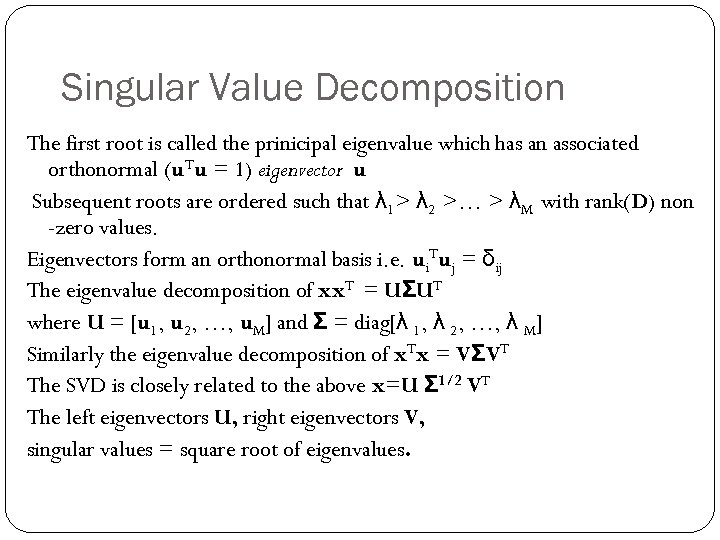 Singular Value Decomposition The first root is called the prinicipal eigenvalue which has an associated orthonormal (u. Tu = 1) eigenvector u Subsequent roots are ordered such that λ 1> λ 2 >… > λM with rank(D) non -zero values. Eigenvectors form an orthonormal basis i. e. ui. Tuj = δij The eigenvalue decomposition of xx. T = UΣUT where U = [u 1, u 2, …, u. M] and Σ = diag[λ 1, λ 2, …, λ M] Similarly the eigenvalue decomposition of x. Tx = VΣVT The SVD is closely related to the above x=U Σ 1/2 VT The left eigenvectors U, right eigenvectors V, singular values = square root of eigenvalues.
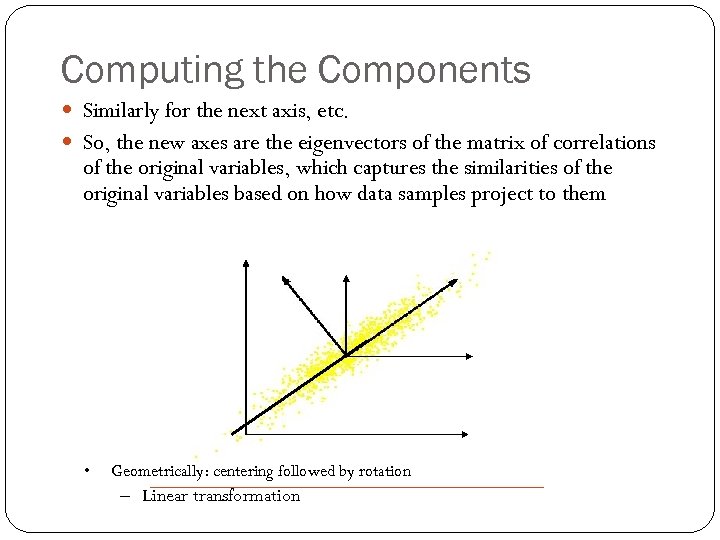 Computing the Components Similarly for the next axis, etc. So, the new axes are the eigenvectors of the matrix of correlations of the original variables, which captures the similarities of the original variables based on how data samples project to them • Geometrically: centering followed by rotation – Linear transformation
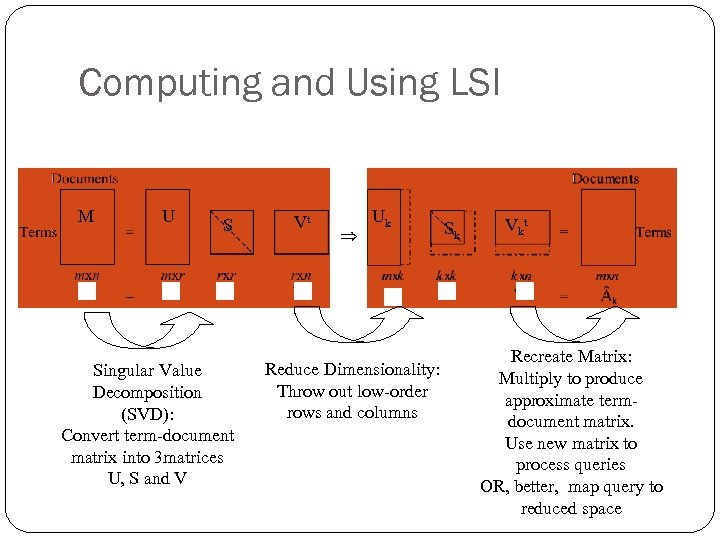 Computing and Using LSI M U S Singular Value Decomposition (SVD): Convert term-document matrix into 3 matrices U, S and V Vt Uk Reduce Dimensionality: Throw out low-order rows and columns Sk Vk t Recreate Matrix: Multiply to produce approximate termdocument matrix. Use new matrix to process queries OR, better, map query to reduced space
 What LSI can do LSI analysis effectively does Dimensionality reduction Noise reduction Exploitation of redundant data Correlation analysis and Query expansion (with related words) Some of the individual effects can be achieved with simpler techniques (e. g. thesaurus construction). LSI does them together. LSI handles synonymy well, not so much polysemy Challenge: SVD is complex to compute (O(n 3)) Needs to be updated as new documents are found/updated
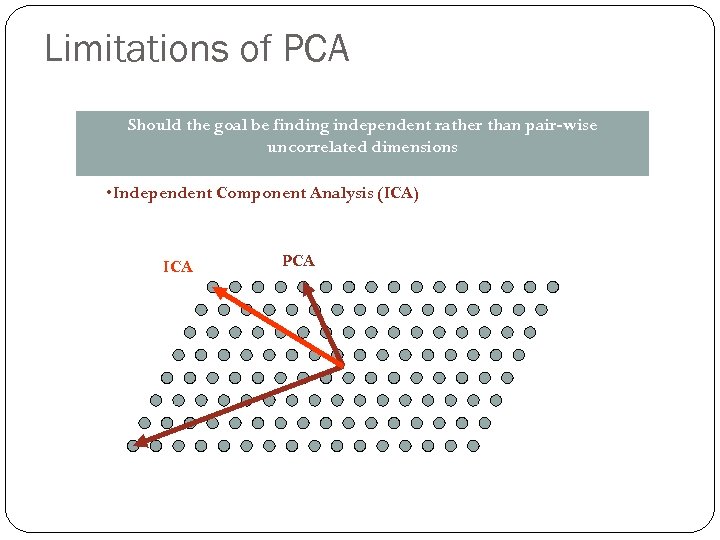 Limitations of PCA Should the goal be finding independent rather than pair-wise uncorrelated dimensions • Independent Component Analysis (ICA) ICA PCA
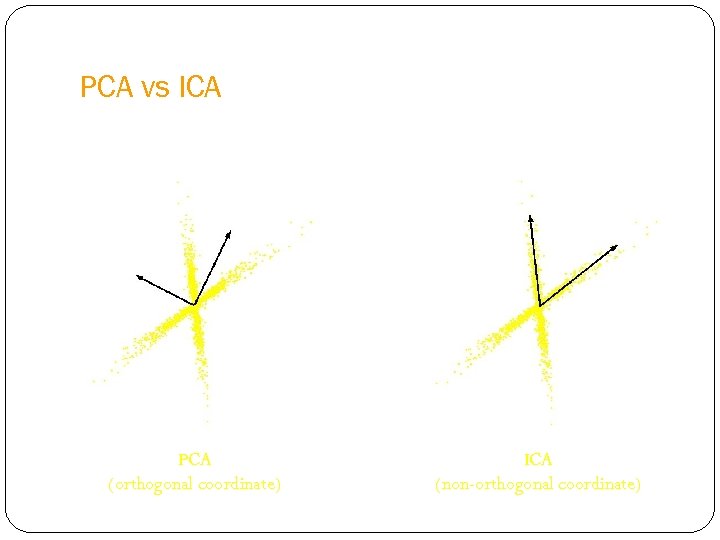 PCA vs ICA PCA (orthogonal coordinate) ICA (non-orthogonal coordinate)
 PCA applications -Eigenfaces To generate a set of eigenfaces: 1. 2. 3. 4. Large set of digitized images of human faces is taken under the same lighting conditions. The images are normalized to line up the eyes and mouths. The eigenvectors of the covariance matrix of the statistical distribution of face image vectors are then extracted. These eigenvectors are called eigenfaces.
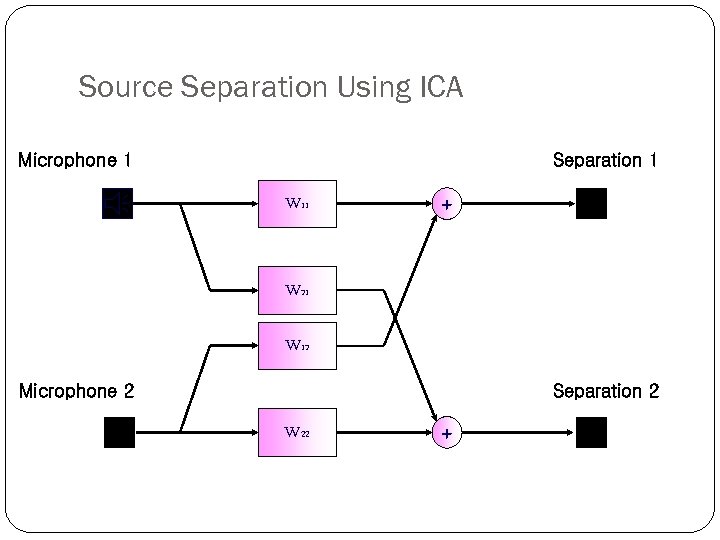 Source Separation Using ICA Microphone 1 Separation 1 W 11 + W 21 W 12 Microphone 2 Separation 2 W 22 +
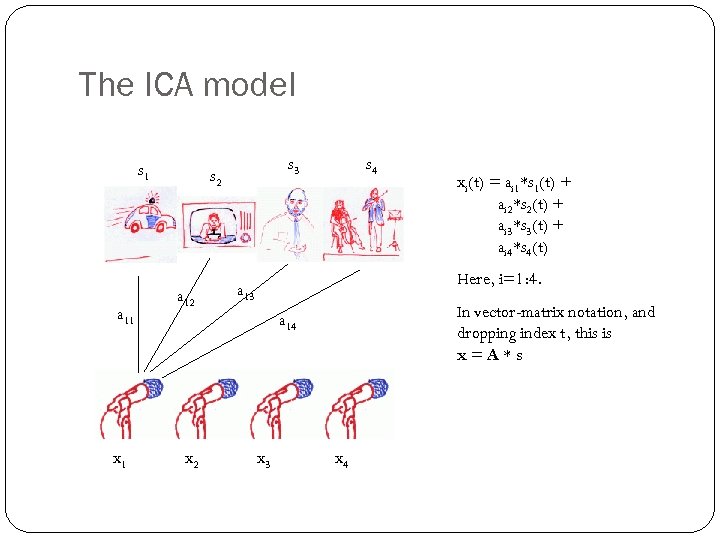 The ICA model s 1 a 11 x 1 s 3 s 2 a 12 s 4 Here, i=1: 4. a 13 In vector-matrix notation, and dropping index t, this is x=A*s a 14 x 2 xi(t) = ai 1*s 1(t) + ai 2*s 2(t) + ai 3*s 3(t) + ai 4*s 4(t) x 3 x 4
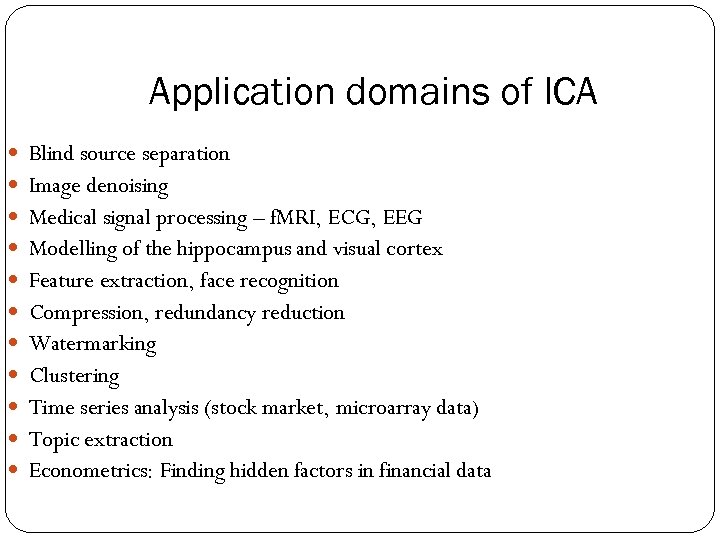 Application domains of ICA Blind source separation Image denoising Medical signal processing – f. MRI, ECG, EEG Modelling of the hippocampus and visual cortex Feature extraction, face recognition Compression, redundancy reduction Watermarking Clustering Time series analysis (stock market, microarray data) Topic extraction Econometrics: Finding hidden factors in financial data
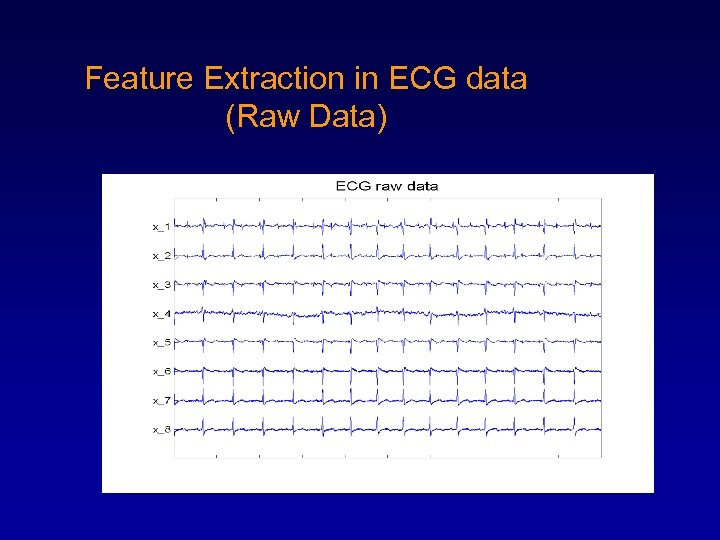 Feature Extraction in ECG data (Raw Data)
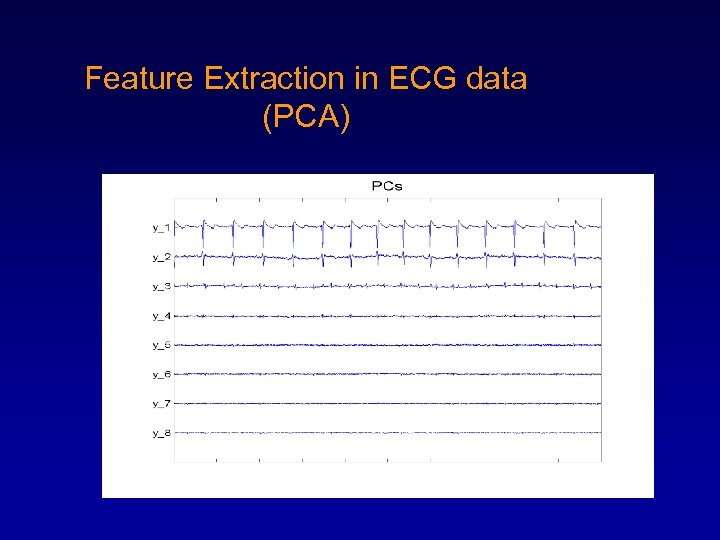 Feature Extraction in ECG data (PCA)
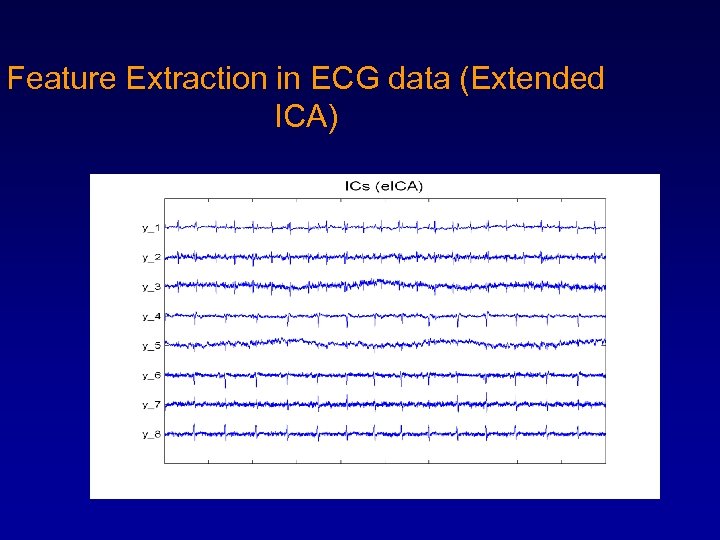 Feature Extraction in ECG data (Extended ICA)
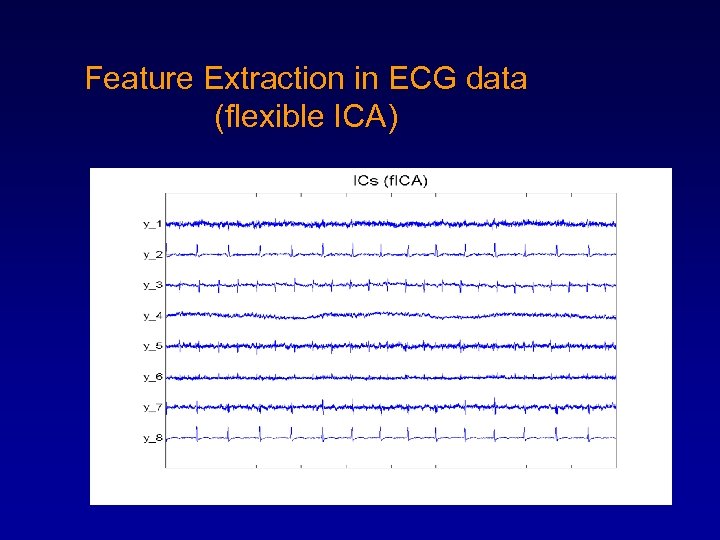 Feature Extraction in ECG data (flexible ICA)
 PCA vs ICA • Linear Transform – Compression – Classification • PCA – Focus on uncorrelated and Gaussian components – Second-order statistics – Orthogonal transformation • ICA – Focus on independent and non-Gaussian components – Higher-order statistics – Non-orthogonal transformation
 Gaussians and ICA • If some components are gaussian and some are non-gaussian. – Can estimate all non-gaussian components – Linear combination of gaussian components can be estimated. – If only one gaussian component, model can be estimated • ICA sometimes viewed as non-Gaussian factor analysis
 Detection of Ischemic ST segment Deviation Episode in the ECG Reflection of Ischemia in ECG: • ST segment deviation i. ii. Elevation Depression • T wave Inversion
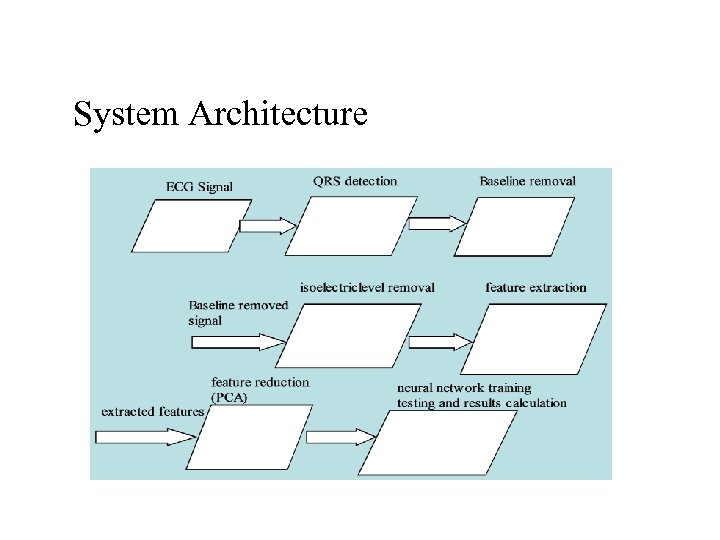 System Architecture
 Detection of Ischemic ST segment Deviation Episode in the ECG QRS detection In order to proceed with ST deviation: • QRS onset • QRS offset • QRS fudicial point. • DWT (discrete wavelet transform) based QRS detector.
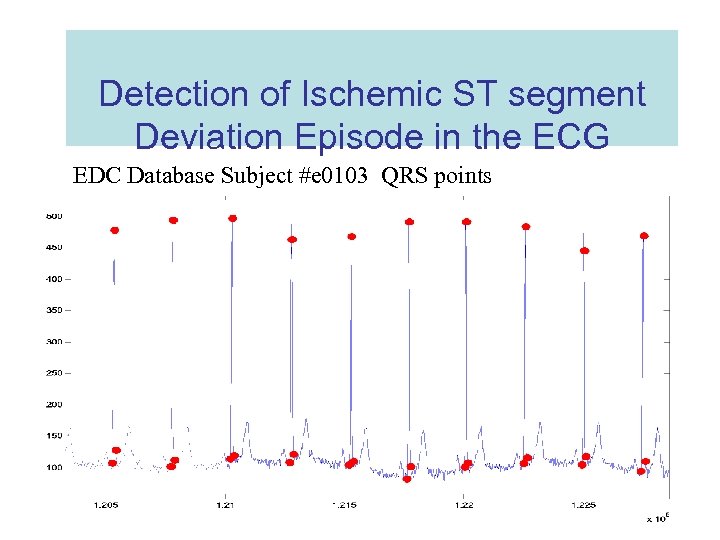 Detection of Ischemic ST segment Deviation Episode in the ECG EDC Database Subject #e 0103 QRS points
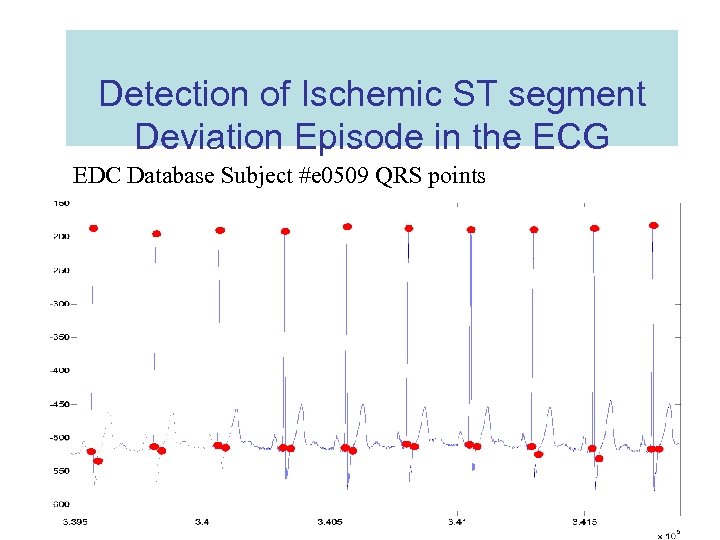 Detection of Ischemic ST segment Deviation Episode in the ECG EDC Database Subject #e 0509 QRS points
 Detection of Ischemic ST segment Deviation Episode in the ECG Isoelectric level: • • Flattest region on the signal Value equal or very close to zero. Region starts 80 ms before the QRS on Ends at QRS on.
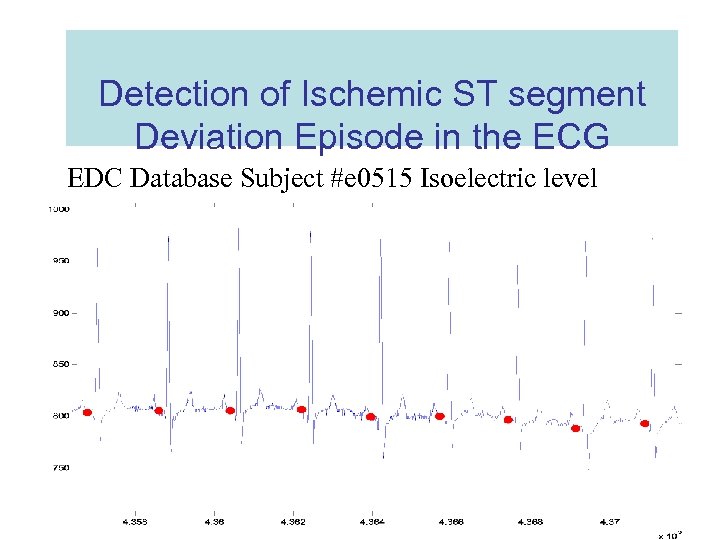 Detection of Ischemic ST segment Deviation Episode in the ECG EDC Database Subject #e 0515 Isoelectric level
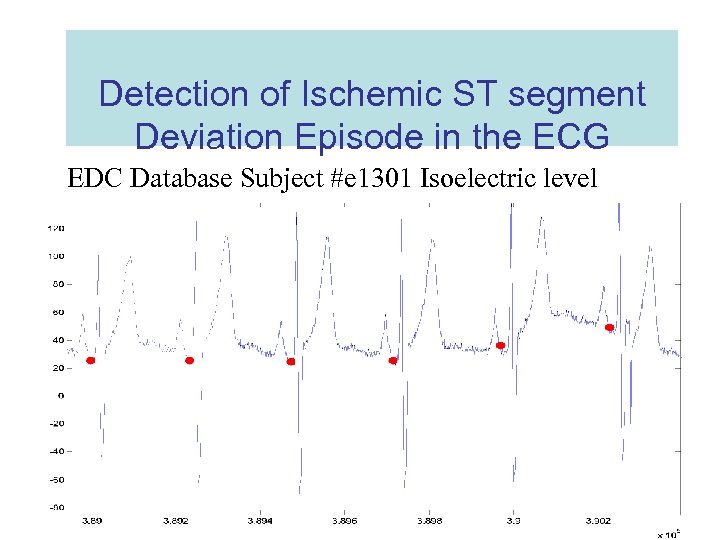 Detection of Ischemic ST segment Deviation Episode in the ECG EDC Database Subject #e 1301 Isoelectric level
 Detection of Ischemic ST segment Deviation Episode in the ECG Feature extraction: • ST region refers as ROI (region of interest) • ROI (26 samples after the qrs_off) • Subtraction Isoelectric level from ROI • ST deviation
 Detection of Ischemic ST segment Deviation Episode in the ECG Feature Space: • Size of the features is 26 X no. of beats of each subject • Which is more time consuming when it comes to classify or train a neural network for it.
 Detection of Ischemic ST segment Deviation Episode in the ECG PCA( Principal component analysis): Procedure: 1. Project the data as 1 -dimensional Data sets 2. Subtract mean of the data from each data set 3. Combine the mean centered data sets (mean centered matrix) 4. Multiply the mean centered matrix by it’s transpose (Covariance matrix)
 Detection of Ischemic ST segment Deviation Episode in the ECG PCA( Principal component analysis): Procedure: 5. This covariance matrix has up to P eigenvectors associated with non-zero eigenvalues. 6. Assuming P
 Detection of Ischemic ST segment Deviation Episode in the ECG PCA( Principal component analysis): Procedure: 8. Smallest eigenvalue is associated with the eigenvector that finds the least variance in the data. 9. According to a threshold Variance, reduce the dimensions by discarding the eigenvectors with variance less than that threshold.
 Detection of Ischemic ST segment Deviation Episode in the ECG Training of MLIII Data • Total beats: 184246 • Used for Training NN: 52493 • Used for Cross-validation: 20123 • Used for Testing: 110595
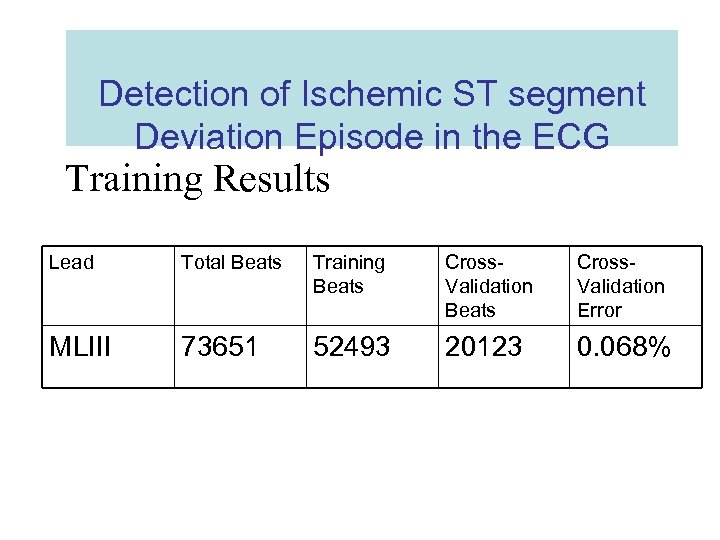 Detection of Ischemic ST segment Deviation Episode in the ECG Training Results Lead Total Beats Training Beats Cross. Validation Error MLIII 73651 52493 20123 0. 068%
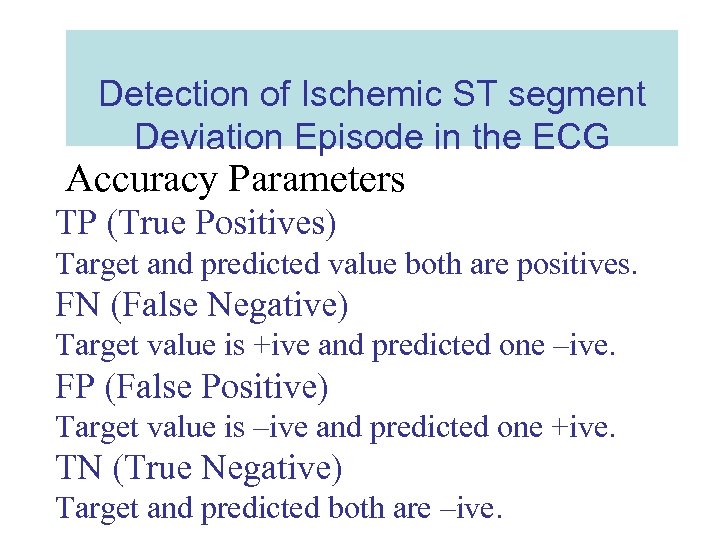 Detection of Ischemic ST segment Deviation Episode in the ECG Accuracy Parameters TP (True Positives) Target and predicted value both are positives. FN (False Negative) Target value is +ive and predicted one –ive. FP (False Positive) Target value is –ive and predicted one +ive. TN (True Negative) Target and predicted both are –ive.
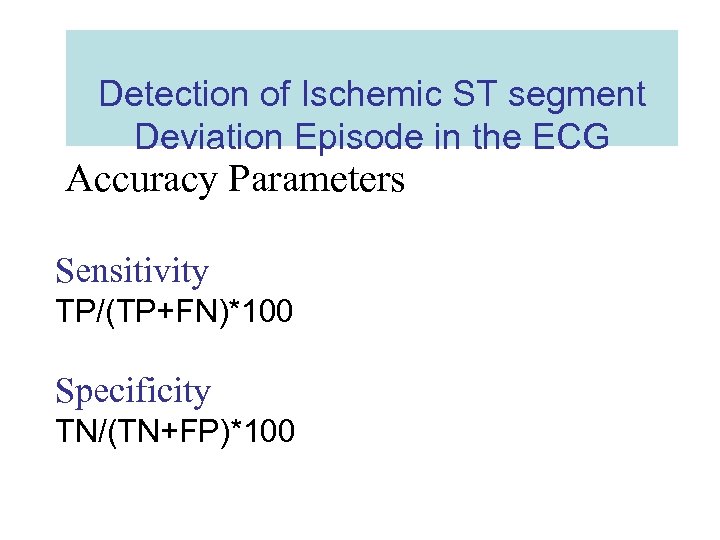 Detection of Ischemic ST segment Deviation Episode in the ECG Accuracy Parameters Sensitivity TP/(TP+FN)*100 Specificity TN/(TN+FP)*100
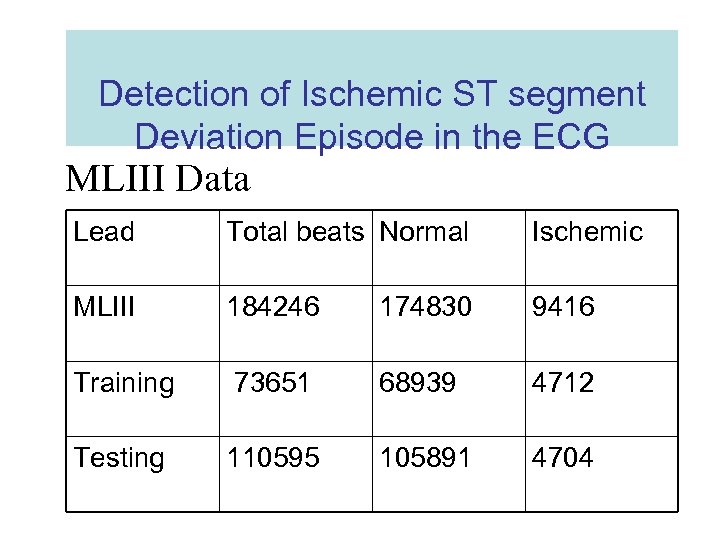 Detection of Ischemic ST segment Deviation Episode in the ECG MLIII Data Lead Total beats Normal Ischemic MLIII 184246 174830 9416 Training 73651 68939 4712 Testing 110595 105891 4704
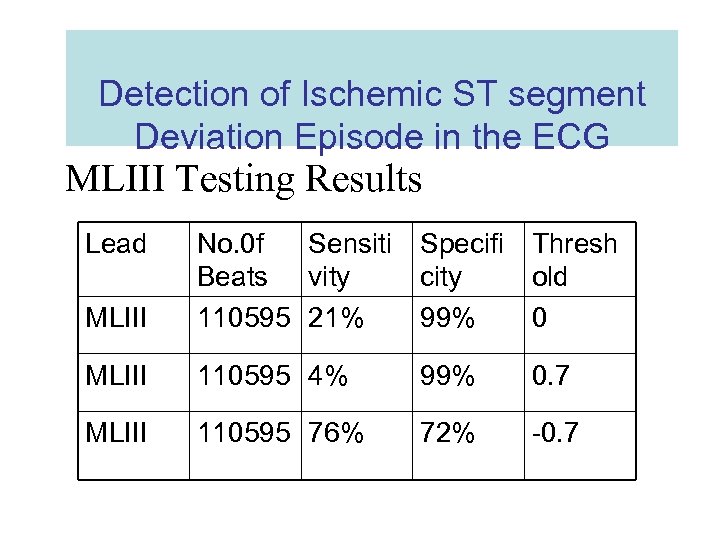 Detection of Ischemic ST segment Deviation Episode in the ECG MLIII Testing Results Lead MLIII No. 0 f Sensiti Specifi Thresh Beats vity city old 110595 21% 99% 0 MLIII 110595 4% 99% 0. 7 MLIII 110595 76% 72% -0. 7
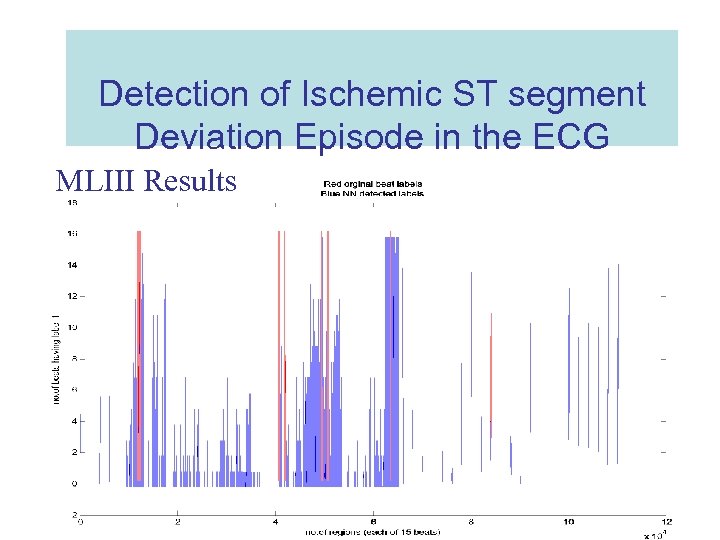 Detection of Ischemic ST segment Deviation Episode in the ECG MLIII Results
 Application of the Discrete Wavelet transform in Beat Rate Detection
 Outline Introduction to Wavelet Transform Applications of the Discrete Wavelet Transform in Beat Rate Detection ◦ DWT Based Beat Rate Detection in ECG Analysis. ◦ Improved ECG Signal Analysis Using Wavelet and Feature. Conclusion Reference 16 7 /2 2
 Introduction to wavelet transform Fourier transform is the well-known tool for signal processing. One limitation is that a Fourier transform can’t deal effectively with non-stationary signal. Short time Fourier transform 16 8 /2 2
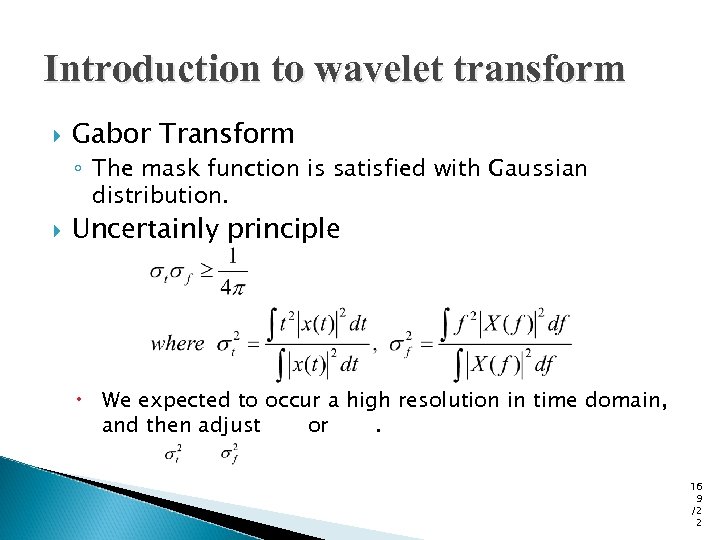 Introduction to wavelet transform Gabor Transform ◦ The mask function is satisfied with Gaussian distribution. Uncertainly principle We expected to occur a high resolution in time domain, and then adjust or. 16 9 /2 2
 Introduction to wavelet transform The principle of wavelet transform is based on the concept of STFT and Uncertainly principle. ◦ A mother wavelet. ◦ Scaling and translating Sub-wavelets . Fourier transform 17 0 /2 2
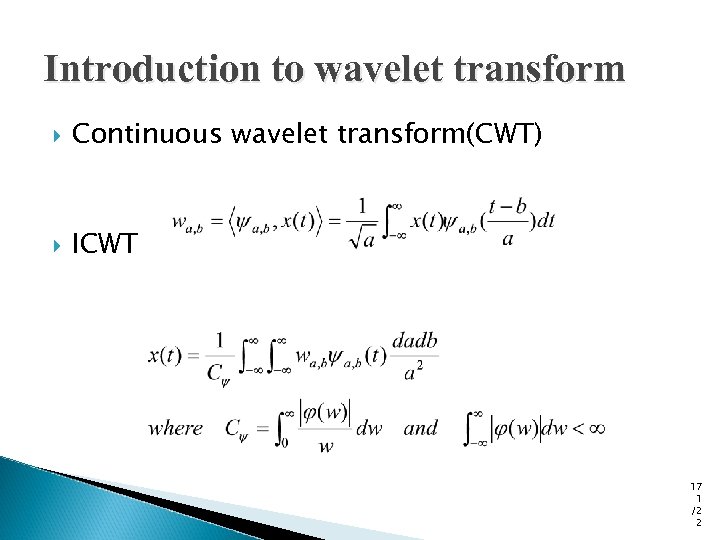 Introduction to wavelet transform Continuous wavelet transform(CWT) ICWT 17 1 /2 2
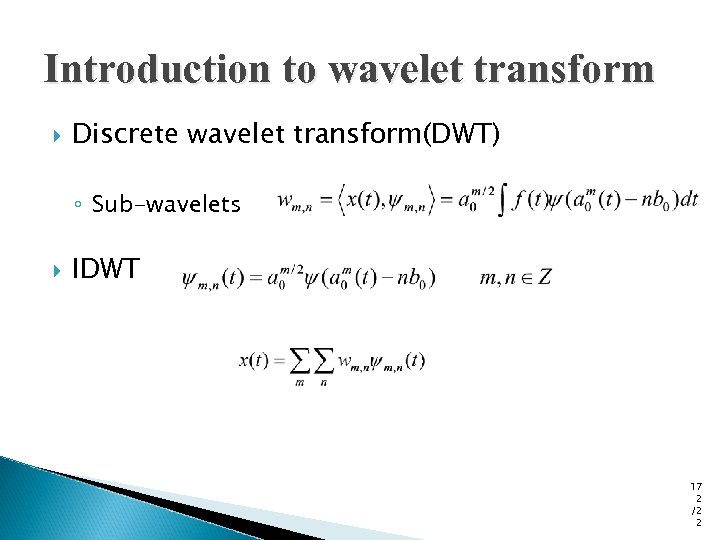 Introduction to wavelet transform Discrete wavelet transform(DWT) ◦ Sub-wavelets IDWT 17 2 /2 2
 DWT applications for beat rate detection DWT Based Beat Rate Detection in ECG Analysis ◦ The purpose of this paper is to detect heart beat rate by the concept of discrete wavelet transform, which is suitable for the non stationary ECG signals as it has adeuate scale values and shifting in time. 17 3 /2 2
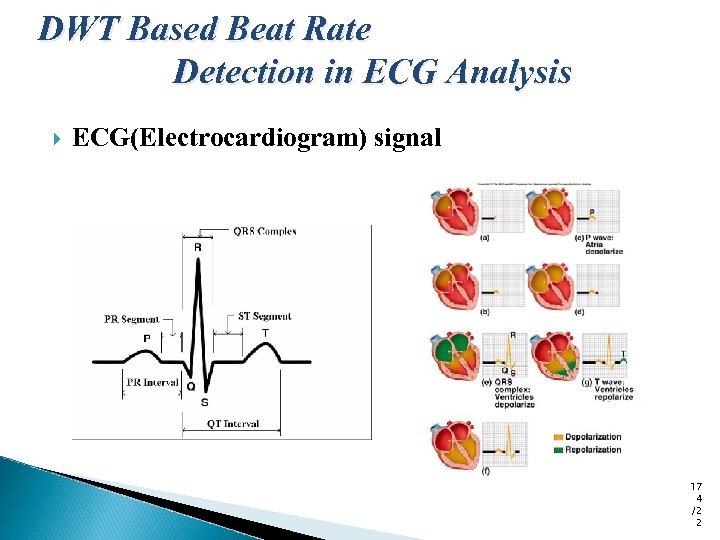 DWT Based Beat Rate Detection in ECG Analysis ECG(Electrocardiogram) signal 17 4 /2 2
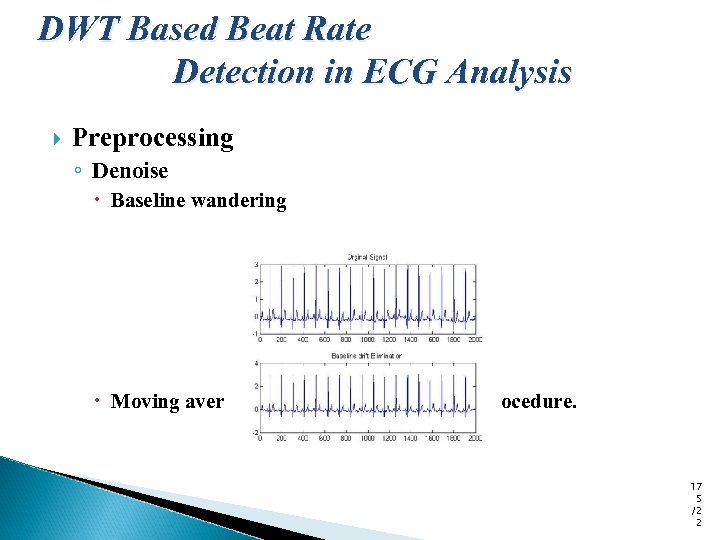 DWT Based Beat Rate Detection in ECG Analysis Preprocessing ◦ Denoise Baseline wandering Moving average method and subtraction procedure. 17 5 /2 2
![ECG signal [ bottom] and the Wavelet transform [top]](https://present5.com/presentation/32db881aa6d82ef41a3066694a93905c/image-176.jpg "ECG signal [ bottom] and the Wavelet transform [top]") ECG signal [ bottom] and the Wavelet transform [top]
ECG signal [ bottom] and the Wavelet transform [top]
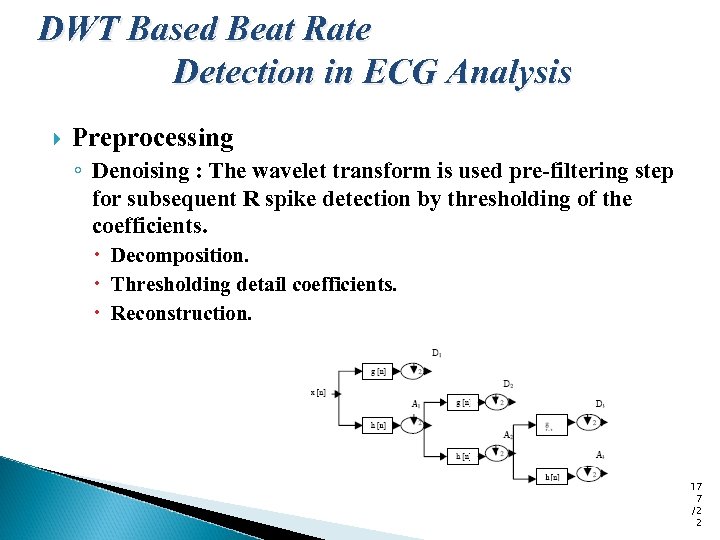 DWT Based Beat Rate Detection in ECG Analysis Preprocessing ◦ Denoising : The wavelet transform is used pre-filtering step for subsequent R spike detection by thresholding of the coefficients. Decomposition. Thresholding detail coefficients. Reconstruction. 17 7 /2 2
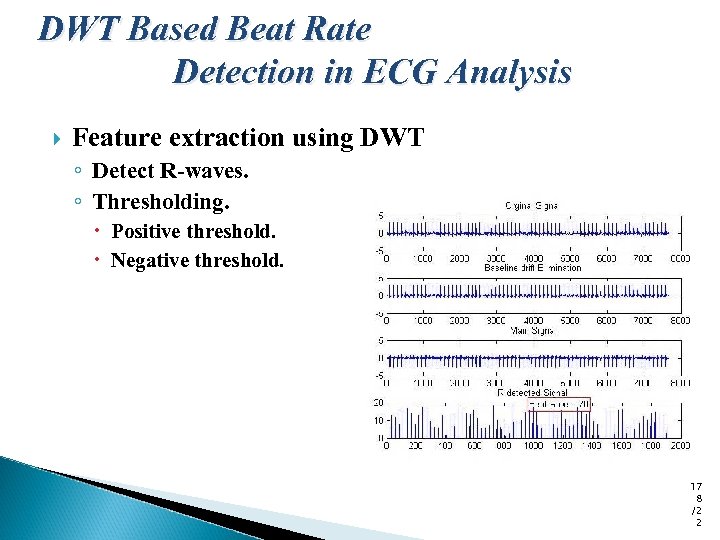 DWT Based Beat Rate Detection in ECG Analysis Feature extraction using DWT ◦ Detect R-waves. ◦ Thresholding. Positive threshold. Negative threshold. 17 8 /2 2
 DWT applications for beat rate detection Improved ECG Signal Analysis Using Wavelet and Feature. ◦ This paper introduced wavelet to extract features and then distinguish several heart beat condition, such as normal beats, atrial premature beats, and premature ventricular contractions. 17 9 /2 2
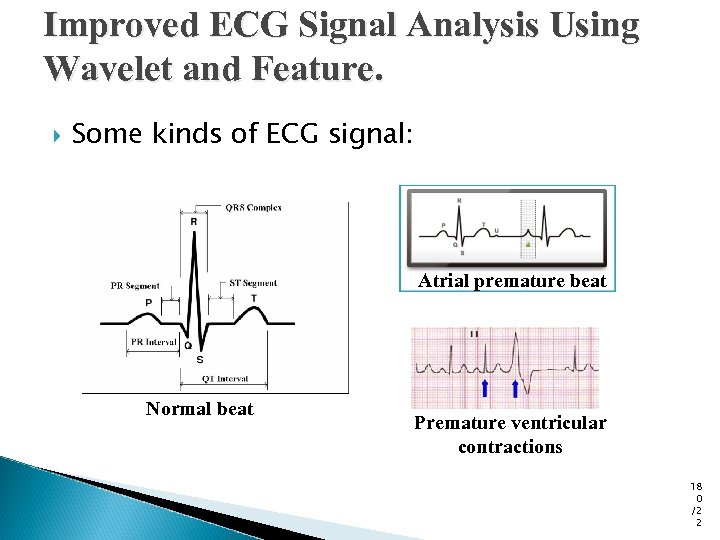 Improved ECG Signal Analysis Using Wavelet and Feature. Some kinds of ECG signal: Atrial premature beat Normal beat Premature ventricular contractions 18 0 /2 2
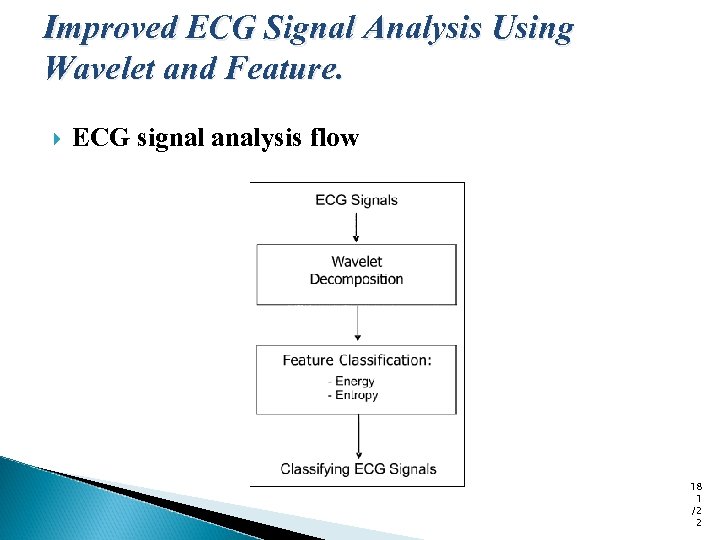 Improved ECG Signal Analysis Using Wavelet and Feature. ECG signal analysis flow 18 1 /2 2
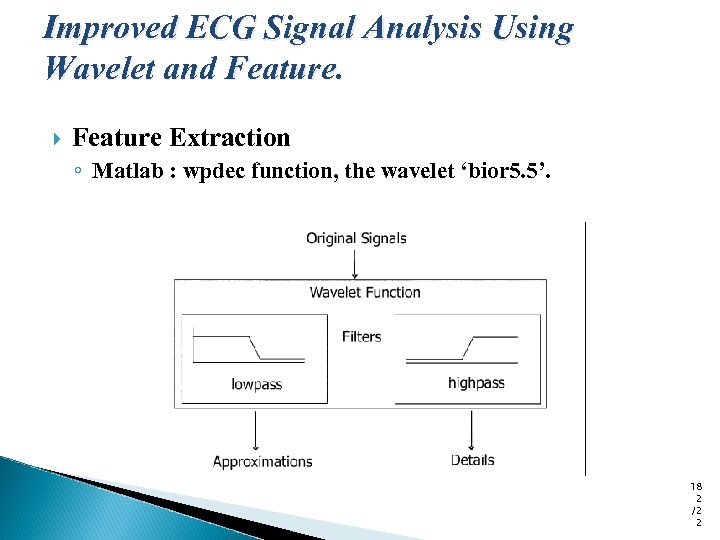 Improved ECG Signal Analysis Using Wavelet and Feature Extraction ◦ Matlab : wpdec function, the wavelet ‘bior 5. 5’. 18 2 /2 2
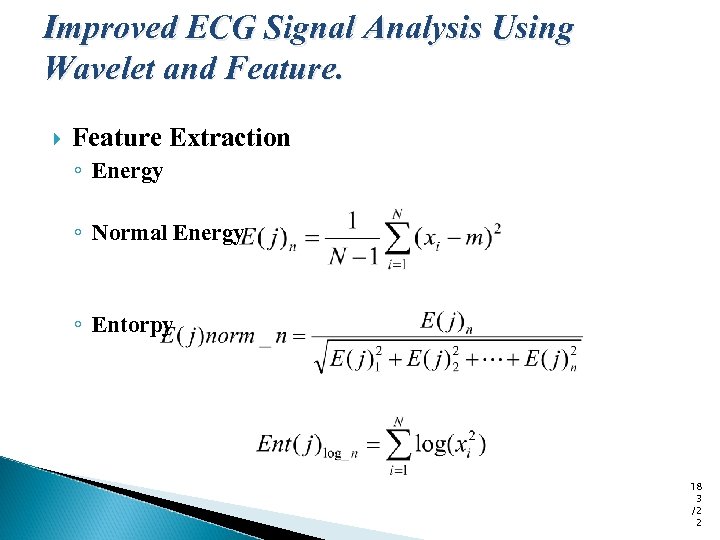 Improved ECG Signal Analysis Using Wavelet and Feature Extraction ◦ Energy ◦ Normal Energy ◦ Entorpy 18 3 /2 2
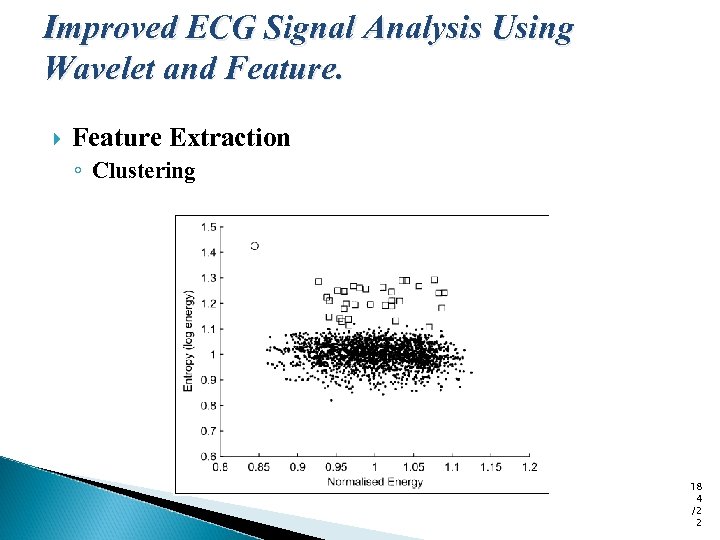 Improved ECG Signal Analysis Using Wavelet and Feature Extraction ◦ Clustering 18 4 /2 2
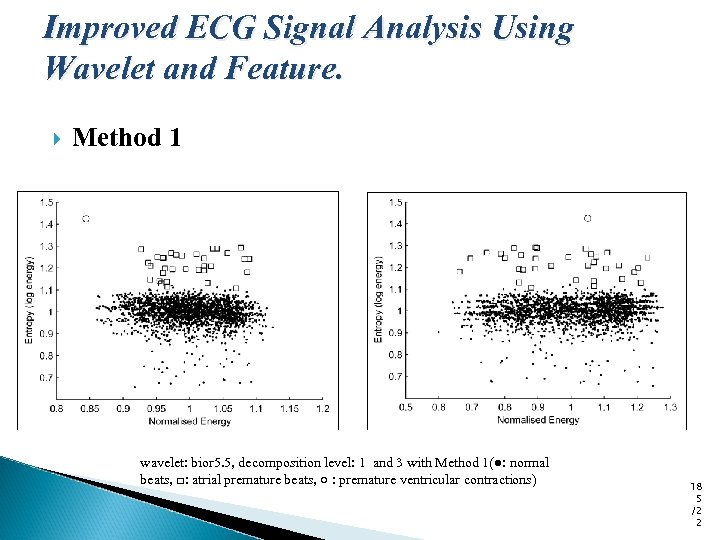 Improved ECG Signal Analysis Using Wavelet and Feature. Method 1 wavelet: bior 5. 5, decomposition level: 1 and 3 with Method 1(●: normal beats, □: atrial premature beats, ○ : premature ventricular contractions) 18 5 /2 2
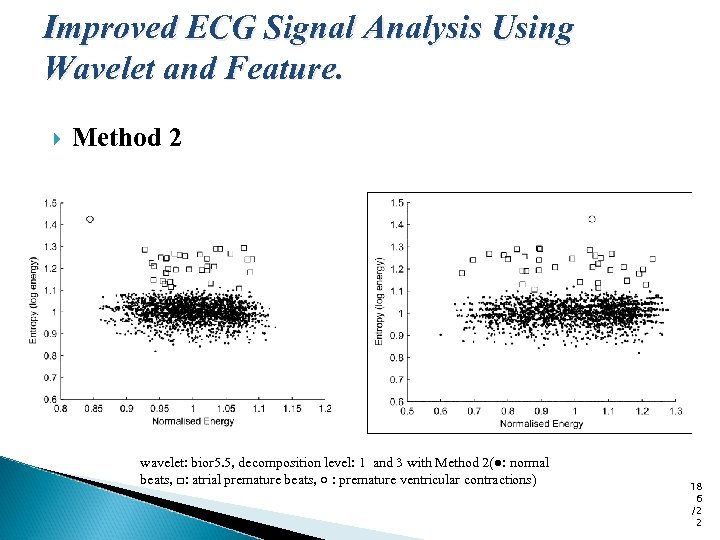 Improved ECG Signal Analysis Using Wavelet and Feature. Method 2 wavelet: bior 5. 5, decomposition level: 1 and 3 with Method 2(●: normal beats, □: atrial premature beats, ○ : premature ventricular contractions) 18 6 /2 2
 Conclusion Wavelet analysis is widely used in many application. Because it provides both time and frequency information, can overcome the limitation of Fourier transform. We can learn about the wavelet transform which is able to detect beat rate of signals and to classify the difference of signals. We also use the wavelet transform on the other beat rate detection. 18 7 /2 2
![References [1] Understanding 12 Lead EKGs , A Practical Approach, BRADY: Understanding 12 Lead](https://present5.com/presentation/32db881aa6d82ef41a3066694a93905c/image-188.jpg "References [1] Understanding 12 Lead EKGs , A Practical Approach, BRADY: Understanding 12 Lead") References [1] Understanding 12 Lead EKGs , A Practical Approach, BRADY: Understanding 12 Lead EKGS Ch. 14 [2] Data Mining and Medical Informatics , R. E. Abdel-Aal, November 2005 [3] Factor and Component Analysis, esp. Principal Component Analysis (PCA) [4] Algorithms for Distributed Supervised and Unsupervised Learning, Haimonti Dutta The Center for Computational Learning Systems (CCLS), Columbia University, New York. [5]Applications of the DWT in beat rate detection, Ding jian, Jun, DISP lab, NTU
References [1] Understanding 12 Lead EKGs , A Practical Approach, BRADY: Understanding 12 Lead EKGS Ch. 14 [2] Data Mining and Medical Informatics , R. E. Abdel-Aal, November 2005 [3] Factor and Component Analysis, esp. Principal Component Analysis (PCA) [4] Algorithms for Distributed Supervised and Unsupervised Learning, Haimonti Dutta The Center for Computational Learning Systems (CCLS), Columbia University, New York. [5]Applications of the DWT in beat rate detection, Ding jian, Jun, DISP lab, NTU
![References [6] Kyriacou, E. ; Pattichis, C. ; Pattichis, M. ; Jossif, A. ;](https://present5.com/presentation/32db881aa6d82ef41a3066694a93905c/image-189.jpg "References [6] Kyriacou, E. ; Pattichis, C. ; Pattichis, M. ; Jossif, A. ;") References [6] Kyriacou, E. ; Pattichis, C. ; Pattichis, M. ; Jossif, A. ; Paraskevas, L. ; Konstantinides, A. ; Vogiatzis, D. ; An m-Health Monitoring System for Children with Suspected Arrhythmias, 29 th Annual International Conference of the IEEE Engineering in Medicine and Biology Society, 2007 Page(s): 1794 – 1797 [7] Wang Zhiyu; Based on physiology parameters to design lie detector, International Conference on Computer Application and System Modeling (ICCASM), 2010 Page(s): V 8 -634 - V 8 -637 [8] Cutcutache, I. ; Dang, T. T. N. ; Leong, W. K. ; Shanshan Liu; Nguyen, K. D. ; Phan, L. T. X. ; Sim, E. ; Zhenxin Sun; Tok, T. B. ; Lin Xu; Tay, F. E. H. ; Weng-Fai Wong; BSN Simulator: Optimizing Application Using System Level Simulation, Sixth International Workshop on Wearable and Implantable Body Sensor Networks, 2009 Page(s): 9 – 14 [9] Chareonsak, C. ; Farook Sana; Yu Wei; Xiong Bing; Design of FPGA hardware for a real-time blind source separation of fetal ECG signals, IEEE International Workshop on Biomedical Circuits and Systems, 2004 Page(s): S 2/4 - 13 -16
References [6] Kyriacou, E. ; Pattichis, C. ; Pattichis, M. ; Jossif, A. ; Paraskevas, L. ; Konstantinides, A. ; Vogiatzis, D. ; An m-Health Monitoring System for Children with Suspected Arrhythmias, 29 th Annual International Conference of the IEEE Engineering in Medicine and Biology Society, 2007 Page(s): 1794 – 1797 [7] Wang Zhiyu; Based on physiology parameters to design lie detector, International Conference on Computer Application and System Modeling (ICCASM), 2010 Page(s): V 8 -634 - V 8 -637 [8] Cutcutache, I. ; Dang, T. T. N. ; Leong, W. K. ; Shanshan Liu; Nguyen, K. D. ; Phan, L. T. X. ; Sim, E. ; Zhenxin Sun; Tok, T. B. ; Lin Xu; Tay, F. E. H. ; Weng-Fai Wong; BSN Simulator: Optimizing Application Using System Level Simulation, Sixth International Workshop on Wearable and Implantable Body Sensor Networks, 2009 Page(s): 9 – 14 [9] Chareonsak, C. ; Farook Sana; Yu Wei; Xiong Bing; Design of FPGA hardware for a real-time blind source separation of fetal ECG signals, IEEE International Workshop on Biomedical Circuits and Systems, 2004 Page(s): S 2/4 - 13 -16
![References [10] Galeottei, L. ; Paoletti, M. ; Marchesi, C. ; Development of a](https://present5.com/presentation/32db881aa6d82ef41a3066694a93905c/image-190.jpg "References [10] Galeottei, L. ; Paoletti, M. ; Marchesi, C. ; Development of a") References [10] Galeottei, L. ; Paoletti, M. ; Marchesi, C. ; Development of a low cost wearable prototype for long-term vital signs monitoring based on embedded integrated wireless module, Computers in Cardiology, 2008 Page(s): 905 – 908 [11] Low, Y. F. ; Mustaffa, I. B. ; Saad, N. B. M. ; Bin Hamidon, A. H. ; Development of PC-Based ECG Monitoring System, 4 th Student Conference on Research and Development, 2006 Page(s): 66 – 69 [12] Kyriacou, E. ; Pattichis, C. ; Hoplaros, D. ; Jossif, A. ; Kounoudes, A. ; Milis, M. ; Vogiatzis, D. ; Integrated platform for continuous monitoring of children with suspected cardiac arrhythmias, 9 th International Conference on Information Technology and Applications in Biomedicine, 2009 Page(s): 1 – 4 [13] Romero, I. ; Grundlehner, B. ; Penders, J. ; Huisken, J. ; Yassin, Y. H. ; Low-power robust beat detection in ambulatory cardiac monitoring, IEEE Biomedical Circuits and Systems Conference, 2009 Page(s): 249 – 252 [14] Saeed, A. ; Faezipour, M. ; Nourani, M. ; Tamil, L. ; Plug-and-play sensor node for body area networks, IEEE/NIH Life Science Systems and Applications Workshop, 2009 Page(s): 104 – 107
References [10] Galeottei, L. ; Paoletti, M. ; Marchesi, C. ; Development of a low cost wearable prototype for long-term vital signs monitoring based on embedded integrated wireless module, Computers in Cardiology, 2008 Page(s): 905 – 908 [11] Low, Y. F. ; Mustaffa, I. B. ; Saad, N. B. M. ; Bin Hamidon, A. H. ; Development of PC-Based ECG Monitoring System, 4 th Student Conference on Research and Development, 2006 Page(s): 66 – 69 [12] Kyriacou, E. ; Pattichis, C. ; Hoplaros, D. ; Jossif, A. ; Kounoudes, A. ; Milis, M. ; Vogiatzis, D. ; Integrated platform for continuous monitoring of children with suspected cardiac arrhythmias, 9 th International Conference on Information Technology and Applications in Biomedicine, 2009 Page(s): 1 – 4 [13] Romero, I. ; Grundlehner, B. ; Penders, J. ; Huisken, J. ; Yassin, Y. H. ; Low-power robust beat detection in ambulatory cardiac monitoring, IEEE Biomedical Circuits and Systems Conference, 2009 Page(s): 249 – 252 [14] Saeed, A. ; Faezipour, M. ; Nourani, M. ; Tamil, L. ; Plug-and-play sensor node for body area networks, IEEE/NIH Life Science Systems and Applications Workshop, 2009 Page(s): 104 – 107