 Скачать презентацию EBOLA OUTBREAK LIBERIA 2014 Current Status
62c029179fd09a0f9e0d4f0e20a61de4.ppt
- Количество слайдов: 22



EBOLA OUTBREAK – LIBERIA, 2014
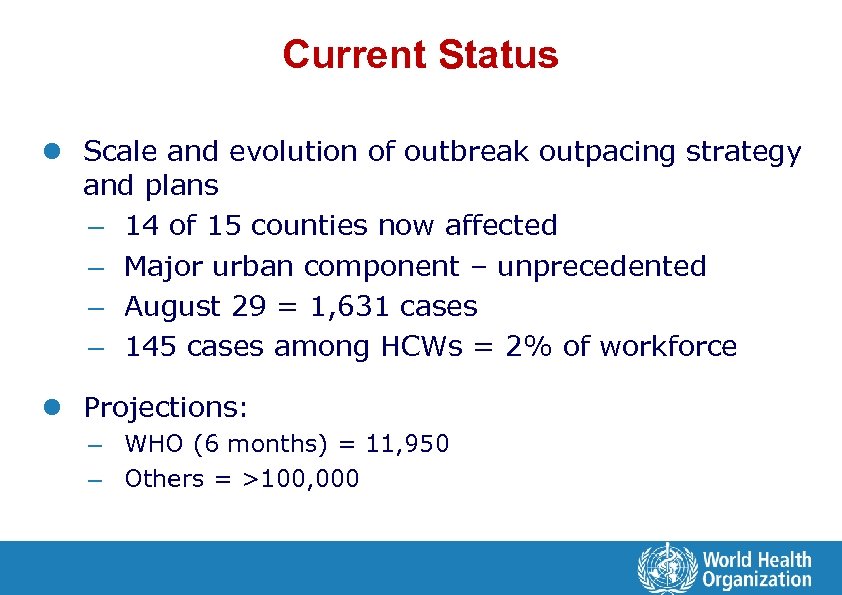
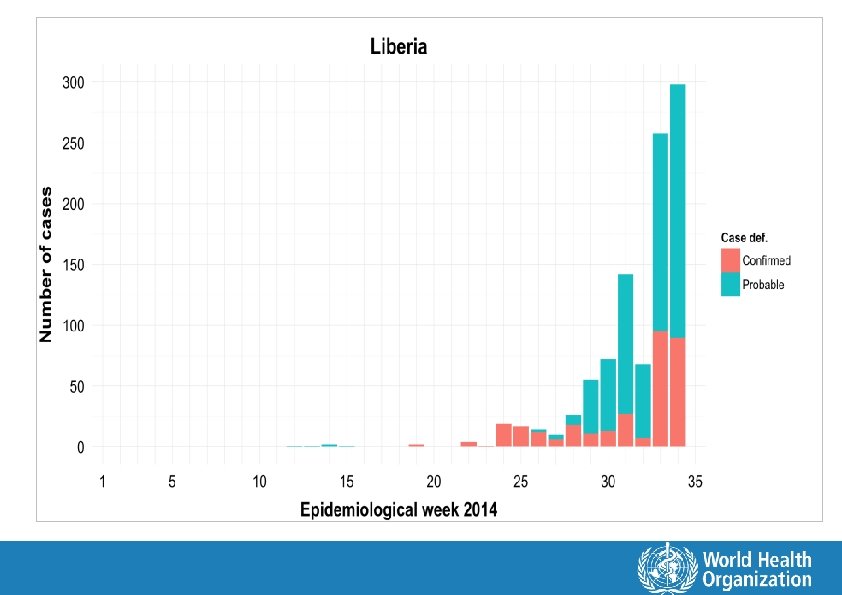
Current Status l Scale and evolution of outbreak outpacing strategy and plans – 14 of 15 counties now affected – Major urban component – unprecedented – August 29 = 1, 631 cases – 145 cases among HCWs = 2% of workforce l Projections: – WHO (6 months) = 11, 950 – Others = >100, 000
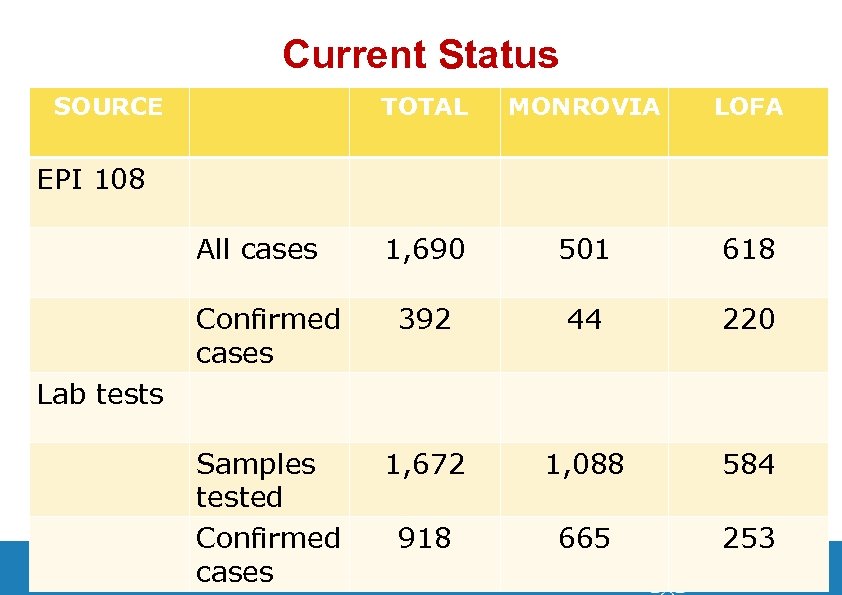
Current Status SOURCE TOTAL MONROVIA LOFA 1, 690 501 618 Confirmed cases 392 44 220 Samples tested Confirmed cases 1, 672 1, 088 584 918 665 253 EPI 108 All cases Lab tests
Rapid Scale-up Possible l Effective control measures exist. Control of outbreak possible l Requires – – – Community engagement Political will Collective effort Resources Planning
Goal Stop Ebola transmission within 6 -9 months and mitigate health and secondary consequences Key milestone: Reverse trend in new cases & areas within 3 months
Objectives 1. Rapidly scale up evidence-based Ebola control interventions in high transmission areas 2. Implement complementary measures as required 3. Ensure availability of essential health services 4. Strengthen capacity of low transmission counties to rapidly limit Ebola transmission
Priority Ebola Control Interventions l Ebola Treatment Units l Safe burials Aim to get sick people and dead bodies out of homes l Infection prevention and control l Community engagement – social mobilization l Surveillance and contact tracing
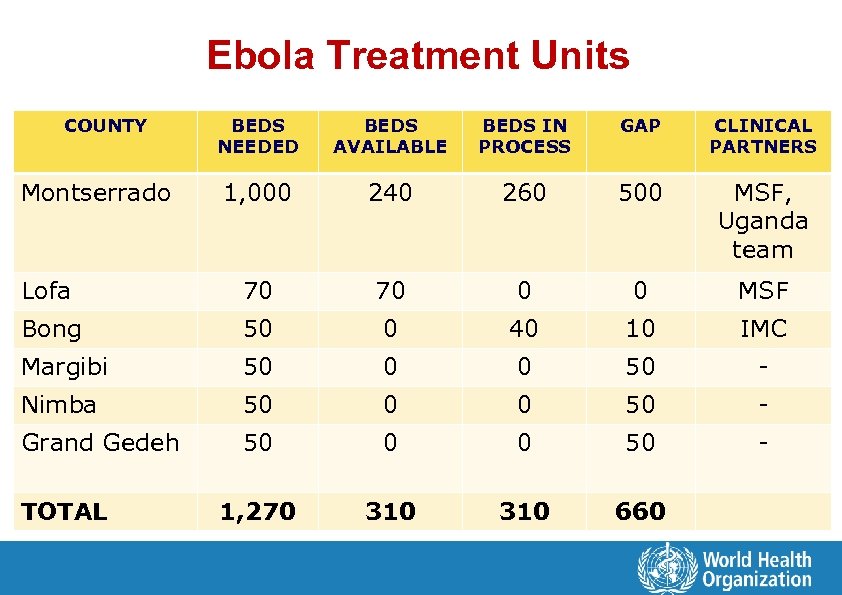
Ebola Treatment Units COUNTY BEDS NEEDED BEDS AVAILABLE BEDS IN PROCESS GAP CLINICAL PARTNERS 1, 000 240 260 500 MSF, Uganda team Lofa 70 70 0 0 MSF Bong 50 0 40 10 IMC Margibi 50 0 0 50 - Nimba 50 0 0 50 - Grand Gedeh 50 0 0 50 - 1, 270 310 660 Montserrado TOTAL
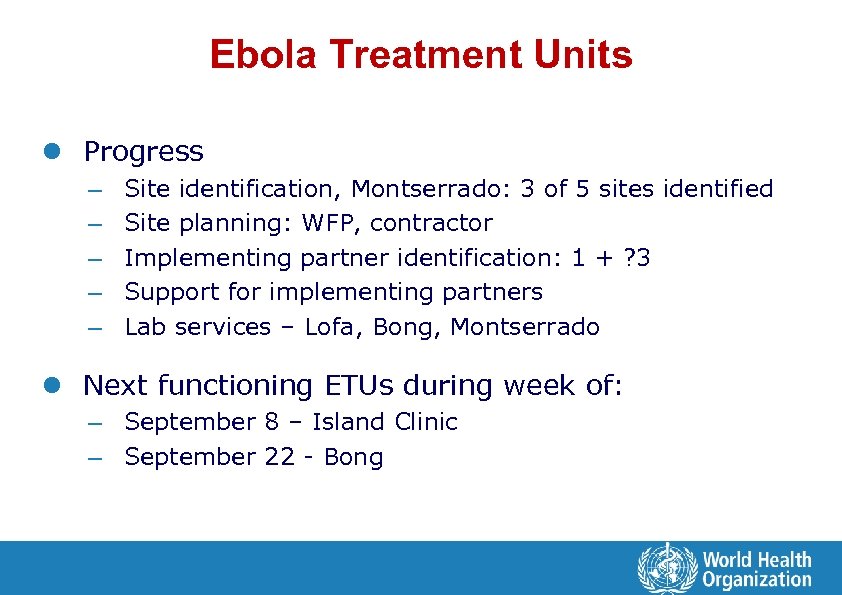
Ebola Treatment Units l Progress – – – Site identification, Montserrado: 3 of 5 sites identified Site planning: WFP, contractor Implementing partner identification: 1 + ? 3 Support for implementing partners Lab services – Lofa, Bong, Montserrado l Next functioning ETUs during week of: – September 8 – Island Clinic – September 22 - Bong
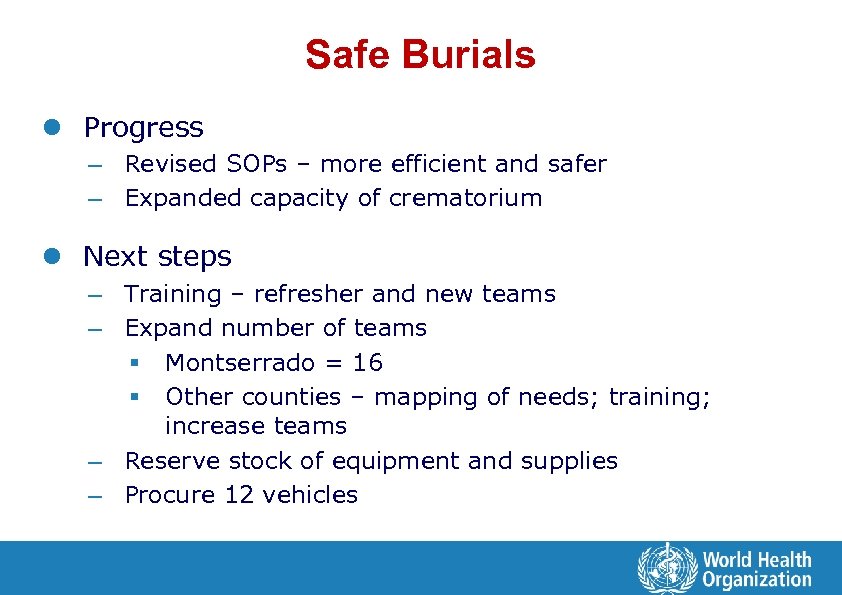
Safe Burials l Progress – Revised SOPs – more efficient and safer – Expanded capacity of crematorium l Next steps – Training – refresher and new teams – Expand number of teams § Montserrado = 16 § Other counties – mapping of needs; training; increase teams – Reserve stock of equipment and supplies – Procure 12 vehicles
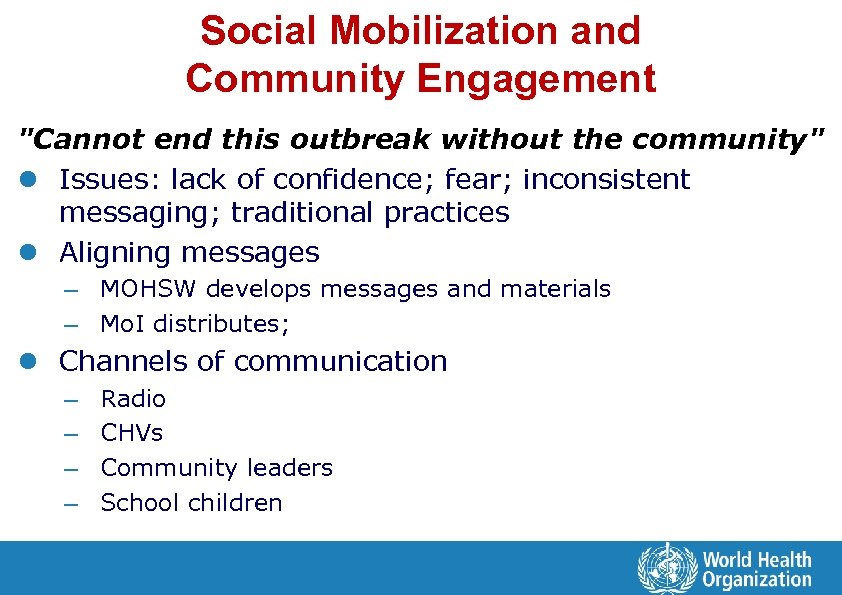
Social Mobilization and Community Engagement "Cannot end this outbreak without the community" l Issues: lack of confidence; fear; inconsistent messaging; traditional practices l Aligning messages – MOHSW develops messages and materials – Mo. I distributes; l Channels of communication – – Radio CHVs Community leaders School children
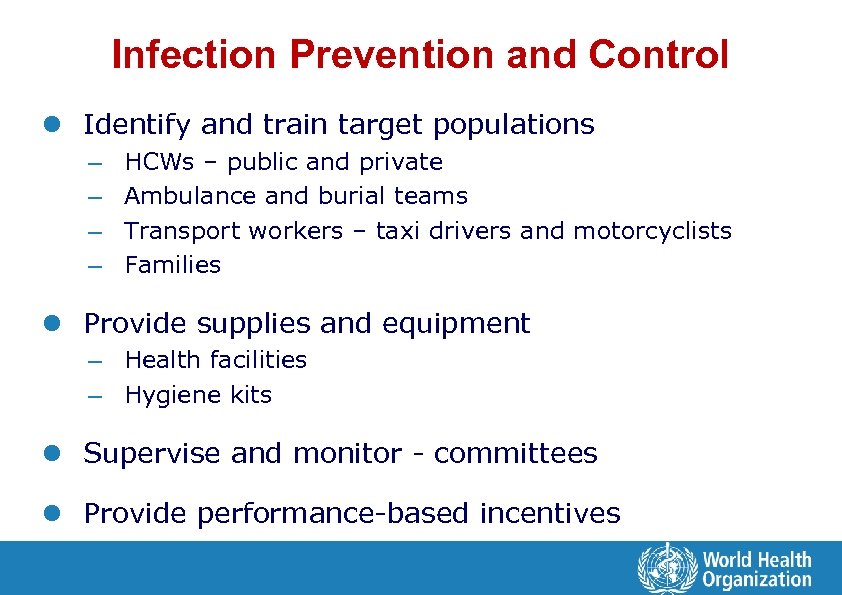
Infection Prevention and Control l Identify and train target populations – – HCWs – public and private Ambulance and burial teams Transport workers – taxi drivers and motorcyclists Families l Provide supplies and equipment – Health facilities – Hygiene kits l Supervise and monitor - committees l Provide performance-based incentives
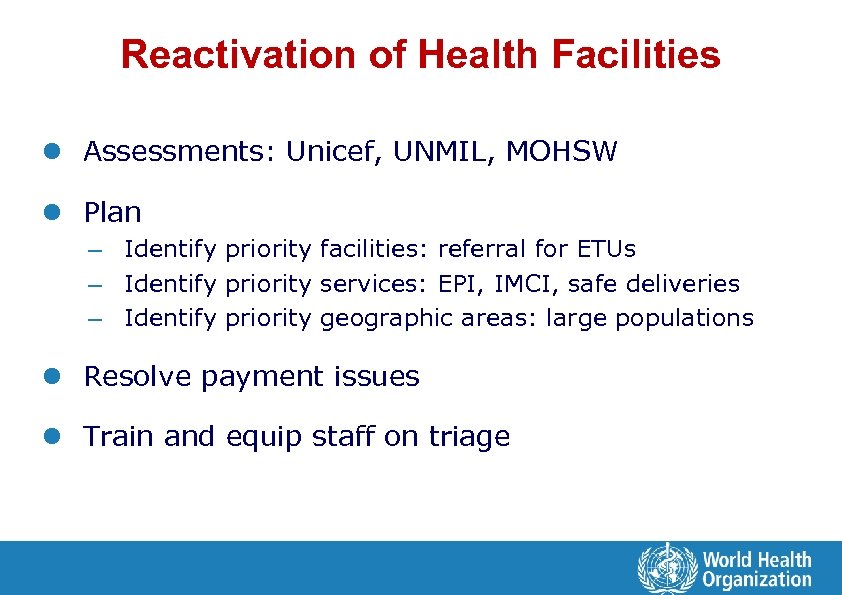
Reactivation of Health Facilities l Assessments: Unicef, UNMIL, MOHSW l Plan – Identify priority facilities: referral for ETUs – Identify priority services: EPI, IMCI, safe deliveries – Identify priority geographic areas: large populations l Resolve payment issues l Train and equip staff on triage
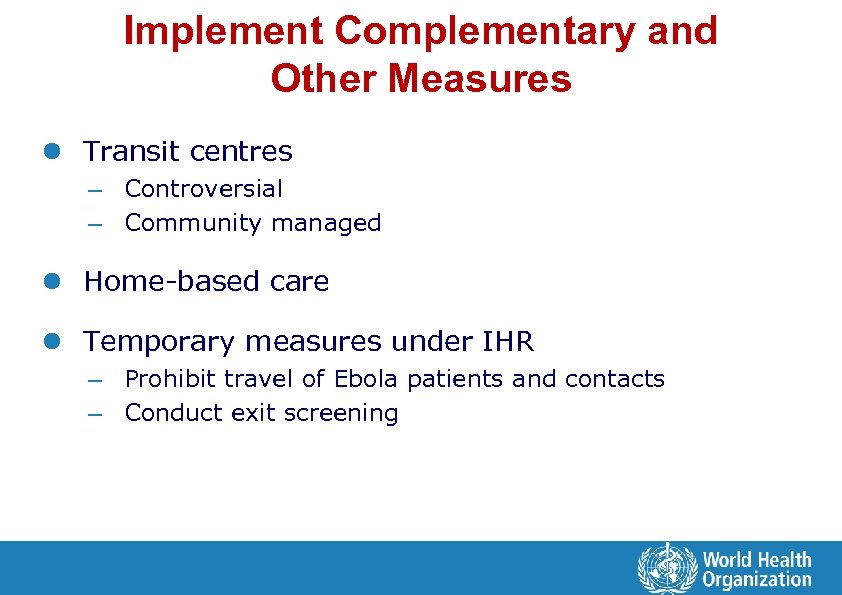
Implement Complementary and Other Measures l Transit centres – Controversial – Community managed l Home-based care l Temporary measures under IHR – Prohibit travel of Ebola patients and contacts – Conduct exit screening
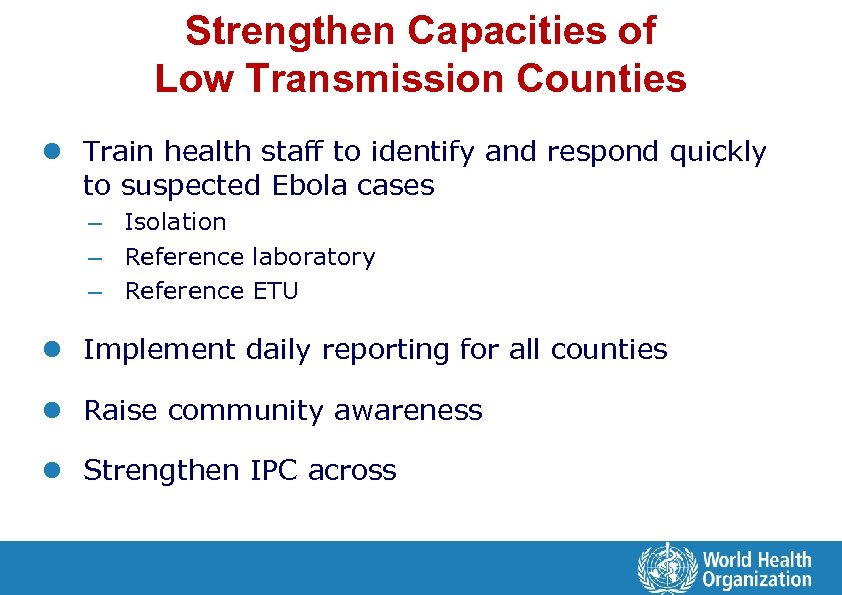
Strengthen Capacities of Low Transmission Counties l Train health staff to identify and respond quickly to suspected Ebola cases – Isolation – Reference laboratory – Reference ETU l Implement daily reporting for all counties l Raise community awareness l Strengthen IPC across
Enabling Environment l Strengthen partnerships and coordination structures – – – Engage all relevant stakeholders Activate Health Cluster: INGOs, LNGOs, private sector IMS = Exec Committee of Health Cluster Establish EOC within MOHSW Assign senior staff to counties l Improve information management – – Strengthen data management Strengthen epidemiological analysis Standardize indicators for M&E Improve mapping
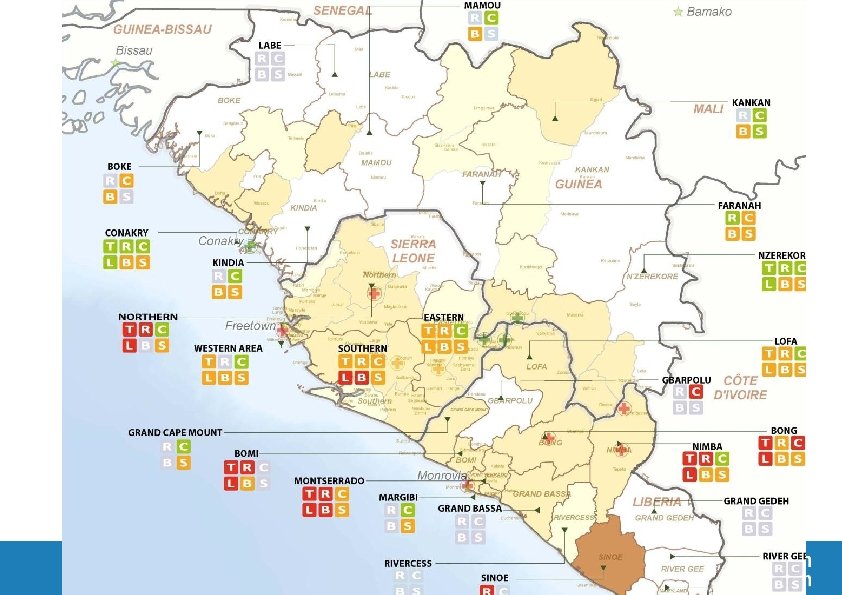
Enabling Functions l Coordinate with other sectors for delivery of essential services – Logistics, WASH, food security, child welfare – UNMIL – Inter-cluster Working Group
Monitoring and Evaluation l Impact measurements: – Reverse the trend in new Ebola cases and infected areas within 3 months l Outcome measures – Trends in cases and deaths, by county l Coverage and quality indicators by district: – Ebola treatment and referral centres – Airport screening
Way Forward l Conduct gap analysis by county to assess availability of priority interventions and resources l Convene partners to review gaps and update operational plan collectively l Agree on common M&E reporting mechanism l Convene Health Cluster and Exec Committee 1 - 2 X per week l Advocate for more FMT and international partners
Way Forward l Advocate for additional resources with donors l Finalize MOHSW assessment of health facilities and use to plan reactivation of health facilities l Produce weekly sitrep to report against plan and key indicators
Скачать презентацию EBOLA OUTBREAK LIBERIA 2014 Current Status
62c029179fd09a0f9e0d4f0e20a61de4.ppt