


 Скачать презентацию Eating for a Healthy Heart Cindy Sass RD
f1ff0930b7b069a9500db21be3acf852.ppt
- Количество слайдов: 49
 Eating for a Healthy Heart Cindy Sass, RD, CDE
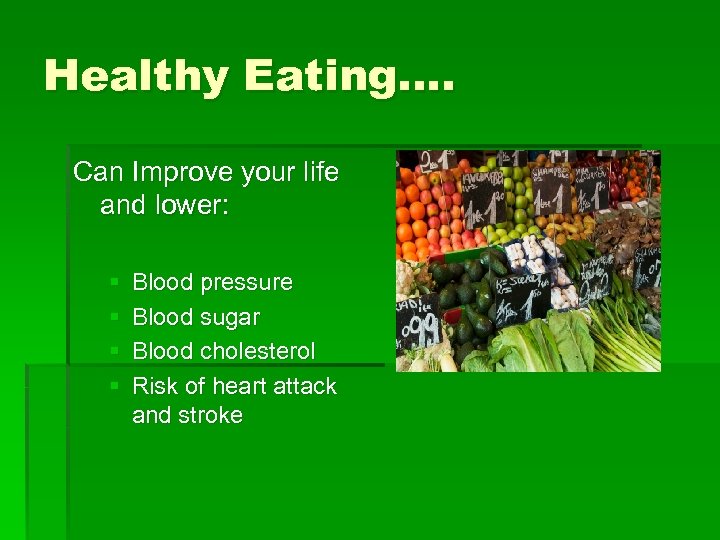 Healthy Eating…. Can Improve your life and lower: § § Blood pressure Blood sugar Blood cholesterol Risk of heart attack and stroke
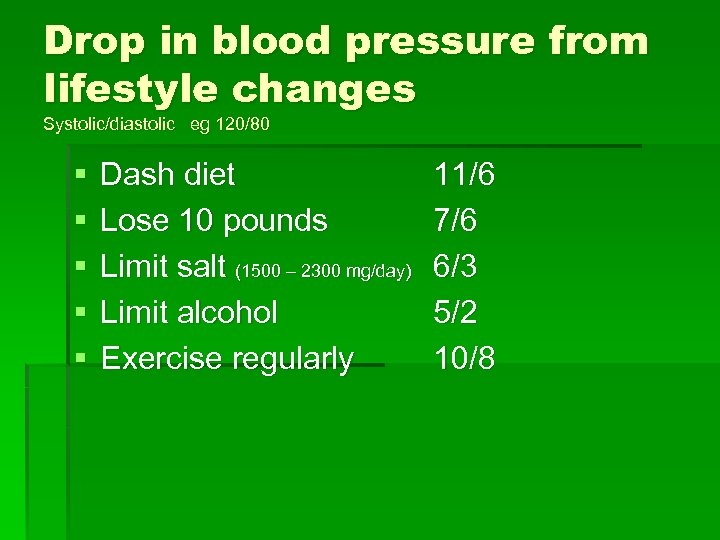 Drop in blood pressure from lifestyle changes Systolic/diastolic eg 120/80 § § § Dash diet Lose 10 pounds Limit salt (1500 – 2300 mg/day) Limit alcohol Exercise regularly 11/6 7/6 6/3 5/2 10/8
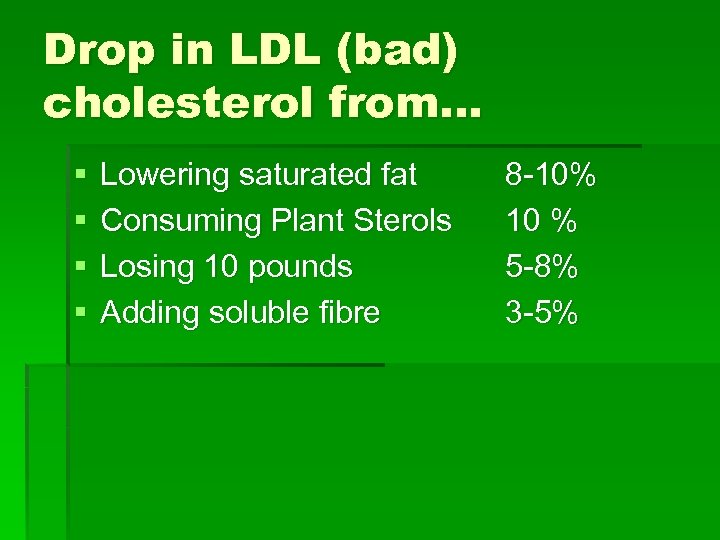 Drop in LDL (bad) cholesterol from… § § Lowering saturated fat Consuming Plant Sterols Losing 10 pounds Adding soluble fibre 8 -10% 10 % 5 -8% 3 -5%
 Lifestyle can make a difference!
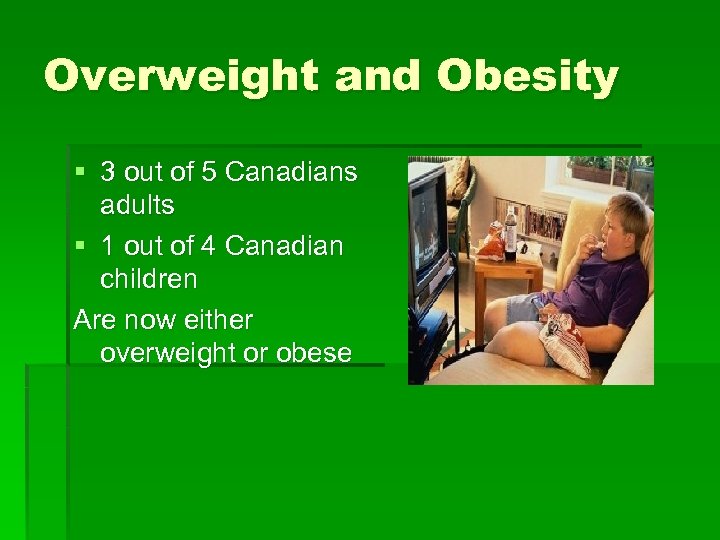 Overweight and Obesity § 3 out of 5 Canadians adults § 1 out of 4 Canadian children Are now either overweight or obese
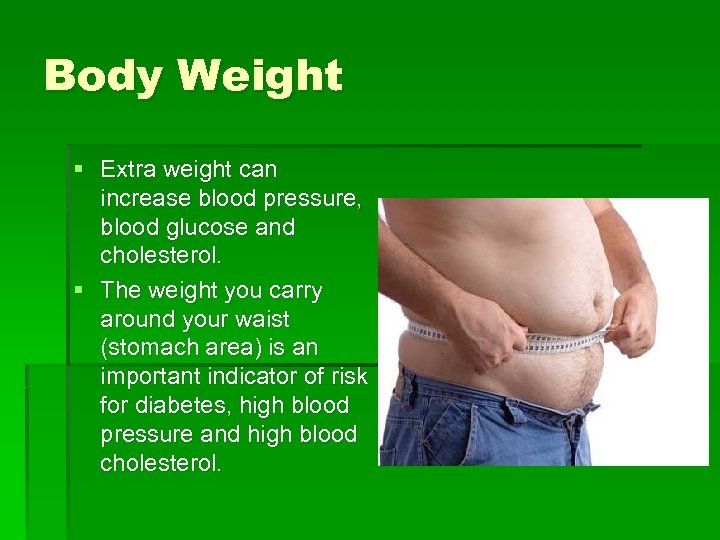 Body Weight § Extra weight can increase blood pressure, blood glucose and cholesterol. § The weight you carry around your waist (stomach area) is an important indicator of risk for diabetes, high blood pressure and high blood cholesterol.
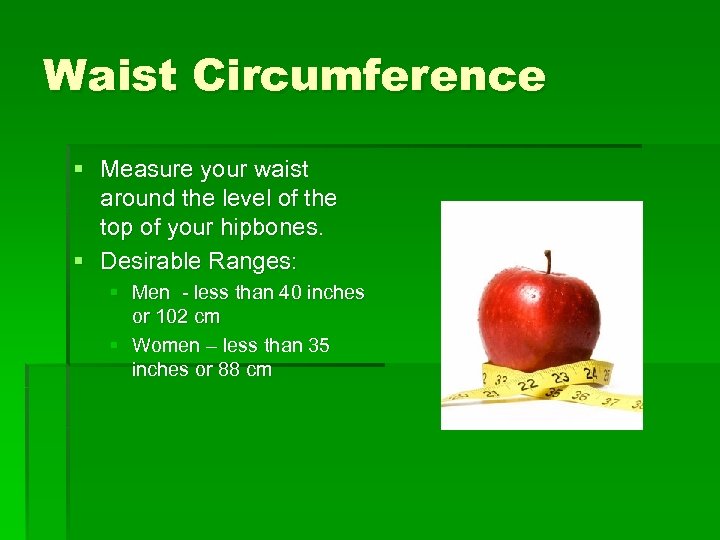 Waist Circumference § Measure your waist around the level of the top of your hipbones. § Desirable Ranges: § Men - less than 40 inches or 102 cm § Women – less than 35 inches or 88 cm
 Energy In = Energy Out § To lose weight you have to take in fewer calories than you burn. § 500 calorie deficit a day would lead to 1 lb of fat loss in 1 week. § 500 calories – 2 subway cookies § Burning 500 calories through exercise – walking for 1 hour and 30 minutes
 Portion Distortion § Eating 100 extra calories a day would result in a gain of 10 pounds in one year. § Burning 100 fewer calories a day in activity would result in a 10 lb weight gain in one year.
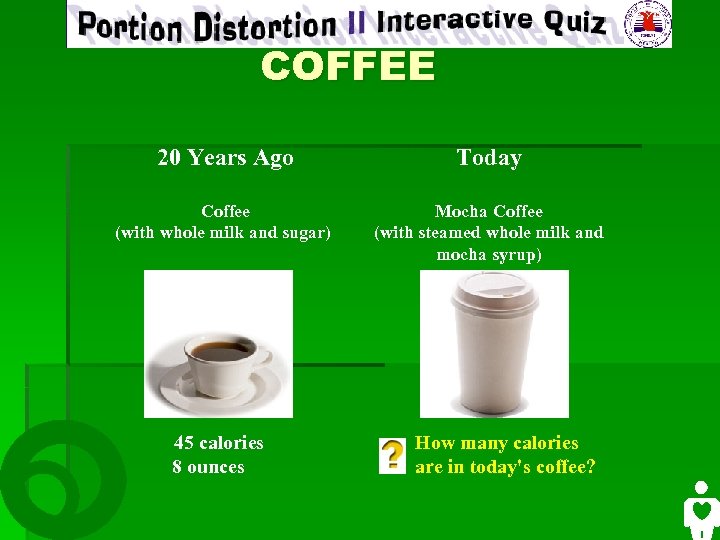 COFFEE 20 Years Ago Today Coffee (with whole milk and sugar) Mocha Coffee (with steamed whole milk and mocha syrup) 45 calories 8 ounces How many calories are in today's coffee?
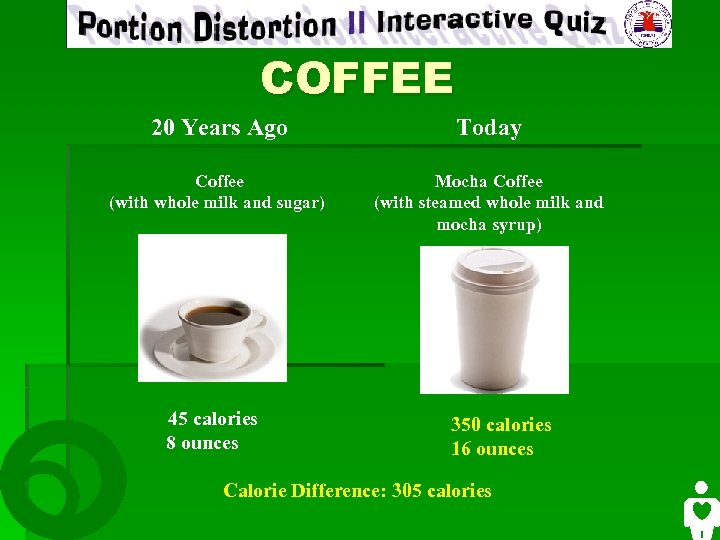 COFFEE 20 Years Ago Today Coffee (with whole milk and sugar) Mocha Coffee (with steamed whole milk and mocha syrup) 45 calories 8 ounces 350 calories 16 ounces Calorie Difference: 305 calories
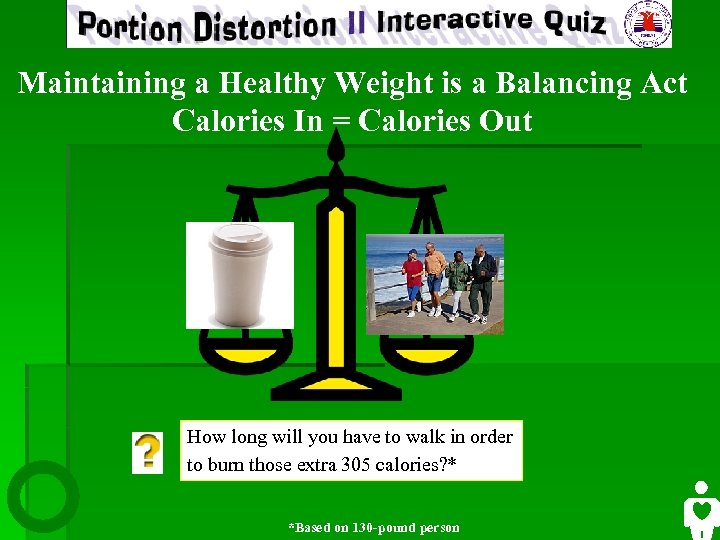 Maintaining a Healthy Weight is a Balancing Act Calories In = Calories Out How long will you have to walk in order to burn those extra 305 calories? * *Based on 130 -pound person
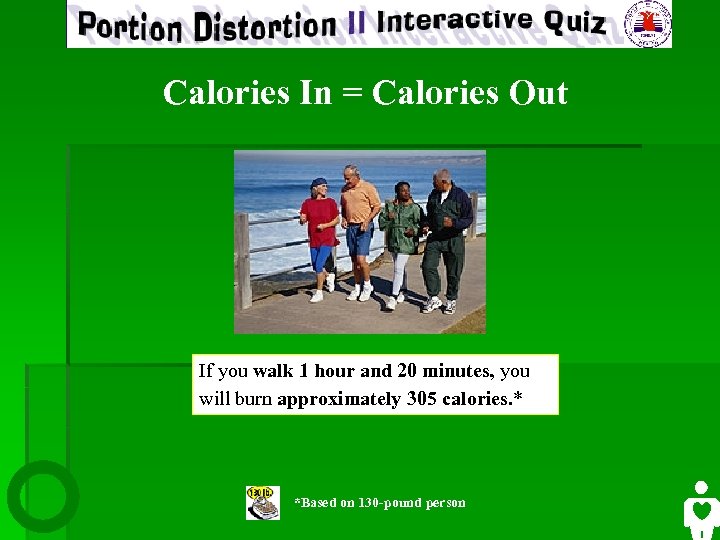 Calories In = Calories Out If you walk 1 hour and 20 minutes, you will burn approximately 305 calories. * *Based on 130 -pound person
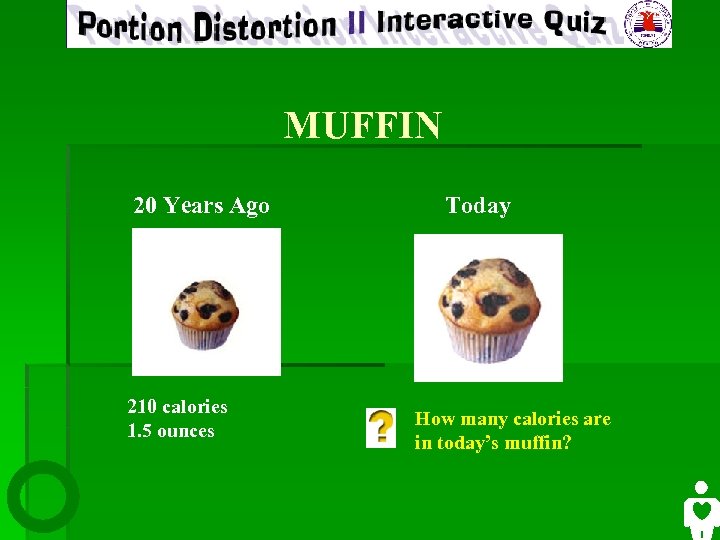 MUFFIN 20 Years Ago 210 calories 1. 5 ounces Today How many calories are in today’s muffin?
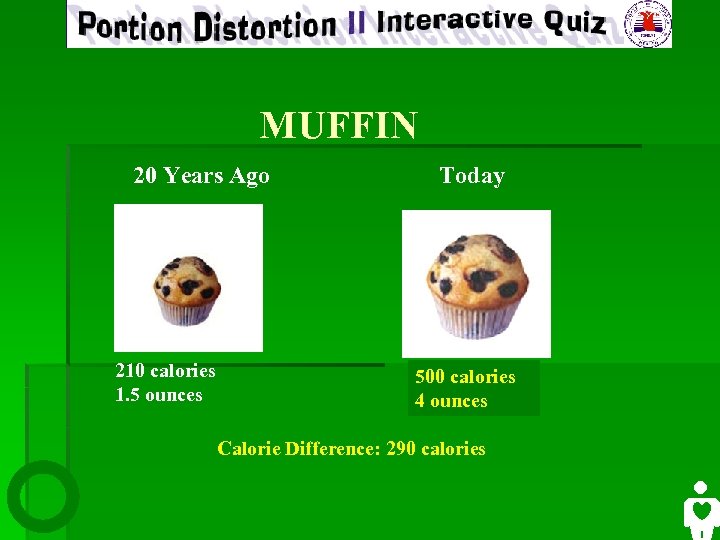 MUFFIN 20 Years Ago 210 calories 1. 5 ounces Today 500 calories 4 ounces Calorie Difference: 290 calories
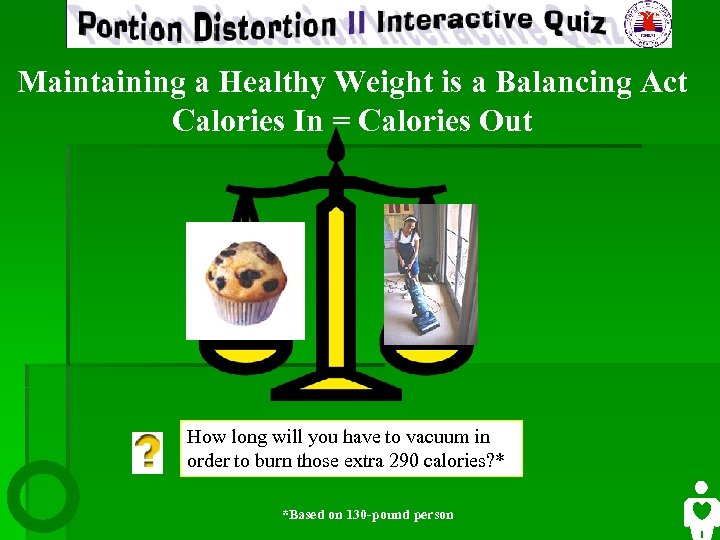 Maintaining a Healthy Weight is a Balancing Act Calories In = Calories Out How long will you have to vacuum in order to burn those extra 290 calories? * *Based on 130 -pound person
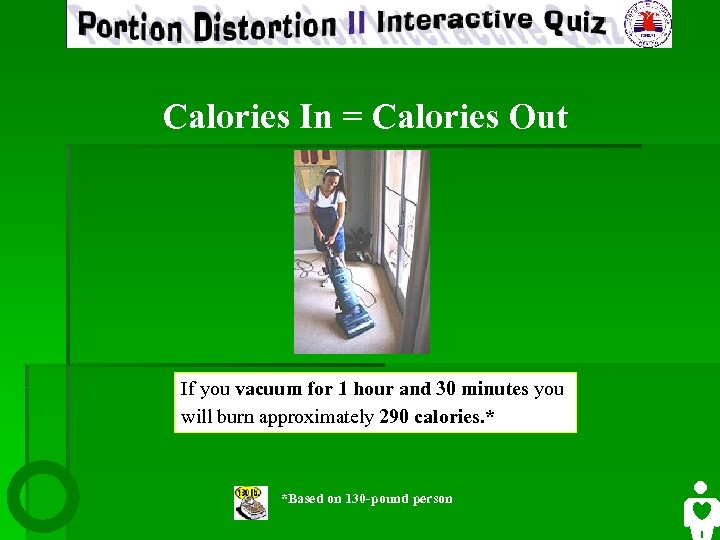 Calories In = Calories Out If you vacuum for 1 hour and 30 minutes you will burn approximately 290 calories. * *Based on 130 -pound person
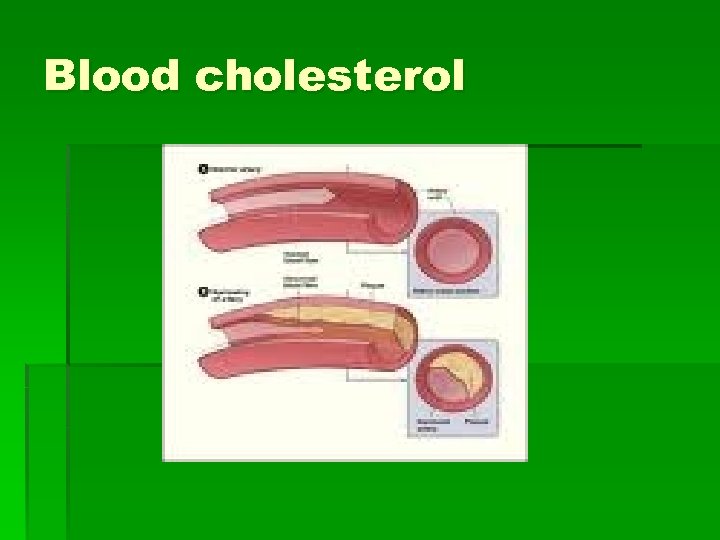 Blood cholesterol
 Types of Fat In The Blood § HDL – high density lipoprotein § the “HEALTHY” cholesterol § works to remove cholesterol from the blood and carry it back to the liver § LDL – low density lipoprotein § the “LOUSY” cholesterol § contributes to build up of plaque in the artery walls § Triglycerides § Another form of fat in the blood that can contribute to plaque build up in the arteries
 A Heart Healthy Eating Plan § § Lose weight if needed Limit Bad Fats Use Good Fats Eat more Fibre
 The Bad Fats Saturated Fat § Solid at room temperature. § Found mostly in meats, dairy and tropical oils (palm oil, coconut oil). § Increases LDL and decreases HDL.
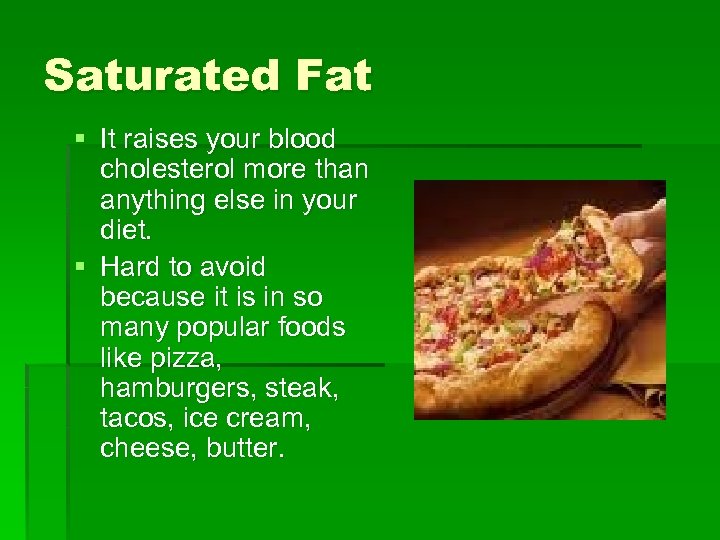 Saturated Fat § It raises your blood cholesterol more than anything else in your diet. § Hard to avoid because it is in so many popular foods like pizza, hamburgers, steak, tacos, ice cream, cheese, butter.
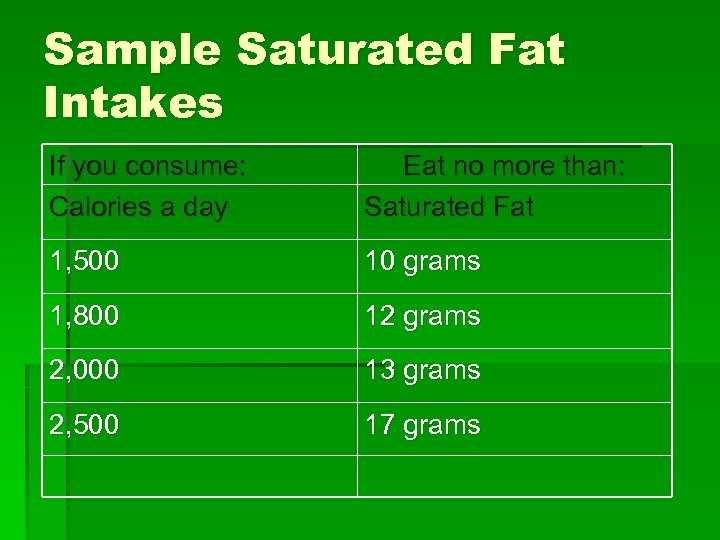 Sample Saturated Fat Intakes If you consume: Calories a day Eat no more than: Saturated Fat 1, 500 10 grams 1, 800 12 grams 2, 000 13 grams 2, 500 17 grams
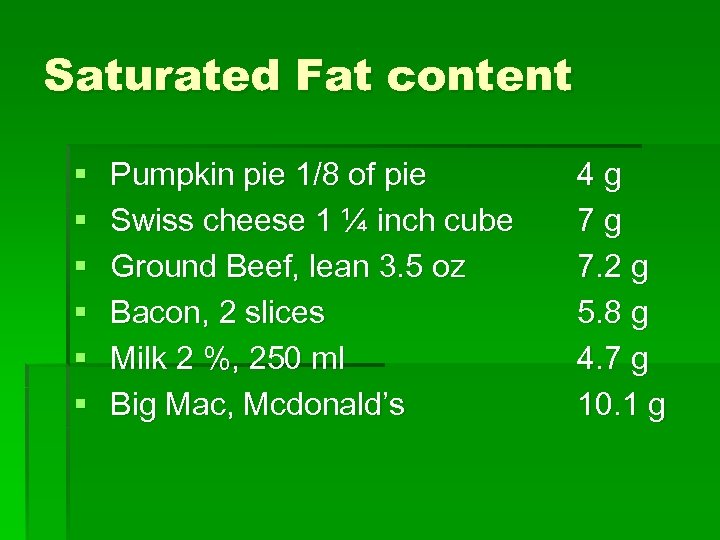 Saturated Fat content § § § Pumpkin pie 1/8 of pie Swiss cheese 1 ¼ inch cube Ground Beef, lean 3. 5 oz Bacon, 2 slices Milk 2 %, 250 ml Big Mac, Mcdonald’s 4 g 7 g 7. 2 g 5. 8 g 4. 7 g 10. 1 g
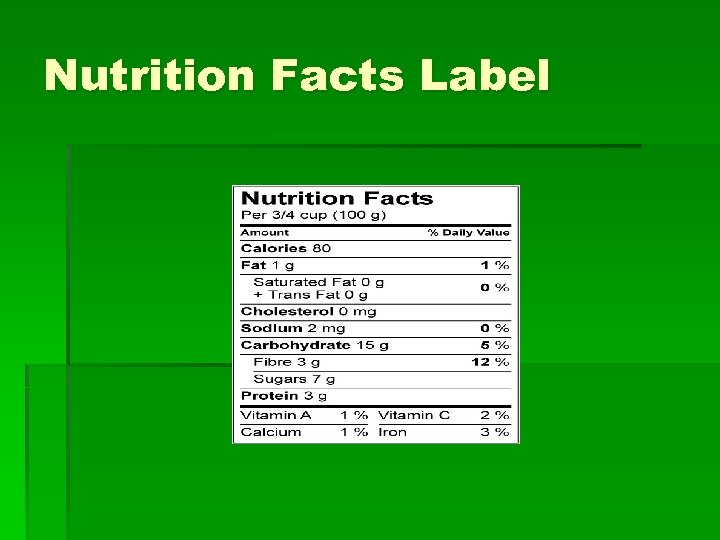 Nutrition Facts Label
 Trans Fats § Trans fats raise LDL (bad) cholesterol and decrease HDL (good) cholesterol. § Limit intake of Trans fatty acids to 2 grams or less per day.
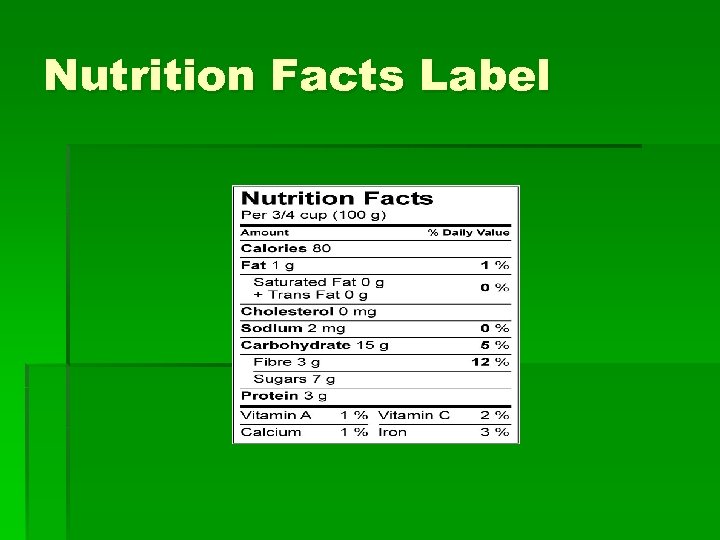 Nutrition Facts Label
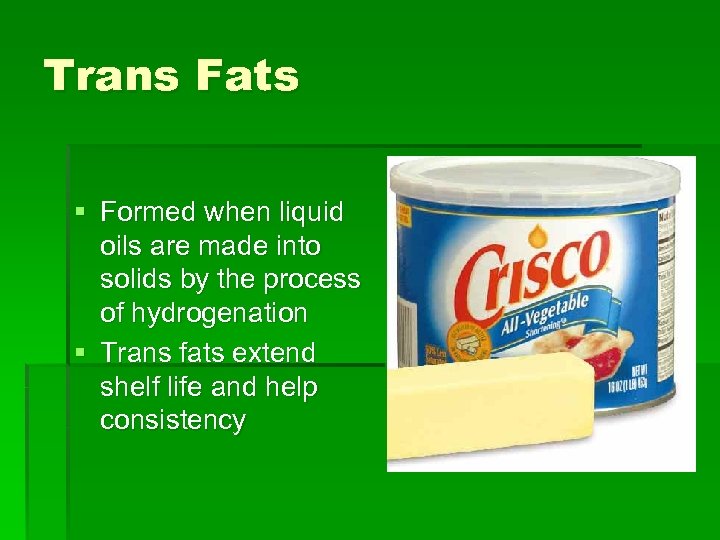 Trans Fats § Formed when liquid oils are made into solids by the process of hydrogenation § Trans fats extend shelf life and help consistency
 Where do you find Trans fats? § Vegetable shortening, some margarines, cookies, crackers, processed foods, cakes, icing, donuts, fast food.
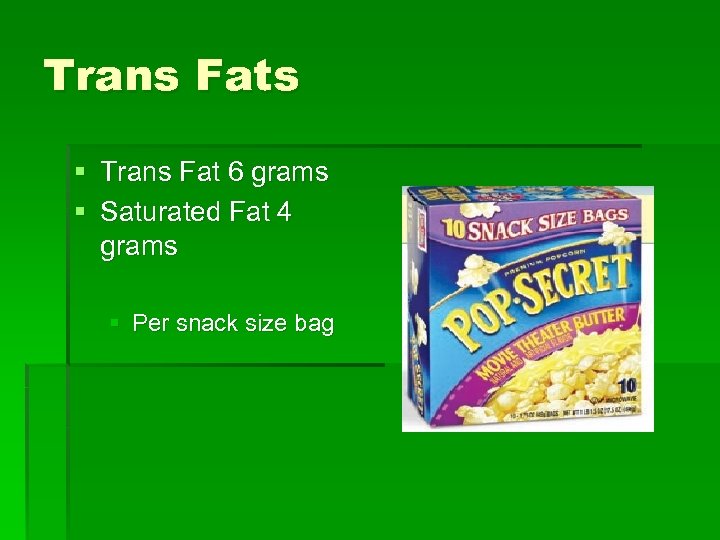 Trans Fats § Trans Fat 6 grams § Saturated Fat 4 grams § Per snack size bag
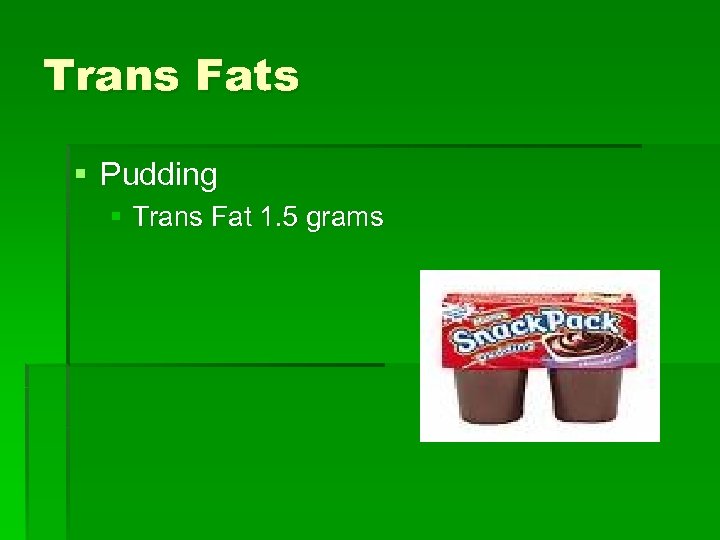 Trans Fats § Pudding § Trans Fat 1. 5 grams
 How do I limit Trans Fats? § Check the Nutrition Facts Labels. § Limit intake of commercially prepared baked goods like cakes, muffins, cookies, donuts, pies. § Limit your intake of convenience foods.
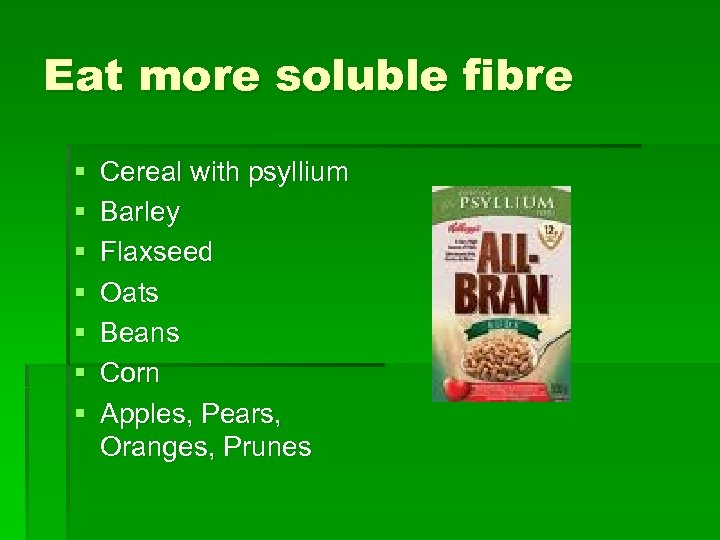 Eat more soluble fibre § § § § Cereal with psyllium Barley Flaxseed Oats Beans Corn Apples, Pears, Oranges, Prunes
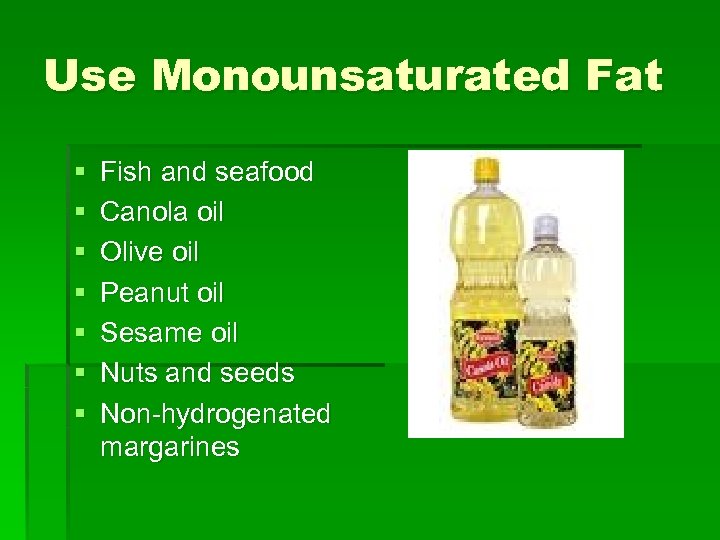 Use Monounsaturated Fat § § § § Fish and seafood Canola oil Olive oil Peanut oil Sesame oil Nuts and seeds Non-hydrogenated margarines
 The DASH diet § Researchers found that blood pressures were reduced with an eating plan that was: § Low in saturated fat, cholesterol and total fat § Emphasized fruits, vegetables, fat free or low fat milk products § Included whole grain products, fish, poultry and nuts.
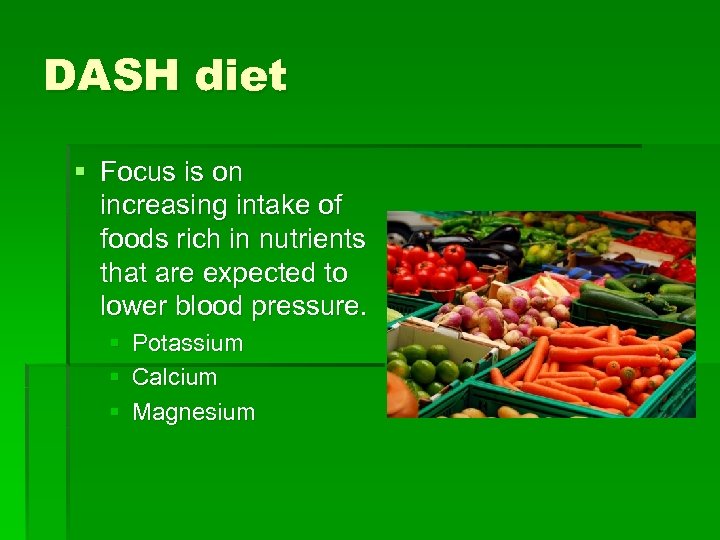 DASH diet § Focus is on increasing intake of foods rich in nutrients that are expected to lower blood pressure. § § § Potassium Calcium Magnesium
 Sodium ( Salt) § Average diet contains 4, 300 mg/day § 2, 500 mg is the highest amount considered acceptable. § New guidelines recommend 1, 500 mg/day as the level we should try to achieve.
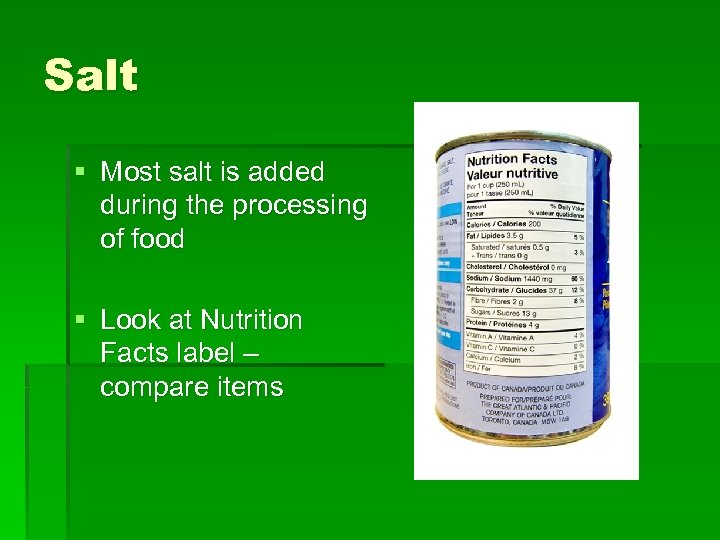 Salt § Most salt is added during the processing of food § Look at Nutrition Facts label – compare items
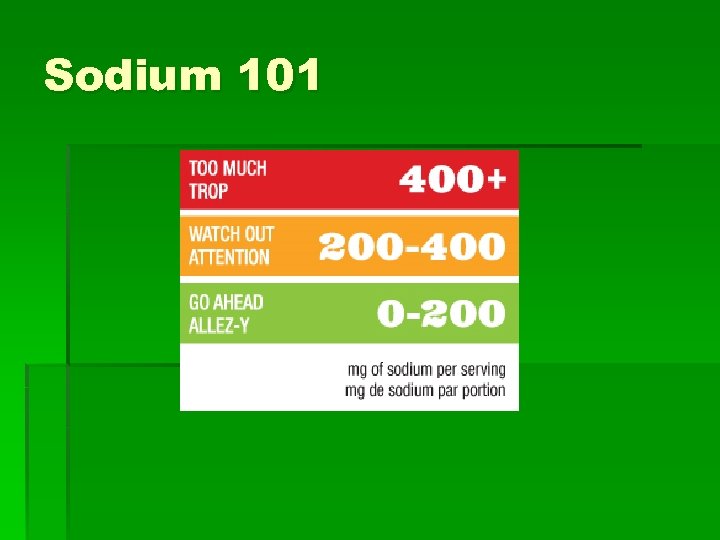 Sodium 101
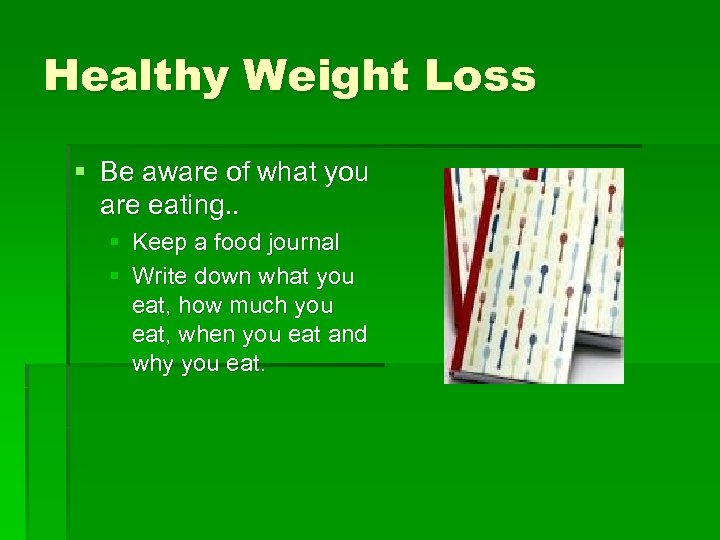 Healthy Weight Loss § Be aware of what you are eating. . § Keep a food journal § Write down what you eat, how much you eat, when you eat and why you eat.
 Healthy Weight Loss § Have at least 3 meals a day § Include foods from 3 food groups at each meal. § Select foods that will satisfy you, not stimulate you – whole grains, beans, nonstarchy vegetables and fruit combined with lean protein and a small amount of fat. § Have small snacks between meals if you choose.
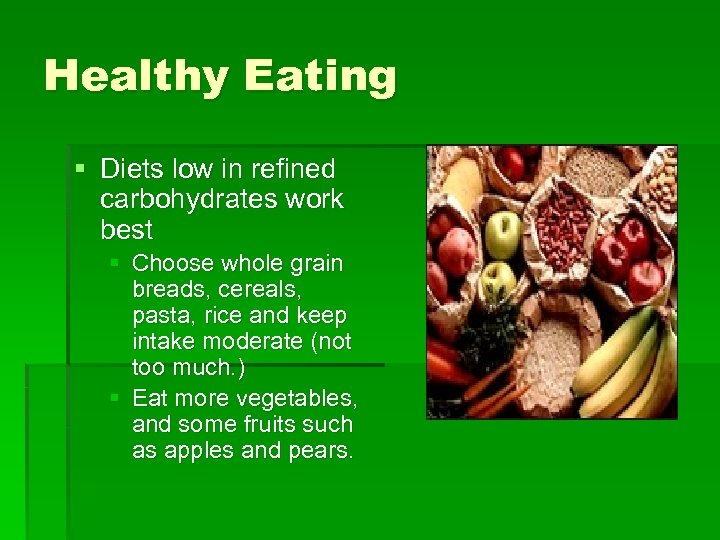 Healthy Eating § Diets low in refined carbohydrates work best § Choose whole grain breads, cereals, pasta, rice and keep intake moderate (not too much. ) § Eat more vegetables, and some fruits such as apples and pears.
 Healthy Eating § Eat more fish, poultry and beans/lentils, eggs and less red meat. § Avoid saturated and trans fats and use more plant oils -canola oil, olive oil, peanut oil, healthy margarines, mayo and salad dressings.
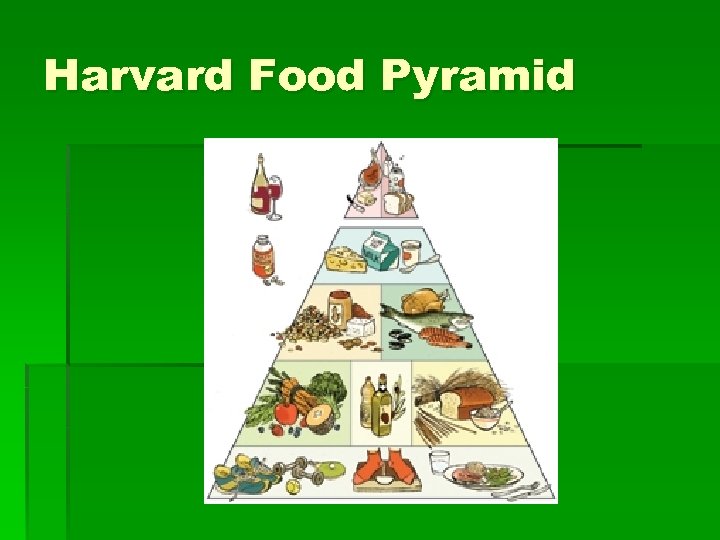 Harvard Food Pyramid
 Practice defensive eating § § § Practice stopping before you are stuffed Be selective – don’t eat just because it is there Choose small portions Beware of desserts Slow down and pay attention to your food when you eat § Keep track of the calories in the foods you eat – be aware
 Practice defensive eating § Spoil your appetite – have a healthy snack before your meals § Minimize temptation – don’t bring goodies in the house § Be vigilant – the food industry is out to exploit your weaknesses § Try keeping it simple – rats fed “rat chow”, don’t weigh as much as rats that get to pick from a variety of foods.
 Getting Started § Change gradually § Add more vegetables to supper. § Add a piece of fruit to breakfast. § Drink a glass of milk with supper. § Choose whole grains. § S. M. A. R. T goals § Specific, measurable, achievable, realistic, time framed
 http: //www. nhlbi. nih. gov/health/publi c/heart/hbp/dash/new_dash. pdf Thank You!