 Скачать презентацию Earth System Prediction 2025 Dr Peter H Hildebrand
c5045a455410ee9862d12916102b937d.ppt
- Количество слайдов: 21



Earth System Prediction: 2025 Dr. Peter H. Hildebrand Chief, Laboratory for Hydrospheric Processes NASA/Goddard Space Flight Center Greenbelt, MD 20771 October 2, 2002 GOES User’s Conference 1
Earth System Prediction: 2025 Acknowledgements: The material presented herein remains in progress, and has been prepared by the NASA Earth Sciences Vision team over the past year. This team consists of representatives from all NASA Centers working on Earth sciences and has included: • • • Peter Hildebrand, Warren Wiscombe, Mark Schoeberl, Bob Connerton NASA/GSFC Marty Mlynczak, NASA/La. RC Carol Raymond, Randall Friedl, Loren Lemmerman, JPL David Peterson, NASA/ARC Tim Miller, NASA/MSFC Rick Miller, SSC Mary Cleave, Jack Kaye, Waleed Abdalati, Lawrence Friedl, Shahid Habib, Eric Lindstrom Granville Paules, Greg Williams, NASA/HQ George Komar, Mariann Albjerg, Ed Torres NASA/ESTO, Plus scores of researchers at NASA Centers and at universities across the country Disclaimer: This is a report from an ad-hoc group; not a statement of Agency plans or policy October 2, 2002 GOES User’s Conference 2
Earth System Prediction: 2025 • The Earth Science Vision (ESV) team was formed to develop a long range— 10 -25 year—plan for NASA Earth Sciences activities. – ESV Workgroups define highest priority science goals: – Evaluate the goals in the context of: • Scientific importance • Fit with the NASA mission • Hand-off to sister agencies and the private sector • Importance of applications in the context of human impact – Define long term NASA/Earth Science Enterprise goals October 2, 2002 GOES User’s Conference 3
October 2, 2002 GOES User’s Conference 4
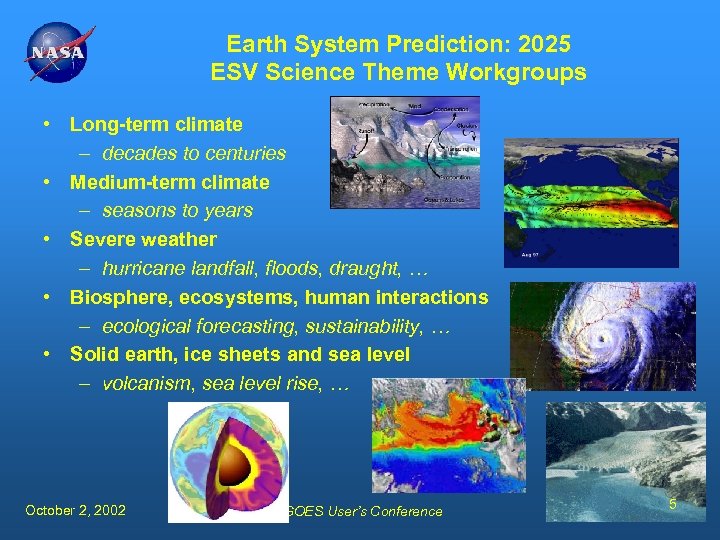
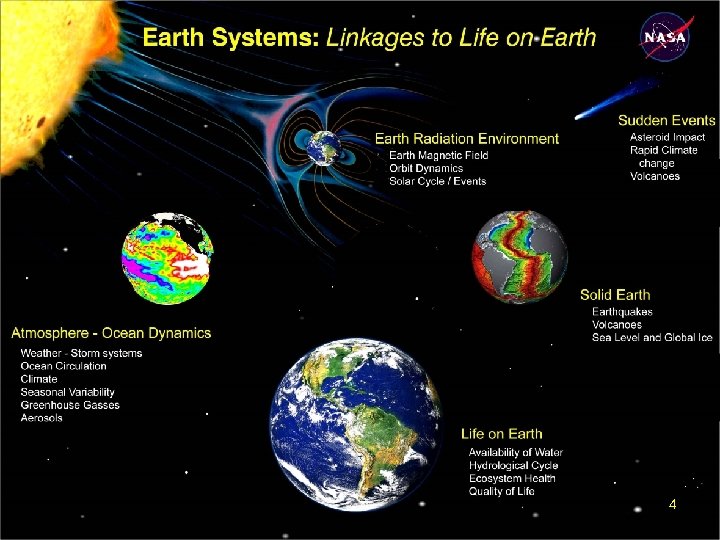
Earth System Prediction: 2025 ESV Science Theme Workgroups • Long-term climate – decades to centuries • Medium-term climate – seasons to years • Severe weather – hurricane landfall, floods, draught, … • Biosphere, ecosystems, human interactions – ecological forecasting, sustainability, … • Solid earth, ice sheets and sea level – volcanism, sea level rise, … October 2, 2002 GOES User’s Conference 5
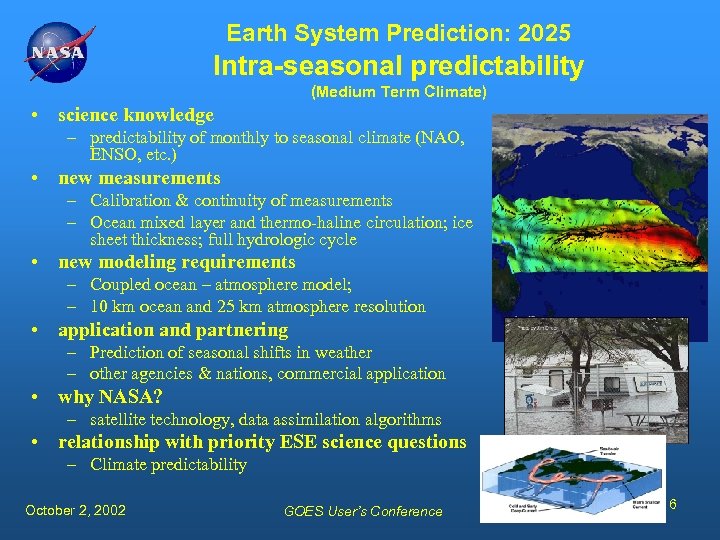
Earth System Prediction: 2025 Intra-seasonal predictability (Medium Term Climate) • science knowledge – predictability of monthly to seasonal climate (NAO, ENSO, etc. ) • new measurements – Calibration & continuity of measurements – Ocean mixed layer and thermo-haline circulation; ice sheet thickness; full hydrologic cycle • new modeling requirements – Coupled ocean – atmosphere model; – 10 km ocean and 25 km atmosphere resolution • application and partnering • – Prediction of seasonal shifts in weather – other agencies & nations, commercial application why NASA? – satellite technology, data assimilation algorithms • relationship with priority ESE science questions – Climate predictability October 2, 2002 GOES User’s Conference 6
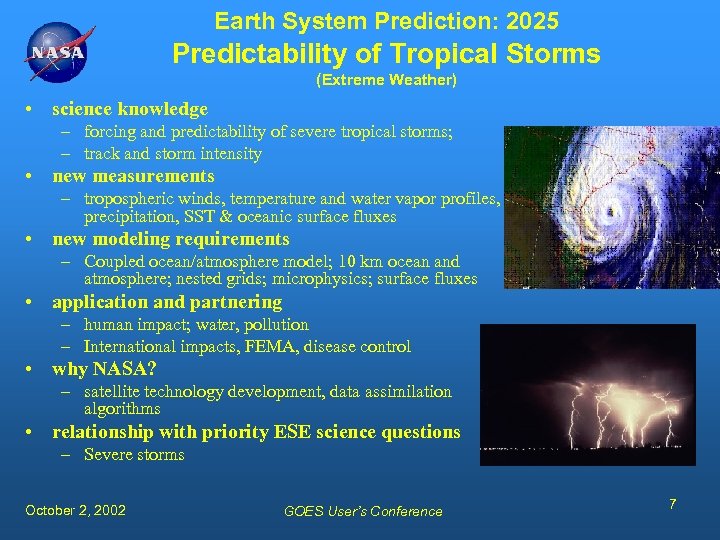
Earth System Prediction: 2025 Predictability of Tropical Storms (Extreme Weather) • science knowledge – forcing and predictability of severe tropical storms; – track and storm intensity • new measurements – tropospheric winds, temperature and water vapor profiles, precipitation, SST & oceanic surface fluxes • new modeling requirements – Coupled ocean/atmosphere model; 10 km ocean and atmosphere; nested grids; microphysics; surface fluxes • application and partnering • – human impact; water, pollution – International impacts, FEMA, disease control why NASA? – satellite technology development, data assimilation algorithms • relationship with priority ESE science questions – Severe storms October 2, 2002 GOES User’s Conference 7
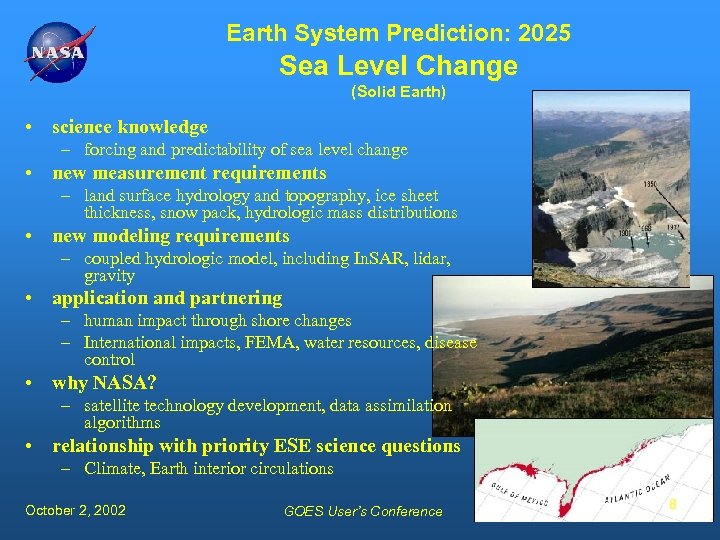
Earth System Prediction: 2025 Sea Level Change (Solid Earth) • science knowledge – forcing and predictability of sea level change • new measurement requirements – land surface hydrology and topography, ice sheet thickness, snow pack, hydrologic mass distributions • new modeling requirements – coupled hydrologic model, including In. SAR, lidar, gravity • application and partnering – human impact through shore changes – International impacts, FEMA, water resources, disease control • why NASA? – satellite technology development, data assimilation algorithms • relationship with priority ESE science questions – Climate, Earth interior circulations October 2, 2002 GOES User’s Conference 8
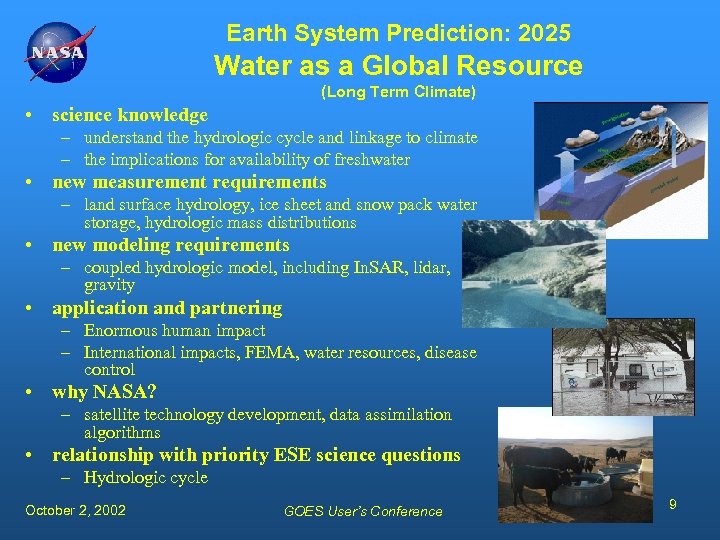
Earth System Prediction: 2025 Water as a Global Resource (Long Term Climate) • science knowledge – understand the hydrologic cycle and linkage to climate – the implications for availability of freshwater • new measurement requirements – land surface hydrology, ice sheet and snow pack water storage, hydrologic mass distributions • new modeling requirements – coupled hydrologic model, including In. SAR, lidar, gravity • application and partnering – Enormous human impact – International impacts, FEMA, water resources, disease control • why NASA? – satellite technology development, data assimilation algorithms • relationship with priority ESE science questions – Hydrologic cycle October 2, 2002 GOES User’s Conference 9
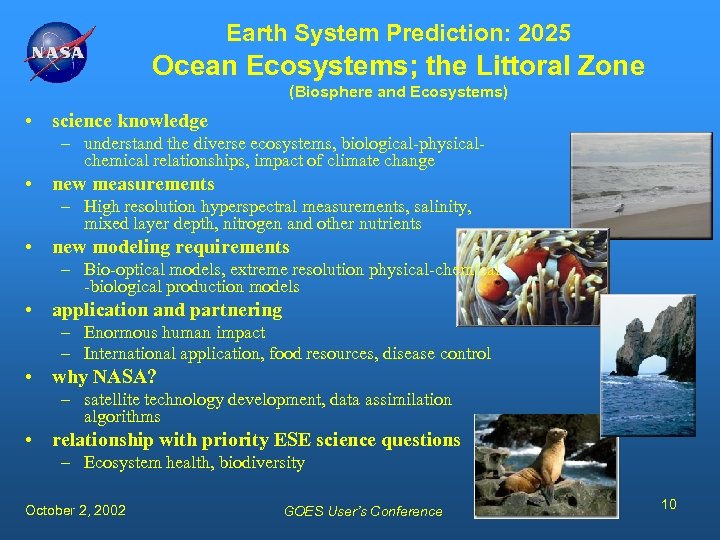
Earth System Prediction: 2025 Ocean Ecosystems; the Littoral Zone (Biosphere and Ecosystems) • science knowledge – understand the diverse ecosystems, biological-physicalchemical relationships, impact of climate change • new measurements – High resolution hyperspectral measurements, salinity, mixed layer depth, nitrogen and other nutrients • new modeling requirements – Bio-optical models, extreme resolution physical-chemical -biological production models • application and partnering – Enormous human impact – International application, food resources, disease control • why NASA? – satellite technology development, data assimilation algorithms • relationship with priority ESE science questions – Ecosystem health, biodiversity October 2, 2002 GOES User’s Conference 10
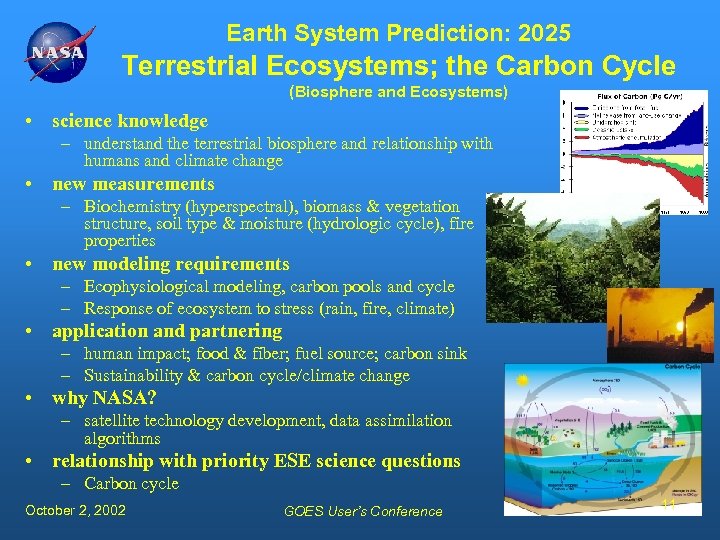
Earth System Prediction: 2025 Terrestrial Ecosystems; the Carbon Cycle (Biosphere and Ecosystems) • science knowledge – understand the terrestrial biosphere and relationship with humans and climate change • new measurements – Biochemistry (hyperspectral), biomass & vegetation structure, soil type & moisture (hydrologic cycle), fire properties • new modeling requirements – Ecophysiological modeling, carbon pools and cycle – Response of ecosystem to stress (rain, fire, climate) • application and partnering – human impact; food & fiber; fuel source; carbon sink – Sustainability & carbon cycle/climate change • why NASA? – satellite technology development, data assimilation algorithms • relationship with priority ESE science questions – Carbon cycle October 2, 2002 GOES User’s Conference 11
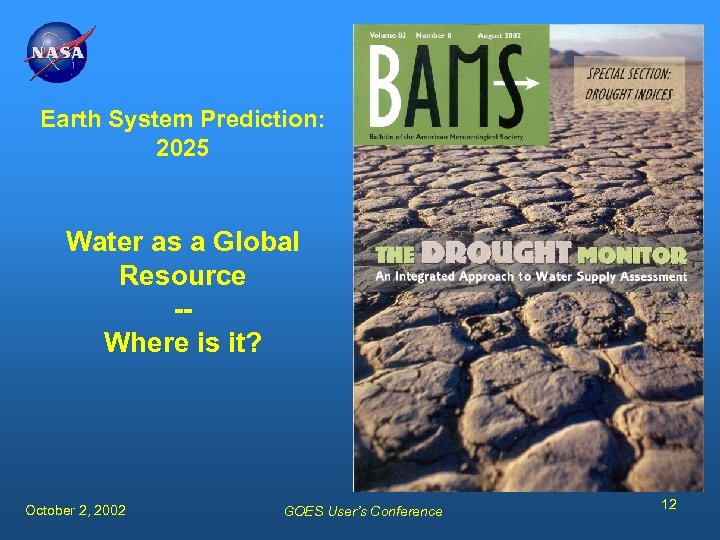
Earth System Prediction: 2025 Water as a Global Resource -Where is it? October 2, 2002 GOES User’s Conference 12
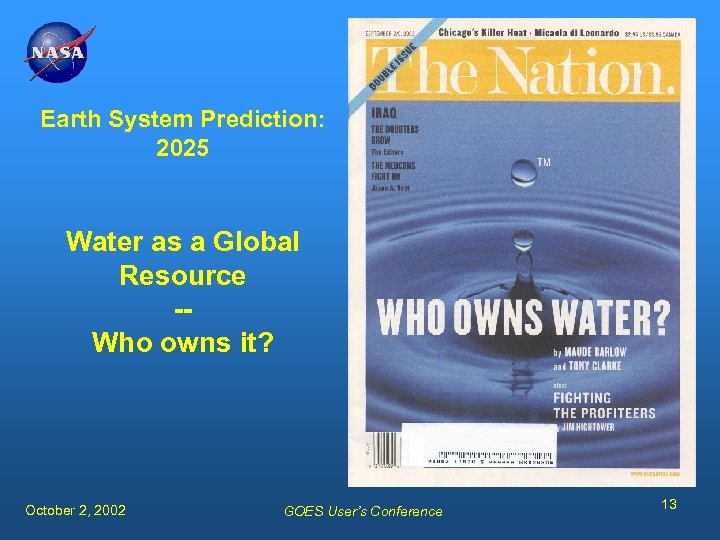
Earth System Prediction: 2025 Water as a Global Resource -Who owns it? October 2, 2002 GOES User’s Conference 13
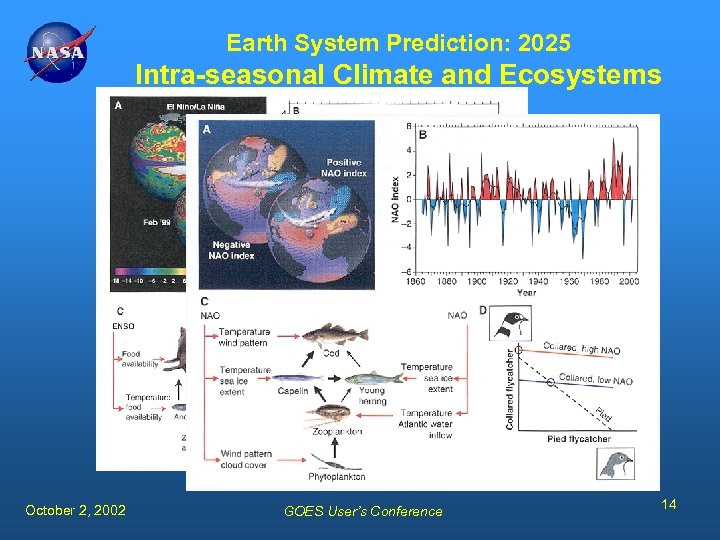
Earth System Prediction: 2025 Intra-seasonal Climate and Ecosystems October 2, 2002 GOES User’s Conference 14
Earth System Prediction: 2025 Observational Technology • Atmosphere – Profiles of winds, temperature and humidity – Atmospheric chemistry and aerosols • Ocean – Mixed layer and deep ocean circulation • Hydrologic cycle – Water storage in snow, ice, lakes and land – Water transport and P&E over land ocean • Ecosystems – Biomass & vegetation structure, soil type & moisture (hydrologic cycle), fire properties • Solid Earth – satellite technology development, data assimilation algorithms • Scales of measurement – Same as the physical-chemical-ecosystem process October 2, 2002 GOES User’s Conference 15
Earth System Prediction: 2025 Computational Technology • Atmosphere – Coupled ocean-atmosphere models with explicit physics – Data assimilation • Ocean – Coupled ocean-atmosphere models with explicit physics – Data assimilation • Hydrologic cycle – Coupled ocean-atmosphere-land models with explicit physics, coupled hydrologic model – Data assimilation • Ecosystems – extreme resolution physical-chemical-biological production models • Solid Earth – data assimilation algorithms and physical models • Scales of measurement – Same as the physical-chemical-ecosystem process • Data communication & computational linkages will limit computational effectiveness October 2, 2002 GOES User’s Conference 16
Earth System Prediction: 2025 Applications • User-specific data delivery • User-tailored data displays • Highly facilitated data access • Strong commercial role October 2, 2002 GOES User’s Conference 17
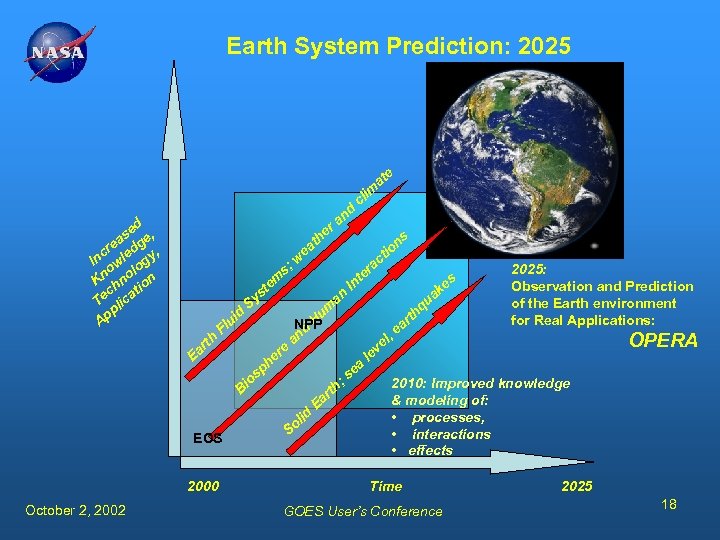
Earth System Prediction: 2025 e at d n ra d se e, ea g cr led y, In w og o l Kn hno ion c at Te lic p Ap he at e ; w s m e st id rth Sy u Fl e er ph Ea 2000 October 2, 2002 ra te In m Hu NPP d an a So rth a E s ke a qu rth , el e ; s lid EOS s n tio c an os Bi im cl ea 2025: Observation and Prediction of the Earth environment for Real Applications: OPERA v le 2010: Improved knowledge & modeling of: • processes, • interactions • effects Time GOES User’s Conference 2025 18
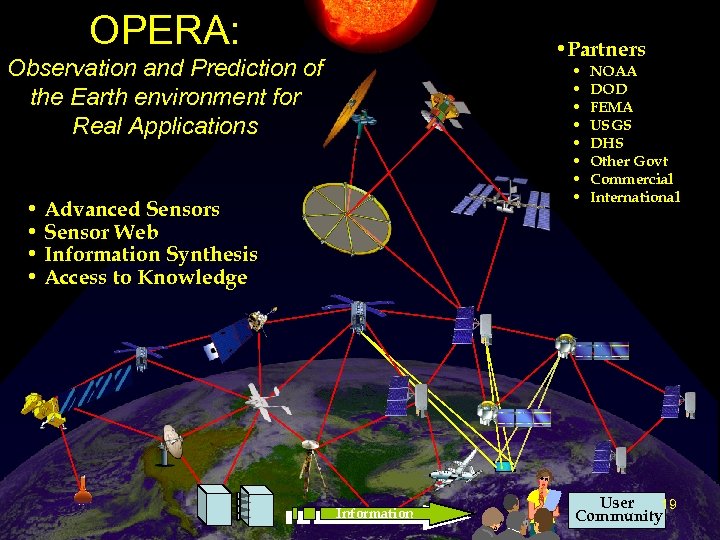
OPERA: • Partners Observation and Prediction of the Earth environment for Real Applications • • • Advanced Sensors • Sensor Web • Information Synthesis • Access to Knowledge Information NOAA DOD FEMA USGS DHS Other Govt Commercial International User 19 Community
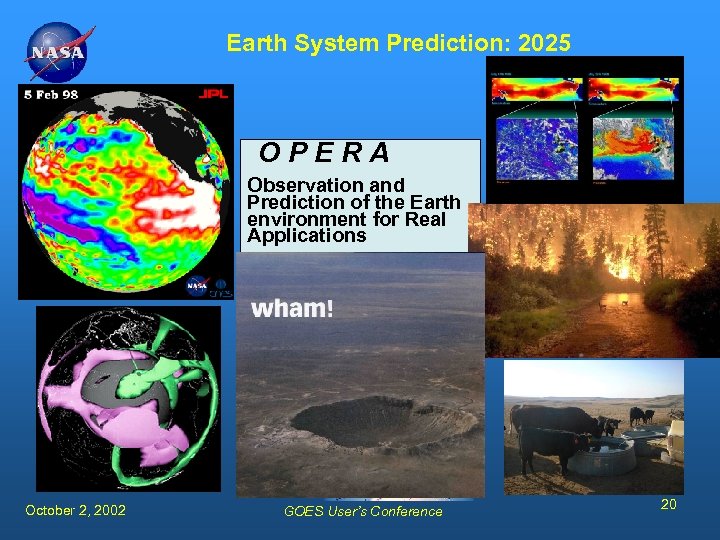
Earth System Prediction: 2025 OPERA Observation and Prediction of the Earth environment for Real Applications • distributed observational technology • highly parallel processing • distributed processing • enormous memory • multi-faceted I/O • user-specific applications October 2, 2002 GOES User’s Conference 20
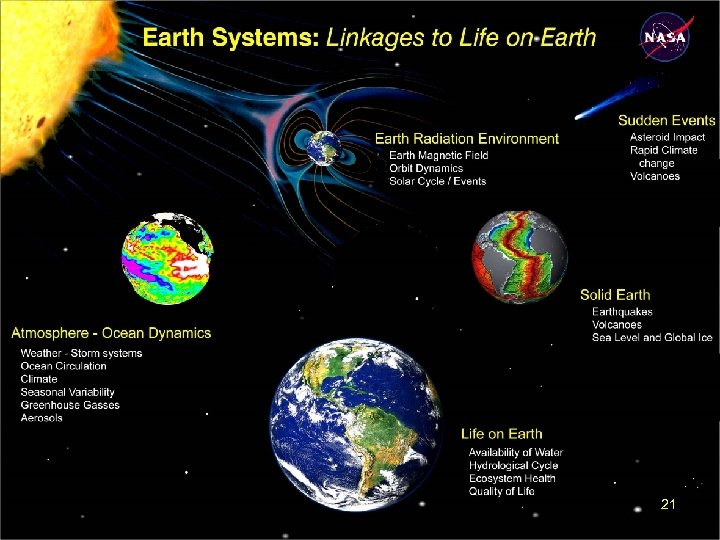
October 2, 2002 GOES User’s Conference 21
Скачать презентацию Earth System Prediction 2025 Dr Peter H Hildebrand
c5045a455410ee9862d12916102b937d.ppt