


 Скачать презентацию Earth System and Climate Introduction ESC-I Coordinators V
aff0b33f3aa1cbf202c69f41155cbc93.ppt
- Количество слайдов: 38
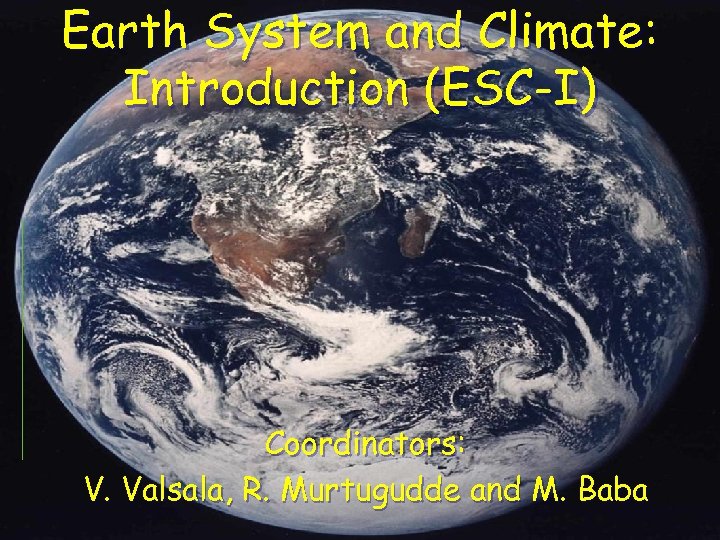 Earth System and Climate: Introduction (ESC-I) Coordinators: V. Valsala, R. Murtugudde and M. Baba
 Contents of ESC-Intro. course: • Earth System Science and Global Climate Change G • Global Energy Balance P • Global Carbon Cycle C • Recycling of Elements; C, N, O 2, O 3 depletion C • Global Biogeochemical Cycle- oceans C/B • Short-term Climate variability, Global Warming Should be covered in 7 -hours P/C/B
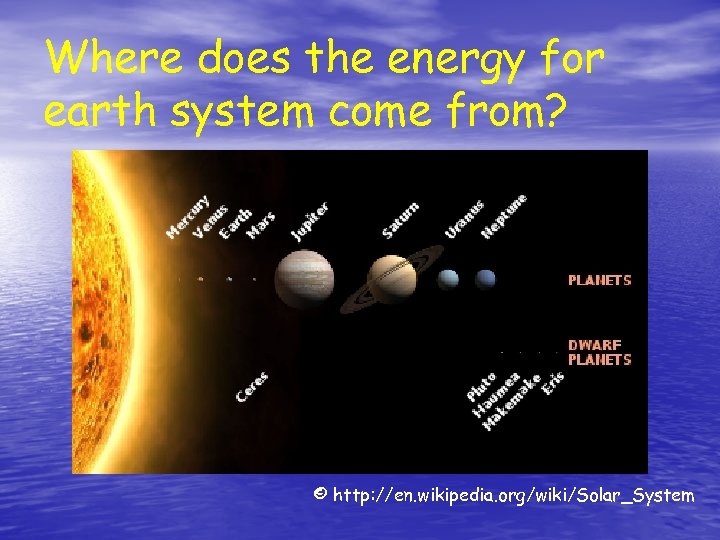 Where does the energy for earth system come from? © http: //en. wikipedia. org/wiki/Solar_System
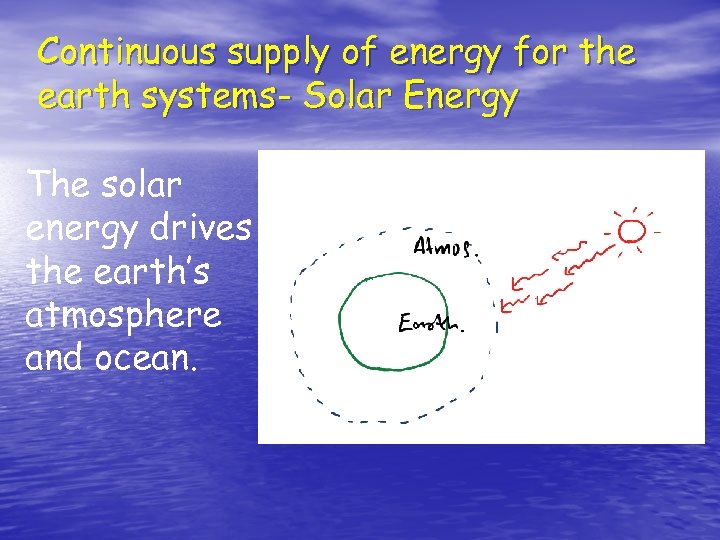 Continuous supply of energy for the earth systems- Solar Energy The solar energy drives the earth’s atmosphere and ocean.
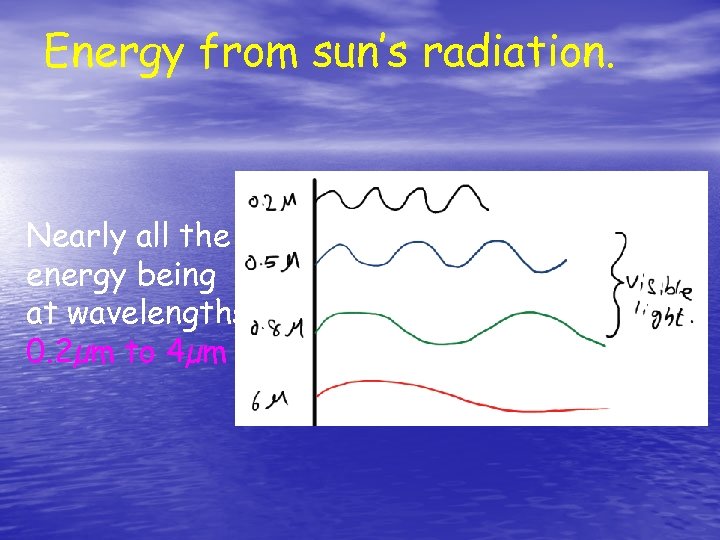 Energy from sun’s radiation. Nearly all the energy being at wavelengths 0. 2µm to 4µm
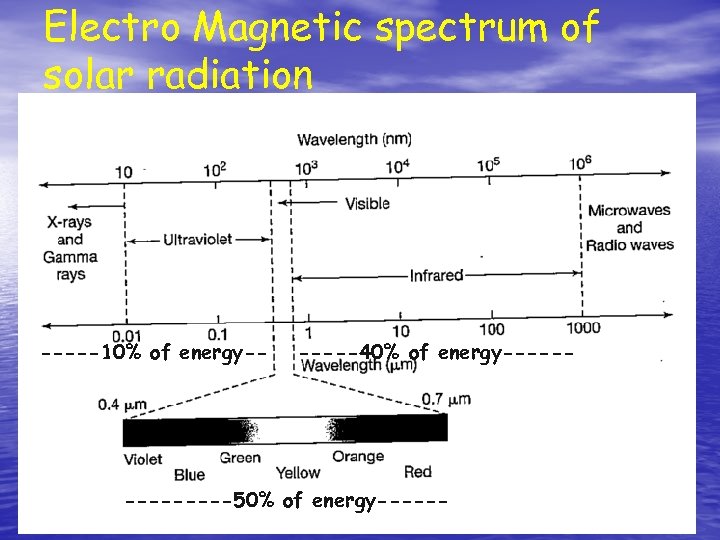 Electro Magnetic spectrum of solar radiation -----10% of energy-- -----40% of energy------50% of energy------
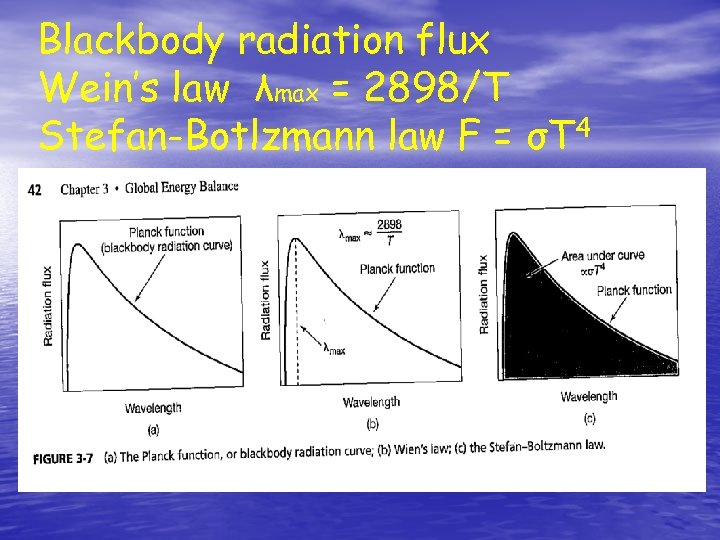 Blackbody radiation flux Wein’s law λmax = 2898/T Stefan-Botlzmann law F = σT 4
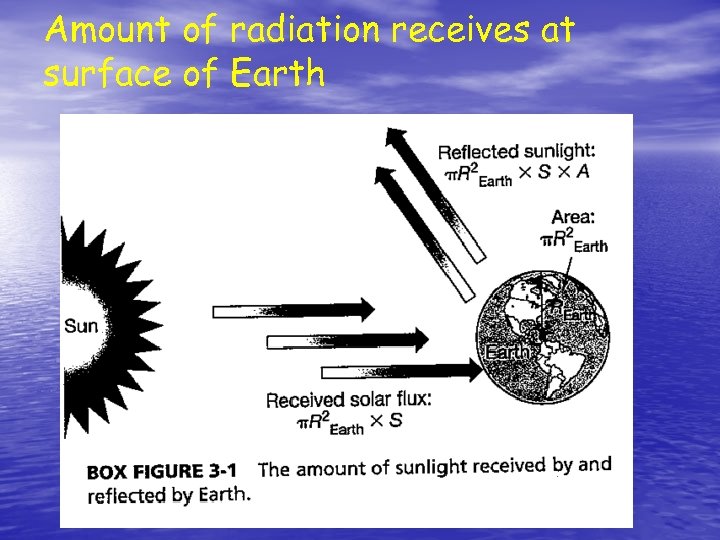 Amount of radiation receives at surface of Earth
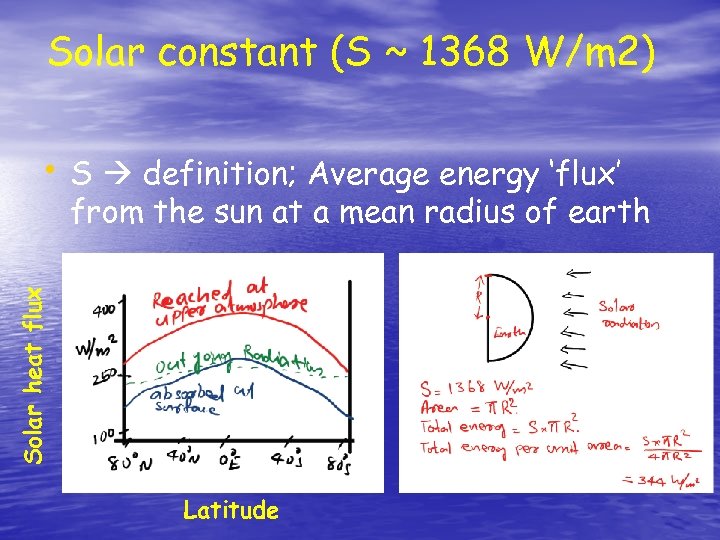 Solar constant (S ~ 1368 W/m 2) • S definition; Average energy ‘flux’ Solar heat flux from the sun at a mean radius of earth Latitude
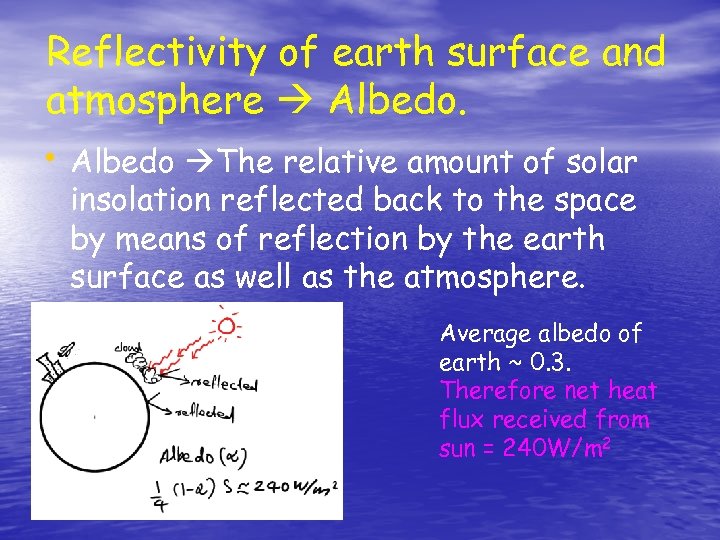 Reflectivity of earth surface and atmosphere Albedo. • Albedo The relative amount of solar insolation reflected back to the space by means of reflection by the earth surface as well as the atmosphere. Average albedo of earth ~ 0. 3. Therefore net heat flux received from sun = 240 W/m 2
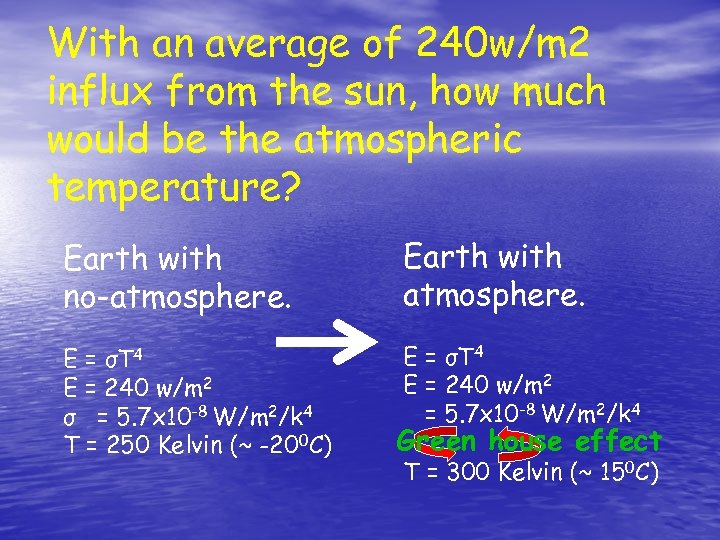 With an average of 240 w/m 2 influx from the sun, how much would be the atmospheric temperature? Earth with no-atmosphere. Earth with atmosphere. E = σT 4 E = 240 w/m 2 σ = 5. 7 x 10 -8 W/m 2/k 4 T = 250 Kelvin (~ -200 C) E = σT 4 E = 240 w/m 2 = 5. 7 x 10 -8 W/m 2/k 4 Green house effect T = 300 Kelvin (~ 150 C)
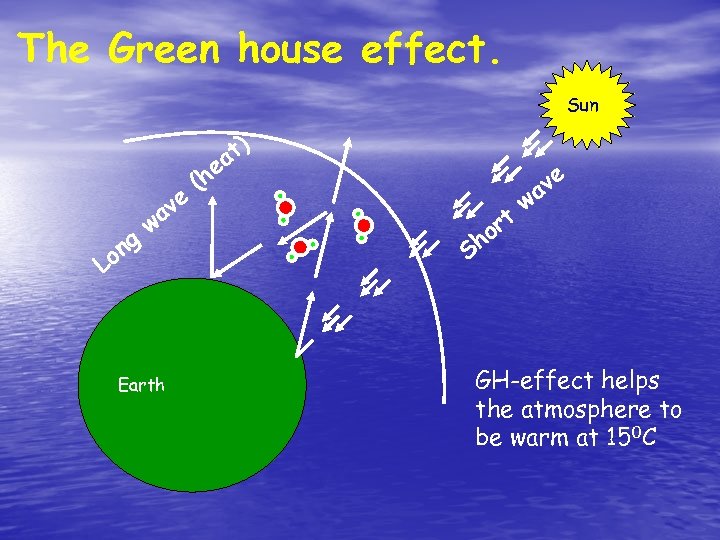 The Green house effect. Sun L ng o ve a w Earth t) ea (h rt ho ve a w S GH-effect helps the atmosphere to be warm at 150 C
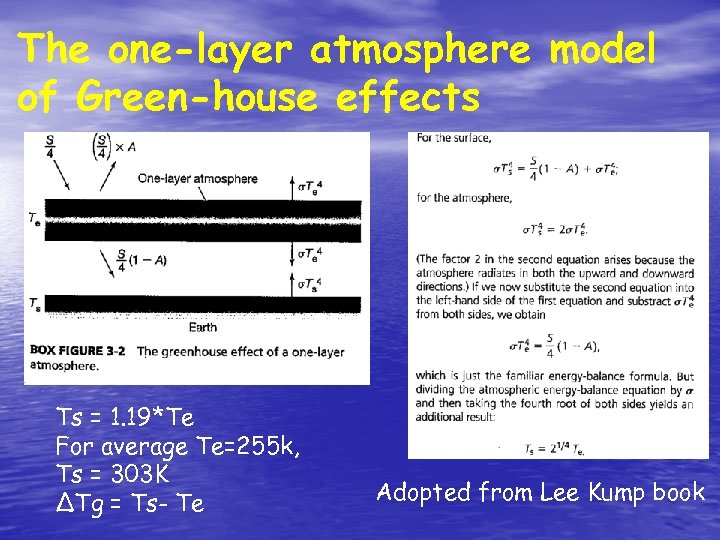 The one-layer atmosphere model of Green-house effects Ts = 1. 19*Te For average Te=255 k, Ts = 303 K ΔTg = Ts- Te Adopted from Lee Kump book
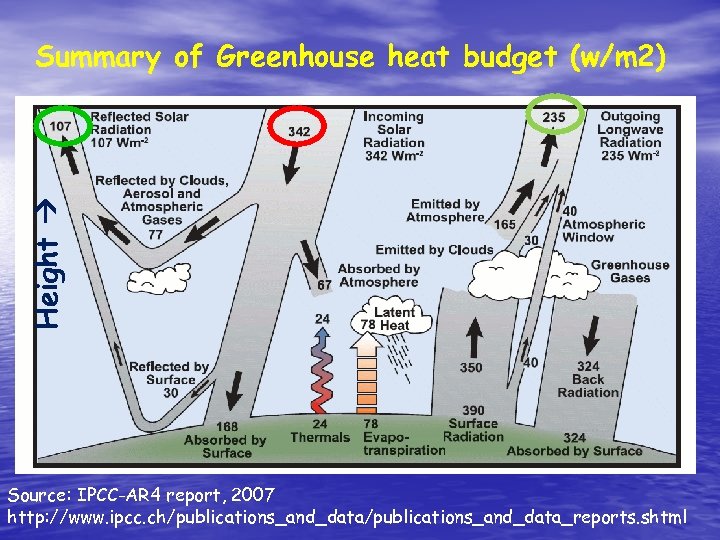 Height Summary of Greenhouse heat budget (w/m 2) Source: IPCC-AR 4 report, 2007 http: //www. ipcc. ch/publications_and_data_reports. shtml
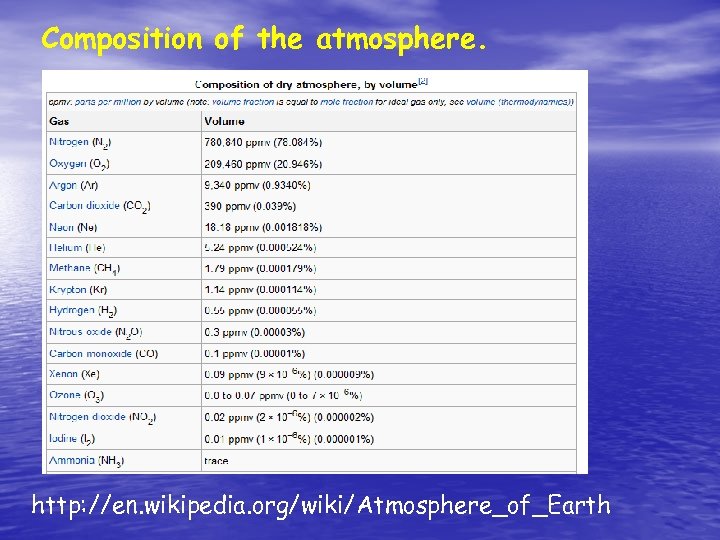 Composition of the atmosphere. http: //en. wikipedia. org/wiki/Atmosphere_of_Earth
 Atmospheric Structure How atmospheric pressure varies with altitude P = F/A (Pressure = Force exerted on unit area) The pressure exerted by atmosphere at sealevel is defined as one atmosphere (atm) The SI unit of pressure is Pascal (Pa). -5 -6 1 Pa = 1 x 10 bar = 9. 9 x 10 atm. Atmospheric pressure decreases with height.
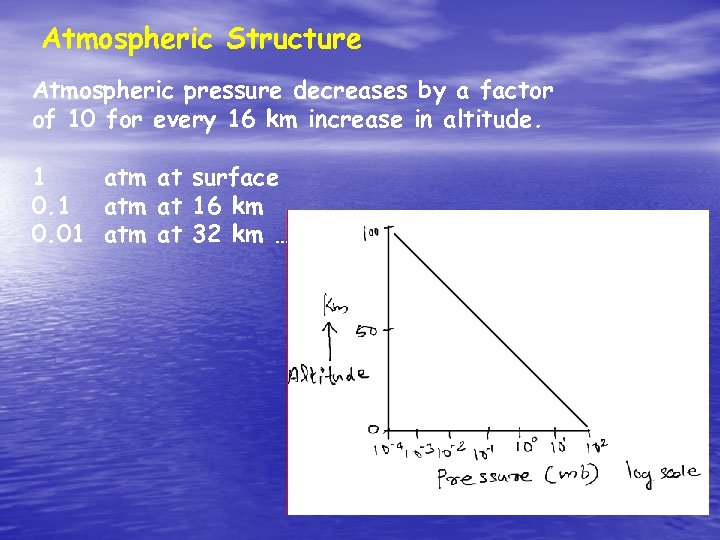 Atmospheric Structure Atmospheric pressure decreases by a factor of 10 for every 16 km increase in altitude. 1 atm at surface 0. 1 atm at 16 km 0. 01 atm at 32 km …
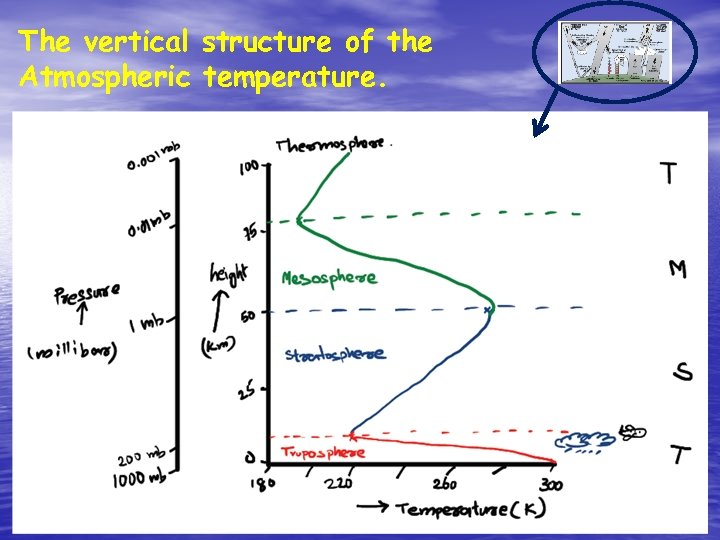 The vertical structure of the Atmospheric temperature.
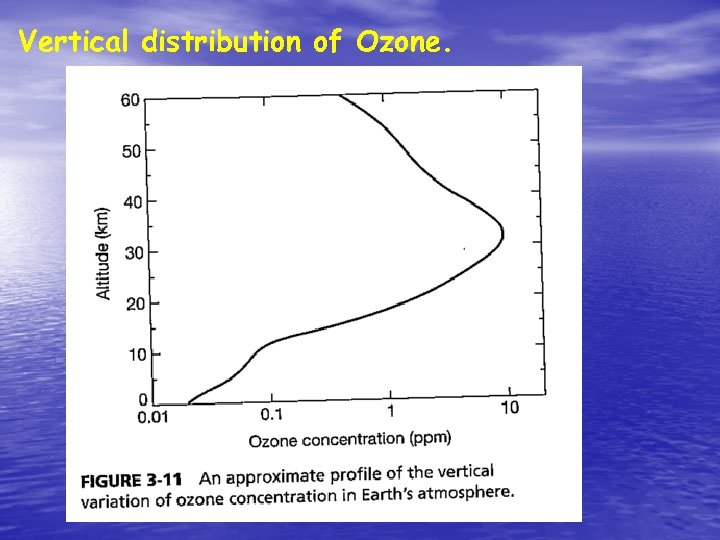 Vertical distribution of Ozone.
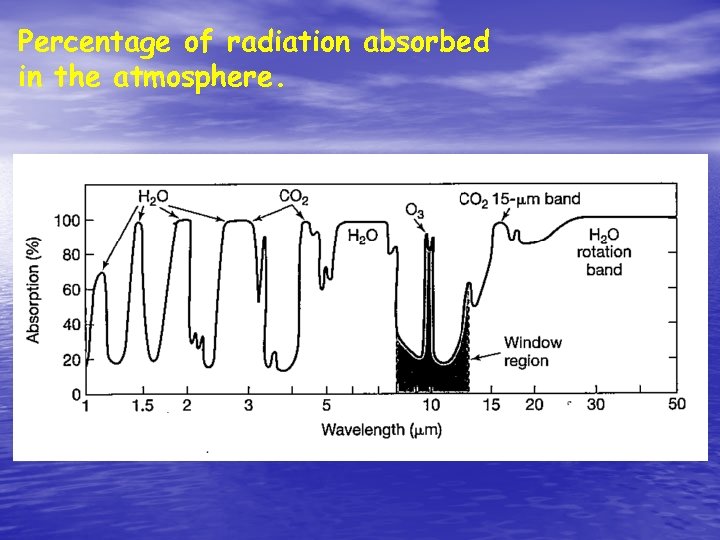 Percentage of radiation absorbed in the atmosphere.
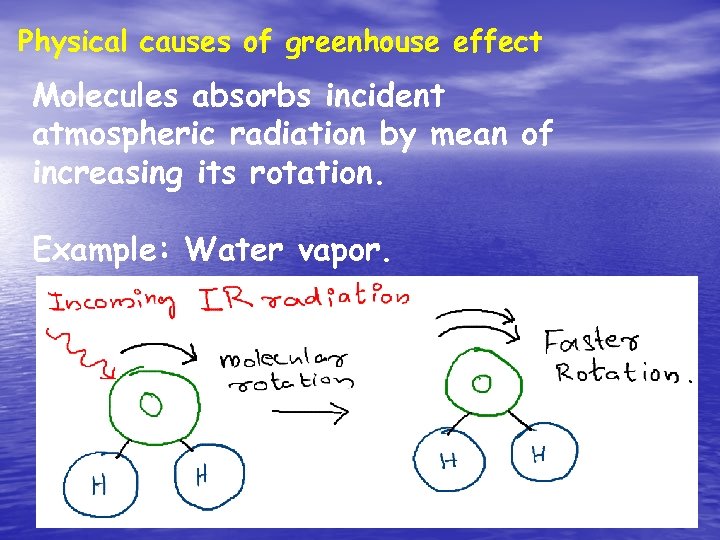 Physical causes of greenhouse effect Molecules absorbs incident atmospheric radiation by mean of increasing its rotation. Example: Water vapor.
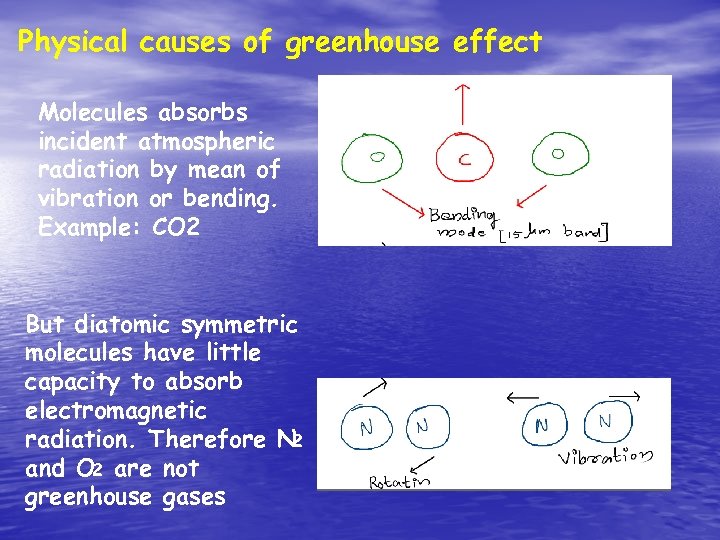 Physical causes of greenhouse effect Molecules absorbs incident atmospheric radiation by mean of vibration or bending. Example: CO 2 But diatomic symmetric molecules have little capacity to absorb electromagnetic radiation. Therefore N 2 and O 2 are not greenhouse gases
 Effects of clouds on radiation Types of clouds: (a) Cumulus clouds: white puffy clouds that look like balls of cotton. They are composed of water droplets and formed by convective activities. (b) Cumulonimbus clouds: Tall cumulus clouds giver rise to thunderstorms. (c) Stratus clouds: They are gray lowlevel water clouds that are more less continuous
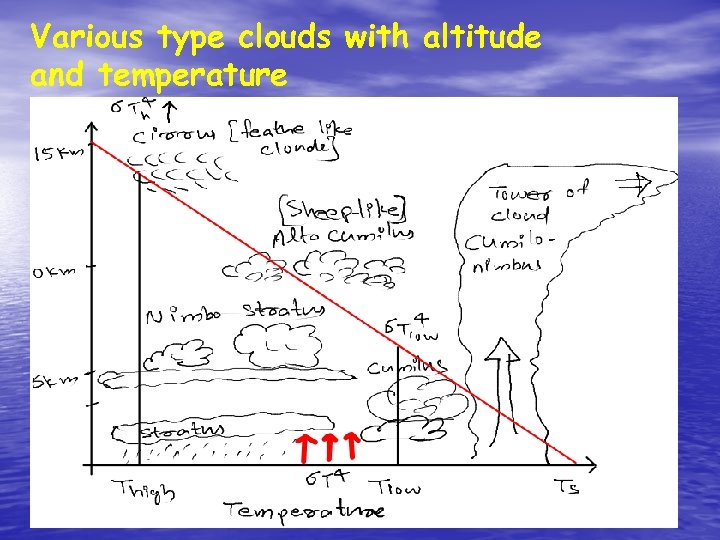 Various type clouds with altitude and temperature
 Opposing climate effects of cloud Have you noticed cloude days are colder whereas cloudy nights are warmer? o Albedo o Greenhouse effect
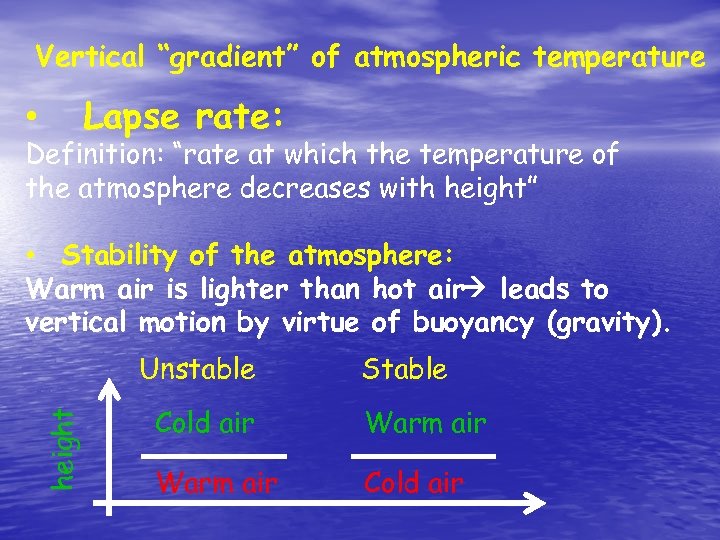 Vertical “gradient” of atmospheric temperature Lapse rate: • Definition: “rate at which the temperature of the atmosphere decreases with height” • Stability of the atmosphere: Warm air is lighter than hot air leads to vertical motion by virtue of buoyancy (gravity). height Unstable Stable Cold air Warm air Cold air
 Lapse rate • Dry (adiabatic) lapse rate • Moist (adiabatic) lapse rate
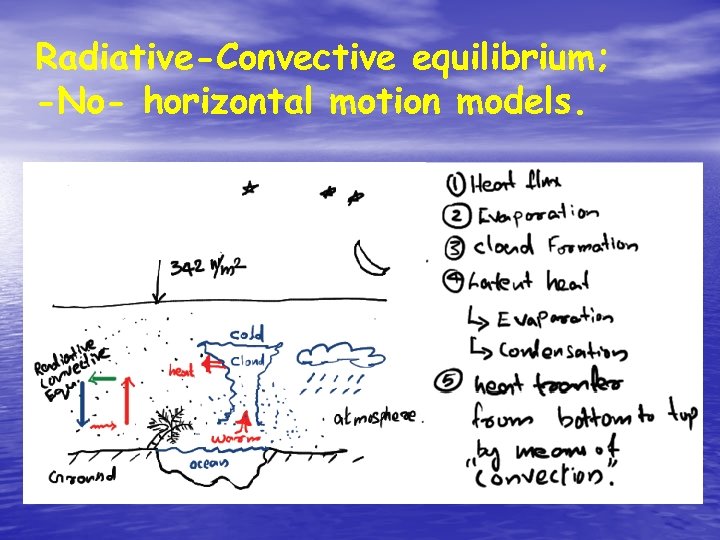 Radiative-Convective equilibrium; -No- horizontal motion models.
 Radiative-Convective equilibrium; with green house effect & no climate feed back These model predicts the green house warming ΔTg = 33 0 C i. e. with CO 2 = 300 ppm In test simulations with doubling the CO 2, i. e. with 600 ppm (expected true value in near future), the additional ΔTg = 1. 2 0 C Why doubling CO 2 produce meager changes in temperature? Radiation absorption spectrum by CO 2 and other greenhouse gases (H 20 vapor) are different
 Radiative-Convective equilibrium; with climate feedbacks Climate feedbacks are extremely important because they can either amplify or moderate the radiative effect of changes in greenhouse gas concentrations. We examined the feedbacks in chapter-2 in an imaginary “Daisy world” We analogically attribute such feedbacks to the earth system here.
 Water vapor feedback o Water vapor is an excellent absorber of IR radiation. o Unlike CO 2, water vapor are at the edges of condensation, and if condenses and rain-out, the average vapor concentration in atmosphere reduces. This can cause reduction in GH-warming o On the other hand, if average surface temperature increases by global warming, water vapor concentration increases and that will increase GH-warming further.
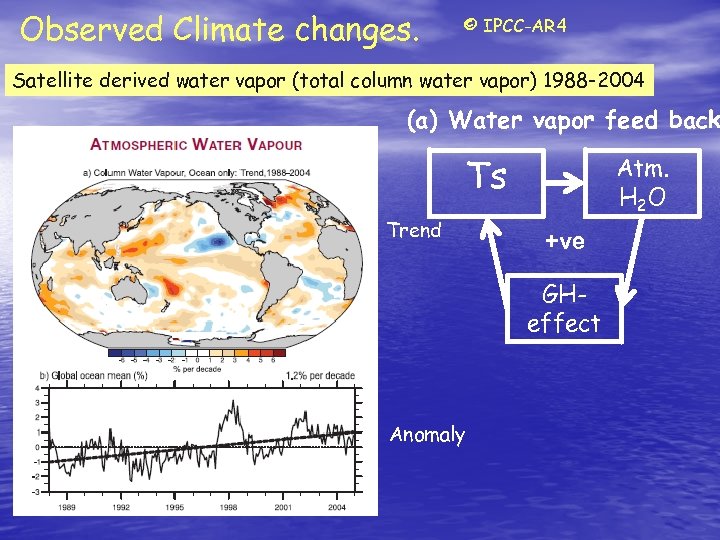 Observed Climate changes. © IPCC-AR 4 Satellite derived water vapor (total column water vapor) 1988 -2004 (a) Water vapor feed back Ts Trend Atm. H 2 O +ve GHeffect Anomaly
 Radiative-Convective equilibrium; with water vapor feedbacks o Average surface temperature changes in doubling the CO 2 experiment without climate feedback was 1. 20 C. o Whereas the above experiment with watervapor feedback causes the surface temperature rise by additional 1. 20 C. o Therefore the total change in temperature with water vapor feedback is 2. 40 C. o The feedback factor = 2. 4/1. 4 = 2 (strong positive feedback).
 Snow-ice albedo feedback o If surface Ts increases snow melts and albedo decreases o If albedo decreases surface temperature increases o This leads to a positive feedback loop which is unstable. Snow-ice feedback Snow and Ice Ts +ve Albedo
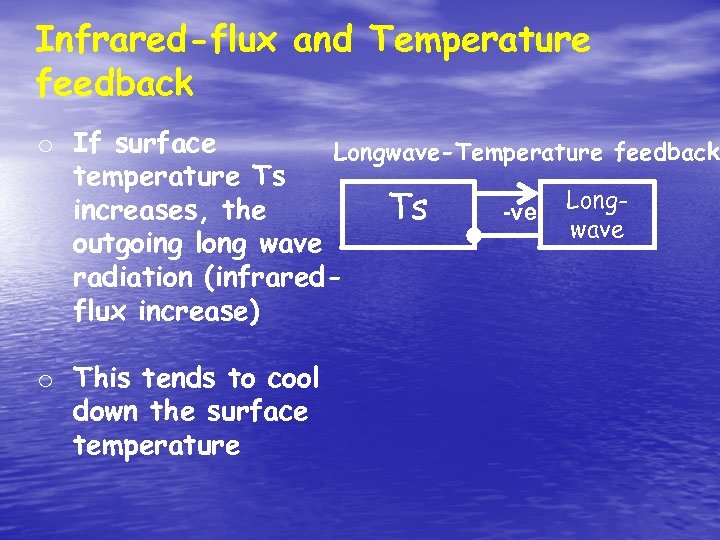 Infrared-flux and Temperature feedback o If surface Longwave-Temperature feedback temperature Ts Longincreases, the Ts -ve wave outgoing long wave radiation (infraredflux increase) o This tends to cool down the surface temperature
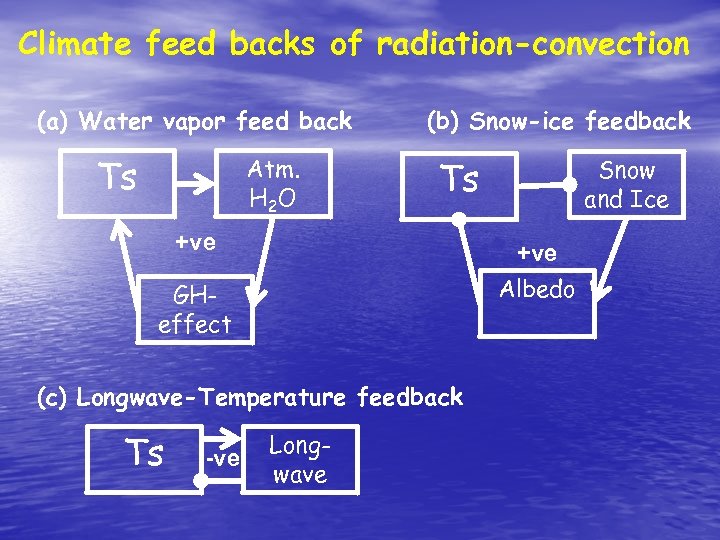 Climate feed backs of radiation-convection (a) Water vapor feed back Ts Atm. H 2 O (b) Snow-ice feedback +ve Albedo GHeffect (c) Longwave-Temperature feedback Ts -ve Snow and Ice Ts Longwave
 Conclusion o Green house and radiation budget. o Earth is warmed by green house effect (from -150 C to 150 C) o H 2 O and CO are major GH-gases 2 o Clouds affect radiation budget both by reflection and GH-effect. o Water vapor feedback (+) o Snow-ice feedback (+) o Outgoing Longwave Radiation (IR flux) – surface temperature feedback (-)
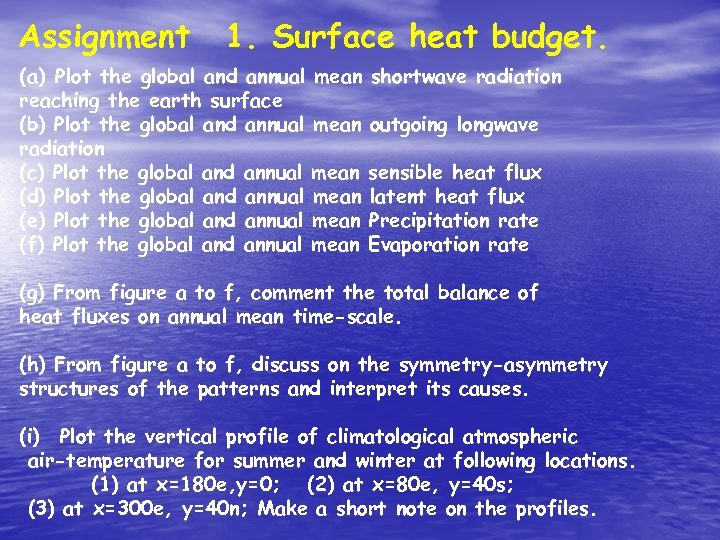 Assignment 1. Surface heat budget. (a) Plot the global and annual mean shortwave radiation reaching the earth surface (b) Plot the global and annual mean outgoing longwave radiation (c) Plot the global and annual mean sensible heat flux (d) Plot the global and annual mean latent heat flux (e) Plot the global and annual mean Precipitation rate (f) Plot the global and annual mean Evaporation rate (g) From figure a to f, comment the total balance of heat fluxes on annual mean time-scale. (h) From figure a to f, discuss on the symmetry-asymmetry structures of the patterns and interpret its causes. (i) Plot the vertical profile of climatological atmospheric air-temperature for summer and winter at following locations. (1) at x=180 e, y=0; (2) at x=80 e, y=40 s; (3) at x=300 e, y=40 n; Make a short note on the profiles.