 Скачать презентацию Earth Scope GPS Tutorial PBO Geodetic Instrumentation
aecef4d4ebb78f0f548e8a25ea17d869.ppt
- Количество слайдов: 35



Earth. Scope GPS Tutorial PBO Geodetic Instrumentation – GPS Principles, Data Access and Applications Chuck Meertens, David Phillips, Freddy Blume, Mike Jackson, and Greg Anderson UNAVCO, Boulder, CO Earth. Scope in the Northern Rockies Workshop Bozeman, Mt 17 September 2005
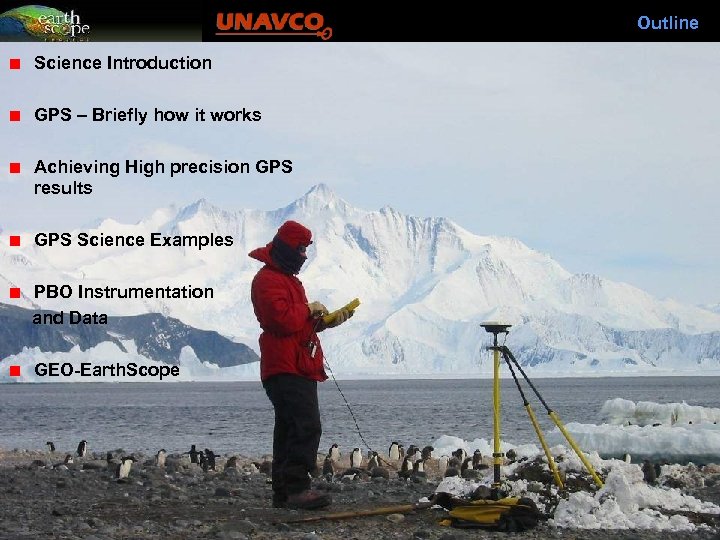
Outline Science Introduction GPS – Briefly how it works Achieving High precision GPS results GPS Science Examples PBO Instrumentation and Data GEO-Earth. Scope
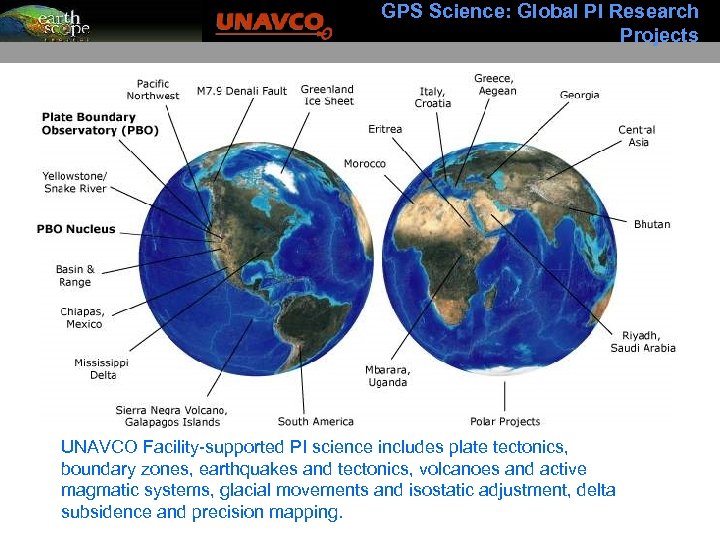
GPS Science: Global PI Research Projects UNAVCO Facility-supported PI science includes plate tectonics, boundary zones, earthquakes and tectonics, volcanoes and active magmatic systems, glacial movements and isostatic adjustment, delta subsidence and precision mapping.
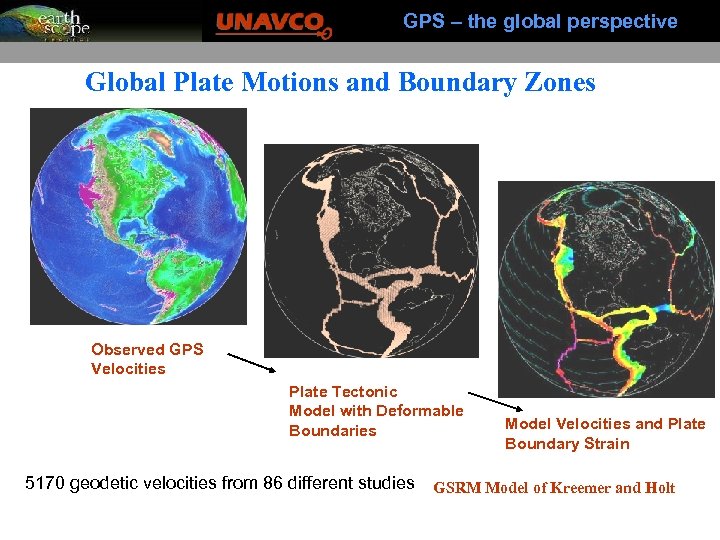
GPS – the global perspective Global Plate Motions and Boundary Zones Observed GPS Velocities Plate Tectonic Model with Deformable Boundaries 5170 geodetic velocities from 86 different studies Model Velocities and Plate Boundary Strain GSRM Model of Kreemer and Holt
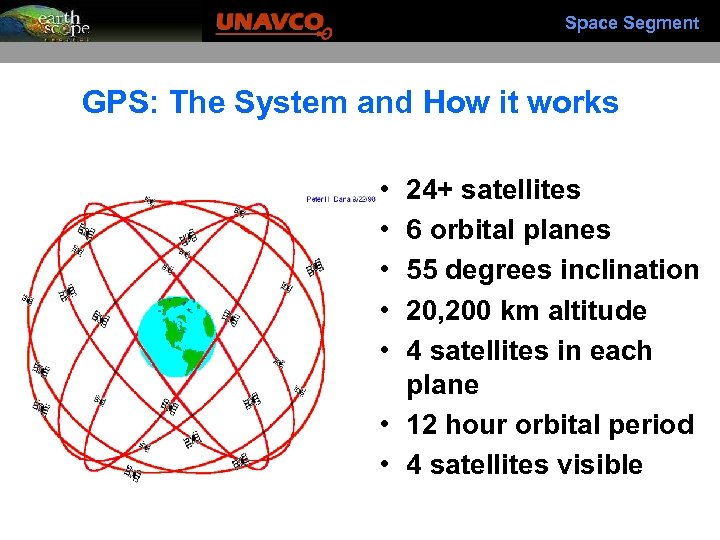
Space Segment GPS: The System and How it works • • • 24+ satellites 6 orbital planes 55 degrees inclination 20, 200 km altitude 4 satellites in each plane • 12 hour orbital period • 4 satellites visible
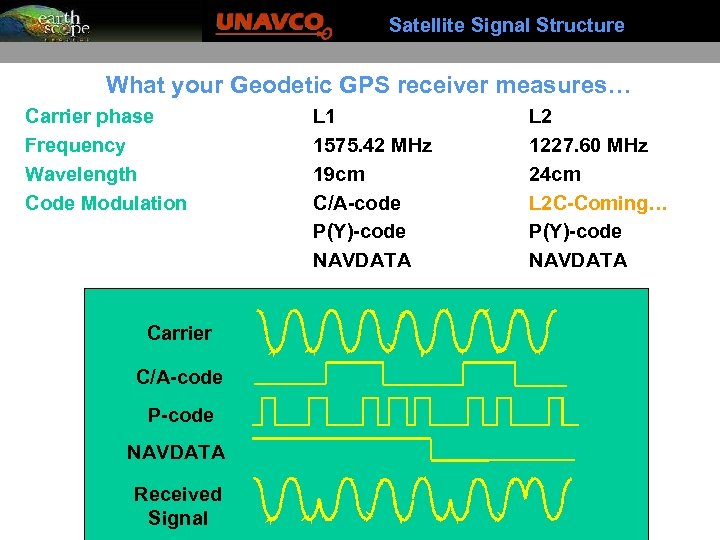
Satellite Signal Structure What your Geodetic GPS receiver measures… Carrier phase Frequency Wavelength Code Modulation Carrier C/A-code P-code NAVDATA Received Signal L 1 1575. 42 MHz 19 cm C/A-code P(Y)-code NAVDATA L 2 1227. 60 MHz 24 cm L 2 C-Coming… P(Y)-code NAVDATA
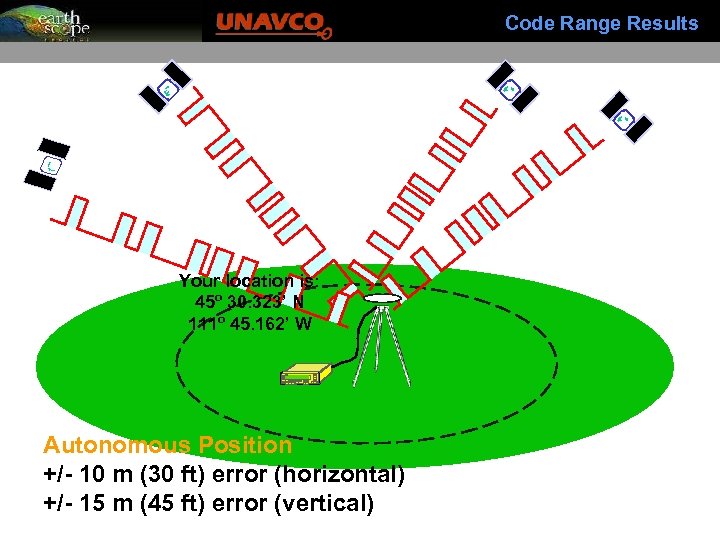
Code Range Results Your location is: 45 o 30. 323’ N 111 o 45. 162’ W Autonomous Position +/- 10 m (30 ft) error (horizontal) +/- 15 m (45 ft) error (vertical)
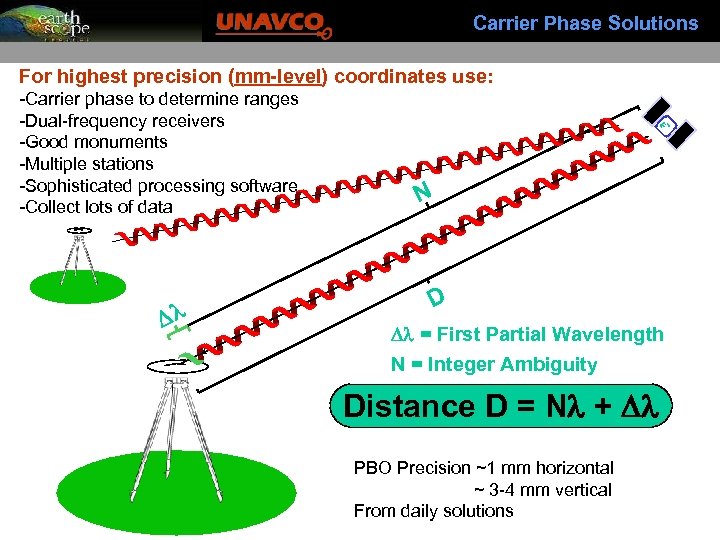
Carrier Phase Solutions For highest precision (mm-level) coordinates use: -Carrier phase to determine ranges -Dual-frequency receivers -Good monuments -Multiple stations -Sophisticated processing software -Collect lots of data Dl N D Dl = First Partial Wavelength N = Integer Ambiguity Distance D = Nl + Dl PBO Precision ~1 mm horizontal ~ 3 -4 mm vertical From daily solutions
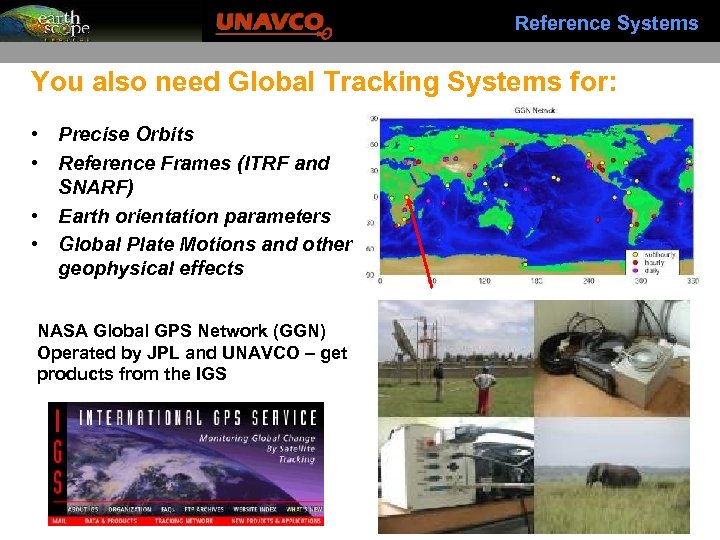
Reference Systems You also need Global Tracking Systems for: • Precise Orbits • Reference Frames (ITRF and SNARF) • Earth orientation parameters • Global Plate Motions and other geophysical effects NASA Global GPS Network (GGN) Operated by JPL and UNAVCO – get products from the IGS
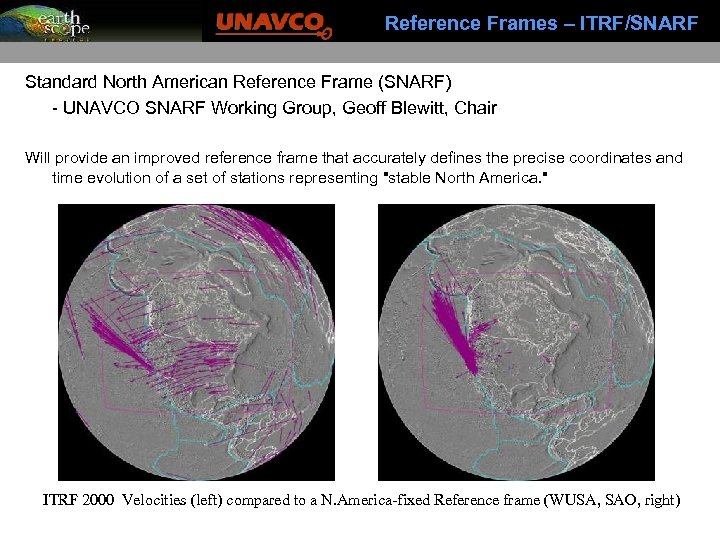
Reference Frames – ITRF/SNARF Standard North American Reference Frame (SNARF) - UNAVCO SNARF Working Group, Geoff Blewitt, Chair Will provide an improved reference frame that accurately defines the precise coordinates and time evolution of a set of stations representing "stable North America. " ITRF 2000 Velocities (left) compared to a N. America-fixed Reference frame (WUSA, SAO, right)
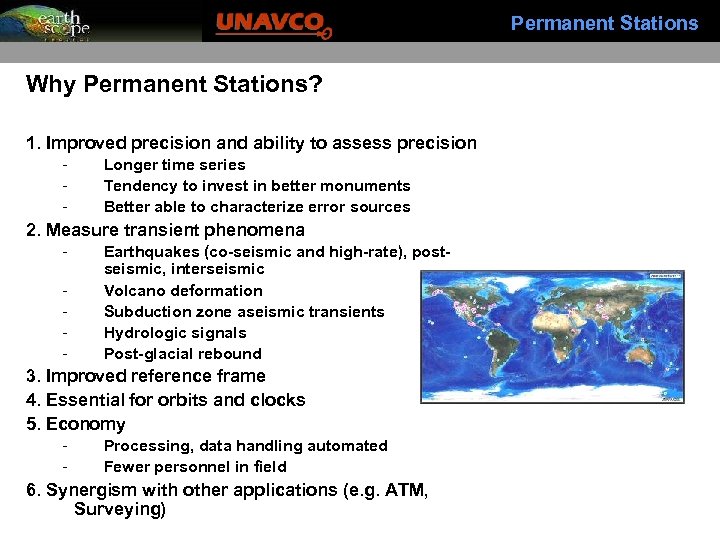
Permanent Stations Why Permanent Stations? 1. Improved precision and ability to assess precision - Longer time series Tendency to invest in better monuments Better able to characterize error sources 2. Measure transient phenomena - Earthquakes (co-seismic and high-rate), postseismic, interseismic Volcano deformation Subduction zone aseismic transients Hydrologic signals Post-glacial rebound 3. Improved reference frame 4. Essential for orbits and clocks 5. Economy - Processing, data handling automated Fewer personnel in field 6. Synergism with other applications (e. g. ATM, Surveying)
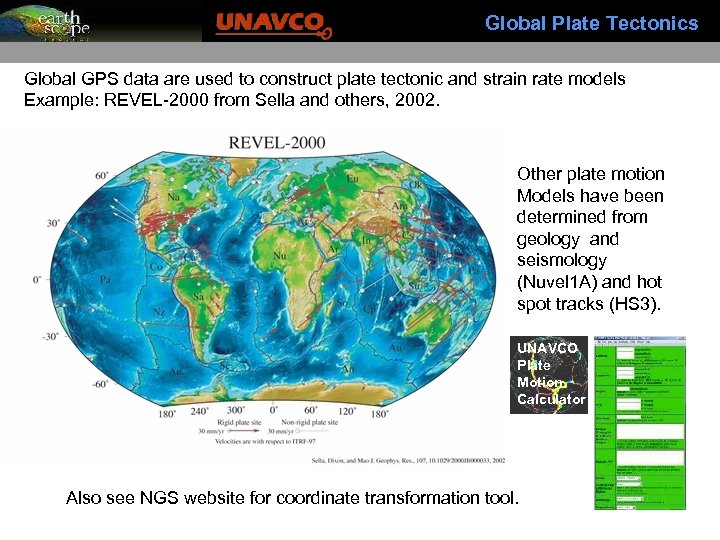
Global Plate Tectonics Global GPS data are used to construct plate tectonic and strain rate models Example: REVEL-2000 from Sella and others, 2002. Other plate motion Models have been determined from geology and seismology (Nuvel 1 A) and hot spot tracks (HS 3). UNAVCO Plate Motion Calculator Also see NGS website for coordinate transformation tool.
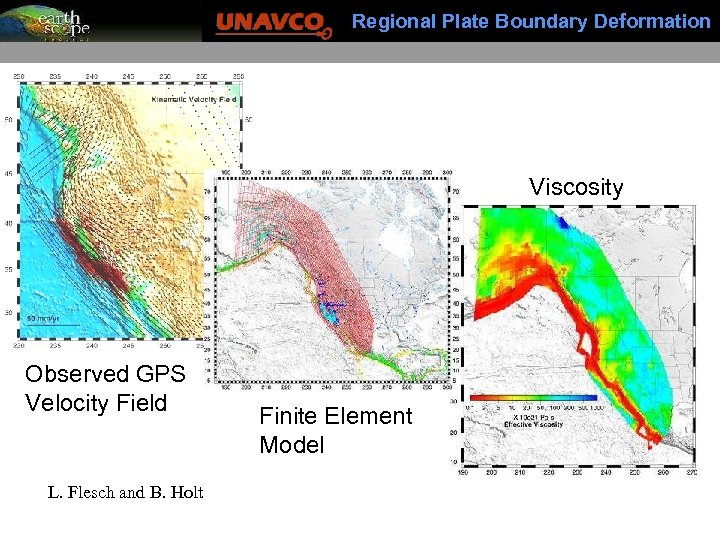
Regional Plate Boundary Deformation Viscosity Observed GPS Velocity Field L. Flesch and B. Holt Finite Element Model
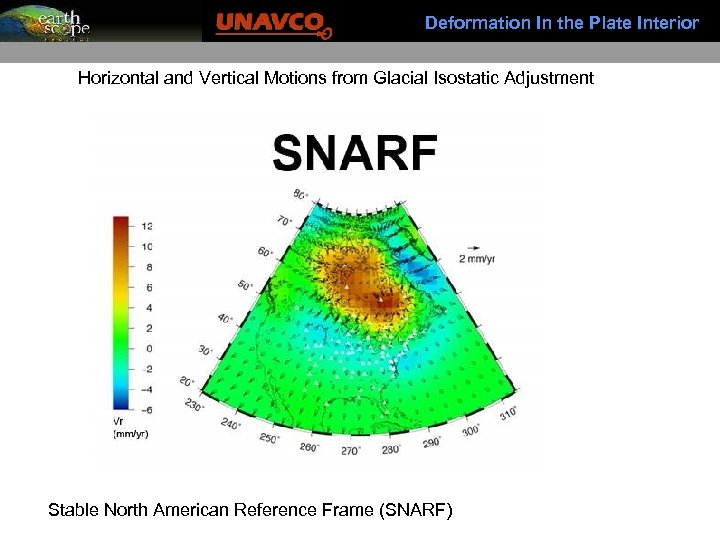
Deformation In the Plate Interior Horizontal and Vertical Motions from Glacial Isostatic Adjustment Stable North American Reference Frame (SNARF)
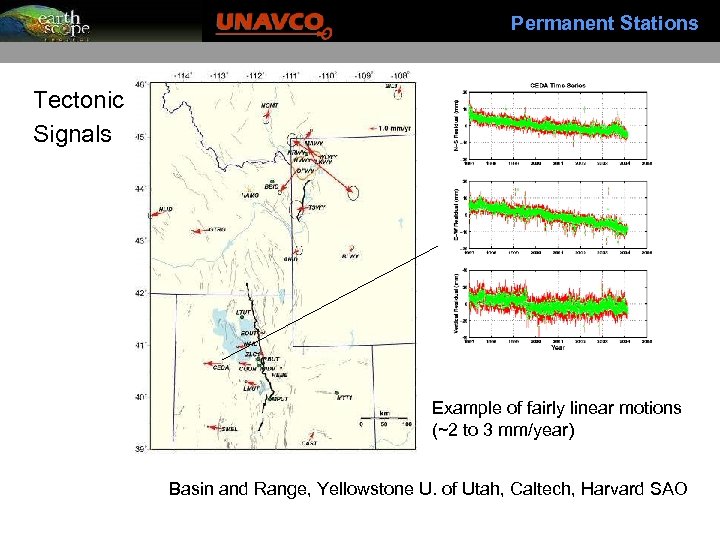
Permanent Stations Tectonic Signals Example of fairly linear motions (~2 to 3 mm/year) Basin and Range, Yellowstone U. of Utah, Caltech, Harvard SAO
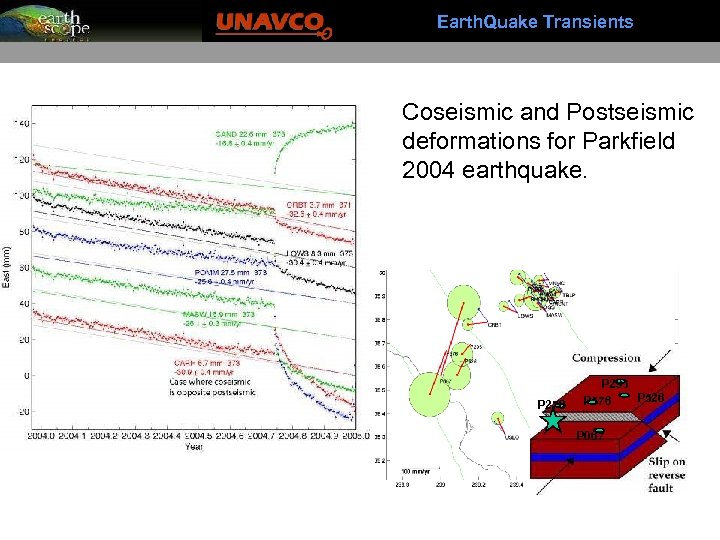
Earth. Quake Transients Coseismic and Postseismic deformations for Parkfield 2004 earthquake. P 278 P 295 P 526 P 576 P 067
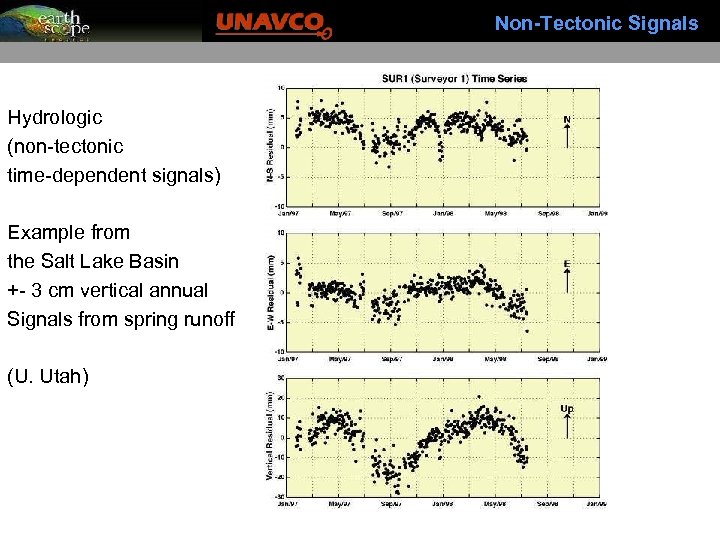
Non-Tectonic Signals Hydrologic (non-tectonic time-dependent signals) Example from the Salt Lake Basin +- 3 cm vertical annual Signals from spring runoff (U. Utah)
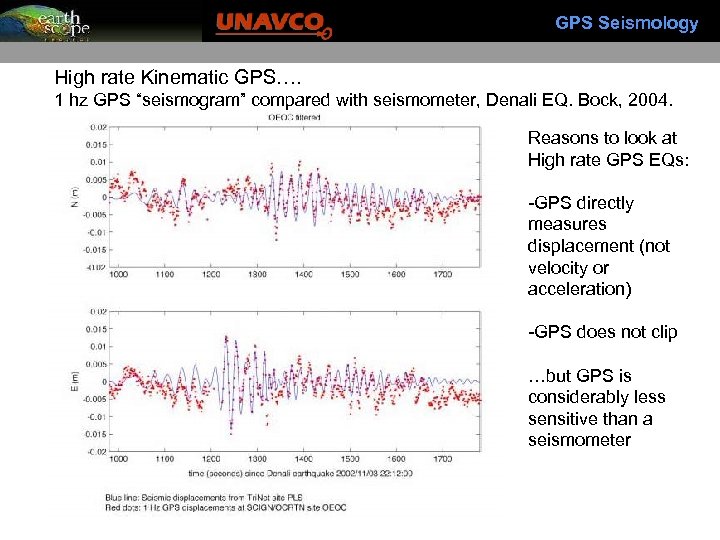
GPS Seismology High rate Kinematic GPS…. 1 hz GPS “seismogram” compared with seismometer, Denali EQ. Bock, 2004. Reasons to look at High rate GPS EQs: -GPS directly measures displacement (not velocity or acceleration) -GPS does not clip …but GPS is considerably less sensitive than a seismometer
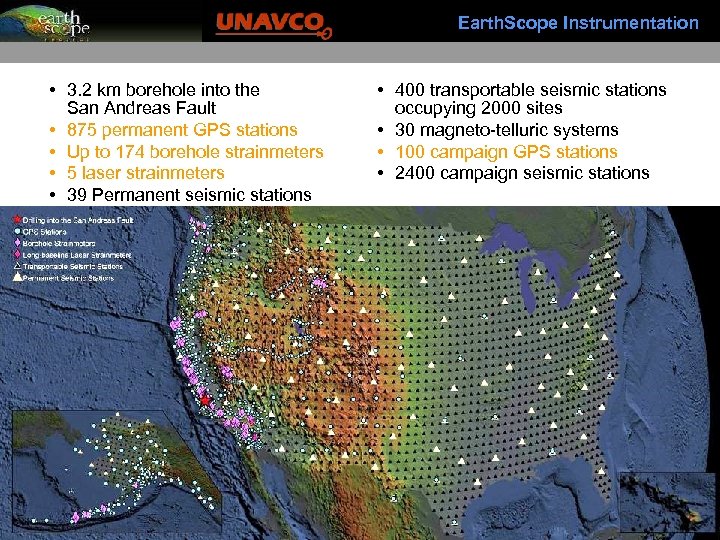
Earth. Scope Instrumentation • 3. 2 km borehole into the San Andreas Fault • 875 permanent GPS stations • Up to 174 borehole strainmeters • 5 laser strainmeters • 39 Permanent seismic stations • 400 transportable seismic stations occupying 2000 sites • 30 magneto-telluric systems • 100 campaign GPS stations • 2400 campaign seismic stations
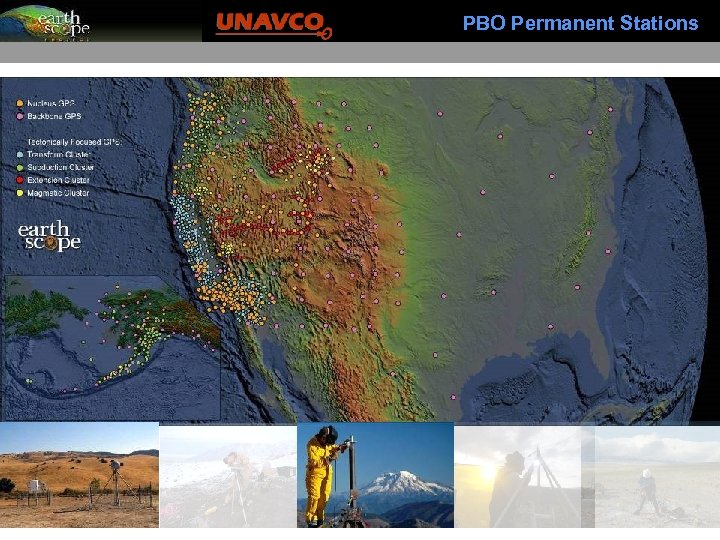
PBO Permanent Stations
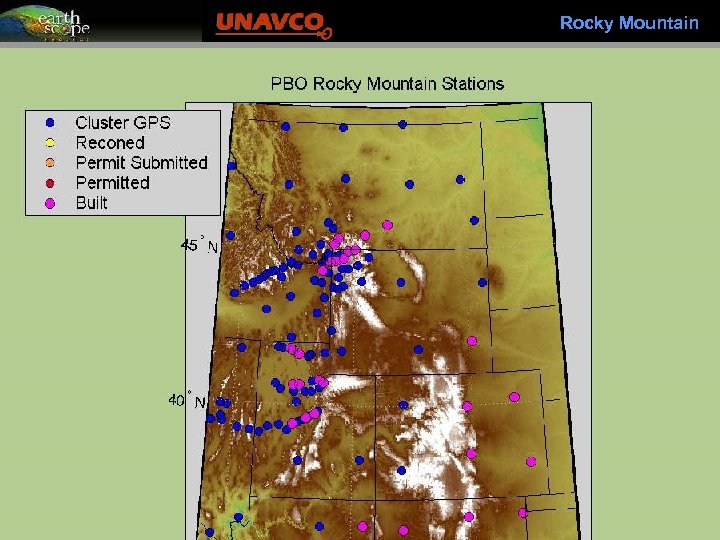
Rocky Mountain
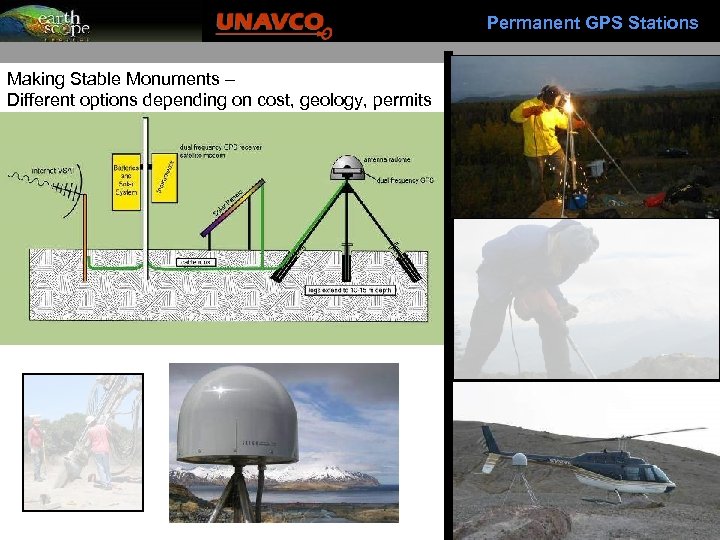
Permanent GPS Stations Making Stable Monuments – Different options depending on cost, geology, permits
Campaign GPS Earth. Scope Campaign GPS 28 Portable Campaign GPS instruments and ancillary equipment purchased and ready for deployment. 72 Portable Campaign GPS instruments and ancillary equipment purchased in FY 06. Rio Grande Rift 5 -year proposal funded through ES science 30 instrument Cascadia ETS Campaign for summer/fall 2005 (underway)
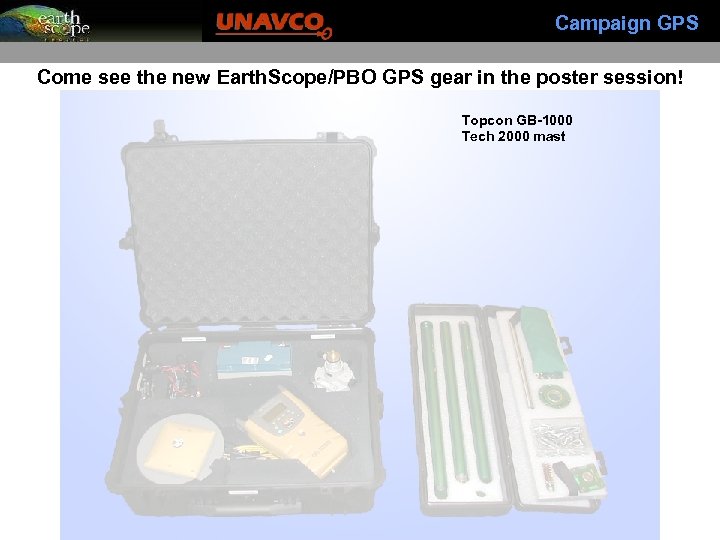
Campaign GPS Come see the new Earth. Scope/PBO GPS gear in the poster session! Topcon GB-1000 Tech 2000 mast
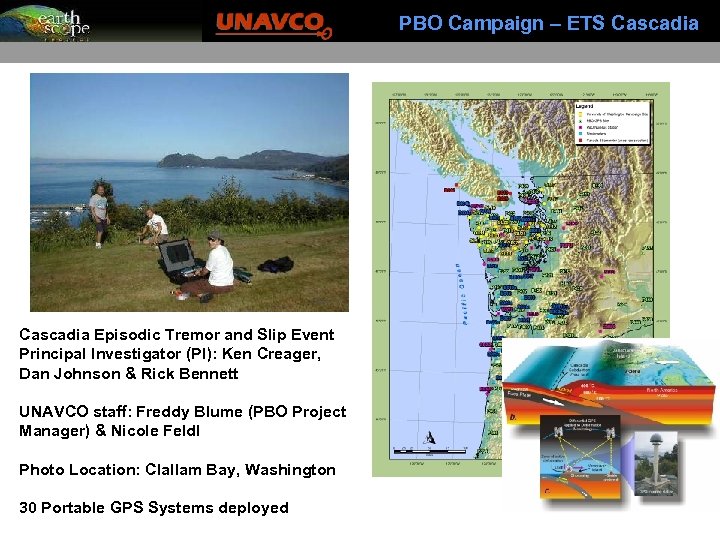
PBO Campaign – ETS Cascadia Episodic Tremor and Slip Event Principal Investigator (PI): Ken Creager, Dan Johnson & Rick Bennett UNAVCO staff: Freddy Blume (PBO Project Manager) & Nicole Feldl Photo Location: Clallam Bay, Washington 30 Portable GPS Systems deployed
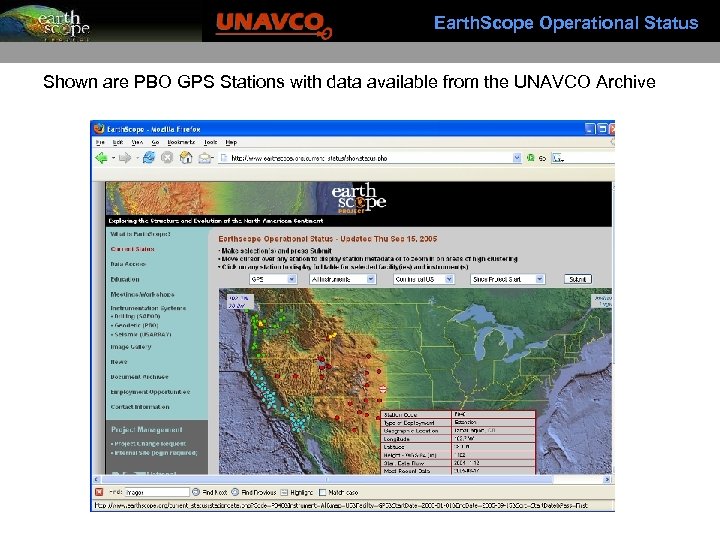
Earth. Scope Operational Status Shown are PBO GPS Stations with data available from the UNAVCO Archive
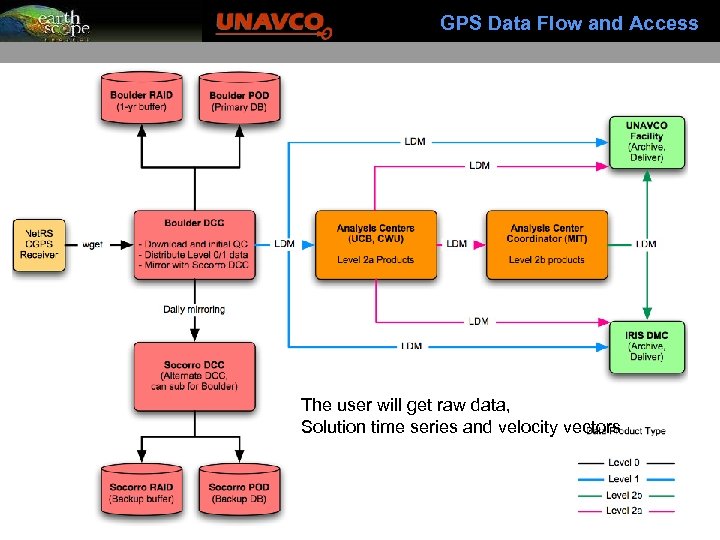
GPS Data Flow and Access The user will get raw data, Solution time series and velocity vectors
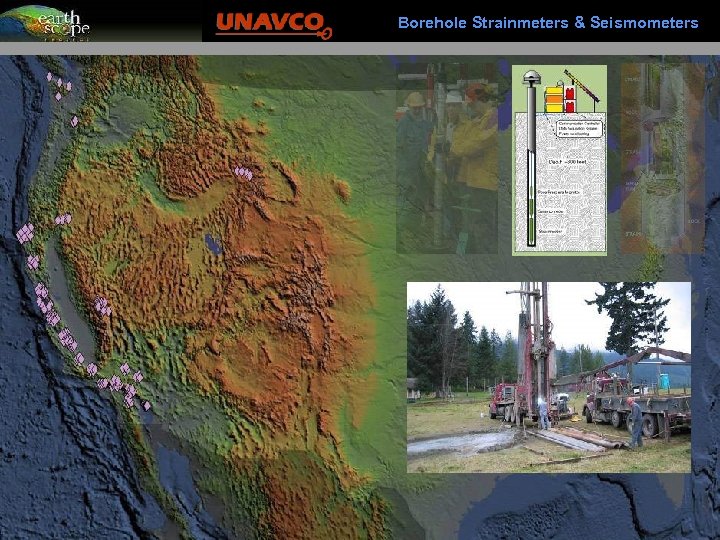
Borehole Strainmeters & Seismometers
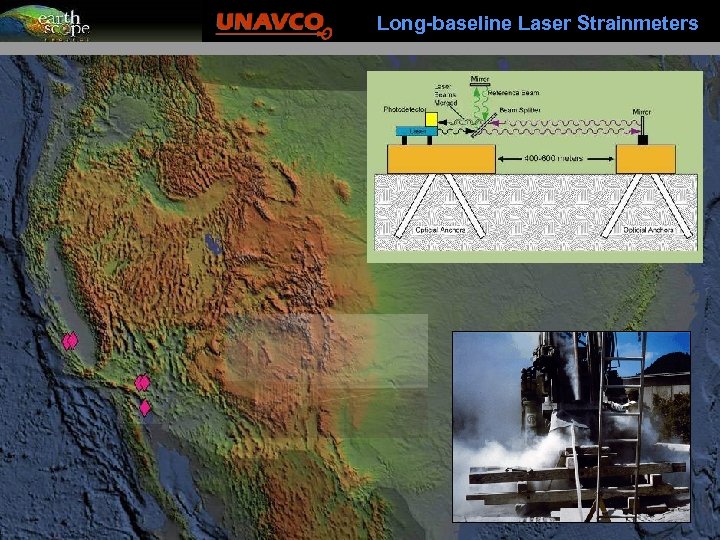
Long-baseline Laser Strainmeters
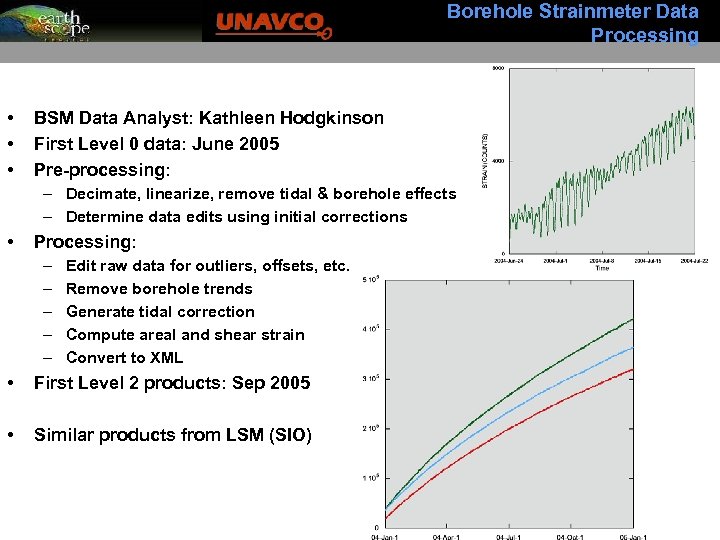
Borehole Strainmeter Data Processing • • • BSM Data Analyst: Kathleen Hodgkinson First Level 0 data: June 2005 Pre-processing: – Decimate, linearize, remove tidal & borehole effects – Determine data edits using initial corrections • Processing: – – – Edit raw data for outliers, offsets, etc. Remove borehole trends Generate tidal correction Compute areal and shear strain Convert to XML • First Level 2 products: Sep 2005 • Similar products from LSM (SIO)
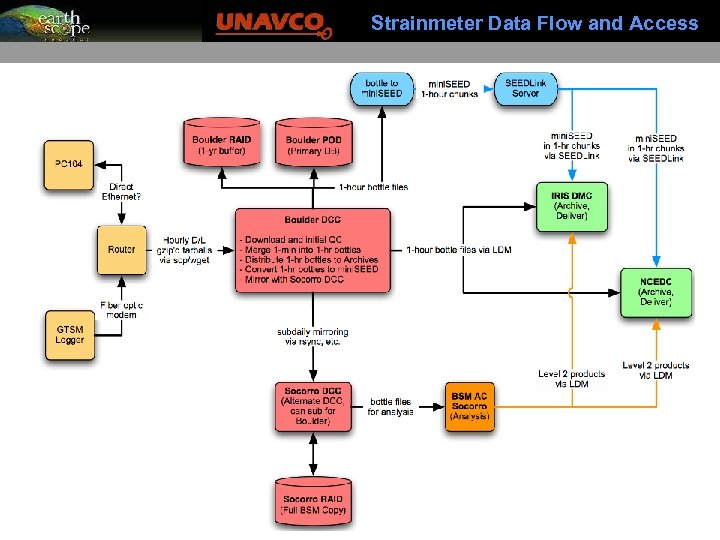
Strainmeter Data Flow and Access
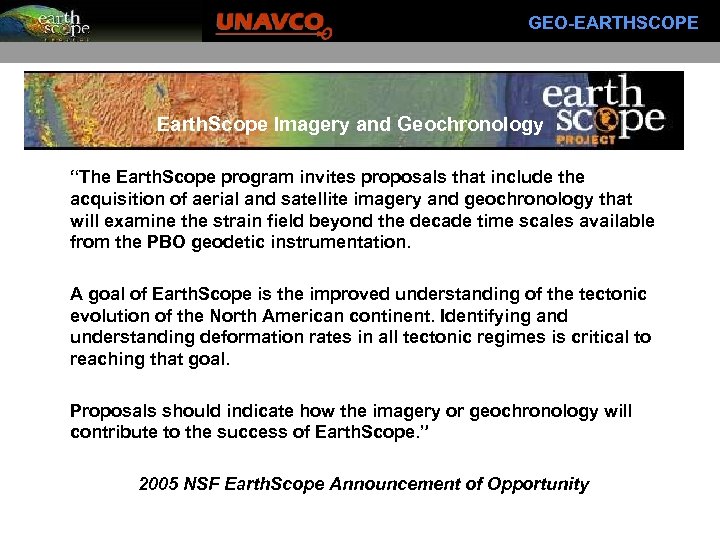
GEO-EARTHSCOPE Earth. Scope Imagery and Geochronology “The Earth. Scope program invites proposals that include the acquisition of aerial and satellite imagery and geochronology that will examine the strain field beyond the decade time scales available from the PBO geodetic instrumentation. A goal of Earth. Scope is the improved understanding of the tectonic evolution of the North American continent. Identifying and understanding deformation rates in all tectonic regimes is critical to reaching that goal. Proposals should indicate how the imagery or geochronology will contribute to the success of Earth. Scope. ” 2005 NSF Earth. Scope Announcement of Opportunity
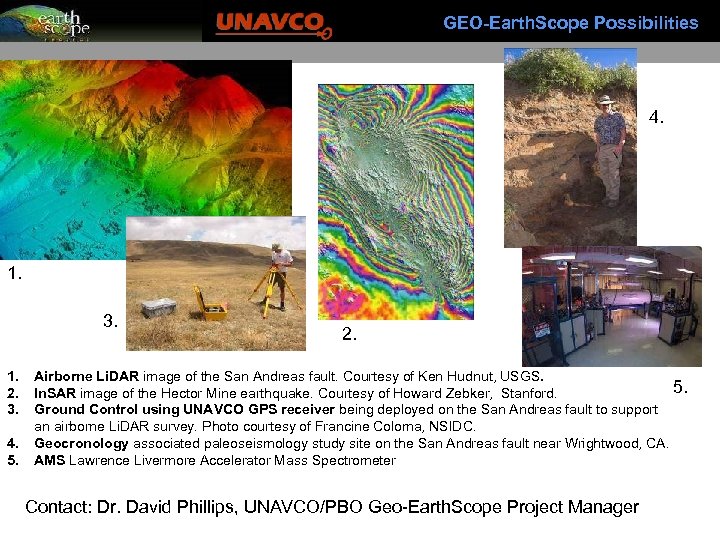
GEO-Earth. Scope Possibilities 4. 1. 3. 1. 2. 3. 4. 5. 2. Airborne Li. DAR image of the San Andreas fault. Courtesy of Ken Hudnut, USGS. 5. In. SAR image of the Hector Mine earthquake. Courtesy of Howard Zebker, Stanford. Ground Control using UNAVCO GPS receiver being deployed on the San Andreas fault to support an airborne Li. DAR survey. Photo courtesy of Francine Coloma, NSIDC. Geocronology associated paleoseismology study site on the San Andreas fault near Wrightwood, CA. AMS Lawrence Livermore Accelerator Mass Spectrometer Contact: Dr. David Phillips, UNAVCO/PBO Geo-Earth. Scope Project Manager
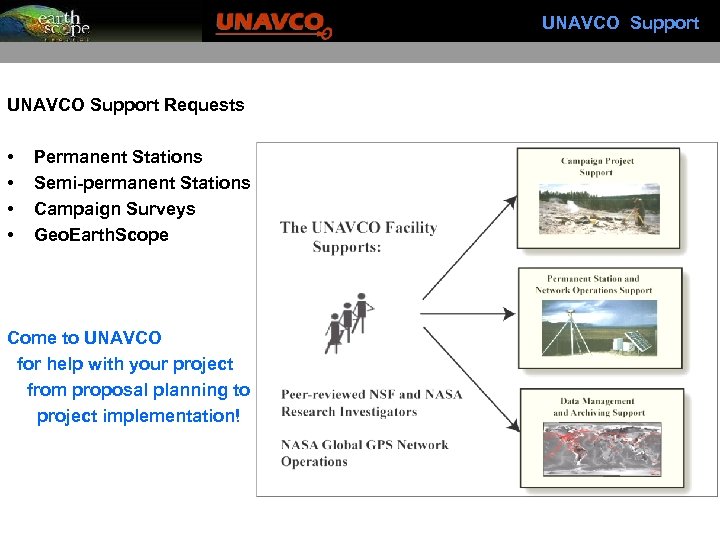
UNAVCO Support Requests • • Permanent Stations Semi-permanent Stations Campaign Surveys Geo. Earth. Scope Come to UNAVCO for help with your project from proposal planning to project implementation!
For more information… http: //pbo. unavco. org www. earthscope. org
Скачать презентацию Earth Scope GPS Tutorial PBO Geodetic Instrumentation
aecef4d4ebb78f0f548e8a25ea17d869.ppt