 Скачать презентацию Earth s Atmosphere and Climate Big Question Global Warming
e8eaba850e2bdb0c5d360219b8e78c73.ppt
- Количество слайдов: 44



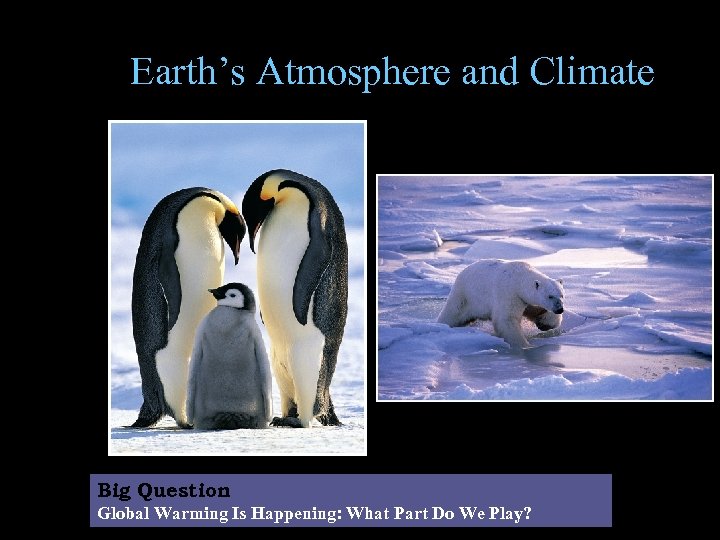
Earth’s Atmosphere and Climate Big Question Global Warming Is Happening: What Part Do We Play?
Overview to Climate Change • • Collecting data Climate vs Weather. Causes of Global Climate Change Effects of Climate Change – Melting Ice and Rising Sea Level – Changes in Precipitation Patterns – Effects on Organisms – Effects on Human Health – Effects on Agriculture • Dealing with Global Climate Change
How do we get our data? • Taking the Earth's Temperature – http: //www. teachersdomain. org/resource/tdc 02. sci. life. eco. earthstemp/ • Proxy Data- 6 Clues from Past Climates – http: //www. teachersdomain. org/assets/thinktv/ttv 10_int_clues/index. html
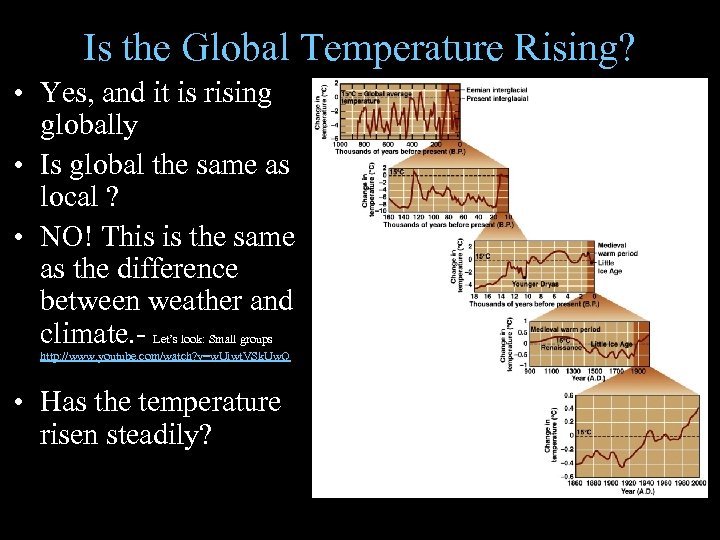
Is the Global Temperature Rising? • Yes, and it is rising globally • Is global the same as local ? • NO! This is the same as the difference between weather and climate. Let’s look: Small groups http: //www. youtube. com/watch? v=w. Uiwt. VSk. Uw. Q • Has the temperature risen steadily?
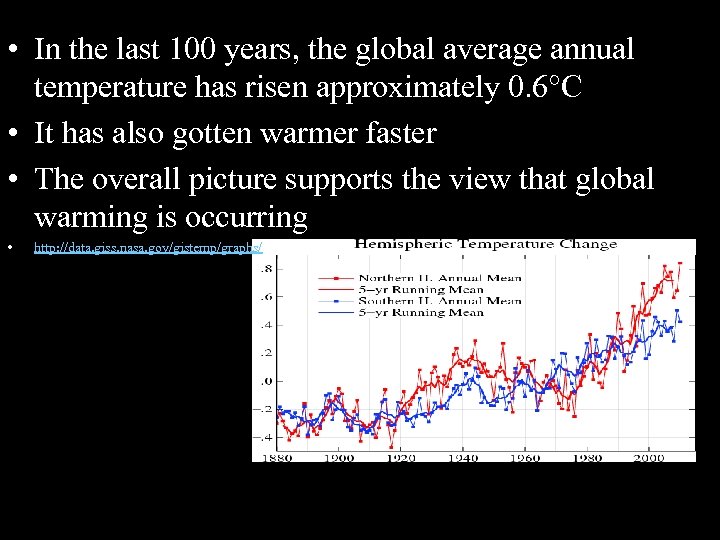
• In the last 100 years, the global average annual temperature has risen approximately 0. 6°C • It has also gotten warmer faster • The overall picture supports the view that global warming is occurring • http: //data. giss. nasa. gov/gistemp/graphs/
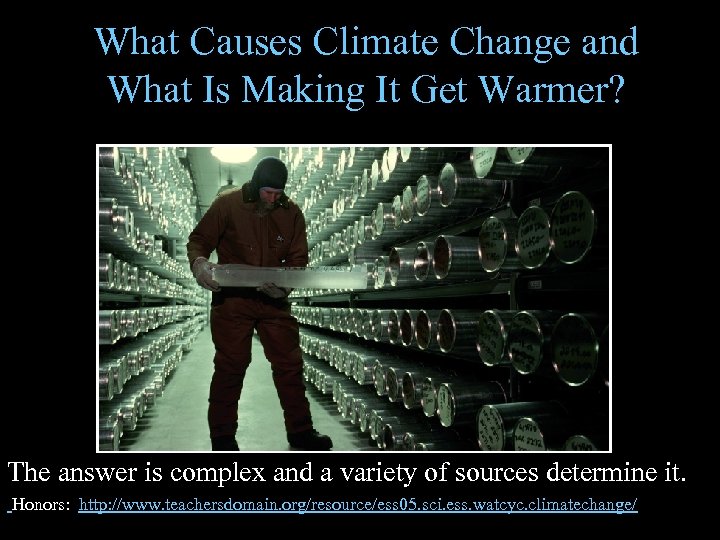
What Causes Climate Change and What Is Making It Get Warmer? The answer is complex and a variety of sources determine it. Honors: http: //www. teachersdomain. org/resource/ess 05. sci. ess. watcyc. climatechange/
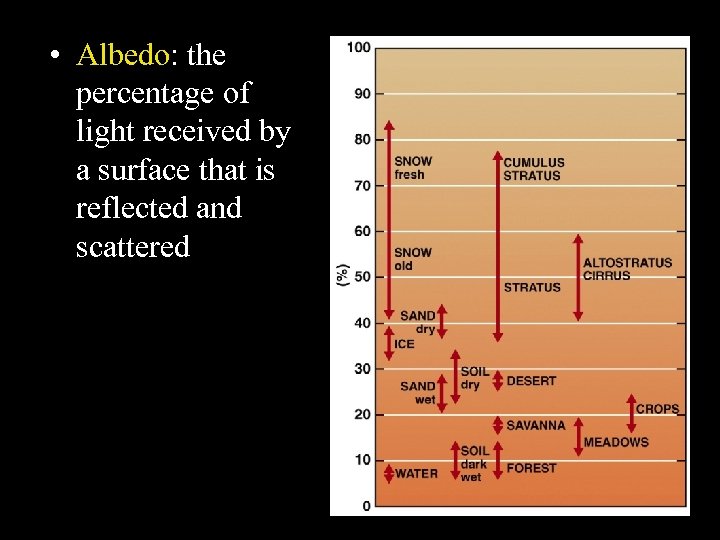
• Albedo: the percentage of light received by a surface that is reflected and scattered
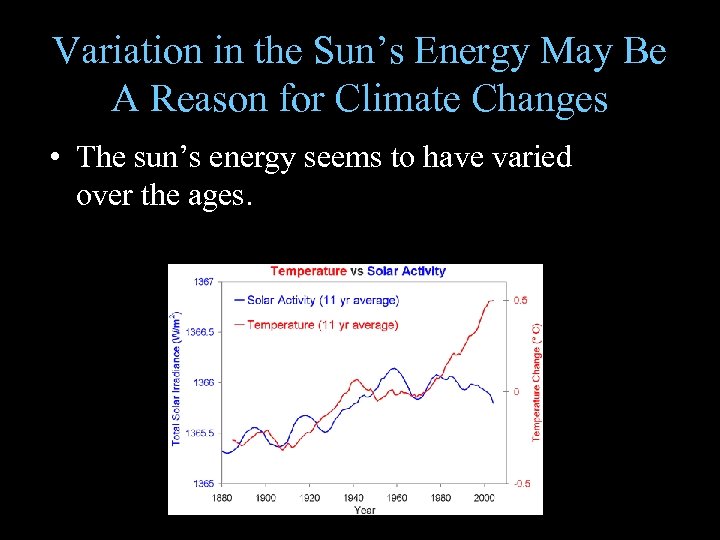
Variation in the Sun’s Energy May Be A Reason for Climate Changes • The sun’s energy seems to have varied over the ages.
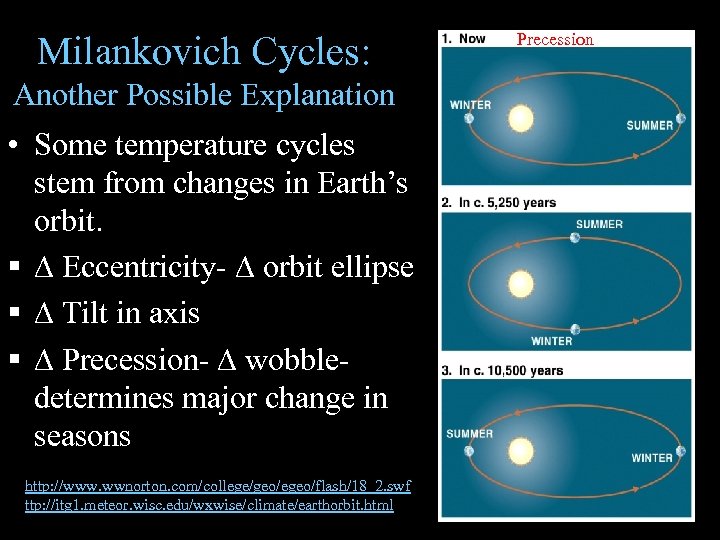
Milankovich Cycles: Another Possible Explanation • Some temperature cycles stem from changes in Earth’s orbit. § D Eccentricity- D orbit ellipse § D Tilt in axis § D Precession- D wobbledetermines major change in seasons http: //www. wwnorton. com/college/geo/egeo/flash/18_2. swf ttp: //itg 1. meteor. wisc. edu/wxwise/climate/earthorbit. html Precession
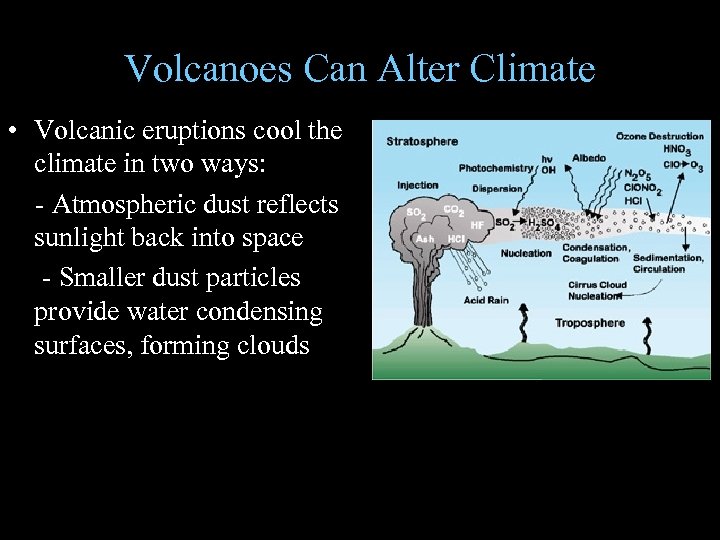
Volcanoes Can Alter Climate • Volcanic eruptions cool the climate in two ways: - Atmospheric dust reflects sunlight back into space - Smaller dust particles provide water condensing surfaces, forming clouds
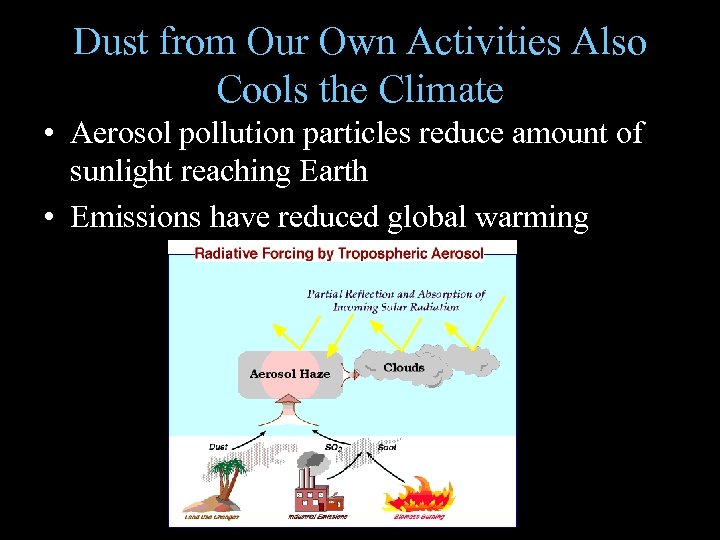
Dust from Our Own Activities Also Cools the Climate • Aerosol pollution particles reduce amount of sunlight reaching Earth • Emissions have reduced global warming
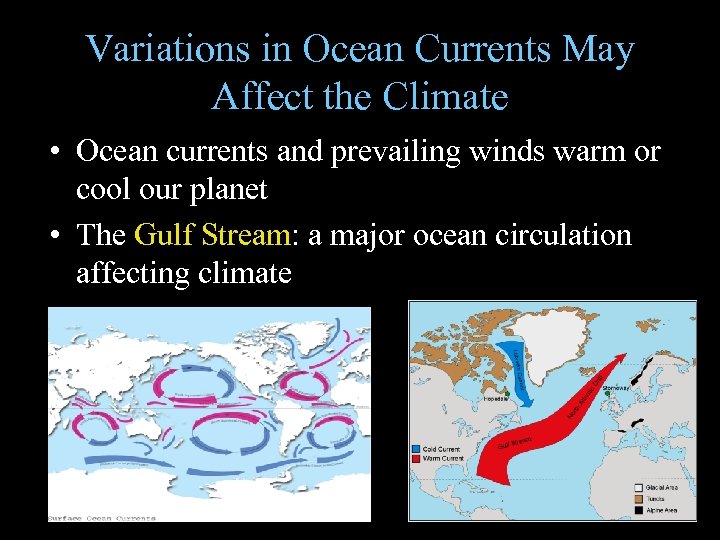
Variations in Ocean Currents May Affect the Climate • Ocean currents and prevailing winds warm or cool our planet • The Gulf Stream: a major ocean circulation affecting climate
El Niño A Climate Phenomenon Linked to Ocean Currents (Christ Child) • A climate change linked to variations in ocean currents accompanied by Southern Oscillation, changes in air pressure. • Prevents upwellings- the transport of deeper water to shallow levels cool surface water and supports bird and fish populations • http: //ww 2010. atmos. uiuc. edu/(Gl)/guides/mtr/eln/upw. rxml
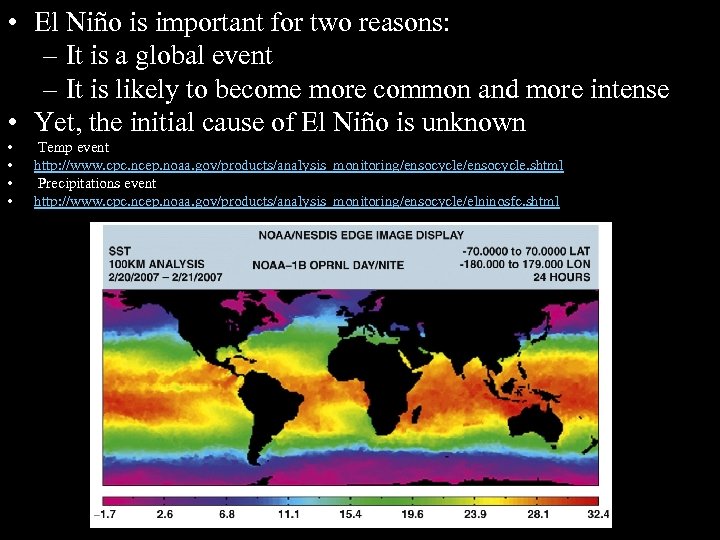
• El Niño is important for two reasons: – It is a global event – It is likely to become more common and more intense • Yet, the initial cause of El Niño is unknown • • Temp event http: //www. cpc. ncep. noaa. gov/products/analysis_monitoring/ensocycle. shtml Precipitations event http: //www. cpc. ncep. noaa. gov/products/analysis_monitoring/ensocycle/elninosfc. shtml

Lab-
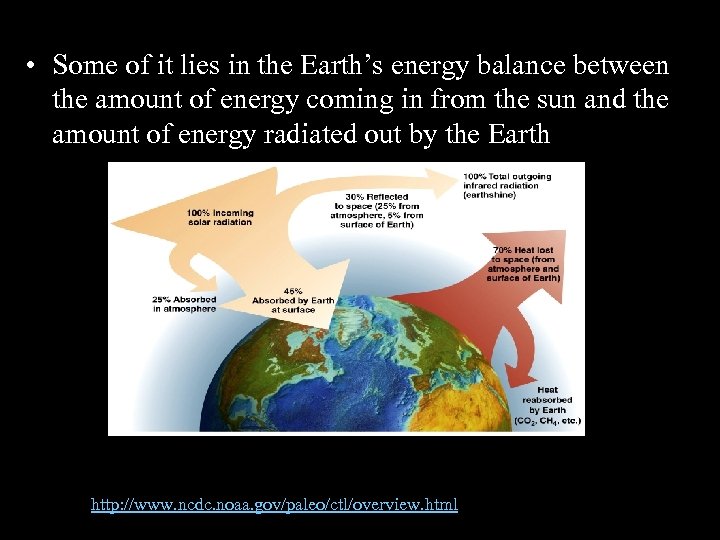
• Some of it lies in the Earth’s energy balance between the amount of energy coming in from the sun and the amount of energy radiated out by the Earth http: //www. ncdc. noaa. gov/paleo/ctl/overview. html
The Greenhouse Effect, and How It Warms Earth’s Surface • Earth’s surface temperature determined by four main factors: 1. Amount of sunlight Earth receives 2. Amount of sunlight Earth reflects 3. Retention of heat by atmosphere 4. Evaporation and condensation of water vapor
Greenhouse gases • are particularly good at absorbing infrared radiation • Include water vapor, carbon dioxide, methane, nitrogen oxides, ozone and chlorofluorocarbons (CFCs) • Greenhouse gases trap heat much as panes of glass do in a greenhouse • A small amount of gas has a big effect on temperature
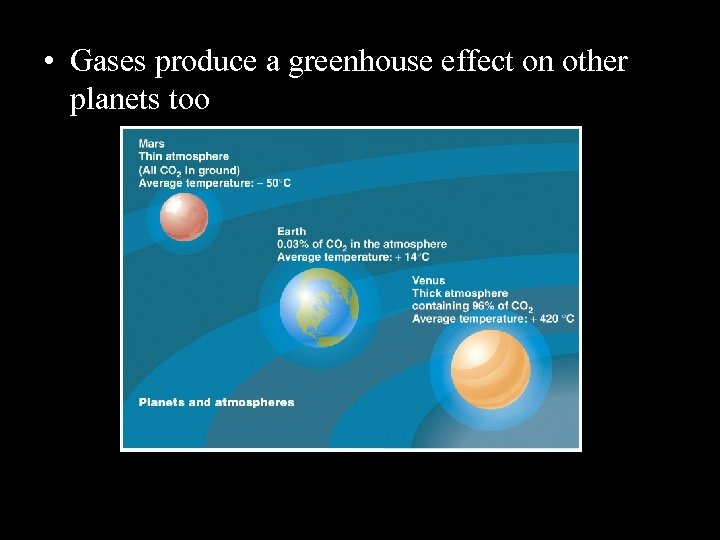
• Gases produce a greenhouse effect on other planets too
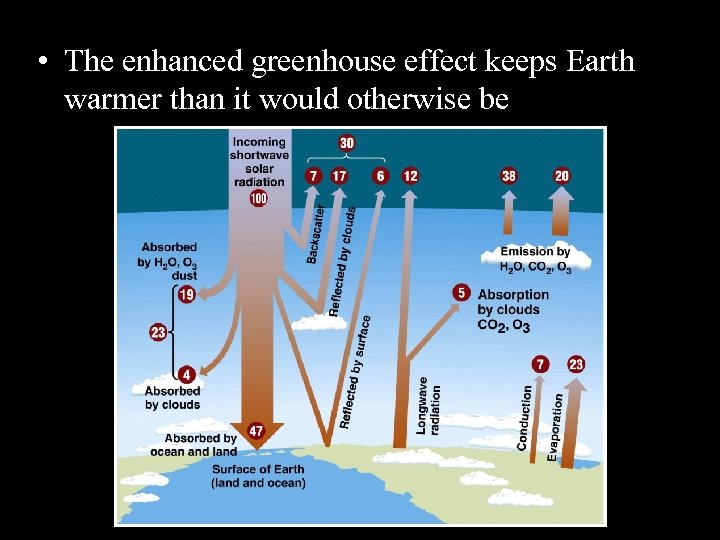
• The enhanced greenhouse effect keeps Earth warmer than it would otherwise be
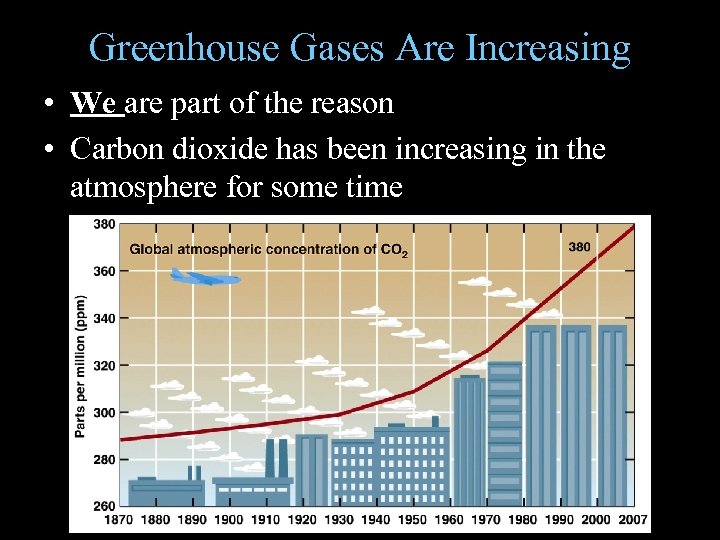
Greenhouse Gases Are Increasing • We are part of the reason • Carbon dioxide has been increasing in the atmosphere for some time
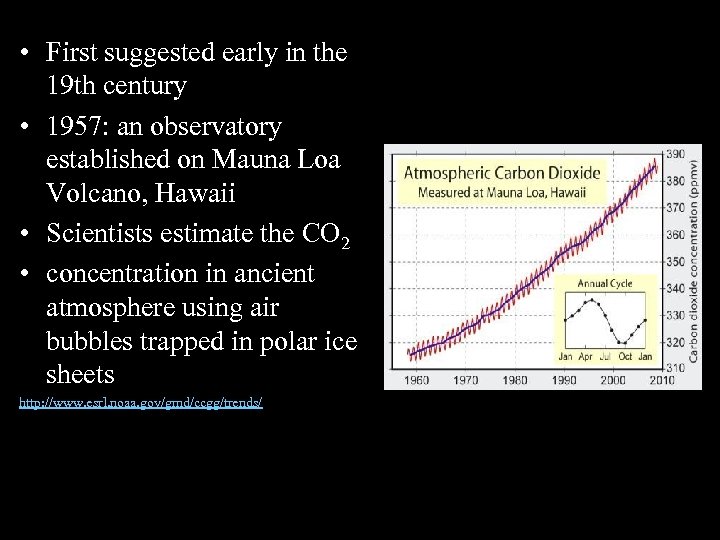
• First suggested early in the 19 th century • 1957: an observatory established on Mauna Loa Volcano, Hawaii • Scientists estimate the CO 2 • concentration in ancient atmosphere using air bubbles trapped in polar ice sheets http: //www. esrl. noaa. gov/gmd/ccgg/trends/
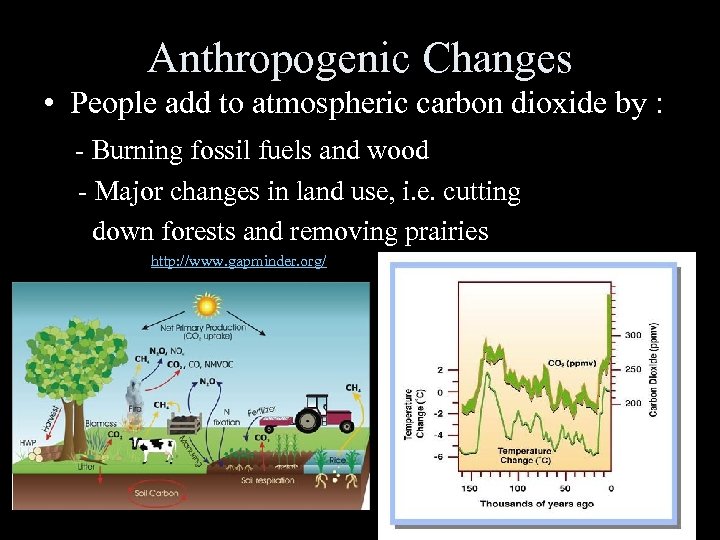
Anthropogenic Changes • People add to atmospheric carbon dioxide by : - Burning fossil fuels and wood - Major changes in land use, i. e. cutting down forests and removing prairies http: //www. gapminder. org/
Methane • Concentration doubled in past 200 years. • More potent than CO 2 • People can add methane to atmospheric by : – Removing fossil fuels – Increasing number of domesticated ruminants (cows, etc. ) – Destroying wetlands (releases stored methane) – Increasing the size of landfills and stored organic matter – Increasing habitats where methane-producing bacteria live • ( polar) http: //www. youtube. com/watch? v=Wofv 9 o 0 j 1 Ew
Would It Really Be So Serious If Earth Warmed Up a Bit? • Possible Effects from Global Warming • Steps to forecasting effects: 1. Forecast changes in climate and physical conditions of the oceans and land surfaces 2. Forecast species and ecosystems response
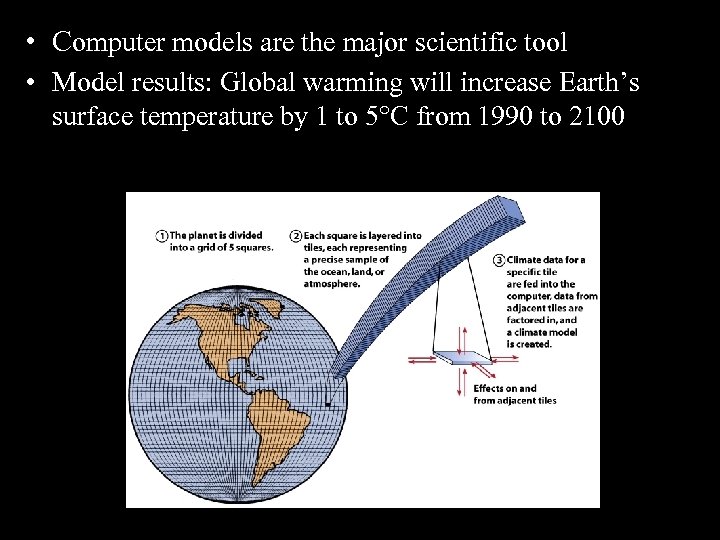
• Computer models are the major scientific tool • Model results: Global warming will increase Earth’s surface temperature by 1 to 5°C from 1990 to 2100
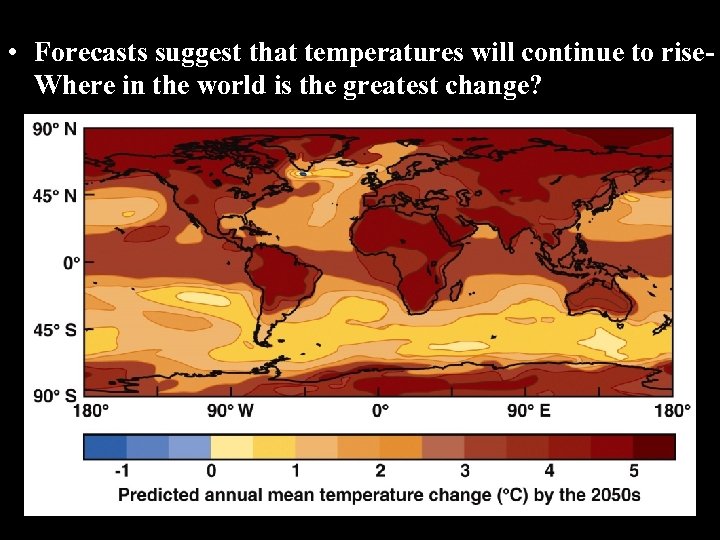
• Forecasts suggest that temperatures will continue to rise. Where in the world is the greatest change?
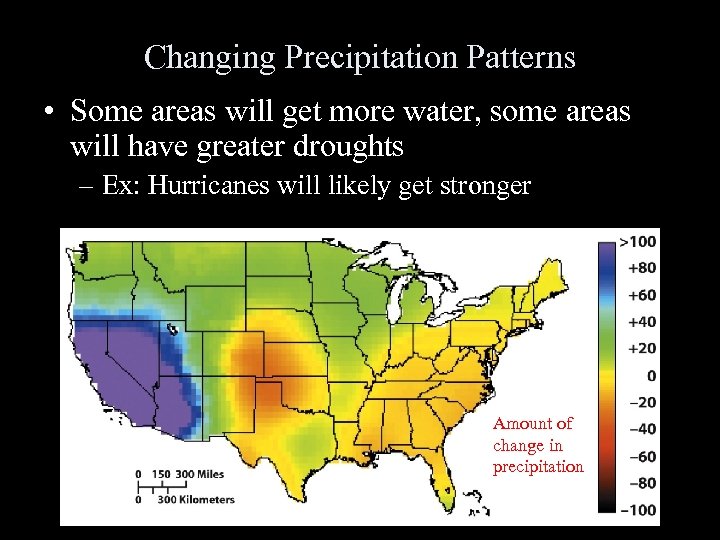
Changing Precipitation Patterns • Some areas will get more water, some areas will have greater droughts – Ex: Hurricanes will likely get stronger Amount of change in precipitation
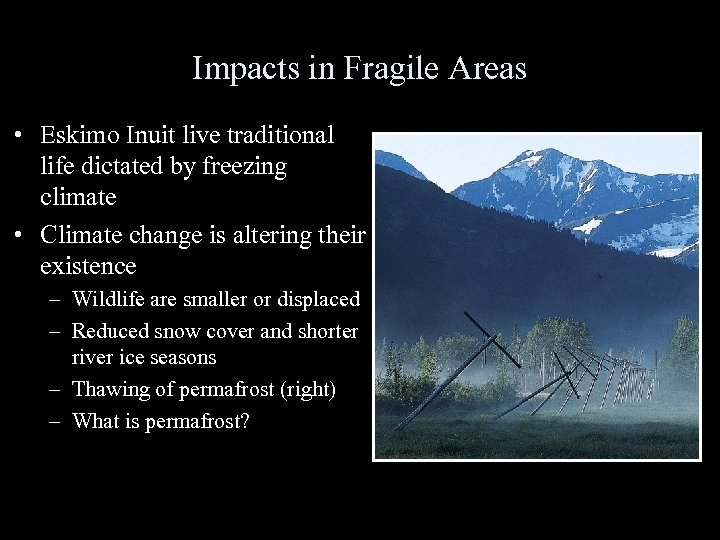
Impacts in Fragile Areas • Eskimo Inuit live traditional life dictated by freezing climate • Climate change is altering their existence – Wildlife are smaller or displaced – Reduced snow cover and shorter river ice seasons – Thawing of permafrost (right) – What is permafrost?
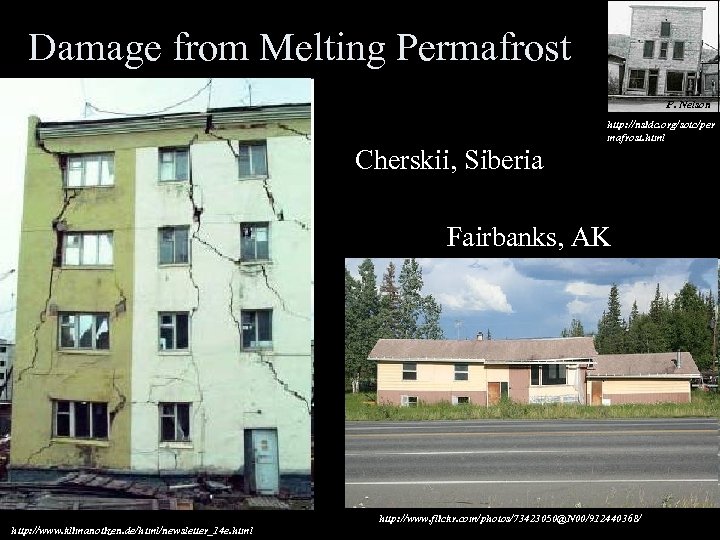
Damage from Melting Permafrost F. Nelson Cherskii, Siberia http: //nsidc. org/sotc/per mafrost. html Fairbanks, AK http: //www. klimanotizen. de/html/newsletter_14 e. html http: //www. flickr. com/photos/73423050@N 00/912440368/
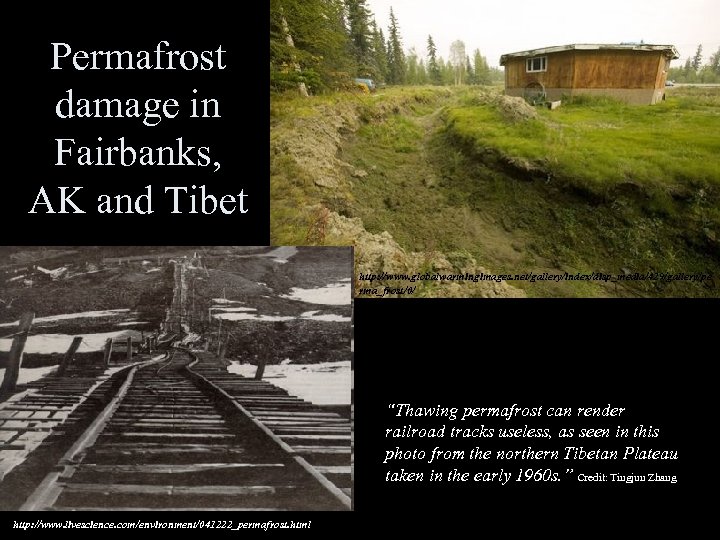
Permafrost damage in Fairbanks, AK and Tibet http: //www. globalwarmingimages. net/gallery/index/disp_media/429/gallery/pe rma_frost/0/ “Thawing permafrost can render railroad tracks useless, as seen in this photo from the northern Tibetan Plateau taken in the early 1960 s. ” Credit: Tingjun Zhang http: //www. livescience. com/environment/041222_permafrost. html
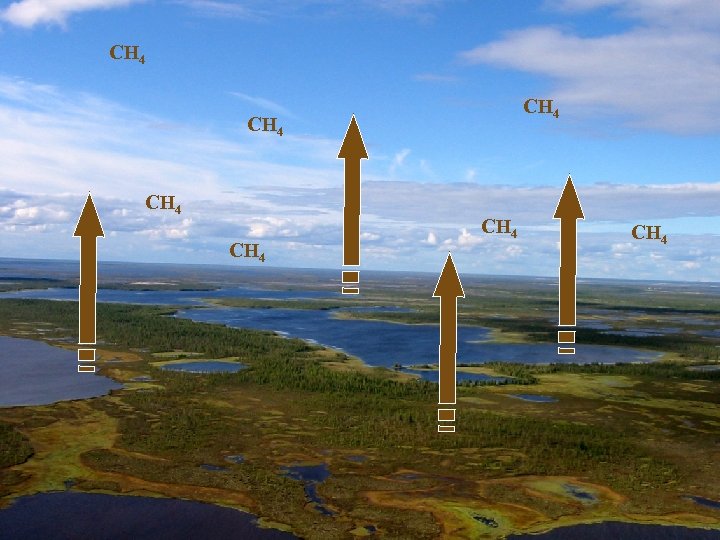
CH 4 CH 4 Karen Frey; image CH 4
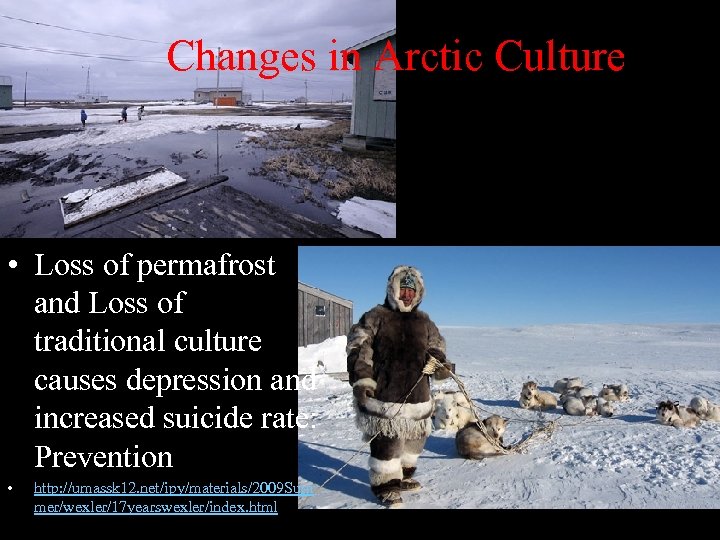
Changes in Arctic Culture • Loss of permafrost and Loss of traditional culture causes depression and increased suicide rate: Prevention • http: //umassk 12. net/ipy/materials/2009 Sum mer/wexler/17 yearswexler/index. html
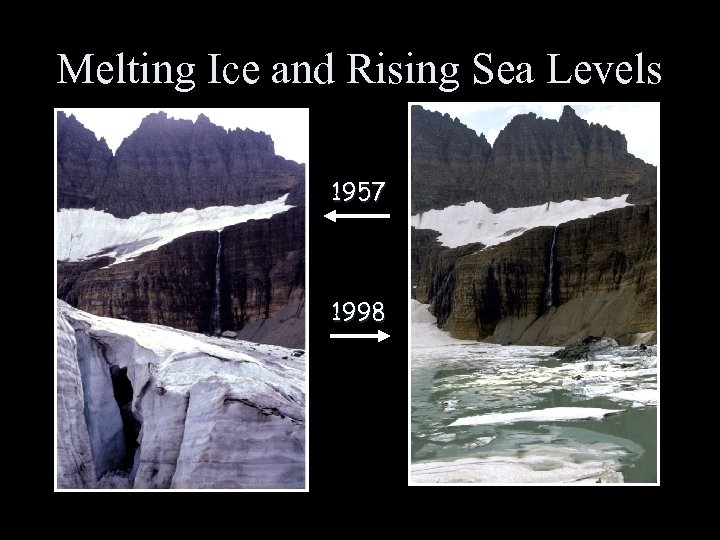
Melting Ice and Rising Sea Levels 1957 1998
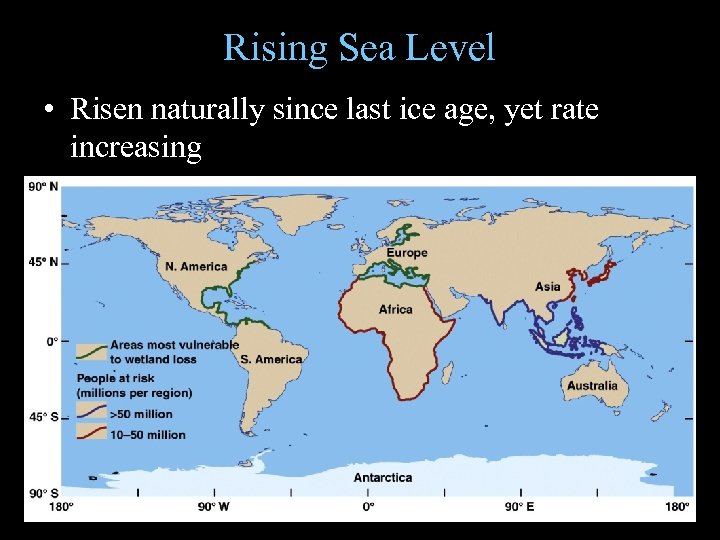
Rising Sea Level • Risen naturally since last ice age, yet rate increasing

LAB Activity
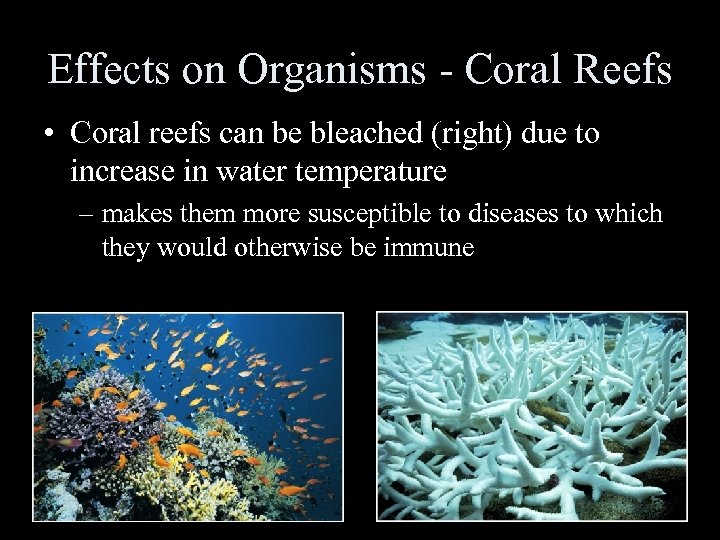
Effects on Organisms - Coral Reefs • Coral reefs can be bleached (right) due to increase in water temperature – makes them more susceptible to diseases to which they would otherwise be immune
Effects of Global Climate Change- Effects on Organisms • Zooplankton in parts of California Current have decreased by 80% since 1951 – Effecting entire food chain • Decline in krill around Antarctica – Caused decrease in penguin populations • Species have shifted their geographic range • Migrating birds are returning to summer homes earlier – Food is not available at this time
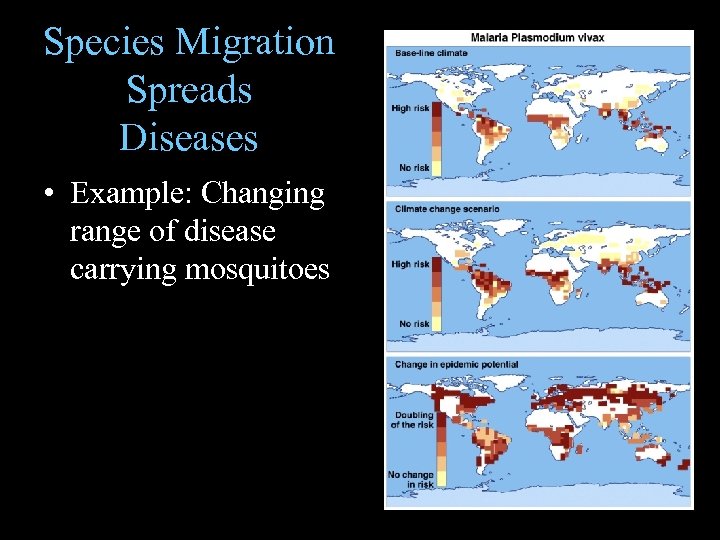
Species Migration Spreads Diseases • Example: Changing range of disease carrying mosquitoes
West Nile virus is an example of global warming spreading disease: 1. Mild winters -more mosquitoes 2. Dry springs increase - mosquito and bird concentrations 3. Mosquitoes with virus bite uninfected birds 4. Infected birds are bitten by uninfected mosquitoes, passing the virus to them 5. Hot, wet summers cause mosquito population to mature and grow rapidly
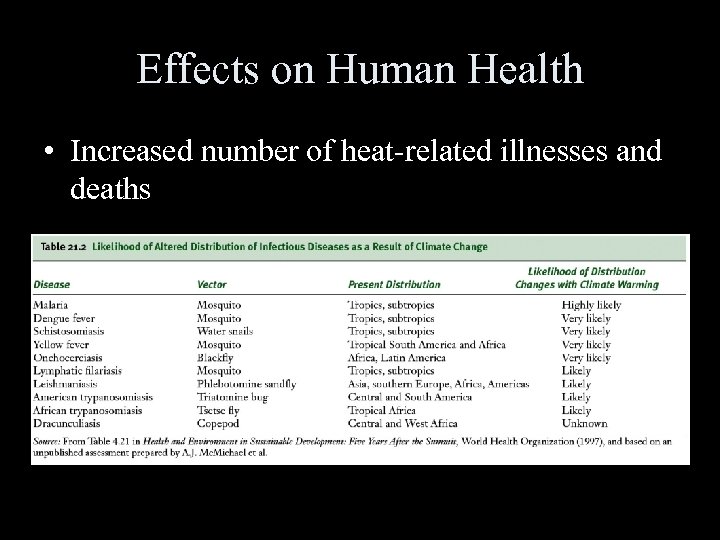
Effects on Human Health • Increased number of heat-related illnesses and deaths
Dealing with Global Climate Change • To avoid the worst of climate change, CO 2 levels must be stabilized at 550 ppm – 50% higher than current levels • Two ways to attempt to manage climate change – Mitigation • Reduce production and release of greenhouse gases • Find ways to sequester (store) greenhouse gases – Adaptation • Focuses on learning to live with to the environmental changes and societal consequences brought about by global climate change
Politics/policy on Global Warming • Toronto 1988: scientists recommended a 20% reduction in carbon dioxide emissions by 2005 • Earth Summit 1992: Blueprint for reducing global emissions • Kyoto 1997: Legally binding emission limits • We have run out of excuses • What is being done in the United States? • Why is the Kyoto Accord so important?
Alleviating the Effects of Global Warming. What else can we do? • • • Move species to new habitats Establish new nature preserves Establish wildlife corridors Develop new strains of improved-yield crops Learn to live with the changes • http: //www. youtube. com/watch? v=08 z-Hw 7 s 54 E
Скачать презентацию Earth s Atmosphere and Climate Big Question Global Warming
e8eaba850e2bdb0c5d360219b8e78c73.ppt