


 Скачать презентацию Early Explorers to Canada Who were the
999c47f0519b5691acd3601741842597.ppt
- Количество слайдов: 29
 Early Explorers to Canada
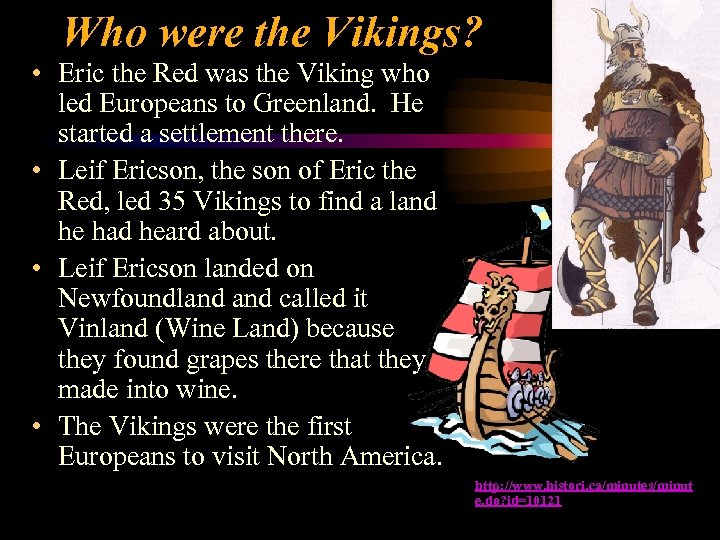 Who were the Vikings? • Eric the Red was the Viking who led Europeans to Greenland. He started a settlement there. • Leif Ericson, the son of Eric the Red, led 35 Vikings to find a land he had heard about. • Leif Ericson landed on Newfoundland called it Vinland (Wine Land) because they found grapes there that they made into wine. • The Vikings were the first Europeans to visit North America. http: //www. histori. ca/minutes/minut e. do? id=10121
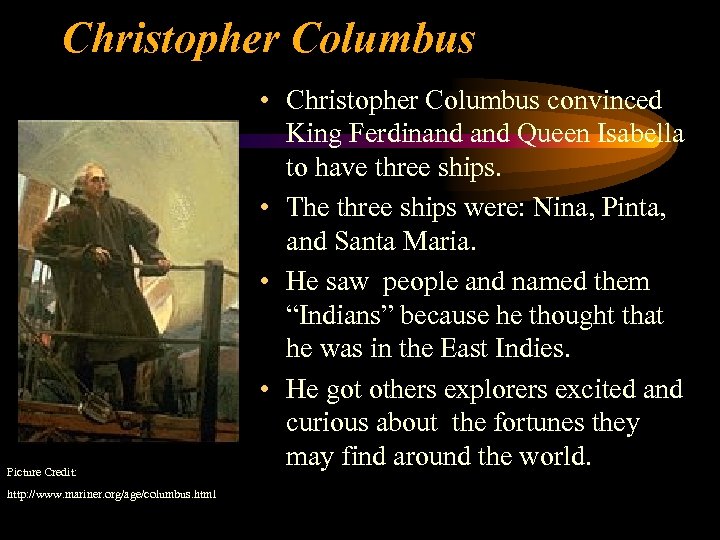 Christopher Columbus Picture Credit: http: //www. mariner. org/age/columbus. html • Christopher Columbus convinced King Ferdinand Queen Isabella to have three ships. • The three ships were: Nina, Pinta, and Santa Maria. • He saw people and named them “Indians” because he thought that he was in the East Indies. • He got others explorers excited and curious about the fortunes they may find around the world.
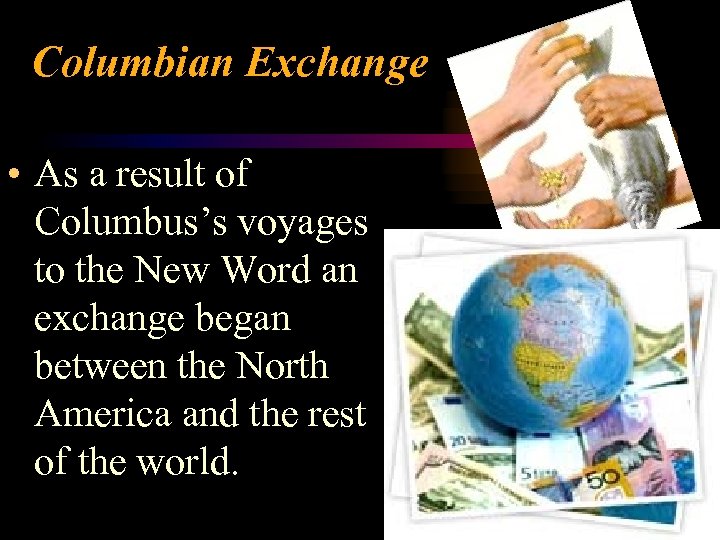 Columbian Exchange • As a result of Columbus’s voyages to the New Word an exchange began between the North America and the rest of the world.
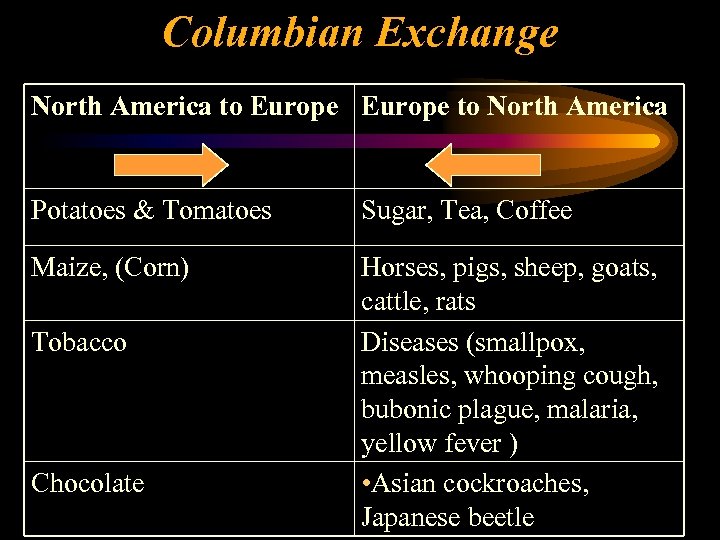 Columbian Exchange North America to Europe to North America Potatoes & Tomatoes Sugar, Tea, Coffee Maize, (Corn) Horses, pigs, sheep, goats, cattle, rats Diseases (smallpox, measles, whooping cough, bubonic plague, malaria, yellow fever ) • Asian cockroaches, Japanese beetle Tobacco Chocolate
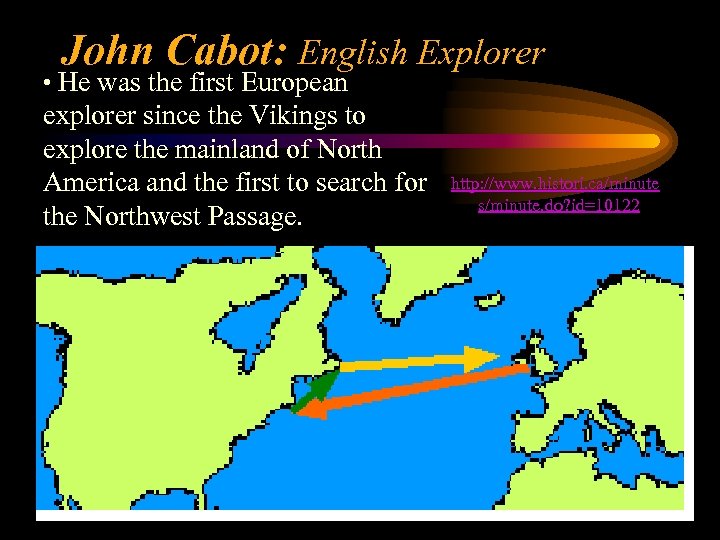 John Cabot: English Explorer • He was the first European explorer since the Vikings to explore the mainland of North America and the first to search for the Northwest Passage. http: //www. histori. ca/minute s/minute. do? id=10122
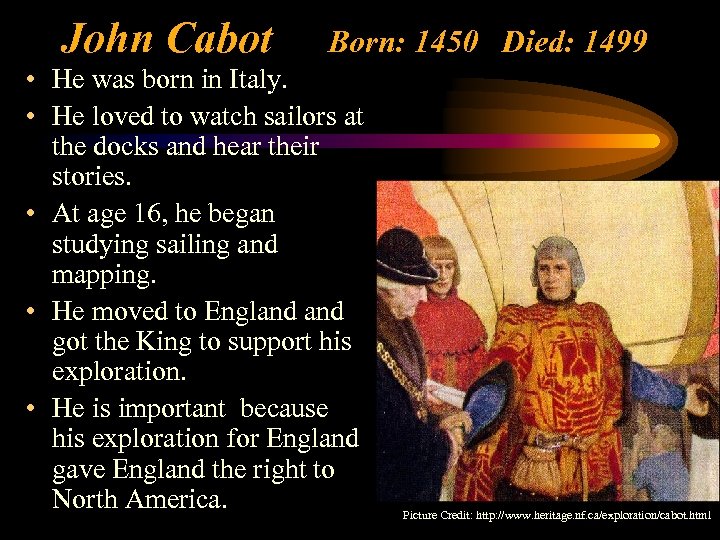 John Cabot Born: 1450 Died: 1499 • He was born in Italy. • He loved to watch sailors at the docks and hear their stories. • At age 16, he began studying sailing and mapping. • He moved to England got the King to support his exploration. • He is important because his exploration for England gave England the right to North America. Picture Credit: http: //www. heritage. nf. ca/exploration/cabot. html
 Jacques Cartier Born: 1491 Died: 1557 • Jacques Cartier was born in France. He studied navigation. • He crossed the Gaspe • In 1531, the King of Peninsula and took France, Francis I, hired possession of it for Cartier to look for the France before Northwest Passage, the returning home. short route to the Pacific Unfortunately he had Ocean. mistaken the mouth of the St. Lawrence River • He sailed down the coast of for a bay, and failed to Newfoundland, discovering investigate it. Prince Edward islands.
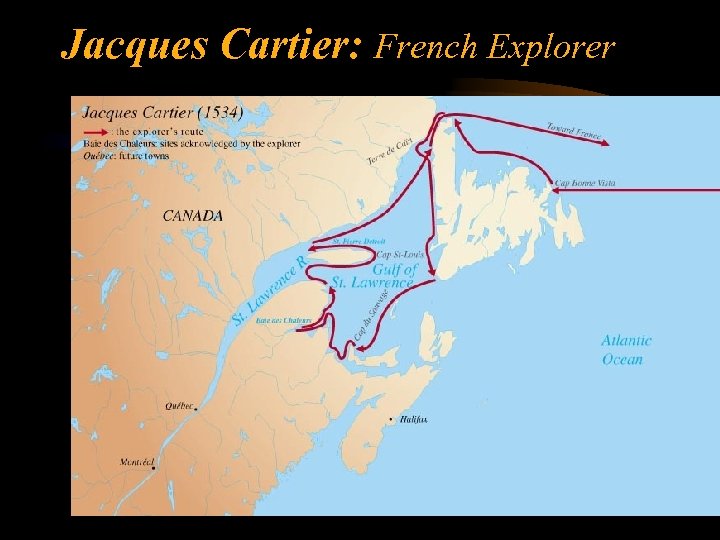 Jacques Cartier: French Explorer
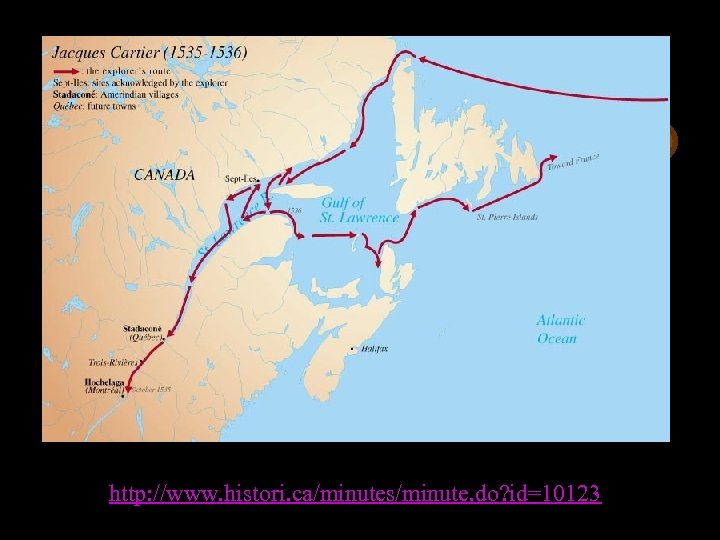 http: //www. histori. ca/minutes/minute. do? id=10123
 Jacques Cartier: Second Expedition • In 1535, the king sent him out again. • He sailed up the St. Lawrence River and recognized it for what it was. • He continued on, establishing Mont Real (Mount Royal) which is now Montreal, Canada. • They spent the winter at an Indian village near Quebec, where Cartier watched 25 of his men die of scurvy. • Cartier may have named Canada; "Kanata" meaning village or settlement in the Huron. Iroquois language.
 Jacques Cartier: Takes Prisoners • The Huron were generous to Cartier, but he betrayed them. • He kidnapped 12 Indians, including their chief, and headed straight for France. • Cartier hoped that his prisoners would tell him where their gold mine was located, but there really was no gold. • An epidemic of scurvy killed many explorers and Indians. The Iroquois, were the first affected and were slow in giving up the secret of anedda, a white cedar tea which would save them – Vitamin C.
 Jacques Cartier: Third Expedition • In 1541, Cartier was hired to help Jean Roberval begin a colony in Canada. • They could not find enough French colonists willing to give up the advantages of home for the uncivilized New World. • They asked the French Government for help. • They helped by giving them prisoners who were willing to join the expedition. • Cartier left Roberval stranded in New France with a colony of robbers and murderers. • Cartier never found the Northwest Passage. • He died in England in 1499.
 Samuel de Champlain French Explorer • He was a French explorer and skilled mapmaker, who mapped much of northeastern North America. • He started a settlement in Quebec and founded the city of Quebec as a center of the fur trade. • Champlain explored the Ottawa River, and the eastern Great Lakes. • Champlain was important in establishing the French colonies in the New World.
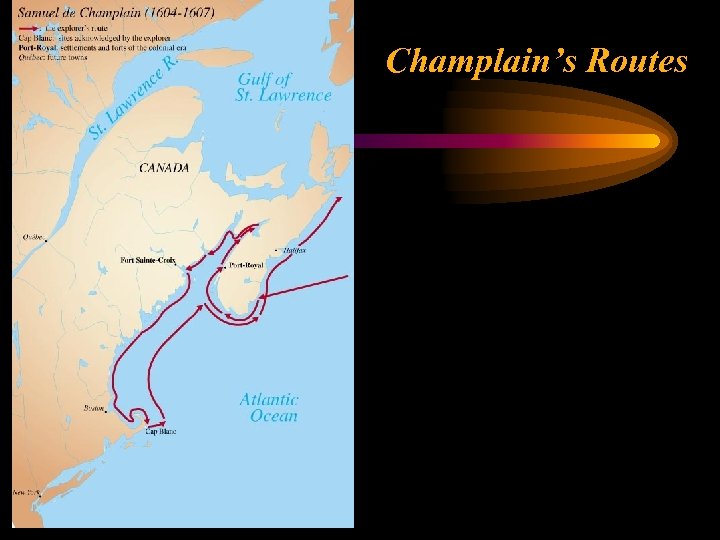 Champlain’s Routes
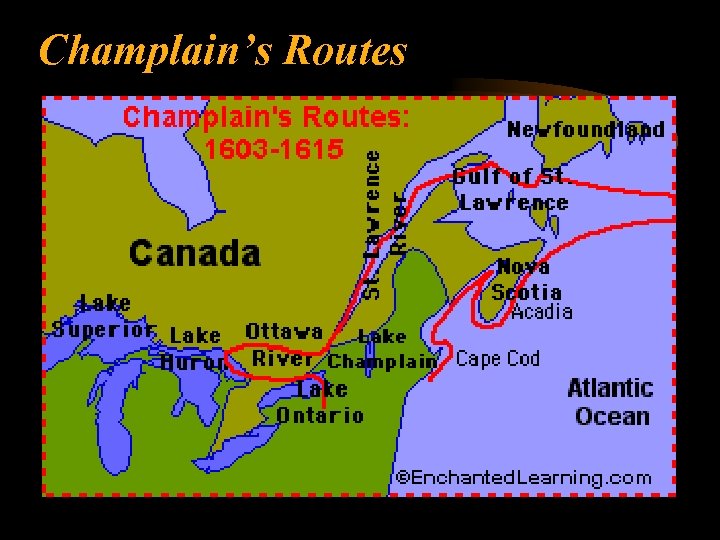 Champlain’s Routes
 Champlain’s Final Years • He wanted to convert the Indians to Christianity. • Champlain headed the Quebec settlement for years, until the English attacked and took the Fort at Quebec. • Champlain returned to France. • After a French-British peace treaty in 1632, Quebec was once again French, and Champlain returned as its governor (1633). • He died from a stroke on Dec. 25, 1635.
 Henry Hudson: English Explorer • He was an English explorer and navigator who sailed to northern North America four times. • He had been hired to find a Northwest passage. • A trip through the Hudson Strait and into Hudson Bay ended in a mutiny. • The Hudson River, Hudson Strait, and Hudson Bay are named for Hudson.
 HENRY KELSEY: English Explorer • Kelsey was a British explorer of inland Canada. • He was only 17 years old • when he explored Canada. • Kelsey was the first European to see the • Canadian prairies. Kelsey began the trade routes of the Hudson's Bay Company in Saskatchewan. He negotiated with various Indian tribes; he respected and enjoyed Indian culture.
 Simon Fraser: English Explorer • Fraser was a fur trader and explorer in British Columbia. • He was hired by the Northwest Company to set up fur trading post out west. • He explored what is now known as the Fraser River, which is named after him. • He was the first European to establish permanent settlements in the area.
 Samuel Hearne: English Explorer • Samuel Hearne was an • Hearne built was an English Cumberland House for explorer, fur-trader, the Hudson’s Bay and author. Company, its first interior trading post • He was the first and the first permanent European to make an settlement in present overland excursion Saskatchewan. across northern Canada to the Arctic Ocean.
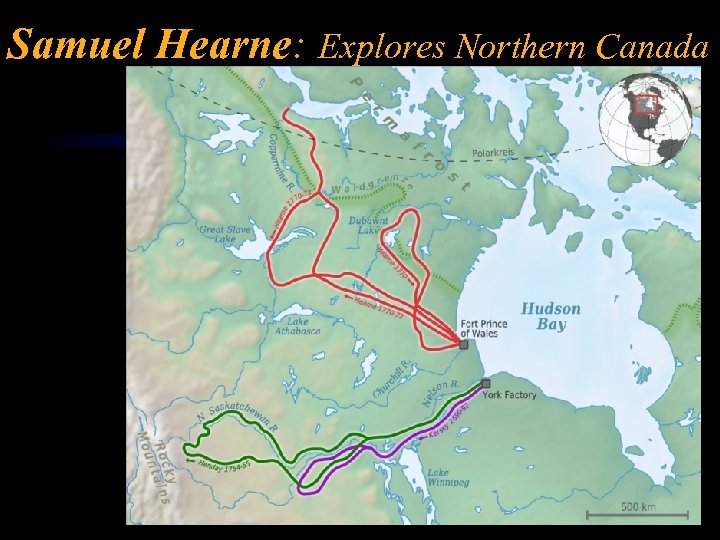 Samuel Hearne: Explores Northern Canada
 Mathieu de Costa: African Translator • Mathieu de Costa is the first recorded black • His translating skills person in Canada. helped close the • De Costa spoke many cultural gap between different languages and early French explorers was able to communicate and the Mi'kmaq in Mi'kmaq, an Indian people. language. • He was a translator for the Europeans.
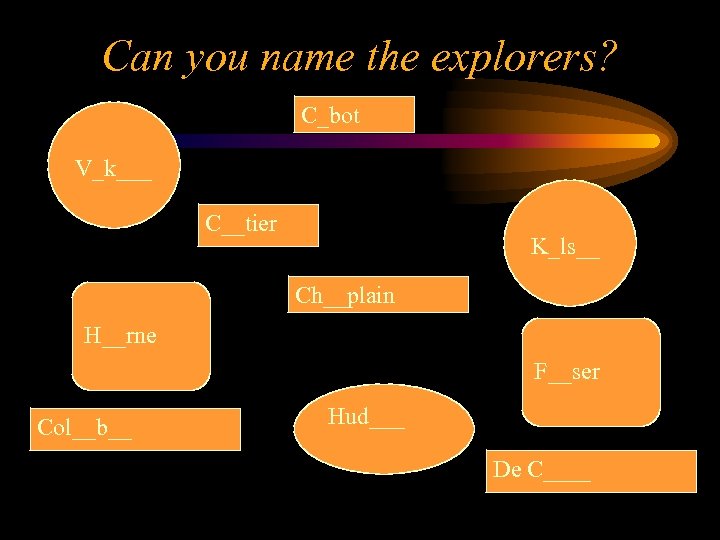 Can you name the explorers? C_bot V_k___ C__tier K_ls__ Ch__plain H__rne F__ser Col__b__ Hud___ De C____
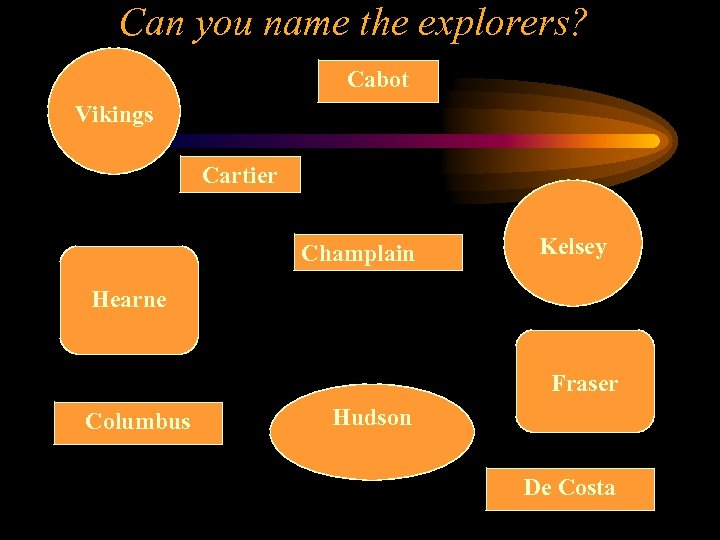 Can you name the explorers? Cabot Vikings Cartier Champlain Kelsey Hearne Fraser Columbus Hudson De Costa
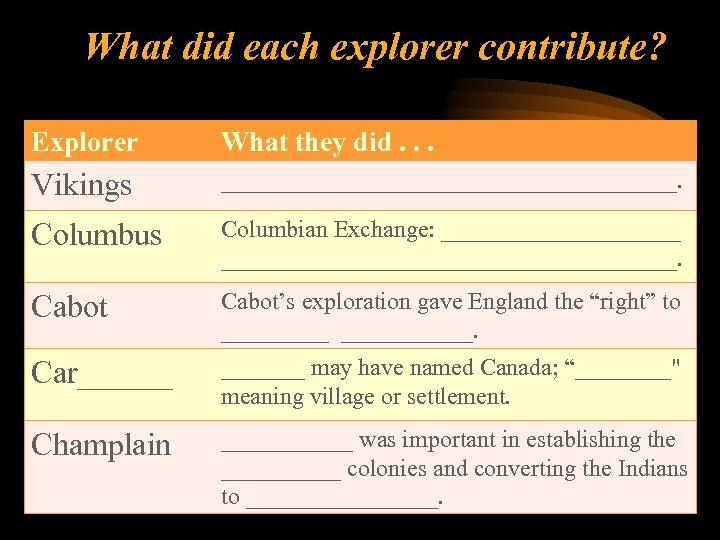 What did each explorer contribute? Explorer What they did. . . Vikings ___________________. Columbus Columbian Exchange: _____________________________. Cabot’s exploration gave England the “right” to ___________. Car_______ may have named Canada; “____" meaning village or settlement. Champlain ______ was important in establishing the _____ colonies and converting the Indians to ________.
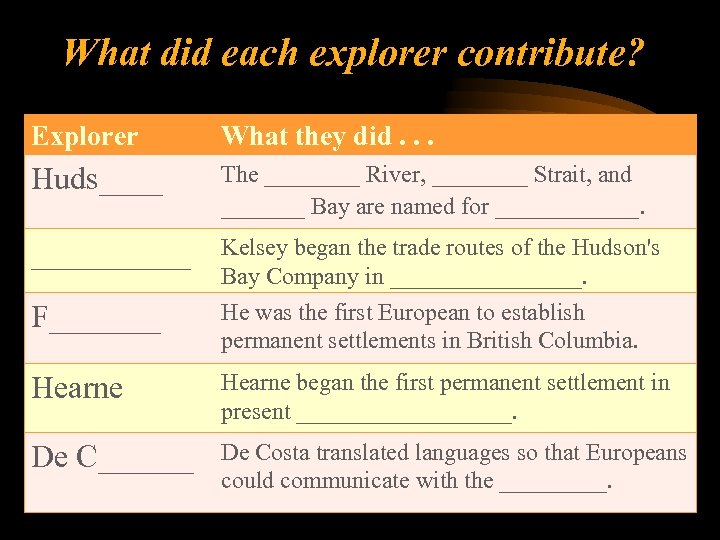 What did each explorer contribute? Explorer What they did. . . Huds____ The ____ River, ____ Strait, and _______ Bay are named for ______. _____ Kelsey began the trade routes of the Hudson's Bay Company in ________. F_______ He was the first European to establish permanent settlements in British Columbia. Hearne began the first permanent settlement in present _________. De C______ De Costa translated languages so that Europeans could communicate with the _____.
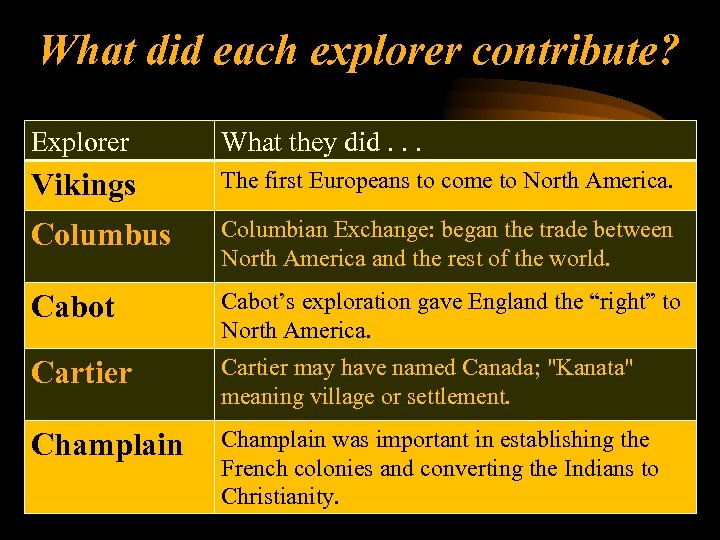 What did each explorer contribute? Explorer What they did. . . Vikings The first Europeans to come to North America. Columbus Columbian Exchange: began the trade between North America and the rest of the world. Cabot’s exploration gave England the “right” to North America. Cartier may have named Canada; "Kanata" meaning village or settlement. Champlain was important in establishing the French colonies and converting the Indians to Christianity.
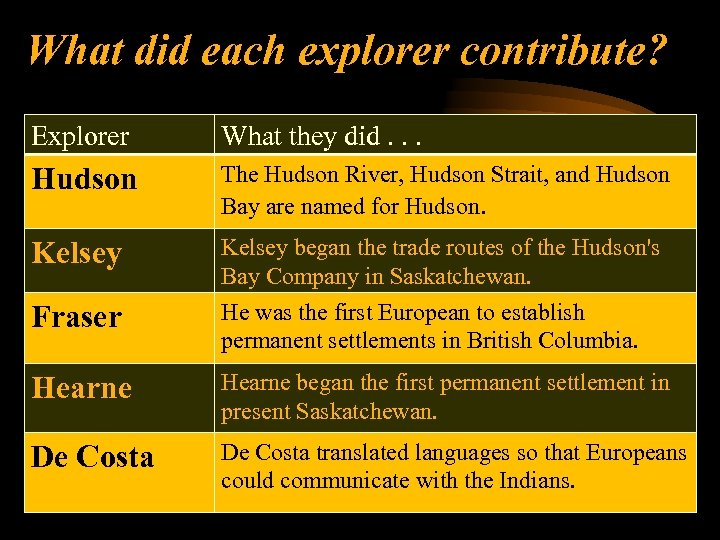 What did each explorer contribute? Explorer What they did. . . Hudson The Hudson River, Hudson Strait, and Hudson Bay are named for Hudson. Kelsey began the trade routes of the Hudson's Bay Company in Saskatchewan. Fraser He was the first European to establish permanent settlements in British Columbia. Hearne began the first permanent settlement in present Saskatchewan. De Costa translated languages so that Europeans could communicate with the Indians.