


 Скачать презентацию Early American Literature Puritan Culture Early discoveries
Early American Literature.pptx
- Количество слайдов: 37
 Early American Literature Puritan Culture
 Early discoveries • • Lief Ericson and the Vikings Opened the way for other Viking voyages Rough sea, climate and injuries 1963 – the ruins of some Viking houses found at L’Anse-aux-Meadows in Newfoundland
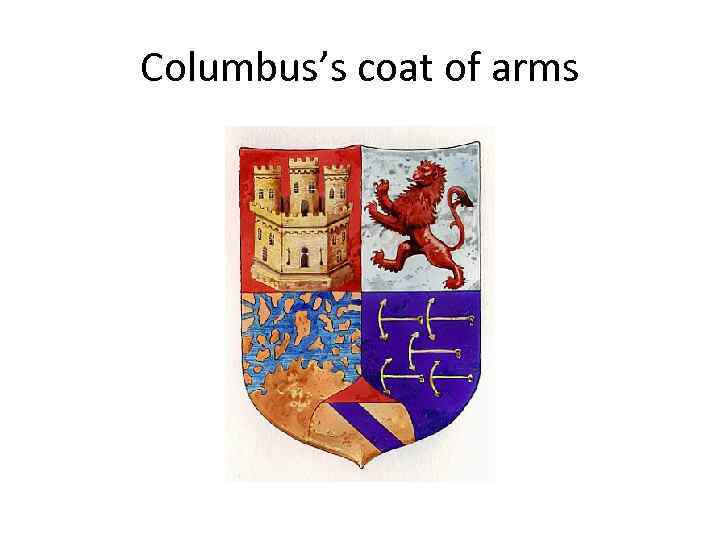 Columbus’s coat of arms
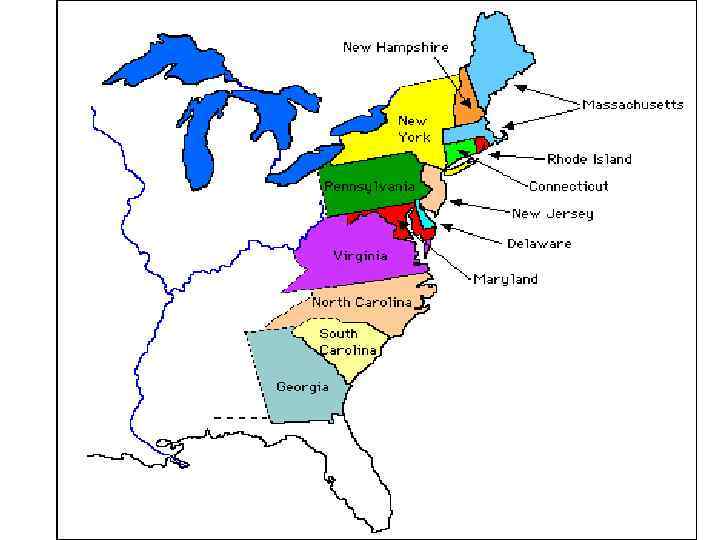
 Colonization • Spanish colonies – Mexico, West Indies, South America, Florida • French – parts of Canada • Dutch – NYC • England – the dominant colonizer • Jamestown; Massachusetts Bay Colony, New Netherland
 Massachusetts Bay Colony • Puritans, Separatists (set out for the New World in 1620) • The Mayflower, Plymouth • Indians helped them to plant maize – Thanksgiving • Strict religious rules in the new colony • John Winthrop – a “Puritan Utopia” for the region
 Colonies • The Middle Atlantic Colonies - Pennsylvania and NY • Philadelphia – busy docks and pursued trade. Population grew to over 30 000 people by 1776. The Scots and Irish. • NY – founded by the Dutch, was sold to them by the Native Americans for $24. Dutch, French, Swedes, English, Irish, Norwegians
 Colonies • The Southern Colonies- Virginia, Maryland, North Carolina, South Carolina Georgia – mostly rural • Tobacco, rice, indigo, cotton • German immigrants, Scot-Irish, English
 Time line • 1634 – Maryland accepted Catholics • 1638 – Massachusetts restricted religious freedom • 1646 – death penalty to those who didn’t follow Puritanism • 1649 – The Toleration Act • 1667 – the Separation of Church and State
 Time Line • 1692 – The Salem Witch trials • 1702 – the Anglican church made the official religion in Maryland • 1728 – Jewish Synagogue built in NY • 1741 – The Great Awakening
 Salem Witch Trials • February 1692 and May 1693 • "And now Nineteen persons having been hang'd, and one prest to death, and Eight more condemned, in all Twenty and Eight, of which above a third part were Members of some of the Churches of N. England, and more than half of them of a good Conversation in general, and not one clear'd; about Fifty having confest themselves to be Witches, of which not one Executed; above an Hundred and Fifty in Prison, and Two Hundred more acccused…
 Ben Franklin Inventing – Stove, lightning rod, bifocals Medicine – founded first US hospital Printing – “Patron Saint of Printing” Public Safety – first police and fire departments • Community service – street lighting, paving and cleaning • •
 Franklin’s Almanack • Began publishing Poor Richard's Almanack on December 28, 1732 • Published for 25 years, 10 000 copies a year • Contained calendar, weather, poems, sayings, astronomical and astrological information, mathematical exercise • Proverbial sentences about industry and life
 Franklin’s Almanack • • Light purse, heavy heart. Great Talkers, little Doers. Distrust & caution are the parents of security. Nothing more like a Fool, than a drunken Man. Innocence is its own Defence. Look before, or you'll find yourself behind. Nothing but Money, is Sweeter than Honey.
 13 virtues to live by • • temperance silence order resolution frugality industry sincerity • • • justice moderation cleanliness tranquility chastity and humility
 Background • • • Diversity of cultures: Native Americans (all over the continent); Spanish (Florida); French (Louisiana); Dutch (New York); English (Virginia, Maryland, Pennsylvania), Puritans (Massachusetts)
 Background • Diversity of genres: • Until the 17 th century – no realistic novel and no short story • 17 th-18 th centuries – dominance of non-fiction, such as political writings, personal narratives, and philosophy • 19 th century – fiction, poetry, drama; nonfiction is secondary
 Between 1820 ad 1865 • Fiction: sentimental novel, Gothic romance, adventure and historical romance • Western (frontier) themes, Domestic novel • Numerous women-writers
 18 th and 19 th centuries • B. Franklin, Thomas Paine, Thomas Jefferson (Declaration of Independence) • The basic principles of republican theory • Washington Irving, James Fenimore Cooper, Edgar Allan Poe • Search for a characteristic American literature
 Frontier novel • James Fenimore Cooper (1789 -1851) • Adventure romances, set in American West • Successfully emulated Sir Walter Scott – exotic Western settings, and the American revolution or Indian Wars as historical background • Typical American characters: brave Am soldier, good and bad Indian, the pioneer, inexperienced newcomer
 James Fenimore Cooper • 1821 – The Spy: A Tale of the Neutral Ground – American Revolution • 1842 – The Pilot: A Tale of the Sea • The Leatherstocking Tales: The Pioneers (1823), The Last of the Mohicans (1826), The Prairie (1827), The Pathfinder: or the Inland Sea (1840)
 James Fenimore Cooper • Natty Bumpoo – the Leatherstocking, the Deer Slayer, the Hawkeye • Different stages of the character’s life • Shifting time of action – a fantastic character who can beat time: he gets old, then young, then dies, then he is young again (the theme of rebirth)
 James Fenimore Cooper • Natty Bumpoo – combines Indian (the wild nature) and white (civilization) qualities • White “noble savage” • Dreamlike ideal of the new American hero • Cooper – novels of manners, sentimental fiction, non-fictional works
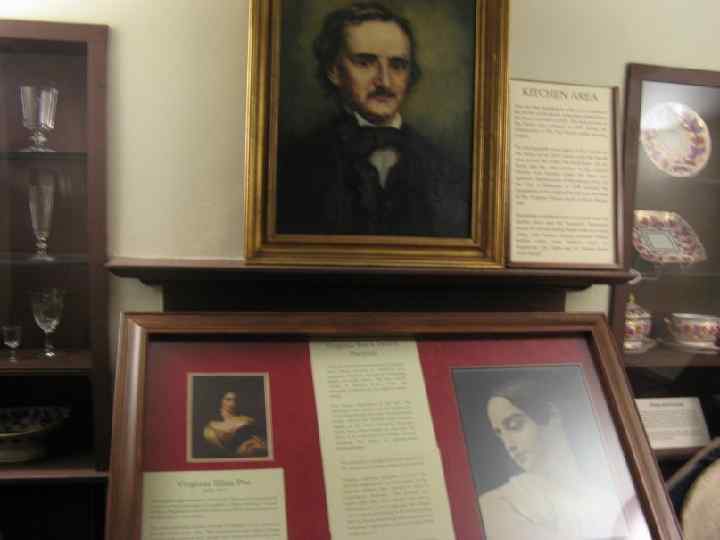
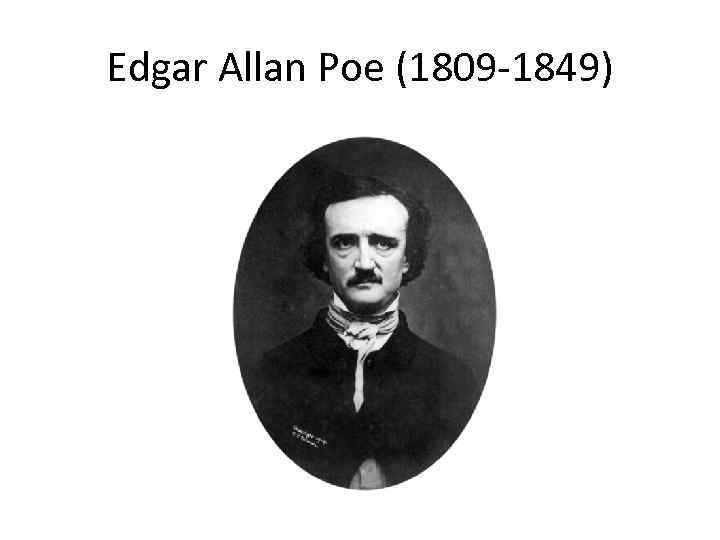 Edgar Allan Poe (1809 -1849)
 Edgar Allan Poe Foster family 6 – 11 – England, boarding school University of Virginia 1829 – The Academy of West Point New York, extreme poverty, married his cousin Virginia (27 -13) • 1841 – The Murders in the Rue Morgue – first success • 1845 – The Raven • • •
 Edgar Allan Poe (1809 -1849) • Gothic fiction which aspired to the Romantic ideals of artistic excellence and philosophical depth • Images of death and madness • Numerous Gothic tales; body-mind problem, uncertainty about the fate; limited knowledge of the physical world and mystery
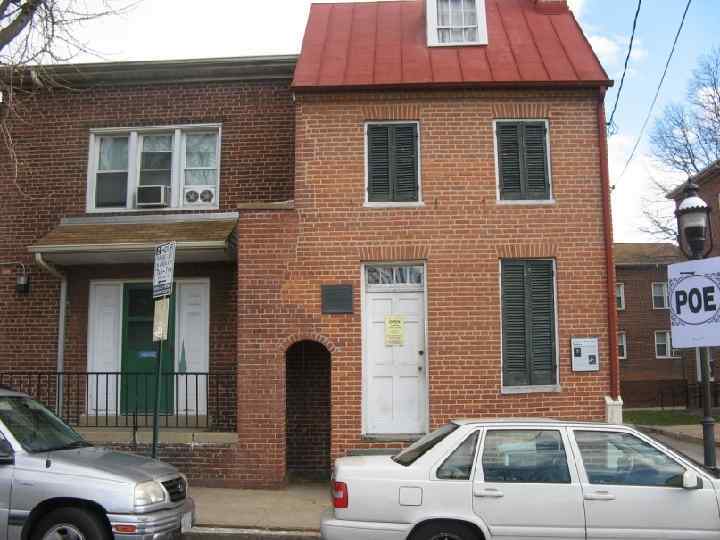
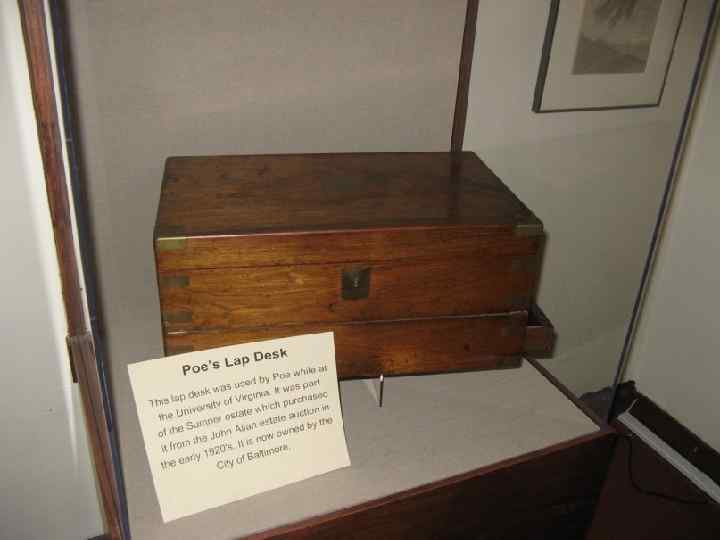
 Edgar Allan Poe • 1840 – The Fall of the House of Usher – an allegory of the human mind, represented by a house • 1841 – The Murders in the Rue Morgue • 1845 – The Facts in the Case of M. Valdemar – a tale of a man hypnotized at the moment of his death – doubts about the nature of our life and thought
 Edgar Allan Poe - poetry • 1845 – The Raven and Other Poems • The Raven – mourning and madness caused by death of a beloved person • The Raven – a symbol of inescapable passage of time and loss • Prime concern – the effect of the poetry on the readers • Shouldn’t be didactic or moralising, nor informative and instructive, shouldn’t be burdened with social functions
 The Romantic Period (1820 -1860) • The first great literary generation • Walt Whitman, Nathaniel Hawthorne, Herman Melville, Edgar Allan Poe, Emily Dickinson, the Transcedentalists • The “Romance” – a heightened, emotional, and symbolic form of novel • Special techniques to communicate complex and subtle meanings
 The Romantic Period (1820 -1860) • Heroic figures larger than life, burning with mystic significance • Protagonists – haunted, alienated individuals, lonely characters, pitted against dark fates • They grow out of their deepest unconscious selves.
 The Romantic Period (1820 -1860) • One reason – the absence of settled, traditional community life • America – constantly moving frontier • The democratic American individual had to invent himself • New literary forms • Indicated how difficult it was to create an identity without a stable society
 Nathaniel Hawthorne (1804 -1864) • The House of the Seven Gables – the idea of a curse on the family; New England family: an inherited curse and its resolution through love • Allegorical mode • Historical settings and fantastic elements • A moral truth rather than a realistic image of life
 The Scarlet Letter (1850) • • • An allegory of sin and redemption Life under a destructive burden of guilt Secondary characters – also allegorical Pearl – a symbol of vitality and innocence The Letter – ambiguous under different interpretations
 Herman Melville (1819 – 1891) • Descendant of a wealthy family which turned poor • Sea voyages • Typee (1846) based on personal experience – Christian missionaries were less civilized than the people they came to convert • Moby Dick (1851) – symbols and metaphors of good and evil