Скачать презентацию E-mail and Newsgroups Shahmaev Maksim Риз-210408 The
Computer Data Processing.pptx
- Количество слайдов: 15
 E-mail and Newsgroups Shahmaev Maksim Риз-210408
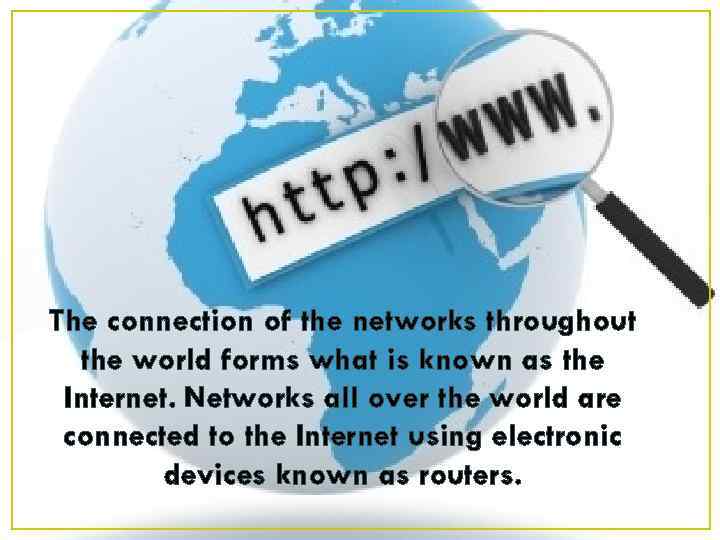 The connection of the networks throughout the world forms what is known as the Internet. Networks all over the world are connected to the Internet using electronic devices known as routers.
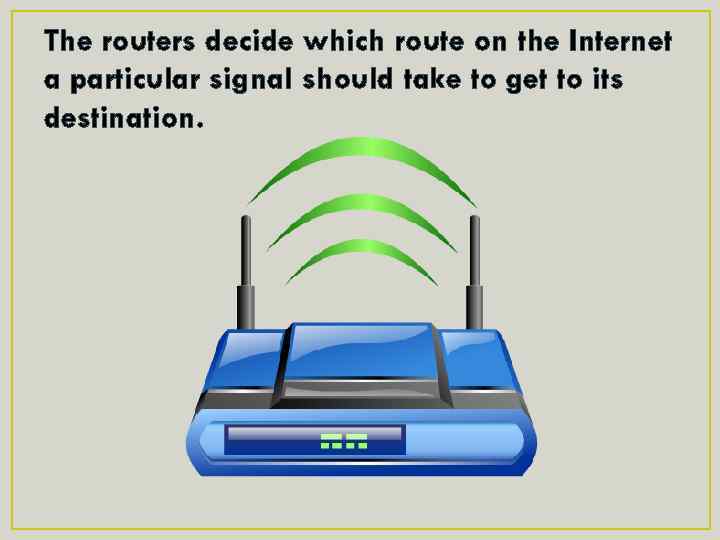 The routers decide which route on the Internet a particular signal should take to get to its destination.
 E-mail allows users to send digital messages to storage areas known as mailboxes on server computers where they can be read by other users.
 A typical e-mail address might have the following components: username of identifier, @, server name, type of organization, country. (e. g. locka@pesto. co. uk)
 The e-mail message has two main parts known as the header and the body of the message. The body contains the message itself.
 The message header should include at least the following fields: From: the name of the author(s). To: The e-mail address(es) Subject: A brief summary of the topic of the message.
 Date: The local time and date when the message was written. Message-ID: Also an automatically generated field; used to prevent multiple delivery Subject: A brief summary of the topic of the message.
 One of the biggest problems in e-mailing is spam. To prevent e-mail spam, use various anti-spam techniques.
 Anti-spam techniques can be broken into four broad categories: - those that require actions by individuals - those that can be automated by e-mail administrators - those that can be automated by e-mail senders - those employed by researchers and law enforcement officials.
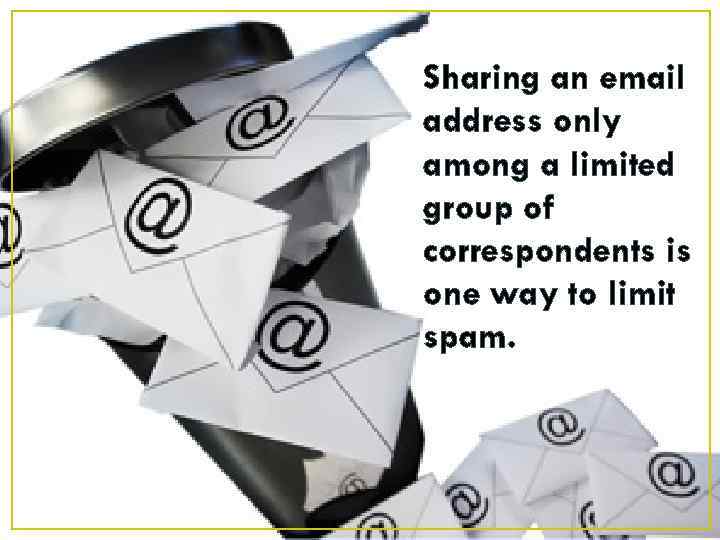 Sharing an email address only among a limited group of correspondents is one way to limit spam.
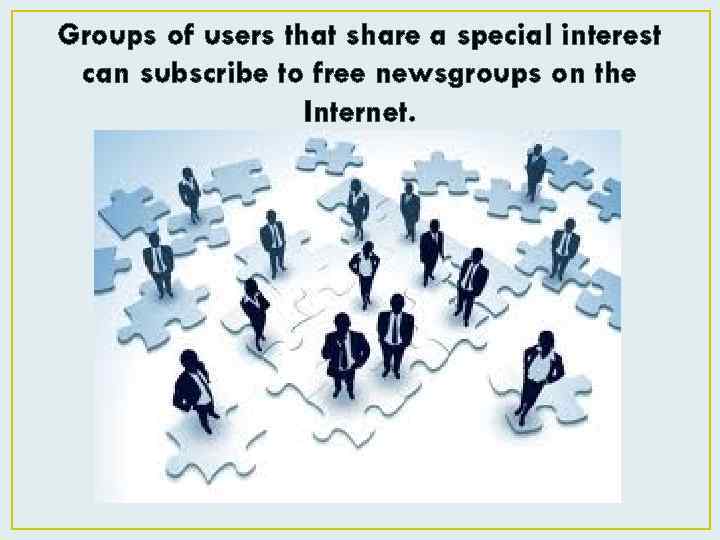 Groups of users that share a special interest can subscribe to free newsgroups on the Internet.
 Subscribers can send plain text messages to a common area on a server computer where all the newsgroup members can read them.
 Here are some examples of the abbreviations of organizations: com or со — commercial organization edu/ac — education gov — government int — international organization mil — military net — network provider org — not-for-profit