 Скачать презентацию E-government A Worldwide Perspective Bruno LANVIN Senior Advisor
e846807171489a1b64c55c4d9dabb47f.ppt
- Количество слайдов: 26



E-government A Worldwide Perspective Bruno LANVIN Senior Advisor E-Strategies The World Bank Rabat, June 21 st, 2006
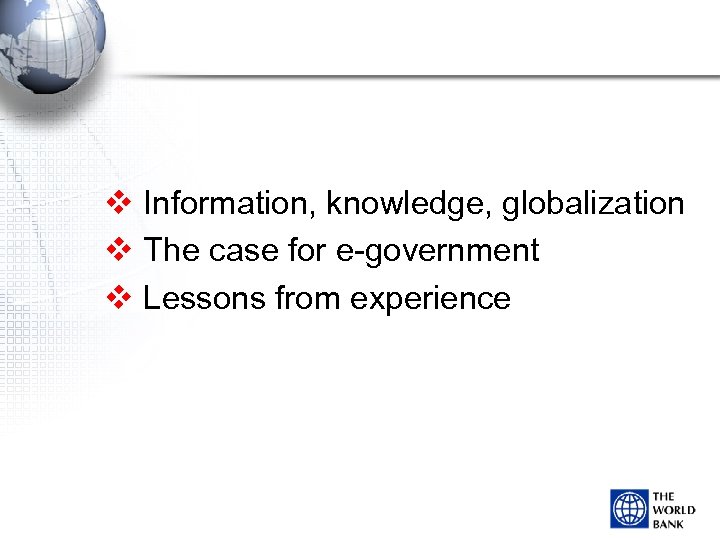
v Information, knowledge, globalization v The case for e-government v Lessons from experience
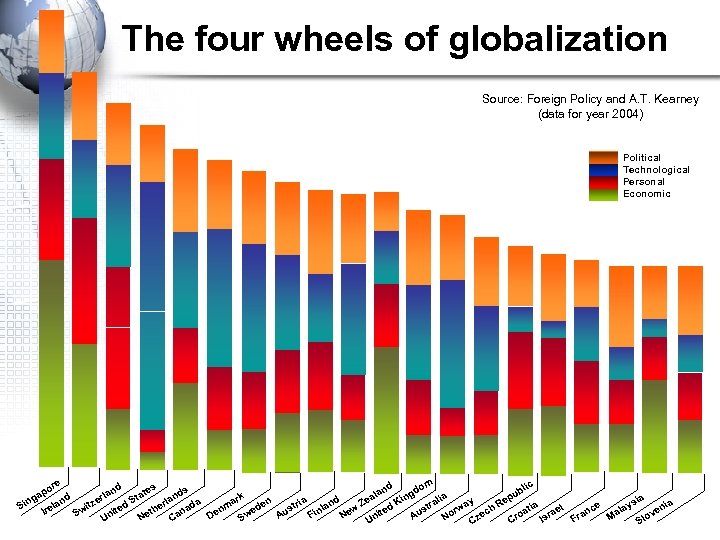
The four wheels of globalization Source: Foreign Policy and A. T. Kearney (data for year 2004) Political Technological Personal Economic e d om d s lic ds ub lan ingd lan ate t d rk an lia d ea er ep a a sia K a rl Z ay R en a d. S lan witz da e tri an nia str lay nm wed rw the ana ati rael ite nc ch Ire us ew nited inl a u e o ve S e o a n e F A N A D M N N S C U Is Fr Cr U Cz Slo or Sin p ga
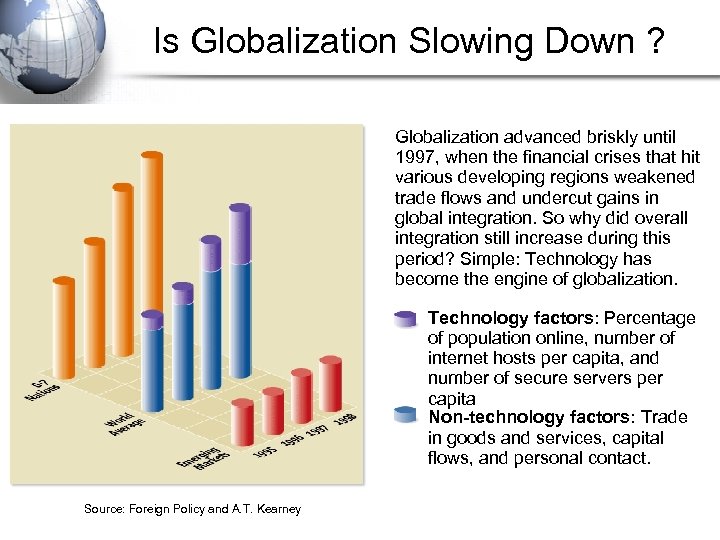
Is Globalization Slowing Down ? Globalization advanced briskly until 1997, when the financial crises that hit various developing regions weakened trade flows and undercut gains in global integration. So why did overall integration still increase during this period? Simple: Technology has become the engine of globalization. Technology factors: Percentage of population online, number of internet hosts per capita, and number of secure servers per capita Non-technology factors: Trade in goods and services, capital flows, and personal contact. Source: Foreign Policy and A. T. Kearney
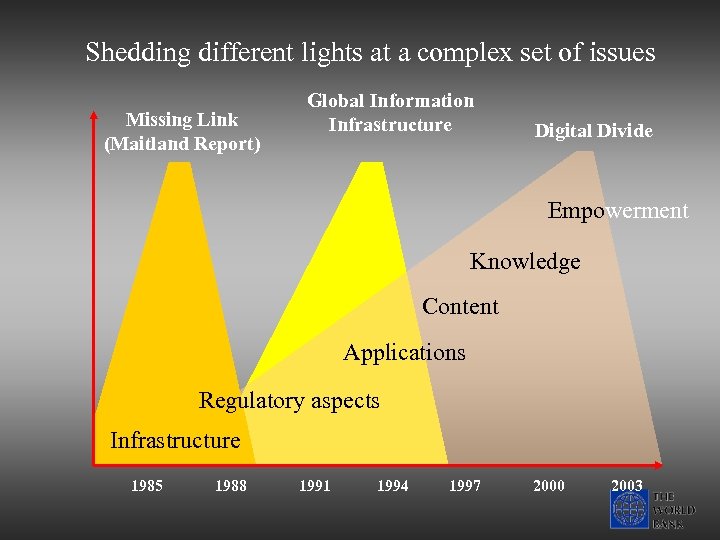
Shedding different lights at a complex set of issues Missing Link (Maitland Report) Global Information Infrastructure Digital Divide Empowerment Knowledge Content Applications Regulatory aspects Infrastructure 1985 1988 1991 1994 1997 2000 2003
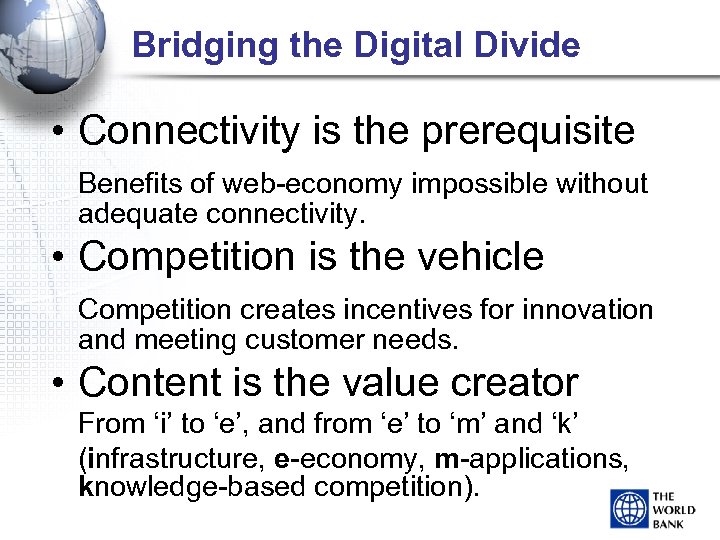
Bridging the Digital Divide • Connectivity is the prerequisite Benefits of web-economy impossible without adequate connectivity. • Competition is the vehicle Competition creates incentives for innovation and meeting customer needs. • Content is the value creator From ‘i’ to ‘e’, and from ‘e’ to ‘m’ and ‘k’ (infrastructure, e-economy, m-applications, knowledge-based competition).
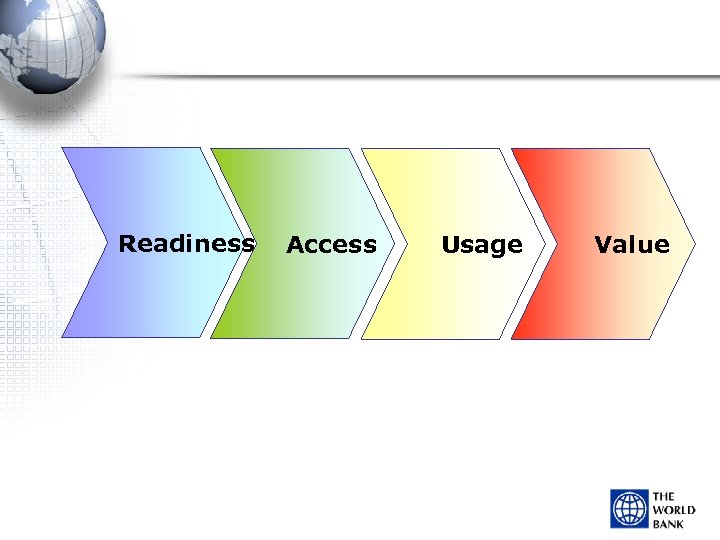
Readiness Access Usage Value
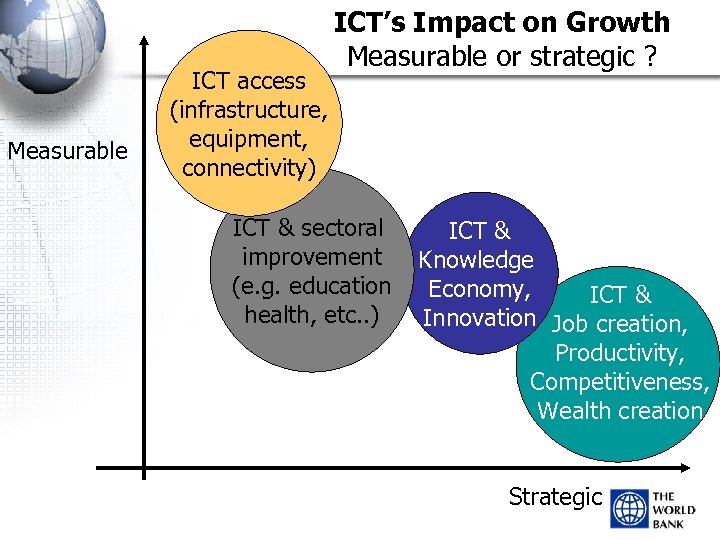
Measurable ICT access (infrastructure, equipment, connectivity) ICT’s Impact on Growth Measurable or strategic ? ICT & sectoral improvement (e. g. education health, etc. . ) ICT & Knowledge Economy, ICT & Innovation Job creation, Productivity, Competitiveness, Wealth creation Strategic
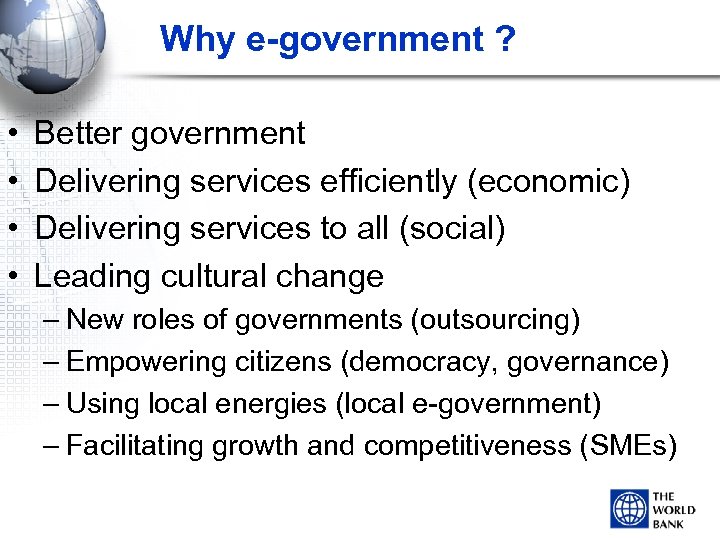
Why e-government ? • • Better government Delivering services efficiently (economic) Delivering services to all (social) Leading cultural change – New roles of governments (outsourcing) – Empowering citizens (democracy, governance) – Using local energies (local e-government) – Facilitating growth and competitiveness (SMEs)
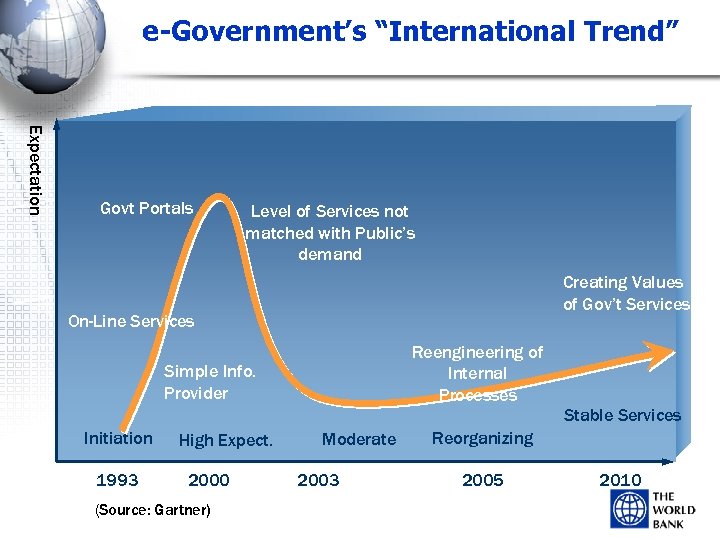
e-Government’s “International Trend” Expectation Govt Portals Level of Services not matched with Public’s demand Creating Values of Gov’t Services On-Line Services Reengineering of Internal Processes Simple Info. Provider Initiation 1993 High Expect. 2000 (Source: Gartner) Moderate 2003 Stable Services Reorganizing 2005 2010
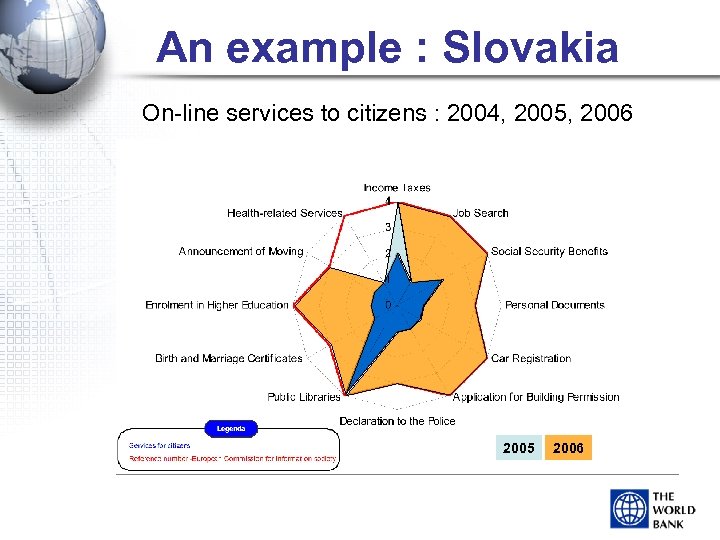
An example : Slovakia On-line services to citizens : 2004, 2005, 2006 2005 2006
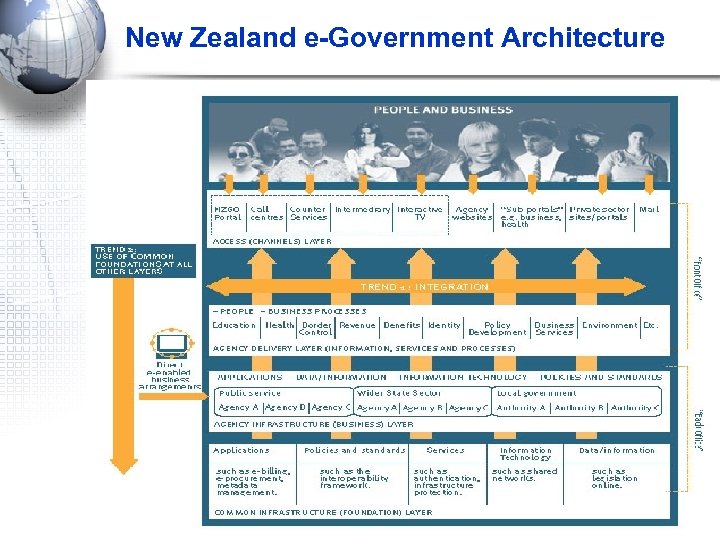
New Zealand e-Government Architecture
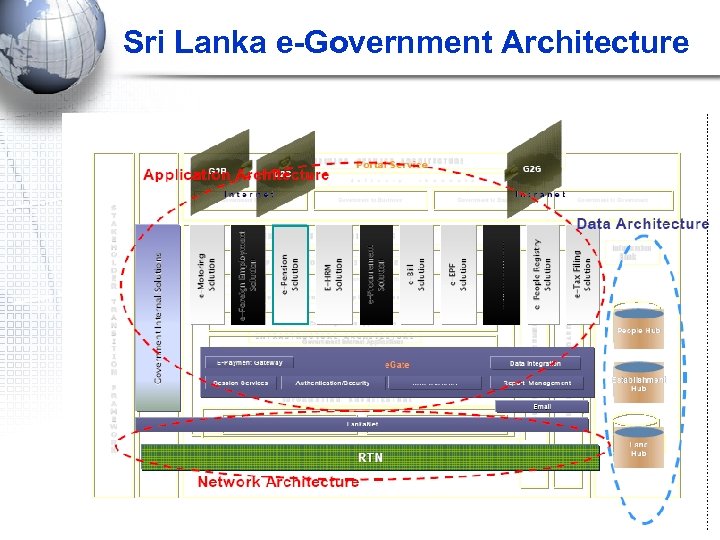
Sri Lanka e-Government Architecture
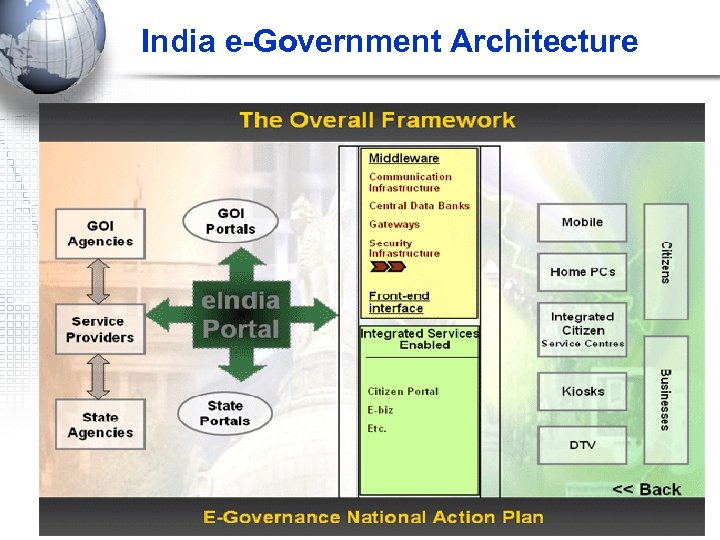
India e-Government Architecture
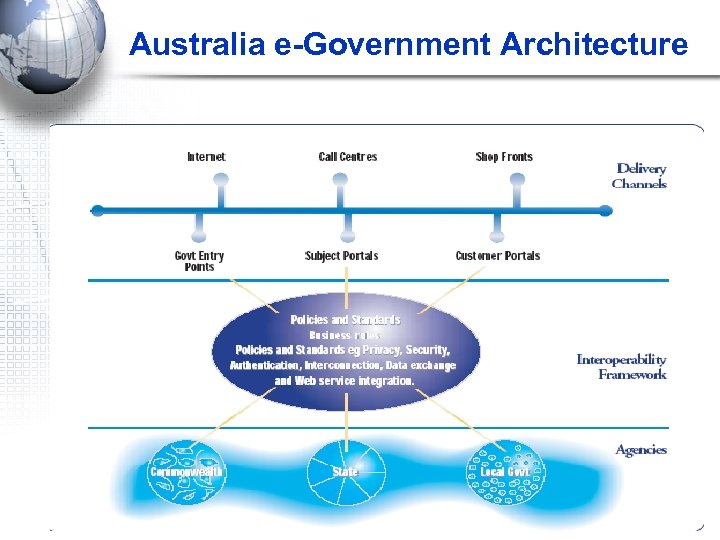
Australia e-Government Architecture
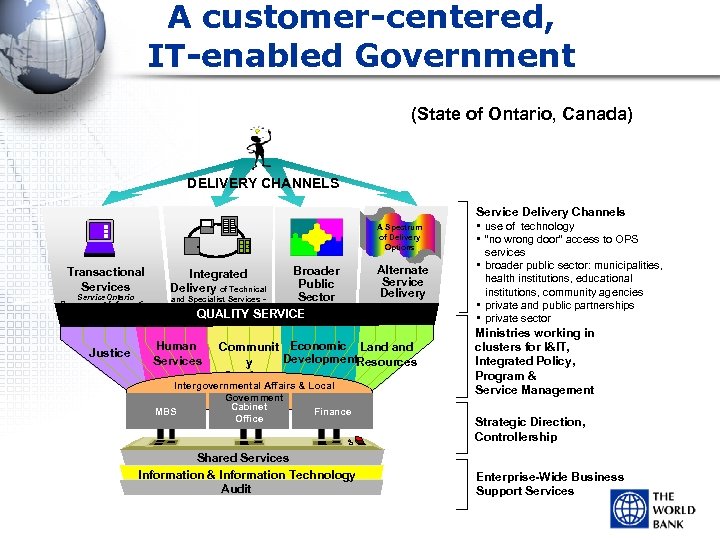
A customer-centered, IT-enabled Government (State of Ontario, Canada) DELIVERY CHANNELS A Spectrum of Delivery Options Transactional Services Service. Ontario Government Information Centres Justice Broader Public Sector and Specialist Services One Window QUALITY SERVICE Integrated Delivery of Technical Human Services Alternate Service Delivery Communit Economic Land Development. Resources y Services Intergovernmental Affairs & Local Government Cabinet MBS Finance Office Shared Services Information & Information Technology Audit Service Delivery Channels • use of technology • “no wrong door” access to OPS services • broader public sector: municipalities, health institutions, educational institutions, community agencies • private and public partnerships • private sector Ministries working in clusters for I&IT, Integrated Policy, Program & Service Management Strategic Direction, Controllership Enterprise-Wide Business Support Services
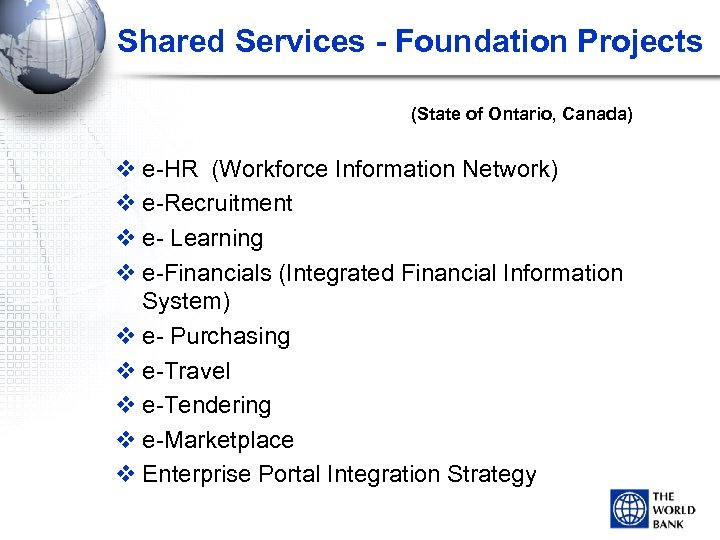
Shared Services - Foundation Projects (State of Ontario, Canada) v e-HR (Workforce Information Network) v e-Recruitment v e- Learning v e-Financials (Integrated Financial Information System) v e- Purchasing v e-Travel v e-Tendering v e-Marketplace v Enterprise Portal Integration Strategy
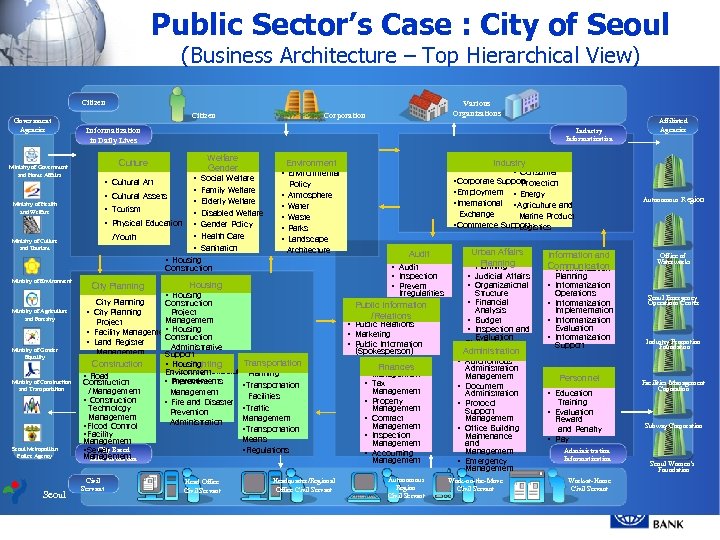
Public Sector’s Case : City of Seoul (Business Architecture – Top Hierarchical View) Citizen Government Agencies Ministry of Government and Home Affairs Citizen Informatization in Daily Lives Industry Informatization Welfare Gender Culture § Cultural Art § Cultural Assets Ministry of Health and Welfare Various Organizations Corporation § Tourism § Physical Education /Youth Ministry of Culture and Tourism § § § § Social Welfare Family Welfare Elderly Welfare Disabled Welfare Gender Policy Health Care Sanitation Industry Environment § Consumer §Corporate Support Protection §Employment § Energy §International §Agriculture and § Environmental Policy § Atmosphere § Water § Waste § Parks § Landscape Architecture Exchange Ministry of Environment Ministry of Agriculture and Forestry Ministry of Gender Equality Ministry of Construction and Transportation Seoul Metropolitan Police Agency Seoul Civil Servant Head Office Civil Servant Headquarter/Regional Office Civil Servant Autonomous Region Marine Product §Commerce Support Logistics Audit § Housing Construction Guidance Housing Management City Planning § Collective § Housing City Planning Construction § City Planning Project Management Project § § Facility Management Housing Construction § Land Register Administrative Management Support § Construction §Transportation § Fire Fighting Housing Construction Administration § Protection Structure Planning Environment § Road § Improvements Preventive Construction §Transportation /Management Facilities § Construction § Fire and Disaster §Traffic Technology Prevention Management Administration §Flood Control §Transportation §Facility Means Management City §Sewer Based §Regulations Management Informatization Affiliated Agencies § Audit § Inspection § Prevent Irregularities Public Information /Relations § Public Relations § Marketing § Public Information (Spokesperson) § Tax Revenue Finances Management § Tax § § Management Property Management Contract Management Inspection Management Accounting Management Autonomous Region Civil Servant Urban Affairs Planning § General § Judicial Affairs § Organizational Structure Information and Communication § Informatization Office of Waterworks Planning § Informatization Operations § Financial § Informatization § Budget § Inspection and Seoul Emergency Operations Center § Informatization Analysis Evaluation § Civil Petition Management Administration § Autonomous Administration Management § Document Administration § Protocol Support Management § Office Building Maintenance and Management § Emergency Management Work-on-the-Move Civil Servant Implementation Evaluation § Informatization Support Personnel § Employment § Education Industry Promotion Foundation Facilities Management Coporation Training § Evaluation Reward and Penalty § Pay Administration Informatization Work-at-Home Civil Servant Subway Corporation Seoul Women’s Foundation
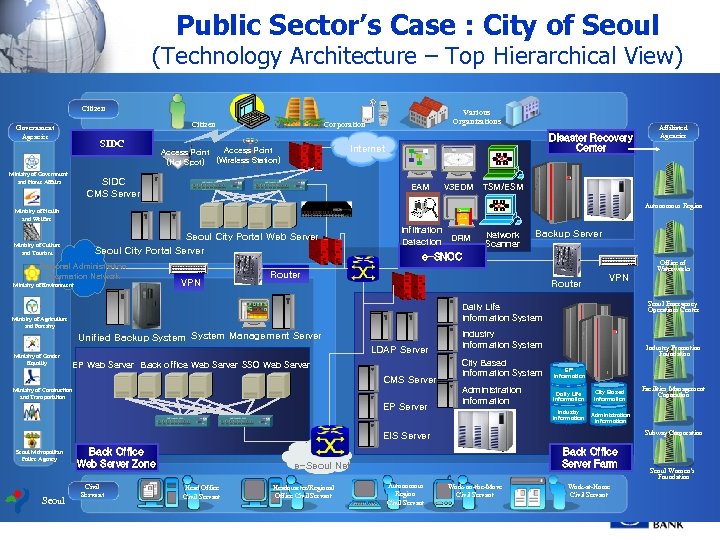
Public Sector’s Case : City of Seoul (Technology Architecture – Top Hierarchical View) Citizen Government Agencies SIDC Ministry of Government and Home Affairs Various Organizations Corporation Disaster Recovery Center Internet Access Point (Hot Spot) (Wireless Station) SIDC CMS Server EAM V 3 EDM TSM/ESM Autonomous Region Ministry of Health and Welfare Seoul City Portal Web Server Seoul City Portal Server Ministry of Culture and Tourism Regional Administration Information Network Ministry of Environment VPN Infiltration Detection DRM Network Scanner Backup Server e-SNOC Router Office of Waterworks Router VPN Seoul Emergency Operations Center Daily Life Information System Ministry of Agriculture and Forestry Unified Backup System Management Server Ministry of Gender Equality LDAP Server EP Web Server Back office Web Server SSO Web Server CMS Server Ministry of Construction and Transportation EP Server Industry Information System City Based Information System Administration Information Industry Promotion Foundation EP Information Daily Life Information Industry Information City Based Information Seoul Back Office Web Server Zone Subway Corporation Civil Servant Back Office Server Farm e-Seoul Net Head Office Civil Servant Headquarter/Regional Office Civil Servant Autonomous Region Civil Servant Facilities Management Coporation Administration Information EIS Server Seoul Metropolitan Police Agency Affiliated Agencies Work-on-the-Move Civil Servant Work-at-Home Civil Servant Seoul Women’s Foundation
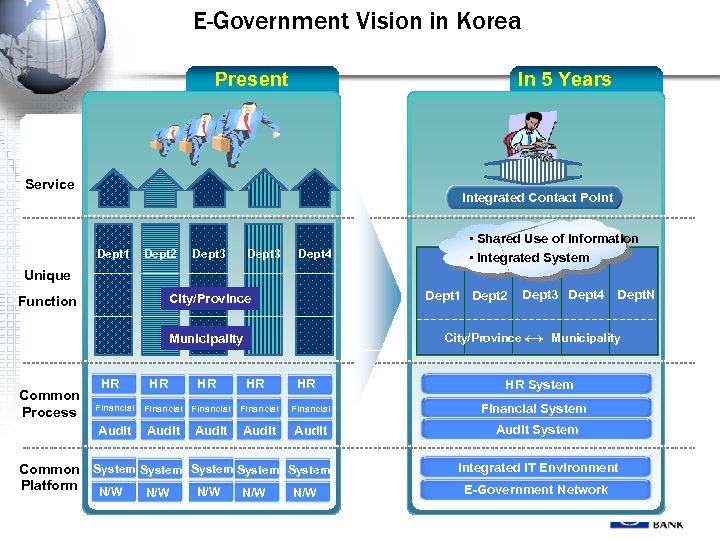
E-Government Vision in Korea Present In 5 Years Service Integrated Contact Point Dept 1 Dept 2 Dept 3 Dept 4 • Shared Use of Information • Integrated System Unique Dept 1 Dept 2 City/Province Function City/Province Municipality Common Process HR Financial Audit HR HR Financial Audit Common System System Platform N/W N/W N/W Dept 3 Dept 4 Dept. N ↔ Municipality HR System Financial System Audit System Integrated IT Environment E-Government Network
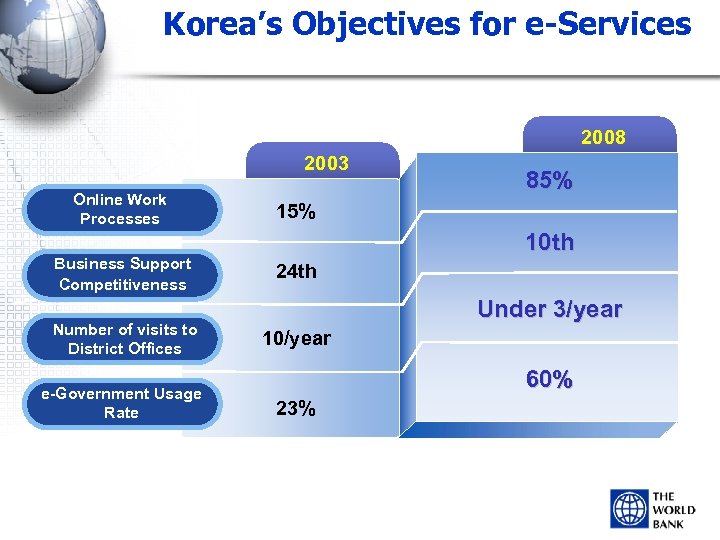
Korea’s Objectives for e-Services 2008 2003 Online Work Processes Business Support Competitiveness Number of visits to District Offices e-Government Usage Rate 85% 10 th 24 th Under 3/year 10/year 60% 23%
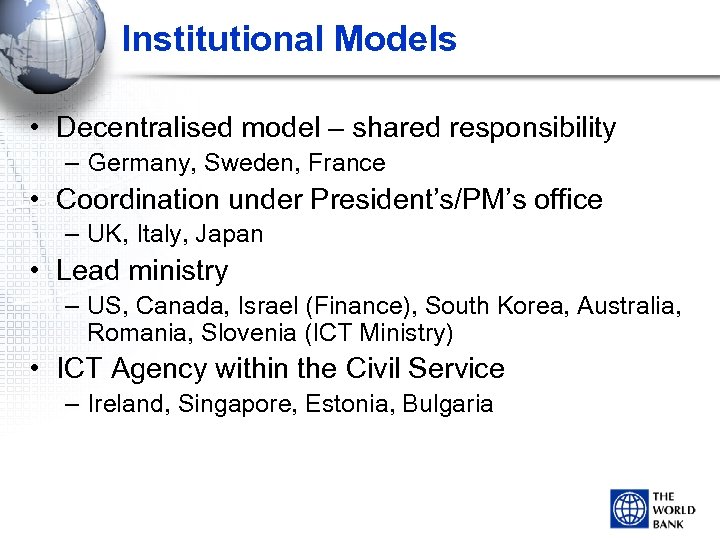
Institutional Models • Decentralised model – shared responsibility – Germany, Sweden, France • Coordination under President’s/PM’s office – UK, Italy, Japan • Lead ministry – US, Canada, Israel (Finance), South Korea, Australia, Romania, Slovenia (ICT Ministry) • ICT Agency within the Civil Service – Ireland, Singapore, Estonia, Bulgaria
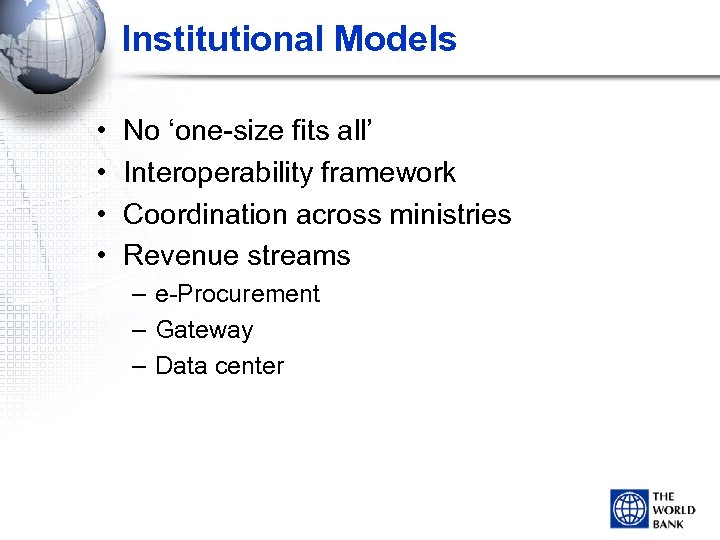
Institutional Models • • No ‘one-size fits all’ Interoperability framework Coordination across ministries Revenue streams – e-Procurement – Gateway – Data center
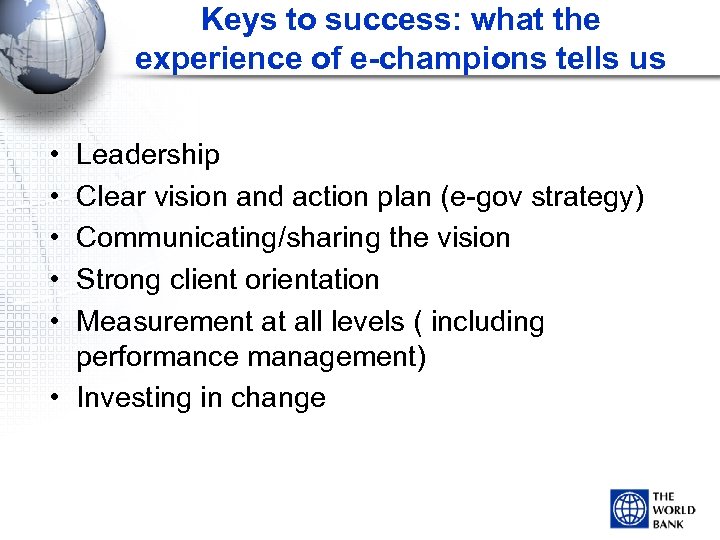
Keys to success: what the experience of e-champions tells us • • • Leadership Clear vision and action plan (e-gov strategy) Communicating/sharing the vision Strong client orientation Measurement at all levels ( including performance management) • Investing in change
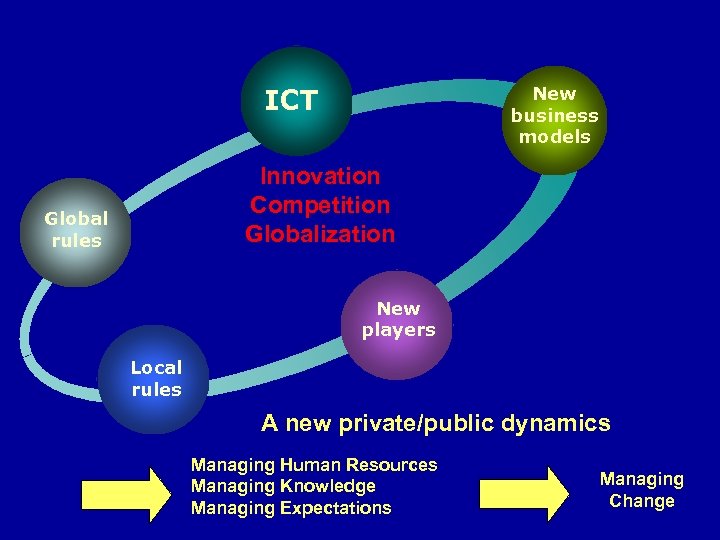
ICT New business models Innovation Competition Globalization Global rules New players Local rules A new private/public dynamics Managing Human Resources Managing Knowledge Managing Expectations Managing Change
Thank you for your attention blanvin@worldbank. org Rabat, June 21 st, 2006
Скачать презентацию E-government A Worldwide Perspective Bruno LANVIN Senior Advisor
e846807171489a1b64c55c4d9dabb47f.ppt