


 Скачать презентацию E-GOV Presentation July 17 2008 Dr Elaine Kamarck
8e63f6f19a3d5b650f6990e33e8bcdc0.ppt
- Количество слайдов: 21
 E-GOV Presentation July 17, 2008 Dr. Elaine Kamarck John F. Kennedy School of Government Harvard University
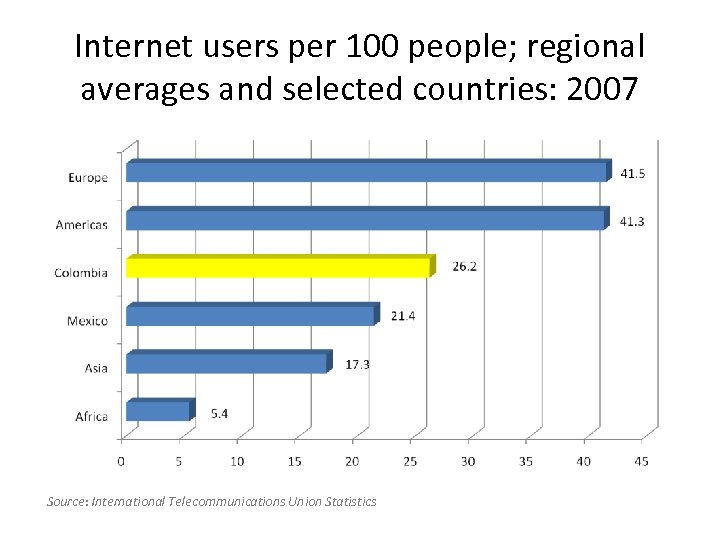 Internet users per 100 people; regional averages and selected countries: 2007 Source: International Telecommunications Union Statistics
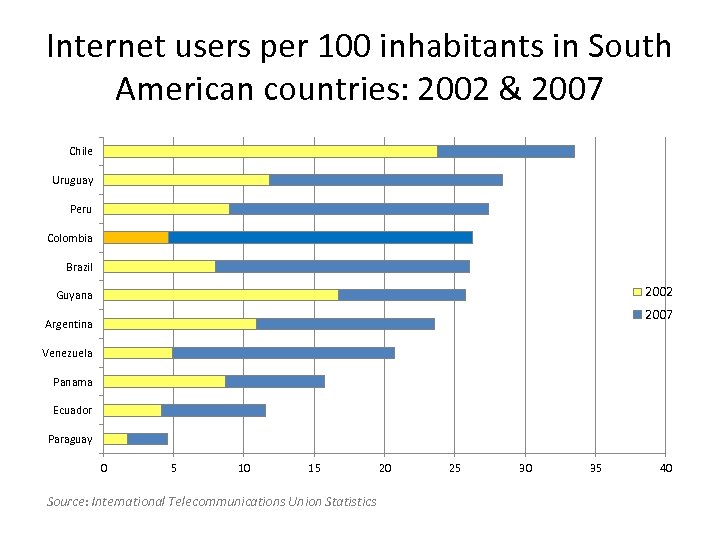 Internet users per 100 inhabitants in South American countries: 2002 & 2007 Chile Uruguay Peru Colombia Brazil 2002 Guyana 2007 Argentina Venezuela Panama Ecuador Paraguay 0 5 10 15 Source: International Telecommunications Union Statistics 20 25 30 35 40
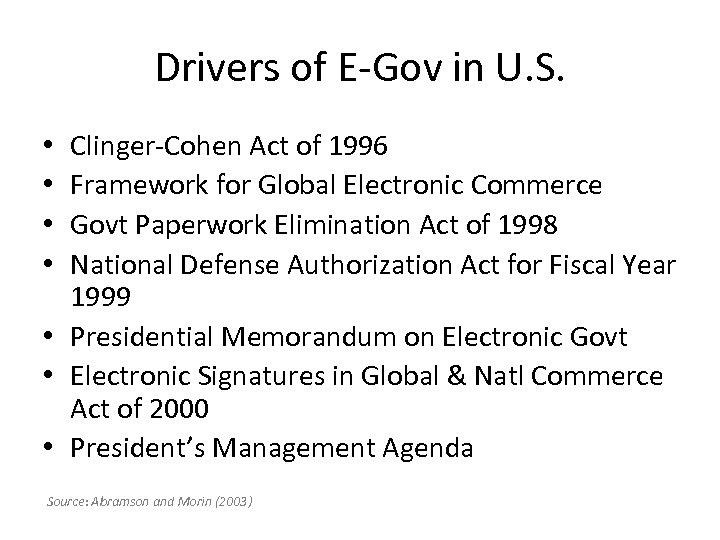 Drivers of E-Gov in U. S. Clinger-Cohen Act of 1996 Framework for Global Electronic Commerce Govt Paperwork Elimination Act of 1998 National Defense Authorization Act for Fiscal Year 1999 • Presidential Memorandum on Electronic Govt • Electronic Signatures in Global & Natl Commerce Act of 2000 • President’s Management Agenda • • Source: Abramson and Morin (2003)
 Where are we in the IT revolution? • • This depends on the country Some countries are in the first stage Few are in the third Bureaucrats around the world are conservative.
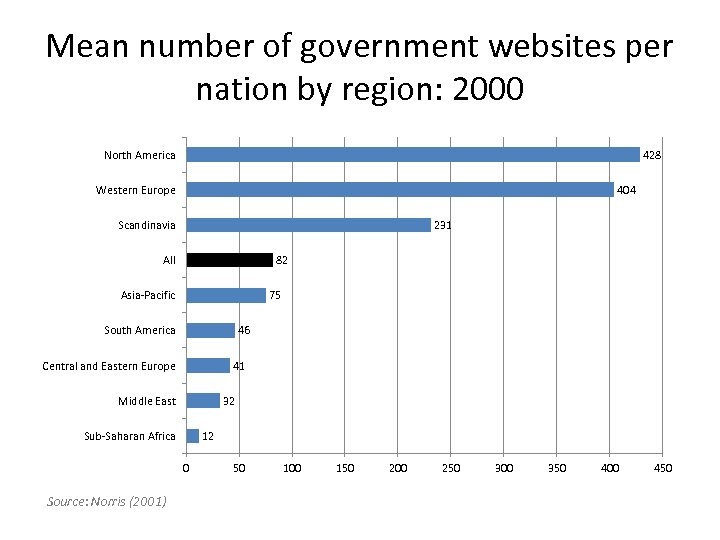 Mean number of government websites per nation by region: 2000 North America 428 404 Western Europe 231 Scandinavia All 82 Asia-Pacific 75 South America 46 Central and Eastern Europe 41 32 Middle East Sub-Saharan Africa 12 0 Source: Norris (2001) 50 100 150 200 250 300 350 400 450
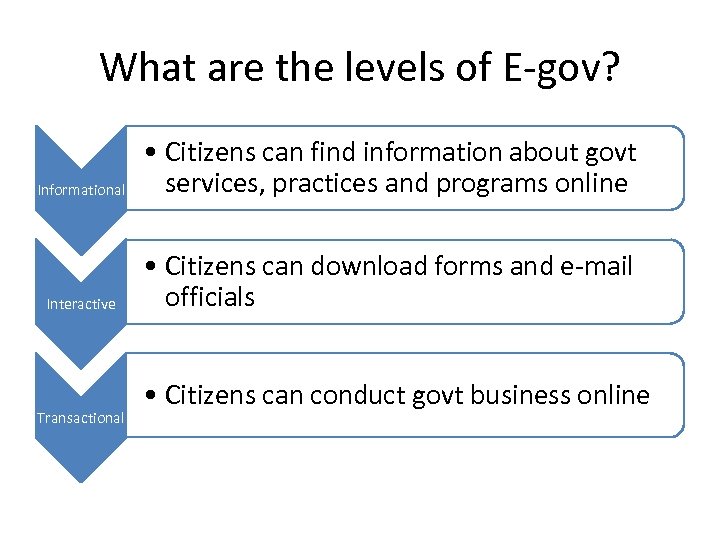 What are the levels of E-gov? Informational • Citizens can find information about govt services, practices and programs online Interactive • Citizens can download forms and e-mail officials Transactional • Citizens can conduct govt business online
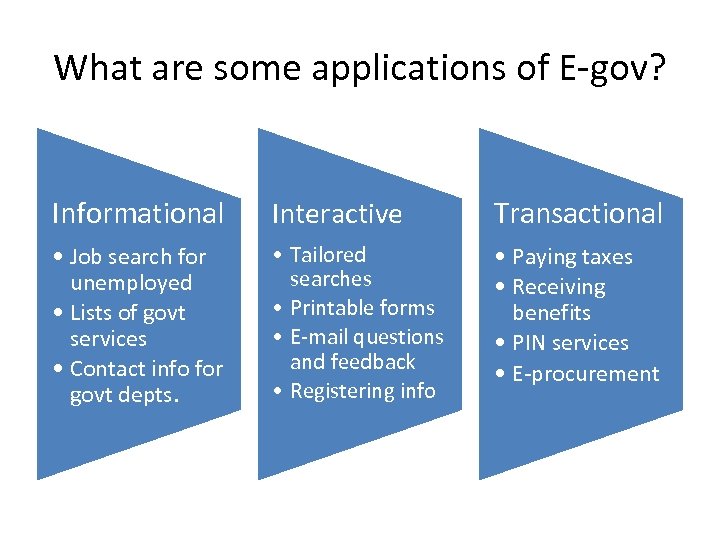 What are some applications of E-gov? Informational Interactive Transactional • Job search for unemployed • Lists of govt services • Contact info for govt depts. • Tailored searches • Printable forms • E-mail questions and feedback • Registering info • Paying taxes • Receiving benefits • PIN services • E-procurement
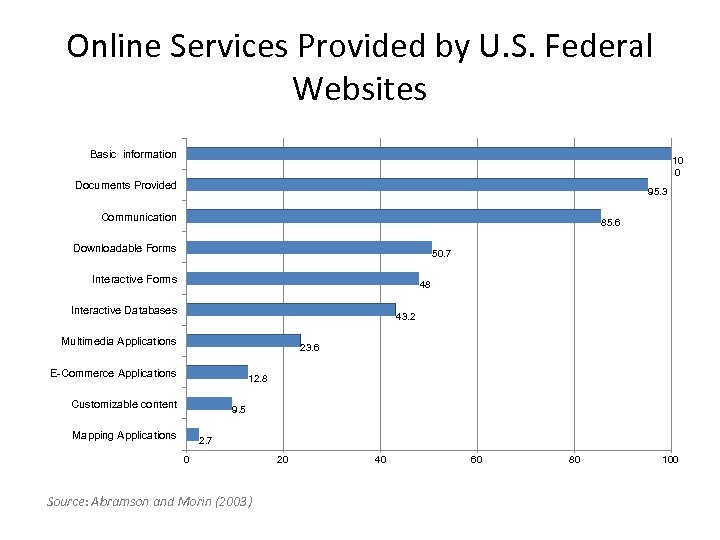 Online Services Provided by U. S. Federal Websites Basic information 10 0 Documents Provided 95. 3 Communication 85. 6 Downloadable Forms 50. 7 Interactive Forms 48 Interactive Databases 43. 2 Multimedia Applications 23. 6 E-Commerce Applications 12. 8 Customizable content 9. 5 Mapping Applications 2. 7 0 Source: Abramson and Morin (2003) 20 40 60 80 100
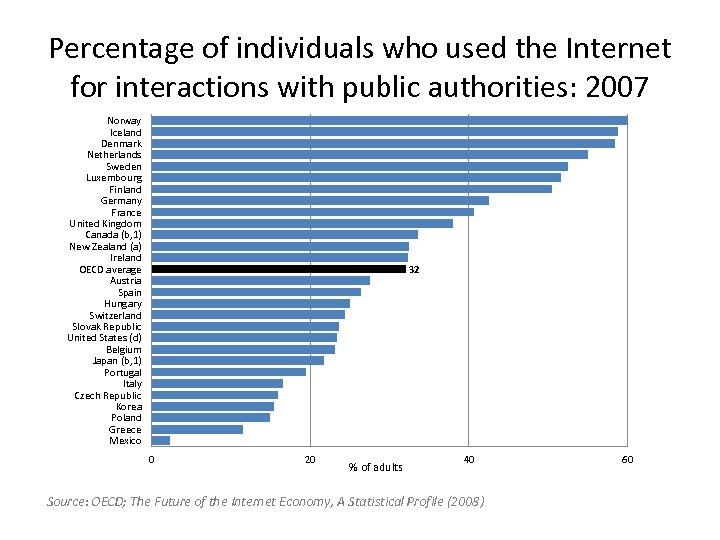 Percentage of individuals who used the Internet for interactions with public authorities: 2007 Norway Iceland Denmark Netherlands Sweden Luxembourg Finland Germany France United Kingdom Canada (b, 1) New Zealand (a) Ireland OECD average Austria Spain Hungary Switzerland Slovak Republic United States (d) Belgium Japan (b, 1) Portugal Italy Czech Republic Korea Poland Greece Mexico 32 0 20 % of adults 40 Source: OECD; The Future of the Internet Economy, A Statistical Profile (2008) 60
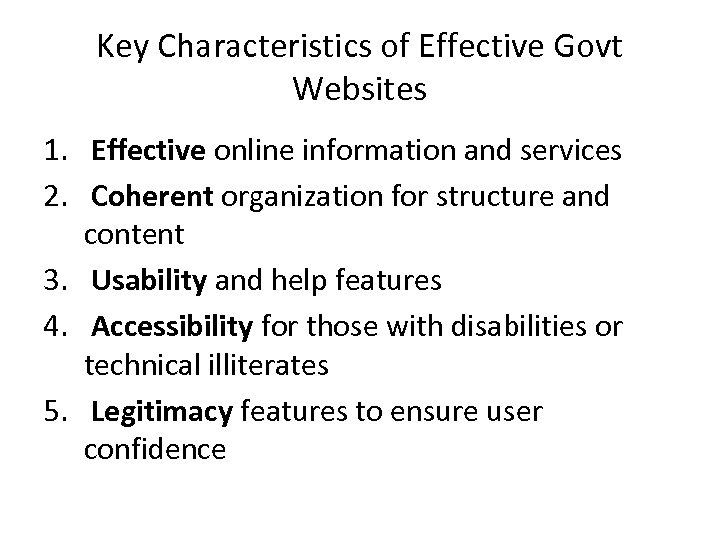 Key Characteristics of Effective Govt Websites 1. Effective online information and services 2. Coherent organization for structure and content 3. Usability and help features 4. Accessibility for those with disabilities or technical illiterates 5. Legitimacy features to ensure user confidence
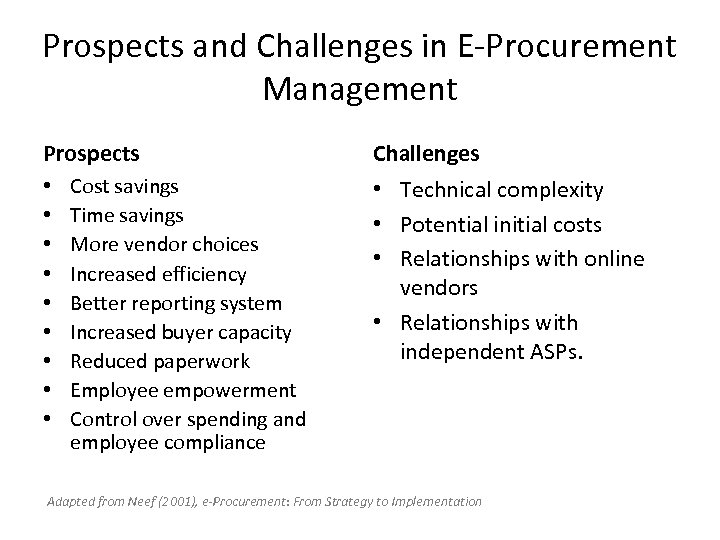 Prospects and Challenges in E-Procurement Management Prospects • • • Cost savings Time savings More vendor choices Increased efficiency Better reporting system Increased buyer capacity Reduced paperwork Employee empowerment Control over spending and employee compliance Challenges • Technical complexity • Potential initial costs • Relationships with online vendors • Relationships with independent ASPs. Adapted from Neef (2001), e-Procurement: From Strategy to Implementation
 Benefits of E-government Source: OECD: E-government Economics Project( 2005)
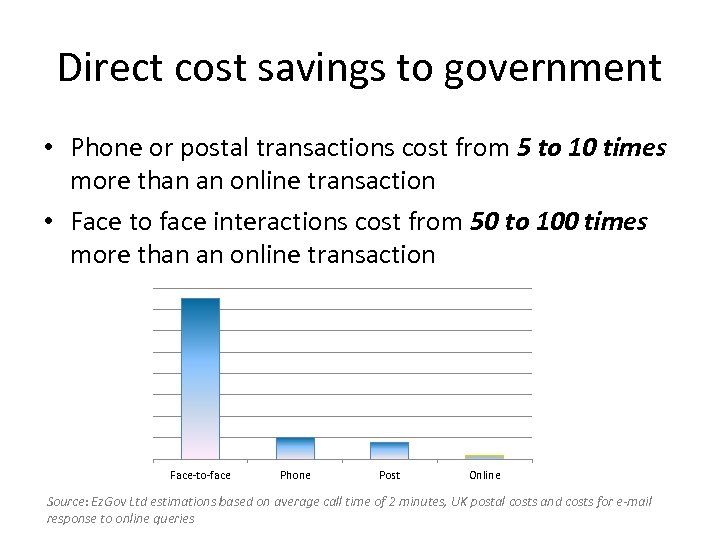 Direct cost savings to government • Phone or postal transactions cost from 5 to 10 times more than an online transaction • Face to face interactions cost from 50 to 100 times more than an online transaction Face-to-face Phone Post Online Source: Ez. Gov Ltd estimations based on average call time of 2 minutes, UK postal costs and costs for e-mail response to online queries
 Impact of E-gov projects • California’s Buy Online procurement system saves US$ 9. 7 million/yr • Singapore’s tax e-filing saves SG$ 20 million/yr • My. Florida. com search engine reduced call centre calls by 1% and saves US$1. 5 million/yr • UK e-tendering saved GBP 13 million over 4 years and reduced supplier costs by GBP 37 million Source: OECD; E-government for Better Government (2005)
 Barriers to e-govt • Usage rates by citizens impacted by: – Accessibility issues: the “digital divide” – Data privacy/security concerns • Government concerns – Bureaucrats worried about lost jobs – E-gov solutions require long time horizons – Cash economies limit extent of online transactions
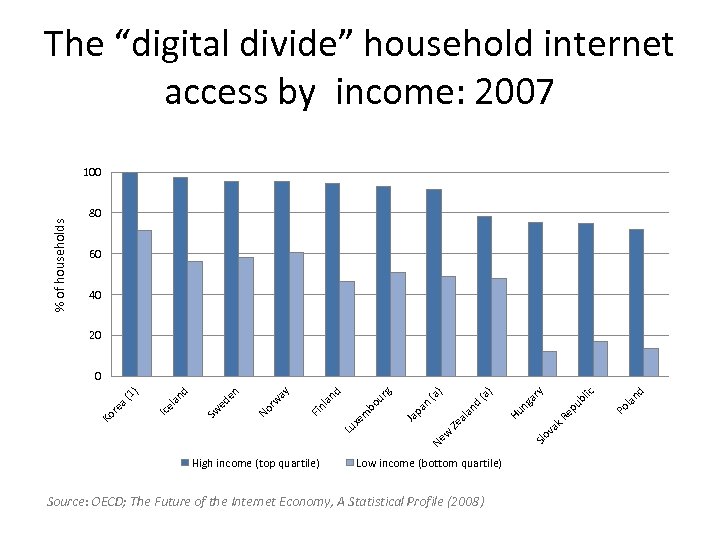 The “digital divide” household internet access by income: 2007 % of households 100 80 60 40 20 High income (top quartile) Low income (bottom quartile) Source: OECD; The Future of the Internet Economy, A Statistical Profile (2008) nd la Po ep u bl ic ar y Slo va k. R ng Hu la Ze a Ne w Ja pa nd n (a ) g ur m bo Lu xe la nd Fin rw ay No en ed Sw nd la Ice Ko re a( 1) 0
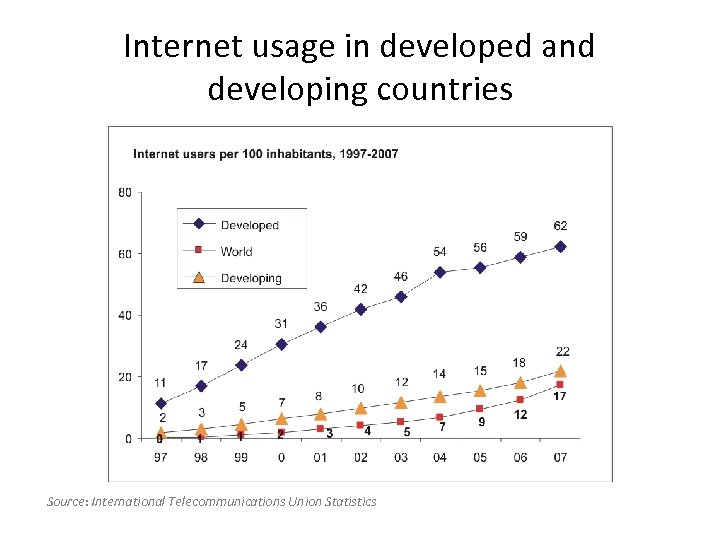 Internet usage in developed and developing countries Source: International Telecommunications Union Statistics
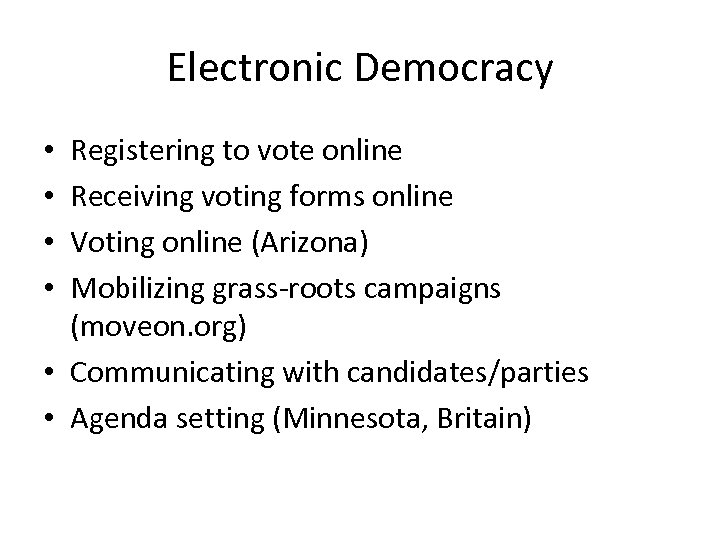 Electronic Democracy Registering to vote online Receiving voting forms online Voting online (Arizona) Mobilizing grass-roots campaigns (moveon. org) • Communicating with candidates/parties • Agenda setting (Minnesota, Britain) • •
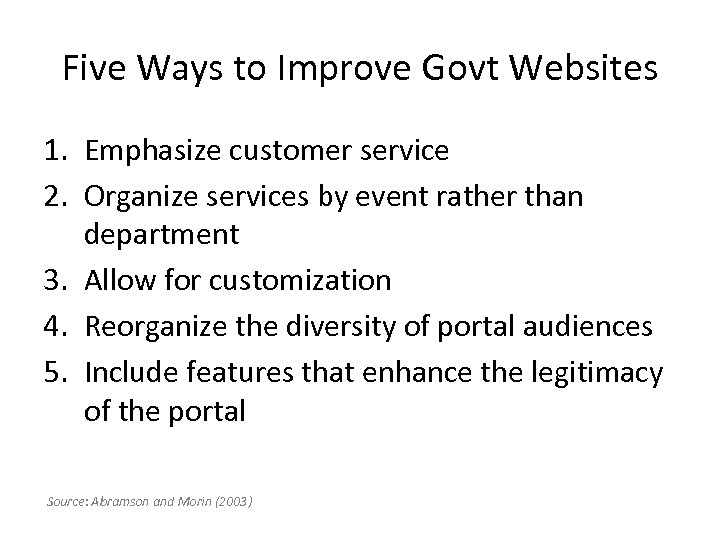 Five Ways to Improve Govt Websites 1. Emphasize customer service 2. Organize services by event rather than department 3. Allow for customization 4. Reorganize the diversity of portal audiences 5. Include features that enhance the legitimacy of the portal Source: Abramson and Morin (2003)
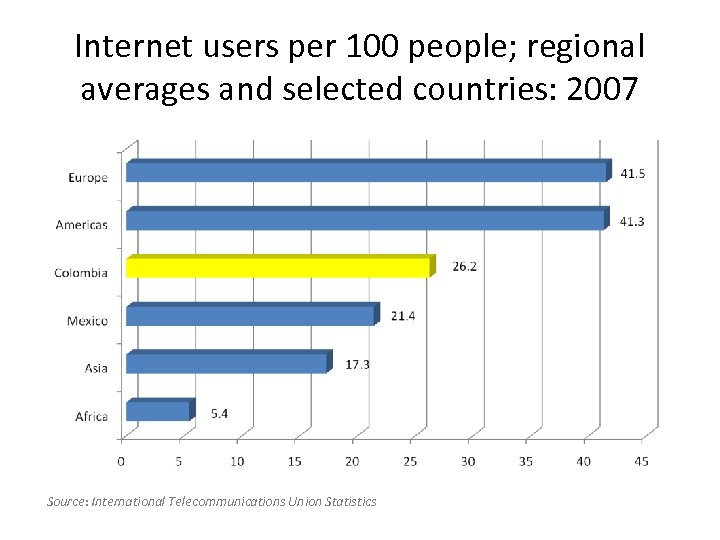 Internet users per 100 people; regional averages and selected countries: 2007 Source: International Telecommunications Union Statistics