 Скачать презентацию Dynamics of Global Emissions Mitigation Market P R
1a9e74f6fcc05695056eb74dc1a944ef.ppt
- Количество слайдов: 65



Dynamics of Global Emissions Mitigation Market P. R. Shukla
Origin of Carbon Market F Greenhouse Gas Emissions Global Warming Global Climate Change F UN Framework Convention on Climate Change (UNFCCC) F Kyoto Protocol
Kyoto Protocol Mechanisms F Article 6: Joint Implementation ! Annex I parties F Article 12: Clean Development Mechanisms ! Non-Annex and Annex parties F Article 17: Emissions Trading ! Global
Value of atmospheric carbon The price of carbon is the “scarcity value” (marginal cost) of emissions mitigation caused by the limitations commitments ä The Phenomenon !GHG Emissions Concentrations Warming Climate Change ä UNFCCC ä Kyoto Protocol !Emissions Limitations on Annex I
Global Carbon Market under Original Kyoto Protocol What will be the size of the market? What will be the price of carbon?
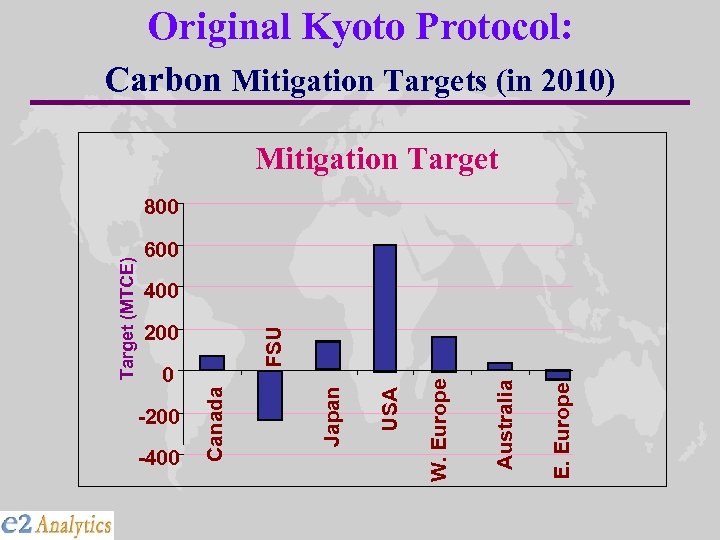
Original Kyoto Protocol: Carbon Mitigation Targets (in 2010) Mitigation Target 600 400 E. Europe Australia -400 W. Europe -200 USA 0 Japan FSU 200 Canada Target (MTCE) 800
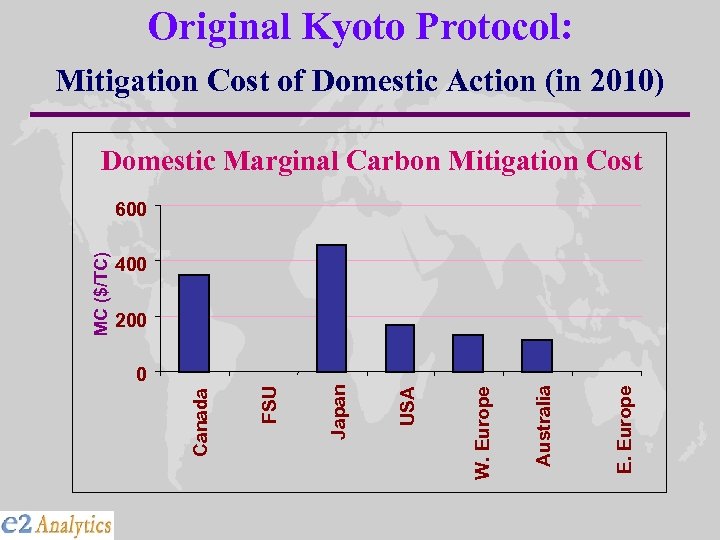
Original Kyoto Protocol: Mitigation Cost of Domestic Action (in 2010) Domestic Marginal Carbon Mitigation Cost 400 E. Europe Australia W. Europe USA FSU 0 Japan 200 Canada MC ($/TC) 600
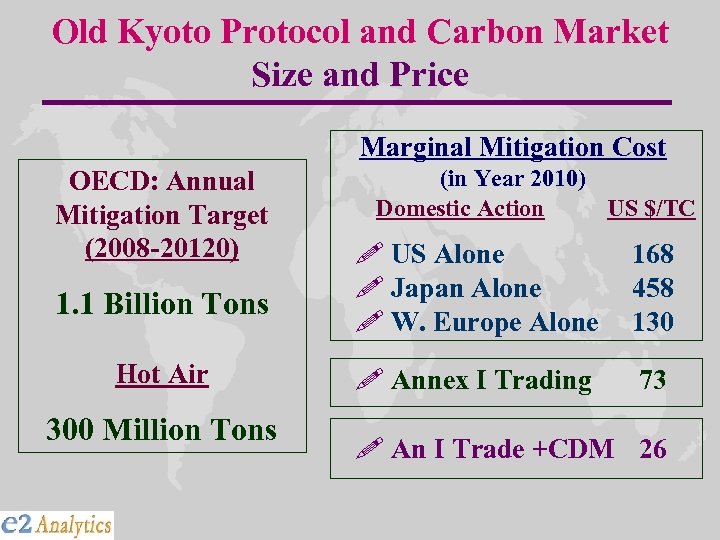
Old Kyoto Protocol and Carbon Market Size and Price Marginal Mitigation Cost OECD: Annual Mitigation Target (2008 -20120) 1. 1 Billion Tons Hot Air 300 Million Tons (in Year 2010) Domestic Action US $/TC ! US Alone ! Japan Alone ! W. Europe Alone 168 458 130 ! Annex I Trading 73 ! An I Trade +CDM 26
Global Carbon Market under New Kyoto Protocol (minus USA plus Sinks) What will be the size of the market? What will be the price of carbon?
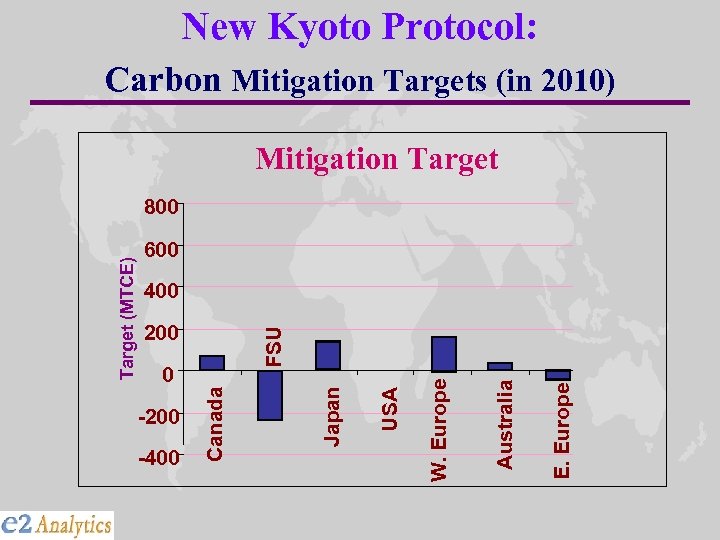
New Kyoto Protocol: Carbon Mitigation Targets (in 2010) Mitigation Target 600 400 E. Europe Australia -400 W. Europe -200 USA 0 Japan FSU 200 Canada Target (MTCE) 800
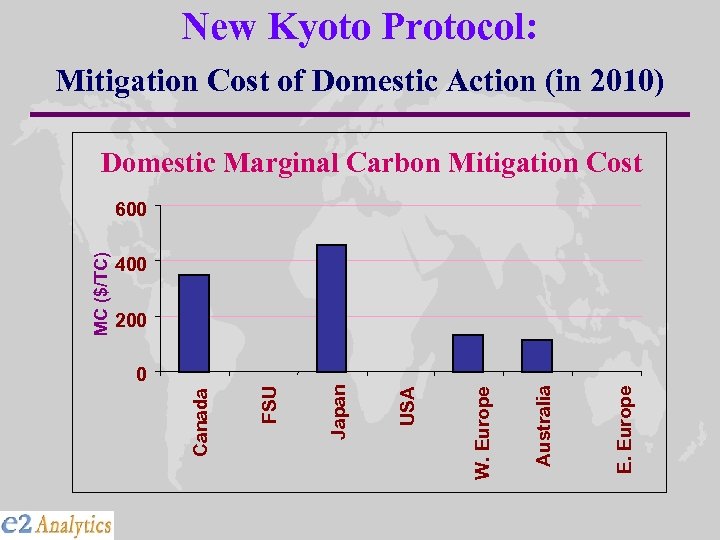
New Kyoto Protocol: Mitigation Cost of Domestic Action (in 2010) Domestic Marginal Carbon Mitigation Cost 400 E. Europe Australia W. Europe USA FSU 0 Japan 200 Canada MC ($/TC) 600
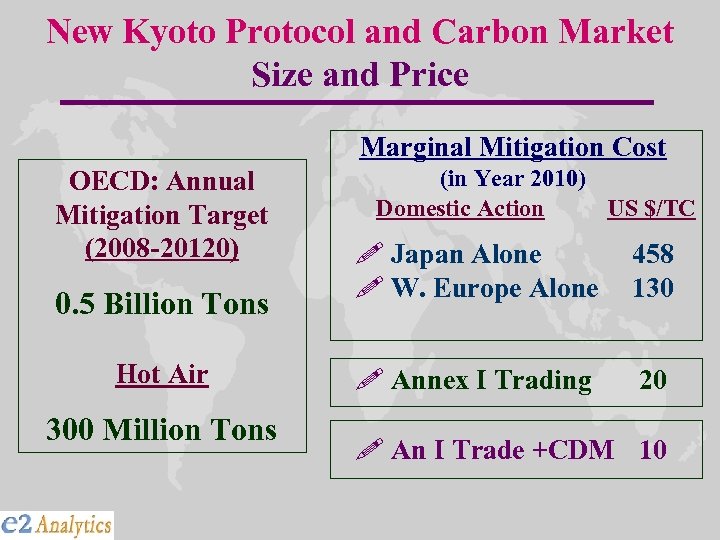
New Kyoto Protocol and Carbon Market Size and Price Marginal Mitigation Cost OECD: Annual Mitigation Target (2008 -20120) 0. 5 Billion Tons Hot Air 300 Million Tons (in Year 2010) Domestic Action US $/TC ! Japan Alone ! W. Europe Alone 458 130 ! Annex I Trading 20 ! An I Trade +CDM 10
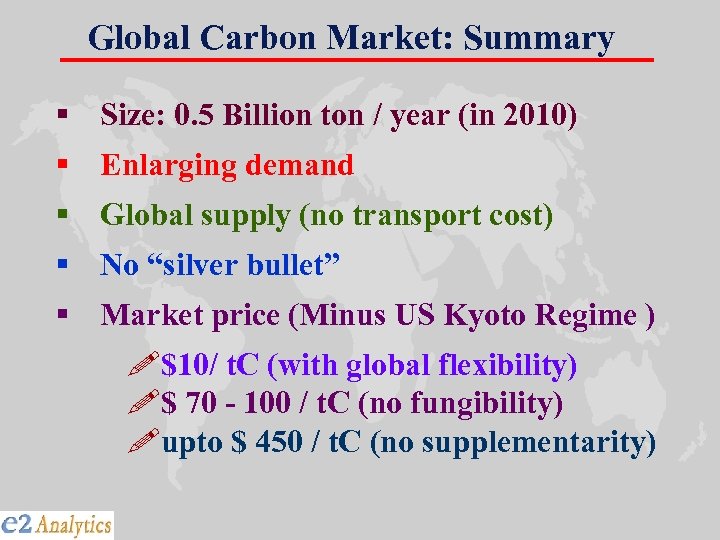
Global Carbon Market: Summary § Size: 0. 5 Billion ton / year (in 2010) § Enlarging demand § Global supply (no transport cost) § No “silver bullet” § Market price (Minus US Kyoto Regime ) !$10/ t. C (with global flexibility) !$ 70 - 100 / t. C (no fungibility) !upto $ 450 / t. C (no supplementarity)
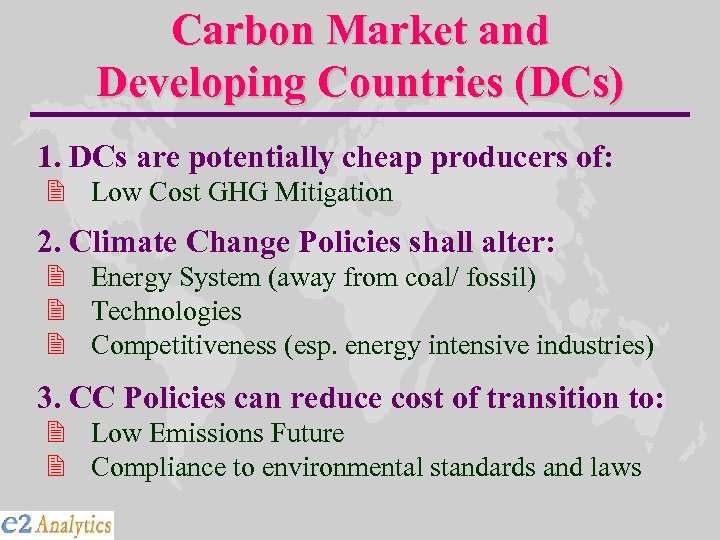
Carbon Market and Developing Countries (DCs) 1. DCs are potentially cheap producers of: 2 Low Cost GHG Mitigation 2. Climate Change Policies shall alter: 2 Energy System (away from coal/ fossil) 2 Technologies 2 Competitiveness (esp. energy intensive industries) 3. CC Policies can reduce cost of transition to: 2 Low Emissions Future 2 Compliance to environmental standards and laws
Flexibility
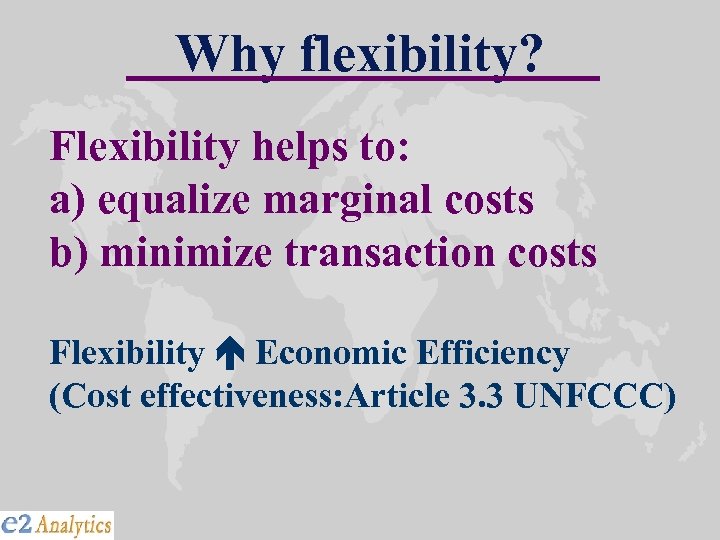
Why flexibility? Flexibility helps to: a) equalize marginal costs b) minimize transaction costs Flexibility Economic Efficiency (Cost effectiveness: Article 3. 3 UNFCCC)
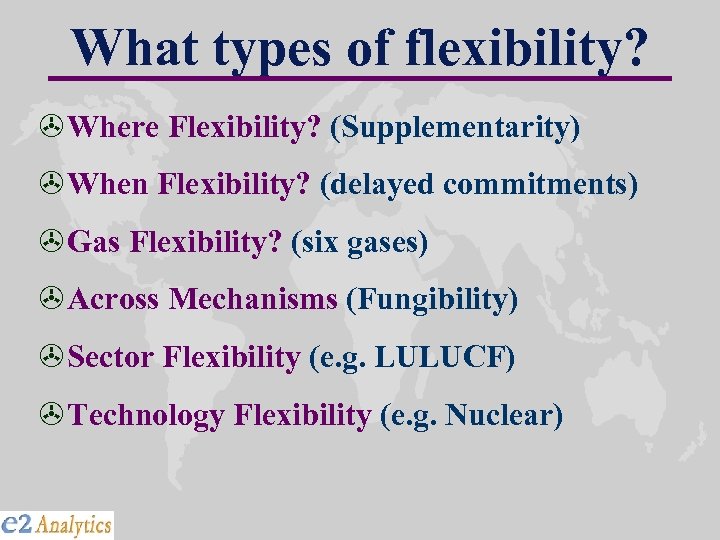
What types of flexibility? > Where Flexibility? (Supplementarity) > When Flexibility? (delayed commitments) > Gas Flexibility? (six gases) > Across Mechanisms (Fungibility) > Sector Flexibility (e. g. LULUCF) > Technology Flexibility (e. g. Nuclear)
Why Global Carbon Market matters to Developing Countries?
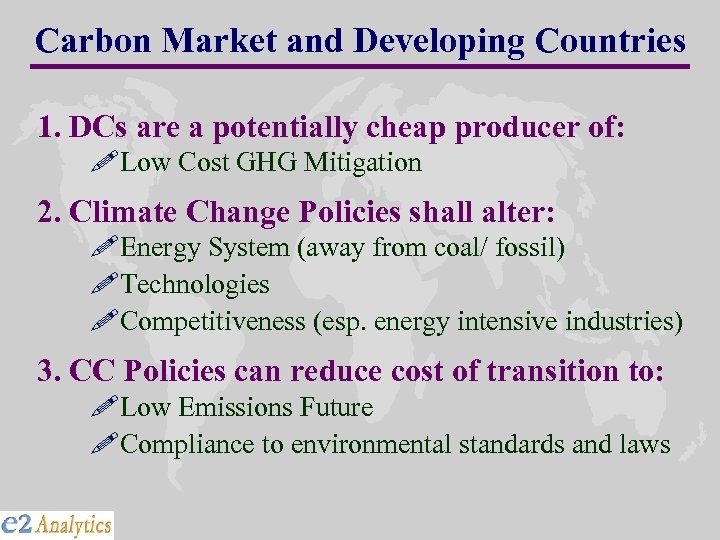
Carbon Market and Developing Countries 1. DCs are a potentially cheap producer of: !Low Cost GHG Mitigation 2. Climate Change Policies shall alter: !Energy System (away from coal/ fossil) !Technologies !Competitiveness (esp. energy intensive industries) 3. CC Policies can reduce cost of transition to: !Low Emissions Future !Compliance to environmental standards and laws
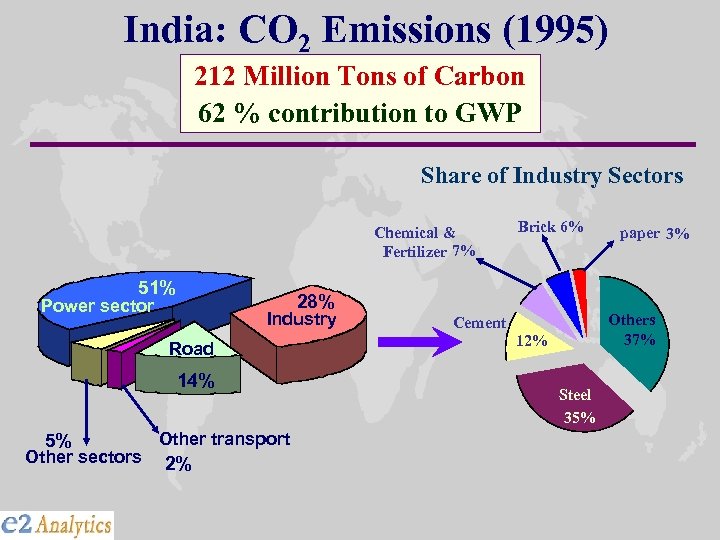
India: CO 2 Emissions (1995) 212 Million Tons of Carbon 62 % contribution to GWP Share of Industry Sectors Chemical & Fertilizer 7% 51% 28% Power sector Industry Road 14% 5% Other sectors Brick 6% Other transport 2% paper 3% Others 37% Cement 12% Steel 35%
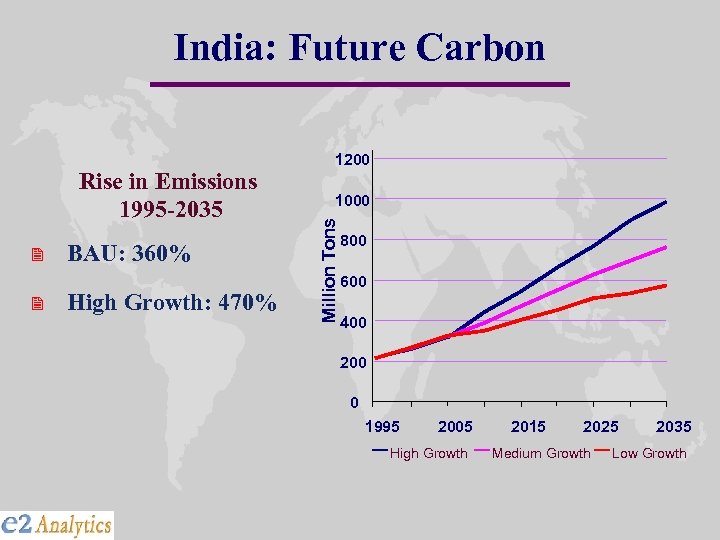
India: Future Carbon 2 2 BAU: 360% High Growth: 470% 1000 Million Tons Rise in Emissions 1995 -2035 1200 800 600 400 200 0 1995 2005 High Growth 2015 2025 Medium Growth 2035 Low Growth
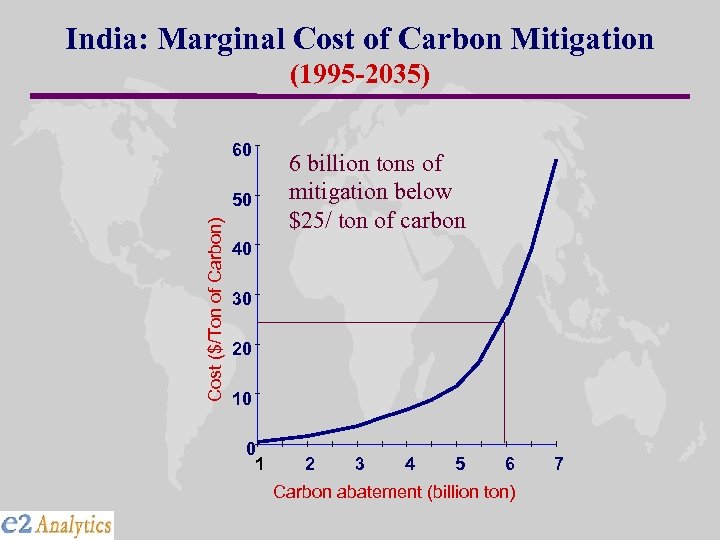
India: Marginal Cost of Carbon Mitigation (1995 -2035) 60 Cost ($/Ton of Carbon) 50 6 billion tons of mitigation below $25/ ton of carbon 40 30 20 10 0 1 2 3 4 5 6 Carbon abatement (billion ton) 7
Co-operative and Flexibility Mechanisms
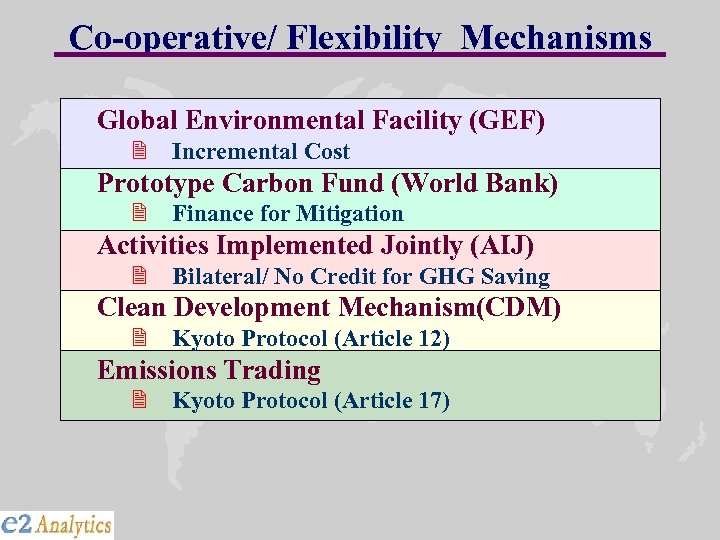
Co-operative/ Flexibility Mechanisms Global Environmental Facility (GEF) 2 Incremental Cost Prototype Carbon Fund (World Bank) 2 Finance for Mitigation Activities Implemented Jointly (AIJ) 2 Bilateral/ No Credit for GHG Saving Clean Development Mechanism(CDM) 2 Kyoto Protocol (Article 12) Emissions Trading 2 Kyoto Protocol (Article 17)
Global Environment Facility GEF
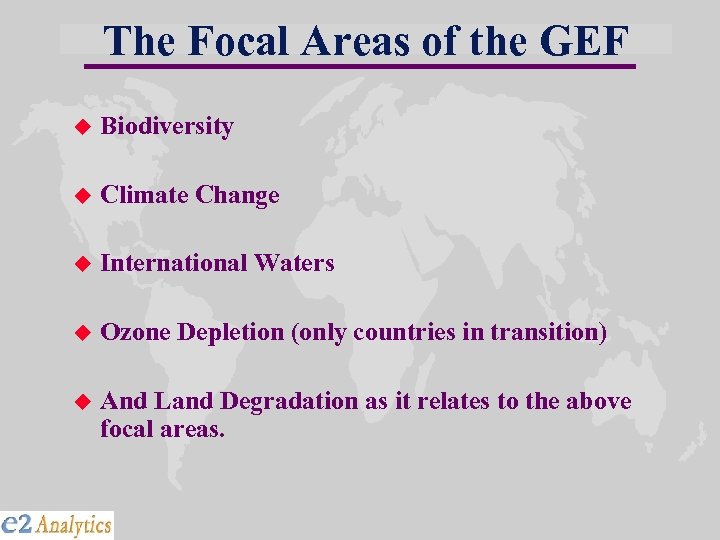
The Focal Areas of the GEF u Biodiversity u Climate Change u International Waters u Ozone Depletion (only countries in transition) u And Land Degradation as it relates to the above focal areas.
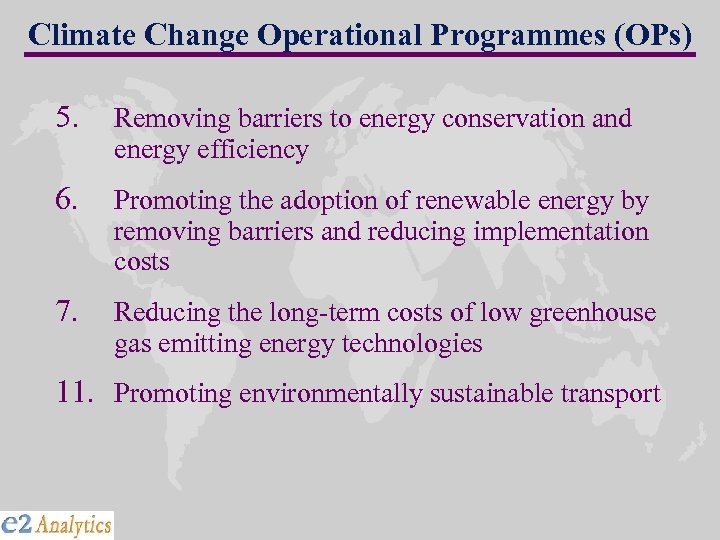
Climate Change Operational Programmes (OPs) 5. Removing barriers to energy conservation and energy efficiency 6. Promoting the adoption of renewable energy by removing barriers and reducing implementation costs 7. Reducing the long-term costs of low greenhouse gas emitting energy technologies 11. Promoting environmentally sustainable transport
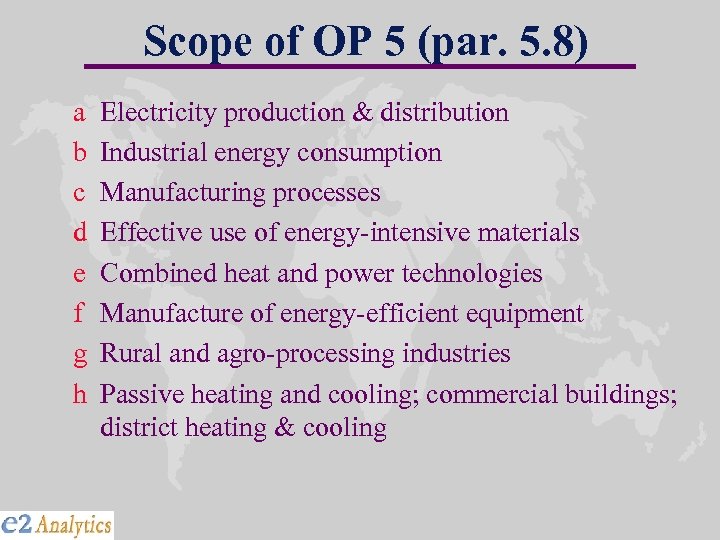
Scope of OP 5 (par. 5. 8) a b c d e f g h Electricity production & distribution Industrial energy consumption Manufacturing processes Effective use of energy-intensive materials Combined heat and power technologies Manufacture of energy-efficient equipment Rural and agro-processing industries Passive heating and cooling; commercial buildings; district heating & cooling
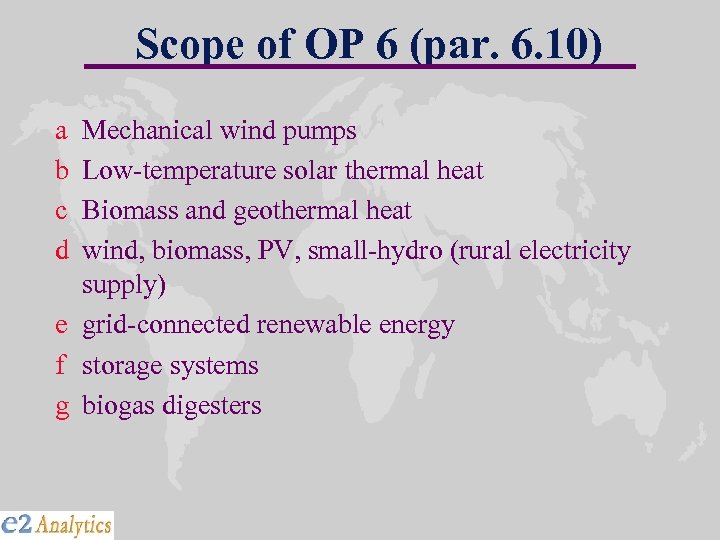
Scope of OP 6 (par. 6. 10) a b c d Mechanical wind pumps Low-temperature solar thermal heat Biomass and geothermal heat wind, biomass, PV, small-hydro (rural electricity supply) e grid-connected renewable energy f storage systems g biogas digesters
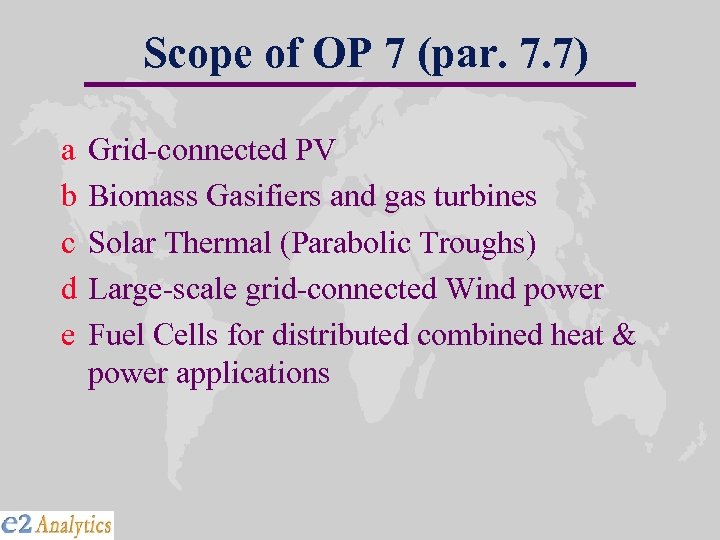
Scope of OP 7 (par. 7. 7) a b c d e Grid-connected PV Biomass Gasifiers and gas turbines Solar Thermal (Parabolic Troughs) Large-scale grid-connected Wind power Fuel Cells for distributed combined heat & power applications
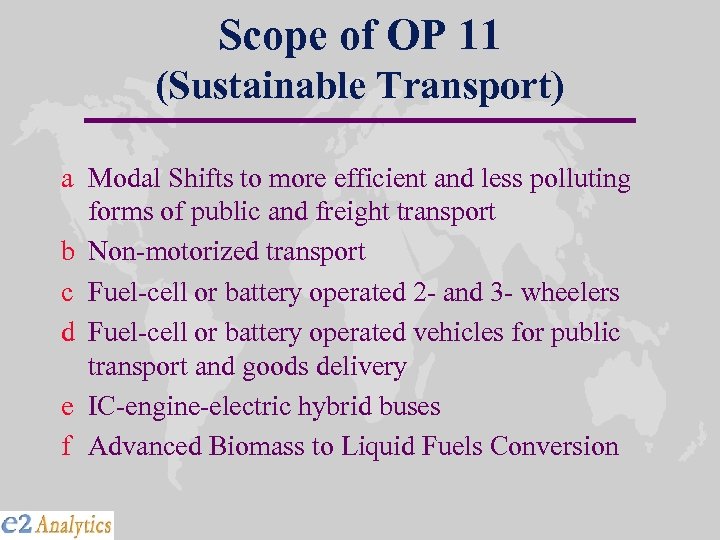
Scope of OP 11 (Sustainable Transport) a Modal Shifts to more efficient and less polluting forms of public and freight transport b Non-motorized transport c Fuel-cell or battery operated 2 - and 3 - wheelers d Fuel-cell or battery operated vehicles for public transport and goods delivery e IC-engine-electric hybrid buses f Advanced Biomass to Liquid Fuels Conversion
Prototype Carbon Fund PCF
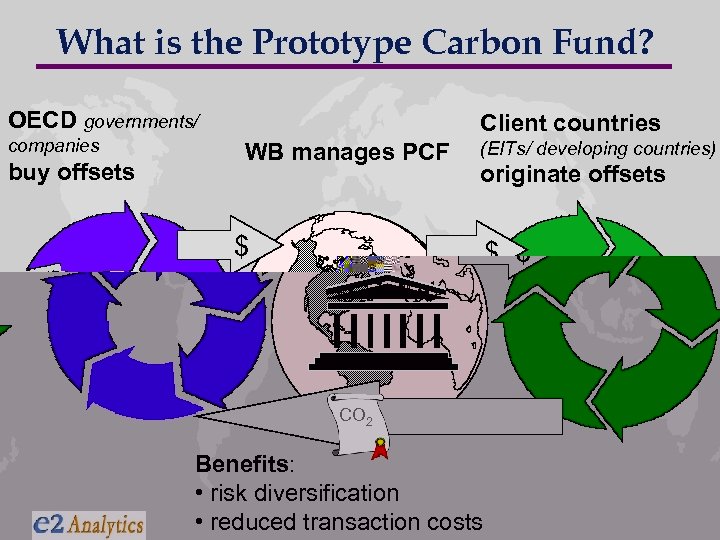
What is the Prototype Carbon Fund? OECD governments/ companies buy offsets Client countries WB manages PCF $ (EITs/ developing countries) originate offsets $ CO 2 Benefits: • risk diversification • reduced transaction costs
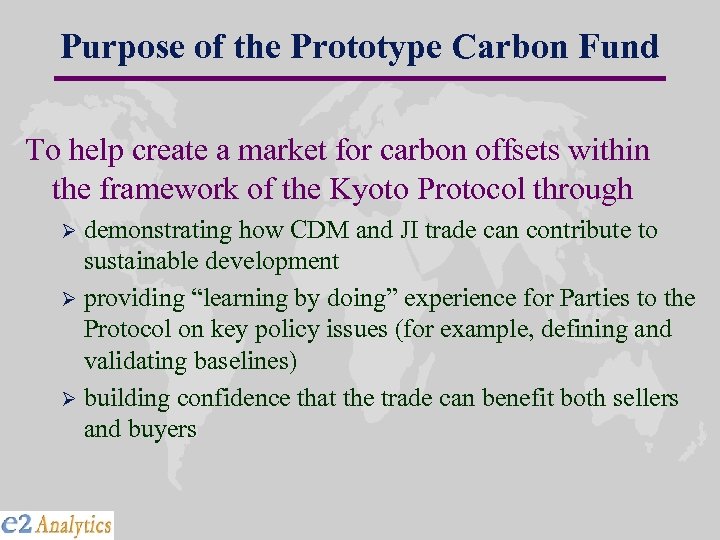
Purpose of the Prototype Carbon Fund To help create a market for carbon offsets within the framework of the Kyoto Protocol through demonstrating how CDM and JI trade can contribute to sustainable development Ø providing “learning by doing” experience for Parties to the Protocol on key policy issues (for example, defining and validating baselines) Ø building confidence that the trade can benefit both sellers and buyers Ø
Activities Implemented Jointly AIJ
Activities Implemented Jointly 2 Kick Start Mechanism 2 Voluntary / Bilateral 2 No carbon credit 2 Limited success (till date)
Clean Development Mechanism CDM
CDM: Criteria 2 Sustainability 2 Climate Change Effectiveness O Additionality 2 Cost Effectiveness O Partnership
Additionality: The Qualifying Condition for CDM Projects Kyoto Protocol - Article 12. 5 Emissions reductions resulting from each project activity shall be certified …… on the basis of: …. . . (c) Reductions in emissions that are additional to any that would occur in the absence of the certified project activity
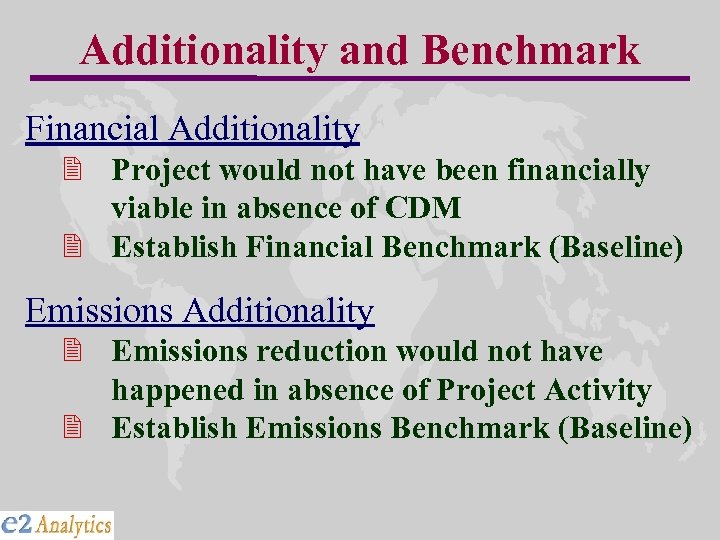
Additionality and Benchmark Financial Additionality 2 Project would not have been financially viable in absence of CDM 2 Establish Financial Benchmark (Baseline) Emissions Additionality 2 Emissions reduction would not have happened in absence of Project Activity 2 Establish Emissions Benchmark (Baseline)
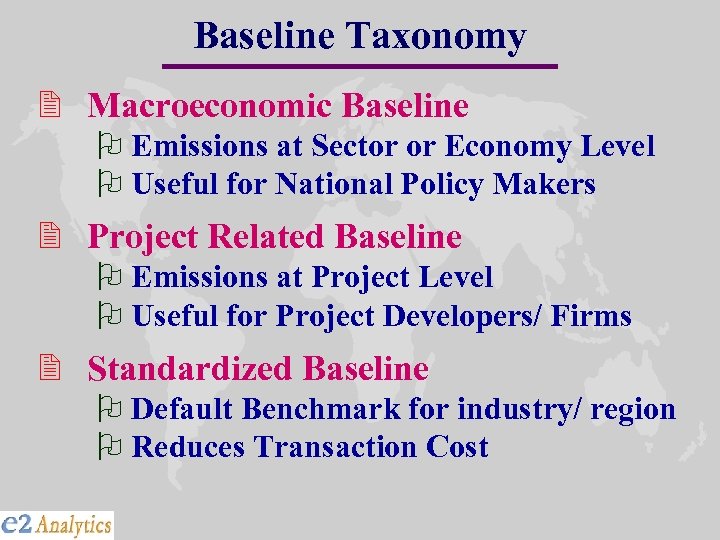
Baseline Taxonomy 2 Macroeconomic Baseline O Emissions at Sector or Economy Level O Useful for National Policy Makers 2 Project Related Baseline O Emissions at Project Level O Useful for Project Developers/ Firms 2 Standardized Baseline O Default Benchmark for industry/ region O Reduces Transaction Cost
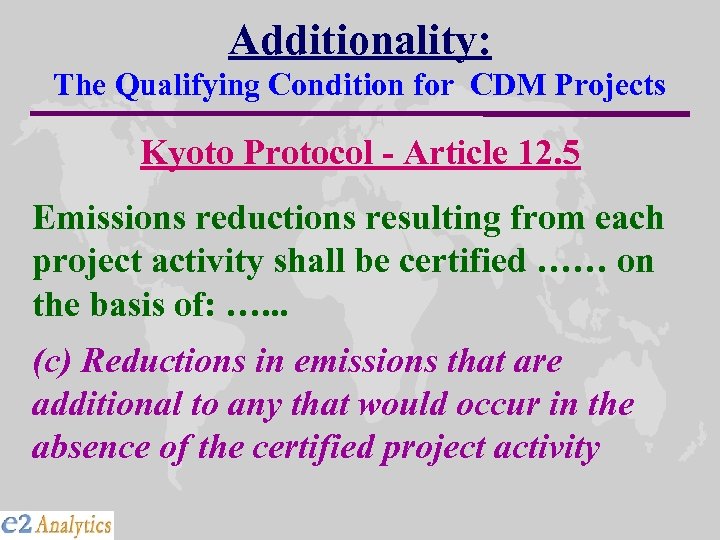
Additionality: The Qualifying Condition for CDM Projects Kyoto Protocol - Article 12. 5 Emissions reductions resulting from each project activity shall be certified …… on the basis of: …. . . (c) Reductions in emissions that are additional to any that would occur in the absence of the certified project activity
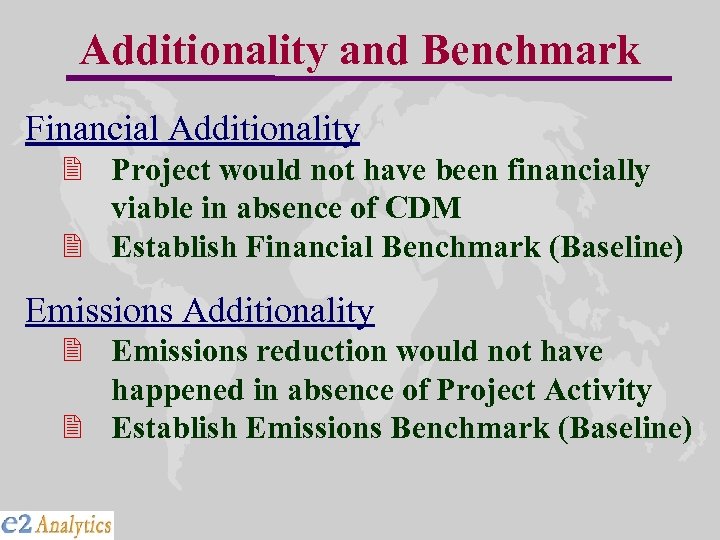
Additionality and Benchmark Financial Additionality 2 Project would not have been financially viable in absence of CDM 2 Establish Financial Benchmark (Baseline) Emissions Additionality 2 Emissions reduction would not have happened in absence of Project Activity 2 Establish Emissions Benchmark (Baseline)
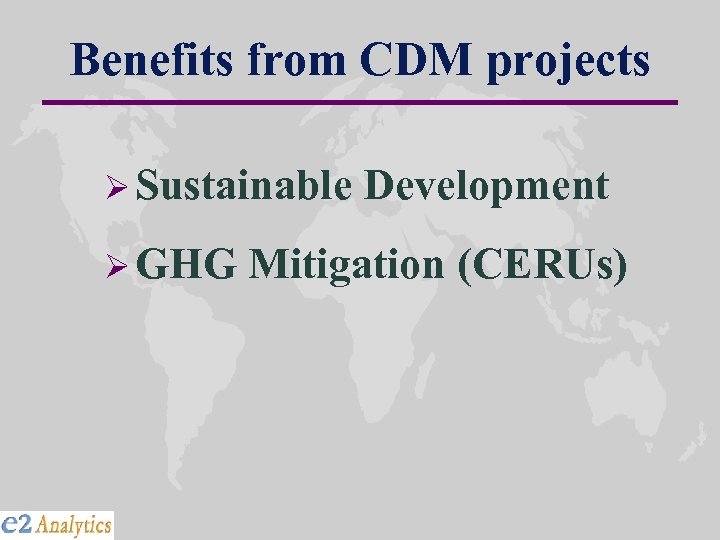
Benefits from CDM projects Ø Sustainable Ø GHG Development Mitigation (CERUs)
Typical CDM Projects
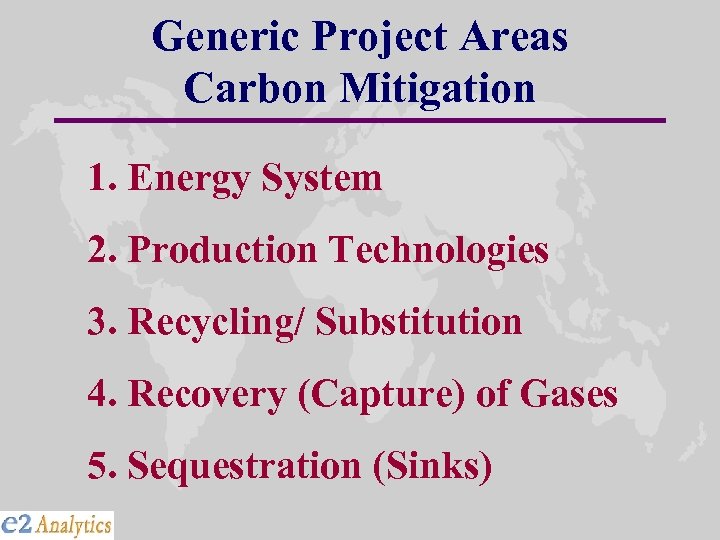
Generic Project Areas Carbon Mitigation 1. Energy System 2. Production Technologies 3. Recycling/ Substitution 4. Recovery (Capture) of Gases 5. Sequestration (Sinks)
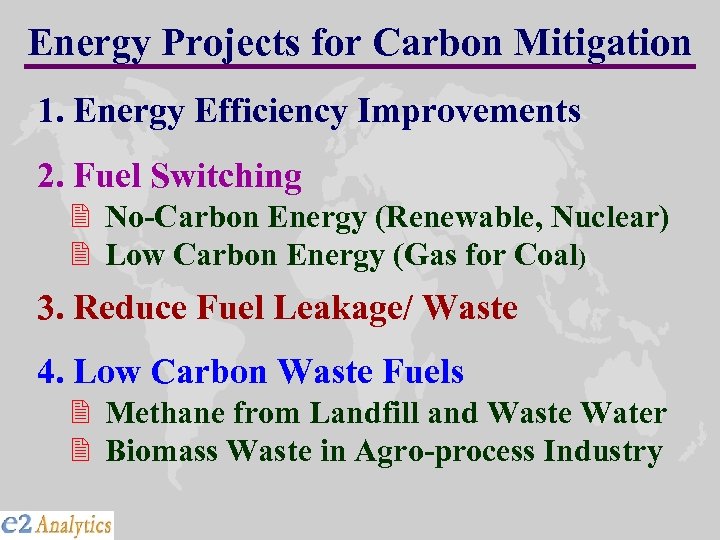
Energy Projects for Carbon Mitigation 1. Energy Efficiency Improvements 2. Fuel Switching 2 No-Carbon Energy (Renewable, Nuclear) 2 Low Carbon Energy (Gas for Coal) 3. Reduce Fuel Leakage/ Waste 4. Low Carbon Waste Fuels 2 Methane from Landfill and Waste Water 2 Biomass Waste in Agro-process Industry
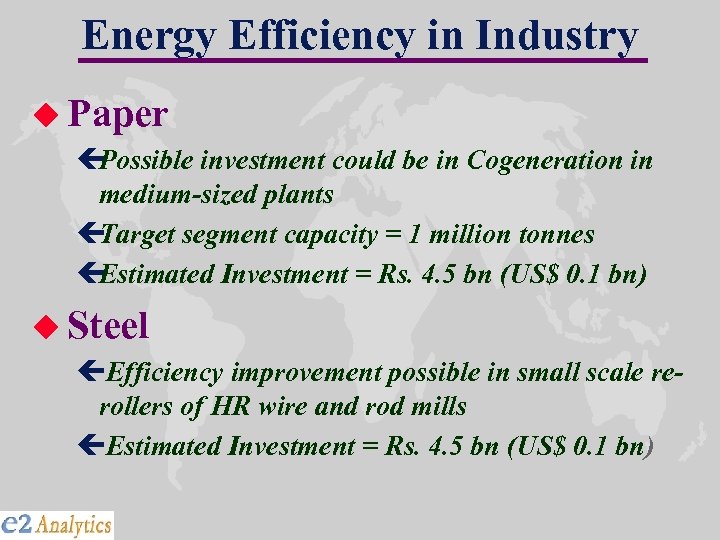
Energy Efficiency in Industry u Paper ç Possible investment could be in Cogeneration in medium-sized plants ç Target segment capacity = 1 million tonnes ç Estimated Investment = Rs. 4. 5 bn (US$ 0. 1 bn) u Steel çEfficiency improvement possible in small scale rerollers of HR wire and rod mills çEstimated Investment = Rs. 4. 5 bn (US$ 0. 1 bn)
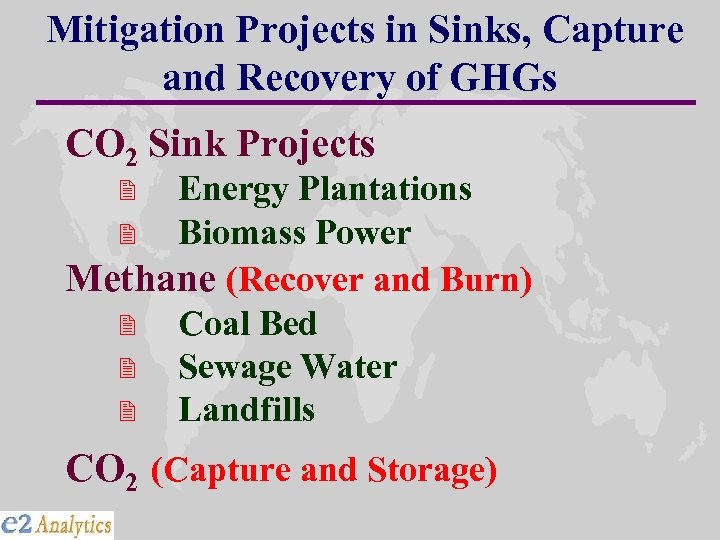
Mitigation Projects in Sinks, Capture and Recovery of GHGs CO 2 Sink Projects Energy Plantations 2 Biomass Power Methane (Recover and Burn) 2 Coal Bed 2 Sewage Water 2 Landfills 2 CO 2 (Capture and Storage)
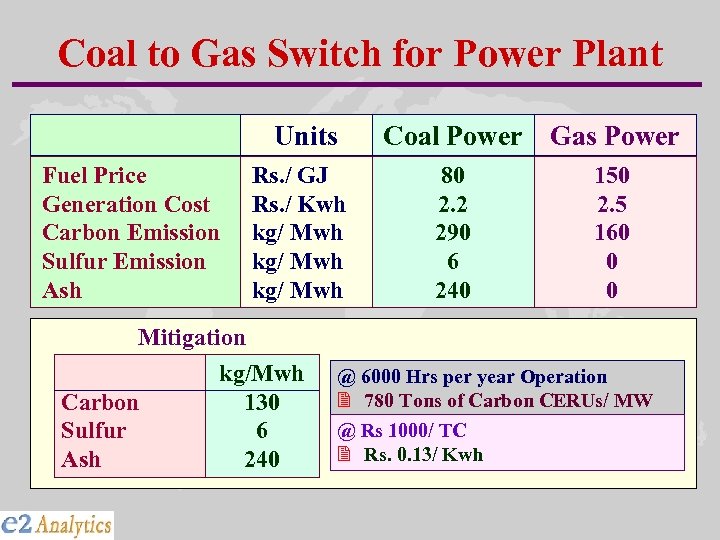
Coal to Gas Switch for Power Plant Units Fuel Price Generation Cost Carbon Emission Sulfur Emission Ash Rs. / GJ Rs. / Kwh kg/ Mwh Mitigation kg/Mwh Carbon 130 Sulfur 6 Ash 240 Coal Power Gas Power 80 2. 2 290 6 240 150 2. 5 160 0 0 @ 6000 Hrs per year Operation 2 780 Tons of Carbon CERUs/ MW @ Rs 1000/ TC 2 Rs. 0. 13/ Kwh
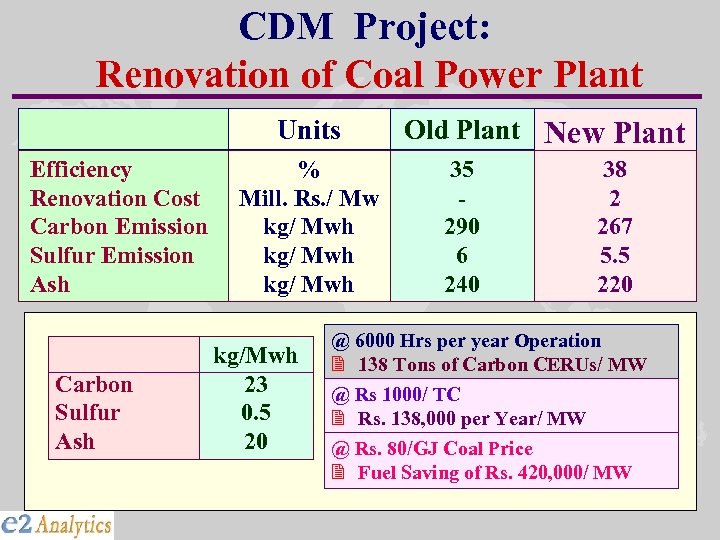
CDM Project: Renovation of Coal Power Plant Units Efficiency Renovation Cost Carbon Emission Sulfur Emission Ash Carbon Sulfur Ash % Mill. Rs. / Mw kg/ Mwh kg/Mwh 23 0. 5 20 Old Plant New Plant 35 290 6 240 38 2 267 5. 5 220 @ 6000 Hrs per year Operation 2 138 Tons of Carbon CERUs/ MW @ Rs 1000/ TC 2 Rs. 138, 000 per Year/ MW @ Rs. 80/GJ Coal Price 2 Fuel Saving of Rs. 420, 000/ MW
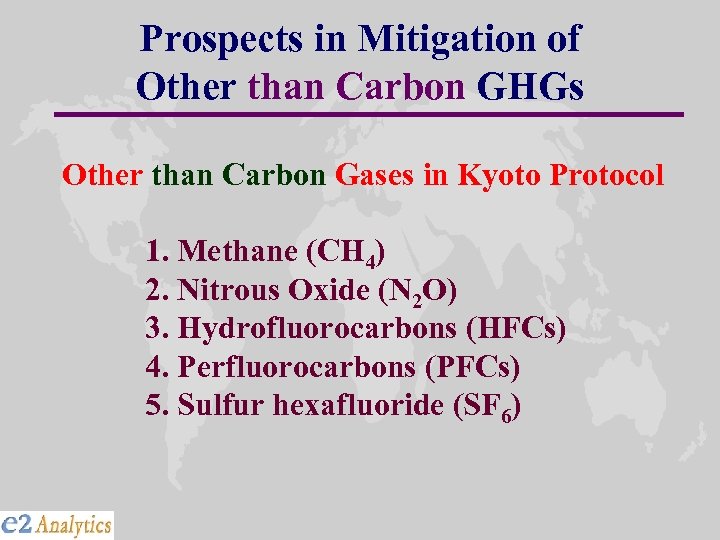
Prospects in Mitigation of Other than Carbon GHGs Other than Carbon Gases in Kyoto Protocol 1. Methane (CH 4) 2. Nitrous Oxide (N 2 O) 3. Hydrofluorocarbons (HFCs) 4. Perfluorocarbons (PFCs) 5. Sulfur hexafluoride (SF 6)
Emissions Trading ET
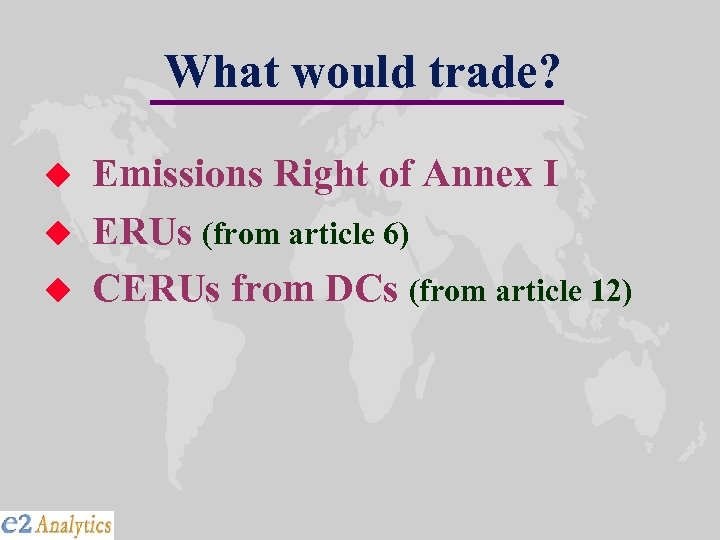
What would trade? u u u Emissions Right of Annex I ERUs (from article 6) CERUs from DCs (from article 12)
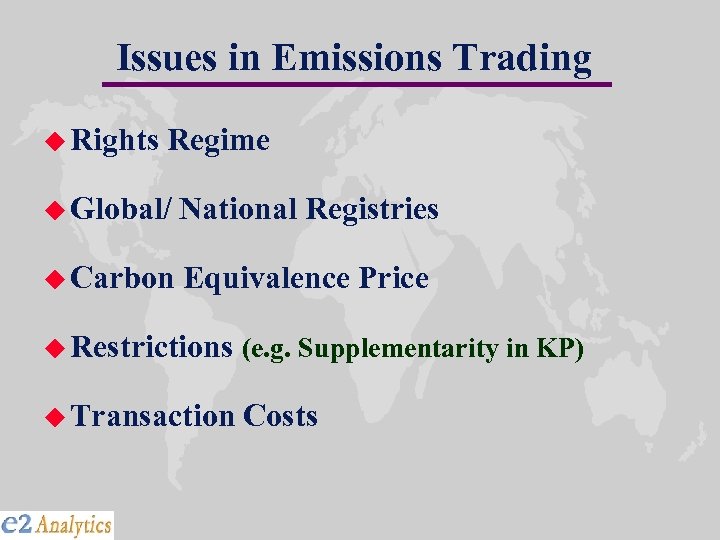
Issues in Emissions Trading u Rights Regime u Global/ National Registries u Carbon Equivalence Price u Restrictions (e. g. Supplementarity in KP) u Transaction Costs
What key national policies and measures shall help Developing Countries to compete in the global carbon market?
NORTH-SOUTH EQUITY: UNFCCC Equity: Article 3. 1 M“common but differentiated responsibilities” Efficiency: Article 3. 3 M“policies and measures to deal with climate change should be cost-effective so as to ensure global benefits at the lowest possible cost”
Key Policy Question 1 Efficiency How to generate effective market signals to match global carbon market signals?
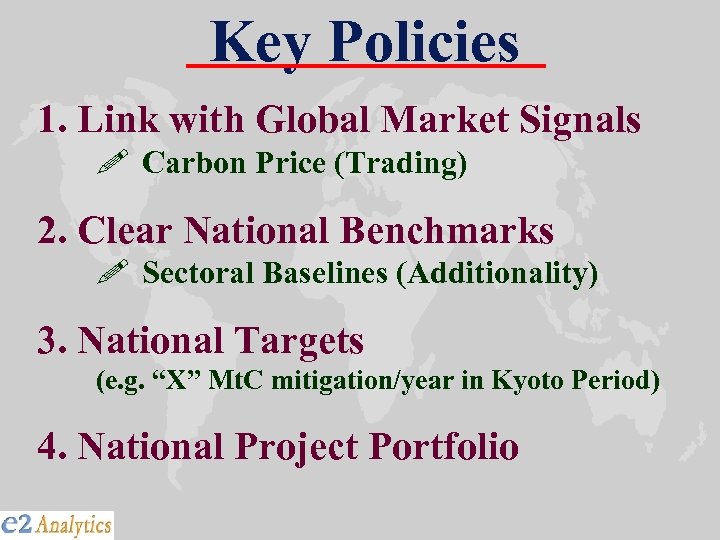
Key Policies 1. Link with Global Market Signals ! Carbon Price (Trading) 2. Clear National Benchmarks ! Sectoral Baselines (Additionality) 3. National Targets (e. g. “X” Mt. C mitigation/year in Kyoto Period) 4. National Project Portfolio
Key Policy Question 2 Sustainable Development How to make Climate Change mitigation consistent with National Sustainable Development policies?
Key Policies 1. Sustainability Indicators 2. Benchmarks for Ancillary Benefits 3. Fast-Track Clearance for Generic Classes of Projects (Technologies) 4. Decentralized Implementation
Key Policy Question 3 Environmental Integrity How to ensure that credits (e. g. CERs) represent “good” tons?
Key Policies 1. Credible Certification Process 2. Dynamic Baselines
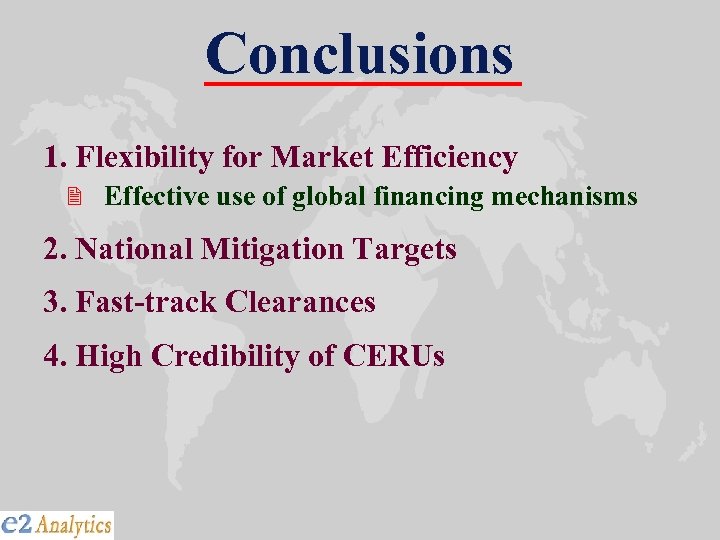
Conclusions 1. Flexibility for Market Efficiency 2 Effective use of global financing mechanisms 2. National Mitigation Targets 3. Fast-track Clearances 4. High Credibility of CERUs
Скачать презентацию Dynamics of Global Emissions Mitigation Market P R
1a9e74f6fcc05695056eb74dc1a944ef.ppt