


 Скачать презентацию Dynamic Modeling Simulation and Control of a Small
850005629a3e2e9898623563b157e66d.ppt
- Количество слайдов: 50
 Dynamic Modeling, Simulation and Control of a Small Wind-Fuel Cell Hybrid Energy System for Stand-Alone Applications Graduate Student Seminar : Master of Engineering June 29, 2004 Mohammad Jahangir Khan mjakhan@engr. mun. ca Faculty of Engineering & Applied Science Electrical Engineering 1
 Outline § Introduction • Renewable Energy, Hybrid & Stand-alone Power Sources • Emerging Technologies, Scope of Research § Pre-feasibility Study • Load, Resource, Technology Options • Sensitivity & Optimization Results § Model Formulation • Wind Energy Conversion System, Fuel Cell System, Electrolyzer, Power Converter • System Integration § Simulation § Results • Random Wind Variation • Step Response § Conclusion 2
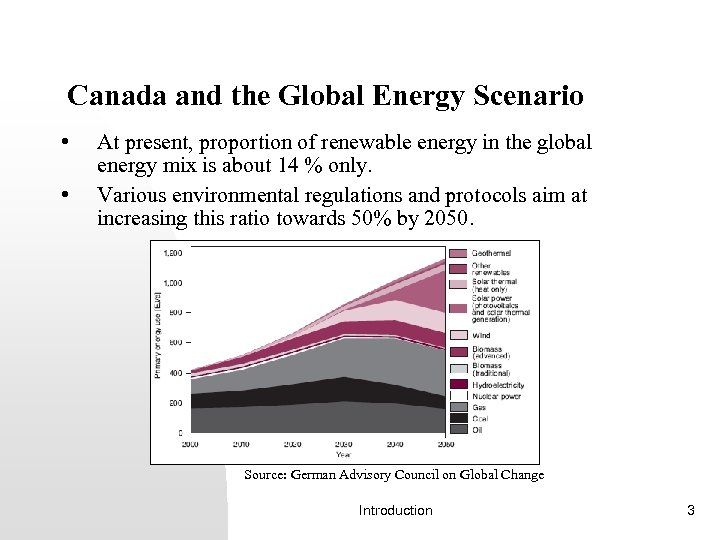 Canada and the Global Energy Scenario • • At present, proportion of renewable energy in the global energy mix is about 14 % only. Various environmental regulations and protocols aim at increasing this ratio towards 50% by 2050. Source: German Advisory Council on Global Change Introduction 3
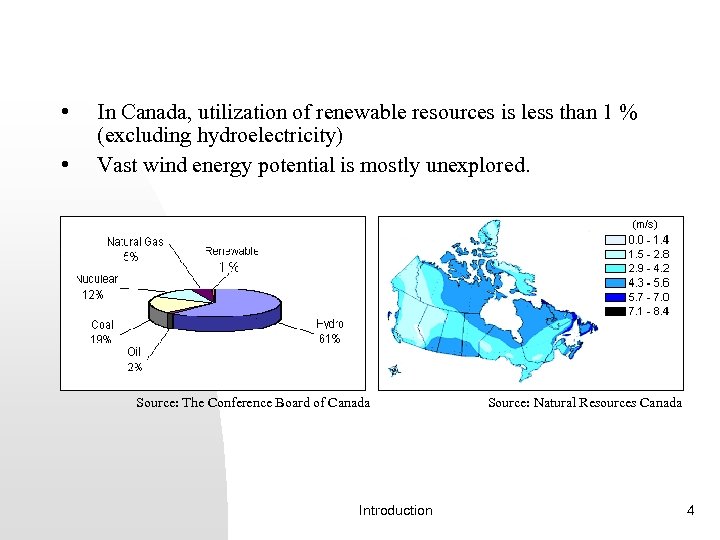 • • In Canada, utilization of renewable resources is less than 1 % (excluding hydroelectricity) Vast wind energy potential is mostly unexplored. Source: The Conference Board of Canada Introduction Source: Natural Resources Canada 4
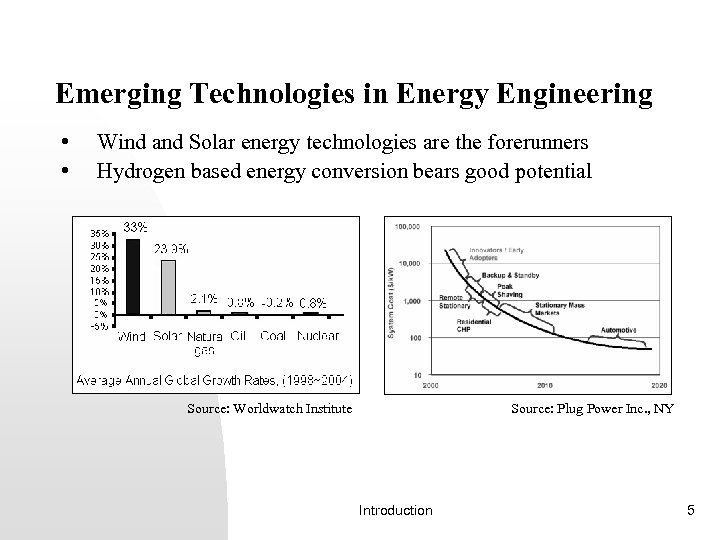 Emerging Technologies in Energy Engineering • • Wind and Solar energy technologies are the forerunners Hydrogen based energy conversion bears good potential Source: Worldwatch Institute Source: Plug Power Inc. , NY Introduction 5
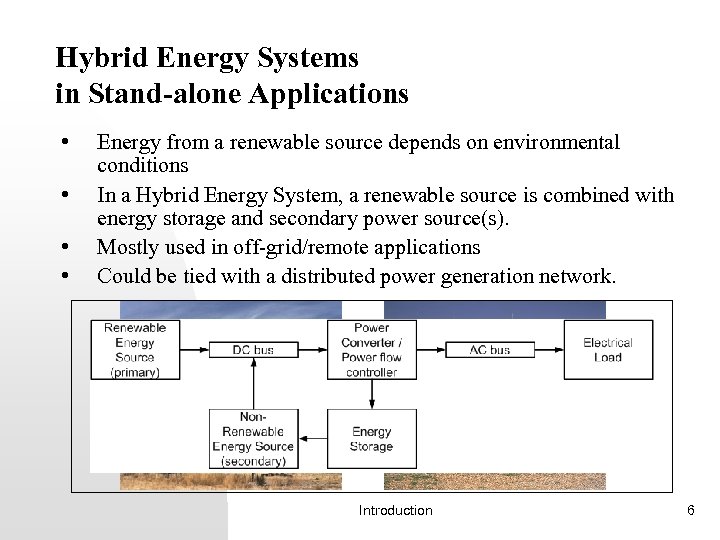 Hybrid Energy Systems in Stand-alone Applications • • Energy from a renewable source depends on environmental conditions In a Hybrid Energy System, a renewable source is combined with energy storage and secondary power source(s). Mostly used in off-grid/remote applications Could be tied with a distributed power generation network. Introduction 6
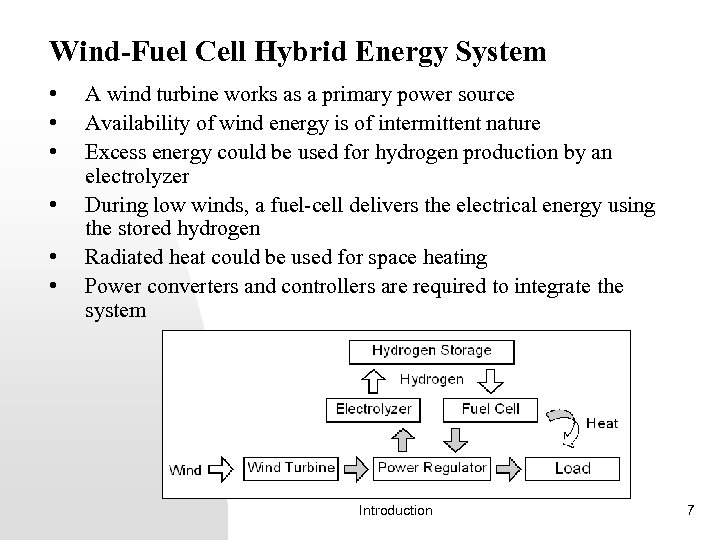 Wind-Fuel Cell Hybrid Energy System • • • A wind turbine works as a primary power source Availability of wind energy is of intermittent nature Excess energy could be used for hydrogen production by an electrolyzer During low winds, a fuel-cell delivers the electrical energy using the stored hydrogen Radiated heat could be used for space heating Power converters and controllers are required to integrate the system Introduction 7
 Scope of Research § Q 1. Is a wind-fuel cell hybrid energy system feasible for a given set of conditions? • • § Pre-feasibility Study Site: St. John’s, Newfoundland. Q 2. What are the alternatives for building and testing a HES, provided component cost is very high and technology risk is substantial? • • Computer aided modeling System integration and performance analysis through simulation Introduction 8
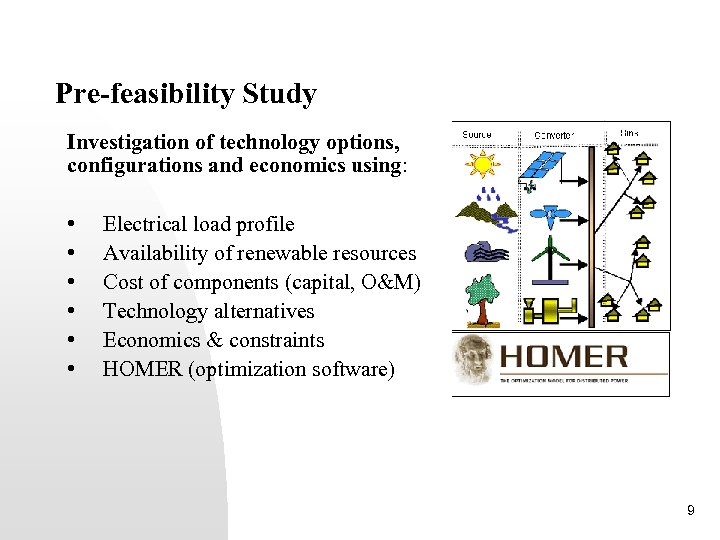 Pre-feasibility Study Investigation of technology options, configurations and economics using: • • • Electrical load profile Availability of renewable resources Cost of components (capital, O&M) Technology alternatives Economics & constraints HOMER (optimization software) 9
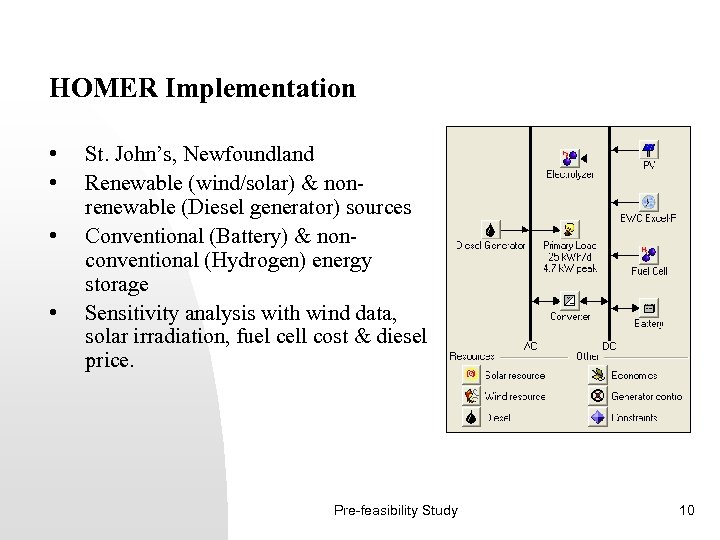 HOMER Implementation • • St. John’s, Newfoundland Renewable (wind/solar) & nonrenewable (Diesel generator) sources Conventional (Battery) & nonconventional (Hydrogen) energy storage Sensitivity analysis with wind data, solar irradiation, fuel cell cost & diesel price. Pre-feasibility Study 10
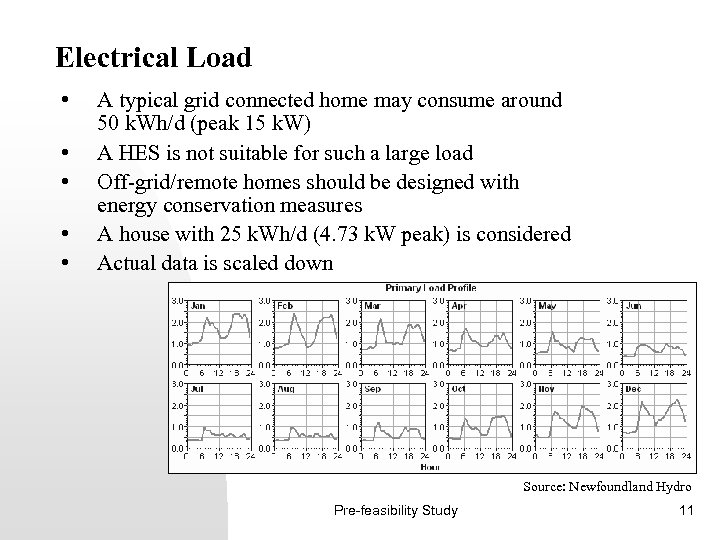 Electrical Load • • • A typical grid connected home may consume around 50 k. Wh/d (peak 15 k. W) A HES is not suitable for such a large load Off-grid/remote homes should be designed with energy conservation measures A house with 25 k. Wh/d (4. 73 k. W peak) is considered Actual data is scaled down Source: Newfoundland Hydro Pre-feasibility Study 11
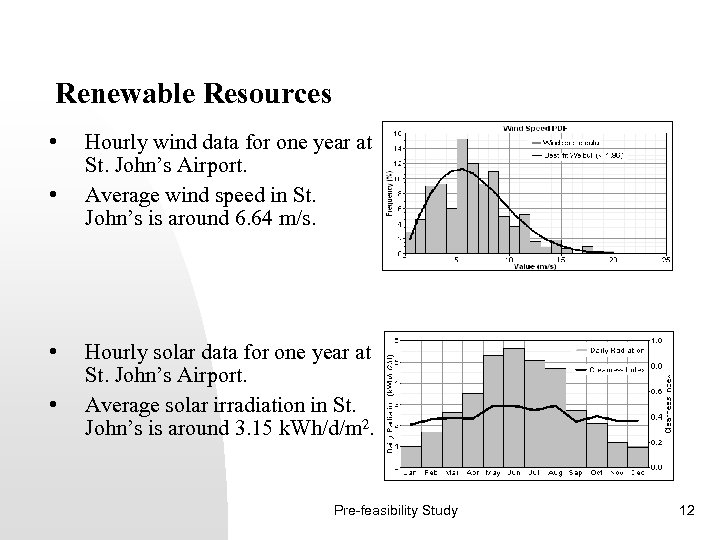 Renewable Resources • • Hourly wind data for one year at St. John’s Airport. Average wind speed in St. John’s is around 6. 64 m/s. Hourly solar data for one year at St. John’s Airport. Average solar irradiation in St. John’s is around 3. 15 k. Wh/d/m 2. Pre-feasibility Study 12
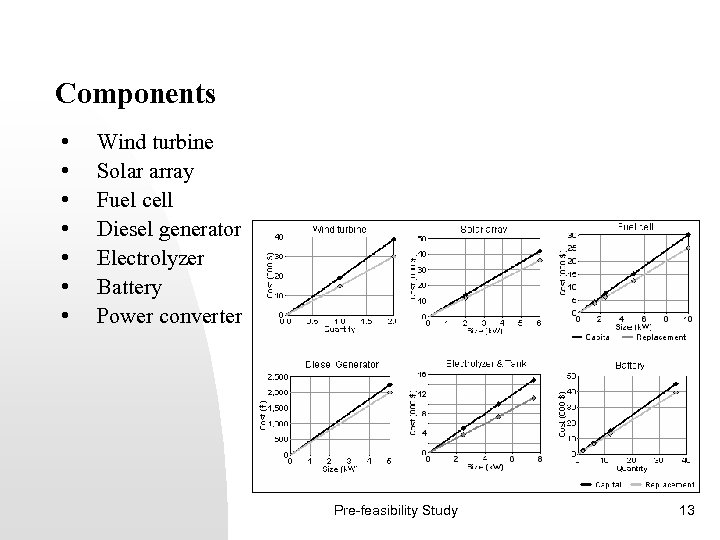 Components • • Wind turbine Solar array Fuel cell Diesel generator Electrolyzer Battery Power converter Pre-feasibility Study 13
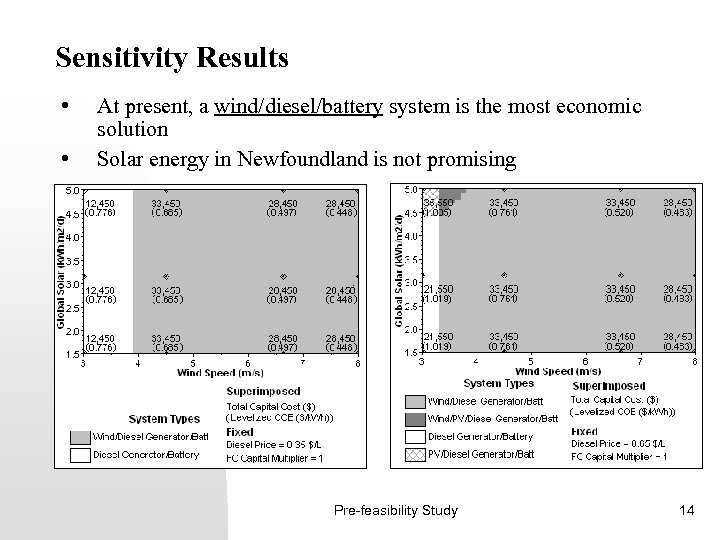 Sensitivity Results • • At present, a wind/diesel/battery system is the most economic solution Solar energy in Newfoundland is not promising Pre-feasibility Study 14
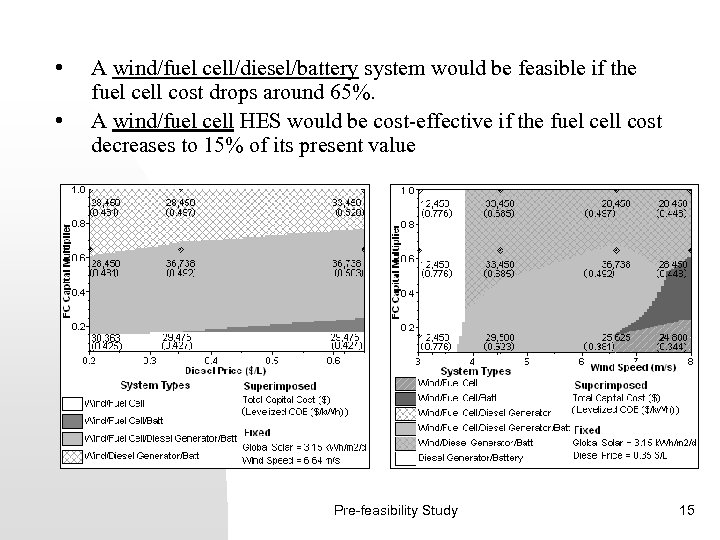 • • A wind/fuel cell/diesel/battery system would be feasible if the fuel cell cost drops around 65%. A wind/fuel cell HES would be cost-effective if the fuel cell cost decreases to 15% of its present value Pre-feasibility Study 15
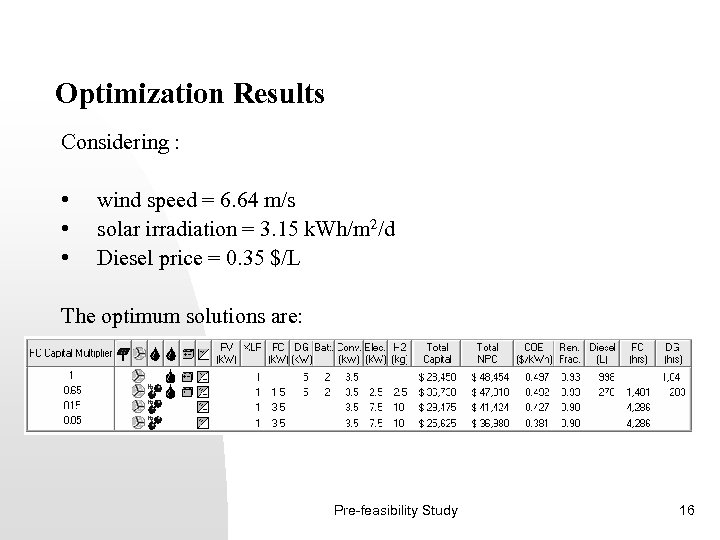 Optimization Results Considering : • • • wind speed = 6. 64 m/s solar irradiation = 3. 15 k. Wh/m 2/d Diesel price = 0. 35 $/L The optimum solutions are: Pre-feasibility Study 16
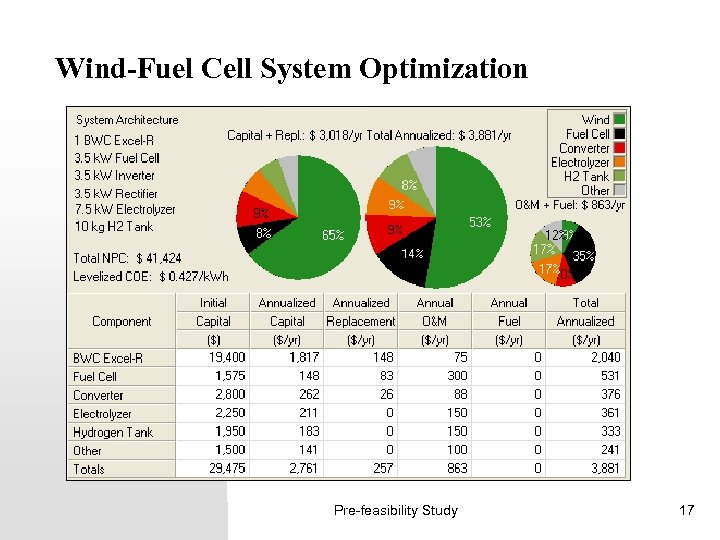 Wind-Fuel Cell System Optimization Pre-feasibility Study 17
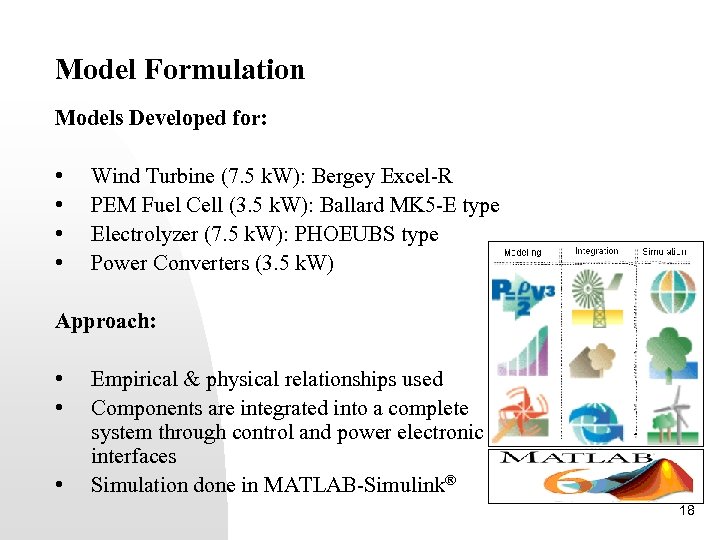 Model Formulation Models Developed for: • • Wind Turbine (7. 5 k. W): Bergey Excel-R PEM Fuel Cell (3. 5 k. W): Ballard MK 5 -E type Electrolyzer (7. 5 k. W): PHOEUBS type Power Converters (3. 5 k. W) Approach: • • • Empirical & physical relationships used Components are integrated into a complete system through control and power electronic interfaces Simulation done in MATLAB-Simulink® 18
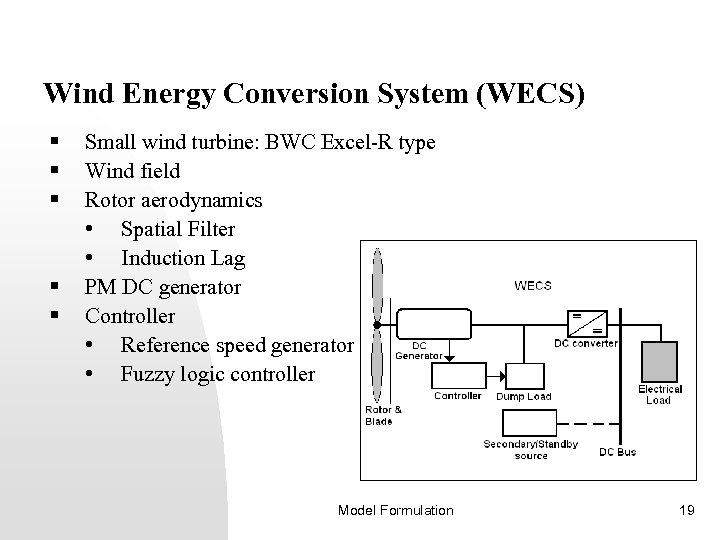 Wind Energy Conversion System (WECS) § § § Small wind turbine: BWC Excel-R type Wind field Rotor aerodynamics • Spatial Filter • Induction Lag PM DC generator Controller • Reference speed generator • Fuzzy logic controller Model Formulation 19
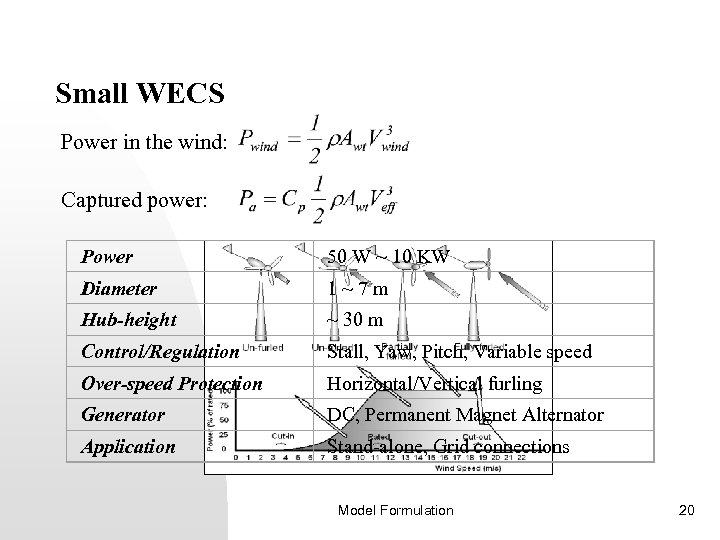 Small WECS Power in the wind: Captured power: Power 50 W ~ 10 KW Diameter 1~7 m Hub-height ~ 30 m Control/Regulation Stall, Yaw, Pitch, Variable speed Over-speed Protection Horizontal/Vertical furling Generator DC, Permanent Magnet Alternator Application Stand-alone, Grid connections Model Formulation 20
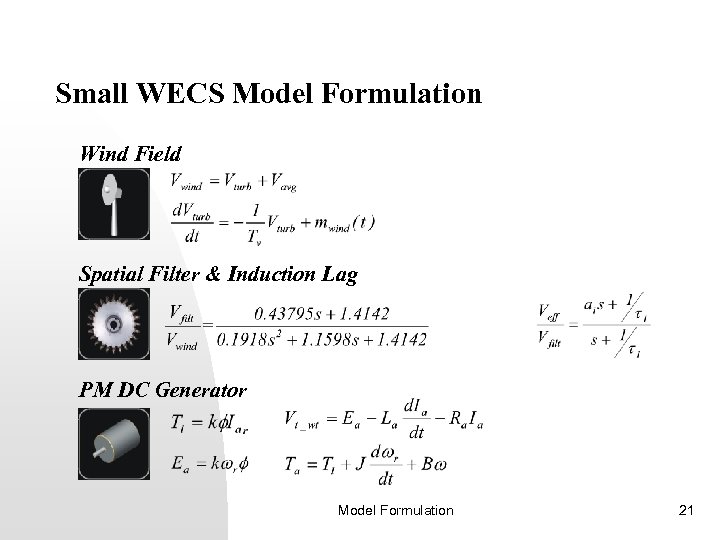 Small WECS Model Formulation Wind Field Spatial Filter & Induction Lag PM DC Generator Model Formulation 21
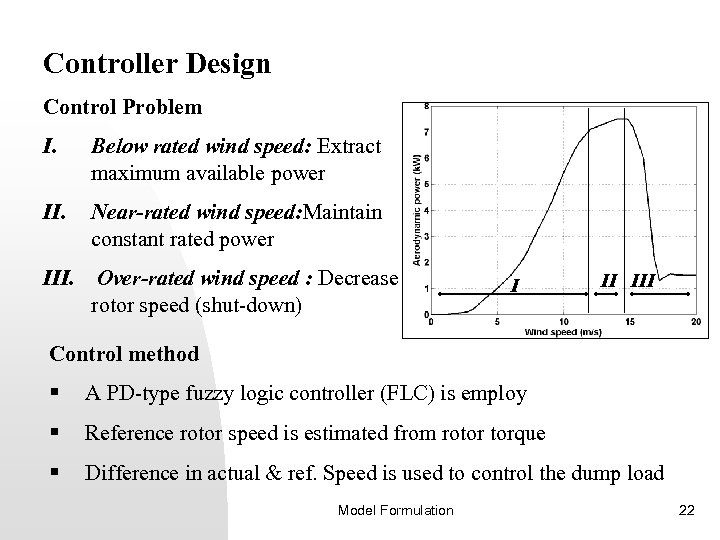 Controller Design Control Problem I. Below rated wind speed: Extract maximum available power II. Near-rated wind speed: Maintain constant rated power III. Over-rated wind speed : Decrease rotor speed (shut-down) I II III Control method § A PD-type fuzzy logic controller (FLC) is employ § Reference rotor speed is estimated from rotor torque § Difference in actual & ref. Speed is used to control the dump load Model Formulation 22
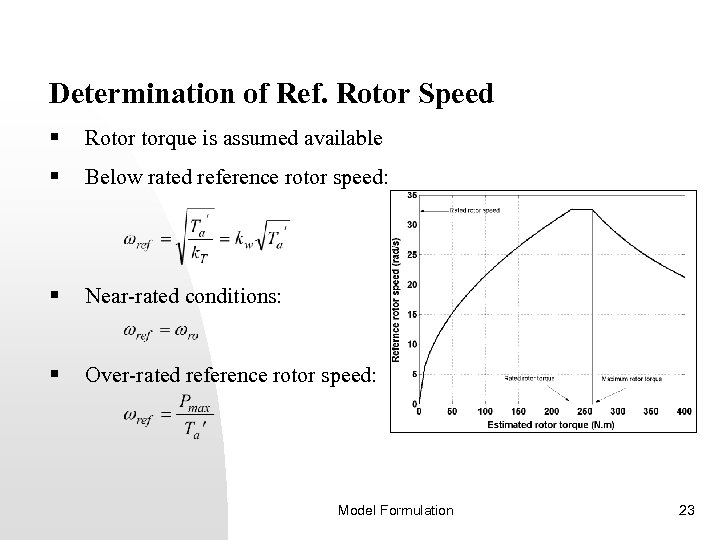 Determination of Ref. Rotor Speed § Rotor torque is assumed available § Below rated reference rotor speed: § Near-rated conditions: § Over-rated reference rotor speed: Model Formulation 23
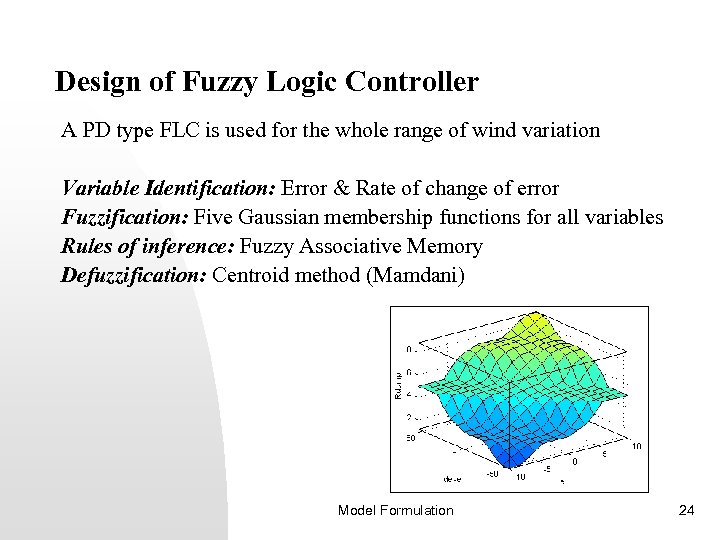 Design of Fuzzy Logic Controller A PD type FLC is used for the whole range of wind variation Variable Identification: Error & Rate of change of error Fuzzification: Five Gaussian membership functions for all variables Rules of inference: Fuzzy Associative Memory Defuzzification: Centroid method (Mamdani) Model Formulation 24
 Summary § § Dynamic model of a Small wind turbine (BWC Excel-R type) Wind field, Rotor aerodynamics, PM DC generator Controller (Reference speed generator, Fuzzy logic controller) Mechanical sensorless control (rotor torque assumed estimable) Model Formulation 25
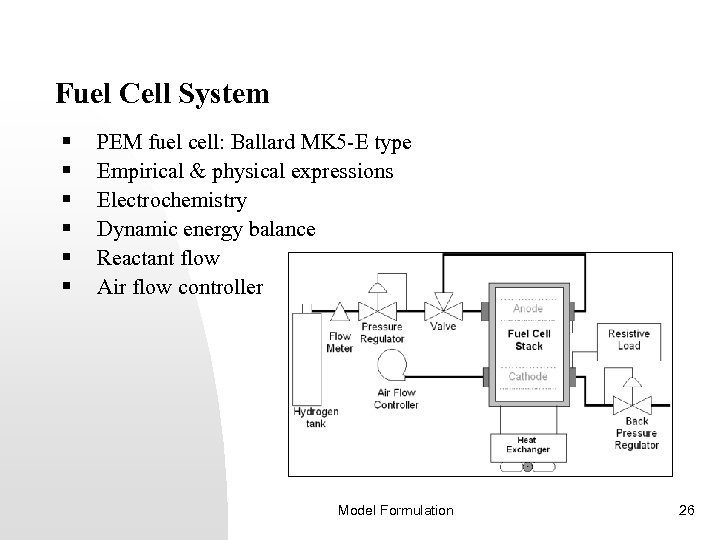 Fuel Cell System § § § PEM fuel cell: Ballard MK 5 -E type Empirical & physical expressions Electrochemistry Dynamic energy balance Reactant flow Air flow controller Model Formulation 26
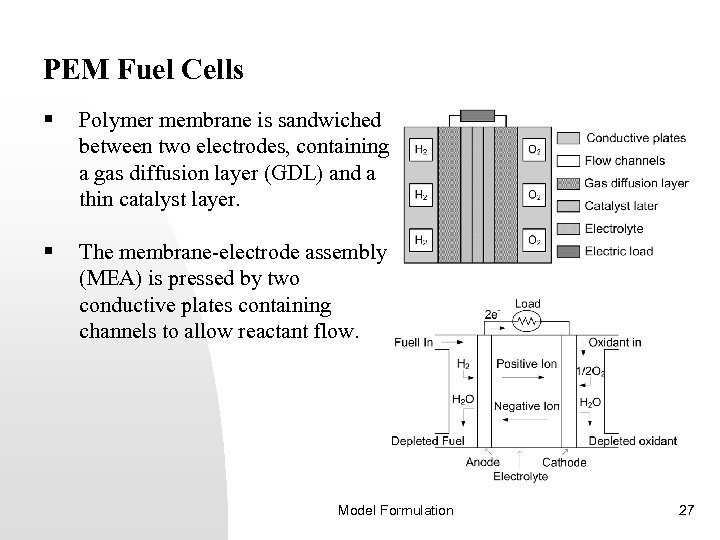 PEM Fuel Cells § Polymer membrane is sandwiched between two electrodes, containing a gas diffusion layer (GDL) and a thin catalyst layer. § The membrane-electrode assembly (MEA) is pressed by two conductive plates containing channels to allow reactant flow. Model Formulation 27
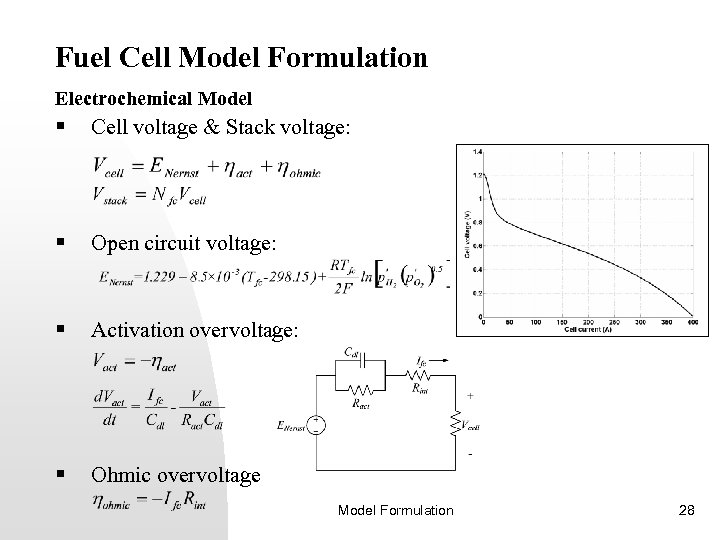 Fuel Cell Model Formulation Electrochemical Model § Cell voltage & Stack voltage: § Open circuit voltage: § Activation overvoltage: § Ohmic overvoltage Model Formulation 28
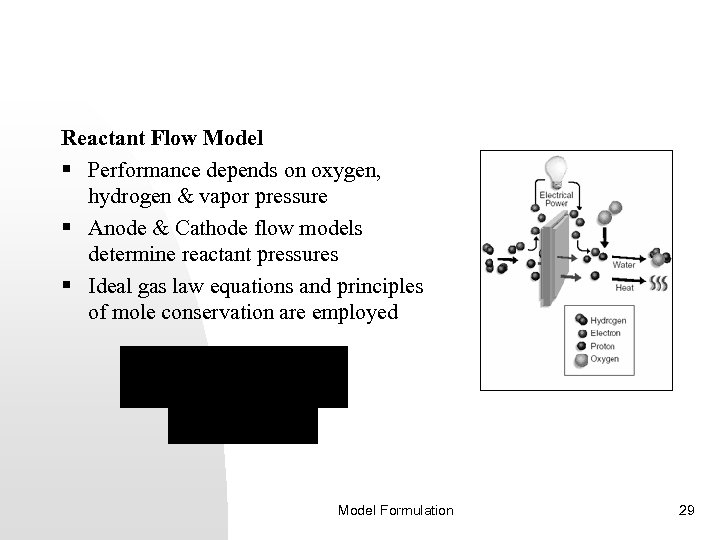 Reactant Flow Model § Performance depends on oxygen, hydrogen & vapor pressure § Anode & Cathode flow models determine reactant pressures § Ideal gas law equations and principles of mole conservation are employed Model Formulation 29
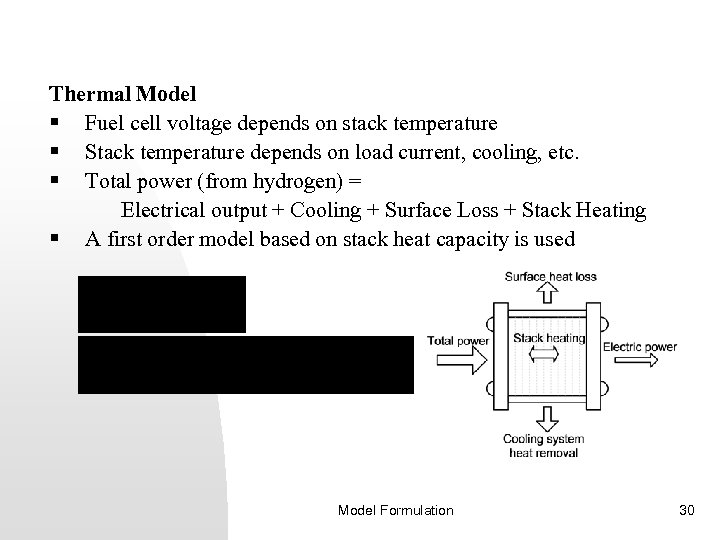 Thermal Model § Fuel cell voltage depends on stack temperature § Stack temperature depends on load current, cooling, etc. § Total power (from hydrogen) = Electrical output + Cooling + Surface Loss + Stack Heating § A first order model based on stack heat capacity is used Model Formulation 30
 Summary § § § Dynamic model of a PEM fuel cell (Ballard MK 5 -E type) Electrochemical, thermal and reactant flow dynamics included Model shows good match with test results Model Formulation 31
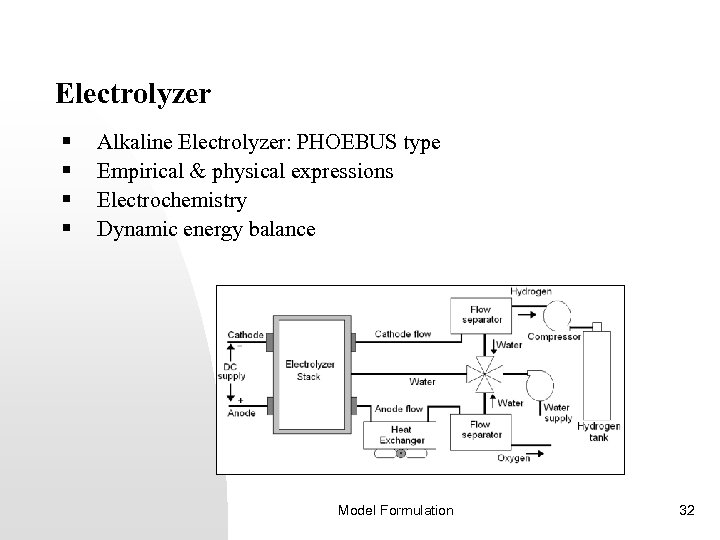 Electrolyzer § § Alkaline Electrolyzer: PHOEBUS type Empirical & physical expressions Electrochemistry Dynamic energy balance Model Formulation 32
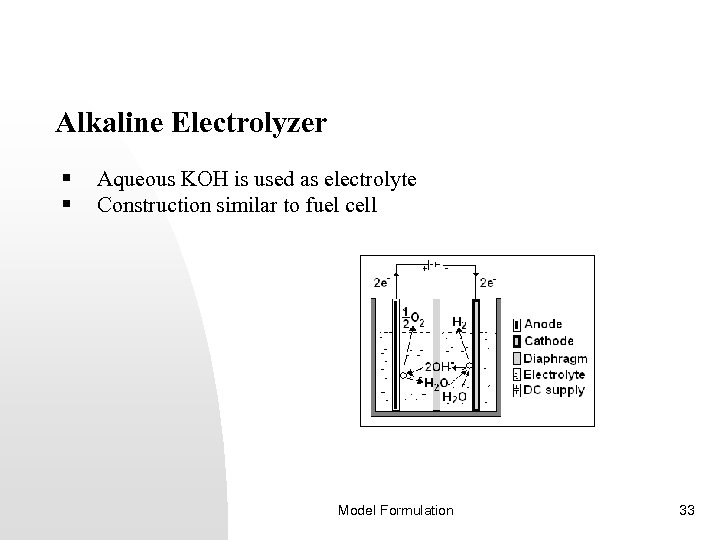 Alkaline Electrolyzer § § Aqueous KOH is used as electrolyte Construction similar to fuel cell Model Formulation 33
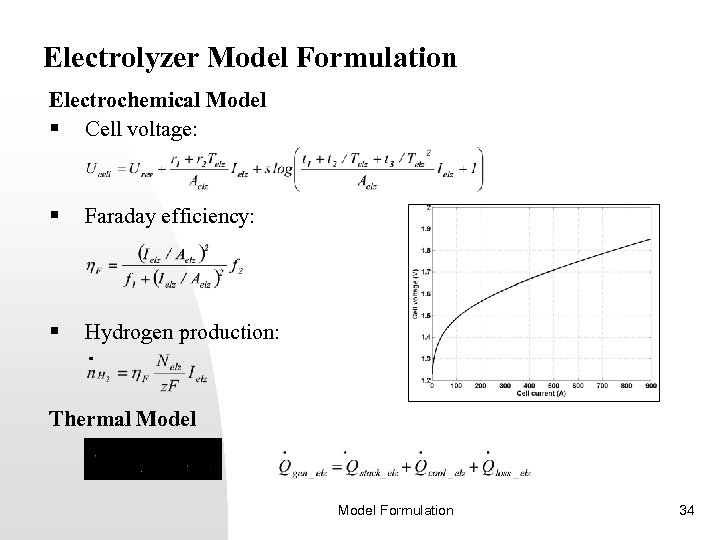 Electrolyzer Model Formulation Electrochemical Model § Cell voltage: § Faraday efficiency: § Hydrogen production: Thermal Model Formulation 34
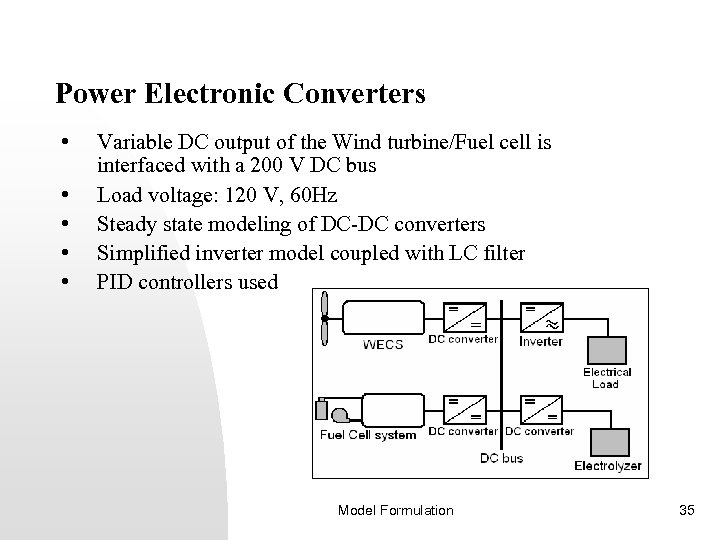 Power Electronic Converters • • • Variable DC output of the Wind turbine/Fuel cell is interfaced with a 200 V DC bus Load voltage: 120 V, 60 Hz Steady state modeling of DC-DC converters Simplified inverter model coupled with LC filter PID controllers used Model Formulation 35
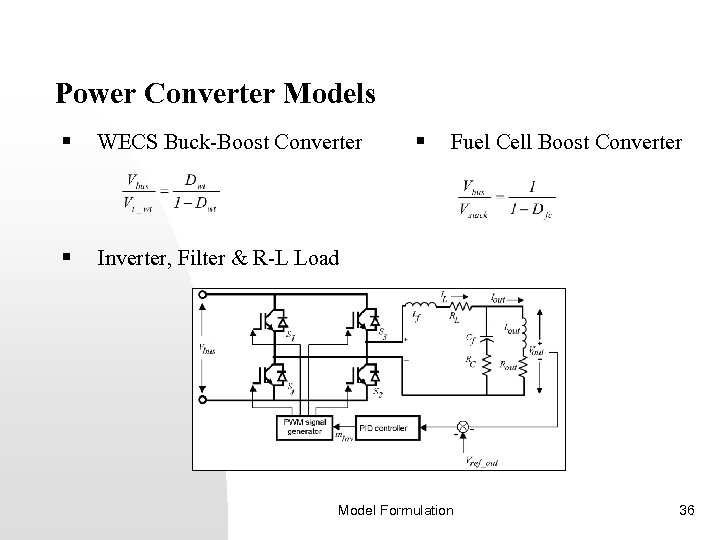 Power Converter Models § WECS Buck-Boost Converter § § Inverter, Filter & R-L Load Fuel Cell Boost Converter Model Formulation 36
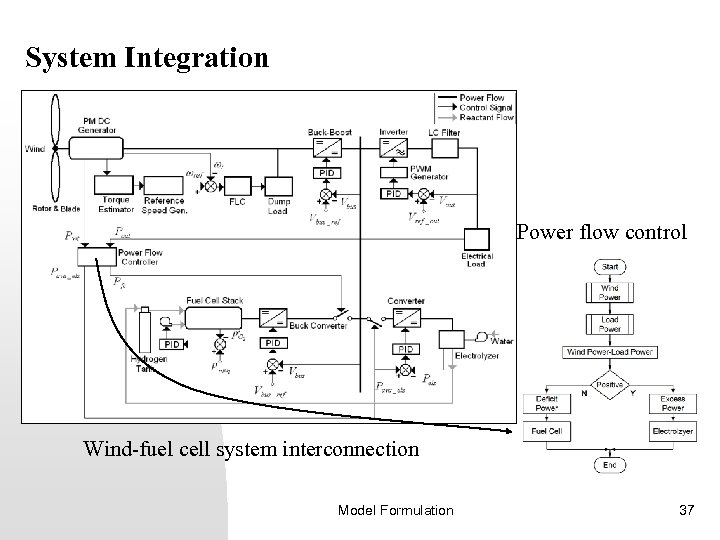 System Integration Power flow control Wind-fuel cell system interconnection Model Formulation 37
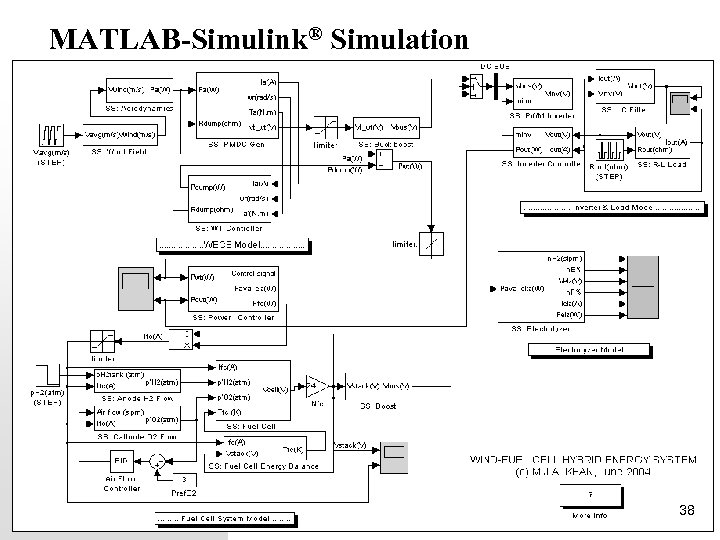 MATLAB-Simulink® Simulation 38
 Simulation § § § Simulation time = 15 seconds Constant temperature in fuel cell & electrolyzer assumed Step changes in • Wind speed • Load resistance • Hydrogen pressure Simulation 39
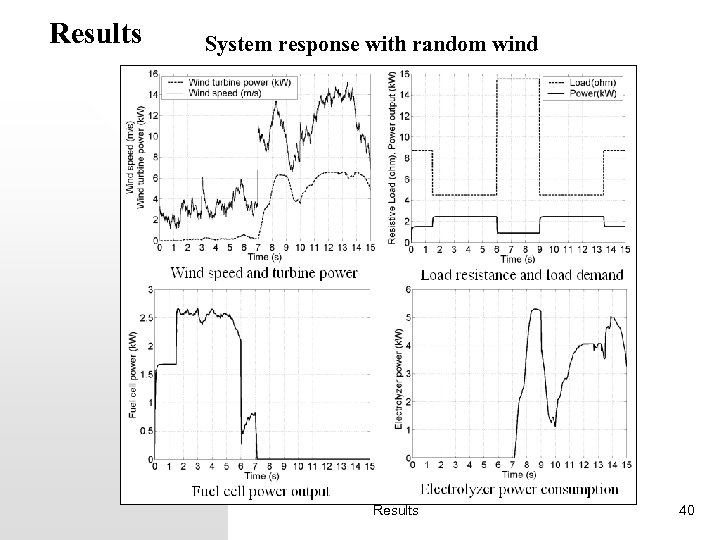 Results System response with random wind Results 40
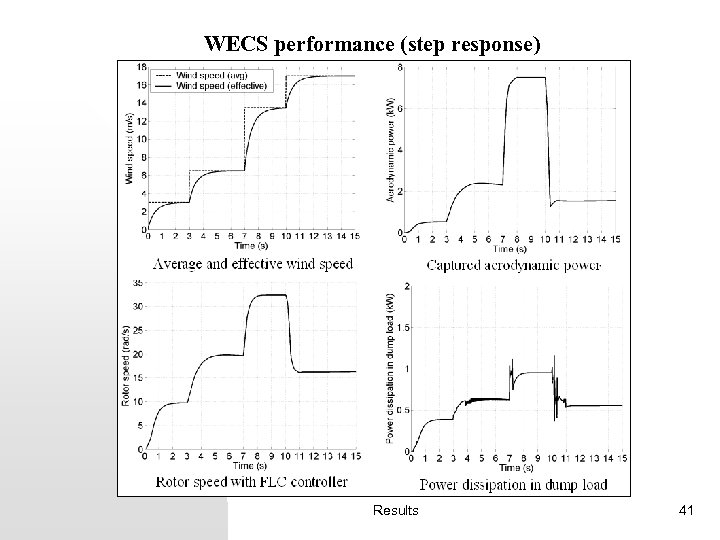 WECS performance (step response) Results 41
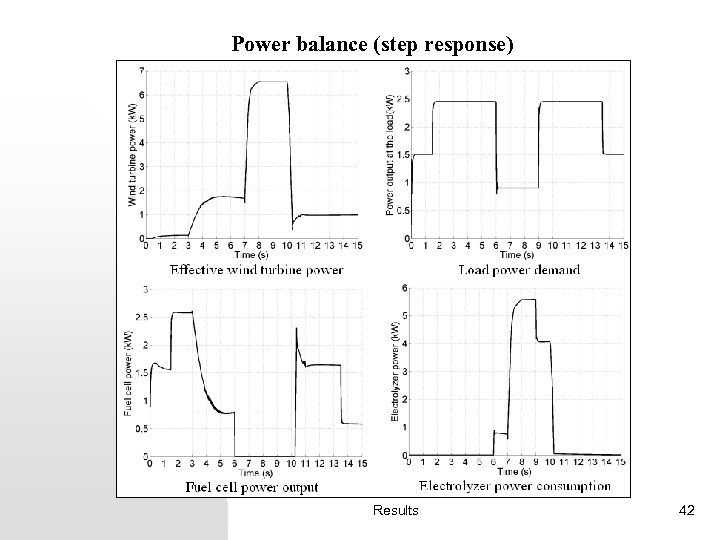 Power balance (step response) Results 42
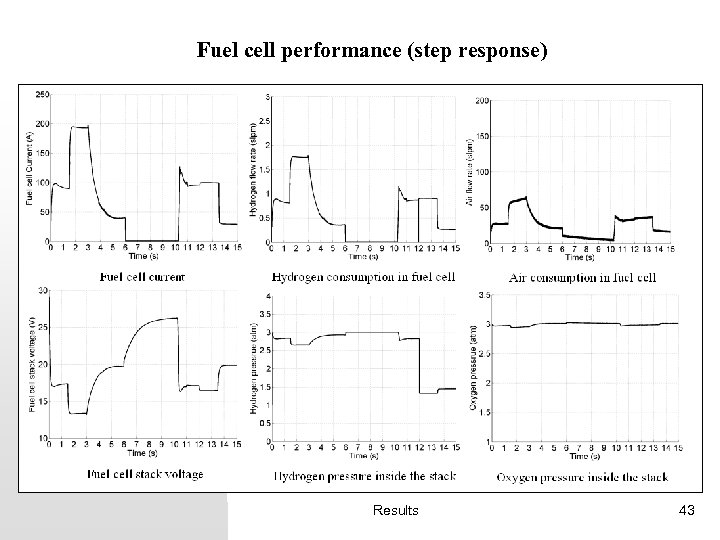 Fuel cell performance (step response) Results 43
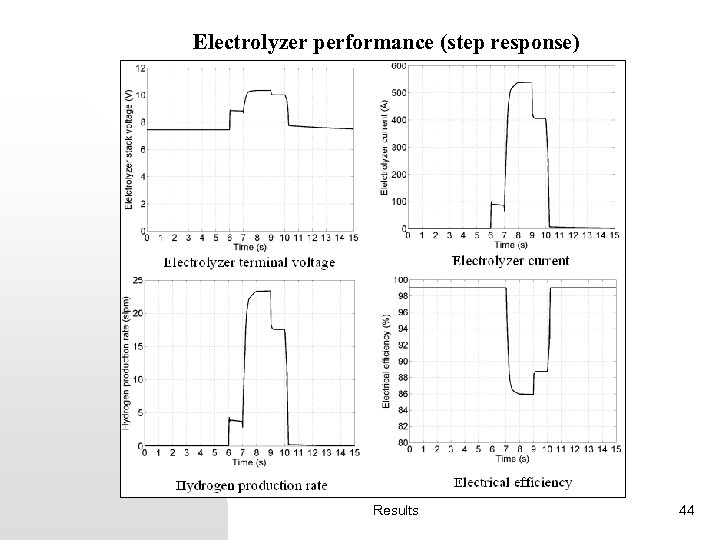 Electrolyzer performance (step response) Results 44
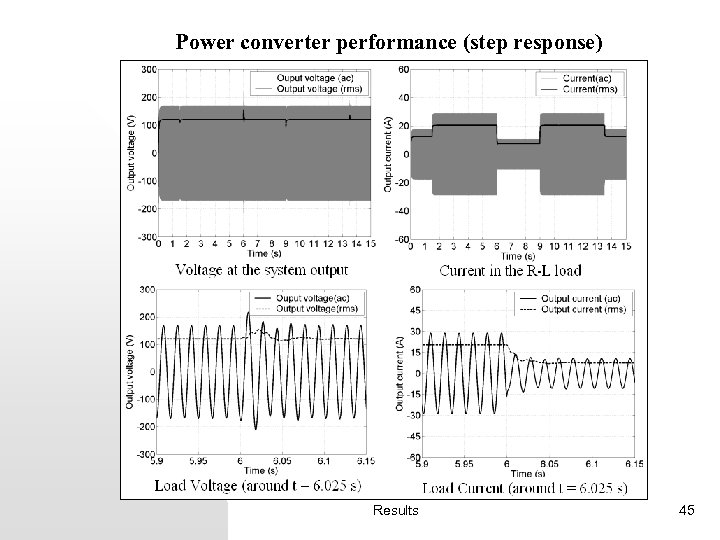 Power converter performance (step response) Results 45
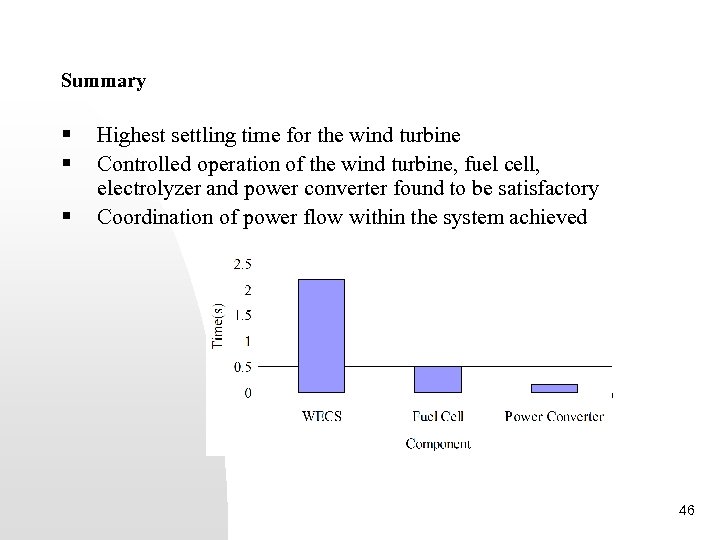 Summary § § § Highest settling time for the wind turbine Controlled operation of the wind turbine, fuel cell, electrolyzer and power converter found to be satisfactory Coordination of power flow within the system achieved 46
 Contributions § For a stand-alone residential load in St. John’s, consuming 25 k. Wh/d (4. 73 k. W peak) a pre-feasibility study is carried out. § A mathematical model of wind-fuel cell energy system is developed, simulated and presented. The wind turbine model employs a concept of mechanical sensorless FLC. § The PEM fuel cell model unifies the electrochemical, thermal and reactant flow dynamics. § A number of papers generated through this work. Explored fields include: • Wind resource assessment • Fuel cell modeling • Grid connected fuel cell systems • Small wind turbine modeling 47
 Conclusions § A wind-fuel cell hybrid energy system would be cost effective if the fuel cell cost reduces to 15% of its current price. Cost of energy for such a system would be around $0. 427/k. Wh. § Performance of the system components and control methods were found to be satisfactory. § Improvement in relevant technologies and reduction in component cost are the key to success of alternative energy solutions. 48
 Further Work § § § Development of a faster model for investigating variations in system temperature and observing long term performance (dailyyearly). Inclusion of various auxiliary devices into the fuel cell and electrolyzer system. Use of stand-by batteries Research into newer technologies such as, low speed wind turbines, reversible fuel cell etc. Comprehensive study of relevant power electronics and controls 49
 Acknowledgement § § § Faculty of Engineering & Applied Science, MUN. School of Graduate Studies, MUN. NSERC Environment Canada Dr. M. T. Iqbal. Drs. Quaicoe, Jeyasurya, Masek, and Rahman. Thank You For your attention & presence Questions/Comments 50