


 Скачать презентацию DVT-WRAP Slide CAST Optimal Strategies for DVT Prophylaxis
678ed603c42ab892bda94154d6cbe16b.ppt
- Количество слайдов: 56
 DVT-WRAP Slide. CAST Optimal Strategies for DVT Prophylaxis: Translating Evidence into Practice Samuel Z. Goldhaber, MD Cardiovascular Division Brigham and Women’s Hospital Professor of Medicine Harvard Medical School
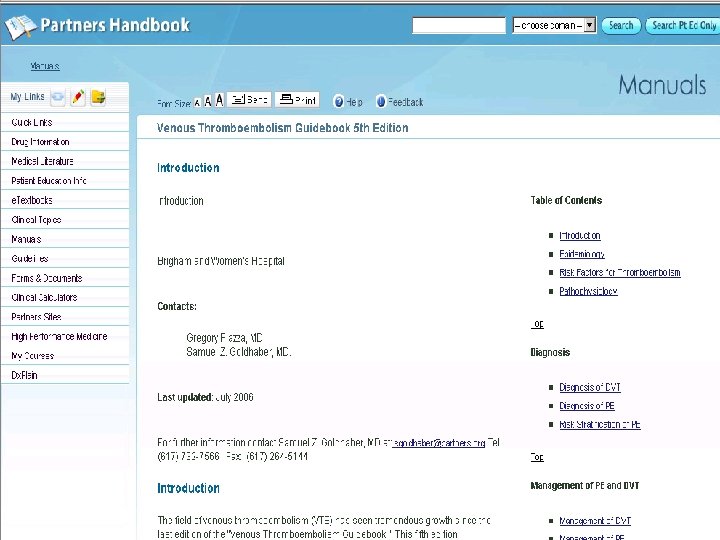
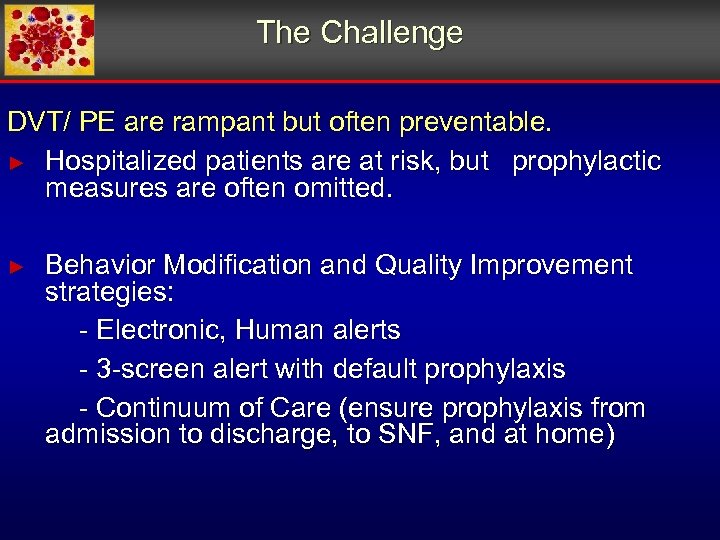 The Challenge DVT/ PE are rampant but often preventable. ► Hospitalized patients are at risk, but prophylactic measures are often omitted. ► Behavior Modification and Quality Improvement strategies: - Electronic, Human alerts - 3 -screen alert with default prophylaxis - Continuum of Care (ensure prophylaxis from admission to discharge, to SNF, and at home)
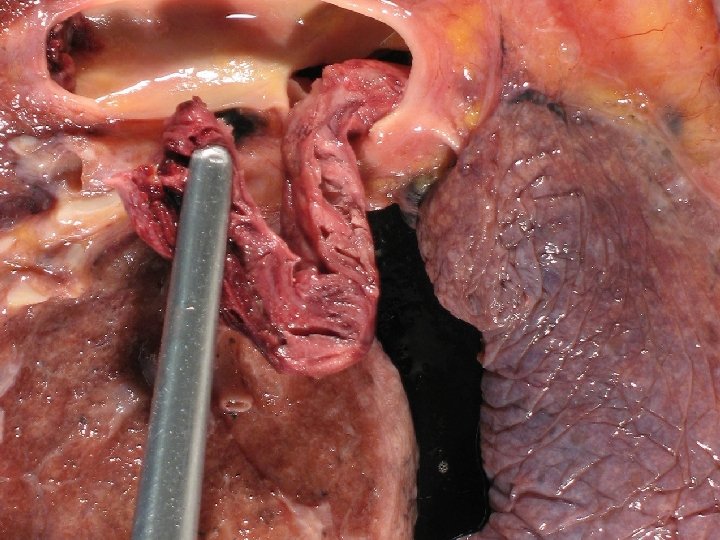
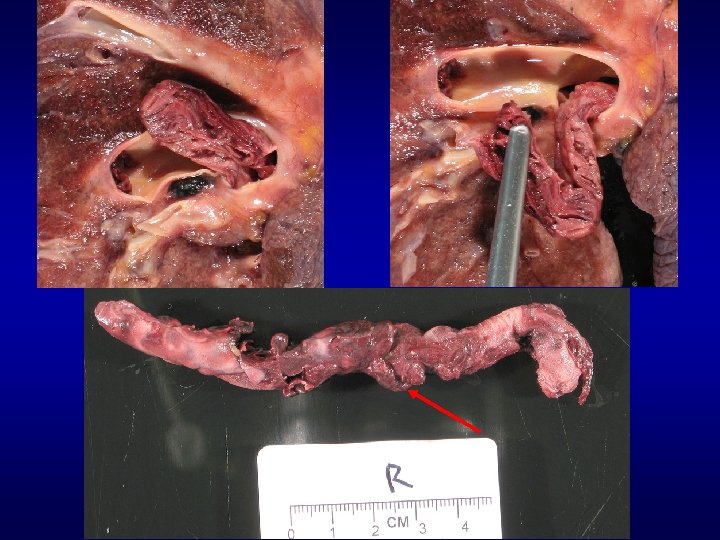
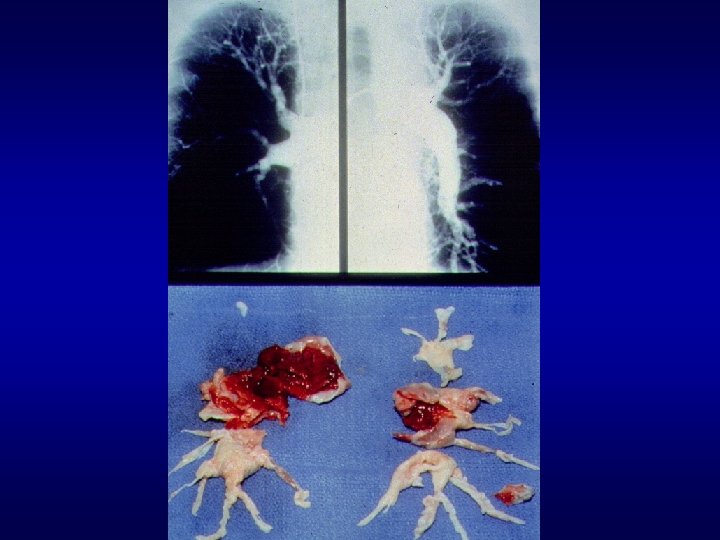
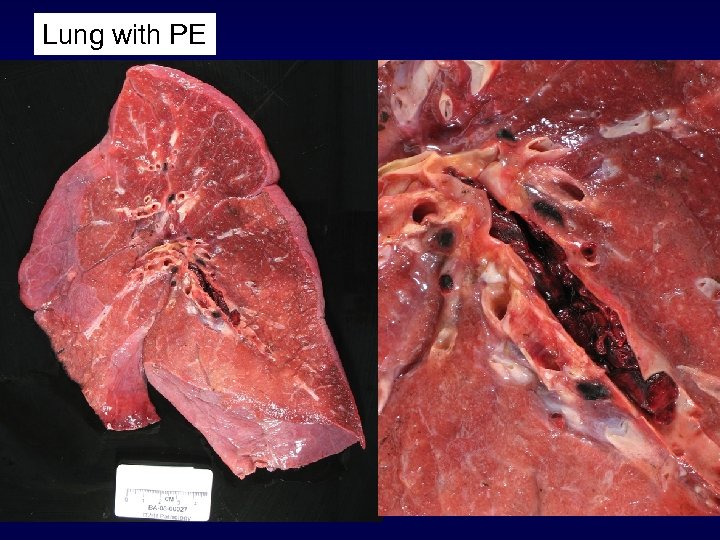 Lung with PE
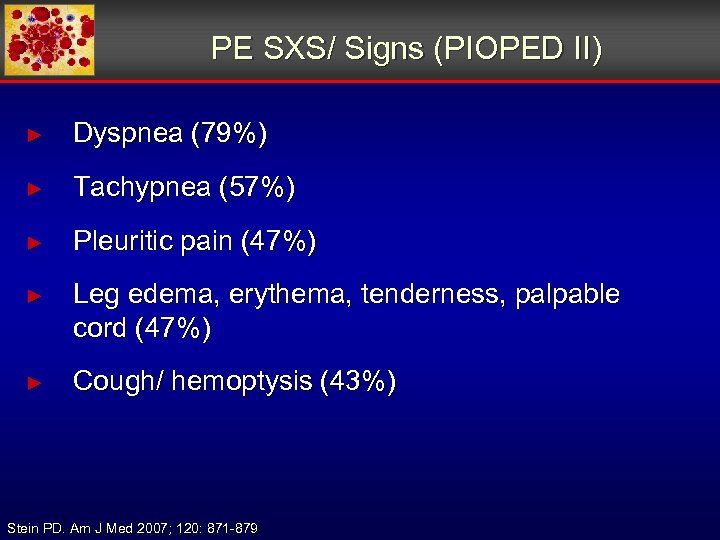 PE SXS/ Signs (PIOPED II) ► Dyspnea (79%) ► Tachypnea (57%) ► Pleuritic pain (47%) ► Leg edema, erythema, tenderness, palpable cord (47%) ► Cough/ hemoptysis (43%) Stein PD. Am J Med 2007; 120: 871 -879
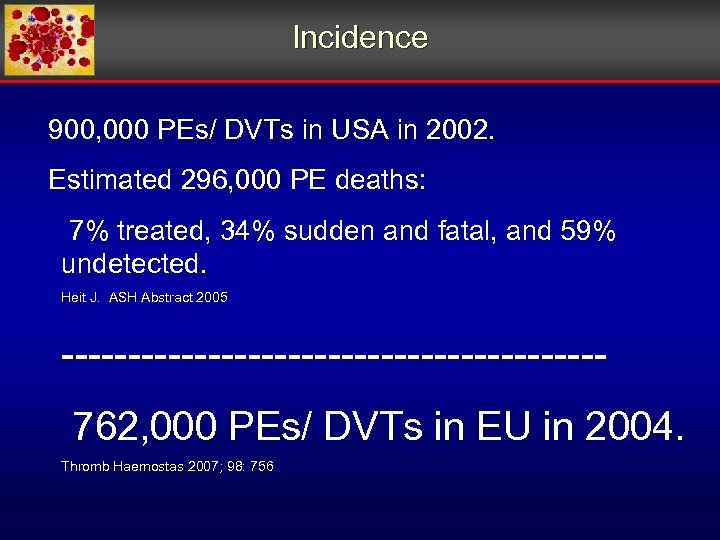 Incidence 900, 000 PEs/ DVTs in USA in 2002. Estimated 296, 000 PE deaths: 7% treated, 34% sudden and fatal, and 59% undetected. Heit J. ASH Abstract 2005 --------------------762, 000 PEs/ DVTs in EU in 2004. Thromb Haemostas 2007; 98: 756
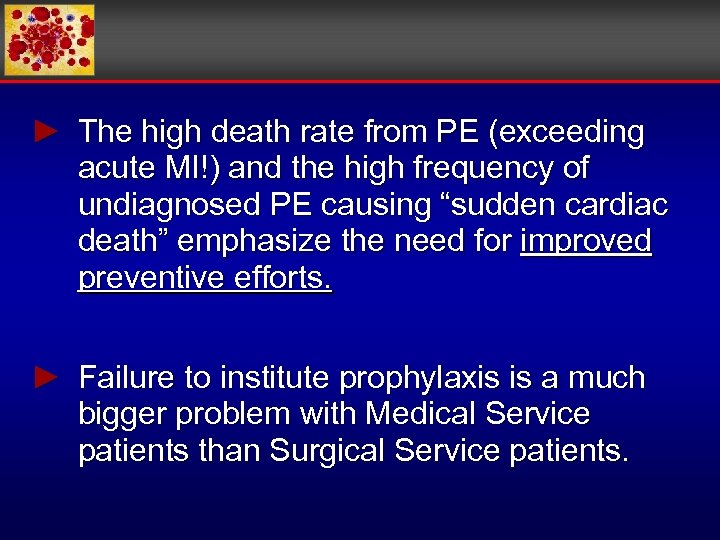 ► The high death rate from PE (exceeding acute MI!) and the high frequency of undiagnosed PE causing “sudden cardiac death” emphasize the need for improved preventive efforts. ► Failure to institute prophylaxis is a much bigger problem with Medical Service patients than Surgical Service patients.
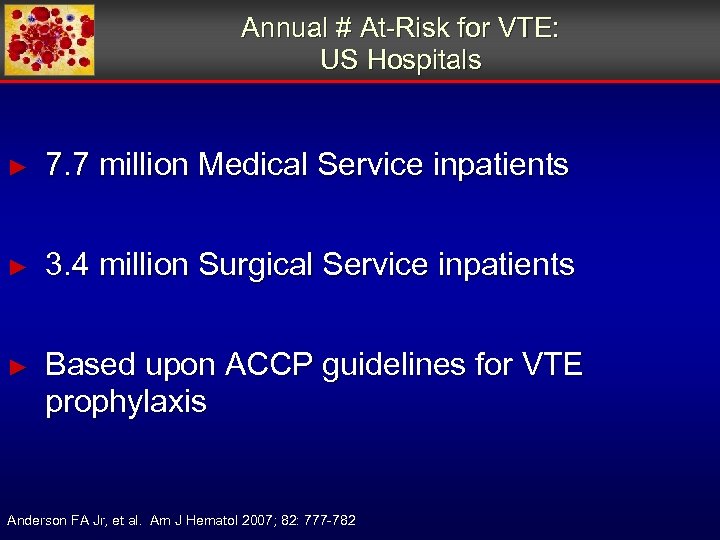 Annual # At-Risk for VTE: US Hospitals ► 7. 7 million Medical Service inpatients ► 3. 4 million Surgical Service inpatients ► Based upon ACCP guidelines for VTE prophylaxis Anderson FA Jr, et al. Am J Hematol 2007; 82: 777 -782
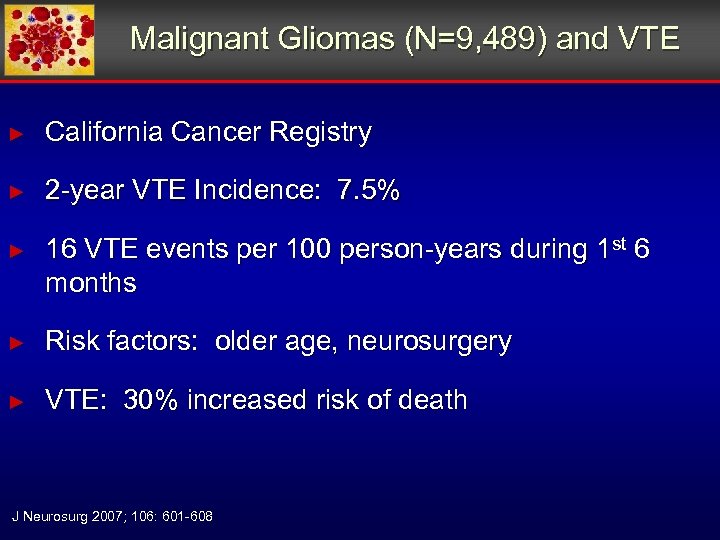 Malignant Gliomas (N=9, 489) and VTE ► California Cancer Registry ► 2 -year VTE Incidence: 7. 5% ► 16 VTE events per 100 person-years during 1 st 6 months ► Risk factors: older age, neurosurgery ► VTE: 30% increased risk of death J Neurosurg 2007; 106: 601 -608
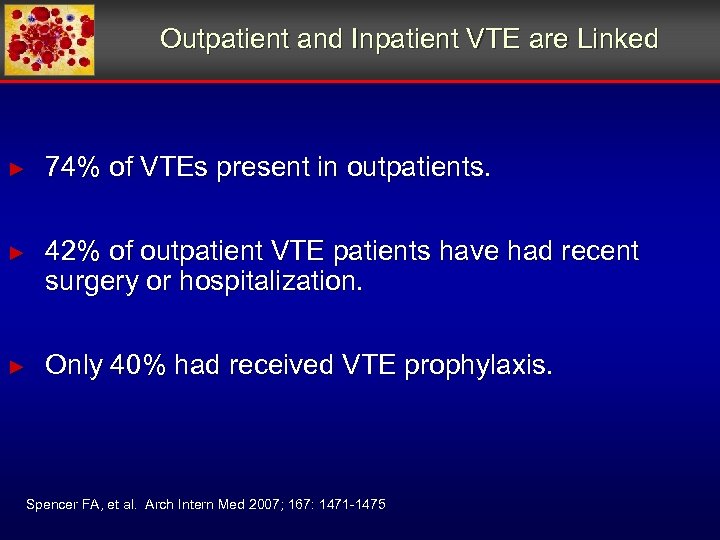 Outpatient and Inpatient VTE are Linked ► 74% of VTEs present in outpatients. ► 42% of outpatient VTE patients have had recent surgery or hospitalization. ► Only 40% had received VTE prophylaxis. Spencer FA, et al. Arch Intern Med 2007; 167: 1471 -1475
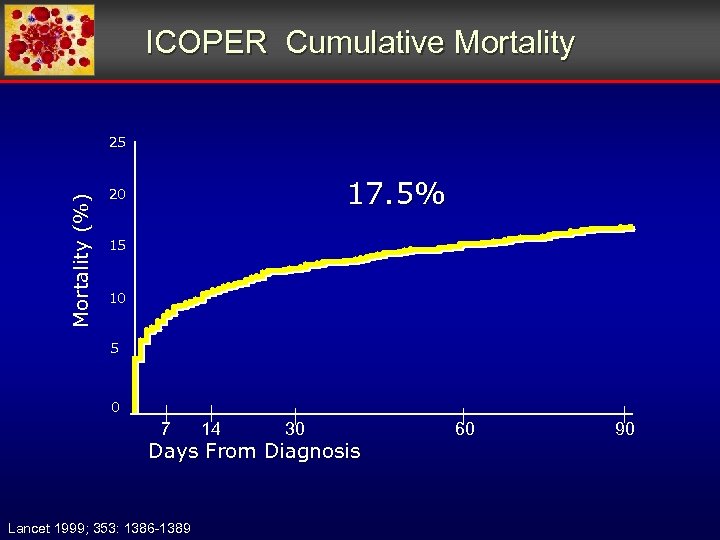 ICOPER Cumulative Mortality (%) 25 17. 5% 20 15 10 5 0 7 14 30 Days From Diagnosis Lancet 1999; 353: 1386 -1389 60 90
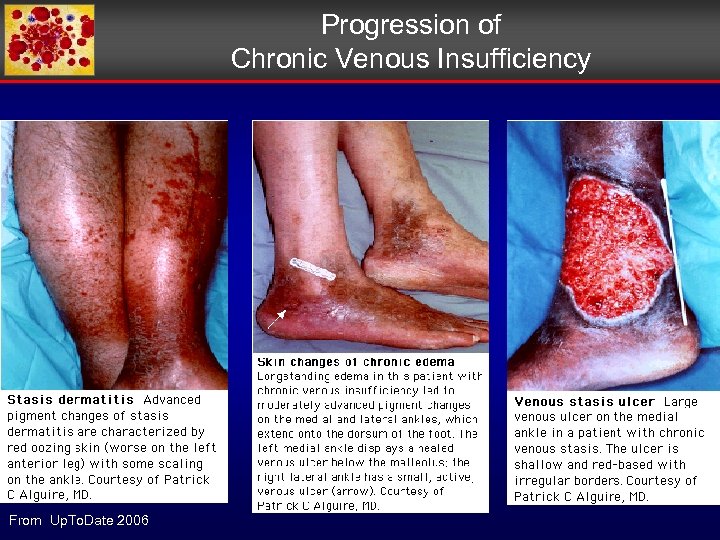 Progression of Chronic Venous Insufficiency From Up. To. Date 2006
 Risk Factors Linking Venous and Arterial TE: Biologically Plausible 1. Activation of platelets and coagulation proteins 2. Increased fibrin turnover 3. Inflammation 4. Lipid profiles
 Dabish 20 -Year Cohort: VTE, Subsequent CV Events ► Assessed risk of MI, Stroke ► 25, 199 with DVT ► 16, 925 with PE ► 163, 566 population controls Sorensen HT. Lancet 2007; 370: 1773 -1779
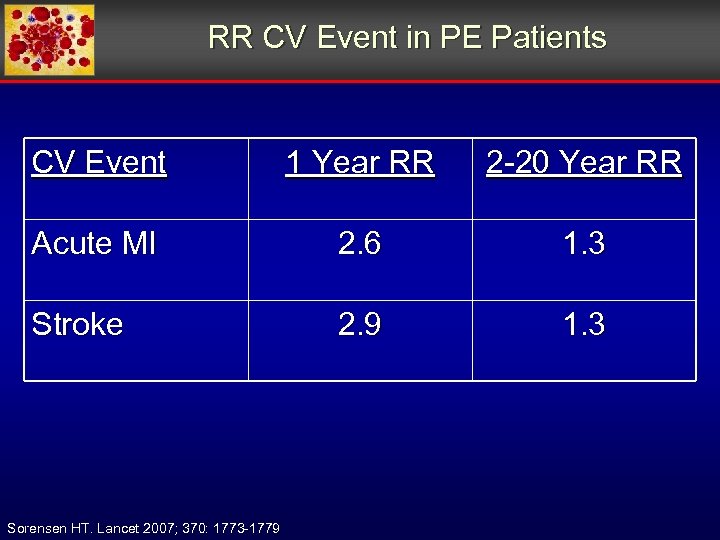 RR CV Event in PE Patients CV Event 1 Year RR 2 -20 Year RR Acute MI 2. 6 1. 3 Stroke 2. 9 1. 3 Sorensen HT. Lancet 2007; 370: 1773 -1779
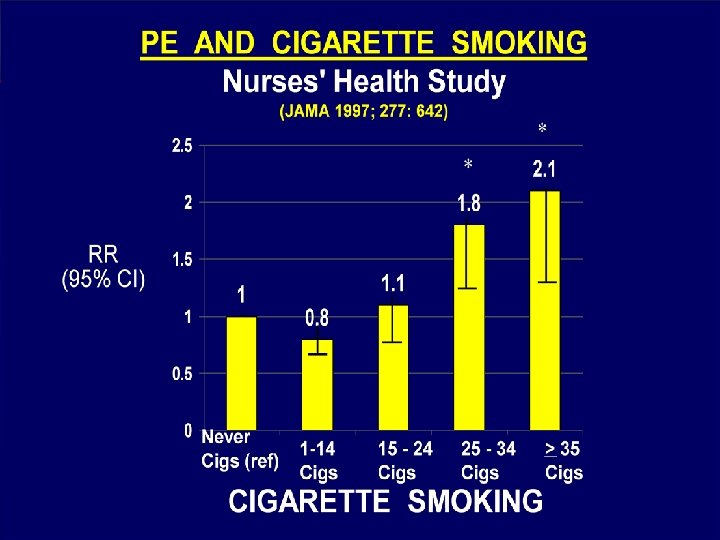
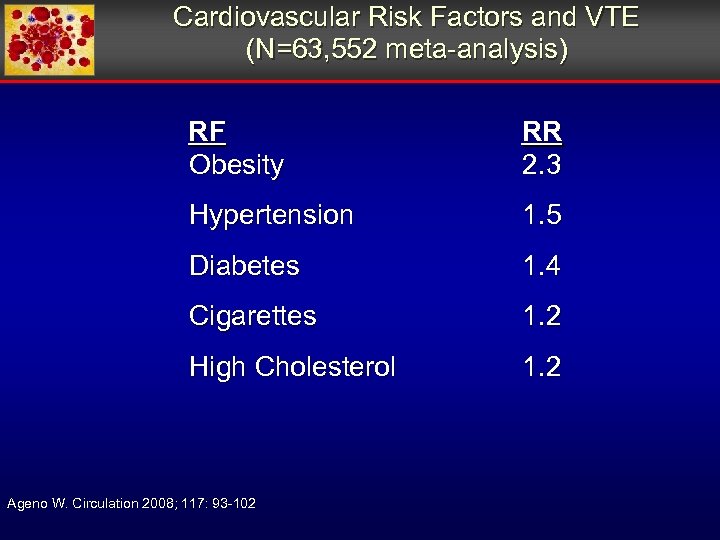 Cardiovascular Risk Factors and VTE (N=63, 552 meta-analysis) RF Obesity RR 2. 3 Hypertension 1. 5 Diabetes 1. 4 Cigarettes 1. 2 High Cholesterol 1. 2 Ageno W. Circulation 2008; 117: 93 -102
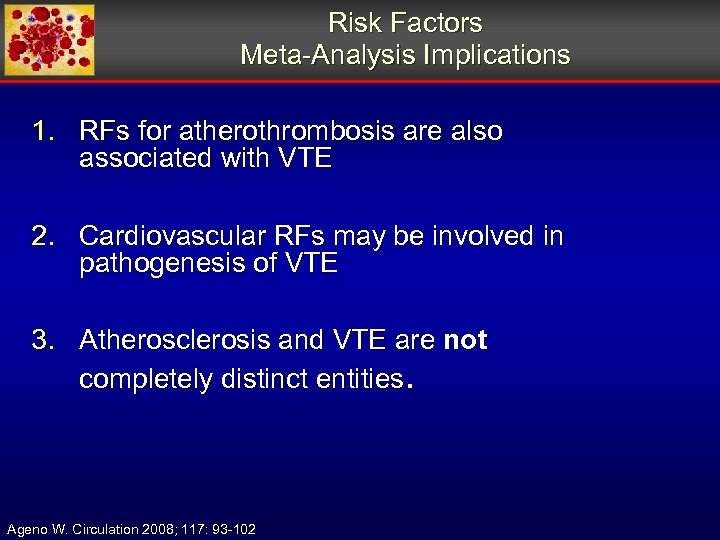 Risk Factors Meta-Analysis Implications 1. RFs for atherothrombosis are also associated with VTE 2. Cardiovascular RFs may be involved in pathogenesis of VTE 3. Atherosclerosis and VTE are not completely distinct entities. Ageno W. Circulation 2008; 117: 93 -102
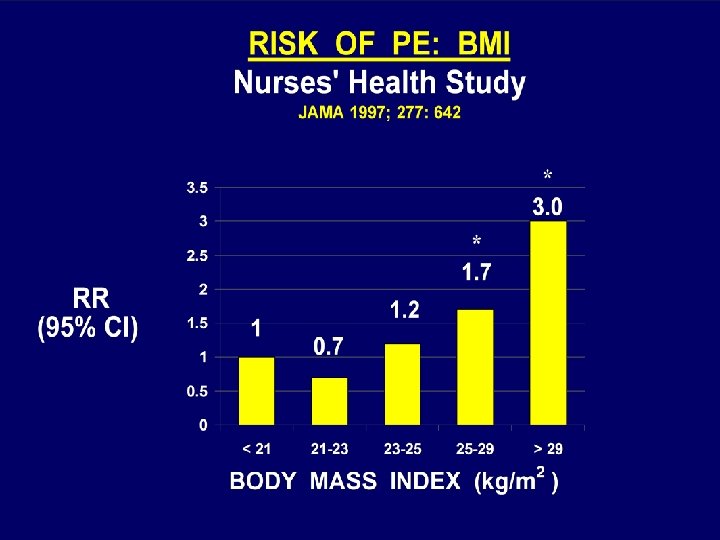
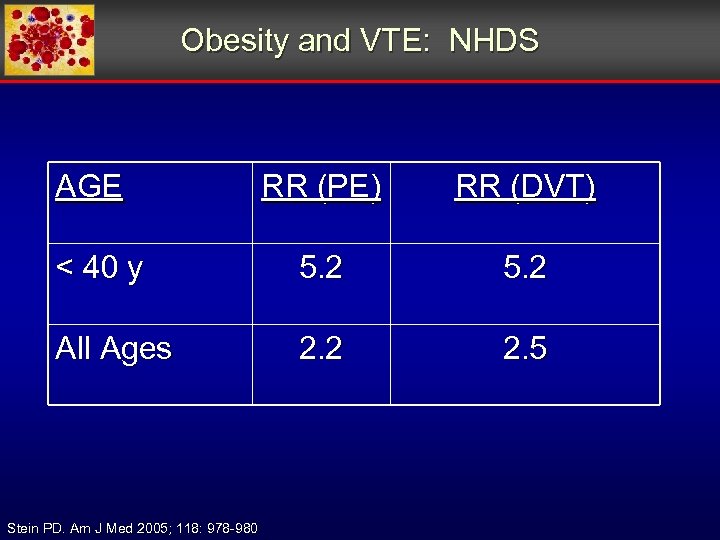 Obesity and VTE: NHDS AGE RR (PE) RR (DVT) < 40 y 5. 2 All Ages 2. 2 2. 5 Stein PD. Am J Med 2005; 118: 978 -980
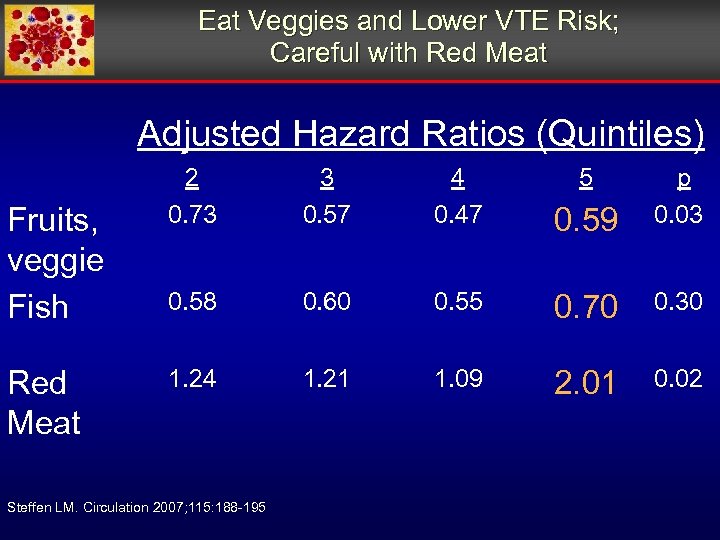 Eat Veggies and Lower VTE Risk; Careful with Red Meat Adjusted Hazard Ratios (Quintiles) Fruits, veggie Fish Red Meat 2 0. 73 3 0. 57 4 0. 47 0. 59 p 0. 03 0. 58 0. 60 0. 55 0. 70 0. 30 1. 24 1. 21 1. 09 2. 01 0. 02 Steffen LM. Circulation 2007; 115: 188 -195 5
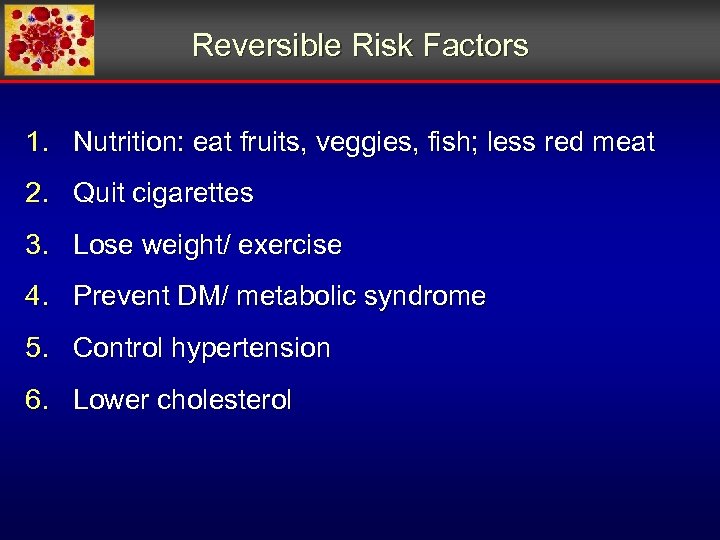 Reversible Risk Factors 1. Nutrition: eat fruits, veggies, fish; less red meat 2. Quit cigarettes 3. Lose weight/ exercise 4. Prevent DM/ metabolic syndrome 5. Control hypertension 6. Lower cholesterol
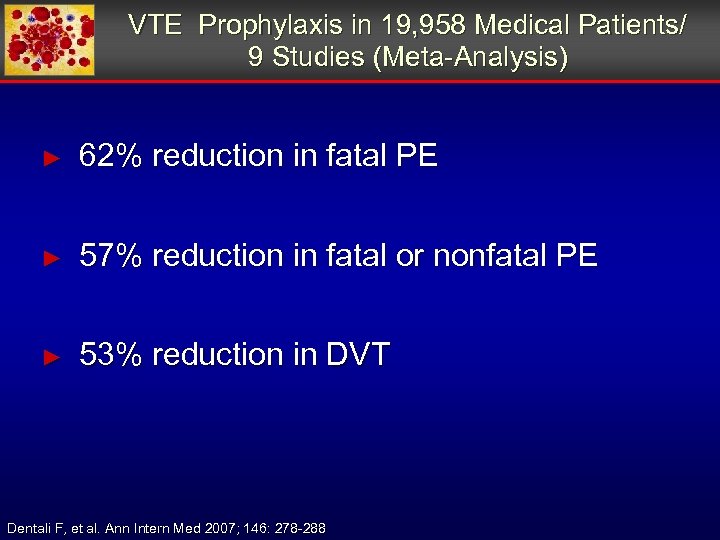 VTE Prophylaxis in 19, 958 Medical Patients/ 9 Studies (Meta-Analysis) ► 62% reduction in fatal PE ► 57% reduction in fatal or nonfatal PE ► 53% reduction in DVT Dentali F, et al. Ann Intern Med 2007; 146: 278 -288
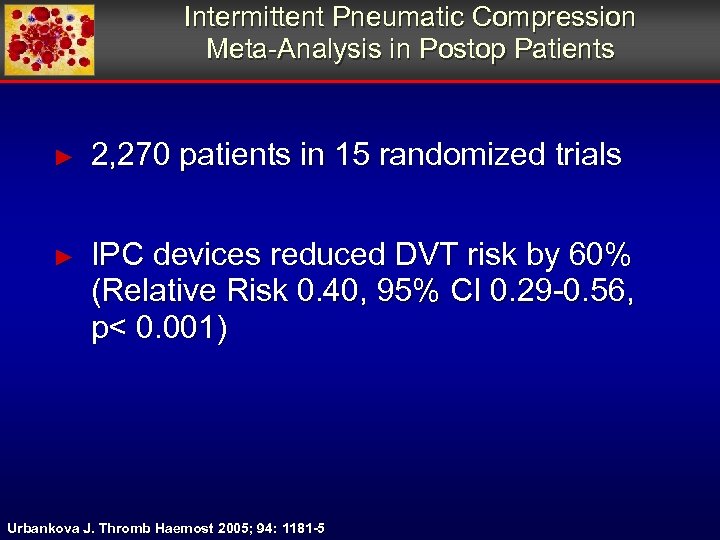 Intermittent Pneumatic Compression Meta-Analysis in Postop Patients ► 2, 270 patients in 15 randomized trials ► IPC devices reduced DVT risk by 60% (Relative Risk 0. 40, 95% CI 0. 29 -0. 56, p< 0. 001) Urbankova J. Thromb Haemost 2005; 94: 1181 -5
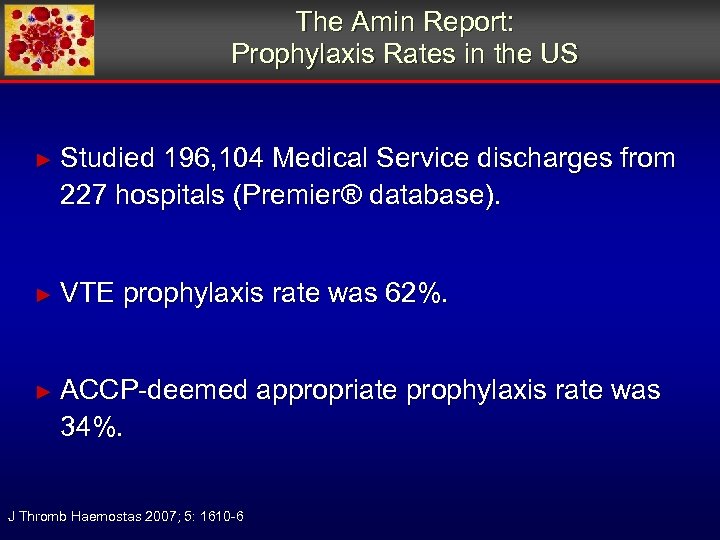 The Amin Report: Prophylaxis Rates in the US ► Studied 196, 104 Medical Service discharges from 227 hospitals (Premier® database). ► VTE prophylaxis rate was 62%. ► ACCP-deemed appropriate prophylaxis rate was 34%. J Thromb Haemostas 2007; 5: 1610 -6
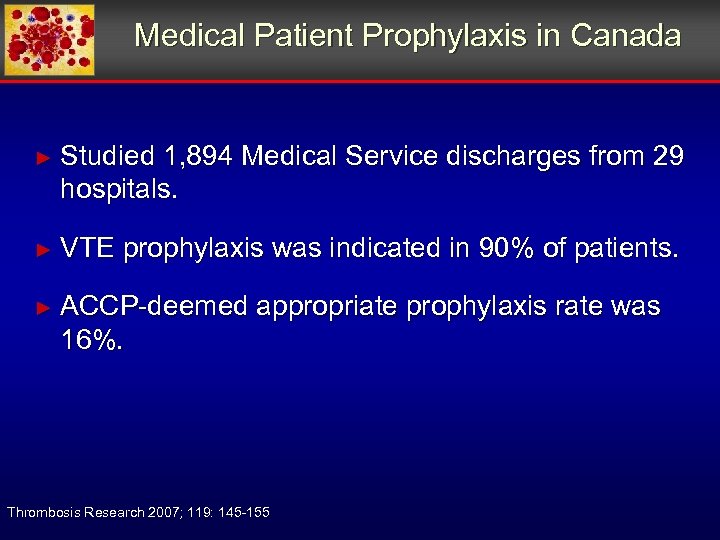 Medical Patient Prophylaxis in Canada ► Studied 1, 894 Medical Service discharges from 29 hospitals. ► VTE prophylaxis was indicated in 90% of patients. ► ACCP-deemed appropriate prophylaxis rate was 16%. Thrombosis Research 2007; 119: 145 -155
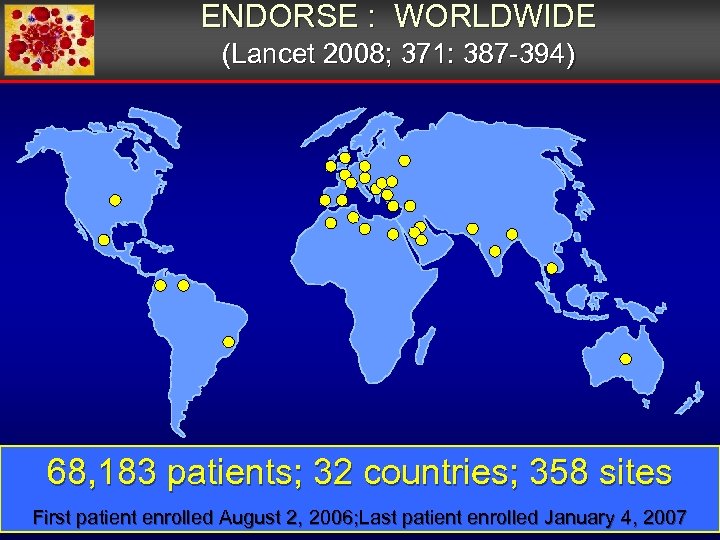 ENDORSE : WORLDWIDE (Lancet 2008; 371: 387 -394) 68, 183 patients; 32 countries; 358 sites First patient enrolled August 2, 2006; Last patient enrolled January 4, 2007
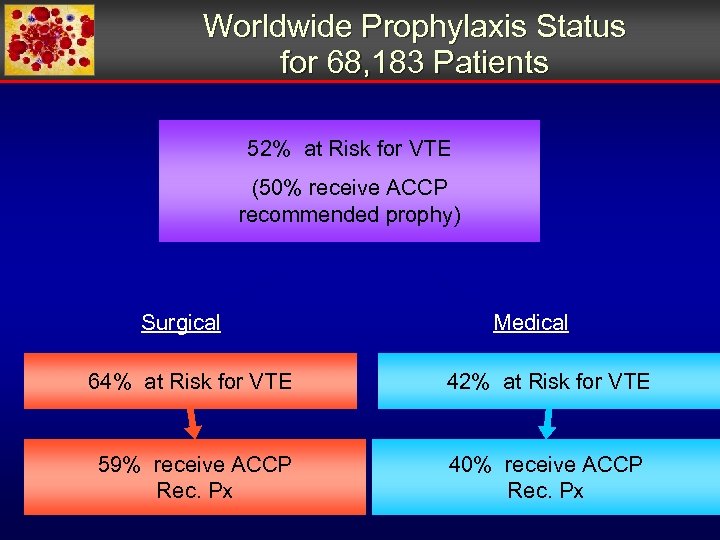 Worldwide Prophylaxis Status for 68, 183 Patients 52% at Risk for VTE (50% receive ACCP recommended prophy) Surgical Medical 64% at Risk for VTE 42% at Risk for VTE 59% receive ACCP Rec. Px 40% receive ACCP Rec. Px
 We have initiated trials to change MD behavior and improve implementation of VTE prophylaxis—not trials of specific types of prophylaxis—e. Alert RCT, e. Alert cohort, human Alert, 3 -screen e. Alert.
 Quality Improvement Initiative to Improve Clinical Practice Randomized controlled trial to issue or withhold electronic alerts to MDs whose high-risk patients were not receiving DVT prophylaxis. Kucher N, et al. NEJM 2005; 352: 969 -977
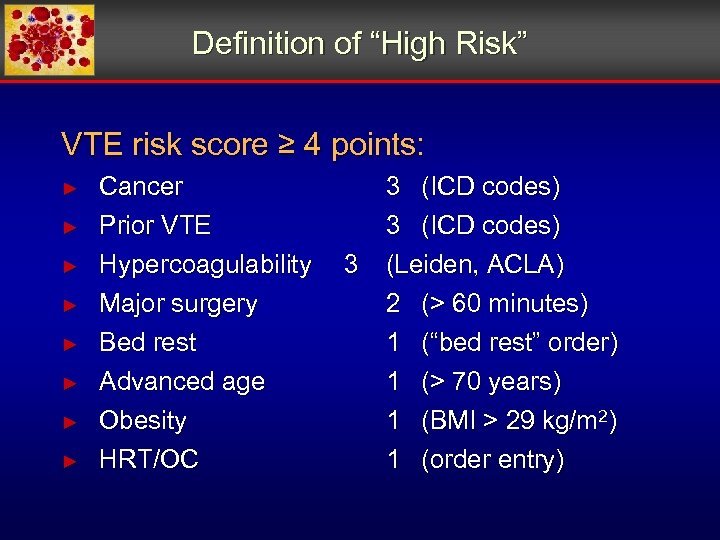 Definition of “High Risk” VTE risk score ≥ 4 points: ► ► ► ► Cancer Prior VTE Hypercoagulability Major surgery Bed rest Advanced age Obesity HRT/OC 3 3 (ICD codes) (Leiden, ACLA) 2 (> 60 minutes) 1 (“bed rest” order) 1 (> 70 years) 1 (BMI > 29 kg/m 2) 1 (order entry)
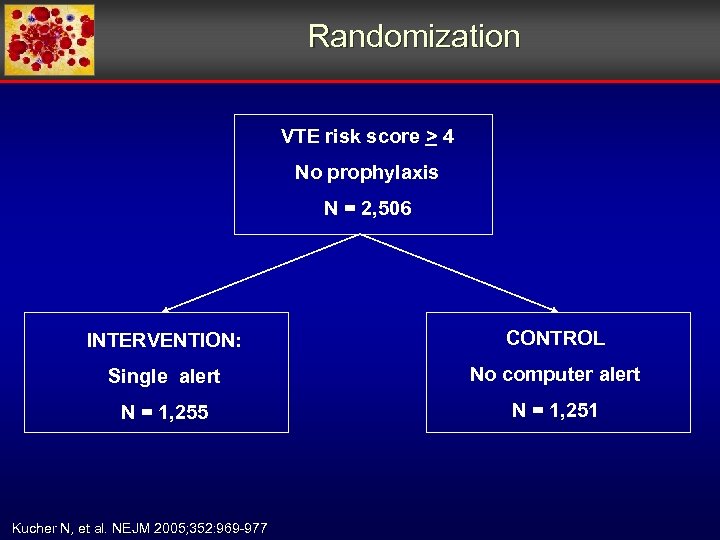 Randomization VTE risk score > 4 No prophylaxis N = 2, 506 INTERVENTION: CONTROL Single alert No computer alert N = 1, 255 N = 1, 251 Kucher N, et al. NEJM 2005; 352: 969 -977
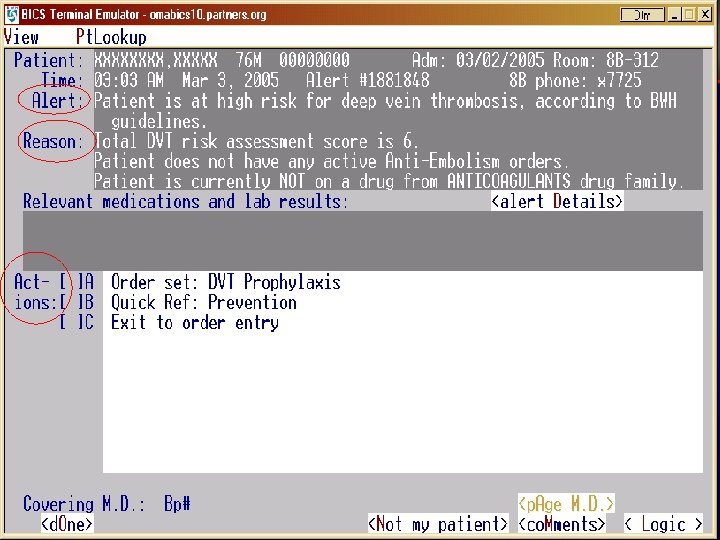
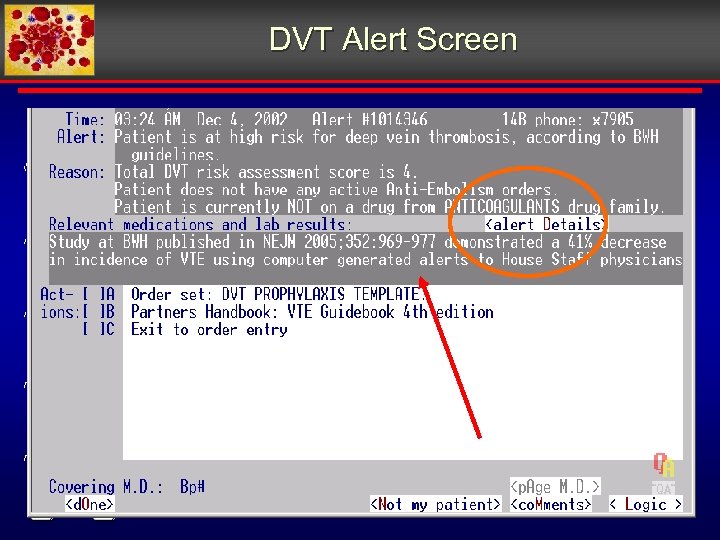 DVT Alert Screen
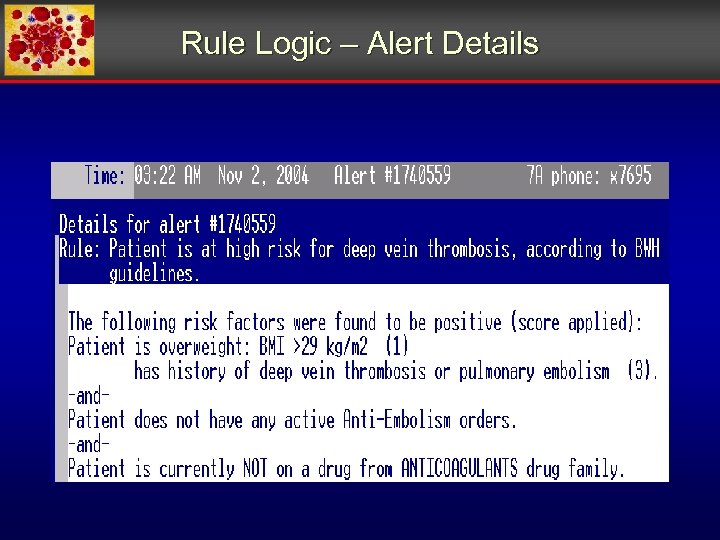 Rule Logic – Alert Details
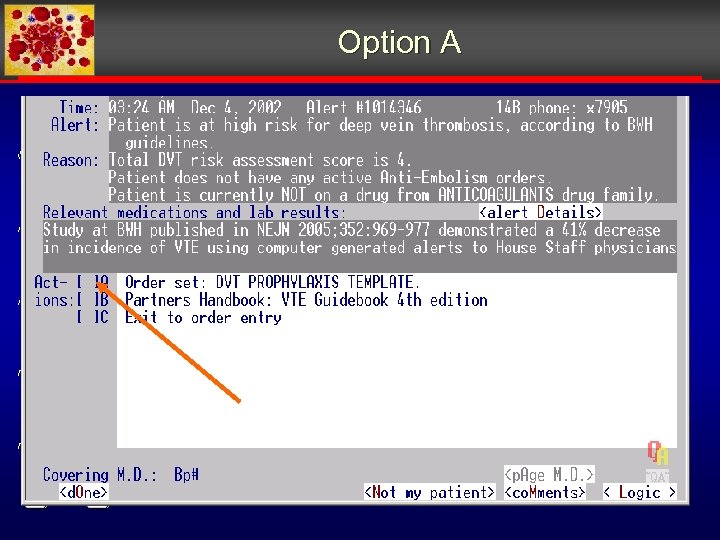 Option A
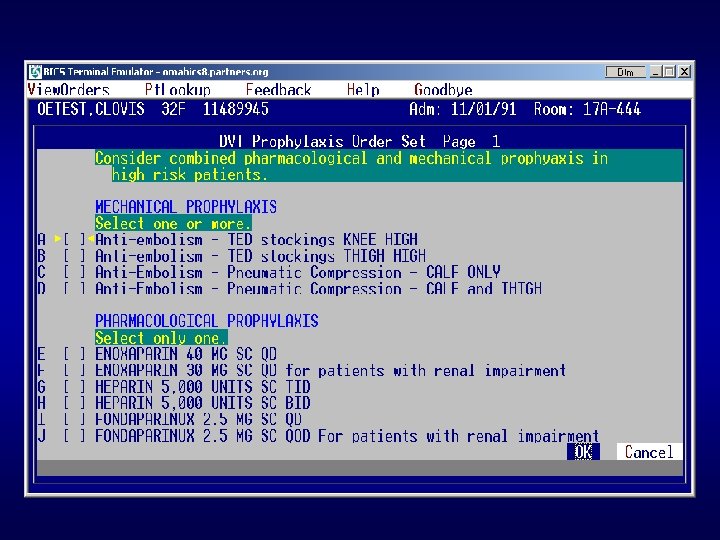
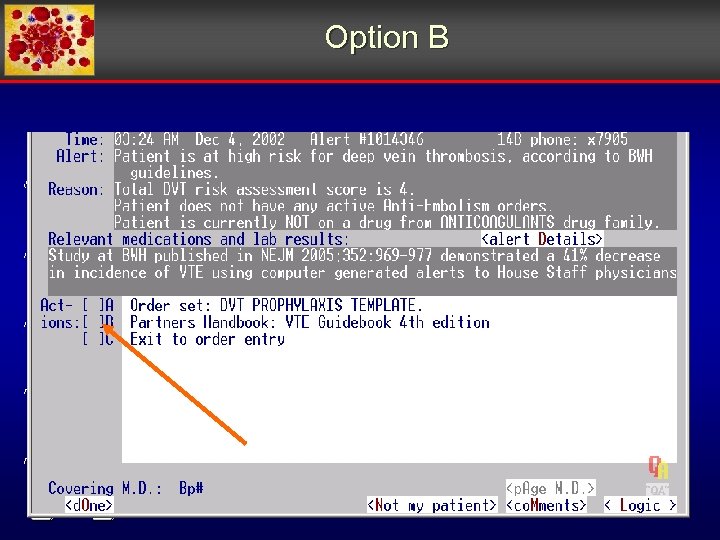 Option B
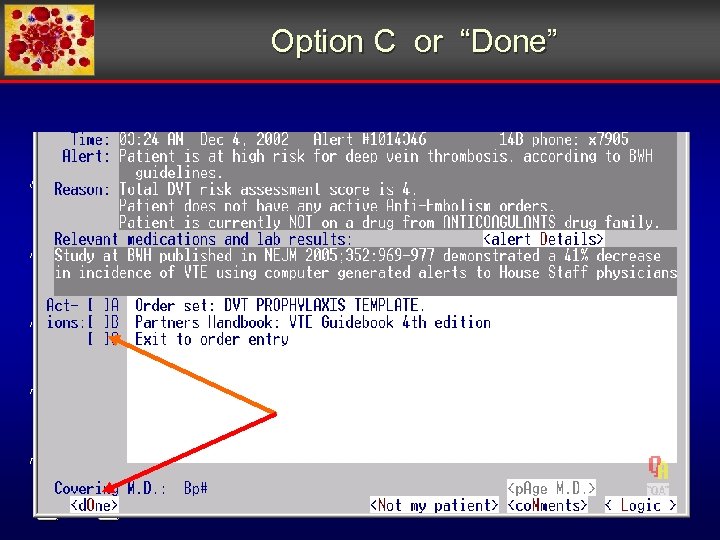 Option C or “Done”
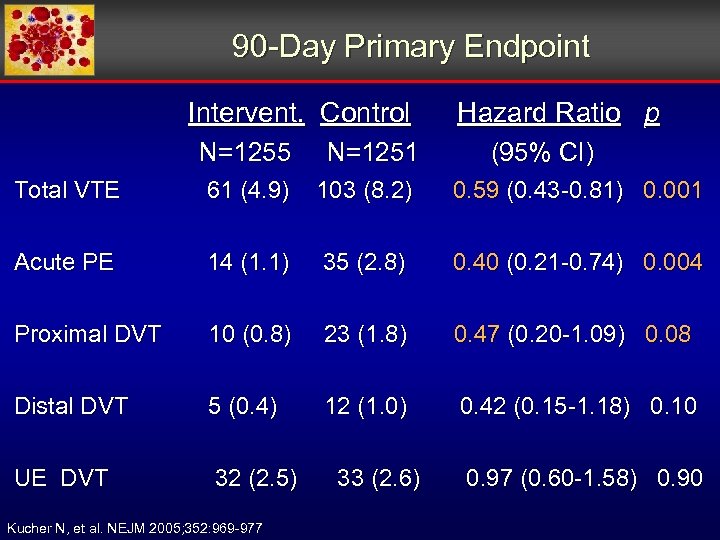 90 -Day Primary Endpoint Intervent. Control Hazard Ratio p N=1255 N=1251 Total VTE 61 (4. 9) 103 (8. 2) 0. 59 (0. 43 -0. 81) 0. 001 Acute PE 14 (1. 1) 35 (2. 8) 0. 40 (0. 21 -0. 74) 0. 004 Proximal DVT 10 (0. 8) 23 (1. 8) 0. 47 (0. 20 -1. 09) 0. 08 Distal DVT 5 (0. 4) 12 (1. 0) 0. 42 (0. 15 -1. 18) 0. 10 UE DVT 32 (2. 5) Kucher N, et al. NEJM 2005; 352: 969 -977 33 (2. 6) (95% CI) 0. 97 (0. 60 -1. 58) 0. 90
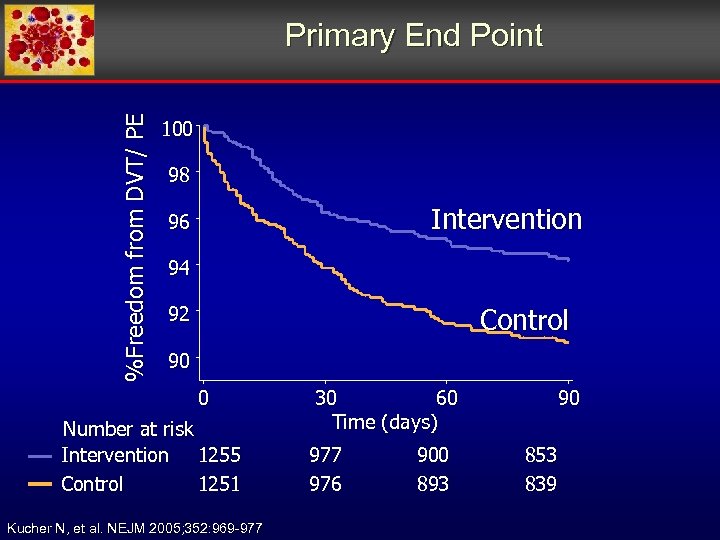 %Freedom from DVT/ PE Primary End Point 100 98 Intervention 96 94 92 Control 90 0 Number at risk Intervention 1255 Control 1251 Kucher N, et al. NEJM 2005; 352: 969 -977 30 60 Time (days) 977 976 900 893 90 853 839
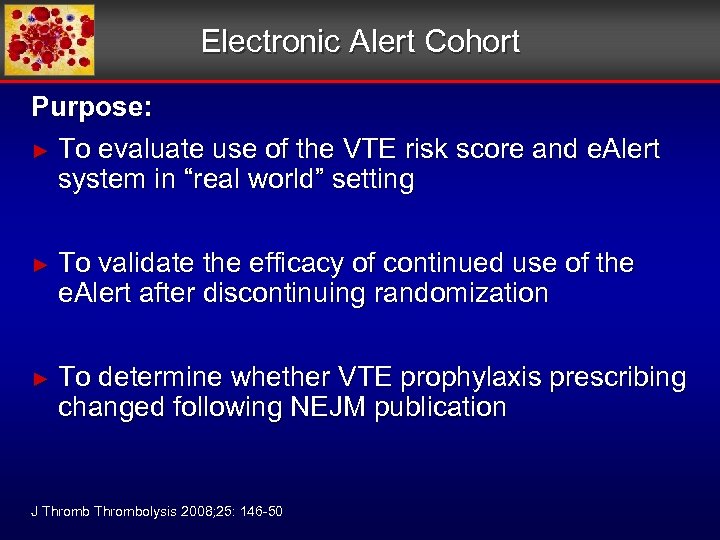 Electronic Alert Cohort Purpose: ► To evaluate use of the VTE risk score and e. Alert system in “real world” setting ► To validate the efficacy of continued use of the e. Alert after discontinuing randomization ► To determine whether VTE prophylaxis prescribing changed following NEJM publication J Thrombolysis 2008; 25: 146 -50
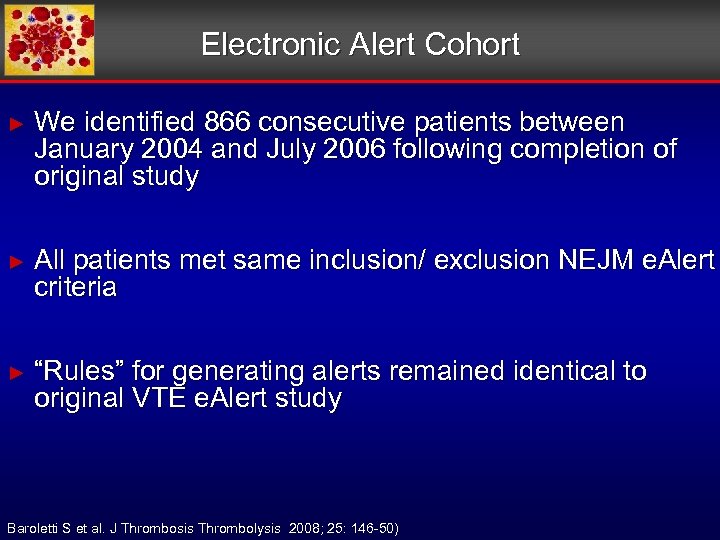 Electronic Alert Cohort ► We identified 866 consecutive patients between January 2004 and July 2006 following completion of original study ► All patients met same inclusion/ exclusion NEJM e. Alert criteria ► “Rules” for generating alerts remained identical to original VTE e. Alert study Baroletti S et al. J Thrombosis Thrombolysis 2008; 25: 146 -50)
 Cohort Study: Results P <0. 001
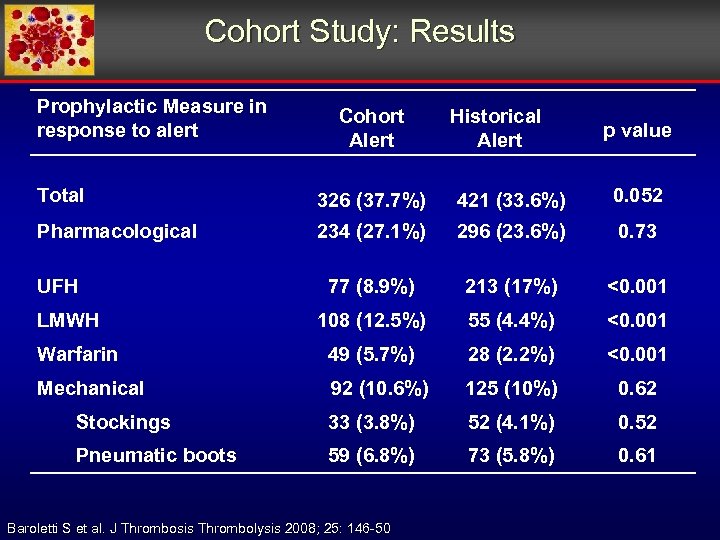 Cohort Study: Results Prophylactic Measure in response to alert Cohort Alert Historical Alert p value Total 326 (37. 7%) 421 (33. 6%) 0. 052 Pharmacological 234 (27. 1%) 296 (23. 6%) 0. 73 77 (8. 9%) 213 (17%) <0. 001 108 (12. 5%) 55 (4. 4%) <0. 001 Warfarin 49 (5. 7%) 28 (2. 2%) <0. 001 Mechanical 92 (10. 6%) 125 (10%) 0. 62 Stockings 33 (3. 8%) 52 (4. 1%) 0. 52 Pneumatic boots 59 (6. 8%) 73 (5. 8%) 0. 61 UFH LMWH Baroletti S et al. J Thrombosis Thrombolysis 2008; 25: 146 -50
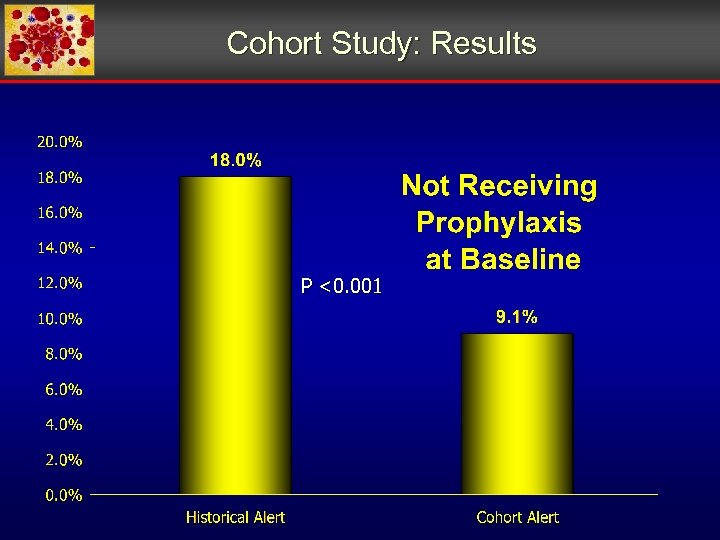
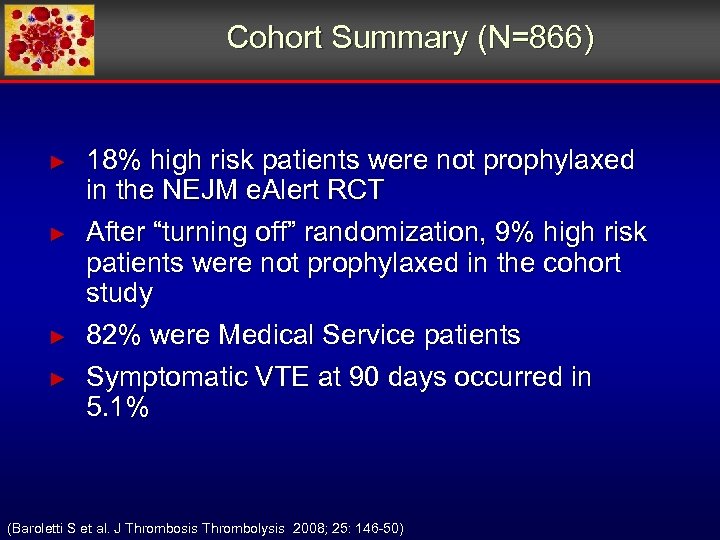 Cohort Summary (N=866) ► ► 18% high risk patients were not prophylaxed in the NEJM e. Alert RCT After “turning off” randomization, 9% high risk patients were not prophylaxed in the cohort study 82% were Medical Service patients Symptomatic VTE at 90 days occurred in 5. 1% (Baroletti S et al. J Thrombosis Thrombolysis 2008; 25: 146 -50)
 VTE Prophylaxis: h. ALERT 1. We initiated a multicentered RCT of human alerts (h. ALERT) (N=2, 500) 2. Objective: to recruit hospitals that differ from BWH re: IT, community vs. academic, urban vs. suburban/rural, location within USA. 3. Can a human alert be more effective than an electronic alert?
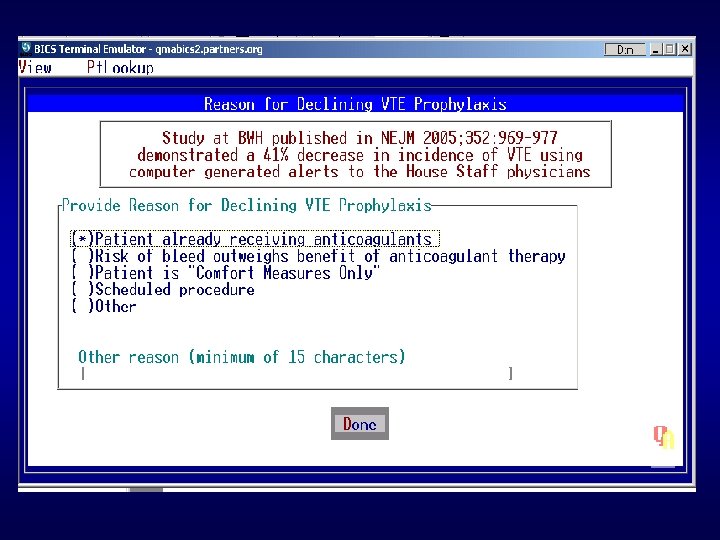
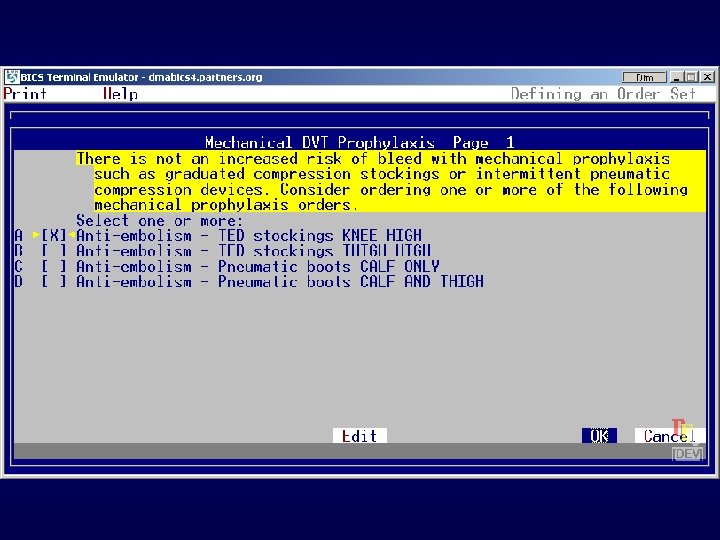
 3 -Screen e. ALERT ► Delves into MD reasoning for withholding VTE prophylaxis. ► Defaults to graduated compression stockings as an “opt out” measure
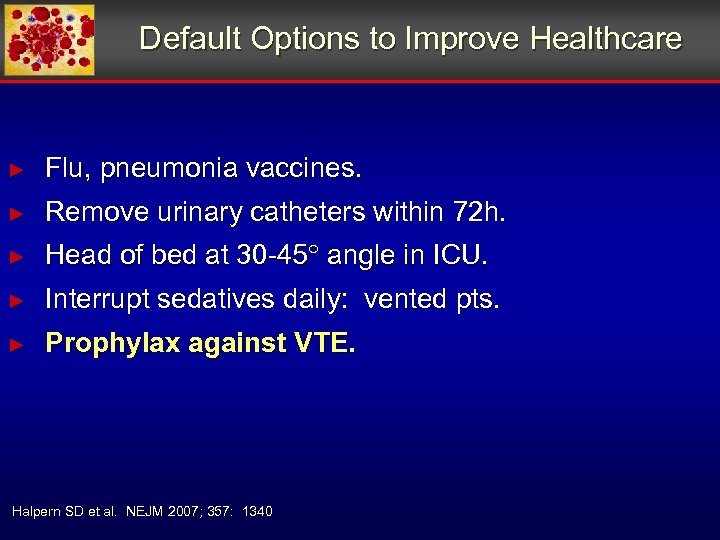 Default Options to Improve Healthcare ► Flu, pneumonia vaccines. ► Remove urinary catheters within 72 h. ► Head of bed at 30 -45 angle in ICU. ► Interrupt sedatives daily: vented pts. ► Prophylax against VTE. Halpern SD et al. NEJM 2007; 357: 1340
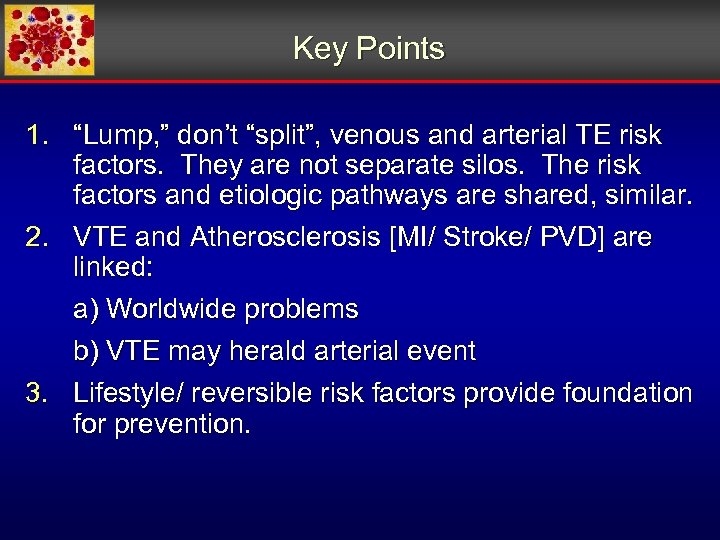 Key Points 1. “Lump, ” don’t “split”, venous and arterial TE risk factors. They are not separate silos. The risk factors and etiologic pathways are shared, similar. 2. VTE and Atherosclerosis [MI/ Stroke/ PVD] are linked: a) Worldwide problems b) VTE may herald arterial event 3. Lifestyle/ reversible risk factors provide foundation for prevention.
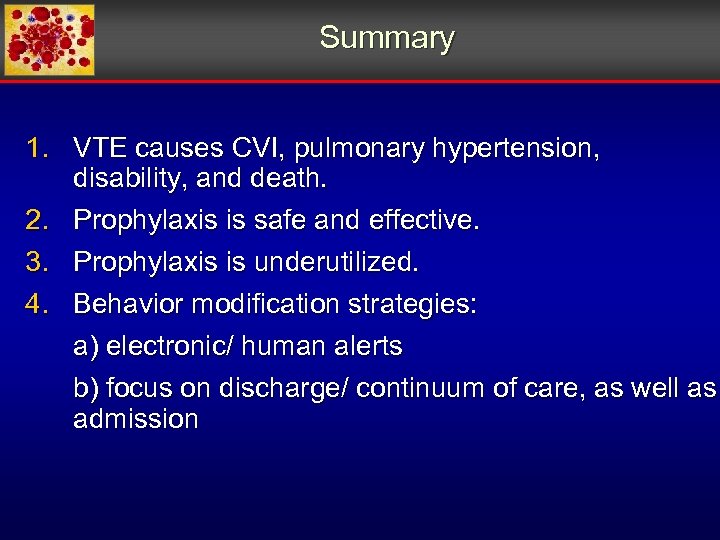 Summary 1. VTE causes CVI, pulmonary hypertension, disability, and death. 2. Prophylaxis is safe and effective. 3. Prophylaxis is underutilized. 4. Behavior modification strategies: a) electronic/ human alerts b) focus on discharge/ continuum of care, as well as admission