


 Скачать презентацию DVLA Flying rules Annie Tonnu DVLA
056fa8937fe690f6835bb87fc61dbdcd.ppt
- Количество слайдов: 11
 DVLA & Flying rules Annie Tonnu
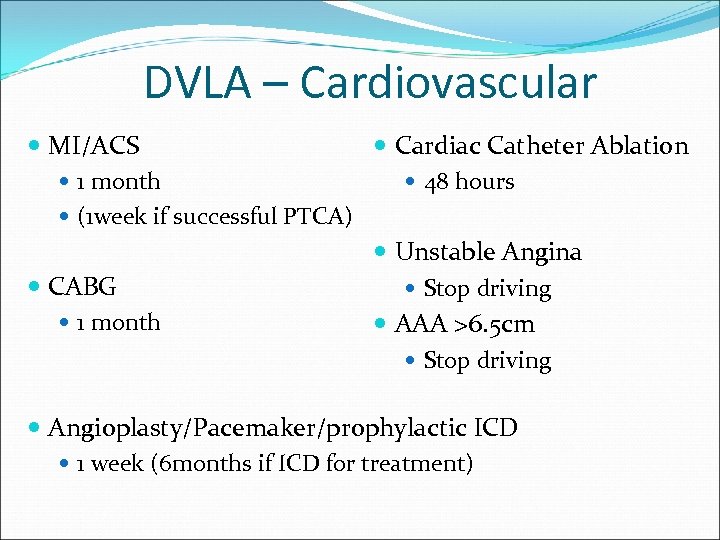 DVLA – Cardiovascular MI/ACS Cardiac Catheter Ablation 1 month 48 hours (1 week if successful PTCA) Unstable Angina CABG Stop driving 1 month AAA >6. 5 cm Stop driving Angioplasty/Pacemaker/prophylactic ICD 1 week (6 months if ICD for treatment)
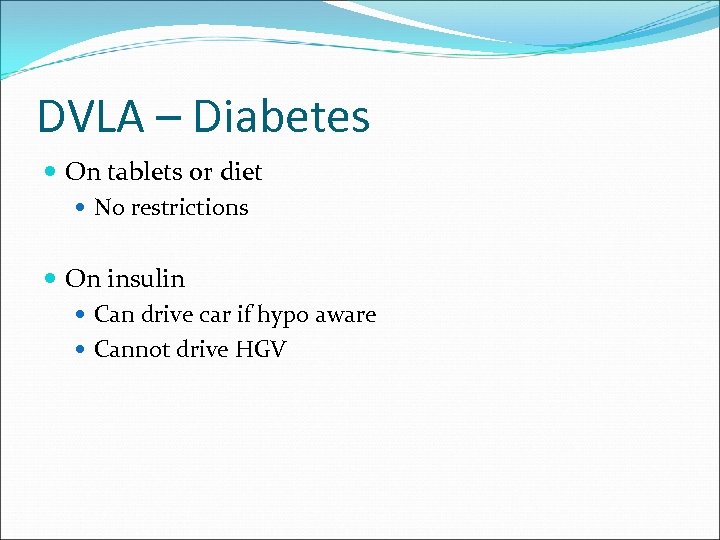 DVLA – Diabetes On tablets or diet No restrictions On insulin Can drive car if hypo aware Cannot drive HGV
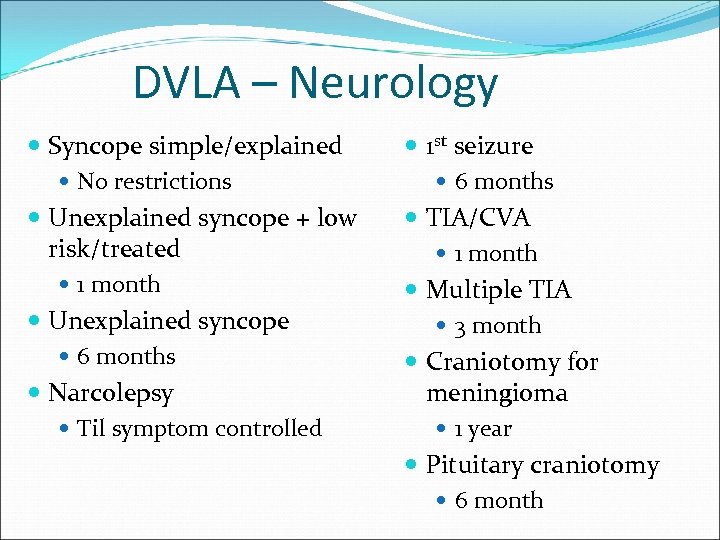 DVLA – Neurology Syncope simple/explained No restrictions Unexplained syncope + low risk/treated 1 month Unexplained syncope 6 months Narcolepsy Til symptom controlled 1 st seizure 6 months TIA/CVA 1 month Multiple TIA 3 month Craniotomy for meningioma 1 year Pituitary craniotomy 6 month
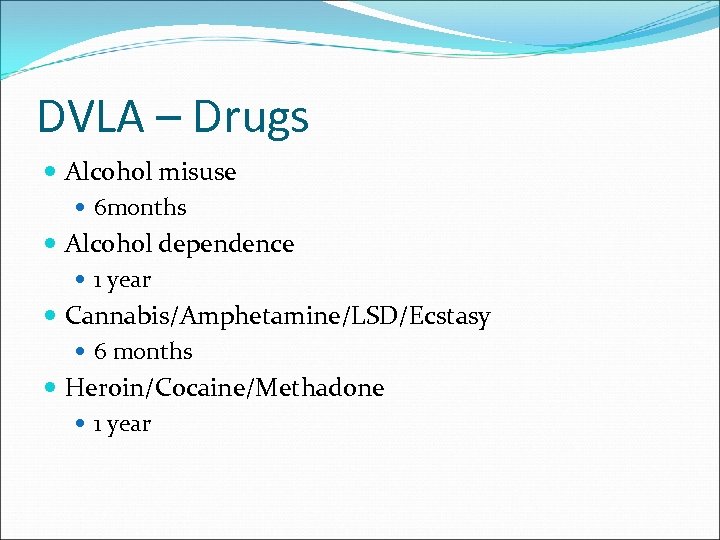 DVLA – Drugs Alcohol misuse 6 months Alcohol dependence 1 year Cannabis/Amphetamine/LSD/Ecstasy 6 months Heroin/Cocaine/Methadone 1 year
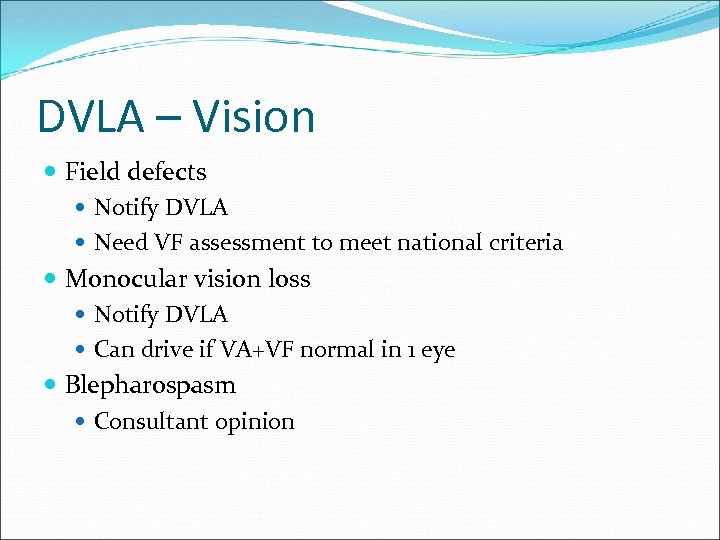 DVLA – Vision Field defects Notify DVLA Need VF assessment to meet national criteria Monocular vision loss Notify DVLA Can drive if VA+VF normal in 1 eye Blepharospasm Consultant opinion
 Civil Aviation Authority
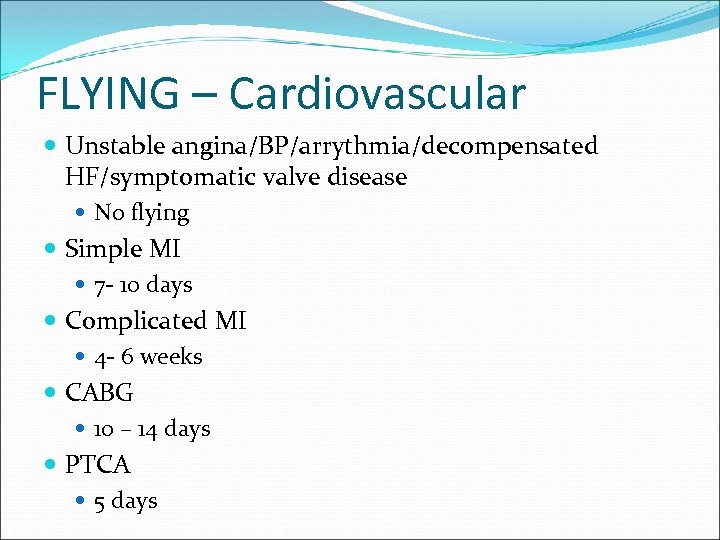 FLYING – Cardiovascular Unstable angina/BP/arrythmia/decompensated HF/symptomatic valve disease No flying Simple MI 7 - 10 days Complicated MI 4 - 6 weeks CABG 10 – 14 days PTCA 5 days
 FLYING – Respiratory Pneumonia Can fly if not infectious and clinically recovered Pneumothorax No flying or 2 weeks after drainage 1 week after normal xray post drainage Diabetes No restriction if well controlled but beware insulin may degrade if exposed to extreme temperature in the hold
 FLYING – Surgery Abdominal 10 days Laparoscopic/Colonoscopy 24 h Plaster cast 24 h if short haul (2 h) flights 48 h if long haul Brain Surgery 7 days Eye surgery or penetrating eye injuries 7 days
 FLYING – Other Pregnancy >36/40 (or >32/40 if multip) No flying Pregnancy >28/40 Certificate confirming normal progress Anaemia >8 g/dl – can fly CVA 10 days (if stable, may fly after 3 days) Sickle Cell Crisis 10 days