 Скачать презентацию DUO Secondary School 190 English-Belarusian Translation Features
нпк презентация.ppt
- Количество слайдов: 18



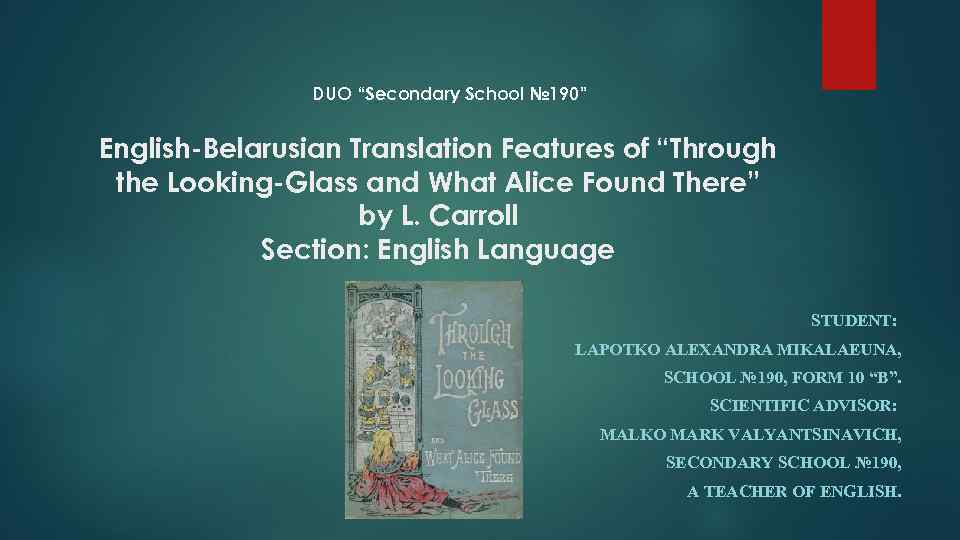
DUO “Secondary School № 190” English-Belarusian Translation Features of “Through the Looking-Glass and What Alice Found There” by L. Carroll Section: English Language STUDENT: LAPOTKO ALEXANDRA MIKALAEUNA, SCHOOL № 190, FORM 10 “B”. SCIENTIFIC ADVISOR: MALKO MARK VALYANTSINAVICH, SECONDARY SCHOOL № 190, A TEACHER OF ENGLISH.
The subject of our research is the translation of the work of Lewis Carroll "Through the Looking. Glass and What Alice Found There» into Belarusian language and its features.
The main aim of our research is to analyze English and Belarusian versions of "Through the Looking-Glass and What Alice Found There" and sort out the ways of translation of proper names into Belarusian language.
Specific objects : - The study of the features of literary translation; - The familiarity with the basics of translation and features of Belarusian translation; - The identification of the translation features of proper names; - The comparison of two translations for the identification of the adequacy of the translation of proper names.
The main method of our research is comparative analysis. But we also used other methods: - Phonetic Analysis - Semantic Analysis - Structural analysis - Stylistic analysis
The material of our research are English and Belarusian versions of “Through the Looking-Glass and What Alice Found There", written by L. Carroll and translated by Vera Burlak.
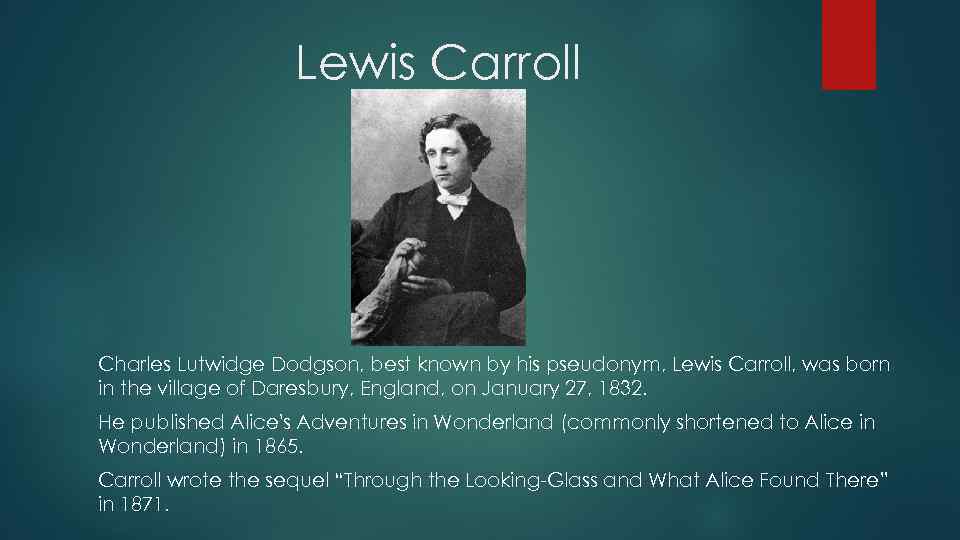
Lewis Carroll Charles Lutwidge Dodgson, best known by his pseudonym, Lewis Carroll, was born in the village of Daresbury, England, on January 27, 1832. He published Alice's Adventures in Wonderland (commonly shortened to Alice in Wonderland) in 1865. Carroll wrote the sequel “Through the Looking-Glass and What Alice Found There” in 1871.
The main heroes of “Through the Looking–Glass and What Alice Found There are”: § Alice § Bandersnatch § Haigha (March Hare) § Hatta (The Hatter) § Humpty Dumpty § The Jabberwock § Jubjub bird § Red King § Red Queen § The Lion and the Unicorn § The Sheep § The Walrus and the Carpenter § Tweedledum and Tweedledee § White King § White Knight § White Queen
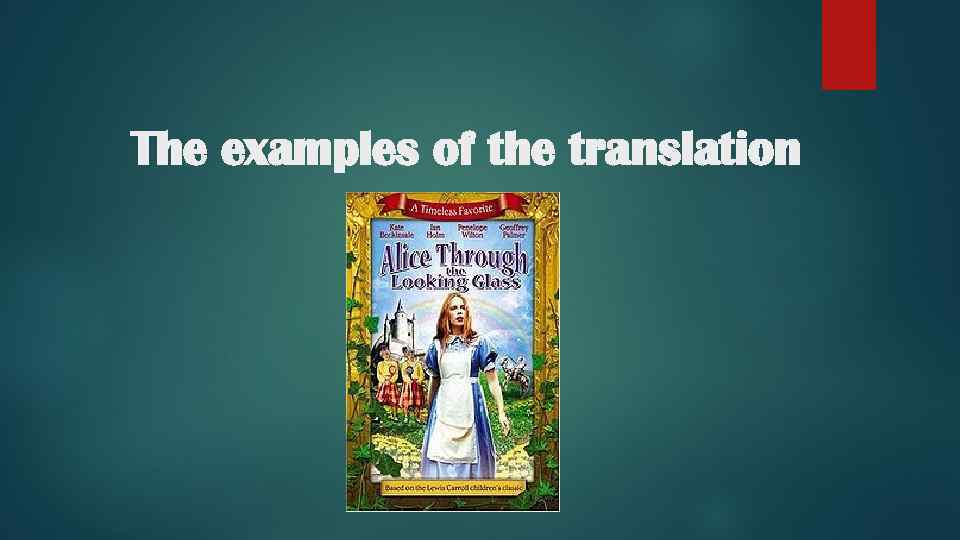
The examples of the translation
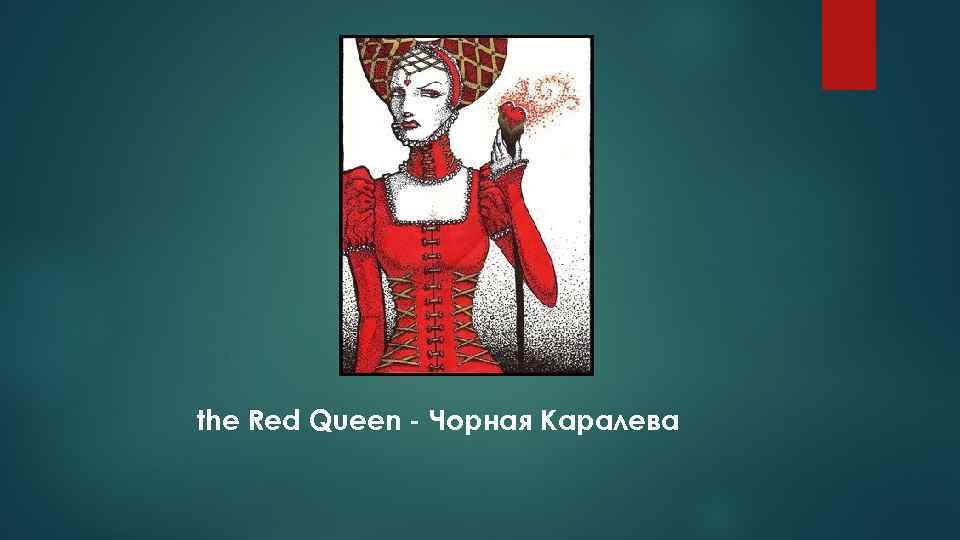
the Red Queen - Чорная Каралева
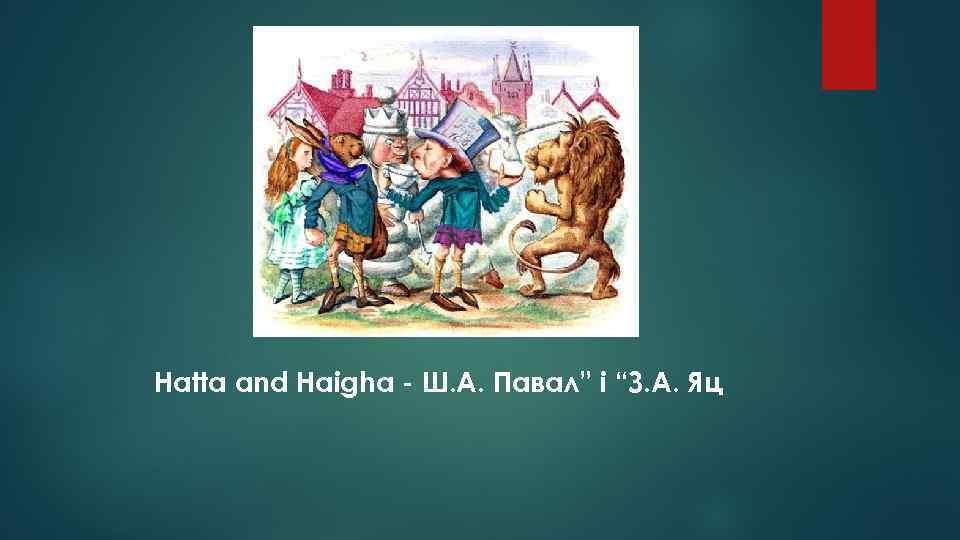
Hatta and Haigha - Ш. А. Павал” і “З. А. Яц
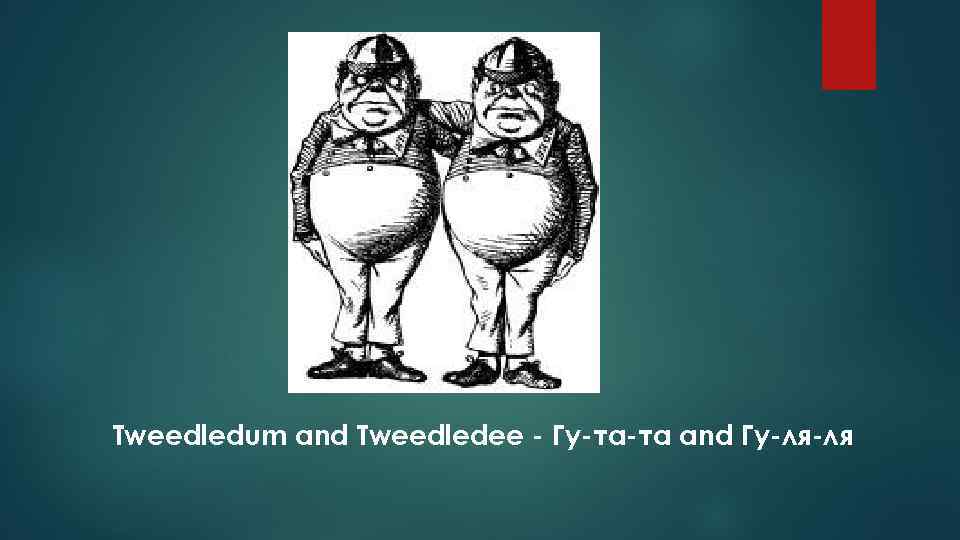
Tweedledum and Tweedledee - Гу-та-та and Гу-ля-ля
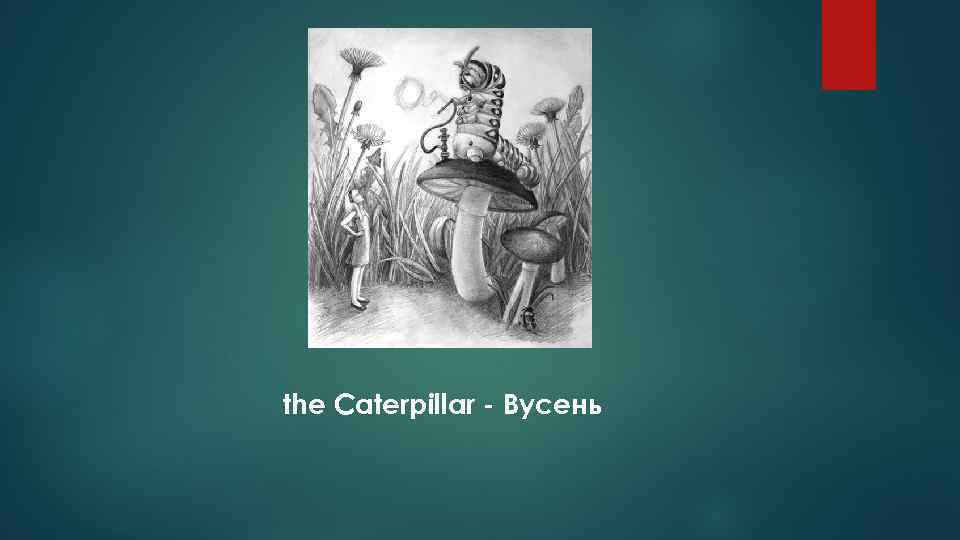
the Caterpillar - Вусень
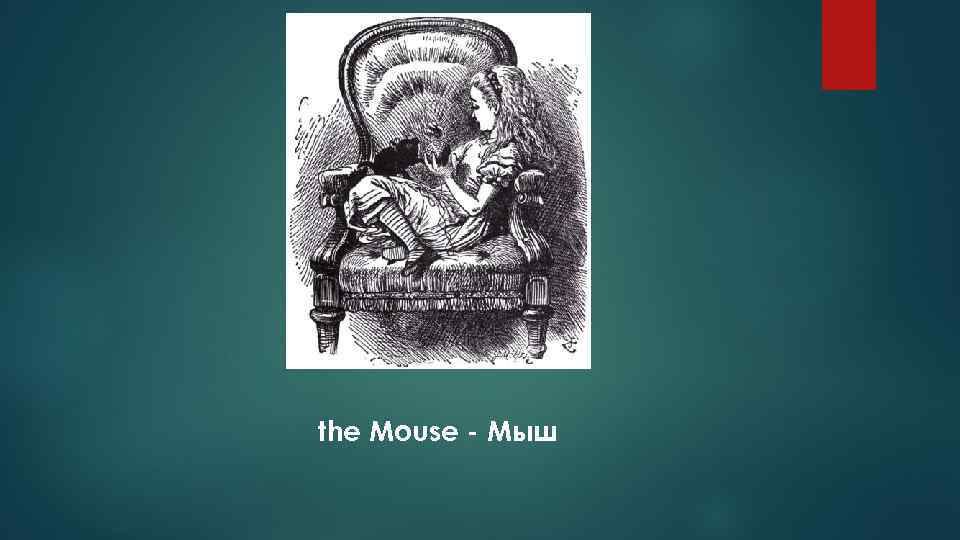
the Mouse - Мыш
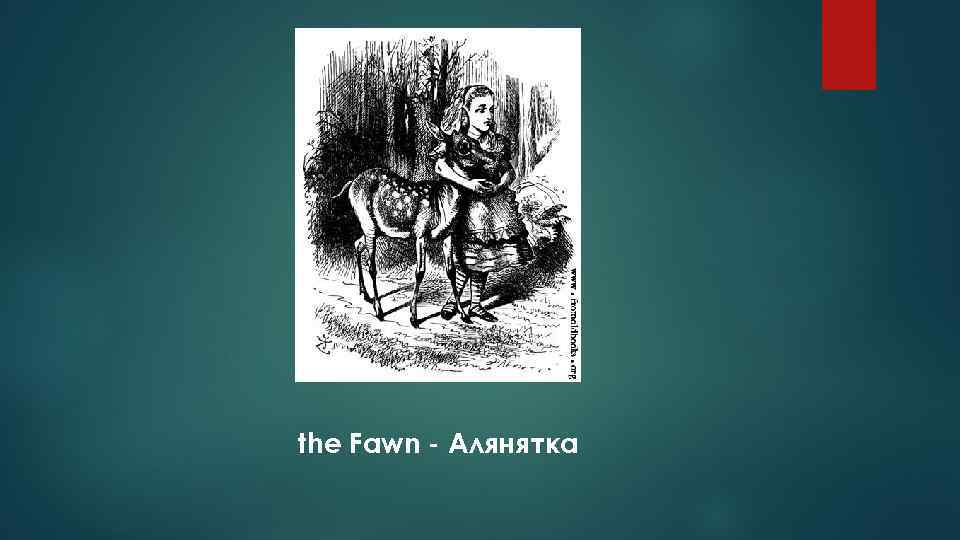
the Fawn - Алянятка
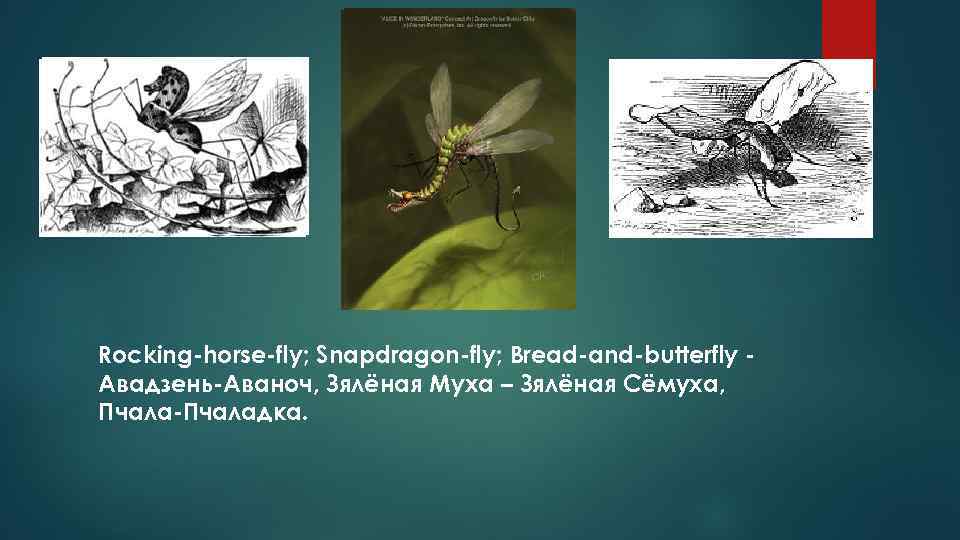
Rocking-horse-fly; Snapdragon-fly; Bread-and-butterfly Авадзень-Аваноч, Зялёная Муха – Зялёная Сёмуха, Пчала-Пчаладка.
The comparison of literary works, and especially the works of Lewis Carroll seemed to us very interesting, especially because the language is full of different secrets and interesting facts. It is not fully learnt and that, on the one hand, creates a lot of difficulties, but on the other hand it allows translators to have more creative approach to work and makes it more interesting.

Thank You
Скачать презентацию DUO Secondary School 190 English-Belarusian Translation Features
нпк презентация.ppt