 Скачать презентацию Dubai International Food Safety Conference ﻣﺆﺘﻤﺮ ﺩﺑﻲ ﺍﻟﺪﻭﻟﻲ
186de467f51fae136a1200a1b125d40e.ppt
- Количество слайдов: 23



Dubai International Food Safety Conference ﻣﺆﺘﻤﺮ ﺩﺑﻲ ﺍﻟﺪﻭﻟﻲ ﻟﻠﺴﻼﻣﺔ ﺍﻟﻐﺬﺍﺋﻴﺔ Building Capacity to Enhance Food Safety in the Middle East ﺑﻨﺎﺀ ﺍﻟﻘﺪﺭﺍﺓ ﻟﺣﺴﻴﻦ ﺳﻼﻣ ﺍﻷﻐﺬﻳﺔ Developing and using Laboratory and Technical Capacity Available in the Region By Atef Idriss CEO ﻓﻲ ﺍﻟﺸﺮﻕ ﺍﻷﻮﺳ ﺗﻨﻤﻴﺔ ﻭﺇﺳﺘﻌﻤﺎﻝ ﺍﻟﻤﺨﺘﺒﺮﺍ ﻭﺍﻟﻘﺪﺭﺍﺕ ﺍﻟﺘﻘﻨﻴ ﺍﻟﻤﺘﻮﻓ ﻓﻲ ﺍﻟﻤﻨﻄﻘﺔ ﺗﻘﺪﻳﻢ ﻋﺎﻃﻒ ﺇﺩﺭﻳﺲ ﺭﺋﻴﺲ / ﻣﺪﻳﺮ ﺗﻨﻔﻴﺬﻱ MEFOSA sarl Middle East North Africa Food Safety Associate ﺵ. ﻡ. ﻡ ﻣﻴﻔﻮﺳﺎ ﻣﺴﺘﺸﺮﻭ ﺍﻟﺴﻼﻣﺔ ﺍﻟﻐﺬﺍﺋﻴﺔ ﻟﻠﺸﺮﻕ ﺍﻻﻭﺳﻂ ﻭﺷﻤﺎﻝ ﺇﻓﺮﻳﻘﻴﺎ Dubai International Food Safety Conference 24 – 26 February, 2009
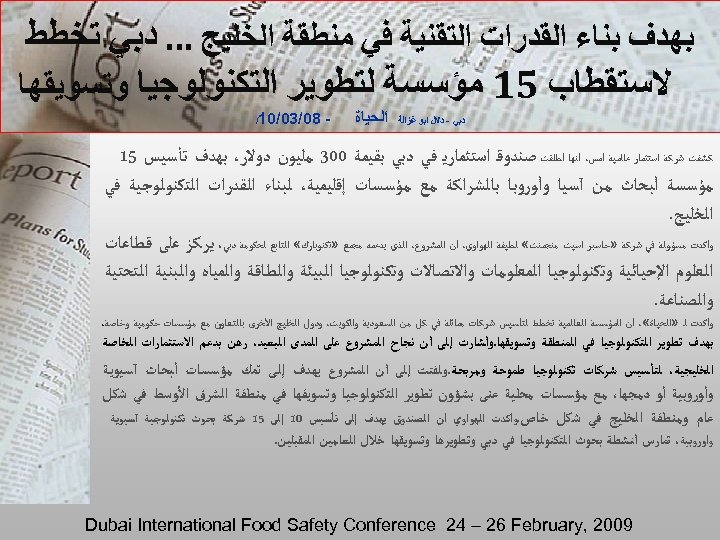
ﺑﻬﺪﻑ ﺑﻨﺎﺀ ﺍﻟﻘﺪﺭﺍﺕ ﺍﻟﺘﻘﻨﻴﺔ ﻓﻲ ﻣﻨﻄﻘﺔ ﺍﻟﺨﻠﻴﺞ. . . ﺩﺑﻲ ﺗﺨﻄﻂ ﻻﺳﺘﻘﻄﺎﺏ 51 ﻣﺆﺴﺴﺔ ﻟﺘﻄﻮﻳﺮ ﺍﻟﺘﻜﻨﻮﻟﻮﺟﻴﺎ ﻭﺗﺴﻮﻳﻘﻬﺎ ﺩﺑﻲ - ﺩﻻﻝ ﺍﺑﻮ ﻏﺰﺍﻟﺔ ﺍﻟﺤﻴﺎﺓ - 80/30/01 / ﻛﺸﻔﺖ ﺷﺮﻛﺔ ﺍﺳﺘﺜﻤﺎﺭ ﻋﺎﻟﻤﻴﺔ ﺃﻤﺲ، ﺃﻨﻬﺎ ﺃﻄﻠﻘﺖ ﺻﻨﺪﻭﻗ ﺍﺳﺘﺜﻤﺎﺭﻳ ﻓﻲ ﺩﺑﻲ ﺑﻘﻴﻤﺔ 003 ﻣﻠﻴﻮﻥ ﺩﻭﻻﺭ، ﺑﻬﺪﻑ ﺗﺄﺴﻴﺲ 51 ﻣﺆﺴﺴﺔ ﺃﺒﺤﺎﺙ ﻣﻦ آﺴﻴﺎ ﻭﺃﻮﺭﻭﺑﺎ ﺑﺎﻟﺸﺮﺍﻛﺔ ﻣﻊ ﻣﺆﺴﺴﺎﺕ ﺇﻗﻠﻴﻤﻴﺔ، ﻟﺒﻨﺎﺀ ﺍﻟﻘﺪﺭﺍﺕ ﺍﻟﺘﻜﻨﻮﻟﻮﺟﻴﺔ ﻓﻲ ﺍﻟﺨﻠﻴﺞ. ﻭﺃﻜﺪﺕ ﻣﺴﺆﻮﻟﺔ ﻓﻲ ﺷﺮﻛﺔ » ﺟﺎﺳﺒﺮ ﺍﺳﻴﺖ ﻣﻨﺠﻤﻨﺖ « ﻟﻄﻴﻔﺔ ﺍﻟﻬﻮﺍﻭﻱ، ﺃﻦ ﺍﻟﻤﺸﺮﻭﻉ، ﺍﻟﺬﻱ ﻳﺪﻋﻤﻪ ﻣﺠﻤﻊ » ﺗﻜﻨﻮﺑﺎﺭﻙ « ﺍﻟﺘﺎﺑﻊ ﻟﺤﻜﻮﻣﺔ ﺩﺑﻲ، ﻳﺮﻛﺰ ﻋﻠﻰ ﻗﻄﺎﻋﺎﺕ ﺍﻟﻌﻠﻮﻡ ﺍﻹﺣﻴﺎﺋﻴﺔ ﻭﺗﻜﻨﻮﻟﻮﺟﻴﺎ ﺍﻟﻤﻌﻠﻮﻣﺎﺕ ﻭﺍﻻﺗﺼﺎﻻﺕ ﻭﺗﻜﻨﻮﻟﻮﺟﻴﺎ ﺍﻟﺒﻴﺌﺔ ﻭﺍﻟﻄﺎﻗﺔ ﻭﺍﻟﻤﻴﺎﻩ ﻭﺍﻟﺒﻨﻴﺔ ﺍﻟﺘﺤﺘﻴﺔ ﻭﺍﻟﺼﻨﺎﻋﺔ. ﻭﺃﻜﺪﺕ ﻟـ » ﺍﻟﺤﻴﺎﺓ «، ﺃﻦ ﺍﻟﻤﺆﺴﺴﺔ ﺍﻟﻌﺎﻟﻤﻴﺔ ﺗﺨﻄﻂ ﻟﺘﺄﺴﻴﺲ ﺷﺮﻛﺎﺕ ﻣﻤﺎﺛﻠﺔ ﻓﻲ ﻛﻞ ﻣﻦ ﺍﻟﺴﻌﻮﺩﻳﺔ ﻭﺍﻟﻜﻮﻳﺖ، ﻭﺩﻭﻝ ﺍﻟﺨﻠﻴﺞ ﺍﻷﺨﺮﻯ ﺑﺎﻟﺘﻌﺎﻭﻥ ﻣﻊ ﻣﺆﺴﺴﺎﺕ ﺣﻜﻮﻣﻴﺔ ﻭﺧﺎﺻﺔ، ﺑﻬﺪﻑ ﺗﻄﻮﻳﺮ ﺍﻟﺘﻜﻨﻮﻟﻮﺟﻴﺎ ﻓﻲ ﺍﻟﻤﻨﻄﻘﺔ ﻭﺗﺴﻮﻳﻘﻬﺎ. ﻭﺃﺸﺎﺭﺕ ﺇﻟﻰ ﺃﻦ ﻧﺠﺎﺡ ﺍﻟﻤﺸﺮﻭﻉ ﻋﻠﻰ ﺍﻟﻤﺪﻯ ﺍﻟﺒﻌﻴﺪ، ﺭﻫﻦ ﺑﺪﻋﻢ ﺍﻻﺳﺘﺜﻤﺎﺭﺍﺕ ﺍﻟﺨﺎﺻﺔ ﺍﻟﺨﻠﻴﺠﻴﺔ، ﻟﺘﺄﺴﻴﺲ ﺷﺮﻛﺎﺕ ﺗﻜﻨﻮﻟﻮﺟﻴﺎ ﻃﻤﻮﺣﺔ ﻭﻣﺮﺑﺤﺔ. ﻭﻟﻔﺘﺖ ﺇﻟﻰ ﺃﻦ ﺍﻟﻤﺸﺮﻭﻉ ﻳﻬﺪﻑ ﺇﻟﻰ ﺗﻤﻙ ﻣﺆﺴﺴﺎﺕ ﺃﺒﺤﺎﺙ آﺴﻴﻮﻳﺔ ﻭﺃﻮﺭﻭﺑﻴﺔ ﺃﻮ ﺩﻣﺠﻬﺎ، ﻣﻊ ﻣﺆﺴﺴﺎﺕ ﻣﺤﻠﻴﺔ ﻋﻨﻰ ﺑﺸﺆﻮﻥ ﺗﻄﻮﻳﺮ ﺍﻟﺘﻜﻨﻮﻟﻮﺟﻴﺎ ﻭﺗﺴﻮﻳﻘﻬﺎ ﻓﻲ ﻣﻨﻄﻘﺔ ﺍﻟﺸﺮﻕ ﺍﻷﻮﺳﻂ ﻓﻲ ﺷﻜﻞ ﻋﺎﻡ ﻭﻣﻨﻄﻘﺔ ﺍﻟﺨﻠﻴﺞ ﻓﻲ ﺷﻜﻞ ﺧﺎﺹ. ﻭﺃﻜﺪﺕ ﺍﻟﻬﻮﺍﻭﻱ ﺃﻦ ﺍﻟﺼﻨﺪﻭﻕ ﻳﻬﺪﻑ ﺇﻟﻰ ﺗﺄﺴﻴﺲ 01 ﺇﻟﻰ 51 ﺷﺮﻛﺔ ﺑﺤﻮﺙ ﺗﻜﻨﻮﻟﻮﺟﻴﺔ آﺴﻴﻮﻳﺔ ﻭﺃﻮﺭﻭﺑﻴﺔ، ﺗﻤﺎﺭﺱ ﺃﻨﺸﻄﺔ ﺑﺤﻮﺙ ﺍﻟﺘﻜﻨﻮﻟﻮﺟﻴﺎ ﻓﻲ ﺩﺑﻲ ﻭﺗﻄﻮﻳﺮﻫﺎ ﻭﺗﺴﻮﻳﻘﻬﺎ ﺧﻼﻝ ﺍﻟﻌﺎﻣﻴﻦ ﺍﻟﻤﻘﺒﻠﻴﻦ. 9002 , Dubai International Food Safety Conference 24 – 26 February
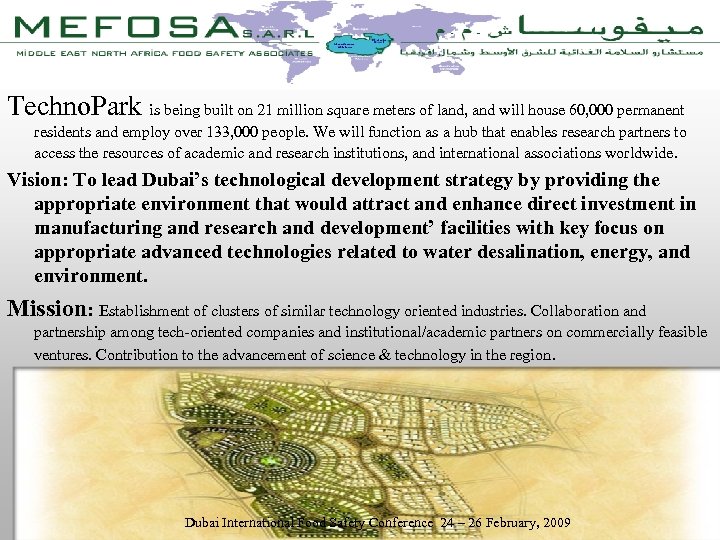
Some definitions to start with. . Techno. Park is being built on 21 million square meters of land, and will house 60, 000 permanent residents and employ over 133, 000 people. We will function as a hub that enables research partners to access the resources of academic and research institutions, and international associations worldwide. Vision: To lead Dubai’s technological development strategy by providing the appropriate environment that would attract and enhance direct investment in manufacturing and research and development’ facilities with key focus on appropriate advanced technologies related to water desalination, energy, and environment. Mission: Establishment of clusters of similar technology oriented industries. Collaboration and partnership among tech-oriented companies and institutional/academic partners on commercially feasible ventures. Contribution to the advancement of science & technology in the region. Dubai International Food Safety Conference 24 – 26 February, 2009
Some definitions to start with. . Capacity Building guide Capacity is the essential lubricant of development, more important even than finance. One weakness of capacity within a multi-stakeholder project will often condemn the whole to failure. The UN Development Programme has defined "capacity" as "the ability of individuals, institutions and societies to perform functions, solve problems, and set and achieve objectives in a sustainable manner". The terms "capacity building" or "capacity development" describe the task of developing levels of human and institutional capacity. “…capacity building remains one of the most challenging functions of development. ” Dubai International Food Safety Conference 24 – 26 February, 2009
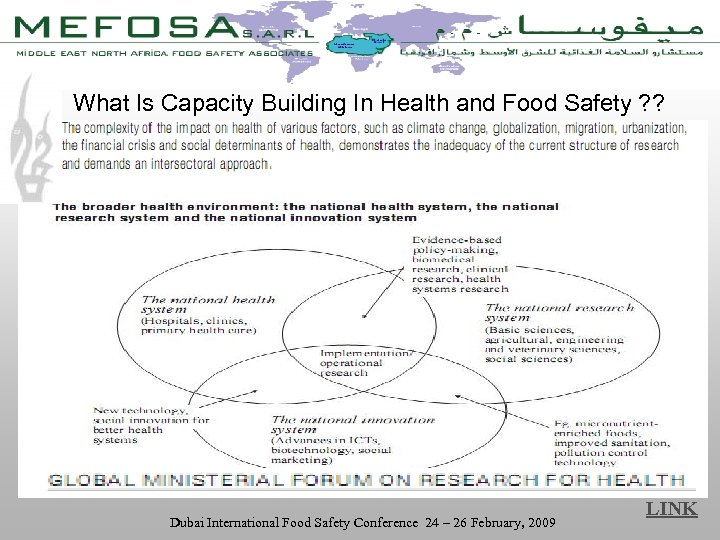
What Is Capacity Building In Health and Food Safety ? ? Dubai International Food Safety Conference 24 – 26 February, 2009 LINK
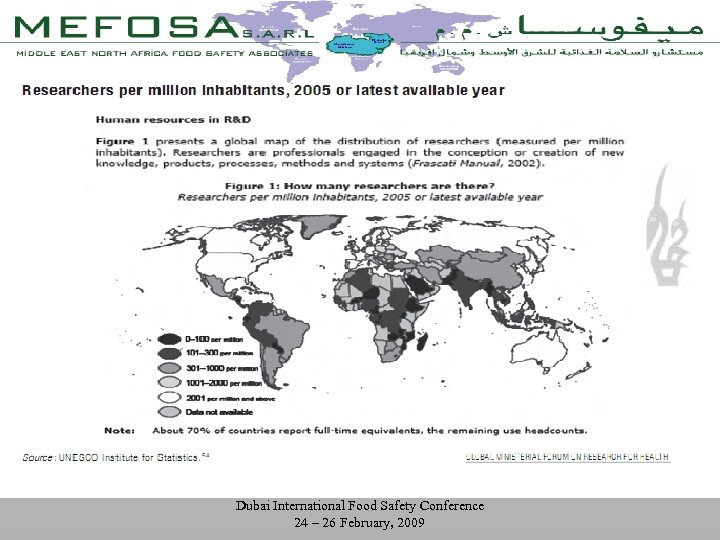
Dubai International Food Safety Conference 24 – 26 February, 2009
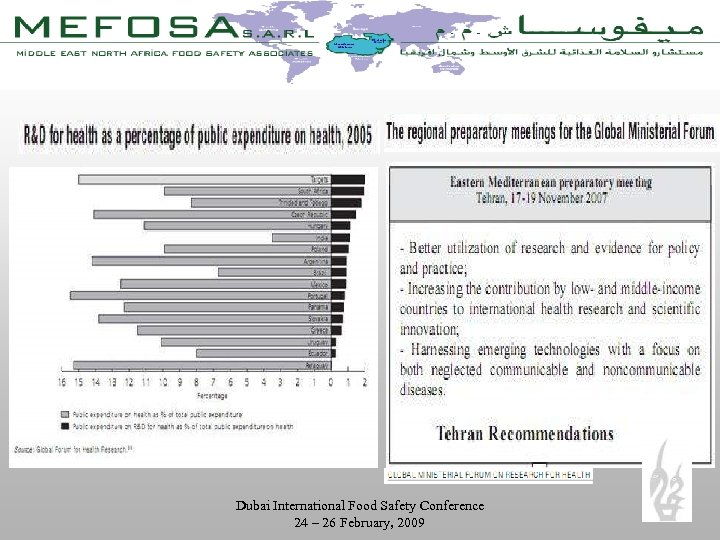
Dubai International Food Safety Conference 24 – 26 February, 2009
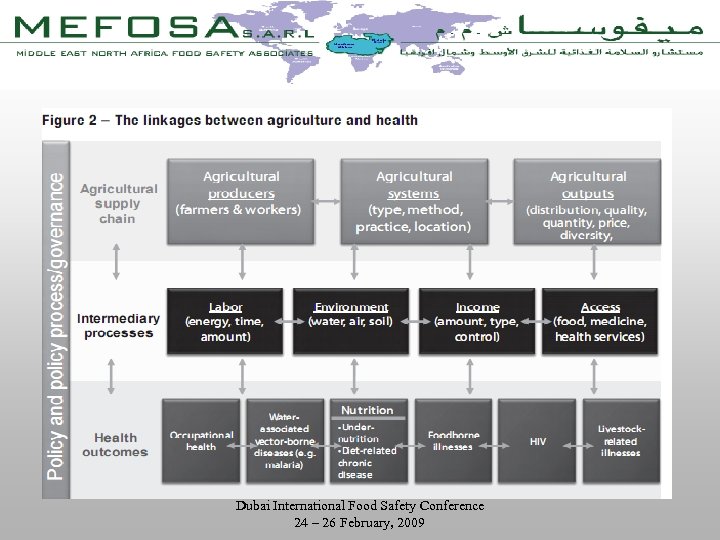
Dubai International Food Safety Conference 24 – 26 February, 2009
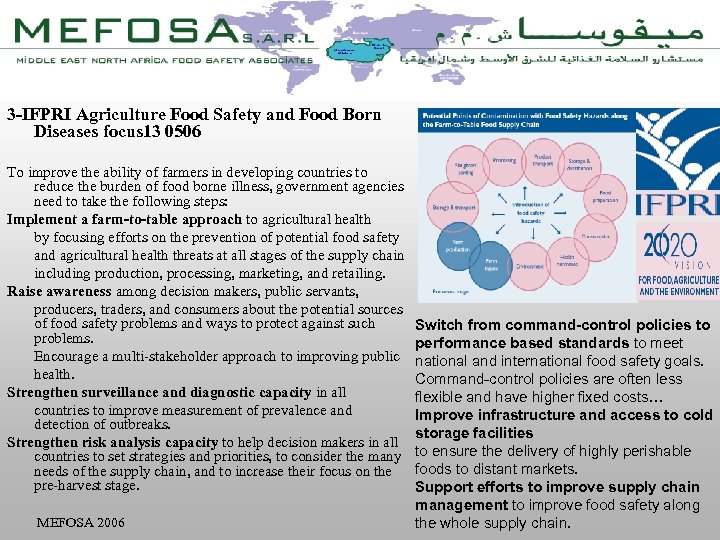
3 -IFPRI Agriculture Food Safety and Food Born Diseases focus 13 0506 To improve the ability of farmers in developing countries to reduce the burden of food borne illness, government agencies need to take the following steps: Implement a farm-to-table approach to agricultural health by focusing efforts on the prevention of potential food safety and agricultural health threats at all stages of the supply chain including production, processing, marketing, and retailing. Raise awareness among decision makers, public servants, producers, traders, and consumers about the potential sources of food safety problems and ways to protect against such problems. Encourage a multi-stakeholder approach to improving public health. Strengthen surveillance and diagnostic capacity in all countries to improve measurement of prevalence and detection of outbreaks. Strengthen risk analysis capacity to help decision makers in all countries to set strategies and priorities, to consider the many needs of the supply chain, and to increase their focus on the pre-harvest stage. MEFOSA 2006 Switch from command-control policies to performance based standards to meet national and international food safety goals. Command-control policies are often less flexible and have higher fixed costs… Improve infrastructure and access to cold storage facilities to ensure the delivery of highly perishable foods to distant markets. Support efforts to improve supply chain management to improve food safety along the whole supply chain.
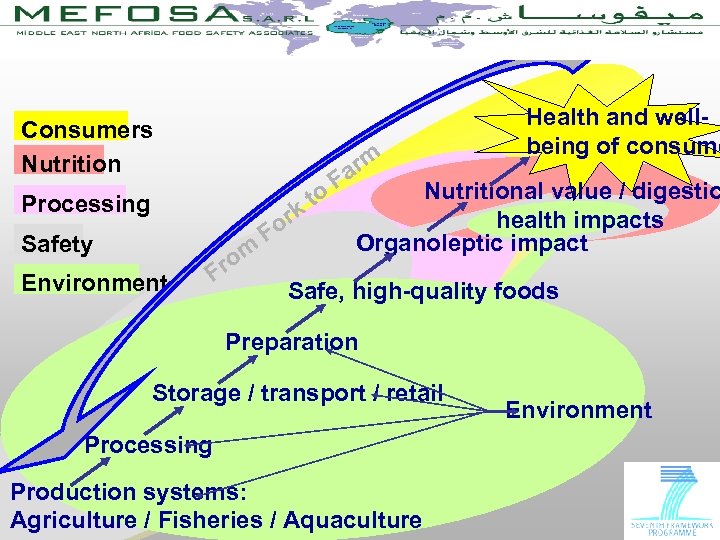
Consumers Nutrition rm Fa Processing to k or F Safety Environment F om r Health and wellbeing of consume Nutritional value / digestio health impacts Organoleptic impact Safe, high-quality foods Preparation Storage / transport / retail Processing Production systems: Agriculture / Fisheries / Aquaculture Environment
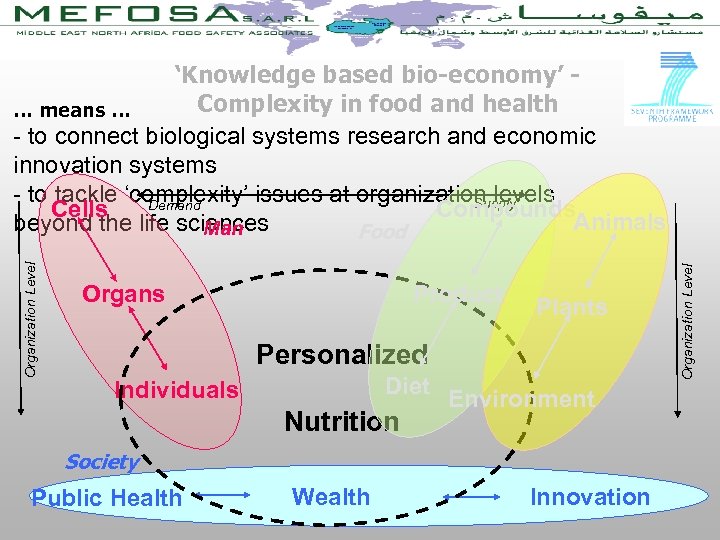
Organs Product Plants Personalized Diet Individuals Nutrition Environment Society Public Health Wealth Innovation Organization Level ‘Knowledge based bio-economy’ Complexity in food and health … means … - to connect biological systems research and economic innovation systems - to tackle ‘complexity’ issues at organization levels Supply Demand Compounds Cells Animals beyond the life sciences Man Food
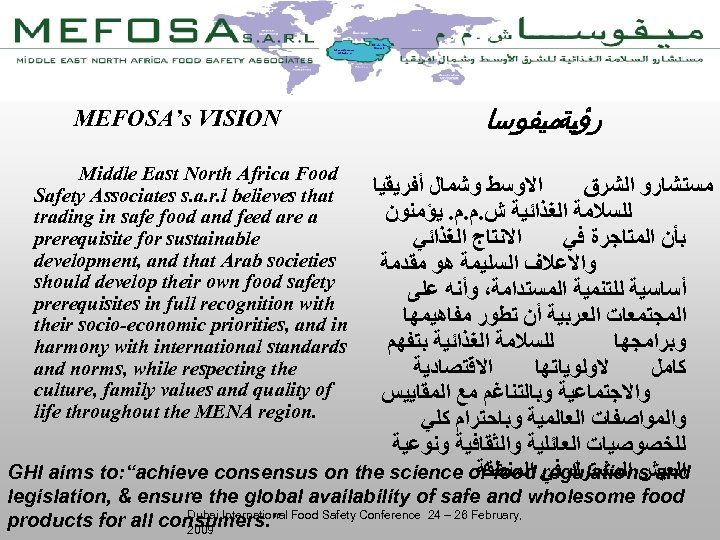
MEFOSA’s VISION ﺭﺅﻴﺔﻣﻴﻔﻮﺳﺎ Middle East North Africa Food Safety Associates s. a. r. l believes that trading in safe food and feed are a prerequisite for sustainable development, and that Arab societies should develop their own food safety prerequisites in full recognition with their socio-economic priorities, and in harmony with international standards and norms, while respecting the culture, family values and quality of life throughout the MENA region. ﺍﻻﻭﺳﻂ ﻭﺷﻤﺎﻝ ﺃﻔﺮﻳﻘﻴﺎ ﻣﺴﺘﺸﺎﺭﻭ ﺍﻟﺸﺮﻕ ﻟﻠﺴﻼﻣﺔ ﺍﻟﻐﺬﺍﺋﻴﺔ ﺵ. ﻡ. ﻡ. ﻳﺆﻤﻨﻮﻥ ﺍﻻﻧﺘﺎﺝ ﺍﻟﻐﺬﺍﺋﻲ ﺑﺄﻦ ﺍﻟﻤﺘﺎﺟﺮﺓ ﻓﻲ ﻭﺍﻻﻋﻼﻑ ﺍﻟﺴﻠﻴﻤﺔ ﻫﻮ ﻣﻘﺪﻣﺔ ﺃﺴﺎﺳﻴﺔ ﻟﻠﺘﻨﻤﻴﺔ ﺍﻟﻤﺴﺘﺪﺍﻣﺔ، ﻭﺃﻨﻪ ﻋﻠﻰ ﺍﻟﻤﺠﺘﻤﻌﺎﺕ ﺍﻟﻌﺮﺑﻴﺔ ﺃﻦ ﺗﻄﻮﺭ ﻣﻔﺎﻫﻴﻤﻬﺎ ﻟﻠﺴﻼﻣﺔ ﺍﻟﻐﺬﺍﺋﻴﺔ ﺑﺘﻔﻬﻢ ﻭﺑﺮﺍﻣﺠﻬﺎ ﺍﻻﻗﺘﺼﺎﺩﻳﺔ ﻻﻭﻟﻮﻳﺎﺗﻬﺎ ﻛﺎﻣﻞ ﻭﺍﻻﺟﺘﻤﺎﻋﻴﺔ ﻭﺑﺎﻟﺘﻨﺎﻏﻢ ﻣﻊ ﺍﻟﻤﻘﺎﻳﻴﺲ ﻭﺍﻟﻤﻮﺍﺻﻔﺎﺕ ﺍﻟﻌﺎﻟﻤﻴﺔ ﻭﺑﺎﺣﺘﺮﺍﻡ ﻛﻠﻲ ﻟﻠﺨﺼﻮﺻﻴﺎﺕ ﺍﻟﻌﺎﺋﻠﻴﺔ ﻭﺍﻟﺜﻘﺎﻓﻴﺔ ﻭﻧﻮﻋﻴﺔ GHI aims to: “achieve consensus on the science of food ﺍﻟﻌﻴﺶ ﺍﻟﻤﺸﺘﺮﻙ ﻓﻲ . ﺍﻟﻤﻨﻄﻘﺔ regulations and legislation, & ensure the global availability of safe and wholesome food Dubai International products for all consumers. ” Food Safety Conference 24 – 26 February, 2009
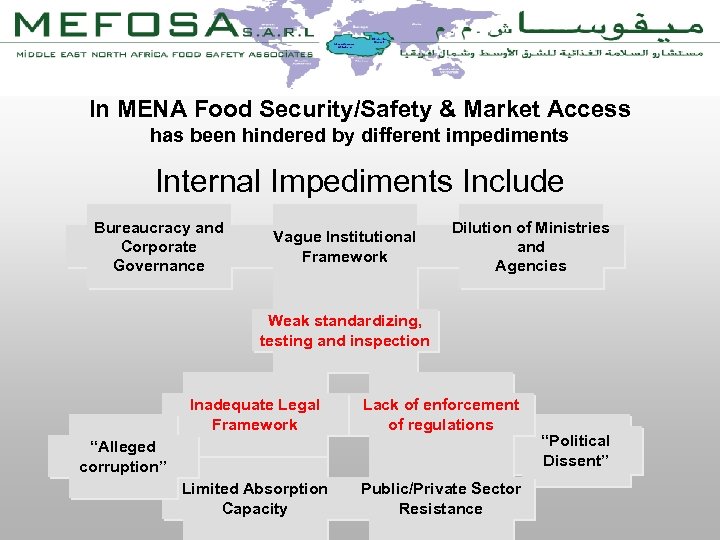
In MENA Food Security/Safety & Market Access has been hindered by different impediments Internal Impediments Include Bureaucracy and Corporate Governance Vague Institutional Framework Dilution of Ministries and Agencies Weak standardizing, testing and inspection Inadequate Legal Framework Lack of enforcement of regulations Limited Absorption Capacity Public/Private Sector Resistance “Alleged corruption” “Political Dissent”
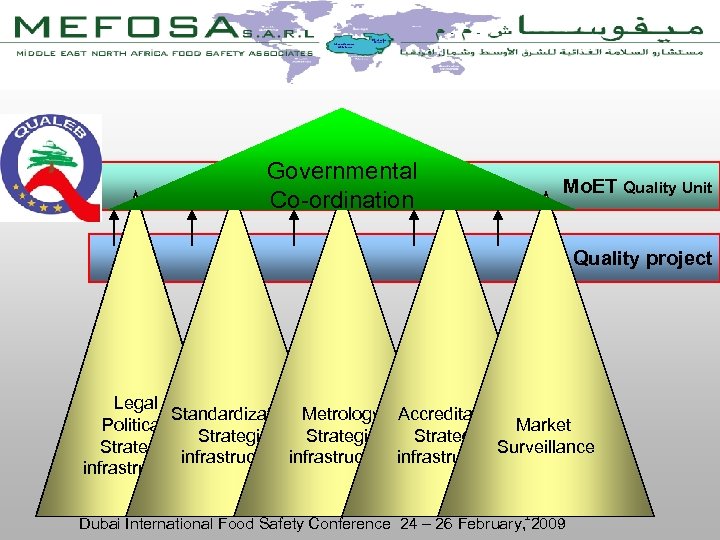
Strengthening Quality Management, Capabilities and Infrastructure in Lebanon (QUALEB ) Project No. Europe. Aid/117725/D/SV/LB Governmental Co-ordination Mo. ET Quality Unit Quality project Legal Standardization Metrology Accreditation Political/ Market Strategic Surveillance infrastructure 14 Dubai International Food Safety Conference 24 – 26 February, 2009
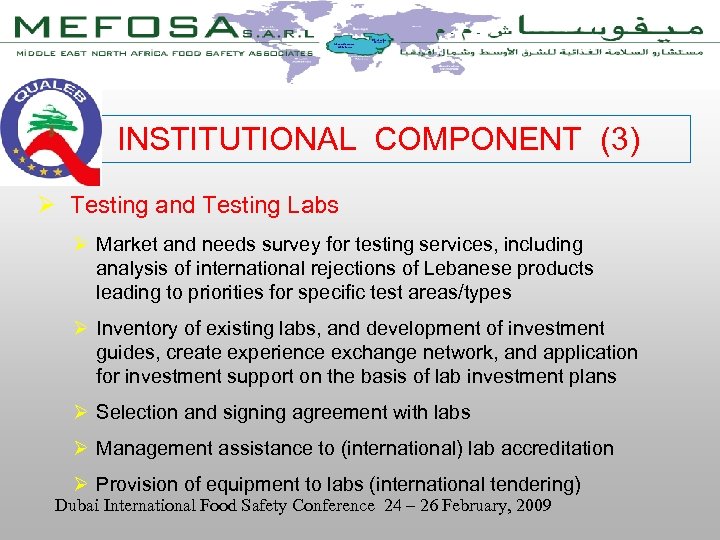
Strengthening Quality Management, Capabilities and Infrastructure in Lebanon (QUALEB ) Project No. Europe. Aid/117725/D/SV/LB INSTITUTIONAL COMPONENT (3) Ø Testing and Testing Labs Ø Market and needs survey for testing services, including analysis of international rejections of Lebanese products leading to priorities for specific test areas/types Ø Inventory of existing labs, and development of investment guides, create experience exchange network, and application for investment support on the basis of lab investment plans Ø Selection and signing agreement with labs Ø Management assistance to (international) lab accreditation Ø Provision of equipment to labs (international tendering) Dubai International Food Safety Conference 24 – 26 February, 2009
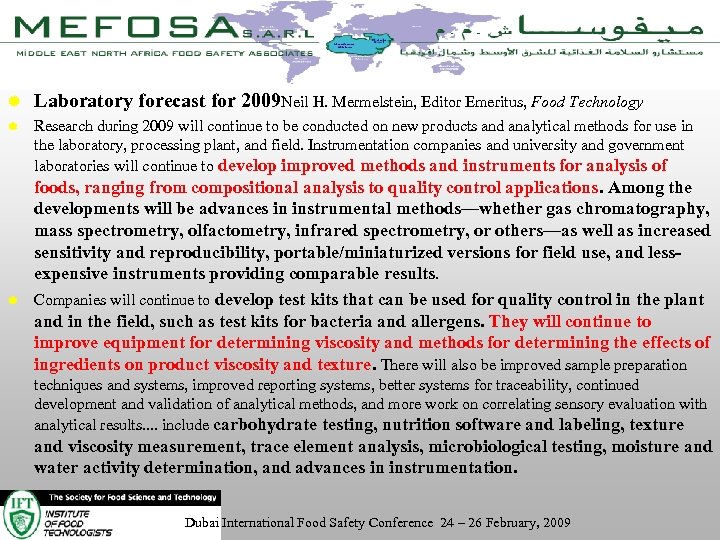
Some definitions to start with. . ® Laboratory forecast for 2009 Neil H. Mermelstein, Editor Emeritus, Food Technology ® Research during 2009 will continue to be conducted on new products and analytical methods for use in the laboratory, processing plant, and field. Instrumentation companies and university and government laboratories will continue to develop improved methods and instruments for analysis of ® foods, ranging from compositional analysis to quality control applications. Among the developments will be advances in instrumental methods—whether gas chromatography, mass spectrometry, olfactometry, infrared spectrometry, or others—as well as increased sensitivity and reproducibility, portable/miniaturized versions for field use, and lessexpensive instruments providing comparable results. Companies will continue to develop test kits that can be used for quality control in the plant and in the field, such as test kits for bacteria and allergens. They will continue to improve equipment for determining viscosity and methods for determining the effects of ingredients on product viscosity and texture. There will also be improved sample preparation techniques and systems, improved reporting systems, better systems for traceability, continued development and validation of analytical methods, and more work on correlating sensory evaluation with analytical results. . include carbohydrate testing, nutrition software and labeling, texture and viscosity measurement, trace element analysis, microbiological testing, moisture and water activity determination, and advances in instrumentation. Dubai International Food Safety Conference 24 – 26 February, 2009
Diverse Industry and Association Collaboration Dubai International Food Safety Conference 24 – 26 February, 2009
Broad Technical & Academic Collaboration Dubai International Food Safety Conference 24 – 26 February, 2009
Regional Collaboration/Across Agencies Dubai International Food Safety Conference 24 – 26 February, 2009
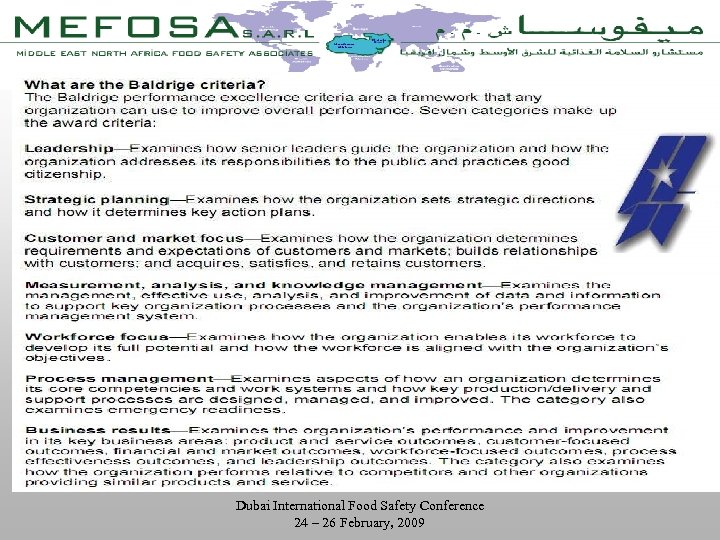
Dubai International Food Safety Conference 24 – 26 February, 2009
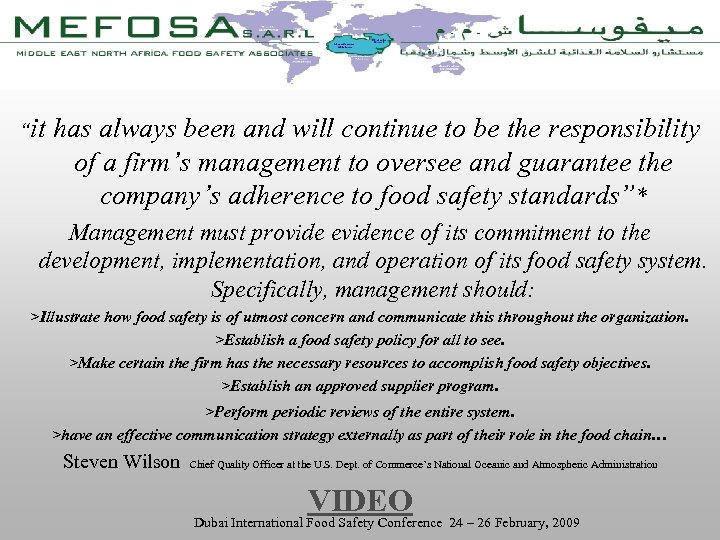
“it has always been and will continue to be the responsibility of a firm’s management to oversee and guarantee the company’s adherence to food safety standards”* Management must provide evidence of its commitment to the development, implementation, and operation of its food safety system. Specifically, management should: >Illustrate how food safety is of utmost concern and communicate this throughout the organization. >Establish a food safety policy for all to see. >Make certain the firm has the necessary resources to accomplish food safety objectives. >Establish an approved supplier program. >Perform periodic reviews of the entire system. >have an effective communication strategy externally as part of their role in the food chain… Steven Wilson Chief Quality Officer at the U. S. Dept. of Commerce’s National Oceanic and Atmospheric Administration VIDEO Dubai International Food Safety Conference 24 – 26 February, 2009
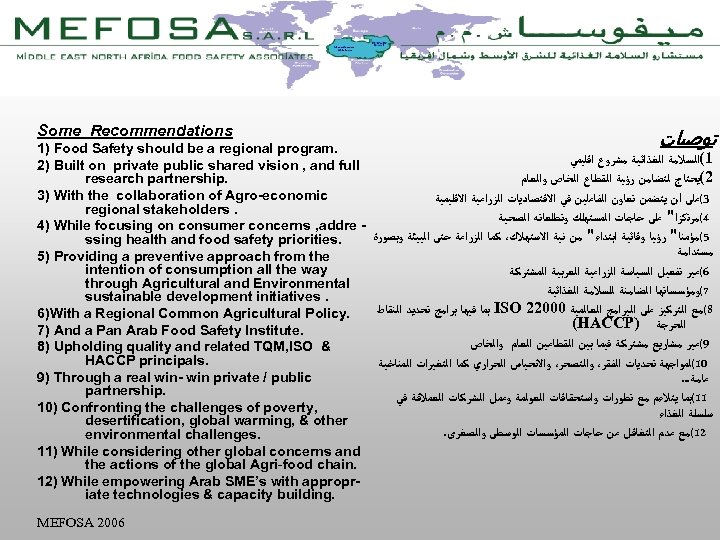
Some Recommendations ﺗﻮﺻﻴﺎﺕ 1) Food Safety should be a regional program. 1(ﺍﻟﺴﻼﻣﺔ ﺍﻟﻐﺬﺍﺋﻴﺔ ﻣﺸﺮﻭﻉ ﺍﻗﻠﻴﻤﻲ 2) Built on private public shared vision , and full 2(ﻳﺤﺘﺎﺝ ﻟﺘﻀﺎﻣﻦ ﺭﺅﻴﺔ ﺍﻟﻘﻄﺎﻉ ﺍﻟﺨﺎﺹ ﻭﺍﻟﻌﺎﻡ research partnership. 3) With the collaboration of Agro-economic 3(ﻋﻠﻰ ﺃﻦ ﻳﺘﻀﻤﻦ ﺗﻌﺎﻭﻥ ﺍﻟﻔﺎﻋﻠﻴﻦ ﻓﻲ ﺍﻻﻗﺘﺼﺎﺩﻳﺎﺕ ﺍﻟﺰﺭﺍﻋﻴﺔ ﺍﻻﻗﻠﻴﻤﻴﺔ regional stakeholders. 4(ﻣﺮﺗﻜﺰﺍ" ﻋﻠﻰ ﺣﺎﺟﺎﺕ ﺍﻟﻤﺴﺘﻬﻠﻚ ﻭﺗﻄﻠﻌﺎﺗﻪ ﺍﻟﺼﺤﻴﺔ 4) While focusing on consumer concerns , addre 5(ﻣﺆﻤﻨﺎ" ﺭﺅﻴﺎ ﻭﻗﺎﺋﻴﺔ ﺍﺑﺘﺪﺍﺀ" ﻣﻦ ﻧﻴﺔ ﺍﻻﺳﺘﻬﻼﻙ، ﻛﻤﺎ ﺍﻟﺰﺭﺍﻋﺔ ﺣﺘﻰ ﺍﻟﺒﻴﺌﺔ ﻭﺑﺼﻮﺭﺓ ssing health and food safety priorities. ﻣﺴﺘﺪﺍﻣﺔ 5) Providing a preventive approach from the intention of consumption all the way 6(ﻋﺒﺮ ﺗﻔﻌﻴﻞ ﺍﻟﺴﻴﺎﺳﺔ ﺍﻟﺰﺭﺍﻋﻴﺔ ﺍﻟﻌﺮﺑﻴﺔ ﺍﻟﻤﺸﺘﺮﻛﺔ through Agricultural and Environmental 7(ﻭﻣﺆﺴﺴﺎﺗﻬﺎ ﺍﻟﻀﺎﻣﻨﺔ ﻟﻠﺴﻼﻣﺔ ﺍﻟﻐﺬﺍﺋﻴﺔ sustainable development initiatives. ﺑﻤﺎ ﻓﻴﻬﺎ ﺑﺮﺍﻣﺞ ﺗﺤﺪﻳﺪ ﺍﻟﻨﻘﺎﻁ ISO 22000 8(ﻣﻊ ﺍﻟﺘﺮﻛﻴﺰ ﻋﻠﻰ ﺍﻟﺒﺮﺍﻣﺞ ﺍﻟﻌﺎﻟﻤﻴﺔ 6)With a Regional Common Agricultural Policy. (HACCP) ﺍﻟﺤﺮﺟﺔ 7) And a Pan Arab Food Safety Institute. 9(ﻋﺒﺮ ﻣﺸﺎﺭﻳﻊ ﻣﺸﺘﺮﻛﺔ ﻓﻴﻤﺎ ﺑﻴﻦ ﺍﻟﻘﻄﺎﻋﻴﻦ ﺍﻟﻌﺎﻡ ﻭﺍﻟﺨﺎﺹ 8) Upholding quality and related TQM, ISO & HACCP principals. 01(ﻟﻤﻮﺍﺟﻬﺔ ﺗﺤﺪﻳﺎﺕ ﺍﻟﻔﻘﺮ، ﻭﺍﻟﺘﺼﺤﺮ، ﻭﺍﻻﻧﺤﺒﺎﺱ ﺍﻟﺤﺮﺍﺭﻱ ﻛﻤﺎ ﺍﻟﺘﻐﻴﺮﺍﺕ ﺍﻟﻤﻨﺎﺧﻴﺔ 9) Through a real win- win private / public . . . ﻋﺎﻣﺔ partnership. 11(ﺑﻤﺎ ﻳﺘﻼﺀﻡ ﻣﻊ ﺗﻄﻮﺭﺍﺕ ﻭﺍﺳﺘﺤﻘﺎﻗﺎﺕ ﺍﻟﻌﻮﻟﻤﺔ ﻭﻋﻤﻞ ﺍﻟﺸﺮﻛﺎﺕ ﺍﻟﻌﻤﻼﻗﺔ ﻓﻲ 10) Confronting the challenges of poverty, ﺳﻠﺴﻠﺔ ﺍﻟﻐﺬﺍﺀ desertification, global warming, & other . 21(ﻣﻊ ﻋﺪﻡ ﺍﻟﺘﻐﺎﻗﻞ ﻋﻦ ﺣﺎﺟﺎﺕ ﺍﻟﻤﺆﺴﺴﺎﺕ ﺍﻟﻮﺳﻄﻰ ﻭﺍﻟﺼﻐﺮﻯ environmental challenges. 11) While considering other global concerns and the actions of the global Agri-food chain. 12) While empowering Arab SME’s with appropr- iate technologies & capacity building. MEFOSA 2006
Thank you Phone FAX Mail 00961 1 74 57 44 00961 3 32 99 66 00961 1 73 99 86 mefosa@mefosa. com Site : Ecom : www. mefosa. com www. mefosa. net Address 126 Sourati St. , Lions Bldg # 301 Hamra, Beirut 1103 -2120, Lebanon Dubai International Food Safety Conference 24 – 26 February, 2009
Скачать презентацию Dubai International Food Safety Conference ﻣﺆﺘﻤﺮ ﺩﺑﻲ ﺍﻟﺪﻭﻟﻲ
186de467f51fae136a1200a1b125d40e.ppt