 Скачать презентацию DSTDP Priorities and Initiatives in a Changing Public
04fef57d730994efcfbbda00c010a88c.ppt
- Количество слайдов: 38



DSTDP Priorities and Initiatives in a Changing Public Health and Health Care Environment: A vision for the future Gail Bolan, M. D. Director, Division of STD Prevention National Center for HIV/AIDS, Viral Hepatitis, STD and TB Prevention Centers for Disease Control and Prevention Annual NNPTC Meeting Denver, Colorado August 27, 2012 No conflicts of interest National Center for HIV/AIDS, Viral Hepatitis, STD & TB Prevention Division of STD Prevention

Question:

Overview
CHANGING PUBLIC HEALTH AND HEALTH CARE ENVIRONMENT
Public Health Drivers of Change
House & Senate Appropriations Trends
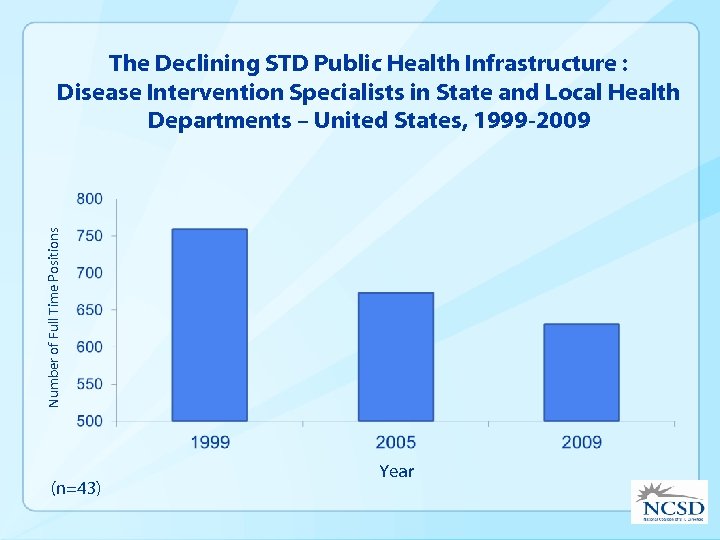
Number of Full Time Positions The Declining STD Public Health Infrastructure : Disease Intervention Specialists in State and Local Health Departments – United States, 1999 -2009 (n=43) Year
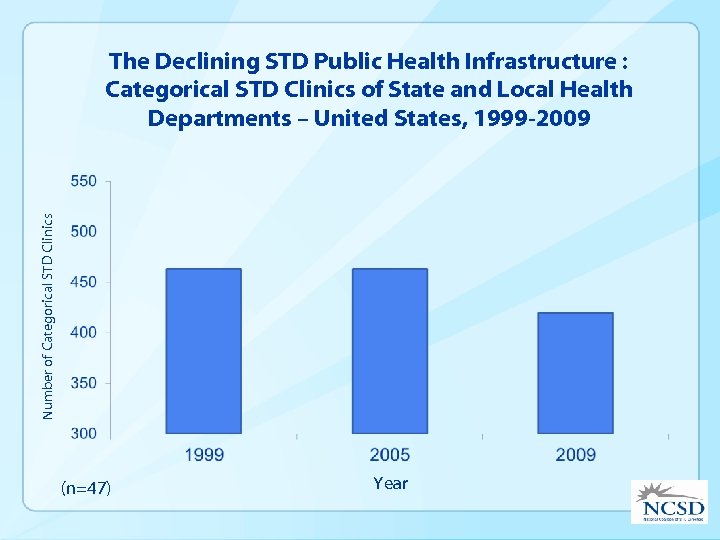
Number of Categorical STD Clinics The Declining STD Public Health Infrastructure : Categorical STD Clinics of State and Local Health Departments – United States, 1999 -2009 (n=47) Year
Health Care Drivers of Change
NATIONAL PREVENTION STRATEGIES INFORMING STD PRIORITIES
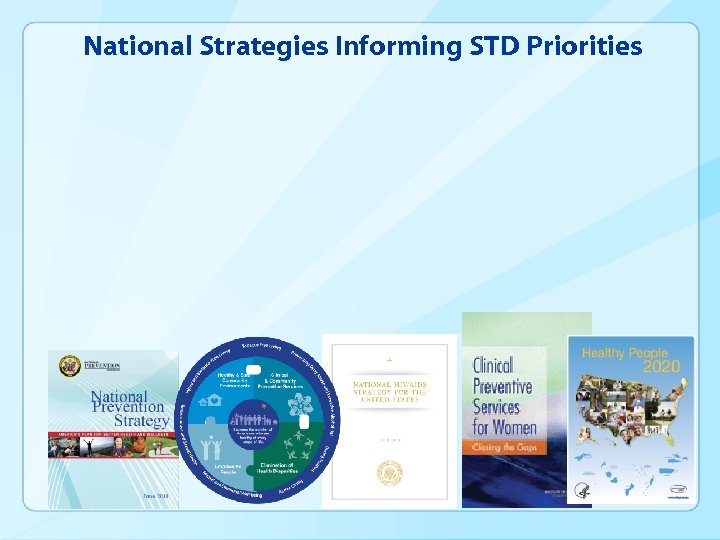
National Strategies Informing STD Priorities
CDC Strategies Informing STD Prevention Priorities
VISION OF STD PREVENTION
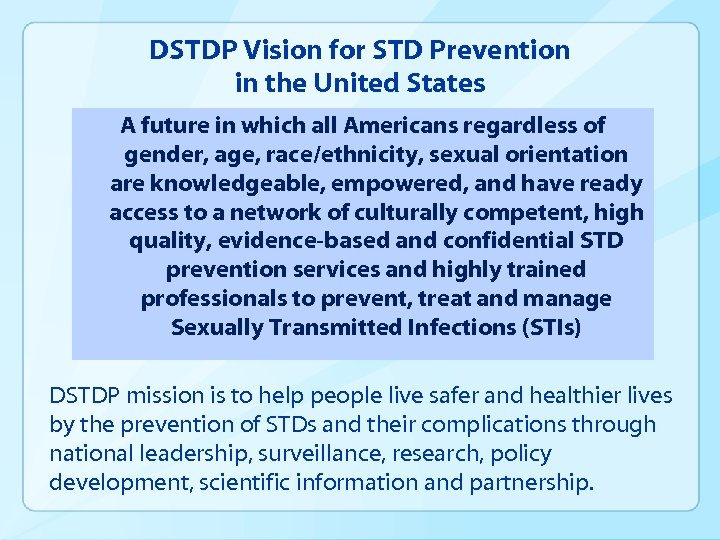
DSTDP Vision for STD Prevention in the United States A future in which all Americans regardless of gender, age, race/ethnicity, sexual orientation are knowledgeable, empowered, and have ready access to a network of culturally competent, high quality, evidence-based and confidential STD prevention services and highly trained professionals to prevent, treat and manage Sexually Transmitted Infections (STIs) DSTDP mission is to help people live safer and healthier lives by the prevention of STDs and their complications through national leadership, surveillance, research, policy development, scientific information and partnership.
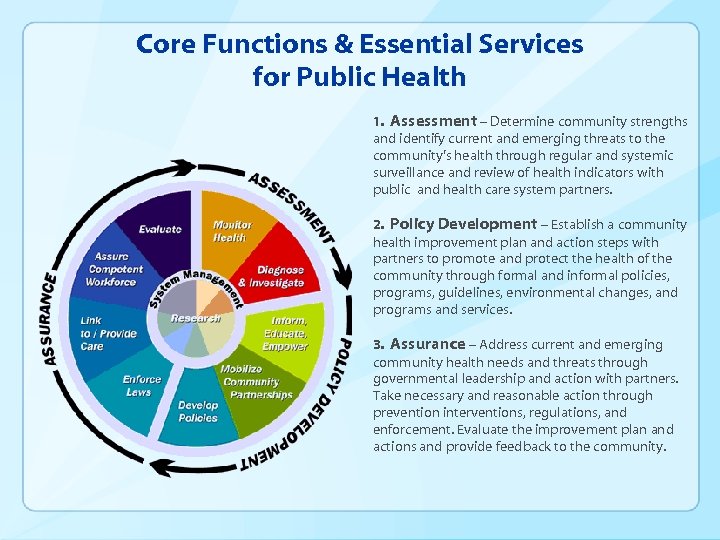
Core Functions & Essential Services for Public Health 1. Assessment – Determine community strengths and identify current and emerging threats to the community’s health through regular and systemic surveillance and review of health indicators with public and health care system partners. 2. Policy Development – Establish a community health improvement plan and action steps with partners to promote and protect the health of the community through formal and informal policies, programs, guidelines, environmental changes, and programs and services. 3. Assurance – Address current and emerging community health needs and threats through governmental leadership and action with partners. Take necessary and reasonable action through prevention interventions, regulations, and enforcement. Evaluate the improvement plan and actions and provide feedback to the community.
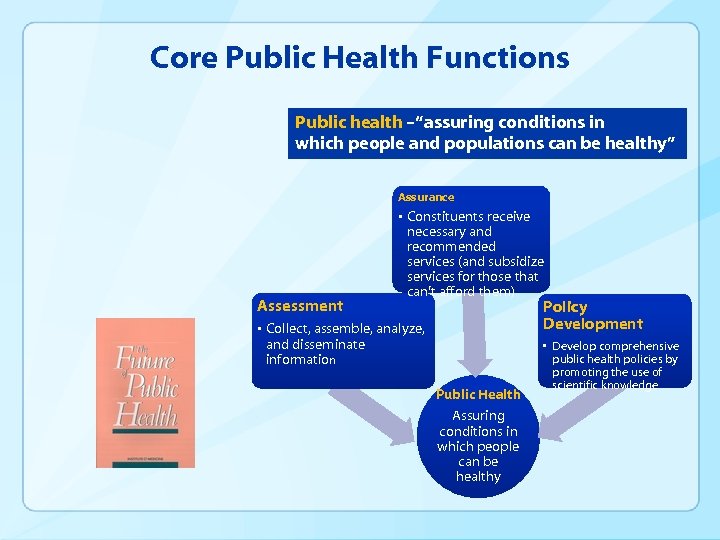
Core Public Health Functions Public health –“assuring conditions in which people and populations can be healthy” Assurance Assessment • Constituents receive necessary and recommended services (and subsidize services for those that can’t afford them) Policy Development • Collect, assemble, analyze, and disseminate information Public Health Assuring conditions in which people can be healthy • Develop comprehensive public health policies by promoting the use of scientific knowledge
Integration of Primary Care and Public Health
FUTURE ROLE OF STD PREVENTION PROGRAMS
DSTDP’s Role in STD Prevention
STD Prevention Interventions

Questions
Future of STD Prevention Programs
Future of STD Clinics
Future of DIS
Future of Infertility Prevention
Future of Public Health Laboratories
DIVISION OF STD PREVENTION FUNDING, PRIORITIES AND INITIATIVES
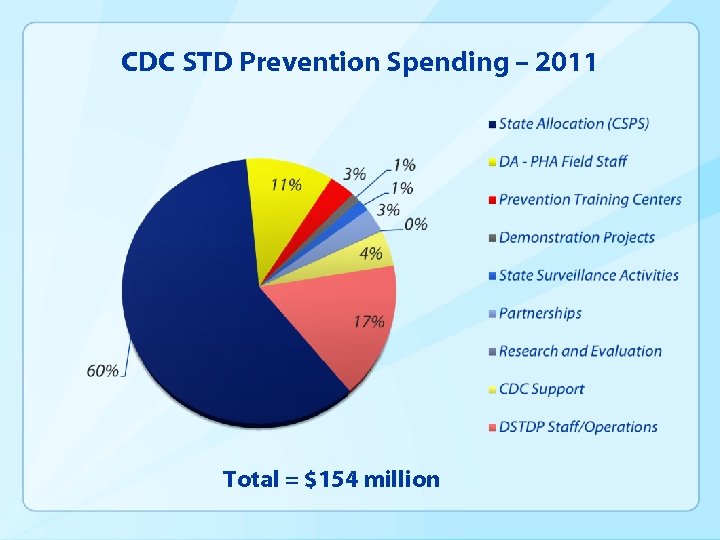
CDC STD Prevention Spending – 2011 Total = $154 million
DSTDP Strategic Plan: Goals
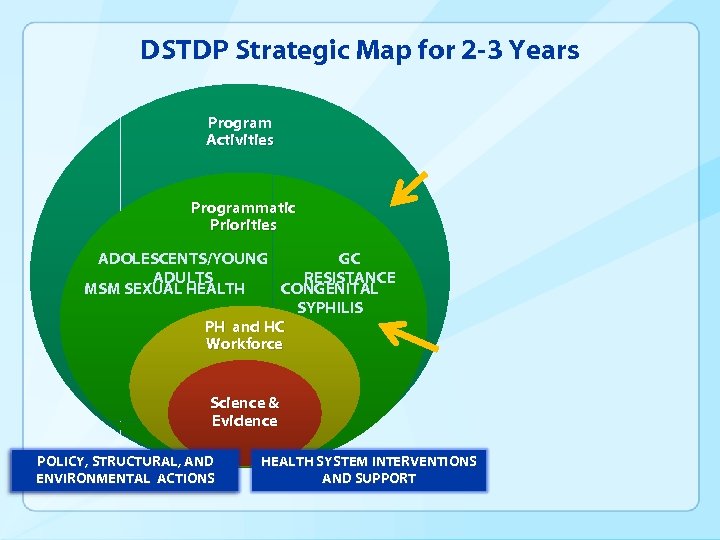
DSTDP Strategic Map for 2 -3 Years Program Activities Programmatic Priorities ADOLESCENTS/YOUNG GC ADULTS RESISTANCE MSM SEXUAL HEALTH CONGENITAL SYPHILIS PH and HC Workforce Science & Evidence POLICY, STRUCTURAL, AND ENVIRONMENTAL ACTIONS HEALTH SYSTEM INTERVENTIONS AND SUPPORT
DSTDP Initiatives: Science and Evidence
DSTDP Initiatives: Science and Evidence
DSTDP Initiatives: PH and HC Workforce
Cross Cutting Frameworks
Cross Cutting Frameworks
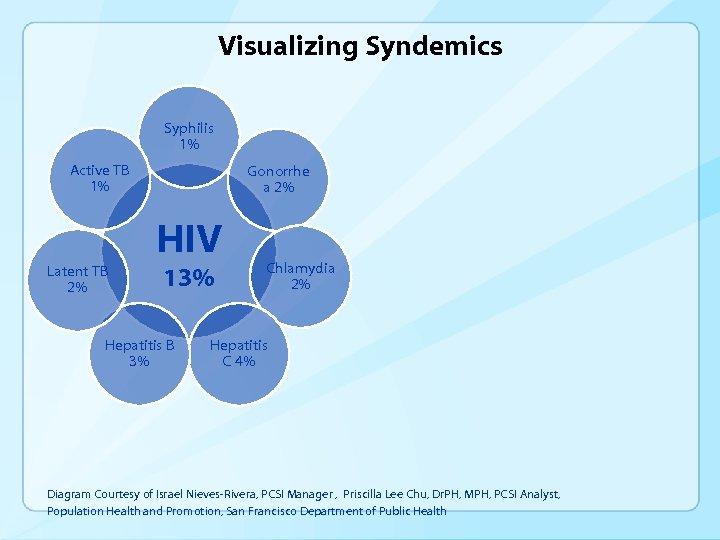
Visualizing Syndemics Syphilis 1% Active TB 1% Gonorrhe a 2% HIV Latent TB 2% 13% Hepatitis B 3% Chlamydia 2% Hepatitis C 4% Diagram Courtesy of Israel Nieves-Rivera, PCSI Manager , Priscilla Lee Chu, Dr. PH, MPH, PCSI Analyst, Population Health and Promotion, San Francisco Department of Public Health
DSTDP Centers of Excellence
Looking Forward Thank you Questions? gyb 2@cdc. gov For more information please contact Centers for Disease Control and Prevention 1600 Clifton Road NE, Atlanta, GA 30333 Telephone, 1 -800 -CDC-INFO (232 -4636)/TTY: 1 -888 -232 -6348 E-mail: cdcinfo@cdc. gov Web: www. cdc. gov The findings and conclusions in this report are those of the authors and do not necessarily represent the official position of the Centers for Disease Control and Prevention. National Center for HIV/AIDS, Viral Hepatitis, STD & TB Prevention Division of STD Prevention
Скачать презентацию DSTDP Priorities and Initiatives in a Changing Public
04fef57d730994efcfbbda00c010a88c.ppt