 Скачать презентацию DRUGS FOR TAKE A Practical Guide to Prescribing
17e93b7c502db051cf643baa7f7b785f.ppt
- Количество слайдов: 40



DRUGS FOR TAKE A Practical Guide to Prescribing on Day 1! Dr. Liz Gamble
OBJECTIVES • • • Identify sections of the drug chart Prescribing abbreviations When not to prescribe Use of the BNF Use of hospital protocols Prescribe common / emergency Rx
THE DRUG CHART • FRONT – Patient details – Allergies – Once only medication – Drug doses omitted
THE DRUG CHART • MIDDLE – Regular medication • BACK – As required medication
ABBREVIATIONS • Route of administration • Timing
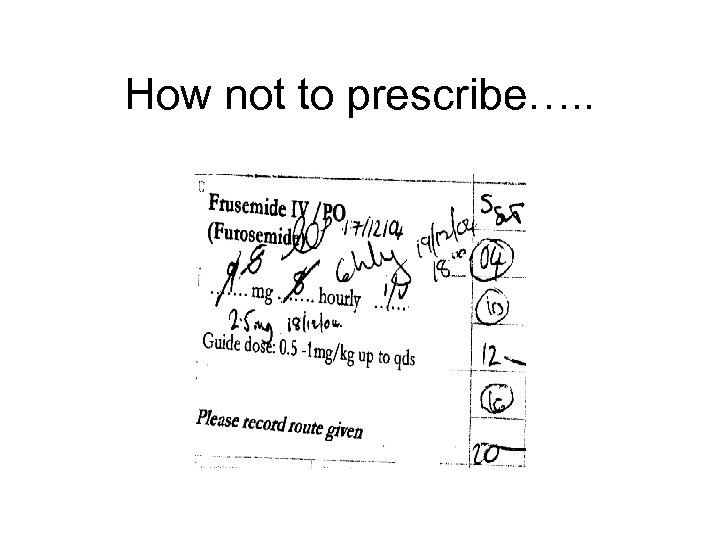
How not to prescribe…. .
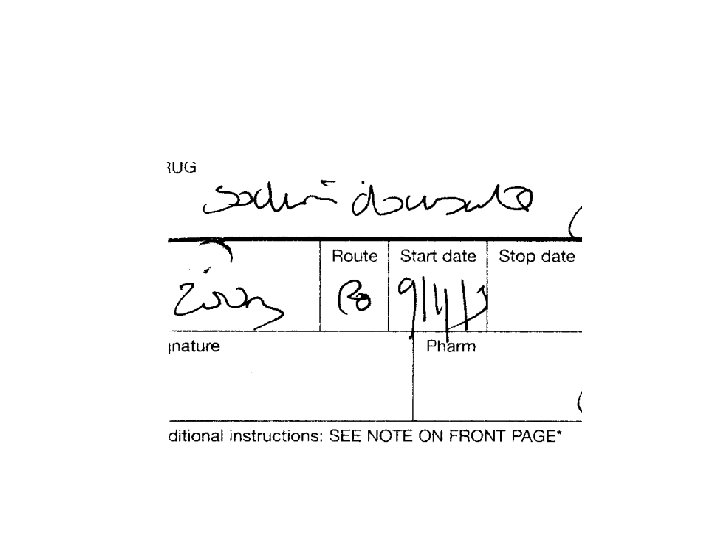
WHEN NOT TO PRESCRIBE • • Prescribing is not the answer You need to do something else first You could do more harm than good You feel it is not appropriate
USE THE BNF & HOSPITAL PROTOCOLS • Useful things in the BNF • Hospital protocols
Oxygen; general principles • Aims to relieve hypoxia & maintain or restore a normal Pa. CO 2 • Deliver a defined percentage according to patients needs • Hudson mask or nasal cannulae give very variable Fi. O 2 • Nasal cannulae become less efficient at flow rates > 3 l/min
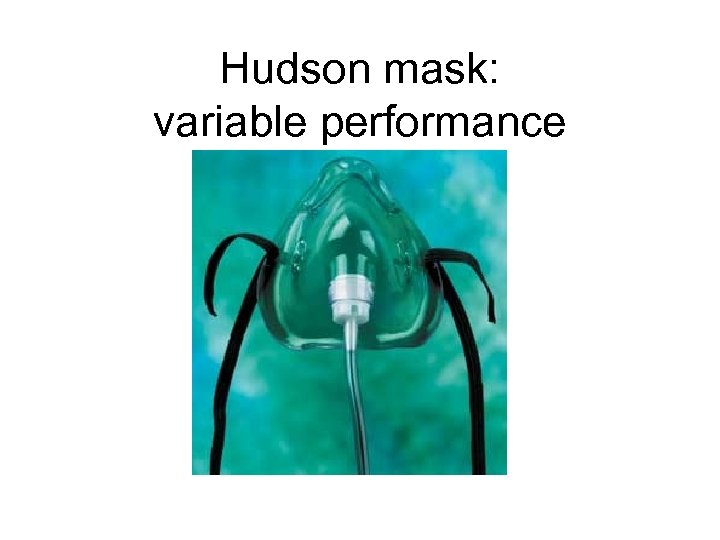
Hudson mask: variable performance
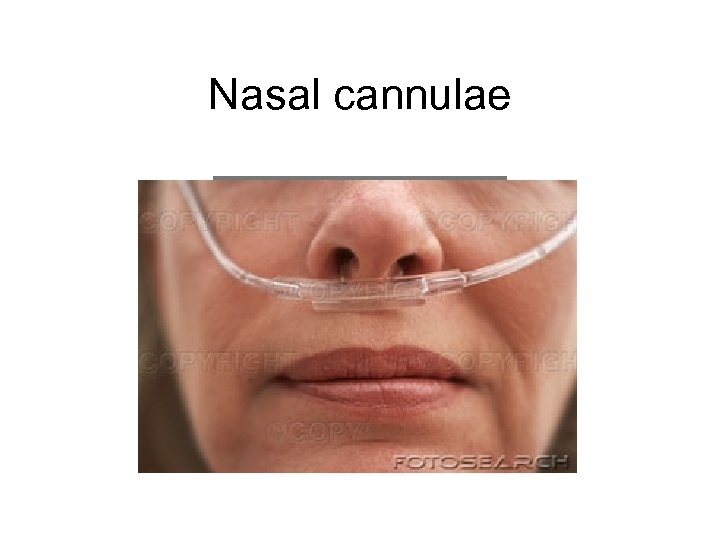
Nasal cannulae
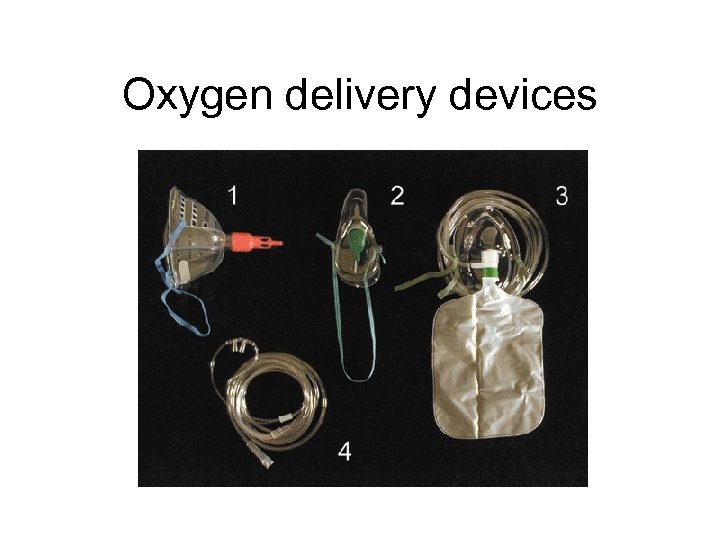
Oxygen delivery devices
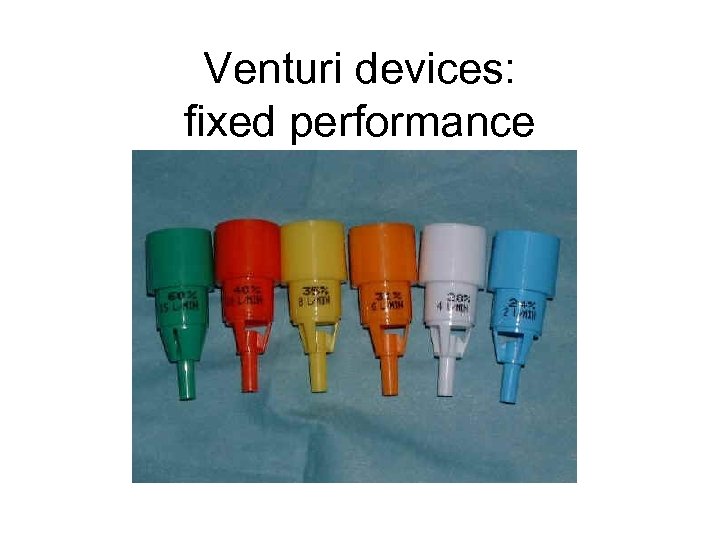
Venturi devices: fixed performance
Monitoring oxygen therapy • Use oximetry +/- arterial blood gases • Sa. O 2 of 93% is approximately equivalent to a Pa. O 2 of 8 k. Pa, below a Sa. O 2 of 92% Pa. O 2 falls rapidly • Oximetry gives no information about Pa. CO 2 or p. H
General rules • Correct hypoxia with an appropriate delivery device • Check ABGs if Sa. O 2 <93% or suspicion of ventilatory impairment or acidosis • Some patients (esp. COPD) with chronic hypoxia rely on hypoxic drive and will hypoventilate on high flow O 2 • If hypoxia suddenly occurs check cylinder, tubing etc.
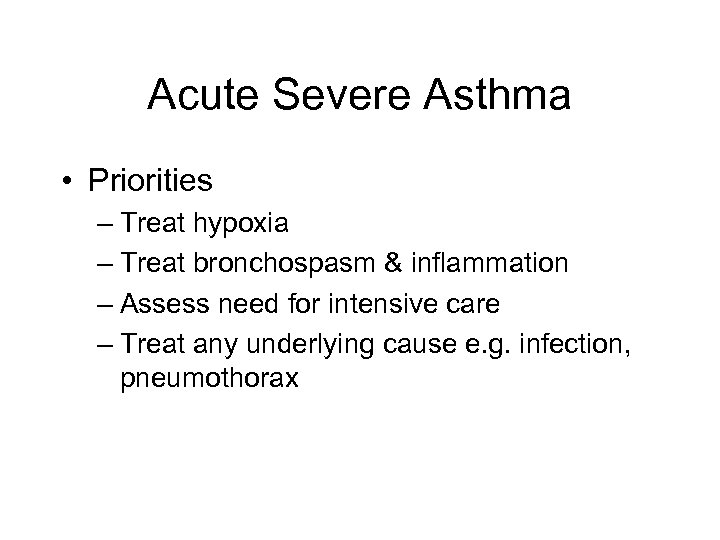
Acute Severe Asthma • Priorities – Treat hypoxia – Treat bronchospasm & inflammation – Assess need for intensive care – Treat any underlying cause e. g. infection, pneumothorax
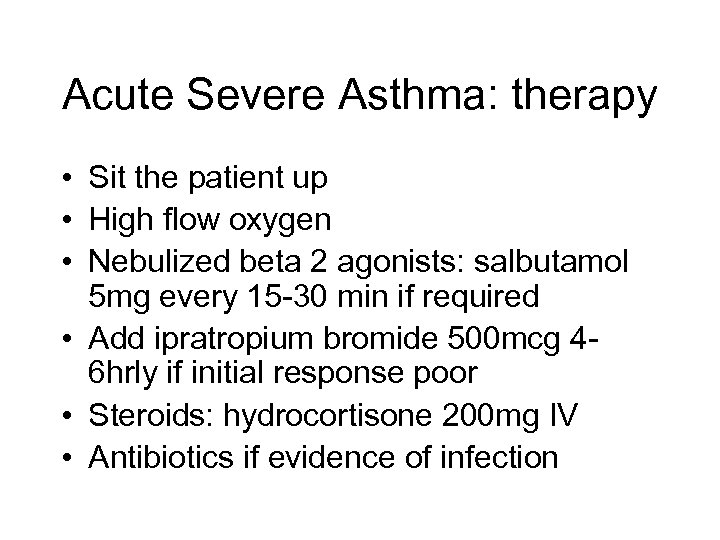
Acute Severe Asthma: therapy • Sit the patient up • High flow oxygen • Nebulized beta 2 agonists: salbutamol 5 mg every 15 -30 min if required • Add ipratropium bromide 500 mcg 46 hrly if initial response poor • Steroids: hydrocortisone 200 mg IV • Antibiotics if evidence of infection
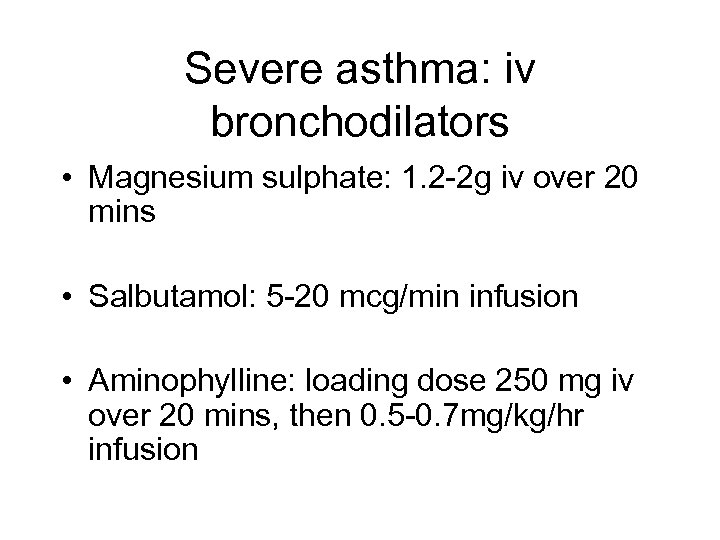
Severe asthma: iv bronchodilators • Magnesium sulphate: 1. 2 -2 g iv over 20 mins • Salbutamol: 5 -20 mcg/min infusion • Aminophylline: loading dose 250 mg iv over 20 mins, then 0. 5 -0. 7 mg/kg/hr infusion
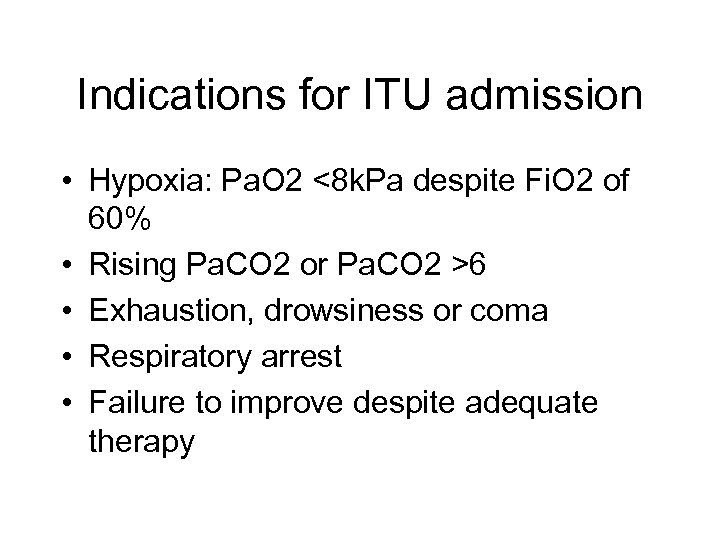
Indications for ITU admission • Hypoxia: Pa. O 2 <8 k. Pa despite Fi. O 2 of 60% • Rising Pa. CO 2 or Pa. CO 2 >6 • Exhaustion, drowsiness or coma • Respiratory arrest • Failure to improve despite adequate therapy
Sepsis • Body’s response to an infection • Infection is the invasion of the body by microorganisms – can be local or widespread • Worldwide 1400 people die every day from sepsis – projected to grow by 1. 5% per year • Three forms of sepsis: uncomplicated sepsis severe spesis septic shock
Sepsis • Severe sepsis – sepsis with failure of one or more of the vital organs. • Mortality from severe sepsis 30 -50% • Septic shock – sepsis with hypotension that does not respond to fluid administration • Mortality from septic shock 50 -60% • Majority of sources of infection in severe sepsis/shock are pneumonia and intraabdominal
Surviving Sepsis Campaign • In 2004 an international group of critical care and infectious disease physicians developed guidelines for the management of severe sepsis and septic shock • Society of Critical Care Medicine, European Society of Intensive Care, International Sepsis Forum • Introduction of the sepsis care bundle
Care Bundle • A group of interventions related to a disease process that result in better outcomes when executed together rather than individually • 2 bundles – sepsis resuscitation bundle (6 h) sepsis management bundle (24 h)
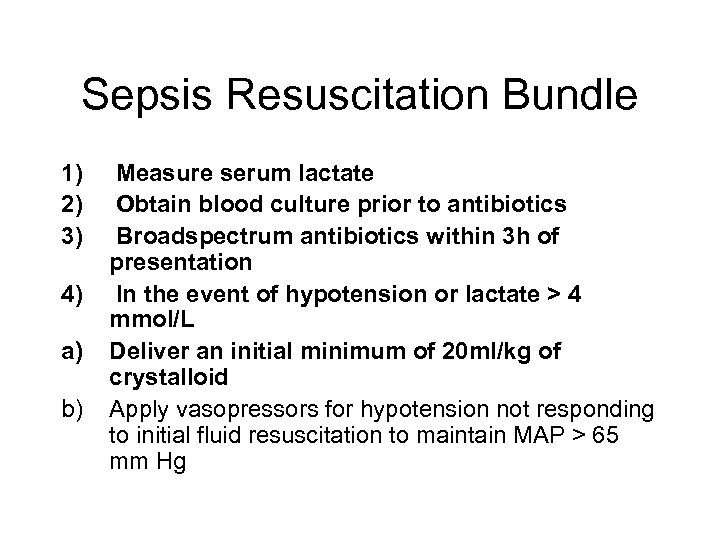
Sepsis Resuscitation Bundle 1) 2) 3) 4) a) b) Measure serum lactate Obtain blood culture prior to antibiotics Broadspectrum antibiotics within 3 h of presentation In the event of hypotension or lactate > 4 mmol/L Deliver an initial minimum of 20 ml/kg of crystalloid Apply vasopressors for hypotension not responding to initial fluid resuscitation to maintain MAP > 65 mm Hg
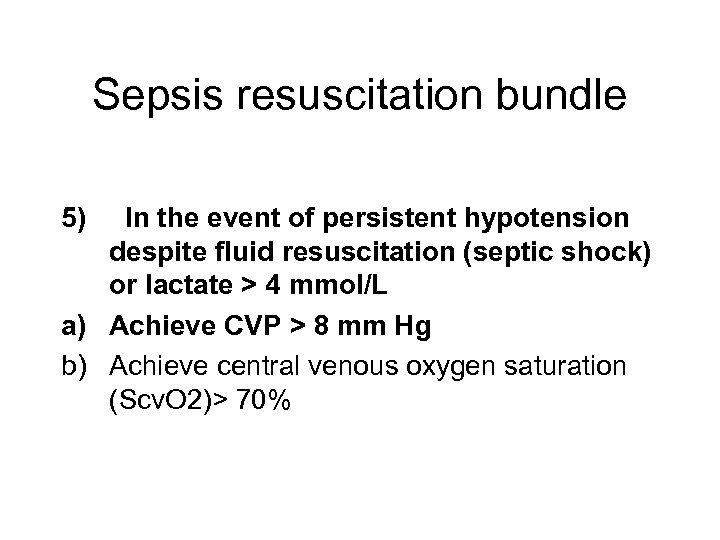
Sepsis resuscitation bundle 5) In the event of persistent hypotension despite fluid resuscitation (septic shock) or lactate > 4 mmol/L a) Achieve CVP > 8 mm Hg b) Achieve central venous oxygen saturation (Scv. O 2)> 70%
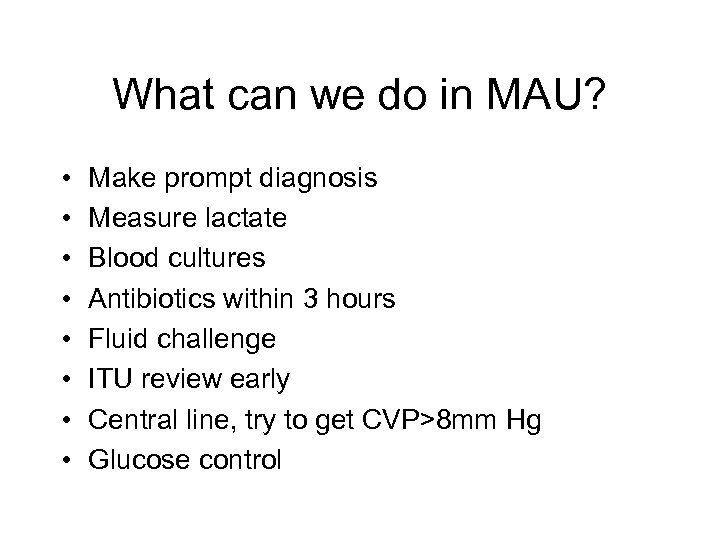
What can we do in MAU? • • Make prompt diagnosis Measure lactate Blood cultures Antibiotics within 3 hours Fluid challenge ITU review early Central line, try to get CVP>8 mm Hg Glucose control
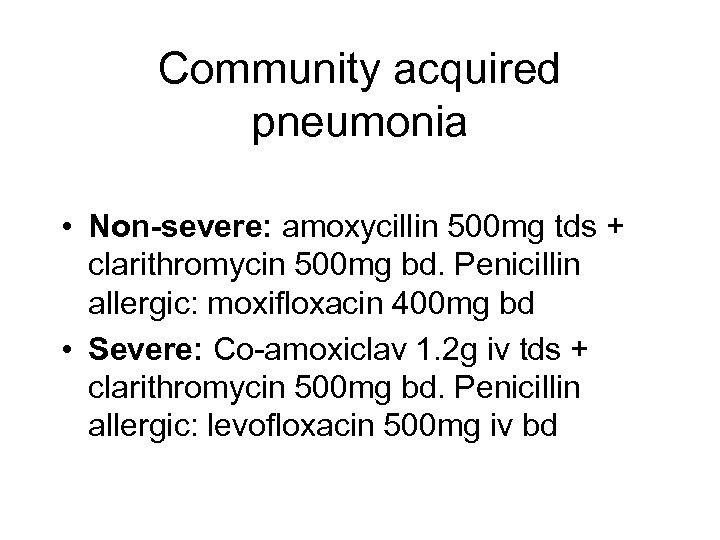
Community acquired pneumonia • Non-severe: amoxycillin 500 mg tds + clarithromycin 500 mg bd. Penicillin allergic: moxifloxacin 400 mg bd • Severe: Co-amoxiclav 1. 2 g iv tds + clarithromycin 500 mg bd. Penicillin allergic: levofloxacin 500 mg iv bd
Acute alcohol withdrawal • Symptoms: anxiety, tremor, hyperactivity, sweating, nausea, tachycardia, hypertension, mild pyrexia. • Seizures may occur • Delirium tremens (untreated mortality 15%): course tremor, agitation, confusion, delusion, hallucinations • Look for hypoglycaemia, Wernicke-Korsakoff, subdural haematoma, hepatic encephalopathy
General Management • Rehydrate (avoid saline in liver disease) • IV pabrinex 2 pairs 8 hourly • Oral therapy: thiamine 100 mg bd, vit B co strong 2 tabs tds, vit C 50 mg bd • Monitor glucose • Check phosphate; give iv if <0. 6 m. M • Exclude infection
Sedation • Chlordiazepoxide 30 mg qds for 2 days – Then 20 mg daily (divided doses) for 2 days – Then 10 mg daily (divided doses) for 2 days – Then 5 mg daily for 2 days – For fits lorazepam 1 -2 mg iv
Acute coronary syndrome • Symptoms resulting from myocardial ischaemia • STEMI / NSTEMI / unstable angina • Need continuous ECG monitoring and defibrillation facilities • IV access
General measures • • • Aspirin 300 mg stat Oxygen Diamorphine 2. 5 -10 mg prn Metaclopramide 10 mg iv GTN spray 2 puffs sl (unless low bp) FBC, U&Es, glucose, lipids, Tn. I
Other measures • Patients with STEMI: urgent reperfusion (thrombolysis or PCI) • Patients with NSTEMI: clopidogrel 300 mg stat then 75 mg od, enoxaparin 1 mg/kg bd • Cardiology input • Correct K+ • Treat arrhythmias, cardiac failure
TACKLING PAIN • • • Regular analgesia Regular paracetamol Regular co-codamol 30: 500 NSAIDS Morphine Other pains
SIMPLE REMEDIES FOR MINOR PROBLEMS • • Nausea Constipation Cough Indigestion Leg cramps Insomnia Agitation
JUGGLING BLOOD SUGARS • • Highs and lows Type 1 or Type 2? Adjusting insulin doses Sliding scales
SCARY SITUATIONS • • • What if you get there first? Additional management OSCEs Doses IV or IM?
SCARY SITUATIONS • • Respiratory depression & pinpoint pupils Severe heart failure Myocardial infarction Severe asthma Hypoglycaemia Possible meningococcal disease Anaphylactic shock Status epilepticus
SUMMARY • • The drug chart Prescribing abbreviations When not to prescribe The BNF Hospital protocols Simple remedies for minor problems Common emergencies
Скачать презентацию DRUGS FOR TAKE A Practical Guide to Prescribing
17e93b7c502db051cf643baa7f7b785f.ppt