Drugs are a psychoactive substance
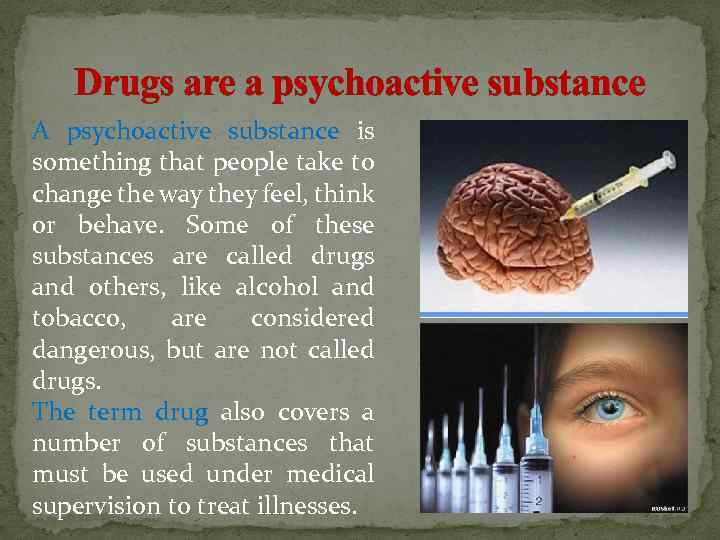
Drugs are a psychoactive substance A psychoactive substance is something that people take to change the way they feel, think or behave. Some of these substances are called drugs and others, like alcohol and tobacco, are considered dangerous, but are not called drugs. The term drug also covers a number of substances that must be used under medical supervision to treat illnesses.
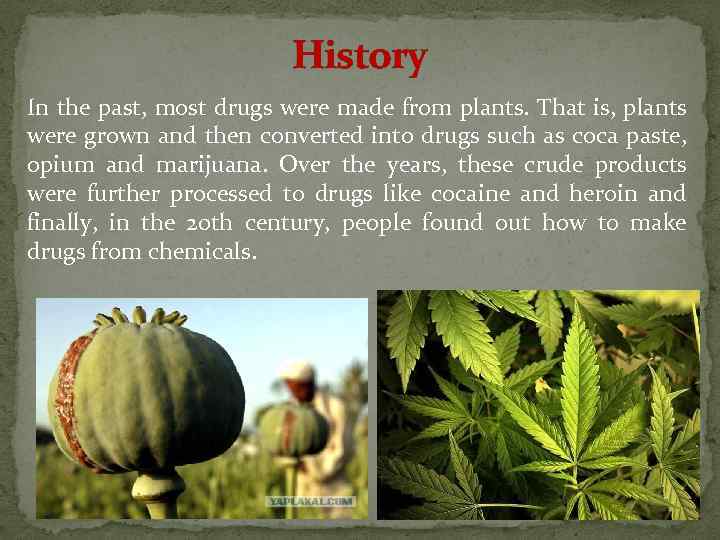
History In the past, most drugs were made from plants. That is, plants were grown and then converted into drugs such as coca paste, opium and marijuana. Over the years, these crude products were further processed to drugs like cocaine and heroin and finally, in the 20 th century, people found out how to make drugs from chemicals.
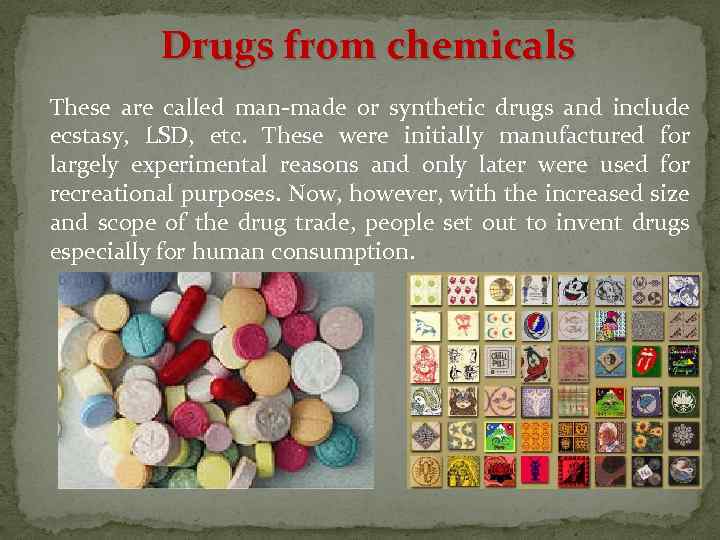
Drugs from chemicals These are called man-made or synthetic drugs and include ecstasy, LSD, etc. These were initially manufactured for largely experimental reasons and only later were used for recreational purposes. Now, however, with the increased size and scope of the drug trade, people set out to invent drugs especially for human consumption.
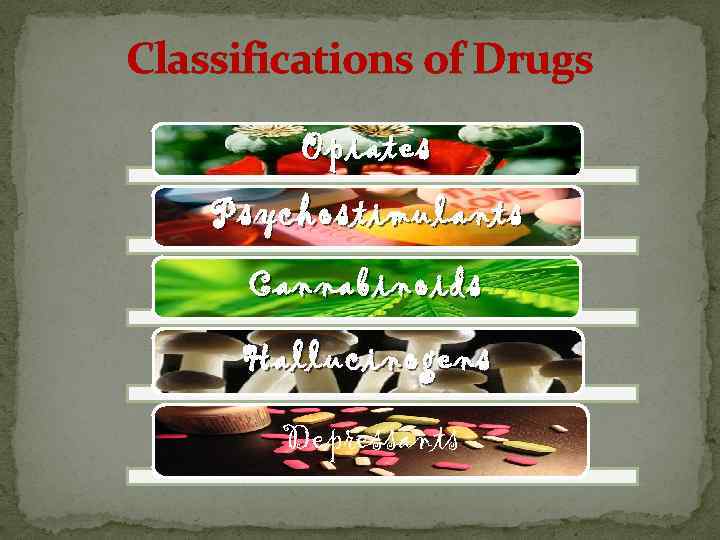
Classifications of Drugs Opiates Psychostimulants Cannabinoids Hallucinogens Depressants
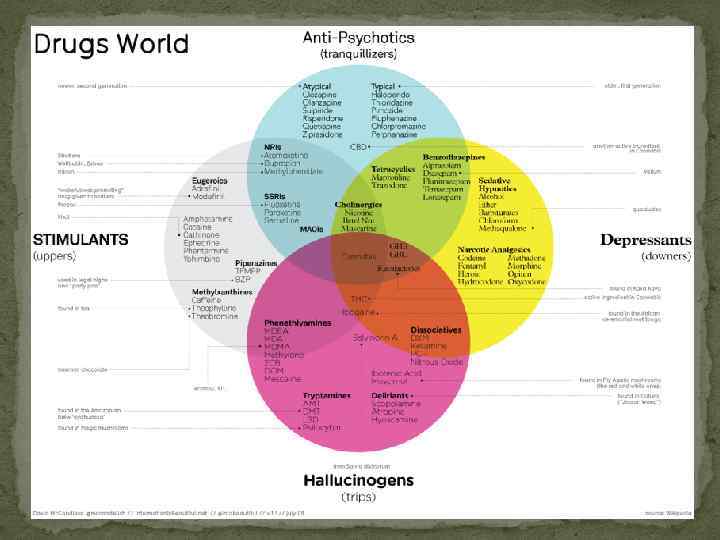
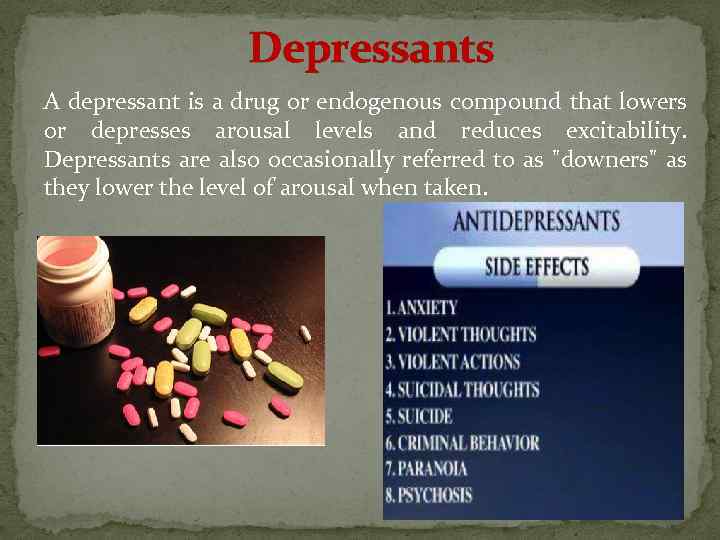
Depressants A depressant is a drug or endogenous compound that lowers or depresses arousal levels and reduces excitability. Depressants are also occasionally referred to as "downers" as they lower the level of arousal when taken.
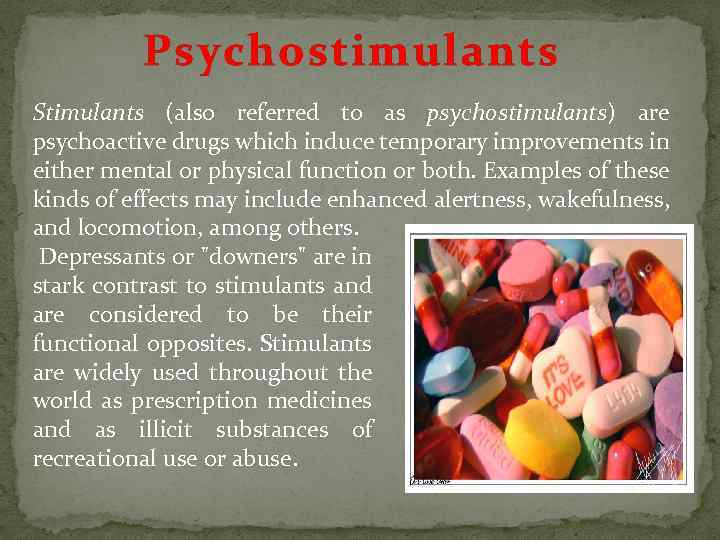
Psychostimulants Stimulants (also referred to as psychostimulants) are psychoactive drugs which induce temporary improvements in either mental or physical function or both. Examples of these kinds of effects may include enhanced alertness, wakefulness, and locomotion, among others. Depressants or "downers" are in stark contrast to stimulants and are considered to be their functional opposites. Stimulants are widely used throughout the world as prescription medicines and as illicit substances of recreational use or abuse.
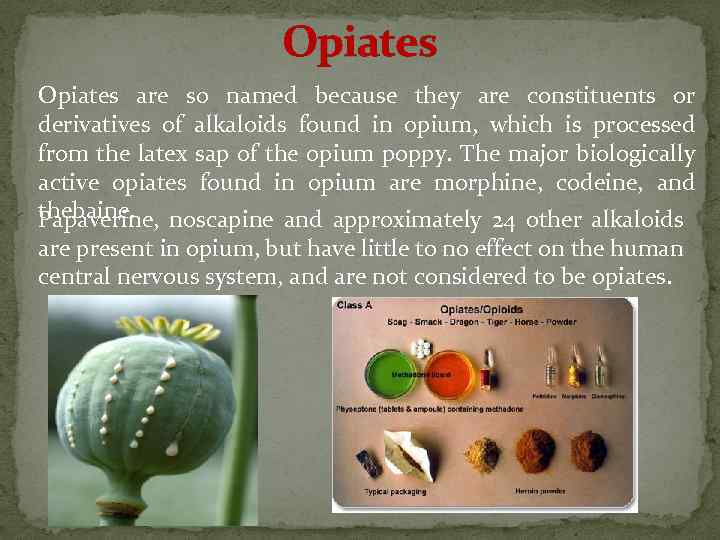
Opiates are so named because they are constituents or derivatives of alkaloids found in opium, which is processed from the latex sap of the opium poppy. The major biologically active opiates found in opium are morphine, codeine, and thebaine. noscapine and approximately 24 other alkaloids Papaverine, are present in opium, but have little to no effect on the human central nervous system, and are not considered to be opiates.
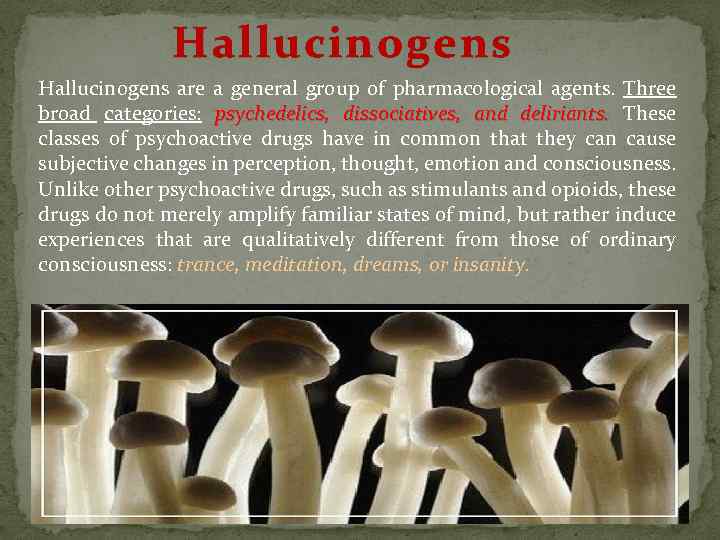
Hallucinogens are a general group of pharmacological agents. Three broad categories: psychedelics, dissociatives, and deliriants. These classes of psychoactive drugs have in common that they can cause subjective changes in perception, thought, emotion and consciousness. Unlike other psychoactive drugs, such as stimulants and opioids, these drugs do not merely amplify familiar states of mind, but rather induce experiences that are qualitatively different from those of ordinary consciousness: trance, meditation, dreams, or insanity.
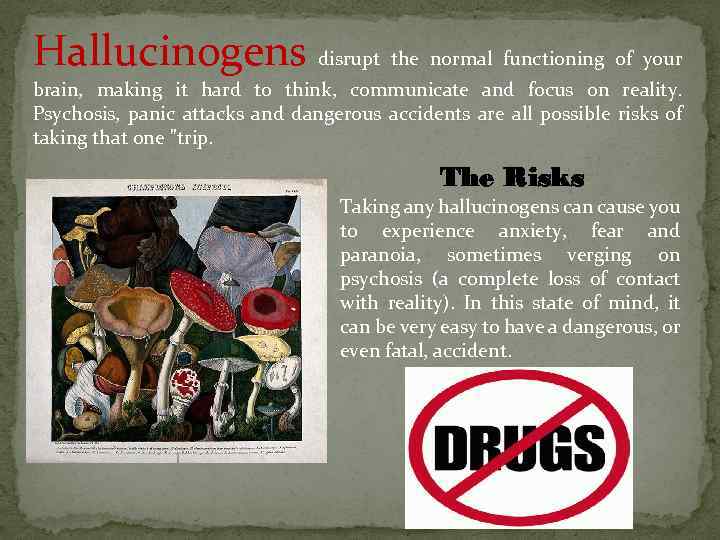
Hallucinogens disrupt the normal functioning of your brain, making it hard to think, communicate and focus on reality. Psychosis, panic attacks and dangerous accidents are all possible risks of taking that one "trip. The Risks Taking any hallucinogens can cause you to experience anxiety, fear and paranoia, sometimes verging on psychosis (a complete loss of contact with reality). In this state of mind, it can be very easy to have a dangerous, or even fatal, accident.
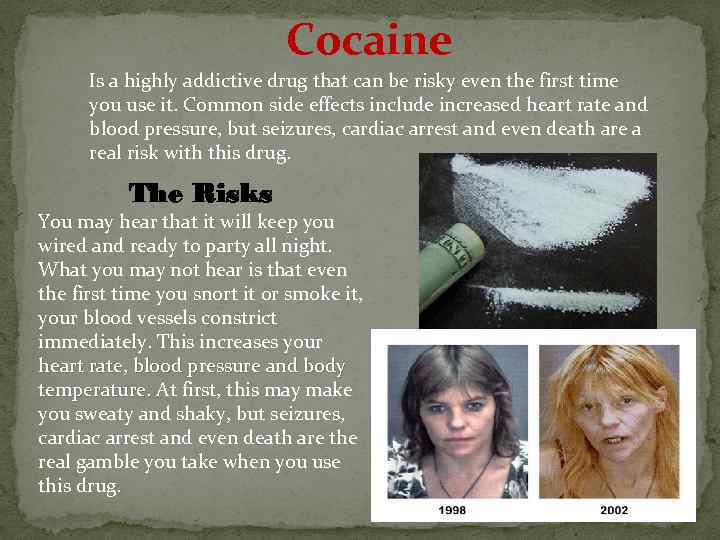
Cocaine Is a highly addictive drug that can be risky even the first time you use it. Common side effects include increased heart rate and blood pressure, but seizures, cardiac arrest and even death are a real risk with this drug. The Risks You may hear that it will keep you wired and ready to party all night. What you may not hear is that even the first time you snort it or smoke it, your blood vessels constrict immediately. This increases your heart rate, blood pressure and body temperature. At first, this may make you sweaty and shaky, but seizures, cardiac arrest and even death are the real gamble you take when you use this drug.
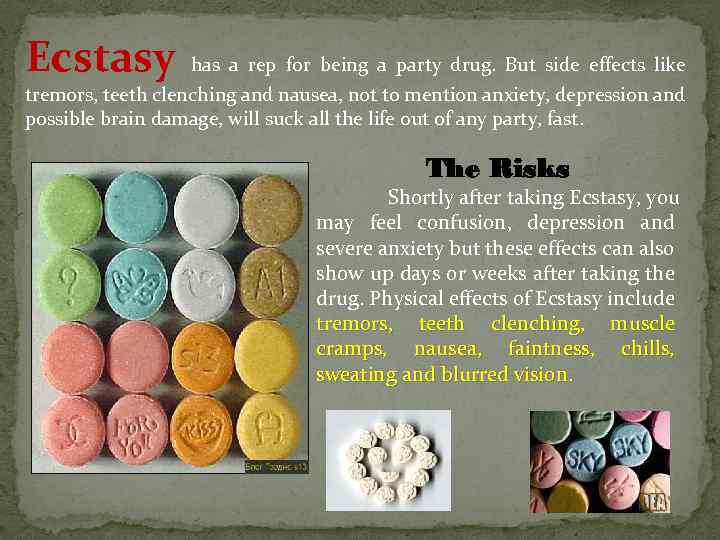
Ecstasy has a rep for being a party drug. But side effects like tremors, teeth clenching and nausea, not to mention anxiety, depression and possible brain damage, will suck all the life out of any party, fast. The Risks Shortly after taking Ecstasy, you may feel confusion, depression and severe anxiety but these effects can also show up days or weeks after taking the drug. Physical effects of Ecstasy include tremors, teeth clenching, muscle cramps, nausea, faintness, chills, sweating and blurred vision.
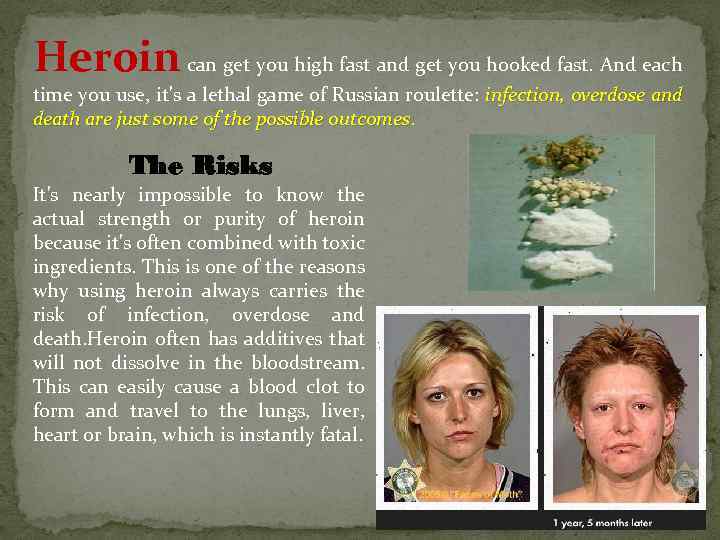
Heroin can get you high fast and get you hooked fast. And each time you use, it's a lethal game of Russian roulette: infection, overdose and death are just some of the possible outcomes. The Risks It's nearly impossible to know the actual strength or purity of heroin because it's often combined with toxic ingredients. This is one of the reasons why using heroin always carries the risk of infection, overdose and death. Heroin often has additives that will not dissolve in the bloodstream. This can easily cause a blood clot to form and travel to the lungs, liver, heart or brain, which is instantly fatal.
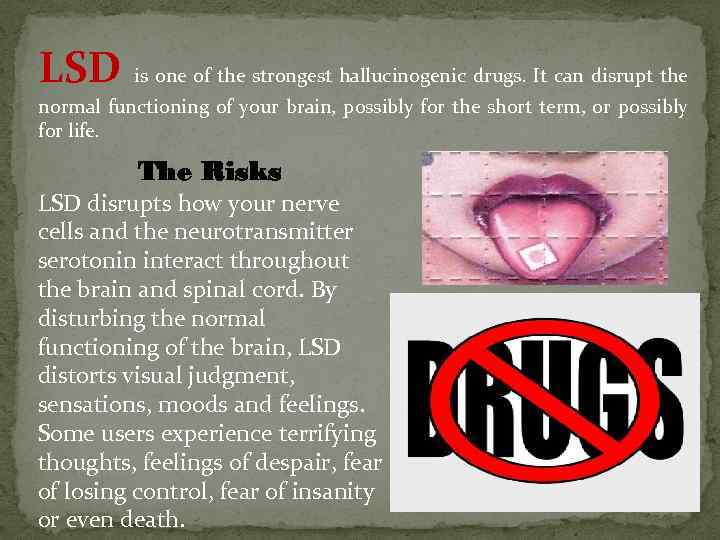
LSD is one of the strongest hallucinogenic drugs. It can disrupt the normal functioning of your brain, possibly for the short term, or possibly for life. The Risks LSD disrupts how your nerve cells and the neurotransmitter serotonin interact throughout the brain and spinal cord. By disturbing the normal functioning of the brain, LSD distorts visual judgment, sensations, moods and feelings. Some users experience terrifying thoughts, feelings of despair, fear of losing control, fear of insanity or even death.
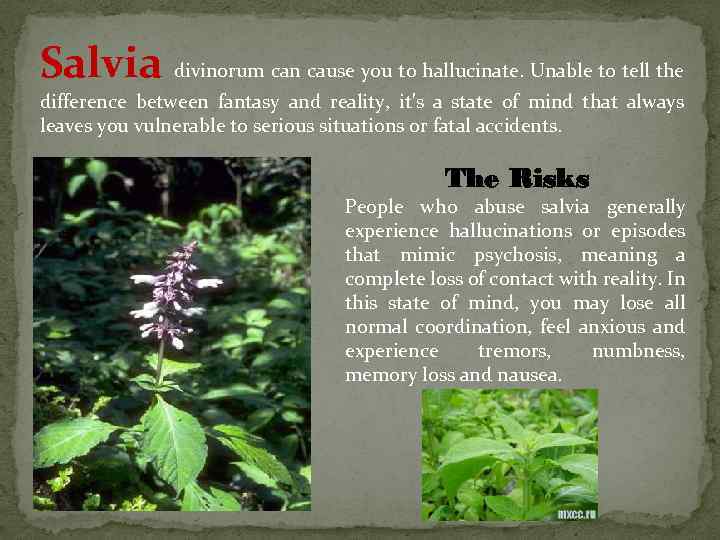
Salvia divinorum can cause you to hallucinate. Unable to tell the difference between fantasy and reality, it's a state of mind that always leaves you vulnerable to serious situations or fatal accidents. The Risks People who abuse salvia generally experience hallucinations or episodes that mimic psychosis, meaning a complete loss of contact with reality. In this state of mind, you may lose all normal coordination, feel anxious and experience tremors, numbness, memory loss and nausea.
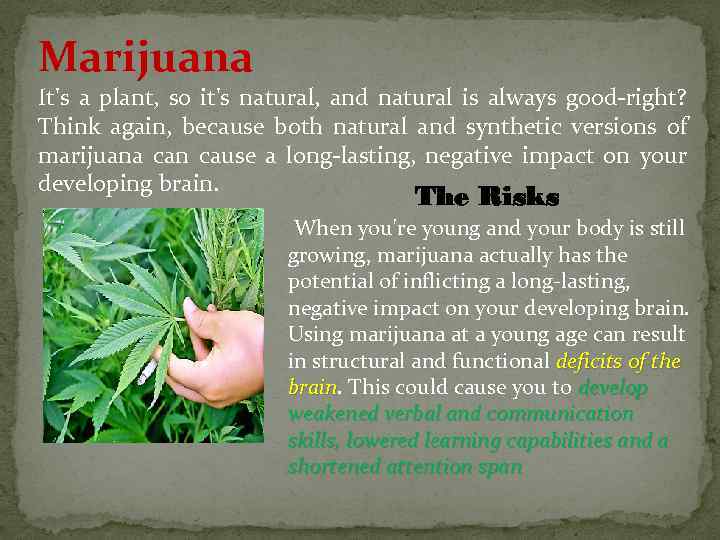
Marijuana It's a plant, so it's natural, and natural is always good-right? Think again, because both natural and synthetic versions of marijuana can cause a long-lasting, negative impact on your developing brain. The Risks When you're young and your body is still growing, marijuana actually has the potential of inflicting a long-lasting, negative impact on your developing brain. Using marijuana at a young age can result in structural and functional deficits of the brain. This could cause you to develop brain weakened verbal and communication skills, lowered learning capabilities and a shortened attention span
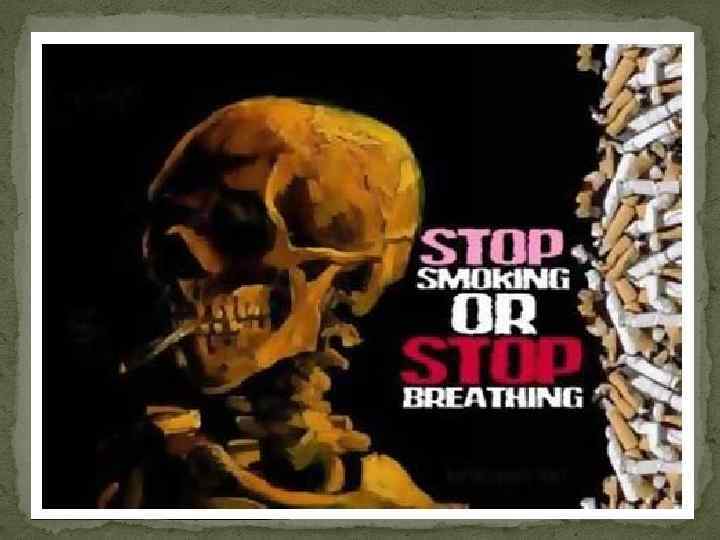
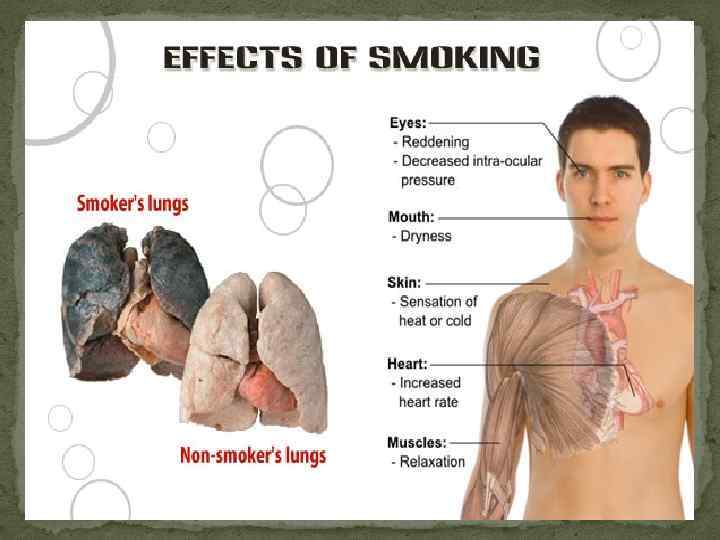
Tobacco is a carrier for the highly addictive drug nicotine. Once your body gets a taste for nicotine, it can quickly become a lifelong addiction, with extremely fatal consequences. The Risks Nicotine is one of the most highly addictive drugs used in today's society. Smoking harms your immune system and can affect nearly every organ of your body. When you smoke, it's not only the nicotine that's dangerous, but also chemicals in tobacco like carbon monoxide, tar, formaldehyde, cyanide and ammonia-many of which are known carcinogens (cancer-causing poisons).
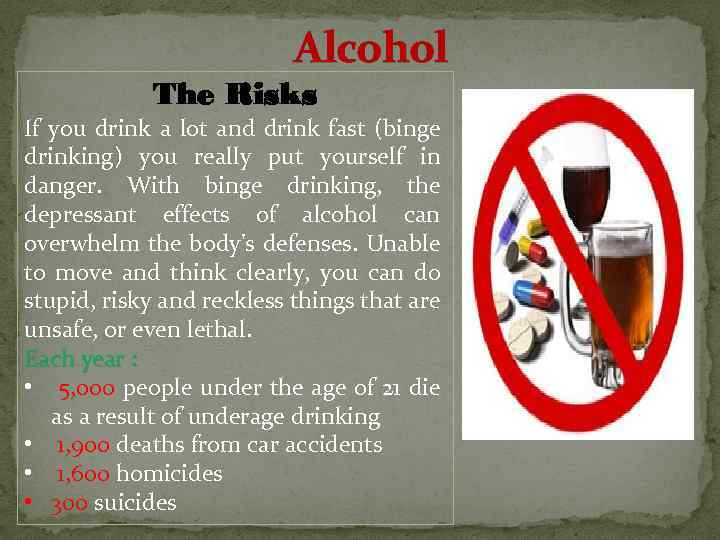
Alcohol The Risks If you drink a lot and drink fast (binge drinking) you really put yourself in danger. With binge drinking, the depressant effects of alcohol can overwhelm the body's defenses. Unable to move and think clearly, you can do stupid, risky and reckless things that are unsafe, or even lethal. Each year : • 5, 000 people under the age of 21 die as a result of underage drinking • 1, 900 deaths from car accidents • 1, 600 homicides • 300 suicides
What do young people think about drugs and other psychotropic substances?