


 Скачать презентацию DRUGS AND ARMS TRAFFICKING IN AFRICA Experts Workshop
09e186404663e58cd167e4b6a46df7bf.ppt
- Количество слайдов: 24
 DRUGS AND ARMS TRAFFICKING IN AFRICA Experts Workshop on Maritime Security and Safety, African Union, 6 -7 April 2010, Addis Ababa, Ethiopia
 PRESENTATION OVERVIEW: • DRUG TRAFFICKING IN AFRICA (TRENDS) • ARMS TRAFFICKING IN AFRICA (TRENDS) • LINK BETWEEN ARMS AND DRUG TRAFFICKING • INTERNATIONAL INSTRUMENTS AND UNODC ACTIVITIES 3
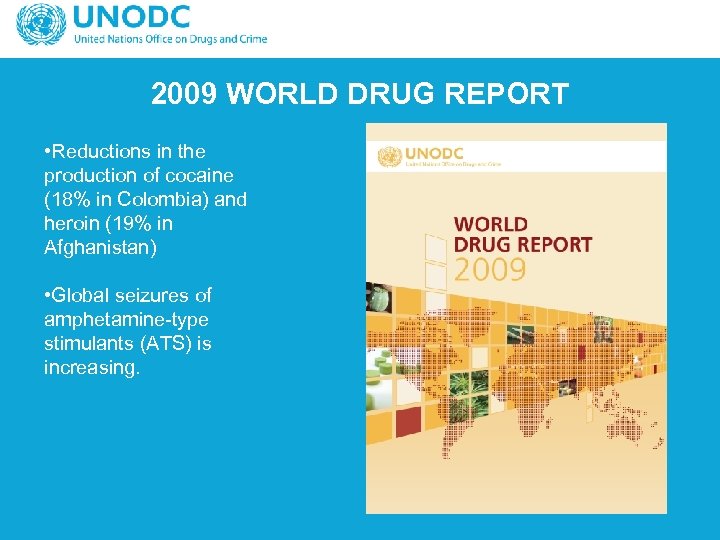 2009 WORLD DRUG REPORT • Reductions in the production of cocaine (18% in Colombia) and heroin (19% in Afghanistan) • Global seizures of amphetamine-type stimulants (ATS) is increasing.
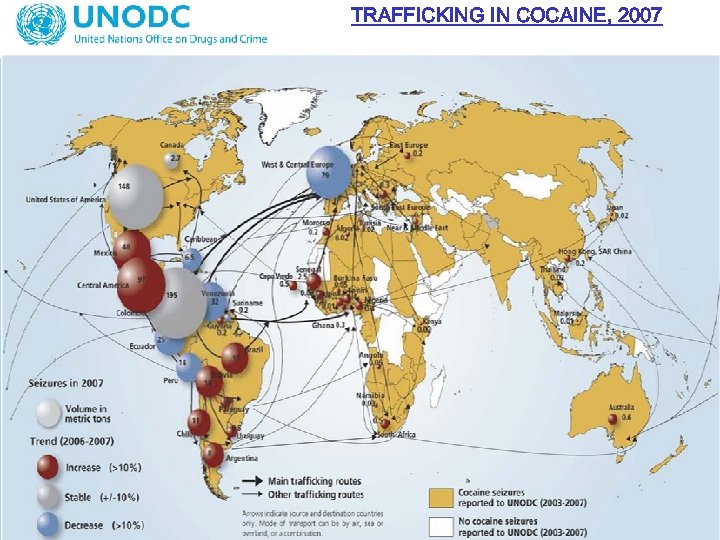 TRAFFICKING IN COCAINE, 2007
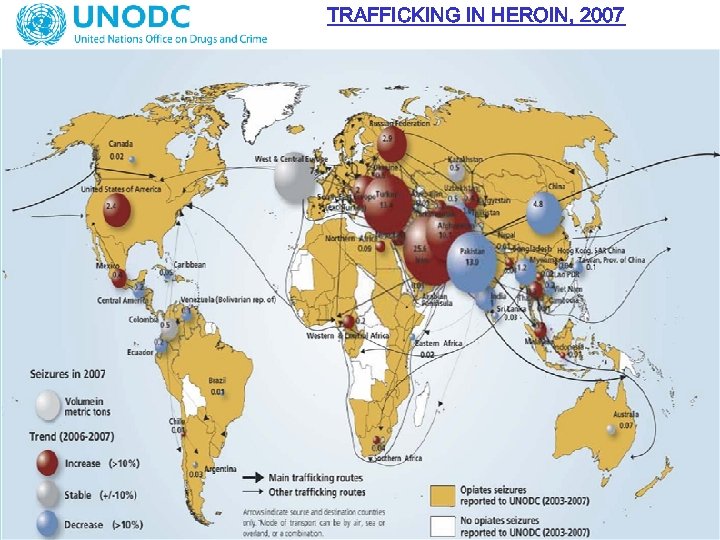 TRAFFICKING IN HEROIN, 2007
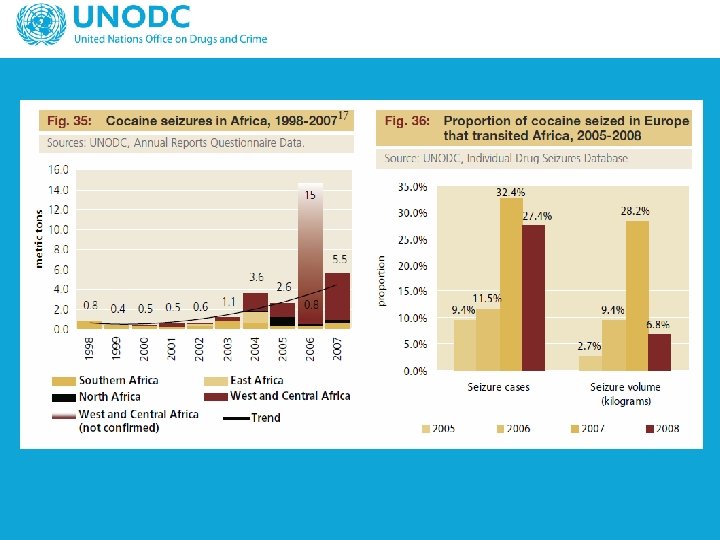
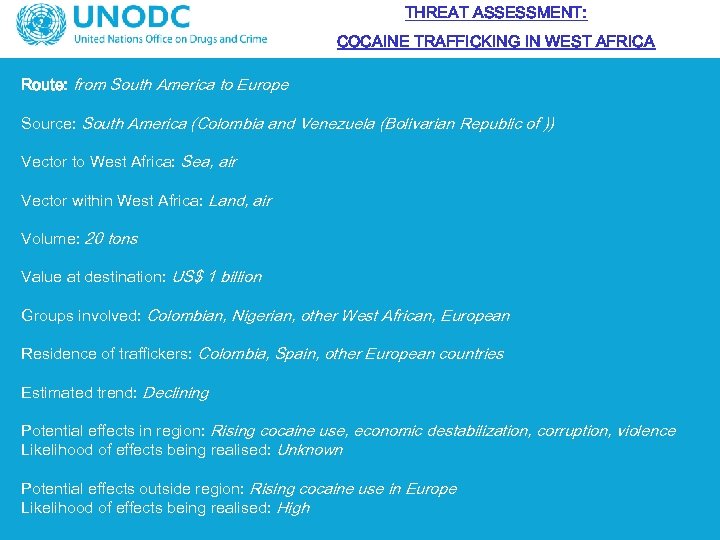 THREAT ASSESSMENT: COCAINE TRAFFICKING IN WEST AFRICA Route: from South America to Europe Source: South America (Colombia and Venezuela (Bolivarian Republic of )) Vector to West Africa: Sea, air Vector within West Africa: Land, air Volume: 20 tons Value at destination: US$ 1 billion Groups involved: Colombian, Nigerian, other West African, European Residence of traffickers: Colombia, Spain, other European countries Estimated trend: Declining Potential effects in region: Rising cocaine use, economic destabilization, corruption, violence Likelihood of effects being realised: Unknown Potential effects outside region: Rising cocaine use in Europe Likelihood of effects being realised: High
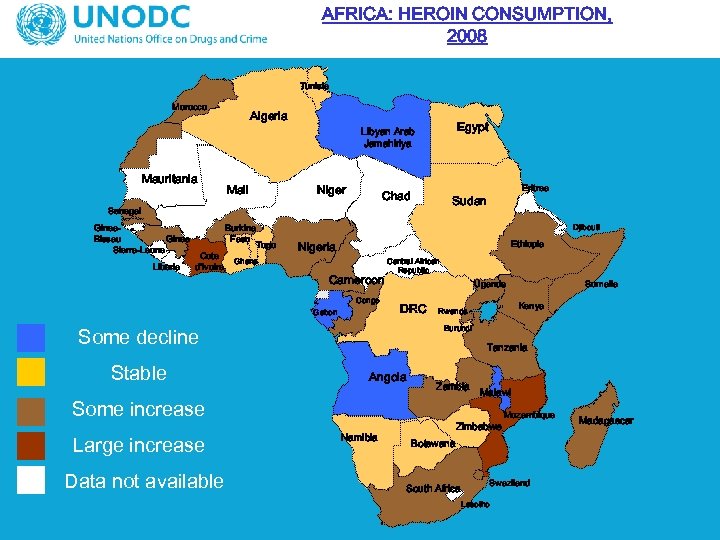 AFRICA: HEROIN CONSUMPTION, 2008 Tunisia Morocco Algeria Egypt Libyan Arab Jamahiriya Mauritania Mali Niger Chad Sudan Senegal Ginea. Bissau Ginea Sierra-Leone Liberia Cote d’Ivoire Burkina Faso Togo Djibouti Ethiopia Nigeria Ghana Cameroon Congo Gabon Central African Republic DRC Data not available Kenya Rwanda Burundi Tanzania Angola Zambia Some increase Large increase Somalia Uganda Some decline Stable Eritrea Namibia Malawi Zimbabwe Mozambique Botswana South Africa Swaziland Lesotho Madagascar
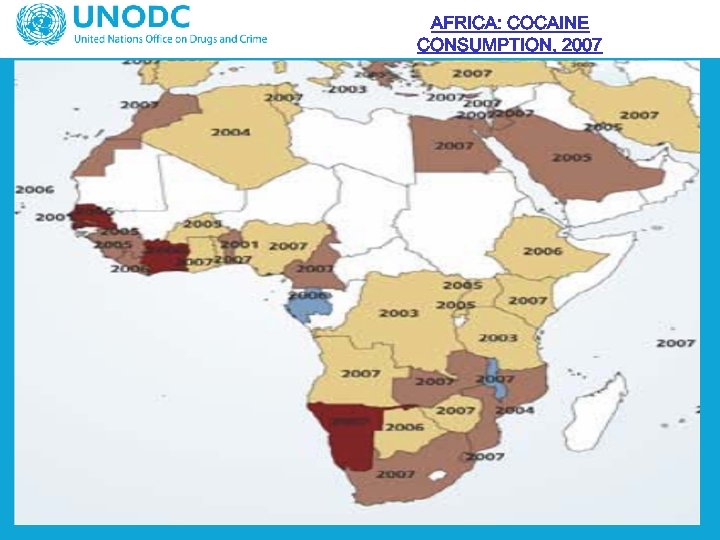 AFRICA: COCAINE CONSUMPTION, 2007
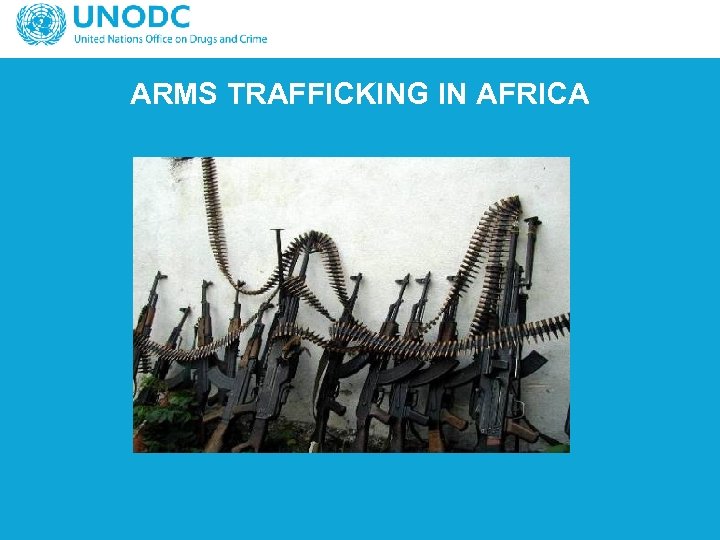 ARMS TRAFFICKING IN AFRICA
 ACTIVE CONFLICTS AND MILITARY STOCKPILES, 2008
 TRENDS • Market for illicit arms is estimated globally at US$ 200 -300 million per year, which is about 20 per cent of the (licit and measurable) arms trade. • Africa remains the arms smugglers' most profitable market • Small arms, unlike drugs or counterfeits, are a durable product (AK-47 can last indefinitely, it just needs ammunition) • Thus, arms trafficking tends to be episodic, rather than a permanent flow, with a predictable pattern: from countries with large stockpiles to a region descending, or pushed, into crisis.
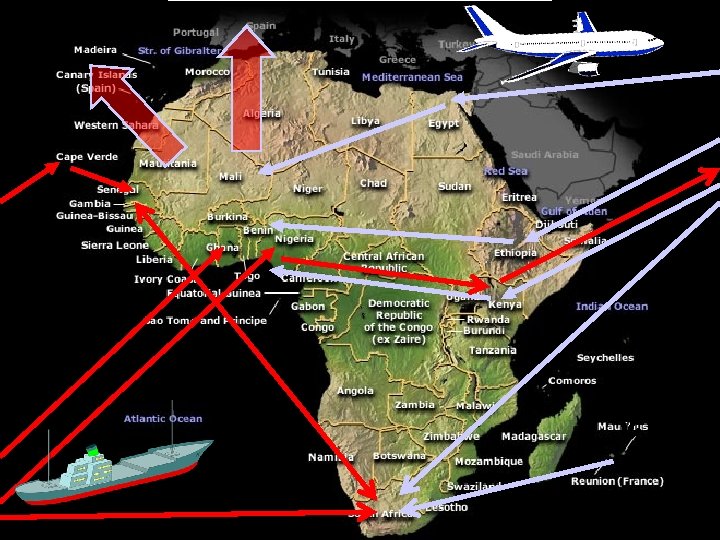
 HOW ILLEGAL ARMS TRAFFICKING IS CONDUCTED? • Complex transport routes are exploited, linking the continents (for example the regions of East, Central and West Africa have been identified as transit or diversion points for arms cargoes from Eastern Europe (Ukraine, Bulgaria, Romania, Russia), the Middle East (Lebanon, Israel) and Asia (China) with a destination of Latin America and the Caribbean) • Corruption in the source country (known as "point of departure diversion"), enables traffickers to use fake end-user certificates for legal exports. • Corruption at the "official" destination enables a legal shipment to be diverted to a different location ("post-delivery onward diversion"): the tanks, weapons and ammunition on a Ukrainian ship hijacked by Somali pirates (in September 2008) were intended for South Sudan, not Kenya, as the papers said. • At the true destination, in countries for example in the Sahel, Central, East and West Africa, weapons are bartered for drugs and natural resources (oil, precious stones, metals and timber). As a result, arms trafficking and organized crime fuel conflicts and vice versa.
 LINK BETWEEN ARMS AND DRUG TRAFFICKING • Both represent transnational organized crime • Both illegal arms and drugs are profitable criminal market • commodities (exchangeable) • Both divert from countries of strong control to weaker ones • (Baloon effect) • Both rely on weak border control, rule of law and corruption • Both exploit same trafficking routes • Both pose serious threat to human security and
 WAY FORWARD • There is a need to better understand criminal markets in order to be disable them through structural changes, which will make it difficult for organized crime to do what they do; • Strengthen border control and cooperation among countries; • Enhance rule of law and criminal justice system; • Strengthen the capacity of law enforcement response to the threats posed by arms and drug trafficking
 WHAT UNODC DOES TO ADDRESS THESE THREATS?
 Transnational Organized Crime Convention entered into force in September 2003 • The Convention applies to all serious crime with a transnational and organized crime aspect • It applies to four basic offences - (participation in an organized criminal group, money laundering, corruption and obstruction of justice)- and to the offences defined under the Protocols (trafficking in human beings, smuggling of migrants, trafficking in firearms). • It offers a particularly effective mechanism for international cooperation in criminal matters, by providing a broad and flexible legal basis for cooperation on extradition, mutual legal assistance and international cooperation
 FIREARMS PROTOCOL (United Nations Protocol against the Illicit Manufacturing of and Trafficking in Firearms, Their Parts and Ammunition) entered into force in July 2005 Parties to the Protocol are required: • Adopt legislation to prevent guns from falling into the wrong hands; • Criminalize the removal of the markings on guns; • Keep the records necessary to trace them; • Prevent the re-activation of disabled guns; • Promote cooperative regimes to monitor gun flows; • Prevent weapons theft; and build law enforcement capacity across borders.
 FIREARMS PROTOCOL HELPS TO: • Close loopholes in national legislation • Tighten up regulations of air/sea transport of weapons • Develop regional databases on seizures • Promote inter-agency cooperation between customs, civil aviation, port and export licensing authorities • Profile suspicious shipments • Share information with countries to verify compliance with international agreements • Follow the money trail of arms and drugs deals to seize the proceeds of crime
 UNODC PRESENCE IN AFRICA • Regional Office for North Africa and Middle East • Based in Cairo, Egypt • Regional Office for West Africa (covering Central Africa as well) • Based in Dakar, Senegal • Regional Office for South Africa (covering Central Africa as • well) • Based in Pretoria, South Africa • Regional Office for Eastern Africa • Based in Nairobi, Kenya
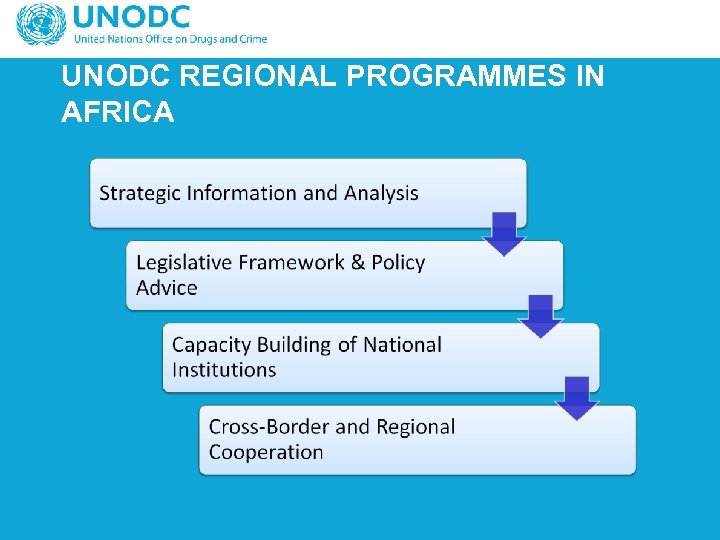 UNODC REGIONAL PROGRAMMES IN AFRICA
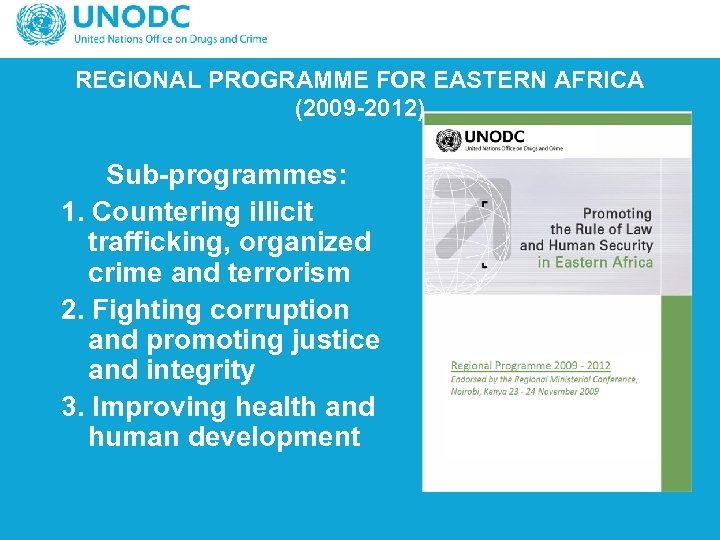 REGIONAL PROGRAMME FOR EASTERN AFRICA (2009 -2012) Sub-programmes: 1. Countering illicit trafficking, organized crime and terrorism 2. Fighting corruption and promoting justice and integrity 3. Improving health and human development
 Thank you for your attention! Ms. Ainura Bekkoenova, Associate Expert UNODC Regional Office for Eastern Africa Nairobi, Kenya Email: ainura. bekkoenova@unodc. org Tel: +254 20 762 3038