


 Скачать презентацию Drugs Acting on the Respiratory System 1
17dd1beb38719c16457f8bd31149dbeb.ppt
- Количество слайдов: 90
 Drugs Acting on the Respiratory System 1
 Introduction o The respiratory system is subject to many disorders that interfere with respiration and other lung functions, including n n Respiratory tract infections Allergic disorders Inflammatory disorders Conditions that obstruct airflow (e. g. asthma and chronic obstructive pulmonary disease, COPD) 2
 Introduction (Cont’d) o Drugs that act on the respiratory system include n n n n Bronchodilators Corticosteroids Cromoglycates Leukotriene receptor antagonists Antihistamines Cough preparations Nasal decongestants 3
 Introduction (Cont’d) o Drugs acting on the respiratory system, especially for asthma, can be administered by inhalation, the advantages are: n n n Enhance therapeutic effects Minimize systemic effects Rapid relief of acute attacks 4
 o Asthma is a chronic inflammatory disorder of the airways in which many cells and cellular elements play a role, in particular, mast cells, eosinophils, T lymphocytes, macrophages, neutrophils, and epithelial cells. In susceptible individuals, this inflammation causes recurrent episodes of wheezing, breathlessness, chest tightness, and coughing, particularly at night or in the early morning. These episodes are usually associated with widespread but variable airflow obstruction that is often reversible either spontaneously or with treatment. The inflammation also causes an associated increase in the existing bronchial hyperresponsiveness to a variety of stimuli. 5
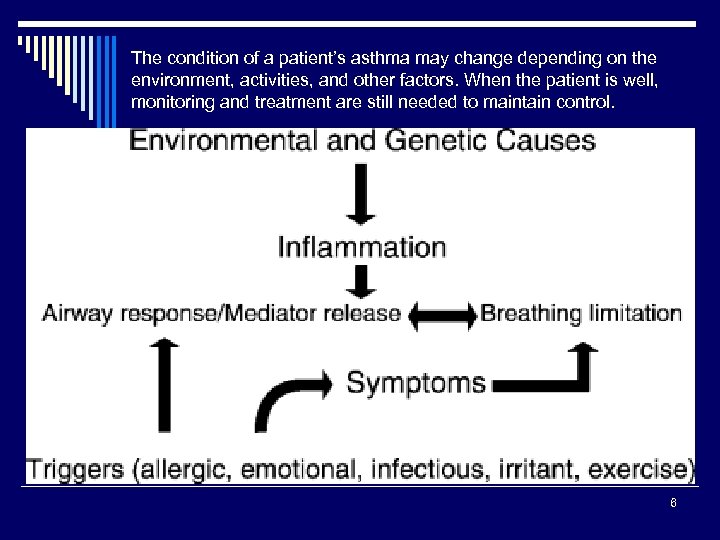 The condition of a patient’s asthma may change depending on the environment, activities, and other factors. When the patient is well, monitoring and treatment are still needed to maintain control. 6
 Introduction (Cont’d) o There are various types of inhalation devices: n Metered-dose inhalers (MDIs) p Pressurized devices that deliver a measured dose of drug with each activation p With CFC or non-CFC propellant p Hand-mouth coordination is required 7
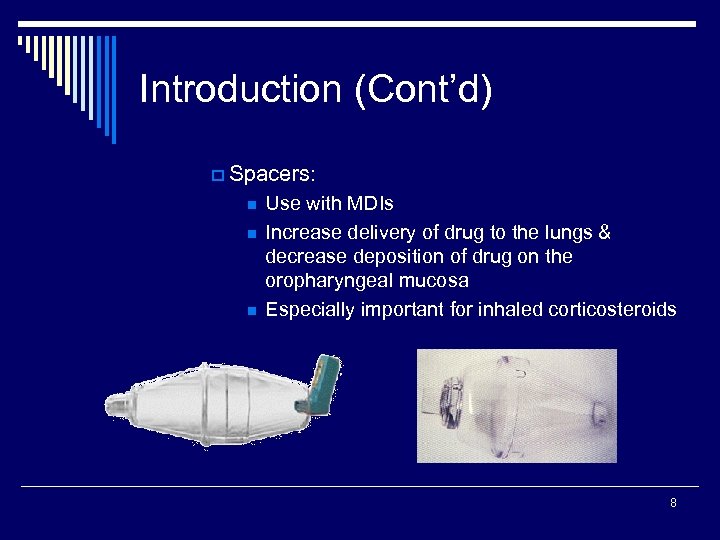 Introduction (Cont’d) p Spacers: n n n Use with MDIs Increase delivery of drug to the lungs & decrease deposition of drug on the oropharyngeal mucosa Especially important for inhaled corticosteroids 8
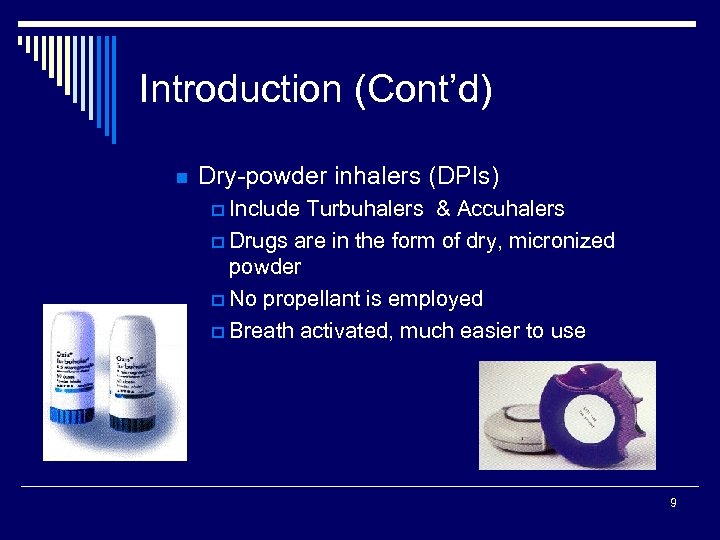 Introduction (Cont’d) n Dry-powder inhalers (DPIs) p Include Turbuhalers & Accuhalers p Drugs are in the form of dry, micronized powder p No propellant is employed p Breath activated, much easier to use 9
 Introduction (Cont’d) n Nebulizers p Small machine to convert a drug solution into mist p Droplets in the mist are much finer than those produced by inhalers p Through face mask or mouth piece held between the teeth p Take several minutes to deliver the same amount of drug contained in 1 puff from an inhaler 10
 Bronchodilators o Drugs used to relieve bronchospasms associated with respiratory disorders o Includes: n Adrenoceptor agonists p Selective β 2 -agonists & other adrenoceptor agonists n n Antimuscarinic bronchodilators Xanthine derivatives 11
 Bronchodilators (Cont’d) o Adrenoceptor agonists n (i) Selective beta 2 agonists p Stimulate beta 2 receptors in smooth muscle of the lung, promoting bronchodilation, and thereby relieving bronchospasms p They are divided into short-acting & long acting types 12
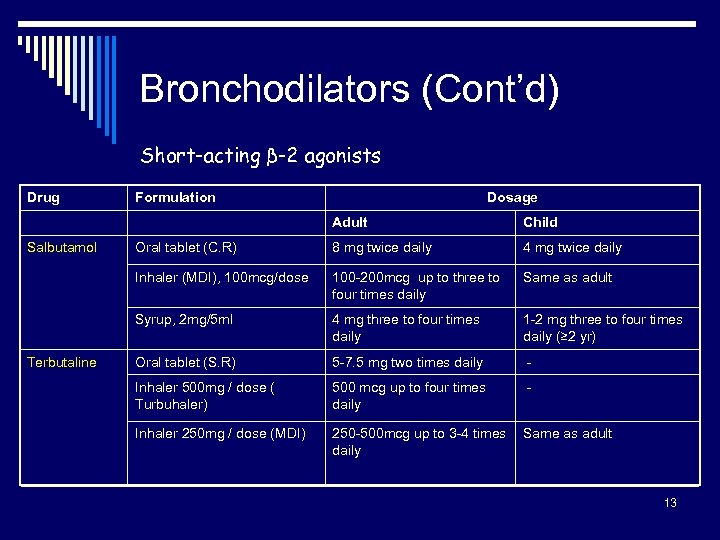 Bronchodilators (Cont’d) Short-acting β-2 agonists Drug Formulation Dosage Adult 8 mg twice daily 4 mg twice daily 100 -200 mcg up to three to four times daily Same as adult Syrup, 2 mg/5 ml Terbutaline Oral tablet (C. R) Inhaler (MDI), 100 mcg/dose Salbutamol Child 4 mg three to four times daily 1 -2 mg three to four times daily (≥ 2 yr) Oral tablet (S. R) 5 -7. 5 mg two times daily - Inhaler 500 mg / dose ( Turbuhaler) 500 mcg up to four times daily - Inhaler 250 mg / dose (MDI) 250 -500 mcg up to 3 -4 times Same as adult daily 13
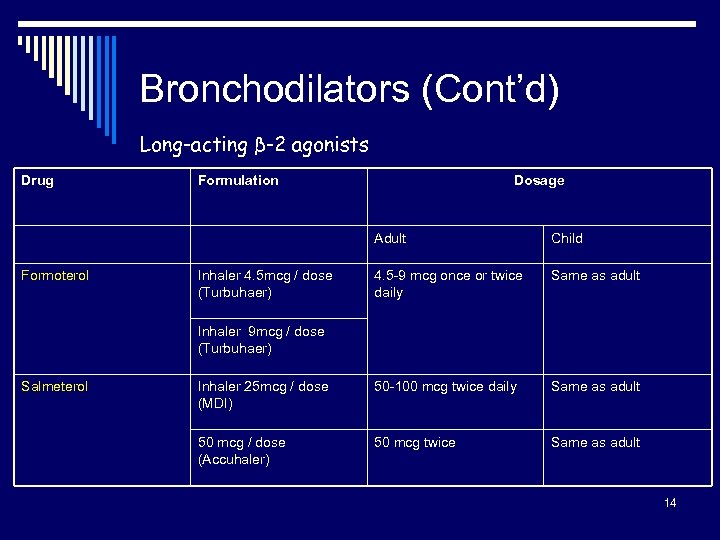 Bronchodilators (Cont’d) Long-acting β-2 agonists Drug Formulation Dosage Adult Formoterol Child 4. 5 -9 mcg once or twice daily Same as adult Inhaler 25 mcg / dose (MDI) 50 -100 mcg twice daily Same as adult 50 mcg / dose (Accuhaler) 50 mcg twice Same as adult Inhaler 4. 5 mcg / dose (Turbuhaer) Inhaler 9 mcg / dose (Turbuhaer) Salmeterol 14
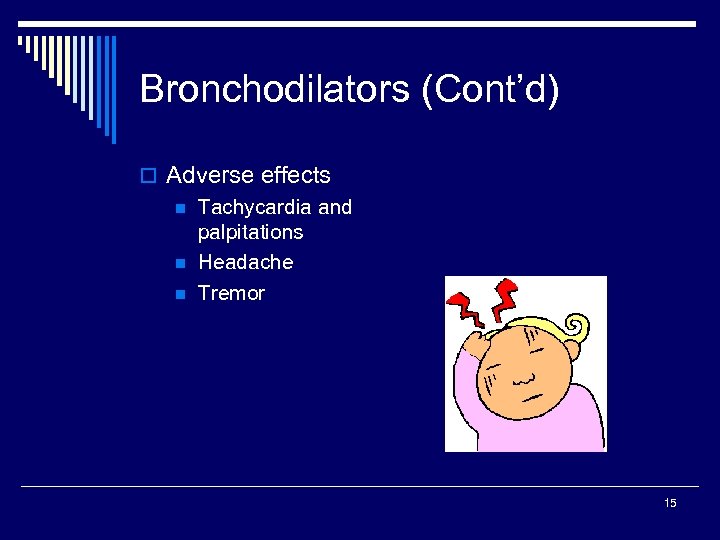 Bronchodilators (Cont’d) o Adverse effects n Tachycardia and palpitations n Headache n Tremor 15
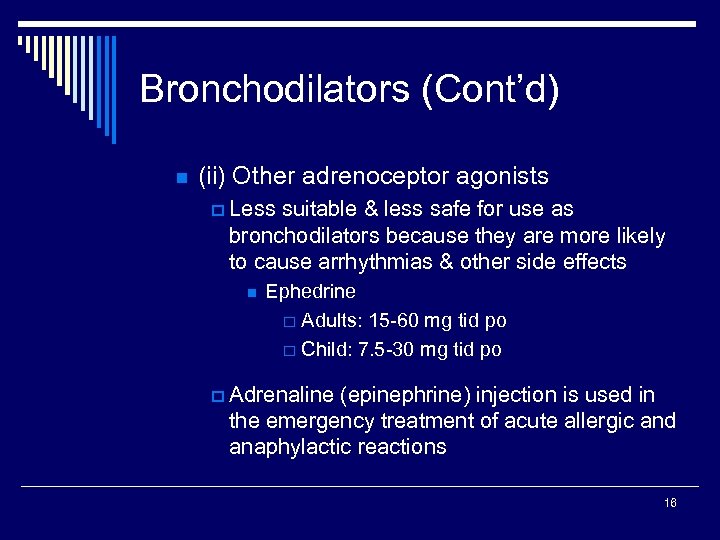 Bronchodilators (Cont’d) n (ii) Other adrenoceptor agonists p Less suitable & less safe for use as bronchodilators because they are more likely to cause arrhythmias & other side effects n Ephedrine o Adults: 15 -60 mg tid po o Child: 7. 5 -30 mg tid po p Adrenaline (epinephrine) injection is used in the emergency treatment of acute allergic and anaphylactic reactions 16
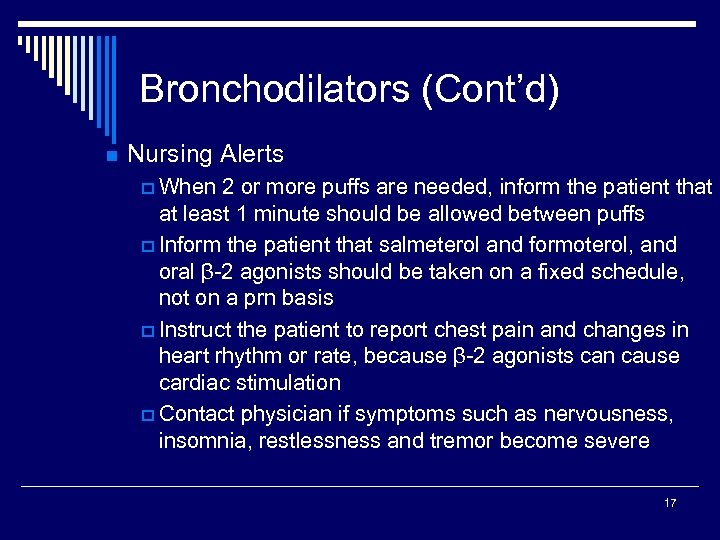 Bronchodilators (Cont’d) n Nursing Alerts p When 2 or more puffs are needed, inform the patient that at least 1 minute should be allowed between puffs p Inform the patient that salmeterol and formoterol, and oral β-2 agonists should be taken on a fixed schedule, not on a prn basis p Instruct the patient to report chest pain and changes in heart rhythm or rate, because β-2 agonists can cause cardiac stimulation p Contact physician if symptoms such as nervousness, insomnia, restlessness and tremor become severe 17
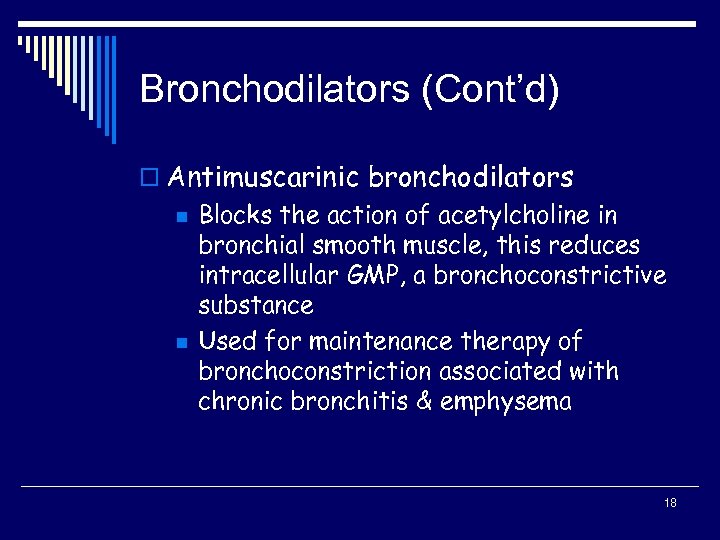 Bronchodilators (Cont’d) o Antimuscarinic bronchodilators n n Blocks the action of acetylcholine in bronchial smooth muscle, this reduces intracellular GMP, a bronchoconstrictive substance Used for maintenance therapy of bronchoconstriction associated with chronic bronchitis & emphysema 18
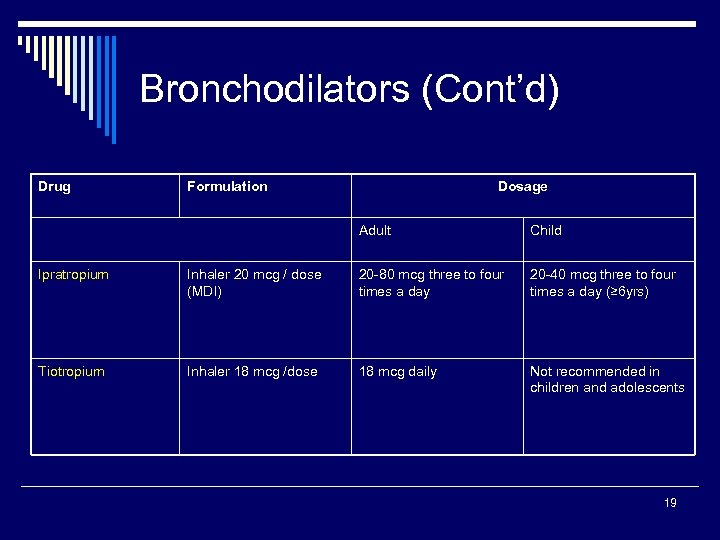 Bronchodilators (Cont’d) Drug Formulation Dosage Adult Child Ipratropium Inhaler 20 mcg / dose (MDI) 20 -80 mcg three to four times a day 20 -40 mcg three to four times a day (≥ 6 yrs) Tiotropium Inhaler 18 mcg /dose 18 mcg daily Not recommended in children and adolescents 19
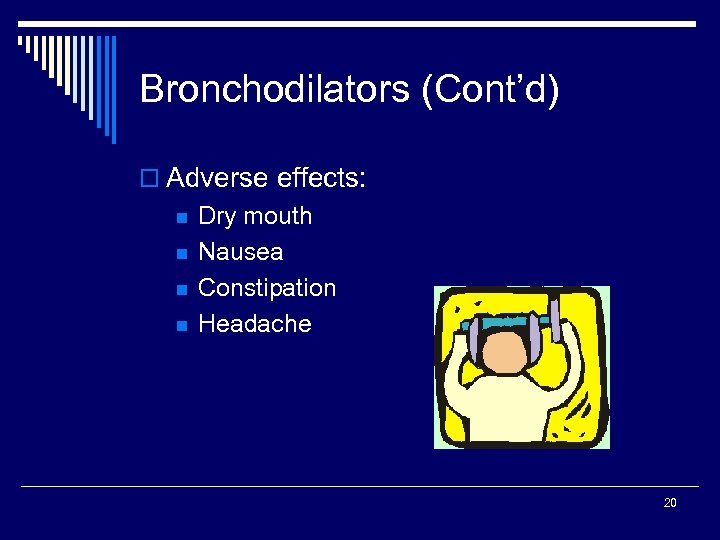 Bronchodilators (Cont’d) o Adverse effects: n n Dry mouth Nausea Constipation Headache 20
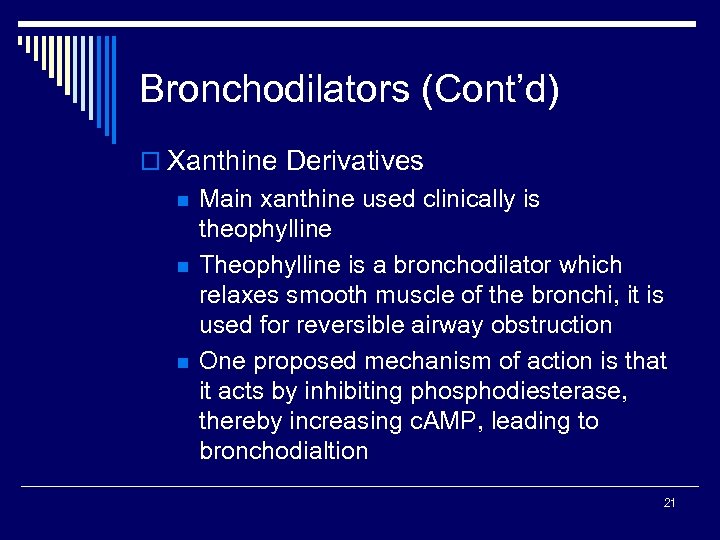 Bronchodilators (Cont’d) o Xanthine Derivatives n n n Main xanthine used clinically is theophylline Theophylline is a bronchodilator which relaxes smooth muscle of the bronchi, it is used for reversible airway obstruction One proposed mechanism of action is that it acts by inhibiting phosphodiesterase, thereby increasing c. AMP, leading to bronchodialtion 21
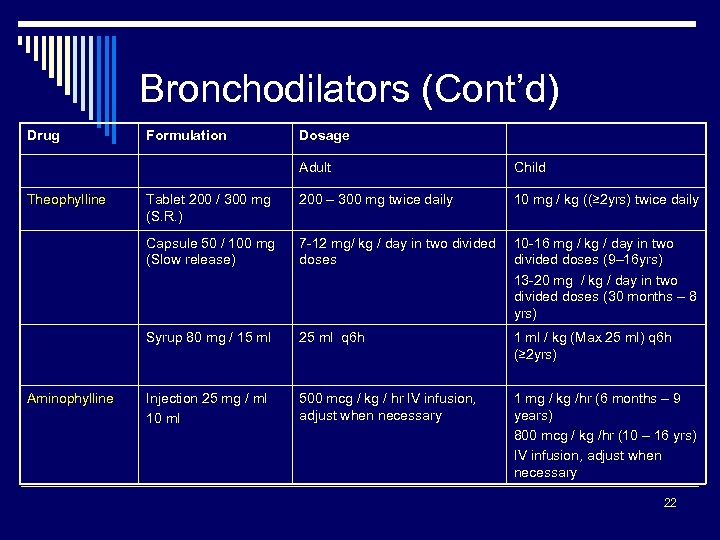 Bronchodilators (Cont’d) Drug Formulation Dosage Adult 200 – 300 mg twice daily 10 mg / kg ((≥ 2 yrs) twice daily 7 -12 mg/ kg / day in two divided 10 -16 mg / kg / day in two doses divided doses (9– 16 yrs) 13 -20 mg / kg / day in two divided doses (30 months – 8 yrs) Syrup 80 mg / 15 ml Aminophylline Tablet 200 / 300 mg (S. R. ) Capsule 50 / 100 mg (Slow release) Theophylline Child 25 ml q 6 h 1 ml / kg (Max 25 ml) q 6 h (≥ 2 yrs) Injection 25 mg / ml 10 ml 500 mcg / kg / hr IV infusion, adjust when necessary 1 mg / kg /hr (6 months – 9 years) 800 mcg / kg /hr (10 – 16 yrs) IV infusion, adjust when necessary 22
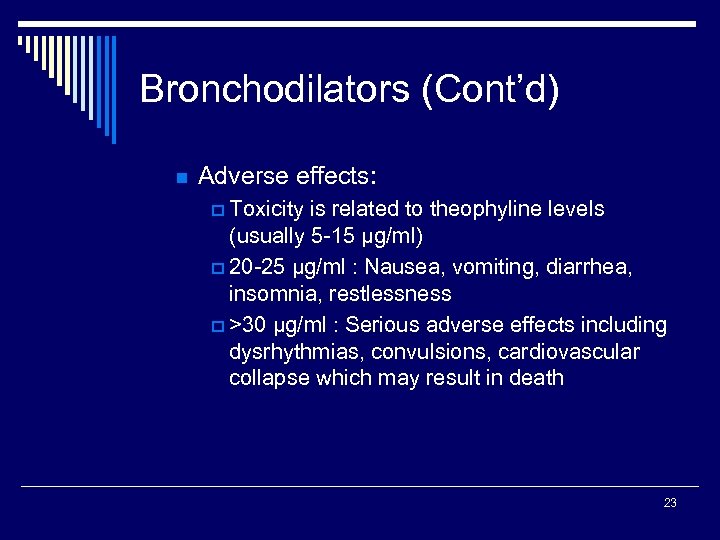 Bronchodilators (Cont’d) n Adverse effects: p Toxicity is related to theophyline levels (usually 5 -15 µg/ml) p 20 -25 µg/ml : Nausea, vomiting, diarrhea, insomnia, restlessness p >30 µg/ml : Serious adverse effects including dysrhythmias, convulsions, cardiovascular collapse which may result in death 23
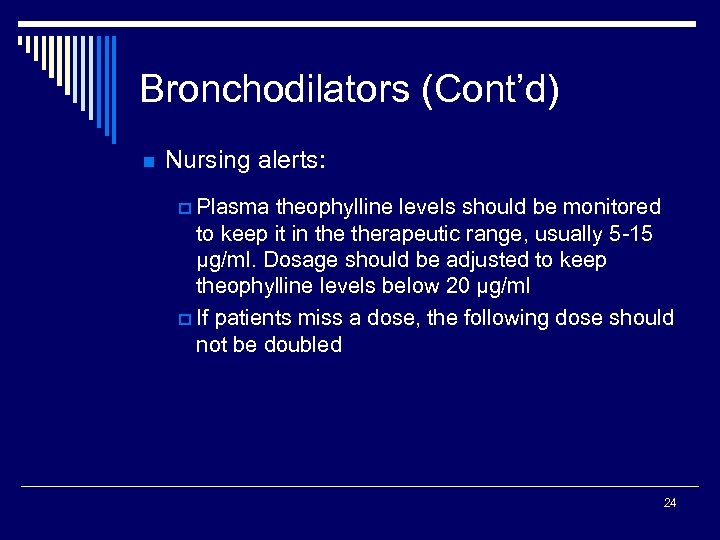 Bronchodilators (Cont’d) n Nursing alerts: p Plasma theophylline levels should be monitored to keep it in therapeutic range, usually 5 -15 µg/ml. Dosage should be adjusted to keep theophylline levels below 20 µg/ml p If patients miss a dose, the following dose should not be doubled 24
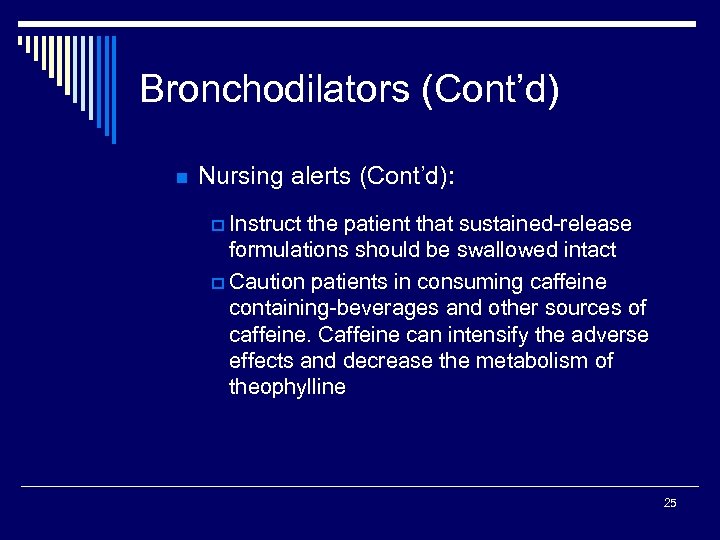 Bronchodilators (Cont’d) n Nursing alerts (Cont’d): p Instruct the patient that sustained-release formulations should be swallowed intact p Caution patients in consuming caffeine containing-beverages and other sources of caffeine. Caffeine can intensify the adverse effects and decrease the metabolism of theophylline 25
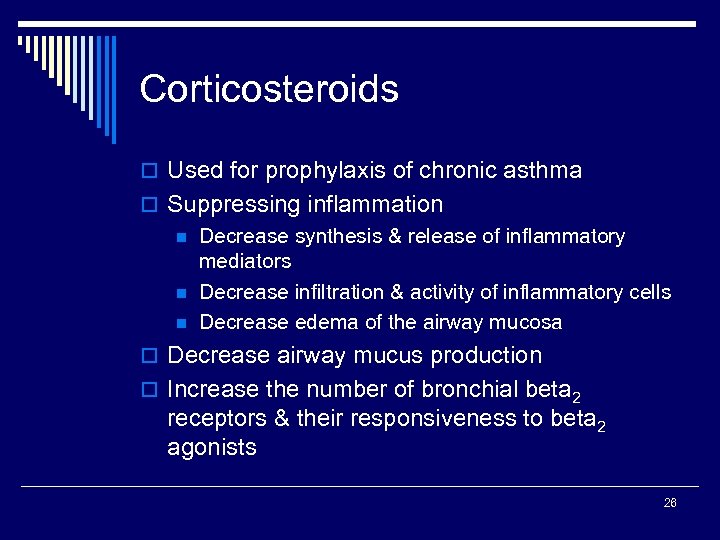 Corticosteroids o Used for prophylaxis of chronic asthma o Suppressing inflammation n Decrease synthesis & release of inflammatory mediators n Decrease infiltration & activity of inflammatory cells n Decrease edema of the airway mucosa o Decrease airway mucus production o Increase the number of bronchial beta 2 receptors & their responsiveness to beta 2 agonists 26
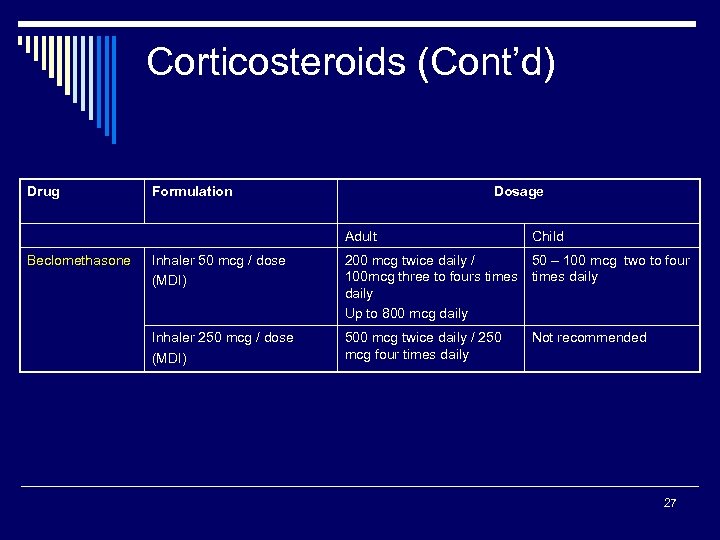 Corticosteroids (Cont’d) Drug Formulation Dosage Adult Beclomethasone Child Inhaler 50 mcg / dose (MDI) 200 mcg twice daily / 50 – 100 mcg two to four 100 mcg three to fours times daily Up to 800 mcg daily Inhaler 250 mcg / dose (MDI) 500 mcg twice daily / 250 mcg four times daily Not recommended 27
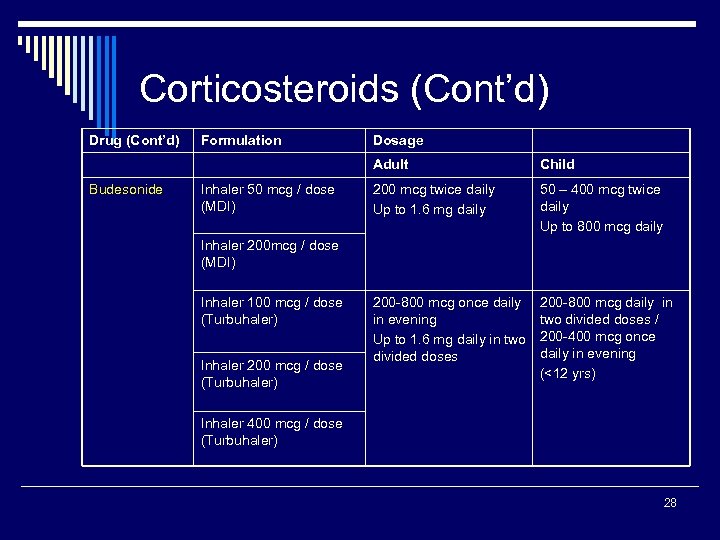 Corticosteroids (Cont’d) Drug (Cont’d) Formulation Dosage Adult Budesonide Inhaler 50 mcg / dose (MDI) Child 200 mcg twice daily Up to 1. 6 mg daily 50 – 400 mcg twice daily Up to 800 mcg daily 200 -800 mcg once daily in evening Up to 1. 6 mg daily in two divided doses 200 -800 mcg daily in two divided doses / 200 -400 mcg once daily in evening (<12 yrs) Inhaler 200 mcg / dose (MDI) Inhaler 100 mcg / dose (Turbuhaler) Inhaler 200 mcg / dose (Turbuhaler) Inhaler 400 mcg / dose (Turbuhaler) 28
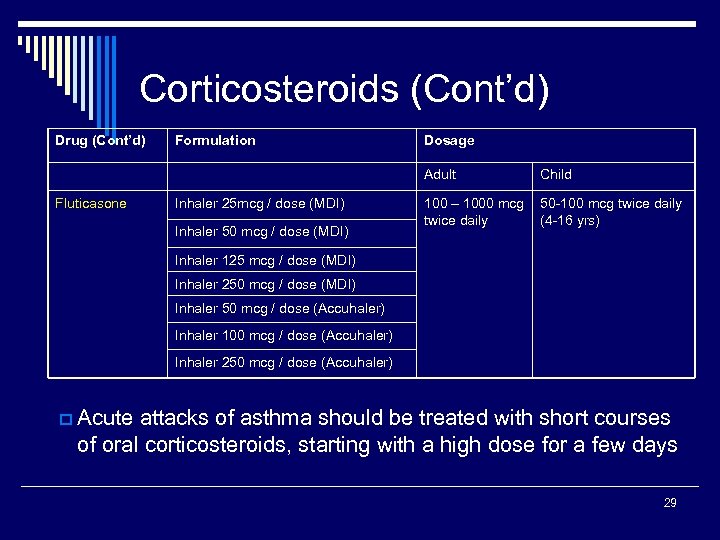 Corticosteroids (Cont’d) Drug (Cont’d) Formulation Dosage Adult Fluticasone Inhaler 25 mcg / dose (MDI) Inhaler 50 mcg / dose (MDI) Child 100 – 1000 mcg 50 -100 mcg twice daily (4 -16 yrs) Inhaler 125 mcg / dose (MDI) Inhaler 250 mcg / dose (MDI) Inhaler 50 mcg / dose (Accuhaler) Inhaler 100 mcg / dose (Accuhaler) Inhaler 250 mcg / dose (Accuhaler) p Acute attacks of asthma should be treated with short courses of oral corticosteroids, starting with a high dose for a few days 29
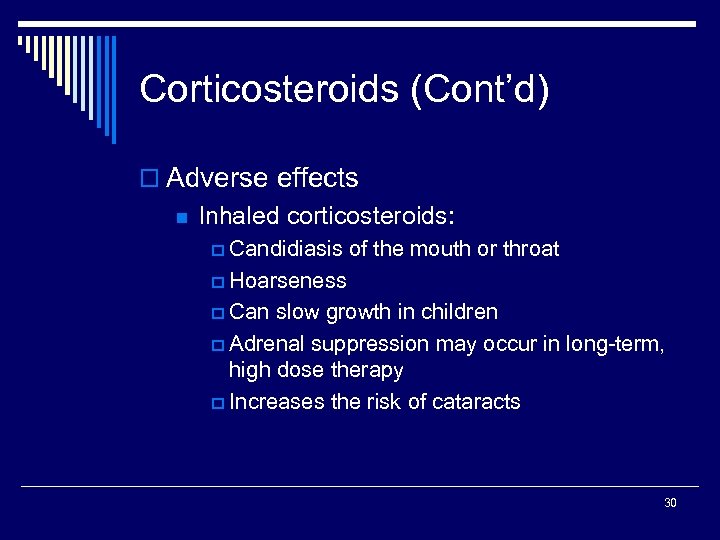 Corticosteroids (Cont’d) o Adverse effects n Inhaled corticosteroids: p Candidiasis of the mouth or throat p Hoarseness p Can slow growth in children p Adrenal suppression may occur in long-term, high dose therapy p Increases the risk of cataracts 30
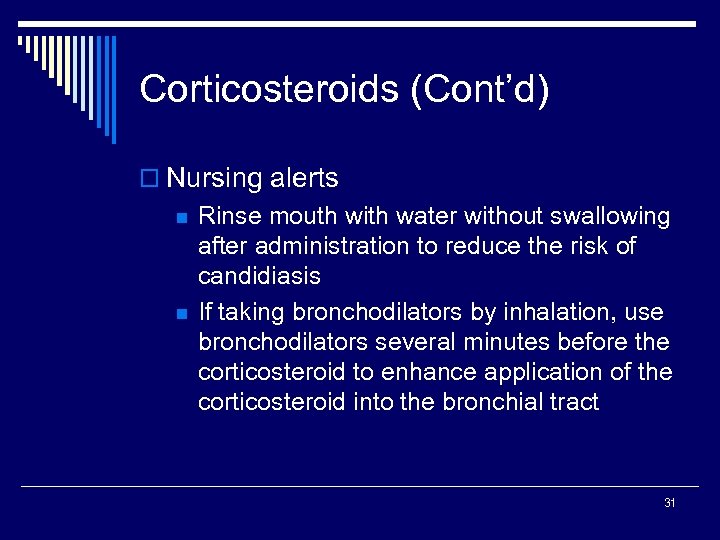 Corticosteroids (Cont’d) o Nursing alerts n n Rinse mouth with water without swallowing after administration to reduce the risk of candidiasis If taking bronchodilators by inhalation, use bronchodilators several minutes before the corticosteroid to enhance application of the corticosteroid into the bronchial tract 31
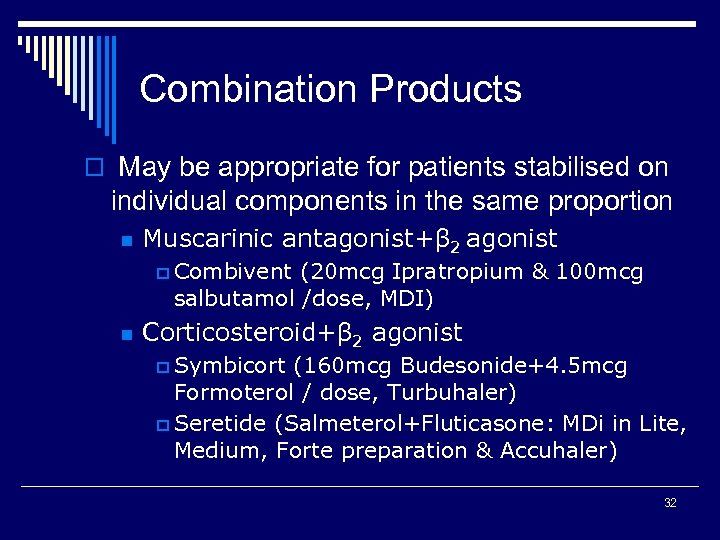 Combination Products o May be appropriate for patients stabilised on individual components in the same proportion n Muscarinic antagonist+β 2 agonist p Combivent (20 mcg Ipratropium & 100 mcg salbutamol /dose, MDI) n Corticosteroid+β 2 agonist p Symbicort (160 mcg Budesonide+4. 5 mcg Formoterol / dose, Turbuhaler) p Seretide (Salmeterol+Fluticasone: MDi in Lite, Medium, Forte preparation & Accuhaler) 32
 Cromoglycates o Stabilise mast cells & prevent the release of bronchoconstrictive & inflammatory substances when mast cells are confronted with allergens & other stimuli o Only for prophylaxis of acute asthma attacks 33
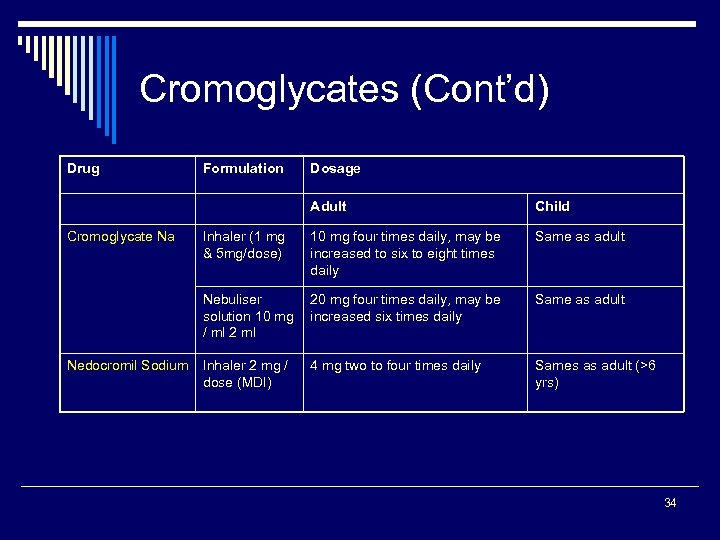 Cromoglycates (Cont’d) Drug Formulation Dosage Adult Nedocromil Sodium 10 mg four times daily, may be increased to six to eight times daily Same as adult Nebuliser 20 mg four times daily, may be solution 10 mg increased six times daily / ml 2 ml Cromoglycate Na Child Same as adult Inhaler 2 mg / dose (MDI) Sames as adult (>6 yrs) Inhaler (1 mg & 5 mg/dose) 4 mg two to four times daily 34
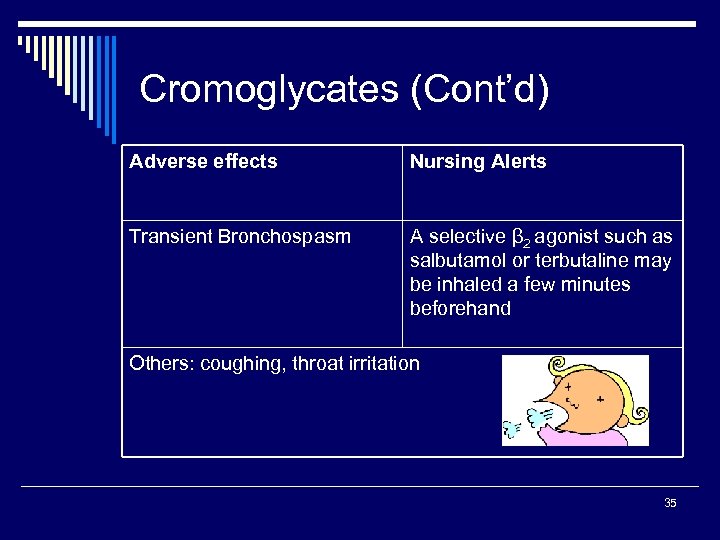 Cromoglycates (Cont’d) Adverse effects Nursing Alerts Transient Bronchospasm A selective β 2 agonist such as salbutamol or terbutaline may be inhaled a few minutes beforehand Others: coughing, throat irritation 35
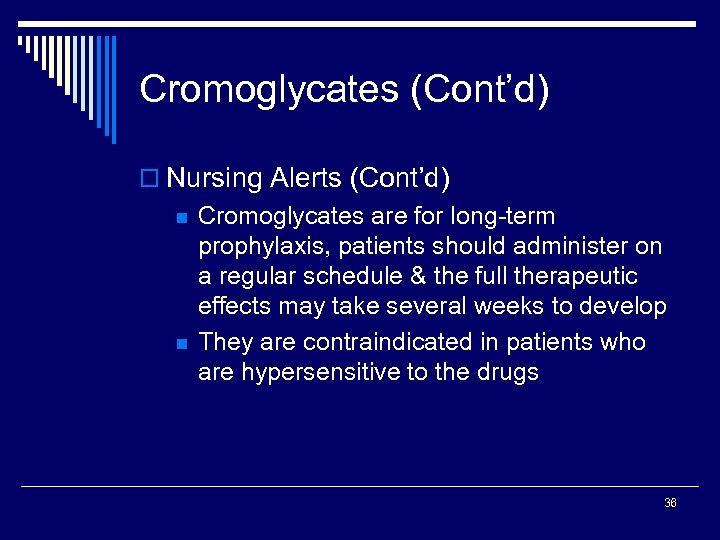 Cromoglycates (Cont’d) o Nursing Alerts (Cont’d) n n Cromoglycates are for long-term prophylaxis, patients should administer on a regular schedule & the full therapeutic effects may take several weeks to develop They are contraindicated in patients who are hypersensitive to the drugs 36
 Leukotriene receptor antagonists o Act by suppressing the effects of leukotrienes, compounds that promote bronchoconstriction as well as eosinophil infiltration, mucus productions, & airway edema o Help to prevent acute asthma attacks induced by allergens & other stimuli o Indicated for long-term treatment of asthma 37
 Leukotriene receptor antagonists (Cont’d) o Dosage: n Montelukast (5 & 10 mg tablets) p Adult: 10 mg daily at bedtime p Child: (2 -5 yrs) 4 mg daily at bedtime n (6 -14 yrs) 5 mg daily at bedtime n 38
 Leukotriene receptor antagonists (Cont’d) o Adverse effects: n n n GI disturbances Hypersensitivity reactions Restlessness & headache Upper respiratory tract infection Manufacturer advises to avoid these drugs in pregnancy & breast-feeding unless essential 39
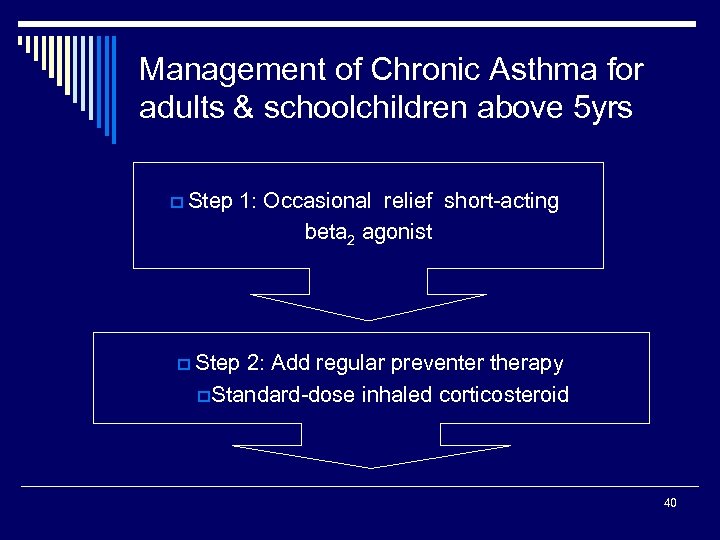 Management of Chronic Asthma for adults & schoolchildren above 5 yrs p Step 1: Occasional relief short-acting beta 2 agonist p Step 2: Add regular preventer therapy p. Standard-dose inhaled corticosteroid 40
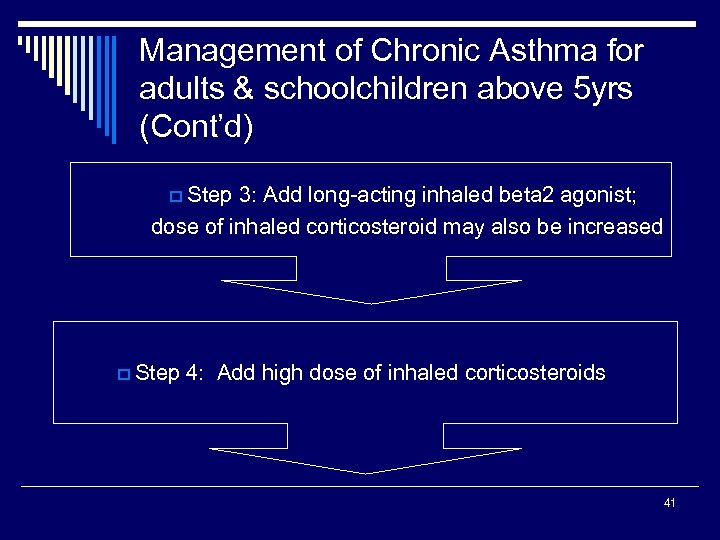 Management of Chronic Asthma for adults & schoolchildren above 5 yrs (Cont’d) p Step 3: Add long-acting inhaled beta 2 agonist; dose of inhaled corticosteroid may also be increased p Step 4: Add high dose of inhaled corticosteroids 41
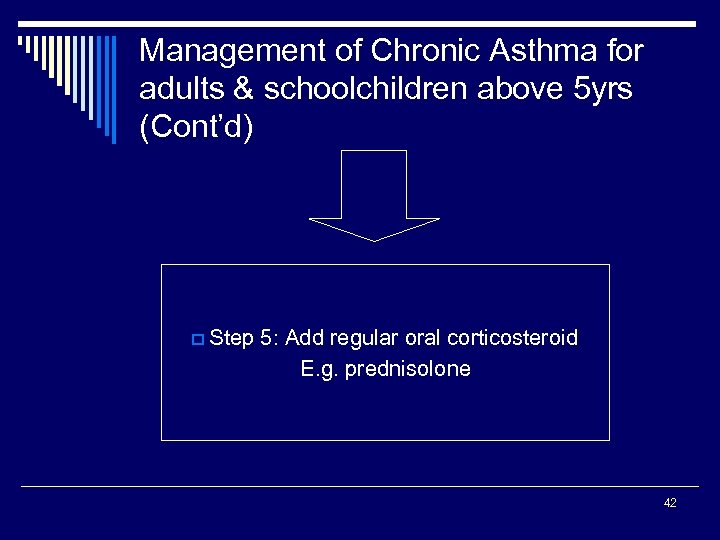 Management of Chronic Asthma for adults & schoolchildren above 5 yrs (Cont’d) p Step 5: Add regular oral corticosteroid E. g. prednisolone 42
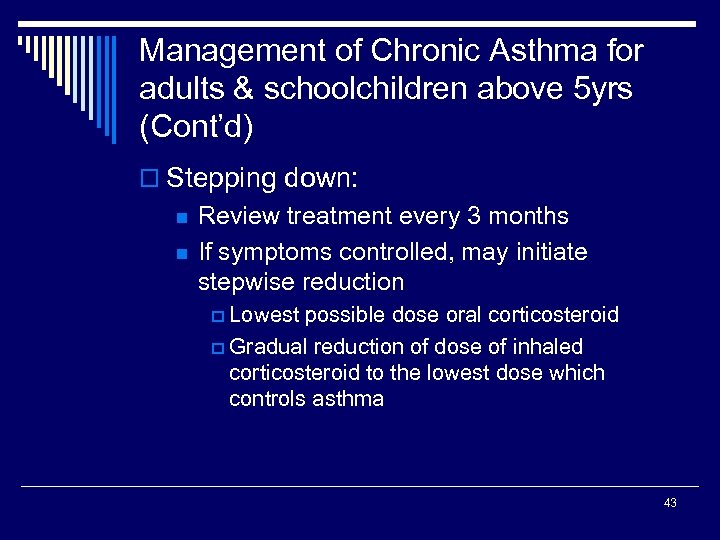 Management of Chronic Asthma for adults & schoolchildren above 5 yrs (Cont’d) o Stepping down: n n Review treatment every 3 months If symptoms controlled, may initiate stepwise reduction p Lowest possible dose oral corticosteroid p Gradual reduction of dose of inhaled corticosteroid to the lowest dose which controls asthma 43
 44
44
 Antihistamines o H 1 receptor antagonists n n n Inhibit smooth muscle constriction in blood vessels & respiratory & GI tracts Decrease capillary permeability Decrease salivation & tear formation o Used for variety of allergic disorders to prevent or reverse target organ inflammation 45
 Antihistamines (Cont’d) o All antihistamines are of potential value in the treatment of nasal allergies, particularly seasonal allergic rhinitis (hay fever) o Reduce rhinorrhoea & sneezing but are usually less effective for nasal congestion o Are also used topically in the eye, in the nose, & on the skin 46
 Antihistamines (Cont’d) o First-generation H 1 receptor antagonists n Non-selective/sedating n Bind to both central & peripheral H 1 receptors n Usually cause CNS depression (drowsiness, sedation) but may cause CNS stimulation (anxiety, agitation), especially in children n Also have substantial anticholinergic effects 47
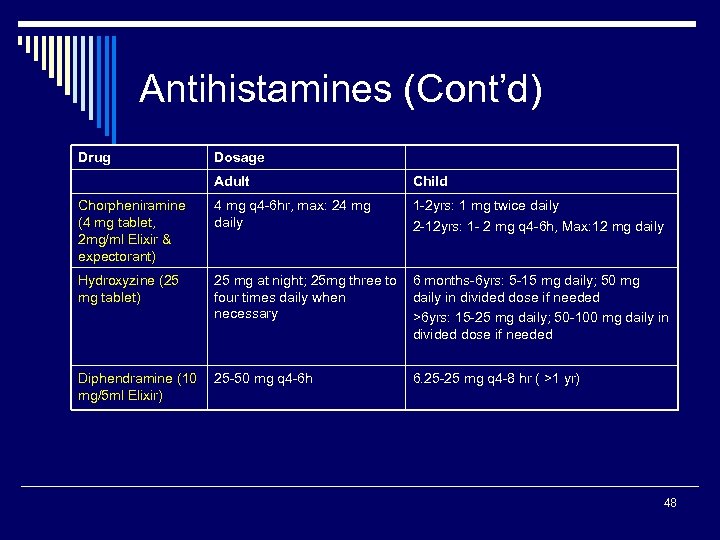 Antihistamines (Cont’d) Drug Dosage Adult Child Chorpheniramine (4 mg tablet, 2 mg/ml Elixir & expectorant) 4 mg q 4 -6 hr, max: 24 mg daily 1 -2 yrs: 1 mg twice daily 2 -12 yrs: 1 - 2 mg q 4 -6 h, Max: 12 mg daily Hydroxyzine (25 mg tablet) 25 mg at night; 25 mg three to 6 months-6 yrs: 5 -15 mg daily; 50 mg four times daily when daily in divided dose if needed necessary >6 yrs: 15 -25 mg daily; 50 -100 mg daily in divided dose if needed Diphendramine (10 25 -50 mg q 4 -6 h mg/5 ml Elixir) 6. 25 -25 mg q 4 -8 hr ( >1 yr) 48
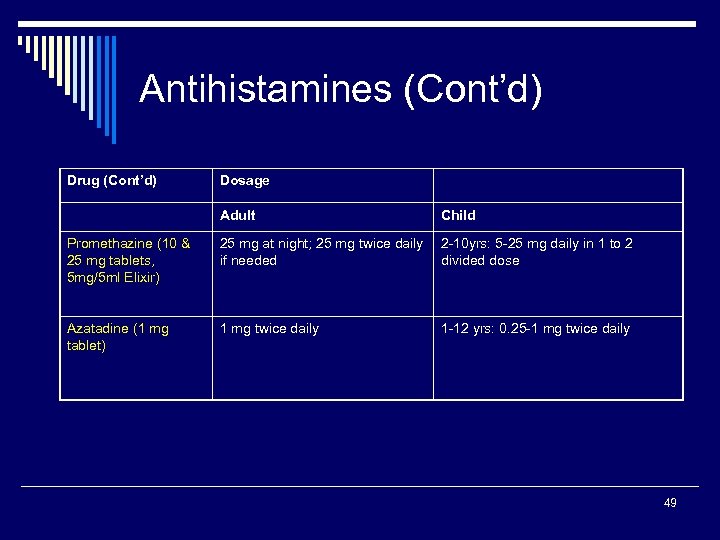 Antihistamines (Cont’d) Drug (Cont’d) Dosage Adult Child Promethazine (10 & 25 mg tablets, 5 mg/5 ml Elixir) 25 mg at night; 25 mg twice daily 2 -10 yrs: 5 -25 mg daily in 1 to 2 if needed divided dose Azatadine (1 mg tablet) 1 mg twice daily 1 -12 yrs: 0. 25 -1 mg twice daily 49
 Antihistamines (Cont’d) o Adverse effects: n n n n Sedation Dry mouth Blurred vision GI disturbances Headache Urinary retention Hydroxyzine is not recommended for pregnancy & breast-feeding 50
 Antihistamines (Cont’d) o Second-generation H 1 receptor antagonists n n n Selective/non-sedating Cause less CNS depression because they are selective for peripheral H 1 receptors & do not cross blood-brain barrier Longer-acting compared to first-generation antihistamines 51
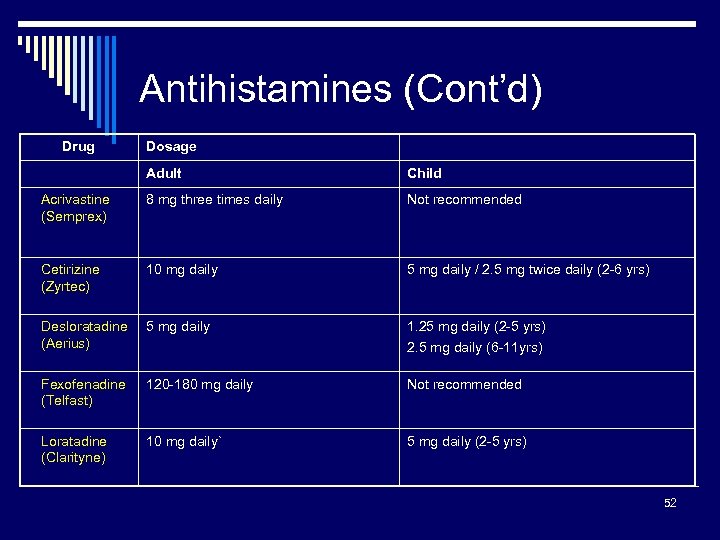 Antihistamines (Cont’d) Drug Dosage Adult Child Acrivastine (Semprex) 8 mg three times daily Not recommended Cetirizine (Zyrtec) 10 mg daily 5 mg daily / 2. 5 mg twice daily (2 -6 yrs) Desloratadine (Aerius) 5 mg daily 1. 25 mg daily (2 -5 yrs) 2. 5 mg daily (6 -11 yrs) Fexofenadine (Telfast) 120 -180 mg daily Not recommended Loratadine (Clarityne) 10 mg daily` 5 mg daily (2 -5 yrs) 52
 Antihistamines (Cont’d) o Adverse effects: n n May cause slight sedation Some antihistamines may interact with antifungal, e. g. ketoconazole; antibiotics, e. g. erythromycin; prokinetic drug-- cisapride or grapefruit juice, leading to potentially serious ECG changes e. g. Terfenadine 53
 Cough preparations o There are three classes of cough preparations: n n n Antitussives Expectorants Mucolytics 54
 Cough preparations (Cont’d) o Antitussives n n n Drugs that suppress cough Some act within the CNS, some act peripherally Indicated in dry, hacking, nonproductive cough that interfere with rest & sleep 55
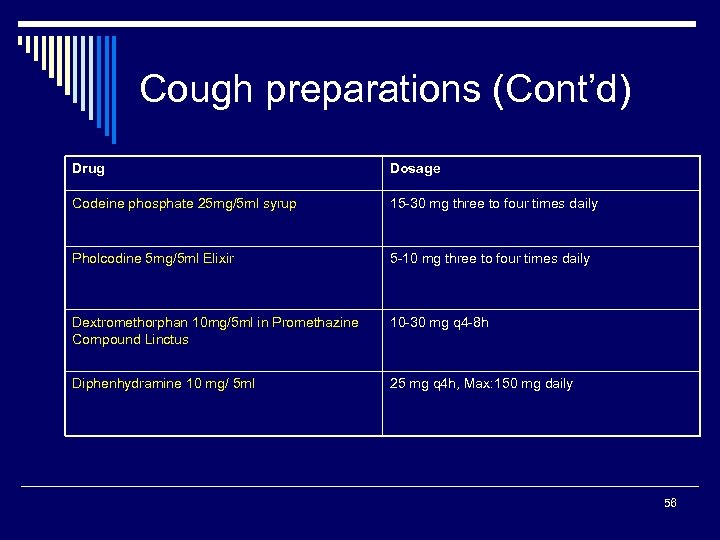 Cough preparations (Cont’d) Drug Dosage Codeine phosphate 25 mg/5 ml syrup 15 -30 mg three to four times daily Pholcodine 5 mg/5 ml Elixir 5 -10 mg three to four times daily Dextromethorphan 10 mg/5 ml in Promethazine Compound Linctus 10 -30 mg q 4 -8 h Diphenhydramine 10 mg/ 5 ml 25 mg q 4 h, Max: 150 mg daily 56
 Cough preparations (Cont’d) o Adverse effects: n n Drowsiness Respiratory depression (for opioid antitussives) Constipation (for opioid antitussives) Preparations containing codeine or similar analgesics are not generally recommended in children & should be avoided altogether in those under 1 year of age 57
 Cough preparations (Cont’d) o Nursing Alerts: n Observe for excessive suppression of the cough reflex (inability to cough effectively when secretions are present). This is a potentially serious adverse effect because retained secretions may lead to lungs collapse, pneumonia, hypoxia, hypercarbia, and respiratory failure 58
 Cough preparations (Cont’d) o Expectorants n n n Render the cough more productive by stimulating the flow of respiratory tract secretions Guaifenesin is most commonly used Available alone & as an ingredient in many combination cough & cold remedies 59
 Cough preparations (Cont’d) o Dosage n Guaifenesin p 100 -400 mg q 4 h po n Ammonia & Ipecacuaha Mixture p 10 -20 ml three to four times daily po 60
 Cough preparations (Cont’d) o Mucolytics n Reacts directly with mucus to make it more watery. This should help make the cough more productive 61
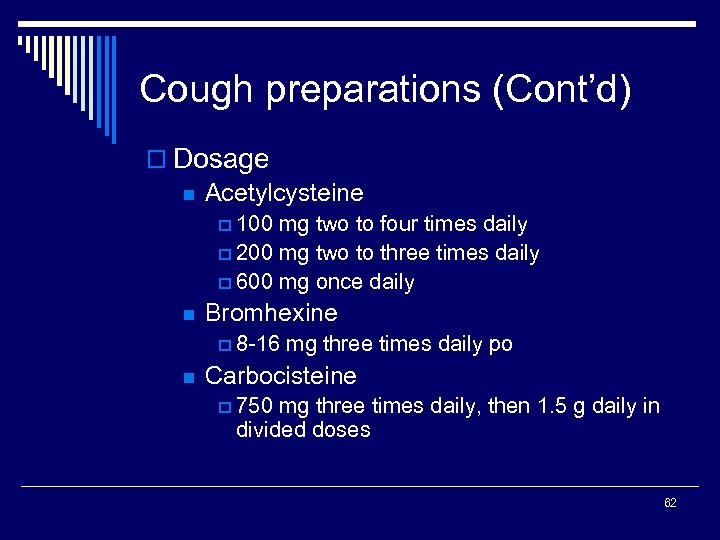 Cough preparations (Cont’d) o Dosage n Acetylcysteine p 100 mg two to four times daily p 200 mg two to three times daily p 600 mg once daily n Bromhexine p 8 -16 mg three times daily po n Carbocisteine p 750 mg three times daily, then 1. 5 g daily in divided doses 62
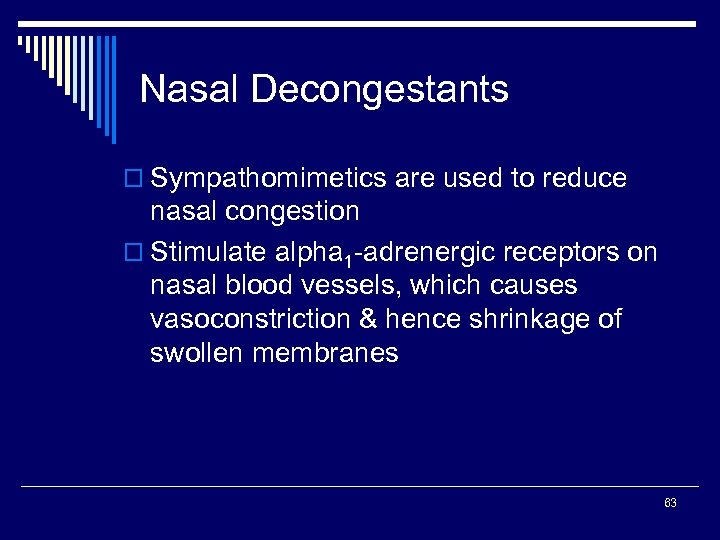 Nasal Decongestants o Sympathomimetics are used to reduce nasal congestion o Stimulate alpha 1 -adrenergic receptors on nasal blood vessels, which causes vasoconstriction & hence shrinkage of swollen membranes 63
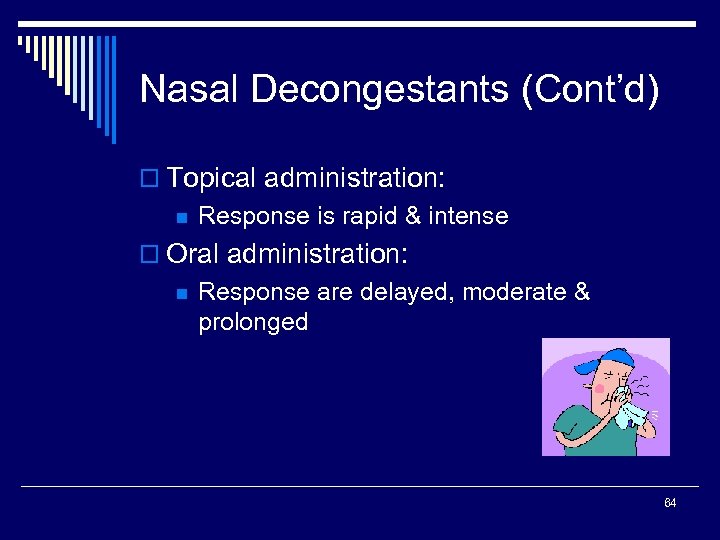 Nasal Decongestants (Cont’d) o Topical administration: n Response is rapid & intense o Oral administration: n Response are delayed, moderate & prolonged 64
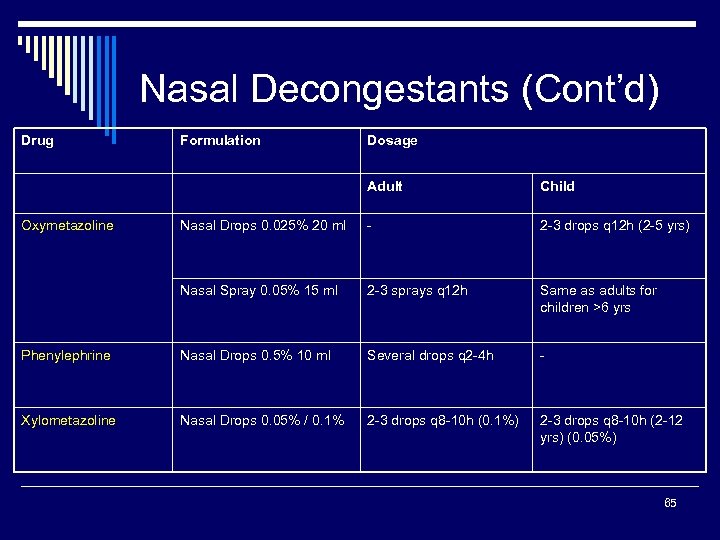 Nasal Decongestants (Cont’d) Drug Formulation Dosage Adult Child Nasal Drops 0. 025% 20 ml - 2 -3 drops q 12 h (2 -5 yrs) Nasal Spray 0. 05% 15 ml 2 -3 sprays q 12 h Same as adults for children >6 yrs Phenylephrine Nasal Drops 0. 5% 10 ml Several drops q 2 -4 h - Xylometazoline Nasal Drops 0. 05% / 0. 1% 2 -3 drops q 8 -10 h (0. 1%) 2 -3 drops q 8 -10 h (2 -12 yrs) (0. 05%) Oxymetazoline 65
 Nasal Decongestants (Cont’d) o Adverse effects: n n Rebound congestion develops with topical agents when used for more than a few days CNS stimulation (such as restlessness, irritability, anxiety and insomnia) occurs with oral sympathomimetics 66
 Nasal Decongestants (Cont’d) o Adverse effects (Cont’d): n n Sympathomimetics can cause vasoconstriction by stimulating α-1 adrenergic receptors. More common with oral agents Sympathomimetics cause CNS stimulation, and can produce effects similar to amphetamine. Hence, these drugs are subject to abuse 67
 Nasal Decongestants (Cont’d) o Nursing alerts: n n Overuse of topical nasal decongestants can cause rebound congestion, meaning that the congestion can be worse with the use of drug. To minimise this, drug therapy should be discontinued gradually. The use of topical agents is limited to no more than 3 to 5 days 68
 Nasal Decongestants (Cont’d) o Nursing alerts (Cont’d): n n The patient’s blood pressure and pulse should be assessed before a decongestant is administered Inform the patient that nasal burning and stinging may occur with topical decongestants 69
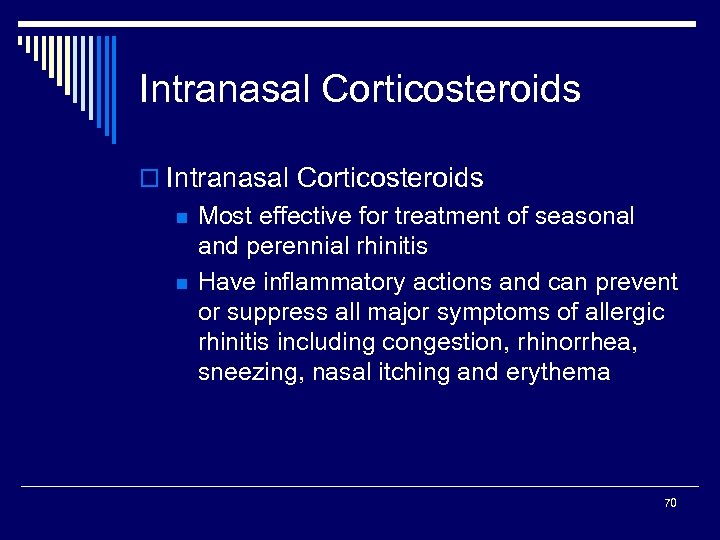 Intranasal Corticosteroids o Intranasal Corticosteroids n n Most effective for treatment of seasonal and perennial rhinitis Have inflammatory actions and can prevent or suppress all major symptoms of allergic rhinitis including congestion, rhinorrhea, sneezing, nasal itching and erythema 70
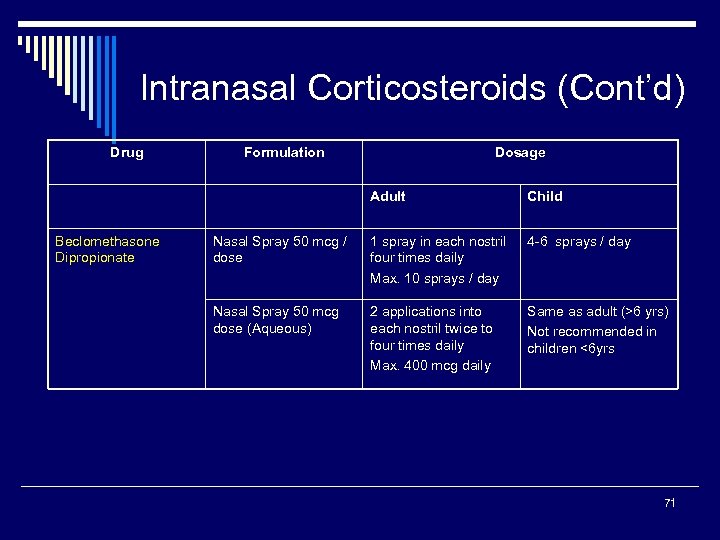 Intranasal Corticosteroids (Cont’d) Drug Formulation Dosage Adult Beclomethasone Dipropionate Child Nasal Spray 50 mcg / dose 1 spray in each nostril four times daily Max. 10 sprays / day 4 -6 sprays / day Nasal Spray 50 mcg dose (Aqueous) 2 applications into each nostril twice to four times daily Max. 400 mcg daily Same as adult (>6 yrs) Not recommended in children <6 yrs 71
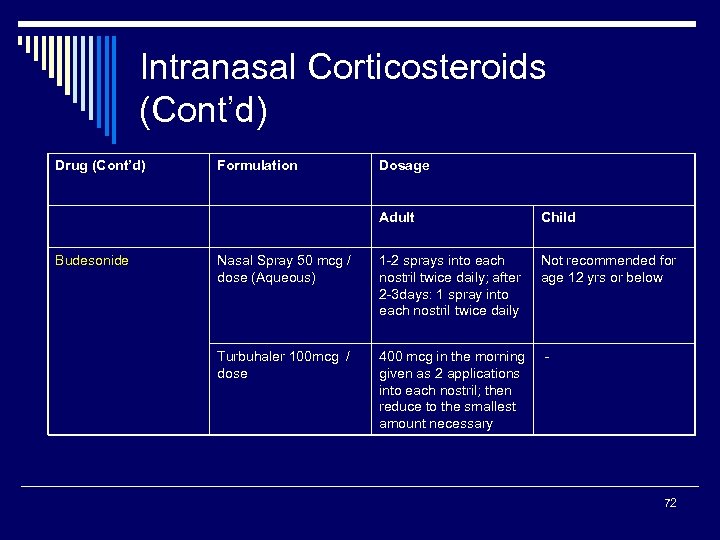 Intranasal Corticosteroids (Cont’d) Drug (Cont’d) Formulation Dosage Adult Budesonide Child Nasal Spray 50 mcg / dose (Aqueous) 1 -2 sprays into each nostril twice daily; after 2 -3 days: 1 spray into each nostril twice daily Not recommended for age 12 yrs or below Turbuhaler 100 mcg / dose 400 mcg in the morning - given as 2 applications into each nostril; then reduce to the smallest amount necessary 72
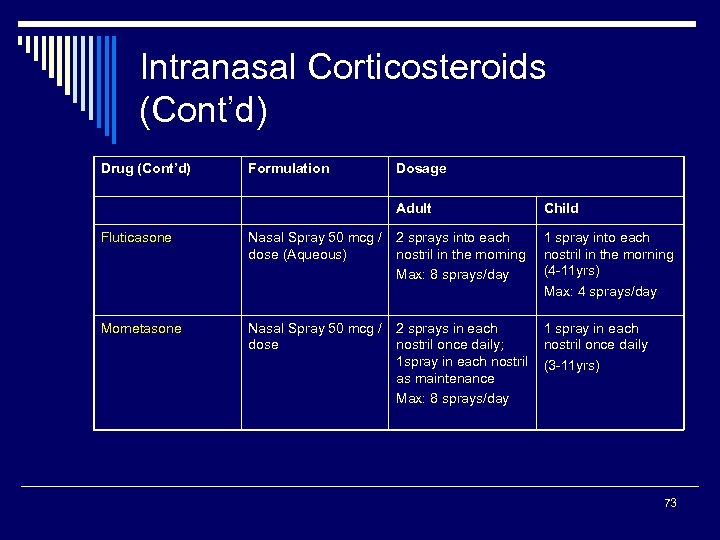 Intranasal Corticosteroids (Cont’d) Drug (Cont’d) Formulation Dosage Adult Child Fluticasone Nasal Spray 50 mcg / 2 sprays into each 1 spray into each dose (Aqueous) nostril in the morning (4 -11 yrs) Max: 8 sprays/day Max: 4 sprays/day Mometasone Nasal Spray 50 mcg / 2 sprays in each 1 spray in each dose nostril once daily; nostril once daily 1 spray in each nostril (3 -11 yrs) as maintenance Max: 8 sprays/day 73
 Intranasal Corticosteroids (Cont’d) o Adverse effects: n n Mild Most common effects are drying of nasal mucosa & sensations of burning or itching 74
 Chronic Obstructive Pulmonary Disease (COPD) o Umbrella term for various conditions o o characterized by limitation of airflow that is not fully reversible Chronic airflow limitation caused by a mixture of small airway disease and parenchymal destruction Airflow limitation is often progressive Associated with an abnormal inflammatory response of lungs to noxious substances PREVENTABLE and TREATABLE disease 75
 Relationship between COPD and emphysema/chronic bronchitis o Emphysema n n Destruction of the gas exchanging surfaces of the lung (alveoli) Pathological term that describes only one of several structural abnormalities present in patients with COPD o Chronic bronchitis n n Presence of cough and sputum production for at least 3 months in each of two consecutive years Remains a clinically and epidemiologically useful term, but does not reflect the major impact of airflow limitation on morbidity and mortality in COPD patients o The emphasis on these conditions are not included in the definition of COPD in current relevant clinical guidelines 76
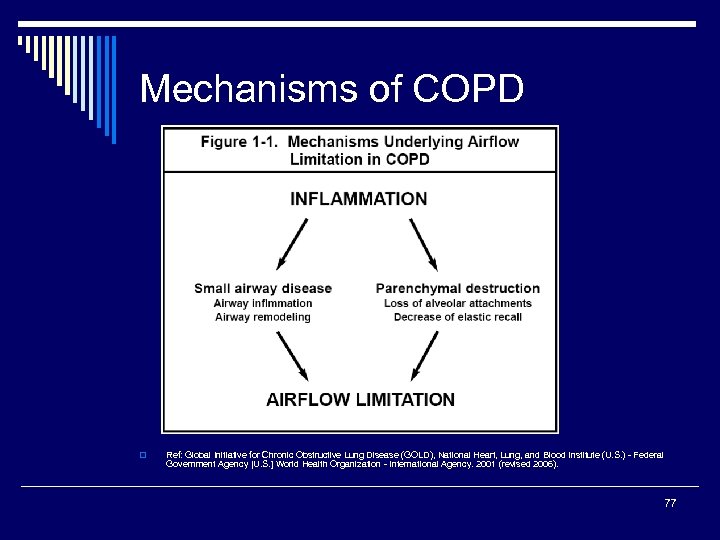 Mechanisms of COPD o Ref: Global Initiative for Chronic Obstructive Lung Disease (GOLD), National Heart, Lung, and Blood Institute (U. S. ) - Federal Government Agency [U. S. ] World Health Organization - International Agency. 2001 (revised 2006). 77
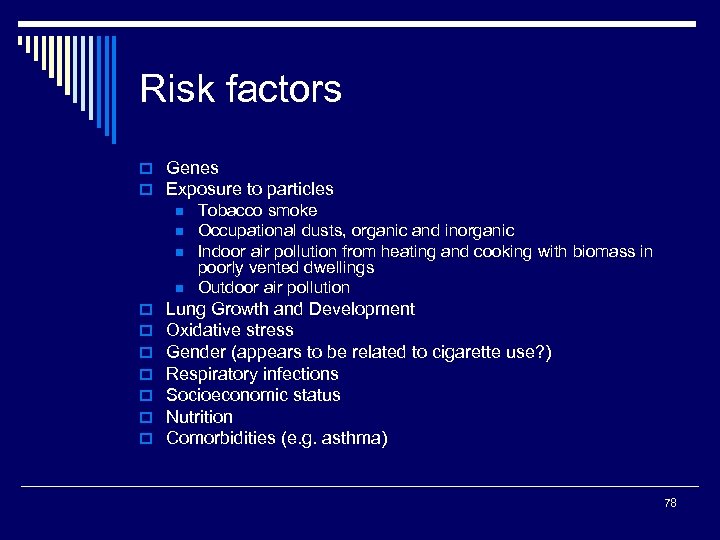 Risk factors o Genes o Exposure to particles n n o o o o Tobacco smoke Occupational dusts, organic and inorganic Indoor air pollution from heating and cooking with biomass in poorly vented dwellings Outdoor air pollution Lung Growth and Development Oxidative stress Gender (appears to be related to cigarette use? ) Respiratory infections Socioeconomic status Nutrition Comorbidities (e. g. asthma) 78
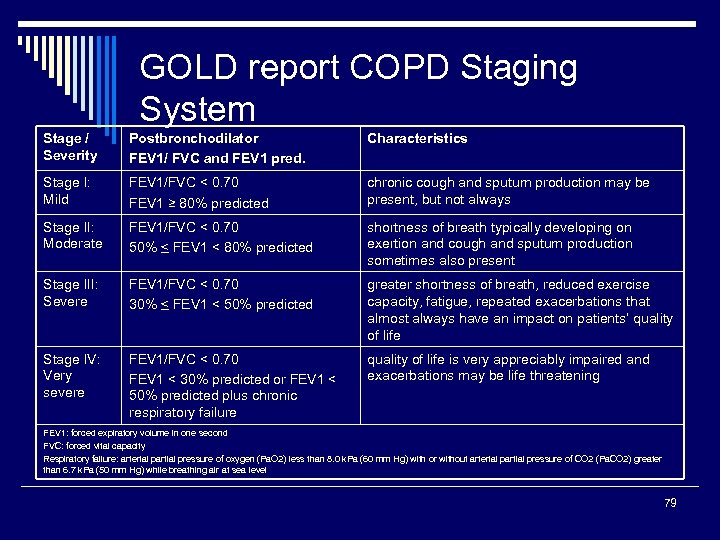 GOLD report COPD Staging System Stage / Severity Postbronchodilator FEV 1/ FVC and FEV 1 pred. Characteristics Stage I: Mild FEV 1/FVC < 0. 70 FEV 1 ≥ 80% predicted chronic cough and sputum production may be present, but not always Stage II: Moderate FEV 1/FVC < 0. 70 50% ≤ FEV 1 < 80% predicted shortness of breath typically developing on exertion and cough and sputum production sometimes also present Stage III: Severe FEV 1/FVC < 0. 70 30% ≤ FEV 1 < 50% predicted greater shortness of breath, reduced exercise capacity, fatigue, repeated exacerbations that almost always have an impact on patients’ quality of life Stage IV: Very severe FEV 1/FVC < 0. 70 FEV 1 < 30% predicted or FEV 1 < 50% predicted plus chronic respiratory failure quality of life is very appreciably impaired and exacerbations may be life threatening FEV 1: forced expiratory volume in one second FVC: forced vital capacity Respiratory failure: arterial partial pressure of oxygen (Pa. O 2) less than 8. 0 k. Pa (60 mm Hg) with or without arterial partial pressure of CO 2 (Pa. CO 2) greater than 6. 7 k. Pa (50 mm Hg) while breathing air at sea level 79
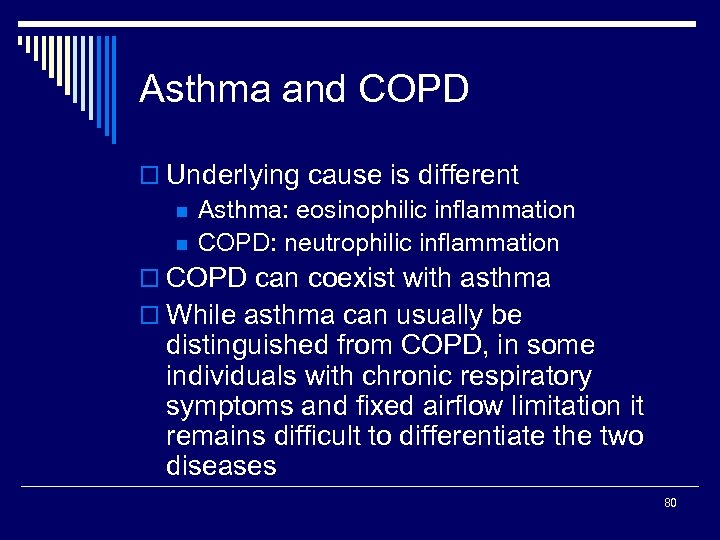 Asthma and COPD o Underlying cause is different n Asthma: eosinophilic inflammation n COPD: neutrophilic inflammation o COPD can coexist with asthma o While asthma can usually be distinguished from COPD, in some individuals with chronic respiratory symptoms and fixed airflow limitation it remains difficult to differentiate the two diseases 80
 Differences in causes of COPD and asthma 81
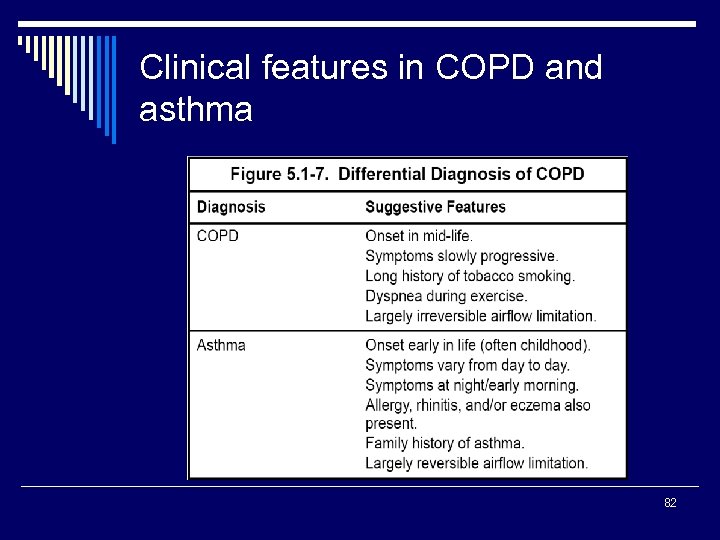 Clinical features in COPD and asthma 82
 Pharmacotherapy o None of the current available medications can alter the natural course of COPD or modify the rate of decline in lung function o Aims (as per GOLD report) n n n n Relieve symptoms Prevent disease progression Improve exercise tolerance Improve health status Prevent and treat complications Prevent and treat exacerbations Reduce mortality 83
 Bronchodilators o Bronchodilator medications are central to symptom management in COPD o Inhaled therapy is preferred o The choice between beta agonist, anticholinergic, theophylline, or combination therapy depends on availability and individual response in terms of symptom relief and side effects 84
 Bronchodilators (Cont’d) o Bronchodilators are prescribed on an as- needed or on a regular basis to prevent or reduce symptoms o Long-acting inhaled bronchodilators are more effective and convenient o Combining bronchodilators may improve efficacy and decrease the risk of side effects compared to increasing the dose of a single bronchodilator 85
 Corticosteroids o Effects of oral and inhaled corticosteroids in COPD are much less dramatic than in asthma, and their role in the management of stable COPD is limited to specific indications 86
 Oral corticosteroids o Use of a short course (two weeks) of oral corticosteroids to identify COPD patients who might benefit from long-term treatment with oral or inhaled corticosteroids is recommended o Due to lack of evidence of benefit, and the issue of side effects, long-term treatment with oral corticosteroids is not recommended in COPD 87
 Inhaled corticosteroids o Regular treatment is appropriate for symptomatic Stage III and Stage IV CPOD and repeated exacerbations (for example, 3 in the last 3 years) o Treatment has been shown to reduce the frequency of exacerbations and thus improve health status o More effective when combined with a long-acting beta agonist 88
 89
89
 90
90